Skip to content
  • Home
  • Subscribe / donate
  • Events calendar
  • Business Directory
  • FAQ
  • News
    • Local
    • National
    • Israel
    • World
    • עניין בחדשות
      A roundup of news in Canada and further afield, in Hebrew.
  • Opinion
    • From the JI
    • Op-Ed
  • Arts & Culture
    • Performing Arts
    • Music
    • Books
    • Visual Arts
    • TV & Film
  • Life
    • Celebrating the Holidays
    • Travel
    • The Daily Snooze
      Cartoons by Jacob Samuel
    • Mystery Photo
      Help the JI and JMABC fill in the gaps in our archives.
  • Community Links
    • Organizations, Etc.
    • Other News Sources & Blogs
  • JI Chai Celebration
  • JI@88! video

Recent Posts

  • SFU honours Gloria Gutman
  • Lifting people’s spirits
  • Wedding a ray of light
  • Indigeneity and Zionism
  • Rule of law broken: councilor
  • Football and its roles
  • The burden of defence
  • Fish Café returns after fire
  • All right in what goes wrong
  • Nuns & mermaids at TUTS
  • Camp offers holiday retreat
  • Students and mentors inspire
  • Once-in-a-lifetime trip
  • 100 dancers, one heart
  • Money for the sciences
  • What “Jewish food” means
  • Have a cookie, schnitzel too
  • Federation now across BC
  • Israel fighting for its existence
  • Deal strengthens Iran
  • Patriotic belonging diminishes
  • A campaign to engage
  • Upstanders’ first live event
  • Responding to Carney
  • Having your own home
  • Music a family tradition
  • Musical to warm heart
  • Community milestones … June 2026
  • Sharing her passion for Israel
  • Or Shalom reopens its doors
  • JFS from past to future
  • Need holistic approach
  • Sharing stories, advice
  • Journalist shares fears
  • Skills to live together
  • Road to independence

Archives

Follow @JewishIndie
image - CJN box ad Rockowers 2026

Byline: Rebeca Kuropatwa

Friendships via music

Friendships via music

The YMCA Jerusalem Youth Chorus prior to their 10-day tour of Japan in August 2014. (photo from Micah Hendler)

There are many creative ways to bring about a peaceful dialogue between Israelis and Palestinians. In one particular case, an American Jew by the name of Micah Hendler combined choral singing and dialogue to help bring Palestinian and Israeli teens to a place of trust in Jerusalem.

Hendler, originally from Bethesda, Md., has been singing for as long as he can remember.

“For me, singing is a very powerful way of connecting to other people and creating communities, a sense of common identities, all the things that make people feel close to one another,” he said.
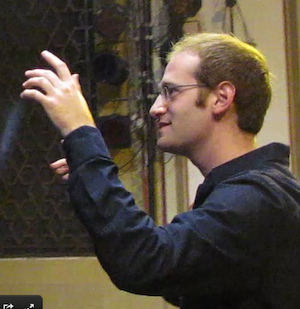
photo - YMCA Jerusalem Youth Chorus founder and conductor Micah Hendler
YMCA Jerusalem Youth Chorus founder and conductor Micah Hendler. (photo from Micah Hendler)

In his high school years, Hendler participated in Seeds of Peace, a program for teens from conflict regions around the world. For the first time, he had the opportunity to hear the stories of both Palestinians and Israelis.

“It made me realize the power of talking to others who are different, the power of showing people there are other ways to see things, more complete ways to see things,” he said of Seeds of Peace. “That’s what really got me interested in the Israeli-Palestinian conflict. In many ways, this was in contrast to the education I’d received.”

Over the years that followed, as Hendler continued his involvement with Seeds of Peace, he thought about ways in which he could create a new community, and decided on a singing group.

“I thought that would be really cool,” said Hendler, now in his 30s. “I could empower people and show them that they could sing and be part of something like this. For me, I thought … this is a way I can do things I really love to do in the context of needing ways for people to come together.”

When Hendler was ready to kick things off, he had just graduated from Yale. “I thought, if I’m ever going to do this, now’s the time.”

With degrees in music and international studies, and a host of other experience, both in music and in conflict transformation, Hendler moved to Jerusalem. He spent the first couple of months having coffee with anyone and everyone. He also spent a lot of time at high schools, sharing information about the choir, the YMCA Jerusalem Youth Chorus. Eighty youth auditioned, with the majority coming from East Jerusalem.

“There were so few extracurricular options in East Jerusalem at all, let alone singing options,” said Hendler. “For kids that liked to sing, I was one of the very few possibilities around.”

Hendler accepted 30 kids (ages 14-18), an even split of Israelis and Palestinians.

A friend connected Hendler with Israeli singer/songwriter David Broza, who was working on the album East Jerusalem/West Jerusalem at the time. Broza invited the chorus to be part of it. “It’s pretty amazing – that was three months into the choir, and we were recording with David Broza in the studio,” said Hendler.

The YMCA Jerusalem Youth Chorus program begins and ends with singing, with dialogue embedded in the middle. It does not take long for the kids to mingle. “They were in a completely unstructured context, already hanging out across linguistic and national lines,” said Hendler. “A lot of girls were singing pop songs on the piano and the guys were doing their thing, and different people were talking.”

The cost for the program is covered by the Jerusalem Foundation and private donors in and outside of Israel; the kids pay a symbolic fee to attend, as long as they are able.

Hendler’s main focus now is on ensuring that the kids feel part of a group, which is a moving target as the chorus grows. Currently, there are 44 kids divided into three dialogue groups, but Hendler is looking at other options. “There’s a limit of how big the choir could be in terms of what is manageable,” he said. “But, it would be possible to have multiple ensembles at different levels.”

When selecting kids for the chorus, Hendler looked for kids who wanted to meet new people and experience new things. As well, potential members needed both to be able to express any opinions they may have, as well as listen to those of others. “We also, of course, wanted people suited for singing,” he added.

Rehearsals are 3.5 hours and take place once a week. From as early as the second rehearsal, he said, “it was amazing that the kids were so open to one another. Obviously, with the linguistic and social challenges, the group had gone through a lot, but fundamentally there’s this openness and a joy that’s pretty inspiring.”

The dialogue is run by professional facilitators, “but I still have a good sense of what goes on,” said Hendler. “And, it’s actually really beyond inspiring, the way they listen to each other and create a space. The kids are real with each other, sharing their fears and hopes … but what’s really been amazing is that even outside the choir, the kids have started to speak up in their communities.”

Israeli high schooler Avital said of the program, “You get to know the other side, you get to be together, to see what it’s like being with kids different than you.” Shifra, another Israeli participant, said, “[Before] I only knew Israelis, I had never met any Arabs before I came here. I didn’t know what I was going to see … I wasn’t sure what I expected, but what I realized was that we’re all the same.”

Palestinian high schooler Alaa commented, “I learned from the sessions how not to stay silent, to express myself.” And Ameer, another Palestinian participant, said, “The choir is beautiful and we enjoy it, because we are Arabs and Jews, together at the same time.”

Rebeca Kuropatwa is a Winnipeg freelance writer.


Format ImagePosted on January 30, 2015January 29, 2015Author Rebeca KuropatwaCategories IsraelTags David Broza, dialogue, Israeli-Palestinian conflict, Micah Hendler, music, YMCA Jerusalem Youth Chorus
OK for Shalom home

OK for Shalom home

Residents and staff from three of Shalom Residences’ homes in front of the home on Enniskillen Avenue. (photo by Kelsey Halldorson)

A few months ago, Shalom Residences was given the green light from Manitoba Family Services to add a new home in Winnipeg’s South End.

With the vision that people with intellectual disabilities should be full members of the community and that the community is responsible for ensuring that social, residential, religious and cultural opportunities exist to make this possible, a group of parents and other community volunteers founded Shalom Residences as a nonprofit organization in 1978. The first Shalom Residences home opened in 1980.

“Since 1980, Shalom Residences has added five more homes, expanding to provide service to 28 people (22 of whom live in six community residences/group living in single family homes),” said Nancy Hughes, the organization’s executive director since 1991. “These homes have two to five people living together, with staff working in shifts.

“The other six people we serve are in our Supported Independent Living (SIL) program. They each rent their own apartments and have staff support for 10 to 28 hours per week (for budgeting, shopping, meal planning and preparation, housekeeping, etc).”

Currently, all community residences and apartments are located in Winnipeg’s West Kildonan and Garden City areas.

“We’ve always gone about expansion in a careful, gradual way, and future planning includes a home for younger adults in the South End of the city,” said Hughes. “There is a very real need for this within the Jewish and general communities. We’re continuing to lobby our major funder, the [provincial government], to assist us to develop this resource.”

The organization also receives a grant from the Jewish Foundation of Manitoba to hire a part-time Jewish identity coordinator.

Shalom Residences provides Judaic-oriented programs, which includes developing community awareness and increased community acceptance of people with intellectual disabilities as full and equal citizens.

“Although we foster a Jewish milieu, our admission policies are non-sectarian,” noted Hughes. The organization’s ultimate objective is to enable those in its programs to achieve their potential as community members and to become as self-sufficient as possible.

“The people we support have a wide range of abilities and needs, so we offer a higher level of assistance in the community residences and a more independent arrangement in SIL,” said Hughes.

“For the first time, we’re looking in the South End of the city, [and] we have three young people who’ll be funded for this new home,” she said about the residence funding that was recently approved.

The search for a house will take place in River Heights and Crescentwood, and it possibly will include the neighborhoods of Lindenwoods and Charleswood. Once the house is selected, Shalom Residences will buy and renovate it for wheelchair accessibility.

The government will provide ongoing funding for staffing, food and shelter, but Shalom Residences needs to cover the down payment for the house and the initial furnishings. “We could certainly use donations towards some of the costs,” said Hughes.

According to Hughes, this is the first time the government has offered funding for young adults. “We’re very happy to be able to help people leave their family home and start an adult life of their own at a younger age,” she said.

One of the young adults for whom the funding was granted is Micah, one of a pair of twins born with disabilities on the autism spectrum. Micah’s mother, Karla Berbrayer, said, “He has a visual impairment as well as mild cerebral palsy. There is some developmental delay. Although Micah can do his times tables up to the 20 times level, and count to 500 in Hebrew, French and Spanish, he has challenges with daily living skills. My husband and I long ago accepted the fact that Micah cannot be left unattended in the home, and will always require a caregiver.”

The family has been planning for a home for Micah – and has been working with Hughes – for some 10 years, including petitioning the government for the funding, with the stipulation that Micah live in a Jewish setting in the South End with two other individuals close to his age. In their view, Shalom Residences was the only option.

“My husband and I keep a kosher home and observe all the Jewish holidays,” said Berbrayer. “The Jewish religion is a very important aspect of our lives, and we have raised all our children to value their Jewish identity.”

Berbrayer’s husband joined Shalom Residences’ board 20 years ago. He eventually became president and has remained active within the organization.

“We had begun to accept the concept that a new home in the South End for Micah may never happen,” said Berbrayer. “As recently as this fall, I said to my husband, ‘I don’t know that this will ever happen.’”

In November, the couple received the news that the funding for Micah had been approved and that a house would be opened in the South End for him and the two other individuals with whom they asked for him to be housed.

“I burst into tears when the news came,” said Berbrayer. “It was such an unbelievable accomplishment. I felt that I didn’t care how long it would take for the move to transpire, because now I knew that it would happen.”

She expressed gratitude to the government for the decision, and called the new home “a huge step for the organization,” noting that it had been a long time since a new residence had been opened, and that none has been located in the city’s South End.

There is a fundraising dinner for Shalom Residences planned for June. To purchase tickets, for more information or to volunteer, visit shalomresidences.com, email [email protected] or call 1-204-582-7064.


Rebeca Kuropatwa is a freelance writer living in Winnipeg.

Format ImagePosted on January 23, 2015January 21, 2015Author Rebeca KuropatwaCategories NationalTags intellectual disabilities, Karla Berbrayer, Nancy Hughes, Shalom Residences, Supported Independent Living
E-books for deaf kids

E-books for deaf kids

A person – as opposed to an avatar – signs American Sign Language in the eMotion Stories app.

It is hard to beat the pleasure of sitting down with your children or grandchildren and reading them a bedtime story, whether that story is a classic like Goldilocks, a Yiddish folktale or even a book written by someone you know. This simple pleasure was not even an option until recently for families with deaf kids, as Israeli American, Eyal Rosenthal, 34, discovered.

While visiting family in New York, Rosenthal had a chance to read a bedtime story to his nephew before heading out to visit with a friend over coffee. Rosenthal told his friend about his nephew, and she told him about her niece, who was born deaf.

“I asked her how she reads to her niece,” said Rosenthal. “She said, ‘We don’t…. We can go to Barnes and Noble across the street and you can find some books with baby sign language or whatever, but you won’t find any actual story to read to a deaf child.’”

Learning of this inspired Rosenthal to look for a solution. “Being an Israeli, we tend to think we can solve everything,” he noted. And, in this case, he could – he created an app called eMotion Stories.

Coming from a high-tech background and being an investor/developer of apps, Rosenthal initially mulled over the idea of creating an avatar to sign the books for eMotion Stories, but found that it was much simpler and less costly to have a live person do it.

“It’s the placement of a sign, the body language within that,” said Rosenthal. “To try to get an avatar to do that is incredibly difficult and costly, and probably something that’s 10 years down the road.”

The other problem Rosenthal encountered was that sign language varies from country to country. “It’s not a universal language,” he said. “Each country, each region, actually develops on its own.”

While Rosenthal was able to overcome most obstacles by himself, there were two that stumped him – the sign language itself, as noted, and the development work of the videos. “One of the good things about being in Israel, especially in Tel Aviv, is there are developers everywhere,” he said.

Rosenthal found Go UFO, a company that was just getting started at that time. On connecting with the Go UFO team, Rosenthal said, “It was like two minds meeting. The moment they heard the idea, they were like, we love this, we love your passion for it, we want to help you create it.”

Choosing the stories to feature was the next challenge. Rosenthal decided to start with the Brothers Grimm.

Since the whole concept began with Rosenthal wanting to enable his friend to share a story with her niece, he opted to do the stories in American Sign Language (ASL). And, to find a signer for the e-books, he went to New York Deaf Theatre. As for the illustrations, a Go UFO team member’s father was an illustrator, and he offered to have some of his friends help out (making it possible for Rosenthal to afford the illustrations).

“It was interesting convincing people to help when you don’t have the money to pay them what they want and you have to successfully convince them to do it anyway,” said Rosenthal. “That took some learning.”

As of now, five e-stories have been created for the iPad. When downloading the free app, the e-book of The Ugly Duckling is included. Each additional story is $4.59. The stories available are The Ugly Duckling and Goldilocks and the Three Bears so far, with Little Red Riding Hood, Cinderella and The Three Little Pigs coming soon.

Rosenthal would like to produce five more books.

“The classic stories are ones that a parent can relate to because he/she read that story as a child and they can read it to their child,” he said. “One of the unfortunate facts I uncovered in the research is that the level of comprehension for deaf children is several levels below that of [hearing] children. This is a gap that widens through the years. One thing I was hoping was, at least, to be able to bridge that gap. When you’re 6 years old and you’re one year behind, it’s not the same as when you’re in high school and you’re … behind.”

One of the goals Rosenthal has for this coming year is to create a version in another language, one similar to ASL, the simplest example of which would be Canadian Sign Language.

“The guys at Go UFO are trying to create more of a platform where any country can simply add its sign language videos or an individual can add videos to a particular story and modify the text, since the illustrations already exist, to make it more broad,” said Rosenthal.

So far, the app has been downloaded 3,000 times.

“I’ve gotten emails from parents saying that they love it and when are more stories going to come out,” said Rosenthal. “Some were asking when an android version would come out.”

Rosenthal would like to create an android version, but that will require more funding, which he hopes to raise with a Kickstarter or Indigogo campaign.

Many people have been helping move the project along, such as members of the Israeli Society for the Deaf and the Hard of Hearing. Rosenthal has also been recently approached by a deaf Israeli actor who asked Rosenthal to let him know when things proceed on the Israeli front because he would like to help.

Rosenthal said that without the Go UFO programmers eMotion Stories would never have come to fruition. “I’m incredibly indebted to those guys,” he said.

For more information about the app, visit emotionstories.com.

Rebeca Kuropatwa is a Winnipeg freelance writer.

Format ImagePosted on January 16, 2015January 14, 2015Author Rebeca KuropatwaCategories BooksTags ASL, deaf, e-books, ebooks, eMotion, kids books, Sign Language
How to identify skin cancer

How to identify skin cancer

Dr. Victoria Taraska (photo by Rebeca Kuropatwa)

On Dec. 11, the National Council of Jewish Women of Canada, Winnipeg section, held an information session at the Rady Jewish Community Centre about recognizing skin cancer. The talk, part of the section’s Women’s Health Series, was given by Dr. Victoria Taraska, a dermatologist at the Derm Centre.

Taraska received her doctorate in medicine at the University of Manitoba before doing a fellowship in dermatology at the University of Ottawa. She has been practising in Winnipeg since 1998.

In her presentation, Taraska gave many examples, including an array of images, to give the approximately 60 lecture-goers a better idea of how to recognize the three main forms of skin cancer.

“Luckily, women do find most cancers for themselves or someone in their family, because they listen to what we tell them, are concerned about their health, and do get checked,” said the doctor. “Men don’t fare that well. They don’t do as well. We [women] are the nags in the family, right? We definitely save their lives and our lives, too.”

The three main forms of skin cancer Taraska discussed were basal cell carcinoma, squamous cell cancer and melanoma. Although other skin cancers exist, they are rare, she said.

Every year in Canada, 80,000 skin cancers cases are diagnosed. In the United States each year, there are two to three million. “It’s a big burden and a lot of health-care dollars, as well,” said Taraska. “A lot of it could be prevented early by screenings and watching your skin.”

Taraska went on to say that there are about 6,500 cases of reported melanoma a year, which is a cancerous form doctors “most like to avoid,” she said. “Basal cell carcinoma isn’t that aggressive and it’s highly curable if diagnosed early.”

Sun protection is critical in preventing skin cancer, with ultraviolet rays being the most important element to block.

“Even though there are people who are more at risk, anyone can get it,” said Taraska. “Black people can get it, white people who are fair, blond, blue eyed … anyone can get skin cancer. Everyone needs to protect themselves from the sun, or even from tanning beds…. If you have a lot of moles, you might be at higher risk. Anyone who’s on immune suppressant medication has a higher risk for skin cancer. Squamous cell cancer is actually the second highest cause of death in transplant patients, with infection being number one.”

UVA vs. UVB protection

A UVA warning relates to aging, while a UVB warning relates to burning, explained Taraska. “While both are bad and are related to skin cancer, most sun protection products focus on blocking UVB,” she said. “When you’re in your car and you think you’re safe, you’re not. UVA can go through the windows, though the physicality of the window blocks UVB.”

Even when using sunscreen, we are not always protected, as the level of protection noted on sunscreen products refers to UVB. “There’s no number for UVA,” she noted.

Regardless, Taraska is an avid proponent of sunscreen use, applying more of it and more often then you might think is needed. “The way we apply a SPF 15 probably ends up being only an eight or a four, because it’s only a 15 if you can see the sunscreen on your body. But, if you’re putting it on properly, a 15 does block 94-96 percent. We never get up to 100 percent.

“With a 30 or a 50, you have a little play, but if you only buy a 15, you don’t have that. For people who break out from sunscreen, there are sunscreen powders. For those not wanting to use chemical-based sunscreen, they need to understand that the chemical-free products use physical sun blockers – like zinc and titanium – and, as such, these creams are meant to stay on the surface of the skin and will be more visible when applied properly (stay white).

“Regardless, applications need to happen every couple of hours when in the sun for an extended period of time. A bottle of sunscreen shouldn’t last more than a week if you’re on a beach.”

About UV

UV changes some of the nucleic acids in the cell’s DNA. It can change the nucleic acids of tumor suppressors or tumor stimulators.

“If your tumor suppressors are insufficient, you’re not going to be able to clean up the damage,” said Taraska. “If you knock out a couple of the workers, you’ll have a problem healing the skin cancer. We’re always producing skin cancer cells – actually daily – but our body usually has checks and balances to get rid of the cancers, to get rid of the duds.”

There should always be a balance. Some people genetically have deficiency in their suppressors. “When you see families that have many cases of skin cancer, they likely have a deficiency of the P53 enzyme,” said Taraska.

While we can now test for the P53 enzyme, it would be too costly to test everyone. “We should all be checking ourselves regularly, whether we have the family history or not,” she said.

While the UV index is a lot lower in the winter, if you’re a dog walker, skier or jogger, you can still get sunburned, so sunscreen is still important. As for getting your fill of Vitamin D during the winter, Taraska believes that it should be taken in via a supplement, noting, “It’s easy to take 1,000 units of Vitamin D.”

Detection and treatment

While basal cell carcinoma is the most common form of cancer, it is also often easily curable. “It shouldn’t really kill or harm anyone who is reasonable,” said Taraska. “They are slow growing. No one … should die from it.”

Signs to watch for include a pink scaly patch, an open sore that will not heal, or a shiny lump or a scar that is new or changing. Although the nose, for example, is a common place to see such signs, they can appear anywhere.

“For those that have gone aggressive or deeper, there is an oral medication that we can use that does very well for patients with more aggressive basal cell carcinoma,” said Taraska.

Squamous is more common in connection to being sun exposed, but again, it can happen anywhere. “Transplant patients are the highest risk,” noted Taraska, “but, if it’s caught early, it can be treated with cream, scraped off by a doctor or cut out in surgery.”

Melanoma is more serious. “We’re not cavalier with these melanomas,” said Taraska. “We like things to be done quickly. A normal mole is nice, round and even. If you divide a mole into quarters, each quarter should look roughly the same. If it doesn’t, then we worry.

“If it’s shaped like a country with irregular borders, that’s when you want to see a doctor, or if the mole has more than one color…. They are usually really flat. They will grow within the skin first, spread along the surface first. Bigger than the head of a pencil eraser is a sign.

“The risk of getting melanoma is about 0.08 percent, so it’s fairly low in the population and 90 percent are curable (mostly from early detection).”

Rebeca Kuropatwa is a Winnipeg freelance writer.
Format ImagePosted on January 9, 2015January 8, 2015Author Rebeca KuropatwaCategories NationalTags health, National Council of Jewish Women of Canada, NCJW Winnipeg, skin cancer, Victoria Taraska
Empathy, failure ‘n’ improv

Empathy, failure ‘n’ improv

Ilana Ben-Ari at work, play. (photo by Laynna Meyler)

For her design diploma thesis project, Ilana Ben-Ari created a toy that people with visual impairments could play with their sighted classmates, developing a language around communication and empathy. The formation of her company, 21 Toys, came after what she saw happen with that project.

“The toys really had an incredible way of using play to teach this abstract and difficult skill [empathy],” said Ben-Ari. “I don’t think we emphasize empathy in schools or in education…. We also don’t teach failure, critical thinking or complex problem solving.”

Ben-Ari, a former Winnipegger now living in Toronto, started 21 Toys with the hope of designing a whole fleet of toys honing often-undeveloped skills in both schools and today’s workforce, including creativity and innovation. These skills, Ben-Ari said, “are really hard to understand … to assess, practise or see.”

Ben-Ari created the Empathy Toy in the belief that the attribute of empathy serves as “not only the basis of communication and collaboration, but the backbone of innovation in design, business and other realms. Not only are these skills not being taught when they should be,” she said, “but they [educators] don’t have the right tools to teach them…. This is why a toy – an aid, tool – comes in handy.”

During Operation Protective Edge, a couple of manufacturers from Toronto sent toys, including Ben-Ari’s, to civilians on both sides. “We wanted to send toys to help in the best ways that we could,” said Ben-Ari. “It’s easy to feel helpless watching the conflict from so far away. We saw this as a chance, in some small way, to insert empathy into the heart of the conflict – by using fun and play to create moments of relief.”

Most recently, the toy is being used in a psychological lab established at Bar-Ilan University for kids and adults suffering from trauma.

Ben-Ari described the Empathy Toy as “3-D, abstract, wooden puzzle pieces that are played blindfolded. One player is given a build pattern of abstract wooden puzzle pieces and one or more players is tasked to recreate that same pattern. The challenge is that everybody is blindfolded while playing.

“Today, we need to focus on getting kids to understand what collaboration is, to start being a bit more creative and, in a way, unlearn what schools have reinforced…. When talking about empathy, it’s not just a soft, fuzzy feeling.”

Saint John’s High School in Winnipeg is using the Empathy Toy for its anxiety, language and literacy classes as a foundation of its new leadership program.

“Looking at someone else’s point of view, putting yourself into someone else’s shoes, and being able to work with and understand other people, [their] thinking and perspectives is very much at the heart of what skills you need to develop, to be able to learn,” said Ben-Ari.

“We’ve found that teachers use it for so many applications. What the toy does is let you introduce empathy in this playful way, but then it acts as a mirror to the lesson. It lets teachers be a lot more creative in how they approach their lessons. If we want kids to be innovative thinkers and creative, we can’t teach them that play is a bad thing, that toys, having fun and playing games are things that happen outside of learning.”

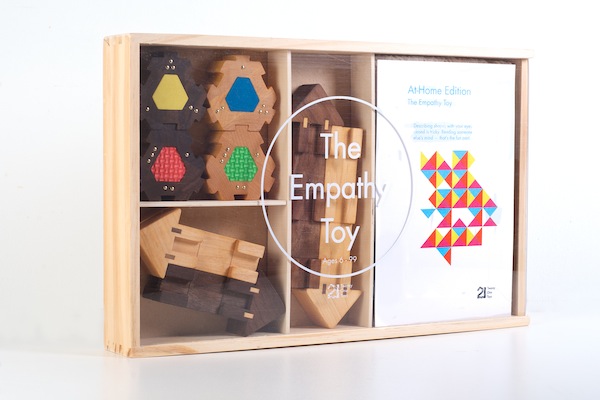
photo - The Empathy Toy home version sells for around $100
The Empathy Toy home version sells for around $100. (photo by Robyn Harrison)

There are three versions of the Empathy Toy: a home version (also referred to as the “light version”) that sells for around $100; a school version that sells for $150-$200, with the price per unit going down with the more toys a school buys; and a version designed for organizations that sells for more than $200.

Schools typically ask 21 Toys to come in and do a professional development workshop with their staff. “Our toys are being used by Free the Children for their staff training,” said Ben-Ari. “We’ve done workshops with the Alzheimer’s society and children’s hospitals. There are a lot of opportunities for training for adults as a professional development tool.”

In British Columbia, Ben-Ari is aware of three places, so far, that are using the Empathy Toy – Holly Elementary in Surrey, the Discovery Centre for Entrepreneurship (Canada’s first Entrepreneurial Leadership Academy) and Coquitlam Open Learning. It is also being used at Winnipeg’s Gray Academy of Jewish Education and at Toronto’s Heschel School. The only place that sells the home version of the toy, apart from the 21 Toys website, is the Canadian Museum for Human Rights in Winnipeg.

Next in 21 Toys’ design sights is the Failure Toy, for which the company has nearly finished the prototype. “This toy will look like a cousin to the Empathy Toy,” said Ben-Ari. “It’ll be an abstract puzzle with funny game dynamics.

“The point of that toy will be to say, ‘Look, failure isn’t this fantastic thing, [but] it’s a very important part of the learning process and we shouldn’t give this signal that it’s bad and something to be avoided.’ Because, not only are we [preventing] ourselves from growing and from pushing ourselves and trying, but there’s no way we can be innovative or creative or even collaborate without having a healthy relationship with failure. You need to understand failure and develop it as a skill.”

Ben-Ari said that entrepreneurs need to go through stages to succeed. She referred to empathy as “the research phase, understanding where you are, context, the people you’re designing for and working with. Then comes failure with prototypes. Then comes the third toy in the fleet, which will be about improvisation. This stage is a lot like brainstorming and being able to build on other people’s ideas.”

For more information, visit twentyonetoys.com.

Rebeca Kuropatwa is a Winnipeg freelance writer.

Format ImagePosted on December 12, 2014December 11, 2014Author Rebeca KuropatwaCategories LifeTags empathy, Ilana Ben-Ari, tyos
Thousands of B.C. archeological sites

Thousands of B.C. archeological sites

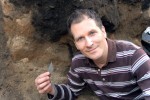
Hartley Odwak holds a 1,000-2,000-year-old stone projective point recovered from one of the sites on which he has worked. (photo from Hartley Odwak)

What is fascinating and striking is that it’s largely unknown to most Vancouverites and British Columbians that there is a plethora of documented archeological sites in and around the Lower Mainland and all over B.C. – quite literally, thousands,” said archeologist Hartley Odwak.

Odwak, 48, grew up in Winnipeg and earned his bachelor’s (with honors in anthropology) at the University of Winnipeg (U of W), before moving to Vancouver for graduate school at Simon Fraser University (SFU), and later moved to London, England, for his PhD. He now calls Vancouver home.

“All the houses at Locarno Beach and south, up the hill a block or so, are on top of one of the most important archeological sites in the province – the Locarno site – which dates to at least 3,300 years ago,” said Odwak. “There are 45 archeological sites in Stanley Park. I don’t believe any are marked by interpretive signage, which makes knowing about them all the more unlikely. The same is true for all of the major cities, towns, villages and Gulf Islands in B.C., from Victoria to Nanaimo, Saltspring Island, Pender Island, Sechelt and Campbell River.”

According to Odwak, there are many archeological consulting firms in British Columbia – 30 or more – some very large and some very small. As for what types of archeological sites exist in the province, he said they include everything from winter and summer villages to seasonal camps, fortification sites, hunting sites, sacred sites, resource-gathering sites and rock art sites. “All these sites document the traditional use of the lands and waters of B.C. by First Nations people back several thousands of years … and we keep finding older and older sites.”

Road to archeology

After completing his BA, Odwak sought a graduate program with a strong human evolution component for his master’s. Although he felt he had received excellent training from Chris Meiklejohn at the U of W, there was no U of W graduate program at the time and the University of Manitoba also did not have a strong human evolution component.

“At the time, SFU’s archeology department had one of the best programs in the country and, as I wanted to stay in Canada, I thought it would be an interesting place to live and study,” said Odwak. “I’m not sure of the exact moment I decided to become an archeologist or if it was entirely intentional.”

At U of W, Odwak was drawn to anthropology, particularly the very early prehistoric periods and human evolution. Anthropological training gives a broad background in many sub-areas, such as archeology, biological anthropology (prehistory and evolution), linguistics and cultural anthropology. Odwak focused on biological anthropology and archeology and, early in his academic career at U of W, held summer jobs with Parks Canada as an archeologist. This provided him with diverse experiences, including traveling to excavate in the Yukon and in Saskatchewan (at Batoche).

When Odwak moved to Burnaby for his MA in 1990, he specialized in human evolution. As part of his thesis, he went to Israel to conduct research and excavations. At SFU, he said he hoped to do what every student of human evolution dreams of – “excavate at an early human site in the old world … and, given [his] Jewish background, love of Israel and grasp of Hebrew, Israel was [his] obvious choice. Israel contains many famous prehistoric archeological sites and fossils critical to the story of human evolution.”

According to Odwak, the oldest sites in Israel are nearly 400,000 years old (before the appearance of modern humans) and several sites contain evidence critical to our understanding of the appearance and evolution of modern humans.

Starting up a firm

When Odwak was hired by B.C. archeological consulting companies, he began working with local First Nations to collect archeological information from their territories.

“I felt an instant connection with the First Nation communities,” said Odwak, who was on his way to becoming an academic biological anthropologist, specializing in prehistory and human evolution in Israel, before his consulting career took on a life of its own.

“It really almost happened by accident,” he said. “When I was doing my MA at SFU, I needed to make some money and was asked by a colleague to help him on a very small archeological project on the Gulf Islands of B.C.”

This led to another project, and another, and, eventually, Odwak was hired by other firms to do work around the province. In 1997, one of the First Nations on Vancouver Island, with whom Odwak had been in the field earlier, asked if they could retain him exclusively. He accepted and, with a partner, started up the firm Sources Archeological and Heritage Research Inc.

Most archeological consulting in Canada, including Odwak’s, involves assessing proposed development areas for the presence of archeological sites. The firms locate, record and map sites to protect them during construction and development.

Making a new home

Coming from a tight-knit community in Winnipeg, it took Odwak a little while to get rooted in Vancouver but, once he and his wife, Anthea Lee, settled down in the Commercial Drive area in the early 2000s, he started to feel more comfortable.

“It’s a very diverse, welcoming neighborhood where, in my experience, you get recognized by the ‘people in your neighborhood,’ as the Sesame Street saying goes, more than other places I’ve experienced here.”

When the couple had children they became more connected to the Jewish community and have since made some very good friends through their kids – sons Noah and Sam – being enrolled at the Jewish Community Centre of Greater Vancouver day care.

Odwak’s sister, Mindy, moved to Vancouver shortly after he did and now lives a few blocks from them. She and her partner, Nina, are loving aunts to Noah and Sam.

Having outgrown day care, Noah, 6, is now active in after-school programs and classes at the JCCGV, while Sam, 2, has been at the day care for several months. “It’s an absolutely wonderful program,” said Odwak. “Noah and Sam’s growth, development and strength of character gained so much from the teachers, administrators and overall day-care philosophy. This has helped our children develop an early group of community-based friends who, including their parents, are becoming very much like extended family to us.”

Rebeca Kuropatwa is a Winnipeg freelance writer.
Format ImagePosted on November 28, 2014November 27, 2014Author Rebeca KuropatwaCategories LocalTags archeology, Hartley Odwak, Sources Archeological and Heritage Research Inc.
Building a society together

Building a society together

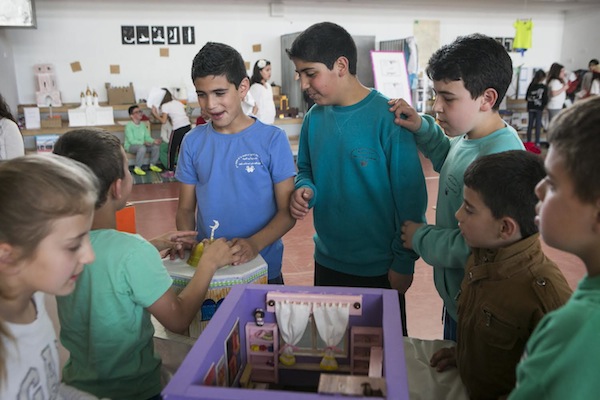
Hand in Hand was started in 1997, with the goal of creating integrated schools wherein both Arab and Jewish kids could study together in a bilingual (Hebrew and Arabic) framework within the public school system. (photo from Hand in Hand)

Starting with just two classes in 1998 – a kindergarten and a Grade 1 class – Hand in Hand now has five schools throughout Israel, serving 1,200 students.

Hand in Hand is the brainchild of Lee Gordon and Amin Kalaf. Gordon grew up in Portland, Ore., before making aliyah; he lived in Israel for 20 years, returning to the United States a few years ago. Kalaf grew up in a small village near Afula and now lives in Jerusalem. They founded Hand in Hand in 1997, with the goal of creating integrated schools wherein both Arab and Jewish kids could study together in a bilingual (Hebrew and Arabic) framework within the public school system. The concept involves both improving the quality of education and being a model for partnership between Jewish and Arab citizens, as well as the public and private sectors.

“We have mayors in the various towns supporting our projects and giving us buildings to use and some funding … so, it’s a public-private partnership,” said Gordon. “There is public funding from Israel and also a lot of private philanthropic support [from] around the world,” he said, referring to the United States, Canada, Europe and, of course, Israel. When Gordon moved back to the United States, he created (and heads) American Friends of Hand in Hand, a nonprofit fundraising organization.

Kalaf’s oldest child graduated from Hand in Hand’s first class of Grade 12 graduates. “We’ve had four high school graduating classes now at our only high school in Jerusalem,” said Gordon. “That’s our biggest school, with 600 students from pre-k to 12th grade.”

Two years ago, Hand in Hand added another component to the organization. “We’ve been doing a community initiative, which we call Shared Communities, in which we’re working to build relationships between Jewish and Arab adults, not just kids,” said Gordon.

Today, there is a whole range of programs for adults, including language classes, holiday celebrations, discussion groups and a men’s basketball team. “We probably have about 3,000 adults in programs around each of our schools,” said Gordon. “Sometimes, the programs are at the schools in the evenings, or in other places.

“They really stood out this past summer when there was all the violence – the kidnappings, the revenge murder of the Palestinian teen, and the two-month-long war in Gaza.”

Shared Communities was active throughout Operation Protective Edge. Despite the tensions and differing views, participants found common ground. One example of this was the program organizing Jerusalem adults and kids going on evening walks together, wearing T-shirts that read, “We refuse to be enemies.”

“They weren’t really protests, but they were saying not everything about Jews and Arabs is about war and conflict,” said Gordon. “Here, we are working together in our school … and, in a little town, people came out onto the side of the roads with signs that read, ‘We are neighbors in peace,’ which is more than just saying, ‘We are peaceful neighbors.’”

photo - Today, there is a whole range of programs for adults, including language classes, holiday celebrations, discussion groups and a men’s basketball team
Today, there is a whole range of programs for adults, including language classes, holiday celebrations, discussion groups and a men’s basketball team. (photo from Hand in Hand)

At the schools, Hand in Hand works toward keeping the numbers balanced between Arabs and Jews, and between boys and girls.

“These are the main prerequisites,” said Gordon. “Earlier on, we had more Arabs than Jews. Now, we have waiting lists on both sides, though there’s a larger waiting list on the Arab side.

“Most importantly, they are growing fast. For example, in the new school in Tel Aviv (which is a preschool and kindergarten for now), last year, we had one class of 30 students. This year, we have three classes with 100 students in total. And, there was enough interest that we could’ve had 150 kids if we’d have had enough room.”

Gordon added, “There are great teachers and a wonderful curriculum. It looks at multiculturalism, backgrounds and narratives of different religions, because we have Christians, Muslims, Arabs and Jews…. In the younger grades, they have two full-time teachers in each class, one Arab and one Jewish.”

Gordon spoke of the schools’ broad reach.

“You can have an Arab friend the same way you can have a Jewish friend,” he said. “It can help you in the workplace, academia or your social life, and I think that’s a direct impact of Hand in Hand…. From the very beginning, when a Jewish child was invited to an Arab’s home for a birthday party, this involved the parents taking that child in and they’d meet each other. So, there are a lot of friendships happening beyond the walls of the schools … and sometimes the parents’ friendships were long-lasting, even if the children changed friends…. And the families aren’t just the parents. They are uncles, aunts, sister, brothers, cousins…. People hear about it and are impacted.

“We want to be visible because we want the rest of Israel to know about this and to be an example, as an alternative. Things can be different. Jews and Arabs can get along.”

Canadians can make a tax-deductible donation to Hand in Hand via the Jerusalem Foundation of Canada, with which it has a partnership.

“Our goal is to bring this model to as many places as there is interest and to work with populations to help them build a model school in the community,” said Gordon.

For more information, visit handinhandk12.org.

Rebeca Kuropatwa is a Winnipeg freelance writer.
Format ImagePosted on November 21, 2014November 19, 2014Author Rebeca KuropatwaCategories IsraelTags Amin Kalaf, Arabs, Hand in Hand, Israelis, Jerusalem Foundation, Lee Gordon, Palestinians
Dogs break down barriers

Dogs break down barriers

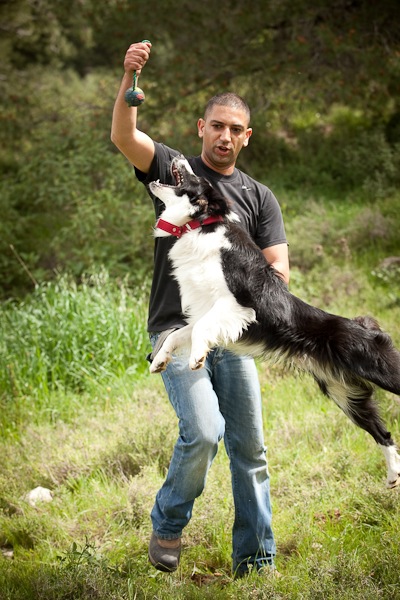
Ofer Biton with a therapy dog. (photo from Ofer Biton)

For years, therapists and other professionals have used animals to break down barriers and achieve breakthroughs in a multitude of situations. Recently, a pair of educators from Israel found a way to combine two of their passions – dogs and helping children with mental challenges.

Ofer Biton and Liat Bartov succeeded in getting recognition for the practice of canine therapy, and have since been teaching the how-to’s at universities across Israel.

Biton and Bartov met 20 years ago while working in special education. Some 10 years ago, “We started to think about dog training and teenagers [at risk],” said Bartov. “We started doing courses for teenagers in a youth group, and we had a lot of people wanting us in other schools in Jerusalem.”

Bartov and Biton found it challenging to find others to take on some of the rapidly increasing workload, which led them to teaching, beginning with one course in Jerusalem and one at Bar-Ilan University. Two years ago, they moved their base of operations to the Broshim campus of Tel-Aviv University, offering a one-year course that teaches both dog training and therapy methodology.

photo - Ofer Biton with a therapy dog. The dog is the tool for the therapist, facilitating the initial connection with the client
Ofer Biton with a therapy dog. The dog is the tool for the therapist, facilitating the initial connection with the client. (photo from Ofer Biton)

“We really like to teach the students how to deal with dogs and special education kids,” said Bartov. “The students who come to learn this dog training love animals, and dogs in particular. They come because they had a dream, they remember when they were kids, when the dog was their best friend, and now they still want to do something with dogs.”

Bartov emphasized that students learn that it is not the dog that is the therapist. The dog is the tool for the therapist, facilitating the initial connection with the client.

“The kids enjoy working with the dogs,” she said. “They feel like someone is waiting for them and they want to take care of someone else, so it gives you a very good starting point. Then, you must do what you learn in the course – build on that connection and create a triangle of trust.”

Anyone can benefit from this kind of therapy, according to Bartov. “It could be a very young child and it could be a very old man. It depends if there is connection with animals and dogs, especially. And, if you have this connection, you can do [the therapy] with anyone.”

Contrasting canine therapy to equine (horse) therapy, she explained, “The difference is in the size of the animal and the connection to it. The dog is waiting for you, wants to connect with you. You can do lots of things with him and he can come to your place, the hospital or your school.”

While schools that specialize in working with young students with attention deficit disorder (ADD) and attention deficit hyperactivity disorder (ADHD) were the initial focus for Bartov and Biton’s canine therapy, they are also doing some work with young offenders. As well, private therapists who have heard about the program are approaching Biton and Bartov for advice.

“Typically, people with the financial ability have started to use the service, because of the name of it,” said Bartov. “They like to show their kids that they’re not going to a ‘psychologist’ – that they’re taking them to a dog trainer or to play with dogs, then they move on to very long-term therapy.”

She added, “These are mainly private [clients] as well as special education schools. Regular education schools don’t have the funding to support it, so they’re not doing it yet.”

Overall, Bartov said canine therapy is currently “very trendy … and it’s been growing for the last five years. It begins with schools, and then people hear about it and are really interested. We can see it in how much work our students get. There are over 100 practising dog therapists in Israel, with over 50 students graduating every year.”

The university offers a summer and winter session course for dog therapy. The summer course has had waiting lists.

“My dream is that every school will use dog therapists,” said Bartov. “I hope we can do this and that people will understand the benefit of the school. Ideally, every place that has kids will have a small kennel with a few dogs, and the children can be with the dogs and can have this therapy.”

Bartov and Biton hope to one day bring government-supported canine therapy to public schools. Currently, no Israeli insurance provider covers the costs associated with canine therapy, although Bartov and Biton have begun working with insurance companies to one day make that part of the coverage options.

Rebeca Kuropatwa is a Winnipeg freelance writer.
Format ImagePosted on November 21, 2014November 19, 2014Author Rebeca KuropatwaCategories IsraelTags canine therapy, Liat Bartov, Ofer Biton
B-Shoe helps with stability, balance

B-Shoe helps with stability, balance

The B-Shoe prototype. (photo from b-shoe.com)

While observing his elderly father, Yonatan Manor, a chemical engineer from Haifa, decided to create a shoe to help prevent falls, an all too common danger faced by the elderly.

Manor’s father was often losing his balance when trying to go backwards, using his four-legged walker. “One Saturday morning, I was sitting at breakfast with my wife and told her I wished I had an idea to prevent him from falling,” said Manor. “It was like a joke, as I know mechanics and it’s not simple to build a machine strong enough to balance a person.”

Manor recalled, “My father would stand on his heels and then I’d have to push him forward, back to a balanced position.” Considering what type of shoe could help solve the problem, Manor said, “If the shoe was moving backward, it would do the same thing,” meaning it would restore a person’s balanced position. Manor went on to build a pre-prototype, a mechanical tool with a small motor and batteries, which he inserted into a shoe.

“This makes it so you can’t lose balance in the backward direction,” said the inventor. “You lean backward and then you find you’re standing straight again, and the shoe doesn’t have to move much, only the [length] of the heel. It’s only five centimetres, enough to do the job. It doesn’t push you, give the feeling of something moving under the leg or give the feeling that you may lose balance.”

Manor said the shoe, which has been dubbed the “B-Shoe,” is designed for walking around at home. When an elder does venture out, someone else should still provide some accompaniment.

When Manor reached the point when he knew he needed some business support to get his invention to the market, he turned to Abraham Stamper, a friend and retired scientist. Stamper became the chief executive officer of B-Shoe Technologies Ltd., established in 2011.

Manor and Stamper were able to develop a business plan and a working prototype with the initial money they raised. They also had the help of the government agency overseeing the high-tech industry for their efforts in the field.

“We’re in the phase of looking for funds for the investment of this next stage … developing the product ready for mass production,” said Manor. “Right now, it is just a generic prototype. Once we have the funds, it will likely take about 18 months to get it to market.”

When it came to developing the B-Shoe, Manor said the electronic and structural aspects were fairly straightforward. “The electro-mechanical solution is a bit smart and difficult,” said Manor. “We need to do it in low volume and low weight. The electro-mechanical mechanism was the main development obstacle.”

As far as retail cost, Manor anticipates the shoe will be within the range of other high-end tailor-made comfort or orthopedic shoes, which is about $500 to $1,000 US per pair (which will be available at a store from a distributor).

“We believe people who begin feeling like they’re losing balance or who’ve already fallen or suffered a near-fall will ask their GP or neurologist what to do and how to protect themselves,” said Manor. “Our vision is that medical professionals will then point the patient to the B-Shoe. Right now, people are most often recommended to use a walker or cane – but many people refuse to do so. The B-Shoe will be the better alternative.

“The shoe’s innovation isn’t about the shoe itself, but the fall-prevention mechanism, which can be embedded into the sole of any conventional flat walking shoe – so there will be a wide variety of shoes for both men and women.

“B-Shoe’s project addresses an annual global market of about 14 billion U.S. dollars.”

Dr. Stephen Rabinovitch, professor and Canada Research Chair at Simon Fraser University in the department of biomedical physiology and kinesiology and the School of Engineering Science, is well-versed on falls and balance in older adults.

After having reviewed the information on the B-Shoe website, Rabinovitch said, “It’s an interesting concept, but is in [a] very early stage of development and evaluation. We don’t know anything yet on its effectiveness in improving balance and mobility and preventing falls in older adults. Right now, the B-Shoe device focuses only on preventing backward falls, but falls occur in different directions.”

According to Rabinovitch, falls are the number one cause of injuries in seniors, including 95 percent of hip fractures and 60 percent of traumatic brain injuries. “So, even a moderate reduction in falls would carry significant social and economic benefits,” he said.

“Falls are challenging to prevent, as there are a wide range of risk factors, such as reductions in physical and cognitive function, diseases, use of psychoactive medications, reductions in sensory function and muscle weakness.

“It’s often difficult to think about prevention until falls start occurring, but it’s important for people to exercise throughout their lifespan, and to focus on both their strength (through resistance training) and their agility and balance (through walking, hiking and approaches like Tai Chi). A current buzz phrase is ‘exercise is medicine,’ which is certainly appropriate with regard to mobility and falls.”

Rebeca Kuropatwa is a Winnipeg freelance writer.
Format ImagePosted on November 7, 2014November 5, 2014Author Rebeca KuropatwaCategories WorldTags Abraham Stamper, B-Shoe, Stephen Rabinovitch, Yonatan Manor

Sexual harassment still a problem

When Winnipeg lawyer Yude Henteleff tried to change the way in which sexual harassment was viewed in Canada 25 years ago, he had hoped for more change by 2014.

At the time, he was the judge appointed to a case that involved a waitress who was being sexually harassed by another employee at the restaurant where she worked. After going to the owner of the restaurant and asking for his help and getting nowhere, she turned to the courts. While her case followed another with similarities, which ruled that the accused was not guilty, her case landed in Henteleff’s courtroom.

In Janzen v. Platy Enterprises Ltd. (1989), Henteleff found in favor of the plaintiff. His verdict was 144 pages long and included substantial evidence to support his decision, which he hoped would help the case stand the test of time.

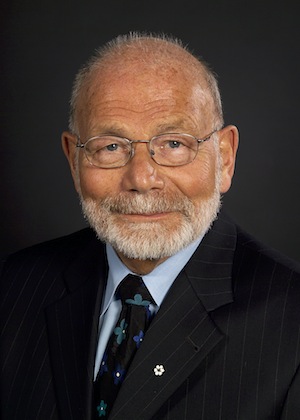
photo - Yude Henteleff
More than 25 years ago, Yude Henteleff tried to change the way in which sexual harassment was viewed in Canada. (photo from Yude Henteleff)

The case went through appeals that won but, in the end, it went on to the Supreme Court of Canada, where the verdict was reinstated. It has since been referred to more than 500 times in cases and verdicts throughout Canada.

Henteleff would be the first to say that we have a long way to go until sexual harassment disappears from the Canadian landscape, as it “continues to happen every day to hundreds of thousands of girls and women around the world to an extent that never seems to diminish.

“There are many instances that one can point to, which seem to indicate that, at least in Canada, as a result of the decision in Janzen v. Platy and other decisions which have since occurred dealing with the issue of sexual harassment, that, indeed, positive transformation has occurred – and that is marvelous,” he said.

“On the other hand, when you read recent studies, you really have to sit up and take notice that so much more has to be done, that sexual harassment is still rampant and widespread. We have legislation passed against bullying and the like, but why do these attitudes still persist to such a degree that it’s still so much to the continued disadvantage of women and girls?”

At the time of his Janzen v. Platy decision, Henteleff awarded lost wages plus exemplary damages to each of the two women. He did so because he “felt the economic consequences, amongst others, to women being sexual harassed was quite severe and no previous case I’d read had taken that into account. And, I thought it was about time that employers realized that, not only would they lose a case, but they would lose money out of their pocketbooks.

“Ultimately, I felt it was the strongest message one could give to potential harassers – that, hey you know what, this is going to cost you and you better think twice about doing what you’re doing or think twice about not speaking with your employees in such a way, that they wouldn’t continue to harass co-employees.”

Henteleff added, “When it was appealed to the Court of Queen’s Bench the first instance, they reduced it [the financial aspect] quite considerably,” he said. “When it went to the Court of Appeal, they reduced it even more, to the point where it just became a light slap on the wrist.

“The fact that, for the first time ever, the Supreme Court of Canada not only dealt with this issue, but dealt with it in a way that made it very clear sexual harassment was simply not acceptable.”

Henteleff views the current legislation and policies at various workplaces as quite adequate. But, he said, “Where the fault lies is in attitude. Attitudes have to be changed. The only way you can change it effectively is within the school system and that isn’t being done. But, it also has to be with society as a whole. Why school systems have been so resistant, why faculties of education have been so resistant, is a real puzzle to me.”

While Henteleff acknowledged that nowhere else in the world is doing a better job than Canada with respect to dealing with sexual harassment, he said, “We know it’s bad enough here and that should be enough for us to say we need to do much more than we’ve been doing so far to deal with this problem.”

As for Dianna Janzen, she continues to share her experience, because she knows from her work with Women’s Legal Education and Action Fund that the issue is very much alive.

“She is an example of how a young woman who wasn’t the least bit active in this area has become active because of her own personal experience,” said Henteleff about Janzen. “She isn’t afraid to share all the nuances of it, which shows a great deal of courage on her part.

“On the other hand, we know of thousands of women to whom this happened that are scarred forever, who remain silent, where it continues to eat at them because of how horrible that experience is to them psychologically, emotionally and physically. There are many statistics as to the long-term consequences, the negative ones, the serious ones, on women who suffer sexual harassment. They still have to deal, for the rest of their lives, with this horrific, horrible experience.

“One of the greatest problems facing mankind and womankind,” he continued, “is exemplified by the continued horrible violence against women – and this is because of attitudes rooted in thoughts and ideas that should no longer be parts of who we are as a society.

“Human beings have been searching for human rights, harmony, equality, respect and dignity for all. What we’ve done post-Janzen v. Platy falls far short of achieving these objectives for women and girls.”

Rebeca Kuropatwa is a Winnipeg freelance writer.

Posted on October 24, 2014October 23, 2014Author Rebeca KuropatwaCategories NationalTags harassment, Janzen v. Platy, Yude Henteleff

Posts pagination

Previous page Page 1 … Page 27 Page 28 Page 29 … Page 31 Next page
Proudly powered by WordPress