

Skip to content
  • Home
  • Subscribe / donate
  • Events calendar
  • Business Directory
  • FAQ
  • News
    • Local
    • National
    • Israel
    • World
    • עניין בחדשות
      A roundup of news in Canada and further afield, in Hebrew.
  • Opinion
    • From the JI
    • Op-Ed
  • Arts & Culture
    • Performing Arts
    • Music
    • Books
    • Visual Arts
    • TV & Film
  • Life
    • Celebrating the Holidays
    • Travel
    • The Daily Snooze
      Cartoons by Jacob Samuel
    • Mystery Photo
      Help the JI and JMABC fill in the gaps in our archives.
  • Community Links
    • Organizations, Etc.
    • Other News Sources & Blogs
  • JI Chai Celebration
  • JI@88! video

Recent Posts

  • SFU honours Gloria Gutman
  • Lifting people’s spirits
  • Wedding a ray of light
  • Indigeneity and Zionism
  • Rule of law broken: councilor
  • Football and its roles
  • The burden of defence
  • Fish Café returns after fire
  • All right in what goes wrong
  • Nuns & mermaids at TUTS
  • Camp offers holiday retreat
  • Students and mentors inspire
  • Once-in-a-lifetime trip
  • 100 dancers, one heart
  • Money for the sciences
  • What “Jewish food” means
  • Have a cookie, schnitzel too
  • Federation now across BC
  • Israel fighting for its existence
  • Deal strengthens Iran
  • Patriotic belonging diminishes
  • A campaign to engage
  • Upstanders’ first live event
  • Responding to Carney
  • Having your own home
  • Music a family tradition
  • Musical to warm heart
  • Community milestones … June 2026
  • Sharing her passion for Israel
  • Or Shalom reopens its doors
  • JFS from past to future
  • Need holistic approach
  • Sharing stories, advice
  • Journalist shares fears
  • Skills to live together
  • Road to independence

Archives

Follow @JewishIndie
image - CJN box ad Rockowers 2026

Byline: Michael Fox

U.S.-Israel relations in Norman

U.S.-Israel relations in Norman

Richard Gere, left, as Norman Oppenheimer and Lior Ashkenazi as Micha Eshel. In the unlikely confines of an upscale shoe store, the two characters forge a connection that will have profound ramifications. (photo by Niko Tavernise, Courtesy of Sony Pictures Classics)

The marvelous tragicomedy Norman: The Moderate Rise and Tragic Fall of a New York Fixer depicts an aging, desperate Jewish influence peddler who has survived in a shark-eat-minnow world via a smooth patter that blends alleged connections with half-promises.

Through manipulation, charm and luck, Norman (a poignant Richard Gere) devises a rendezvous with a minor Israeli deputy minister (Lior Ashkenazi) at loose ends in the Big Apple. In the unlikely confines of an upscale shoe store, they forge a connection that will have profound ramifications for both men – for better and for worse.

The film, which opens today, April 28, marks the first movie that acclaimed writer-director Joseph Cedar has shot in his birthplace. Cedar grew up in Israel from the age of 6, returned to New York to earn his degree in film at New York University and established himself as one of Israel’s finest filmmakers with Time of Favour, Campfire and a pair of Academy Award nominees for best foreign language film, Beaufort and Footnote.

The soft-spoken Cedar allows that he’s exceptionally familiar with both sides of the complicated dynamic between Israel and American Jews.

“It’s a messy relationship, which, from my point of view, justifies the film,” he said. “There’s something fascinating about what Israelis think of Americans and what they expect from Americans, and how Americans view Israel, how they view Israelis and what Israel is for their identity. All these things are a big part of my conversations, so the movie allowed me to touch some of the things that are vital to my life.”

Cedar has a simple explanation for some of the curious behaviour that takes place at high-level meetings between the countries, illustrated by a scene where Ashkenazi’s character, Micha Eshel, now a figure of greater importance, lectures a U.S. diplomat visiting his Washington, D.C., hotel suite.

“One of the things that will explain so many of the encounters between Israelis and American politicians is that every time they show up they’re in jet lag,” Cedar said. “Especially around AIPAC, Israelis come to America, they’re treated like they’re Caesar and they’re a little off-balance because their time zone is all messed up. And they still have to be awake for Israeli things, so they’re sleep-deprived.”

Some viewers may presume a key plot twist in Norman was inspired by the gifts that Prime Minister Binyamin Netanyahu allegedly received from Arnon Milchan, but Cedar finished shooting the film before the news broke.

“That relationship, of an American Jew gifting an Israeli politician, that’s not something new and it’s not something Bibi invented, and it’s not going to go away…. This is the nucleus of what the relationship is about: Americans gift Israelis,” Cedar said. “I’m trying to understand it; I’m not introducing it. Everyone knows that that’s what it is.”

The encounter between Norman and Micha in the shoe store – on which the movie turns – is Cedar’s inspired way of conveying the complicated personal and moral aspects of any transaction between Americans and Israelis.

“All the meetings between Norman and Eshel helped me understand this relationship, and helped me understand this on an individual, human level, not on a geopolitical or policy side,” Cedar explained.

Cedar also viewed Norman’s character and fate through another prism, that of the so-called “court Jews” of past eras.

“There’s a set of characteristics of that personality that I’m attracted to,” he said. “I identify with the need to get into a close circle of power, and then the tragedy of being ultimately kicked out because you have no substance on your own. You have no safety net, no one is there to protect you, you don’t have an interest that someone else needs to protect.”

Cedar injects notes of levity and absurdity into Norman’s saga, which stem from the director’s appreciation for the long tradition in movies of characters looking bad for our amusement.

“Norman is a little less naïve and he is not as pure as [Charlie Chaplin’s] Tramp, but it’s the same kind of situations – of pushing yourself into places where you’re not invited and being kicked out,” he said.

“Cohen’s Advertising Scheme and Cohen’s Fire Sale, part of a series of [short] films from 1902 to 1907, take place in a shop or right outside the shop’s window, and [involve] a merchant trying to cheat someone and ultimately being the victim of his own scheme.”

Cedar acknowledged that some contemporary viewers will see something offensive in the Cohen films.

“Putting it in the context of the image of the Jew in cinema, these are crazy portrayals of Jews,” Cedar said. “They’re grotesque. But it’s just a form of comedy. In the ’30s, if you put that kind of character on the screen, there’s an agenda behind it. In the very beginning, I think it was just funny.”

Gere is not an actor one associates with embarrassment and pratfalls, but he is extremely effective here playing a man trying to retain his dignity amid impending disaster.

“There’s something about Norman that I thought might connect to this primal need of moviegoers to see someone make a fool out of himself, to humiliate himself more than most people are willing to humiliate themselves,” Cedar said. “It’s a form of entertainment that I enjoy.”

There’s another basic element of Norman’s character that Cedar shares, however.

“It’s being essential to something,” he said. “Norman feels if he’s not essential to other people’s projects, then he has no existence. So, his whole motive is, ‘How do I become essential to others? How do I create a situation where people are dependent on me?’ I identify with that because I have that. It’s part of me.”

Michael Fox is a writer and film critic living in San Francisco.
Format ImagePosted on April 28, 2017April 26, 2017Author Michael FoxCategories TV & FilmTags Diaspora, Israel, Joseph Cedar, politics, Richard Gere
The reach of humour

The reach of humour

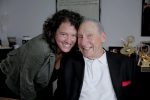
Director Ferne Pearlstein with Mel Brooks. (photo from Tangerine Entertainment)

Woody Allen’s Crimes and Misdemeanours marked the first time that many people heard the philosophical proposition, expressed by Alan Alda’s character, that “comedy is tragedy plus time.”

I’ve always cited “the Woodman” as the source of the insight, probably because it’s consistent with a Jewish worldview. In fact, another Allen, the late, great comedian, composer and TV host Steve Allen, described the phenomenon in a 1957 magazine interview. Maybe he picked it up from somebody else; in any event, this is what he had to say: “When I explained to a friend recently that the subject matter of most comedy is tragic (drunkenness, overweight, financial problems, accidents, etc.), he said, ‘Do you mean to tell me that the dreadful events of the day are a fit subject for humorous comment?’ The answer is ‘No, but they will be pretty soon.’”

Ferne Pearlstein’s wonderfully entertaining and provocative documentary The Last Laugh asks a gaggle of comedians, as well as the viewer, if there might be one subject that defies Allen’s thesis. Seventy years on, is the Holocaust still off limits for purveyors of punchlines? Are there subjects that cannot and should not be the subject of jokes? Or are some of the functions of humour – healing, confronting uncomfortable truths from oblique angles, challenging stereotypes – applicable even in the case of targeted genocide? Finally, as the great wit Hillel famously asked his students at a late-night yeshivah improv set, “If not now, when?”

Pearlstein puts the question to a group of sharp Jewish humourists, interspersing their incisive comments with a parade of clips from films and TV shows that comprise a kind of Rorschach test for the viewer. The expert witnesses include Rob Reiner, Harry Shearer, Gilbert Gottfried and Larry Charles, who grapple with the topic with both hilarious and discomfiting results. As you’d imagine, given their ethnic backgrounds and line of work, they’ve given the matter considerable thought over the years.

Mel Brooks, who displayed unimaginable chutzpah and courage in conceiving and producing The Producers 50 years ago, cites Charlie Chaplin’s brilliant The Great Dictator to illustrate the power of mockery and ridicule to cut the Nazis down to size. Another interviewee provides a reminder that humour played an important role in the camps, providing a brief escape from bleak reality and a way of maintaining one’s humanity and dignity.

But it’s another matter altogether to mine the camps or victims for laughs. (Here’s where the late Joan Rivers makes an appearance with a jaw-dropping one-liner from some archived late-night show.)

Of course, one of the jobs of comedians is to step over the line, in order to impel us to consider where the line is. (Come on down, Sarah Silverman.) And, given the prominence of the Holocaust in shaping the identity of at least two generations of American Jews, it is a taboo that needs to be examined.

Too soon (to use the catchphrase du jour)? About time, I’d say.

Pearlstein implicitly acknowledges two important caveats, however. The reality of the Holocaust can’t be ignored or subsumed in a theoretical discussion of contemporary attitudes, and those who endured the camps should be allowed to comment on what’s funny.

Stalwart survivor Renee Firestone acts as a thread and guidepost throughout The Last Laugh, reminding us of the deadly toll of the Holocaust as well as the determination and, yes, good humour required to create a satisfying life after the darkness of Europe.

Firestone inspires us to consider the highest and best use of memory and, in the context of the film, to see humour as a constructive way of remembering and revisiting tragedy that instils strength. Over and over, The Last Laugh eschews glib analysis in pursuit of deeper truths. And those are always the best punchlines.

The Last Laugh airs on PBS April 24 (check local listings).

Michael Fox is a writer and film critic living in San Francisco.

Format ImagePosted on April 21, 2017April 20, 2017Author Michael FoxCategories TV & FilmTags comedy, Ferne Pearlstein, Holocaust
Demon renews dybbuk

Demon renews dybbuk

(photo from krakowpost.com)

The first “character” we meet in Marcin Wrona’s coolly fascinating Demon is a yellow bulldozer, rolling menacingly through the empty streets of a Polish village. It’s a harbinger, as well as a metaphor, but of what?

Bulldozers dig, and they bury. Both tasks are central to the plot of Demon, which seizes on the disturbing idea of the dybbuk – a ghost who takes possession of a bridegroom on his wedding day – and reimagines it in the contemporary world. A world, that is, in which the Holocaust is part of our experience – even for those who have buried it in hopes of forgetting.

A Polish-Israeli co-production that is by turns deeply unsettling and absurdly funny, Demon follows the arrival of handsome architect Python (Israeli actor Itay Tiran of Lebanon) from England for the unambiguously happy occasion of his wedding. The groom is Polish, like his lovely bride Zaneta (Agnieszka Zulewska) and her family, but we have the disquieting feeling from the get-go that he is apart, on his own, an innocent outsider who has (in horror-film tradition) unknowingly ventured into a situation of unimaginable dangers.

Setting to work on the yard behind the decrepit farmhouse that Zaneta’s family owns and has bequeathed to the couple, Python hops on the ominous, aforementioned bulldozer. A noise makes him stop almost immediately, whence he discovers that he has unearthed bones.

So begins Python’s descent from a rational, regular guy to a tormented figure of unreachable despair. Unfortunately, but also comically, his transformation mostly takes place during the marathon rain- and vodka-soaked reception following the wedding ceremony.

Wrona and writer Pawel Maslona freely adapted the latter’s 2008 play, whose title translates as “Adherence” or “Clinging.” The director’s decision to shift the setting to a wedding was clearly inspired by the 1937 Polish-Yiddish film Der Dibek (The Dybbuk), itself adapted from a play by Shimon Ansky.

In the press notes, Demon producer Olga Szymanska says, “We wound up doing a lot of research into the history of the [dybbuk] story, not to mention Jewish-Polish history in general. If you read the studies on the dybbuk, those who became possessed by the spirit find themselves unable to speak. It originated in a very orthodox society of Jews, so it was the idea of this voice that could never have been heard which was longing to be heard.”

Given the clue or two I planted above, and this review’s appearance in a Jewish publication, you will have an idea of the general nature of the long-suppressed secret that the spirit who inhabits Python desperately wants uttered. The specific details are melancholy and enigmatic, and Wrona conveys them with chilling effectiveness. (The viewer is haunted also by the knowledge that Wrona died – reportedly of suicide – at 42, shortly after the film’s world première a year ago.)

It’s always of interest when Polish filmmakers choose to address their country’s past and the spectre of antisemitism, in part because they (and their fellow citizens) have historically been more reluctant to do so than their German and French counterparts. So, Demon provokes memories of Aftermath, the excellent Polish thriller from 2012 that likewise involved the physical excavation of the Jewish past (gravestones, in this case) and also invoked an otherworldly presence.

The kind of movie that lingers in the mind for days afterward, Demon contains any number of images that don’t just stick but demand to be puzzled over further. The more literal-minded viewer, meanwhile, will find plenty to mull in the movie’s slicing comments on present-day Poland.

Demon screens at Vancity Theatre Oct. 28-Nov. 1. In Polish, English and Yiddish with English subtitles, it is rated R for language and some sexuality/nudity.

Michael Fox is a writer and film critic living in San Francisco.
Format ImagePosted on October 14, 2016October 13, 2016Author Michael FoxCategories TV & FilmTags dybbuk, Holocaust, horror film, Poland
PBS doc on the Sharps

PBS doc on the Sharps

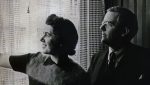
Martha and Waitstill Sharp at home in Wellesley, Mass., in 1938. (photo from Sharp Family Archives via pbs.org)

At a time when many Americans embraced isolationism, the leaders of the American Unitarian Association were focused on the refugees clamoring to get out of Czechoslovakia. The AUA impelled Unitarian minister Waitstill Sharp to go with his wife Martha to Europe in 1938, leaving their young children in the care of others, and get as many people out as possible with documents and cunning.

Yad Vashem posthumously acknowledged the Sharps as Righteous Among the Nations in 2006. The couple’s saga, and that of several of the Jews they rescued, is recounted in Artemis Joukowsky and Ken Burns’ feature-length documentary Defying the Nazis: The Sharps’ War, which aired earlier this month on PBS.

For those who have seen a film or three about the various efforts to extricate Jews from the deathtrap of Nazi-occupied Europe, Defying the Nazis breaks no new ground. But there are always new generations who aren’t familiar with the Holocaust or cognizant of the courage of ordinary people who saved friends and neighbors or, in the case of the Sharps, complete strangers.

Joukowsky is the Sharps’ grandson, and the curator and guardian of their legacy. Burns, of course, brings household-name recognition and brand-name confidence to a PBS audience, as well as a uniformly high standard of craft and polish. If his name attracts viewers who otherwise wouldn’t tune in, it’s all for the good.

Defying the Nazis arrives at an especially ugly time when refugees and immigrants are being demonized and conflated with terrorists. Not that xenophobia is a new phenomenon, as Jewish readers are especially aware. But I find the film more valuable and inspiring as a reminder that there are highly moral individuals who will put themselves in mortal danger to do the right thing – even if they have no personal stake or connection to the beneficiaries.

Waitstill Sharp was a trained lawyer while Martha had the self-confidence and determination to attend college in a day and age when some families – including hers – disavowed their daughters for not getting a job to augment the household income. That is to say, the Sharps were adept at thinking on their feet, delivering persuasive and succinct arguments and hiding their emotions. Whether counseling desperate applicants in Prague, raising money in London or Paris (like Waitstill did) or accompanying refugees by train across Germany to a safe border (like Martha and Waitstill did, separately), these were essential skills.

The couple was based in the Czech capital for six treacherous months beginning just before the Nazi invasion in March 1939. They were dispatched again the following summer, this time to Lisbon.

As compelling as the Sharps’ activities were, they were relatively brief in duration. There’s only so much to tell, so the filmmakers augment the rescuers’ point of view with context from Holocaust historian Debórah Dwork and the firsthand recollections of several survivors whom the Sharps aided.

Viewers who are fascinated by the ways in which parental choices affect children will enjoy watching and interpreting the passages with the Sharps’ daughter. Martha Jr. admits to being (understandably) upset when her parents took off for Europe, not once but twice, but she touts the remarkable results they achieved rather than channeling a petulant child.

The Sharps may have alienated their daughter, at least for brief periods of her adolescence. They definitely paid a price in their marriage, which didn’t last a decade after the war.

Defying the Nazis doesn’t address it, but I highly doubt the couple had any regrets about embarking on their life-saving refugee work. Consider Waitstill’s succinct reply when the German-Jewish author Lion Feuchtwanger asked why he was taking such an immense risk to help him: “I don’t like to see guys get pushed around,” Sharp said.

Defying the Nazis: The Sharps’ War is available for viewing (at no charge) at pbs.org/kenburns/defying-the-nazis-the-sharps-war/home until Oct. 6.

Michael Fox is a writer and film critic living in San Francisco.

Format ImagePosted on September 30, 2016September 28, 2016Author Michael FoxCategories TV & FilmTags AUA, Czechoslovakia, Holocaust, Nazis, Sharps, Unitarian Church
Son honors father’s legacy

Son honors father’s legacy

For the Love of Spock explores Spock actor Leonard Nimoy’s legacy and his relationship with his son, Adam. (photo from For the Love of Spock via space.com)

When Leonard Nimoy announced in 1949 that he wanted to be an actor, and was leaving Boston for Hollywood, his Russian-Jewish parents were stunned.

“My grandfather said that he should take up the accordion,” said Adam Nimoy, Leonard’s son and the director of the new documentary For the Love of Spock. “You could always make money with the accordion. Those were Max Nimoy’s words of wisdom to my dad, if the actor thing didn’t work out.”

He needn’t have worried. Not because Leonard Nimoy eventually made it after 15 years of bit parts in movies and TV shows, thanks to Star Trek. Or because his talent and curiosity propelled him into singing, photography, poetry and film directing. Nimoy had a deeply ingrained work ethic, independent of the arts, that perpetually drove him. From folding chairs at the Boston Pops and selling vacuum cleaners in his hometown to installing aquariums in Los Angeles, Nimoy was determined to support himself and his family. But his ambitions assuredly lay elsewhere.

“He had a tremendous hunger to achieve, which was the dream of his parents coming over here, to achieve something in American society,” explained his son. “This is why he was so able to relate to Spock. My dad felt like an outsider, of a minority, of an immigrant background in a very defined neighborhood of Boston with other immigrants, and with a desire to assimilate himself into the greater culture.”

Nimoy, who died last year at the age of 83, is front and centre in For the Love of Spock.

The public often conflates an actor with a role. The documentary is wilfully guilty of that, too, delving into Nimoy’s personal life only so far as it relates to Spock or to Adam’s relationship with his dad. But it does include the story of how Nimoy took a childhood memory of seeing elders in synagogue making the “shin” gesture and adopted it as a Vulcan greeting.

“He was very connected to his Jewish roots and very proud of his Jewish roots,” Adam Nimoy said during a recent interview. “He repeated the story of the Spock salute hundreds of times, literally, with great pride about where he got it – that Spock is an embodiment of some of Judaism.”

He added, “It’s become a universal symbol. My dad, through Spock, has spread this tradition of Judaism to the world. The magnitude of that fact alone, that so many people all over the planet salute my father with a ‘shin,’ is just mind-boggling to me.”

Of course, not everything Leonard Nimoy did endeared him to his son. Driven to make the most of what might be a short-lived gig on Star Trek – NBC canceled the show after three seasons, in fact, although it found greater success in syndication – Nimoy accepted every personal appearance he was offered.

“It took a toll on us, we had challenges we had to deal with, without him around, without his involvement in the family,” said his son. “His career was number one. This is what caused a lot of friction between the two of us because I just didn’t feel like I had that much of his attention early on. He had a great love and respect for the fans, but trying to get him to look at me was very challenging for me.”

Alas, that experience continued beyond Adam’s adolescence. He was at University of California Berkeley in the late 1970s, on his own path to getting a law degree, when his father made a stop at Wheeler Hall on a college speaking tour.

“I waited for him to finish,” Adam recalled with a painful clarity. “I thought we were going to go to dinner together. He came up the aisle, signed some autographs and came up to me and said, ‘I have to catch a plane. I got another commitment I got to make tomorrow in Los Angeles, and I’m leaving.’

“I was devastated. ‘What am I, borsht?’ It wasn’t until later in his life that it was less about Leonard and his career and more about ‘what’s going on with my kids and my grandchildren.’”

Adam and Leonard were estranged for a stretch, exacerbated by the actor’s drinking and his son’s drug use. When asked if it was difficult to forgive his father, though, he doesn’t hesitate: “No, because I’m in 12-Step, and that’s a huge part of what 12-Step’s all about.”

Resentments and setbacks play only a passing role in For the Love of Spock, which is an unabashed tribute to Leonard Nimoy’s contributions as an actor and a man to a character who was and is widely embraced for embodying intelligence, science, fairness and integrity. (And for being different, of course, and living on the margins of mainstream society.)

The film omits the elder Nimoy’s record as a major benefactor of Jewish causes: the Israel Philharmonic Orchestra, a childhood centre at Temple Israel of Hollywood and the career counseling centre at Beit T’Shuvah, a Jewish recovery house.

It also leaves out the degree to which the actor passed down his pride and love of being Jewish.

“I would say that I am more religious than my father was,” said Adam. “I like to study Torah, I like to go to services on a regular basis on Friday night. Particularly the weekly Torah study has been very meaningful to me over the past couple of years. It’s just mind-boggling to me about the divine inspiration of the written word and how it always applies to something going on in my life. This is what enriches my life, and brings new meaning to my life.”

For the Love of Spock has two remaining screenings at Park Theatre in Vancouver: Sept. 18, 9:45 pm., and Sept. 20, 6:45 p.m.

Michael Fox is a writer and film critic living in San Francisco.

 

Format ImagePosted on September 16, 2016September 15, 2016Author Michael FoxCategories TV & FilmTags fatherhood, Judaism, Leonard Nimoy, Spock, Star Trek
Melancholic adaptation

Melancholic adaptation

Natalie Portman in a scene from the film A Tale of Love and Darkness. (photo by Ran Mendelson/Focus Features via houstonchronicle.com)

A Tale of Love and Darkness may seem like a nondescript and even coyly evasive title, but in fact it expresses the essence of Natalie Portman’s textured film of Amos Oz’s book.

An unfailingly sensitive though necessarily compressed adaptation of Oz’s acclaimed 2004 memoir, the movie portrays Oz’s nurturing yet fraught childhood with his immigrant parents in Jerusalem in the years just before and after the declaration of the state of Israel.

In the film, Amos possesses both character and potential, but there are rocks in the path of every promising child. Almost every frame of A Tale of Love and Darkness is imbued with a brooding, ominous tension that derives in various measure from Old Country suffering, the nascent nation’s Holocaust trauma and Amos’ mother’s depression.

Shot in a hard-edged, anti-nostalgic palette of black and green, the story unfolds in a constrained world where both the past and the future exert immense weight on the present. That said, Portman infuses her richly engrossing feature directorial debut with welcome dashes of poetry and humor.

Amos (Amir Tessler) is an exceedingly smart and empathetic child, instilled with a love of books and words by his academic father Arieh (Gilad Kahana) and an appreciation for the allusive power of fables by his quietly adoring mother Fania (Portman).

Because the viewer (likely) knows that Amos will grow up to be a great writer, we immediately presume that Arieh is his primary influence. In one of the film’s most rewarding turns, we come to realize that Amos received the gift for storytelling from his mother.

Amos doesn’t make that connection either, until much later. Even an observant child can’t recognize or understand the import of most events as they happen, whether they are as familiar as his paternal grandmother’s perennial disapproval of Fania or as dangerous as foraging for empty bottles on the outskirts of Jerusalem during the War of Independence.

Although Fania, Arieh and Amos are tightly connected, they also inhabit private universes. Arieh is subsumed by his goal of being a popular scholarly author, first reveling in the publication of his esoteric debut and gradually frustrated by the reality of his modest place in the world.

Fania’s inner life is deeply mysterious, with dark memories of her youth in Poland alternating with curious dreams, or fantasies. She has a recurring vision of a hunky, sandy-haired kibbutznik, a “new Jew” and the diametric opposite of her husband, who is a spiritual descendant of the yeshivah bochers of the shtetl.

Amos, who was born in Jerusalem – as was Portman, more than four decades later – tries to make sense of everything, from the late-night United Nations vote for the partition of Palestine and the creation of Israel, to the Neanderthal schoolyard bullies who take his sandwich, to his mother’s catatonic fugues.

The film’s guiding light, Amos navigates this terrain with uncommon aplomb and resourcefulness. The impact of A Tale of Love and Darkness, though, is in its evocation of the currents of memory, sorrow, dread and pride that swirl through Jerusalem’s streets.

The elderly Amos (voiced by Moni Moshonov), a welcome albeit melancholy presence, provides occasional, wise narration about his city, as well as his parents.

“Jerusalem,” he muses at one point, “is a black widow who devours her lovers while they are still inside her.”

It’s a metaphor, yes, but it could be a synopsis for a parable that Fania might tell Amos. Ultimately, A Tale of Love and Darkness is about the power – and the limits – of stories to change our lives.

A Tale of Love and Darkness (in Hebrew with English subtitles) opened last week at Fifth Avenue Cinemas.

Michael Fox is a writer and film critic living in San Francisco.

Format ImagePosted on September 9, 2016September 7, 2016Author Michael FoxCategories TV & FilmTags adaptations, Amos Oz, Israel, Portman
Roth film now playing

Roth film now playing

In Indignation, Logan Lerman plays model student Marcus Messner. (photo from indignationfilm.com)

For his directorial debut, veteran producer and writer James Schamus chose a Philip Roth novel set during a turning point in the Jewish-American experience.

Indignation unfolds in 1951, when opportunities and prospects for young Jewish professionals were just beginning to expand in the United States.

“You discover when you start to inhabit that world that there was a genuine sense of optimism, a genuine belief that belonging in this country was possible and real and happening,” said Schamus, 57. “And, on the other hand, you have all the traumas associated with the experiences of extended families in the Holocaust disappearing and a political culture in this country that was bizarrely – especially if you’re of my age, and you didn’t experience it but you realize that your parents did – about as openly antisemitic as you can imagine.”

Schamus cites the covenants for real estate developments that excluded Jews, and the quotas for Jewish students at Ivy League universities. So, Marcus Messner, the protagonist of Schamus’ insightful and moving film adaptation of Roth’s 2008 autobiographical novel, is fortunate to receive a scholarship from a small college in Ohio. He has to travel some distance from his New Jersey home, but not as far as the young Americans fighting in Korea.

A model student, Marcus (Logan Lerman) believes that college – and the world – is a meritocracy, and his brains and hard work will push him forward. His parents worry that he has little margin for error, and dread any disruption, such as Marcus’ involvement with an alluring blond named Olivia Hutton (Sarah Gavon).

“One of the great crises as articulated by the characters in the book is, ‘Oh Lord, my son is dating a shiksa,’” Schamus said with a smile in an April interview before he showed his film at the San Francisco International Film Festival. “The kind of psychic and carnal energy created by that dynamic drives a lot of Roth, but really a lot of the work of most major Jewish-American male artists of mid-century America. It’s a bit of a trope.”

But Schamus, who does inordinate research for all his screenplays, found much more to plumb in Indignation. He realized that the author subtly drew Olivia as a parallel to Roth’s contemporary, Sylvia Plath.

“One of the things that drew me was a spark of recognition that, in this late novel, Roth is going back to a much earlier time than he often [does], that he’s connecting with a generation that we often don’t realize that he’s part of,” said Schamus. “While Roth is growing up in very, very Jewish Newark, N.J., up the road a few towns is Allen Ginsberg, who’s a few years older. In fact, Ginsberg’s aunt was Roth’s English high school teacher.

“So, Indignation, to me, is more than a tip of the hat to, ‘I saw the best minds of my generation, dot, dot, dot.’ It’s the same subject. These were those best minds who were destroyed by precisely the system that Roth rails against in the book.”

Schamus, who grew up Jewish in Los Angeles and has lived and worked in New York for many years, wrote and produced most of Ang Lee’s films, from Pushing Hands through Taking Woodstock. He also headed Focus Features for many years, earning a reputation as a staunch and astute supporter of independent filmmakers. (He financed and distributed the Coen brothers’ A Serious Man, among other titles.)

Well-versed in the etiquette of adaptation, Schamus reached out to Roth as Indignation was about to go into production.

“You don’t adapt one of the world’s greatest writers and not get a little nervous,” said Schamus. “I grit my teeth and sent him the script before we started shooting, which was scary because, if he’d had a violently negative reaction, it would have put me in the pickle of probably not making the movie, to be honest. Philip did me one of the greatest favors anybody’s ever done a filmmaker, and that is he refused to read it.”

At press time, Indignation was screening at Cineplex Odeon International Village.

Michael Fox is a writer and film critic living in San Francisco.

Posted on August 19, 2016August 18, 2016Author Michael FoxCategories TV & FilmTags antisemitism, Indignation, Philip Roth, Schamus
Learning to live with autism

Learning to live with autism

Owen Suskind is the subject of the documentary Life, Animated. (photo from A&E Indiefilms)

Children’s films – especially the animated variety – always make sure to highlight the moral of the story. But very few children embraced those lessons as deeply and thoughtfully as Owen Suskind.

Now in his mid-20s, Owen had a normal East Coast childhood until he suddenly stopped speaking when he was 3. His parents, Ron and Cornelia, tried every strategy and tactic to treat Owen’s autism, but he remained uncommunicative and seemingly unreachable.

Ron Suskind, the bestselling author of such nonfiction books as The Price of Loyalty: George W. Bush, the White House and the Education of Paul O’Neill, relates in the beautifully crafted and irresistibly touching documentary Life, Animated that he was stunned one day to hear Owen repeat a snippet of dialogue while watching a Disney animated movie.

It took a few years, however, to figure out that Owen was using the characters, behavioral cues and ethical directives of Disney films to make sense of and deal with his own experiences. Benefiting from the dedicated attention of his mother and various tutors, Owen regained the ability to speak, interact with other people and thrive.

Adapted from Suskind’s 2014 book, Life, Animated: A Story of Sidekicks, Heroes and Autism, the documentary will see four screenings at Vancity Theatre Aug. 5-11 (viff.org). It isn’t a stretch to predict that it will be a strong contender for the year-end shortlist for the Academy Award for documentary feature.

Unexpectedly, when Ron, Cornelia and Roger Ross Williams – the first African-American director to win an Oscar, for the documentary short Music by Prudence – sat down for an interview on a Sunday morning in early May, before they presented Life, Animated at the San Francisco International Film Festival, the conversation centred on Owen’s bar mitzvah.

“When he was about 11,” Cornelia recalled, “his therapist gave me a book, which no one’s ever heard of, called God and the Autism Connection. It talks about how so many, many of these kids operate on a different emotional plane.”

“He always had been spiritual,” Ron added. “In some ways, he preserved sort of a notion of God being there within reach that kids have but, even as he grew in sophistication, he didn’t give that up. He always had this way in which he was not encumbered by the usual doubts or hesitations that become the common currency of most people’s lives as they grow.”

Ron and Cornelia (who is Catholic and did not convert) belonged to a Reconstructionist synagogue in Bethesda, Md. Owen’s bar mitzvah tutor was Miriam Eisenstadt, whose mother was the first woman to be bat mitzvahed in the United States and whose grandfather was the founder of Reconstructionism, Mordecai Kaplan.

“The question was how would we get him up to the bimah and have him do what’s needed,” Ron said. “First, we had a problem where we didn’t know what movies to go to, because he really didn’t have much of a taste for The Prince of Egypt. It just didn’t work for him.”

So, Ron switched from one Exodus story to another, pointing Owen to An American Tale: Fievel Goes West. “Basically, it’s Eastern European Jews as mice,” Ron said.

At the same time, Owen embraced the part of his parashah that discussed the commandments a person should follow.

“He’s very rule-oriented,” Cornelia explained. “He’s better now but he used to be very black and white, and rules are very important.”

On the bimah, Owen honed in on one rule in particular: never put a block in front of a blind person.

“He talked about that in his speech, the notion of special, and he broadened it,” Ron said. “He had the designation of ‘he’s a special kid.’ He said, ‘But I think God wants us to see everyone as special.’”

Williams said Life, Animated included a poignant flashback scene from Owen’s bar mitzvah until it was removed from one of the last cuts. Indeed, the director goes so far back with the Suskinds that he arranged for the editing of Owen’s bar mitzvah video. Consequently, it’s ironic and moving to see that the most savvy film buff in Life, Animated is Owen, who discerns and delineates the positive themes of Disney films to other autistic children and young adults.

At the same time that it recounts Owen’s childhood journey, the documentary follows his current path to living independently in a residential community with support.

“You can almost feel his desire – I think it’s deep in all of us – to arrive at a place of faith, of constancy, of a sense of a universe that is coherent, and a place of love and possibility,” Ron said. “He was searching for that on his own. He was often using the best of Disney to help support that architecture, which actually is a pretty good pick, if you think about it.”

Michael Fox is a writer and film critic living in San Francisco.

Format ImagePosted on July 15, 2016July 13, 2016Author Michael FoxCategories TV & FilmTags autism, Disney, Suskind
Experimenter first rate

Experimenter first rate

Peter Sarsgaard in Experimenter. (photo from Magnolia Pictures)

It was neither random nor coincidental that groundbreaking social psychologist Stanley Milgram was Jewish, nor that his parents emigrated from Eastern Europe before the war.

“The Holocaust was a significant motivation to propel him into the areas he was searching, and he explicitly cited [it] as a background for trying to understand darker aspects of human nature,” said Experimenter writer-director Michael Almereyda. “He wasn’t enclosing or limiting how he saw the world, but the obedience experiments – which are his first experiments, how the film begins and what he’s best known for – were shaped by his speculation about human nature.”

Those 1961 experiments found that most ordinary people would reluctantly follow an order to inflict pain on another person from an authority figure who took responsibility. The controversial results, obtained the same year as the Eichmann trial though published later, suggested that Americans were capable of behaving in a not-dissimilar way than Germans and others infamously did.

Almereyda’s thoughtful, poignant and dryly comic Experimenter, starring Peter Sarsgaard and Winona Ryder, centres on the obedience experiments, the fallout and Milgram’s subsequent career. One of the finest American films of 2015 yet inexplicably overlooked, the DVD was released earlier this year and it can also be rented online.

Almereyda informs the audience of Milgram’s Jewishness from the outset, and provides several reminders in the course of the film.

“It seemed inappropriate to elide it or blur it or ignore it because it was a key part of his identity, as a man in the world but also as a scientist asking questions about human behavior,” he said. “I was aware of how deeply Jewish he was, that he married a Jewish woman who also was the daughter of immigrants, that there weren’t that many Jewish people in the community at Harvard and his friends tended to be Jewish, and how that sense of his identity was a huge part of who he was.”

As a Jew and a social psychologist, Milgram’s perspective was affected by the Holocaust.

“Milgram comes out with a very heavy quote talking about how, ‘during the Second World War, people were exterminated with the efficiency applied to making appliances,’” said Almereyda. “That’s a carefully worded and rather cynical statement, but its impact is resonant to this day. Genocide is a very efficient undertaking these days, and has been throughout the 20th century. You don’t have to be Jewish to be mindful of genocide, but we’re cognizant of that as one of the main shadows in recent human history, and he was trying to come to terms with it.”

A soft-spoken, self-described “displaced Midwesterner” and longtime New Yorker, the 57-year-old writer and director received a secular Jewish upbringing in Overland Park, Kan., before his family moved to Southern California when he was 13. His quirky independent films include Twister (starring Harry Dean Stanton and Crispin Glover), mood piece Another Girl Another Planet, vampire saga Nadja with Peter Fonda and Hamlet with Ethan Hawke and Bill Murray.

Almereyda researched and wrote the Experimenter script about seven years ago.

“It’s abidingly interesting and relevant and compelling,” the filmmaker mused during a visit last May when Experimenter played the San Francisco International Film Festival. “He left a lot of papers behind and they’re all at Yale and one can have access to them. I didn’t make up much of this movie. Almost everything, even the wacky, quirky things, is verifiably true.”

Almereyda confided that he originally wanted a Jewish actor to play Milgram, but was forced to relinquish that ideal.

“There is, as far as I know, no young Dustin Hoffman who’s a leading man right now,” he said with a smile. “Young Dustin Hoffman would have been a great Stanley Milgram.”

When Sarsgaard was suggested, Almereyda checked out his performance as Jewish man-about-town David Goldman in An Education (2009) and was instantly persuaded.

“He’s a very agile actor, he can do a lot of things and he believes that he could write a book,” Almereyda said. “You can’t say that about all leading men, you know. So whether he’s Jewish or not, he’s very equipped to play the part.”

Experimenter quickly succeeds in shifting the viewer’s mind from the lead actor’s ancestry to the more pressing question of how much empathy we feel for strangers.

“The film is meant to be a bit of a mirror, as Milgram’s work was [meant] to mirror human nature,” said Almereyda. “It’s meant to make you question your own behavior and your own life – not as an indictment but as a kind of exploration, because we can all be more conscious. That was Milgram’s hope. There’s a lot of ways that immoral or questionable or violent behavior is inescapable in life and in history, but the process of self-awareness is one way to turn the tide.”

Michael Fox is a writer and film critic living in San Francisco.

Format ImagePosted on March 18, 2016March 16, 2016Author Michael FoxCategories TV & FilmTags Almereyda, Experimenter, Milgram, Sarsgaard
Jews lit up 2015 silver screen

Jews lit up 2015 silver screen

Helen Mirren at the Moët British Independent Film Awards in December 2014. Mirren starred in two 2015 films with Jewish characters or themes. (photo by See Li via commons.wikimedia.org)

Jewish characters and themes popped up everywhere in movies in 2015, from high-profile Hollywood ensemble pieces to overlooked indies to popular documentaries. If this comes as news, you have a lot of catch-up viewing in store.

Just among recent releases, Trumbo exposed the persecution of Jews and the antisemitism of Hedda Hopper (played by Helen Mirren) in its depiction of the Hollywood blacklist, while Spotlight portrayed Boston Globe editor Marty Baron (Liev Schreiber) as a pivotal, principled figure in exposing the Catholic Church’s cover-up of sexually abusive priests. The Big Short painted Jewish fund manager Mark Baum (Steve Carell) as an obnoxious enemy of injustice who is conflicted about making out like a bandit in the 2008 economic crash.

That entertaining trio of movies is primed for Oscar gold, but two fall films with stubbornly brilliant Jewish protagonists were essentially ignored. Veteran director Ed Zwick (Defiance) and Tobey Maguire recreated chess maestro Bobby Fischer’s 1972 peak and valley in Pawn Sacrifice (jewishindependent.ca/chess-masters-decline), while indie filmmaker Michael Almereyda and Peter Sarsgaard revisited Dr. Stanley Milgram’s still-resonant 1961 obedience study and its fraught aftermath in Experimenter.

Yet another movie based on real events, Woman in Gold, traced the efforts of elderly Maria Altmann (Mirren, again) to recover the Klimt painting stolen from her family by the Nazis. The unusual Brian Wilson biopic, Love & Mercy, included a villainous portrayal of the Beach Boy’s controlling therapist, Dr. Eugene Landy (Paul Giamatti).

This is the perfect place to segue to documentaries, but first let’s acknowledge Son of Saul, which opens at Fifth Avenue Cinemas today (Jan. 15). The breathless concentration camp drama from Hungary is a lock to be nominated in the foreign language film category and is the favorite to win the Academy Award. (Another Eastern European film, Ida, the stark Polish saga of a young nun who discovers she’s Jewish, received the Oscar last year.)

The same prediction applies in the documentary feature category to Amy, Asif Kapadia’s dispiriting doc about singer Amy Winehouse’s messy life (jewishindependent.ca/amy-doc-a-dismal-portrayal). In the documentary short category, Claude Lanzmann: Spectres of the Shoah made the shortlist (jewishindependent.ca/filmmaker-as-subject).

As usual, a slew of docs with a Jewish hero or heroine received theatrical releases in 2015. Above and Beyond, about the Jewish airmen who defended the new Jewish state in 1948 (jewishindependent.ca/spielberg-opens-film-festival); Deli Man, about the past, present and future of Jewish delis; Seymour: An Introduction, about New York classical pianist-turned-teacher Seymour Bernstein (jewishindependent.ca/ hard-earned-wisdom); Iris, about N.Y. fashion icon Iris Apfel; The Outrageous Sophie Tucker (jewishindependent.ca/enjoy-an-afternoon-movie-with-jsa-vjfc); Rosenwald, about Sears chief executive officer and philanthropist Julius Rosenwald; and Peggy Guggenheim: Art Addict are all worth seeking out on Netflix or DVD.

I note in passing that Michael Moore invoked the Holocaust during a Berlin stopover in Where to Invade Next, while a Jewish grandmother popped up briefly in Laurie Anderson’s Heart of a Dog.

In the world of fiction, Sarah Silverman won kudos for her dramatic performance as an addicted (non-Jewish) suburban housewife in I Smile Back, but Jonah Hill (as reporter Michael Finkel) and James Franco earned brickbats for True Story. Seth Rogen did his part to set Jewish-Christian relations back a century with a ludicrously unfunny scene in a church in The Night Before. (Presuming anyone in his stoned audience remembers.)

The titular female protagonist in the indie dramedy Me and Earl and the Dying Girl is identified as Jewish by her name (Rachel Kushner) and a menorah on the living room table – and that’s all.

Gett: The Trial of Viviane Amsalem (jewishindependent.ca/the-three-trials-of-gett), Ronit and Shlomi Elkabetz’s blistering courtroom finale to their trilogy about a frustrated Sephardi wife and her family, was the most successful Israeli release of the year in the United States. Eran Riklis’ warm and witty A Borrowed Identity, adapted from Sayed Kashua’s memoir and now on Netflix, deserved a wider audience (jewishindependent.ca/dancing-arabs-screens), as did Nadav Lapid’s austere and unsettling The Kindergarten Teacher (jewishindependent.ca/small-sample-of-viff).

Arthouse movie-goers turned out for Christian Petzold’s restrained German thriller Phoenix, starring Nina Hoss as a survivor looking for her husband in postwar Berlin. Another German film, Labyrinth of Lies, inspired by the prosecutors who pierced the late-1950s veneer of secrecy, ignorance and denial and revealed the truth about Nazi war crimes, didn’t sell many tickets but did make the Oscar shortlist for foreign language film.

We lost several giants in 2015, notably the gifted performers and tireless social activists Theodore Bikel and Leonard Nimoy. Documentary master Albert Maysles (Grey Gardens, Iris) was 88 and Oscar-winning cinematographer Haskell Wexler (Who’s Afraid of Virginia Woolf, Bound for Glory) was 94.

Lia Van Leer, a Romanian émigré who founded the Jerusalem Cinémathèque (including the Israel Film Archive) and the Jerusalem Film Festival, and was so instrumental in the development and quality of the country’s movie output that she was dubbed the queen of Israeli cinema, was 90.

Pioneering Belgian filmmaker Chantal Akerman (Jeanne Dielman) left us, along with indie filmmaker Richard Glatzer (Still Alice) and documentary maker Bruce Sinofsky (Brother’s Keeper). Gene Saks, who directed many of the hit plays and movies penned by Neil Simon, was 93.

The marvelous actors Ron Moody (The Twelve Chairs) and Anne Meara (who converted to Judaism before she married Jerry Stiller in 1954) also passed away in 2015. So did Omar Sharif, the Egyptian leading man who was vilified at home for playing Jewish gambler Nicky Arnstein opposite Barbra Streisand in Funny Girl. In his memory, and as an antidote to the ongoing political discord, seek out a copy of Monsieur Ibrahim (2003), the poignant story of the friendship between a Jewish teenager and a Muslim shop owner (Sharif) in late-1950s Paris.

Michael Fox is a writer and film critic living in San Francisco.

Format ImagePosted on January 15, 2016January 21, 2016Author Michael FoxCategories TV & Film

Posts pagination

Previous page Page 1 Page 2 Page 3 Page 4 Page 5 Next page
Proudly powered by WordPress