

Skip to content
  • Home
  • Subscribe / donate
  • Events calendar
  • Business Directory
  • FAQ
  • News
    • Local
    • National
    • Israel
    • World
    • עניין בחדשות
      A roundup of news in Canada and further afield, in Hebrew.
  • Opinion
    • From the JI
    • Op-Ed
  • Arts & Culture
    • Performing Arts
    • Music
    • Books
    • Visual Arts
    • TV & Film
  • Life
    • Celebrating the Holidays
    • Travel
    • The Daily Snooze
      Cartoons by Jacob Samuel
    • Mystery Photo
      Help the JI and JMABC fill in the gaps in our archives.
  • Community Links
    • Organizations, Etc.
    • Other News Sources & Blogs
  • JI Chai Celebration
  • JI@88! video

Recent Posts

  • SFU honours Gloria Gutman
  • Lifting people’s spirits
  • Wedding a ray of light
  • Indigeneity and Zionism
  • Rule of law broken: councilor
  • Football and its roles
  • The burden of defence
  • Fish Café returns after fire
  • All right in what goes wrong
  • Nuns & mermaids at TUTS
  • Camp offers holiday retreat
  • Students and mentors inspire
  • Once-in-a-lifetime trip
  • 100 dancers, one heart
  • Money for the sciences
  • What “Jewish food” means
  • Have a cookie, schnitzel too
  • Federation now across BC
  • Israel fighting for its existence
  • Deal strengthens Iran
  • Patriotic belonging diminishes
  • A campaign to engage
  • Upstanders’ first live event
  • Responding to Carney
  • Having your own home
  • Music a family tradition
  • Musical to warm heart
  • Community milestones … June 2026
  • Sharing her passion for Israel
  • Or Shalom reopens its doors
  • JFS from past to future
  • Need holistic approach
  • Sharing stories, advice
  • Journalist shares fears
  • Skills to live together
  • Road to independence

Archives

Follow @JewishIndie
image - CJN box ad Rockowers 2026

Byline: Michael Fox

Witty, compassionate

Witty, compassionate

The Farewell Party screens Nov. 10 in the Vancouver Jewish Film Festival. (photo from VJFF)

One could compile a very long list of movies whose enjoyment is enhanced by watching them with someone you love. The Farewell Party is the rare film that should be seen with someone you trust with your life.

Israeli filmmakers Tal Granit and Sharon Maymon set their funny, sensitive and ultimately moving tale among a small coterie of longtime friends heroically maintaining their independence and dignity in a Jerusalem retirement home. The suffering of a terminally ill member of their circle forces them to consider the merit, and confront the risks, of friend-assisted suicide.

There’s some pithy dialogue about the difference between helping a buddy and committing murder, but The Farewell Party isn’t interested in advancing a position on euthanasia or even grappling with the ethics or morality of one’s right to die. The film’s concern is for the spouse tasked with the agonizing responsibility of carrying out the decision of a suffering husband or wife.

Lest this sound like a must-avoid movie of the week, Granit and Maymon filter the proceedings through the deliciously absurdist mix of baleful fatalism and real-world pragmatism that is Jewish humor.

Through its first half, The Farewell Party smoothly glides from deadpan comedy to black comedy to bittersweet comedy. The chuckles taper off en route to a perfectly conceived anti-climax, a poignant coda to the lifelong love affair to whose last chapters we’ve been privy.

The Farewell Party screens Nov. 10, 6:45 p.m., in the Vancouver Jewish Film Festival (vjff.org). Wonderfully played by a cadre of veteran comic actors, it’s the film for anyone who’s ever grumbled that nobody makes movies for older audiences anymore.

After a marvelously droll opening scene in which Yehezkel (Ze-ev Revah) plays God to persuade a beloved friend to choose life and continue her treatment, the retired inventor is reluctantly corralled into helping ease the anguish of an expiring pal.

“They’re keeping him alive as though dying was a crime,” says the man’s wife, Yana (Aliza Rozen).

One of the movie’s refreshingly tart assumptions is that the elderly can’t afford the luxury of self-deception. Well, with one huge exception, that is: Yehezkel refuses to acknowledge that his wife’s steadily worsening memory lapses will necessitate moving her to an assisted-living facility in the not-distant future.

Notwithstanding the recurring presence of Yehezkel and Levana’s adult daughter and grandchild, this is a film about a stratum of society – older people – that is essentially invisible to everyone but its distinguished (and roguish) members. Out of necessity, they are compelled to create their own community.

There are moments in The Farewell Party, consequently, that edge toward a comedy about codgers executing a heist, or a drama examining the portentous final stages of long-term relationship. But Granit and Maymon maintain such a solid grasp on their film’s tone and esthetic that it never tips too far in either direction. The austere palette of cool blues and greys, combined with the near-absence of music, eliminates any whiff of sentimentality or, for that matter, situation comedy. What comes through in every frame of The Farewell Party is compassion for the human condition. If you think about it, movies can’t offer anything more compelling – or rewarding – than that.

Michael Fox is a writer and film critic living in San Francisco.

Format ImagePosted on October 30, 2015October 28, 2015Author Michael FoxCategories TV & FilmTags assisted suicide, Farewell Party, Sharon Maymon, Tal Granit, Vancouver Jewish Film Festival, VJFF
Chess master’s decline

Chess master’s decline

Tobey Maguire stars as Bobby Fischer in Edward Zwick’s Pawn Sacrifice. (photo by Takashi Seida)

If there is any lingering goodwill in the world toward the late Bobby Fischer – the once-in-a-century chess whiz who achieved fame as an unlikely “Cold Warrior” – Pawn Sacrifice pretty much snuffs it out.

Veteran director Edward Zwick’s fast-paced, bleakly entertaining film builds relentlessly from Fischer’s Brooklyn childhood to his internationally celebrated 1972 showdown with Soviet grandmaster Boris Spassky in Iceland.

A jittery retelling of the rise and zenith of a man with undiagnosed mental illness that manifested itself in paranoid (and frequently antisemitic) delusions, Pawn Sacrifice presents Fischer as a deeply unlikable and unsympathetic protagonist. He is not, to use the vernacular, someone with whom you’d like to have a beer.

Some of that can be attributed to the unfortunate casting of the eternally boyish Tobey Maguire, who plays Fischer as a petulant child rather than a calculating genius.

Maguire’s tics and tantrums do serve the film, ultimately. In a singularly subversive strategy for a mainstream movie, Steven Knight’s shrewd screenplay forces viewers to confront the fact that the social misfit and erstwhile American underdog we are rooting for is, in reality, a lunatic and a mamzer.

Pawn Sacrifice, which opened recently in Vancouver, is worth seeing for that reason, as well as to revisit a period when the Soviet Union was the United States’ great rival and – before the Miracle on Ice, before Reagan moved into the White House – a skinny, 29-year-old New York Jew emerged as the locus of national pride.

Another incentive is the always-terrific Liev Schreiber, whose delicious performance as the taciturn Spassky conveys imperiousness or bemusement with a raised eyebrow or barely perceptible head tilt. The Jewish actor, who played a Jewish Belarusian resistance leader in Zwick’s Defiance, likewise delivers his few Russian lines with a wonderful clipped accent.

While Spassky is a shades-wearing nonconformist, to the degree he could be, disdaining white shirts and ties in favor of his signature black turtleneck and blazer, Fischer is a rebel without a cause beyond his own single-minded drive to win. Actually, “destroy” is a more accurate word.

In flashbacks to his adolescence, we see the seeds of paranoia planted by his Jewish mother (played by Robin Weigert), whose communist beliefs and friends attracted FBI surveillance. The young Fischer’s trust was further eroded by her refusal to tell him who his father was.

By his teens, Fischer wouldn’t listen or take advice from anyone. Paradoxically, just a few years later, he embraced audiotapes that pinned the ills of the world on the Zionist conspiracy (among other villains).

As its title promises, Pawn Sacrifice poses the question, “What does it avail a man to win the world and lose his mind?” To its credit, the film doesn’t try to explain Fischer’s illness, nor put too much diagnostic or symbolic weight on the episodes it depicts from his youth. Consequently, it isn’t a cautionary fable except in the sense that Fischer didn’t have the tools and help to stop himself from slipping down the rabbit hole.

Fischer’s erratic behavior during the 1972 World Chess Championship led the media to portray him merely as an enigmatic, mercurial iconoclast. In one of the movie’s occasional forays into black comedy, Nixon and Kissinger telephone their support. (Apparently, among paranoids, it takes one to know one.)

That series of matches between Fischer and Spassky provides the dramatic crux of the film, and it is undeniably riveting and unpredictable.

To counter the fundamental unhappiness at Fischer’s core, as well as the static nature of chess games, Pawn Sacrifice employs rapid-fire editing and a double-LP’s worth of 1960s rock hits. The strategy effectively mitigates the main character’s depressing aspects without obscuring his legacy: Fischer was neither a hero nor an anti-hero, but an irredeemable narcissist with a mean streak.

Michael Fox is a writer and film critic living in San Francisco.

Format ImagePosted on October 9, 2015October 8, 2015Author Michael FoxCategories TV & FilmTags Bobby Fischer, Boris Spassky, chess, Pawn Sacrifice
Amy doc a dismal portrayal

Amy doc a dismal portrayal

Image from the movie Amy. Amy Winehouse died four years ago this month. (photo from epk.tv)

Amy Winehouse, the brash little Jewish girl with the great big voice, died four years ago this month. There are any number of ways to mark that unhappy anniversary and draw inspiration from the British singer-songwriter’s artistic legacy. Subjecting yourself to Amy, Asif Kapadia’s unattractive and superficial documentary, is not the recommended option.

Amy opened on July 10. Strewn with grainy video footage shot by Winehouse, her family and friends over several years, the film is conceived as an intimate, behind-the-scenes portrait of a very public, very talented figure. Given that Winehouse mined her troubled relationships for her pain- and yearning-filled lyrics, it makes sense to conflate her creative and personal lives. But, rather than highlighting Winehouse’s artistic courage and her commitment to confronting and conveying hard truths, Amy presents its subject as weak, insecure, volatile and vulnerable. In lieu of insight, Kapadia offers amateur psychologizing.

photo - In Amy, filmmaker Asif Kapadia can’t resist focusing on Winehouse’s low points
In Amy, filmmaker Asif Kapadia can’t resist focusing on Winehouse’s low points. (photo from epk.tv)

The list of culprits goes way back. When Amy was a toddler, her mother wasn’t strong enough to stand up to her or rein her in. (Had her mother set firm boundaries all along, who’s to say the free-thinking Amy wouldn’t have rebelled and run away as a teenager?)

Her father cheated on her mother for years before they divorced when Amy was an adolescent. We are left to conclude that this is the source of Amy’s neediness, promiscuity, vulnerability and poor judgment regarding men. (Mitch Winehouse resurfaces once her career takes off, which allows Kapadia to imply that he was more concerned with Amy’s income streams than with her health.)

Oddly, no other facts about Winehouse’s upbringing are deemed to be relevant, including what kind of work her parents did or how they instilled her Jewish identity.

We infer that the North London family was lower middle-class, without connections or access to opportunities for their children. From the playful, self-deprecating way Winehouse refers to herself in messages left on answering machines, it appears that she associated being Jewish with being a curiosity and an outsider.

Although lyrics were important to her, there was no literary component to Winehouse’s Jewish identity. Her musical idols weren’t Jewish wordsmiths such as Bob Dylan, Laura Nyro or Paul Simon but vocalist/interpreters Sarah Vaughan, Billie Holiday and Tony Bennett. (Bennett’s collaboration in the studio with an awestruck Winehouse on “Body and Soul” for his Duets II album – reportedly her last recording – is one of the more wrenching sequences in Amy.)

The film also casts some responsibility for the 27-year-old’s premature demise on her bad-boy lover and eventual husband Blake Fielder-Civil. She followed his lead into hard drugs out of some twisted combination of love, obsession and need.

Finally, Kapadia tosses the pressures of fame and the pursuit of the paparazzi into the mix. If Amy is starting to sound like the familiar, formulaic shape of an episode of VH1’s Behind the Music, your hearing is excellent.

The documentary’s big revelation – which is withheld until late in the film, giving it a sensationalist vibe – is that Winehouse was bulimic. Had Amy presented her illness as a defining (albeit secret) characteristic from childhood instead of withholding it for dramatic purposes, the documentary’s social utility would be infinitely greater.

Regrettably fulfilling the clichés of too many portraits of artists, Amy can’t resist being drawn – like the proverbial moth to a flame – to the sordidness, unhappiness and public embarrassment that denoted Winehouse’s low points.

Thankfully, what will remain long after the details of her life have faded into trivia on a Wikipedia page is that extraordinary voice. The best way to mark Amy Winehouse’s life is to listen to her music.

Amy is screening at Fifth Avenue Cinemas and Cineplex Odeon International Village. It is rated R for language and drug material. It runs 128 minutes.

Michael Fox is a writer and film critic living in San Francisco.

 

Format ImagePosted on July 17, 2015July 15, 2015Author Michael FoxCategories TV & FilmTags Amy Winehouse, Asif Kapadia
Hard-earned wisdom

Hard-earned wisdom

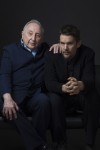
Seymour Bernstein, left, and Ethan Hawke. (photo from Ramsey Fendall/Risk Love LLC)

Two kinds of people will fall under the spell of Seymour: An Introduction, Ethan Hawke’s respectful and affectionate study of virtuoso pianist, composer and teacher Seymour Bernstein. Fans of classical music, of course, who will savor this ode to the beauty and craft of solo piano as 81 minutes of heaven. The other audience is anyone who ever wrestled with the pursuit of ambition, the hollowness of material success and the double-edged sword of uncommon talent.

Bernstein had all those things, but commercial pressures and the anxiety of going on stage whittled away the pleasure of playing concerts. At 50, he retired from public performance to compose and teach.

He had been aware for awhile, however, that he was unable to harmonize his career with the experience. After his celebrated 1969 performance at Alice Tully Hall in New York, he told the friend hosting the reception, “If you love me, you’ll never let me play in public again.”

To his friends, Bernstein is a mentor, philosopher and guru of how to attain satisfaction amid the vicissitudes of a life spent creating ephemeral art. Presumably that’s why Hawke, an actor and novelist, was moved to expose Bernstein’s hard-earned wisdom to a wider audience (without adding much in the way of inspired and/or distracting artistic flourishes).

Seymour: An Introduction opened March 20 for what will likely be a short run. That shouldn’t be interpreted as further evidence of the death of civilization, mind you, for classical compositions haven’t been America’s popular music since Elvis left Memphis.

Most of the film’s running time is devoted to the longtime Manhattan resident working with students and engaged in conversation, notably with the New York Times architecture critic and pianist Michael Kimmelman.

Bernstein is an astute teacher, and he’s exceedingly articulate on the subjects of music, discipline and education. But somewhere past the midpoint of the film he begins to seem less avuncular and more pedantic.

That stems, in part, from his willingness to talk about certain things – that we sense he’s expounded on countless times – while avoiding other subjects. There’s a clear limit to how much he’s going to reveal about himself, and how vulnerable he’ll be in front of the camera. He likes being revered, but on his terms.

All Bernstein says about his New Jersey upbringing is that there was no music in the house, and that his family didn’t own any records. He still bridles at the memory of his father’s perennial joke – “I have three daughters and a pianist” – as evidence that his old man couldn’t relate to him.

Perhaps it is this separateness, imposed on great talents by mere mortals, that pained Bernstein throughout his decades as a concert pianist. If so, why doesn’t this lifelong bachelor mention a single romantic relationship? Isn’t that an important element of living a satisfying life?

The one person who does merit his affection is the late, great English-Jewish pianist Sir Clifford Curzon, with whom Bernstein studied. That recollection has a self-serving coda, though, namely that Bernstein wrote a letter out of the blue to Queen Elizabeth that presumably contributed to Curzon receiving a knighthood.

That said, Bernstein is the teacher that everyone covets – knowledgeable, experienced, appreciative, precise, encouraging and invested. If you’re still recovering from the bark and bite of J.K. Simmons’ Oscar-winning turn in Whiplash, Seymour: An Introduction is the perfect balm.

Seymour: An Introduction is rated PG for some mild thematic elements.

Michael Fox is a writer and film critic living in San Francisco.
Format ImagePosted on March 27, 2015March 26, 2015Author Michael FoxCategories TV & FilmTags Ethan Hawke, Seymour Bernstein
Family’s little white lie

Family’s little white lie

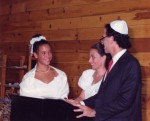
Lacey Schwartz celebrates her bat mitzvah with her parents, Peggy and Robert. (photo from littlewhiteliethefilm.com)

From Hollywood films like Next Stop Greenwich Village and Reversal of Fortune to documentaries like The Times of Harvey Milk, hyper-verbal Jews are practically a movie cliché. Name the last film that featured a Jew at a loss for words. It’s a stumper, because the silver screen stereotype of Jews is emotionally candid, unabashedly frank and unfailingly articulate. The rare exception to that rule, Lacey Schwartz’s Little White Lie deserves a place in the record books for that reason alone.

The first-person documentary follows the 30-something filmmaker’s effort to learn the identity of her biological father and, more importantly, force her parents to acknowledge and confront a painful secret. At the critical juncture, however, they become unexpectedly tongue-tied.

A fascinating modern mystery that paradoxically chooses not to explore the most interesting aspects of identity and race, Little White Lie airs nationally on March 23 as part of PBS’s Independent Lens series.

Schwartz grew up in Woodstock, N.Y., with doting parents. Her mother, Peggy, married at 21, sticking to a path her parents had instilled.

“We didn’t think outside of the box,” Peggy recalls. “And sometimes it was easier that way.”

Going with the flow seems to have been Peggy and husband Robert’s credo. After Lacey was born in 1977, and relatives or friends would observe that she was darker-skinned than her parents, Robert would point to a photograph of his swarthy, Sicilian grandfather by way of explanation.

Schwartz offers numerous childhood pictures of herself, and it’s obvious to the viewer that one of her parents could be black. Was she adopted? That would make sense, and certainly wouldn’t be a shanda, but no, there’s a photo of a very pregnant Peggy. Did Peggy have an affair? If so, neither she nor Robert ever said a word about it while they raised Lacey like any other white and Jewish girl.

“I wasn’t passing,” Schwartz tells us, referring to the practice of becoming regarded as a member of another racial or ethnic group. “I actually grew up believing I was white.”

One of the odder aspects of this bizarre saga is that Peggy and Robert seemingly never anticipated that one day Lacey would have questions and demand answers. It wasn’t until Lacey started high school – in a neighboring town with African American students – that she began to experience serious cognitive dissonance. The black kids assumed she was black, even though she thought she was white.

Schwartz gives the impression that in the ensuing years, through college and into adulthood, she had to work out her identity issues on her own with little to no help from her parents.

The perfectly titled Little White Lie eventually clears up the paternity mystery but, along the way, the emphasis shifts to Schwartz’s ongoing confusion, frustration and insecurity. In its weaker moments, the film becomes a therapeutic record of, and a vehicle for, her rocky process of acceptance.

Peggy and Robert’s inability to take responsibility for the messy secret at the family core deprives Lacey of the catharsis she seeks, and Little White Lie of a poignant climax.

More regrettable, though, is Schwartz’s disinterest in pursuing a deeper discussion of identity, and the comparative influences of genetics and upbringing. The film operates on a relentlessly personal level that perhaps precludes a broader perspective, but it is, therefore, baffling that Schwarz never talks about which Jewish and African American practices and traits she maintains and cherishes.

Schwartz’s wedding partially addresses this oversight. The filmmaker joins in the hora circle and is lifted with her husband on chairs; a bit later she dances to an African American rhythm. The scene doesn’t have the feel-good power it aspires to, but that’s a minor quibble.

The greater disappointment is that Little White Lie squanders a unique opportunity to bring Jewish culture and values to a wide audience, and African American culture and values to a Jewish audience.

Michael Fox is a writer and film critic living in San Francisco.
Format ImagePosted on March 13, 2015March 11, 2015Author Michael FoxCategories TV & FilmTags Lacey Schwartz, Little White Lie
The three trials of Gett

The three trials of Gett

Viviane (Ronit Elkabetz) and Carmel (Menashe Noy) in Gett. (photo from Music Box Films)

The marvelously claustrophobic and deeply damning Israeli courtroom drama Gett: The Trial of Viviane Amsalem – which opens March 13 at Vancity Theatre – actually consists of three trials.

Seeking a divorce after some 30 years, Viviane aims to cast her husband Elisha as the defendant. However, the government-funded religious court vested with authority over Jewish divorces won’t grant a gett without the husband’s consent – and the triumvirate of Orthodox rabbis insists it has limited power to pressure him. As a result, it often feels as if Viviane (rivetingly played by Ronit Elkabetz) is on trial. And, because the process seems arbitrary and unfairly skewed in favor of the husband (the taciturn, unwavering Simon Abkarian), the film explicitly puts the system itself on trial.

“Our work is very political,” said Shlomi Elkabetz, who co-wrote and co-directed the film with his sister Ronit. “Gett is a protest film.”

The Elkabetzes come from a Moroccan Sephardi background, and were born in Beersheva and raised around Haifa.

“We did not have any connection whatsoever to the cultural centres in Israel [growing up],” Elkabetz said during a visit to San Francisco last fall. “We did not have any access, not by our family members and not by the surroundings of the places we grew up in.”

As outsiders who had to push and elbow their way into Israel’s Ashkenazi-dominated cultural hierarchy, they take great satisfaction in Gett’s Ophir Award for best picture and selection as Israel’s official submission to the Oscars in the best foreign language film category. (It didn’t receive a nomination.)

The film’s structure and setup is simple and powerful: Viviane wants a divorce, and her husband says no.

“Just like that there is huge suspense, because we identify with the wish of Viviane to be free,” Elkabetz said. “The dream of the modern world is freedom. She wants something that all of us want.”

The corollary to rooting for Viviane is that the other characters assume the cloak of villains, but the filmmakers made a concerted effort to imbue Gett with nuance and ambiguity, which makes for a more interesting, provocative and richer work.

“[Ronit and I] don’t judge Viviane, we do not judge Elisha, not the judges, we do not judge [Viviane’s] advocate,” said Elkabetz. “Everybody has his place for performing their interior life and making it exterior in that little theatre of the court. Everybody is respected by us, the storytellers.”

Gett marks the third and final chapter of an exceptional trilogy that began, in the very first scene of To Take a Wife (2004), with Viviane’s seven brothers discouraging her from rocking the boat and seeking a divorce. Shiva (Seven Days), set a few years after Viviane has left Elisha, reunites the extended family for a funeral.

Shiva (2008) also won the Ophir for best picture, so the attention and respect of their peers is not a brand new experience for the Elkabetzes. One gets the feeling that Shlomi and Ronit (familiar to movie-goers from The Band’s Visit), a gay man and a woman, respectively, are fueled by the role of underdogs.

For his part, Shlomi Elkabetz wants to make accessible films that provoke audience reactions and, ideally, promote societal change. Intense and often intensely absurd, the beautifully crafted and acted Gett hits every mark.

“If I go to all this trouble, I want people to be aware of the film,” he said. “Part of my attraction in cinema is to try to make cinema that does not give up filmmaking. I’m not trying to flatter anyone but to be strict and radical and at the same time to be popular. Is it possible? I don’t know.”

Elkabetz laughs, at himself and the test he has set for himself. Consider it Gett’s fourth trial.

Michael Fox is a writer and film critic living in San Francisco.

Format ImagePosted on March 6, 2015October 27, 2015Author Michael FoxCategories TV & FilmTags gett, Israel, Ronit Elkabetz, Shlomi Elkabetz
Mixed welcome at Downton

Mixed welcome at Downton

In Downton Abbey, Rose (Lily James) is smitten with Atticus Aldridge (Matt Barber). (photo from pbs.org/wgbh/masterpiece)

Jewish characters have finally joined the impeccably attired throng at Downton Abbey, and it’s not an altogether happy day.

While Lord and Lady Grantham welcome the arrivals with exquisite manners and the perfectly calibrated amount of modest warmth, series creator and writer Julian Fellowes is a good deal less hospitable. He has devised a nuclear family of cardboard cutouts that fit unflattering Jewish stereotypes and generate viewer antipathy.

Before we rush to judgment or leap to conclusions, however, we should allow for the possibility that the uncomplimentary presentation of the Aldridge family in Season 5 is merely a teaser for Season 6 (and beyond, given the series’ extraordinary popularity in the colonies). It’s not a stretch to imagine Fellowes using the Aldridges as a means of exposing and examining British antisemitism as Downtown Abbey rolls into the late 1920s and early 1930s.

As everyone knows, PBS’s hit Masterpiece series has long featured a character with Jewish ancestry. Lady Grantham, aka Lady Cora Crawley, is the American-born daughter of the late Isidore Levinson. Cora is Episcopalian, like her mother, but she doesn’t view Jews as “the other.”

I must reveal a spoiler, namely that Lord Grantham’s niece, Rose, doesn’t see Jews as different, either. That is, not when they’re as hunky as Atticus Aldridge, a square-jawed banker’s son who chivalrously shelters Rose with his umbrella in one of the least-inspired meet-cutes in the annals of television.

One could trace Rose’s open-mindedness to last season’s colorblind liaison with a black jazz singer, and her naive modernity to her fight with Lord Grantham over bringing a wireless into the sacred realm of Downton Abbey. But Atticus is so assimilated and so devoid of personality that he wouldn’t register as Jewish if he didn’t tell us. In other words, Rose is smitten with an Englishmen of her status and breeding, and whose Jewishness is incidental rather than fundamental. In fact, the moment when he confides that he’s descended from Jews who left Odessa after particularly brutal pogroms doesn’t belong to him but to his listeners – bitter, broke Russian expatriates of the pre-Revolution regime who insult Atticus over their shoulders as they walk away.

Now, Atticus is of the right class and has parents of means, and those are the credentials that matter in Downton’s rarefied world. However, his perpetually unsmiling father, Lord Sinderby, is less sanguine about his son’s involvement with a shiksa, and the utterance of the epithet stamps him as intolerant and clinches our dislike.

There are certainly valid arguments against intermarriage, and Fellowes could have written an impassioned monologue for Lord Sinderby that expressed the costs and worth of Jewish identity, and the weight and meaning of traditions and rituals. Instead, Lord Sinderby has a couple angry lines that leave the impression that he prizes money and influence above all else. While much is made of Lord Sinderby’s family values, namely his hatred of divorce, it’s presented as evidence of his inflexibility and anachronism rather than allegiance to vows and moral behavior. As for Lady Sinderby, she is totally gracious and agreeable, but in an unwaveringly superficial way.

To keep things in perspective, Downton Abbey is an upstairs/downstairs soap opera that is generally more concerned with the romantic complications of its female characters (Rose, in particular) than with the big picture of class-conscious Britain. I find the series most interesting, though, when it invokes and reflects the changes in British society after the First World War (and evokes contemporary parallels). Fellowes has introduced a story arc that’s tailor-made for illuminating antisemitism between the wars. On those grounds, I’m already anticipating Season 6.

Michael Fox is a writer and film critic living in San Francisco.

Format ImagePosted on February 13, 2015February 12, 2015Author Michael FoxCategories TV & FilmTags antisemitism, Downton Abbey, Julian Fellowes, Lily James, Matt Barber
Exodus reinvents Moses saga

Exodus reinvents Moses saga

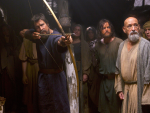
Moses (Christian Bale) and Nun (Ben Kingsley) star in Exodus. (photo from exodusgodsandkings.com/#)

Moses, as best I recall from Hebrew school and The Ten Commandments, was a reluctant prophet with a speech impediment who was ultimately persuaded by the unspeakable, unceasing suffering of his people – and God’s fearsome support – to confront Pharaoh and lead the Hebrews out of slavery.

My, how (biblical) times have changed. The much-anticipated Hollywood epic Exodus: Gods and Kings reinvents the saga of a people’s miraculous liberation as one rugged individualist’s journey of self-discovery, identity and profound purpose.

The fundamental matter of spirituality, which might be defined in this context as the courage and power of faith, comes up in conversation a few times but not in ways that impact the movie-goer’s experience. Your post-film repartee is more likely to centre on the curious and disconcerting form in which God (or is it an angel acting as his emissary?) appears.

Exodus: Gods and Kings, which opened everywhere Dec. 12, is a sun-blistered chunk of glowering, male-centric mythmaking. Aside from its oddly anti-climactic ending – recognizing that it’s a tough call how many desert miles and years to continue the tale after the Red Sea – this is a well-paced, continuously engaging piece of mainstream entertainment with the requisite amount of impressive visual effects (in 3D). Just don’t go expecting to be awed, or to have a religious encounter.

Title cards inform us at the outset that the year is 1300 BCE and the Hebrews have been slaves in Egypt for four centuries. However, “God has not forgotten them.”

Omitting the standard baby, basket and bullrushes, director Ridley Scott and screenwriter Steven Zailian (Schindler’s List) introduce Moses (Christian Bale) as a general and Ramses II (Joel Edgerton) as his best friend since childhood and heir to Pharaoh’s throne.

Exodus immediately launches into a full-scale, screen-filling battle scene – a preemptive attack that might be construed as a comment on the Iraq War – in which the seed of Ramses II’s paranoia and jealousy of Moses is planted. This section is designed to excite male viewers but also to inoculate them against the ensuing hours of banter, revelation, wilderness wandering and domesticity before the warrior hero returns to Egypt to blow things up real good. (You think I’m kidding, but Exodus boasts fiery explosions like any other self-respecting, would-be action movie.)

Even if he was raised as a prince of Egypt, the portrayal of Moses as self-confident and militarily adept takes some getting used to. It does explain, however, his disbelief when the gutsy Jewish elder Nun (Ben Kingsley) informs him that he was a lowly Hebrew infant smuggled upriver toward the Pharaoh’s palace.

The biblical story is quite familiar to us, of course, even if creative licence is employed via verbal flashbacks and narrative compression. Consequently, Exodus is most intriguing from a Jewish perspective for the ways it alternately evokes and evades the dominant events in the modern Jewish world – the Holocaust and Israel (its founding, existence and current relationship vis-a-vis the Palestinians).

The 20th-century genocide of Jews is alluded to in myriad ways, from the burning of the corpses of slaves to the Egyptians lined up to insult the Hebrews as they leave. (The Exodus is presented as complying with Ramses II’s order to get out, so it is a deportation.)

An earlier sequence, in which Ramses’ soldiers knock down doors and brutalize Hebrew families in an effort to find (and kill) Moses, inevitably, recalls the Nazis.

When The Ten Commandments opened in 1956, the Holocaust was so recent, and raw, that it didn’t need to be referenced. The horrific genocide did inform the movie, however, in that the general public needed no help rooting unequivocally for the Hebrews’ freedom.

Another key factor was the new state of Israel’s status as a universal symbol of hope and rebirth. That image no longer holds sway, and the filmmakers acknowledge the contemporary perception that the oppressed have become oppressors.

While Moses and Joshua strategize how to cross the Red Sea, and Ramses’ chariots thunder in pursuit, they take a moment to ponder the Hebrews’ eventual return to Canaan. Now numbering 400,000, Moses points out, “We would be seen as invaders.”

This is an unexpected acknowledgement of power, one that Arab audiences (in Jordan, Lebanon, Iraq, Kuwait, United Arab Emirates, Oman, Qatar and Egypt, where Exodus: Gods and Kings opens Dec. 25 or shortly thereafter) will welcome. Evangelical Christians in the United States, another large target market, will have the opposite response, presumably.

Jews, of course, will interpret and respond to the film from yet another perspective. The Torah does lend itself to various readings, after all. So does this robust movie, even if it is unlikely to inspire study groups.

Michael Fox is a writer and film critic living in San Francisco.
Format ImagePosted on December 19, 2014December 17, 2014Author Michael FoxCategories TV & FilmTags Christian Bale, Exodus, Joel Edgerton, Moses, Ramses, Ridley Scott, Steven Zailian
Herstory on the screen

Herstory on the screen

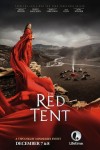
A corrective of sorts to the Old Testament’s predominantly patriarchal view of seismic events and everyday tribal life, Lifetime’s emotion-tapping adaptation of The Red Tent fulfils one’s modest expectations for a primetime soap opera in period garb.

Anita Diamant’s best-selling saga of female self-actualization and familial tribulation, centred on Jacob’s daughter Dinah, is rendered here as an aspirational fable informed more by Harlequin Romance than hardscrabble reality. Viewed as harmless entertainment and a desert respite from winter, The Red Tent provides acceptable escapism, but if you’re hoping for an earthy, accurate sense of how people actually lived in those days, or a spiritual experience (on television?!), those prayers won’t be answered.

The Red Tent aired earlier this month on Lifetime. If you can get your hands on it, either as a DVD or in rebroadcast, the two-part miniseries comprises three hours of couch time (minus commercials).

The titular scarlet structure serves as a community centre and haven for Jacob’s four wives and their daughters. In this comfy, cozy enclave, the young Dinah acquires extraordinary self-confidence – presumably from seeing firsthand the essential role of women in the family. Their most cherished skill is midwifery, partially for its autonomy (the men assuredly want no part of assisting births) and because it’s closely linked to females’ unique function. As one woman puts it, “We are the lucky ones, for we alone are the ones who can give life.”

The experience of childbirth in biblical times was presumably more primitive than New Age-y, so you’ll be rolling your eyes at the miniseries’ insistence on hinting at suffering without bringing us down by actually showing it. (My biggest peeve about the show’s glamor quotient is that everyone has perfect teeth and nobody ages, despite the skin-wrecking trifecta of sun, wind and sand.)

The film’s greatest challenge, however, is plausibly reconciling a 21st-century feminist point of view (embodied by Dinah) with the societal limitations placed on women in those days. It’s jarringly anachronistic, for example, when Dinah shocks her closest sibling, Joseph, by announcing she’ll choose her own husband at such time as she determines. But it does provide the foundation for her character’s aggressive interfaith love affair with the king’s son, Shechem. This passage of the Bible has been interpreted in several ways, but The Red Tent presents their sexual relationship as mutually consensual and an expression of love.

That doesn’t soothe Jacob’s pride in the least when he’s informed that Dinah and Shechem have married, and things go south in a hurry. Whatever sins the menfolk proceed to commit, the second half of The Red Tent – spotlighting Dinah’s life in exile – takes pains to show that women are as capable of men at inflicting cruelty.

Part 2 of the miniseries embraces such reliably eye-watering themes as separation from, rejection by and reconciliation with one’s children. They may comprise the meat and potatoes of the plot, but the heart of Dinah’s journey involves accepting the family and tradition she was born into and the talent for midwifery that she inherited.

The Red Tent implicitly honors the continuum of women that preceded and followed Dinah, extending to the present day. At the very least, this female-oriented interpretation offers an exceedingly interesting counterpoint to Ridley Scott’s testosterone-fueled Exodus: Gods and Kings, which opens this weekend, and picks up – chronologically speaking – shortly after The Red Tent ends.

Michael Fox is a writer and film critic living in San Francisco.
Format ImagePosted on December 12, 2014December 11, 2014Author Michael FoxCategories TV & FilmTags Anita Diamant, Lifetime, Red Tent
Creepy, well-crafted thriller

Creepy, well-crafted thriller

In her film The German Doctor, Lucia Puenzo tries to capture Josef Mengele’s “very sociopathic, complex personality.” (photo from Vancouver Jewish Film Festival)

As a high school student in the 1990s, Lucia Puenzo was fascinated and mystified by an open secret: hundreds of Nazi war criminals found refuge in her native Argentina.

“I was intrigued that so many families knew what was going on because they had a German man on their block or somewhere in their neighborhood,” recalled the acclaimed novelist and filmmaker. “Maybe they didn’t know so much in the ’60s and ’70s but, by the ’80s or ’90s, everybody knew. How could they not open their mouths and say what happened? It had a lot of echoes of our military coup d’etat, where so many Argentine families didn’t speak out.”

In her 2011 novel Wakolda, Puenzo explored the devious machinations of a German doctor in the Patagonian town of Bariloche circa 1960 who befriends a young girl. The erstwhile physician injects her with growth hormones before turning his attention to her pregnant mother, distracting the suspicious father with a plan to mass-market his handmade dolls.

Puenzo adapted the novel for the screen, shifting the point of view from the doctor to the child. The German Doctor, which swept Argentina’s major film awards and was the country’s official submission for last year’s Oscar for best foreign language film, is a creepy, precisely crafted thriller made more unsettling by its restraint. It screens Nov. 12 in the Vancouver Jewish Film Festival.

At 37, Puenzo has already published five widely translated novels and directed three singular films, including XXY, her prize-winning tale of an intersex teenager. Smart and fearless, she is attracted to subjects that others find off-limits or taboo – like the Nazi presence in Argentina.

“For me, the big mystery has always been why this subject, that could be a hundred films and a hundred novels, has never been taken to film before,” she explained in a long-distance phone interview. “We have maybe a few excellent documentaries on the subject but not one fiction film, and maybe we have five or six novels, and that’s all speaking about the subject.”

The German Doctor did solid box office in Argentina, which Puenzo sees as confirmation of pent-up interest. The film has been released in dozens of countries, including several European nations.

The film succinctly illustrates how a cautious physician who adults would view with suspicion, let’s call him Josef Mengele, could win a child’s trust.

“In the camps, there were so many horrible testimonies of how kids would call him Uncle Mengele. He would have sweets to give to the children and then he would take them to his experiments,” Puenzo said.

The German Doctor captures that deviousness and single-mindedness, while persuasively depicting the polite veneer Mengele devised to mask his lunacy and deceive people.

“After the war, after the concentration camps, he disguised himself as this very civilized, seductive, enchanting man that lived for decades in three countries of Latin America without anybody suspecting who he was,” Puenzo said. “I think that’s how you have to portray this very sociopathic, complex personality who disguised himself. He was not the stereotype of the bad guy whom you could see coming.”

Puenzo comes across as earnest and serious but, befitting someone with a master’s degree in literature and critical theory, she recognizes the relationship between pop culture and popular perceptions of history.

“I remember films like The Boys of Brazil,” she said. “I loved it in a way, it’s such a strange film, but at the same time it’s a stereotype of Mengele. I think to honor these most horrific monsters, you really have to show them in all their complexity. They were much more dangerous than we think.”

The German Doctor is in Spanish and German with English subtitles; it is rated PG-13 for thematic material and brief nudity. For the full schedule of this year’s VJFF, which started Nov. 6, visit vjff.org.

Michael Fox is a writer and film critic living in San Francisco.

Format ImagePosted on November 7, 2014November 5, 2014Author Michael FoxCategories TV & FilmTags Holocaust, Lucia Puenzo, Mengele, Vancouver Jewish Film Festival, VJFF, Wakolda

Posts pagination

Previous page Page 1 … Page 3 Page 4 Page 5 Next page
Proudly powered by WordPress