
Skip to content
  • Home
  • Subscribe / donate
  • Events calendar
  • News
    • Local
    • National
    • Israel
    • World
    • עניין בחדשות
      A roundup of news in Canada and further afield, in Hebrew.
  • Opinion
    • From the JI
    • Op-Ed
  • Arts & Culture
    • Performing Arts
    • Music
    • Books
    • Visual Arts
    • TV & Film
  • Life
    • Celebrating the Holidays
    • Travel
    • The Daily Snooze
      Cartoons by Jacob Samuel
    • Mystery Photo
      Help the JI and JMABC fill in the gaps in our archives.
  • Community Links
    • Organizations, Etc.
    • Other News Sources & Blogs
    • Business Directory
  • FAQ
  • JI Chai Celebration
  • JI@88! video

Recent Posts

  • האלימות בישראל מורגשת בהרבה מגזרים
  • טראמפ עוזר דווקא לנושא הפלסטיני
  • New rabbi settles into post
  • A light for the nations
  • Killed for being Jewish 
  • The complexities of identity
  • Jews in time of trauma
  • What should governments do?
  • Annie will warm your heart
  • Best of the film fest online
  • Guitar Night at Massey
  • Partners in the telling of stories
  • Four Peretz pillars honoured
  • History as a foundation
  • Music can comfort us
  • New chapter for JFS
  • The value(s) of Jewish camp
  • Chance led to great decision
  • From the JI archives … camp
  • עשרים ואחת שנים להגעתי לונקובר
  • Eby touts government record
  • Keep lighting candles
  • Facing a complex situation
  • Unique interview show a hit
  • See Annie at Gateway
  • Explorations of light
  • Help with the legal aspects
  • Stories create impact
  • Different faiths gather
  • Advocating for girls’ rights
  • An oral song tradition
  • Genealogy tools and tips
  • Jew-hatred is centuries old
  • Aiding medical research
  • Connecting Jews to Judaism
  • Beacon of light in heart of city

Archives

Follow @JewishIndie
image - The CJN - Visit Us Banner - 300x600 - 101625

Tag: Unitarian Church

PBS doc on the Sharps

PBS doc on the Sharps

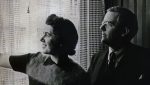
Martha and Waitstill Sharp at home in Wellesley, Mass., in 1938. (photo from Sharp Family Archives via pbs.org)

At a time when many Americans embraced isolationism, the leaders of the American Unitarian Association were focused on the refugees clamoring to get out of Czechoslovakia. The AUA impelled Unitarian minister Waitstill Sharp to go with his wife Martha to Europe in 1938, leaving their young children in the care of others, and get as many people out as possible with documents and cunning.

Yad Vashem posthumously acknowledged the Sharps as Righteous Among the Nations in 2006. The couple’s saga, and that of several of the Jews they rescued, is recounted in Artemis Joukowsky and Ken Burns’ feature-length documentary Defying the Nazis: The Sharps’ War, which aired earlier this month on PBS.

For those who have seen a film or three about the various efforts to extricate Jews from the deathtrap of Nazi-occupied Europe, Defying the Nazis breaks no new ground. But there are always new generations who aren’t familiar with the Holocaust or cognizant of the courage of ordinary people who saved friends and neighbors or, in the case of the Sharps, complete strangers.

Joukowsky is the Sharps’ grandson, and the curator and guardian of their legacy. Burns, of course, brings household-name recognition and brand-name confidence to a PBS audience, as well as a uniformly high standard of craft and polish. If his name attracts viewers who otherwise wouldn’t tune in, it’s all for the good.

Defying the Nazis arrives at an especially ugly time when refugees and immigrants are being demonized and conflated with terrorists. Not that xenophobia is a new phenomenon, as Jewish readers are especially aware. But I find the film more valuable and inspiring as a reminder that there are highly moral individuals who will put themselves in mortal danger to do the right thing – even if they have no personal stake or connection to the beneficiaries.

Waitstill Sharp was a trained lawyer while Martha had the self-confidence and determination to attend college in a day and age when some families – including hers – disavowed their daughters for not getting a job to augment the household income. That is to say, the Sharps were adept at thinking on their feet, delivering persuasive and succinct arguments and hiding their emotions. Whether counseling desperate applicants in Prague, raising money in London or Paris (like Waitstill did) or accompanying refugees by train across Germany to a safe border (like Martha and Waitstill did, separately), these were essential skills.

The couple was based in the Czech capital for six treacherous months beginning just before the Nazi invasion in March 1939. They were dispatched again the following summer, this time to Lisbon.

As compelling as the Sharps’ activities were, they were relatively brief in duration. There’s only so much to tell, so the filmmakers augment the rescuers’ point of view with context from Holocaust historian Debórah Dwork and the firsthand recollections of several survivors whom the Sharps aided.

Viewers who are fascinated by the ways in which parental choices affect children will enjoy watching and interpreting the passages with the Sharps’ daughter. Martha Jr. admits to being (understandably) upset when her parents took off for Europe, not once but twice, but she touts the remarkable results they achieved rather than channeling a petulant child.

The Sharps may have alienated their daughter, at least for brief periods of her adolescence. They definitely paid a price in their marriage, which didn’t last a decade after the war.

Defying the Nazis doesn’t address it, but I highly doubt the couple had any regrets about embarking on their life-saving refugee work. Consider Waitstill’s succinct reply when the German-Jewish author Lion Feuchtwanger asked why he was taking such an immense risk to help him: “I don’t like to see guys get pushed around,” Sharp said.

Defying the Nazis: The Sharps’ War is available for viewing (at no charge) at pbs.org/kenburns/defying-the-nazis-the-sharps-war/home until Oct. 6.

Michael Fox is a writer and film critic living in San Francisco.
Format ImagePosted on September 30, 2016September 28, 2016Author Michael FoxCategories TV & FilmTags AUA, Czechoslovakia, Holocaust, Nazis, Sharps, Unitarian Church
Mordechai Edel exhibits tapestries of light on canvas

Mordechai Edel exhibits tapestries of light on canvas

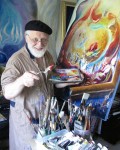
Mordechai Edel at work in the studio. (photo from the artist)

Mordechai Edel is not a stranger to grief and pain. His parents escaped Austria in 1939. His uncle spent years in the Nazi concentration camps. His father died when he was 16 years old. Edel has been aware of the darkness in the world since he was a child, but he has never succumbed to it. The art he creates is light fantastic, bursting with colors, suffused with gladness. “Bringing joy to the world,” is his artistic motto.

Edel’s solo art show at the Unitarian Church on West 49th Avenue opened on Aug. 1. The artist talked to the Independent about his life and his paintings. His involvement with the arts started in his early childhood.

“My mom baked cakes for a coffee shop in Birmingham. It was also a gallery, and the owner,

Andre Drucker, was my first art teacher. When I was about 8, I won a BBC art competition with my self-portrait. It must’ve been my bright red hair,” he joked.

Even more than painting, he said, he wanted to sing, but for a child of a working immigrant family in post-war Birmingham, it wasn’t an easy or even a realistic dream, especially after his father fell sick and young Edel had to leave school at 14 to help his mother.

“I listened to the radio when they played classical music and opera,” he said. “We also had a very good cantor in our synagogue, and I wanted to sound like him. I sang in the choir.”

He frequently bought classical opera records at the local flea market but couldn’t listen to them at home – the family didn’t own a record player. When someone at the flea market suggested playing them on his player, the music was a revelation to the boy. “I wanted to sing like Caruso,” he remembered. “I wanted to study classical music and opera.”

Instead, he followed a much more practical route and apprenticed to a hairdresser. “My uncle was an opera singer before the war. It saved his life in the Nazi camp – he sang there. After the war, he immigrated to Canada and became a hairdresser. Nobody needed an opera singer.”

Edel followed in his uncle’s footsteps. He moved to Canada in 1969, when he was 20, and worked as a hairdresser, while spending all his money on music and singing lessons. He sang in concerts. At some points in his life, he was a cantor in Victoria and a soloist for the Tel Aviv opera.

But visual art was always an intrinsic part of his life, always casting light onto the shadows. When he opened his own hairdressing salon, he played classical music there and decorated the room with his paintings. His patrons loved the ambience, and the word of mouth spread about the hairdresser artist and his paintings.

It is no wonder that one of the recurring themes in Edel’s paintings is music. The picture “Spinner of Light” looks like a tapestry of colors and notes, where fantastic creatures sway to the unearthly melodies in an imaginary landscape. Flowers dance in several of his paintings, and Chassidic bands indulge in merry klezmer tunes. “O Sole Leone” is more grounded but just as whimsical, a song of Vancouver at night, while “Transparent Emet” reminds the viewer of the spiritual theatre of life. The musicians play in the pit, but the conductor exalts above, a part of a mystical pomegranate.

Symbolism plays a huge part in Edel’s artistic vision. Combined with his colorful esthetics, it leads him the way of impressionists, where emotions get embedded in pictures, entangled with floral and abstract motifs.

“I listen to classical records when I paint. Sometimes I listen to my wife Annie playing her violin. She is my muse. She inspires me.” Married for four decades, he is as much in love with his wife now as ever, he said, and their mutual devotion helped them five years ago, when darkness struck the family.

Someone they had trusted conned them out of their life savings. After working hard for more than 40 years, the family lost everything, about half a million dollars.

“People don’t like to hear others crying,” Edel said, “but frankly, it’s played havoc with our lives. We had intended to make aliyah to Israel for the ‘last and best’ retirement years – even though artists never retire – but we had to recoil into a one-bedroom rented apartment these past few years. And yet, in order to combat our tragedy and adversity, I came up with my ‘artidote.’… So many people need to be uplifted with light and laughter.”

“I don’t dwell on darkness. I try to stay positive, although it’s a challenge to be happy in the face of darkness,” 

Currently, the couple lives on a small government pension, and he paints in the living room – his studio. Like in all other areas of their life, however, his wife is his source of happiness and stability. “My wife says we go forward. And we do. I don’t dwell on darkness. I try to stay positive, although it’s a challenge to be happy in the face of darkness,” he admitted.

The current show emphasizes Edel’s drive towards the light. His paintings vibrate with joyful energy. “I wanted to reach out with my art, to show my paintings to Jews and non-Jews alike,” he said, explaining the placing of his deeply Jewish art in a Christian church.

The show runs until Aug. 31 and viewing is by appointment. On Aug. 27, at 7 p.m., there will be a guided tour by the artist and a complimentary concert. To register, call the Unitarian Church, 604-261-7204, or contact the artist, 604-875-9949.

Olga Livshin is a Vancouver freelance writer. She can be reached at [email protected].

Format ImagePosted on August 22, 2014August 21, 2014Author Olga LivshinCategories Visual ArtsTags Mordechai Edel, Unitarian Church
Proudly powered by WordPress