Skip to content
  • Home
  • Subscribe / donate
  • Events calendar
  • Business Directory
  • FAQ
  • News
    • Local
    • National
    • Israel
    • World
    • עניין בחדשות
      A roundup of news in Canada and further afield, in Hebrew.
  • Opinion
    • From the JI
    • Op-Ed
  • Arts & Culture
    • Performing Arts
    • Music
    • Books
    • Visual Arts
    • TV & Film
  • Life
    • Celebrating the Holidays
    • Travel
    • The Daily Snooze
      Cartoons by Jacob Samuel
    • Mystery Photo
      Help the JI and JMABC fill in the gaps in our archives.
  • Community Links
    • Organizations, Etc.
    • Other News Sources & Blogs
  • JI Chai Celebration
  • JI@88! video

Recent Posts

  • Legal help for students
  • Revisiting myth of Lilith
  • Wrong person rebuked
  • Canada’s mixed messages
  • Questions for museum
  • Symposium on antizionism
  • Making soccer political
  • CJPAC lauds Pulver’s impact
  • City recognizes Vrba’s legacy  
  • Organ donation saves lives
  • Theodore’s March premiere
  • A healing Shabbaton
  • Supplying healthy food
  • A chime of metal tags
  • Yellowknife seder a first
  • Ishai energizes, unifies
  • A Lag b’Omer to remember
  • Expanding the healing
  • Hannah Senesh – a unique hero
  • Community milestones … May 2026
  • Sharing her testimony
  • Fall fight takes leap forward
  • The balancing of rights
  • Multiple Tony n’ Tina roles
  • Stories of trauma, resilience
  • Celebrate our culture
  • A responsibility to help
  • What wellness means at JCC
  • Together in mourning
  • Downhill after Trump?
  • Birth control even easier now
  • Eco-Sisters mentorship
  • Unexpected discoveries
  • Study’s results hopeful
  • Bad behaviour affects us all
  • Thankful for the police

Archives

Follow @JewishIndie
image - The CJN - Visit Us Banner - 300x600 - 101625

Byline: Lauren Kramer

New start for Café Forty One

New start for Café Forty One

Chef Menajem Peretz (above) has partnered with Yamila Chikiar and chocolatier Daniel Presman. Peretz and the couple met through a mutual friend, and the three now co-own FortyOne Catering, Neshama and Café Forty One. (photo by Lauren Kramer)

It’s a new year and a new beginning for the restaurant at Oak and 41st. Café Forty One is under new ownership and has reopened at its former location, following the closing of Shuk Eat + Play several months ago. The three entrepreneurs at its helm are energized, excited and ready to feed Jewish Vancouver with soul food that’s kosher, delicious and caters to both the sweet-toothed and those who prefer savoury.

About 50 people showed up for the grand opening of Café Forty One last Thursday. Menajem Peretz, by now a well-known face in Vancouver’s kosher catering scene with a well-deserved reputation for culinary excellence, was in the kitchen. The trays that emerged carried crispy avocado spring rolls, bruschetta, and latke sandwiches filled with smoked salmon and sour cream.
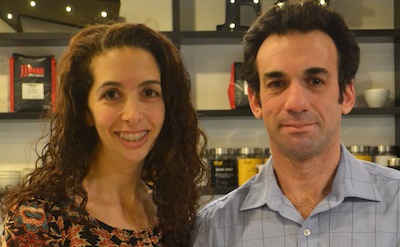
photo - Yamila Chikiar and Daniel Presman
Yamila Chikiar and Daniel Presman (photo by Lauren Kramer)

Peretz’s co-partners, Daniel Presman and Yamila Chikiar, managed the reception, displaying their talent behind the glass display case, which featured an assortment of pastries, mini-cakes, bonbons (Presman’s exquisitely decorated chocolate squares with liquid fillings), cupcakes, strudel, muffins, cake pops and blintzes.

“In the two months before we opened, we put up new lighting, re-did the décor and renovated the tables,” said Chikiar, who moved to Vancouver from Buenos Aires 16 months ago with her spouse, Presman, mother-in-law and two children. Presman, a chocolatier who sold his bonbons to five-star hotels in Argentina, went back to work making kosher chocolates under the brand name Neshama, and the artistic, rich treats were quickly picked up by Superstore.
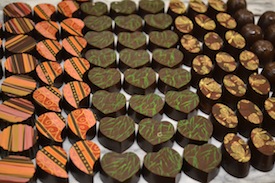
photo - Neshama chocolates
Neshama chocolates (photo by Lauren Kramer)

The couple met Peretz, who is also from Buenos Aires, through a mutual friend and hit it off immediately. Peretz was impressed with the bonbons and asked Presman to supply Neshama chocolates to his catering company. The relationship evolved and Group 41 was the result, a parent company that encompasses FortyOne Catering, Neshama and Café Forty One, and is owned and operated by all three partners.

“It was like a blessing when we met Menajem,” Chikiar said. “It’s difficult immigrating to another country and we had a hard year at first. But then opportunities started presenting themselves and it was like G-d was guiding us on a path.”

Café Forty One is a dairy establishment following Chalav Yisrael protocols, while FortyOne Catering offers meat, dairy and pareve meals. Chikiar is heading up marketing and communications and managing the front of house for the restaurant, while Presman heads up the sweet department and Peretz masterminds the savoury.

“The idea is to offer big portions and to give Café Forty One diners something extra,” Presman explained. “For example, all our sandwiches come with a shot of the hot soup of the day and, with any hot drink, we’re giving diners two free bonbons.”

The menu includes soups, salads, falafel and hummus plates, shakshuka, blintzes, omelettes, pizzas and sandwiches, as well as a wide assortment of sweet treats. The restaurant is open 10 a.m.-5 p.m. Sunday through Friday and underground parking is free for diners.

Lauren Kramer, an award-winning writer and editor, lives in Richmond. To read her work online, visit laurenkramer.net.


Format ImagePosted on January 13, 2017January 11, 2017Author Lauren KramerCategories LocalTags chocolates, Israeli food, kosher, restaurants
Chimp facilitates charitable giving

Chimp facilitates charitable giving

Left to right: Ariel Lewinski, Judy Boxer and John Bromley. (photo from Chimp)

When it comes to charitable giving, there’s a widespread feeling of donor fatigue, says Judy Boxer, community engagement manager with Chimp Technology in Vancouver. Chimp is an online giving platform that helps people give to and fundraise for charities that match their values and interest. Focused on charitable impact, the company is determined to counter donor fatigue by making philanthropy a positive, rewarding experience. And it’s set its sights on the Jewish community of Vancouver with a Tzedakah Project targeting Jewish giving.

A Vancouver donor who prefers to remain anonymous gave Chimp $270,000 to jumpstart the Tzedakah Project in mid-November. Boxer and her colleague Ariel Lewinski are tasked with creating the community, helping select a board to run it and then handing it over to the board.

“Ultimately, this initiative is something the Jewish community will take on and run on their own terms,” she said. To add incentive to membership, the Tzedakah Project is starting out by offering an $18 charitable gift to new members “so they can experience the gift of giving to a Jewish charity of their choice,” Boxer explained.

The core of Chimp is the Chimp account, which gives a donor the same benefits as having their own private foundation, but free of charge, said Lewinski, Chimp’s vice-president of partnerships and growth. “It’s like an online bank account for charitable giving. You put any amount of money into the Chimp account and you get your tax receipt at the moment you want it. You can allocate the charitable giving at a later date.”

Chimp membership encourages donors to rethink how they give charitably. Boxer and her team have found that people’s donations are more reactive when they receive calls requesting donations. They don’t necessarily plan their giving to make the biggest impact.

“We’ve found people connect really well to causes,” she reflected. “At Chimp, we’ll help them figure out what causes are important to them and then offer a matching charitable organization so they can allocate their charitable giving. With a Chimp account, you have an opportunity to engage in a conversation about what you care about, what you want to achieve and where you want to make an impact, as opposed to reacting towards people asking for money.”

Chimp Technology is the brainchild of John Bromley, a 38-year-old Vancouverite who started out in corporate finance and then co-founded a law consulting company focused on charity. His clients were high-net-worth donors who needed help structuring their giving and, in the process of working with them, Bromley felt he could help ordinary people structure their charitable giving, too.

“I saw that the only people getting their giving problems resolved were people who had so much money they could create their own private foundation,” he said. “I started Chimp Technology in 2012 to focus on a donor-centred giving experience for everyone else.”

Bromley observed that the main place people learned to give was in religiously oriented families or theologically tied communities. “As there’s been more secularization in North America, we’ve seen a reduction in the number of people that learn how to give,” he noted. “Chimp isn’t religiously motivated, but we understand the theological backgrounds and the very important role those theologies and communities play in the giving economy in Canada.”

While Chimp is theologically neutral, it aims to represent donors and effectively facilitate their philanthropy. “That’s important, because, when you take away all the noise that exists around how to give to charity, you create more time for people to think about how they’ll spend their charitable dollars,” Bromley said. “Chimp is about enabling or empowering donors large and small to give on their own terms to the things that matter to them.”

Boxer said the Tzedakah Project is also trying to empower the younger generation and has partnered with Vancouver Hebrew Academy, Vancouver Talmud Torah, King David High School and Torah High in Vancouver. “We want to start a philanthropic conversation with kids of a certain age about the kind of impact they want to have, to have them think about charity in a new way, and possibly start conversations between them and their families,” she said.

“We’re trying to enable and empower people from different communities by giving them the tools they need to create a giving program around a cause or community,” Bromley added. “We’re not the founders of the idea for the Tzedakah Project – that’s coming out of the Jewish community. But it’s a real pleasure to be doing this with the Jewish community. I’ve learned a heck of a lot about the wealth of engagement with tzedakah and how serious giving values are in the community, and it’s quite inspiring.”

To join, visit go.chimp.net/tzedakahproject.

Lauren Kramer, an award-winning writer and editor, lives in Richmond. To read her work online, visit laurenkramer.net. This article was originally published in the CJN.

Format ImagePosted on January 13, 2017January 11, 2017Author Lauren KramerCategories LocalTags charity, fundraising, tikkun olam
Nothing beats the experience

Nothing beats the experience

Sarah, left, and Amy came back from Jewish camp gushing with the joy of Judaism. (photo from Lauren Kramer)

Come on Mom, let’s bench after dinner tonight!” My 13-year-old daughters are just back from three weeks at Jewish camp and, for the first time ever, they’re suggesting we say birkat hamazon. I try to conceal my shock and pure pleasure and act nonchalant, as if this is something I hear every day. But, inside, my heart is singing. Amy and Sarah have come back gushing with the joy of Judaism, their eyes alight as they describe how much fun they had, especially on Shabbat.

There are lots of stories about dances and boys, of course. At 13, there’s nothing more exciting than having a boy ask you to the dance. Or taking a late night swim in the lake with your cabin-mates and heading to bed at midnight. But it’s the Judaism they celebrated and lived at camp that’s made the strongest impression on my kids. The decade’s worth of seders, Shabbat meals at home, synagogue visits and holiday festivities with their family can’t even come close to leaving them this excited about their Jewish identities.

I’d seen the research about Jewish sleepaway camp and its profound effect on Jewish children. Considered one of the most impactful ways to imbue your child with a strong, proud appreciation of their Yiddishkeit, Jewish camps are prime recipients of funding and scholarships from philanthropic organizations like the Harold Grinspoon Foundation. But, it’s one thing to read the data, and quite another to see your children beaming with positive Jewish energy and making their parents promise they’ll send them back to camp next year.

At Jewish camp, my twins received an intensive Joy of Judaism course, but one devoid of stress or a sense of deliberate learning. Rather, the instruction they received was experiential, conveyed in the chorus of song as kids bench together after meals, sing Jewish songs around the campfire, eat kosher food (and love it!) and gather each morning around the Israeli flag.

My son, now 16, had convinced his sisters to go. “You’ll love it,” he assured them, regaling them with stories of his camp antics. The girls knew they wanted to try it, but at first weren’t convinced they were ready to leave home. One was homesick months before she even boarded the bus at the prospect of being away from Mom, Dad and the comfort of her own bed. As her fears and apprehensions heightened in the weeks before camp, I imagined a series of worst-case scenarios. Camp counselors calling me about my distraught child, tearful conversations over the telephone and the sense of disappointment and failure she’d feel if she left for camp but came home early.

I voiced my concerns to the camp counselors, raising a warning flag that this was a kid they would need to look out for. I sent letters and emails daily and I scrolled through the hundreds of photographs posted online each day, so that worried parents like me could be comforted by the smiling faces of their kids thriving at Jewish camp. Forty-eight hours after they left, I called to check up. “They’re fine,” their counselor reassured me. “They’re having the time of their lives and they’ve not been homesick for a second!”

I knew deep down my girls would have an amazing time, of course. But I forgot how completely Jewish camp can change your perceptions of Judaism – from a religion full of restrictive rules to one that’s filled with meaning, celebration, camaraderie and pride.

No question about it, Jewish camp has changed my girls’ lives.

Lauren Kramer, an award-winning writer and editor, lives in Richmond. To read her work online, visit laurenkramer.net.

Format ImagePosted on December 23, 2016December 21, 2016Author Lauren KramerCategories LifeTags Judaism, sleepaway camp
Sharing Muller’s table

Sharing Muller’s table

Our Table is a beautiful hostess gift for that special occasion or that friend who loves cooking and never tires of inspiring culinary reads.

There are cookbooks you whip out of your kitchen cupboard 45 minutes before dinner in search of something easy, bright and new, and there are cookbooks you take to bed with you for reading pleasure. Our Table (Artscroll, 2016) by Renee Muller falls into the latter category, not because you won’t want to try her recipes, but because there’s a lot of reading involved in many of them.

Muller is a Swiss native who moved to the United States in 2002 and, by winning a recipe contest, landed a regular column in Whisk, a pullout food feature of the national Jewish weekly Ami Magazine. Our Table is a compendium of her favorite kosher recipes, “a cuisine that is heimish yet laced with aromas of my youth,” she writes in the introduction.

The dishes encompass all the usual categories – soups, salads, appetizers, fish and dairy, meat, chicken, snacks, desserts and breads. Many of them are laced with stories about family secrets related to the particular recipe, or how the recipe came into being. For her fragrant standing rib roast recipe, for example, there’s an essay on how and why she created the recipe, as well as tips on how far in advance to make it and how to prevent it from drying out. Her Sugo Della Nonna (Italian-style tomato sauce) contains a half page on the definition of comfort food and the feeling it delivers when she makes it. “I see myself, sitting at Nonna’s table, as a child, feeling nourished and happy,” she writes.

Muller’s insights are written in a conversational style with lots of anecdotes about her family thrown in. By the time you’re finished reading this book, you feel like you know her personally – and you can’t help but like this impassioned chef who adores cooking for her family and friends. That’s because Muller’s enthusiasm is contagious, but also because some of her dishes go way beyond the usual suspects. There is a recipe for onion crisps, a whole page on the art of roasting chestnuts, one on toffee apples, one titled “Really, really good whole wheat challah” and another for brown buttered pear salad. And the pictures? Whoa. They are amazing, mouthwatering bites of full-page color that will leave you salivating as you plan your next dinner party. Most of the recipes are not terribly complex either, they’re just new combinations of ingredients most of us know well and use regularly.

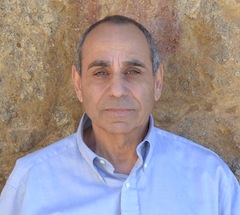
Muller is that friend we all want in our lives – the one whose cooking is fabulous, who isn’t shy about sharing her recipes and whose conversation is full of funny stories, notes from her past and sage bits of wisdom. There are times when the essays feel perhaps a tad too long but, nonetheless, Our Table is a 270-page hardcover recipe book worth having, a beautiful hostess gift for that special occasion (Chanukah?) or that friend who loves cooking and never tires of inspiring culinary reads.

Lauren Kramer, an award-winning writer and editor, lives in Richmond. To read her work online, visit laurenkramer.net.
Format ImagePosted on December 2, 2016December 1, 2016Author Lauren KramerCategories BooksTags Chanukah, cooking, kosher
The Entebbe rescue

The Entebbe rescue

Sasson (Sassy) Reuven serving in the Golan Heights. (photo from Sassy Reuven via Chabad of Richmond)

On Nov. 9, more than 200 members of the community packed into the Executive Inn in Richmond to attend a lecture by retired Israel Defence Forces commander Sasson (Sassy) Reuven, who held the audience spellbound for 90 minutes as he recounted his participation in the 1976 Operation Entebbe.

Reuven, an Israeli from Be’er Sheva, relocated to California after completing his military service, heading up security for El Al before opening a construction development company in Calabasas. As the recession hit, he found work scarce and confided his financial woes to a new friend, the Chabad rabbi in Calabasas. Somehow, it came up in conversation that Reuven had been an elite commander in the IDF and was one of the soldiers sent to rescue hostages taken in the Entebbe hijacking. Before he knew it, Reuven had agreed to give a talk to his community, and that talk jumpstarted his public speaking career, taking him all over the world to recount his memories of Entebbe.

photo - Retired Israel Defence Forces commander Sassy Reuven spoke in Richmond on Nov. 9 about Operation Entebbe
Retired Israel Defence Forces commander Sassy Reuven spoke in Richmond on Nov. 9 about Operation Entebbe. (photo from Sassy Reuven via Chabad of Richmond)

Earlier this month, he stopped in Richmond to deliver a talk sponsored by the Jewish Federation of Greater Vancouver, Chabad of Richmond and Richmond Jewish Day School. Then he was headed to Vancouver Island, Spokane, Wash., and South Africa for more speaking engagements.

The hijacking began on Air France Flight 139, which, on June 27, 1976, was en route from Tel Aviv to Paris via Athens. In Athens, four terrorists boarded the plane and forced the pilot, Michael Bacos, to divert the plane to Benghazi to refuel. Seven hours later, the plane left for Entebbe, arriving at 4 a.m.

“Israel had a good diplomatic relationship with Uganda from 1965,” Reuven explained. That changed in 1972, when President Idi Amin came to Israel, saw the IDF’s jet fighter planes and declared he wanted them for his own air force, “so he could destroy Tanzania.” The diplomatic visit did not go well and, over the course of it, Amin had a psychotic episode and spent time in hospital, Reuven said. When he returned to Uganda, Amin persisted in his demand for the fighter jets, but Israel, a friend of Tanzania, denied his request. When the hijackers requested the cooperation of Amin’s army so they could negotiate for the release of the hostages from Entebbe, the president complied.

Over the two days that followed, the hijackers separated Jews and Israelis from the other passengers. They set their ransom price and threatened to start killing Jewish hostages by July 1 if their demands weren’t met. Later, they extended the deadline to July 4, giving the IDF much-needed time to plan its heroic rescue.

The mood in Israel was very sombre at the time, Reuven recalled. “The entire country was still in mourning after the Yom Kippur War. When we learned we’d be flying to Entebbe to bring the hostages back, our commander told us we needed to bring them back alive – no fatalities and no injuries. We were going to bring the country’s morale back up.”

Asked if he felt ready to embark on such a mission, Reuven said he’d been in training for two years solid prior to the rescue. “The only time we stopped training was for Shabbat,” he reflected. “When I was selected to be part of this mission, I felt like the luckiest person alive, that this was my core existence as a Jewish soldier.”

The hours before he and the other soldiers boarded a Hercules C-130 aircraft and took off for Entebbe were long. Reuven recalled waiting beneath the eucalyptus trees at an army camp where the soldiers were fed hardboiled eggs, pita and mud-like coffee, and given very little information about their upcoming mission. When they finally took to the air, there were four Hercules C-130s and two Boeing 707s, containing a flying hospital and a flying command centre. The soldiers numbered 212 and included pilots, flight engineers, doctors, paramedics, refueling technicians, psychologists and intelligence personnel. Space was so tight on the flight that Reuven was wedged between the wall of the plane and an old black Mercedes-Benz that the IDF had brought along so that its soldiers could masquerade as officials in the Ugandan government if necessary.

At one point in his lecture, Reuven donned a white cap fitted with an elastic beneath his chin. “When we disembarked from the planes, we were wearing hats just like these,” he said. The IDF knew the airport would be in pitch darkness when its rescue mission arrived at 11 p.m. and the white hats were a way for the soldiers to recognize and see one another easily.

The rescue mission soldiers had various tasks. Some, like Yonatan Netanyahu, were sent to Entebbe’s old terminal building, where the hostages were being held. Reuven was instructed to go to the new terminal building. He recalled how the Ugandan soldiers knew something was going on and started raining bullets on the IDF rescuers as they ran towards the terminal buildings. Netanyahu was shot by one of those bullets and died minutes later at the scene.

In total, the rescue mission took 90 minutes and, by 12:30 a.m., the seven hijackers were dead and the hostages were loaded into an aircraft and en route to safety. The mission returned with fewer casualties than had been expected. Among the IDF soldiers, one had died and four were injured. Six hostages had been injured and four had been killed, including 19-year-old French-Israeli Jean Jacques Mimouni. When the IDF had arrived in the terminal building, they’d shouted to the hostages to lie down. Mimouni was so excited to see them, he jumped up and tried to embrace them. Mistaking him for a hijacker, the IDF shot him dead.

While he didn’t spend much time detailing the rescue scene, Reuven said he felt elated as he flew back to Tel Nof in Israel. “I felt like the long arm of the Israeli army was such a great arm that we’d go take care of any Jew, anywhere, in dire straits.”

Lauren Kramer, an award-winning writer and editor, lives in Richmond. To read her work online, visit laurenkramer.net.

Format ImagePosted on November 25, 2016November 30, 2016Author Lauren KramerCategories IsraelTags Entebbe, IDF, Israel
Rower turns to apps

Rower turns to apps

Matthew Segal (front, facing the camera) and his teammates at the Royal Henley Regatta in England. (photo from Matthew Segal)

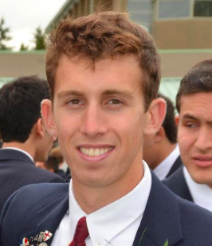
Matthew Segal was an all-round athlete until the age of 15, when he found his one true love: rowing. He fell in love with the sport while he was a student at St. George’s School in Vancouver and followed it to Yale, where he rowed for the university’s lightweight varsity rowing team. In recent months, Segal, 22, the grandson of Vancouver icon Joe Segal, returned to Vancouver after graduating with a bachelor’s degree in economics from Yale. His most memorable times at school were spent rowing, specifically in the boat’s coveted position of stroke seat.

“Coaches look for a rower’s rhythm, length and the reliability of their endurance when they select the stroke seat,” Matthew explained to the Independent. “It was an honor to fill that role but I think the stroke takes too much of the credit. The success we had is attributable to every single guy on the boat.”

Segal’s father, real estate developer Lorne Segal, said he believes his son has been the only Jewish stroke of the Yale Varsity boat since intercollegiate sport began in the United States. While rowing began at Yale before 1852 and was the first collegiate sport, Lorne Segal said, “The first U.S. intercollegiate sport was a rowing race between Harvard and Yale in 1852; prior to that, Yale would simply race internally. So, the entire intercollegiate sport system started in the U.S. with the Harvard-Yale race, which has become one of the most famous annual races.”

photo - Matthew Segal at graduation
Matthew Segal at graduation. (photo from Matthew Segal)

Segal’s team had an undefeated regular season in 2016 before it went on to compete in the Eastern Sprints, a race against rowing teams of the top 18 schools in the United States. When they won the Eastern Sprints, they were invited to race in the prestigious Royal Henley Regatta in England, where they competed against 72 boats and were the only lightweight team to make it to the semifinal.

Lorne and Mélita Segal traveled to England to see their son compete. “They were racing the Cornell heavyweights who were, on average, 35 pounds heavier. It was a real David and Goliath battle!” said the proud father.

As he reflected on his final season on the rowing team, Segal said it was “one of the best seasons Yale ever had.” No stranger to winning, Segal also set two world records during the winter season, when he and his team were training indoors on ergometers: in the lightweight category for the 500-metre distance and for a one-minute test.

Now back at home and focusing on his career, Segal’s body is adjusting after being used to a rigorous schedule that saw him training 11 times a week. “I have different priorities right now but I’ll always hold rowing close to my heart,” he said.

These days, his attention is keenly focused on a series of mobile apps he’s developing with his company, Lipsi Software Development Inc.

Lipsi is an anonymous messaging app geared at high school and college-age kids that facilitates interactions that might not otherwise occur. “It’s supposed to be a fun platform for approaching people under the veneer of anonymity,” he explained. Another project is a gift-giving app that facilitates random acts of kindness by allowing givers to send recipients a small gift via text message.

In both of these endeavors, Segal is the mastermind behind the ideas, concepts, app layouts and legalities, but he has outsourced the technical component to programmers he describes as “some of the most brilliant people I know.”

Coming from a family such as his, you might think Segal is under extraordinary pressure to succeed.

“It’s always lurking in the back of my head that I need to try and live up to my dad and grandfather’s achievements,” he admitted. “In my life, I’ve tried to focus on the things that have meant the most to me, pursuing them to the highest level possible. And my parents have always been very supportive with regard to anything I’ve pursued. They’ve never told me I need to follow a certain career path, they’ve just told me to do what I do, and do it well. I think that’s the best approach in life.”

Lauren Kramer, an award-winning writer and editor, lives in Richmond. To read her work online, visit laurenkramer.net.
Format ImagePosted on November 25, 2016November 23, 2016Author Lauren KramerCategories LocalTags apps, high-tech, rowing
Feeling at home in Ecuador

Feeling at home in Ecuador

The Jewish Community Centre of Quito is a magnificent building containing two synagogues, its architecture reminiscent of Old Jerusalem. (photo by Lauren Kramer)

It was Friday night in Quito, Ecuador, and, as dusk fell, my husband and I approached the Jewish Community Centre, a magnificent one-hectare complex whose light stone walls and graceful architectural arches are reminiscent of Jerusalem. We joined the community for Kabbalat Shabbat, singing the same Ashkenazi tunes we knew so well from Vancouver as an impassioned, young Brazilian rabbi led the service. With us was Pedro Steiner, a member of the Ecuadorian Jewish community who’d graciously offered to pick us up from our hotel and drive us to and from the synagogue that night.

I admit, it had felt odd sending out an email requesting hospitality over Shabbat a few weeks prior. But, as the melody of L’Cha Dodi washed over the large synagogue, its domed roof meticulously hand-painted and inscribed with the words of the Shema, I figured it was well worth it. We were 4,000 miles from home, but we felt very much closer in the warm embrace of Quito’s Jewish centre.

Our host was a first-generation Ecuadorian whose Czech and Austrian parents had arrived in the country just before the Second World War. They were among 4,000 European Jews who found refuge from the Holocaust in Ecuador, granted entry permits on the proviso that they work in agriculture. Most of those Jews had been merchants, industrialists and businessmen and, while they were grateful to escape the war, most had no interest in pursuing an agrarian lifestyle. After the rich culture they knew in Europe, Ecuador seemed small and culturally impoverished. Perhaps that’s why at least half of those new immigrants left by 1950 for lives in Israel, America, Argentina and Chile.

Steiner’s parents opted to stay. “My dad bought a book on agronomy and read it while on the ship to Ecuador,” he recalled. “After arriving, he found work on a farm south of the city and, by 1955, he’d established a small dairy factory in Quito.” Years later, he sent his son to college in the United States and Pedro spent a decade there with his wife before the two returned to Quito to raise their children.

There are some 600 Jewish families remaining in the city. “I realized that, in coming back to Quito in the 1970s, we were delaying the decision to move for another generation,” Steiner reflected.

Until the early 1970s, most Jews in Quito sent their children to American School, a liberal institution created by Galo Plaza Lasso, one of the country’s past presidents. Then a student at the school won a prize for his review of Mein Kampf and the Jewish community, insulted this could happen, determined it was time to establish a new school. In 1973, Collegio Alberto Einstein was founded with “an atmosphere of Jewishness.” The K-12 school, ranked among the top educational institutions in Ecuador, offers classes in Jewish studies but “it’s not a religious school,” Steiner emphasized. Of the 700 students at Alberto Einstein, only 10% are Jewish.

That’s where Steiner’s kids were educated. And, firmly committed to building Jewish life in Quito, Steiner helped obtain the funding and donations necessary to build the Jewish Community Centre in 2000. He proudly toured us around the impressive site. With a ballroom, conference rooms, two synagogues, a kosher kitchen, a swimming pool, large sports grounds and rooms for Jewish youth movements and Hebrew classes, the JCC is an enviable facility. “But it’s underutilized,” Steiner said, his voice tinged with regret.

Days before Steiner picked us up from our Quito hotel, we had spent time in the Ecuadorian highlands two hours north, at Hacienda Zuleta, the family home of the late Lasso. Built in the 1600s, the expansive property is set in a bucolic valley surrounded by the Andes Mountains. Cows bellowed gently outside our bedroom window, a fireplace lit the 17th-century paintings on the ancient stone walls at night and hot soups with traditional Ecuadorian dishes warmed our bellies at meal times.

photo - Fernando Polanco, grandson of the late Ecuadorian president Galo Plaza Lasso, holds a Tanach given to his grandfather on a diplomatic visit to Israel in the 1970s
Fernando Polanco, grandson of the late Ecuadorian president Galo Plaza Lasso, holds a Tanach given to his grandfather on a diplomatic visit to Israel in the 1970s. (photo by Lauren Kramer)

The Lasso family library contains more than 1,000 books but, minutes after arriving, we’d extracted the only one of Jewish significance: a Tanach inscribed and given to Galo by a chief rabbi when he visited Israel in the 1970s. In another book documenting his political legacy, we found a photograph of Golda Meir welcoming him to the country. “My grandfather was loved by the Jewish community of Ecuador because he helped Jews relocate to Latin America,” said Fernando Polanco, Galo’s grandson, who now runs the Lasso family home.

Hacienda Zuleta hosts visitors for overnight stays, horseback rides into the mountains and bike excursions on its cobbled roads. During our stay, we explored the organic vegetable garden, toured the cheese factory, cycled past the dairy farm with its herd of 500 cows and marveled at the size of caged condors at a rehabilitation project to help protect this critically endangered bird. Most of these are initiatives Galo put into place.

In the ornate Lasso hacienda, we perused portraits of a family that helped shape Ecuador, marveling at Galo’s generosity of spirit. This was a man who helped shape the policies that welcomed Jews to the country, and who divided up his own 50,000-acre fertile estate, giving parcels to the Zuleta locals who lived and worked there.

“My grandfather’s clear vision, environmental responsibility and social consciousness back in the 1940s made him one of Ecuador’s best presidents,” said Fernando, beaming with pride. “Zuleta was his trial and error, his conscience.”

If you go: Adventure Life, a company specializing in travel in Ecuador, coordinates itineraries throughout the country, including Quito city tours, highland hacienda adventures, Galapagos island cruises and visits to the jungle (adventure-life.com or 1-800-344-6118).

Lauren Kramer, an award-winning writer and editor, lives in Richmond. To read her work online, visit laurenkramer.net. This article was originally published in Canadian Jewish News.

Format ImagePosted on November 11, 2016November 11, 2016Author Lauren KramerCategories TravelTags Ecuador, Jewish life, Judaism, Quito
Serving healthy, tasty food

Serving healthy, tasty food

Susan Mendelson launched Mendelson’s Kosher Gourmet from the kitchens at Vancouver Talmud Torah earlier this fall. (photo from Susan Mendelson)

Susan Mendelson, the entrepreneur at the helm of Lazy Gourmet Catering for the past 38 years, debuted Mendelson’s Kosher Gourmet from the kitchens at Vancouver Talmud Torah earlier this fall.

Mendelson and her team of six are now serving a selection of 25 lunches a week to VTT children and offering the Jewish community their kosher event catering services, as well as the opportunity to purchase BCKosher-certified challahs, babkahs and cinnamon buns.

Months ago, Cathy Lowenstein, VTT’s principal, approached Mendelson and asked her to help create a request for proposals that the school could use to obtain bids from potential caterers.

“I felt this would be a great opportunity to get back into the Jewish community,” Mendelson reflected. So, she put in a proposal, her bid was accepted and she worked with the school to create a kitchen space that would work.

Construction finished just as the first orders needed to be prepared, which meant the timing was tight and every detail needed attention. “When we need to order sheet pans and dishes, they have to be dipped three times in the mikvah before we can use them, so it’s much more complicated than anything I’ve done before,” she said.

Step One was finding a great team. Vancouver chef Marat Dreyshner is presiding over the kitchen while his spouse Ella Dreyshner is managing the operation.

Since both are mashgichim, all the kosher details are fully supervised. “They’re fabulous people and I’m lucky to have them,” Mendelson said.

Students were audibly impressed by their pre-ordered meals, which were based on focus groups with VTT kids earlier in the year. Lunch options include hot dogs, burgers (made from scratch), roasted turkey sandwiches, chicken noodle soup and sushi. There are gluten-free and vegan options daily, and the Mendelson’s Kosher Gourmet team is dedicated to healthy meals, with grains made from sprouted whole wheats and treats like banana chocolate chip bread served only on Fridays. “The rest of the time, it’s Caesar salad, kale chicken wraps, Israeli salad and dishes like that,” she said.

Sustainability is another key word for Mendelson, so you won’t find any take-out containers in her serving materials. Instead, the children are using regular silverware and melamine dishes for their meals.

Mendelson has spent her lunch hour walking around the school, creating systems and processes to streamline service and gauging reactions to the food. “It’s exciting to me that the kids are really enjoying this healthy food,” she admitted. “Today they were coming back for second and third portions of soup and, if there’s extra, we’re happy to give them more.”

The kosher catering orders are also coming in fast, leaving Mendelson fully energized, engaged and up planning from 3 a.m. She credits Lowenstein for getting her involved. “She’s an extraordinary partner, a brilliant, kind, thoughtful and accommodating woman who is always looking at how to make things work. If it wasn’t for her, I probably wouldn’t have pursued this,” she said.

Meanwhile, Lazy Gourmet Catering is still going strong with a staff of 170 and contracts for conference work downtown with Simon Fraser University and the University of British Columbia. There’s the womb-to-tomb events Mendelson’s been catering the past four decades and a new Chinese website is helping secure business from Vancouver’s Chinese community. “For one Chinese wedding, we had six days to cater for an event with 200 people,” Mendelson said.

“I’m exhausted,” she admitted. “But I’m energized. With Mendelson’s Kosher Gourmet I thought to myself, this might make a difference. If I can turn these kids on to a healthy way of eating, maybe I’ll make a difference in this world.”

To place kosher orders, visit mendelsonskosher.ca.

Lauren Kramer an award-winning writer and editor, lives in Richmond. To read her work online, visit laurenkramer.net.

Format ImagePosted on September 30, 2016September 28, 2016Author Lauren KramerCategories LocalTags catering, gourmet food, kosher, Lazy Gourmet, Vancouver Talmud Torah, VTT
Potential to change kids’ lives

Potential to change kids’ lives

Potential Apparel co-founder Shane Golden. (photo from Shane Golden)

There’s one thing on the mind of Vancouverite Shane Golden, 24, and that’s tikkun olam. The Richmond native is co-founder of Potential Apparel, a sports clothing company that donates a portion of sales from each of its garments to the Make-A-Wish Foundation, and has contributed $20,000 to the charity over the last three years.

“Since my earliest days at Jewish elementary school, even when I was a toddler at Beth Tikvah preschool in Richmond, I was taught the ideology of repairing the world,” Golden told the Independent. “It was reinforced through my family’s actions in the Jewish community. From my earliest memories, I grew up knowing that every action I take has an opposite and equal reaction. I’ve always asked myself, how can I use these physics to help the world around me, to help repair the lives of individuals I’ve never met, and faces I’ll never see?”

Golden and David Dotan founded Potential Apparel three years ago, while Golden was studying engineering at Simon Fraser University. He switched to marketing management at B.C. Institute of Technology but left 18 months ago to work on Potential Apparel full-time. The concept behind the company was Dotan’s, he said. “David used to play professional hockey in the NHL, and we thought we could use his connections and network to start developing the brand.” Those connections include professional athletes Brendan Gallagher, Martin Jones and Ryan Johansen of the Nashville Predators.

photo in Jewish Independent - The concept behind Potential Apparel came from company co-founder David Dotan
The concept behind Potential Apparel came from company co-founder David Dotan. (photo from Shane Golden)

“We develop the shirts with them to create a product that they want to wear,” Golden explained. “Sure, they might have deals with Nike to wear clothes, but they’re wearing Potential Apparel when they want to be comfortable – and they’re definitely influencers.”

To date, Potential Apparel has sold more than 200,000 shirts, most of them in Canada. The clothing, which includes hats and hoodies, is made in Burnaby – which costs more, he conceded. “It’s interesting having to spend a bit more money to manufacture locally but we find people really appreciate locally made products,” he said. “Between local manufacturing and donating a portion of sales to charity, our business has been an interesting challenge, but we’ve figured it out, and we’re making money.”

One thing that’s helped is the charitable golf tournament the pair began last summer in Whistler (whistlerinvitational.com). They matched participants with NHL players for a round of golf and raised $16,000 for the Make-A-Wish Foundation. This summer, the tournament will be held Aug. 5-7 in Whistler, hosted by Johansen and fellow NHLer Brenden Dillon of the San Jose Sharks. “This year, we’re hoping to double last year’s donation,” Golden said.

Asked why he and Dotan selected Make-A-Wish as their charity of choice, Golden said, “At one time, I asked Ryan Johansen why he chose to spend so much of his free time working with charities. He told me that were it not for the privileged lifestyle in which he was raised, with parents who could drive him to the rink every morning and buy him new gear every couple of years, he wouldn’t be where he was today. Make-A-Wish grants terminally ill children the ability to achieve their dreams, and that ability to empower a child is what resonates with us. Whether we choose to stay with Make-A-Wish or, down the road, swap over to helping another charitable organization, it will always be to help kids.”

Golden’s hopes are that Potential Apparel will become a household name that makes a statement. “The statement is that you’ve chosen to reach your potential and help others achieve theirs as well,” he said. “Potential Apparel, since day one, has always been more than just clothing. We are a movement empowering people to take a leap of faith and inspire others while doing so.”

Golden said he’s always looked up to entrepreneurs and philanthropists Mark Cuban and Elon Musk, but that it’s his parents and grandparents who have shaped his character. “My grandmother Marie and late grandfather Sidney Doduck created a legacy called the Marsid Family Foundation, which actively contributes to the Jewish community and causes which they deem important,” he said. “I plan on following suit in a similar manner.”

Lauren Kramer, an award-winning writer and editor, lives in Richmond. To read her work online, visit laurenkramer.net.

Format ImagePosted on July 15, 2016July 13, 2016Author Lauren KramerCategories LocalTags charity, clothing, David Dotan, golf, Make-A-Wish, NHL, Potential Apparel, Shane Golden, tikkun olam, Whistler
Remembering Muizenberg

Remembering Muizenberg

Muizenberg, South Africa, was a hub for Jewish families from the 1900s onward. (photo from Stephen Rom)

For Vancouverites who hail from South Africa, the name Muizenberg carries significant resonance. The small seaside town was a hub for Jewish families from the 1900s onward, a place where children played on the long stretch of white-sand beach, young people fell in love, business deals were discussed, family relationships deepened and friendships nourished. So, when the Memories of Muizenberg exhibit opens for its 15-day span at Congregation Beth Israel on July 10, there’s an excellent chance of hearing South African accents in the voices of attendees.

The exhibit was created in 2009, when it debuted in Cape Town, chronicling the Jewish presence in Muizenberg between 1900 and the early 1960s. After that, it began a whirlwind tour to Johannesburg, London, Israel, Perth, Sydney, Melbourne, Toronto and San Diego before it finally landed in Vancouver. For each of its moves a former South African Jew adopted the exhibition, gathering fundraisers, assistants and exhibit spaces in their respective cities. In Vancouver, that man is Stephen Rom, originally from Cape Town, who immigrated to Canada in 1986 and moved to Vancouver in 1992.

“I’m just a shlepper that was interested in the exhibit,” he said with a laugh. “When a friend told me the exhibit was in San Diego, I thought we needed to get it trucked up to Vancouver. I think it’s important to keep Memories of Muizenberg circulated – a hell of a lot of research went into it and it’s beautifully put together.”

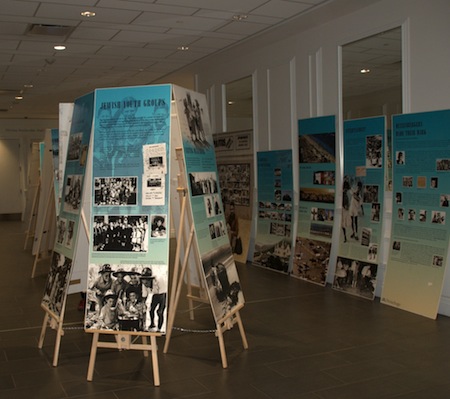
photo - The exhibit opening in Toronto. Created in 2009, Memories of Muizenberg debuted in Cape Town and has been to Johannesburg, London, Israel, Perth, Sydney, Melbourne, Toronto, San Diego and, now, Vancouver
The exhibit opening in Toronto. Created in 2009, Memories of Muizenberg debuted in Cape Town and has been to Johannesburg, London, Israel, Perth, Sydney, Melbourne, Toronto, San Diego and, now, Vancouver.

Rom arranged for the crate containing the 40-panel exhibit to be stored in the warehouse of fellow former South African Lexie Bernstein, and solicited donors to cover the costs associated with transportation and opening night festivities. Muizenberg has a special place in his heart and memories, he confided.

“It was a place my family and extended family spent every Sunday – you loaded the car, took the food and you didn’t need to look for friends – they were always there,” he reflected. “No one phoned to say, are you going to Muizenberg? You just knew, everyone in your community was going to be there. You’d go swimming, get attacked by bluebottles, get knocked over and soaked by a wave from the creeping high tide, have the wind blowing in your hair and eat homemade rusks (cookies) mixed with sand. It was part of our DNA.”

Bernstein, who moved from Cape Town to Vancouver in 1987, recalls catching the train with his friends in the summer months to get to Muizenberg. “When the train pulled into the station, the conductor would shout out ‘Jerusalem!’” he said. “I think ex-South Africans in Vancouver will love this exhibition, and other Jews in the community will be fascinated about where we come from.”

Rom’s only regret about the exhibit is that it ends in 1962 instead of continuing. He’s asking former South Africans in Vancouver to email photographs that pertain to their history in Muizenberg and that might be shown as a slide show at the exhibit’s opening night, July 10, 7 p.m. To submit your memories, email Rom at [email protected].

Lauren Kramer, an award-winning writer and editor, lives in Richmond. To read her work online, visit laurenkramer.net.



Format ImagePosted on July 1, 2016June 29, 2016Author Lauren KramerCategories Visual ArtsTags Beth Israel, Cape Town, Muizenberg, South Africa

Posts pagination

Previous page Page 1 … Page 8 Page 9 Page 10 … Page 15 Next page
Proudly powered by WordPress