Skip to content
  • Home
  • Subscribe / donate
  • Events calendar
  • News
    • Local
    • National
    • Israel
    • World
    • עניין בחדשות
      A roundup of news in Canada and further afield, in Hebrew.
  • Opinion
    • From the JI
    • Op-Ed
  • Arts & Culture
    • Performing Arts
    • Music
    • Books
    • Visual Arts
    • TV & Film
  • Life
    • Celebrating the Holidays
    • Travel
    • The Daily Snooze
      Cartoons by Jacob Samuel
    • Mystery Photo
      Help the JI and JMABC fill in the gaps in our archives.
  • Community Links
    • Organizations, Etc.
    • Other News Sources & Blogs
    • Business Directory
  • FAQ
  • JI Chai Celebration
  • JI@88! video

Recent Posts

  • Story of Israel’s north
  • Sheltering in train stations
  • Teach critical thinking
  • Learning to bridge divides
  • Supporting Iranian community
  • Art dismantles systems
  • Beth Tikvah celebrates 50th
  • What is Jewish music?
  • Celebrate joy of music
  • Women share experiences 
  • Raising funds for Survivors
  • Call for digital literacy
  • The hidden hand of hate
  • Tarot as spiritual ritual
  • Students create fancy meal
  • Encouraging young voices
  • Rose’s Angels delivers
  • Living life to its fullest
  • Drawing on his roots
  • Panama City welcoming
  • Pesach cleaning
  • On the wings of griffon vultures
  • Vast recipe & story collection
  • A word, please …
  • מארק קרני לא ממתין לטראמפ
  • On war and antisemitism
  • Jews shine in Canucks colours
  • Moment of opportunity
  • Shooting response
  • BC budget fails seniors
  • Ritual is what makes life holy
  • Dogs help war veterans live again
  • Remain vital and outspoken
  • An urgent play to see
  • Pop-up exhibit popular
  • An invite to join JWest

Archives

Follow @JewishIndie
image - The CJN - Visit Us Banner - 300x600 - 101625

Byline: Cynthia Ramsay

Life legacies in writing

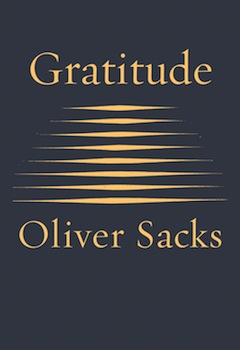
“I am now face to face with dying, but I am not finished with living,” writes Oliver Sacks as the dedication to Gratitude (Knopf Canada, 2015), a collection of four essays that were written in the two years preceding his death last August.

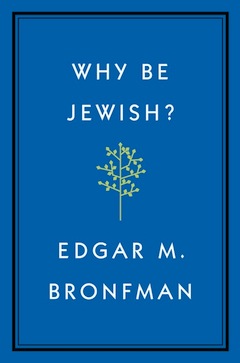
“I have given much of my life to the Jewish world, and I wish I had many more years to serve this noble calling,” writes Edgar Bronfman in concluding his book Why Be Jewish? A Testament (Signal, 2016), which he completed mere weeks before his death in December 2013.

Bronfman continues, “But everything has its natural end, and so now, as my time on earth draws to a close, I would thank my stars even more if you would choose to stand at Sinai; if you would choose, as I did so many years ago, to join this remarkable people who generation after generation held fast to the dream that through our individual and collective efforts we could transform the troubled world we share into a more perfect, more humane, more civilized place.”

Even though he became intrigued with Judaism late in life, Bronfman still defined himself as secular, “not comfortable” calling himself an atheist “in the face of the complexity of the universe.” He had a connection to Judaism through his grandfather, but it was weak. “My parents,” he writes, “for whatever reason, failed to instil much-needed Jewish pride in their children.”

Sacks was a self-described atheist. For him, it was his mother’s strongly negative reaction to the news of his homosexuality that pushed him away from belief: “The matter was never mentioned again, but her harsh words made me hate religion’s capacity for bigotry and cruelty,” he writes.

book cover - GratitudeHowever, the final essay in Sacks’ Gratitude is called “Sabbath.” In it, he recalls his parents’ observance of Shabbat, a day that “was entirely different from the rest of the week.” He recalls how the family would mark the day, how he became bar mitzvah, his break with his family and community in England after he qualified as a doctor and moved to Los Angeles, his “near-suicidal addiction to amphetamines,” his recovery and how he “became a storyteller at a time when medical narrative was almost extinct.” In addition to being a neurologist, most readers know, Sacks was an author – he wrote more than a dozen books, including Awakenings, The Man Who Mistook His Wife for a Hat and other Clinical Tales and An Anthropologist on Mars.

Sacks comes to appreciate Shabbat: “And now, weak, short of breath, my once-firm muscles melted away by cancer, I find my thoughts, increasingly, not on the supernatural or spiritual but on what is meant by living a good and worthwhile life – achieving a sense of peace within oneself. I find my thoughts drifting to the Sabbath, the day of rest, the seventh day of the week, and perhaps the seventh day of one’s life as well, when one can feel that one’s work is done, and one may, in good conscience, rest.”

Gratitude is a short but powerful collection. It is masterfully written and nearly impossible to get through without crying. All of the essays have been published before, but having them together for re-reading, rethinking and re-feeling is more than worthwhile. Every read will be a cathartic experience.

The first essay, “Mercury,” was written just before Sacks’ 80th birthday in July 2013. In it, he talks about what it feels like to be turning 80, some of his regrets, but mostly how much he has left to do, “freed from the factitious urgencies of earlier days, free to explore whatever I wish, and to bind the thoughts and feelings of a lifetime together.”

“My Own Life” is named after the autobiography of one of Sacks’ favorite philosophers, David Hume. Sacks shares a couple of paragraphs from that 1776 work, using it to lead into a discussion of his own state of mind. “My generation is on the way out, and each death I have felt as an abruption, a tearing away of part of myself.” While not without fear, he writes, “my predominant feeling is one of gratitude. I have loved and been loved; I have been given much and I have given something in return; I have read and traveled and thought and written.”

In the third of the four essays, “My Periodic Table,” Sacks talks of his love of the physical sciences and how, since “death is no longer an abstract concept, but a presence,” he is surrounding himself again, as he did when he was a boy, “with metals and minerals, little emblems of eternity.” On his writing table is a gift from friends for his 81st birthday, thallium, as well as lead, for his recently celebrated 82nd birthday. After discussing the treatment of his cancer, he expresses his skepticism about reaching 83, his bismuth birthday. He did, indeed, pass away at 82.

book cover - Why Be Jewish?Bronfman died at 84. It is particularly fitting to be discussing his book Why Be Jewish? as Passover nears. Two of the nine chapters are directly related to the holiday: Chapter 8 is about its rituals, the story, the symbolic aspects, its importance, while Chapter 9 presents the principles and practices of leadership as demonstrated by Moses – not Moses the manager, but rather, “Moses the man who, as flawed as he was, executed brilliant strategies that ultimately transformed much of the world. These principles are also relevant to everyday leadership, from parenting to day-to-day responsibilities at work.”

There are many lessons Bronfman derives from Moses and the Exodus story. Good leadership involves standing up for something, perseverance, vision, pragmatism, courage, celebration of accomplishment, allowing opinions (even complaints, perhaps especially complaints), awareness of one’s strengths and shortcomings, adherence to a moral code, the duty to pass the mantle. He doesn’t believe that Moses’ non-admittance into the Promised Land was a punishment – instead, from Mount Nebo, Moses is permitted to see the entire Promised Land, “God is showing Moses the future that is really what most leaders want: they want to know that their dreams and vision will live on.”

Bronfman notes about the Torah’s last word, Israel: “It seems to me that we are being told that the commitment to Israel – the people – must be the focus, not Moses. And since ‘Israel’ means wrestling with God, the Torah also seems to charge the Jewish people with the task of ‘wrestling,’ a term I take to mean a commitment to struggling with that which we find difficult to embrace and not letting go until we find the truths we seek.”

In another chapter – on the rest of the Jewish holidays – Bronfman writes that he “would like to see the institution of Yom Ha’atzmaut Circles in synagogues and communities where Jews of multiple views could come together to discuss books that put forth different ideas on Israel’s situation, from Alan Dershowitz’s The Case for Israel to David Grossman’s novel To the End of the Land.”

He also talks of Shabbat, referring to the group Reboot, “a network of young, creative Jews who have sought ways to grapple with questions of Jewish identity and community in terms that will be meaningful to their generation….” He gives examples of other youth who are engaged in a meaningful Jewish life and the book’s foreword is written by Angela Warnick Buchdahl, who was a Bronfman Fellow in Israel in 1989. The program for high school juniors was founded by Bronfman, former chief executive officer of Seagram Co. Ltd., who also was chair of the board of governors of Hillel International and president of World Jewish Congress. Bronfman has written other books, including The Bronfman Haggadah with his wife, artist Jan Aronson.

The goal of Why Be Jewish? is to encourage nonreligious Jews – especially the younger generation – to practise the elements of Judaism that speak to them, and it is written to that audience. He touches upon all the basics of Judaism from the perspective that, “Judaism does not demand belief. Instead, it asks us to practise intense behaviors whose purpose is to perfect ourselves and the world.”

Bronfman’s approach is appealing in many ways, and he offers practical advice for the non-observant on how to connect with Judaism’s tenets and traditions. Even for the somewhat-observant Jew, many of his ideas will be interesting. His outlook is positive and well conceived. It is also inclusive.

He writes, “My own feeling is that Judaism is a big family of individuals with a common bond that has stayed strong through a long history and much hardship. Those who want to become part of this story are Jews, too. I believe the tent should be open and welcoming to anyone who wishes to join.

“For younger Jews today, choosing a particular ethnicity or culture may seem too narrow a form of self-identification. But I do not see Judaism as a form of tribalism that divides rather than unites. The Jewish people are one of the many vibrant patches on the richly diverse quilt of humanity. Each patch has its own design and, together, they make a beautiful whole. Embracing your heritage deepens your understanding of who you are and where you come from and brings you into a more meaningful relationship with the multicultural world.”

Format ImagePosted on April 15, 2016April 13, 2016Author Cynthia RamsayCategories BooksTags Edgar Bronfman, Judaism, memoir, Moses, Oliver Saks, Passover
Jazz to benefit refugees

Jazz to benefit refugees

Maya Rae performs April 9. (photo by Robert Albanese)

Only 13 years old and already a veteran of the Vancouver International Jazz Festival. Only 13 and already dedicating her time and talents to helping others.

Maya Rae and her Rhythm Band perform an evening of jazz and soul at Temple Sholom on April 9.

“This show is a benefit concert for the settlement of two Syrian refugee families,” Rae told the Independent. “If my music can make a difference towards helping people and making the world a better place, I can’t think of anything else that I’d rather be doing. Tikkun olam is about the pursuit of social justice and I believe strongly that we need to help refugees of all parts of the world to find a safe place to settle.”

She added, “Right now, the Syrian refugee crisis is one that is very prominent, and of epic proportions. Millions of innocent people have been displaced with nowhere to go. I felt compelled to participate and to do something meaningful at a local level. Our rabbi at Temple Sholom, Dan Moskovitz, has urged the Temple Sholom congregation to take action, and this is my way of doing so.”

Scheduled to join her at Temple Sholom are Luis Giraldo (piano), Eli Bennett (saxophone), Ayla Tesler-Mabe (guitar), Ethan Honeywell (drums), Evan Gratham (double bass) and Benjamin Millman (piano and ukulele).

The Grade 8 student at York House started taking singing lessons when she was in Grade 3. “My first official performance was for the jazz festival in 2012. I remember singing the solo part of ‘Lean On Me’ by Bill Withers, with Cecile Larochelle’s Anysing Goes choir supporting me with the beautiful chorus line. It was an extremely memorable experience for me.”

Earlier this year, she was asked by the organizers of the jazz festival – Vancouver Coastal Jazz and Blues Society – to perform in the Women in Jazz series, which took place in March. “As part of that preparation,” said Rae, “I was introduced to some wonderful young musicians who I asked to support me for those two shows. As we were preparing for those performances, I was inspired to do a benefit concert in my synagogue with the same set and the same musicians…. I’ve since decided to add another set, and a few more musical friends and surprises to expand the show. I’m really happy with the results so far and can’t wait for April 9th.”

Rae said she chooses to cover “songs that deliver meaningful messages through their lyrics. I also like to pick songs that could have impact on the listeners, and also spark awareness about the significant issues we are facing in this generation.”

She has a YouTube channel on which there are a few videos, including for the song “I’m Still Waiting for Christmas,” which was released last year and is on sale on iTunes, as well.

“I have co-written a few songs with various artists/musicians that will be released in the near future,” she said, adding that she is hoping to have more time to write this year.

“My goal is to continue to enjoy playing and making music with others,” she said. “It would certainly be a dream come true to make a living through my music.”

This summer, she’ll be busking on Granville Island, and she invited everyone to “please stop by.”

More information about Rae’s upcoming events and recordings can be found at mayaraemusic.com. For now, though, her focus is on the April 9 concert, which starts at 8 p.m., at Temple Sholom. Tickets are $18 for adults, $14 for children/students, and the proceeds will aid two refugee families. RSVP to Temple Sholom at 604-266-7190 or register at templesholom.ca.

Format ImagePosted on April 1, 2016March 31, 2016Author Cynthia RamsayCategories MusicTags jazz, Maya Rae, refugees, Temple Sholom, tikkun olam
Royal City welcomes Tevye

Royal City welcomes Tevye

Jewish community members in Royal City Musical Theatre’s production of Fiddler on the Roof, left to right: Erin Palm, Warren Kimmel and Zach Wolfman, with Michael Wilkinson in front. The show runs April 7-23 at Massey Theatre. (photo by Tim Matheson)

This year’s Royal City Musical Theatre production is Fiddler on the Roof. Playing the legendary lead character of Tevye the Milkman is Jewish community member Warren Kimmel.

Addressing the community, Kimmel acknowledged that Fiddler is “one of those pieces of art that have just become part of the culture almost by osmosis.” But, he added, “Fiddler on the Roof is an intensely Jewish musical and, although musical theatre is hugely populated by Jewish composers and performers, Fiddler is perhaps the only mainstream musical that deals directly with the Jewish experience. So, although your children might know ‘If I Were a Rich Man’ by cultural absorption, I would urge you to bring them all to see this piece. It’s a fundamental part of who we are and I think it’s going to be a great production.”

Directing and choreographing the RCMT show is Valerie Easton and the musical director is James Bryson, who will lead a full orchestra. Kimmel will be joined by three other Jewish community members on stage: Michael Wilkinson (Fiddler), Zack Wolfman (Perchik) and Erin Palm (Fruma Sarah). They and the rest of the cast have a challenge in making their iconic characters their own.

“I have made the character my own by growing a real beard!” said Kimmel, noting that it took three months to grow and has changed his life. “Seriously though, the fact that the role is iconic has been a real issue for me because I actually grew up watching that movie and I think that it is not for no reason that Topol is world-famous from only one identifiable role. I think it’s a brilliant movie and a landmark performance, so it has been quite difficult not to copy what he’s doing. At the same time, I think what would be worse would be to try and do something different just for the sake of being different. So, what I’ve tried to do, and I guess what I always try to do, is find the truth of the story for that character and play that. But they are big boots to fill, no doubt, and an even bigger beard!”

“It’s definitely hard when there is a fixed idea of how a character should be,” Wolfman said. “I am steering clear of the trap by approaching the role like I would any other. I look at the words on the page and the circumstances the character finds himself in. The show is iconic because the characters and story are well written, and it makes our jobs easier as actors because that information is all on the page for us to use…. When I say the same words in the same order, it is the character, and I suppose it will become my own when it comes out of my mouth!”

For her part, Palm said she loves “when an actor really takes risks and brings new life to the characters they play. I think I make Fruma Sarah my own by really trying to understand what she wants, in the most honest way possible.”

Fiddler on the Roof was one of the first musicals Palm ever saw. “It made a huge impact on me,” she said. So, for her, part of the fun of being in this production “comes out of years of being excited about the opportunity to do the show and then getting a chance to do it. I love the music and the story.”

Part of the challenge is to convey the time and place of the action. Based on Tevye and his Daughters and other stories by Sholem Aleichem, Fiddler is set in 1905 in Anatevka, a fictional Russian village. It centres around Tevye and his efforts to maintain Jewish traditions while trying to keep his wife and five daughters happy and safe.

“Being that we don’t live in Anatevka and it is 2016,” said Palm, “it’s relating to those social and economic differences and times that makes it a challenge … capturing the old world feeling in a way that is truthful and heartwarming, that’s what sweeps you away to Anatevka, that’s the charm of the show.”

For Wolfman, “Having the opportunity to play a character that is playing against the traditional values of the characters in the play is fun. Perchik has more modern sensibilities and, in a way, he acts as a proxy for the audience to see the differences in beliefs on stage. It is fun to play a character with a strong point of view who is willing to fight for what he believes in…. The challenge for me has been finding the balance between the Perchik who is warm and loving, and the hard-nosed revolutionary. Of course, both sides exist within the character, so it’s interesting to grapple with what comes out at what times. It’s an ongoing question for me so, as my old acting professor Stephen Heatley would say, I’m ‘keeping the questions open and active.’”

In a somewhat similar vein – trying to find balance within a character – Wilkinson said, “It’s been very fun and exciting for me to find the way the Fiddler fits in as a metaphor in Tevye’s mind but also has a personality and character of his own.”

Not only does Wilkinson have to figure that out, but he is also playing a Russian dancer in the song “To Life.” He said that Easton “has given us wonderful choreography and the Russian dancing is particularly fun, but also challenging – especially since most of us don’t have training in Russian dance!”

Kimmel described Easton as “one of the real jewels of this city’s theatre community and we have worked together enough times now that I know I can allow her to guide me in my performance and that, if I trust her, she will make it a better one. That’s meant to be the director’s job, I guess, and it’s what you always hope for as an actor, but it doesn’t happen nearly as often as you would hope.”

Last year, Kimmel worked with both Easton and Bryson on RCMT’s My Fair Lady. “Both brilliant,” he said. “Also, there are a few cast members from My Fair Lady that have reappeared in Yiddish garb and large beards and it’s always great to be on stage with people you know and trust. However, all the people I have close relationships with in the piece – my wife and five daughters – are all performers I’ve never worked with before and that’s quite exciting.”

It is also Wilkinson’s second production with Easton, Bryson and RCMT. He was in the ensemble of Annie in 2014. “The Vancouver theatre community isn’t huge, so usually there are some familiar faces when a new production starts rehearsals. I’ve met a bunch of new wonderful people in this production, as well as a few with whom I’ve worked before.”

Wolfman was at the University of British Columbia with a couple of the other leads, including Jenika Schofield, and has acted before with several members of the cast. “In fact,” he noted, “Jenika actually played my love interest in Titus: The Light and Delightful Musical Comedy and now she’s playing Hodel, who falls in love with Perchik. Crazy, right?!”

While this is his first time working with Easton and Bryson, Wolfman said, “Patrick Ray, our piano player, accompanied a show I did in the past, and maybe saved my life musically more than once.”

Palm worked with Easton right after graduating from Capilano University. It was in an Arts Club on Tour production of the musical The Thing About Men, where, she said, “I played 13 different characters, that was a highlight of my career. I just love her as a director. She’s just so present and physical in her directing skills. She’s very giving, she’s very much an actor’s director…. Also, I am a big fan of female directors. There are so few of them and so, when you get an opportunity to work with a director with such a clear vision who is a woman, I celebrate that.”

Palm also knows some of Fiddler’s cast from previous acting work, she took voice lessons for awhile with Sylvia Zaradic (Yente) and did a video with Natasha Zacher (Tzeitel) and others called Finding Face Time: A YouTube Musical!, which is online.

In the casting process, Palm was called back for two different roles: Tzeitel and Fruma. She said she is grateful to have been chosen “as part of the vision of the show and cast as Fruma Sarah.”

“I think the casting is very well put together and I couldn’t imagine the show being cast any other way,” she said. “We really have worked together as a collective, the chorus is really strong. There are a lot of talented actors and singers in this show, lots of young and up-and-coming talent, too, who really bring something special, new and exciting to the roles they play.”

Initially, Wolfman wasn’t sure for which role he would audition. During Oliver! at Theatre Under the Stars last summer, he said, “[M]any of the cast members in the show were buzzing about Fiddler on the Roof auditions during the run. A fellow cast mate, Kat Palmer, said I should go out for Perchik if I got a chance, so the show fell on my radar. When I first auditioned, I was thinking about Motel and Fyedka as possible roles, but after re-reading the script, I definitely had my heart set on Perchik and that’s what happened!”

When Wilkinson auditioned, he said, “I had to sing a song in front of the directing team and take part in the group dance call. I didn’t go in with a specific role in mind and was just hoping to be a part of the show in some capacity. It worked out well and I’m having a great time being a part of the production.”

As for the patriarch of the show, Kimmel said, “I originally auditioned for the role of Yente the Matchmaker but I lost that role, unfortunately, and had to settle for Tevye. No, in reality, I think Tevye has always been one of the roles that I felt I would have to do at some point or other, being Jewish for a start, and just loving this play since I was a child. So, I asked Val if I could audition. Honestly, I thought I was a bit young for the role and I still feel I struggle with the [emotional] weight of Tevye…. Also, there are a few performers in town that have been very successful playing the role and I was pretty sure they would be offered it, but it seems my audition – together with a large cheque made out to Val – clinched it for me.”

RCMT’s Fiddler on the Roof takes place at Massey Theatre, 735 Eighth Ave., in New Westminster, Wednesday-Sunday, April 7-23. Ticket are $47 ($38 seniors/students, $29 children 13 and under) from ticketsnw.ca and 604-521-5050.


Format ImagePosted on April 1, 2016March 31, 2016Author Cynthia RamsayCategories Performing ArtsTags Erin Palm, Fiddler, Michael Wilkinson, RCMT, Royal City, Tevye, Warren Kimmel, Zack Wolfman
Mamma Mia! in town

Mamma Mia! in town

Yael Reich understudies the role of Sophie and is in the ensemble of Mamma Mia!, which is at Queen Elizabeth Theatre until Sunday. (photo from Broadway Across Canada)

Yael Reich is making her national tour debut with Broadway Across Canada’s Mamma Mia!, which has returned to the Queen Elizabeth Theatre stage, and runs to Sunday.

Featuring more than 20 ABBA songs, Mamma Mia! is set on an island in Greece. Bride-to-be Sophie wants to find her father, who she has never met, so that he might walk her down the aisle. From her mother’s diary, she narrows her search to three men, all of whom she invites to the wedding to figure out which one is her dad. The situation threatens both her relationship with her mom, and her wedding.

Reich understudies the role of Sophie and is also in the ensemble of the tour, produced by Work Light Productions, that has made its way to Vancouver.

“Being an understudy is one of the most incredible things I have had the privilege to do,” Reich told the Independent. “It’s both challenging and rewarding. Probably one of the most challenging parts of being an understudy is maintaining focus on your own role in the show while becoming fluent in your understudy role.

“I’ve been a part of companies before where we’ve had to do four and five shows at a time in repertory – a different show each night – which can be confusing. I’ve actually found it more challenging to maintain two roles in one show because, often times, my ensemble character will be on stage at the same time as Sophie.

“I’ve had the privilege of going on for Sophie a few times so far and have had an absolute blast!” she continued. “It is extraordinarily rewarding to finally get the chance to embody a role that has been encompassing my headspace for months. It was particularly special getting to do the role with this company. The artists we are surrounded by in the cast and crew are all beyond supportive and encouraging, and it was incredible to have the opportunity to exchange dialogue, intention and creativity with them.”

Reich made her professional theatre debut with Bigfork Summer Playhouse in Montana. She played Anita in West Side Story in the summer of 2014 and returned to play Aldonza in Man of La Mancha and Lily St. Regis in Annie in 2015. “Between those two professional engagements,” she said, “I had the privilege of making my debut at the Hippodrome Theatre in Gainesville as part of their winter season.”

Reich received her bachelor of fine arts in musical theatre summa cum laude from the University of Florida in May 2015. By that time, she had already been working for more than 15 years.

“I began singing jingles for my father in 1999 and have been a lead vocalist for his advertising company, Sound Branding Ideas, ever since,” she said. “I got my start in theatre at age 8 with the Galaxy Centre for the Arts in Seminole, Fla. My training there ranged from pop voice, piano, percussion, studio recording and dance, alongside the shows we would put on. I auditioned for the arts magnet program and attended the Pinellas County Centre for the Arts for high school, majoring in musical theatre. Having specific major coursework at that age was incredibly valuable because it instilled a sense of purpose and perseverance in me, which has proven instrumental in the cutthroat professional world.”

Also instilling a sense of purpose and a strong foundation from which to face the world is her upbringing.

“Both Judaism and Jewish culture have always played a significant role in my life,” she said. “Coming from an incredibly traditional and religious family, I was brought up with strong beliefs. I spent most of my time in the synagogue and Jewish day school studying Judaics and practising Jewish rituals, most of which involved singing. I actually managed to lead every service involved in my bat mitzvah weekend, including the majority of the Torah portions and the Haftorah.

“Recently, having spent so much time focusing on my career and training, I have devoted much less attention to the religious aspect of Judaism, but have come to find a much greater appreciation for the cultural aspect. The Jewish people are such an incredibly resilient, eclectic and unique people. Their sense of community and commitment to the people as a whole is what I find most important.”

Remaining performances of Mamma Mia! include shows Friday and Saturday, 8 p.m.; Saturday and Sunday, 2 p.m.; and Sunday, 7:30 p.m. Tickets start at $35 and are available through ticketmaster.ca or 1-855-985-5000.

Format ImagePosted on April 1, 2016March 31, 2016Author Cynthia RamsayCategories Performing ArtsTags Broadway Across Canada, Mamma Mia!, musical, Yael Reich
Adults ruin friendship

Adults ruin friendship

Samar, left, and Linor like each other from their first conversation. (photo from R2R)

If only adults could be as brave as children sometimes. The Israeli documentary Almost Friends screens as part of Reel 2 Real’s International Film Festival for Youth April 8-15. It shows just how insidious fear and racism can be, and how much a parent or grandparent can influence a child, for better and worse.

Bat mitzvah-age girls from two Israeli schools – a religious Jewish school in Tlamim and a mixed secular school in Lod – were brought together in a pen-pal program. For most, if not all, of the religious girls, this is their first exchange with non-Jews.

The success of the written exchanges leads to the Lod girls being bused to Tlamim to meet their pen pals. The teachers take the students through a couple of trust-building exercises and then give them time to interact. It is on this day that Arab-Israeli Samar and Jewish-Israeli Linor meet and become friends. They continue to write each other afterward, but the influence of Linor’s grandmother and mother overwhelms Linor and she stops writing. Samar’s concern for Linor’s safety, lest there be a terrorist attack if Linor visited her, consoles Samar over the loss of the friendship.

The most interesting development is Linor’s change of perspective. Initially, her mother is supportive of the pen-pal program and assures a then-worried Linor that there is nothing to fear from Arabs. Her grandmother is close-minded from the beginning, warning Linor that there will always be “a sting” in the Israeli-Arab relationship. Once Linor bonds with Samar, the ingrained distrust, racism, fear and insularity of Linor’s family presents itself. Their words sway Linor who, before the letter exchange, was calming her friends’ concerns about Arabs. After the negative reactions from her mom and grandmother, she is the one telling her friends how dangerous Arabs are, while one of her friends tries to convince her, “We’re alike. We’re brothers.”

There are many things powerful about this documentary. One is the reminder of how separate from each other most Arabs and Jews live in Israel. Another is how people who are kind and loving in so many ways can also be hateful and hurtful. But the documentary also reveals cause for hope – in both the religious girls’ reactions to their Lod peers and the friendships that do exist among Jews, Arabs and Christians in the Lod school.

Almost Friends is recommended for ages 13+. The hour-long film will be followed by a discussion with R2R artist-in-residence filmmaker Jessica Bradford and an R2R board member. It screens Wednesday, April 13, at noon, at Vancity Theatre. Tickets are $9 ($6 child/youth/senior, $5 each for groups of 10+) from 2016.r2rfestival.org or 604-224-6162.

Format ImagePosted on April 1, 2016March 31, 2016Author Cynthia RamsayCategories TV & FilmTags interfaith, Israeli-Palestinian conflict, peace, R2R, Reel 2 Real
Keeping the ballet dancing

Keeping the ballet dancing

Sam Steinfeld works with Royal Winnipeg Ballet apprentice Jesse Petrie. He is traveling with the ballet on their current tour, which arrives in Vancouver April 7. (photo by Amy Simoes)

The Royal Winnipeg Ballet is currently making its way across Western Canada and will present the Vancouver première of Going Home Star – Truth and Reconciliation at Queen Elizabeth Theatre April 7-9.

Commissioned by RWB, with support from the Truth and Reconciliation Commission, Going Home Star was first performed in Winnipeg in 2014, as part of RWB’s 75th season. Conceived by RWB artistic director André Lewis and the late Cree elder Mary Richard, the ballet was created by novelist Joseph Boyden, choreographer Mark Godden and composer Christos Hatzis. It features the music of Inuk throat singer Tanya Tagaq, and Steve Wood and the Northern Cree Singers.

Traveling with the ballet is physiotherapist Sam Steinfeld, who spoke to the Independent during the company’s bus ride to Brandon, Man., the tour’s first stop.

photo - Sam Steinfeld
Sam Steinfeld (photo by Amy Simoes)

Born and raised in Winnipeg, Steinfeld graduated from the University of Manitoba. He did a science degree and considered doing a master’s in physiology but, between the poor job prospects for science grads at the time and a friend who was finishing up his training in physiotherapy, Steinfeld decided to change his path.

After his training, he worked in a hospital setting for several years before going into private practice. He has been a consultant to professional sport teams in Winnipeg, including the Jets and the Fury, and, in 1998, he started working with RWB. He also teaches for the Neuro Orthopedic Institute, which is based in Australia.

Steinfeld has been a physiotherapist for more than 35 years. “Every day’s a little different,” he said. “There are always new challenges, especially working in an environment like this, with the ballet and going on tour. It’s one thing when you’re working, say, in your clinic or at home and in the ballet’s clinic, things are a little more predictable. But, when you’re on the road, you never know what you’re going to encounter … that, for me, keeps it interesting. Certainly working with different people, too, the different dancers we’ve had over the years, different clients. Everybody brings their own way of managing and dealing with their injuries, and you have to be able to adapt and work with those people and find ways to get them going again.”

It’s never the same, he said. “Treating two ankle sprains doesn’t necessarily mean you approach them in the same way, for instance, just because of the individual or what the individual’s going to have to do.”

There are two physiotherapists who work with RWB – the other is Kevin Dyck – and the two split up the tours, said Steinfeld. When in Winnipeg, Steinfeld is at the ballet’s clinic Tuesday and Thursday afternoons and evenings, and Dyck works the other hours Monday to Friday. For shows in the city, they try to divide the time at the concert hall evenly.

“We’re looking after not just the company, but we look after the professional division students of the RWB school,” explained Steinfeld. “I’m treating the recreational division students, as well, and we look after all the administrative staff, the teachers, the stage crew that works for us. We’re responsible for all those people.”

Dancers don’t generally get injured during a performance, he said. “Most of the injuries we see are overuse things and, usually, with some modification of activity, some treatment, we can keep them going. Our main thing is to make sure they’re going to be safe and we work closely with the ballet masters and artistic director. If we feel somebody can still perform but perhaps in a lesser role, or modify their choreography somewhat, they’re good at adapting things for the dancer and are able sometimes to keep somebody in. But there are always situations where somebody just can’t do it, period, because of the nature of their injury or the severity of it. Then we have to work around that, and that sometimes means somebody else picking up an extra part or, if we’re on the road, bringing somebody from Winnipeg out to meet us and take over that part.”

Every physical activity stresses the body in a unique way. When he started working with the ballet, he said, “it became quickly apparent that I was working with artistic athletes and I had to learn more about dance and the technique and what’s involved and how they work because, in order to make decisions about whether it’s safe for someone with an injury to return, I have to understand what it is they’re doing.”

Compared to hockey or soccer, for example, dancers – and especially those who do pointe work – have more “forefoot and ankle problems that you don’t normally see, say, in a hockey player who wears a skate,” said Steinfeld. A foot doesn’t move much inside of a skate. However, he said, “you look at a dancer in a pointe shoe and the load they’re putting on their foot, and the very different way they load their foot, right through their toes, for instance, when they’re on pointe, is unique…. So, we’ll see more things like stress fractures in the foot, metatarsal stress fractures or mid-foot stress fractures, certainly more mid-foot and forefoot sprains and that sort of thing that you don’t often see in something like hockey. You might see them in soccer, though, with the amount of running.”

Steinfeld is the son of Holocaust survivors who came to Canada three years after the war. He has two older brothers.

“My parents set an amazing example in terms of their ability to overcome adversities, how they dealt with other people and … how they still had a lot of positive feelings towards other people. I think that helped me in terms of my development as a person and, ultimately, as a caregiver, in … having a little more empathy with people when they’re in trouble and understanding that, with hard work and perseverance, you can overcome a lot of adversities…. The courage they showed in starting a life anew after everything they’d been through, I think it all trickled down to myself, my brothers. I’m quite proud of that as far as my Jewish upbringing.”

Working with the ballet was never in his career plans, he said. “I actually went in there to replace the therapist who was ill and I was only supposed to work for about four or six weeks there, till this person came back. It turned out, unfortunately, they weren’t able to return to work, so the ballet said to me, do you want to carry on with us and I said OK, and here I am, 18 years later.”

Steinfeld said he is fortunate to have understanding colleagues and that the other physiotherapists in his practice help absorb his caseload when he travels with the ballet. He also voiced appreciation for his family’s tolerance of his absences and their support of his work. “I’ve been a lucky guy, I think, to have had this opportunity,” he said.

Steinfeld’s wife, Karen, is also a physiotherapist – she specializes in hands and the upper extremities, and he’ll sometimes confer with her. Their two daughters are now adults, the oldest is a cardiac surgery resident in Winnipeg and the youngest is a lawyer in Ottawa.

***

Going Home Star is at Queen E April 7-9, at 8 p.m., with pre-show talks at 7 p.m. Ticket are $29 to $89 and can be purchased from ticketmaster.ca or 1-855-985-ARTS (2787).

Format ImagePosted on March 25, 2016March 24, 2016Author Cynthia RamsayCategories Performing ArtsTags Going Home Star, Royal Winnipeg Ballet, Steinfeld, Truth and Reconciliation Commission
The move from 11th to 41st

The move from 11th to 41st

The Jewish Community Centre at 41st Avenue and Oak Street, November 1962. (photo from JWB fonds, JMABC L.11512)

It’s hard to believe that, in the 1950s, the Oakridge area was considered a ways out of town. In going through the minutes of the Jewish Community Council of Vancouver from 1954, one can see the initial attempts by the council to find a new Jewish community centre building – which at the time was on Oak Street at 11th Avenue – that would be as conveniently located. They considered exchanging space with the Peretz School, which was on Broadway, and buying the land on which Vancouver Talmud Torah stood, on Oak at 26th. However, they soon started examining the prospect of buying land from Canadian Pacific Railway, south of 41st. The following snippets of meeting minutes from 1954-1962 allow readers to fast forward through the development process and the establishment of the JCC where it is currently located.

image - Jewish Community Council minutes 1954-62 re: move of JCC from 11th to 41st

Format ImagePosted on March 25, 2016March 24, 2016Author Cynthia RamsayCategories LocalTags history, JCCGV, Jewish Community Centre, Oakridge
A-WA to electrify Biltmore

A-WA to electrify Biltmore

A-WA plays at the Chutzpah! Festival on March 12. (photo by Tal Givony)

For a breakup song, “Habib Galbi” is pretty darn upbeat. And the three women in the video – who are singing of a lover who has left – don’t seem too crushed. In fact, they end up dancing the Yemenite step with three young men in tracksuits and baseball caps, who seem to have popped in from a hip-hop video. Colorful clothing contrasts with bleak desert, a traditional melody pulses with a pronounced electronic beat. In a word, A-WA.

The three women are sisters Tair, Liron and Tagel Haim. They hail from the village of Shaharut in southern Israel. The video for the title track of their first CD was filmed nearby, though the sisters have been based in Tel Aviv for about five years now. “Tel Aviv is one of our favorite cities in the world and one of the coolest places in terms of culture, food, fashion and music,” they told the Independent in an email interview.

And they have been to many cities in recent years, touring all over Israel, Europe and now North America. On March 12, they perform at Biltmore Cabaret as part of the Chutzpah! Festival. The week later they’re in Toronto. The only other place they’ve performed in Canada to date is Montreal. “We had so much fun and we can’t wait to be back again!” they said.

A-WA’s CD Habib Galbi (The Eighth Note, 2015) is described as “electronic, funk/soul, folk, world and country”; its style, “Afrobeat.” Produced by Tomer Yosef of Balkan Beat Box, it comprises 12 traditional Yemenite songs that have been modernized with the help of Yosef’s unique vision, for sure, but the Haim sisters grew up listening to, creating and/or performing an eclectic musical mix, from “Greek music, Yemenite music, jazz, R&B, hip-hop, reggae, progressive rock and more,” according to their website. And they grew up in a culturally mixed household, with their father’s parents having come to Israel from Yemen and their mother being of Ukrainian and Moroccan heritage.

“We grew up in a very musical family,” they explained to the Independent. “Our parents are both music lovers and they used to play records around the house all the time; a lot of Middle Eastern stuff, but also a lot of great pop from the West. Our dad used to play his bouzouki and guitar every day – he’s obsessed with old Greek music. We have one brother and two younger sisters and they all sing and play instruments. Our brother is a sound engineer and he helped us from the very beginning to record demos for the album. Our littlest sister, Tzlil, is working on composing the film score of her dreams.”

When the sisters heard the recording by Yemeni singer Shlomo Moga’a of “Habib Galbi,” they were hooked. “From there,” reads their website, “a door was opened [to] a hidden treasure of ancient Yemenite women’s chanting, that was passed from generation to generation for centuries and has been recorded a few times. Moga’a was one of the only chief curators of these songs and after passing has left a legacy just waiting to be discovered.”

“When we released the track ‘Habib Galbi,’ we had no idea how people would react to it, but we loved it and wanted to share it with the world,” the sisters told the Independent. “We always had a good feeling but the fact that it went viral so fast and reached so many people worldwide is still overwhelming for us. It was such an awesome surprise!”

In an August 2015 article in the Forward, writer Madison Margolin describes A-WA – pronounced Ay-Wah, and meaning yes or yeah in Arabic – as “part of a movement that celebrates Jewish-Israeli cultural roots in Arabic. Now, after decades of discrimination, the younger generation of Mizrahim is rediscovering their Jewish ethnic identity as Middle Easterners and reclaiming their heritage.”

“It seems like there is a revival of Mizrahi culture and also a longing for the magic and simplicity of old times, not only in Israel, but in the whole world, and we think it’s great,” the sisters told the Independent. “People feel a strong desire to explore their histories, especially artists, who are constantly seeking inspiration from their roots. For us, Yemenite culture was always really fascinating and something we are very proud of.”

The sisters said that, in school, they all took dance, theatre, art and voice lessons, and performed as much as they could around the area. But then they went their separate ways for a spell. Tair got a BA in music and did her master’s at Levinsky College of Education, Liron got a degree in architecture and interior design, and Tagel studied illustration and visual communication.

“We started A-WA,” they said, “because we were always already playing music together and just wanted to keep creating, so the project was born. Music was always our passion and having our own band is a dream come true. We actually are best friends (really!) so working together is a lot of fun and it keeps our bond strong.”

About touring, they said, “Being on tour means having a very dynamic schedule with long hours of traveling, but the chance to meet new people, see cool places for the first time, expand our own perspectives, and opportunities to try a lot of different food, make it all worth it. It is also really challenging because of the feeling of being away from our home and family and close friends, but, in a way, it keeps us and the whole band very united.”

While they’ve already started working on their next album, the sisters said, “We’re mainly focused right now on the release of our debut Habib Galbi in the U.S. and Europe, but, in the meantime,” they admitted, “we’re already jotting down songs for the next album and finishing up collaborations with some musicians we’re really excited about. We will always keep true to our funky Yemenite sound and might mix in some English stuff, but as for the Greek” – the music their father loves so much – “we’ll have to wait and see.”

For more on A-WA, visit a-wamusic.com. Their March 12 performance at Biltmore Cabaret, 2755 Prince Edward St., starts at 8:30 p.m. For tickets ($29/$25/$21), call 604-257-5145 or visit chutzpahfestival.com.

Format ImagePosted on March 4, 2016March 3, 2016Author Cynthia RamsayCategories MusicTags A-WA, Chutzpah!, Habib Galbi, Haim, Mizrahi, Shlomo Moga’a, Yemenite
Stand-up rabbi returns

Stand-up rabbi returns

Rabbi Bob Alper will perform as part of Congregation Beth Israel’s Purim festivities on March 23. (photo by Sultan Khan)

It’s too good not to lead with – Pope Frances’ honorary comedic advisor, Rabbi Bob Alper, will be bringing his comic stylings to Congregation Beth Israel on erev Purim March 23.

A professional comedian for some 30 years now, Alper said his life hasn’t changed that much since he became the papal advisor last fall. “I now drive my very own popemobile in my hometown in Vermont,” he said. “It gets 150 miles to the gallon, but is not great in blizzards. Otherwise, nothing has changed, though I do ‘use’ the title whenever I can. It’s a great story.”

No doubt, Alper will be flying to Vancouver. He was invited by the congregation, “people who obviously know how to make Purim rock,” he said.

He’s been here twice before, “once for a show at Temple Sholom and, earlier, for a Federation event. One of the most difficult of my career, since it fell just two weeks after 9/11.

“I’ll only be in Vancouver for a day or two,” he added about this month’s trip, “but I hope to do the highlights. The best part of every trip, for me, is performing!”

Alper won the title of honorary comedic advisor to the Pope in a contest held by the Pontifical Mission Societies in honor of the Pope’s September 2015 visit to the United States and to raise awareness and money for three pontifical missions. He beat out more than 4,000 people from 47 countries, including fellow American funnymen like Bill Murray and Conan O’Brien. You can watch his video, as well as those of the other contestants, at jokewiththepope.org, but the joke is: “My wife and I have been married for over 46 years, and our lives are totally in sync. For example, at the same time I got a hearing aid, she stopped mumbling.”

“I grew up in a religious Reform family for whom our synagogue was central, and my uncle was a Reform rabbi,” said Alper of his background. “My father loved humor, and told long ‘shaggy dog’ stories, which, naturally, prompted me to take the opposite route into the quick-hit world of stand-up. Bob Newhart, Shelley Berman and Mel Brooks records were my childhood companions and, in Jewish youth group, in high school, I would memorize and perform their routines at regional convention talent nights, thereby attracting the hottest girls. Comedy is good.”

Nonetheless, Alper was ordained as a rabbi in 1972 and then worked in congregations for 14 years. It was another contest that led him to become a comedian.

“In 1986, living in a Philadelphia suburb and armed with a doctoral degree from Princeton Theological Seminary, Bob was charting a different path, trading congregational life for a counseling practice,” writes editor David Crumm in the introduction to Alper’s book Thanks. I Needed That. And Other Stories of the Spirit (Read the Spirit Books, 2013). “But, at that same time, comedy reared its ugly head in the form of a ‘Jewish Comic of the Year Contest.’ Bob entered, came in third behind a chiropractor and a lawyer, and went on to make stand-up a full-time career.”

Alper’s wife, Sherri, is a psychotherapist. On his website, it notes, “Professionally, he makes people laugh, while she helps people cry.”

With literally thousands of shows under his belt, Alper has made a lot of people laugh. “It gets easier and easier,” he said about performing. “That’s how comedy works. I agonized before I did my first five minutes in 1986. Now performing is a delight and, since stand-up is cumulative, I have tons of material from which to choose.”

Among Alper’s shows are duos with Muslim comedians.

“My Muslim colleagues include Ahmed Ahmed, of Egyptian background, Azhar Usman, of Indian background, and Mo Amer, a Palestinian born in Kuwait,” writes Alper in Thanks. I Needed That. “We do Muslim-Jewish shows, frequently enhanced by the addition of a Baptist minister, Rev. Susan Sparks. And we have so much fun at each performance, it’s almost criminal.

“We call our shows Laugh in Peace.

“Back in late 2001, Ahmed and I were brought together as a gimmick by a savvy publicist,” he continues. “Our relationship quickly developed into a friendship based on the camaraderie of fellow artists and the breezy banter of guys who really enjoy one another’s company. We laugh together a lot.”

Alper began working with Usman when Ahmed became more focused on acting, and he also works with Amer quite often.

He admits, “No question, Laugh in Peace was conceived initially as a way to further our comedy careers, to book more gigs, to raise our visibility. It would be disingenuous to suggest anything else. But as the act and our personal relationships evolved, we quickly understood how Laugh in Peace brought a sense of hope and relief and healing that shared laughter, especially shared laughter between communities in frequent tension, can provide.”

Alper is also the author of Life Doesn’t Get Any Better Than This, a collection of stories, and the cartoon book A Rabbi Confesses, and he has produced two CDs and a DVD. For more information and a five-minute demo of Alper’s comedy, visit bobalper.com. Readers can also watch the video “Rabbi Bob Alper’s dog respects religions” and many others on YouTube.com.

Beth Israel’s Purim celebration starts at 6:15 p.m. on March 23 with a kid-friendly Megillah reading and costume parade, followed by carnival activities. The full Megillah reading and comedy by Rabbi Bob Alper starts about 8:15 p.m. Food will be for sale during the evening. Visit bethisrael.ca for more information and to register for the kids events.

Format ImagePosted on March 4, 2016March 3, 2016Author Cynthia RamsayCategories Performing ArtsTags Alper, Beth Israel, comedy, Pope, Purim
Yom Ha’atzmaut confirmed

Yom Ha’atzmaut confirmed

Achinoam Nini (photo from Federation)

The Jewish Federation of Greater Vancouver has confirmed that it has invited Israeli singer Achinoam Nini (Noa) to perform at the Vancouver Jewish community’s Yom Ha’atzmaut celebrations on May 11 at the Chan Centre.

After initial controversy because of Nini’s political views, including a petition that has stalled at just over 430 signatures and the withdrawal of funding by JNF Canada, Pacific Region, support has grown.

The Jewish Independent was one of the first to publicly support Federation’s decision, telling the Canadian Jewish News in a Feb. 19 article that the controversy was “unmerited,” and following up in a JI editorial that was published online Feb. 22 and in the newspaper last Friday. (jewishindependent.ca/lets-talk-about-nini) Also on Feb. 22, a group of more than 30 Israeli Canadians sent a letter urging Federation to “stick” to its invitation.

On Feb. 23, Federation announced two new event sponsors: the embassy of Israel in Canada and the consulate general of Israel in Toronto, which is the official representative office of the government of Israel in Ontario and the Western provinces. “We were thrilled when both the embassy and the consulate approached us with offers to be official sponsors of our Yom Ha’atzmaut celebration,” said Stephen Gaerber, chair of the Federation board, in a statement. “As official representatives of the state of Israel, we see support from the embassy and the consulate as strong messages that there is room for diversity both within Israel and within our community. We are also very happy that the deputy consul general is once again planning to represent the state of Israel at our Yom Ha’atzmaut celebration.”

JNF Canada chief executive officer Josh Cooper and president Jerry Werger issued a statement on Feb. 25 clarifying JNF’s position: “We want to be absolutely clear that JNF Canada is not protesting, boycotting, delegitimizing or censoring this event. After hearing from so many of our donors, we simply are not comfortable using charitable funds to support this particular artist.

“JNF Canada is a non-political organization which believes in strengthening the state of Israel for all of her citizens. It remains our position that Yom Ha’atzmaut celebrations and other community events should be inclusive.”

Last week, Federation received letters of support that are cited here and can be found in their entirety at jewishvancouver.com.

In addition to saying, “in no way can we allow for differences of opinion to undermine those core values which unite us in our desire for a strong Jewish future with a strong Jewish democratic Israel at the centre,” Natan Sharansky of the Jewish Agency for Israel wrote, “As one who has often had the pleasure of enjoying Noa’s outstanding voice and spectacular talent, I applaud the Vancouver Federation and I know your Yom Ha’atzmaut celebrations will be wonderful.”

The director general of the Jewish Agency for Israel, Alan Hoffmann, also issued a supportive statement: “Canada and Israel share the same democratic values that allow for a wide range of opinions, including diverse expressions of Zionism. An inclusive dialogue about Israel is at the heart of JAFI’s efforts to build a thriving Jewish future and a strong Israel.”

Former CEO of the Jewish Federation of Greater Vancouver, Mark Gurvis, who is now executive vice-president of Jewish Federations of North America, wrote, “In today’s political environment, which is so highly polarized, it has become all too common to brand political opponents as enemies – disloyal, treasonous. It isn’t unique to Israel – we see it today in every Western democracy. It is a phenomenon that is ultimately a far greater threat to communal or national cohesiveness than the different ideas themselves.”

Gurvis spoke of the compromise that was necessary to arrive at the recent landmark decision in Israel to create an egalitarian prayer space at the Kotel. He concluded that there should be a place at the celebration of “Israel’s central place in our collective Jewish gestalt … for the broadest possible cross-section of people who love Israel. The only way we have a future together as a people is if we make our tent larger, and not smaller. It doesn’t mean we have to agree with one another. It just has to mean we recognize and accept each other’s place in our collective journey.”

Julia Berger Reitman and Linda Kislowicz of Jewish Federations of Canada-UIA also stressed the importance of pluralism and the need to “support the values of Israel and Canada where democracy and freedom of expression are promoted.” They pointed out, “Artists often play a unique social role. Not only do they entertain us, they also help us to confront issues and stretch beyond the usual sensibilities. They help us find new forms of expression through their art.”

From several local rabbis, Federation received letters of support, or was copied on letters that thanked Israel’s representatives for Israel’s support and/or discussed the importance of a large tent and a multiplicity of opinions in Judaism. Writers included Rabbi Dan Moskovitz of Temple Sholom, Rabbi Andrew Rosenblatt of Congregation Schara Tzedeck and Rabbi Philip Bregman of Hillel BC. Beth Israel Rabbi Jonathan Infeld wrote a letter thanking Israeli Ambassador to Canada Rafael Barak and made a short video for his congregation, which can be viewed on the home page of jewishindependent.ca.

Members of the Rabbinical Association of Vancouver – Moskovitz, Infeld, Rosenblatt, Bregman, Beth Tikvah Rabbi Howard Siegel, Har El Rabbi Shmuel Birnham and Or Shalom Rabbi Hannah Dresner – expressed their “appreciation to all of those that have come out in support of our community’s Yom Ha’atzmaut concert and celebration…. Our community, like others, has a spectrum of opinion about Israel, its policies and politics. We are grateful that the spirit of democracy, which is one of Israel’s trademarks in the Middle East, has been championed in Vancouver by Israel’s diplomats.”

The RAV letter concluded with the hope that members of the community would include the May 11 concert “among their observances of Yom Ha’atzmaut.”

More than 50 Jewish community organizations support the annual event.

Format ImagePosted on March 4, 2016March 4, 2016Author Cynthia RamsayCategories MusicTags Achinoam Nini, Jewish Federation, Noa, Yom Ha'atzmaut

Posts pagination

Previous page Page 1 … Page 69 Page 70 Page 71 … Page 84 Next page
Proudly powered by WordPress