Recent Blue Box packages have included artisanal jams from Bustan Confiture. Each month, the featured products change. (photo from Emily Berg)
There are many ways to support Israel and Israeli businesses. A new concept, Blue Box Israel, connects artisan Israelis with Israel supporters abroad.
Blue Box Israel is the brainchild of Emily Berg, 29. Born and raised in Toronto in a secular, Zionist Jewish household, Berg made aliyah in 2012. In her first three years in Israel, she worked in fundraising and as a strategic consultant for several different nongovernmental organizations. It was during Operation Protective Edge (Tzuk Eitan) in 2014 that she saw a need for Blue Box.
“My fiancé was called to reserve duty and was basically gone from the first until the 40th and final day,” Berg told the Independent. “It was a very quiet period. People were not going out much. And, it was the first time I was able to really reflect on my life, purpose and future here.”
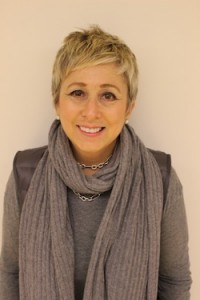
Emily Berg, founder and chief executive officer of Blue Box Israel. (photo from Emily Berg)
Berg received daily emails, calls and messages from friends and family abroad, asking how they could help.
“One day, my mother forwarded me an email she had received urging her to ‘buy Israeli products from the south,’” said Berg. “All of the links were either broken or led to Judaica sites that didn’t have the capacity to ship abroad.
“Having spent years here, I knew that there were dozens, if not hundreds, of great businesses in the south that could benefit from this type of transaction. I realized that Israel’s supporters want to buy products from Israel, but that there was not really any way to do so.”
With the Jewish National Fund’s blue and white tzedakah box etched into her mind since childhood, Berg saw it as a “portal to Israel.” In a similar vein, she wanted to give people around the world an opportunity to connect with small Israeli businesses and support them by buying their products.
“I decided to call it Blue Box, not in any way meant to be in competition with JNF; rather, to pay respect to this important artifact,” she said.
Fast forward a few months and the Blue Box concept developed into a subscription-based model, wherein customers pay a fixed price and receive a monthly package from Israel, with each focused on a different vendor.
“Blue Box is about giving Israel’s supporters a monthly taste of Israel, sending them high-quality, innovative and unique products, and giving them a chance to support a variety of hand-picked Israeli vendors,” said Berg.
Each box includes a postcard with the vendor’s story on it, written by Berg. “For me, Blue Box is first and foremost about supporting small business in Israel, but it’s also about sharing Israel’s treasures – its products and its people – with my customers.”
Berg is constantly searching for suppliers and personally visits the site of each business that she chooses to feature – whether it’s a farm, a studio or a home office. She enjoys seeing how and where the products are made, and speaking with the business owners and workers. These interactions help her get a sense of the business’ culture when writing the postcards.
“In the past, I have decided not to work with particular vendors, because I was not satisfied with the level of cleanliness or even the conditions of the workers,” said Berg. “Whether the business is run ethically is very important to me. I choose businesses with interesting stories behind them. I choose products that are well-made, suit the price point, and meet weight and customs requirements.”
The main thing for Berg is to send innovative, artisanal products (often organic or handmade) as opposed to just sending Bamba or random Judaica. And her focus is on products from Israeli-owned companies.
As the founder and chief executive officer of Blue Box, Berg has a wide network of support, most notably, a mentor via Keren-Shemesh, an organization that helps young entrepreneurs in their first two years of business.
“I also have a team of Israeli student interns from the Ruppin Academic Centre who help me with marketing, PR and social media,” said Berg. “Most people hear about the business, are so excited about it, and just want to help.”
There are many different companies that send gift baskets from Israel, mostly for the holidays, i.e. kosher items for Rosh Hashanah or Pesach. There are also a few subscription businesses in Israel that ship makeup samples or promotional items. Berg says that Blue Box is different because she features one handpicked vendor each month and includes not only a selection of their products but also their story.
“Israel is literally bursting at the seams with innovation, creativity, craft and talent,” she said. “Using fresh ingredients, high-quality materials and unique design methods, there are literally thousands of small businesses scattered throughout the country, tucked away in little-known moshavim or small studios.
“These businesses, of course, don’t necessarily have access to the global market, nor do they have the capacity to ship abroad. We work with small businesses, family businesses, kibbutzim, artists, designers, entrepreneurs, social businesses, NGOs and much more.”
Recent boxes have included items such as artisanal jams (from Bustan Confiture), honey (from Kibbutz Ein Herod), spices (from Derech HaTavlinim), organic soap and shampoo (from Arugot Habosem), hand-woven baskets (from Kuchinate, the African Refugee Women’s Collective), organic olive oil (from Rish Lakish) and organic dried fruits (from Kibbutz Neot Semadar).
The boxes are packaged at a space in southern Tel Aviv. They are shipped at the beginning of each month, and Canadian customers can expect them to arrive within 10 business days after shipping (around the middle of a month). During months with a Jewish or Israeli holiday, Berg takes special care to ensure the packages arrive on time.
Purchasing a one-time box will run you $50 (including taxes and shipping). If you choose to subscribe – and customers can cancel at anytime – the price drops. For a three-month plan, it’s $46/month, for a six-month plan, $40/month, and, for a 12-month plan, $36/month.
“We ship a different box each month,” said Berg, and “everyone receives the same box that month. So, for example, every January, a subscriber will receive organic desert-grown dates, raisins and fruit leather from Kibbutz Neot Semadar for Tu b’Shevat.
“I want Blue Box to become a household name and something that hundreds of thousands if not millions of subscribers look forward to each month. Eventually, I would like to create an online shuk [market] to sell and ship Israeli goods abroad.”
The Canadian Union of Postal Workers is again attacking Israel and urging its members to support the campaign to boycott, divest from and sanction the Jewish state. Last week, the union’s national president, Mike Palecek, sent a communiqué to members packed with boilerplate calls for attacking Israel economically and politically, including a call to end the Canada-Israel Free Trade Agreement.
The BDS movement lays bare a stark moral dissonance among so-called “progressives.” In confronting almost every other conflict and issue, these are people who urge discussion, negotiation, compromise, dialogue, conciliation. Except when it comes to Israel.
Why is Israel treated differently in this, as it is in so many other realms?
Obviously, Israel is held to a higher standard, as so many critics have noted, because it is a democracy, it prides itself on human rights and rule of law. However, the standards to which the world holds Israel are impossible ones that no country could measure up to when faced with the continual threats and violence that the country has endured for nearly seven decades.
The Jewish country – given the Bible, the Holocaust, the principles upon which it was founded – is expected to be the quintessence of morality and humanity. Which it might have been capable of, were it not for the fact that those who seek its destruction recognize no parallel standards of morality or humanity.
BDSers and other extreme critics of Israel shield themselves in a blanket rejection of the idea that their ideology could in any way be influenced by negative perceptions of Jews. Be that as it may, Donald Trump, of all people, may have illustrated the situation perfectly while speaking with Jewish Republicans last December.
“Look, I’m a negotiator like you folks; we’re negotiators.… This room negotiates perhaps more than any room I’ve spoken to, maybe more,” he said.
To Trump, being an expert negotiator is a compliment, though compliments often have double edges.
The stereotype of Jews as unconquerable negotiators is a driving force behind BDS. It is so universal a stereotype that Trump didn’t even realize it might be offensive, just as so many BDSers are blind to the bigotry inherent in their worldview.
Consider Sept. 28, 2000. The Israeli-Palestinian peace process was proceeding and an independent Palestinian state was in reach. Then Yasser Arafat left the negotiating table and began the Second Intifada. A decade and a half of continued statelessness for Palestinians has followed, as well as endless violence and thousands more deaths. World reaction should have been to rear up against Arafat’s rejection of negotiation and his return to violence. It wasn’t. Despite all reason, the world nearly unanimously empathized with Arafat’s actions. Why? Because many in the world, consciously or not, hold to ideas that let them believe the Palestinians were never going to get a fair shake. Despite all evidence suggesting that negotiation was leading to a two-state solution, violence was completely understandable because, you know, no one bests the Jews at negotiating.
Of course, there is the other factor – that Arafat seems to never have wanted a two-state solution, but this does not explain the reaction of erstwhile progressives and peace-seekers around the world.
Other stereotypes of Jews also drive the tactics of BDS. Note the two primary targets of the movement. First, it’s about attacking Israel economically. Secondly, it’s about academic boycotts. First, hit them where it hurts: in the pocketbook. Then sock it to them in the intellect.
It is hard not to draw the conclusion that, at its root, BDS is a movement steeped in racism.
The main square of the Venice ghetto. The building on the right, which is now a hotel, used to house the Jewish community retirement home. (photo by Ashernet)
Next month will mark 500 years of what most consider the world’s first Jewish ghetto, though some historians contend that a similar type of area, which confined Jews to a restricted quarter, was set up in Frankfurt a short time before the ghetto in Venice. The word ghetto comes from the Italian ghèto, meaning slag, as the area chosen to contain the Jews of Venice had been used as a foundry. Today, some 500 Jews live in and around the ghetto area. There are kosher restaurants, two small hotels that offer kosher breakfast and one that also caters for lunch and evening meals. In the main square, apart from two of the historic synagogues, there is a Jewish museum and a kosher restaurant, run by the Venice City Council.
אחינועם ניני בהופעה במלון הילטון בתל אביב לכבוד בפתיחת מרכז פרס לשלום (צילום: Milner Moshe)
פרשת אחינועם ניני בגירסה של ונקובר: הפדרציה היהודית דוחה את הטענות שהיא כביכול תומכת בחרם על ישראל
השסע העמוק בחברה הישראלית נותן אותותיו גם בקהילת הישראלים בוונקובר כך מתברר. בקהילה המקומית כאן הדעות חלוקות בנושאים פוליטיים שונים בהם לגבי הופעתה של הזמרת אחינועם ניני, באירוע המרכזי ליום העצמאות (באחד עשר למאי) של הפדרציה היהודית של אזור מטרו ונקובר.
בפדרציה נזעקים להגיב על הפרסומים הלא נכונים שהארגון תומך בחרם על ישראל, לאור ההחלטה להביא דווקא את ניני למופע המרכזי ליום העצמאות. מנכ”ל הפדרציה, עזרא שנקן, מציין במפורש כי הדיווחים שפורסמו בעיתונות הישראלית שהפדרציה כביכול תומכת בחרם על ישראל אינם נכונים ויש לגנות אותם. שנקן: “על דבר אחד הפדרציה היהודית לא מתווכחת וזה על זכותה של ישראל להתקיים. לכן אפשר לדמיין את הדאגה הרבה שלנו כאשר בטעות קישרו אותנו לחרם על ישראל על ידי חברי קהילה מקומיים, שאינם מסכימים עם החלטתנו להביא את ניני לאירוע של יום העצמאות, כיוון שהעמדות הפוליטיות שלה שונות מהעמדות שלהם. אנו ברורים בהתנגדותנו באופן חד-משמעי לחרם על ישראל שהוא מפלה ומנוגד לשלום. אנו מחוייבים עמוקות להמשיך ולהאבק בחרם בכל הזדמנות. למרבי הצער יותר קל לפרסם מידע שגוי מאשר לבדוק את עובדות עצמן, ואפילו אמצעי תקשורת מרכזיים יכולים להסתבך כפי שקרה לעיתון הג’רוסלם פוסט, שפרסם הבהרה והתנצלות”.
ניני הודיעה בסוף חודש ינואר כי היא פורשת מאמ”י (ארגון אמני ישראל) לאור ההחלטה להעניק לזמר אריאל זילבר, פרס מפעל חיים. לדברי ניני: “אמ”י העניק מפעל חיים לאדם שמשתמש בכשרונו הגדול בכדי לקדם אג’נדה זהה לאלימות, גזענות ושנאה. לא מדובר בדעה פוליטית! יש כאן הבדל”. ניני הוסיפה בשאלה: “האם זילבר חזר בו אי פעם מדבריו או ממעשיו בתמיכה בכהנא, בברוך גולדשטיין וביגאל עמיר?”. לדבריה אי אפשר להפוך לגיבור לאומי אדם שחרט על דגלו והשתמש באומנותו לקידום ערכים של גזענות. כזכור לפני שנתיים סירבה ניני לקבל את פרס אקו”ם, כיוון שהוא הוענק גם לזילבר.
עכברושים מהמרים בקזינו: מחקר מגלה שמוסיקה ותאורה מגבירים את ההתמכרות
מחקר חדש מגלה שמוסיקה ותאורה גורמים להגברת ההתמכרות להימורים בקזינו. המחקר בוצע על ידי חוקרים במחלקה לפסיכולוגיה שבאוניברסיטת בריטיש קולומביה, שנעזרו בשלושים ושניים עכברושים. מתברר שצלילי מוסיקה חזקה ותאורה מהבהבת מגבירים את הסיכון שהעכברושים מוכנים לקחת על עצמם, כדי להשיג דברי מתיקה. החוקרים אימנו את העכברושים להגיע לחורים בהם מוצפנים מאכלים ללא לקיחת סיכונים מיוחדים. ברגע שמפעילים את המוסיקה והתאורה המהבהבת העכברושים מוכנים לקחת סיכונים הרבה יותר גדולים שכרוכים בעונשים, בדרכם להשגת המזון. החוקרים מאמינים שמהרים בקזינו מתנהגים בדומה והגירוי החושי באמצעות עוצמות המוסיקה והתאורה היחודיים, גורמת להם להגביר את ההימורים אפילו אם הפסידו כבר כסף. המחקר מגלה עוד שזריקות עם חומרים שחוסמים תאים במוחם של העכברושים שאחראים לתופעת התמכרות, מפחיתים את הסיכונים שהם לוקחים על עצמם. החוקרים מאמינים שיתכן וזה יכשיר את הקרקע לתחילתו של הליך רפואי לטיפול במתמכרים.
במחלקה לפסיכולוגיה פועל מרכז למחקר הימורים שכולל מעבדת קזינו, עם ארבע מכונות מזל אמיתיות, בשילוב צלילים ותאורה כמו בקזינו, לאפשר לקלוט בזמן אמת מידע על המהמרים שמחוברים לאלקטרודות שסורקות את מוחם, קולטות את דופק ליבם, רמת ההזעה ותנועת השרירים. החוקרים מבקשים לבדוק לאיזה אלמנטים פסיכולוגיים יש פוטנציאל להגברת ההתמכרות. שבעים ושלושה אחוז מתושבי בריטיש קולומביה מעורבים בהימורים וכארבעה אחוזים מהם מכורים להימורים.
An aerial view of the University of British Columbia campus. (photo by justiceatlast via Wikimedia Commons)
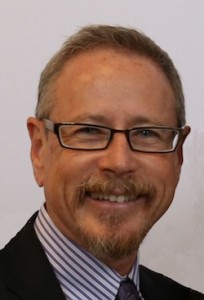
Aaron Devor, a leader in British Columbia’s Jewish community, has been appointed to the world’s first academic chair in transgender studies.
Devor, a professor of sociology who is also the president of the Jewish Federation of Victoria and sits on the board of Hillel BC, assumed his new duties Jan. 1. Devor is also the founder and academic director of the Transgender Archives, which was launched in 2011 and already comprises the world’s largest collections of documents recording transgender activism and research.
Devor defines the term transgender as including a diversity of people.
“Anyone who feels that the gender that was assigned to them on the basis of their genitals is not the correct one, that it’s not the proper fit,” said Devor, who is himself a transgender person. This includes, he said, people who want to present as or become the opposite gender but also many people who reflect “something more creative or original or different, or some combination of what we think of as the two standard genders.”
Aaron Devor (photo by Brian Sargent)
Devor has encountered surprise that Victoria, perceived by some as a parochial provincial capital, has become a global centre for transgender research and study. In his experience, he said, Victoria has always been a progressive community and the University of Victoria ranks high among the educational institutions in the world.
That Victoria would become a centre for transgender academia is due in part to Devor’s ongoing involvement in the subject as an academic and as an activist, but also through the support of the university for his endeavors, he said. Individuals who have been collecting relevant materials know Devor and contact him when they want to contribute them to a legitimate archive, and the imprimatur of the University of Victoria adds to their confidence, he said.
“I know the people who have been collecting and I have approached many of them and many of them have approached me after they started to understand what we have here,” he explained. “It’s all donated by people who have been amassing their own collections and want a safe place to put it.”
Popular culture, he said, has helped bring transgender awareness to a tipping point. In 2014, Laverne Cox, a star of the TV program Orange is the New Black, was on the cover of Time magazine. The program Transparent, in which a family addresses the gender transition of the father, began the same year. The openness of Chaz Bono, who North Americans have known since doing walk-ons on the Sonny and Cher Comedy Hour in the 1970s, also helped increase consciousness.
“There are huge limitations, in a way, to communicating effectively through popular culture,” said Devor, but “one of the things that happens through popular culture is people tend to feel like they know the stars, know the personalities that they see on television and in the movies and that they follow on the internet and so on. Even if they’ve never met them, they start to feel like they know them. So, when public figures in popular culture say and do things, it becomes real for a lot of people. One of the things that we know helps to undermine prejudice is when you feel like you know someone of that particular type, whatever that type is that you’ve been prejudiced about.”
Many people still don’t understand it, he added, but are willing to keep an open mind.
“My sense of the public attitude that we’ve reached just very, very recently is that, by and large, the public takes the attitude of, ‘I don’t really get this but I guess it’s OK and I’m willing to go along with it,’” he said. “I haven’t done a survey on this but I’m a keen observer, a well-placed observer … that’s my take on it.
“I think we’ve reached a tipping point in terms of people holding goodwill toward trans people, and I don’t want to overstate that,” he continued. “We’ve just reached a tipping point, but I think in terms of knowing what to do to actualize that goodwill, I think people have very little idea what to do, which is why we need more research and more translation of that research into the real world.”
As the world’s first chair in transgender studies, Devor hopes to be a part of advancing understanding. He hopes that the research being developed will aid in the creation of better laws and policies, while also “changing hearts and minds.”
“There is law and there’s policy and there’s practice,” he said. “Individual members of societies put all of this into practice. You can have good laws on the books but it doesn’t necessarily mean that what’s going to happen in everyday life will very well reflect what those laws are.”
Legally, most provinces have some protections against discrimination on the basis of gender identity and gender expression.
“The province of British Columbia is not one of those, which is surprising,” he said. Some people contend that the word gender in the human rights code is sufficient, but most of the provinces, he said, have enacted legislation that specifies gender identity as a prohibited grounds for discrimination. Still, he prefers the term “gender expression.”
“Discrimination is based on what you look and sound like more often than on how you actually feel about yourself,” he explained. In other words, heterosexual people may experience bullying or violence if they exhibit what are perceived as traits of homosexuals.
In the Jewish realm, Devor said, religious organizations are addressing trans inclusion. Just last November, the Union for Reform Judaism passed a resolution on the rights of transgender and gender non-conforming people. The resolution affirms the Reform movement’s commitment to the full equality, inclusion and acceptance of people of all gender identities and gender expressions.
The Conservative movement has a responsum from 2003, which Devor consulted on, and may address the matter in future.
Israel’s Victoria Hanna is coming to Vancouver for the Chutzpah! Festival (photo from Chutzpah!)
Victoria Hanna is unique. There is no doubt that her concert at the Chutzaph! Festival on Feb. 23 will be one of the most uplifting and intriguing performances you’ve ever seen.
A longtime vocalist and performer, Hanna’s mainstream popularity skyrocketed last year when the video of her song “Aleph-Bet (Hosha’ana)” went viral. She describes herself as a voice artist, and the phrase does best describe her work. Though music is a large part of it, Hanna explores the sounds that we make when we speak, the physical mechanics required to form letters, diacritics (the nekudot in Hebrew) and words, their meanings and those of the space into which they travel. She uses her whole body as an instrument, singing, voicing beats, gesturing with her arms, tapping her chest, stamping her foot. She is mesmerizing to watch and hear.
“I am very curious about voice and speech,” Hanna told the Independent. “I had a stuttering problem and it made me enter deeply into the act of voice.”
When Forbes Israel chose the Jerusalem-based artist as one of the 50 most influential women in 2015, it noted as one of her most important messages: “If you have a disadvantage you can turn it into a kind of gift.”
Hanna grew up in Jerusalem in a religious family, “in which the language and elocution of prayer were valued, above all other arts,” notes her bio. Hence, her source material: texts such as Sefer Yetzirah (Book of Creation, traditionally ascribed to Abraham) and the writings of 13th-century kabbalist Rabbi Abraham Abulafia.
“I grew up hearing both Iraqi-Persian and Egyptian liturgy,” she said, “and it influenced my art in the sense that I am completely intrigued by the scales and accents.”
The way in which Hanna presents the melodies and the rhythms of the texts gives listeners a sense of meaning even if they don’t understand the words.
“When I sing in ancient Hebrew for audiences who do not speak Hebrew,” she explained, it provides “a better understanding that language is sound, and music crosses boundaries.”
She also crosses boundaries between the seen and the unseen, making tangible the intangible. She uses letters, nekudot (or vowels), syllables and her whole body to create choreography in the space sound inhabits. She refers to it as “voicing space.”
“The concept,” she said, “means ‘to fill the space with voice,’ giving the voice action. Voice in action has to react to space. When you intend to put the voice into space, then it is called ‘voicing space.’”
Her art includes song and spoken word.
“Singing has to do with the purity of voice and speaking has the intention to deliver information,” she explained. “These two levels are mentioned in the kabbalistic scripts as two different dimensions.”
Her performances also include theatre, music, of course, and video or some form of visual. In a 2015 lecture-performance at Tel Aviv University (TAU), which she has posted on her website, she uses a dry-erase board to illustrate various concepts.
A graduate of Nissan Nativ Acting Studio, Hanna has performed around the world – in Mumbai, Berlin, Sao Paolo and Boston, to name only a handful of the diverse places she has been. Her Chutzpah! show in Vancouver marks her first visit to Canada.
Hanna recently released her second single, “22 Letters,” a “kabbalistic rap from Sefer Yetzirah.” In the TAU lecture, she explains that there are 22 letters (in Hebrew). These foundation letters are engraved by the voice, carved with breath set in the mouth in five places: in the throat, in the palate, in the tongue, in the teeth, in the lips. With these 22 letters, God depicted what would be formed and all that would be formed; He made nonexistence into existence. She connects the creation of letters, writing, to human conception, birth. Therefore, our souls are full of letters, from head to foot, and the letters combine with the nekudot, alternating sounds, back and forth, in many melodies.
Her work is thought-provoking as well as entertaining, but is there some specific understanding that she is seeking, or that listeners are supposed to glean? “The exploration is the purpose,” she said, examining the “meeting point between voiced language and space.”
And it’s a journey that many are now following her on. As to what about her personal search speaks to so many people, she said, “I think that voice is a universal code, the basis of everything. The word was created by sound.”
For more on Hanna, visit victoriahanna.net. Her Feb. 23 performance at Rothstein Theatre starts at 8 p.m. For tickets ($29/$25/$21), call 604-257-5145 or visit chutzpahfestival.com, where the entire festival schedule can be found.
Jeremy Hotz is coming to British Columbia, starting with a show in Kelowna on Feb. 25. (photo from Just for Laughs)
For a man whose current show is the International Man of Misery Tour, whose CTV special was What a Miserable Show This Is and whose DVD is called What a Miserable DVD This Is, Jeremy Hotz is a very funny and upbeat guy. He’s also really pleasant and cheerful on the phone.
Hotz spoke to the Jewish Independent on Jan. 27 from Toronto, where he was doing a press run for his show, which is being presented by Just for Laughs. The month-long Canadian tour started in Jasper, Alta., but then Hotz returned east to perform in Newfoundland. He is now making his way west and his first of four shows in British Columbia is in Kelowna on Feb. 25. The trip has him performing almost every day, sometimes twice in a day.
“I don’t work in the same order or anything,” he said. “A lot of stuff I make up is specific to the city that I’m in, so it’s quite fresh for me every single time I go on stage. I’m a very free-form comedian. I include the audience in the performance so they’re part of the show. It’s like a comic working without a net. That’s what seems to work the best for me, even though a lot of comics will tell you, ‘you should never do that.’ But, of course, everything that I’m told I shouldn’t do, I do. I put my hand in front of my face, I turn my back to the audience, I do everything wrong, but if you do all those wrong things together, I guess it works.”
Whereas many comedians have their prepared routine and will perform the same jokes from show to show, Hotz has several concepts that he carries from one performance to another – complaints about getting older, for example – but the content will be different. “That’s because I can’t remember the damn jokes,” he said.
He explained that he doesn’t plan anything out. “Planning gives me anxiety,” he said. “I suffer from this generalized anxiety disorder … and what happens to me right before shows when there’s stuff looming and coming up, it can get very bad, almost debilitating…. But, once I get out there, it just melts away, it’s gone. I feel much more comfortable in front of a theatre full of people than in a one-on-one conversation with a stranger.”
He said that he ended up being a comedian in part because he never really got any other jobs when he was younger. “I had to choose stand-up because it really was the only thing that was working for me.”
Humor has always been a part of his life.
“We were Jews, so when we got together for dinners, it was funny,” he said. First starting out as a comedian, “I didn’t even know there were comedy clubs. I didn’t understand why people would have to go to a club to see funny, and then I realized, oh, not all families are funny, I get it.”
While he had a bar mitzvah and attended Jewish school for six years as a kid, Hotz said, “My dad was the one that held the Jewish thing together in the family. My mother, of course, was Jewish as well, but she came from South Africa, like he did, and her family wasn’t observant. We observed the High Holidays, the Yom Kippurs, we had Passovers, things like that, but as far as going to the synagogue every Saturday, we didn’t do that.”
Born in South Africa, Hotz was a year old when the family moved to Canada; he has an older brother and a younger sister. He remained here until he moved to the United States in 1997.
“What happened was I went to the Just for Laughs comedy festival in Montreal and then these people from Disney gave me this big deal,” he explained. “They just threw a whole bunch of money at me to stand there and do nothing for a year. I guess they were keeping me off the market and they were saying they were going to do all these things with me. They did nothing, but they gave me that chunk of money and, on that money, I moved to Los Angeles.”
Joining his household soon will be a purebred long-haired chihuahua named Shackleton, after the polar explorer. Hotz is getting him from a longtime friend and had just seen the puppy while in Toronto for the press run. “We went on Canada AM and he was a fantastic little star,” said Hotz. “He’s only three months old.”
At best, Shackleton might be five pounds at his adult weight, Hotz added. “His nickname, of course, will be Shaq, which will be very funny because Shaq [O’Neal] is the big giant basketball player and this dog will be about five pounds.”
After the Just for Laughs tour, there will be a few projects to which Hotz will return his attention.
“We’re right now working on this documentary that’s going to bring to light this anxiety thing that I suffer from because it’s no joke,” he said. He described it as being “like an evil man that waits around the corner and can just pop out at any second.” While fine on stage, it’s generally “in full force” before the show, so he brings his brother, who’s a psychologist, on the road with him, at least for the beginning of the tours, “to get my head thinking about the right things.”
Even when acting in TV or film – Hotz is in Call Me Fitz, and has done other television shows and the movies My Favorite Martian and Speed 2 – the anxiety affects him. He was diagnosed about two and a half years ago.
In addition to the documentary, Hotz said he and his writing partner, Brian Hartt, have a couple of projects that they would like to have produced. On his wish list for himself is an HBO special.
“I’ve pretty much done the Lettermans and the Lenos and other specials, Comedy Central … but I’d like to do one HBO special. That would be something for me to do,” he said.
Hotz is looking forward to performing at Vogue Theatre. “I think it’s one of the best venues,” he said, “and I really hope that a lot of people are there. I know that there’s a comedy festival [jflnorthwest.com] going on at the right time, which they’ve made me part of, so hopefully that’ll be neat. And it’s a Just for Laughs thing, so that makes me feel all warm and fuzzy because they kind of launched my career. It’s very difficult to get out of Canada – because of Just for Laughs and the festival, that’s how I did it.”
While Montreal isn’t on this tour – and Hotz hasn’t done the main Just for Laughs festival for awhile – he said he’ll be there this July. While locals will be able to watch that performance on television, no doubt, his B.C. dates are a rare opportunity to see the award-winning comedian in person. Hotz is in Kelowna Feb. 25 (Kelowna Community Theatre), Vancouver Feb. 26 (Vogue Theatre), Nanaimo Feb. 27 (Port Theatre) and Victoria Feb. 28 (McPherson Playhouse). For tickets ($45.50), visit hahaha.com/en/jeremyhotz.
Dr. Mary Ellen Turpel-Lafond speaks at the fourth session of “How to Love a Child,” the Janusz Korczak Lecture Series. (photo by Cynthia Ramsay)
“Rights are paper tigers, just pieces of paper, unless there are people courageous enough to defend them, and unless there are mechanisms to enforce them and compel them. The child who has a right to be heard but no one listens to, and disappears without ever being heard, never really had a right to be heard,” warned B.C. representative for children and youth Dr. Mary Ellen Turpel-Lafond at the fourth session of “How to Love a Child,” the Janusz Korczak Lecture Series.
The Jan. 21 lecture at the University of British Columbia, which is part of a six-part series co-organized by the Janusz Korczak Association of Canada and UBC’s faculty of education, focused on The Human Rights of Aboriginal Children. Also speaking was Dr. Mike DeGagné, president and vice-chancellor of Nipissing University, who was the executive director of the Aboriginal Healing Foundation (AHF), which was established in 1998 with a grant from the federal government and wound down its work in 2014. Its mandate was “to encourage and support, through research and funding contributions, community-based aboriginal-directed healing initiatives which address the legacy of physical and sexual abuse suffered in Canada’s Indian residential school system, including inter-generational impacts.”
Dr. Grant Charles, associate professor at UBC School of Social Work, acted as moderator, and Janusz Korczak Association president Jerry Nussbaum also spoke, explaining briefly who was Janusz Korczak. The educator, writer and orphanage director – after whose book How to Love a Child the lecture series is named – not only wrote about his theories, but lived and died by them. When the Nazis created the Warsaw Ghetto in 1940, Korczak’s orphanage was forced to move there, and Korczak went with the children. In 1942, he and the almost 200 children in his care were taken to Treblinka, where they were murdered.
Nussbaum reminded the audience of Korzak’s philosophies on the rights of children and their direct influence on the content of the United Nations Convention on the Rights of the Child. Korczak believed that every child has a right to love, said Nussbaum, and that “children offered love and care will reciprocate with love and care.” Children have a right to be taken seriously, to education, to protest an injustice, among other rights. Nussbaum explained that Korczak believed that the health of a society could be gauged by the health of its children.
Despite protection under the UN convention, there are many children and youth who are marginalized and, in Canada, First Nations children are among those who are the most at risk. Dr. Jo-Ann Archibald, associate dean for indigenous education at UBC, gave an example of one of the research programs at the university’s faculty of education that is trying to ameliorate this situation. Called Awakening the Spirit, “it’s about revitalizing canoeing at Musqueam,” she explained. There is cooperation among different faculties and some students are involved, “but the most important part is the Musqueam communities that partner in this research. They are the ones who determined this particular project because they felt that they wanted to have something positive in their community for the young people, for the youth.”
Canoeing, she said, was a very important part of the community lifestyle, “it was a way to build family and community cohesiveness and also have fun and learn about the environment at the same time.”
The benefits of the research project, she said, “will be realized in educational materials, in the way of revitalizing important values, the Musqueam language, ensuring we have intergenerational learning.”
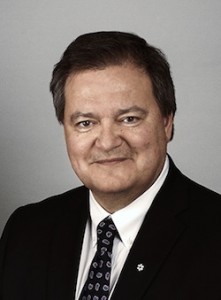
Mike DeGagné (photo from nipissingu.ca)
DeGagné has had 20 years of experience working with the repercussions of residential schools. He said his views about rights, “especially indigenous children’s rights, I color it with the history of residential schools.”
Often when there is a conversation within the community about indigenous issues, he said, it begins with the high rates of suicide, poverty, over-representation in the justice and child welfare systems, “the rosary of our grievances.” Given that indigenous children have rights, yet the grievances continue, he asked, “How can we be sure those rights are being supported and upheld?”
When AHF began, he said, grant applicants would ask, for example, whether the foundation had an approved list of elders that they could use. “We were astonished. Can you imagine in your own community … in your own spiritual context, asking if your priest was OK, if your rabbi was OK? This is the making of the colonial mind. After years of being subjected to doing it someone else’s way, even when we came along, we could not engender people doing it their way.” He described this as “a learned helplessness,” and a lack of trust in their own culture.
To move forward, it is important to talk of the past, he said. He used the metaphor of a pebble being dropped into a pond to describe the effects of the residential school system. The child’s abuse at the hands of an adult is at the centre, it is the pebble being dropped; the next ripple out is one child at a residential school abusing another child (“learned behavior”); the next is when that person leaves the school and returns to their community and starts a family in which violence takes place; then the violence between that family and another in the community. As we look at the outcome, standing on the outside, we see the high rates of suicide, family violence, neglected children, but we, as observers, “can’t see anything but the dysfunction and so infrequently do we get to examine what happened in the middle, what happened in that first instance of violence, what happened when that child’s human rights” were disregarded. “This is why we talk about history,” this is why 100 years of residential schools is important, he said.
To change the situation, he pointed to two necessities: the establishment of fairness, “the money that we spend on First Nations child welfare should be equal to the money that we spend in the rest of the population’s child welfare systems”; and transference of control to First Nations peoples of their lives, agendas and resources.
DeGagné commended the Truth and Reconciliation Commission on capturing the hearts and minds of Canadians and drawing them to indigenous issues, and for talking about system reform as opposed to tweaking or just adding money to a dysfunctional system. But, among his criticisms of the commission’s recommendations is that they do not make him uncomfortable. “It turns out that, in the reconciliation between you and me, indigenous people and non-indigenous people, that 93 of the 94 recommendations require that you do something…. I’d like to feel a lot more uncomfortable reading these recommendations because reconciliation is going to require that I work and that you work, and not that you come to stand by me, but that somehow I come to stand in the middle with you. And so, I think, too often with these recommendations, and this could be a reflection of the colonized mind, we are calling upon someone else to fix the problems with our community. That’s a concern of mine.”
The TRC, he added, also describes issues as if there has been no progress in the last 20 years – by the churches, universities, governments and others – towards reconciliation. “We have much to do, but we have to start by acknowledging the good work of all us and how much progress we’ve made.”
Turpel-Lafond spoke about how long it takes to change systems. “You have to really make that investment [in change], and it takes time,” she said.
AHF “laid the groundwork for thinking about healing” and the view of storytelling and its importance in healing, she said. “Stories, particularly the stories of grievances that aboriginal adults have – and many of our parents and grandparents have – are stories that needed to be told, that needed to be heard, that needed to be listened to.” AHF “gave resources for people to validate that process of allowing individuals who had been through residential school, their personal experience and their collective experience, to be told and listened to in a very sincere way in which they were supported, but also could create that medicine toward healing.”
Turpel-Lafond’s great-great-grandparents were the first two students at St. Michael’s Indian Residential School in Duck Lake, Sask. She spoke of the difficulties in sharing some of the stories with her own children. “Children are not always ready to hear those stories. I’m not trying to be over-protective, but we need to think about children’s well-being … how we tell the stories to children, when we tell stories to children, and how we can put those stories in a context.”
She then went on to speak about Korczak and the lecture theme, “How to love a child.” For her, Korczak represents what it means to love children, even “where it was extremely unpopular to love and support some children, who were considered to be less worthy, who were considered to be disposable…. And also to bring forward the idea that love is a kind of medicine with respect to our society…. We express our love for our own society and its furtherance by how we love our children because we create a vision of something we may not even be here to enjoy, that we create through that very values-based process.”
We’re not talking about creating the perfect system or bureaucracy, she said, noting that Treblinka was an attempt at a perfect system, “we’re talking about values.”
The love that Korczak represents for her in the context of indigenous children is an approach that does not come from a perspective of shaming, blaming, contempt or judgment. This is “a really serious problem that we continue to have for the current generation of indigenous children, which is, we want to save them but we still want to blame their parents, and that’s a very unhealthy attitude.” We need to come “from a perspective of love and understanding and context, and seeing … [how] multiple shocks … can just devastate families, not every family, but some families.”
A second lesson she takes from Korzcak’s views is “the idea that nobody owns your story, that you have to have the courage to say it.” People may relate to your story in various ways, “but the story, and telling it, the courage to do that, to talk about the difficult things, is a very important instinct related to love and, if you can’t bring that out and you don’t have enough people in your society who are courageous, then your society is doomed. And how do you build courageous people? … [I]t’s about love and acceptance and space, but it’s also about having very strong adults to allow people like kids to tell stories.” Korczak “represented that right to be heard,” she said, and he went even further, going against the mores of the day in that he wanted “no corporal punishment of children.”
She said that many indigenous children have been “raised in an environment deprived of the type of unconditional love, culture, language and the right to know who they were and where they were…. If you love people and you’re prepared to understand that grievance and suffering is not permanent, it can be redressed.”
But, adults who love children must see something in the children that the children may not see themselves because they’re mired in rejection. “There have to be positive, healthy adults who see their potential and support them to get to their potential. That’s a very important concept because, not surprisingly, guess what, some of the children who have been most abused and ill-treated can be the most challenging to engage with in terms of their emotional regulation, in terms of their contact with adults, in terms of their anger.”
The government label is that these children are “service resistant,” she said, which means, “we will leave you alone because you’re too angry for me even to listen to your story. But, if you take a page from Andrew Solomon [author of Far from the Tree: Parents, Children, and the Search for Identity] and Janusz Korczak, what would you say? I am able to rise above it and listen to this story and, if I’m a good, healthy adult that’s coming from a place of love, I can probably see what’s in the story and see how it can be a medicine for the future.”
The third lesson she takes from Korczak, her experience as an indigenous person and as an advocate for children is that “rights are an important medicine.” Rights are so important because “rights are a way to reframe incredible vulnerability and systematic disempowering … into a different context that overnight takes, for instance, that residential school experience and now makes it appalling, completely unacceptable, who would ever do that to children? Because they have a right to learn, they have a right to be safe, they have a right to be heard, they have a right to their language, [to their] culture transmitted from their parents to them, and there’s nothing threatening or harmful about that.”
In British Columbia, we have a long way to go. Of the children in care, more than 60% are indigenous children. While Turpel-Lafond said we are in a better place as a society than when she left home and went out in the world, “we are not in a place where indigenous children can in any way be guaranteed equal opportunities with other children in British Columbia. By accident of birth, they’re going to be born with significant disadvantages that will only be overcome based on what we decide to do.”
In the half-hour question and answer period that followed, one of the listeners shared her story of how her child had been abused by foster parents and, when she tried to remedy the situation, she could not find help, no matter to whom or to which government office she turned. Turpel-Lafond was at a loss to respond, other than to empathize and say we don’t have the answers, “but we’ve got to find a way to get them.”
The fifth lecture in the Korczak series takes place on Feb. 18, 7 p.m., and focuses on the topic Social Pediatrics in Canada and Vancouver. The final lecture on April 6 provides a summary of the series. To register and for more information, visit jklectures.educ.ubc.ca.
As the Jewish community expands into Coquitlam and other cities in the Lower Mainland, there must be an adjustment in the allocation of community resources. (photo by Greg Salter via Wikimedia Commons)
The face of Vancouver’s Jewish community is changing, with 36% born outside of Canada – the largest percentage in any Jewish population in the country.
In the Grade 1 classroom at Richmond Jewish Day School, half of the class is learning English as a second language, its students hailing from Israel and Argentina and speaking a mixture of Hebrew, Russian and Spanish.
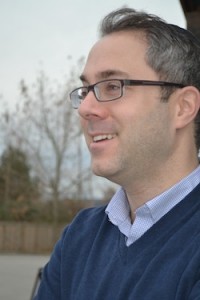
Abba Brodt (photo from Abba Brodt)
“There’s definitely a growing number of Israeli families in all our Jewish day schools,” said Abba Brodt, principal at RJDS. Among them is the second wave of Russian Jews, comprised of Russian emigrés who made aliyah as children and moved to Vancouver after doing army service in Israel and starting their families. “They maintain strong Russian ties but have an incredibly strong connection to Judaism and Israel,” he said.
The new arrivals place extra demands on Jewish day schools in terms of meeting their children’s language needs, and RJDS has had to shift resources internally so the children of new immigrants can learn successfully in class.
“When people come, what’s our obligation to them?” Brodt pondered. “They want their kids to get a Jewish education as they get established. Many of these parents come without jobs, are not established financially and are trying to adjust, but it takes many, many years. The only menschlik thing to do is to open our doors, figure it out and let them know they’re not a burden at all. I think that’s the right approach for any Jewish organization in town. The faster we help them get on their feet, the better for the community.”
Adjustment is easiest for the youngest children. Brodt recalled a Russian-Israeli family that arrived in June 2014 with a child who couldn’t speak a word of English. “He entered kindergarten and by December that year he was speaking to his parents outside of school hours in English!”
Cathy Lowenstein (photo from Cathy Lowenstein)
At Vancouver Talmud Torah, head of school Cathy Lowenstein has also witnessed an influx of new immigrants from Israel, as well as from Brazil, Estonia and Hungary. “For students in the younger grades, ESL support isn’t as much of an issue, as they can really immerse themselves in language much faster than students in intermediate grades. But, over the past few years, we’ve increasingly had to allocate budget to students who require ESL support,” she said.
That can be difficult because the ESL needs vary year by year. “Often, these students don’t present until late summer, so we’re left trying to reallocate dollars in August so that we can properly help them transition into the school,” she explained.
Tuition assistance is provided on a case-by-case basis, Lowenstein said. “Even though we may have allocated our cap, we do our very best not to turn away a family wanting a Jewish education,” she said.
The high cost of living in the Lower Mainland is having far-reaching effects on the 26,250 Jews who call this corner of the West Coast home. Approximately 14,000 of them live in Vancouver, close to 6,000 in Richmond and the remainder in outlying cities including Burnaby, New Westminster, Port Coquitlam, Coquitlam, Port Moody, Maple Ridge and Langley, where Jewish resources are few and far between. That’s because the high price of housing forces many new arrivals into these outlying areas, where accommodation is a little more affordable.
While RJDS has space available for more students, the challenge lies in reaching those Jewish families who live in the suburbs.
“We know there are 700 Jewish school-age kids in the Tri-Cities of Coquitlam, Port Coquitlam and Port Moody and, as much as the schools may want them, how many families are going to have their kids get on a bus for an hour’s commute each way?” Brodt said. “You have to be super-committed to do that when there are good public schools around. If I could create a pipeline to Burnaby, I’d do it, but the possible customer base there is not ready to make that sort of commitment. They’re managing their Jewish lives out there, as is their right.”
Shelley Rivkin (photo from Shelley Rivkin)
At the Jewish Federation of Greater Vancouver, vice-president of community affairs Shelley Rivkin noted that more than 850 children now live in underserved areas beyond the borders of Vancouver and few are receiving any Jewish education. “With community support, Jewish educators can develop innovative programs via which these kids can access that education, sharing fully the richness of our traditions and strengthening their Jewish identities,” she said.
In one such program, Federation collaborated with the Jewish Community Centre of Greater Vancouver and funded a pilot project to enable Jewish children living in Coquitlam, Port Coquitlam and Port Moody to attend Jewish summer day camp. The project made transportation and fee subsidies available to 22 kids.
Federation has established a regional communities task force that began work last month. In the meantime, the organization contributes to a shuttle bus in Richmond that helps seniors attend various community activities, and Burquest seniors can enjoy another day of programming thanks to additional funding provided to Jewish Family Service Agency. For young families, PJ Library is an important outreach program, Rivkin said. “For many young families who are raising children in interfaith households and/or who live in the suburbs, PJ Library is a primary Jewish connection. Recently, 100 people attended a PJ Library Chanukah event in Coquitlam.”
Federation is seriously focused on the future of the Lower Mainland’s Jewish community and anticipating programming to reach its needs over the next 15 years.
“Our population of seniors is expected to double by 2030 and an increased number of them will be 85 or older, so programs and services for this group will need to be expanded,” said Rivkin. “As issues of affordability persist, we expect there to be more Jews moving to more affordable suburbs that have little or no Jewish infrastructure. We expect these regional communities to play a larger role, and Jewish Federation will increase its focus on programs and services to reach them.”
The cost of living in Vancouver will likely continue to impact those who pay a premium to live near Jewish services and institutions, but find that the cost of Jewish life prevents them from participating. “We expect that increased subsidies for program participation will be needed,” she added.
According to the National Housing Survey in 2011, 16% of the Lower Mainland’s Jewish community lives below the living wage of $36,504. Among Jewish immigrants to the Lower Mainland who arrived between 2005 and 2011, that low-income rate is 25%. As one communal effort in dealing with this issue, Tikva Housing Society will expand the affordable housing stock for the Jewish community by 42 additional units in Vancouver and Richmond by 2017.
Lauren Kramer, an award-winning writer and editor, lives in Richmond. To read her work online, visit laurenkramer.net. A longer version of this article was published in the Canadian Jewish News.