Skip to content
  • Home
  • Subscribe / donate
  • Events calendar
  • News
    • Local
    • National
    • Israel
    • World
    • עניין בחדשות
      A roundup of news in Canada and further afield, in Hebrew.
  • Opinion
    • From the JI
    • Op-Ed
  • Arts & Culture
    • Performing Arts
    • Music
    • Books
    • Visual Arts
    • TV & Film
  • Life
    • Celebrating the Holidays
    • Travel
    • The Daily Snooze
      Cartoons by Jacob Samuel
    • Mystery Photo
      Help the JI and JMABC fill in the gaps in our archives.
  • Community Links
    • Organizations, Etc.
    • Other News Sources & Blogs
    • Business Directory
  • FAQ
  • JI Chai Celebration
  • JI@88! video

Recent Posts

  • BGU fosters startup culture
  • Photography and glass
  • Is it the end of an era?
  • Taking life a step at a time
  • Nakba exhibit biased
  • Film festival starts next week
  • Musical with heart and soul
  • Rabbi marks 13 years
  • Keeper of VTT’s history
  • Gala fêtes Infeld’s 20th
  • Building JWest together
  • Challah Mom comes to Vancouver
  • What to do about media bias
  • Education offers hope
  • Remembrance – a moral act
  • What makes us human
  • המלחמות של נתניהו וטראמפ
  • Zionism wins big in Vegas
  • Different but connected
  • Survival not passive
  • Musical celebration of Israel
  • Shoppe celebrates 25 years
  • Human “book” event
  • Reclaiming Jewish stories
  • Bema presents Perseverance
  • CSS honours Bellas z”l
  • Sheba Promise here May 7
  • Reflections from Be’eri
  • New law a desecration
  • Resilient joy in tough times
  • Rescue dog brings joy
  • Art chosen for new museum
  • Reminder of hope, resilience
  • The national food of Israel?
  • Story of Israel’s north
  • Sheltering in train stations

Archives

Follow @JewishIndie
image - The CJN - Visit Us Banner - 300x600 - 101625

Author: Or Shalom

Mortality learning series

Or Shalom Synagogue is launching Awakening to Mortality, a new learning and community series that invites open, thoughtful Jewish conversations about death, aging and what it means to live fully.

The series is offered in celebration of OSACK – the Or Shalom Auxiliary Chevra Kadisha – which was established in 2025 to serve community members who are not eligible for burial preparation through the community Chevra Kadisha administered by the Schara Tzedeck Cemetery Board, including Jews of patrilineal descent, transgender members, and others. OSACK volunteers are trained to work in partnership with a funeral services provider to offer tahara (ritual preparation of the body) and other sacred end-of-life practices grounded in Jewish tradition.

Drawing on Jewish text, ritual, reflection and creativity, Awakening to Mortality approaches death not with fear, but with curiosity, compassion and spiritual awakening. The series includes two four-week Virtual Zusia programs and a monthly in-person gathering called MortaliTea, all open to the wider community.

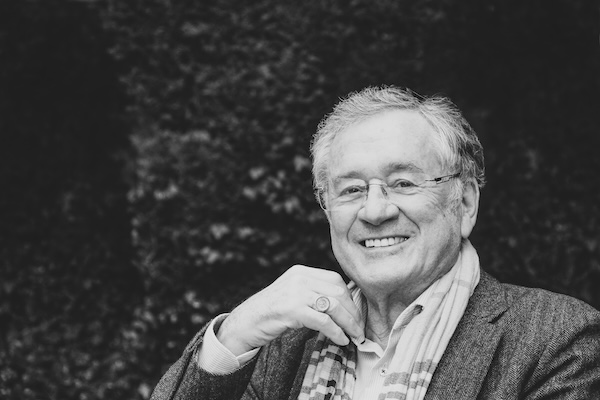
Highlights include an exploration of teshuvah (return and repentance) with Rabbi Daniel Siegel; teachings on aging, elderhood and wisdom with Ralph Benmergui; learning about Chevra Kadisha practices and the sacred care of the body after death; Jewish ways of supporting mourners, including shiva (seven-day period of mourning), shloshim (30-day mourning period) and the mitzvah of nichum aveilim (comforting mourners); and writing as spiritual preparation, including crafting a Heart Will® with Willow End of Year Education.

A Heart Will® is a guided reflective process and written document that allows a person to articulate what matters most to them – their values, love, wisdom, memories and hopes for those they leave behind. Unlike a legal will, which focuses on assets and logistics, a Heart Will® centres meaning, relationships and spiritual legacy.

Siegel reflected on why this learning matters: “We find God not in the trauma, but in the ways we care for each other.”

Through these educational offerings, Or Shalom hopes to help participants live more intentionally, love more generously and meet each day as a gift.

Programs run from January through April, with more offerings to follow. Registration details are available through Or Shalom’s website, orshalom.ca, or by emailing [email protected]. 

– Courtesy Or Shalom

Posted on January 23, 2026January 21, 2026Author Or ShalomCategories LocalTags Chevra Kadisha, education, Heart Will®, Judaism, mortality
A new strategy to brighten up BC

A new strategy to brighten up BC

Communities across British Columbia gathered for Hanukkah, including in Vancouver, shown here, and in Delta, Maple Ridge and Whistler. (photo by Caryl Dolinko)

At moments of heightened threat, the instinct to pull inward is natural. Jewish history gives us many reasons to do so. Too often, the dominant public stories about Jewish life are stories of persecution, expulsion and death. Our museums, memorials and education efforts rightly preserve these memories. They matter. But they are not the whole story of who we are. 

When those narratives stand alone, they can unintentionally cast Jews primarily as victims rather than as a living people defined by courage, creativity, resilience and contribution. At a time when antisemitism is rising, that framing matters – not only for how others see us, but for how we show up ourselves. 

photo - Hanukkah in Delta
Hanukkah in Delta. (photo from Jewish Federation)

This question – how to respond without retreating – was at the heart of months of work by an antisemitism task force convened by the Jewish Federation of Greater Vancouver. Confronting antisemitism cannot rely solely on crisis response. We must, of course, put out fires when they arise. But we must also plant trees – investing in long-term efforts that cultivate allyship while celebrating Jewish life itself, strengthening joy, pride and confidence.

Bringing this approach into being at Hanukkah was not just timely, but strategic. Hanukkah tells a story that stands in contrast to narratives of Jewish victimhood. It is a story of bravery and resistance, of strength and victory against overwhelming odds, of miracles made possible through human action. It is about light that is meant to be seen – placed in windows, carried into public space.

Strong brands matter. They shape perception. They create familiarity and emotional safety. They allow people to connect through shared values and comfort. That is why the Jewish Federation chose not simply to celebrate Hanukkah this year, but to brand it. Brighten BC is a province-wide initiative designed to combat antisemitism through confident visibility and deeper integration into shared civic life. 

photo - Hanukkah in Maple Ridge
Hanukkah in Maple Ridge. (photo from Jewish Federation)

Over eight nights, nearly 70 public Hanukkah events took place across close to 30 communities throughout British Columbia, a community of about 40,000 Jews. Menorahs were lit in town squares, at local fire halls and other civic sites. Neighbours, first responders, municipal leaders and community partners gathered alongside Jewish families. The City of Vancouver proclaimed the week Brighten BC Week. Destination Vancouver listed Brighten BC celebrations on its “Attractions and Things to Do in Vancouver” webpage. Online, the campaign reached about 19,000 people through #BrightenBC. Initiatives like the Best Hanukkah Donut Contest – engaging nearly 400 participants – reinforced the campaign’s tone: joyful, human and easy to join. 

photo - Hanukkah in Whistler
Hanukkah in Whistler. (photo from Jewish Federation)

On the first day of Hanukkah, the Jewish world was shaken by the violent attack at Bondi Beach in Australia. But the tragedy did not redefine Brighten BC – it tested it. That morning, event registrations surged across the province as community members and allies chose presence over retreat. Security protocols were immediately elevated, with police and fire departments becoming operational partners to ensure gatherings could proceed safely and openly.

On the first night of Hanukkah, communities gathered across British Columbia, including at the Silber Family Agam Menorah, on the grounds of the Vancouver Art Gallery, the same site where extremists had burned the Canadian flag on the first anniversary of Oct. 7. Gathering there was not an act of provocation. It was an act of belonging. 

The Lubavitcher Rebbe taught, “A little light dispels a lot of darkness.” This Hanukkah, we didn’t just celebrate. We invited, we aligned, we showed up. We chose light – and invited others to stand in it with us. 

The next phase of this work is about identifying other widely recognized, positively associated cultural moments that can serve as platforms for shared celebration and connection – moments with strong emotional resonance, public expression and low barriers to participation. 

– Courtesy Jewish Federation of Greater Vancouver

Format ImagePosted on January 23, 2026January 22, 2026Author Jewish Federation of Greater VancouverCategories Celebrating the Holidays, LocalTags allyship, antisemitism, branding, Brighten BC, Hanukkah
Sharing latkes and light

Sharing latkes and light

On the fifth night of Hanukkah, Jewish community members delivered latkes and sufganiyot in the Downtown Eastside. (photo by Pat Johnson)

On the fifth night of Hanukkah, a group of Jewish Vancouverites delivered latkes and sufganiyot to frontline workers and people living in the Downtown Eastside.

Mordehai Wosk came up with the idea while speaking to a doctor about antisemitism. The doctor commented that the dark days of winter were a good time to bring light into the world by demonstrating the values of Jewish ethics. 

“I thought it was a great idea,” said Wosk. “I loved it.”

Wosk called Ezra Shanken, chief executive officer of the Jewish Federation of Greater Vancouver. Within a few hours, the whole thing was organized and arranged under the Federation’s program of Brighten BC.

The event turned into a family affair. Wosk enlisted wife Hana, their son Ariel, daughter-in-law Ayami and grandson Rey J Wosk.

Rabbi Philip Bregman, meanwhile, mobilized the Chickpea food truck, which is owned by Bregman’s daughter and son-in-law Jordana and Itamar Shani.

“The message is that we’re on this planet together,” the rabbi said. “We need to help to dispel darkness, not just for our own community, but for the world.

The food truck set up outside Firehall No. 2, in the Downtown Eastside. Volunteers fed firefighters and police before spreading out across the neighbourhood distributing food.

“People are very grateful,” said Hana Wosk, as she handed out food along Hastings Street. “We often say ‘happy Hanukkah’ and get a bit of a blank stare back, but we also say ‘happy holidays’ and this is just a gift to light up your winter.”

Terry Yung, member of the BC Legislature for Vancouver-Yaletown and minister of state for community safety and integrated services, was also on hand. He is a retired 30-year veteran of the Vancouver Police.

“Firehall No. 2 is actually the busiest fire hall in the country,” Yung said. “Day in and day out, they see people in crisis, in chaos. I think it’s really important for them to know that the public is supportive, is on their side.” 

Format ImagePosted on January 23, 2026January 22, 2026Author Pat JohnsonCategories Celebrating the Holidays, LocalTags Brighten BC, Chickpea, Downtown Eastside, DTES, Hana Wosk, Hanukkah, Jewish Federation, Mordehai Wosk, Philip Bregman, Terry Yung

Johnson awarded for human rights work

Pat Johnson has been selected by the government of Romania for the 2025 Ambassador Mihnea Constantinescu National Award for outstanding merits in combating antisemitism, xenophobia, radicalization and hate speech. He was nominated for the honour by the Jewish Federation of Greater Vancouver.

photo - Pat Johnson
Pat Johnson (photo courtesy)

The jury’s decision to award the 2025 prize to Johnson took into account the innovative nature of his activities and their long-term impact, his substantial civic commitment and contributions to public education, Romania’s Ministry of Foreign Affairs said in the announcement. 

Johnson, who readers will know, is on the editorial board of the Jewish Independent and has been part of the newspaper for almost 30 years. He is a writer and public figure with more than 30 years of experience promoting human rights and equal opportunities, combating antisemitism, discrimination and prejudice. He is the founder of Upstanders Canada, a grassroots movement to encourage Canadians (especially non-Jewish Canadians) to stand against antisemitism and anti-Zionism. Readers can follow him at pat604johnson.substack.com.

“The work this prize represents  – standing against antisemitism, hate and distortion of history – is collective, ongoing, and carried by so many people. I see this prize as encouragement for all people to keep going, to speak clearly, and to just show up,” said Johnson.

Ambassador Mihnea Constantinescu was a senior Romanian diplomat. Among many other things, he served as Romania’s chair of the International Holocaust Remembrance Alliance, and chaired the meeting that adopted the working definition of antisemitism. 

Posted on January 23, 2026January 22, 2026Author JI staffCategories LocalTags allyship, antisemitism, human rights, Pat Johnson, Romania

Cherished tradition ensured … Silber Family Agam Menorah

Chabad Lubavitch of British Columbia has received a transformative endowment ensuring that the tradition of lighting the Silber Family Agam Menorah at the Vancouver Art Gallery will continue in perpetuity.

The endowment was introduced last year at Legacy of Light, Chabad’s 50th anniversary gala, honouring Rabbi Yitzchak and Henia Wineberg for five decades of leadership. At the event, Arnold Silber, Chabad of BC’s first-ever donor, announced the landmark gift on behalf of his family: Arnold and Anita Silber, Herb and Barbara Silber, and Lori and Wayne Balshin, representing the Harry and Jeannette Greenhut Family Foundation.

More than 40 years ago, the late Fred Silber, father of Arnold and Herb, grandfather of Lori and Wayne, commissioned the 32-foot menorah designed by Israeli artist Yaacov Agam.

“From the very beginning, we believed in Chabad’s vision for Jewish life in British Columbia,” said Arnold Silber. “With this investment, we’re ensuring that the light we kindled together continues to shine brightly for generations.”

“The annual menorah lighting has become a cherished tradition for Jewish families and the city at large,” said Rabbi Dovid Rosenfeld, executive director of Chabad Lubavitch of BC. “This extraordinary generosity guarantees that this beacon of unity, joy and Jewish pride will continue to illuminate Vancouver every Hanukkah.”

– Courtesy Chabad Lubavitch of BC.

Posted on January 23, 2026January 22, 2026Author Chabad Lubavitch of BC.Categories LocalTags Arnold and Anita Silber, Chabad, Dovid Rosenfeld, Herb and Barbara Silber, Lori and Wayne Balshin, philanthropy, Silber Family Agam Menorah
Nothing as lovely as a tree

Nothing as lovely as a tree

Almonds trees on the way to Jerusalem. (photo from PikiWiki)

While Israelis are not what you would call nature worshippers, once a year they do celebrate one aspect of nature: trees. Tu b’Shevat (the holiday’s name is derived from the Hebrew calendar date) is observed yearly, even when there are challenging conditions. For example, in 1991, under the threat of a gas attack from Iraq’s Saddam Hussein, residents in my neighbourhood brought along gas masks when they went out to plant trees. They were lucky on two counts: they didn’t have to use the masks and the almond trees were already blossoming.

The first celebration of Tu b’Shevat, or the “Birthday of the Trees,” occurred in the very early days of the 20th century, though the idea was older than that.

In 1891, educator Ze’ev Yavetz told Haaretz newspaper that, “for the love of the saplings … the school must make a festival of the day that was set aside from ancient times in Israel as the New Year of the Trees. To gracefully and beautifully arrange the trees, saplings, lilies and flowers just like they do in Europe on the first of May.”

That Yavetz mentions Europe is key, as decision-makers in the Jewish National Fund, or Keren Kayemet L’Yisrael, which was founded in 1901, based what they planted in pre-state Israel on the European trees with which they were familiar, mainly conifers.

After the Ottoman Empire fell and the Ottomans left what was then called Palestine, it was discovered that they had not taken care of the land itself. As such, the flora mostly consisted of maquis and garrigue, shrubs and small oaks. However, neither the British nor the Zionists were particularly interested in or familiar with the native flora of the region. Instead, they introduced trees that had not previously grown there. 

By 1903, the Jewish National Fund had purchased its first parcel of land in the coastal region of Hadera and, by 1935, it had already planted 1.7 million trees over a total area of 1,750 acres (708 hectares). In the early years of its land restoration, the JNF planted large amounts of fast-growing conifers, and pine forests proliferated throughout the country. 

Conifers are mostly evergreens or woody plants, with narrow leaves, often needle-like. They include firs, pines and cedars. There are separate male and female reproductive structures, the cones, and pollination is always by wind. The seeds are mostly winged, and the trees have a regular branching pattern. The needle-like, waxy leaves are helpful in a climate like Israel, as the leaves minimize water loss, but it is not clear whether early planters considered this point.

Four of the Seven Species mentioned in Deuteronomy 8:8 are native trees of the land of Israel. They include date, pomegranate, fig and olive trees. Of note, the fruits of these trees are included in the seder for Tu b’Shevat.

Karin Kloosterman, editor and writer for Green Prophet, describes one interesting, but sometimes overlooked tree in southern Israel. The sidr tree is widespread in the wadis of the Jordan Valley and in the arava, the area that roughly begins at the southern end of the Dead Sea and continues to Eilat. The distance of the arava is about 196 kilometres and it is more or less the divider between Israel on the west and Jordan on the east. 

The sidr is a testament to resilience. It has weathered ancient floods and stands tall alongside the tamarisk and the mustard tree. Belonging to the ziziphus family of plants, it reaches an average height of seven or eight metres, with soft, yellowish grey branches, yellow flowers, and round fruits that turn reddish when ripe.

To Muslims, the sidr tree is considered sacred, as the Quran mentions it as being one of the plants in Paradise. It is important to Christians, as its leaves were supposedly used to make Jesus’s crown of thorns. The tree’s leaves, rich in calcium, iron and magnesium, hold therapeutic powers, serving as components in natural wound disinfectants and herbal shampoos.

Not everyone has been happy with Israel’s tree-planting policies. Ironically, the olive tree, the tree that is supposed to be the symbol of peace, has been the most contentious tree in today’s Israel. Palestinian farmers in particular have faced having their olive trees damaged or destroyed by either the Israeli army or by Israeli settlers. Apparently forgotten here is the injunction from Deuteronomy 20:19: “When in your war against a city you have to besiege a long time in order to capture it, you must not destroy its trees, wielding the ax against them. You may eat of them, but you must not cut them down.”

Six years ago, a Knesset report came out on Tu b’Shevat, revealing that Israel’s trees were not well-protected. It stated that the agriculture ministry had issued tens of thousands of licences in recent years to cut down more than 375,000 trees – more than half of them to make way for building projects. The report went on to say that not only is it hard to appeal, but it is hard to follow the consequences of an appeal. Fines to builders are often not paid.

Just after Israel’s 2025 Independence Day, there was a devastating fire in the Jerusalem Hills, and thousands of acres of trees burned. The weather had been very hot and high winds stirred up the blaze. While it does not appear to have been an act of arson, the JNF estimated that around 20,000 dunams (4,900 acres) were destroyed, with 13,000 dunams (3,200 acres) of those being woodland. It turns out that conifers burn easily, with their high quantity of tree resin.

No humans were killed in the blaze, but an unknown number of slower moving animals were killed. It took a few days to totally put out the fires. Today, seeing the destruction along the Tel Aviv-Jerusalem highway is a painful reminder of what happened. It will take wisdom to re-plant, and it will also take time.

Today, tree planting in Israel is based on research. In Israel’s north, tabor oak, cypress and eucalyptus saplings are being readied for planting, while staff in Israel’s central region are preparing broad leaf trees, which provide sufficient green cover and pose less danger of forest fires. Meanwhile, in Israel’s south, acacia and palm seedlings are being prepared, as is the planting of fig, carob and tamarisk trees.

The modern state of Israel was not blessed with natural forests; its forests are all hand-planted. The Jewish National Fund has planted more than 260 million trees all over the country, providing belts of green covering more than 250,000 acres. 

Tu b’Shevat starts the evening of Feb. 1 this year. 

Deborah Rubin Fields is an Israel-based features writer. She is also the author of Take a Peek Inside: A Child’s Guide to Radiology Exams, published in English, Hebrew and Arabic.

Format ImagePosted on January 23, 2026January 22, 2026Author Deborah Rubin FieldsCategories Celebrating the Holidays, IsraelTags forest fires, Israel, Jewish National Fund, JNF, trees, Tu b’Shevat
Camp welcomes new director

Camp welcomes new director

Karli Niehaus, husband Josh and their family at Camp Solomon Schechter. (photo from Camp Solomon Schechter)

Camp Solomon Schechter alum Karli Niehaus is returning home – as camp director. She brings extensive experience in childhood education, community leadership and Jewish engagement, and she’s ready to bring her energy, creativity and love for camp to this new role.

“I’m so excited to join the team as the new camp director of Camp Solomon Schechter!” said Niehaus. “Schechter has always been such a meaningful part of my life. I spent years as a camper (including my Oded summer in 2010), then returned as a counselor and art director. I also came back during grad school to support the camper care team, focusing on the social and emotional well-being of campers and staff.

“I met my husband at camp (Josh Niehaus, longtime CSS music director, assistant director and director of innovation), and now our two kids – our eldest, Jaylan, and his younger brother, Shaya – both share our love for Schechter, asking almost every time we get in the car, ‘Are we going to Camp Solomon Schechter?’ They’ve been crawling around the hill, splashing in the lake and singing around the campfire with their dad on guitar since they were babies. Jaylan even attended his first family camp at just three weeks old. 

“I also come from a proud multigenerational Schechter family,” Niehaus added. “My dad and uncles were campers long before me, and served on the board during my years as a camper. Our family was honoured last year at Schechter Spark in Seattle.”

Niehaus has more than a decade of experience in education and community leadership, along with a master’s in education and a board certification in applied behaviour analysis. 

“My work has always centred on creating spaces where kids feel safe, seen and celebrated as they grow into confident, compassionate leaders,” she said. “In recent years, I’ve become especially passionate about ensuring the future pipeline of Jewish leadership, something that feels more important than ever. I truly believe Jewish camp plays a critical role in that. Camp gave me a place to explore who I am, to build Jewish pride and belonging, and to find my voice as a leader.

“I’m honoured to help carry that legacy forward, to make sure every camper and staff member feels the same magic, joy and connection that shaped me, and to help build the next generation of strong, proud Jewish leaders.”

“Please join us in wishing Karli a baruch haba – welcome!” said Zach Duitch, executive director of Camp Solomon Schechter. “We also express our deepest gratitude for outgoing camp director Manda Graizel. We wish her nothing but success in all her future endeavours.”

For more information about the camp, its leadership team and summer sessions, go to campschechter.org. 

– Courtesy Camp Solomon Schechter

Format ImagePosted on January 23, 2026January 22, 2026Author Camp Solomon SchechterCategories LocalTags Camp Solomon Schechter, employment opportunity, Karli Niehaus, staffing, Zach Duitch
Popular family camp expands

Popular family camp expands

Camp Hatikvah’s Family Camp is so popular, a new off-site program has been created to meet demand. (photo from Camp Hatikvah)

Camp Hatikvah is celebrating a milestone year after Family Camp 2026 broke all previous registration records. A total of 94 families, nearly 400 participants, applied to take part in next summer’s program, marking one of the strongest showings of interest in the camp’s history.

Family Camp has become a beloved tradition and a powerful entry point for future generations of campers. Designed primarily for families with young children, the program offers a relaxed, joyful introduction to camp life and serves as an early touchpoint for those who may eventually join the camp’s regular summer sessions.

photo - woman with kids at Camp Hatikvah family camp
The newly launched option will allow families to stay off-site while participating fully in the daily camp experience – from programming and activities to the ruach (spirit) and joy that define Family Camp. (photo from Camp Hatikvah)

Camp leaders say this year’s unprecedented demand is more than a testament to the program’s popularity but a promising sign of the camp’s long-term strength. Families who attend Family Camp often return year after year and many children ultimately go on to enrol in Camp Hatikvah’s broader programming.

Beyond its role as a recruitment pipeline, Family Camp plays an important part in building community. The weekend brings together a diverse mix of participants, including alumni returning with their own children, newcomers to the city or country, and families simply looking to share a meaningful getaway. Conversations spark on the dock, friendships form over meals and laughter echoes across the property. The atmosphere is relaxed, welcoming and deeply communal.

photo - man pointing out something to child at Camp Hatikvah
Family Camp has become a beloved tradition and a powerful entry point for future generations of campers. (photo from Camp Hatikvah)

With accommodations for only 56 families, the camp faced a difficult dilemma this year: how to manage the remaining 38 families who would otherwise land on a waitlist. Turning families away just didn’t feel right.

The solution came in the form of an expanded initiative: Family Camp Day Camp.

The newly launched option will allow families to stay off-site while participating fully in the daily camp experience – from programming and activities to the ruach (spirit) and joy that define Family Camp. The goal is simple: say “yes” to more families in a year when enthusiasm has reached new heights.

The addition of Family Camp Day Camp not only makes space for more participants, but also strengthens the camp’s future. It opens the door for more young children to build early memories at camp, encourages alumni to reconnect with the community and welcomes families who may be experiencing Camp Hatikvah for the first time.

With record interest, renewed energy and a new program offering, Camp Hatikvah’s Family Camp is poised for its most inclusive year yet. 

– Courtesy Camp Hatikvah

Format ImagePosted on January 23, 2026January 22, 2026Author Camp HatikvahCategories LocalTags Camp Hatikvah, family camp
A life-changing experience

A life-changing experience

Camp Miriam is a place where chanichimot (campers) feel free to be Jewish, to celebrate their traditions and to be part of a community guided by compassion, curiosity and joy. (photo from Camp Miriam)

Last year was another remarkable one for Camp Miriam. It was our biggest summer yet, with more than 350 chanichimot (campers). As I reflect on my past two summers as rosh (camp director), I find myself flooded with memories and filled with gratitude for the Camp Miriam community. Two years may seem brief in the 77-year history of the machaneh (camp), but they have been the most meaningful, inspiring and impactful years of my life.  

photo - three girls at Camp Miriam
Each summer is filled with magical moments. (photo from Camp Miriam)

Over the past two summers, I’ve witnessed countless moments of growth and transformation. I’ve seen chanichimot arrive shy and uncertain, only to leave a few weeks later with their eyes full of tears, reminiscing with their kvutza (age group) about their favourite memories. I’ve watched tzevet (staff) bring passion, kindness, care and love to every activity and experience with their chanichimot. Each summer is filled with magical moments, from special theme days to Shabbat rikkud (Israeli dancing) to impromptu singing and dancing in the chadar ochel (dining hall). 

In a world that often feels complicated and uncertain, machaneh remains a place for belonging and safety. It’s a place where chanichimot feel free to be Jewish, to celebrate their traditions and to be part of a community guided by compassion, curiosity and joy. A place where it is encouraged to ask questions, feel deeply and be yourself. For so many of us, the magic of machaneh exists in the connections we form: to one another, to traditions and to the generations who have come before us.

photo - 2 kids at Camp Miriam
In a world that often feels complicated and uncertain, machaneh remains a place for belonging and safety. (photo from Camp Miriam)

When I first arrived at Camp Miriam in 2010, I knew immediately it was special. However, I didn’t realize how influential it would be. I have made lifelong friendships and incredible memories, and have learned countless lessons that will stick with me for the rest of my life. Camp Miriam provides a space and community where the dreams, ambitions and ideas of youth are taken seriously. Spending a summer at a camp offers young people an opportunity to step out of their comfort zone, build confidence, gain independence and form friendships that feel like family.  

Camp Miriam has changed my life in ways I couldn’t have imagined. Having the privilege of watching campers and staff grow, form lasting connections and take on new challenges has deepened my own sense of purpose, appreciation and hope. The experience is made possible by the entire community, the chanichimot who return each summer, the tzevet who choose to spend their summers creating magic, the volunteers who support us behind the scenes, and the parents who trust us to create a home away from home. 

For more than 75 years, Camp Miriam has been a place where young people discover their voice, their community and a sense of possibility. The experiences built each summer continue to empower youth long after they leave camp. 

Ariella Smith-Eidelman was director of Camp Miriam, 2024-2025.

Format ImagePosted on January 23, 2026January 22, 2026Author Ariella Smith-EidelmanCategories LocalTags Camp Miriam, Jewish summer camp
Benefits of being a counselor

Benefits of being a counselor

A fundamental part of being a counselor is to support the campers. (photo from Camp Kalsman)

Rachel Mintz worked as junior counselor, senior counselor, canoe specialist and assistant director at Camp BB-Riback in the late 1990s. In her work today as deputy chief data officer for Environment and Climate Change Canada, she’s quick to credit her leadership style, passion and confidence to the skills she learned at camp.

“Camp actually played a role in my career path,” she told the Independent. “One major lesson a person learns from work at camp is the power of passion. Anyone who came in 1998, when I was canoe specialist, would’ve experienced how much I loved teaching kids the freedom of paddling their own canoe. Today, with the staff I manage, I believe in finding projects that align with their strengths and passion.

“My last year of camp, I was 19 and working as assistant director, a position that gave me the confidence to apply and take on future management roles,” she added. “I learned the importance of a leadership role and the ‘behind the scenes.’ I came to realize that I have skills to coordinate moving parts and that I enjoy influencing others in their work.”

Jewish camp directors in the northwest are already recruiting counselors for summer 2026.

“As a counselor at camp, you build community, work with kids, run programs and act as a role model,” said Zach Duitch, executive director at Camp Solomon Schechter. “These experiences running a cabin, dealing with challenges and problem-solving teach you resiliency, which is critical for this age group. Our counselors learn from their experiences and realize that they can overcome things with patience, communication and problem-solving. It’s such an important learning experience.”

Duitch believes strongly that a position as a camp counselor teaches teens skills they would never learn in a traditional retail environment or minimum-wage summer job. “They’re learning hospitality, conflict resolution, health and hygiene for a group of eight-to-12 kids, how to run a program – these are human skills and executive skills,” he said. “We even take their phones!

“Consider that, if our counselors didn’t do this, they’d likely be bumming around at home on their phones and staying up late,” he explained. “My message to these teens is this: working as a counselor is an experience that truly doesn’t exist elsewhere. Take advantage of this opportunity as long as you can, before you’re thrown into really needing to find a job.”

Duitch’s own work as a camp counselor set him on the path to dedicating his life to Jewish work. Another camper he knew, the late Rabbi Matthew Bellas, found his path to the rabbinate at camp. “Camp teaches you skills, but it also shows you what your passions are,” said Duitch.

If money is your teen’s top priority for the summer, a camp counselor position is not going to be a top contender. The salaries for counselors range from honorariums to a few thousand dollars. One upside of the money earned at camp is that the counselors don’t spend it while they’re working. “When you leave at the end of the summer, you leave with a lump sum,” Duitch said. 

Rather than look at it in financial terms, he encouraged parents to think about the opportunity camp counseling gives teens to create impact.

“If you went to camp and loved the immersive programming, the fun, the memorable moments and the joy, maybe this is your turn to give back to the kids as a counselor. There’s nothing like living a fully immersive Jewish experience at camp, surrounded by a community you can rely on.” 

Don’t look at it as a “summer filler,” agreed Liza Rozen-Delman, executive director at Camp Hatikvah. “Your teen will build confidence and emotional maturity as a counselor, learning to manage stress, communicate clearly, lead with empathy and take real responsibility. These are skills that prepare them for university, travel and future careers.”

Becoming a counselor is the natural next step after aging out of camp, she said. “It lets young people return to a place they grew up, one that feels safe, familiar and supportive. These roles offer structure, purpose and a guided environment where teens can practise independence, learn to meet expectations and develop accountability, something many aren’t used to today.”

The work is meaningful but demanding, she noted, with early mornings, late nights and constant responsibility, as counselors support kids, run activities and manage group dynamics. “One of my favourite sayings,” she shared, “is that camp doesn’t just prepare young adults for ‘work,’ it prepares them for life.”

At Schechter, candidates are interviewed for their past experience working with kids, their values, trust, accountability and communication skills. 

“Have they failed before, and have they used that experience to succeed? We love to give second chances at camp,” Duitch said. 

Rozen-Delman said she looks for counselors who demonstrate empathy, kindness, responsibility, confidence and initiative. “They need to be team players and strong communicators,” she said.

“Camp doesn’t run without these young Jewish role models,” Duitch added. “They bring the magic to life, and we want to continue to invest in them, motivate them, provide them with resources and challenge them.”

“Working at camp is an investment in your development,” said Stacy Shaikin, executive director at Camp BB-Riback. “There’s no other job for young people that gives you this much responsibility and a chance to troubleshoot and think on your feet. Everyone who has ever done it looks back on it and uses these tools in their careers.”

When Rachel Mintz’s daughter returned home from camp, Rachel quizzed her on her favourite part. Her answer was immediate, and just two words: the counselors. 

Lauren Kramer, an award-winning writer and editor, lives in Richmond.

Format ImagePosted on January 23, 2026January 26, 2026Author Lauren KramerCategories LocalTags employment opportunity, Jewish summer camp, Liza Rozen-Delman, Rachel Mintz, Stacy Shaikin, work experience, youth, Zach Duitch

Posts pagination

Previous page Page 1 … Page 13 Page 14 Page 15 … Page 665 Next page
Proudly powered by WordPress