
Skip to content
  • Home
  • Subscribe / donate
  • Events calendar
  • News
    • Local
    • National
    • Israel
    • World
    • עניין בחדשות
      A roundup of news in Canada and further afield, in Hebrew.
  • Opinion
    • From the JI
    • Op-Ed
  • Arts & Culture
    • Performing Arts
    • Music
    • Books
    • Visual Arts
    • TV & Film
  • Life
    • Celebrating the Holidays
    • Travel
    • The Daily Snooze
      Cartoons by Jacob Samuel
    • Mystery Photo
      Help the JI and JMABC fill in the gaps in our archives.
  • Community Links
    • Organizations, Etc.
    • Other News Sources & Blogs
    • Business Directory
  • FAQ
  • JI Chai Celebration
  • JI@88! video

Recent Posts

  • Zionism wins big in Vegas
  • Different but connected
  • Survival not passive
  • Musical celebration of Israel
  • Shoppe celebrates 25 years
  • Human “book” event
  • Reclaiming Jewish stories
  • Bema presents Perseverance
  • CSS honours Bellas z”l
  • Sheba Promise here May 7
  • Reflections from Be’eri
  • New law a desecration
  • Resilient joy in tough times
  • Rescue dog brings joy
  • Art chosen for new museum
  • Reminder of hope, resilience
  • The national food of Israel?
  • Story of Israel’s north
  • Sheltering in train stations
  • Teach critical thinking
  • Learning to bridge divides
  • Supporting Iranian community
  • Art dismantles systems
  • Beth Tikvah celebrates 50th
  • What is Jewish music?
  • Celebrate joy of music
  • Women share experiences 
  • Raising funds for Survivors
  • Call for digital literacy
  • The hidden hand of hate
  • Tarot as spiritual ritual
  • Students create fancy meal
  • Encouraging young voices
  • Rose’s Angels delivers
  • Living life to its fullest
  • Drawing on his roots

Archives

Follow @JewishIndie
image - The CJN - Visit Us Banner - 300x600 - 101625

Tag: work experience

Benefits of being a counselor

Benefits of being a counselor

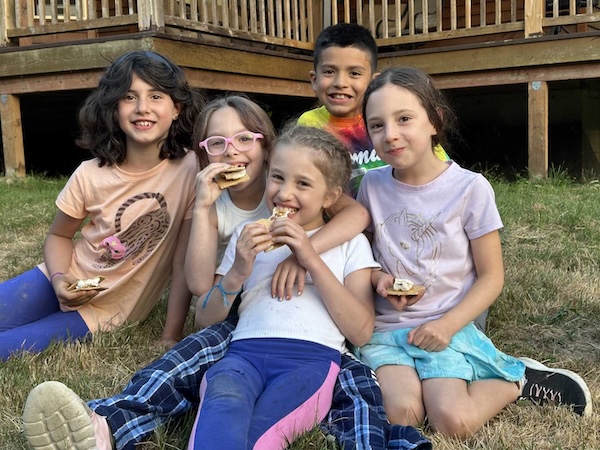
A fundamental part of being a counselor is to support the campers. (photo from Camp Kalsman)

Rachel Mintz worked as junior counselor, senior counselor, canoe specialist and assistant director at Camp BB-Riback in the late 1990s. In her work today as deputy chief data officer for Environment and Climate Change Canada, she’s quick to credit her leadership style, passion and confidence to the skills she learned at camp.

“Camp actually played a role in my career path,” she told the Independent. “One major lesson a person learns from work at camp is the power of passion. Anyone who came in 1998, when I was canoe specialist, would’ve experienced how much I loved teaching kids the freedom of paddling their own canoe. Today, with the staff I manage, I believe in finding projects that align with their strengths and passion.

“My last year of camp, I was 19 and working as assistant director, a position that gave me the confidence to apply and take on future management roles,” she added. “I learned the importance of a leadership role and the ‘behind the scenes.’ I came to realize that I have skills to coordinate moving parts and that I enjoy influencing others in their work.”

Jewish camp directors in the northwest are already recruiting counselors for summer 2026.

“As a counselor at camp, you build community, work with kids, run programs and act as a role model,” said Zach Duitch, executive director at Camp Solomon Schechter. “These experiences running a cabin, dealing with challenges and problem-solving teach you resiliency, which is critical for this age group. Our counselors learn from their experiences and realize that they can overcome things with patience, communication and problem-solving. It’s such an important learning experience.”

Duitch believes strongly that a position as a camp counselor teaches teens skills they would never learn in a traditional retail environment or minimum-wage summer job. “They’re learning hospitality, conflict resolution, health and hygiene for a group of eight-to-12 kids, how to run a program – these are human skills and executive skills,” he said. “We even take their phones!

“Consider that, if our counselors didn’t do this, they’d likely be bumming around at home on their phones and staying up late,” he explained. “My message to these teens is this: working as a counselor is an experience that truly doesn’t exist elsewhere. Take advantage of this opportunity as long as you can, before you’re thrown into really needing to find a job.”

Duitch’s own work as a camp counselor set him on the path to dedicating his life to Jewish work. Another camper he knew, the late Rabbi Matthew Bellas, found his path to the rabbinate at camp. “Camp teaches you skills, but it also shows you what your passions are,” said Duitch.

If money is your teen’s top priority for the summer, a camp counselor position is not going to be a top contender. The salaries for counselors range from honorariums to a few thousand dollars. One upside of the money earned at camp is that the counselors don’t spend it while they’re working. “When you leave at the end of the summer, you leave with a lump sum,” Duitch said. 

Rather than look at it in financial terms, he encouraged parents to think about the opportunity camp counseling gives teens to create impact.

“If you went to camp and loved the immersive programming, the fun, the memorable moments and the joy, maybe this is your turn to give back to the kids as a counselor. There’s nothing like living a fully immersive Jewish experience at camp, surrounded by a community you can rely on.” 

Don’t look at it as a “summer filler,” agreed Liza Rozen-Delman, executive director at Camp Hatikvah. “Your teen will build confidence and emotional maturity as a counselor, learning to manage stress, communicate clearly, lead with empathy and take real responsibility. These are skills that prepare them for university, travel and future careers.”

Becoming a counselor is the natural next step after aging out of camp, she said. “It lets young people return to a place they grew up, one that feels safe, familiar and supportive. These roles offer structure, purpose and a guided environment where teens can practise independence, learn to meet expectations and develop accountability, something many aren’t used to today.”

The work is meaningful but demanding, she noted, with early mornings, late nights and constant responsibility, as counselors support kids, run activities and manage group dynamics. “One of my favourite sayings,” she shared, “is that camp doesn’t just prepare young adults for ‘work,’ it prepares them for life.”

At Schechter, candidates are interviewed for their past experience working with kids, their values, trust, accountability and communication skills. 

“Have they failed before, and have they used that experience to succeed? We love to give second chances at camp,” Duitch said. 

Rozen-Delman said she looks for counselors who demonstrate empathy, kindness, responsibility, confidence and initiative. “They need to be team players and strong communicators,” she said.

“Camp doesn’t run without these young Jewish role models,” Duitch added. “They bring the magic to life, and we want to continue to invest in them, motivate them, provide them with resources and challenge them.”

“Working at camp is an investment in your development,” said Stacy Shaikin, executive director at Camp BB-Riback. “There’s no other job for young people that gives you this much responsibility and a chance to troubleshoot and think on your feet. Everyone who has ever done it looks back on it and uses these tools in their careers.”

When Rachel Mintz’s daughter returned home from camp, Rachel quizzed her on her favourite part. Her answer was immediate, and just two words: the counselors. 

Lauren Kramer, an award-winning writer and editor, lives in Richmond.
Format ImagePosted on January 23, 2026January 26, 2026Author Lauren KramerCategories LocalTags employment opportunity, Jewish summer camp, Liza Rozen-Delman, Rachel Mintz, Stacy Shaikin, work experience, youth, Zach Duitch
Camper to counselor

Camper to counselor

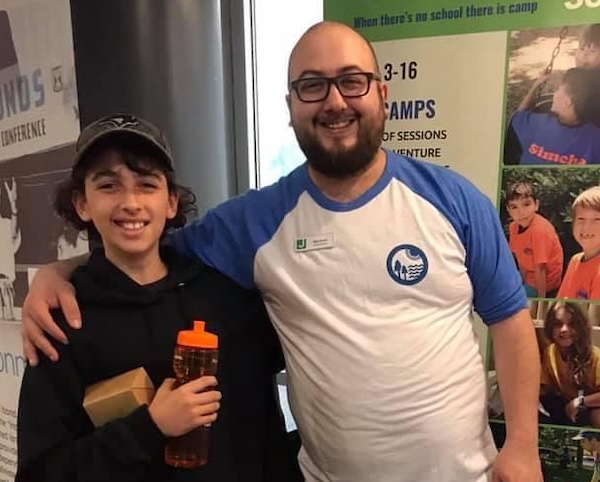
The writer as a kid at Camp Shalom with the camp’s director, Ben Horev. (photo from Uriel Presman Chikiar)

I was 9 years old when I first arrived at Camp Shalom. My family had recently immigrated from Argentina, and we were settling into Vancouver. I barely spoke English. When my parents told me they were sending me to summer camp, I panicked. I imagined feeling out of place and not understanding anyone around me. That fear did not last long.  

From the minute I stepped onto the Jewish Community Centre of Greater Vancouver grounds, I was met with warmth. Counselors welcomed me by name and made it feel as though I already been to camp. Ben Horev, the camp director, greeted every camper as they arrived. The way he spoke to each person made it clear that everyone mattered. 

What stayed with me most from that first day was not an activity or a game. It was the first friend I made. I remember standing off to the side, unsure of what to do, when another camper walked over and introduced himself. We decided to stick together for the rest of the day. We tossed a ball back and forth, spoke in short, hesitant sentences, and laughed when my vocabulary failed me. That small moment of inclusion changed everything. Camp suddenly felt manageable. I learned that camp was not defined by its schedule or programming, but by the people who made sure no one felt like a stranger. 

Over the next few summers, Camp Shalom became an important part of my life. I formed friendships that lasted well beyond childhood and learned skills that still shape who I am today. I learned how to play Magic: The Gathering with friends I’ve kept in touch with. I discovered a love for camping through pitching tents, building fires and spending time outdoors. To this day, camping remains one of my favourite ways to spend time outside. 

By the time I became old enough to be a counselor-in-training, returning to camp felt natural. The counselors I had looked up to as a camper led with care, energy and intention, and their impact stayed with me. I wanted to be that person for someone else. I wanted to help create the same sense of belonging that had meant so much to me. 

My first summer as a counselor was unforgettable. Being part of a community that had played such a formative role in my childhood felt meaningful in new ways. I enjoyed leading programs, sharing activities I had grown up with, and helping campers feel comfortable in a new environment. One of the most meaningful experiences was working alongside my former counselors: being treated as a colleague marked a full-circle moment. 

As a camper, my role was simple. As a counselor, I was responsible for the safety, well-being and emotional experience of those in my care. I had to learn how to manage different personalities, resolve conflicts and stay calm in unpredictable situations. It was a challenge, but it pushed me to grow.

One night, during an overnight camping trip, we heard a loud noise outside and feared it was a bear. The campers were scared and, honestly, so was I. We gathered together and began singing our Shira circle songs, the same ones we sing every morning. We sang our hearts out to make noise, to scare the bear, and to remind everyone that we were safe. That moment has stayed with me. I learned that leadership is not about pretending fear does not exist; it is about helping others feel steady in uncertain moments. 

Over time, I noticed changes at Camp Shalom. New staff brought fresh ideas, and campers arrived with different needs, especially in the years following COVID-19. Still, the core of the camp never changed. Respect, responsibility and community showed up in small, everyday ways, like leaving a campsite cleaner than we found it or making sure no one was left sitting alone. 

Those habits have shaped how I understand tikkun olam and chesed. Repairing the world doesn’t mean grand gestures; it means taking responsibility for the space and the people around you. Kindness is not abstract either; it is patience, inclusion and showing up for someone who needed it. These lessons were reinforced every Friday, when everyone came together for Shabbat. They continue to guide how I try to show up for others.

Looking back, Camp Shalom is not just a place I attended as a child. It is part of who I am. It was where I found belonging in a new country, built lasting friendships and learned the values that continue to guide me. Although I am no longer a counselor, I hope that, even in some small way, today’s campers feel what I felt when I first arrived: safe, supported and welcome. 

Uriel Presman Chikiar is a student at Queen’s University and serves as executive vice-president of external relations at Hillel Queen’s.

Format ImagePosted on January 23, 2026January 22, 2026Author Uriel Presman ChikiarCategories LocalTags Ben Horev, Camp Shalom, Jewish summer camp, Judaism, work experience, youth
Proudly powered by WordPress