BCTF nixes antisemitism efforts 

A group of public school teachers who are pressing for resources and  supports to help educate about antisemitism and the Holocaust have been rejected by the provincial teachers’ union.

The recently formed Holocaust and Antisemitism Educators Association was informed earlier this month that their application for recognition as a provincial specialist association has been rejected by the relevant branch of the BC Teachers’ Federation.

Provincial specialist associations (PSAs) support the development of teaching resources and host professional development sessions on specific subject areas. They receive funding from the BC Teachers’ Federation (BCTF) to do so.

The Holocaust and Antisemitism Educators Association (HAEA) was created in response to the Government of British Columbia’s decision last October to make Holocaust education a mandatory part of the BC curriculum.

Eyal Daniel, the president of the HAEA, said he is shocked by the decision and is hoping the BCTF executive will reverse it. 

“The letter I received said that we should work with other PSAs – which is confusing because the formation of our group was specifically supported by the relevant PSA, the social studies group, as being important and necessary,” Daniel said in a media release.

Ginaya Peters, the founder of BC Teachers Against Antisemitism, expressed dismay. 

“I am trying to comprehend this and am failing,” she said in the same release. “When the Vancouver Holocaust Education Centre tells the BCTF that our PSA is needed in order to implement the mandatory Holocaust curriculum that they are helping to develop, they are literally ignoring the voices of experts in the field, and they are denying us the resources to teach the topic properly.”

Ezra Shanken, chief executive officer of the Jewish Federation of Greater Vancouver, said the decision seems to confirm reports heard by members of the Jewish community recently.

“We have heard a number of disturbing rumours in the past few weeks about people fighting against the formation of this teachers’ specialist association – including that people believe that antisemitism isn’t related to the Holocaust,” said Shanken. “If this is their rationale, it is a form of Holocaust denial and flies in the face of what we have been told by Premier David Eby and his minister of education.”

“The HAEA has told me that they met every single requirement to be recognized by their union, and that no one can remember a time when a PSA that met every requirement was turned down,” said Nico Slobinsky, vice-president of the Centre for Israel and Jewish Affairs.
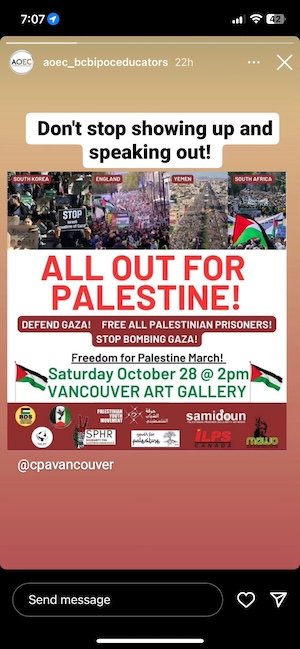
screenshot - A social media post shared by the Anti-Oppression Educators Collective, a provincial specialist association of the BC Teachers’ Federation, which mentions Samidoun, which is linked to a listed terror organization and has organized events that glorify the murders and rapes that took place on Oct. 7
A social media post shared by the Anti-Oppression Educators Collective, a provincial specialist association of the BC Teachers’ Federation, which mentions Samidoun, which is linked to a listed terror organization and has organized events that glorify the murders and rapes that took place on Oct. 7. (image from BCTAA)

Jonathan Dyck, the chair of the BCTF Provincial Specialist Association Council, informed the HAEA of the decision last week, following a meeting of the council where the decision was taken June 4. According to the HAEA, he provided no rationale for the decision to recommend that resources and recognition not be provided to HAEA but was “strongly of the opinion that they would like to find ways to help members of your association feel valued and included.”

In a separate statement, BC Teachers Against Antisemitism lamented the absence of any explanation for the rejection.

“We are confused by the BCTF’s statement … as the statement fails to give any indication why a PSA dedicated to developing teaching resources and professional development around soon to be mandatory Holocaust education was rejected.

“As well, as of today there are no teaching resources available on the Holocaust or antisemitism available on the BCTF’s TeachBC site.”

In a series of social media posts on the BCTF’s X (Twitter) platform, the union outlined the standards aspiring PSAs must meet – but did not indicate any areas where the HAEA had fallen short.

“The tweets listed all the conditions which must be met for a PSA to be approved by the PSA council,” BC Teachers Against Antisemitism said in their statement. “The HAEA met these conditions, yet the council refused to recommend that the PSA be approved. The only condition not met was approval by the PSA council. This is surprising as no one can remember a PSA that met all the criteria ever being turned down before.”

The suggestion that the Holocaust and antisemitism educators instead work with existing PSAs is problematic and perplexing, they wrote, because the BC Social Studies Teachers Association recommended that the new PSA be approved, as did the Vancouver Holocaust Education Centre. Moreover, antisemitism has not been addressed by any other PSA. In fact, BC Teachers Against Antisemitism accuses the Anti-Oppression Educators Collective of promoting antisemitism, including by sharing posts on social media that include mention of Samidoun, which is linked to a listed terror organization and has organized events that glorify the murders and rapes that took place on Oct. 7.

Confounding matters further, the statement on BCTF’s website regarding the PSA vote, and antisemitism and Holocaust education, says, “It is our understanding that the council determined that existing PSAs already can and do support the proposed work.” However, separate searches of BCTF’s website for classroom resources on antisemitism and the Holocaust yield the results: “No resources matching the current search criteria were found.”
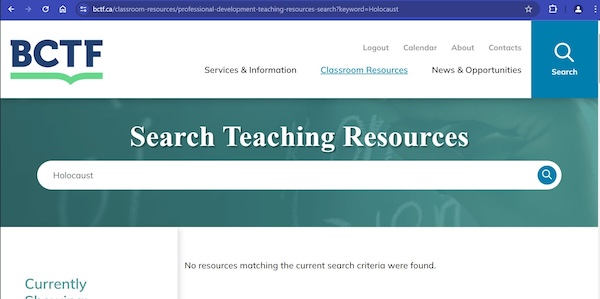
screenshot - search for Holocaust on BCTF website yields no resources found“The arguments that the HAEA work with existing PSAs to create Holocaust and antisemitism materials seems to fly in the face of established BCTF practices,” the BCTAA statement states. “The BCTF cannot present a valid reason for denying the approval of our PSA dedicated to helping educators deliver critical lessons on the Holocaust and antisemitism. We ask the BCTF to reverse its decision so we can move forward like other established PSAs and work with likeminded colleagues on supporting educators in BC.” 

– Information from Centre for Israel and Jewish Affairs, Jewish Federation of Greater Vancouver, BC Teachers Against Antisemitism and BC Teachers Federation

VanCAF apologizes

Miriam Libicki in 2017, when she was writer-in-residence at the Vancouver Public Library. (photo by Jeff Vinnick/VPL)

The Vancouver Comic Arts Festival (VanCAF) issued a public apology to Miriam Libicki on June 2, eight days after posting online that it was permanently banning the American-Israeli graphic novelist and artist because she had once served in the Israel Defence Forces.  

Additionally, the apology stated, the vast majority of the board of directors who had written the May 25 “accountability statement” – which banned Libicki from the festival – have resigned. Those who have remained, the unnamed writers of the apology affirmed, are only there to help assist in the transition to a new board.

In a June 4 social media post responding to VanCAF’s about-face, Libicki, who resides in Vancouver, wrote, “I applaud this. I applaud the entire board responsible for the first accountability statement (which contained no accountability) resigning.” 

She added, “This is a really positive and necessary first step. I look forward to a restorative justice process with the new board when there is one, and to see the steps they make to ensure they can act ethically when (and it is a matter of when) a harassment brigade dogpiles again.”

VanCAF’s original statement, which did not mention Libicki by name – nor was it signed by anyone on its board – lamented “the oversight and ignorance to allow this exhibitor in the festival, not only this year but in 2022 as well.”

Libicki’s appearance at the festival, the former board said, “fundamentally falls in absolute disregard to all of our exhibiting artist’s (sic), attendees and staff, especially those who are directly affected by the ongoing genocide in Palestine and Indigenous community members alike. Upon examining these concerns and conducts, this exhibitor will not be permitted to return to the festival.”

The decision to ban Libicki received widespread attention in national and international Jewish and other media. Reports were published by the Canadian Jewish News, the Times of Israel, the Jewish Telegraphic Agency and the Jewish News Syndicate, as well as the popular comics website, The Beat. According to an article on Vancouver arts and culture website Stir, VanCAF was contacted by a lawyer representing Libicki.

On May 29, VanCAF’s so-called accountability statement was removed from its website and social media accounts.

VanCAF’s June 2 apology said the organization wished to “express deep and sincere apologies for the impact our previous statement has caused. First and foremost, to the individual directly affected by our first post.

“The decision was ultimately wrong-headed and moved too quickly and without adequate consultation. We also wish to apologize to the wider impacted community. VanCAF has lost and continues to lose the trust of many we have sought to serve.

“Our statement was one that only represented the VanCAF board at the time of writing and had no relationship to the Roundhouse [the festival’s venue], any of our sponsors, or any former staff. It was solely our own statement.”

The apology finished by announcing that the organization was about to change and that it would strive to prioritize the safety of all attendees, volunteers and exhibitors. By the end of summer, it hoped to have a new team in charge of the festival.

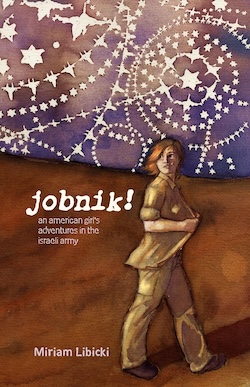
Libicki’s work explores her Jewish identity and the clash of cultures through her own experiences. Her autobiographical comic series, jobnik!, which she self-published in 2008, looks at her service in the Israeli army during the Second Intifada. 

Toward a Hot Jew, published by Fantagraphics in 2016, is a series of graphic essays written over about 10 years, from her time in the IDF to her position as an art professor, and is a mix of autobiography, cultural commentary and analysis. In 2017, she was writer-in-residence at the Vancouver Public Library – it was the first time the library had chosen a graphic novelist for the position. She was a 2020 nominee for best short story in the Eisner Awards, considered by many to be the most prestigious honour in the comics industry, for her graphic essay, “Who Gets Called an ‘Unfit’ Mother?” Libicki was one of three graphic novelists selected to tell the stories of four Holocaust survivors in the 2022 book But I Live.

“I am a Jewish artist who makes nonfiction and autobiographical comics,” Libicki told the Canadian Jewish News last month after the VanCAF ban was announced. “I am, and I have consistently, publicly, been pro-peace. I am in favour of a Palestinian state via negotiations. Because of the vulnerable populations I work with, I prefer not to discuss my specific political views in public. I believe all policing of artists’ personal identities and nationalities is wrong.”

Libicki exhibited at VanCAF every year from 2012 until 2022. In 2022, members of the public notified festival volunteers, complaining that VanCAF had included, according to Stir, a Zionist who was showing Zionist propaganda.

Stir reported that Libicki had missed the initial call for applications in 2023 and was not given a table by organizers because they wanted to look into the 2022 incident. This year, VanCAF at first denied Libicki a table, but later said she could be included if she only exhibited But I Live.

Libicki told Stir that she wants to use the recent publicity to garner funds for peace activists in Israel and Palestine. She is selling a watercolour series of seahorses, the proceeds of which will go entirely to the Mothers Call, which Stir describes as “a grassroots collaboration between Women of the Sun in Palestine and Women Wage Peace in Israel.”

In a June 2 social media post, Libicki expressed appreciation for all the messages of support she has received recently and offered a positive outlook.

“I believe we can move towards a peaceful and just (as just as possible) resolution to that public incident,” she wrote. 

Sam Margolis has written for the Globe and Mail, the National Post, UPI and MSNBC.

Rise and fall of a hacktivist

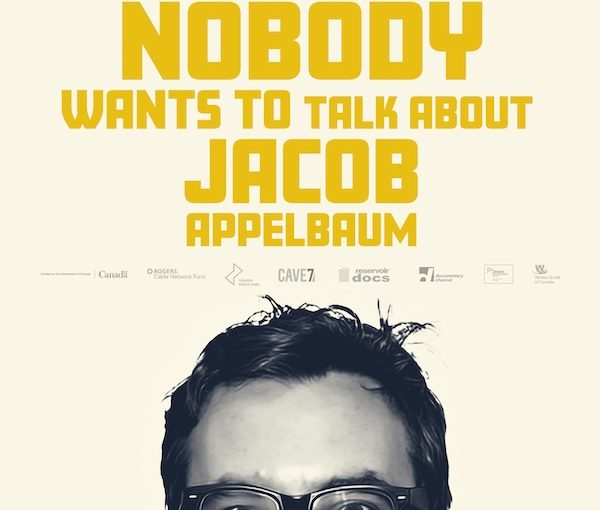
Nobody Wants to Talk About Jacob Appelbaum opens at VIFF Centre June 14.

Jacob Appelbaum was an influential internet freedom, privacy and free speech activist. He collaborated with Julian Assange and WikiLeaks, which Assange founded in 2006 to publish leaked documents and information. He helped the journalists with whom whistleblower Edward Snowden shared documents make the stories public. And he was prominent in the TOR Project (aka “the dark web”). Then, suddenly, Appelbaum took himself out of the spotlight.

Writer, director and producer Jamie Kastner wanted to know why. He also wanted to know more about this well-known yet little-known “hacktivist” and the subculture in which Appelbaum operated. The result is the documentary Nobody Wants to Talk About Jacob Appelbaum, which screens at VIFF Centre June 14-17 and June 20.

“I first saw Appelbaum in another documentary about WikiLeaks, in which he was playing a supporting role,” Kastner told the Independent. “He jumped off the screen both for his charisma and his clear-eyed and apparently fearless political commitment. I learned about the broad strokes of the scandal in which he was later involved, became intrigued not only by what had happened with him, but by this whole activist community about which I had known little.”

After being accused of sexual abuse in 2016, Appelbaum left the United States for Germany. It is there, reads the documentary’s PR material, that Kastner “finds him, adamant that he is the victim of government black ops, ‘canceled’ without legal process or recourse, punished for who he is, and for what he represents.”

“Though I’m sure even he would not claim that all the work he has done has been flawless,” said Kastner, “to me there remains at least an aspect to the work he’s done, regardless of what may or may not have come later, that represents a fearless standing up to authority, taking significant personal risks to expose abuses of power and to help improve people’s lives by making them better informed about governments and surveillance.”

He continued, “As lawyer Margaret Ratner Kunstler explains in the film, in an era in which journalism has shrunk and become ever more controlled by government and/or large corporations, the significance of so-called leakers and hackers has grown to become one of our last sources of unfiltered news and information.”

Kastner gave the examples of WikiLeaks having “released Chelsea Manning’s leaks, including the ‘Collateral Murder’ video of American drones killing civilians and journalists in Iraq in 2007, and a trove of Hillary Clinton’s emails in 2016, among many other controversial releases.”

In 2013, Snowden, “a former contractor for the National Security Agency, America’s cyber-intelligence gathering service … leaked a vast trove of documents revealing the information gathering practices of the US and its ‘Five Eyes’ allies countries, including how data was gathered covertly on their own citizens,” said Kastner.

With Snowden, the filmmaker added, Appelbaum “helped the journalists to whom Snowden leaked his documents both manage the technology involved, and investigate and disseminate stories arising from Snowden’s leaks, including penning a cover story in German newsmagazine Der Speigel revealing that the US was spying on Chancellor Angela Merkel’s cellphone.”

Nobody Wants to Talk About Jacob Appelbaum was about five years in the making. 

“It was a slow and wary process, once contact was made, of gaining access to Appelbaum and establishing trust on both sides,” explained Kastner. “I knew he was a controversial, brilliant and at times troubled figure, but I approached the story with an open mind. It struck me as a fascinating story in which one person’s trajectory tracked the rise and fall of a movement that, for a time, was rocking the world. 

“I worked with a team of researchers to gain necessary context and try to build relationships within this very wary community. I worked extensively – features, in my experience, take six months or so in editing – with my collaborator Michael Hannan in the edit suite, to try to craft a film that would make the audience experience the real-life spy quality I experienced in entering into Appelbaum’s world, in which things, at times, seem too fantastical to be true – but sufficient evidence is there to suggest they are not false.”

Kastner’s many credits – through his and wife Laura Baron Kastner’s Cave 7 Productions – include The Skyjacker’s Tale (2016), There Are No Fakes (2019) and Charlotte’s Castle (2023). Cave 7 documentaries have not only garnered award recognition but inspired action. There Are No Fakes, for example, helped launch “a criminal investigation into widespread fraudulent production of and distribution of Indigenous art,” leading to “eight arrests, 40 charges laid and 1,000 paintings seized,” notes the company.

As a documentarian, Kastner is especially aware of the evasiveness of “the truth” and its often-subjective nature. While he said, “I still admire the same qualities about Appelbaum that first drew me to the subject, his political spirit and work,” the making of the documentary took him to all sorts of places he hadn’t expected.

“Learning about the community from which he and Assange sprung made me realize the film was about a larger story, larger issues which the narrative of Appelbaum’s life raises,” said Kastner. “You don’t have to like him, the film is not an apologia or a hagiography. I investigate the accusations as extensively as possible. Ultimately, as the title suggests, the film equally became about the people who don’t want to talk about him, and the many reasons for that. I don’t think I had fixed ideas about the ‘truth’ going into this film. I don’t pretend the film leaves with any one conclusion, but rather hopefully, is the jumping-off point for further discussion.”

For tickets to a screening, visit viff.org/whats-on/nobody-talk-jacob-appelbaum. The documentary will start streaming on CBC Gem on June 26. 

Traditional yet contemporary

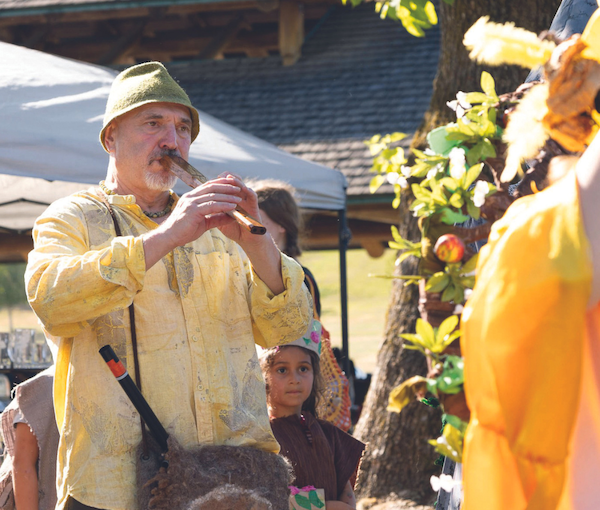
Boris Sichon, above, and Jesse Waldman return to this year’s Mission Folk Music Festival, which takes place July 26-28 at Fraser River Heritage Park. (photo from missionfolkmusicfestival.ca)

“I know that people are going to find that new-to-them artist that changes their world. I know that new friendships will be forged among volunteers. And I know that people will just enjoy being together in the park in community,” said Michelle Demers Shaevitz, artistic and executive director of the Mission Folk Music Festival, about the upcoming weekend-long event. “That’s what I look forward to the most.”

Joining Demers Shaevitz at this year’s festival, which takes place July 26-28 at Fraser River Heritage Park, will be fellow Jewish community members Boris Sichon and Jesse Waldman. Both musicians are returning artists to the festival, but will be performing new material.

Sichon will be leading the interactive Recychestra, an orchestra that uses musical instruments made from recycled objects. The performance is the last part of an instrument-building program offered through the City of Mission next month.

The idea for Recychestra came from a meeting with Mark Haney, a composer and musician working for the City of Mission, said Sichon. The program comprises seven sessions between July 6 and 26 at the Mission Leisure Centre, culminating in the July 28 performance at the Mission Folk Music Festival – though Sichon would like the program to carry on.

“I hope we’re going to continue this project after the festival,” he told the Independent.

Anyone who is interested in participating can do so via mission.ca/culture or by emailing culture@mission.ca.

“We don’t know yet who’s going to sign up,” Sichon said. “Kids love to create musical instruments more than playing instruments, while adults enjoy both activities. It would be great to have some musician friends from the Mission community.”

Even if someone hasn’t attended the program, they will be welcome to join the orchestra at the festival performance, said Sichon. “We will have enough recycled instruments. It will be a very friendly atmosphere, joyful. Play and dance!”

Waldman is also looking forward to performing at the Mission Folk Music Festival.

“We’ve got some great new songs to share and a couple tricks up our sleeves, too!” said Waldman, who will perform in several music sessions, including in concert with Beau Wheeler on the Sunday afternoon of the festival. The collaboration with Wheeler has been a long time in the making.

“I’d seen Beau perform at an art space in East Van nearly 20 years ago and was blown away,” said Waldman. “Many moons passed, until 2018, where I was performing in the Monica Lee Band and we shared a bill with Beau at Pat’s Pub. Beau caught our set with Monica and invited the band to stay on stage and join him and it was a magical moment. We decided we should get together again and that’s how it all started. We have a lot of the same taste in music and are both very emotional players. I try and add memorable and atmospheric parts to fit the feeling of Beau’s amazing songs.”

Waldman has been busy since the Independent spoke with him in advance of last year’s Mission folk festival. Among the highlights, he said, are “[t]he completion of a new full-length album entitled The Shimmering Divide, set for release September 2024 [and an] outstanding full band performance at Or Shalom Synagogue featuring a rendition of ‘Papirosen,’ where the band played along with my grandmother’s voice from a tape from 1957.”

The video of that performance can be viewed at youtube.com/watch?v=5F5GNRMf1fQ. For more about the song, visit jewishindependent.ca/a-great-grandmothers-song.

photo - Jesse Waldman
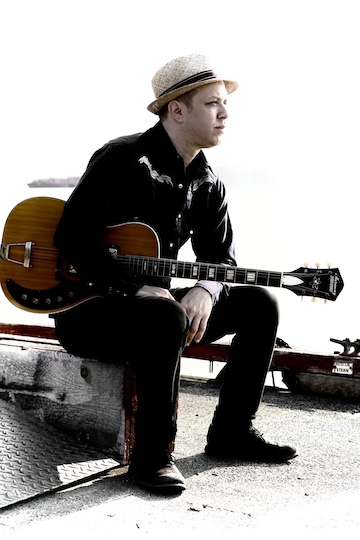
Jesse Waldman (photo from jessewaldmanmusic.com)

Following Waldman’s first album, Mansion Full Of Ghosts, The Shimmering Divide “sees an even more introspective songwriting exploration by Waldman with lyrics that are both confessional and poetic, vulnerable and hopeful, spanning the personal and the universal,” notes the PR material.

“For me, the title The Shimmering Divide represents the age-old battle between good and evil, which path to take to do the right thing in your life – those points in your life are charged with possibilities that can change it forever,” said Waldman.

In all, some 30 artists from around the world will be participating in this year’s Mission Folk Music Festival. In selecting performers, Demers Shaevitz tends to focus on a theme. 

“This year,” she said, “I was digging into this idea of tradition and looking for artists that are grounded in their tradition. What that means for me is finding artists who can emphasize a through line in their music. Who can take the best parts of their culture, genre, community or language, for example, and bring it to audiences in new and or exciting ways. This is key to me when I consider folk traditions: I want contemporary takes on this heritage artform. We’ll hear that in Moira & Claire and their Maritime song tradition. We’ll hear that in how PIQSIQ presents Inuit throat singing in a contemporary context. And we’ll hear (and dance) to how Kobo Town takes traditional Trinidadian sounds and modernizes them for today’s audiences.”

For more information about the festival, including the schedule and tickets, visit missionfolkmusicfestival.ca. 

Legal helpline on call

Lawyer Erin Brandt founded the Antisemitism Legal Helpline to help connect people experiencing antisemitism with volunteer lawyers who could provide them with free, confidential legal advice. (photo from Erin Brandt)

After Oct. 7, Erin Brandt was angry. She decided to put that rage to constructive use. “I wanted to direct my anger towards something useful and the thing that I have that is useful is legal skills,” said Brandt, an employment lawyer and cofounder of PortaLaw. “My idea was to create a helpline that would help connect people experiencing antisemitism with volunteer lawyers who could provide them with free, confidential legal advice.”

The Antisemitism Legal Helpline is officially housed under the auspices of Access Pro Bono Society of British Columbia, a free lawyer referral agency serving people and nonprofit organizations across the province, and is supported by the Ronald S. Roadburg Foundation.

“It’s been described as building the airplane as it’s taking off from the ground,” Brandt said of the helpline. Getting it up and running as soon as possible was key.

The Antisemitism Legal Helpline helps resolve the ad hoc responses that had been happening since Oct. 7, when many Jewish organizations began receiving more inquiries from members of the public who were facing antisemitism. The helpline is a single designated referral destination to help those who need legal advice find a lawyer with appropriate cultural sensitivity.

The steering committee of three includes Brandt, Cindy Switzer, an immigration lawyer, and Jessica Forman who, like Brandt, is an employment lawyer. About 20 other lawyers have formally signed onto the project, but the network is much wider, Brandt said, since any lawyer might engage with another professional they know if they think their expertise is particularly relevant for a file.

Calls so far have involved employment issues, such as inappropriate comments during workplace training events, and a lot of campus incidents affecting students, staff and professors. 

“There’s been a few things relating to social media, people who are receiving harassment for things that they posted online,” said Brandt. There have also been incidents involving strata law, including at least one incident involving a mezuzah.

The volunteer lawyers provide roughly half an hour of initial summary advice. Some incidents can be resolved in that period, Brandt said. If the caller seeks to pursue matters further, the lawyer may take on the case pro bono or for a fee, or the client may be referred to another professional.

Some lawyers are on the lookout for a test case, an incident that could go to court and set a precedent – both legally and socially – that lets the public know antisemitism will not be tolerated. However, most of the people looking for advice, Brandt said, are understandably not eager to take a leading role as plaintiff.

There is no standard response in these cases. Lawyers and callers may decide to pursue things further or they may not.

“Sometimes, something is the best thing to do and, sometimes, nothing is the best thing to do,” said Brandt. The purpose of the helpline is to allow individuals to get professional advice on what their options and possible best responses might be.

“We want people in British Columbia to know that we exist and that they should call us for help,” Brandt said. “If somebody is a lawyer and is looking for ways to give back and wants to volunteer, then they can sign up as a volunteer.”

The helpline can be reached at 778-800-8917 or alh@accessprobono.ca and response time is one to two days. 

Health professionals gather

The inaugural board of the Jewish Medical Association of British Columbia. (photo from JMABC)

The newly incorporated Jewish Medical Association of British Columbia held a meeting at Schara Tzedeck Synagogue on May 29, with more than 70 physicians and allied healthcare professionals in attendance.

Rabbi Andrew Rosenblatt, spiritual leader of Congregation Schara Tzedeck, gave a lecture called How to Speak about Israel, detailing facts about the origins of the ancient Hebrews living in the biblical land, which is now Israel. Special guests were Dr. Gregg Gardner, a professor in the University of British Columbia’s department of Near Middle Eastern and religious studies, and Dr. Judith Paltin, a professor in UBC’s department of English language and literature – they have recently formed the Jewish Academic Alliance of British Columbia.

Prior to Rosenblatt speaking, the group engaged in table discussions on strategic planning and the priorities of the association. Many attendees were meeting for the first time in person. Clinical psychologist Dr. Rotem Regev commented, “It was such fantastic event. I left feeling elated and uplifted. Such a relief to be in a room with so many esteemed and like-minded individuals.”

The event was held just 24 hours prior to an arson attack on the synagogue. The Jewish Medical Association promptly put out a news statement and pleaded for UBC, health authorities and other institutions to take action to combat antisemitism and ensure safety for all.

Dr. Marla Gordon, physician in Vancouver, initially started a group for Jewish physicians as a support network post-Oct. 7. The group grew and, in January, became an incorporated organization under the co-leadership of Gordon and Dr. Larry Barzelai. The association has bylaws, an appointed inaugural board and almost 200 members. It has expanded to include all allied health workers and professionals who identify as Zionists, including non-Jewish allies. In addition to hosting social, educational and wellness events, the JMA is combating the rise of antisemitism on campuses and in healthcare spaces. The association is part of a larger network of recently formed medical associations across Canada, including Ontario, Quebec, Manitoba, Alberta and the Maritimes. To join the JMA, email info@jmabc.ca. 

– Courtesy Jewish Medical Association of British Columbia

Action must be taken

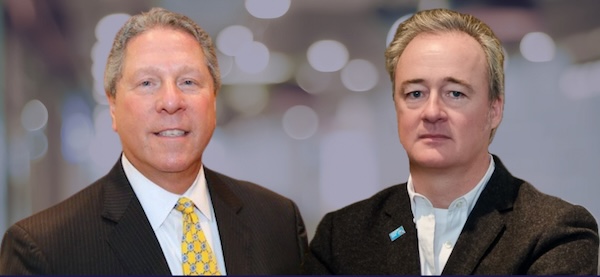
Richard Heideman, left, and Warren Kinsella participated in a B’nai Brith Canada virtual fireside chat on May 30. (photo from B’nai Brith Canada)

The League for Human Rights of B’nai Brith Canada hosted a virtual fireside chat with Canadian lawyer and author Warren Kinsella and American attorney Richard Heideman on May 30. The conversation largely focused on growing antisemitism and political passivity in North America in the wake of the Oct. 7 Hamas attacks on Israel.

Kinsella began by talking about his experiences over the past three decades, writing about neo-Nazism and antisemitism and how they never fully disappear, no matter what region of Canada one observes. However, he said, the present state of anti-Jewish feeling in the country is the worst he has witnessed.

“I never dreamed in my worst nightmare that we would actually have in a single week two schools in separate provinces shot at because they teach Jews. I never thought I would see the attacks on Jewish businesses, individuals and community centres,” he said.

Kinsella castigated elected representatives in Canada for their inaction and lack of leadership in the face of hate speech directed at Jews and the rising numbers of attacks, citing an abundance of laws to handle the problem effectively.

In the international arena, Heideman added, the silence from prime ministers, presidents and ambassadors after the Hamas attacks last fall has been “deafening.” No Western democracy, he said, would tolerate the atrocities committed during the Oct. 7 attacks on their own soil.

“The United Nations and its world courts must be held accountable for singling out Israel for multiple decades and playing into the biased hands of countries like Iran, which only months ago directed hundreds of drones and rockets at the sovereign state of Israel,” said Heideman.

Both men praised Israel for its commitment to human rights and agreed that the present demonization of the strongest democracy in the Middle East, and the concurrent calls for economic and academic boycotts, must come to an end. 

Heideman argued that the lessons of recent history, namely the banning of Jews from all facets of everyday life in Nazi Germany in the 1930s – which was followed by the Holocaust – have not been learned. What’s more, he said, there is presently a blame-the-victim mentality at the international diplomatic level which faults Israel for the present situation.

On the bright side, Kinsella noted that polling after Oct. 7 would suggest that the vast majority of North Americans are on Israel’s side and believe it has a right to defend itself. They also welcome Jewish people into their communities. The problem, according to Kinsella, is with the younger segment of the population, the group which has taken to the streets, created encampments, and said and done terrible things to Jews.

“Eighteen-to-40-year-olds in Canada, the United States and Europe are presently a lost generation. You will find no constituency or demographic that believes more in Holocaust denial, that thinks Hamas was right and that Israel should be wiped off the map,” Kinsella said.

“When we have millions of young people who have embraced hatred, division and terrorism, we have a big, big problem,” he continued. “I think we are looking at something that is going to take a decade or more to fix because it’s taken us more than a decade to get us to this dark place.”

To Kinsella, the internet – the primary medium through which people, particularly the young, obtain information – is largely at fault. Despite improving the world in many respects, he said, the World Wide Web has enabled those intent on propagating hate to do so immediately and at no expense. Further, both Kinsella and Heideman said bad state actors are determined to exploit the internet to spread misinformation and hate speech.

Heideman said there was no place for timidity in the present environment and advocated examining each situation and acting accordingly – in other words, not remaining silent.

“Being quiet does not do us any good,” he said. “Being quiet leads to Holocaust denial, distortion and people not caring. We have to take action in a way that is targeted, strategic and powerful – that means in federal courts, state courts and international courts.”

Kinsella is president of the Daisy Group and a former special assistant to former prime minister Jean Chrétien. He has advised numerous political campaigns and is the author of several books, in addition to being a newspaper columnist.

Heideman, senior counsel at Heideman, Nudelman and Kalik PC, and chair of the US Holocaust Memorial Museum Lawyers Committee, is a specialist in American and international litigation. 

Sam Margolis has written for the Globe and Mail, the National Post, UPI and MSNBC.

One family’s influence

Ben Shneiderman was the featured speaker at Jewish Senior Alliance’s Spring Forum May 26. (photo from hai.stanford.edu)

On Sunday, May 26, the Jewish Seniors Alliance presented their annual Spring Forum. Featured speaker Ben Shneiderman spoke about his family’s influence on journalism, photojournalism and the development of human-computer interactions.

Shneiderman was introduced by Gyda Chud, a past president of JSA and chair of the program committee. He told those gathered at the Peretz Centre for Secular Jewish Culture about his family history, keeping the audience enthralled throughout. 

Shneiderman is an emeritus distinguished professor of computer science at the University of Maryland. He has received six honorary doctorates in recognition of his pioneering contributions to human-computer interaction and information visualization. He has published more than 20 books, most recently, Human-Centered AI (Oxford University Press, 2022), which won the Association of American Publishers award in the computer and information sciences category.

However, Shneiderman did not begin with his own cultural contributions, but with those of his parents, Samuel and Eileen (née Szymin) Shneiderman. They began their journalistic partnership in Warsaw, writing for the many Yiddish publications that existed then. Their lives mirrored the turbulent events of those years. They moved from Warsaw to Paris, where they continued to contribute to Yiddish publications. They did major reporting from Spain during the Spanish Civil War. In 1938, Samuel published a collection of his work on the Spanish Civil War in Yiddish, titled Krig in Shpanyen: Hinterland. This coverage earned him the title of being “the first Yiddish war reporter.” This book was later published in Polish and then in Spanish. It will appear soon for the first time in English as Journey through the Spanish Civil War, translated by Deborah Green and published by the Yiddish Book Centre’s White Goat Press.

In 1940, with the help of the Yiddish press in New York, the family was able to immigrate to the United States and escape the war. Samuel worked with the Yiddish press and published many other books, including editing The Diary of Mary Berg, by an American woman who was incarcerated in the Warsaw Ghetto and described harrowing details of life there. Samuel wrote of the Kielce Pogrom in Between Fear and Hope. The Weitzman National Museum of American Jewish History has two virtual exhibits: one on Samuel and Eileen’s partnership, and the second on Ben Shneiderman’s computing contributions and the photojournalism of David Seymour, Eileen’s brother, who was known as Chim. 

Chim’s humanistic style of reporting influenced modern visual storytelling. One of his photos, related to the war, may have inspired a painting by Picasso. Chim’s war photos were widely published in many magazines and journals, and he became known for his unique photographs of children who had become orphans during the conflict. He also took photos of many celebrities, such as Audrey Hepburn, Maria Callas, Ingrid Bergman, and many others. Some of these images were published in popular media such as Life magazine.

Chim took some interesting shots of life in the state of Israel in the early 1950s. Of note is a photo of a wedding taken outdoors, possibly in the Judaean Hills. The chuppah is torn in a few places and one side is being held up by a rifle and a pitchfork. Chim was killed while photographing the Suez Crisis for Newsweek in 1956. He was 45 years old.

Throughout the presentation, Shneiderman replied to questions and comments, Marilyn Berger, a past president of JSA, thanked him for his inspiring words.

The next JSA event is A Summer Afternoon of Music on June 24, featuring a live concert of classical music, showtunes and Jewish songs by Trio du Souvenir – Rudy Rozanski (piano), Yu Tsai (cello) and Arnold Kobiliansky (violin). Co-sponsored with the Kehila Society and Congregation Beth Tikvah, the concert and lunch take place at Beth Tikvah. To attend, RSVP by June 21 to Toby Rubin, trubin@kehilasociety.org (lunch is $15). 

Shanie Levin is a Jewish Seniors Alliance Life Governor. She is also on the editorial committee of Senior Line magazine.

Tea unites, entertains

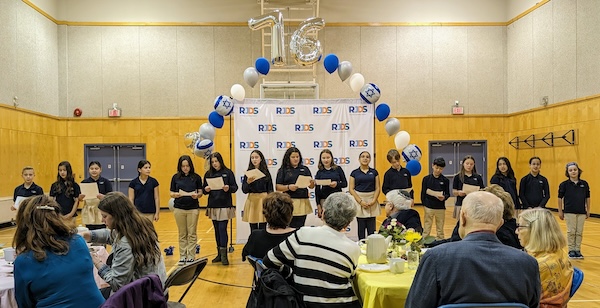
Richmond Jewish Day School students at the school’s annual  Garden Tea Party, which took place May 22. (photo from RJDS)

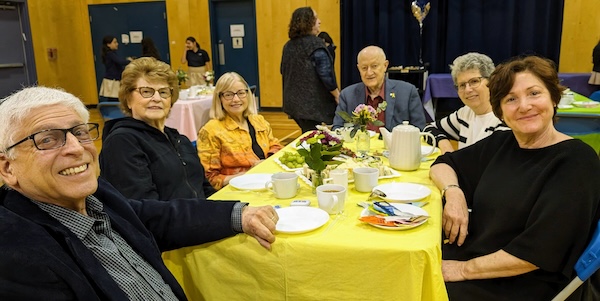
On May 22, Richmond Jewish Day School (RJDS) welcomed community members to its annual Garden Tea Party.

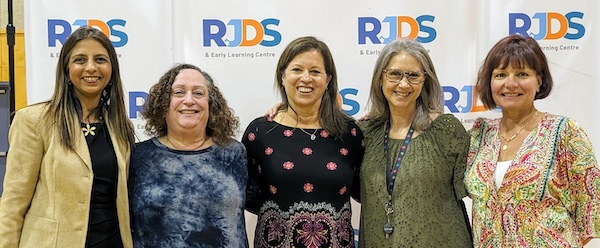
photo - Sabrina Bhojani, Lynne Fader, Joanne Robinson, Reesa Pawer and Toby Rubin
Sabrina Bhojani, Lynne Fader, Joanne Robinson, Reesa Pawer and Toby Rubin. (photo from RJDS)

The event began with a welcome from the head of school, Sabrina Bhojani, followed by a d’var Torah from one of the Grade 7 students. There was entertainment provided by other students. The school’s Israeli dancers took all their hard work from the performances at the community’s Yom Ha’atmazut celebration and Festival Ha’Rikud and performed a show-stopping dance! 

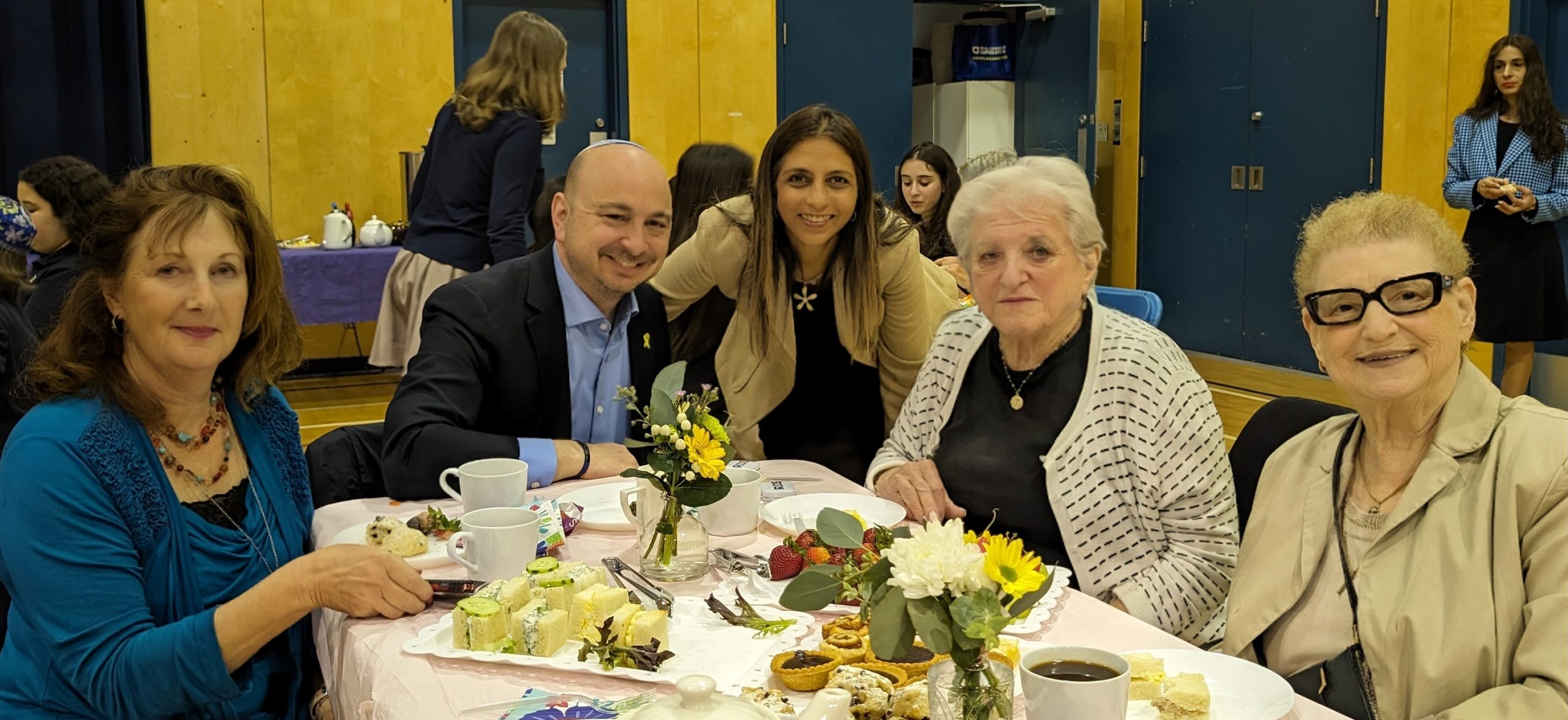
photo - Cindy Rozen, Ezra Shanken, Sabrina Bhojani, Lola Pawer and Andi Strausberg
Cindy Rozen, Ezra Shanken, Sabrina Bhojani, Lola Pawer and Andi Strausberg. (photo from RJDS)

The entire tea was hosted by RJDS’s senior students, as they led community members to their seats, and served the tea and treats. The Kehila Society of Richmond and Joanne and Gary Robinson sponsored the event.

photo - Perry Seidelman, Marie Doduck, Phyllis Johnson, Dr. Peter Suedfeld, Shelley Seidelman and Marcie Flom
Perry Seidelman, Marie Doduck, Phyllis Johnson, Dr. Peter Suedfeld, Shelley Seidelman and Marcie Flom. (photo from RJDS)

The tea was a testament to the rich tapestry of experiences, talents and perspectives within the Richmond community. RJDS acknowledges its interconnectedness with the community and recognizes community members’ invaluable contributions to the school’s vibrant environment. Amid sipping tea and engaging in conversation, the power of connection and intergenerational exchange was evident, as was a sense of unity and belonging. 

– Courtesy Richmond Jewish Day School

Community gathering place

Many community events, lessons and celebrations take place in the Jewish Community Centre of Greater Vancouver’s Wosk Auditorium. (photo from JCC)

A sense of family and community, somewhere to be physically active and mentally stimulated, a haven in which to socialize and relax, to have a nosh, a lifeline during the pandemic and a place to be with like-minded people after Oct. 7. The Jewish Community Centre of Greater Vancouver – “the J” – “is a warm and welcoming place for Jews and the community in general,” offered JCC executive director Eldad Goldfarb.

The Jewish Independent spoke with Goldfarb and others recently, to see how the centre has fared since the Hamas terror attacks on Israel, the Israel-Hamas war and the rise in antisemitism around the world, including in Metro Vancouver.

“The level of security has seen a noticeable increase,” said Goldfarb. “The initial shock had an effect on our entire community, which felt insecure and somewhat afraid to venture out and into Jewish community facilities. This fear quickly changed into a desire to congregate, be with fellow Jews in safe spaces, and the JCC is a place where everyone feels safe and welcome.”

He praised the Vancouver Police Department and its role in allowing the community to gather safely.

“The VPD is amazingly supportive of the Jewish community and the JCC,” he said. “They are doing above and beyond within their limited resources to provide both physical as well as emotional safety at this very difficult time for our community. The JCC staff team is very vigilant and pays close attention to anything out of the ordinary.”

Goldfarb has been the J’s executive director for 11 years, and was assistant executive director for the six years prior to that. He said the centre has “expanded its programs and services, providing substantially more scholarships and subsidies to families and individuals.” And he and the JCC board “have been involved in the conceptualization, visioning and creation of JWest, an exciting innovative community project for generations to come.”

“The JCC has been working diligently on expanding our capacity, we have made investments in recruiting top-notch staff, replacing and transforming our technology systems in order to improve customer experience, ease the registration process and create efficiencies in the organization,” said Goldfarb.

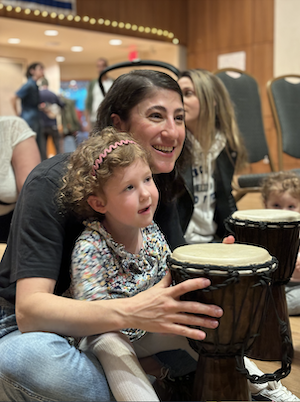
“We’re always trying out new programs,” Hila Olyan, senior director of programs, told the JI. “I’m especially excited about programming for new families, which ramps up this coming fall: pre- and post-natal yoga, baby sign and sing, stroller fitness, storytime in the library. We’re also trying out some new children’s programming over the summer. Music, Music for Littles and Music, Music for Babies will be offered on Sundays. I can say from personal experience that my toddler loves the program. He’s been taking it since April.”

photo - The J's many programs include ones to introduce toddlers and their families to the joys of music
The J’s many programs include ones to introduce toddlers and their families to the joys of music. (photo from JCC)

While the programming hasn’t changed much in response to Oct. 7, Olyan said “the interest in being part of programs has increased. I think, for many people, myself and my family included, the opportunity to participate in Jewish and non-Jewish programming, but in a safe space surrounded by like-minded people, is more important than we previously realized.

“We’ve also tried to be thoughtful as we plan and host our community events like the recent Festival of Israeli Culture. We are thinking about how we can honour the challenging times we are living in, but also celebrate the beautiful culture we all know and love.”

She pointed to significant participation in events such as seniors luncheons, the J’s annual Purim Party and other activities.

“The people of our community want to be around other community members and I think it’s a great thing,” said Olyan. “The atmosphere has shifted a few times. We’ve moved from shock and devastation to strength and resilience. I think it’s a real testament to the spirit of our community.”

“The JCC has and will always be a safe place for me and my family and the entire community,” said Michael Averbach, who has been going to the J since he was a kid himself. “Oct. 7 didn’t change my frequency of visits or how I feel about being at the JCC, nor should it for any current member, but my message to those considering joining – there’s no greater feeling of family than being at the J. It’s the only place where we can truly interact with all sectors of our community, from the non-observant, to the Reform, to the Orthodox and everyone in between. Furthermore, the JCC was built on the foundation where everyone is welcome, regardless of religion or race.”

In addition to being a J member, Averbach has chaired the centre’s main fundraising event, the RBC JCC Sports Dinner, for many years. Attesting to his family’s generations of involvement with the JCC, the welcome desk everyone passes on their way into the centre is called the Betty and Louis Averbach Membership Desk, named after Averbach’s grandparents. And the next generation is also involved. 

“We’ve had our kids in day camp and swimming lessons over the years and, personally, I enjoy boxing sessions with Alexei to keep me sharp and on my toes and to complement my regular fitness routine,” said Averbach. “I also try and get to the J in the later evenings up three to four times a week to enjoy the sauna and steam in the men’s spa.”

photo - Working out at the J
Working out at the J. (photo from JCC)

When asked what keeps him coming back to the centre all these years, Averbach said, “The warm feeling and sense of community walking through the doors.”

This is an aspect that also appeals to J member Cathy Paperny and her family, who joined the JCC in 2006 when their children began the 2-year-old program. 

“I appreciate being surrounded by a Jewish community,” she said. “I have a good relationship with Eldad and we often have good talks about various topics, including the war in the Middle East. During these challenging times, it’s especially important to be surrounded by like-minded people. I feel I have that at the JCC.”

The social aspect is one of Olyan’s favourite parts of her job.

“I like the combination of interacting with members, program participants and administration. I like thinking about how we can make our programming stronger and then having the opportunity to put plans into action and see the results. Every single day I meet and talk with interesting people who are all here at the J for their own unique reason – a workout, childcare drop-off, gymnastics, music lessons, a holiday or festival.”

For Paperny, that reason was the program for 2-year-olds. She said the J was the only place that offered it. “I liked that my children were attending with other Jewish children, some of whom became lifelong friends. It was close to VTT [Vancouver Talmud Torah] for afterschool programs and convenient for me when I was working at the Holocaust Centre,” she said.

Paperny worked at the Vancouver Holocaust Education Centre, which is on the lower level of the centre, until 2019, for about four years as the symposia coordinator and as a docent for more than 10 years.

In addition to the 2-year-old program, Paperny said, “Yaelle went to ballet classes when she was young and did Israeli dancing through Talmud Torah and then performed at the Festival Ha’Rikud events at the JCC until Grade 7. Both of my children attended Camp Shalom for a couple of years.  One of my children did the leadership-in-training program at Camp Shalom. They also attended other sports camps, like soccer.

“I did personal training there for years and attended some of the fitness classes, including circuit training,” she continued. “Now, I swim, do private pilates with Camila, attend yoga twice a week and attend many fitness classes.”

She also attends Jewish Book Festival events and, often, Israeli dancing on Wednesday nights.

These types of activities are exactly what the JCC mission entails.

“For our Jewish community, we continue to be committed to our mission to provide programs to enhance positive identification with Jewish life and Israel,” said Goldfarb. “This can be seen in our children’s camps, early childhood education programs (daycare and out-of-school care) and with our Israeli dance classes – to name a few.”

Nava Creative Kosher Cuisine is also on site. A popular spot to have a coffee or lunch, it is hard not to run into fellow community members when you’re there: members of the J, people visiting the latest exhibit at the Zack Gallery or going up to the Waldman Library, staff from the various Jewish organizations housed in the centre, participants in different programs, parents picking up their kids, students from King David High School, which is located across the street from the centre, and others.

“The JCC, while not without its challenges, is a place of growth and potential,” said Averbach. “I am aware of the high staff turnover and the need for building upgrades and, together, we are actively working on raising the necessary funds to address these issues. If there’s one key area for improvement, it is staff training for those with special needs and neurodiversity. By properly implementing this training, we can ensure that all our children feel comfortable and welcome.”

And it seems that the J is committed to continually improving. For example, staff review its programming often.

“Every participant in a registered program receives an email link to a quick survey,” said Olyan. “We also look at our mission statement and consider how we can continue and better meet our mission and the needs of our community. Are we offering social, educational, recreational and cultural programs for every demographic? Finally, we consider what are the emerging trends and interests within and outside the Jewish community and is the JCC the right place for [such programs]. We really try to listen to our members and find out if there are particular programs they would like to see.”

As for her feedback, Paperny said, “During COVID, the J was a lifeline for me when virtual programs were available, and then when it opened up to in-person programs. My physical health is so integral to my emotional, mental and spiritual health. The J has always been there for me.”