Urban warfare training

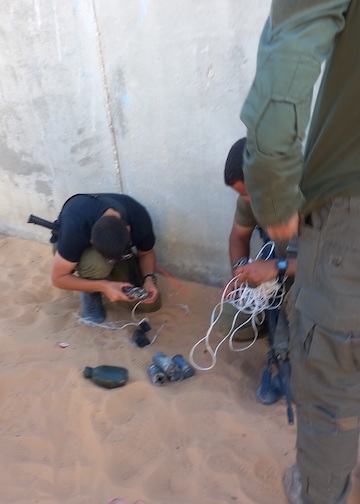
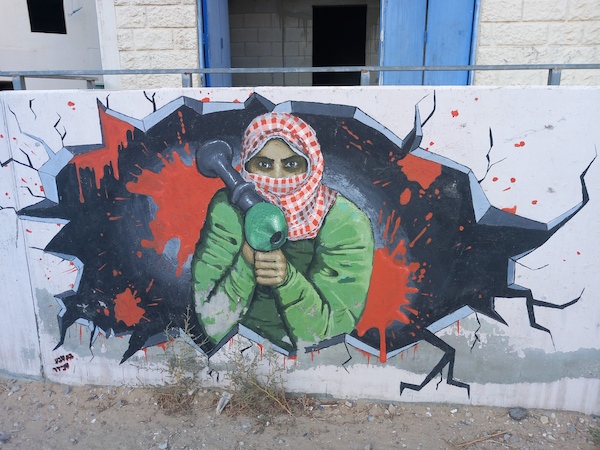
An Israel Defence Forces patrol. The mural on the right was painted by Batsheva Schneider when she was doing her military service. (photo by Gil Zohar)

Fans of Fauda may recognize the Tze’elim Urban Warfare Training Centre (UWTC) in the western Negev Desert near Kibbutz Tze’elim. The base – where Israel Defence Forces infantry and commanders train in the type of house-to-house and subterranean combat expected in the Gaza Strip, but also in the West Bank, southern Lebanon and other Middle East locations – was used as a set for the hit TV series. But, while faudameans “chaos” in Arabic, the disarray in this sprawling 24-hectare base has been finely calibrated to accustom troops to real-life conditions of fighting in Arab cities and villages.

photo - Soldiers in the midst of operations training.
Soldiers in the midst of operations training. (photo by Gil Zohar)

Located inside the larger Tze’elim Training Base, the UWTC simulates the maze of a multi-storey Middle Eastern urban environment. Established in 2005, it was built at a cost of $45 million.

The warren of 600 structures includes garbage-strewn streets, storefronts, schools, houses, shacks, an eight-storey apartment block and mosques. The muezzin’s call blares from the minarets, which are illuminated with green Islamic lights. Garages advertise cars for sale. Jeeps patrol the dusty streets. Holes blown in walls allow soldiers to avoid entering a building via the doorway, which may have been booby-trapped.

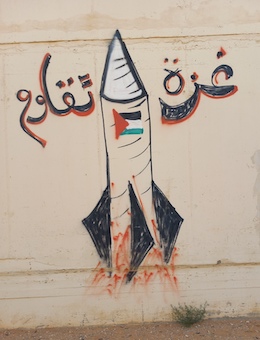
Most striking are the murals and graffiti scattered across the site, some painted by Batsheva Schneider when she was doing her military service. The images include Islamic Jihad fighters firing RPGs, Hamas founder Sheikh Ahmad Yassin, Qassam rockets from Gaza, and guerrillas with their faces covered by a keffiyah scarf marked “shahid” (martyr). One Arabic sign just says “death.”

photo - Murals and graffiti are scattered across Tze’elim
Murals and graffiti are scattered across Tze’elim. (photo by Gil Zohar)

Entering a mock-up of a claustrophobic Gaza terrorist tunnel, this writer felt the palpable panic among my fellow journalists behind me as they urged me forward in the pitch-black darkness.

photo - Images include Qassam rockets from Gaza
Images include Qassam rockets from Gaza. (photo by Gil Zohar)

Other buildings are decorated to replicate a salon in a private home. The verisimilitude extends down to framed family photographs, flowers in a vase, recent newspapers from Gaza and art with Quranic verses. Simulators showing mortar strikes and explosions suggest to soldiers what they might witness outside the living room window.

In addition to the IDF, Israel’s “Mini Gaza” has been used for urban warfare training by U.S. Army soldiers and United Nations peacekeepers. The project was developed to meet the need for better urban warfare training by the IDF, as a response to the challenges of the Second Intifada of 2000-2005. It is regularly updated as new terror strategies evolve.

Training exercises here are meant to help soldiers and their officers distinguish between combatants and civilians, and prepare them for situations where terrorists exploit civilians as human shields.

This writer was part of a delegation of international journalists on a tour organized by the Israel Government Press Office. The invitation came before the recent military operation in Jenin.

Gil Zohar is a writer and tour guide in Jerusalem.

Kalla’s toxic new thriller

“I see how it looks…. Just another teen suicide. Or maybe an accidental OD. Another addict who fooled his parents. No…! I know my Owen…. Never, never, never….”

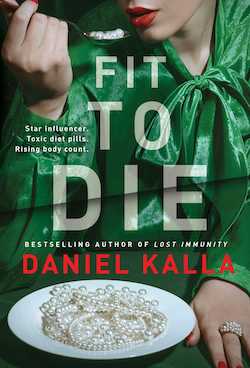
image - Fit to Die book coverThis is the reaction of Owen’s mother – who happens to be a U.S. senator – to her son’s death in Daniel Kalla’s latest thriller Fit to Die (Simon & Schuster Canada). L.A. detective Cari Garcia initially writes off the reaction as a mother ignorant of her child’s drug use, and bristles against the political pressure to determine the young track star’s cause of death. When she learns he died from ingesting a capsule that contained 2,4-Dinitrophenol, or DNP – used as a fertilizer, pesticide or explosive, but also abused by people to lose weight – she becomes more motivated to solve the mystery, in part because of a tragedy in her own past.

Meanwhile, here in Vancouver, toxicologist Dr. Julie Rees is dealing with a mysterious increase in deaths among bodybuilders, finding out that DNP is the cause. Then, a famous pop star and social media influencer dies in her penthouse, showing the same symptoms. And the co-owner of a wellness centre with locations in Los Angeles and Vancouver dies of a similar overdose. All the cases are connected and the L.A. and Vancouver police and medical personnel have to work together to find out who’s behind the influx of DNP on the market.

Like all of Kalla’s books, Fit To Die is an intriguing read, suspensefully written. While I didn’t enjoy it quite as much as I have his other thrillers – it was somewhat repetitive and the main characters’ backstories didn’t ring as true to me – I still wanted to know whodunnit. I also value having learned about the real-life issue of toxic diet pills and gaining some insight into body dysmorphia and eating disorders. I trust Kalla’s facts, as he is not only a writer, but an emergency room physician and a University of British Columbia clinical associate professor. He was kind enough to answer some questions via email.

JI: There are some Jewish-sounding surnames in the novel. In what ways does your being Jewish enter into your novel writing?

DK: Well, in this case the Hertzberg-Davis Centre is the real forensic lab for the LAPD. So that made it easy. I couldn’t remove the Jewish influence in my writing even if wanted to, which, obviously, I don’t. I’ve written a historical trilogy, The Far Side of the Sky, that is explicitly a Jewish story. In thrillers like Fit to Die, I don’t consciously think about my background or religion, but there is no doubt it influences the writing.

JI: Do you name characters after friends, or sometimes offer naming opportunities for charity auctions or the like?

DK: Haha. I learned early in my writing career to never name a character after a friend. It only ends badly. I’ve never auctioned off a character name for charity, but I would love to. It can be agony finding the right character name. Why not outsource it?

JI:  This is your 10th thriller. How has your writing style and/or process evolved since your first one?

DK: I hope I’ve learned from some of my past mistakes. Paradoxically, it gets easier and harder. Easier in the sense that I’m more confident in my voice and the nuts and bolts of my storytelling. Harder in that I’m more critical of my writing and fear becoming derivative in my stories. But the one thing that keeps me going is my enthusiasm for telling a new story. I think I’m more passionate than ever.

JI: From the several thrillers of yours that I’ve read, your topic choices are timely and coincide with current events. The medical side, you’ve got covered. But what are some of your sources for other aspects? In this book, for example, how the dark web works and even the pop culture aspects, including language, like “partizzle”?

DK: I obviously have a huge advantage with respect to the medical background, but that’s only a part of it. As you point out, this story – about a (real) and deadly diet pill that is marketed online to the most vulnerable and amplified by toxic social media – took some intense research. I had to learn all about body dysmorphia and immerse myself in the TikTok culture, which explains some of the Zoomer slang one of the character uses, like “partizzle.” I was lucky to have a local VPD superintendent help guide me through the logistics of what an investigation into this kind of complex online conspiracy would look like.

JI: Where do you find time to write?

DK: For me, it’s never about the time. I’m lucky to work in the ER, which is shift work, but I think I could find time no matter what my day job was. For me, it’s all about momentum and inspiration. When I have those, I find the time. When I don’t, free time doesn’t help.

JI: What part of your soul does writing feed?

DK: Not to sound overly melodramatic, but it kind of feeds my core. Medicine does, as well, but in a very different sense. I find purpose as a doctor, but I find my passion as a writer. I can imagine retiring one day from medicine, but I can’t imagine not writing.

JI: Can you speak about the process of getting a book from idea to publication?

DK: The challenge of transforming the kernel of an idea into a publishable novel always seems insurmountable from the outset – this book particularly. I wanted to build a compelling mystery and resurrect some characters from a past novel (The Last High) and introduce new ones, all while tackling a highly sensitive yet vitally relevant topic: how the toxic diet culture and social media prey on the most vulnerable. I like to think I met the challenge, but, of course, that’s for each reader to decide.

Habonim role pivotal

A recently retired rabbi who was born and raised in Vancouver is offering an insider’s look at life as a congregational leader.
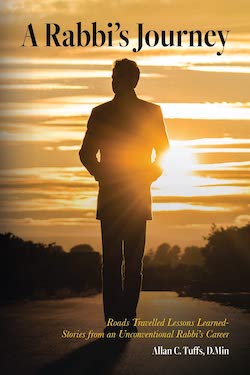
image - A Rabbi’s Journey book coverRabbi Allan Tuffs, who now lives part-time in south Florida and in the Raleigh-Durham area of North Carolina, has published A Rabbi’s Journey: Roads Traveled Lessons Learned – Stories from an Unconventional Rabbi’s Career. The 54 bite-sized chapters (coincidentally, he notes, the same number as parshas in the Torah) range from touching and hilarious to insightful and tragic.

Tuffs was born in Vancouver – he’s 10 days older than the state of Israel – and his home life was tough. His mom had a mental illness and his largely absent father had alcoholism. He and his sister would end up in the foster system.

The bookish, thoughtful Allan devoured everything he could read about Israel (among other topics) and, when he was invited to join the Labour-Zionist youth group Habonim, his life changed and everything else is as result of that connection.

“Habonim was kind of like a family to me, it really was,” he told the Independent in a telephone interview from North Carolina. “The people were warm and inviting and I was looking for my place in the Jewish community.”

Being the product of an intermarriage – “My father was not Jewish, my mother was,” he said – made the young Allan feel like an outsider.

“Intermarriage was still somewhat rare in those days,” he said. “I did not have a real religious background. I guess I was spiritual. I was very proud of my Jewish heritage and Habonim was very Jewish, very Israel-oriented, and it had a deep sense of purpose. It was kibbutz-oriented and there was this idea that the Jewish people had a role in the world, to repair the world, so to speak. That appealed to my youthful idealism.

“We had meetings almost weekly,” he added. “Here we were, these young kids.… I don’t really know if we understood what we were talking about, but we studied some of the great early socialist Zionist thinkers.”

In addition to their interest in Israel, social justice causes closer to home also drove the Habonimniks’ activism.

“We were pretty uniformly against the war in Vietnam,” he said. “We were quite disturbed by the racial injustices happening in the United States and also we were involved in fighting for Indigenous peoples’ rights in Canada. There was this sense that we are going to make the world a better place because we are Jews, because we have this ideology, because we are cognizant of the whole history of being a minority, being persecuted.”

In 1969, Tuffs headed to Israel and lived for two years at Kibbutz Menara, almost flush against the Lebanese border (and, coincidentally, now part of Vancouver’s partnership region in Israel). It was during the War of Attrition and the reality of the conflict was intense. Concentric rows of barbed wire were interspersed with landmines and German shepherd dogs patrolled the perimeter of the kibbutz.

While socialism, not Judaism, was the religion of the kibbutzniks, Tuffs notes in his book that a fortuitous meeting in Jerusalem changed the young man’s path again. Working in the holy city to earn a plane ticket home, he encountered an Orthodox rabbi from Seattle, with whom he began studying Budokan karate and Talmud. Among other things, the mix of eastern and western influences would follow Tuffs through his life. He integrates contemplative and meditative practices into his Judaism and practises yoga.

Returning to North America – and Habonim – Tuffs worked as a counselor at the movement’s camps in Pennsylvania and Washington, D.C.-adjacent Maryland. While in the D.C. suburbs, he started teaching Hebrew at a Conservative synagogue. He was hired for his language skills but the gaping holes in his Jewish knowledge – he never had a bar mitzvah – led his employer to suggest taking a few courses at Baltimore Hebrew College. This was the beginning of “a lifelong love of Jewish learning,” he writes.

Now in his mid-20s, he still wasn’t sure what to do.

“I was scholarly, but I would never be a scholar – too solitary,” he writes. “I was interested in psychology, but the thought of listening to people’s problems five days a week gave me a headache. I’m something of a ‘ham’ but would never be an actor. I’m a do-gooder – hardly a way to make a living.… What profession would allow me to do a little of all these things?”

Turns out the rabbinate fit quite nicely for 40 years. While a child of intermarriage with no early Jewish education might not seem a top candidate for the clergy, fate intervened again. Tuffs’ Hebrew language skills got him a job running a Conservative synagogue youth group in Maryland on the understanding that he would become shomer Shabbat and keep kosher. The job, in fact, put him under the wing of the rabbi and gave him more experience.

“This opportunity amounted to a rabbinic internship,” he writes.

Tuffs spent two years learning the ropes of the rabbinate. He began leading Shabbat services at a local nursing home. In 1977, he entered Hebrew Union College – Jewish Institute of Religion, spending the first year on the Jerusalem campus and four more at the institute’s New York centre.

He experienced “imposter syndrome,” partly because he had only one Jewish parent. But, he concluded, “with such a high frequency of intermarriage these days, who better than a rabbi of mixed parentage to welcome others like himself or herself into the Jewish fold? Suddenly, my rabbinate had renewed significance and purpose.”

In his book, Tuffs reflects the tumultuous and historic times he has lived through. After receiving his ordination, his first convention of the Reform movement’s Central Conference of American Rabbis, in 1983, saw the historic decision to recognize patrilineal descent.

Over the next 40 years, as he shares, he navigated synagogue politics – some comedic, some sad, including a corrupt sisterhood president and an authoritarian, bullying board president. He discusses his decision to officiate at same-sex weddings, his activism on behalf of persecuted Christians in the Middle East, and his congregation’s support of orphans in Haiti.

The tragic collapse of a condominium building in Surfside, Fla., in 2021, hit Tuffs close to home. A young couple whose marriage he had presided at just weeks earlier were killed in the disaster.

The hurricane that devastated parts of Florida and other states in 2005 ravaged his temple. The silver lining was that Tuffs was able to be part of a rebuilding project that made the sanctuary more welcoming, removing the elevated bimah that instilled “an air of un-approachability” for the rabbi and cantor.

Perhaps because he came to the Reform rabbinate with some Conservative movement experience, Tuffs considers himself on the traditional side of Reform. He wears a kippa and dons a tallit when praying, something that was unusual in some American Reform congregations when he started out.

“I embraced the growing trend in the movement toward reintegrating older, discarded ritual practices into religious life,” he writes. “At the same time, I was sold on the Reform idea of personal autonomy in matters of ritual practice.”

He would serve at congregations in Wisconsin and Pennsylvania before spending 25 years at Temple Beth El, in Hollywood, Fla., from which he retired a year ago.

Fate almost brought Tuffs back to Canada before he ever made it to Florida. Desperate to escape the Wisconsin winters, he was invited to consider a position at a synagogue in Ottawa. His mind was made up for him when a congregant enthusiastically offered: “Rabbi, you’ll be able to skate to work on the Rideau Canal four months a year.”

In addition to all else, Tuffs obtained a doctorate in ministry, for which he wrote a dissertation about masculine spirituality, which was published as a book. He was a rabbinic fellow at the Shalom Hartman Institute in Jerusalem for five years and studied at the Institute for Jewish Spirituality.

Reflecting back on his life, Tuffs can’t recall precisely where or how he first connected with Habonim. Everything that came after, though, can be traced back to that early Vancouver connection.

Tuffs’ book is available in ebook format on Amazon, though it is currently not available to order in Canada as a hardcopy.

A yearly reminder to return

Family friends in their 80s just came over to visit. It was perhaps their first time at our house in a year or so. They’ve been busy. They had a family member move back to Winnipeg, there’s been a pandemic and, well, we’ve been busy, too, with kids on summer break, work obligations, visits from relatives, and home renovation.

When they first visited, our new (to us) historic home was empty. While the house had great character, original workmanship and many good points, it also needed a ton of work. We’ve had it all, from asbestos and electricity to plumbing, insulation, and so many other repairs. It didn’t have a single bathroom that worked.

When they walked in today, they said, “Oh wow!  It looks like you’re home!  It looks like you really live here now.” My kids then took our friends on a grand tour. They were amazed and impressed by all that’s happened. They saw such big improvements and wanted to know what we’d done ourselves, what our contractors had completed, and when and how it had happened. It was wonderfully reassuring, and also strange. We hadn’t realized how long it had been.

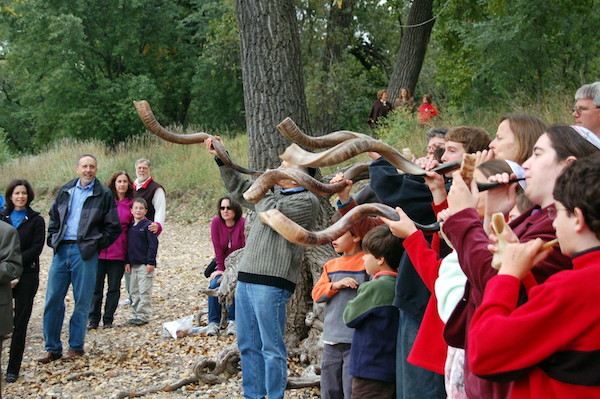
I couldn’t pin down when last they’d visited, even though I looked at the calendar. Then I also noticed that it’s Elul, the Jewish month where we’re supposed to wake ourselves up. We hear the shofar each day if going to morning minyan, a way to remind ourselves that Rosh Hashanah and Yom Kippur are coming. We need to look inward, do teshuvah, which is usually translated into English as repentance. Another way of understanding this word is to read it as return.

I have heard sermons or read things that entreat me, as a Jewish person, to start repenting – it’s time to apologize, repair relationships and become a better person. We need the reminder that repairing relationships and apologizing for things we’ve done wrong is important all the time. It’s also a specific ritual to prepare for the High Holidays.

Even as we enter this teshuvah season, I’m thinking of that other definition, the notion of return. Our household has been working hard to cope, in good humour, through an entire year of living through a house under renovation.

We’re lucky – we have a home! It’s mostly been warm and comfortable. Still, we’re all sleeping in temporary places. I’ve had my clothing “organized” in a laundry hamper for the entire year. We’ve had times with one functional bathroom and no kitchen. During this year, there have been days when getting to my chest of drawers or my oven has been an impossibility. We’ve moved and lost things multiple times. We’ve had days without water or heat. Other times, my kids are going to sleep or practising piano or doing homework with contractors working and making noise in the background.

When I see the house through my friends’ eyes, it’s a huge undertaking. This renovation is, in some ways, helping return this home to its best self. When it’s complete, we will have opened up windows and doors that were closed off for 40-some years or more. Things will be safe, full of warmth, light and air, with electricity that’s up to code and even the installation of a much-needed structural beam.

Seeing this house change through my friends’ eyes made me think about this return concept. When we return to ourselves, and hear our inner voice again, it means several things. Our teshuvah/return helps us be the best we can be. First, perhaps we’ve lost our way, but, as the morning liturgy reminds us, we were created in the divine image. It’s like an old house. We have good bones! Maybe we need to do some upkeep, work to stay up to date. Returning to our best selves might require us to listen, pay attention to our gut feelings, do some renovation.

Also, the teshuvah or returning work might be different from year to year. To make a new year a fresh start, we might well have to return to our core values and strengths, open up disused spaces that had been blocked off in ourselves. Sometimes, we start by apologizing to ourselves, too. We all underestimate how far we’ve come and how much we’ve grown and changed. I know our family is guilty of forgetting how much we’ve dealt with over the last year. Although we do remind each other of the changes we’ve experienced, change feels like the only constant right now, as walls move, windows and doors are repaired, and the light comes in again. Through this, we never know which piece of furniture will need moving or what we’ll have to clean (again) because of construction dust.

It’s also about being grateful. Having a kitchen to cook in this summer has been a celebration. How lucky it is to have all this garden produce and to have a place to cook it in. So many don’t have a kitchen or a garden. Maybe they lost it to fire or a bombing. Every day, I feel grateful even as I’m exhausted by my new garden’s potential zucchini and squash crop.

This return work must be grounded in a bigger reality. More than one person has remarked to me that they couldn’t do what we’re doing. In context, though, I’m not sure it’s such a big deal to renovate an old house. People are fleeing wildfires, losing their homes and families, and suffering from war, famine and disease across the world. Living in the middle of a renovation doesn’t feel like too much. It’s a privilege to have a home and have the resources to undertake this repair.

When I’m considering my gut feelings, I know I have high (perhaps unreasonable) expectations of myself and others. I suspect others may approach self-improvement this way, too. Perhaps the biggest teshuvah is remembering that we return to ourselves, while understanding that others might be elsewhere on this path … and that’s OK. Wishing you everything good as we begin 5784!

Joanne Seiff has written regularly for CBC Manitoba and various Jewish publications. She is the author of three books, including From the Outside In: Jewish Post Columns 2015-2016, a collection of essays available for digital download or as a paperback from Amazon. Check her out on Instagram @yrnspinner or at joanneseiff.blogspot.com.

About the Rosh Hashanah cover art

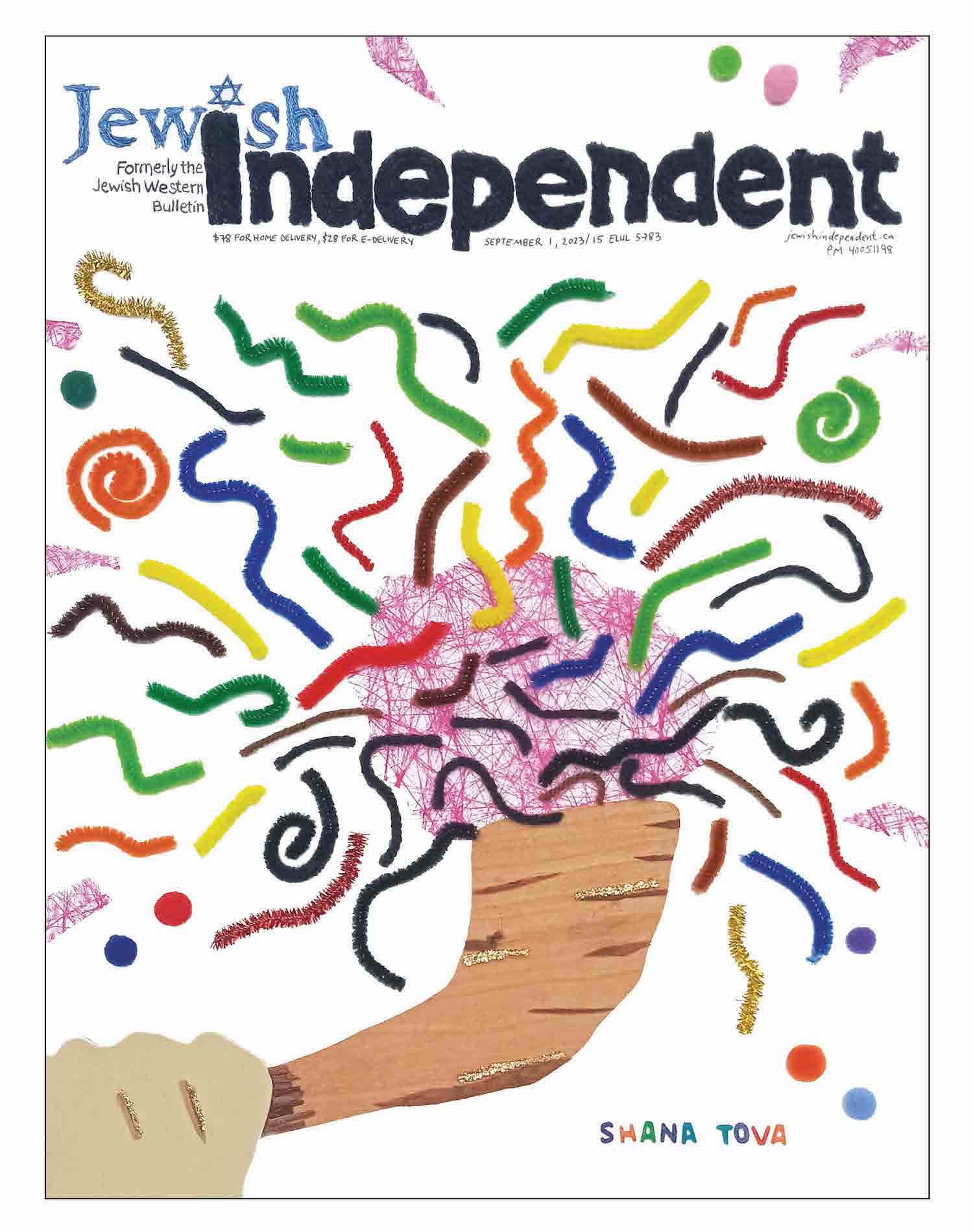
I spent hours online trying to find a suitable piece of art for this year’s Rosh Hashanah cover, then even more hours for what I might do myself. I really wanted to include a shofar in whatever I did, as a call to hope and action, for myself as much as anyone else.

I stumbled on artist Yitzchok Moully’s Elul Shofar Art Challenge (moullyart.com). Moully’s work is bright, colourful, full of life. As I mulled it over, I received an email from local artist Merle Linde, who generously created art for the JI ’s Passover cover this year and for last’s year Rosh Hashanah issue. She sent me an emotionally charged piece lamenting the countless trees that have been destroyed by wildfires. The base painting was an acrylic pour, and I spent several fun hours learning about and practising the technique, deciding it wasn’t quite what I wanted for my shofar blast.

I eventually came across creativejewishmom.com, the site that inspired my 2020 Passover cover depicting the Israelites (made of corks) crossing the Red Sea, who made a second appearance for Passover 2021, participating in Zoom seders. This time, it was a Tashlich picture made with yarn, coloured paper and felt marker that caught my eye on creativejewishmom.com. Inspired, I made the JI masthead out of yarn and ink, and created the shofar and the hand holding it – I wanted there to be a human presence, as we are critical to any change, for better or worse.

image - JI Rosh Hashanah 2023 coverThe middle section of the page eluded me for days, and I tried various things that just didn’t feel or look right. Thankfully, a middle-of-the-night couple of hours resulted in the finished cover, albeit with some tweaking in Photoshop. It ended up being more cheerful than I was intending. I am happily surprised at my latent optimism, and hope that readers also find it uplifting.

New recipes for a new year

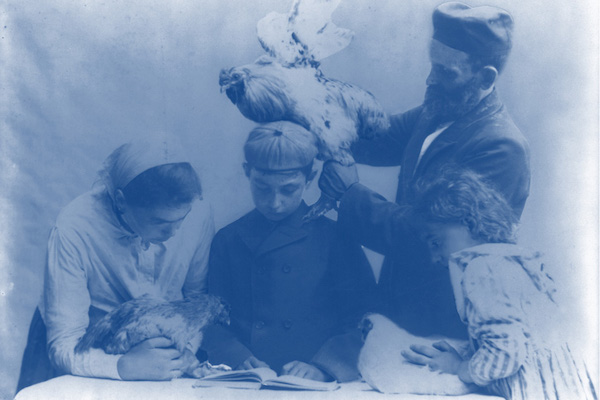
A family performs the kapparot ritual with two hens and a rooster, circa 1901. (photo from Library of Congress via brandeis.edu)

Whether or not the custom of eating chicken for a High Holiday meal arose from a desire to replace the ritual of kapparot, roast chicken is often served at the holiday table. Here are a few chicken recipes you might like to try this new year, as well as sweet potato sides and desserts made with pomegranates – another food with holiday symbolism. A coffee cake is always good to have on hand for visitors, or to help break the Yom Kippur fast.

ROAST HERBED CHICKEN

1 3-pound chicken
4 garlic cloves
2 bay leaves
3 tbsp melted unsalted pareve margarine
salt and pepper to taste
1/4 tsp thyme
1/4 tsp sage
1/4 tsp oregano
1/4 tsp marjoram
1/4 tsp basil

  1. Preheat oven to 425ºF. Grease a baking pan.
  2. Rinse and dry chicken. Rub skin with 1 cut garlic clove, then place it inside chicken with other cloves and bay leaves.
  3. In a bowl, mix margarine with salt, pepper, thyme, sage, oregano, marjoram and basil. Place 1 tablespoon inside chicken, tie legs together and place, breast side down, in baking pan. Brush the rest of the spiced mixture over the outside of the chicken. Bake 45 minutes. Turn it over and bake 40-45 minutes longer.

SIMPLEST ROAST CHICKEN

1 5-pound chicken
1 lemon cut in half
4 garlic cloves
4 tbsp unsalted pareve margarine
salt and pepper to taste
1 cup chicken soup, water or wine

  1. Preheat oven to 500ºF. Grease a roasting pan.
  2. Remove excess fat, neck, gizzards and liver. Combine lemon, garlic, margarine, salt and pepper in a bowl and stuff inside chicken.
  3. Place chicken breast side up in a baking pan with legs facing the back of the oven. Roast 10 minutes then move with a wooden spoon to keep it from sticking. Continue roasting 40-50 minutes.
  4. Tilt chicken to get juices into roasting pan. Remove chicken. Put juices in a pan, add soup, water or wine and bring to a boil. Reduce liquid by half. Serve sauce in a bowl or pour over chicken.

CHICKEN WITH DRESSING
(this was a favourite of my mother, z”l)

1 5-pound chicken
salt to taste
3/4 tsp ginger
1 sliced onion
1/2 cup celery
your favourite stuffing
3/4 cup boiling water
4-6 sliced potatoes

  1. Preheat oven to 400ºF. Grease a roasting pan.
  2. Sprinkle chicken cavity with salt and ginger. Place in roasting pan. Stuff with your favourite stuffing. Add onion and celery. Roast 20 minutes.
  3. Reduce temperature to 350ºF and bake 20 minutes more. Add boiling water and potatoes and continue baking 1 1/2 hours more.

MY MOM’S (Z”L) CANDIED SWEET POTATOES

8 sweet potatoes
1/4 cup brown sugar
1 tsp cinnamon
1/2 cup crushed nuts (optional)
2 tbsp margarine
2 tbsp non-dairy creamer
2 tbsp orange juice

  1. Preheat oven to 350ºF. Grease a casserole dish.
  2. Boil sweet potatoes in water until soft. Remove, cool and peel. Place in a bowl and mash.
  3. Add brown sugar, cinnamon, nuts, margarine, non-dairy creamer and orange juice. Spoon into greased casserole and bake 30-45 minutes.

MY SABRA SWEET POTATOES

6 oranges
1/4 cup Sabra liqueur
6 tbsp margarine
2 tbsp brown sugar
1/4 tsp nutmeg
4 cooked, peeled, smashed sweet potatoes

  1. Preheat oven to 350ºF. Grease a casserole dish.
  2. Cut oranges in half and scoop out pulp.
  3. Place mashed sweet potatoes in a mixing bowl.
  4. In a saucepan, combine Sabra, margarine, brown sugar and nutmeg. Simmer for three minutes. Pour over sweet potatoes.
  5. Spoon potatoes and sauce into orange halves. Bake 30 minutes.

APPLE-POMEGRANATE COBBLER
(This recipe is adapted from a Food & Wine recipe)

2 cups pomegranate juice
6 peeled, halved, cored, sliced 1/2-inch thick apples
1 cup sugar
2 1/4 cups flour
kosher salt
2 tsp baking powder
1 stick cold unsalted butter, cut into small pieces, or 1/2 cup unsalted pareve margarine
1 cup cold heavy cream or pareve cream
pomegranate seeds
pareve vanilla ice cream

  1. Preheat oven to 375ºF. Place an eight-by-eight glass baking dish on a foil-lined rimmed baking sheet.
  2. In a small saucepan, bring pomegranate juice to a boil over high heat, reduce to 1/3 cup (approximately 15 minutes). Pour into a bowl. Fold in apple slices, 3/4 cup sugar, 1/4 cup flour and 1/2 tsp salt. Put into baking dish.
  3. In a bowl, whisk 2 cups flour, 1/4 cup sugar, baking powder and 1/2 tsp salt. Add butter or margarine and cut until mixture resembles coarse crumbs. Stir in 1 cup cream.
  4. Gather topping and scatter over apple filling. Brush top with cream, sprinkle with sugar. Bake 60-70 minutes or until filling is bubbling and topping is golden. If crust is browning, tent with foil.
  5. Let cool for 20 minutes. Sprinkle with pomegranate seeds. Top with vanilla ice cream.

POMEGRANATE ICE
(makes 5 cups)

8-10 seeded pomegranates
3-4 tbsp lemon juice
1 1/2 tsp grated lemon peel
3/4 cup sugar

  1. Whirl pomegranate seeds in blender. Strain and save liquid for 4 cups.
  2. Add lemon juice, lemon peel and sugar. Pour into a metal pan and cover with foil. Freeze 8 hours. Remove and break into chunks. Blend into slush. Refreeze until firm.

SOUR CREAM COFFEE CAKE

3 cups flour
1 1/2 cups sugar
1 1/2 tsp baking soda
1 1/2 tsp baking powder
salt to taste
3/4 cup butter or margarine, melted
1 1/2 cups sour cream
3 eggs
1 1/2 tsp vanilla
1/2 cup chopped nuts
2 tbsp sugar
1 tbsp cinnamon
1/4 cup chopped nuts

  1. Preheat over to 350ºF. Grease a baking pan.
  2. In a mixing bowl, mix flour, sugar, baking soda, baking powder and salt.
  3. Add butter or margarine, sour cream, eggs and vanilla and mix.
  4. Add nuts and blend well. Pour half into baking pan.
  5. In a bowl, mix sugar, cinnamon and nuts. Pour over batter. Add rest of batter. Bake 1 hour.

QUICK CRUMB COFFEE CAKE

2 1/4 cups flour
3 tsp baking powder
salt to taste
1 cup sugar
6 tbsp unsalted margarine, melted
1 egg
3/4 cup milk
1 1/2 tsp vanilla
1/2 cup brown sugar
2 tbsp flour
2 tsp cinnamon
2 tbsp crumbled margarine
1/2 cup chopped nuts

  1. Preheat oven to 350ºF. Grease a baking pan.
  2. In a mixing bowl, blend flour, baking powder and salt. Add sugar, margarine, egg, milk and vanilla and blend well.
  3. Spread batter on bottom of greased baking pan.
  4. In a small bowl, combine brown sugar, flour, cinnamon, margarine and chopped nuts. Sprinkle on top of batter. Bake 30 minutes or until a toothpick inserted in the centre comes out clean.

Sybil Kaplan is a Jerusalem-based journalist and author. She has edited/compiled nine kosher cookbooks and is a food writer for North American Jewish publications. She leads walks of the Jewish food market, Machaneh Yehudah, in English.

Teshuvah: a guide to repentance

Twelfth-century Jewish thinker Moses Maimonides described the sound of the shofar at Rosh Hashanah as a wake-up call for the soul. (photo from flickr.com/photos/gsankary)

The sound of the shofar at Rosh Hashanah, the great 12th-century Jewish thinker Moses Maimonides wrote, is a wake-up call for the soul. Its message: “Arise from your slumber! Search your ways and return in teshuvah and remember your Creator!”

Teshuvah is the central theme of the time between Rosh Hashanah and Yom Kippur, known collectively as the Ten Days of Teshuvah. Typically, teshuvah is translated from the Hebrew as repentance, but it literally means return, as if turning back to something you’ve strayed or looked away from. But that begs the question: return to what? Depending on the time and place, there have been different answers – God, a state of moral purity, the Jewish people and Israel.

The Jewish Experience at Brandeis University asked Near Eastern and Judaic studies professor Yehudah Mirsky about the history of teshuvah. Mirsky, who is also a faculty member of the Schusterman Centre for Israel Studies, is the author of Rav Kook: Mystic in a Time of Revolution (Yale University Press).

Ancient Teshuvah

The Hebrew Bible sees teshuvah as principally a return to God. “Come, let us return to the Lord,” the prophet Hoshea (14:2) tells the people of Israel.

In Psalm 51, King David seeks teshuvah for committing adultery with Bathsheba. Importantly, David’s confession is addressed to God because, as he says, “Against You alone have I sinned.”

Traditional rabbinical commentators have interpreted this to mean that teshuvah requires confessing your sins to God. Part of achieving intimacy with Him involves His knowing your sins. And only in that way can you return to Him.

Talmudic teshuvah

For centuries after the destruction by Rome in 70 CE of Jerusalem’s ancient temple, where Jews would say confession and offer sacrifices for atonement, the rabbis reworked biblical ideas and practices of teshuvah into a roadmap for spiritual and moral growth.

In the Mishnah and the Talmud, the vast collections of law, theology, interpretation, folklore and more compiled roughly between 200 and 500 CE, they called for introspection, changing one’s ways, and asking others for forgiveness.

This line of thinking reached its apotheosis in Maimonides’ Hilkhot Teshuvah (The Laws of Return). He placed confession and regret at the centre of repentance so that teshuvah, according to Mirsky, became a process of “moral and spiritual self-cultivation and self-education.”

Teshuvah was no mechanical act. It had to involve genuine contrition and the individual becoming a better person. In addition to being a scholar, philosopher, jurist and communal leader, Maimonides was also a physician.

“One senses his medical sensibility was at work here, too,” said Mirsky. “Transgression sickened the soul and teshuvah is the cure, a return to full spiritual and moral health.”

Cosmic teshuvah

Already during the talmudic period, rabbis had begun talking about teshuvah as a spiritual energy flowing through the universe that was created by God when He made the earth.

The medieval mystics who wrote the great texts of the kabbalah took this even further. They said teshuvah comes not only from inside the individual but is also a dynamic force all around us. To repent, you tap into it. As Mirsky put it, “You catch the wave.”

In the 13th-century Zohar, the foundational work of Jewish mysticism, teshuvah became a way of repairing a rupture or tear in the spiritual fabric of the universe. When the varying energies at work in the world – justice and mercy, male and female, tradition and change – go out of whack, teshuvah helps to rebalance them. In other mystical texts, return is seen as a kind of rebirth and the achievement of the soul’s deepest freedom.

Some 300 years later, Rabbi Isaac Luria, the great mystic of Safed in northern Israel, famously connected teshuvah with tikkun olam (healing the world). Through teshuvah, Jews perfect God’s work, helping usher in the Messianic Age.

For Luria, this largely meant a kind of spiritual healing. But, over time, and especially in the last century, Jews have begun to connect this to ideas of social justice, adding another layer of interpretation to Jewish messianic ideals.

Teshuvah and Israel

In Mirsky’s view, the Zionist movement secularized and redefined teshuvah.

Political passivity, which the rabbis thought was anathema to the survival of the Jewish people, was now considered a sin. Repenting involved identifying with the nationalist yearnings of the Jewish people for a homeland. In this way, teshuvah returned Jews in the diaspora to Israel, and the Jews as a whole to a more vital sense of group identity.

Kook’s teshuvah

Past and present interpretations of teshuvah came together in the work of Abraham Isaac Kook, the first Ashkenazi chief rabbi of modern Palestine and the leading thinker of religious Zionism. To him, all existence is rooted in God and seeks to return to God. That return takes the form of religious practice, social and ethical commitment, art and culture – everything we consciously do to make the world better for the Jewish people and ultimately all of humanity. And, all of these elements – the ritual and ethical, material and intellectual, the Jewish and universal – all need one another to do God’s work in the world. (For more on Kook, see Mirsky’s book.)

American teshuvah

Teshuvah in the United States reflects the inescapable individualism of American life. The great American Jewish thinker Abraham Joshua Heschel linked teshuvah to the nation’s ethos of spiritual growth and renewal. He wrote:

“The sense of inadequacy ought to be at the very centre of the day [Yom Kippur].…  To put contrition another way, develop a sense of embarrassment.… We have no answer to ultimate problems. We really don’t know. In this not knowing, in this sense of embarrassment, lies the key to opening the wells of creativity.

One belief all Jewish thinkers share about teshuvah – the process only begins during the High Holidays. It’s afterward when the real work begins.

For more on teshuvah during the Middle Ages, see Mirsky’s article, “How a lover of wisdom returns” in Sources Journal (sourcesjournal.org/articles/how-a-lover-of-wisdom-returns).

– from the Jewish Experience / Brandeis University

Shattering complacency

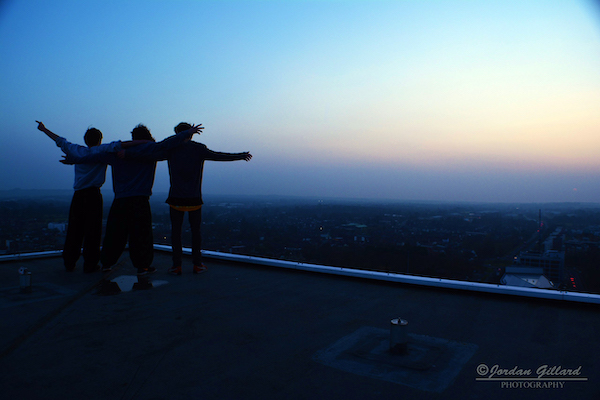
The existential themes of the High Holidays are meant to create a sensitivity and appreciation of the precious significance of everyday existence. (Jordan Gillard Photography)

The themes of death and the “thinness” of human existence recur in the liturgy of Rosh Hashanah and Yom Kippur and during the entire period, beginning with the month of Elul. This is not because of a morbid desire to undermine human confidence and autonomy or to shock us into fearing God out of a sense of helplessness and sin. The existential themes of the High Holidays are meant to create a sensitivity and appreciation of the precious significance of everyday existence.

Existentialists spoke about confronting one’s mortality as a necessary condition for achieving human authenticity. Although a preoccupation with death can create nihilism and a paralyzing sense of the futility of human initiative, nevertheless, the Jewish tradition believed that the themes of human mortality and finitude could be integrated into a constructive and life-affirming vision of life.

The language of the Rosh Hashanah and Yom Kippur prayers, such as the explicit enumeration of the different ways that a human life can be destroyed, is not meant to terrorize us into self-negating submission. The stark, evocative imagery of the liturgy is aimed primarily at shattering complacency. The impact of this experience can be life-affirming insofar as it serves as a catalyst in a process of self-creation and moral renewal.

Focusing on human mortality and the contingencies that wreak havoc upon human lives heightens our sensitivity to the deadening effects of habit and routine. People often deceive themselves into believing that they can successfully defer living the kind of lives they consider worthwhile until some future time. While not questioning the importance of reflecting on the meaning of one’s life, they believe they can postpone dealing with this issue.

“Why become confused and troubled by the meaning of my life now? I can deal with it later, when I retire, when economic realities are more favourable, when I will be free of parental responsibilities.…” This attitude is naïve and self-deceptive because it ignores the real consequences of present patterns of behaviour and learning that can weaken and that ultimately extinguishes one’s natural capacity to live life deeply and seriously.

Another theme of Yom Kippur, teshuvah, is expressed in the call to return, to renew, to re-create one’s self, and in the appeal for divine forgiveness and atonement, in the recitation of “for the sin we have sinned …” and other confessional sections of the liturgy. The essence of teshuvah – the crucial principle without which this concept would be empty of meaning – is the belief that the past need not define the future. A person can break the causal chain of habit and defy the seeming necessity of repetition that suffocates spontaneity and the joy of life.

The call to teshuvah, therefore, is expressed not only in the plea to God for forgiveness and in the affirmation of God’s gracious love and reluctance to mete out punishment and retribution, but also, and most poignantly, in the repeated attempts at convincing the individual to believe in the possibility of change. The personal significance of Yom Kippur ultimately turns on the individual’s ability to believe that his or her life can be different. The major obstacle to teshuvah is not whether God will forgive us but whether we can forgive ourselves – whether we can believe in our own ability to change the direction of our lives, even minimally.

Teshuvah is grounded in the idea of an open future, in the belief that the possibilities for human change have not been exhausted, that the final chapters of our personal narratives have not yet been written. The sense of empowerment felt on Yom Kippur reflects an underlying faith in the power of the human will to break the fixed cycles of the past and to chart new possibilities for the future.

Many scholars who take issue with translating God’s name, ehyeh asher ehyeh, which was revealed to Moses at the burning bush as “I am that I am,” insist on emphasizing the future orientation of the verb ehyeh, “I will be.” For many, the Jewish concept of God must convey the idea of newness – of new spiritual possibilities in the future, of new ways of understanding and of relating to God. To sense the presence of God in one’s life is to believe in the possibility of radical surprise and of genuine human change.

Communal forms of worship must not be allowed to degenerate into automated, mind-numbing exercises in herd conformity. Our rabbis taught that, although Jews stood as a people at Mt. Sinai, each individual personally appropriated the word of God. We must not be intimidated by the High Holiday prayer book. Although we share a common liturgy, we must be capable of appropriating its significance in terms of our individual lives and concerns. Rosh Hashanah and Yom Kippur challenge us to discover the meaning of personal authenticity and self-renewal within the context of community.

Rabbi Prof. David Hartman (1931-2013) was founder of the Shalom Hartman Institute. This article was first published in September 2009. Articles by Hartman, z”l, and other institute scholars can be found at shalomhartman.org.

Rosh Hashanah table talk

In his diaries, Franz Kafka reflected that our not knowing “the real highway” we’re on means that “we drift in doubt. But, also in an unbelievable, beautiful diversity. Thus, the accomplishment of hopes remains an always unexpected miracle.” (photo from Piotr Malecki)

The Chassidic Rebbe Haim of Tzanz told this parable: A person had been wandering about in the forest for several days, unable to find a way out. Finally, in the distance, he saw another person approaching him, and his heart filled with joy. He thought to himself: “Now, surely, I shall find a way out of the forest.” When they neared each other, he asked the other person, “Brother, will you please tell me the way out of the forest?”

The other replied: “Brother, I also do not know the way out, for I, too, have been wandering about here for many days. But, this much I can tell you. Do not go the way I have gone, for I know that is not the way. Now come, let us search for the way out together.” (Adapted from S.Y. Agnon, The Days of Awe)

Perhaps this is a story to read at your Rosh Hashanah table, to start a discussion about your – and your guests’ – hopes for new direction in life. Think about a new path you would like to explore this coming year, or let others know about an old path you have tried that they might best avoid.

In his diaries, Franz Kafka, the 20th-century Czech Jewish writer, reflected on the difficulty of finding our way and yet our eternal hope:

“If we knew we were on the right road, having to leave it would mean endless despair. But we are on a road that only leads to a second one and then to a third one and so forth. And the real highway will not be sighted for a long, long time, perhaps never. So, we drift in doubt. But, also in an unbelievable, beautiful diversity. Thus, the accomplishment of hopes remains an always unexpected miracle. But, in compensation, the miracle remains forever possible.”

The poet and Bible scholar Joel Rosenberg speaks of Rosh Hashanah as a homecoming, rather than as journeying:

“The Hebrew word for year – shana – means change. But its sense is two-fold: on the one hand, change of cycle, repetition (Hebrew, l’shanot, reiterate, from sh’naim, two), but, on the other hand, it means difference (as in the [the Pesach seder when we ask] mah nishtana? How is this night different?) We are the same, we are different. We repeat, we learn, we recapitulate. We encounter something new. ‘Shana tova!’ means, ‘Have a good change!’”

And yet, how familiar is this time! The chant, the faces, the dressed-up mood, the calling on the same God, the words, the blessings, the bread, the apples, the honey, the wine – all are the same, and yet completely new. We meet ourselves again and for the first time.

A year that begins anew is also the fruit of the year that preceded. Good or bad, it has made us wiser. It will not constrain us. We choose from it what we want and need like gifts we brought from journeys. Rosh Hashanah is always like coming home – just as Pesach was always going on a journey.

“How do we find our Divine Parent who is in Heaven? How do we find our Parent who is in Heaven? By good deeds and the study of Torah.

“How does the Blessed Holy One find us – through love, through brotherhood, through respect, through companionship, through truth, through peace, through bending the knee, through humility, through more study, through less commerce, through the personal service to our teachers, through discussion among the students, through a good heart, through decency, through No that is really No, and through Yes that is really Yes.” (Midrash Seder Eliyahu Rabbah 23)

Noam Zion is a senior fellow emeritus of the Kogod Research Centre at the Shalom Hartman Institute. He has developed study guides on Bible, holidays and rabbinic ethics. His publications and worldwide lectures have focused on “homemade Judaism” – empowering families to create their own pluralistic Judaism. This article was originally published in 2014; it is adapted from his Rosh Hashanah seder. Articles by Zion and other Hartman Institute scholars can be found at shalomhartman.org.