Train as peer support

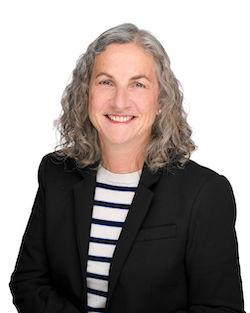
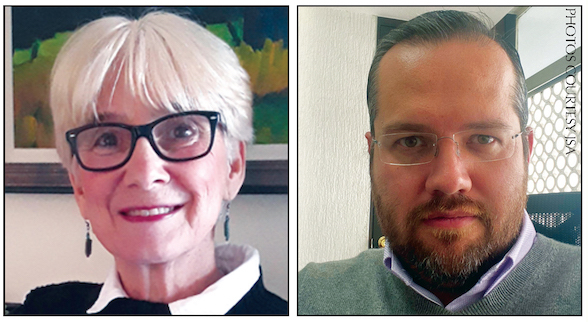
Grace Hann, Jewish Seniors Alliance senior peer support services trainer and supervisor, and co-trainer Miguel Méndez. (photos from JSA)

For a senior experiencing loss, isolation, health challenges, a change in housing or other stressors, knowing that someone cares can make a world of difference. Jewish Seniors Alliance’s Peer Support Services trains people aged 55+ to be that someone – seniors helping seniors.

JSA offers at least two peer support training sessions a year, and the next one begins Sept. 20. The training, conducted over Zoom, is free. It comprises 11 sessions, or 44 hours. Participants will learn active listening and other communication skills, how to set boundaries, about aging and the health issues that can accompany it, about available community resources, and more. Upon successfully completing the course, volunteers (who are required to pass a criminal records check) will receive a certificate from Senior Peer Counseling of B.C. and be matched with a senior in the community.

The Jewish Independent spoke with Grace Hann, JSA senior peer support services trainer and supervisor, and co-trainer Miguel Méndez about the program.

JI: When did the peer support program start, and how has its effectiveness been measured?

JSA: The peer support program started in 2011, inspired by [JSA president emeritus] Serge Haber’s vision to support vulnerable seniors in the community. We gauge the program’s effectiveness through detailed statistical analysis. This includes client satisfaction surveys administered after six months, then again after one year, and annually thereafter.

JI: What qualities do your most successful volunteers possess?

JSA: Key qualities for a thriving volunteer-client relationship are empathy, patience and compassion. It’s also crucial for volunteers to be receptive to new ideas during training, which enhances their understanding of the challenges many seniors face.

JI: What is the biggest challenge you face while training volunteers?

JSA: Most volunteers join our training eager to learn and contribute. The training refines their listening skills, helps them establish healthy boundaries, and fosters an understanding of underlying issues many seniors confront, such as grief, loss, and the challenges of connecting with new communities.

JI: What surprises you most about your day-to-day work?

JSA: We’re continually surprised by the deficiencies in our medical and social support system. Many case managers from various health units emphasize their shortage of time and personnel to provide adequate emotional support for seniors. Heart-wrenching sentiments from vulnerable seniors, like “I no longer matter in society” or “My friends have all died,” often resonate with us.

JI: What are the most significant changes you have noticed in the needs of seniors over the last five years?

JSA: There’s a growing mental health support gap for seniors. Many are grappling with conditions like anxiety and depression. At JSA, we receive increased requests from professionals seeking support for such individuals.

However, our volunteers are not mental health experts. While we acknowledge the need, we must be cognizant of our role and limits as volunteers. Additionally, many seniors are anxious due to rising housing and grocery costs, severely affecting those with limited incomes.

JI: How has your training program adapted post-COVID?

JSA: During the pandemic, we transitioned our training to a digital platform, Zoom, allowing many seniors to engage without leaving their homes. We’ve maintained this digital approach, which now attracts participants from a broader geographical range.

JI: Is there a piece of advice or aspect of training that you consider most impactful to your volunteers?

JSA: Role-playing is an exceptionally effective tool. It elicits profound feelings and introspection, heightening volunteers’ empathy and allowing them to better understand others’ experiences. Since our training is experiential, volunteers gain by sharing their own wisdom and experiences.

JI: Anything else you’d like to add?

JSA: Conducting initial client intakes can be deeply emotional. For instance, a recent case involved a 91-year-old woman, previously independent, whose life altered drastically after a spine fracture from a fall. With no family and deceased friends, she faced a significant emotional void. While we can’t mend her physical injuries, we can offer invaluable emotional support, offering hope and the comfort of knowing someone cares. This not only benefits her but also gives our volunteers a sense of purpose and the gratifying feeling that comes from assisting others.

If you’re interested in joining JSA’s peer support team, call 604-267-1555 or email grace.hann@jsalliance.org or miguel.mendez@jsalliance.org. More information at jsalliance.org.

Alisa Dressler is a fourth-year student at Queen’s University in Kingston, Ont. She is an avid reader and writer, and the online director of the arts and culture publication MUSE Magazine. Bressler is a member of the Vancouver Jewish community, and the inaugural Baila Lazarus Jewish Journalism Intern.
CJPAC bridges engagement

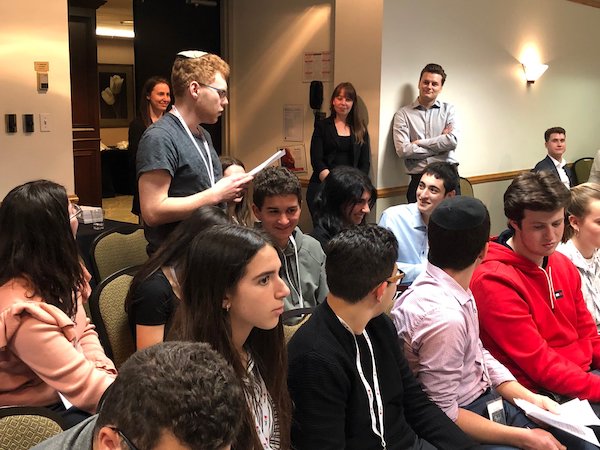
Avishai Infeld speaking during a mock question period at CJPAC’s Generation: Student Leaders Program. (photo from CJPAC)

When it comes to making a mark in Canadian politics, waiting for elections is a thing of the past. The Canadian Jewish Political Affairs Committee (CJPAC) is a bridge to meaningful political engagement, and the year 5784 is a perfect opportunity to jump in.

For Vancouverite Avishai Infeld, CJPAC kindled his political curiosity. “CJPAC ignited the spark of political interest that I long had,” he said.

Drawing from his participation in several CJPAC programs, Infeld added, “It showed me just how accessible yet valuable political engagement can be.”

CJPAC is a national, independent, multi-partisan organization with offices in British Columbia, Ontario and Quebec. It is committed to involving Jewish and pro-Israel Canadians in the democratic process.

“When you think ‘CJPAC,’ think volunteering and campaigning,” said Kara Mintzberg, CJPAC’s director for the B.C. region. “During elections, we’re like a political concierge. We help connect community members to candidates and campaigns of their choice.”

Yet, CJPAC’s role extends beyond elections, building relationships between politicians and the community year-round. The nonprofit also molds Canada’s future political leaders through innovative, hands-on programs.

Sarah Warsh, a product of CJPAC’s national Generation: Student Leaders Program, speaks highly of its transformative impact. “Growing up in Nanaimo, B.C., connecting with CJPAC was an invaluable experience,” she said.

Tailored for Jewish students in grades 10 through 12, the program features regular virtual and in-person sessions, cultivating political knowledge and skills. “Generation was the turnkey that immersed me into politics, multi-partisanship and the Jewish community,” said Warsh, who went on to participate in CJPAC’s flagship Fellowship Program for post-secondary students, where, each year, CJPAC equips 50 of Canada’s top, pro-Israel, politically engaged students with the tools to win campaigns.

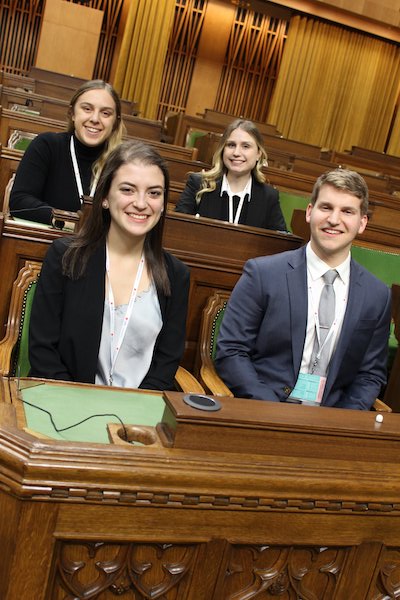
photo - Sarah Warsh (top left) in the House of Commons while participating in CJPAC’s Fellowship Program
Sarah Warsh (top left) in the House of Commons while participating in CJPAC’s Fellowship Program. (photo from CJPAC)

Since 2006, more than 500 of Canada’s brightest have graduated from the Fellowship Program, with more than one-third assuming roles in political offices across the country, including Warsh. She credited CJPAC for jumpstarting her career in a national political party, a federal political leader’s office and a premier’s office. “The decision to get involved with CJPAC was one of the best I’ve made,” she said.

Both programs send participants to Ottawa for multiple days to meet with politicians, strategists and staffers.

“Thanks to everything I gained from CJPAC,” said Infeld, “I have volunteered on campaigns in Canada, served on an MP’s youth council, and now work as the Hillel Montreal advocacy coordinator.”

For those acquainted with politically inclined students in high school or post-secondary education, applications for CJPAC’s Fellowship Program close Sept. 12, while the Generation program applications are due by Oct. 6.

But, even if you’re not a student or don’t know one, there’s still a chance to engage – attend CJPAC’s inaugural B.C. ACTION Party. Save the date for May 16, 2024, and get ready to celebrate political engagement with Jewish and political communities.

To learn more, visit cjpac.ca. For specific inquires, reach out to Mintzberg by email (kmintzberg@cjpac.ca) or phone (604-343-4126).

– Courtesy CJPAC

The traveling Hebrew school

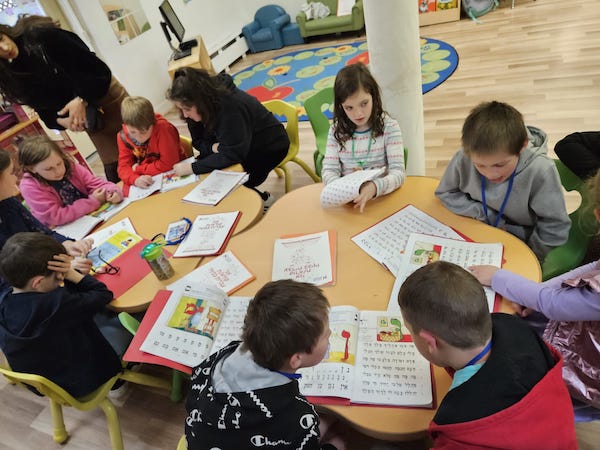
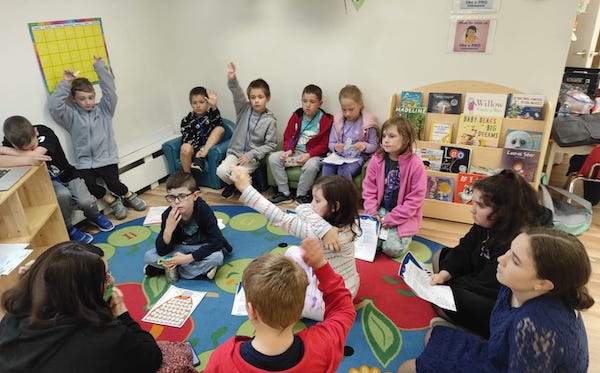
B.C. Regional Hebrew Schools currently serves more than 120 children – in Langley, Port Coquitlam, Vancouver and Whistler/Squamish. (photo from B.C. Regional Hebrew Schools)

It’s late Monday evening when Rabbi Dovid Rosenfeld loads a half dozen plastic containers of canvases, crayons, crafts and children’s Hebrew workbooks into his minivan. As directors of British Columbia Regional Hebrew Schools, he and his wife Chaya make the two-hour-long commute between Vancouver and Whistler every week so that Hebrew school parents don’t have to. “We’re the only ones crazy enough to do this,” he laughed.

When Erin Silverstein moved to Whistler from Ontario a few years ago with three children under 10, the village boasted one of North America’s largest ski resorts, glacier-capped peaks and exceptional mountain biking trails – but no Jewish community.

“Our biggest concern was that there weren’t other Jewish families and our children wouldn’t receive a Jewish education,” Silverstein said.

With Vancouver’s skyrocketing cost of living, many families have moved far beyond the city limits to small towns and suburbs. While running a summer camp and Hebrew school for Chabad Lubavitch of British Columbia in Vancouver, Rabbi Rosenfeld met families who’d left the city but returned for camp each year.

“They’d ask me, What can we do for a bat mitzvah? How can we keep our children Jewishly engaged?” he said. “Jewish families kept moving to the outlying areas but lacked access to basic Jewish resources.”

Then, in 2018, the Rosenfelds met a former Hebrew school teacher from Langley, some 50 kilometres southeast of Vancouver, and offered to fill the vacancy she left at a weekly Hebrew program for 18 local children. When the rabbi walked into the Langley program sporting a beard and a fedora, three families walked out. Six months later, they were all back.

“I think those families who stayed saw their children having positive Jewish experiences, making Jewish friends, and connecting to their traditions; they must have passed on the message,” Rabbi Rosenfeld said.

Dovid and Chaya Rosenfeld and an ever-expanding team of teachers and volunteers pack up the B.C. Regional Hebrew Schools program week after week and bring it to rented classrooms in remote communities.

“At every location, there are dozens of moving parts to keep in mind,” Chaya Rosenfeld said. “It’s immensely gratifying when the program comes together.”

photo - Rabbi Dovid and Chaya Rosenfeld and an ever-expanding team of teachers and volunteers pack up the B.C. Regional Hebrew Schools program week after week and bring it to rented classrooms in remote communities
Rabbi Dovid and Chaya Rosenfeld and an ever-expanding team of teachers and volunteers pack up the B.C. Regional Hebrew Schools program week after week and bring it to rented classrooms in remote communities.(photo from B.C. Regional Hebrew Schools)

Today, their traveling classroom serves 25 children in Langley, 50 children in Port Coquitlam, 25 children in central Vancouver and 22 children in Whistler and neighbouring Squamish – more than 120 children in all. Chaya Rosenfeld has often found that Jewish families who had lived alongside one another for years met for the first time when their children joined Hebrew school.

“There had never been any centre for the Jewish community in these towns, so we saw whole communities come together for the first time,” she said. Within three years of opening their program in Port Coquitlam, the parents and grandparents they’d met there asked for a permanent home for their community.

In November 2022, Rabbi Mottel and Nechama Gurevitz opened Chabad of Coquitlam to serve the growing community. “It started with Hebrew school, but it’s become a real community,” Rabbi Gurevitz said. Already, the couple hosts Shabbat meals for 40 local Jews and a weekly Torah class alongside the Hebrew school.

Since the opening of the Whistler location, a group of parents has asked Rabbi Rosenfeld for a weekly Torah class of their own, and many are eager to volunteer, creating a centre of Jewish community life in the once-Jewishly-isolated town.

The parent body is as diverse as Canadian Jewry at all four locations. Yet, they share a common desire to share elements of their Jewish identity with the next generation.

“We were so excited when the Hebrew school opened here,” said Julie Persofsky, whose three children attended the Whistler location this past year. “All of a sudden, our kids are getting a Jewish education alongside peers their age; it’s been wonderful.”

Like other parents here, Persofsky is delighted to see her children look forward to Hebrew school, learn Hebrew and deepen their Jewish knowledge. “It’s incredible to see them come home with crafts they’ve made, and they’re able to share their own ideas when we practise our Jewish traditions,” she said. “At the seder table this year, they all used seder plates they made in school – that was meaningful for them.”

Dan Anolik, who moved to Squamish with his wife and young daughter shortly before the 2022-2023 school year, is grateful that his child has Jewish friends.

“Moving here was tough for my daughter,” he said. “She didn’t know other Jewish kids here; she felt like the only Jew in town. When she first stepped into the Hebrew school classroom, she saw the morah teaching and doing crafts, it looked familiar, and it was like a load came off her. She jumped right in, and all three of us shed a little tear of joy.”

Moments like these make supporting B.C. Regional Hebrew Schools a source of pride for Vancouver-based philanthropist Steven Silber, a trustee of the Arnold and Anita Silber Family Foundation. “When you see the children’s faces when they’re in their classrooms, you realize it’s a blessing everyone should get to experience,” said Silber.

To find out more about B.C. Regional Hebrew Schools or to become a supporter, contact Rabbi Dovid and Chaya Rosenfeld at info@lubavitchbc.com or 604-266-1313.

– Courtesy B.C. Regional Hebrew Schools

Volunteer from your home

Looking for a new mitzvah to take on, while making a difference in the lives of Israeli teens? Consider joining Israel Connect, a program where local adult volunteers connect, one-on-one via Zoom, with Israeli high school students who want to improve their English conversation and reading skills. The program starts on Oct. 15 and is organized by Chabad Richmond, in partnership with the Israeli Ministry of Education. It entails a commitment of 60 minutes once a week.

There are currently 24 local volunteers participating in Israel Connect as tutors/mentors, and Chabad Richmond is looking to increase that number, since the need in Israel continues to grow.

“We’re looking for volunteer retirees, seniors or any adults who have some free time to join the Israel Connect program. No previous tutoring or teaching experience is necessary and the curriculum is provided,” said Shelley Civkin, local program coordinator. “If you’re an adult fluent English speaker, you have basic computer skills, and you own a computer with a camera, that’s all you need.”

Volunteers do not need to speak Hebrew and can tutor from home. Basic training and technical support are available. Time preferences of volunteer tutors/mentors will be coordinated beforehand and sessions take place in the morning between 7 and 11 a.m. Vancouver time, any day between Sunday to Thursday.

“Israel Connect asks for a minimum commitment of one school year, in order to ensure consistency for the students,” said Civkin.

“It’s a very practical way for community members to support Israel and build bridges between diaspora Jews and Israelis,” said Rabbi Yechiel Baitelman of Chabad Richmond. “You’ll be doing a mitzvah, while investing in Israel and its young people. Plus, proficiency in English will give them an advantage in accessing post-secondary education and getting better jobs.”

Israel Connect is one of the largest external providers of services to Israel’s Ministry of Education, slowly removing the most significant barrier to social and economic mobility. Partnering with the Israeli Ministry of Education, the program targets teens from less advantaged neighbourhoods in Israel.

“Most volunteers really enjoy helping their Israeli students and develop a lasting bond with them. It often goes beyond simply tutoring the curriculum, and turns into friendship and mentorship,” said Civkin. “This kind of one-on-one tutoring makes a huge difference in their lives, both educationally and personally. It gives them a feeling of confidence that they can converse in English without being judged or marked. It’s incredibly satisfying to know that you’re doing something concrete to help Israeli students better their lives.”

The curriculum consists mainly of a tour of Israel, focusing on the wealth of historical, cultural and biblically significant cities and sites. It’s not uncommon for both the students and the tutors to learn something new about Israel at each lesson.

Civkin said several tutors have visited their students on trips to Israel and keep in touch beyond the school year. “Life is all about building relationships and Israel Connect is the perfect way to do that,” she said.

To volunteer, or for more information, contact Civkin at 604-789-5806 or civie1956@gmail.com. For anyone who can’t participate as a tutor, Chabad Richmond welcomes financial support for Israel Connect, which covers overhead costs like technical support, staffing and other administrative costs. To support the program, call Chabad Richmond at 604-277-6427 or email admin@chabadrichmond.com.

– Courtesy Chabad Richmond

CIJA takes campaign public

I love the High Holidays and the opportunity they present to get together with extended family, to visit with friends and to reach out to colleagues. In addition to the special foods of the season, it’s a time to remember what is important, and what we need to acknowledge and reject from the past year. It’s also a chance to pause to consider how to find the path we really want to follow, to figure out what we need to make our lives safer, calmer, more balanced. To make our lives – and our families’ lives – better.

photo - Judy Zelikovitz says CIJA’s Oct. 16-17 conference will be its “biggest effort ever to respond to antisemitism”
Judy Zelikovitz says CIJA’s Oct. 16-17 conference will be its “biggest effort ever to respond to antisemitism.” (photo from CIJA)

Whether we are part of large Jewish communities in Israel, the United States, Canada  or Europe, or part of small pockets of Jews anywhere around the world, our connections one to another have never been more important. Our support for our community’s values, for their protection, is strengthened by our connections to one another, and it is together that we will be effective in the vital fight against Jew-hatred, a scourge that’s grown significantly in Canada and around the world over the past few years.

In Israel, we’ve seen a shocking spike in 5783 in lone-wolf assaults against Israeli Jews, along with vile rhetoric and attacks by terrorist groups against the Jewish people. In Canada, still among the safest places anywhere, we are nevertheless living through a growth in online hate, threats to Jews and their neighbourhoods, and an alarming statistical rise in hate crime of all kinds against Jewish Canadians.

This growth in Jew-hatred has been the focus of much of the advocacy CIJA has undertaken in recent years and, this year, we are taking our national campaign public. On Oct. 16-17 in Ottawa, CIJA and the federations across Canada will host Antisemitism: Face It, Fight It, a two-day conference where we will confront the issue head-on.

We will “Face It.” We will learn from international and local experts about how they have addressed Jew-hatred and how we can advocate for legislation and other changes that will make our community safer. The second day, we will “Fight It,” speaking directly to our elected officials, ensuring they know the impact of antisemitism on our community, the effects of hate on all minorities, and its toxic effect on all Canadians. We will unite – with one another and with our partners – to fight antisemitism, and we will leave the conference better educated and better prepared to get this done.

Speakers will include Jews and non-Jews whose careers have been dedicated to combating antisemitism. We will hear what has worked, what has not, how to advocate for effective legislation, and how to equip our students and young leaders to take on this fight on campuses across Canada.

We will leave the conference secure in the knowledge that we are embarking on our biggest effort ever to respond to antisemitism. We will ensure Ottawa and other governments hear our call. We will amplify our voices, speaking as a united community and as one supported by allies across Canada.

Now is the time for us to show up, to speak up and to step up. Register now at fightit.ca.

I hope to see you in Ottawa and, in the meantime, over these High Holidays, I wish you a sweet, healthy and happy 5784. L’shana tova!

Judy Zelikovitz is vice-president, university and local partner services, at the Centre for Israel and Jewish Affairs.

Film is a tribute to Burquest

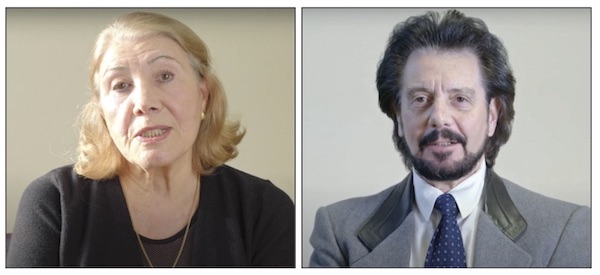
Zanna Linskaia and Rudy Rozanski were key in making the video Burquest Jewish Community: Past, Present, Future, which is available on YouTube. (screenshots)

Burquest Jewish Community, which serves people in the eastern suburbs of Vancouver, turns 50 next year. Whether that milestone is marked by a major celebration or not, a recently released video provides a permanent commemoration of the impact the group has had on individuals and Jewish life in the area. The film premièred at an event June 25.

Zanna Linskaia, a former Burquest board member and longtime force of nature in the community, had the idea of making a permanent, easily viewable history of the community and she got the support of the organization’s board. She recruited Rudy Rozanski, Burquest’s then-president, to work with her to get the project done.

They collected archival materials, old photos, newspaper clippings and historical artifacts, and identified people to interview on camera to help tell the story. A valuable find was video footage of Burquest members taken two decades ago by Jelena Fuks and longtime member and past president Dov Lank. They also hired filmmaker Lior Noyman.

Linskaia and Rozanski have several lifetimes of creative achievement between them.

“I was always a huge fan of Zanna,” Rozanski told the Independent. “I had the great honour to arrange a few of her songs and do some performances with her and so I knew she’s a composer, a writer, a poet … probably the most amazing woman I’ve ever known.”

In addition to all that, Linskaia, a journalist by background (she once wrote the Russian-language page in the Jewish Independent’s predecessor, the Jewish Western Bulletin) and a Coquitlam resident for two decades, retired in 2020 as a seniors outreach counselor for Jewish Family Services. Rozanski is a classical pianist and teacher, with a PhD in musicology. He has lived in Coquitlam for 30 years.

Through interviews with a host of longtime members – including two founding originals, Bill Gruenthal and Max Jacobson (who, sadly, died Aug. 18) – the video sets the stage by indicating how remote many suburban Jews felt from the geographic heart of the community half a century ago.

Gruenthal recalled reading the Jerusalem Post on the bus headed for Kootenay Loop those many decades ago and a fellow passenger leaned over to ask if he was “a member of the tribe.” It was Jacobson.

“Max and I have been friends ever since,” Gruenthal says in the film.

A few intrepid people plodded through the old Jewish phone book and called anyone who lived in Burnaby, New Westminster, Coquitlam and surrounding areas. A living room meeting was held in 1974, with a few more than a dozen attendees. A lawyer volunteered to shepherd the nascent group into legal existence and Jacobson became founding president.

A year later, they formed a supplementary school for kids in the community, and Burquest became a gathering place for holidays and simchas. But they were meeting mostly in private homes. They raised some money, with the support of the late Morris J. Wosk, the Diamond Foundation and other philanthropists, and hired an architect to design a purpose-built shul and community centre. But the plan wasn’t feasible and it was decided to buy an existing building instead. Gruenthal’s son-in-law was in the mortgage sector and helped the society purchase a Jehovah’s Witnesses building in Coquitlam that has served ever since as Burquest’s locus for Shabbat and holiday celebrations, classes, kids programs, seniors lunches and a raft of other activities. Visiting rabbis, including Rabbi Yosef Wosk, have led holiday services over the years. Cantor Steve Levin has been Burquest’s spiritual leader for more than two decades.

Current and past members speak in the video about the impact Burquest has had on them and their families.

“Some of the most emotional and connected experiences we had with Judaism were when we were at Burquest,” recalls Shelley Rivkin. Stewart Levitt talks about the number of intermarried families or families with converted members and how they were welcomed.

The film, Burquest Jewish Community: Past, Present, Future, is available on YouTube. The musical score is an original creation by Rozanski.

“I ended up improvising some of [the music] on the spot as we were editing and we went through the entire film and edited it scene by scene,” he said.

At the wine-and-cheese reception before the première screening, Rozanski performed the entire score, accompanied by Arnold Kobiliansky on violin.

“The music [in the film] gets cut up and only specific parts are used,” said Rozanski, “so we wanted to present the film music almost as a score, so they could hear the entire music as it unfolds … and then they would be able to recognize it in the film.”

The film project, a labour of love, was a major undertaking.

“We are not going to do a second film,” Linskaia said with a laugh.

“We both felt this was really important,” said Rozanski. “I realized immediately what an important gift this was to Burquest and to future generations. It really is our gift and we put our heart into this. We understand nothing is perfect, of course, but we really did our best with it.”

For Linskaia, the film is a tribute to the centrality of the community in her life.

“Burquest became my Jewish home,” she said.

Local teens in JCC Maccabis

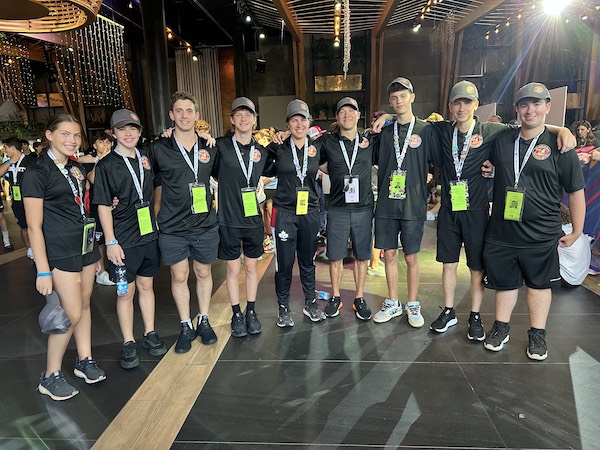
Team Vancouver getting ready for the parade of athletes at the opening ceremony in Israel. (photo from JCCGV) 

Twenty athletes and coaches represented Team Vancouver-Galil at two separate JCC Maccabi Games experiences this summer – in Israel and in Fort Lauderdale, Fla.

The games in Israel July 5-26 celebrated the first return to the Holy Land for JCC Maccabi since 2011. The 1,000-plus athletes spent their first eight days engaged in athletic competition along the Mediterranean coast, from Ra’anana to Haifa. After all the competitions were completed, the teens then hopped on buses for two weeks of touring the country with a sports lens.

Aside from the usual Israeli hot spots, the tour included stops at Kfar Maccabiah Hotel, which has a sports complex, rafting down the Jordan River, surf lessons and a mega party event sponsored by RootOne, which also provided significant subsidies for the visiting athletes.

In Israel, Vancouver’s athletes competed in baseball, hockey and volleyball. Thanks to support from the Jewish Federation of Greater Vancouver and the Jewish Community Centre of Greater Vancouver, the delegation there included participants from Vancouver’s partnership region of Etzbah HaGalil in Israel’s north, who joined the hockey team.

photo - The Vancouver/Alberta combined hockey team at the JCC Maccabi Games in Israel
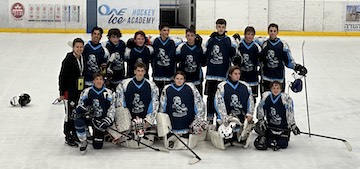
The Vancouver/Alberta combined hockey team at the JCC Maccabi Games in Israel. (photo from JCCGV)

Ayla Greenberg, who represented Vancouver on a mixed team with players from San Diego and Long Beach, said one of her fondest memories from the competition in Israel came after they played against a team from Ukraine and she bonded with some of her opponents.

“We talked about volleyball and being in Israel and how cool it was that we got to play with people we have never met,” said Greenberg. “It showed me that sports and competition were able to bring hundreds of teenagers from all around the world together in Israel and, no matter our differences, we were able to make friendships and memories that will last a lifetime.”

Greenberg went on to share her favourite story of the touring portion of the trip, when she arrived at the Western Wall.

“When I first got to the wall, there was a child next to me who was crying and her mother was on the other side of her,” explained Greenberg. “The child looked up at me and grabbed my hand and stopped crying. As I stood at the wall next to this child, I was extremely proud of being a Jewish woman and couldn’t help but be excited about the future and how I can make a difference in the world.”

The delegation in Israel included Greenberg, Tanner Barnett, Brody Winkler, Eli Tonken, Jesse and Ari Filkow, as well as Israelis Shay Rachevski and Josh Losinsky. They were joined by hockey coach Marie Vondracek and me, in my role as delegation head.

photo - The golden moment for the U16 soccer team in Fort Lauderdale, which included Vancouver’s Sam Perez (second to left)
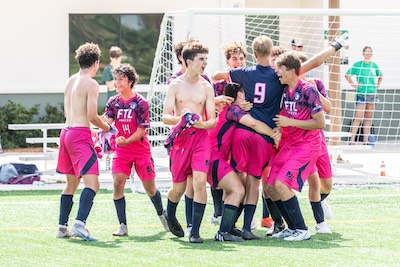
The golden moment for the U16 soccer team in Fort Lauderdale, which included Vancouver’s Sam Perez (second to left). (photo from JCC Maccabi Fort Lauderdale)

In that capacity, I also traveled to Fort Lauderdale. The delegation attending the week-long games there Aug. 4-11 competed in hockey, baseball, soccer, basketball and swimming.

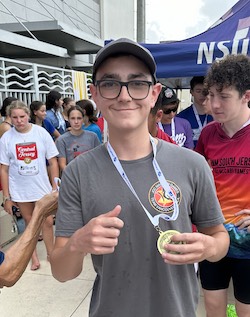
Team Vancouver brought home four medals, including two gold and one bronze for swimmer Daniel Litvak, and a gold medal for the U16 soccer team, which included Vancouver’s star striker, Sam Perez.

photo - Daniel Litvak with his gold medal, for winning the 100 freestyle swimming relay at the JCC Maccabi Games in Fort Lauderdale
Daniel Litvak with his gold medal, for winning the 100 freestyle swimming relay at the JCC Maccabi Games in Fort Lauderdale. (photo from JCCGV)

The Vancouver delegates in Florida also included Sierra Brosgall, Laylah Bronstein, Ouri Tzvella-Sculnick, Bryson Lexier and Matai David. They were led by chaperone Mark David and me.

Next year’s JCC Maccabi Games will be hosted in Detroit and Houston, while a new Israel tour program will be offered for teens who want to experience Israel with a focus on sports.

This was a very special summer for the JCC Maccabi Games and the spirit and energy were incredible. These teens returned home with a long list of life-changing experiences and a connection to Israel and the Jewish peoplehood that will stick with them for life.

photo - Nava and Mark David with their Western Canadian Championships gold medals
Nava and Mark David with their Western Canadian Championships gold medals. (photo from JCCGV)

Softball victories

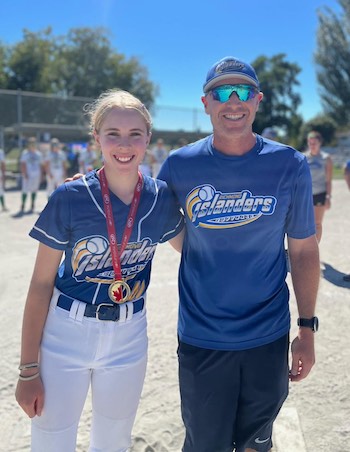
The day after arriving home from chaperoning Team Vancouver at the JCC Maccabi Games in Fort Lauderdale, Mark David resumed his position as head coach of the Richmond Islanders U15 softball team, as they competed in the Western Canadian Championships Aug. 11-13. David’s team, which included his daughter, Nava David, had a big weekend, winning the tournament and taking home the gold.

“These underdogs played with heart, determination and teamwork and came out on top with a gold medal,” the coach said. “It all came together with every player contributing in their own way.”

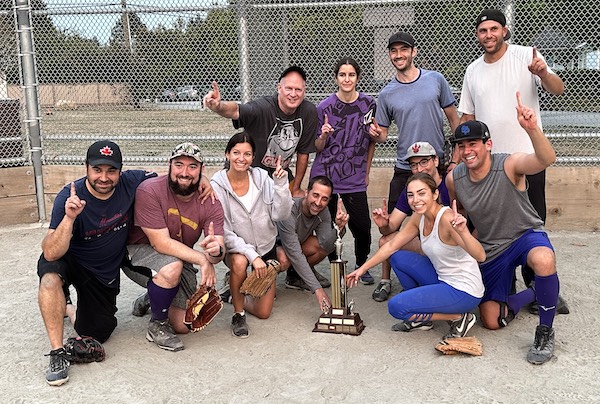
In other softball news, after a slow start to the season, the Purple Meshugeneh Cobras finished strong, winning the 2023 JCC Softball League championships.

photo - The Purple Meshugeneh Cobras won the 2023 JCC Softball League championshi
The Purple Meshugeneh Cobras won the 2023 JCC Softball League championship. (photo from JCCGV)

Kyle Berger is Jewish Community Centre of Greater Vancouver sports coordinator, and a freelance writer living in Richmond. For more information about the JCC Maccabi Games or the Vancouver JCC’s upcoming year-round programming, email Berger at kyle@jccgv.bc.ca.

Value of community

When we hear about addiction and recovery, most of us might think of the incredibly difficult journey to achieve and then sustain sobriety. For certain, this is one reality.

That said, it’s one thing to refrain from using, and quite another to rebuild one’s life. One of Jewish Addiction Community Services’ clients told us that, although they have been in recovery for three years, they felt that their life had little meaning. Working together, we uncovered the “missing link”: their prior lifestyle had damaged, and in some cases severed, many of their connections to family and community. More importantly, that insight led to building some practical plans for reconnecting. They now report that they feel like they have turned the corner – rediscovering motivation for work, life, and being an active member of our community.

Another client, who had been using drugs for over 25 years, is now seven months sober. They recognize that Judaism’s role in their early life was important, and reconnecting to some aspect of that former life is comforting and familiar. This client attended a seder for the first time in many years and looks forward to the High Holidays.

It is no secret that community plays a crucial role in sustained recovery. The harder part is to operationalize the insight. Our role at JACS is to meet people where they are, help them find treatment, if needed, work with them to rebuild their lives, and be a link to the greater Jewish community.  At the very practical level, we have helped clients connect with Tikva Housing, access the Jewish Food Bank and get financial help from Hebrew Free Loan Association. As well, working with rabbis and other agencies, we are helping individuals find ways to reconnect with a Jewish social network, support systems and the community at large.

JACS is proud that we are here to help our community. It is gratifying to know that, through education, counseling and connection, we are making a difference for those who need to know they have value and do indeed belong.

For more information about what we do, visit jacsvancouver.com.

Shelley Karrel is manager of counseling and community education at JACS Vancouver. She can be reached at shelley@jacsvancouver.com.

Local among new olim

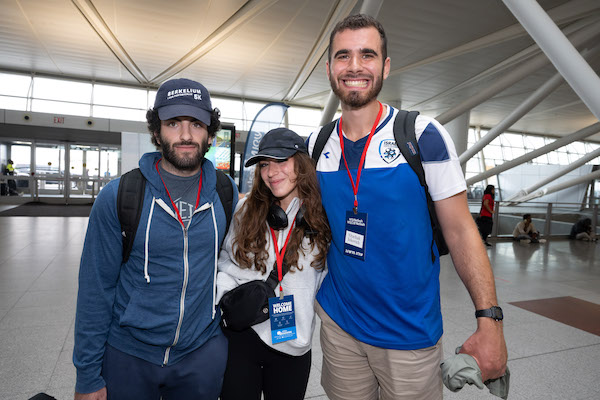
Yitzchak Ickovich (right) before boarding the plane at JFK Airport in New York Aug. 22. (photo by Shahar Azran)

Recent University of Victoria graduate Yitzchak Ickovich, 23, was one of 215 olim (immigrants) from the United States and Canada who moved to Israel and made aliyah last week on Nefesh B’Nefesh’s 64th specially chartered El Al flight. The flight was facilitated with Israel’s Ministry of Aliyah and Integration, the Jewish Agency for Israel, Keren Kayemeth Le’Israel (KKL) and Jewish National Fund-USA.

After becoming a citizen, Ickovich will draft into the Israel Defence Forces as a lone soldier. He will join the 3,500 men and women from around the world who are currently serving as part of the FIDF-Nefesh B’Nefesh Lone Soldiers Program.

Most of the future lone soldiers on the Aug. 22 flight are part of Tzofim-Garin Tzabar, a Friends of Israel Scouts program, who before and throughout their military service are adopted by Israeli communities that serve as their home away from home. Their absorption period includes ulpan Hebrew studies, educational tours in Israel, introduction to the military structure and the different positions.

The charter flight comprised 22 families, with 75 children among them, 15 single men and women, and 17 retirees. The youngest oleh on the flight was four months old, and the oldest oleh was 77 years old. Also onboard were seven doctors and 15 health professionals who will be integrating into the Israeli medical system. Twenty-seven of the olim are part of the Nefesh B’Nefesh-KKL Go Beyond initiative, which is aimed at developing Israel’s peripheral regions and Jerusalem.

Last summer, a pilot initiative to further streamline the aliyah processing was offered to a handful of olim – representatives of Israel’s Ministry of Aliyah and Integration, and the Population and Immigration Authority handed out teudot oleh (immigration certificates) onboard. For the first time, this opportunity was extended to all the passengers on this year’s charter. While still on the flight, olim filled out the relevant forms and were handed their teudot, finalizing their aliyah processing.

– Courtesy J Cubed Communications

Rockower win leads to NOLA

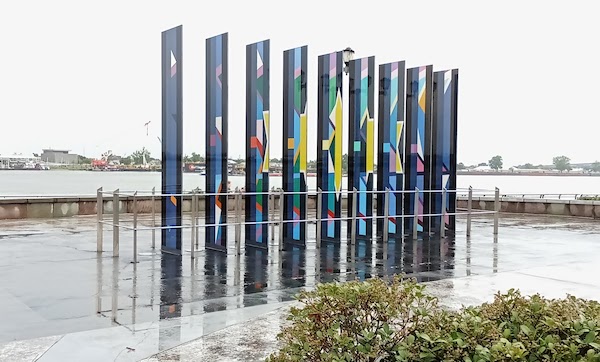
Israeli artist Ya’acov Agam’s Holocaust memorial is located in Woldenberg Park. (photo by Adina Horwich)

On Friday, June 2, about 20 minutes before Shabbat candlelighting, I checked my email. I saw one from Cynthia Ramsay, editor of the Jewish Independent. We’ve been in touch for more than two years. The subject line read, “Congratulations, you are an AJPA Rockower Award Winner!”

It reminded me of the messages we all receive at one time or another, telling us we have won a million dollars, give or take. I opened it gingerly and my eyes widened in disbelief. “Adina, I have great news. You have won a Rockower award.” Several lines down, I read there is to be an American Jewish Press Association conference and awards banquet in July, in New Orleans. I immediately shot back, “Cynthia, are you serious?!” I decided right then, I am going to this. I am to be honoured for an article I submitted in March 2022, recounting my aliyah story – I live in Jerusalem – and paralleling it with that of an Israeli couple’s similar, and different, experiences with immigration to Vancouver.

The event was in four weeks’ time: July, high season, crowds, lines. I pushed past every sane reason not to go and spent the next two weeks organizing an itinerary. I registered for the banquet and reserved my room, throwing in a long weekend to Toronto before the conference to see my elderly parents and a few relatives.

As I lit Shabbat candles, I broke down in tears. Of elation and joy. It had been a long while since I cried. This meant so much to me. I was going on an ego trip! My very own!

After a 20-plus-hour ordeal getting to New Orleans from Toronto, I saw the light of day dawning on NOLA, as the city is affectionately called, combining the abbreviation for New Orleans with that of its home state, Louisiana. I was in my hotel room shortly after 9 a.m., then went downstairs to find the AJPA conference. I was warmly welcomed by Taylor and Jessica, head office personnel, who handed me a gift bag and offered me breakfast, for which I was very grateful.

I entered the assembly room and listened to a session in progress, then took a walk to get acquainted with my immediate surroundings. I later rested and prepared for the moment I’d come all this way for: the Rockower Awards Ceremony and Banquet Night. Around 5:30 p.m., I descended to the lobby, decked out in my finest, high heels and all (last time I wore those shoes was eight years ago, at my son’s wedding) and traipsed (hobbled) across the street to the Louisiana Pavilion of the National WWII Museum.

In the entrance hall, tables and chairs had been set up. Jazz musicians played a selection of local repertoire. Cocktails and hors d’oeuvres were plentiful. We were encouraged to have a look around the museum. Eventually, we took our places at the tables for dinner, during which, Alan Smason, AJPA president, read off the names of the winners. I could barely touch my food as I waited to hear my name. In the end he just said, “The Vancouver Jewish Independent” and Taylor came over to hand me my honourable mention certificate. I relaxed and finished dinner, the best part being the dessert: a thick slice of bread pudding, doused in a super-sweet, rum-flavoured glaze. The evening wound up with several participants heading to a bar somewhere, while others, including me, went up to Rosie’s on the Roof, right in our hotel. There, we chatted together with other journalists, from St. Louis, Dallas, Houston, Albuquerque and more.

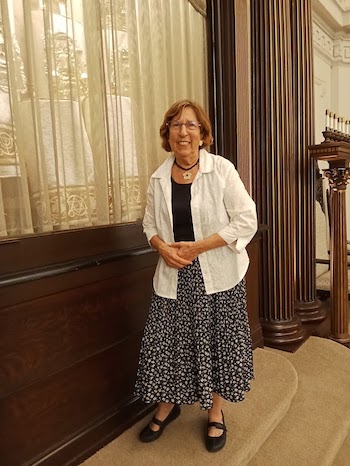
photo - Docent Diane Cohen in front of the aron kodesh (left) of Touro Synagogue on St. Charles Avenue
Docent Diane Cohen in front of the aron kodesh (left) of Touro Synagogue on St. Charles Avenue. (photo by Adina Horwich)

The next day, I took the tram to a meeting I’d arranged with docent Diane Cohen, a lifelong New Orleanian, at the Touro Synagogue on St. Charles Avenue. Cohen and I sat in the front row of the sanctuary, elegant and in pristine condition, as was the entire building, which was built in 1908 – the congregation’s history goes back to 1828! She shared with me some of that history and the community’s origins and growth. Later, she showed me around the lobby, chapel and office. We had a good discussion and I felt so touched to have spent about two hours in this remarkable venue, which continues to thrive, housing an active, vibrant, welcoming community. (See tourosynagogue.com.)

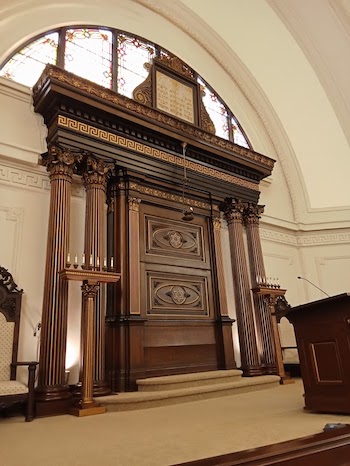
photo - The aron kodesh of Touro Synagogue
The aron kodesh of Touro Synagogue. (photo by Adina Horwich)

From there, Cohen drove me to a Walgreens where I bought a bus pass. Then I bussed down Canal Street towards Bourbon. As it was midday, things were not quite hopping, but it was enough to give me an idea of the many shops, restaurants, tourist sights and traps. I could conjure up an image of what night life and Mardi Gras celebrations must be like.

The bus driver let me off, suggesting I head down to the Riverfront, where I could hop on the ferry that crosses to the other side of town. After walking about 10 minutes to the wharf, the heavens burst open with a huge shower of warm rain. I boarded the next ferry. The ride was all of five minutes, but it afforded me a skyline view of the city and, hey, I can say I sailed down the Mississippi River.

I stayed on for the return ride, then meandered along the Woldenberg Park boardwalk, happening upon a colourful panel structure created by Israeli artist Ya’acov Agam, who designed it as a Holocaust memorial, a gift to New Orleans. From any which way one views it, light glistens through the menorah and Star of David symbols, panels ever shining, even in rain, honouring the victims.

Further along, I was treated to the sight of a characteristic of the region, a paddlewheeler riverboat. Staying on course, I found my way to the French Quarter. Having lived my adolescence in Montreal, it was warming to see French street names and other remnants of the French period there. I saw a woman in a candy store washing Granny Smith apples, preparing them for dipping in a variety of sugary coatings, reminding me of the taffy apples of my childhood. The fleur-de-lis emblem was everywhere, including on the bathroom floor tiles at my hotel and the chairs in the lobby.

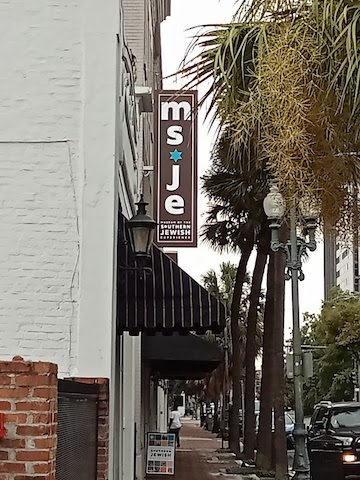
I returned to the St. Charles Avenue tram line, getting off a stop before my hotel to visit the Museum of the Southern Jewish Experience (msje.org). Well, what an experience, indeed. After showing my AJPA participant’s badge, Abbey allowed me in, and Jim showed me around the small but charming and interesting museum. Visitors see the historic beginnings of Jewish settlement in the Southern states, how communities formed, often with just a handful of individuals. Meetings and gatherings were held in homes, rented rooms, sometimes even at churches. Land for cemeteries was purchased. Hebrew schools instructed children. Sisterhoods held functions, raised money to support these efforts. From peddlers to grocers, small dry goods shops opened, which later flourished into department stores.

photo - Visitors to the Museum of the Southern Jewish Experience learn about the historic beginnings of Jewish settlement in the Southern states
Visitors to the Museum of the Southern Jewish Experience learn about the historic beginnings of Jewish settlement in the Southern states. (photo by Adina Horwich)

Jews were involved in cotton and other agricultural production. Trade ties were woven between the various populations, be they French, Spanish, British or Indigenous. The slow, but steady influx of Jews led to the formal establishment of synagogues and community facilities and institutions. Jewish presence figured prominently and was largely welcomed. Both Sephardi and Ashkenazi Jews gravitated to this region. Various levels of observance and traditions added to the fabric, and tension. It took time to determine a way to blend customs and decide how prayers would be led. Most congregations became affiliated with Reform Judaism – as many could not afford a full-time rabbi, either visiting clergy would come once every few weeks or lay members would lead services. Many a personal story is told. Families were close.

As I moved from room to room, I imagined the hardships, resourcefulness and sheer tenacity of these early pioneers, who had fled their native lands, to reach these shores or inland, remote, rural regions, to build new lives and opportunities. Today, there is so much going on in the South: a number of Jewish newspapers, initiatives, shared enterprises. Jews hold key roles and responsibilities in their cities. Community members are well-connected to one another, both in person and digitally, meeting individual needs, celebrating and sharing lifecycle events, holidays, prayers and cuisine. I was moved and impressed by the overall sense of purpose and furthering of a common goal: to maintain and strengthen Jewish identity. This goal has been unwavering over decades, through education and diverse joint programs and activities. Also, by fostering positive and supportive relations and cooperation with fellow residents of all backgrounds.

Towards the end of the exhibit, many well-known celebrities’ photos were displayed, all of whom hail from Southern Jewish communities. I was especially enchanted by the link to a directory where one can click on any given town or city where a community existed (or still does) and read about their specific story. I have completed Alabama’s list and hope to read through every single state. Check it out at isjl.org/encyclopedia-of-southern-jewish-communities.html.

Reluctantly, I left New Orleans. Upon returning home and unloading all the papers and paraphernalia I brought back with me, I unpacked from my carry-on several beaded necklaces that had been used as table centrepieces at the banquet. As the staff was cleaning up at the end of the evening, I asked if it would be all right to take a handful. Each colour represents a value or virtue: purple for justice, green for faith and gold for power. I could use a bit of all three!

 Adina Horwich was born in Israel to Canadian parents. In 1960, the family returned to Canada, first living in Halifax, then in a Montreal suburb. In 1975, at age 17, Horwich made aliyah, and has lived mostly in the Jerusalem area. Her award-winning article can be read at jewishindependent.ca/immigration-challenges-2.