Love the stranger, the “other”

Chanukah came early this year, and I hope you had a fun one. Now that it’s almost over, it can be a long dark vacation for those of us who do not observe anything on Dec. 25.

I say this because, although my family is clearly in the “Chanukah only” category, I know other families handle this differently. Some families are multifaith and observe several winter holidays. There are even (this was a surprise to me) Modern Orthodox Jewish families who have used Dec. 25 to create an entirely kosher Christmas dinner – because everyone had the same day off of work. Some Jewish people choose to observe aspects of Christian or pagan holidays, and, well, that’s up to them. It’s not the custom in my home, but we’re all lucky to be in a place where we are free to choose our own traditions.

A strange thing happened to me this fall. A friend of a friend put together a “women-owned businesses” shopping guide. It had a hashtag of #ShopWithHer. My work includes writing and editing, which can be hard to advertise. The other part is that I write downloadable knitting patterns. That means knitters, or those who love them, can go online and download a pattern I wrote for the price of a big cup of coffee. It’s not a huge earner, but I have a “woman-owned” business, so I asked to be included.

The emphasis of the guide’s creator was to highlight women and minorities. It was the week after the Pittsburgh massacre, so when I got to that question, I said something like, “I’m Jewish and an immigrant and now a dual-citizen. I moved from the U.S. to Canada.”

Why did I mention being Jewish? Jews are a minority in North America. While it has been popular in recent years to downplay any issues of our minority status, the truth is that there are still challenges to being Jewish here. For instance, violence like in Pittsburgh – and the assumption that, if we want to pray in peace, we should be hiring armed security.

If we just go back in history a little ways, we should think about quotas at universities, country clubs and other organizations that didn’t admit Jews at all. There were countless other places with no formal policy, but where folks made sure that we knew we didn’t belong.

For those who think that’s all in the past, I can say sarcastically, sure it is – my father’s university (Duke) had quotas when he attended it. The Women’s Junior League in Virginia did not accept “our kind” when I was a kid. The issue of “anti-Jewish” or antisemitic discrimination is not new, nor is it going away. The recent rise of hate crimes is well-documented in the news. Some American universities and colleges are canceling study-abroad programs to Israel, or their faculty members refuse to write letters of recommendation to Israeli study-abroad programs. I get e-newsletters from JTA and other Jewish organizations – and the news is clear.

When the #ShopWithHer guide came out, I was excited – and then shocked – to see my entry. Where other minorities were labeled “WOC” for “Woman of Colour” or “LGBT” or “Disabled,” mine read “Immigrant, Other.”

I’m proud of being Jewish and it’s not a part of my identity that I hide. I shouldn’t need to feel ashamed of it. I’m also well aware of our minority status, particularly when we’re surrounded by a holiday that celebrates the birth of another religion’s messiah. However, I didn’t include my business in this guide so I could be made “other” all over again. Why was I labeled “other”? Was it an attempt to protect me from hate? Or do I belong to a category that the guide’s creator didn’t feel was valid?

“Othering” isn’t my invention – if you’ve taken social science, religious or cultural studies, philosophy, history or other humanities classes at a university, you’ve likely heard of it. There are academic conferences and teacher in-services on the topic. A simple definition? It’s the action of deciding someone else is different or alien to you, “not one of us.” It’s a very primitive tribalism that helps people survive in adverse conditions. Some theorists think it references early human civilization, and others think it comes from times of war, famine and other natural disasters.

You can read about the “in group” of the Israelites and “others” in the Torah. There’s a lot of tribalism at work in some of our most common stories of identity. At the same time, we’re reminded, “You should love the stranger,” for “We were strangers in the land of Egypt.”

That’s right, Jewish tradition teaches us to love the “other.” In the face of increased hate crimes, discrimination and erasure, it can be hard work to keep reaching out and loving others. Perhaps it is ignorance that allows our identities to be ignored or disregarded; I’d like to think that, because the alternatives aren’t nearly as harmless.

It feels awful to have one’s own religious tradition erased. This time of year, it happens a lot. We’re faced with holiday greetings, music, customs, lights and foods that aren’t ours. When Chanukah is long over, it also feels ridiculous to wish someone or thank someone for a “Happy Chanukah,” even though it’s well-intentioned.

I’m still struggling with what to say to this shopping guide’s organizers. Saying nothing is an option, as is trying to engage in a dialogue. Maybe it’s enough to send along a copy of this column. There are so many ways to divide and diminish others, rather than celebrating and boosting our identities and differences. Chanukah is a holiday that, unmistakably and militantly, celebrates religious freedom. Perhaps it’s time for us to be our own modern version of Judah Maccabee, strong in the face of dangerous discrimination, but also trying to embrace the Jewish notion of loving the stranger rather than “othering” her.

Joanne Seiff writes regularly for CBC Manitoba and various Jewish publications. She is the author of three books, including From the Outside In: Jewish Post Columns 2015-2016, a collection of essays available for digital download or as a paperback from Amazon. See more about her at joanneseiff.blogspot.com.


Reinventing and renewing

Shanie Levin and Al Stein opened the JSA Empowerment series season Nov. 30. (photo from JSA)

The first Jewish Seniors Alliance Snider Foundation Empowerment Series session of the 2018/19 year was on the theme of “Renewing and Reinventing Yourself as an Older Adult.” Held on Nov. 30, it was co-sponsored by the JSA and the Sholem Aleichem Seniors of the Peretz Centre for Secular Jewish Culture.

Thirty-five “older adults” gathered to listen to stories on the “Reinventing Yourself” theme, read by Al Stein and me. Gyda Chud, JSA vice-president and SAS coordinator, introduced the session by speaking about the goals of JSA in advocacy, education, information and peer support services. She emphasized the aim of JSA’s motto, “Seniors Stronger Together,” before welcoming the readers.

I shared that it had not been easy to find Yiddish stories translated into English that corresponded to the theme, so Al and I had to look to stories written in English by Jewish writers.

Al began with a short parable from Roman times about a 100-year-old man who was still planting trees. I continued with a story by Grace Paley called Goodbye and Good Luck, which is set in New York in the 1930s – an older woman describes her colourful life to her niece.

Al’s next story was by a Canadian Jewish writer, Jack Ludwick, which was about an older woman who is constantly drawn back to the area of Montreal where she grew up and spent her early married years. The session closed with my reading a short section from Sholem Aleichem’s Menachem Mendel.

A discussion about the pleasure and the purpose of passing on stories to the next generation followed, and then Gyda thanked everyone and invited all to tea, coffee and cookies in the lounge.

The second session in the Empowerment Series will be the film A Song for Marion (Unfinished Song), on Jan. 16, 11 a.m., at the Jewish Community Centre of Greater Vancouver with the JCC Seniors. For more information, call the JSA office, 604-732-1555, or Lisa Quay Cohen at the JCC, 604-257-5111.

The Peretz Centre sponsors a program called Exploring Jewish Authors (in English) on the second and fourth Saturday mornings of each month, as well as Reading Yiddish Authors in Yiddish on the first and third Wednesdays of the month at 11 a.m. For more information, call the Peretz Centre office, 604-325-1812.

Shanie Levin is an executive board member of Jewish Seniors Alliance and on the editorial board of Senior Line magazine.

Celebrating the JCC’s 90th

Isabella: What do you do that makes you very happy?

Connor: I like to play with my mommy.

Isabella: Well, if you find something that makes you happy, that’s what you should do.

(photo by Jocelyne Hallé)

***

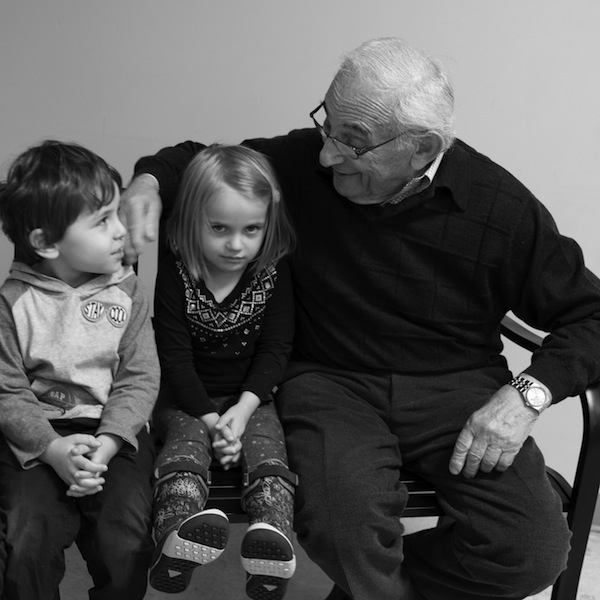
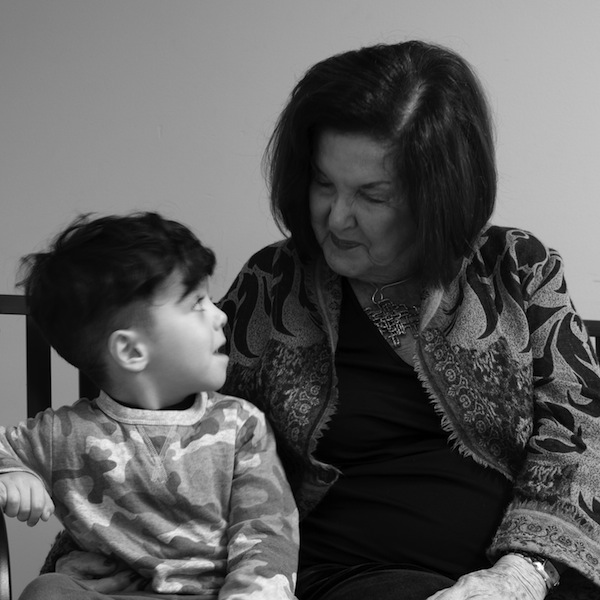
As part of the Jewish Community Centre of Greater Vancouver’s celebration of its 90th birthday, the centre brought together its members who are age 90 and better with children from the Karen and Gary Simkin Family Child Development Centre Preschool.

Preschool director Jennifer Trickett and her staff helped the children create and practise questions that they were curious about to ask the seniors. Questions covered such topics as “What games did you like to play when you were a kid?” and “Do you get hugs from your children?” The children also sang songs.

In addition to being interviewed by the children, the JCC members enjoyed a complementary brunch, and free portraits courtesy of Jocelyne Hallé of Jocelyne Hallé Photography.

The JCC has 25 members who are age 90 and over, most of whom are at the centre multiple times a week to exercise, socialize, learn and play. For more information about special membership pricing for adults age 65-plus, contact membership director Alexis Doctor at 604-257-5111.

*** 

photo - Gloria, Joyce, Shiloh and Asher

Gloria: Where do you live?

Joyce: I live in a condominium.

Gloria: Well, I live in Vancouver.

Joyce: Me, too.

Shiloh: Do you come here in the car?

Joyce: I came in a car today. My daughter drove me.

Shiloh: My mommy drove me!

Asher: Do you live in space?

Joyce: Sometimes I think I do! But, mostly in Vancouver.

(photo by Jocelyne Hallé)

***

photo - Sam and Danny

Sam: Do you ever hug your grandchildren?

Danny: Yes, very big ones, they’re even kissing me, too.

(photo by Jocelyne Hallé)

***

photo - Grace and Milo

Milo: What did you like to play when you were little?

Grace: I liked to play baseball. How about you?

Milo (with a big smile): Me, too.

(photo by Jocelyne Hallé)

The sad road from Auschwitz

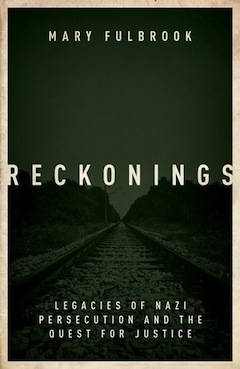
The theme of Reckonings: Legacies of Nazi Persecution and the Quest for Justice (Oxford University Press, 2018), the new book by eminent English historian Mary Fulbrook, is justice. Or, rather, injustice, as she exposes how ex-Nazi perpetrators, and bystanders to their murderous policies, have evaded (and continue to evade) due process and acknowledgment of moral responsibility for their (in)actions.

Every level of strategy open to these criminals and cowards is exposed in Reckonings. Fulbrook reveals all the political, psychological, pragmatic, legal (and illegal), scapegoating, self-serving, self-exculpatory, “we were victims too”-type excuses by which the morally corrupt and unconscionable avoid due process and personal liability.

Fulbrook rightly says, at the end of Reckonings, “there can be no answer to the questions of why and how cruelty on this scale was possible.” So, what, she asks, can the “honest” historian do? Her answer sums up the well-realized objective of this magisterial new book: “Historians can clarify patterns of involvement in and responsibility for Nazi persecution and explore the implications both for those who lived through it and those who came after.”

Nazi criminality is, of course, a hugely complex historical issue, but Fulbrook’s strategy is simple and direct: it is to “reconstruct the ways in which wider social and political developments intersected with individual lives” such that “large numbers of people were mobilized in service of a murderous cause.”

image - Reckonings book coverReckonings is rich with such exploration of “individual lives,” both of persecutors and bystanders, and it rings also with the agonizing accounts of dozens of victims, among whom Fulbrook gives frequent and welcome voice to the rarely referenced persecuted sub-groups of homosexuals, and victims of Nazi euthanasia policies.

Fulbrook’s central focus is, however, justice: justice failed and justice delayed, delayed by silence, by endless rationalization, by foot-dragging, by the pollution of the legal system by former Nazis (described as “themselves swimming in a sea of guilt”) and, no less disturbing, by the pragmatics of (primarily American) Cold War strategists, anxious not to offend a potential ally against the Soviet Union.

Reckonings is unusual history in its welcome lack of “normal” arm’s-length objectivity: Fulbrook is uncompromisingly fierce in her condemnation of those who were responsible for this “maelstrom of murder.” Throughout the book, she remains directly and openly angry, and determined to “nail down” these murderous ignoramuses, just-following-orders immoralists and “I knew nothing” liars. One feels the heat of Fulbrook’s grit and determination: each page rings out with a loud, “they will not get away with this as long as I can help it.”

Reckonings is divided into three parts. Part One, the most “traditional” part of the book, explores the various sites of this “maelstrom of murder,” beginning with Auschwitz, but moving carefully beyond, to less and less better-known killing centres, especially in southern Poland – where there were many forgotten violent “microcosms of violence,” as she calls them.

Part Two is, as Fulbrook’s title suggests, the heart of the book: here, the focus shifts to the attempts to bring perpetrators (both men and women) to justice. She lays out the proceedings of the various major trials – Auschwitz, Sobibor, Belzec, Dachau, Hadamar, the Einsatzgruppen trial, etc., right up to the present – but also includes trials relating to perpetrators of euthanasia and other crimes. She outlines, in fascinating detail, the differences between the ways that East and West Germany approached bringing Nazis to justice: the former being famously more diligent than the latter, leading to a flood of ex-Nazis to the more “tolerant” West in the early years after the war. This flood included all the euthanasia personnel, who left their families behind in the GDR to escape justice. (The West accepted the “just following orders” defence; the East did not. About 400,000 people benefited from this and similar lax standards in the West.)

The third part, “Memories,” is about how survivors remember, and how Nazis forget. It combines a plangent exploration of the personal experiences of individuals living around the world who have survived persecution – most of whom have never received compensation or recognition – with accounts of how perpetrators and their minions managed (and still manage) to cover their tracks, and how this evasion affects their children and grandchildren.

The most memorable chapter of this final part is called “The Commemoration of Shame.” She notes here how the “shame” of the perpetrators is almost always buried in the sea of guilt-ridden commemoration throughout Germany, as is the pain of forced and slave labourers, the acknowledgement of which would still have legal (compensation) ramifications for German industry. Fulbrook also notes here that it wasn’t until 2014 that the first memorial appeared for the victims of Nazi euthanasia policies.

Reckonings ends in despair. “So few perpetrators brought to account; so little justice.”

Ian Kershaw has written that “the road to Auschwitz was built by hate but paved by indifference.” Fulbrook reveals that the road from Auschwitz is not a whit less hateful and, certainly, no less met by indifference.

Graham Forst, PhD, taught literature and philosophy at Capilano University until his retirement and now teaches in the continuing education department at Simon Fraser University. From 1975 to 2010, he co-chaired the symposium committee of the Vancouver Holocaust Education Centre.

Israelis heading to the moon

Left to right: Inbal Krayes, Morris Kahn, Sylvan Adams and Dr. Ido Anteby at the Israel Aerospace Industries facility in Yehud, Israel. (photo from SpaceIL)

On Nov. 19, SpaceIL announced that Canadian billionaire and businessman Sylvan Adams, who brought the Giro d’Italia Big Start cycling race to Israel this year, joined the project to land the first Israeli spacecraft on the moon and contributed $5 million to the organization.

Adams announced his contribution as part of a special tour that took place at the Israel Aerospace Industries (IAI) MBT Space facility in Yehud, where the spacecraft is being assembled. Also attending the tour were SpaceIL’s president Morris Kahn, SpaceIL chief executive officer Dr. Ido Anteby and other senior IAI officials, including IAI vice-president of space operations Inbal Krayes.

Adams, who was celebrating his 60th birthday, said at the event that “this contribution to strengthening the Israeli space program, and encouraging education for excellence and innovation among the younger generation in Israel, is the best gift I could have asked for.”

He added: “I believe that sending the first Israeli spacecraft to the moon will inspire Israeli schoolchildren to take up STEM studies and think about space exploration, and especially to believe that everything is possible.”

Since SpaceIL’s establishment in 2011, the mission of landing an Israeli spacecraft on the moon has become a national project embodying educational values. Adams joins a group of donors who have contributed to the project, including Dr. Miriam and Sheldon Adelson, Sammy Sagol, Lynn Schusterman, Steven Grand and others.

Kahn, a businessman and philanthropist, took it upon himself to lead the project and bring it to its completion, donating $27 million and serving as the project’s president. He regards its completion as his personal mission.

“We are in the final stretch,” said Kahn, “and I believe that his [Adams] joining will help us raise the remaining money to complete our ambitious mission.”

“The teams of SpaceIL and IAI are making great progress in a series of tests and trials being carried out at IAI’s space facility,” Anteby said. “At the same time, we are stepping up activities to promote scientific and technological education in the state of Israel, ahead of launch.”

In October, SpaceIL and the Israeli Space Agency announced a collaboration with NASA that would enable SpaceIL to improve its ability to track and communicate with the spacecraft before, during and after landing on the moon.

IAI, which is the home of Israel’s space activity, has been a full partner in this project from its inception. Over the years, additional partners from Israel’s private sector, the Israeli government and from academia have joined as well. The most prominent among these are the Weizmann Institute of Science; Israel Space Agency; the Ministry of Science, Technology and Space; the Israeli telecom firm Bezeq, and others.

The same week of Adams’ donation, Ofir Akunis, Israel’s minister of science, technology and space, visited the IAI facility where the spacecraft is being built, after the ministry announced an additional NIS 7.5 million ($2.66 million Cdn) in support for the project.

“The moon mission is one of great national pride. There is a short time before the spacecraft’s launch, and I have no doubt all Israelis will feel great joy when the spacecraft blasts off,” Akunis said. “I am a great believer that the landing will be one of the highlights in the history of the state of Israel, and the educational activity we are doing around the mission sets the foundation for engineers who will work in the field of space and science in the next decade.”

SpaceIL was the only Israeli contestant in the international Google Lunar XPRIZE competition. To win the first prize of $20 million, the participants were required to land an unmanned spacecraft on the moon. The competition ended officially with no winner on March 31, when Google announced that it would no longer sponsor the competition.

After succeeding in raising the critical funds to continue its activity, SpaceIL announced that it was determined to continue on its mission and to launch its spacecraft, regardless of the competition. Concurrently, the nonprofit is continuing its efforts to raise the funds necessary to complete this mission.

SpaceIL aims to set in motion an “Apollo effect” in Israel: to encourage the next generation of Israeli children to choose to study science, technology, engineering and mathematics (STEM) and to change their perception of these subjects; to generate a sense of capability, and to allow them to dream big dreams even in a small country.

The final note

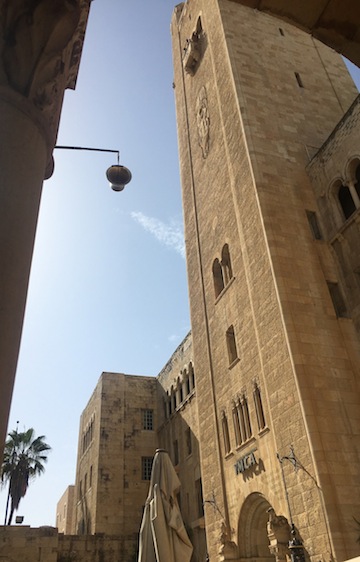
photo - The new bell being lifted to the top of the YMCA tower in Jerusalem
The new bell being lifted to the top of the YMCA tower in Jerusalem. (photo by Ashernet)

YMCA’s new bell.  (photo by Ashernet)

Ever since the YMCA opened on King David Street in Jerusalem in 1933, the building, designed by Arthur Lewis Harman (of New York’s Empire State Building fame), has been a famous landmark; in particular, its iconic tower has been part of the city’s landscape. The tower contained a carillon of 35 bells made by the British bell foundry Gillett & Johnston in the early 1930s. It is the only carillon in the Middle East, but there was one note – in other words, a bell – missing from it. A recent anonymous donation made it possible for the YMCA to order the missing bell from the Royal Eijsbouts foundry in the Netherlands and, in a precisely managed operation earlier this week, a large crane raised and placed the new, 36th, bell into its place in the tower.

מבקריה הרבים של פייסבוק

חבר מפלגת הדמוקרטית החדשה צרלי אנגוס: “פייסבוק איבדו את האמונה מצד הקהילה הבינלאומית.” (צילום: Marc DeMouy)

הוועדה הבינלאומית למאבק במידע מוטעה התכנסה לאחרונה בלונדון לדון בהתנהלות העסקית של פייסבוק, לאור מחדליה הרבים בתחום אבטחת מידע ופרסום מידע מוטעה בבחירות בארה”ב ובמקרים רבים נוספים. בוועדה חברות תשע המדינות הבאות: קנדה, בריטניה, צרפת, בלגיה, אירלנד, ברזיל, ארגנטינה, לטביה וסינגפור. יצויין כי לוועדה אין שום סמכות להטיל קנסות, סנקציות או עונשים, אך פעילותה מראה שיתוף פעולה בינלאומי נדיר, מול ההתנהלות הכושלת של פייסבוק. רבים רואים בכך תמרור עצור נוסף לחברה האמריקנית שמעשיה נבחנים היטב היטב כיום.

חברי הוועדה כעסו מאוד שמייסד פייסבוק והמנכ”ל מארק צוקברג, בחר שלא להופיע בפניהם לדיון המיוחד – מה שמראה עד כמה הוא מעדיף שלא לענות ישירות על שאלות קשות, הקשורות במישרין ובעקיפין בהתנהלות של פייסבוק, המעוררת ביקורת הולכת וגוברת ברחבי העולם. לאור כך שלא הגיע לדיון, אמר חבר בוועדה, נציג המפלגה הליברלית הקנדית נתניאל ארסקין-סמית: “זה מאוד מצער שצוקרברג לא נמצא כאן היום איתנו. אני חושב זה מלמד יותר מכל על אי קבלת האחריות מצידה של חברת פייסבוק ומנהליה. פייסבוק מאבדת את האמון של רבים”.

מבקריה הרבים של פייסבוק מציעים לחברה – מפעילת האתר החברתי הפופולרי בעולם שלא לסמוך יותר מדי על העובדה, שכשני מיליארד איש מחוברים אליו. אם פייסבוק תמשיך לתנהל כמו שהיא מתנהלת עד כה, רבים יתנתקו מהאתר שלה. כך הם חוזים.

במקומו של צוקרברג הופיע בפני הוועדה סגן הנשיא של פייסבוק לתחום המדיניות ריצ’רד אלן. במשך למעלה משלוש שעות הוא נחקר וענה על שאלות קשות וספיציפיות של חברי הוועדה. הם אמרו לו במפורש כי לפייסבוק יש כיום השפעה מאוד שלילית על ההליכים במדינות דמוקרטיות. החברים ציינו כי פייסבוק לוקחת כיום חלק פעיל בהפצת מידע חדשותי מוטעה (ראה את פרשת הבחירות האחרונות בארה”ב בהן ניצח דונאלד טראמפ את הילרי קלינטון. לדעת רבים פייסבוק עזר רבות לקמפיין של טראמפ בהפצת מידע כוזב נגד קלינטון, שהגיע מכיוון הרוסים). בנוסף החברה עושה שימוש רב במידע רגיש מאוד של המשתמשים הרבים של פייסבוק. החברים בוועדה הדגישו כי הגיע הזמן שפייסבוק תתן דין וחשבון על מעשיה ומחדליה הרבים. כך אי אפשר להמשיך. חלק מהם שאלו האם אי פעם הגבילה פייסבוק את הגישה של מפתחי האפליקציות השונות להשגת מידע על המשתמשים הרבים אם הם רכשו אצלה פרסום בפלטפורמת המובייל. אלן אמר מצידו כי פייסבוק לא נוהגת ולא נהגה לבצע עסקות חליפין שכאלה. הוא הוסיף עוד שפייסבוק מבינה היטב את הצורך בהנהגת רגולציה חדשה. אלן: “אכן פגענו באמון הציבור שלנו לאור מספר פעולות שעשינו. החמצנו מספר דברים והגבנו באיחור לבעיות שנוצרו”.

עם סיום הדיונים בלונדון אמר הנציג נוסף של קנדה בוועדה הבינלאומית, חבר המפלגה הדמוקרטית החדשה צ’רלי אנגוס: “פייסבוק איבדו את האמונה מצד הקהילה הבנלאומית”. חבר אחר בוועדה אמר כי הגיע הזמן להפעיל סנקציות קשות נגד פייסבוק ואף לפרק את החברה, המחזיקה בין היתר גם בוואטסאפ ואינסטגרם.

מי שכינס את הדיון המיוחד, חבר הפרלמנט הבריטי דמיאן קולינס, ציין כי לידיו גיעו מסמכים פנימיים של פייסבוק כולל אימיילים (משנת 2014), מהם עולה כי כבר אז נשאלו השאלות כיצד החברה העניקה לרוסים את הפלטפורמה שלה. כאמור הנושא הרוסי רגיש מאוד לעניין החקירות נגד הקמפיין של טראמפ, לאור מעורבותו כביכול בהשפעה על תוצאות הבחירות בארה”ב.