World without prisons?

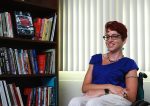
Prof. Liat Ben-Moshe teaches disability studies at the University of Toledo. (photo from Liat Ben-Moshe)

University of Toledo assistant professor Liat Ben-Moshe moved to the United States in 2002 to do her doctorate in disability studies at Syracuse University, as the field was not offered in Israel at the time.

Ben-Moshe describes the field as one “that looks at disability as an identity and a culture.”

“So,” she said, “we read things about mad culture – ‘mad’ as in ‘crazy’ – deaf culture and a variety of disability histories, disability laws and social movements related to disabilities … as well as representation [of] people with disabilities and disability, in general, in films and in literature.”

Ben-Moshe is a member of and has been a leading voice in the disability community. She works to educate anyone who will listen about disability rights, to change the outlook.

“We are not asking for charity,” said Ben-Moshe. “We are asking for what is rightfully ours, like an increase in disability stipends and things of that nature. At that time, there was also no kind of formulated disability law.” Now, there is, and there are both similarities and differences between such laws in Canada, the United States and Israel, she said, noting, “They are all rights-based laws, discrimination-based laws.”

As Ben-Moshe was developing her understanding of disability law and how society began looking differently at people with disability, she started seeing correlations between how people with disabilities were being treated in institutions and how prisoners were being treated.

Society has dismantled many large institutions for people with mental and intellectual disabilities. “People don’t really understand how massive these institutions were,” said Ben-Moshe. “Some of them housed 3,000 people with intellectual disabilities in the heyday.

“Closures of these facilities came out of a desire to really change the way that we understand what disability means and how to react to it on a social level,” she explained. “We don’t need to be segregated in order for the civility to be viable in our communities. And the reason I’m connecting it to the prison arena is because there has been – and, today, for sure – a vibrant, although quite small, social movement that advocates for the closure of prisons…. By that, I mean prison abolition.”

Ben-Moshe contends that people should not be locked away as punishment.

“It’s really a radical framework – to understand how we can react to each other differently and how we can respond to harm that’s done to us differently … without segregation, without locking people away,” she said. “When you take this [locking up] idea of out of sight, out of mind, [something] that only exacerbates the root of the harm, you can see a lot of connections between this [non-segregating] framework and the framework of deinstitutionalization.”

Just as some people thought that deinstitutionalization could not work, there are those who don’t believe that decarceration is achievable. But Ben-Moshe said we can learn from how deinstitutionalization took place in most American states and in Canada, and how well it has worked, in general.

“How do we learn from it, as a historical precedence?” she said. “A lot of my work is about bridging those two ideas – frameworks and social movements.”

Ben-Moshe mentioned the 128-page ebook called Are Prisons Obsolete? by Angela Davis (Penguin Random House, 2003). In it, says the description online, Davis argues that “American life is replete with abolition movements and, when they were engaged in these struggles, their chances of success seemed almost unthinkable. For generations of Americans, the abolition of slavery was sheerest illusion. Similarly, the entrenched system of racial segregation seemed to last forever, and generations lived in the midst of the practice, with few predicting its passage from custom…. Davis expertly argues how social movements transformed these social, political and cultural institutions, and made such practices untenable.”

There is no short answer to the question of how to abolish prisons. But, according to Ben-Moshe, the answer has to come from communities. The prison abolition movement in the United States, she said, is led by the black feminist movement and, in Canada, it is led by indigenous groups, as these communities are most impacted by the prison system.

Insofar as the movement’s success in both countries, Ben-Moshe said, “I’d say, definitely, there is, in Canada, a pretty vibrant prison abolition movement. As it is in the U.S., it’s pretty varied. Some of it does come from the indigenous perspective. For example, the idea of sentencing circles.

“In many indigenous communities, there has never been a prison. So, we don’t necessarily need to go back in time to see what it means to live in a world without a prison. We can talk to the indigenous people who have never bonded to this idea of prison. Not to romanticize it. I mean, harm has been done in those communities, but how did they deal with it? That’s definitely something that’s going on in Canada, as well.”

Ben-Moshe pointed to the somewhat new concept of using ankle bracelets, as opposed to imprisonment, as a misguided move. The way she sees it, by doing this, instead of reducing incarceration, the prison walls become endless.

“These are for-profit things that people who are incarcerated have to pay for,” said Ben-Moshe. “And what we see is that people who would have not even been incarcerated before now get ankle bracelets.”

In the same way that disability can’t exist in a place with no barriers, prisons can cease to exist if people are taught how to better work within society’s limits.

“If everyone spoke sign language, those who are deaf wouldn’t even be categorized as disabled, because they would just be a linguistic minority,” said Ben-Moshe. “Disability is not something in people. It’s something in the interaction between people and their environment.

“In disability studies, we talk about ‘ablism’ (able-ism), which is oppression that people with disabilities face. But, I also connect that to racism, sexism and other forms of oppression, to say that we’re always living simultaneous forms of privilege and oppression.”

Rebeca Kuropatwa is a Winnipeg freelance writer.
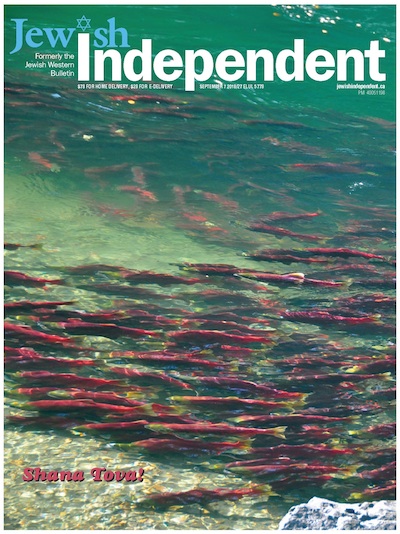
About the Rosh Hashanah 2018 cover art

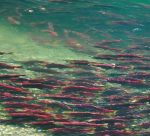
The print edition’s cover photo of the salmon run on Adams River by Leah Ramsay was taken in 2010 at Tsútswecw Provincial Park, near Kamloops, B.C. Formerly named after conservationist and author Roderick Haig-Brown, the park was renamed Tsútswecw this past June.

photo - Rosh Hashanah 2018 coverTsútswecw (pronounced choo-chwek) translates to “many rivers” and the park, established in 1977, encompasses the spawning beds of the sockeye, chinook, coho and pink salmon. Every fourth year is a “dominant” run, with millions of salmon returning – 2010, when this photo was taken, was a dominant year, as is 2018. In honour of the occasion, there is a festival held at the park, called Salute to the Sockeye, which runs this year from Sept. 28 to Oct. 21.

One of the symbols of Rosh Hashanah is the fish head – “we should be the head and not the tail.” There are the themes of creation, rebirth and renewal, as well. In the run, the salmon return from the ocean to their natal stream to spawn, after which most die, their bodies providing nutrients to the vegetation and animals, and the lifecycle begins anew. This all happens in British Columbia from September through November.

“Seeing one of the peak years of the Adams River sockeye run had been a desire for many years and it didn’t disappoint,” said Ramsay. “Even non-hardcore nature nerds are impressed – it is such a huge mass of life all moving to the same goal.”

Shana tova on West Boulevard

photo - The Spectacle Shoppe’s display window, side view
(photo by Cynthia Ramsay)

The Spectacle Shoppe’s display window. (photo by Cynthia Ramsay)

Once again, Leo Franken has made the Spectacle Shoppe’s display window on West Boulevard in Vancouver eye-catching for the holidays. Passersby on Sunday afternoon, when these photos were taken, voiced their appreciation of his efforts and the Rosh Hashanah message – “Happy New Year!”

Many good things happened

Prime Minister Binyamin Netanyahu presents the nuclear secrets of Iran at a special press briefing in Jerusalem on April 30, 2018. (photo from IGPO courtesy Ashernet)

It has been a year of diplomatic success for Israel, as more countries upgraded their relations with the Jewish state. This took, in general, two forms: heads of government making an official visit to Israel or Prime Minister Binyamin Netanyahu visiting other countries; and the establishment of the embassies of the United States, Guatemala and Panama in Jerusalem, Israel’s capital.

photo - The newly discovered Lod mosaic.
The newly discovered Lod mosaic. (photo from IGPO courtesy Ashernet)

In April, at a special press conference hosted by Netanyahu, the world learned of the secret storage facilities in Iran that housed Iran’s nuclear ambitions. It is not known exactly how Israel managed to find out the location of the files, or how they were copied and brought back to Israel, but the revelations served Israel well, and the files were instrumental in making the United States renege on the nuclear agreement that President Barack Obama had made with the Iranian regime.

It was a long, hot summer in more ways than one. The latest form of terrorist aggravation was for Gazans to assemble in the thousands along the Gaza-Israel border and launch kites and balloons to which were attached flaming torches that set fire to forests and agricultural fields in Israel, causing uncountable damage and destruction. A variation of this procedure was for terrorists to attach flaming torches to lines attached to the legs of kestrels who managed to survive long enough to set trees alight in Israeli forests near the border.

photo - In November last year, the three millionth tourist of 2017 arrived in Israel. He and his partner were shown around Jerusalem’s Tower of David Museum by Prime Minister Binyamin Netanyahu
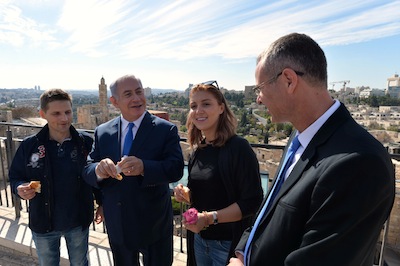
In November last year, the three millionth tourist of 2017 arrived in Israel. He and his partner were shown around Jerusalem’s Tower of David Museum by Prime Minister Binyamin Netanyahu. (photo from IGPO courtesy Ashernet)

In better news, this year Israel became the focus of the world’s cycling fraternity. Due to the generosity of Israeli-Canadian billionaire Sylvan Adams, one of the three most important annual cycling races in the world, the Giro d’Italia, started in Jerusalem with a time trial and then took the cyclists from Haifa to Tel Aviv, with a third stage from Be’er Sheva to Eilat. All this was made possible by an $80 million donation to the federation organizing the event. It was one of the biggest sporting events ever staged in Israel and was seen by tens of thousands on television around the world.

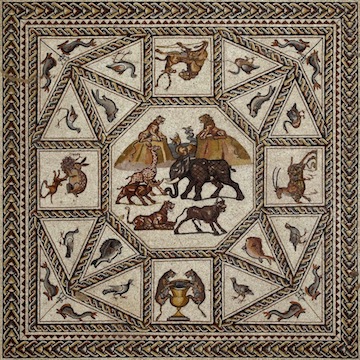
The Jewish year opened with the announcement that one of the most outstanding mosaics ever found in Israel, from the Roman era, was going to be incorporated in a new museum in the city of Lod, where it had been found during preparations for building works. This beautiful mosaic was one of many important archeological finds in Israel in the past 12 months.

photo - Prime Minister Binyamin Netanyahu is welcomed by Indian Prime Minister Narendra Modi in New Delhi in January 2018.
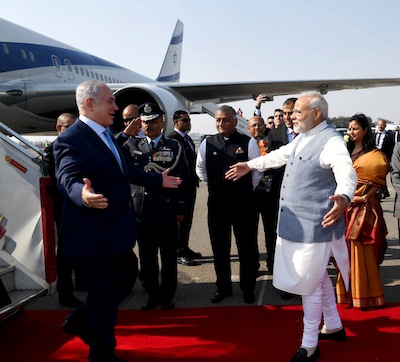
Prime Minister Binyamin Netanyahu is welcomed by Indian Prime Minister Narendra Modi in New Delhi in January 2018. (photo from IGPO courtesy Ashernet)

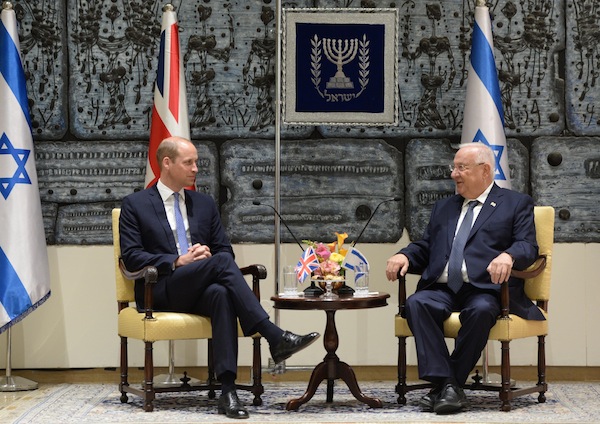
Also at the start of the Jewish year, tourism in Israel hit a new high, with the three millionth tourist of 2017 arriving at Ben-Gurion International Airport in November. And, this summer, Prince William made an official visit to Israel, where he was received by President Reuven Rivlin and Netanyahu. Members of the British Royal family have been to Israel before, but never on an official visit.

As always, Israeli technology, universities and medical prowess was remarkable over the year. And, when natural disasters occurred around the world, such as earthquakes and floods, Israel was among the first to send aid.

Not all the news was good for Netanyahu, who, for a major part of the year, was being investigated and questioned by Israel Police for allegedly obtaining inappropriate large-scale benefits from businessmen – charges Netanyahu strenuously denied. Ari Harrow, Netanyahu’s former chief of staff, signed a deal to become a state witness to testify against the prime minister.

photo - Plastic waste accumulates in an inlet along Eilat’s Red Sea coast. A worldwide problem, much is being done in Israel to manage the correct disposal of plastic, paper and glass
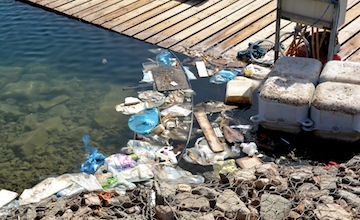
Plastic waste accumulates in an inlet along Eilat’s Red Sea coast. A worldwide problem, much is being done in Israel to manage the correct disposal of plastic, paper and glass. (photo from IGPO courtesy Ashernet)

The Jewish year also saw Netanyahu’s wife Sara receiving a lot of negative press. In the previous year, the Jerusalem Labour Court awarded an employee of Sara Netanyahu’s the sum of $46,000 as he claimed that she had been abusive towards him and withheld wages at times. While she appealed the ruling, it was turned down. She is now being investigated for allegedly ordering expensive meals at the prime minister’s official Jerusalem residence at government expense, despite the fact that the prime minister’s official residence employed a cook. She refutes the accusations.

Despite these problems, Binyamin Netanyahu maintains a high international profile – he has the ear of presidents Donald Trump and Vladimir Putin, for example.

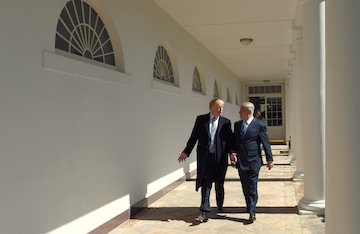
photo - U.S. President Donald Trump and Prime Minister Binyamin Netanyahu at the White House in January 2018
U.S. President Donald Trump and Prime Minister Binyamin Netanyahu at the White House in January 2018. (photo from IGPO courtesy Ashernet)

As 5778 closes, Israel has the pleasurable problem of deciding how best to market the huge natural gas finds that are presently churning about below the waves of the Mediterranean Sea, well within Israel’s exclusive continental shelf.


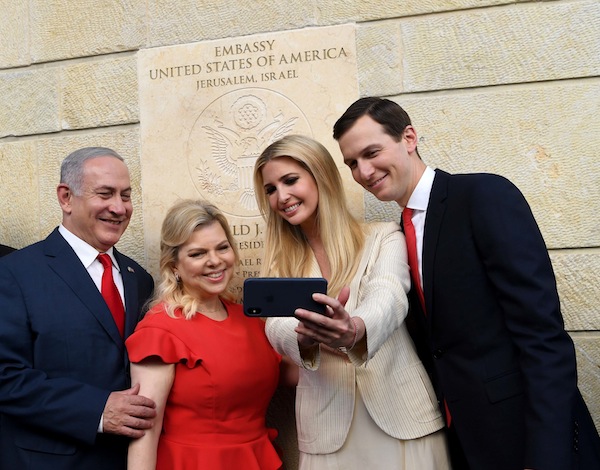
photo - Left to right: Prime Minister Binyamin Netanyahu, Sara Netanyahu, Ivanka Trump and Jared Kushner at the opening of the U.S. embassy in Jerusalem
Left to right: Prime Minister Binyamin Netanyahu, Sara Netanyahu, Ivanka Trump and Jared Kushner at the opening of the U.S. embassy in Jerusalem. (photo from IGPO courtesy Ashernet)
photo - The Guatemalan flag is projected on Jerusalem’s Old City walls in anticipation of Guatemala moving its embassy from Tel Aviv to Jerusalem
The Guatemalan flag is projected on Jerusalem’s Old City walls in anticipation of Guatemala moving its embassy from Tel Aviv to Jerusalem. (photo from IGPO courtesy Ashernet)
photo - Violence along the Gaza border
Violence along the Gaza border. (photo from IGPO courtesy Ashernet)
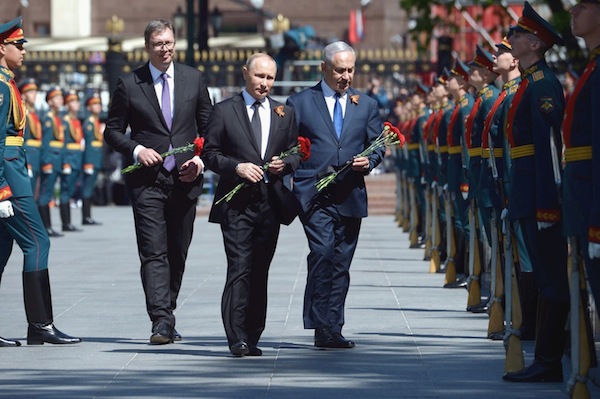
photo - Prime Minister Binyamin Netanyahu and Russian President Vladimir Putin in Moscow
Prime Minister Binyamin Netanyahu and Russian President Vladimir Putin in Moscow. (photo from IGPO courtesy Ashernet)
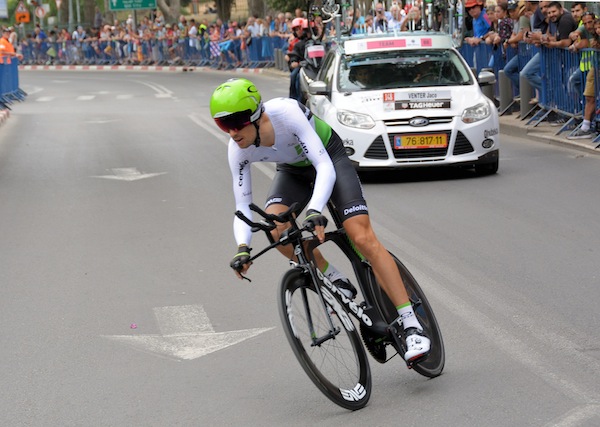
photo - The Giro d’Italia time trials in Jerusalem
The Giro d’Italia time trials in Jerusalem. (photo from IGPO courtesy Ashernet)
photo - Prince William and President Reuven Rivlin in Jerusalem
Prince William and President Reuven Rivlin in Jerusalem. (photo from IGPO courtesy Ashernet)

Help dealing with dementia

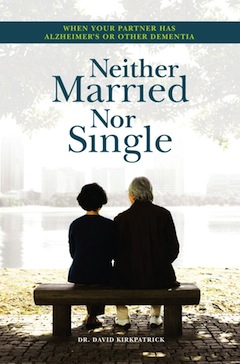
For anyone who is close to someone with Alzheimer’s disease or another form of dementia, Dr. David Kirkpatrick’s Neither Married Nor Single: When Your Partner Has Alzheimer’s or Other Dementia (Brush Education, 2018) is a must-read. There is so much in it that is critical to know, learn or come to understand about living, loving and letting go of one’s spouse, partner or friend with Alzheimer’s.

Kirkpatrick, a recently retired psychiatrist, has written a rare gem of a book and its message is needed by so many spouses of patients with these dreaded diseases. Kirkpatrick is a widower; his wife, Dr. Clair Hawes, a proponent, educator and practitioner of Adlerian therapy, died only last year from Alzheimer’s. His warm, wise and wonderful book is a map to help family members make it through what is normally uncharted, terrifying and anxiety-filled territory.

Besides the great clarity and pathos with which this book is written, it is a rare book because it is written from the dual perspectives of a psychiatrist and a loving husband in the process of watching his beloved disappear. Kirkpatrick, the psychiatrist, brings much-needed information to help the care-taking spouse understand the complicated medical condition, from getting the right diagnosis to clear descriptions of how dementia manifests, and even understandable explanations of the brain. As a loving husband, he shares the insights gained from others, as well as from his own years of confusion, anxiety, pain and suffering.

image - Neither Married Nor Single book coverThe fact of the matter is that the vast majority of the information in this book is also needed by the children of parents suffering from Alzheimer’s or other dementia. If there is no spouse to read it, then children, nephews or nieces, grandchildren or even close friends should read this book.

There are eight chapters – “The Diagnosis,” “Alzheimer’s Disease: A History and an Update,” “Finding Help and Comfort for your AD Partner,” “Care Homes,” “Improving Your AD Partner’s Quality of Life,” “Taking Care of the Caregiver,” “Sexuality and Intimacy” and “Into the Future” – followed by notes and the bibliography.

This small but powerful book takes the reader from the first stages when a spouse or other family member realizes something cognitive is happening to one’s loved one; when a family member begins to know that their loved one’s life is changing for the worse.

With humour, honesty, pathos and the strong voice of man who deeply loved his wife, Kirkpatrick takes the reader on his journey, from before, during and after the diagnosis, to a care home, and all the way to her death.

There are so many quotes that I could share, but space doesn’t allow it. In addition to Kirkpatrick’s words of insight are many important transcripts from other spouses talking with great honesty about their experiences. Every person’s experience in such a situation is partly unique, but it is also fair to say that all of the spouses in the book are on the same road, just getting off at different exits before returning yet again to the main highway leading to the same destination. Kirkpatrick’s special personal and professional voice shines a light to assist readers to see their way.

In Chapter 4, “Care Homes,” after talking about many of the heartbreaking yet life-saving choices a spouse must make on where the Alzheimer’s spouse should live, Kirkpatrick encourages the reader this way: “These are questions that are not always answered quickly or easily, but they must be asked, and the earlier in your shared experience that you do this, the better.” Yet, near the end of the chapter, he writes, “Think it through carefully. Perhaps write down pros and cons. Other than your decision to become partners in the first place, this is the most important decision in all your years together, so take all the time you need.”

One of my favourite quotes from the book is at the beginning of Chapter 6. It is a toast: “Here’s to Aloneness and her second cousin, Loneliness. May we continue to especially savour and enjoy the former without being absorbed by the latter.” And isn’t this yet another way to describe the holy and tragic dance of loving and losing?

While Kirkpatrick writes beautifully as a psychiatrist and as a husband throughout the book, in Chapter 7, “Sex and Intimacy,” he reveals to the reader even greater depths and poignancy. But, every chapter is filled with meaningful advice, guidance and hope.

Finally, a personal note that I’d like to share with you, the reader of this review, and hopefully a future reader of David Kirkpatrick’s book. Besides being a past congregant of mine, David also has been a dear friend for the past 17 years. In addition, before the onset of Alzheimer’s, my wife and I used to go out with David and Clair to dinners and plays. They were one of our favourite couples to see. Watching their dynamic relationship, their sense of humour, their deep shared mutuality and enjoyment was truly an honour. It is, of course, all the more sad knowing what they had and what they lost.

David, already an accomplished psychiatrist and therapist, certainly never wanted to experience such a loss, but he has translated that tragedy into this book. Neither Married Nor Single is a gift to anyone related or close to people with Alzheimer’s, but it is an especially meaningful and helpful gift to spouses suffering on their own.

Rabbi Shmuel Birnham was the rabbi and spiritual leader at Congregation Har El on the North Shore for 16 years. He retired two years ago. Rabbi Shmuel thoroughly loved being Har El’s rabbi and he also completely loves being retired.

Stories to bring smiles

Delightful. That’s the first word that comes to my mind for two new hardcover children’s books by members of the Jewish community that will soon find their way to my youngest nieces’ bookshelves: Pip & Pup by Eugene Yelchin (Godwin Books) and Counting on Katherine: How Katherine Johnson Saved Apollo 13 by writer Helaine Becker and illustrator Dow Phumiruk (Christy Ottaviano Books).

Yelchin’s wordless book begins with a chick hatching. On a farm somewhere, having just come out of her shell, Pip sees the world for the first time. She spies a puppy sleeping under cover of a tractor. Fearless, she goes right up to Pup’s nose to say hello. When Pup awakens and barks in greeting, Pip is thrown into a panic, not quite prepared for the full size of her relatively large new friend.

When the rain starts, Pip literally climbs back into her shell, but just to stay dry. She is no longer afraid. In fact, when she sees Pup’s distress at getting wet and at the sound of the thunder and the force of the rain, she offers what help she can. The two start to play even before the sun comes out again. A broken eggshell dampens spirits momentarily, but then it’s Pup’s time to fix things, which she does.

Pip & Pup is a simple story that is evocatively illustrated using warm colours, texture and layers, combining pastels, coloured pencils and digital painting. There is a depth to the art and the story. Children and their adult readers will have fun asking each other questions as they go along. Do you think Pip is brave to say hello to Pup? Do you like the rain? How is Pup feeling right now? How would you feel if something of yours broke?

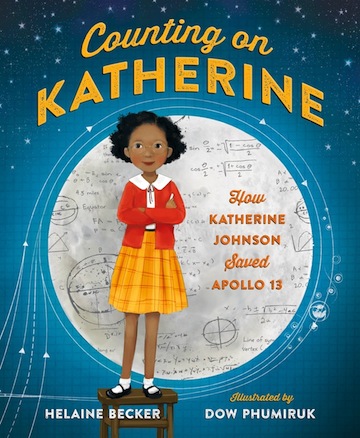
image - Counting on Katherine book coverMany questions will arise from reading Counting on Katherine, as well, though some of them will require a different kind of reflection, as the story touches upon racism, sexism and other such topics – in an age-appropriate way for readers 5 and up.

Becker interviewed Katherine Johnson, who turned 100 years old on Aug. 26, and Johnson’s family for this picture-book biography. Johnson was a mathematician at the National Aeronautics and Space Administration (NASA) and, among other things, her manual calculations were crucial in bringing the crew of Apollo 13 back to earth safely after it was damaged while in space.

In Counting on Katherine, we meet Johnson as a young girl: “Katherine loved to count. She counted the steps to the road. The steps up to church. The number of dishes and spoons she washed in the bright white sink. The only things she didn’t count were the stars in the sky. Only a fool, she thought, would try that!”

And Johnson was anything but a fool. She skipped three grades in elementary and was ready for high school at 10 years old. “But back then,” writes Becker, “America was legally segregated by race.” Johnson’s high school didn’t admit black students, so her father, by “working night and day, he earned enough money to move the family to a town with a black high school.”

Johnson’s next challenge was that, as a woman in that era, she was relegated to the teaching and nursing professions, so she became an elementary school teacher. However, in the late 1950s, the space race began, and NASA’s predecessor began hiring thousands of workers. “It even started hiring black women – as mathematicians.”

Johnson excelled at NASA and her work was integral to the United States’ space program, not just to the Apollo 13 mission, and Counting on Katherine has an epilogue that gives some additional information about Johnson. As well, Phumiruk’s imaginative digital artwork is also information-filled, clearly showing Katherine’s longing to learn, as she gazes from her bedroom window at the night sky; her joy with numbers, as she fills chalkboards with them; her anger at not being allowed to attend her town’s high school; her meticulousness, as she calculates a safe journey for Apollo 13. Counting on Katherine is a wonderful book.

We are hardwired to be kind

Dr. Brian Goldman is an emergency physician at Toronto’s Mount Sinai Hospital. (photo by Christopher Wahl)

According to Dr. Brian Goldman, author of The Power of Kindness: Why Empathy is Essential in Everyday Life (HarperCollins Publishers, 2018), we all have the innate ability to be kind, gentle and to give of ourselves without the need to get anything in return.

Goldman, who works as an emergency physician at Mount Sinai Hospital in Toronto, said the idea for The Power of Kindness had been germinating in his mind for a long time.

“I had originally pitched a book on empathy and health care,” he said, “and my publisher, HarperCollins, came back to me and asked why I don’t instead aim a little broader and write a book about empathy in the world at large, not focus just on the hospital.”

About the concept, he said, “The wise physician knows how to say, ‘I don’t know.’ The book doesn’t say how it feels to say ‘I don’t know’ 17 times in a row. At some point, you’re terrified that they’re going to say, ‘Why don’t you get us someone here right now who can answer our questions?’ And you’re afraid of being unmasked as being inadequate.”

In recognizing this in himself, Goldman decided to travel the world to speak to some of the kindest people to hopefully internalize their kindness and find ways to pass their enlightenment onto others. In doing this, he said, “I found answers and, for the rest, you’re going to have to read the book. But, I will tell you one thing. I found that some people are born with empathy.

“I found one extraordinary child,” he said, by way of example, “who was nicknamed ‘Ta Ta.’ And he, at the time that I met him, was [almost] 3 years old. His mom, Shala, adopted a man on the streets of Sao Paulo who had been homeless for nearly 40 years and called him her soulmate. The striking thing about her situation is that her son, as a toddler … without ever having known what his mom had done, adopted his own homeless man. You can’t make that up.

“At a time, whatever nurturing she provided had set the stage for him to be as empathic as her. But, he [also] feels things and understands things intuitively about Adriano, the man who he befriended in the same way that Shala did.”

Goldman met people for whom empathy comes naturally and some who are gifted in empathy, but he also realized that we all share the same common experiences – adversity, disappointment, shock, loneliness, physical ailments and failure.

“I think, more often than not, it’s these experiences that are the engine for empathy,” said Goldman. “Because, after that, you can either die or you can pay it forward. And the way you pay it forward is to provide comfort and empathy for people who are going through what you went through. That was probably the common denominator that I saw again and again.

“Shame-based people tend to absorb the idea that they cannot make a mistake. If they do, it will be the end of everything.

“My intuitive guess is that a lot of health professionals feel that way and that’s why they go into the health professions … because they are hoping that, if they can do enough good works, it will make up for the one mistake they made.

“I was very much like that. I wasn’t totally like that, because, if I were more like that, I’d be unaware of all the things I’m saying right now.”

image - The Power of Kindness book coverAccording to Goldman, kindness and empathy are the ability to imagine what it is like to be somebody else, to see things through their eyes and act accordingly, to put yourself in their place.

“Unless you have a narcissistic personality disorder, in which your brain circuits will show you’re less capable of empathy, you’re capable of empathy,” said Goldman. “Everyone is hardwired for empathy. But, the thing is that, at the highest levels of executive function, empathy is a choice and we are constantly being distracted by competing priorities – my needs versus yours, my family versus your family. I’m running around like a pinball … boy, that’s a dated metaphor … but I can’t be all things to all people all the time. It’s impossible. Somebody is going to judge what I’ve delivered as unkind care.

“To become more kind in everyday life,” he said, “first of all, believe in your hardwiredness to be capable of being kind and empathic. Know that there are things that get in the way and they are very stereotypical – lack of face-to-face time, spending more time on social media, contacting people on social media, and less time on listening and face-to-face and being able to recognize cues that say that somebody’s more unhappy than their words are telling you.”

Goldman suggests learning which factors get in your way and to start creating ways that work for you to push those distractions aside. In The Power of Kindness, he talks about breathing exercises – about how we get distracted by unpleasant thoughts and feelings and how to re-centre ourselves and allow the negativity to float away.

“I use the metaphor of a parade,” he said. “There are beautiful floats and they represent nice thoughts – happy things that have happened or that I’m looking forward to – and you let them float by without judging them. Then, every once in awhile, there is a lousy float that’s ugly – the boss who is yelling at you, the coworker or somebody who you think is whispering about you behind your back, or the person who gave you the finger in traffic when you were both driving.

“The reason I like the float metaphor is that, with a lousy float, you let it go by – you imagine you’re in the stands, reviewing the floats as they go by. If it’s a parade, you let it go by, because there will be another nice one down the road in a couple of minutes.”

As for what sort of reception the book has garnered so far, Goldman said it has been very positive.

“Maybe the world is ready for a book like this because we’re all living at such a time when … people are going for kill shots on Twitter and there’s so much nastiness…. We’re watching, in the United States, kids being separated from their parents and put into cages. We need kindness.”

Rebeca Kuropatwa is a Winnipeg freelance writer.
The draft: a dad reflects

February 2015

Collected the mail this morning. A few flyers and bills. And my son’s draft notice. A quick double take. A flashback to my son playing with plastic dinosaurs. Then I texted my wife, “It’s here.”

A few hours later, my son came home. “How was school? There’s a letter for you on the table.” Opening it, and with a surprising degree of nonchalance, he said, “My call-up.” As if going into the army was an ordinary occurrence. “Ah, yeah. It’s here.”

A few days later, I asked D if I could post a picture of his call-up on Facebook. “Dad, you can’t post this stuff. It’s, like, confidential.” Duh. Of course.

May 2015

Picked my son up from Jerusalem. He was there for a series of pre-army tests. He couldn’t stop talking about the cute chayelet (army girls). Teenagers!

October 2015-January 2016

D interviewed for various roles in different divisions. None of interest. He wants something air force-specific. My wife and I helped him with a letter to the IAF manpower division. Emphasized

his aircraft knowledge. His love of plane simulators. (How many times did we catch him “flying” instead of doing his homework?) His flying lesson (a 17th birthday gift).

February-March 2016

Silence.

April 2016

The air force came knocking. Another interview. Another psychometric test. D felt he aced this one (pun intended).

May 2016

Text message from the Israeli Air Force. Accepted. Not the specific role he wanted but within his window of satisfaction. Excitement. Trepidation. The air force is the darling of the military. Best conditions. High-tech environment. Much to my son’s amusement, I don’t really understand what he’ll be doing.

July 2016

D called me at the office. Draft date pulled in. “Dad, we need to change our holiday plans – three weeks and I’m in.” New York will have to wait. Improvising, we quickly made other travel arrangements. A week later, we were in northern Italy. My son a reluctant traveler. He’d rather be home with his friends sharing the excitement of the draft.

August 2016

Took D for a buzz cut. His beautiful golden locks. Gone. I also had a buzz cut. My less beautiful grey locks. Gone. Solidarity.

We threw a draft bash. Lots of friends and family. I toasted: “We are celebrating your draft … into the world’s best air force…. I can’t tell you how proud we are…. You obtained a role – and I still don’t get it – that is meaningful and challenging, with great responsibility and opportunity. Embrace it. Be safe and strong. Keep us safe and strong. D, sweet child of mine. May God make you like Ephraim and Menashe … and establish peace for you.”

Draft day, 2016

We traveled in two cars. My wife. Our daughter. My mother-in-law. D’s friends. His girlfriend. And, of course, the cadet. We arrived at the induction centre at 0800 hours. Despite living in Israel for more than 22 years, I’m still amazed by the informality. Sometimes disguised as chaos. My Canadian self still says lines. Order. Please. Excuse me. The security appeared to be in disarray. Then I remembered I’m on an army base. Umm … can’t get more secure than that.

Hundreds of young recruits. Balagan. Israeli flags waving overhead. Old ladies passing out amulets with the prayer for the Israeli army. Sephardi grandmothers spraying water into the crowd to wash away the evil eye.

Much too quickly my son’s name was called. Won’t forget the apprehensive “I guess it’s my turn” look on his face. Nor the tears flowing from my wife’s almond-shaped eyes. Nor the tears flowing from my daughter’s green eyes. Nor my mother-in-law’s “shouldn’t there be peace by now?” hunched and saddened look. I took D aside. Covered his head with my hand. Recited the blessing for a son. Then, like at a beach party, his friends hoisted him on their shoulders. Carried him forward. Innocence. Bravado. Another generation coming of age in Israel.

He walked the final distance alone. Oversized backpack. Buzz cut. Excitement. Trepidation. Then disappeared into the military transport and his next three years. Actually, two years and eight months, but who’s counting.

Bruce Brown has been living in Israel for a long time and is the proud father of two Sabras, one currently a sergeant in the Israeli Air Force.

Israel’s assets versus liabilities

Israel’s beauty is a definite asset. (photo by Cynthia Ramsay)

During the month of Elul, as we approach Rosh Hashanah, which this year falls on Sept. 9, Jews traditionally practise a kind of spiritual stocktaking. These are days when we look inward – assessing what happened to last year’s dreams, asking pardon for the wrongs we have committed and hoping, by repentance, charity and prayers, to be written into the Book of Life for the coming year.

I doubt if you would find many people in Israel who would say that 5778 was a particularly good year. The facts speak for themselves – no progress in the peace process, international isolation and antisemitism. These are the liabilities, and they are not figments of the imagination – they are real, and have led to a fall in the general morale.

But what is there to put in the assets column? There must surely be something to balance the account. Otherwise, why are there olim (immigrants) who stay on year after year, new ones motivated to come, and Israelis who go on trying to find solutions for seemingly insoluble problems, both on the personal and the national planes?

There were times during the last year when I was tempted to despair. But, even as I said the words, I knew I wasn’t fooling anyone, least of all myself. Because the positive things I have found in Israel I know cannot be duplicated anywhere else in the world.

First, I have found a family – the whole house of Israel. How wonderful to walk the streets and know that everyone is your brother or sister. Of course, just like in a real family, there are times that this same sibling is rude or aggressive and you react with bitterness towards their manners, opinions, behaviour. But, while you feel free to criticize them, let a stranger do it and you jump to their defence.

You argue that they live under continual tension, are wearied from fighting five wars and from the ongoing hostilities; that they have lost many dear ones and must always be prepared to cope with terrorist attacks. And, while you are explaining them and defending them – just like in a real family – you know even more that you love them.

With this realization comes another. You know that, if you are ever sick or in need, you are among people who care about you. There is nowhere else in the world where people take so much responsibility for one another, who care so much, become involved so much.

Nor is there any other country in the world where the youth are so magnificent. At an age when teenagers elsewhere may be sowing their wild oats and are their parents’ despair, our boys and girls are putting on uniforms and quietly devoting the fun years of their lives to serving their country. There is no fanfare or extraordinary praise. They do it as a duty, conscientiously, modestly. They are Israel’s riches that no inflation can ever devalue; they are our hopes and our future.

Israel is a unique ethnic mosaic. It has taken in Jews of every background, language and social level; it has provided a home for the homeless; a refuge for the persecuted. It doesn’t ask an immigrant, “What are you bringing to us – what skills, what capital?” Those who bring little or nothing are no less welcome. Israel, as a whole, really cares.

And it is a beautiful country, no matter where you travel. Haifa, seen at night from Mt. Carmel, is diamonds scattered on black velvet. The Galilee – terraced rows of grey-green olive trees and lush vegetation of date-palms. Cosmopolitan sidewalk cafés in Tel Aviv. Scarlet sunsets over the Dead Sea and deep indigo twilight over Eilat. And Jerusalem – our eternal city – the special, spiritual, abiding jewel in our crown.

Yet, that is not all. There are so many more things you could add. Really, there is no end to them. It is a country of enormous achievement – in agriculture, in science, in high-tech, in the arts. It is a country where every festival – religious or secular – is celebrated, to a greater or lesser degree, by the whole population. With all their troubles, Israelis are a spontaneous people who don’t need expensive entertainment. They can have a wonderful time singing around a campfire, having a backyard barbecue or dancing in the streets.

Thinking it over, you realize that the assets column far outweighs the liabilities column. And then you ponder the fact that, even if the opposite were true, Israel, with and without the blemishes, is yours.

Happy New Year to us all.

Dvora Waysman is the author of four books, one of which, The Pomegranate Pendant, has been made into the movie The Golden Pomegranate. Her latest novel is Searching for Sarah. Australian-born, she has lived in Jerusalem for 47 years.

The miracle that is our body

What do we really know about the marvelous vessel we are fortunate enough to inhabit? Don’t we mostly just take it for granted? We were popped into the world without our say so, but, in return, we inherited millions of years of human evolution in the bodies we have been bequeathed.

You will be enlightened to learn that our bodies are so filled with energy that we emit light, although our eyes are too weak to detect it. Information speeds along our nerves at 400,000 miles per hour, our brains hosting 100,000 chemical reactions per second. Blood corpuscles run through our bodies, covering 20,000 kilometres daily. We breathe 20,000 times a day to provide them with the oxygen our bodies need to function.

Our noses can differentiate three trillion different scents, and our eyes millions of different colours. Our skin has 100 pain sensors per square centimetre. Our stomachs are producing more new cells faster than those that are being destroyed by the acids of digestion. We produce one litre of saliva a day to keep things juicy. Operating all this is the work of our brains, which are actually more active when we are asleep than when we are awake.

Did we luck out or what? The most amazing thing is that, most of the time, the apparatus keeps on working for a lifetime with few or no problems. Our hearts beat away three billion times during our lives, we consume 35 tons of food on average and shed two to four kilograms of skin every year.

Women will be interested to know that their tongues are blessed with more taste buds than their male counterparts. They may be less happy to learn that we have 67 different types of bacteria in our bellybuttons and more bacteria in our mouths than the number of people on this planet.

With all of this going on in our bodies automatically, what are we in charge of? Where do we come in? Where does individual will come from? What is it that makes us the particular person we are? When do we get to be the person we think we are?

That may be where DNA comes in. That is the stuff our parents gave us, half the package from each of them. Out of the incredible hodge-podge that each of them got from their parents – millions, maybe billions, of different potentialities – chance determined the particular combination of traits we received from them. What we got influenced not just our physical heritage, but our mental and emotional elements are inherited, as well. After that, given some reasonable nurturing (something a lot of kids don’t get), each of us is on our own to make what we can of what we got.

We have five main chemicals in the brain, most of them variations of the feel-good type. We tend to pursue activities and things that make us feel good and that stimulate the flow of those chemicals in our brains.

We work because we enjoy the work, or because we enjoy having the money we will earn from that work. We pursue the company and attentions of those who make us feel good, sometimes becoming addicted (falling in love?) and desiring a permanent attachment. We strive because achieving the object of our effort will give us pleasure, be it knowledge, respect, money, power, fame, or all of them.

The vigour with which we pursue these things may arise from our DNA or from the kind of nurturing we experienced in our growing up, or both. Studies have shown that, in identical twins separated at birth, genetics accounted for 50% to 70% of outcomes and behaviours. There is little doubt that DNA programming is important, but behavioural differences between individuals can lead to different outcomes.

For some of us, all this may have relevance only to the degree it illuminates the course our own life is taking or has taken. Do we feel we got a fair shake in the lottery that landed us in the birth basket we arrived in? Did the environment we arrived in, the legacy our DNA bestowed on us, give us a fair chance to grab the golden ring(s) that satisfied our aspirations or desires? Did our grit and determination permit us to overcome the obstacles we faced in life so that we are more satisfied with where we are compared to where we started from? Are we happy?

Our lives are the body of proof.

Max Roytenberg is a Vancouver-based poet, writer and blogger. His book Hero in My Own Eyes: Tripping a Life Fantastic is available from Amazon and other online booksellers. The term “body of proof,” used in this article, is taken from the name of a television drama about a medical examiner that ran on ABC from 2011 to 2013.