On making a new start

Why is it so hard for many of us to shake off the past and begin anew? My Bride often tells me she finds it amazing how easily I forgive myself for my errors. She holds her misgivings about past actions to her breast for eternity. For me, when I forgive myself, I find it much easier to strike off in another direction, one which may, or may not, lead to a better result.

Maybe it has something to do with my background. As an adherent to Judaism, I have always been much taken by the ideas associated with the Jewish New Year. Rosh Hashanah, occurring in the autumn, as determined by the lunar calendar, is one of our major holidays. It is a happy holiday, a time of feasting and family gatherings, celebrating that we managed to get safely through another year. And there are lots of wishes expressed that we might do the same again next year, even marking it in our spiritual birthplace, Jerusalem.

But there is a serious side to the holiday as well. The New Year will be followed closely by the Day of Atonement, Yom Kippur, when all Jews are assessed and judged as to what their fate will be in the year to come. So, the New Year is a time when all Jews are expected to examine their behaviours and make resolutions that, hopefully, will guide their actions more positively in the coming year.

To do so, one has to search one’s conscience, one has to admit to oneself all those things that we have done wrong, that only we know about. We have to admit to ourselves remorse for our actions that we know have not been correct in the light of our values. Then we have to decide that we will not do those things again. We have to forgive ourselves and resolve to do differently. Indeed, during this season, many individuals go out of their way to visit antagonists and others to whom they may have done wrong to beg pardon for any perceived excesses to which they may have been a party.

So, you can see that I come by my approach rightly. It was imbibed with my mother’s milk. Judaism is not unique in including this concept within its construct. It seems to be an important element within many religious and philosophical approaches as to how humans should live. The key thing to me is that we have to be able to forgive ourselves so that our contrition can motivate actions toward a new start.

I must admit I always feel refreshed when I am in the position of having cast off the constrictions imposed by ideas I have been forced to abandon. Ahead of me lie whole new worlds of possibilities. That old stuff didn’t work. What did I learn? Where can I go from here?

What about that idea that we discarded before as impractical, impossible? Could there be something in it? What about what Joe suggested, which we shouted down? Maybe we should ask him to explain it more fully. Could there be something in it that we missed? He has had good ideas before. What if we put that idea together with the one we had? Could that give us a better result? Anybody who has spent a part of his or her life confronting problems, and problem-solving, in concert with other people, will know that of which I speak.

Don’t we feel better after we have cleared the decks with an old adversary? Now maybe we can make a fresh start and work together to accomplish common goals that we share. Isn’t it great when the difference you have had with your spouse has been resolved and you have returned together to the zone of loving and sharing that you were in danger of losing? Isn’t that more important than things that may have divided you? Aren’t so many long-term relationships built by making new starts over and over again?

The Jewish New Year ethic is a part of how we can live our lives each day. Making a fresh start is what we can do every day we wake up. We all know there are things percolating on the back burner. We may not want to think about some of these things. We may push them off to the back of our minds because of their unpleasantness. But they don’t go away. They are the things we will have to tackle if we want to make a fresh start in some important area of our lives.

Max Roytenberg is a Vancouver-based poet, writer and blogger. His recently published Hero in My Own Eyes: Tripping a Life Fantastic is available from Amazon and other online booksellers.

What kids can teach

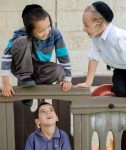
Rosh Hashanah is a time to take stock of the previous year and prepare yourself spiritually for the year ahead. But for those of us with busy families, it can be hard to squeeze time for reflection into the round of Yom Tov preparations. It seems that, once you have children, the holiday focus goes from attending shul to tending to your children and, as rewarding as parenting can be, it leaves little time for focusing on spiritual growth. Yet, one of our most important jobs as parents is to teach our children the concepts of teshuvah (repentance), tefilah (prayer) and tzedakah (charity/justice). How are you supposed to teach these values to your children when you may not have time to connect to them yourself?

Child education expert Moshe Beller has found that the answer lies within the very task at hand – by watching your children.

As director of Beit Metzudot School at Seeach Sod, an Israeli organization for kids and adults with special needs, Beller must often answer tough questions about how to teach children these important values. His answer – emunah (faith/belief) – in them, yourself and, ultimately, in Hashem.

“Here at Seeach Sod, we work with children of all ages and abilities. When we approach educating a child, we look at every detail, from the diagnosis, available therapies and interventions, family circumstances and more. Then we calculate it all to find a solution that best serves the individual child. Though I cannot tell you one therapy that works for every situation, I can say that, at the core of every treatment, is believing that your child can succeed – there is no greater intervention than that!”

Sounds good, but how can we tap into that elusive ideal? If you haven’t guessed it already, it’s our children who can teach us that as well.

Children have a profound ability to trust their parents to lead them. Even if they don’t always follow what you say, they trust you with their life essentials. They trust you will keep them safe, fed, clothed, etc. This level of emunah is one we should allow ourselves to tap into when it comes to grappling with G-d. Mirror what your child displays regularly – let go of the worries that hold you back and know that everything is being taken care of for your benefit.

As for teshuvah, an essential element of teshuvah is believing you can start anew, that you can learn from your mistakes without your ego holding you back. Children display this to us with their ability to live in the moment. They don’t condemn their past actions or the past actions of others like adults do. They’re excited to learn and grow without fear of admitting they don’t know it all.

With respect to tefilah, a key to heartful prayer is awe. A sense of G-d’s greatness and the miracles that surround us each day opens possibilities to so much more. Children have the ability to be wowed by things we take for granted. As adults, we become jaded and forget that the simple pleasures surrounding us are in fact miraculous. Learn from your children and find wonder in the simple creations.

Finally, tzedakah. Have you ever seen how a child lights up when you tell them you need their help? At the core of generosity is the understanding that, no matter what your financial situation is, we all have something we can offer to another. Children take much pride in being able to help, whether or not being of genuine assistance is within their capabilities. We, too, can take the same joy in giving tzedakah and doing acts of chesed (loving-kindness).

This year, instead of seeing your children as a distraction from the path to spiritual preparation for the High Holidays, look to them to guide you towards a year of growth.


Recipes for a tradition

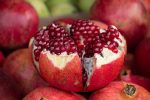
(photo by Noa Fisher via PikiWiki-Israel)

Pomegranates are referred to in the Bible in many various ways. In the sensual poetry of Song of Songs, we read, “I went down into the garden of nuts … to see whether the vine budded and the pomegranates were in flower.” In another passage, the poet writes, “I would cause thee to drink of spiced wine, of the juice of my pomegranate.” Song of Songs has four additional mentions of pomegranates, and there are also references in Joel, Haggai and I Kings.

For many Jews, pomegranates are traditional for Rosh Hashanah. Some believe the dull and leathery skinned, crimson fruit may have really been the tapuach, apple, of the Garden of Eden. According to Forward “Food Maven” Matthew Goodman, the pomegranate originated in Persia and is one of the world’s oldest cultivated fruits, having been domesticated around 4000 BCE. The Egyptians imported pomegranates from the Holy Land in 1150 BCE and natural pomegranate juice, made into spiced wine, was a favourite of Hebrews living in Egypt. Pomegranate wood could also be carved into skewers on which to roast the lamb for Passover.

The word pomegranate means “grained apple.” In Hebrew, it is called rimon, which is also the word for hand grenade! In fact, the English term “hand grenade” is said to come from this and that both the town of Granada in Spain and the stone garnet come from the name and colour of the pomegranate. The juice can also be made into grenadine.

The Hebrews yearned for the pomegranates they left behind in Egypt while wandering in the desert – “And wherefore have ye made us to come up out of Egypt, to bring us in unto this evil place? It is no place of seed, or of figs, or of vines, or of pomegranates.” (Numbers 20:5) And the spies reported their findings in Canaan to Moses: “And they came unto the valley Eshkol and cut down from thence a branch with one cluster of grapes, and they bore it upon a pole between two; they took also of the pomegranates and of the figs.” (Numbers 13:23)

Pomegranates were also used on the faces of the shekel in the second century BCE. King Solomon had an orchard of pomegranates, and pomegranates of brass were part of the pillars of his great Temple in Jerusalem. Throughout the Bible, pomegranates are referred to as a symbol of fertility. As well, in the Jewish mystical tradition of kabbalah, it is said there are 613 seeds in each pomegranate, equaling the number of mitzvot commanded by God.

On the second night of Rosh Hashanah, when it is customary to eat a “new” fruit, one that celebrants have not eaten during the year, many Sephardi Jews choose the pomegranate. They recite the prayer “ken yehi ratzon, may it be thy will, O Creator, that our year be rich and replete with blessings, as the pomegranate is rich and replete with seeds.”

In modern days, a study at the Technion in Haifa a few years ago showed the power of the fruit. The cholesterol oxidation process, which creates lesions that narrow arteries and result in heart disease, was slowed by as much as 40% when subjects drank two to three ounces of pomegranate juice a day for two weeks. The juice reduced the retention of LDL, the “bad” cholesterol that aggregates and forms lesions. When subjects stopped drinking the juice, the beneficial effects lasted about a month. Other studies have shown that pomegranates fight inflammation and cancer, and slow cellular aging. Pomegranates are a good source of potassium, low in calories and low in sodium.

When choosing a pomegranate, look for one that is large, brightly coloured and has a shiny skin. You should store a pomegranate in a plastic bag in the refrigerator, and it can keep up to 10 weeks. To open a pomegranate, score the outside skin into four pieces, then break the fruit apart with your hands following the divisions of the membranes. Pull off the membranes then scrape the seeds into your mouth or lift them out with a spoon. Here are some recipes for those seeds.

POMEGRANATE SYRUP

6 pomegranates
1/3 cup white sugar
1/3 cup brown sugar
1 cinnamon stick
1/8 tsp nutmeg
1/8 tsp allspice

  1. Puree seeds from pomegranates in blender or food processor and strain. Place in saucepan.
  2. Add white sugar, brown sugar and cinnamon stick. Bring to a boil. Reduce heat and simmer about 10 minutes. Add nutmeg and allspice and cook one minute.
  3. Remove from heat, discard cinnamon stick and strain.

BAKED APPLES IN POMEGRANATE SYRUP
6-8 servings

4 slightly tart apples
1 halved pomegranate
apple juice
1/3 cup preserves of your choice
1/2 tsp cinnamon

  1. Cut each apple into four wedges. Place in microwavable dish.
  2. Squeeze juice from half the pomegranate into a measuring cup. Add enough apple juice to make half a cup. Add preserves and cinnamon and mix well. Pour over apples to coat them.
  3. Cover with plastic wrap and microwave for two minutes. Stir and microwave two more minutes. Place apple wedges in serving dishes.
  4. Remove seeds from other half of pomegranate and garnish apples.

POMEGRANATE FRUIT SOUFFLE

3 eggs
1 cup + 3 tbsp confectioners’ sugar
1 tbsp unflavoured gelatin
1/2 cup hot water
1/2 cup cold water
7 tbsp orange juice
2 1/2 tbsp lemon juice
pulp and seeds of 6 pomegranates

  1. Place yolks and sugar in a saucepan over a second saucepan filled with water (double boiler-style). Cook, stirring, until thick and creamy.
  2. Dissolve gelatin in a bowl of hot water. Then stir in cold water.
  3. Add orange juice, lemon juice, pomegranate pulp and seeds and mix.
  4. Add juice mixture to egg yolk mixture.
  5. Beat egg whites until stiff. Fold into pomegranate mixture. Pour into a soufflé dish or casserole with height built up of three to four inches with a double thickness of wax paper or aluminum foil, stapled or held in place with a paper clip.
  6. Chill in refrigerator until set. Remove band of paper. Decorate with whipped cream.

Sybil Kaplan is a journalist, lecturer, book reviewer and food writer in Jerusalem. She created and leads the weekly English-language Shuk Walks in Machane Yehuda, she has compiled and edited nine kosher cookbooks, and is the author of Witness to History: Ten Years as a Woman Journalist in Israel.

Apples and honey – so good

(photo by Markus Hagenlocher)

One of the most well-known customs of Rosh Hashanah is the dipping of apple pieces in honey but what is its origin?

In the time of King David, we know he had a “cake made in a pan and a sweet cake” (II Samuel 6: 15, 19) given to everyone. Hosea 3:1 identifies the “sweet cake” as a raisin cake.

The Torah also describes Israel as eretz zvat chalav u’dvash, the land flowing with milk and honey, although the honey was more than likely date honey, a custom retained by many Sephardi Jews to this day.

While honey may have been used in King David’s cake, the honey of ancient Eretz Yisrael was made from dates, grapes, figs or raisins because there were no domestic bees in the land. At that time, only the Syrian bees were there and, to extract honey from their combs, it had to be smoked. Still, honey was of importance in biblical times, as there was no sugar then.

During the Roman period, Italian bees were introduced to the Middle East, and bee honey became more common. Today, Israel has roughly 500 beekeepers who have some 90,000 beehives, which produce more than 3,500 tons of honey annually. Kibbutz Yad Mordechai is the largest producer of honey – 10,000 bottles a day.

Among Ashkenazi Jews, challah is dipped in honey on Rosh Hashanah, instead of having the usual salt sprinkled on it. The blessing over the apple is, “May it be Your will to renew for us a good and sweet year,” before it is dipped in honey.

Dipping the apple in honey on Rosh Hashanah is said to symbolize the desire for a sweet new year. Why an apple? In Bereishit, Isaac compares the fragrance of his son, Jacob (who he thinks is his son Esau), to a field, and Rashi says it is sadeh shel tapuchim, a field of apple trees.

Scholars tell us that mystical powers were ascribed to the apple, and people believed it provided good health and personal well-being.

Some attribute the using of an apple at Rosh Hashanah to the translation of the story of Adam and Eve and the forbidden fruit, which caused the expulsion from paradise. The Garden of Eden is also called Chakal Tapuchim, “Garden (or field) of Apple Trees.”

According to Gil Marks (z”l) in Encyclopedia of Jewish Food, “the first recorded association of apples with Rosh Hashanah was in Machzor Vitry, a siddur compiled around 1100, which included this explanation: ‘The residents of France have the custom to eat on Rosh Hashanah red apples….’ Future generations of Ashkenazim adopted the French custom … leading to the most popular and widespread Ashkenazi Rosh Hashanah tradition.”

Rabbi Jacob ben Asher, born around 1269, who fled with his family to Spain in 1303, was the first to mention the custom of apples dipped in honey in his legal compendium Arbah Turim, circa 1310, citing it as a German tradition.

Rabbi Alexander Susslein of Frankfurt, Germany, a 14th-century rabbinic authority, revealed it had become a widespread practice in Germany.

A few years ago, an article revealed that the average Israeli eats 125 apples and 750 grams of honey a year, mostly around the High Holy Days. Israel is very self-sufficient with regard to apples, with around 9,900 acres cultivated yearly, grown in the north, the Galilee hills and the Golan Heights. The most popular types of apples grown are Golden Delicious, Starking, Granny Smith, Jonathan, Gala and Pink Lady.

Honey in Hebrew, dvash, has the same numerical value as the words Av Harachamim, Father of Mercy. We hope that G-d will be merciful on Rosh Hashanah as He judges us for our year’s deeds.

Moroccans dip apples in honey and serve cooked quince, which is an apple-like fruit, symbolizing a sweet future. Other Moroccans dip dates in sesame and anise seeds and powdered sugar in addition to dipping apples in honey. Among some Jews from Egypt, a sweet jelly made of gourds or coconut is used to ensure a sweet year and apples are dipped in sugar water instead of in honey.

Honey is also used by Jews around the world not only for dipping apples but in desserts. Some believe in the phrase, “go your way, eat the fat, drink the sweet,” the sweet referring to apples and honey. Here are some recipes using honey for your Rosh Hashanah eating.

TISHPISHTI: MIDDLE EASTERN HONEY-NUT CAKE

Honey syrup:
1 1/2 cups honey
2/3 cup water
1/3 cup sugar
1/4 cup lemon juice

Cake:
2 cups finely ground almonds, hazelnuts, pistachios or walnuts
1 cup cake meal
2 tsp orange juice
1 tsp ground cinnamon
1/2 tsp allspice or ground cloves
6 eggs
1 cup sugar
1/2 cup vegetable oil
1 tbsp grated orange or lemon zest

  1. Stir honey, water, sugar and lemon juice in a saucepan over low heat until the sugar dissolves, about five minutes. Increase heat to medium, bring to a boil and boil for one minute. Let cool.
  2. Preheat oven to 350°F. Grease a 13-by-nine-inch baking pan.
  3. Combine nuts, cake meal, cinnamon and cloves in a mixing bowl.
  4. In another bowl, beat egg yolks with sugar. Add to nut mixture with orange juice. Add oil and orange or lemon zest.
  5. In a third bowl, beat egg whites until stiff but not dry. Fold into batter. Pour batter into baking pan and bake for 45 minutes. Cool.
  6. Cut cake into one- to two-inch squares or diamonds. Drizzle cooled syrup over the warm cake. Serve at warm or room temperature.

MY GRANDMA SADE’S TEIGLACH
Though my grandmother was born in New Jersey, her mother came to the United States as a young girl from Russia, so she probably learned this dish from her mother. Teiglach means “little dough pieces,” and it was originally for family celebrations and various holidays. Today, it is made primarily for Rosh Hashanah as a symbol for a sweet new year. According to my favourite reference book for any food, Marks’ Encyclopedia of Jewish Food, Teiglach was brought to the United States by Eastern Europeans in the early 1900s, and nuts were not part of the recipe in the old country.

2 1/2 cups flour
1 tsp baking powder
4 tbsp oil
4 eggs
1/8 tsp salt
3/4 cup brown sugar
1 1/3 cups honey
1 tsp ground ginger
1/2 tsp ground nutmeg
1 cup finely chopped pecans

  1. In a mixing bowl, combine flour, baking powder, oil, eggs and salt. Stir until dough is formed.
  2. In a saucepan, boil sugar, honey, ginger and nutmeg for 15 minutes.
  3. Wet a board with cold water.
  4. Pinch pieces of dough and drop them into the boiling honey mixture. Cook until very thick. Add nuts and stir. Pour honeyed pieces onto the wet board and cool slightly.
  5. With wet hands, shape dough into two-inch balls or squares. Let cool. Store in an airtight container.

Sybil Kaplan is a journalist, lecturer, book reviewer and food writer in Jerusalem. She created and leads the weekly English-language Shuk Walks in Machane Yehuda, she has compiled and edited nine kosher cookbooks, and is the author of Witness to History: Ten Years as a Woman Journalist in Israel.

A rabbi’s dream come true

New York Rabbi Aaron Laine first arrived at Beth El, an Ashkenazi congregation in the Panama subdivision of Paitilla, 23 years ago. (photo by Lauren Kramer)

Imagine being a rabbi at the helm of a community where Judaism is actively embraced. A city where Jews enthusiastically attend synagogue and classes, keep Shabbat, send their kids to Jewish day school and honour the laws of kashrut. A rabbi’s dream, right? Then Panama City is that dream come true.

photo - Congregation Beth El
Congregation Beth El (photo by Lauren Kramer)

New York Rabbi Aaron Laine first arrived at Beth El, an Ashkenazi congregation in the Panama subdivision of Paitilla, 23 years ago. “Ninety-five percent of the community keeps kosher,” said the rabbi with pride. “On Sukkot, there used to be 10 sukkot built in the whole city but today everyone has a sukkah. And, where we once brought just 185 sets of lulav and etrog, we now bring in 1,700!”

Panama City’s 15,000 Jews can choose from six synagogues, three Jewish day schools, two large kosher grocers and 25 kosher restaurants. Laine’s congregation of 400 families boasts two sanctuaries, a massive social hall, two mikvahs, classrooms and a football court on the roof. On Shabbat in Paitilla, Jews are so conspicuous you have to look hard to find anyone non-Jewish.

I attended services in July with my family, watching from the women’s section as male congregants embraced their rabbi, joining hands as they sang and danced their way around the bimah in a spontaneous, joyful celebration of Shabbat. Accustomed to a very different tradition in Vancouver, I asked Laine how the community had become so religious.

“It’s a predominantly Sephardi community here and there’s much less assimilation than there is in North America,” he reflected. “Adults are engaged in Jewish learning and their kids are raised in a very traditional environment in Panama. Almost all go to Jewish day schools, where they get a traditional outlook on life that automatically brings less intermarriage. And the community also uses the old system of pressure to make sure kids marry Jewish.”

In a country of 4.1 million, Jews are very influential in Panama. The past 60 years have seen two Jewish presidents: Max Delvalle, who served for just under a month in 1968, and, later, from 1985 to 1988, his nephew, Eric Arturo Delvalle. Jews play a heavy role in tourism, retail and construction, and have financed many of the gleaming high-rise buildings and condominium towers in Paitilla.

“We feel greater in number than 15,000,” noted Allan Schachtel, whose family-owned companies include a major tourism firm, the cruise ship port and the ferry boats that deliver tours of the Panama Canal. Laine summed it up succinctly. “Take away the Jewish investment in construction in Panama and the country would still look like a shtetl,” he observed.

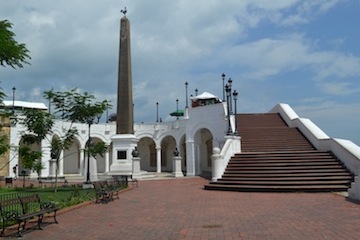
photo - The Plaza de Francia in Panama City recalls the 22,000 French workers lost to malaria and yellow fever in the 1880s
The Plaza de Francia in Panama City recalls the 22,000 French workers lost to malaria and yellow fever in the 1880s. (photo by Lauren Kramer)

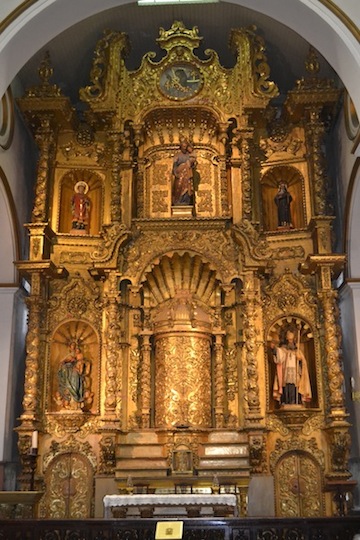
In some places, it does. There’s a stark transition between the new, well-heeled Panama, with its tall, contemporary hotels, casinos and expansive malls, and the old. In Casco Viejo, the old city, we peeked inside Iglesia de San Jose to marvel at a massive altar flaked with gold that stretches 25 feet high. It’s the only thing that was saved in 1671 when the English pirate Henry Morgan ransacked and destroyed the city, burning it to the ground and making off with the loot. Local legend has it that a Jesuit priest painted the altar black to disguise it, and then told Morgan the original altar had been stolen by a different pirate. Today, supplicants still pray at the altar, four centuries after it was built.

Casco Viejo is full of charming passageways and ancient buildings that have only recently been gentrified. These days, they’re being transformed to house boutiques, gelato shops, galleries and restaurants, and the area buzzes with youthful energy and a vibrant night life. But there’s sadness here, too.

Iglesia de San Jose in Casco Viejo was the only thing saved when, in 1671, the English pirate Henry Morgan ransacked and destroyed the city, burning it to the ground. (photo by Lauren Kramer)

At the southern point of the quarter, the Plaza de Francia pays tribute to the French role in the construction of the Panama Canal. The French were the first to try and build the 80-kilometre canal in 1881, but their efforts were confounded by engineering troubles, bad planning and mosquito-born illness. Malaria and yellow fever felled 22,000 before the French gave up on the job. The Panama Canal Museum tells more of this story in a beautifully restored old-quarter building once home to the French Canal Company.

Back in Paitilla, life is good for the Jews of Panama City. Laine’s Spanish has grown fluent as he’s watched the community grow – not just in observance, but also in number. It’s swelled by Jews immigrating from Venezuela, Argentina, Uruguay and Peru. At a Chabad Friday night table, we met Israelis and Canadians who have chosen the city as their home and love its Jewish opportunity and spiritual warmth. This is a sweet life for a rabbi, Laine affirmed. “The Jews in Panama are good Yiddishe Neshamas,” he said, “they’re warm, traditional and deeply committed to family life.”

Lauren Kramer, an award-winning writer and editor, lives in Richmond. To read her work online, visit laurenkramer.net. This article was originally published by CJN.


City overflowing with history

The early 20th-century Casa Bianca is today one of the locations of the Municipal Art Gallery of Thessaloniki (Salonika). (photo by Pappasadrian)

When you think Salonika, don’t think old, think ancient. Because of its geographic location on the Via Egnatia trade route, this northern Greek city traces its beginnings to 316 BCE. Even back then, who you knew was key. Thus, the town was named Thessalonike, after Alexander the Great’s sister, the wife of Cassandrus. Over the years, it has been called Thessaloniki, Saloniki or Salonika. (Note: sometimes the “k” is switched to a “c.”)

Jewish Salonika is a small community of about 1,000. But it was not always this way. Trade drew lots of different people to Thessaloniki, including Jews.

The original Jewish residents were Romaniot Jews – they spoke Greek and maintained a Hellenistic culture. In the beginning, Romaniot Jews and non-Jews held the same occupations and language. As a strategic town in the Byzantine Empire, both groups faced invasions. But, by the 1000s, the empire reached a level of stability that permitted flourishing Jewish scholarship. During this early phase of the Middle Ages, Jews from other areas, such as Anatolia, Germany and Hungary, settled in Salonika. In the late 1300s, more Jews arrived, this time from Provence, Northern Italy, Sicily and Catalonia.

What followed will sound familiar. Religious affiliation defined the Jewish Salonikan way of life: the Romaniotes had their synagogue, the Ashkenazim had theirs and the Jews from Italy and France had theirs. The situation intensified when Salonika received the many Jews that Spain and Portugal expelled. Back then, there was no worry about space and growth, as the Ottoman takeover had depleted the city’s population, but the influx of Sephardim was so great that, by the end of the 16th century, Romanite ritual was no longer practised. Ladino or Judeo-Español became the Jewish community’s language of choice.

For more than four centuries, half of Salonika’s population was Jewish, pinning it with the title, “Mother of Israel,” or “Madre d’Israel.” With so many Jews, it was not uncommon for the non-Jews of Salonika to be conversant in Ladino.

Not only that, but, as the Renaissance had influenced many of the Sephardi arrivals, Jewish Salonika received a significant secular and religious boost. The city became famous for its Jewish silk producers, weavers and wool dyers. Libraries, an influential talmudic academy, a printing press and a conservatory for Jewish religious singing all started during this golden period.

By the 1600s, the corrupt and inept Ottomans had started milking the merchant class. When, in 1636, Judah Kovo, the chief of the Salonika delegates, came to Murad IV to pay the annual “clothes tax,” the sultan capriciously ordered his execution. No Jew was well enough “connected” to stay the order. Unfortunately, at the same time, key foreign markets dried up. Having the means to escape, many wealthy Jewish merchants left. Other Salonikan Jews tried to escape troubles by following in the footsteps of a false messiah, Shabbetai Zvi.

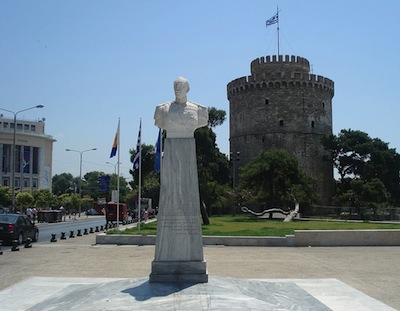
photo - The 15th-century White Tower is one of the most-recognized monuments in Salonika
The 15th-century White Tower is one of the most-recognized monuments in Salonika. (photo by MaurusNR)

The Ottoman Empire was in decline by the 17th century. Nonetheless, in the late 1800s and early 1900s, Salonika’s well-to-do Jewish residents managed to open flour mills, brick factories, breweries, soap-works and silkworm nurseries, carpet and shoe-making factories and several large tobacco workshops. Most of the Jewish population, however, remained poor. Considerable philanthropy within the community eased some of the daily hardships and provided education for many of the male children.

During this period, Jewish economic, social and political pursuits varied: on the one hand, some influential Jews continued in commerce and banking; on the other hand, some Jews became heavily involved in socialism. (The Workers’ Union, for example, was started in 1909 by a group of Salonika Jews. It became the most important socialist organization in the Ottoman Empire.) The railroad and port were important factors. Amazingly enough, until 1923, the city’s port closed on Shabbat and Jewish holidays.

The social balance started to shift in the intervening years of the First and Second World Wars. The national government passed laws aimed at hellenizing the city. Slowly, the Jews – numbering 61,439 in a 1912 Greek census – became segregated (the horrendous 1917 fire probably abetted this process) and reduced many to second-class citizens by virtue of their not speaking the Greek language. Some antisemitic activities occurred, leading to a pogrom that drove many Jews to leave. (See the 2015 essay “Mother of Israel” by Dr. Lena Molho at greece-is.com/mother-of-israel.)

When the Nazis arrived, they herded Jews into a ghetto, then to Auschwitz. While the courageous actions of Archbishop Damaskinos Papandreou (and the Athens police chief) saved thousands of Greek Jews, the Nazis killed 96% of Salonika’s Jews.

The killing was not enough for the Nazis, however. They also destroyed Salonika’s 2,000-year-old Jewish cemetery. Headstones ended up as pavement, urinals, driveways and even a dance floor. More damage – both physical and emotional – was sanctioned by the Greeks themselves. The university was built right on top of the cemetery. Even today, there is still no campus memorial to the massacred Jews.

Interestingly, individual Jewish Salonikans might well tell you their families came from Spain – as if this migration happened only recently. (See Bea Lefkowicz’s PhD thesis, published in 1999 by the London School of Economics.) At least among the older generation, this seems to be part of their personal narrative.

Today’s Jewish community is tightly run. A council provides numerous services to its members. Rabbi Eliyahu Shitrit, an Israeli with Moroccan roots, has been the community’s spiritual leader for several years now.

Central Salonika has the feel of a port town like Haifa, but with its own unique history. Some of its Jewish-related buildings from the 19th and 20th centuries still stand. Even if you don’t believe in ghosts, there is something eerie about today’s Jewish Salonika. But visitors will also see how grand and vital this place once was. Walk around and you will see sites specifically related to the Nazi occupation of the city, but also the Baron de Hirsch Hospital, the Villa Allatini and Allatini Flour Mill, Villa Bianca, Villa Modiano, Villa Mordoh, the White Tower, the market synagogue, Yad l’Zikaron and the Museum of Jewish Presence in Thessaloniki.

Deborah Rubin Fields is an Israel-based features writer. She is also the author of Take a Peek Inside: A Child’s Guide to Radiology Exams, published in English, Hebrew and Arabic.

Charleston’s southern charm

The Orthodox synagogue Brith Sholom Beth Israel. (photo from jsilverman.weebly.com/synagogues-in-charleston.html)

Charleston, S.C., is one of the most popular travel destinations in the United States. With its perfectly preserved old mansions, Charleston has charm and grace, in addition to genuine human warmth. Just walk along any of its streets and the first person you meet will surely give you a friendly hello.

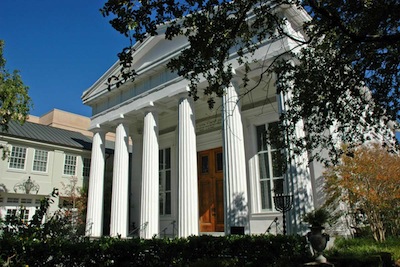
Jews have resided in Charleston since 1695, attracted by economic opportunities and its proclamation of religious liberty for all. In 1749, there were enough Jewish pioneers in town to organize a congregation, Beth Elohim, the second-oldest synagogue in the country (now Reform) and the oldest in continuous use. Its imposing colonnaded neo-classical structure on Hasell Street was designated a National Historic Landmark in 1980.

The congregation’s small museum features the historic 1790 letter that George Washington wrote in response to the synagogue’s good wishes upon his becoming president: “May the same temporal and eternal blessing which you implore for me rest upon your congregation.”

This letter is emblematic of the spirit of friendship between the gentile establishment and Jews – and the acceptance, even early on, of Jews into the American mainstream, especially in the South. (More than 20 Jews from Charleston fought in the American Revolution and one, Francis Salvador, was a delegate to several Provisional Congresses. This may explain the friendly link between George Washington and the Charleston Jewish community. And, besides, Washington was known as a decent and courtly man.)

During the first decade of the 1800s, Charleston, with its 500 Jews, almost all of them Sephardi, was considered the largest, most cultured and wealthiest Jewish community in America. But, because of the destruction of the city during the Civil War, the city and its Jews became impoverished, and the waves of Jewish immigration in the 19th and 20th centuries passed it by. However, after the Second World War, the city prospered, as did its Jews. Today, the nearly 2,000 Jews in the city are in the professions, trade and business, teaching, politics and the arts. In the 1920s through the early 1950s, the city’s main street, King Street, was virtually shut down on Saturday. Walk along King Street today and you will still see many Jewish names on the shops.

photo - Congregation Kahal Kadosh Beth Elohim (now Reform)
Congregation Kahal Kadosh Beth Elohim (now Reform). (photo from charlestonsmuseummile.org)

In addition to three synagogues, one each from the major branches of American Jewry, there are a number of Jewish philanthropic and communal organizations, a Jewish community centre and a well-established day school.

The College of Charleston, the oldest municipal college in the United States, also has a broad-ranging and ever-growing Jewish studies program under the devoted and imaginative direction of Prof. Martin Perlmutter – now with its own building, thanks to the generosity of Henry and Sylvia Yaschik. The 800 Jewish students make up a significant minority of the college population. In addition to an active Hillel, the array of courses includes Hebrew language, Jewish culture and history and Israel- and Holocaust-related courses.

What makes Charleston especially attractive is its visible Jewish history, coupled with the world-class arts festival Spoleto USA, which runs for about two-and-a-half weeks every year, from the end of May to early June. The festival is an all-encompassing cultural experience: opera, dance, theatre, jazz and classical music, popular music, even acrobatics. The twice-daily chamber concerts, at 11 a.m. and 1 p.m., hosted with humour and panache by first violinist of the St. Lawrence Quartet, Geoff Nuttall, are considered the musical anchor of the festival.

But there is more. The Piccolo Spoleto Festival, sponsored by the City of Charleston, which runs during the same two-and-a-half weeks, offers a dizzying array of classical music, plays, cabaret and comedy acts, jazz cruises and much, much more. The College of Charleston’s Jewish studies unit also sponsors several events during the festival, including A World of Jewish Culture.

This year, the Orthodox synagogue Brith Sholom Beth Israel, on Rutledge Avenue, hosted four evenings of chamber music, featuring Jewish composers like Kurt Weill, George Gershwin, Paul Ben-Haim, Ernest Bloch and Eric Korngold, and non-Jewish composers who wrote Jewish music, like Ravel’s “Kaddish” and Max Bruch’s “Kol Nidrei.”

In Charleston, too, lived the people who inspired Porgy and Bess, by George and Ira Gershwin. The Gershwins resided temporarily on James Island, just outside the city, while writing their opera. They purposely came to Charleston to get a feel of the city, its ambience and its people. One of the great tunes in Porgy, of course, is “Summertime,” with its Yiddish-sounding melody in a minor key.

Charleston also has a Conservative congregation, and the three Charleston congregations – Reform, Conservative and Orthodox – are unique in that their rabbis cooperate for the greater good of the community and even meet once a month for lunch and a study session. Another fascinating crossover is that many Jews in the community belong to more than one shul – a kind of anti to the old joke about the Jew on the desert island who builds two shuls. When asked why, he responds, “That one, I daven in; the other, I wouldn’t be seen dead in.”

One longtime Jewish resident, a spry and active octogenarian agnostic proudly and only half-facetiously remarked, “I belong to all three shuls, thank God, but you won’t catch me praying in any of them.” And when he was indeed caught one Sabbath morning davening in the Orthodox shul, one of his pals came up to him and joked, “What are you doing here? Today’s not Yom Kippur.” In response, the 80-year-old quipped in his slight Carolina drawl, “Well, then I hope God forgives me for coming today.”

At the College of Charleston during the academic year, there is a kosher dairy cafeteria, Marty’s Place. And Chabad has pre-packaged prepared meat meals that are available at the famous Hyman’s Fish Market on King Street. For delicious vegetarian meals at reasonable prices, go to Jon York’s Gnome Cafe, at 109 President St.

Be sure to also take a horse-and-buggy ride in the historic district. The knowledgeable guides will take you through the residential part of town, focusing on the homes and the history of their occupants. Then stroll along the quiet streets, in the famous covered market, and tour the nearby plantations.

Two useful telephone numbers are those of the Charleston Visitors Bureau, 1-800-774-0006, and Spoleto’s, 1-843-579-3100 or spoletousa.org.

Curt Leviant’s most recent books are the critically acclaimed novels King of Yiddish and Kafka’s Son.

Betalains boost resistance?

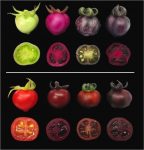
Unripe (top) and ripe (bottom) tomatoes. Regular tomatoes (far left) start out green (far left top) and turn red when ripe (far left bottom). In contrast, genetically engineered tomatoes assume different shades of red-violet, depending on whether they produce betalains (the column second from left), pigments called anthocyanins (second from right) or betalains together with anthocyanins (far right). (photo from wis-wander.weizmann.ac.il)

Colour in the plant kingdom is not merely a joy to the eye. Coloured pigments attract pollinating insects, they protect plants against disease, and they confer health benefits and are used in the food and drug industries. A new study conducted at the Weizmann Institute of Science, published in Proceedings of the National Academy of Sciences, USA, has opened the way to numerous potential uses of betalains, the highly nutritious red-violet and yellow pigments known for their antioxidant properties and commonly used as food dyes.

Betalains are made by cactus fruit, flowers such as bougainvillea and certain edible plants – most notably, beets. They are relatively rare in nature, compared to the two other major groups of plant pigments and, until recently, their synthesis in plants was poorly understood. Prof. Asaph Aharoni of Weizmann’s plant and environmental sciences department and Dr. Guy Polturak, then a research student, along with other team members, used two betalain-producing plants – red beet (Beta vulgaris) and four o’clock flowers (Mirabilis jalapa) – in their analysis. Using next-generation RNA sequencing and other advanced technologies, the researchers identified a previously unknown gene involved in betalain synthesis and revealed which biochemical reactions plants use to convert the amino acid tyrosine into betalains.

To test their findings they genetically engineered yeast to produce betalains. They then tackled the ultimate challenge: reproducing betalain synthesis in edible plants that do not normally make these pigments.

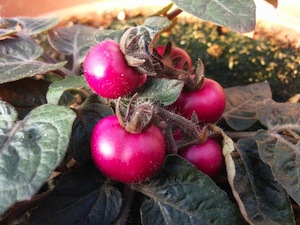
photo - Tomatoes that have been genetically engineered to produce betalains only in the fruit, but not elsewhere in the plant
Tomatoes that have been genetically engineered to produce betalains only in the fruit, but not elsewhere in the plant. (photo from wis-wander.weizmann.ac.il)

The success announced itself in living colour. The researchers produced potatoes, tomatoes and eggplants with red-violet flesh and skin. They also managed to control the exact location of betalain production by, for example, causing the pigment to be made only in the fruit of the tomato plant but not in the leaves or stem.

Using the same approach, the scientists caused white petunias to produce pale violet flowers, and tobacco plants to flower in hues varying from yellow to orange pink. They were able to achieve a desired hue by causing the relevant genes to be expressed in different combinations during the course of betalain synthesis. These findings may be used to create ornamental plants with colours that can be altered on demand.

But a change in colour was not the only outcome. Healthy antioxidant activity was 60% higher in betalain-producing tomatoes than in average ones. “Our findings may in the future be used to fortify a wide variety of crops with betalains in order to increase their nutritional value,” said Aharoni.

An additional benefit is that the researchers discovered that betalains protect plants against grey mold, Botrytis cinerea, which annually causes losses of agricultural crops worth billions of dollars. The study showed that resistance to grey mold rose by a whopping 90% in plants engineered to make betalains.

The scientists produced versions of betalain that do not exist in nature. “Some of these new pigments may potentially prove more stable than the naturally occurring betalains,” said Polturak. “This can be of major significance in the food industry, which makes extensive use of betalains as natural food dyes, for example, in strawberry yogurts.”

Furthermore, the findings of the study may be used by the drug industry. When plants start manufacturing betalains, the first step is conversion of tyrosine into an intermediate product, the chemical called L-dopa. Not only is this chemical itself used as a drug, it also serves as a starting material in the manufacture of additional drugs, particularly opiates such as morphine. Plants and microbes engineered to convert tyrosine into L-dopa may, therefore, serve as a source of this valuable material.

The research team included Noam Grossman, Dr. Yonghui Dong, Margarita Pliner and Dr. Ilana Rogachev of Weizmann’s plant and environmental sciences department, and Dr. Maggie Levy, Dr. David Vela-Corcia and Adi Nudel of the Hebrew University of Jerusalem. Aharoni’s research is supported by the John and Vera Schwartz Centre for Metabolomics, which he heads; the Leona M. and Harry B. Helmsley Charitable Trust; the Adelis Foundation; the Lerner Family Plant Science Research Fund; the Monroe and Marjorie Burk Fund for Alternative Energy Studies; the Sheri and David E. Stone Fund for Microbiota Research; Dana and Yossie Hollander, Israel; the AMN Fund for the Promotion of Science, Culture and Arts in Israel; and the Tom and Sondra Rykoff Family Foundation. Aharoni is the recipient of the André Deloro Prize, and the incumbent of the Peter J. Cohn Professorial Chair.

For more on the research being conducted at the Weizmann Institute, visit wis-wander.weizmann.ac.il.

האופציה הקנדית

בעידן טראמפ: האופציה הקנדית תופסת תאוצה אצל ישראלים ואמריקנים כאחד. (צילום: Cynthia Ramsay)

בעידן הנשיא האמריקני השערורייתי ביותר בתולדות המדינה, דונלד טראמפ, האופציה לעבור לקנדה תופסת תאוצה אצל אמריקנים וגם אצל ישראלים. כך מסתבר.

עיתונאית הארץ, נעמי דרום, שגרה עם משפחתה בקיימברידג’ מסצ’וסטס בשנתיים האחרונות, כותבת על האופציה הקנדית. הטור שלה שכותרתו “מתי קנדה נהיתה מגניבה בהרבה מאמריקה?” פורסם לאחרונה. דרום כותבת בכותרת המשנה כי “כמו הרבה ישראלים ולא מעט אמריקאים, גם אנחנו רואים בקנדה חוף מבטחים שאליו נוכל להיסחף כשהאפשרויות האחרות יאזלו. אבל איך קרה שאמריקה התחילה נושאת עיניים לחברה הצפונית אחרי שנים של זלזול?”

דרום אומרת כי עבור ישראלים רבים שגרים ביבשת, קנדה נמצאת שם כאופציה, פוטנציאל רומנטי בלתי ממומש. נראה שהכל שם הרבה יותר קל ושפוי: זכויות סוציאליות שזכאים אליהן כבר לאחר חודשים מועטים, ויזה קלת יחסית להשגה, קהילה יהודית נחמדה ועוזרת (היא מתכוונת לקהילה בטורונטו), הקנדים מדברים אנגלית, לא אוהבים רובים ולא אוחזים בטירוף באולטרה קפיטליזם של הדוד סם.

דרום מציינת כי מאז שטראמפ נבחר כמועמד המפלגה הרפובליקנית קנדה זוהרת כיהלום צפוני. מושב הסובלנות וביטוח הבריאות האוניברסלי, המקום שבו אוהבים מהגרים, מקבלים אותם, מאמצים פליטים סורים ומצטלמים איתם. עד הבחירות האחרונות משל בקנדה סטיב הרפר, פוליטיקאי שמרן, לא פופולרי ושנוי במחלוקת, בעוד ארצות הברית התגאתה בנשיא ליברלי, רהוט ורחום. אבל מאז התהפכו היוצרות וקנדה מתהדרת בטרודו הליברל, הפמיניסט והסובלני. האמריקנים לעומת זאת, נלכדו במערכת בחירות מכוערת

שהסתיימה בבחירתו של האיש שעוד לא פגש ניאו-נאצי שהוא לא מחבב. לאימתם גילו האמריקנים שהם פתאם פחות שווים מהשכנה המנומנמת שבה התרגלו לזלזל.

בתקופת הפריימריז לבחירות בארה”ב כותבת דרום, עיתונאי קנדי נסע לסקר את אספת הבחירות של ברני סנדרס, שהוא ותומכיו נחשבו לשמאלנים קיצוניים בין השאר בשל תמיכתם בביטוח הבריאות הציבורי. “אנחנו בסך הכל רוצים מה שיש לכם”, אמרו תומכי סנדרס לעיתונאי הקנדי, “מה כל כך קיצוני בזה?”.

אם פרסום התוצאות לבחירות בארה”ב יותר ויותר אנשים הכניסו לגוגל את המשפט “איך מהגרים לקנדה”, יותר מאשר אי פעם מאז נוסד מנוע החיפוש. בחדש שעבר פורסם כי מספר שיא של מהגרים בעיקר מהאיטי, התייאשו מארצות הברית ועברו את הגבול לקנדה.

הניו יורקר פרסם כתבה לפני מספר חודשים תחת הכותרת “הייינו יכולים להיות קנדה”. הכותב אדם גופניק, שגדל בשתי המדינות כתב בין היתר כי אמריקה תייחל, תרצה להיות קנדה, תקנא בקנדה, תכה על חטא ועוד על המהפכה האמריקנית, ערש הדמוקרטיה המודרנית?

דרום מסבירה כי גם היא ומשפחתה שקלו בשלבים מסויימים לוותר על סיבוכי הוויזה האמריקאיים ולהגר צפונה. היתרונות ידועים. אך מה אנו יודעים על קנדה? מה יש לנו בקנדה שלא גדלנו עליה, לא ראינו בטלוויזיה סדרות שלה, לא צרכנו סרטים קנדיים. מה אנו יודעים על הפוליטיקה שם? בעוד שאמריקה זורמת בעורקינו, קנדה היא טריטוריה זרה ומושלגת.

על הביקור בטורונטו היא אומרת: האנשים מנומסים אבל לא באופן מוגזם. טורונטו נראית נחמדה והחברים שלנו שגרים בה מרוצים מהחיים בה.

בין תגובות הקוראים של הרשימה: “קנדה נעימה מארה”ב, שלווה מארה”ב, אינה מושחתת כמו ארה”ב ויקרה ממנה. זו מדינה ענקית ומגוונת וכן יותר אירופאית, פחות רודפת בצע, מסודרת יותר. מס הכנסה גבוה יותר אך ביטוח הבריאות זול בהרבה. בקנדה האווירה רגועה יותר, פחות חומרנית. ארה”ב היא מדינה לעשירים ועם טראמפ הפער בין עשירים לעניים ילך ויגדל”.

Meet award-winning artists

Seeking Refuge, written by Irene Watts and illustrated by Kathryn Shoemaker, has been shortlisted for the 2017 Vine Awards for Canadian Jewish Literature. Published by Tradewind Books, the graphic novel is one of the three finalists in the children’s/young adult category.

While this year’s Vine winners will be announced Oct. 3 at a luncheon in Toronto, Vancouverites can meet Watts and Shoemaker later this month at Word Vancouver, and again at the Vancouver Writers Festival in October. The multiple-award-winners, who are both founding members of the Children’s Writers and Illustrators of British Columbia Society, have worked together on several publications, including Good-bye Marianne, a graphic novel based on Watts’ play and subsequent novel of the same name, which also included Shoemaker illustrations.

In Good-bye Marianne, readers meet Marianne Kohn. Set in Berlin in 1938, a week after Kristallnacht, the 11-year-old struggles to understand and cope with the increasing restrictions placed on Jews in Nazi Germany, and the fierce antisemitism she and her family encounter, with a couple of exceptions. The story begins with Marianne not being allowed into her school – all of the Jewish students have been prohibited from attending. As well, her father has disappeared. The situation, as we know from history, worsens, and her mother makes the heartrending decision to send Marianne with “a group of 200 children who are leaving for homes in England,” one of the first groups to be rescued in the Kindertransport.

Seeking Refuge sees Marianne safely to London, arriving Dec. 2, 1938. While protected from physical harm in her new country, Marianne does not escape antisemitism and poor treatment.

In an interview with CBC, Watts commented on Shoemaker’s choice of medium for Seeking Refuge, noting how the grey of the pencil was so well-suited to the story.

Seeking Refuge is a darker, sadder story, taking place in a time of blackouts, black-and-white films, coal-foggy London, especially the winter months, a gloomy time and place,” said Shoemaker in an interview with the Jewish Independent. “In Good-bye Marianne, Marianne is happier than in Seeking Refuge because she is with family, her home, her country, her language. So, yes, the backgrounds are light, often white. She is anxious about her being sent away but she is not yet sad about it. She is not yet a displaced refugee.”

The possibility of using Seeking Refuge as a way in which to teach younger readers about the current refugee crisis has not gone unnoticed by reviewers and interviewers.

“Stories, in whatever genre, help us to discover more about our place in the world and who we are,” Watts told the Independent. “Immersing ourselves in the lives of fictional characters and their stories, we gain insight of how others live.” While acknowledging that readers will “take whatever message they are ready to understand from the books they read,” she added, “Marianne’s story, though set in the past, is still a familiar one. There are many refugees in the world. Seeking Refuge concerns one child, and how she responds to losing home, friends, family, birthplace, language, culture. In reading about Marianne, a reader may wonder how he would cope in this situation; maybe respond with more kindness and understanding to anyone struggling to make a new life.”

Marianne’s story is similar to – but not the same as – that of Watts, who was educated in England and Wales after her escape from Berlin via the second rescue train in December 1938. Skipping ahead 30 years, she and her husband moved to Canada in 1968, she said, “to give our children a better future.” They immigrated to Alberta.

A playwright and director for Theatre in Education and a drama teacher and consultant in England, Watts taught drama in Hobbema (now Maskwacis), where they lived for a short time before moving to Edmonton. In Edmonton, she was director of Citadel on Wheels and Wings, a children’s touring company that traveled all over Alberta. “We even took our shows to schools in the Northwest Territories,” she said, noting that, among the company’s alumni are Jackson Davies and the late Susan Wright.

“After a few years,” said Watts, “my late husband accepted a position in Vancouver and our four children and I followed. This was in 1976. My base was in White Rock, B.C., and I moved to Vancouver in 2000.”

That Watts likes to write in different genres is clear from the way in which Seeking Refuge came into being.

Good-bye Marianne began life as a play, which premièred at the Norman Rothstein Theatre in 1994,” Watts explained. “It was produced by Carousel Theatre, and toured widely. It has had many productions, both in Canada and the U.S.A., and will be touring with Theatre New Brunswick for three months in the spring of 2018. I had been a playwright long before I became a novelist. I decided to write the novel because there was still much to say beyond the confines of the play. Kathy Lowinger, then publisher of Tundra Books, rescued the manuscript from the slush pile, and published it in 1998.

“I received countless letters from children, wanting to know what happens next, and so completed both the novel and the play Remember Me, on which Seeking Refuge is based. The trilogy, which ends with Finding Sophie, was later published in an omnibus edition, to commemorate the 75th anniversary of the Kindertransport, as Escape from Berlin.”

For readers anticipating a possible third graphic novel, Watts told the Independent she has “no plans to write about Marianne and Sophie again.”

Shoemaker and Watts collaborated on Watts’ first book for Tradewind, A Telling Time, “which places the story of Queen Esther and the story of Purim in three time frames: modern-day Canada, Nazi-occupied Vienna and the biblical era of Persia. So,” said Watts, “when Kathie told me she had read my play Good-bye Marianne and suggested that it would make an interesting graphic novel, I needed no persuasion, and together we embarked on our next project – a new genre for me. Since then, we have done several other books together, for both Tundra and Tradewind Books.”

A Telling Time, which Shoemaker described as “a picture book for older children about the parallel stories of Queen Esther and how she saves her people and a 1939 secret Purim party,” was recognized by the International Youth Library in Munich, Germany, with a 2006 White Raven special mention.

“For that book,” said Shoemaker, who teaches children’s literature at the University of British Columbia, “I did a huge amount of research. As well, Irene shared many resources with me.

“While I was illustrating A Telling Time,” she said, “I was working on my MA in children’s literature at UBC. Instead of doing an academic thesis, I wrote a graphic novel. During the process of finishing it up, Irene asked me what it was like to write a graphic novel and I told her that, for her, it would be a snap, as it is very much like writing a play or screenplay, as you write primarily dialogue, and, similarly to writing a play scene by scene, a graphic novel is written panel by panel. In response to my answer, Irene told me that Good-bye Marianne had been a play before it was a novel.”

Shoemaker said she drew up several pages of Good-bye Marianne for Watts to send to Tundra as a proposal for a graphic novel. “It was about to have its 10th anniversary, so it was good timing,” said Shoemaker. “Tundra had never done a graphic novel before but they agreed to it.”

Graphic novels were still a relatively new phenomenon at that time. “Other than Chester Brown’s Louis Riel and books for adults, there were almost none,” said Shoemaker. “It was a bit of challenge working with an editor who did not understand the form and also who didn’t seem to understand how closely Irene and I work.

“You will often hear that editors like to keep writers and illustrators apart. I hate that. Irene and I work closely on everything that we do.”

Their creative process begins with Watts writing a rough draft. “She doesn’t number the panels but she describes all the key actions she wants to see occur along with the dialogue,” explained Shoemaker. “From that version, I go back into the manuscript to visualize the sequence of panels. When I do that, I create panel numbers and add in additional panels that may be close-ups, wordless images and additional panels to handle complex conversations. After I’ve done that, I begin a visual dummy, drawing out the entire book panel by panel. When that is complete, I sit down with Irene and go through it panel by panel. As we go through it, we decide what stays, what goes and what more we might need. The best thing about our working together is that we highly respect each other’s ideas and we both listen, consider and change things without any kind of ownership because we consider the work ours. It is our book, not mine, not hers, but ours.”

Watts and Shoemaker will be at Word Vancouver on Sept. 24, 12:45 p.m., at the main branch of Vancouver Public Library in the South Plaza (the Quay) and the Writers Fest on Oct. 18, 1 p.m., at Revue Stage on Granville Island. For more information on both of these festivals and for tickets to the latter ($17), visit wordvancouver.ca and writersfest.bc.ca, respectively.