Threepenny in 2016

Left to right: Ariel Martz-Oberlander (Dolly), Damon Jang (Walt Dreary), Katie Purych (Polly Peachum), Kevin Armstrong (Macheath), zi paris (Bob the Saw) and Adam Olgui (Street Singer). (photo by Colin Beiers)

The Threepenny Opera “has a grassroots design to it and deals with action and issues that are often seen in the streets and politics of major cities throughout the world,” Theatre in the Raw artistic director Jay Hamburger told the Independent. “The play for sure is original and it takes a lot of risks that, if given thought, speak profoundly to today.”

Indeed, violence, poverty, oppression and inequality are not things of the past. And Bertolt Brecht and Kurt Weill’s 1928 musical – itself very closely adapted from The Beggar’s Opera, written 200 years earlier, by John Gay with music arranged by Johann Christoph Pepusch – remains both entertaining and thought-provoking. The Theatre in the Raw production of it Nov. 16-27 at the Russian Hall is to be highly anticipated.

“Theatre in the Raw has always strived to provide high-quality performance work,” said Hamburger. “Though the productions can seem minimalist, a theatrical experience is aimed for and often with a message. The Threepenny Opera play, and the Beggar’s Opera that it was based on, inverted the notion of theatre experiences as gaudy, excessive and out of reach of the common person, and instead focused on the underbelly of society. Brecht’s approach to theatre championed breaking down walls between audience and actor, turning the notion of passive viewer of entertainment on its head. These ideas are much in line with Theatre in the Raw’s ambitions and desire to reach out to audiences in profound and innovative ways. Plus, providing a play of this scale with a relatively large cast and crew allows Theatre in the Raw to not only put on the show for the community … but also to have many talented artists perform their craft on stage.”

Among those artists are a few from the Jewish community. Stephen Aberle plays the central figure of Mr. Peachum.

“I play Jonathan Jeremiah Peachum, owner and proprietor of the Beggar’s Big Brother, an outfitting and licensing company for all the beggars in the city,” Aberle explained. “Peachum has a monopoly, strictly enforced: anyone caught begging in his territory without a licence gets beaten up; second offenders get ‘the saw.’ His ‘clients’ must pay for their licences with hefty initiation fees, and by turning over half (or more) of their take.

“He’s a crucial plot engine: his daughter Polly marries the hero/antihero Macheath, leaving Peachum outraged. His obsessive struggle for revenge drives much of the action of the play.”

Set in London’s Soho just before Queen Victoria’s coronation, Peachum tries to have Macheath – also a brutal criminal, aka “Mack the Knife” – arrested and hanged, but the police chief happens to be an old army buddy of Macheath’s. Peachum, however, uses his influence and Macheath becomes a wanted man. Polly warns her lover, but, before fleeing, he stops in at the brothel he frequents.

“My character is Dolly, one of the whores who live with Jenny Diver in Wapping,” said Ariel Martz-Oberlander. “Macheath visits them every week and it’s them he goes to see instead of escaping from the police when he gets a chance.”

Adam Olgui plays the Street Singer, who is, in a way, “the narrator of the story,” said Olgui. “Although he’s an observer, he slips in at times to assume different roles to help move the plot along. The Street Singer himself is a smooth, playful, light-hearted being.”

As Brecht adapted Gay’s work, changing the setting, for example, to Victorian England, and highwaymen into gangsters of a sort, Theatre in the Raw will also add its touch.

“We are introducing elements modernizing the style of the characters, their wardrobes, etc., and are not doing the play using English accents,” said Hamburger. “Though the play technically still occurs in an alternate version of 19th-century Soho, we feel our stylistic choices help the piece reflect more universally about the 1920s Germany where it was written and possibly on our pressing modern situations as well. We’ll admit we’re putting a bit of Commercial Drive flavor into it, too, as the play involves a diverse group of characters that are both fun and standout.”

And the characters still speak to us.
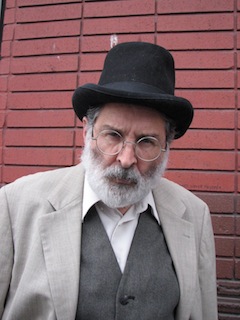
photo - Stephen Aberle is Mr. Peachum
Stephen Aberle is Mr. Peachum. (photo by Colin Beiers)

“To my mind, the character of Peachum remains bitingly, bitterly relevant today,” said Aberle. “He is Brecht’s critique of capitalism par excellence, a ‘businessman’ whose business, like so many winning enterprises, thrives on human misery. As he observes, ‘The powerful of the earth can create poverty, but they can’t bear to look at it.’ He has learned to profit by this discovery, and has no scruples about doing so – by whatever means necessary.

“Peachum is cynically fond of religious references. He loves to preach, usually (like his middle namesake) to gloomily pessimistic effect (‘the world is mean, and man uncouth!’), and offers verses of scripture to persuade suckers to part with their money. This leaves me as an actor surmising that he may have had a religious education, perhaps even an earlier career as a clergyman, before stumbling into the vocation of extracting value from poverty instead of working to alleviate it. Some might find parallels with today’s professional evangelists.”

As for her character, Martz-Oberlander said, “Dolly represents the way a woman can make a living taking advantage of a very misogynistic and cut-throat society in the play. She has no misconceptions about Macheath falling in love with her and is content to use her body to make a living. She is reasonable, if very naïve. Dolly plays a small part in the story, but she stands the test of time by being a strong woman who makes her way in a system in many ways rigged against her.”

Olgui spoke more generally. “I think that the timelessness of Brecht’s themes and his view of human nature are why his works are still relevant today,” he said.

Hamburger highlighted the play’s “wild sense of humor” and its “rollercoaster” of a story. He noted that both Brecht and Weill “were extremely interested in U.S. entertainment during the early part of the 20th century. Though the play didn’t really make it in the U.S. until the 1950s, both creators looked to the U.S. for some form of success. Weill actually escaped Germany before the Holocaust, knowing he had to get out to save his life. Brecht, on the other hand, before and during the Second World War, fled to 10 different countries in order for him and his family to survive. The play speaks in an extremely original and relevant way to a lot of concerns that face us economically, socially, and the gap between the rich, the middle-class and the poor, and how certain people are often at a disadvantage and seeking ways to survive.”

Not to mention it has some pretty catchy and enduring tunes: “Ballad of Mack the Knife” and “Jenny the Pirate,” to name but two.

Tickets for The Threepenny Opera are $25 and $20 (students) and available at the door or from theatreintheraw.ca/tickets.


 

We are all connected

Kerry Sandomirsky as Alice, centre. In Long Division, the way in which Alice’s son reacts to bullying “connects all the characters in the play, and it makes my character deeply question herself,” explains Sandomirsky. (photo by David Cooper)

Math, movement, images, text, music and more combine in Peter Dickinson’s Long Division, which will see its première at Gateway Theatre Nov. 17-26.

Dickinson is a professor at Simon Fraser University and the director of SFU’s Institute for Performance Studies. Long Division is his third play, and it features seven characters. Jewish community member Kerry Sandomirsky plays Alice.

“Alice is the single mother of a brilliant math student who is bullied,” Sandomirsky told the Independent. “He responds by making a shocking choice. This event connects all the characters in the play, and it makes my character deeply question herself. What could she have possibly done differently?”

Directed by Richard Wolfe and produced by Pi Theatre, Long Division is “about the mathematics of human connection.” The characters, explains the synopsis, “are linked by a sequence of ultimately tragic events, but there is more to the pattern than first appears. The three male and four female characters use number theory, geometry and logic to trace their connection to each other and to the moment that changed their lives.”

When asked about what challenges the script posed for her, Sandomirsky, said, “Well, have you ever tried to explain Pascal’s Wager using contemporary dance? Or Fibonacci numbers? Or Schrödinger’s cat? We’re dealing with mathematical concepts as metaphors for human stories. So, the first task is to learn the math!”

And to how much of the math could she relate?

“Zero,” she said. “Thank God my son has a math tutor.”

Not only is there the math to master, but the movement. For that, the cast also had help.

“Earlier today,” wrote Dickinson in his Oct. 20 blog, “the choreographer of Long Division, Lesley Telford, invited me to drop by the studio at Arts Umbrella on Granville Island, where she was working … with seven amazingly talented dancers … and they have each taken on a character in the play, drawing from the text … to improvise and develop individual gesture phrases that may or may not eventually get set in some related form on our corresponding actors when we begin rehearsals next week…. I was amazed at how bang-on their instincts were in terms of energy and tempo and line, as well as things like muscularity vs. flow, repetition, different levels and directional facings, and so on. I was also pleased to note that I could also read each character in the movement without reading the movement itself as telegraphing too obviously this or that character’s psychology or profession.”

Projection art also helps “reveal aspects of the characters’ inner lives,” according to the play description. On Oct. 29, Dickinson blogged that it was “useful to have Jamie [Nesbitt] at the table yesterday for our final beat-by-beat read-through of the text, as he asked a lot of tough dramaturgical questions about what exactly was going on in different sections, and how video might support them in some instances, or conceivably work against them in others. Combined with the cast’s similarly probing questions from the rest of the week, the rigorous text analysis has really forced me to justify my choices, and to explain their relevance to the overall structure of the play and the respective inner worlds of each of the characters.”

Playing Alice motivated Sandomirsky to read Sue Klebold’s book A Mother’s Reckoning: Living in the Aftermath of Tragedy. “Her son was one of the Columbine shooters,” explained Sandomirsky. “She experienced a firestorm of hatred. For example, when her family was sent food by her neighbors, her lawyer insisted she throw it out in case it was poisoned.

“This is the third play in a row where I play the mother of a tormented teenage boy. And this is definitely the first one that prescribes algebra as the way to get through life.”

But, Sandomirsky was quick to note, “Long Division is a workout for the mind – without sacrificing heart.”

Tickets for Long Division ($29) can be purchased from 604-270-1812 or gatewaytheatre.com/longdivision.

Keeping things simple

“Overseas” by Ivor Levin. (photo by Ivor Levin)

Ivor Levin’s path to artistic photography was a long and gradual one. “Photography is my hobby,” he said in an interview with the Independent, but one couldn’t have guessed it from his solo exhibition at the Sidney and Gertrude Zack Gallery.

Levin’s images reveal an artist’s perception. Where anyone else might see a dirty warehouse, he sees a play of light and shadows, a mosaic of colors and shapes. Peeling paint on a wall or a rivet screwed into corrugated metal transform under the magic touch of his camera into fascinating pieces of art.

By his education and day job, Levin is a dentist. By inclination, he is an artist, walking around Vancouver in his spare time with his camera, capturing amazing and unexpected pictures.

“I like simplicity,” he explained. “I don’t like cluttered images. All my images have one focal point. I’m interested mostly in two genres. One is urban geometry and abstraction: I look for patterns there, for lines and colors. Another is street photography: when I find an interesting geometric setting, I wait there until a person appears, walks into my scene, and then I take a picture. I don’t do landscapes or faces. No mountains. And absolutely no flowers.”

Levin said there was always a camera in the house when he was growing up. He snapped pictures during family gatherings, trips and holidays, but, in the last eight years, his passion for photography deepened.

“I started looking around with more of an artistic eye,” he said. “I also discovered Flickr and opened an account there, saw what other photographers were doing on the site and taught myself to achieve the effects I like. Gradually, people started noticing and liking my pictures, too. Friends and family were the last to notice, and they began saying: ‘Your photos are so interesting; why don’t you have a show?’ It happened about two years ago.”

photo - Ivor Levin at the opening of his exhibit Simplicity
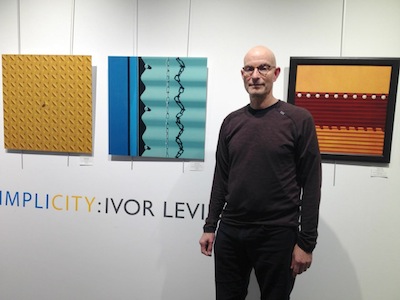
Ivor Levin at the opening of his exhibit Simplicity. (photo by Olga Livshin)

The idea of a show took root and, last year, Levin applied to the Zack Gallery. “I sent them a link to my Flickr account, and they liked it. They offered me a show. It’s the first time I actually printed my photos. Before that, I only had them digitally, on my computer and on Flickr.”

The show at the Zack – called Simplicity – reflects the artist’s vision not only of Vancouver, his hometown, but also of some other places he has visited. One of his favorite hunting grounds for images is Granville Island, and a few of the images exhibited came from there. Others he found during his international travels, like “Overseas,” which originated in Cape Town, South Africa. “There is the ocean there, and a swimming pool on the other side of the walkway, and the sky above. Everything is blue, but different shades of blue. When I saw a woman in a blue dress on that sidewalk, I knew I had to take the picture,” Levin explained.

Most of his images depict bright and cheerful colors.

“I can appreciate black and white, too,” he said, “but only when the image demands it.”

One such image is his black and white street scene “Piano Man.” He shot it under an overpass in Brooklyn, and its punchy graphics are only slightly enhanced by computer editing.

“I rarely use the images straight from the camera, but most of my modifications are minor,” he said. “I adjust exposure and saturation. Sometimes, I crop or tilt the images.”

Unlike many photographers, he doesn’t use Photoshop, but rather the online program PicMonkey. He taught himself to use it, like he taught himself the other aspects of photography. “I learn from the other photographers’ photos and from some internet sites,” he said.

As the years go by, Levin spends increasingly more of his free time on his hobby, although he confessed that taking pictures absorbs him much more than the editing process. “I prefer creating with the camera, not with the computer,” he said. “I’m always on the lookout for the ‘Wow!’ factor. In the beginning, I kept everything, thousands and thousands of images. Now, I’m much more selective. When I see an image, I know: it’s a keeper. Otherwise, I just delete them.”

Titles for his images are also important to him.

“I’ve always liked to play with words, make puns. For me, it’s half the fun to find the right title for the image. Each one needs a catch phrase to catch the people’s attention.”

Despite his love for photography, he doesn’t have plans to abandon his day job.

“I like my job,” he said. “Of course, if I could make the same living with photography as I do as a dentist, I’d probably choose photography.” He didn’t sound too sure.

Simplicity is at Zack Gallery until Nov. 20.

Olga Livshin is a Vancouver freelance writer. She can be reached at olgagodim@gmail.com.

Mixing of cultures, religions

Helen Kim and Noah Leavitt, authors of JewAsian, will be at the Jewish Book Festival on Nov. 28. (photo by Matthew Zimmerman Banderas)

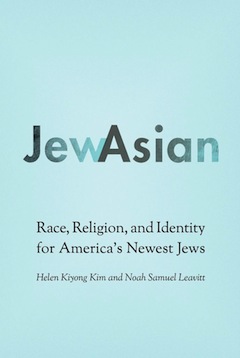
The recently published book JewAsian: Race, Religion and Identity for America’s Newest Jews by Helen Kim and Noah Leavitt was crafted out of a seven-year study of 39 mixed couples, as well as their own successful marriage. The couple will be in Vancouver later this month to share their findings at the Cherie Smith JCC Jewish Book Festival.

For Kim, who was born a few years after her parents moved from Korea to the San Francisco Bay Area in the late 1960s, finding a Korean guy to date was a virtual mission impossible, so looking outside the community was accepted.

“My mother was totally fine with it, in large part because she’d thrown away her expectations that I marry somebody Korean a long, long time ago,” said Kim of her marriage with Leavitt. “I think, in part, because I grew up in a community that was predominantly white with very few people of color, I think she quickly realized that, demographically speaking, it was probably going to be unlikely I’d meet, date and eventually marry someone of the same ethnic background as me.”

Leavitt, who is of American Jewish origin, said, “My mom was super-excited about the fact I had met somebody I was so smitten with. She and Helen, early on, established a great rapport that has continued ever since. I think my mom just had an expectation that I’d settle down with somebody I really loved, who I was challenged and inspired by, and saw that in Helen … so she was excited.”

Leavitt grew up in a household that was somewhere between the Reform and Conservative denominations. He went to a Jewish community Sunday school growing up that was housed at Cornell University and he had his bar mitzvah at Ithaca College through their Hillel.

Kim and Leavitt met in 1997 and both were drawn to the complexity of their Jewish-Asian mix, an interest that increased with the births of their children.

“This was the era where, I think, we started to see a lot of interracial pairings, dating and marriages,” said Kim. “And it was also right before the U.S. census gave multiracial individuals the option of choosing more than one race on the census … really, an interesting time, demographically speaking, where the context around us was contributing to our thinking about how common are pairings like ours and maybe other interracial or Jewish-not Jewish pairings.”

Leavitt and Kim contacted a number of universities that were repositories of large-scale demographic studies. They were aware that the study of intermarriage to that time had been focused on interfaith marriage, but had not delved into how interracial marriage factored into the larger picture.

The couple reached out to the Institute for Jewish and Community Research. Through this connection, they were able to do an initial recruiting of couples with whom to speak for their book. In the end, their study included 39 couples from the San Francisco Bay Area, Los Angeles and Orange County, and from the New York and Philadelphia metropolitan areas.

book cover - JewAsian“We focused there, in part, because of the high percentages of individuals who identified as Jewish and Asian,” said Kim. “Then, there was the likelihood and demographic reality that interracial marriages are taking place predominantly in those areas … with the West Coast having, by far, the highest rates of interracial marriages.”
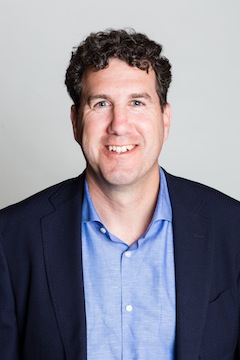

“We had a lot of people volunteer to be part of the survey and what we made a decision to do was to try to find the most expansive look at Jewish-Asian combination that we could,” said Leavitt.

Within the 39 couples, one was gay and three were lesbian, with the remainder being heterosexual. The study also included a second set of interviewees who were young adults that were children of Jewish-Asian households.

“The first thing by far that I think was quite surprising that we found was that, for the couples as well as the adult kids, they are definitely Jewish – not just in terms of the self-identification perspective, but in terms of some strikingly traditional religious practices,” said Kim. “So, the couples we interviewed were in the midst of or had created homes where there was a lot of traditional Jewish religious practice – everything from observing Shabbat consistently, to consistent synagogue attendance, to kids becoming bar or bat mitzvah, to children going to Jewish day schools.

“Then, for the adult kids we interviewed, they affirmatively claimed they were Jewish. But, they also talked about having been raised in traditionally religious households and communities that, to a great extent, mirrored what we were finding with the couples we interviewed.”

While only six of the racially Asian individuals had converted to Judaism, the overwhelming majority of couples celebrated Jewish religious events and cultural tradition alongside Asian ethnic traditions.

“There was neither a conflict of religion nor a blending of religions,” said Kim. “It was more of a cultural hybrid, but steeped in Judaism as the religion of the household.”

“I would go broader and say that, for the most part … we didn’t really hear too many stories about conflicts related to religion overall,” added Leavitt. “There were a few examples where the non-Jewish partner had a religious or spiritual practice that they adhered to, but it was something they did on their own and didn’t bring into the household.”

Both Kim and Leavitt said the findings were representative of their own Jewish-Asian mix. “Judaism, for me, is a religion and a cultural tradition that is easier for me to instil in my family,” said Kim. “I, as a second-generation child of an immigrant family, did not grow up with a lot of Korean ethnic and cultural traditions.

“Through the adult kids [in the study], it was reinforced repeatedly that you have to expose [them to the culture], no matter what your comfort level as a parent, no matter your knowledge as a parent. The kids really appreciated when the parents went all out in terms of trying to expose them to a particular culture or ethnicity, though they themselves as parents were afraid they might not do it right.

“So, I think just hearing from the kids and imagining my own kids in 10 to 15 years was kind of affirming to me, [that I just need to] try as much as I possibly can. The kids will end up picking up things here and there and will then, on their own, become curious and want to learn on their own. That was reassuring for me.”

“I had a lot of the same reactions,” said Leavitt. “For me, when Helen and I decided to make a commitment to this project, it was fairly close in time to when we were also starting to think about having our own family. When we got this investigation underway, our son Ari arrived. As a first-time parent, I had a lot of worry and anxiety about a household that seemed to combine so many different kinds of traditions, cultural heritage markers and, to some extent, religious differences. I think I had a lot of worry about the ability of all those things to be in a household together … in part, because I didn’t have an upbringing where there were lots of differences within the household. So, I had a lot of fear about that.

“One of the things I’ve been liberated by, in working on this project and having two children arrive, is there is a lot of flexibility and resilience in households. Where even something may seem like a long list of differences, the people inside that household are able to find ways where things can come from different directions, but meet at the same point.”

Kim is excited about coming to Vancouver, especially to have the opportunity to speak with a non-American audience, “to understand how it is that they think about these different dimensions of identity, tradition, culture and religion, as a way of getting out of our predominantly U.S.-focused lens. I’m really looking forward to that comparative perspective.”

Leavitt said, “I think the chance to be in as diverse, global and multicultural a city as Vancouver … maybe there are lots of households coming together with this mix of Jewish-Asian backgrounds in Vancouver. I think this may propel us to continue researching more in this international comparative way.

“Helen and I feel very fortunate to have been working on this project at a time in the U.S. when the exploration about the diversity of the Jewish community in our country is really something that is front of mind for so many congregations, synagogues. We aren’t the same people we were years ago.”

“If we are acknowledging that this is what American Judaism looks like,” added Kim, “what then is the responsibility we have in regards to action based on the changes in the demographic and how do we act based on how we’ve changed?”

Kim and Leavitt are on a panel with Daniel Kalla on Nov. 28, 6 p.m., at the Jewish Community Centre of Greater Vancouver. For more information, visit jccgv.com/content/jewish-book-fest.

Rebeca Kuropatwa is a Winnipeg freelance writer.

Campaign continues

“Let’s make it easy, not just to be Jewish, but to feel part of the community. We have to make it easy and we have to find ways of connecting,” Alex Cristall told the Jewish Independent in a recent phone interview.

Cristall is general chair of the Jewish Federation of Greater Vancouver’s annual campaign this year. The fundraising effort has so far “been really, really good,” he said, noting “it looks like our numbers are ahead of where they were last year.”

photo - Alex Cristall, general chair of Jewish Federation of Greater Vancouver annual campaign
Alex Cristall, general chair of Jewish Federation of Greater Vancouver annual campaign. (photo from Jewish Federation)

At the centre of the current campaign is the community’s 2020 Strategic Priorities. “We have some key areas that over the next few years we are trying to focus on,” explained Cristall, such as “affordability, accessibility, seniors, engagement and connectivity, and security. And, this year specifically, we have set up a matching program,” so that every new donation and every donation increase is matched, with the funds being allocated to security initiatives, to “set up a good, long-term security plan for the community.”

Bernard Pinsky is the chair of the community security advisory committee, said Cristall, and “they’ve laid out a whole framework of things to get us up to date and to get us more centralized and focused, and to continue on with things we’ve done over the years and improve on them. So, this year we have set up a match[ing program] and I think we are almost at $300,000.”

In addition to the 2020 priorities and the focus on security, donations to the campaign fund social services performed by 40 partner organization, including seniors programs, Jewish education, arts and culture, community building, and youth and young adult services.

“Federation has access to so many different things that are going on in the community and, to help those institutions every year, it takes a lot of [fundraising] pressure off them,” said Cristall. “The major selling point is the reach the Federation has … your dollar touches so many different aspects” of the Jewish community.

“In terms of the number of people who benefit, it is in the thousands,” said Becky Saegert, Federation’s director of marketing and communications, in an email interview.

“We want to make being part of our community easy for our constituents and our community members,” reiterated Cristall.

The community has valuable capital infrastructure in the Oak Street area, he said, “but engagement and accessibility … for underserved areas – that is a huge part of our future. And that has to grow more and more. We have to be very creative.”

This outreach is part of the 2020 plans, he said, “for example, supporting White Rock JCC, supporting Burquest JCC.”

“With regard to the regional communities,” added Saegert, “the campaign currently provides funding to five different regional community organizations. Our Regional Communities Task Force, which is currently exploring ways to enhance Jewish community life outside of Vancouver, will be presenting their recommendations to our board in February 2017. We anticipate that the recommendations will increase funding for a number of initiatives in the regional communities. This past year, with the increase in our overall campaign result, we were able to increase our funding to all of our regional community organizations and fund some new initiatives, including a very exciting partnership between Richmond Jewish Day School and Congregation Beth Tikvah.”

While this year’s campaign is well underway, Cristall said, “We cannot have enough canvassers.… We are probably the easiest organization to get involved in. If someone wants to come on and be a canvasser, we’ll give them training. I hosted a meeting at my house to train people and to welcome people…. It’s a very welcoming environment and we welcome all comers to join.”

To participate in or contribute to the campaign, call the Federation office at 604-257-5100 or go to jewishvancouver.com. For more about Federation’s 2020 priorities, visit ourcommunity2020.jewishvancouver.com.

Zach Sagorin is a Vancouver freelance writer.

Okanagan’s New Year

The Okanagan Jewish community celebrated the High Holidays with spiritual leaders Rabbi Larry Seidman and Rabbi Linda Seidman from California officiating at the services. The husband-wife team had prepared special pamphlets for everyone in the community to be able to participate.

There was an erev Rosh Hashanah service on Oct. 2, as well as morning services the next day, which were followed by a potluck luncheon. For Yom Kippur, there were also two services, with Kol Nidre on the erev and a day-full of services on Oct. 12, which included a discussion period, Yizkor and a break-fast potluck.

The services were all well-attended and Rabbis Larry and Linda were warmly welcomed to Kelowna and to the celebrations.

Rabbi Larry has a background in research and management, encompassing communications, satellites, aerospace, wind energy and telemedicine. He holds many degrees, as well as being skilled in engineering and management, and has been sought after for presentations. He has given talks around the world.

Throughout his career, he has been dedicated to Jewish practice and study, having served as a lay leader of minyans and Torah study groups, and has continued to pursue both formal and informal Jewish education. A few years ago, he retired from his position as a senior manager in Phantom Works, the research and development organization of the Boeing Company, which has allowed him to increase his engagement in Jewish activities.

He was ordained as a rabbi by the Academy for Jewish Religion, in California, and is a member of the Southern California Board of Rabbis. His practice is dedicated to being a rabbi who combines Jewish tradition with modern thought.

A 2010 ordinee, Rabbi Linda currently serves as a prison chaplain in Orange County, Calif. Donning her uniform and bullet-proof vest, Rabbi Linda, who is certified as a deputy chaplain, works with the county jails, offering counseling and other services to 80 or 90 people per month. “If anybody had told me 10 years ago, when I was an aerospace engineer, that I would be doing this, I would have said ‘in your dreams,’ but life takes funny turns,” she said.

Admitting that she failed at retirement, she said she became interested in the Academy for Jewish Religion, which is a non-denominational rabbinical school, when she heard that it offered a part-time program. She enrolled a year after her husband. Today, in addition to the jail chaplaincy, she serves as the chaplain at a hospice, performs an occasional funeral and leads services and Bible study at a senior living facility.

Rabbi Linda believes that there is “a tremendous amount of security in knowing what to do and when to do it,” and that traditional Judaism meets the needs of some people who are happy and comfortable with their roles. But, she feels that women bring another approach to Judaism. “We see things differently than men,” she said. In other areas, however, such as women’s health and children’s issues, “our concerns are rooted in same values, and there is plenty to unite us.”

* * *

In other recent OJC news, one of the community’s newer members, Philippe Richer-Lafleche, became a bar mitzvah on Oct. 15. Not having had the opportunity to have a bar mitzvah when he was a boy, Richer-Lafleche had looked forward to the special day, which took place after many months of studying under the guidance of OJC’s religious chair, Evan Orloff. The services were followed by a potluck lunch, which included dishes provided by Richer-Lafleche.

* * *

Finally, OJC celebrated Sukkot on Oct. 17 with a mixture of 60 adults and children in attendance. The rains dispersed and the ground dried so that everyone could enjoy the experience of building and decorating the sukkah.

A special thank you to Natasha for organizing crafts, and to the parents who helped construct the sukkah without the help of Google or Siri. The construction was followed by a potluck inclusive of pizza cooked by one of the OJC Golf Classic food sponsors, Mr. Mozzarella Pizza and Wings.

* * *

The Okanagan Jewish Community Centre’s mission “is to work towards building a strong and unified Jewish community in the Okanagan Valley of British Columbia. The OJCC encourages an inclusive atmosphere of understanding and respect amongst Jews of different backgrounds, and maintains cooperative relationships with other regional and national Jewish community organizations. The OJCC also aims to promote a positive and active relationship with the Okanagan community at large.”


What now, America?

Many of our readers survived the predations of fascism or communism; some endured both. It is probably safe to say these people do not take democracy for granted, as some of us who have been fortunate to live our entire lives under democratic governments may.

For many of us, Remembrance Day is one of the few times in the year when we stop and take stock of our good fortune and the sacrifices that made it possible. This year, we should perhaps give even more consideration to the fact, which we have mentioned in this space before, that democracy is a remarkably new and fragile thing. What we recognize as modern democracy is an American invention just 240 years old.

There have been concerning noises in the birthplace of democracy leading up to the close Tuesday of this ugliest of presidential election campaigns. In addition to Donald Trump’s threats to not abide by the democratic decision of the people because of some imaginary “rigging,” much of his rhetoric has seemed deliberately calculated to undermine democracy and its parallel values of pluralism and respect for diversity. Trump’s behavior and language – and the vitriol and violence he inspired and encouraged among his followers – are antithetical to American democracy.

We should not fall into the trap of comparative blame. This was probably the nastiest campaign in American history, but that is not something we can ascribe equally to both leading candidates and their followers.

Hillary Clinton ran a negative campaign, yes, but only within the comparatively gentle parameters of what has become conventional in American politics of the television age. Trump’s campaign, on the other hand, was a blast furnace of hatred, ridicule, dehumanization, lies, racism, sexism and incitement.

One of the most important pillars of democracy is also one of the most ephemeral: the confidence of the populace in the institutions of governance. And polls indicate that Americans currently have extraordinarily low opinions of their officials.

The American people – and the new president (who was declared after the Independent went to press) – have an unenviable task ahead of them in restoring confidence in the system, in their institutions and in their ability to advance as the world’s beacon of democracy.

For the sake of their country – and for the sake of the magnitude of impact it will have on the rest of the world – we should all wish for a period of reflection, healing and reconciliation.

The strength of family circle

There is a wise Jewish saying: “A little hurt from a kin is worse than a big hurt from a stranger.” (Zohar, Genesis 151b) Why is that? Strangers come and go in our lives. Some remain to become friends, others are barely remembered and, as we move on in life, we leave them behind. But family – that’s a different story.

The closest bonds we will ever form are with our parents and our siblings. They know us intimately and, even with all our faults, they still love us. (Though, admittedly, not everyone is so lucky to have a loving family.)

Next comes the extended family – cousins, aunts, uncles, et al. Some of them we just tolerate, often in an amused way, because families are like fudge – mostly sweet with a few nuts! But we do care about them because they are kin.

Within our own close family circle, we are proud of each other’s accomplishments and boast of them. We hurt when a family member is unhappy. We celebrate birthdays and anniversaries, and we try to be together for important Jewish holidays. That is what family should mean.

I’ve always loved the description of her family by the late Erma Bombeck: “We were a strange little band of characters trudging through life sharing diseases and toothpaste, coveting one another’s desserts, hiding shampoo, borrowing money, locking each other out of our rooms, inflicting pain and kissing to heal it in the same instant, loving, laughing, defending, and trying to figure out the common thread that bound us all together.” I think most families can relate to this warm-hearted description.

When there is a break in a family circle, it can be unbearable. It’s not just a matter of location, for, these days, communication has never been easier and we can connect with family wherever they live. But, when there is a misunderstanding and angry words are exchanged, it can be heartbreaking. We feel as though we have a deep fracture in our very being and life will never be the same again if the family member we once loved is lost to us.

Teenagers are known to be rebellious and that is considered normal. It is necessary for them to become independent, to break away from the sheltering family structure. It can be very hurtful for parents to see them break away, but if they were nourished with your morals and standards of ethical behavior in their childhood, and educated with love, they won’t stray too far. Siblings may have very different ideas from each other as adults, but no one – not even a spouse – can have the same kind of bond, with its childhood memories, shared experiences, old family jokes. It is special.

When strangers hurt you, you may become disappointed or angry, but it doesn’t tear at the fabric of your being. You are not obsessed by it and whatever has happened, you know that you will get over it in time.

It is not the same with families. When there is a break between parents and children or brothers and sisters, it colors every aspect of your life, for the family is your haven, your soft resting-place. When there is a break, your emotional security is gone. We need to feel ourselves one in a world of kinfolk, persons of variety in age and temperament, yet allied to us by an indissoluble bond, which nature has welded before we are even born. A family quarrel does not just leave aches or wounds; it is more like splits in the skin that won’t heal because there’s not enough material. Author Dodie Smith described her family as “that dear octopus from whose tentacles we never quite escape, nor, in our inmost hearts, ever quite wish to.”

So, cherish your family while you still have them. Other things may change us, but we start and end with the family, which is one of G-d’s masterpieces. Having a place to go is your home. Having someone to love is your family. Having both is a blessing.

Dvora Waysman is a Jerusalem-based author. She can be contacted at dwaysman@gmail.com or through her blog at dvorawaysman.com.


Theatre arts support

Langara College Foundation’s Langara Studio 58 Legacy Fund campaign reached and exceeded its original $250,000 goal, raising more than $273,000 in support of theatre arts at Langara. Most than 538 individual donors contributed to the success of the campaign, among them 219 Studio 58 alumni and 55 present and former faculty, directors and designers.

“The response from our Studio 58 community was amazing,” said Moira Gookstetter, executive director, Langara College Foundation. “We are humbled by their generosity. With their support, we raised over $136,729, which, when matched by the college, will create an endowment of $273,458.

“We are especially thankful for our volunteer campaign chairs Jane Heyman and Joey Lespérance. They are the real heroes of this campaign. Their enthusiasm, dedication and tireless support have helped to create a foundation that will launch Studio 58 into the future.”

Established to celebrate the 50th anniversary of Langara’s Theatre Arts at Studio 58 program, the Legacy Fund’s mandate is to support the expansion and scope of the program’s productions, training and learning opportunities.

“The remarkable success of the Studio 58 Legacy Fund campaign will mean future generations of students will have access to working on productions beyond the normal scope of Studio 58, will be offered special workshops, and will have the possibility to mentor with professionals,” said Kathryn Shaw, Studio 58 artistic director. “The Legacy Fund will allow Theatre Arts at Studio 58 to remain a leading force in theatre training in Canada. All of this could not have been possible without our caring and generous donors and supporters.”

Langara College’s Studio 58 provides practical, hands-on training for students looking for careers in professional theatre. It offers two streams – acting and production.

Getting through menopause

Harriet Berkal unveils the secrets of menopause. Berkal began the support group Menopause Matters after experiencing a lack of help when she went through that stage of life. (photo by Manny Berkal-Sarbit)

Medical advocate Harriet Berkal recalls eagerly anticipating going through menopause, imagining it to be a fabulous life stage without having a period every 28 days or so.

“Now, if I could go back and have my periods and not go through this other nonsense, I would say, give me my periods back,” Berkal told the Independent.

Berkal works as an executive financial consultant for Sarbit Advisory Services in Winnipeg and has been struggling with menopause-related issues for the past seven years. She has leaned from experience that there is next to no help out there for dealing with the effects of menopause, and this has led her to take matters into her own hands and create a support group.

“One problem with this issue of menopause is, if you complain to a physician about something like weight gain, a symptom of menopause, they bundle everything you say after that behind that carriage,” said Berkal. “So, my GP missed the fact that I had a thyroid condition, because it was thrown into menopause – the same way that people get thrown into the irritable bowel syndrome (IBS) or the fibromyalgia hole … where anything you complain about is automatically assumed to be related to that, when it might not actually be.”

Menopause symptoms for many women include hot flashes, night sweats, migraine headaches, bladder infections, gastroesophageal reflux disease, lost libido, and painful intercourse. There are also some very rare reactions, such as feeling as though you have bugs crawling all over you, and emotional depression or anxiety, which are also related to hormonal fluctuations.

While typically menopause begins in one’s 50s, it can start in one’s 40s, where the cycles become more erratic, and, in some cases, even earlier, from induced conditions via cancer treatments, for example.

As Berkal searched for solutions, she decided to share the information she gathered with other women undergoing menopause. She approached Winnipeg’s Jewish Child and Family Services (JCFS) about starting up a learning and support group.

The idea was welcomed and the group was called Menopause Matters. Some 20 women meet once a week for five weeks to learn about different approaches to dealing with menopause symptoms and management.

“Most of the primary group are those in the throes of menopause and who aren’t functioning well,” said Berkal. “We had about 18 at last week’s meeting. It was an emotional meeting. There were some people who were extremely – not just frustrated with the system, but at the end of their rope. They don’t know who to turn to, what to do. We provide them, each week, with a different speaker and go through the whole gamut of solutions from traditional to non-traditional.”

Some education is provided by the clinic Vitality Integrated Medicine, which is run by a former pharmacist. Participants are informed about drug interactions, different kinds of tests to help determine actual lacks in their systems, and three different kinds of estrogen. According to Berkal, what often happens is that menopause-affected women consult their doctors and are told they need estrogen, and then they just take whichever one is prescribed.

Recently, Menopause Matters participants had a guest speaker who is an acupuncturist discussing stress control and how it affects hormones, and various acupuncture relaxation techniques that could help. “She brought needles and tried them out on some people,” said Berkal. “People were appreciative of that approach.”

Another scheduled guest speaker at the time of Berkal’s interview with the Independent was gynecologist Dr. Maggie Morris. She was to speak “about mainstream methods for dealing with things like Premarin estrogen application.”

Berkal’s personal experience with conventional medicine in general is that its practitioners are uncooperative from the moment she mentions that other approaches will be presented.

“The pharmacies have these ready-made solutions,” she said. “They aren’t one-size-fits-all solutions in my mind. We’re trying to provide people with a range of different solutions and methods to cope with this. One solution doesn’t do everything. You don’t want to mask symptoms. You want to get to the root. Everyone’s jockeying for position here and everyone has different approaches, so you should try figuring out what system fits you the best.”

Another speaker booked to address the support group is to talk about the importance of exercise, while another will highlight a treatment called Mona Lisa Touch, which involves the use of a laser inserted into the vagina to stimulate vaginal collagen production.

“It rejuvenates the tissue in the vagina without hormones, so you can get increased libido and increased moisture,” explained Berkal. “It helps create a better balance of health in the vagina.

“Many women get bladder infections, because the bladder and the vagina are closely linked. And, if you don’t have the right environment in the vagina, which is decreased because of menopause, you can end up with UTIs [urinary tract infections] … which I had probably 10 of last year before I started treatment.”

When Berkal underwent menopause, she said, “It was a pretty extreme and exacerbated reaction. Mood swings are a very big issue. Last week, there were several women in the group who said, ‘Does anyone feel like they’re going crazy?’ Almost everyone raised their hand.

“Hormones are so powerful. When they are working great, that’s great. When they are depleted, you are left with a shell of a body, susceptible to bone loss, memory fog, you think you’re getting the early stages of Alzheimer’s … but really, you’re not.”

Berkal believes that integrated medicine is the right direction and, in fact, integrated clinics are popping up in many places.

“But, the fact that I couldn’t find a menopause support group was mind-boggling,” said Berkal. “I approached the Mature Women’s Clinic at the Victoria Hospital and asked if they would start a support group. They said ‘no.’

“Why would they not want to help women in need? Yet, when the pharmaceutical companies sponsor a forum for one of their gynecologists to speak, they get thousands of women to come down who are in dire need of help … but they are only giving one approach.”

Shelley Levit, a social worker at JCFS, was very receptive to the integrated approach Berkal described, and the concept of letting women choose for themselves what they want to pursue.

Berkal hosted a Menopause Matters free, five-week support group from Sept. 15 to Oct. 13, via JCFS.

“We call it ‘the Sisterhood of Sharing,’” said Berkal. “Sharing is deeply required in order to feel camaraderie and kinship with these other women who really have no one else to talk to. It wasn’t intended to be targeted at Jewish women specifically. It’s like cancer – not specific to any ethnicity.”

Berkal wants to see if the group would be receptive to having partners and spouses join, so they can be present and hear from other women.

Rebeca Kuropatwa is a Winnipeg freelance writer.