The Entebbe rescue

Sasson (Sassy) Reuven serving in the Golan Heights. (photo from Sassy Reuven via Chabad of Richmond)

On Nov. 9, more than 200 members of the community packed into the Executive Inn in Richmond to attend a lecture by retired Israel Defence Forces commander Sasson (Sassy) Reuven, who held the audience spellbound for 90 minutes as he recounted his participation in the 1976 Operation Entebbe.

Reuven, an Israeli from Be’er Sheva, relocated to California after completing his military service, heading up security for El Al before opening a construction development company in Calabasas. As the recession hit, he found work scarce and confided his financial woes to a new friend, the Chabad rabbi in Calabasas. Somehow, it came up in conversation that Reuven had been an elite commander in the IDF and was one of the soldiers sent to rescue hostages taken in the Entebbe hijacking. Before he knew it, Reuven had agreed to give a talk to his community, and that talk jumpstarted his public speaking career, taking him all over the world to recount his memories of Entebbe.
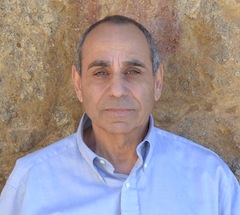
photo - Retired Israel Defence Forces commander Sassy Reuven spoke in Richmond on Nov. 9 about Operation Entebbe
Retired Israel Defence Forces commander Sassy Reuven spoke in Richmond on Nov. 9 about Operation Entebbe. (photo from Sassy Reuven via Chabad of Richmond)

Earlier this month, he stopped in Richmond to deliver a talk sponsored by the Jewish Federation of Greater Vancouver, Chabad of Richmond and Richmond Jewish Day School. Then he was headed to Vancouver Island, Spokane, Wash., and South Africa for more speaking engagements.

The hijacking began on Air France Flight 139, which, on June 27, 1976, was en route from Tel Aviv to Paris via Athens. In Athens, four terrorists boarded the plane and forced the pilot, Michael Bacos, to divert the plane to Benghazi to refuel. Seven hours later, the plane left for Entebbe, arriving at 4 a.m.

“Israel had a good diplomatic relationship with Uganda from 1965,” Reuven explained. That changed in 1972, when President Idi Amin came to Israel, saw the IDF’s jet fighter planes and declared he wanted them for his own air force, “so he could destroy Tanzania.” The diplomatic visit did not go well and, over the course of it, Amin had a psychotic episode and spent time in hospital, Reuven said. When he returned to Uganda, Amin persisted in his demand for the fighter jets, but Israel, a friend of Tanzania, denied his request. When the hijackers requested the cooperation of Amin’s army so they could negotiate for the release of the hostages from Entebbe, the president complied.

Over the two days that followed, the hijackers separated Jews and Israelis from the other passengers. They set their ransom price and threatened to start killing Jewish hostages by July 1 if their demands weren’t met. Later, they extended the deadline to July 4, giving the IDF much-needed time to plan its heroic rescue.

The mood in Israel was very sombre at the time, Reuven recalled. “The entire country was still in mourning after the Yom Kippur War. When we learned we’d be flying to Entebbe to bring the hostages back, our commander told us we needed to bring them back alive – no fatalities and no injuries. We were going to bring the country’s morale back up.”

Asked if he felt ready to embark on such a mission, Reuven said he’d been in training for two years solid prior to the rescue. “The only time we stopped training was for Shabbat,” he reflected. “When I was selected to be part of this mission, I felt like the luckiest person alive, that this was my core existence as a Jewish soldier.”

The hours before he and the other soldiers boarded a Hercules C-130 aircraft and took off for Entebbe were long. Reuven recalled waiting beneath the eucalyptus trees at an army camp where the soldiers were fed hardboiled eggs, pita and mud-like coffee, and given very little information about their upcoming mission. When they finally took to the air, there were four Hercules C-130s and two Boeing 707s, containing a flying hospital and a flying command centre. The soldiers numbered 212 and included pilots, flight engineers, doctors, paramedics, refueling technicians, psychologists and intelligence personnel. Space was so tight on the flight that Reuven was wedged between the wall of the plane and an old black Mercedes-Benz that the IDF had brought along so that its soldiers could masquerade as officials in the Ugandan government if necessary.

At one point in his lecture, Reuven donned a white cap fitted with an elastic beneath his chin. “When we disembarked from the planes, we were wearing hats just like these,” he said. The IDF knew the airport would be in pitch darkness when its rescue mission arrived at 11 p.m. and the white hats were a way for the soldiers to recognize and see one another easily.

The rescue mission soldiers had various tasks. Some, like Yonatan Netanyahu, were sent to Entebbe’s old terminal building, where the hostages were being held. Reuven was instructed to go to the new terminal building. He recalled how the Ugandan soldiers knew something was going on and started raining bullets on the IDF rescuers as they ran towards the terminal buildings. Netanyahu was shot by one of those bullets and died minutes later at the scene.

In total, the rescue mission took 90 minutes and, by 12:30 a.m., the seven hijackers were dead and the hostages were loaded into an aircraft and en route to safety. The mission returned with fewer casualties than had been expected. Among the IDF soldiers, one had died and four were injured. Six hostages had been injured and four had been killed, including 19-year-old French-Israeli Jean Jacques Mimouni. When the IDF had arrived in the terminal building, they’d shouted to the hostages to lie down. Mimouni was so excited to see them, he jumped up and tried to embrace them. Mistaking him for a hijacker, the IDF shot him dead.

While he didn’t spend much time detailing the rescue scene, Reuven said he felt elated as he flew back to Tel Nof in Israel. “I felt like the long arm of the Israeli army was such a great arm that we’d go take care of any Jew, anywhere, in dire straits.”

Lauren Kramer, an award-winning writer and editor, lives in Richmond. To read her work online, visit laurenkramer.net.
Seminar on law and justice

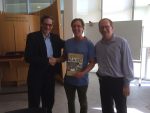
Congregation Beth Israel Rabbi Jonathan Infeld, right, and Howard Mickelson, QC, receive the Schechter Haggadah from the president of the Schechter Institute, Prof. David Golinkin, at the Schechter Institute of Jewish Studies in Jerusalem. (photo by Linda Price)

A group of 20 lawyers and judges from Canada visited Israel for a five-day Law and Justice seminar at the Schechter Institute of Jewish Studies in Jerusalem. Meeting with some of their Israeli counterparts, participants immersed themselves in the topics of Maintaining Security, Rule of Law, Democracy and the Jewish Way of Life.

Mission delegates participated in a reception at the Rooftop Restaurant, Mamilla Hotel, followed by a talk by the Hon. Justice Dalia Dorner, former Israeli Supreme Court justice. Mission delegates, several of whom are not Jewish, heard Dorner’s explanation of the special character of Israel, which is both a Jewish and democratic state. She said, “Israel must unite both of these values. Indeed, certain Jewish values are very compatible with democracy. Furthermore, the founding fathers of Israel chose freedom, justice and peace as the basic values upon which the state is founded, and no one can change this.”

The next day, the jurists met with Justice Elyakim Rubinstein, vice-president of Israel’s Supreme Court and former attorney general. They also toured the award-winning building. Rubinstein explained the uniqueness of Israel’s Supreme Court and how it differs from those of other Western countries. He also discussed topical issues such as the appointment of Supreme Court justices and the proposed Regulation Law.

Afterwards, delegates traveled to the Ministry of Justice in East Jerusalem and met with Israel State Attorney Shai Nitzan, who spoke about the difficulties of safeguarding human rights during times of war and insecurity.

photo - Members of the group at the Neve Schechter in Tel Aviv
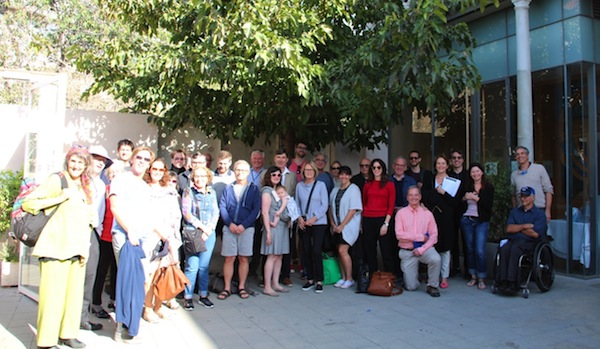
Members of the group at the Neve Schechter in Tel Aviv. (photo by Linda Price)

On the Thursday, Ambassador Efraim Halevy, the ninth director of Mossad, who was born in England, gave a talk on the interrelationship between Israel, the United States and Russia, and each country’s interest in the Middle East. Halevy said, “Israel cannot be destroyed” and that “Iran never was and cannot be an existential threat to the state of Israel. There is no state or entity that represents an existential threat to the state of Israel.”

On Friday afternoon, delegates visited the Neve Schechter Centre for Jewish Culture in Neve Zedek, Tel Aviv, and heard several lectures. Prof. Gideon Sapir from the faculty of law, Bar-Ilan University, and a candidate for the position of Supreme Court justice, gave a lecture explaining the issues of Israel’s “blue laws.” He noted the quandary of employing workers on the Sabbath in Israel and creative legal solutions to this dilemma, which counterbalances two values: one Jewish – the right to a day of rest; and the other democratic – the basic right to freedom of employment.

The mission was the initiative of Rabbi Jonathan Infeld of Vancouver’s Congregation Beth Israel and one of his congregants, attorney Howard A. Mickelson, QC. A group of Jewish and non-Jewish lawyers meets regularly in Vancouver, in a Law and Learn program for lawyers that deals with contemporary issues in civil law, bringing in guest lecturers. A Jewish law component is added to each session by Infeld.

Because of Infeld’s long-term connection to the Schechter Institute of Jewish Studies, Schechter was chosen to lead the mission and to implement the study program. The mission’s goal was to enable a group of Canadian leaders to study, up close, the social, military and political issues facing Israel as a democratic and Jewish state, both from a general legal and a specific Jewish legal/religious standpoint.

Dance in support of refugees

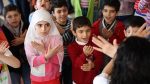
Children learn the #iamchild dance routine created by Israeli-Turkish therapist and journalist Michal Bardavid. (photo from iamchildproject.com)

There’s a new dance routine on social-media sites that has five catchy poses and one enormously powerful message.

The #iamchild dance-therapy routine is part of a project in support of Syrian children affected by ongoing civil war. It was created by Israeli-Turkish journalist Michal Bardavid to give emotional and moral support to millions of the world’s refugee children.

In addition to being an international correspondent for China Central Television, Bardavid is a psychological counselor and a certified dance therapist. After meeting hundreds of Syrian children in refugee camps on the Turkish-Syrian border, she created a motivational dance exercise made up of five positively worded sentences accompanied by five movements to show the kids that someone cares.

The five phrases – “I am loved,” “I am a child,” “I am safe,” “I am a whole person,” “I am beautiful” – are spoken in Arabic.

“The accompanying movements make the emotion more concrete as children say the sentences out loud,” Bardavid writes about the project.

In honor of United Nations Universal Children’s Day on Nov. 20, a day that promotes “international togetherness, awareness among children worldwide, and improving children’s welfare,” Bardavid uploaded a call-to-action video – in English and Turkish – asking people to join the movement and show support for the Syrian kids.

So far, she has documented 600 Syrian refugee children and 350 Turkish schoolchildren doing the #iamchild dance routine. Children in Israel, Iraq, Spain, the United Kingdom and Turkey have sent in heartwarming homemade videos of how they perform the dance routine.

“#iamchild is about empowering Syrian refugee children, creating solidarity among Syrian and international children, and increasing global awareness on the issue,” writes Bardavid.

Bardavid wants to reach as many Syrian refugee children as possible via social media and word of mouth. “It’s important to remember Syrian kids are actually the ones most affected by the conflict,” writes Bardavid, noting that she hopes her #iamchild project will “induce a positive emotion even if for a brief moment.”

Israel21C is a nonprofit educational foundation with a mission to focus media and public attention on the 21st-century Israel that exists beyond the conflict. For more, or to donate, visit israel21c.org.

Memorial to Mumbai terror victims

Israeli President Reuven Rivlin lays a wreath in memory of the victims of the 2008 Mumbai terror attack at the Chabad House. To Rivlin’s left is First Lady Nechama Rivlin. (photo from Israel Government Press Office via Ashernet)

Israeli President Reuven Rivlin and First Nechama Rivlin participated in a Nov. 21 memorial ceremony for victims of the 2008 Mumbai terror attack at the Chabad House – Rabbi Gavriel and Rivka Holtzberg, Bentzion Kruman, Rabbi Leibish Teitelbaum, Yoheved Orpaz and Norma Rabinovich.

Also at the ceremony at Taj Palace Hotel were Chennamaneni Vidyasagar Rao, governor of Maharashtra state of India, other senior state officials, leaders and members of the Jewish community, and members of the business and academic delegation who accompanied the president on his state visit to India.

“As we stand here, we say clearly that terror will never win…. Our values of democracy and freedom are strong and we will defend them with all our might,” said Rivlin. He added, “We must act and work together: to share intelligence and best practices, to keep our peoples safe, to protect our borders, our towns and cities. India and Israel stand shoulder to shoulder in this fight. This is our duty to the memory of the victims, and will be the legacy we leave for future generations.”

Israel’s complexities

Noa Baum, one of the presenters at this year’s Cherie Smith JCC Jewish Book Festival, is a professional storyteller who, in recent years, has dedicated herself to promoting peace between Israelis and Palestinians. She has taken a long road to get to where she is today.

Baum was born in the late 1950s in Israel and grew up in the “golden age” of Zionism, where, despite the many challenges and flaws of the young state, the shadow of controversial wars and of the occupation had not yet darkened the Israeli self-image.

book cover - A Land Twice PromisedAs recounted in her 2016 debut work A Land Twice Promised: An Israeli Woman’s Quest for Peace, Baum grew up with both a deep love of Israel and a keen sense of Jewish vulnerability and the wounds of the Holocaust. The narrative she grew up with about Israel centred on the heroism of its citizen army (“our boys,” she repeatedly calls them) standing up to the bewildering, relentless hatred of the Arab countries. She was deeply shaped by the experience of living through the 1967 Six Day War and the 1973 Yom Kippur War as a child.


Over the years, she developed a more nuanced view. She came to face the existence of a hateful, right-wing extreme in Israel and was bitterly disappointed by the actions of the Israeli government in the 1982 Lebanon War, particularly Israeli complicity in the Sabra and Shatila massacre. Her brother, himself named after an uncle who died defending Israel, also suffered post-traumatic stress syndrome from the Lebanon War, leading to a lifelong struggle with mental illness.

When Baum left Israel to move with her husband to the United States to support his career, she left with her simplistic narratives shattered, but an enduring deep love of Israel and the Jewish people.

In her youth, Baum had passionately loved acting and storytelling and, in the United States, she became a professional storyteller. As a tale-spinner, she played it safe, however, presenting upbeat material and folktales and not touching on the conflicts and contradictions of modern Israel. All of that began to change when she nurtured a relationship with another mother, a Palestinian she calls “Jamuna” in the book. As a result of their friendship and the advice of storytelling mentors that she needed to stop shying away from difficult material, Baum began listening to Jamuna’s heart-wrenching stories of growing up Palestinian in the land of Baum’s dreams, with an eye to telling Jamuna’s stories.

“Hearing how the soldiers of the IDF, ‘our boys,’ were to a young Jamuna the source of terror and hatred, was heartwrenching,” Baum told the Independent.

Baum began touring with a one-woman play called A Land Twice Promised, wherein she delivered monologues from the perspectives of herself, her mother, Jamuna and Jamuna’s mother. The show aimed to bring healing and be a contribution toward peace. As one would expect, it was received in many different ways. Baum was called a “traitor” and told she “should be ashamed” of herself; others said she had described their own Israeli or Palestinian experience perfectly. Both Israelis and Palestinians said the show was not balanced enough. One woman from Nigeria said the show made her realize Jews were human beings; others said they’d never felt compassion for Israelis before seeing the show. Some said it was the first time they empathized with Palestinians.

“In the beginning, it was terrifying,” said Baum. “Audience reactions would throw me into bouts of anxiety.”

Gradually, she developed the ability to process the diverse reactions and became confident in what she was doing, and she continued to actively evolve the show based on audience feedback that she solicited.

In 2015, after doing the show for 14 years, Baum was approached by someone interested in making it into a book. It was an offer she couldn’t refuse, though she had never written before. “I’m not really a writer,” she said. “I come from the world of performance, I’m a speaking artist.”

Despite Baum’s lack of writing experience, A Land Twice Promised is a moving, lucid memoir that powerfully evokes the Israeli experience in the last decades, and Baum’s personal and familial struggles to come to terms with it.

The book provokes empathy and insight, and will lead most readers to embrace a view of Israel and the Palestinian conflict that is both complex and compassionate. The book has received favorable reviews and even won many commendations, including one from Pulitzer Prize-winning author David Shipler, writer of Arab and Jew: Wounded Spirits in the Promised Land.

Baum will speak at the book festival on Nov 29 at 6:30 p.m. For tickets and the full festival schedule, visit jccgv.com/content/jewish-book-fest.

Matthew Gindin is a freelance journalist, writer and lecturer. He writes regularly for the Forward and All That Is Interesting, and has been published in Religion Dispatches, Situate Magazine, Tikkun and elsewhere. He can be found on Medium and Twitter.

Cancer research breakthrough

Assistant Professor Avi Schroeder of the Technion faculty of chemical engineering and the Technion Integrated Cancer Centre. (photo by Ashernet)

Technion researchers in Haifa have developed a new technology for determining the suitability of specific anticancer drugs to a specific patient – before treatment begins. The study, just published in Nature Communications, was led by Assistant Professor Avi Schroeder of the Technion faculty of chemical engineering and the Technion Integrated Cancer Centre. The researchers packed miniscule quantities of anticancer drugs, as well as placebo packages (which contained no drugs), inside dedicated nanoparticles they developed, which have the ability to flow in the bloodstream to the tumor. Attached synthetic DNA sequences served as barcode readers of the activity in the cancer cells. After 48 hours, a biopsy was taken and the anticancer drugs were found mainly in dead cancer cells – that is, they had killed them – while the placebos were found mainly in live cells – that is, they had not killed the cells. A comparison between various anticancer drugs also found differences in effectiveness.

Making a life in Israel

Emily Rose and Aviv Eisenstat in the Israel Defence Forces’ officer’s training school in 2008. (photo from Emily Rose)

When Emily Rose, 28, moved to Israel almost 10 years ago, her plan was to serve in the Israel Defence Forces and then return to Winnipeg. It didn’t happen quite as planned.

Rose was born in Odessa, Tex., and grew up in Winnipeg. Taking a similar road as many Jewish kids in the city, Rose studied at Gray Academy of Jewish Education (GAJE).

“The Winnipeg Jewish community is truly saturated with role models for social justice and it had a major impact on me growing up,” said Rose. “I grew up watching my aunt, Faye Rosenberg, who works for our Jewish community, help bring hundreds of Jews to Winnipeg from Argentina, where they suffered from antisemitism, and watching my best friend’s dad work tirelessly in court to help victims of residential schools receive compensation from the government.

“Winnipeg is an incredibly Zionist and supportive community,” she added. “The longer I am away, the more I appreciate what a wonderful community it really is.”

When Rose was 14, she went to Israel on a Jewish Federation of Winnipeg Partnership 2000 (or Gesher Chai) trip, which sent 10 high school students from GAJE to their sister school, Danziger, in Kiryat Shmona.

She fell in love with the city and the people. “My host family had three sisters and I was thrilled because, up until then, I only had big brothers. And, I remember writing to my mom, ‘Now I have three sisters!’ on the first night. I realized at that point that all my new friends in Israel would be going to the army soon and I remember thinking I had the responsibility to do that as well.”

This is what led Rose to move to Israel at the age of 18, starting with a mechina (a pre-military program) in her first year there.

She lived in Sde Boker in southern Israel and volunteered as an English teacher’s aide in an unrecognized Bedouin village. “Can you think of anything more polar opposite to a very cold Winnipeg, Man., than the middle of the Negev Desert?” she quipped.

“Your first year in Israel is always the most challenging, I think. There were a lot of tears. I was the only foreigner in the program, so I had to learn Hebrew very quickly. But, the program itself was also very intense, because we had classes every day and political tours and hikes every month.”

Something Rose was especially thrilled about in Israel was getting to sleep outside. As a child, she eagerly anticipated going to summer camp for canoe trips and sleeping under the stars.

“When you see the stars in the Negev, you really think it’s got to be the best seat in the house,” said Rose. “And, that first year, my roommate used to wonder why I’d always drag my sleeping bag out of our room to sleep outside.”

The next year, Rose joined the IDF as a lone soldier and served as a combat fitness officer. She recalled that some of her trainees used to call her “M&M,” as she was “hard on the outside, but sweet on the inside (and very small).”

She added, “My first job was training infantry soldiers on a combat training base where I worked with a unique battalion of Druze soldiers. The soldiers I worked with spoke Arabic. This really sparked my interest in the language, which is why I studied Modern Standard Arabic (MSA) in school.”

Today, Rose serves in reserve duty in Jerusalem’s Homefront Command. Her job is to communicate with the civilian population in Jerusalem during times of emergency.

A few years after her IDF service, Rose volunteered at the Michael Levin Centre for Lone Soldiers, which helps soldiers before, during and after their service. At the centre, the first thing she was asked to do was to tell those thinking about joining the IDF “don’t.”

Rose explained, “If we couldn’t convince them not to, then we’d help them as much as we possibly could. Nobody told me not to join the IDF, but also no one would have been able to convince me not to. And, the day I joined, I remember I wasn’t nervous – I just knew it was the right decision.

“I also didn’t plan on staying. I thought I’d serve for two years and then return to Canada. Here I am, almost 10 years later.”

After the army, Rose took Middle Eastern studies (along with MSA) at Hebrew University of Jerusalem. She still lives in Jerusalem, where she recently started writing for the Times of Israel.

Just prior to that, she was an editor at Israel National News, where, she said, she mostly wrote the breaking news but also covered longer form stories. “A few weeks ago,” she said, “I broke a story with exclusive footage of a former Australian minister who got caught in a firefight clash between Kurdish forces and ISIS in Iraq.

“The plight of the Kurdish people is an issue that is very close to my heart. I jumped at the chance to write about it. I’m also so proud to say I come from Winnipeg, [as] our Jewish community sponsors Operation Ezra, bringing Yazidi refugees safely to Canada.”

When on leave from the army a few years back, Rose returned to GAJE to speak to the students. When she visited Winnipeg this past summer, some community women stopped to say hello to her and her mom. “One of them told me that her grandson was going to be a lone solider, an IDF paratrooper, this fall … and she said that I’d spoken to him when he was in high school,” said Rose. “That was very nice, like coming full circle.”

Currently, Rose is working on a short story collection, a novel and three plays.

Her first play was presented at the JCC Berney Theatre in Winnipeg in 2006, the year she graduated high school. Called Radyo, it is about a group of high school kids in Kiryat Shmona who run their local high school radio station during the Second Intifada.

“The second play is a children’s musical I wrote called Don’t Touch the Glutch, which was performed as a part of the Next Wave of Musicals Festival in Montreal and then at the Centaur Theatre children’s series in 2013. It’s about a boy who gets lost in the zoo on a school field trip and discovers that the zoo has a whole host of strange creatures that only come out at night. My brother wrote the music and lyrics and I wrote the book. The show has an anti-bullying theme, because it’s a topic we both feel very strongly about.”

When asked about her feelings about Israel, Rose quoted Rabbi Abraham Isaac Kook: “The truly righteous do not complain about evil, but rather add justice; they do not complain about heresy, but rather add faith; they do not complain about ignorance, but rather add wisdom.”

She added, “Israel is in everything I write, in some form or another, and, though I may not always succeed, I try my best to contribute justice, faith and wisdom with my words.

“For now, I love reporting the news as it happens. Israelis, and those who care about Israel, want to stay informed and I feel privileged to be working with a team that is very committed to keeping our readers updated at all times.”

Rebeca Kuropatwa is a Winnipeg freelance writer.

מגפת הפנטניל

מגפת הפנטניל: חמש מאות חמישים וחמישה תושבים מתו בבריטיש קולומביה בתשעה חודשים. (צילום: Crohnie via Wikimedia Commons)

מצב חירום הוכרז במערכת הבריאות של מחוז בריטיש קולומביה לאור מגפת הפנטניל, הסם הקטלני שהורג מדי יום בממוצע שני מכורים במחוז. מספר המתים בבריטיש קולומביה מהסם, בתשעת החודשים הראשונים של השנה הגיע כבר לחמש מאות חמישים וחמישה. לעומת זאת בכל שנת 2015 מתו מהסם בסך הכל חמש מאות ושמונה איש. כוחות ההצלה והמשטרה מסתובבים באזורים בהם מרוכזים נרקומנים שברובם הומלסים, ובידיהם ערכות חירום להציל ממוות משתמשי יתר בפנטניל. להדגמת חומרת המצב: ביום אחד באחד החודשים האחרונים, בתוך כעשרים דקות הגיעו לחדר המיון באותו בית חולים באזור העיר דלתה, שמונה מכורים במצב קריטי ביותר כתוצאה מהשימוש בסם.

הפנטניל שנחשב לזול ונגיש הרבה יותר מהרואין והוא אף חזק פי חמישים ממנו, התחיל להגיע לשוק בקנדה ובארצות הברית לפני כארבע שנים. הוא מיוצר בעיקר בסין ומשם מגיע למעבדות בבתים פרטיים ברחבי בריטיש קולומביה. הסם מורכב ממשכך הכאבים החזק פנטניל (שהוא אופיואיד סינתטי) בתוספת חומרים שטבעם עדיין לא ידוע. ישנן שתי סיבות עיקרתיות לסכנת המוות מהשימוש בפנטניל. הראשונה – סוחרי הסמים מוכרים אותו כהירואין והמשתמשים מזריקים חומר רב כהרגלם (כי הם כאמור חושבים שמדובר בהירואין) ופשוט מתים ממנת יתר. השנייה – הסם מעורבב בחומרים רעילים והדרך על המות קצרה מצד המשתמש.

כידוע הזמר האמריקני פרינס מת משימוש בפנטניל. כעת המשטרה מנהלת חקירה מורכבת כדי לבדוק האם פרינס ידע מראש באיזה כדורים נגד כאבים הוא השתמש. או שהודבקה תווית לא נכונה על הבקבוק שהשתמש בו שהיה מלא בפנטניל.

מדד התיירות הרפואית: קנדה במקום הראשון ואילו ישראל במוקם השלישי והמכובד

קנדה ממומקמת במקום הראשון ואילו ישראל נמצאת לא הרחק אחריה במקום השלישי והמכובד, במדד התיירות הרפואית לשנת 2016, המתפרסם על ידי המרכז הבינלאומי למחקר רפואי (איי.איץ’.אר.סיי) שמושבו בפלורידה. המדד שמורכב משלושים וארבעה קריטריונים שונים כולל ארבעים ואחת מדינות.

עשר הראשונות במדד התירות הרפואית העולמי: ראשונה כאמור קנדה, שנייה בריטניה, שלישית כאמור ישראל, רביעית סינגפור, חמישית הודו, שישית גרמניה, שביעית צרפת, שמינית דרום קוריאה, תשיעית איטליה ועשירית למרבית הפלא קולומביה.

בחלוקה לפי אזורים: חמש עשרה מדינות מהמזרח התיכון ואפריקה (מהוות כשלושים ושבעה אחוז מסך התיירות הרפואית בעולם), תשע מדינות מאירופה (מהוות עשרים ושלושה אחוז מסך התיירות הרפואית בעולם), תשע מדינות מצפון ודרום אמריקה (מהוות עשרים ושניים אחוז מסך התיירות הרפואית בעולם) ושמונה מדינות באסיה (מהוות למעלה משמונה עשר אחוז מסך התיירות הרפואית בעולם).

המרכז הבינלאומי למחקר רפואי מצא עוד נתונים מעניינים לגבי התיירות הרפואית בעולם. חמישים ואחד אחוז הם נשים ואילו ארבעים ותשעה אחוז גברים. למעלה מחמישים ושניים אחוז הם נשואים, כשלושים ושניים אחוז רווקים ואילו כשישה עשר אחוז גרושים. למעלה משישים ושישה אחוז לבנים, כארבעה עשר אחוז שחורים, כשניים עשר אחוז לטינים וכשבעה אחוז אינדיאנים.

גם בשנתיים הקודמות (2014 ו-2015) ישראל מוקמה במקום השלישי. לישראל מגיעים כיום למעלה משלושים אלף תיירים בשנה לקבלת טיפולים רפואיים (שכוללים ניתוחים מוסבכים וטיפולים מורכבים). ובנוסף מגיעים לארץ למעלה משישים אלף תיירים להחלמה ומנוחה (בעיקר לאזור המרחצאות של ים המלח).

בהתאם לנתוני המרכז הבינלאומי למחקר רפואי, מדי שנה גדל מספר החולים שנוסעים לקבל טיפולים רפואיים במדינות אחרות ברחבי העולם. עם זאת אין מספרים מדוייקים של התופעה בקרב המדינות השונות והמדד מתבסס בעיקר על נתונים סטטיסטיים.

אמנת מס חדשה

שר החוץ של קנדה, סטפן דיון, עם שר האוצר של ישראל, משה כחלון. (צילום: Global Affairs Canada)

שר החוץ של קנדה, סטפן דיון, חתם לאחרונה בישראל על אמנת מס חדשה עם שר האוצר של ישראל, משה כחלון. ההסכם נועד למנוע את כפל המס בין שתי המדינות, וכן להסדיר את נושא המיסוי בין קנדה לישראל לגבי יחידים וכן לגבי חברות. מטבע הדברים הסכם זה צפוי לחזק את הקשרים המסחריים בין שתי המדינות. בפגישה בין השניים אמר דיון: “ההסכם הזה יחזק את הקשרים הכלכליים והמסחר בין קנדה לישראל. וכן יעודד חברות קנדיות נוספות להשקיע בישראל”. כחלון הוסיף: “שיתוף הפעולה בין שתי המדינות הוא הכרחי. יש לזכור שקנדה היא מהידידות הגדולות של ישראל בעולם”.

המיזוג אנברידג’-ספקטרה יוצר את גוף האנרגיה הגדול בצפון אמריקה

רכישת חברת האנרגיה האמריקנית ספקטרה אנרג’י קורפ (מיוסטון) על ידי החברה הקנדית אנברידג’ אינק (קלגרי), יוצר את מוביל האנרגיה הגדול ביותר בצפון אמריקה. שווי הרכישה שלושים ושבעה מיליארד דולר ובפועל הוחלפו מניות בין שתי החברות, כאשר אנברידג’ תחזיק בחמישים ושבעה אחוז מהבעלות על החברה המשותפת. המשקיעים כך מסתבר אוהבים את הרכישה ומניות אנברידג’ עלו מאז בבורסת טורונטו, ואילו מניות ספקטרה עלו בבורסת ניו יורק. העיסקה שתיחתם בראשית 2017 כפופה לקבלת לאישורים מהרגולטוריים השונים. המיזוג צפוי ליצור פרוייקטים חדשים בשווי ארבעים ושמונה מיליארד דולר. כך שהדיבידנדים לבעלי המניות יוכפלו בתוך שש עד שבע השנים הבאות.

היתרונות לאנברידג’ מהעיסקה ברורים: החברה הקנדית שמתמקדת בהפצת נפט גולמי חיפשה לגוון את עסקיה ואילו ספקטרה האמריקנית מתמקדת בהפצת גז טבעי. כיום קל יותר לרכוש גוף עם קווי אספקה קיימים, מאשר להשיג רשיונות לבניית קווים חדשים בעיקר לאור החשש לפגיעה באיכות הסביבה, והאישורים הרגולטורים המסובכים. כן קל יותר לפעול בארה”ב מאשר בקנדה והשוק בארה”ב גדול יותר.

הפעם יש ביסוס להערכה: מחקר חדש קובע שהכלב הוא אכן חברו הטוב של האדם

מחקר חדש שפורסם לאחרונה בבריטיש קולומביה מאשר את מה שידענו וחשבנו, כי הכלב הוא אכן החברו הטוב של האדם. חמישים וארבעה אחוז מהמשתתפים במחקר ציינו במפורש, כי הם מעדיפים לטייל בחוף הים או בכל מקום אחר בחוץ, ביחד עם חברם שהולך על ארבע, מאשר עם בן או בת הזוג שכנראה נובח יותר מדי. מומחים הופתעו מהתוצאות ולא תיארו לעצמם, כי כיום מערכות היחסים בין בני זוג הן כל כך מורכבות ומסובכות, כך שרבים מעדיף להירגע בחוץ דווקא עם הכלב.

ועוד נתונים מעניינים לפי תוצאות המחקר: שמונים אחוז מבעלי הכלבים לא מוכנים להכיר, לצאת או אפילו להתחתן עם בן או בת זוג, שלא מסתדר עם כלבם. חמישים ושמונה אחוז מבעלי הכלבים יעמידו אותם במקום הראשון, בסדר העדיפויות היום יומי שלהם, אפילו אם זה יבוא על חשבונם. למשל הם יסכימו לוותר על אירוע בחוץ וישארו בבית ביחד עם כלבם, כדי שלא ישאר לבד. רוב מוחלט של בעלי הכלבים (תשעים ותשעה אחוז) רואים בכלב כבן משפחה לכל דבר ועניין. ומה קורה עם התנהגות בעלי הכלבים בעת הטיול עם הכלבים בחוץ: תשעים וחמישה אחוז מהבעלים טוענים כי הם אכן מנקים אחרי כלבם ואוספים את הצואה שלו, ואילו שבעים וחמישה אחוז מציינים כי יקשרו את חברם הטוב לרצועה בעת הטיול.

בבריטיש קולומביה גרים כיום למעלה מ-4.6 מיליון איש והכלבים ברחבי מחוז נפוצים מאוד. לכשליש מתושבים במחוז יש לפחות כלב אחד, שכאמור הוא חלק משמעותי מחיי מהמשפחה שלהם.

Vancouver CHW gala

In August, Canadian Young Judaea visited two of CHW’s daycares in Israel, the Sandy Martin Alberta Daycare and the Judy Mandleman Vancouver Daycare. (photo from chwblog.tumblr.com)

Canadian Hadassah-WIZO (CHW) is one of the original feminist philanthropic organizations. Founded in 1917 and on the eve of celebrating its centennial, it remains an organization unique to Canada.

Only in Canada are Hadassah International, which supports medical centres in Israel, and Women’s International Zionist Organization, which has women in the Diaspora working for the welfare of women and children in Israel, combined. They were brought together by CHW founder, philanthropist and activist Lillian Freiman.

While the history is important, CHW continues to evolve, due in part to leaders like Vancouver’s Claudia Goldman and, on Nov. 5 at the Four Seasons Hotel, Vancouver CHW is hosting the national organization’s gala in honor of Goldman, who is the outgoing national president.

CHW leadership from across Canada will gather to celebrate Goldman’s achievements. In addition, World WIZO president Esther Mor will be here as part of her trip to Canada, and other special guests will include Zev Twito, director of the CHW-supported Hadassim Children and Youth Village, which is located east of Netanya and north of Tel Aviv. Twito will share information about some of the initiatives being undertaken at Hadassim.

“In 1947, CHW built Hadassim to provide housing for orphan children who were arriving in Israel after WWII,” explained Goldman. “In 2017, when CHW is celebrating its centennial, Hadassim will be celebrating its 70th birthday. For 70 years, CHW has been continuously saving children.

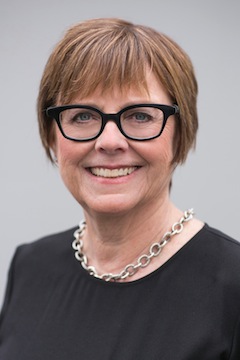
photo - Claudia Goldman, outgoing national president of CHW, will be honored on Nov. 5
Claudia Goldman, outgoing national president of CHW, will be honored on Nov. 5. (photo from CHW)

“For, me personally, Hadassim has been like a second home. The relatives I am very close with in Israel sent all six of their children to Hadassim and our younger daughter volunteered at Hadassim. When you are at Hadassim, you really feel the impact that CHW has had on the school.”

While Hadassim has developed into an educational centre for all children living in the region, there are also dormitories for children in foster care, a special home for teenaged mothers and their babies, and group homes run by an Israeli family for younger foster children. Recently, there has been an influx of French teenagers, moving to Israel to escape antisemitism in France. Proceeds of the November gala will support Hadassim’s work.

Other visitors from Israel coming to Vancouver for the gala are connected directly to the village. Award-winning musicians Guy and Yahel are graduates of Hadassim, and they will provide the entertainment for the evening with their brand of rock-pop. These young performers, who were Voice of Israel finalists, have received numerous accolades, including a nomination by MTV Europe as the best Israeli act.

“I heard them play in Tel Aviv and I can promise you, they are really something special,” said Goldman. “As the lead volunteer for CHW, I feel that Guy and Yahel coming to Vancouver all the way from Israel to perform pro bono is a great message for CHW members and friends. Our Hadassim graduates are giving back to CHW for the loving support they received during their time at Hadassim.”

The gala will also focus on Goldman’s successes as president.

“I believe that so much more can be accomplished when people reach out and pull together as a team,” explained Goldman, whose presidency’s theme was “partnership.”

She has worked to strengthen the organization based on what she said CHW already does well. “CHW offers the magical mixture of camaraderie, while at the same time offering the opportunity to make positive change in the world,” she said. “It is empowering to help the most vulnerable citizens in our Jewish homeland. Sometimes, the world seems to be coming apart, but when you are able to fight back by helping strengthen Israel, while at the same time making friends with Jewish women and men from around the world, it feels incredibly empowering.”

Goldman has strong feelings about her work with CHW.

“I feel very proud that, over the last two years, I have been able to spread the enthusiasm and commitment I have for CHW,” she said. “With all of the problems in the world today, I am absolutely certain that the work we do is essential and that we are on the right track. CHW is strengthening the health services of Israel, supporting Israeli women and families, and rescuing Jewish children who are living under terrible antisemitism. We are making a huge difference, improving thousands of lives. Being CHW’s national president has been a very powerful experience.”

To attend the CHW gala, call the local CHW office at 604-257-5160, email office@vancouver.chw.ca or visit chw.ca.

Michelle Dodek is a freelance writer living in Vancouver.