Skip to content
  • Home
  • Subscribe / donate
  • Events calendar
  • Business Directory
  • FAQ
  • News
    • Local
    • National
    • Israel
    • World
    • עניין בחדשות
      A roundup of news in Canada and further afield, in Hebrew.
  • Opinion
    • From the JI
    • Op-Ed
  • Arts & Culture
    • Performing Arts
    • Music
    • Books
    • Visual Arts
    • TV & Film
  • Life
    • Celebrating the Holidays
    • Travel
    • The Daily Snooze
      Cartoons by Jacob Samuel
    • Mystery Photo
      Help the JI and JMABC fill in the gaps in our archives.
  • Community Links
    • Organizations, Etc.
    • Other News Sources & Blogs
  • JI Chai Celebration
  • JI@88! video

Recent Posts

  • Federation now across BC
  • Israel fighting for its existence
  • Deal strengthens Iran
  • Patriotic belonging diminishes
  • A campaign to engage
  • Upstanders’ first live event
  • Responding to Carney
  • Having your own home
  • Music a family tradition
  • Musical to warm heart
  • Community milestones … June 2026
  • Sharing her passion for Israel
  • Or Shalom reopens its doors
  • JFS from past to future
  • Need holistic approach
  • Sharing stories, advice
  • Journalist shares fears
  • Skills to live together
  • Road to independence
  • Cutting grass with scissors
  • Zionism as a solution
  • Deceit, desire & the divine
  • Reclaiming sacredness
  • Creative project ideas
  • Summer squares and cobbler
  • Thou shalt … summer commandments
  • Legal help for students
  • Revisiting myth of Lilith
  • Wrong person rebuked
  • Canada’s mixed messages
  • Questions for museum
  • Symposium on antizionism
  • Making soccer political
  • CJPAC lauds Pulver’s impact
  • City recognizes Vrba’s legacy  
  • Organ donation saves lives

Archives

Follow @JewishIndie
image - CJN box ad Rockowers 2026

Tag: Israel

Risk … game vs. reality

Risk … game vs. reality

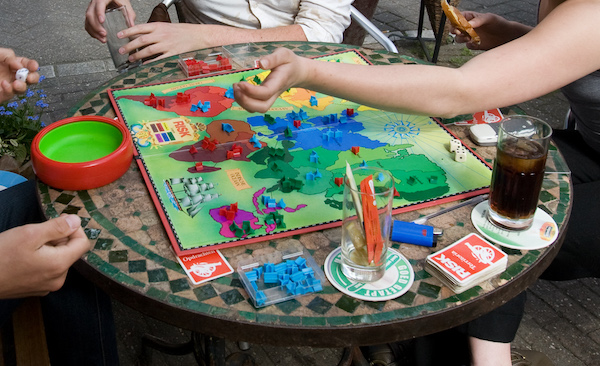
Playing the game of Risk. (photo © Jorge Royan)

I’ve always thought of the Nordic region as peaceful. Admittedly, my knowledge of the area is largely limited to Risk, the board game, where Greenland, Iceland and the Scandinavian countries are considered a haven, free of imminent attack from the throw of a dice.

Well, Finland just purchased Israel’s David’s Sling defensive system. For $345 million US. It was one of Finland’s first moves after recently being accepted into the North Atlantic Treaty Organization. And it was the first sale abroad for David’s Sling, an integrated part of Israel’s multi-tier missile defence system. Israel now carries the title of major supplier to NATO.

I guess the world’s a bit more complicated than Risk.

*** 

So long, Noa Tishby, the Israeli performer appointed by our previous prime minister, Yari Lapid, to advocate for Israel through her strong social media presence. With the formal and former title of special envoy for combating antisemitism and delegitimization of Israel – fit that onto a business card! – she was known for sparring with BDS advocate Bella Hadid and others. Tishby was also a vocal supporter of Israel’s anti-judicial reform movement. Giving voice to the many thousands protesting the current government and its extreme shift rightward and into sometimes theocratic territory, Tishby says this was the reason for her dismissal. Well, ya. As the hawkish Jerusalem Post editorialist Ruthi Blum noted, “Tisbhy is free to share [her opinion]. But she shouldn’t have expected the government she’s been bashing to keep her as a representative.” Well, no. But keep on truckin’ Noa Tishby.

BTW, Tishby will be a guest at the JNF Negev event in Vancouver on June 29.

***

Israel’s Tel Aviv Museum of Art is again among the world’s 100 most visited museums. This according to international art magazine The Art Newspaper. TAMA was ranked 49th in 2022, a jump from its 56th place the year prior. I am fortunate to be one of those visitors, on multiple occasions, over the past many years, often dragging my two children there when they were younger – how fun was that!

Paris’s Louvre and the Vatican Museum took first and second place, respectively. Canada was represented with a 60th place win by Toronto’s Royal Ontario Museum.

***

Congratulations Milk & Honey, Israel’s preeminent whisky distiller, awarded the 2023 world’s best single malt whisky by the World Drink’s Awards for its Elements, Sherry Cask drink. Described as “[f]ruity aromas of citrus zest and white peach with a dash of wood varnish. Sweet to the taste … with flavours of golden syrup, vanilla, tropical fruit and iced tea.…” Sounds like a palate pleaser to me. But, if I had to choose, my favourite would be Seagram’s Five Star rye whisky. Not so much for its taste but for fond memories of fighting with my siblings for the silver sheriff’s star glued to the bottles.

***

Jerusalem was selected by Time magazine as one of the world’s 2023 top 50 destinations, holding the 48th spot. It’s one of my favourite places to visit on a bustling Friday, starting with a walk through the overcrowded neighbourhood of Mea She’arim and enjoying a freshly baked challah. Then, bargaining my way through the Old City’s Arab Market, its tastes, smells and sights, and eventually making my way to the Western Wall, with the golden Dome of the Rock overhead. Ending with lunch at Machane Yehuda, the popular central Jerusalem food market, which has the freshest of meats and vegetables, and many colourful stalls.

Not to be outdone, Canada held two spots. Churchill was third – can’t beat those Northern Light spectaculars. Vancouver was 38th, for its eclectic cuisine and the beautiful Stanley Park.

***

For sure, difficult days in Israel. Sociopolitical cultures are clashing internally. External enemies are looking on with glee, and testing us. But we’re not sinking into despair. Israel has experienced difficult times before and emerged stronger and wiser. So it will be this time.

Arguably, we are being governed by the worst government in our short history – for many reasons, including recent security challenges. I mean, come on, with someone as inexperienced and reactionary as Itamar Ben-Gvir as national internal security minister. Or Finance Minister Bezalel Smotrich spouting off on things about which he should know better and doesn’t. But let’s not blame the victims for the terror and rockets. Hezbollah, Hamas, Iran, an inept Palestinian leadership with a hateful street – they are to blame, not the government.

Usually, it’s the right-wing governments that muster support for the very difficult realpolitik choices, from Menachem Begin’s 1982 Sinai exit to Ariel Sharon’s 2005 Gaza disengagement. Even Binyamin Netanyahu’s 2021 peace deals with several Arab countries under the Abraham Accords. Unfortunately, Netanyahu’s current government may be too inexperienced and messianic to enable reasonable, democratic, liberal change – read judicial reform – at such a scale. But who knows.

We cannot despair. At a very esoteric level, Israelis have hope. In fact, hope is the theme of our national anthem, Hatikvah, The Hope.

***

According to the World Happiness Report, published by the Sustainable Development Solutions Network, Israel remains one of the happiest countries in the world. (See jewishindependent.ca/measuring-happiness.) Rising to fourth place in 2023, just behind Finland, Denmark and Iceland, Israel’s showing likely reflected its reputation as a “villa in the jungle,” as dubbed by former prime minister Ehud Barak – despite being in the Middle East, one of the most contentious spots … on the Risk board.

Bruce Brown is a Canadian and an Israeli. He made aliyah … a long time ago. He works in Israel’s high-tech sector by day and, in spurts, is a somewhat inspired writer by night. Brown is the winner of the 2019 AJPA Rockower Award for excellence in writing, and wrote the 1998 satire An Israeli is…. Brown reflects on life in Israel – political, social, economic and personal.

Format ImagePosted on April 28, 2023April 26, 2023Author Bruce BrownCategories IsraelTags art, Churchill, governance, happiness, hope, Israel, Jerusalem, JNF, Milk & Honey, Noa Tishby, politics, surveys, Vancouver, whisky
Diaspora voices its concerns

Diaspora voices its concerns

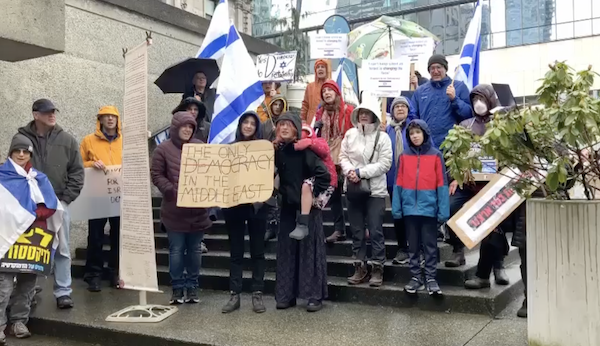
The message on the Facebook post of this video from UnXeptable, who have been gathering weekly at Robson Square to protest the Israeli government’s proposed judicial reforms, reads: “Rain never stops Vancouver 🇨🇦 from supporting you in your struggle ❤️🇮🇱” (screenshot from Facebook.com/DefendIsraeliDemocracy)

Reverberations from the political tumult in Israel continue to rumble across the Diaspora, including here in British Columbia.

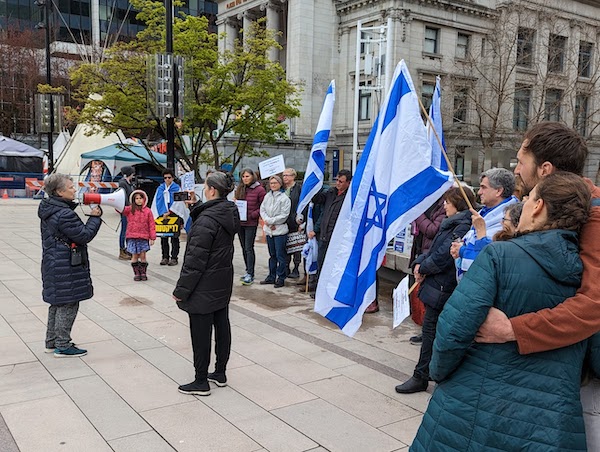
For 10 weekends in a row now, a few dozen Vancouver-area residents, many of them Israeli expats or Israeli-Canadians, have gathered in downtown Vancouver. On March 30, an “emergency meeting” took place at Or Shalom synagogue, titled Saving Israeli Democracy.

Daphna Kedem, one of the organizers of unXeptable, which is behind the rallies, told the group at Or Shalom that similar events are now taking place in more than 50 Diaspora communities.

“There is a point to going out in the street and saying we are here and we care and we want a lot of others to share what we feel,” she said, noting that between 20 and 50 people tend to show up at the weekly gathering at Robson Square.

“It would be great to be 200,” she said, adding that the masses of Israelis taking to the streets have forced a delay in the government’s proposals, but the fight is far from over.

The protests in Vancouver, in Israel and around the world centre on so-called “judicial reforms,” which would remove an existing multifaceted process of appointing Supreme Court justices and centralize it in the hands of the government executive, the cabinet. Among the reams of related proposals is a bill that would allow the Knesset to overturn Supreme Court decisions by majority vote.

Dr. Erez Aloni, an associate professor at the Allard School of Law at the University of British Columbia, said the proposals are “not a legal reform” and that it is “not a joke” to call what the government of Binyamin Netanyahu is attempting to do “a revolution.” Aloni is one of some 200 signees to the “Statement by Canadian jurists on proposed transformation of Israel’s legal system,” which was issued Feb. 9.

“A democracy needs checks and balances and these checks and balances include checks and restrictions on the government so we can enforce laws against the government, so we make sure that the government doesn’t abuse its right, in particular against minorities,” he said. “In Israel, the only checks, the only restrictions on the government, on the executive, is the Supreme Court.”

The power of the cabinet, the lack of a second chamber of parliament, the strictness of party discipline, the absence of a presidential veto, and the lack of a written constitution all combine to put extraordinary reliance on the Supreme Court to rein in any potential overreach by elected officials, said Aloni.

The proposals, which would give the government effective veto power over Supreme Court appointments, is a dramatic step, he said.

“The coalition, the executive, is going to be almost solely responsible for selecting judges by themselves,” Aloni explained.

Not only would this impact the Supreme Court, he argued, but any lower court judge with aspirations of appointment to the highest judicial body would presumably consider political repercussions when handing down decisions.

In addition to the proposals to alter the judiciary, Aloni told the audience that the government is also threatening “independent public broadcasting, control of academia, immunity for IDF soldiers and police actions, increasing jurisdiction of the rabbinical courts and so forth.”

Video-recorded remarks from Achinoam Nini, the well-known Israeli singer commonly known as Noa, were aired at the meeting, with portentous background music.

“The situation is not good,” said Nini. “In fact, Israel is on the verge of the worst tragedy in her short history, worse than any war so far: the death of her democracy and a total system breakdown. The so-called judicial reform … is no such thing. It is rather an antidemocratic coup, a grab for limitless power by a democratically elected government composed of convicted criminals, messianic zealots, corrupt opportunists and ultranationalists, turning democracy against itself and against the citizens of Israel.”

Dr. Lisa Richlen of the David Abraham Centre for International and Regional Studies at Tel Aviv University spoke of the impacts the proposals would have on nongovernmental organizations, especially those she works with that serve non-Jews, non-citizens and asylum-seekers. She addressed the apparent absence of Arab citizens of Israel in the demonstrations.

“I want to make the point that, for them, they haven’t felt that it’s a democracy since even before this,” she said, adding that the apparent attack on minorities has struck a chord with mainstream Israelis.

“When you start with weaker social groups,” said Richlen, “what you have is what you see today, where the mainstream of Israeli society is starting to feel increasingly threatened.”

Dr. Itai Bavli of UBC’s School of Population and Public Health echoed Richlen’s concerns for the rights of those outside the Green Line. He also disputed the idea that opponents of the government’s proposals are overstating the threat to democracy.

“Democracy is disagreeing and I get it that you have political differences, that’s the idea of democracy,” he said. “But these people, they don’t want democracy.… We have to oppose, we have to fight against these forces and support democracy in Israel.”

Rabbi Hannah Dresner, spiritual leader of Or Shalom, spoke and David Berson emceed.

The gathering was only one of many discussions in Jewish communities worldwide, some more public than others, around events in Israel and their impacts inside and outside that country. A February poll commissioned by JSpaceCanada and the New Israel Fund of Canada showed that, while three-quarters of Canadian Jews are emotionally attached to Israel, 73% oppose the judicial reforms (jewishindependent.ca/opposition-to-policies).

“Tensions that had been brewing for months in Israel came to head earlier this week, with the prime minister ultimately postponing the judicial reforms until the next legislative session,” wrote Jewish Federation of Greater Vancouver chief executive officer Ezra Shanken in his March 31 community email. “It is a very welcome decision, and, if our calculations are correct, it gives all parties until sometime in the summer to work out a compromise. A pause is not a halt and we implore the parties to come to the table with President [Isaac] Herzog, which is what we have advocated for since the start.”

The Jewish Federations of North America, the umbrella of 146 Jewish federations and more than 300 communities, released a brief open letter to Israel’s prime minister and opposition leader in February, stating, in part: “[W]e urge you to make clear that a majority of just 61 votes of the Knesset is not sufficient to override a decision of the Supreme Court. The essence of democracy is both majority rule and protection of minority rights. We recognize that any system of checks and balances will be different than those in our own countries, but such a dramatic change to the Israeli system of governance will have far-reaching consequences in North America, both within the Jewish community and in the broader society.”

On March 27, the Centre for Israel and Jewish Affairs, the advocacy voice of Jewish federations in Canada, lauded the Israeli government’s decision to delay the judicial reform legislation and urged more consensus on any changes.

Shimon Koffler Fogel, president and chief executive officer of CIJA, issued a statement, which noted, “The government’s decision must be met with a good faith effort on the part of the opposition parties, engaging in a constructive dialogue and ensuring people feel part of the policy process. Israel was founded on the principle of inclusion and must reaffirm those values at every opportunity. While there may not be uniformity around every decision, Canadian Jews must express unity around the existence of Israel and her contributions to the world, and acknowledge healthy debate is part of a continually evolving and growing democracy.”

Format ImagePosted on April 14, 2023April 12, 2023Author Pat JohnsonCategories LocalTags Achinoam Nini, CIJA, Daphna Kedem, David Abraham Centre, democracy, Erez Aloni, Ezra Shanken, governance, Israel, Itai Bavli, Jewish Federation, JSpaceCanada, judicial reform, Lisa Richlen, New Israel Fund Canada, Nini, Shimon Koffler Fogel, UBC, UnXeptable

Measuring happiness

Amid the miasma of glum news from Israel is a light to be celebrated.

A scan of the headlines reveals existential worries. Proposals from the governing coalition of Israel are derided as threatening the democratic foundation of the country, an overthrow of the rule of law and a move that gestures to a dictatorship. The strife, which includes hundreds of thousands of Israelis protesting in the streets for more than 14 weeks, now is piled upon by more conflict – a resurgence of the intermittent terrorism that plagues the country and its peoples. Individual acts of terror against civilians, as well as cross-border violence in the form of rocket fire from Syria, Lebanon and the Gaza Strip, have unsettled Israelis already distressed by domestic affairs. Conflict in Jerusalem between the Israel Defence Forces and Muslims who barricaded themselves inside the Al-Aqsa Mosque disrupted Passover, Ramadan and Easter commemorations over the weekend.

And yet, when an annual report on the happiness measurements of citizens around the world was released last month, Israelis had spiked to become the fourth happiest people in the world, up from ninth last year. Admittedly, the data were from 2020-2022, and so were not collected during the current upheavals, but they do cover the worst years of the pandemic and implicitly take into account other periods of terror, political turmoil and challenging times.

“The happiness movement shows that well-being is not a ‘soft’ and ‘vague’ idea but rather focuses on areas of life of critical importance: material conditions, mental and physical wealth, personal virtues and good citizenship,” according to Prof. Jeffrey D. Sachs, who is director of the Centre for Sustainable Development at Columbia University and is involved with the study. (Simon Fraser University’s Dr. Lara Aknin is also part of the World Happiness Report team.)

For the sixth year in a row, Finland topped the list as happiest in the survey, which measures life expectancy, GDP per capita, social support, corruption levels, generosity, people looking after each other, and freedom to make key life decisions. Canada came 13th.

One of the world’s foremost academic experts in the science of happiness is the Hebrew University’s Prof. Yoram Yovell, who is a well-known figure on Israeli TV and who visited Vancouver in 2019. Canada ranks high (though not as high as Israel), along with the Nordic countries, Switzerland, the Netherlands, Canada, New Zealand and Australia, he explained during his visit here, in part because they share a developed world economy with social stability, fundamental freedoms, basic infrastructure like clean water, and supportive social welfare and healthcare systems.

Happy people, Yovall has noted, also tend to experience a sense of social cohesion and purpose. In Israel, some of that cohesion comes from the shared experience of military and national service and, for many, the decision to live in the Jewish state, which reinforces membership in a collective identity.

There may be something reassuring to Diaspora Jews about the happiness of our Israeli cousins. Many of us read the news and fret over the well-being of our family and friends overseas. It is a curious comparison to see Jewish Canadians wringing our hands while the objects of our concern are leaving us in the dust when it comes to the annual happiness rankings. Of course, it is not quite so clear-cut. A sense of well-being, happiness and overall contentment are slightly varying concepts and are not the same as carefree bliss. The meaning of life is a life of meaning, it has been said, literally or in effect.

As we celebrate the 75th anniversary of renewed Jewish self-determination in the state of Israel, despite all the concerning news, we can be happy that Israelis – and Canadians – consider themselves, overall, to be happy. And we can contemplate the conditions that contribute to happiness – and what changes are needed to improve those measures in other countries. Everyone has a right to well-being.

Posted on April 14, 2023April 12, 2023Author The Editorial BoardCategories From the JITags Canada, Diaspora, happiness, Israel, Yoram Yovell
JNF welcomes Noa Tishby

JNF welcomes Noa Tishby

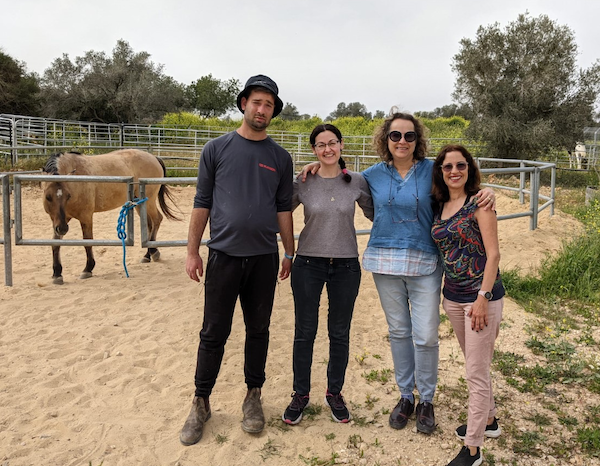
At the therapeutic horse farm in Meir Shfeya Youth Village are, left to right, Yuval Perry, Moran Nir, Rachel David and Orly Sivan. Perry is a horse groomer at the farm, and David and Sivan are two of its four founders. Nir is manager of campaign and operations for JNF Pacific. (photo from JNF Pacific)

Noa Tishby, the Hollywood-transplanted Israeli actor and activist who was just stripped of her special envoy position for weighing in on the political crisis there, is headed to Vancouver.

Tishby, author of the 2021 book Israel: A Simple Guide to the Most Misunderstood Country on Earth, had been Israel’s special envoy for combating antisemitism and the delegitimization of Israel. Appointed a year ago by then-prime minister Yair Lapid, Tishby was summarily ejected from the role this month after she criticized the proposed judicial reforms of Binyamin Netanyahu’s government. She will be the keynote speaker at the 2023 Negev event of the Jewish National Fund, Pacific Region, June 29.

“We are sad to hear the news that Noa is now the former special envoy against antisemitism and the delegitimization [of Israel] as she has been an important voice for Israel and Jewish communities around the world in the face of antisemitism/anti-Israel sentiment,” Michael Sachs, executive director of JNF Pacific, told the Independent. “Her years of service, both officially and non-officially, have only benefited world Jewry and we are ecstatic to welcome her with open arms on June 29th.”

Sachs explained that this year’s Negev event is a break with decades of tradition, following the pandemic shutdown of community gatherings. The annual tradition had generally featured a gala dinner with an honouree.

The centrepoint of this year’s event, which will take place at Beth Israel, is a theatre-format presentation with no meal, and tickets at an accessible price, which, Sachs said, is intended to allow the largest number of community members to hear Tishby’s message. A reception for larger donors will generate the revenue to realize the project that this year’s Negev is sponsoring.

That initiative is a therapeutic horse farm in Meir Shfeya Youth Village, located south of Haifa near Zikhron Ya’akov. Moran Nir, manager of campaign and operations for JNF Pacific, was at the facility several weeks ago.

“It’s a beautiful farm,” she said. “I met with two of the [four] founding mothers and it’s just incredible to see how they dedicate their lives and they give their heart and soul to this farm.”

The horse farm has two riding areas, one uncovered and the other only partly covered. Completing the facility to protect riders from sometimes intense Israeli weather is part of the JNF initiative.

“We want projects that are going to be impactful to the people in Israel but that are also taking a grassroots project and helping get it to the next level,” said Sachs. There is also a crucial local connection to this project, he added.

“There is no shortage of people in our community that understand the importance of equestrian therapy for kids with special needs, but also adults with stress and anxiety and PTSD,” he said. In a relatively new twist on the organization’s commitment to Israel, 10% of this year’s Negev revenues will be held back for a local partnership with STaRS, Southlands Therapeutic Riding Society. Leaders from the Southlands group will mentor those at the Israeli facility, “creating a lifelong connection between these like-minded organizations,” said Sachs.

The Meir Shfeya farm currently has six horses and six horse groomers. Groomers are hired from among youth and young adults who benefited from the equestrian therapy as kids, said Sachs. Therapeutic riding has been demonstrated effective for a range of cognitive conditions, including autism, attention-deficit / hyperactivity disorder, and post-traumatic stress disorder.

About 90 kids per week come to the farm from all over the area and demand is growing. Allowing them to meet the demand is the reason for the support from JNF Pacific.

The fundraising goal for the June 29 event – which is co-chaired by Michael and Lisa Averbach – is $350,000, Sachs said, emphasizing the dual objective of generating funds to support the equestrian programs and of drawing the largest number of people possible to hear Tishby’s message.

“If you want to buy a ticket, buy four,” he said. “Buy four tickets, find three friends and bring them. We want more people hearing her. And, if you buy four tickets and can’t find three friends, let us know because we want to bring students. We want kids from the community to be able to hear her.”

Tishby will be in conversation with Danielle Ames Spivak, executive director of the American Friends of the Israel Philharmonic Orchestra, a born-and-raised Vancouverite who is a friend of Tishby’s.

The event will also feature the bestowing of the Bernard M. Bloomfield Medal for Meritorious Service on Harvey Dales.

“Harvey’s been a member of our board, he’s on the national board, he is the past president,” said Sachs. “For us, the opportunity to honour Harvey for his dedication and everything he’s given to JNF and Israel, we are really excited about that.”

The JNF Educator Award will also be presented. It will be given to teachers from the four Vancouver-area Jewish day schools.

“We’re coming out of the worst pandemic in 100 years,” said Sachs. “Teachers were frontline … so each school is going to be choosing a teacher-representative to accept an award on behalf of the teaching body in their school.”

Reflecting on her visit to the Israeli horse farm and meeting some of the mothers who launched it, Nir is inspired to share what she witnessed.

“It’s always nice to see the impact of JNF in Israel,” she said, “to actually be there and see the impact. Every parent wants their kids to be healthy and happy. We will keep doing this job and build Israel together for the people of Israel.”

Format ImagePosted on April 14, 2023April 12, 2023Author Pat JohnsonCategories UncategorizedTags equestrian therapy, fundraising, Israel, Jewish National Fund, JNF Pacific, Michael Sachs, Moran Nir, Negev event, Noa Tishby, philanthropy
Creating a life of inspiration

Creating a life of inspiration

Near-fatal war injuries led Anat Yahalom to decades of mutual support for injured soldiers and others. (photo from Jewish Federation)

In 1973, when the Yom Kippur War broke out, Anat Yahalom was a young Israel Defence Forces recruit in the Battle of the Sinai.

“I was 18-and-a-half years old and the state of Israel was 25,” she said. “We were both young and at the beginning of our lives.”

A sudden Egyptian air attack changed her life forever.

“When they rushed me to the rescue helicopter, badly injured and bleeding, hovering between life and death and begging for my life, I used my last remaining strength to mumble, ‘Don’t let me die,’” Yahalom recounted in an email interview with the Independent. “That desire to remain alive and to live has always been with me. Over the years, every time that I’ve faced a crisis, I am reminded of that moment, and again I have that incredible desire to live – to never give up.”

Yahalom is to share her story of near-death, recovery and a life of dedication to others as part of the Israel@75 celebration in Vancouver. She will speak at Congregation Beth Tikvah, in Richmond, on Friday, April 28, 6 p.m., with an Israeli-style Shabbat dinner.

“Being wounded in battle is very different to being injured in an accident,” said Yahalom. “Many of the shrapnel pieces and explosives that caused my injuries have remained inside my body and will accompany me for the rest of my life. Being wounded in battle causes injuries that are external and internal, resulting in a complete breakdown of the body’s system, and to extensive scar tissue that needs a long, slow and complex rehabilitation.”

Shrapnel that remains in her body can cause recurring infections that require regular treatments to allow her to function.

In the decades since her injuries, Yahalom has founded Etgarim, an association supporting the integration of disabled children through sports, and the IDF women with disabilities forum. She is an athlete, hand-bike marathon rider for people with disabilities, wife and mother of three sons.

“Israel has a large proportion of people who have been wounded in battle and disabled,” she said. “Because of this, Israel’s healthcare system has developed the most innovative and effective medical treatments that have allowed many of the injured to return to society, to their families, to work. This is the essence of rehabilitation. Rehabilitation is not only physical, but also emotional. While these are very different, they are equally important. Most of the time, society doesn’t differentiate between the two. Emotional injuries are often initially expressed in the form of depression, anger, impatience. Later on, they are also expressed by smaller things such as slamming doors, raised voices, threatening language, or senses that recall the battlefield. For me, the height of this was when my sons joined the IDF. I began experiencing an endless and overwhelming anxiety. Every small thing could trigger a huge reaction in me – from deep anger, to complete withdrawal.”

Yahalom said that those, like her, who were injured in battle found that the best way to deal with challenges and thrive was through social rehabilitation.

“We came to support and rely on one another like family,” she said. “We involved each other in all the small details, offered and received help of any and every kind. But, mostly, we made sure to meet regularly, to talk, to listen, to offer and seek advice. It was this process and this starting point that the idea of establishing centres for wounded IDF veterans was born, recognizing that social rehabilitation was the very essence of our strength.”

The messages of her life and of the organizations she has founded, she said, are unequivocal: “We can recover from any crisis if we stand together.”

“War is a terrible crisis, being injured is an endless struggle, and being disabled is with you forever,” she said. “Sometimes it is extremely difficult, and sometimes a little easier. But it is always there, a companion for life. A reminder for me that life and the desire to live is more important and can conquer anything.

“My family, the one that I created following my injury, my friends that are my chosen family, and the family of Eretz Israel, all accompany me throughout my life,” said Yahalom. “They allowed me to return to the world of the living, they help with the rehabilitation of my friends, and it is them that makes me continue to want to help in every way possible, to embrace, to encourage and to fill my heart and theirs with hope and faith that every crisis will pass.… This is the message that I bring to your community. In these stormy days of upheaval and crisis at home in Israel, I know that even this storm will pass and we will still be there. We will remember that life is more important, more precious and stronger than anything else. I’ve known this since that fateful day, Oct. 6, 1973, when I was given my life back – and I received it as a gift.”

Yahalom’s visit is one of many events taking place through May marking Israel’s 75th anniversary. The celebrations culminate in the Yom Ha’atzmaut, Israel Independence Day, concert May 14 at Queen Elizabeth Theatre, featuring the band Teapacks. Full details of all events are at jewishvancouver.com.

Format ImagePosted on April 14, 2023April 12, 2023Author Pat JohnsonCategories Israel, LocalTags Anat Yahalom, Israel, veterans, Yom Kippur War
Uncovering Israel’s wonders

Uncovering Israel’s wonders

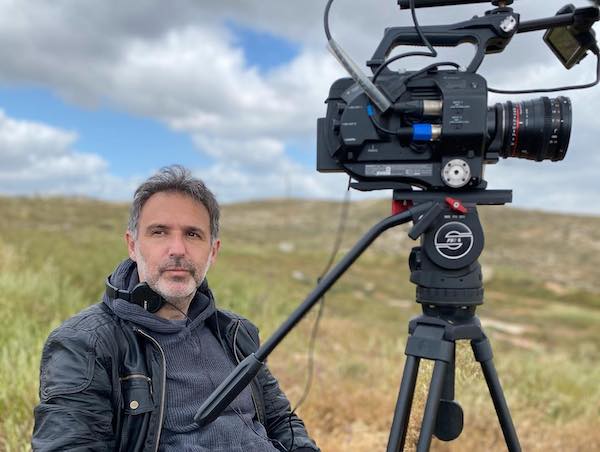
Igal Hecht filming Secrets of the Land. (photo from Chutzpa Productions Inc.)

The Western Wall area, with thousands of metres of subterranean space, contains much that is yet to be discovered. The latest find in this space is a market. While not open to the public, people can get a glimpse of the ancient market on the new Yes TV documentary series Secrets of the Land, directed, produced and written by Israeli-Canadian filmmaker Igal Hecht.

Each episode of Secrets of the Land, which is presented by Chutzpa Productions Inc., takes viewers behind the scenes of substantial excavations in Israel, and features some of the region’s top archeologists and most historically significant sites. The series debuted March 15, and runs each week for 13 episodes.

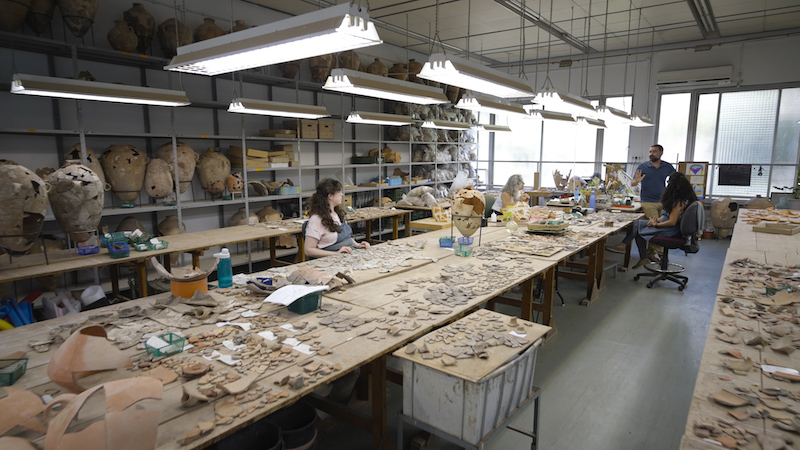
In addition to on-site discoveries, Hecht visits the labs that explore the meanings of each artifact.

“I realized that the way archaeology is explored today is very CSI,” said Hecht, referring to the popular television series. “The excavations themselves might be low-tech, but everything that comes after, such as carbon dating and things along those lines are very high-tech.”

One of many examples is when archeologists found grape seeds in 2,000-year-old donkey feces and, through that, determined the types of people who lived in the area.

photo - Prof. Erez Ben-Yosef speaking with colleagues in the archeology lab at Tel Aviv University
Prof. Erez Ben-Yosef speaking with colleagues in the archeology lab at Tel Aviv University. (photo from Tel Aviv University / Chutzpa Productions Inc.)

Hecht and his crew – which included Lior Cohen, Gabriel Volcovich, Nikki Greenspan and Julian Hoffman – take viewers on a journey through various parts of the Holy Land. Hecht said he learned something every step of the way.

“I had very little knowledge [of archeology],” Hecht told the Independent. “In fact, in the show, I don’t pretend that I do. That makes the show work. I am there experiencing the discoveries in the same manner that the audience does, as they watch at home.”

Among many sites, the crew visited Timna, the location of Solomon’s Mines, where Hecht was awed by the landscape. “The rock formation is something you’d see in Petra in Jordan or the Grand Canyon,” he said. “There’s so much beauty and history to explore there.”

Other locales included Tower of David, also known as the Citadel, located near the Jaffa Gate entrance to the Old City of Jerusalem. There’s also an episode about Shiloh, in Samaria, or the West Bank, where the Israelites, prior to King David’s time, set up a sanctuary and city, and where the Ark of the Covenant was housed for hundreds of years. Meanwhile, Magdala is home to an ancient city from the first century, where recent excavations revealed the Migdal Synagogue, dating from the Second Temple.

Over the past quarter-century, Hecht has been involved in the production of more than 50 documentary films and more than 20 television series. His projects have appeared on Netflix, BBC, Documentary Channel, CBC, HBO Europe, and others. Secrets of the Land is the latest in a string of Jewish-themed films, such as A Universal Language, which taped six comedians performing in Israel. An upcoming project includes The Jewish Shadow, a documentary that explores the lives of Soviet Jews in 1970s Ukraine.

For Hecht, Secrets of the Land wasn’t merely a project, but very much a passion to do his part to help the Jewish people.

“I think the biggest takeaway for Jewish audiences is the historical and unbreakable connection of the Jewish people to that land,” he said. “That archeology truly proves that the Jews were, in fact, living in Judea and Samaria, Jerusalem and all over the Fertile Crescent thousands of years ago.”

Dave Gordon is a Toronto-based freelance writer whose work has appeared in more than 100 publications around the world. His website is davegordonwrites.com.

Format ImagePosted on April 14, 2023April 12, 2023Author Dave GordonCategories TV & FilmTags archeology, history, Igal Hecht, Israel, science, Secrets of the Land
ABCs on visiting West Bank

ABCs on visiting West Bank

According to one tour guide, an hour spent walking around the Aida Refugee Camp in Bethlehem and talking to the residents there is the best way to gain an understanding of the complex conflict that has caused so much suffering. (photo from Gil Zohar)

The throngs of foreign journalists parachuted into Israel to cover the judicial reform debacle – and the many more correspondents based here on a semi-permanent basis – do a poor job explaining basic facts of life in the Jewish state. A case in point is the West Bank.

Most English-speaking tourists I encounter as a licensed tour guide/journalist are woefully ignorant about the legal status and history of the territory Israel captured from the Hashemite Kingdom of Jordan in the June 1967 Six Day War. The term West Bank is a neologism King Abdullah invented in 1948, when his Arab Legion crossed the Jordan River from the east bank to occupy the area known in Mandatory Palestine as Judea and Samaria.

Apart from those traveling with companies like Abraham Tours, which offers a dual narrative tour of Hebron, or Green Olive Tours, which also promotes travel to the Palestinian Authority provisional capital Ramallah and other key Palestinian cities, most tourists avoid the Area A cities of Bethlehem, Ramallah, Nablus, Jenin, Tulkarm, Qalqilya and Hebron. The latter city, divided into PA-ruled H1 and IDF-controlled H2, is the only city in the West Bank with both Jewish and Palestinian residents.

Car rental companies like Hertz or Shlomo Sixt don’t offer insurance to visit Area A. The exception is Middle East Car Rental, located in East Jerusalem’s Wadi Joz neighbourhood, which provides twin insurance policies for those PA-controlled Area A cities, Israel-ruled areas B and C, and the pre-1967 remainder of the country.

What, then, are areas A, B and C? And what should a tourist know about visiting them?

First, the West Bank is safe for tourists – mostly. On March 18, two German nationals were surrounded by angry youths in Nablus, who slashed the tires of the tourists’ Israeli rental car. Notwithstanding that the two knew their car insurance was void in Area A, the pair – who were mistaken for Jewish settlers – drove to the city to enjoy Turkish coffee and the local goat cheese and rosewater pastry delicacy called knafeh nablusiyya. They were rescued by an Arab-Israeli who himself was shopping in Nablus in violation of the Israeli law barring its citizens from visiting Area A.

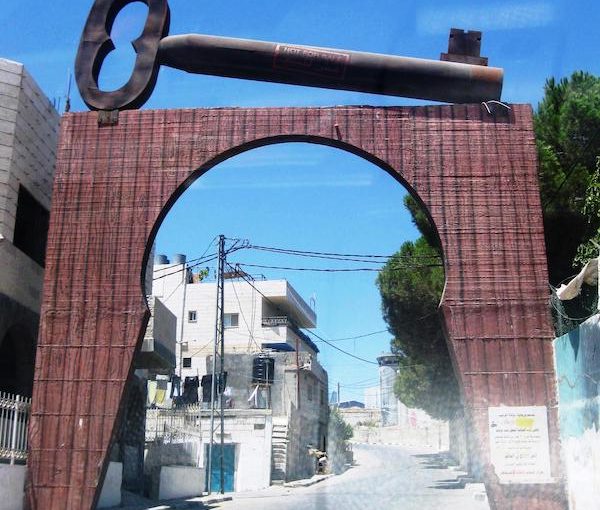
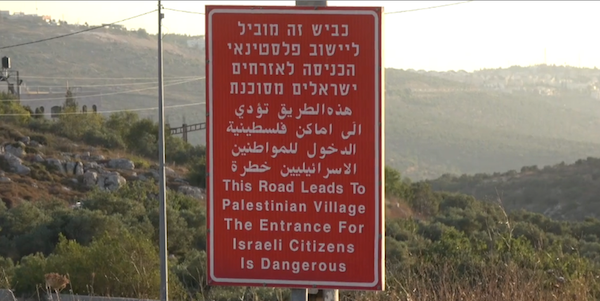
Looming trilingual signs painted red warn Israelis that entering Area A is dangerous. Nonetheless, hundreds of thousands of Israelis from Nazareth and elsewhere in the Galilee routinely shop in Jenin, where prices for food and vegetables are strikingly lower than in Israel, and where the 17% value-added tax is not paid.

Similarly, some Jerusalem Israelis illegally buy granite and marble products and furniture from factories in nearby Bethlehem, thus saving the 17% VAT. Trucks with yellow Israel licence plates, rather than the green and white ones used in the PA, routinely pass through the Israel Defence Forces roadblocks that ring the West Bank. These soldiers are not customs officers, so they don’t inspect waybills from those trucks, whose bilingual drivers have tuned their radio to Hebrew stations to blend in should they be stopped.

Apart from the aforementioned signs, nothing prevents anyone from driving into Area A. Under the bilateral Oslo Accords signed by Israel and the Palestine Liberation Organization in Washington, D.C., in 1993, Israel divided the West Bank into Areas A, B and C, and withdrew from the first. Area A is mostly composed of non-contiguous municipalities and villages, and Israel’s roads and bypass highways gerrymander around Area A cities.

photo - Despite trilingual signs painted red, warning Israeli citizens that entering Palestinian Authority-controlled Area A is dangerous, hundreds of thousands of Israelis routinely travel to Area A cities
Despite trilingual signs painted red, warning Israeli citizens that entering Palestinian Authority-controlled Area A is dangerous, hundreds of thousands of Israelis routinely travel to Area A cities. (photo from Gil Zohar)

Areas B and C are under the control of the Coordinator of Government Activities in the Territories (COGAT), a unit in Israel’s Ministry of Defence that coordinates civilian issues between the Israeli government, the IDF, international aid and nongovernmental organizations, diplomats, and the PA. Following the Oslo Accords, COGAT replaced the defunct Civil Administration, which had governed the West Bank and the Gaza Strip between 1981 and 1994. (Israel unilaterally quit Gaza in 2005.)

Returning from Area A to Israel can be trickier. The main difficulty is not the 800-kilometre-long incomplete wall and fence that partially encircles the West Bank. For example, while Palestinians with the correct documents and biometric ID card are required to pass through the Qalandiya checkpoint between Ramallah and Jerusalem, five kilometres to the east is the Hizma checkpoint used by Israelis living in the West Bank. Under normal security procedures, cars with yellow licence plates simply drive past the IDF troops. Bored-looking soldiers wave drivers through. Mostly, cars just slow down for perfunctory profiling.

But how does a scofflaw who scarfed hummus at Bandali in Ramallah’s Lower City get back to Jerusalem? Ditto for Rukab’s Ice Cream in the city centre, which has been dishing up its unique, stretchy gelato since 1941? Or the Vanilla café, renowned for its divine cakes? Having had a culinary respite from the Israeli-Palestinian conflict, one hails a cab and asks to be taken to the Rami Levy supermarket in Geva Benyamin, east of Ramallah. The driver – wink, wink – will drop you off on Route 60 at a slight distance from the settlement’s gate, which is guarded by an armed security officer. Should the guard ask you where you are coming from, the response “From Route 60” will be sufficiently vague that he will allow you past the barrier. There, at the bus stop, one waits for the bulletproof bus that drives back to Jerusalem through Hizma. No ID documents are checked.

Similarly, no documents are required for the 25-minute ride on Bus 231 from Jerusalem’s Damascus Gate Bus Station to central Bethlehem via Beit Jala. Like traveling from Ramallah back to Jerusalem, the return from Bethlehem requires some fudging of the truth. Bus passengers disembark at the checkpoint on Route 60 between Beit Jala and Jerusalem. Some Israeli citizens holding a foreign passport pretend to be tourists. When asked for the visa they received at Ben-Gurion Airport (which is issued on a sheet of paper rather than stamped in one’s passport), they play the “stupid card,” claiming they don’t have it. The guards may scowl but routinely let the faux-tourists re-board the bus rather than create ill-will.

Israel’s porous approach to security similarly applies on the West Bank’s highways. Today, all the permanent army roadblocks that once cut up the West Bank have been removed, allowing freedom of movement. “Z,” an intrepid tour guide who routinely takes tourists to all three sectors in the West Bank, points out where the decommissioned IDF posts once stood.

Jeff L., a lawyer from Los Angeles who volunteered with the Israeli army’s Sar-El program, recently went with Z on a day-long tour across the northern West Bank, including Nabi Musa (a shrine Muslims revere as the mausoleum of Moses), the oasis of ‘Ain Mabu’a, the all-Christian village of Taybe (with its renowned brewery), the all-Muslim village of Turmus Ayya, and the model city of Rawabi. Rawabi and Taybe are in Area A.

Stuck outside Ramallah in an L.A.-style traffic jam in the late afternoon, the two abandoned their plan to pose for a selfie outside Yasser Arafat’s tomb in the Muqata government compound.

In an email, Jeff wrote, “It was an awesome day. I will do my best to become an ambassador for peace.

“My day in the West Bank began at Wadi Qelt / Nahal Prat. The beautiful nature reserve was full of blooming wildflowers. Muslim women and their families from Hebron were enjoying the rushing water and lush surroundings. We were greeted warmly by all with big smiles.

“Visiting Taybe, Tarmus Ayya and Rawabi, again, everywhere we went we were warmly greeted. Fortunately, Z speaks Arabic and was able to communicate with everyone we met. My impression of the day in the West Bank was one filled with hope for the future.

“There was a genuine interest in everyone we met to talk and to make us feel welcome.

“All the people we met who live in the West Bank want the same peace and prosperity for their families as we [Jews] do.”

Z – who has a permit from the Israel Ministry of Tourism to enter Bethlehem and Jericho – has never encountered a problem in Area A or elsewhere in the West Bank. During the pandemic, he was stopped by a PA policeman en route to the Mar Saba monastery east of Bethlehem. The officer, who was carrying an AK-47, didn’t have an issue with a car full of tourists in a vehicle with yellow licence plates driving in Area A, but instructed them to return to Jerusalem because of the threat of COVID.

Should tourists to Israel also visit the West Bank and Area A?

Z insists that an hour spent walking around the Aida Refugee Camp in Bethlehem and talking to the residents there is the best way to gain an understanding of the complex conflict that has caused so much suffering. Moreover, tourist sites like Hisham’s Palace in Jericho or Jacob’s Well in Nablus, where Jesus is said to have chatted with a Samaritan woman, are all exceedingly interesting and photogenic. But Z recommends going with a seasoned tour guide, lest you end up like the two German tourists who were attacked going to Nablus’s al-Aqsa pastry shop.

Gil Zohar is a writer and tour guide in Jerusalem.

Format ImagePosted on April 14, 2023April 12, 2023Author Gil ZoharCategories IsraelTags Israel, Palestine, tourism, West Bank

Blood, tears and survival

When we think about Israel’s prominence now, with its population approaching 10 million, and its contributions in so many fields being far out of proportion to its size, it is sobering to recall its early beginnings, and its fragility, when it issued its Declaration of Independence 75 years ago.

On the day that Israel’s independence was declared, May 15,1948, forces from five Arab countries invaded to join internal resistance to Israel’s existence, which had begun in November 1947 with the United Nations declaration of the Partition Plan. The war continued until January 1949, through multiple calls for a ceasefire by the United Nations, as the Arab side saw their hopes for a quick victory reversed.

The government of Israel changed its stance during this time. Initially concerned only with preserving the UN Partition Plan, which involved non-contiguous pieces of territory, as its forces gained the initiative, it sought to establish borders having a greater chance of being more defensible in a hostile neighbourhood.

During the early period, Israel managed to establish the beginnings of a standing army, navy and air force, as well as a commando unit, assembled by bits and pieces from around the world. With unleashed immigration, available soldiery increased every day during the war period. As the war proceeded, every man, and every unmarried woman, in Israel over the age of 25 was eventually subject to mobilization. It has been said that the Jews’ secret weapon in the face of the existential threat they confronted was that there was no other place for them to go.

Many of the indigenous Arabs fled the country during the hostilities, sometimes at the urging of the invading troops, but there were also populations expelled, where Israeli forces faced hostility. Jews in the country had faced increasing violence from their Arab neighbours and, during the war, in areas occupied by Arab forces, particularly in the Old City, but also in the West Bank, there were Jewish residents who were summarily murdered.

Many of the battles were fierce and bloody, with substantial losses of people and material on both sides. Attacks on isolated settlements by Arab units were often aimed at overcoming the resistance of poorly armed residents living in strategic locations. The strength of their commitment to defending their homes often carried the day.

By the end of the struggle, more than 6,000 Israelis had been killed – one-third of the fallen were individuals who were survivors of the Holocaust. Estimates of the number of Arabs/Palestinians killed in the war vary from 5,000 to 10,000.

In the end, Israel retained its allocated portion under the partition and won some of the territory that had been ascribed to the Arab side by the UN plan. Israel withdrew from territories it still occupied in the Egyptian Sinai and in southern Lebanon when hostilities were ended by a ceasefire.

Israel inherited a de-facto Egyptian presence in the Gaza Strip and a Jordanian annexation of the Old City of Jerusalem, and what was ancient Judea and Samaria became the West Bank and under Jordanian control. These were a portion of the areas that had been allocated to the Palestinians by the UN Partition Plan. It was at great cost that control of West Jerusalem was retained.

Israel was attacked again in 1967 and in 1973, successfully defending itself and extending Jewish occupation in further areas that were a part of the country’s historic past, including the Old City and the West Bank. In the 1967 war, Israel seized and, in 1981, annexed Syrian territory, the Golan, high ground from which it was constantly being bombarded.

Under the later Oslo agreements, the Palestinian Authority (PA) was established to allow Palestinian self-government in the heavily populated areas of the West Bank. Israel unilaterally withdrew from the Gaza Strip in 2005. In a 2006 Palestinian election, the Hamas terrorist group became the elected government, but the PA (led by Fatah) refused to relinquish power. Hamas seized control of the Gaza Strip by force, and remains a continuous source of violence. In Lebanon, the terrorist group Hezbollah remains a factor, while Israel has managed to contain Iranian efforts to establish themselves in Syria.

In recent years, there have been alliances made with neighbouring Arab countries. Some of these countries recognize their common cause with Israel to counter efforts by Iran for hegemony. Many of these countries are seeking benefits from the technological advances made in Israel in sectors like agriculture, medicine, cybersecurity and defence. Research and development has been a priority investment by the succession of Israeli governments since its adoption of the private enterprise model for its economy. Foreign investment has poured into Israel, helping fund economic growth, and placing Israel among the world’s highest in GDP per capita.

The standard of living of Israel’s Arab citizens has also risen with increasing integration and exceeds that of citizens in neighbouring Arab countries, or those under PA administration. Perhaps this is another reason for the move to normalize relations with Israel by several Arab countries under the Abraham Accords.

As Israel’s 75th anniversary approaches, several problems remain to be tackled. Concerns over security and increased Jewish settlement in disputed areas are among the factors that led to the election of a government coalition many consider extremist, with some policy proposals, such as the judicial reforms, raising alarm among centrist and left-leaning elements. These have led to mass protest demonstrations in Israel and abroad. Demands from the ultra-religious sector who have gained political power, if realized, could impair the lifestyles of many in the general population. As well, there has been a wave of terrorist attacks recently and there is concern that this may lead to revanchist policies targeting Palestinian citizens.

At 75 years old, the state of Israel continues to be a happening place.

Max Roytenberg is a Vancouver-based poet, writer and blogger. His book Hero in My Own Eyes: Tripping a Life Fantastic is available from Amazon and other online booksellers.

Posted on April 14, 2023April 12, 2023Author Max RoytenbergCategories Op-EdTags history, Israel, War of Independence
If we forget, thee, Jerusalem

If we forget, thee, Jerusalem

The Western Wall, Jerusalem, Israel. (photo from Wikimedia Commons)

When I was a teenaged member of the Zionist youth group Young Judaea in Saskatchewan, we recited this pledge: “If I forget thee, O Jerusalem, may my right hand lose its cunning; may my tongue cleave to the roof of my mouth.”

Well, I haven’t forgotten, and I’ve learned that, as never before, Jerusalem needs our help. In my Israel today, governmental criminal corruption and disinformation is so bad that citizens can’t have a rational discussion about politics without getting angry. Fear and anger at the government has brought hundreds of thousands of demonstrators into the streets of Israel’s major cities.

The fear and despair has spread to us here in the Diaspora. Our lovely ideals about our lovely, peaceful, democratic Israel are being systematically extinguished by a band of radical religious politicians, some with criminal records. Some of us here are going so far as to wonder that, if Israel is now being led by a covey of self-serving rascals, why should we ever repeat the age-old hope, “Next year in Jerusalem”? Now that I am an older man, I remember my pledge and I issue a warning. We’re in danger of losing our Israeli democracy.

Israel’s government today can be compared to a dog being wagged by its tail. The tail in this case is a small alliance of ultra-Orthodox Jews who hold the balance of power in the Netanyahu government. Two small political parties – Jewish Power and Religious Zionists – call the shots and their chief target is the Supreme Court. They want to gain control over it. And for what reasons would they promote such a radical step in the name of “judicial reform,” and why would they so endanger Israel’s democracy?

There has been a history of battles between the Supreme Court and the ultra-Orthodox community about who has the power to regulate religious law in Israel.

Round One: Supreme Court versus the Government of Israel on the thorny question of which converts are legally Jewish citizens of Israel. For years, the Orthodox rabbinate ruled that you had to be converted in Israel by an Orthodox rabbi.

Bring on the Supreme Court. In 2021, after more than 15 years of debate, the Court ruled that non-Orthodox converts to Judaism in Israel are Jewish and thus entitled to become citizens. The decision includes those who convert to Judaism through the country’s Reform and Conservative movements. “Jews who during their stay in Israel were legally converted in a Reform or Conservative community must be recognized as Jews,” the Court wrote in its majority decision.

Despite that this ruling would only affect some 150 Israelis, Aryeh Deri, leader of the ultra-Orthodox Shas party, who, at that time, was interior minister, condemned the decision. He said it constitutes “a mortal blow to the Jewish character of the state. I promise to fix the law to ensure that only conversions under Orthodox religious law will be recognized in the state of Israel.” Deri was a minister in the current coalition, but was fired earlier this year because the Supreme Court ordered Netanyahu to do so, as Deri has a criminal record.

Round Two: As far back as 2007, women were being beaten on buses for refusing to sit at the back, as the ultra-Orthodox community ruled. In response to a petition submitted against the ultra-Orthodox Mehadrin sect, the Supreme Court ruled that you can’t tell a woman where to sit on a bus.

Round Three: The battle over chametz (foods with leavening, products not kosher for Passover). Recently, the ultra-Orthodox got even with the Supreme Court, which had struck down another religious law. This one forbade hospitals to allow chametz to be brought into hospitals on Pesach. Hospital visitors had to open their bags to be searched by security guards, and there was public outrage at being treated as criminals for concealing food.

The Supreme Court declared the law unnecessary and as offensive to non-Jews as well as Jews. Then, in March this year, the ultra-religious parties snuck in a new chametz law just before Passover. This time, the law allowed hospitals to decide whether or not to search bags or to reprimand people, and the bill passed the Knesset. Score one for the ultra-Orthodox alliance.

Round Four: Military exemption for ultra-Orthodox yeshivah students and the birth of the idea of “judicial reform.” As a condition for joining the Netanyahu government coalition, the ultra-Orthodox wanted to pass a law exempting yeshivah bochers from the military service that all Israelis are obligated to make. And they want to ensure that the Supreme Court can’t strike down the law. The Knesset, they maintained should be able to reverse the Supreme Court’s decisions if they rule against the law. Enter the idea of “judicial reform.”

When they talk about “judicial reform,” what the ultra-religious group really wants strikes at the very heart of Israeli democracy. They want the Knesset to be able to pick and choose which laws the Supreme Court can overturn. They want to give the government the power to make any laws they want without restrictions. They want the Supreme Court to be impotent.

This fearsome, anti-democratic power grab is what sends shivers down the spines of democracy-loving Jews everywhere, and brings thousands into the streets to protest “judicial reform” planned by the Netanyahu government.

In Canada, all the laws passed by Parliament must go through several hoops. First, the law must be approved by the House of Commons. After that, it goes up for debate at the Senate, which can send it back to the House of Commons for revision. Third, the law must be signed by the governor general, who can withhold signature if she feels that the law is repugnant to democracy. Finally, our Supreme Court can either demand that the law be changed or strike it down totally if it finds that it contravenes our Bill of Rights.

Israel has only the Supreme Court to protect its citizens from religious fanatics or rogue governments. Legal scholars are agreed:

allowing any government to reverse judgments of the Supreme Court would not only remove the protections of the Court; it would make Israel a dictatorship.

Rogue government? Look who Netanyahu hired to help him govern.

• The most dangerous and outrageous appointment is a man with a long criminal record, Itamar Ben-Gvir. The army refused to draft him because of his extremist ideas. To secure Ben-Gvir’s support, Netanyahu appointed this ultra-Orthodox Jew with a criminal record to the job of minister of national security and, incredibly, he now oversees police forces in Israel. He also holds the balance of power in the Netanyahu government. Anything that Netanyahu wants to do has to go through Ben-Gvir, who, in the face of widespread demonstrations gave his permission to temporarily halt progress on judicial reform.

• Haim Katz, a former minister of labour who was given a six-month suspended sentence for graft has been given the job of tourism minister.

• As stated above, Aryeh Deri, leader of the ultra-Orthodox Shas party, was appointed minister of health despite going to prison for taking bribes as interior minister and, earlier this year, being given a suspended sentence and a fine for tax offences.

• Netanyahu himself faces charges of corruption.

Is it any wonder that hundreds of thousands of people have taken to the streets to oppose the government’s judicial reform plan? Is it any wonder that the majority of Canadian Jews are also against the reform proposals?

Like them, I know that Israel needs me and that is why I write about it. Neither should you “let your tongue cleave to the roof of your mouth.” Join the Jews around the world who are speaking out for Israel’s democracy. And, while you’re at it, say a prayer for the state of Israel; she needs all the help that she can get.

Stan Goldman is a retired English teacher who lives in Richmond.

Format ImagePosted on April 14, 2023April 12, 2023Author Stan GoldmanCategories Op-EdTags corruption, democracy, gonvernance, Israel, judicial reform, ultra-Orthodox

תוכנית הנשיא הרצוג

יושב הראש של הפדרציה היהודית של אזור מטרו ונקובר, עזרא שנקן, קורא לממשלת ישראל וראשי האופוזיציה, לקבל את מתווה הנשיא, יצחק הרצוג, לאור המשבר החמור הפוקד את ישראל בחודשיים האחרונים. זאת, על רקע החלטת ממשלת הימין של בנימין נתניהו, להחיל רפורמה משמעותית על מערכת המשפט בישראל, שתאפשר לכנסת להיות מעל בית המשפט העליון. רבים בישראל אמינים כי כל הרפורמה תכליתה אחת – לשחרר את נתניהו מכתבי הדין העומדים נגדו בבית המשפט, כך שיוכל להמשיך ולשלוט במדינה עוד שנים רבות

שנקן מציין כי הוא כמו רבים אחרים בקהילה מודאג ממה שמתרחש בישראל בעת הזו. בניסיון לאחד את הקרעים בעם ולהגיע להבנות בישראל, ארגון הגג של כל הפדרציות היהודיות של צפון אמריקה שלח בחודש שעבר מכתב אל ראש הממשלה, בנימין נתניהו, וראש האופוזיציה יאיר לפיד, לנהל משא ומתן בין הצדדים להגיע לפשרה – על סמך הצעות הנשיא הרצוג. במכתב נאמר עוד: “עקבנו מקרוב אחר הדיון החריף שהולך וגובר סביב הצעות הקואליציה הממשלתית, לערוך שינויים מהותיים ביחסים בין הכנסת ובית המשפט העליון. עקבנו במיוחד אחרי ההצעה לאפשר לכנסת לבטל החלטות של בית המשפט העליון (“פסקת ההתגברות”) ברוב קולות. אנו קוראים לכם לאמץ את ההצעות  שהציע הנשיא, יצחק הרצוג, לקביעת אפיק לבחינה ופתרון של הסוגיות שהזכרנו. לא משנה כיצד יפתרו סוגיות אלו, תהליך זה יבטיח שדעותיהם של כל בעלי העניין ישקלו במלואן. אנו קוראים לכם להבהיר שאין די ברוב של שישים ואחד של מצביעים בכנסת, כדי לבטל החלטת של בית המשפט העליון. מהות הדמוקרטיה היא מצד אחד הכרה בשלטון הרוב, אך פירושה גם הגנה על זכויות המיעוט. אנו מכירים בכך שכל מערכת האיזונים והבלמים תהיה שונה מאלה שבמדינות שלנו, אך לשינוי כה דרמטי במערכת הממשל הישראלית, יהיו השלכות מרחיקות לכת בצפון אמריקה, הן בתוך הקהילה היהודית והן מחוצה לה”

שנקן מבקש להדגיש שרק באמצעות הידברות בין הצדדים אפשר להגיע לפתרון הרצוי לכולם. לדבריו הפדרציה היהודית של אזור מטרו ונקובר, לא מביעה עמדת תמיכה בצד זה או אחר, והיא מאפשרת לשלל הדעות והגוונים השונים להשמיע את דעתם בנושא. “אנו לא ננקוט עמדה ספציפית בנושא ולכן גם לא נשתתף בהפגנות של חברי הקהילה היהודית בוונקובר, נגד הרפורמה של ממשלת נתניהו. לכל אחד יש זכות להביע את עמדותיו באופן חופשי. אם זאת כפי שאתה יכול לראות במכתב לראש הממשלה, בנימין נתניהו וראש האופוזיציה יאיר לפיד, אנו מודאגים מאוד מהיבטי הרפורמה החדשה”

קהילת היהודים המקומית מקיימת מדי יום ראשון בחודשים האחרונים הפגנת הזדהות עם אלה שרוצים לשמור על הדמוקרטיה בישראל, בניגוד לעמדת הקואליציה שרוצה כאמור לבצע רפורמה מרחיקת לכת במערכת המשפט, תוך הענקת עדיפות לכנסת על בית המשפט העליון. הפגנות נערכות בכיכר רובסון בדאון טאון (בצמוד לוונקובר ארט גאלרי) ומעטים מקרב הקהילה מגיעים לאירועים, בין עשרה לשלושים איש בסך הכל. זה אולי מתאים לפרופיל של אלה שגרים במערב צפון אמריקה לעומת אלה שגרים במזרחה. שם במזרח חברי הקהילה היהודית פעילים הרבה יותר. בכל מקרה ידוע שרבים מתושבי אזור ונקובר משלל הקהילות השונות, מעדיפים שלא להיות פעילים בקרב קהילותיהם אלה להתבודד

יו”ר הפדרציה היהודית של אזור ונקובר אומר כי ממש בימים אלה משלחת בכירה של חברי ארגון הפדרציות היהודית של צפון אמריקה נמצאת בישראל, בניסיון ליצור גשר של הידברות בין שני הצדדים הניצים, על בסיס תוכניתו של הרצוג. כשלושים מנהיגים הפדרציות של צפון אמריקה קיימו ביקור חפוז בישראל, לאור המהומה הקשה שפקדה את המדינה. לדברי נשיא ומנכ”ל הפדרציות היהודיות של צפון אמריקה, אריק פינגרהאט, הביקור הקצר ממחיש את הדאגה הכבדה בקרב הקהילה היהודית ממה שהוויכוח בישראל עורר. לדבריו זו הפעם הראשונה בהיסטוריה של הפדרציות בצפון אמריקה, שהן שולחות משלחת חירום לדון במדיניות הישראלית, עם מנהיגים בישראל

פינגורהט מציין כי משלחתו לא הצליחה להיפגש עם נתניהו, אך היא פגשה חברים בבכירים בקואליציה של ראש הממשלה, וכן את מנהיגי האופוזיציה והנשיא. המסר של המשלחת של ארגון הקהילות היהודית של צפון אמריקה לכל הצדדים הוא, שיש למצוא פשרה ולהרגיע את הרוחות לאור האווירה המקוטבת מאוד. ראש המשלחת ציין עוד כי יהודי צפון אמריקה נוטים להחזיק בעמדות פוליטיות ליברליות, ולהזדהות עם זרמים ליברלים ביהדות שנאבקו להכרה בישראל. חברי המשלחת מודאגים מחשש שזכויות המיעוט והפלורליזם הדתי עלולות להיחלש, בעקבות הרפורמה המשפטית המוצעת

יש לזכור שארגון הפדרציות היהודית של צפון אמריקה מכיל בתוכו למעלה מארבע מאות קהילות יהודית, בהן אחד עשר ברחבי קנדה. הקהילות מגייסות מדי שנה כשני מיליארד דולר לתמיכה בקהילות באוכלוסיות חלשות בארץ ובעולם

שנקן אומר כי תפקיד הפדרציה היהודית של אזור מטרו ונקובר הוא לאפשר לכל חברי הקהילה להתבטא באופן חופשי כרצונם. “אנו מנסים בימים קשים אלה לישראל להסביר את מה שקורה במדינה ומקיימים הדרכות בנושא. במקביל אנו מאפשרים לכל חבר הקהילה שלנו לומר את דברו בנושא. אך כפי שציינתי הפדרציה שברשותי לא תתמוך בשום צד בסכסוך הקשה זה, אלה רק תנסה לבנות גשר בין הניצים”

שנקן מסביר עוד כי: “יש דאגה רבה בקרב יהודית קנדה שנמנים על מאה ארבעים ושישה ארגונים שונים המסונפים לשתיים עשרה פדרציות. לראשונה נשמעים קולות חזקים מכאן בקנדה בנוגע למה שקורה בישראל. זהו תקדים שלא היה כמותו מאז נוסדה מדינת ישראל. זה רק מסביר לך את חומרת המצב ממה שקורה בישראל, ואת הדאגה העמוקה מכך של היהודים ברחבי קנדה”

לדברי שנקן אין זה חדש שישראל נמצאת במשבר קשה. בעצם הולדתה היה משבר גדול בה ובסביבה, במלחמת יום כיפור היה משבר נוראי, רצח ראש הממשלה יצחק רבין הביא למשבר גדול. ואכן גם הפעם הצעת הרפורמה של ממשלת נתניהו מביאה שוב משבר קשה לציבור ולחברה בישראל, וכן לקהילות היהודית ברחבי העולם. המשבר הישראלי מדגיש את הפערים בין הקבוצות השונות, אשכנזים וספרדים, חילונים ודתיים, יהודים וערבים, ימין ושמאל ועוד ועוד

“מה שקורה כיום בישראל קורה גם במקומות אחרים בעולם ואני מודאג מכך שאנשים לא מוכנים לדבר אחד עם השני, אלה רק צועקים אחד על השני. מוטל עלינו לדבר עם רעהו, ולהגיע להסכמות פשרות לאור חילוקי הדעות הקיימים בקרב אוכלוסיות השונות. לצערי כיום אי אפשר לדבר עוד ביננו אלה רק לצעוק ולריב וזו טרגדיה קשה מאוד לכולנו. הרפורמה בישראל מוסיפה שמן רותח למדורה בישראל, בזמן שמוטל על כולנו להתפשר ולקבל את תוכנית הנשיא הרצוג. אנו צריכים לעשות הכל כדי למצוא מכנה משותף בין הצדדים כי אין דרך אחרת”

יו”ר הפדרציה היהודית של אזור מטרו ונקובר מבטיח כי ארגוני יעשה הכל להסביר לקהילת היהודים כאן, מה בדיוק קורה בישראל ומה צריך לעשות כדי למצוא פתרון הולם למשבר החמור שנוצר לאור הצעת הרפורמה של ממשלת בנימין נתניהו

Posted on March 29, 2023March 22, 2023Author Roni RachmaniCategories עניין בחדשותTags Ezra Shanken, Herzog, Israel, Jewish Federation, Netanyahu, protests, Vancouver, הפגנות, הפדרציה היהודית, הרצוג, ונקובר, ישראל, נתניהו, עזרא שנקן

Posts pagination

Previous page Page 1 … Page 25 Page 26 Page 27 … Page 111 Next page
Proudly powered by WordPress