Skip to content
  • Home
  • Subscribe / donate
  • Events calendar
  • News
    • Local
    • National
    • Israel
    • World
    • עניין בחדשות
      A roundup of news in Canada and further afield, in Hebrew.
  • Opinion
    • From the JI
    • Op-Ed
  • Arts & Culture
    • Performing Arts
    • Music
    • Books
    • Visual Arts
    • TV & Film
  • Life
    • Celebrating the Holidays
    • Travel
    • The Daily Snooze
      Cartoons by Jacob Samuel
    • Mystery Photo
      Help the JI and JMABC fill in the gaps in our archives.
  • Community Links
    • Organizations, Etc.
    • Other News Sources & Blogs
    • Business Directory
  • FAQ
  • JI Chai Celebration
  • JI@88! video

Recent Posts

  • Legal help for students
  • Revisiting myth of Lilith
  • Wrong person rebuked
  • Canada’s mixed messages
  • Questions for museum
  • Symposium on antizionism
  • Making soccer political
  • CJPAC lauds Pulver’s impact
  • City recognizes Vrba’s legacy  
  • Organ donation saves lives
  • Theodore’s March premiere
  • A healing Shabbaton
  • Supplying healthy food
  • A chime of metal tags
  • Yellowknife seder a first
  • Ishai energizes, unifies
  • A Lag b’Omer to remember
  • Expanding the healing
  • Hannah Senesh – a unique hero
  • Community milestones … May 2026
  • Sharing her testimony
  • Fall fight takes leap forward
  • The balancing of rights
  • Multiple Tony n’ Tina roles
  • Stories of trauma, resilience
  • Celebrate our culture
  • A responsibility to help
  • What wellness means at JCC
  • Together in mourning
  • Downhill after Trump?
  • Birth control even easier now
  • Eco-Sisters mentorship
  • Unexpected discoveries
  • Study’s results hopeful
  • Bad behaviour affects us all
  • Thankful for the police

Archives

Follow @JewishIndie
image - The CJN - Visit Us Banner - 300x600 - 101625

Tag: death

Camp helps lift spirits

Camp helps lift spirits

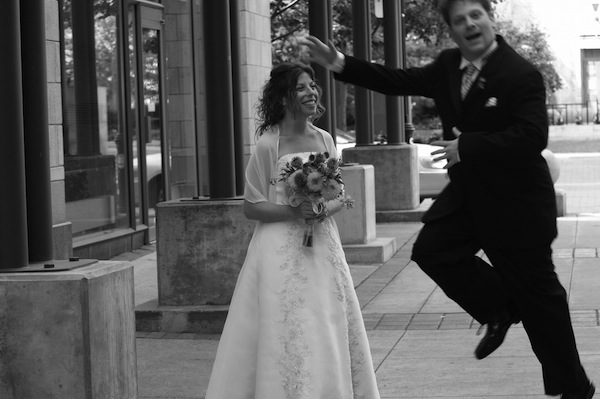
A moment of levity during the taking of Justine and Stewart Silver’s wedding photos. (photo from Justin Silver)

The late Stewart Silver was born and raised in Montreal. He had worked as a standup comedian, and moved to Toronto in hopes of furthering his career. Justine Silver grew up in a Houston suburb. In late 1990, she followed her sister, who had moved to Toronto, and, there, she joined Jewish online dating site Jdate. So had Stewart.

“There was a thing where you had to describe your perfect date,” recalled Justine. “Profile after profile included long romantic dinners and were all gushy and gross … but his said, ‘Yeah, after we grab a drink, we step out of the restaurant and trip over a big bag of money.’ I was like, ‘Oh my gosh … that’s the perfect date!”

The couple took their time getting to know each other and, after a year and a half, got married.

To all appearances, Stewart was a healthy 44-year-old. He had biked up hills in Christie Pits Park the day before he had a fatal heart attack while the couple was having a conversation on Nov. 16, 2011.

Left shocked and widowed, Justine embarked on a healing path, including taking a hiatus from her event-planning business.

“It’s been quite some time since then and there’s been grief bursts,” said Silver. “In the early days, there was a lot of therapy and some peer support groups. Then, I found Camp Widow and have been to a few of those. I was pleased it wasn’t at all associated with any religion and was welcoming…. There was one in Tampa, and so a couple of widow friends that I had met up with, here, in Toronto, in a peer support group for young people who’d lost their spouses under the age of 55 … decided to make a whole trip of it. We went to the beach, museum, and then to Camp Widow. It’s a very transformational experience when you feel that you’re surrounded by people who understand the topsy-turvy world that you’re starting to barely understand yourself.”

The first camp Silver went to, in Tampa, was in the spring of 2018. Then, in November 2018 and November 2019, she attended the camps in Toronto. She and her friends have already signed up for the next November 2020 camp in Toronto.

While it’s called a “camp,” the weekend is more like a conference, with people coming together for sessions on various topics.

“One of the neat things I like at Camp Widow is that the name tags, everyone has one, but there are a couple features to it,” said Silver. “One of them, there’s a ribbon at the bottom. For example, in my work as an event planner, if you’re a presenter, your ribbon will say ‘presenter,’ or, if you’re on the organizing committee, it will say ‘organizing committee’ or ‘volunteer.’

“But, these [also] have the number of years ago that your loss occurred. So, for me, that was six years. So, let’s say it’s a teal ribbon. All of a sudden, you notice the six-year people … and there’s a bond, because you’re in a different place than, say, the six-month people. Everyone is compassionate to everyone else, but it’s just a really interesting way to bond with people.”

As far as the camp schedule, there are some group meals, as well as meals on your own. There are various types of sessions offered.

“There are tracks, like for people who are five years out, one year, or one to five,” said Silver. “I can’t remember the exact breakdown, but you can decide to go to everything along a certain track, or you can decide in the moment what you’ll do, which sessions you’ll go to. Then, there are some networking evening events, different ways of getting to know people.”

One is designed like speed-dating, but not for that purpose. You get the chance to talk to someone for a certain amount of time, and then you move on to the next person and chat with them. “It’s really interesting to see where the commonalities fall,” said Silver.

On Saturday night, there is a banquet with a theme and people dress up – some participants may not have gone out since their loss. After dinner, each person says the name of their loved one out loud, while some 200 others quietly listen. Then, there is a dance, which gives the opportunity to destress and socialize. The DJ doesn’t play any music that could potentially trigger anyone’s grief, like slow songs.

At the camp, there are people from their mid-20s to people in their 70s and 80s; people from all religions, cultures and political leanings.

For Silver, Camp Widow “creates community and support amongst widows and widowers…. Sometimes, when you’ve lost someone, it can be very isolating, which can be in different and unexpected ways. I wouldn’t say never, but it doesn’t go away. The intensity definitely lessens and you find new ways to live with grief. And there are plenty of people who, we say, are ‘re-partnered.’ When you’ve been widowed and then you meet someone else and you have a boyfriend/girlfriend, wife/husband or partner, we say you’re ‘re-partnered,’ because we don’t think that means you’re not still widowed.”

The camp provides tools and connections that widows and widowers may not otherwise find on their own.

“I feel camaraderie in sharing my story and being heard, or hearing someone else’s story and being helpful to them,” said Silver. “At this past Camp Widow, I did an art thing. I can do crafty things OK, but I’m not really an artist. But, one of the workshops I went to was all about healing through art and it was just a whole different facet. We all had paint and they set it up so well…. We had a white piece of paper and I got white paint and I painted a white heart. Then, I put a line through it – a squiggly line, like it was broken – and you could barely see it … like you couldn’t see that my husband had a heart problem…. Then, everyone shared in the room what theirs was about. When you do that, it’s like opening up a wound, and then the scar heals better next time.”

Six months ago – eight years into her healing journey – Silver and her older sister, Eileen Jadd, who is a social worker, started the charity Good Grief Bereavement Healing Services.

“We have a roster of counselors in different parts of Toronto for bereaved people,” said Silver. “We’re also offering workshops on eye movement desensitization, which is a thing for trauma victims. It really helps you compartmentalize the trauma, so you can talk about it without being retraumatized. So, we’re doing a workshop on that.

“We’re starting a group on sibling loss and, eventually, will have a physical building. We want to have a centre, so people who’ve lost someone, it’s like a snap of the fingers and they’ll know where to go. When you know there’s an accident, you know to dial 911. We want it to be, ‘Wow, you’re in need, you’ve lost someone, and you know exactly where to go.

“I think widows and widowers need their person’s name to be said. People are so afraid of saying it, because they don’t want to bring it up in fear. But, they want their names to be said, so that’s a big part of it. I happen to talk about Stewart all the time, but a lot of people don’t have those opportunities in their own lives.”

In addition to talking about him when memories arise, Silver said, “Every year, I go to shul and I say his name and a prayer for him, and commemorate it that way. I remind people that we got married in that synagogue, and I remind people that he was a person that existed and stood in that space with me, and that his influence is still there. Just because he’s not standing next to me in that moment … he’s still there. In those ways, we talk about him.”

Camp Widow is put on by Soaring Spirits International. For more information, visit soaringspirits.org, campwidow.org, widowedresilience.org and goodgriefhealing.ca.

Rebeca Kuropatwa is a Winnipeg freelance writer.

Format ImagePosted on February 28, 2020February 26, 2020Author Rebeca KuropatwaCategories NationalTags Camp Widow, death, grieving, health care, Justin Silver, lifestyle, mental health, widows

Making death a friend

I used to wake up each morning wondering if I had Alzheimer’s yet. I dreaded the thought. Who wouldn’t? I used to imagine the torment of dealing with cancer; the diagnosis, the surgery, the chemotherapy, the radiation, losing my hair! I no longer think that way. I am no longer holding my breath waiting for the diagnosis that will lead me to my imminent death. What happened? I am now a cancer survivor; that is, after two years, my gynaecologist told me that I can now come in for a checkup once a year, rather than every six months.

Let me backtrack. I was diagnosed with endometrial cancer in October 2017. After denying the symptoms for three months, I finally went to my family doctor, then to the gynaecologist, then for an ultrasound examination, then a biopsy. The diagnosis: endometrial cancer, stage 2. I asked the medical students who board with me while doing their electives at Vancouver General Hospital about the cancer, the treatment and the prognosis. The most encouraging of their comments was, “Well, if you have to have cancer, that is the best kind to have.” Really?

My son came from Ontario to be with me for the surgery, a hysterectomy. My gynaecologist was excellent. I experienced one bad night in the hospital. I wanted to get out of the hospital so badly that my blood pressure went sky high (white-coat syndrome). I had to sign several waivers in order to march out of the hospital – against their advice. I never looked back.

That was on a Wednesday. On Thursday morning, a friend picked me up and we attended the advanced Hebrew class at the Jewish Community Centre of Greater Vancouver, as usual. On Saturday, I drove to the supermarket. On the way to the cashier, I bumped into my gynaecologist, Nancy Mitenko. She had a surprised look on her face, so I said, “Hi, it’s Dolores, your patient.” “Oh,” she said, “I know who you are, what are you doing here?” We both laughed. I felt great.

My physical trainers and my family knew of my situation but I did not tell my friends and associates about the diagnosis, the surgery or the radiation until it was almost over. I discovered that the reactions of most people to the situation is fear, for themselves, as they empathize with me. I read the look on their faces as panic and dread. It made me want to comfort them. At that point, I did not have the patience to tend to their anxiety. I knew exactly what they were feeling because I used to experience that dread when I thought about cancer.

Several months later, February 2018, I began radiation therapy at the cancer centre at VGH – 25 sessions, convenient parking in the building, pleasant technicians who, generally, were on time with their appointments; the hardest part was drinking the four glasses of water before the procedure. The treatments were painless, but, they did cause some side-effects, which were manageable. This month, at my two-year checkup, Dr. Mitenko told me that I am clear. “See you next year,” she said.

I have been on an intense learning curve, researching cancer treatments, analyzing my feelings about what had happened, dissecting my behaviours and my capacity to proceed under duress and, especially, I have given much thought to dying and death. The idea of dying does not frighten me anymore. We all will die, it is just a matter of when and how we will approach the process. I now assume that cancer may eventually reappear in my body, why not? The denial I experienced has been banished. I accept my death as inevitable – but I have taken control of the process.

I have given instructions to my sons to donate my body to the University of British Columbia Medical School’s body donation program, having completed all the forms necessary for that to happen. I have joined the organization Death With Dignity, which has a chapter here in Vancouver. I attended a meeting of DWD and was informed of the MAiD program, Medical Assistance in Dying. I have read about the requirements of the MAiD program and now know of several doctors who participate in it. I made an appointment with my lawyer in order to update my will and the various documents related to my requests for treatment and care if I should become incapacitated. My four sons have been advised of all these procedures and have the most up-to-date documents.

I am not in the least bit sad, or anxious or depressed. Rather, I am proceeding to do exactly what I wish to do with my life. I have a plan. I feel that I now have some control of my life and my dying and my ultimate death. This is empowering.

I recently celebrated my 80th birthday with a large, extended-weekend celebration including dinners, a party and a brunch. Three of my four sons were there, as well as my daughters-in-law, and five of my nine grandchildren. The most important element of that weekend for me was to watch the relationships between them deepen and become more meaningful. I am grateful to have lived this long. Anything more will be a bonus. I have accepted my mortality, I do not feel greedy, I do not ask for more. I am happy to welcome each day, to contribute to my family, to volunteer for the causes that I feel are important, to make a difference wherever and whenever I can. Death is my friend, and accepting the inevitable has freed me to be the most that I can be.

Dolores Luber, a retired psychotherapist and psychology teacher, is editor of Jewish Seniors Alliance’s Senior Line magazine and website (jsalliance.org). She blogs for yossilinks.com and writes movie reviews for the Isaac Waldman Jewish Public Library website.


Posted on November 8, 2019November 6, 2019Author Dolores LuberCategories Op-EdTags cancer, death, dying, health
The Ornithologist

The Ornithologist

Raizel does not like to leave her apartment during the long, cold, season. She sits perched at the windowsill, torn bits of challah portioned beside her on the ledge, waiting for her feathered friends. A robin’s egg blue pashmina draped loosely across her thin shoulders.

On the Esplanade below, her neighbour Malka is carrying grocery bags on her way back from St-Viateur. It’s almost Shabbat and she is hurrying home to prepare the flanken, matzo ball soup and lokshen kugel. Raizel, on the other hand, makes cholent. She has everything she needs. Sometimes a bit more, sometimes a bit less.

Before Abe passed, Raizel would prepare a proper erev Shabbat meal; never went without kreplach or tzimmes. Now, she doesn’t even light the candles. There’s no one to say the brachah with, no one to make Kiddush. It’s all too quiet. She goes to bed early. When the children call, she’s taken the phone off the hook; doesn’t want them to know she’s alone in the dark.

In the morning, Raizel props open the bay window and rolls over the heavy oak desk chair. The one Abe sat in for 62 years preparing client accounts and tax returns; the threadbare cushion still warm. She picks up the binoculars, placing her elbows firmly on the ledge, and straightens her arthritic back. The air is fresh. A light snow is falling. The parade of black-capped chickadees, blue jays and purple finches remain hidden until she drizzles sesame seeds and the bread along the sill. But, today, she is looking elsewhere. They will have to wait.

Scanning the park, past the wrought iron fencing and its pointy spires, and past the rose garden buried under tufts of snow, she spots Malka. And Chaim, trailing close behind. A pleasure to see him. Raizel first began to notice Chaim only after her daughter bought her the binoculars, “to give her something to look at,” her daughter had said, “since she was refusing to go out.”

At first, Raizel thought she must be imagining things, thought maybe she should call Dr. Lipschitz to make an appointment. But, no, it was him. Chaim would swoop down close behind Malka, a few feet off the ground, his arms gently flapping, like a midnight black crow. He would accompany Malka as she walked along the stone pathway, always just as far as the gate leading onto Fairmont Avenue. And he would be dressed for the season: pastel peach plumage in summer and shimmering black feathers fringed with vanes of barbs in winter; how did he know?

Raizel and Abe had gone to the funeral, they went to the shivah, they consoled Malka and her children; there was no doubt, Chaim was gone. But now, here, there he was, fawning over Malka all over again, her constant companion. Raizel had been curious how it was that Malka couldn’t see Chaim, didn’t seem to even know he was there. No hidden smile, no look back, no small wave. Nothing. So, it was strange when Malka started spending so much time promenading around in the park, no matter the weather, or time of day.

Raizel felt a little chilled. She had been watching them for nearly an hour. She pushed the window closed and began to set the table for lunch. Cholent. It would warm her up.

Before sitting down to eat, Raizel picked up the binoculars again and scanned the apartment. Would she be so lucky? Would it be one or two for lunch today?

Karen Schauber is a family therapist practising in Vancouver. Her earlier writing is non-fiction and details three decades of psychosocial and analytical cases. Flash fiction is a new adventure for her, and her work has been published in literary magazines and anthologies, including Brilliant Flash Fiction, Bending Genres, CarpeArte, Ekphrastic Review, Flash Boulevard and Blood Puddles: An Anthology. The upcoming Group of Seven Flash Fiction anthology, celebrating the Canadian modernist landscape painters, is her first editorial flash venture. Schauber manages vancouverflashfiction.weebly.com and can be reached at karenschauber.weebly.com.

Format ImagePosted on May 3, 2019May 2, 2019Author Karen SchauberCategories Arts & CultureTags death, fiction, ornithology
Teaching about death

Teaching about death

Dr. Jessica Zitter has both written a book and a movie about death and dying. (photo by Rikki Ward Photography)

Dr. Jessica Zitter, who works as an attending physician at a public hospital in Oakland, Calif., struggled with her job’s protocols for years. Until the day a nurse opened her eyes to the possibility that there was a better way, one that involved more compassion in the treatment of patients.

Zitter comes from a long line of doctors.

“They were into the art of medicine,” she said of the mentors she had when she first began her studies. “By that, I mean the art of surgery and intervening, and of doing things in a very precise way. There was something about that that I found heroic, and I wanted to be part of that world.

“So, I went to medical school – pulmonary and critical medicine – which I thought of as the most heroic of the specialties. I went on to start to focus on the machines, technologies, protocols and things that were part of the trade of being a pulmonary critical care physician. I tried to really perfect them … [thinking that,] if I use these perfectly, I’ll be able to help a lot of people.”

But, as she went along, she started to think differently. At first, she suppressed the feeling. “It was truly uncomfortable,” she said. “It caused me a lot of suffering.”

Zitter was using techniques and protocols on people who were not going to benefit from them, knowing full well that they would not benefit from them. Not only was she following her training, but she also wanted to please her patients – give them mainly good news and information about various procedures, instead of telling them the whole truth about their condition.

“I didn’t want to tell them, ‘Hey, I don’t think you’ll survive,’” said Zitter. “I didn’t want to say that because it’s too sad. I would communicate about things that were more practical like, if this happens, we will try this.”

A pivotal moment

Zitter’s approach changed after an encounter in the intensive care unit with a nurse from the family support team, called Power to Care.

“One day, I was about to put in a line [catheter] into someone who was really, really sick and likely dying, and the woman who headed that family support team was standing in the doorway watching…. I was about to put the needle in and she put her hand up to her face and she said, ‘Call the police,’ on a pretend telephone…. She said, ‘Call the police. They’re torturing a patient in the ICU,’” said Zitter. “And that was my epiphany moment. All these moments, I had this doubt. This was like a relief – you’re right, I am torturing the patient. What the heck? There was a clarity there that was really powerful.

“But, the sad truth is that I still put that needle in. I still put that catheter in that woman. The force of what I call the end-of-life conveyor belt is so powerful … not only the conveyor belt itself, but the drive to ‘protocolize,’ heaping on treatments … the culture in the hospital. It’s hard to break out. It’s hard to stop and take a pause, and say, ‘Wait a minute. What the heck?’”

The intervening nurse, Pat Murphy, in some ways became Zitter’s mentor on what it meant to be a doctor.

“I came to it late and from a place of profound dissatisfaction and moral distress, and I was just extremely lucky that I happened to be in one of four hospitals where this movement was starting to take hold,” Zitter told the Independent.

“And, I happened to have been open to it,” she added. She was able to get over her “human defence of not wanting to look stupid or like I didn’t understand … and to be able to say, ‘OK. Teach me.’

“I feel lucky that those two things were in check at that time,” said Zitter. “Not to say that I wasn’t filled with shame and embarrassment about what I’d been doing all that time, but the psychology…. Once you admit there’s a problem, then find a way to fix it.”

After years of immersing herself in this new paradigm, Zitter felt ready to share what she had learned. She published a book about it, called Extreme Measures: Finding a Better Path to the End of Life, in 2017.

As she was writing it, Zitter realized that, if a picture can impart a thousand words, maybe a movie would be able to convey even more. So, she put together a 24-minute documentary, Extremis.

Of the award-winning film, Zitter said, “It really shows the issues that come up in an ICU…. There is also a discussion guide that goes with it, so people can watch it and then come away from it with some lessons learned.

“This movie reaches a wide audience about really advanced care planning,” she said. “A lot of synagogues are using it, medical schools and nursing schools.”

Death education

Zitter was asked to teach sex education at both of her daughters’ schools.

“I want them to be able to make the best decisions they can make about their bodies and their health, and to be empowered to live the best they can,” she said.

But what about death education?

Extremis came out in late 2016. “It was nominated for the Oscars and a lot of my kids’ friends were watching it. And all these kids were really blown away by the movie and they were having a positive response to it,” said Zitter. “It made me think, ‘Why the heck aren’t we teaching kids about death? Why aren’t we having a conversation in high school, just like with sex ed?’ So, a friend of mine designed ‘death ed.’ We did it in her kids’ and my kids’ schools. It was really impactful.”

Zitter would love to see such a class in every school in the United States and Canada, along with other heath education classes, so everyone can have the opportunity to learn about a range of issues and discuss them.

Both the teachers and the students appreciated the lesson on death education, said Zitter. “There were no negative responses. Although some kids cried, and it was terrifying at first, they would then say, ‘That was sad, but I’m OK.’

“I was like, ‘It is sad that we are all going to die.’ But, you know what? It’s really good for these kids too, [because] it’s part of life. If we pretend no one’s going to die and don’t let our kids go to funerals, etc., we aren’t doing anyone a service.”

So far, Extremis has been translated into 90 languages and has been shown in 160 countries.

“We’ve got to tell people what’s actually happening and try to understand,” said Zitter. “I use myself as a prime example…. Why was I putting that catheter into a woman I knew was dying? What are these factors that are propelling me to do things that don’t make sense to me? The idea is to be more conscious of it, aware of it, and change it.”

For more information about the movie and the book, visit jessicazitter.com. The film trailer can be found on YouTube.

Rebeca Kuropatwa is a Winnipeg freelance writer.

Format ImagePosted on November 23, 2018November 20, 2018Author Rebeca KuropatwaCategories Books, TV & FilmTags death, dying, education, Extremis, healthcare, Jessica Zitter, medicine
On death and dying

On death and dying

Rabbi Laura Duhan Kaplan, director of inter-religious studies at Vancouver School of Theology. (photo from Laura Duhan Kaplan)

“Most of the world’s religions speak of dying to self,” said Dr. Eloecea, a Christian psychotherapist speaking at the Inter-Religious Conference on Spiritual Perspectives on Death and Dying at the Vancouver School of Theology May 22-24. “If we can do this before the time death approaches, suffering is greatly diminished for ourselves and for those around us.”

“Dying to self” refers to giving up egotism and self-centred attachments. Eloecea’s words echoed a theme that appeared in many of the sessions I attended, which was that of a holistic spiritual path of surrender and humility that unites life and death.

Rabbi Dr. Laura Duhan Kaplan, formerly of Or Shalom Synagogue and now director of inter-religious studies at VST, discussed how she had been spurred by reading Plato to take a closer examination of Jewish views of death and the afterlife. “Plato said living well is preparing for death. But what is death?” she asked.

Duhan Kaplan explained how the texts of kabbalah offer accounts of a soul’s journey after death. The soul travels through stages of physical, emotional, intellectual and spiritual purification, she said. According to Duhan Kaplan, this account of the afterlife is based both in kabbalistic theories of the soul’s development and glimpses of higher consciousness by current spiritual seekers. As Duhan Kaplan presented them, these texts are a guide to a lifetime of self-reflection, humility and non-attachment.

The stages of the soul’s ascent after death are tied to the rituals and rhythms of the traditional Jewish year of mourning that follows the death of a loved one, she said. “When I decided I would research Jewish views of the afterlife I had no idea I would discover what I did.”

Duhan Kaplan spoke of the dreams and spiritual experiences she had after the deaths of her father, mother and mother-in-law. She said the stages of her parents’ journeys offered particular gifts that related to their stages of spiritual ascent in the next worlds. The movement from the shivah period through the year of saying Kaddish to the yahrzeit and Yizkor corresponds to the soul’s difficulty in letting go, the emotional purification, the visit to the lower Gan Eden, the “paradise of understanding and good deeds,” and then the return to the storehouse of souls to merge with the divine. This description captures just one thread in the rich tapestry of connections Duhan Kaplan wove.

Other teachers at the conference presented different lenses through which spirituality relates to death. Acharya S.P. Dwivedi, poet and interfaith activist, presented the traditional Hindu view of karma, reincarnation and freedom from rebirth through non-attachment and identification with the transcendent self (atman). Dwivedi described how in the Hindu view the jiva (individual soul) moves from birth to death, experiencing happiness or suffering in accordance with the good and bad actions it commits, until finally it finds its true identity with the atman – the innermost self that is one with all of existence – and lets go, returning to its source and not again being reborn.

Syed Nasir Zaidi, Muslim chaplain at the University of British Columbia, discussed the importance in Islam of confronting and making peace with death. “Death should be our strength, not our weakness,” Zaidi said, emphasizing how thoroughly internalizing the reality of our own death and ceasing to fear it can enrich our spiritual path. Zaidi pointed out that, according Rumi, it is death that gives value to life, making it precious. Zaidi also explained that, in Islam, peace with death is accomplished through confident submission to God’s will in a life of virtue and acceptance of life’s unfolding as an expression of God. “Abraham told his children they should not die before becoming Muslims,” Zaidi said. “Obviously, this doesn’t refer to being members of the religion of Islam, but rather to having submitted to God, which is what being a muslim [submitted one] means.”

Some presenters offered specific practices. Eloecea shared a series of meditations aimed at producing positive thoughts to change the state of the brain, to shift from the egotistical self and its entrapping habits. Lynn Mills, a PhD student at Trinity College in Dublin, Ireland, Skyped in to present a liturgy for people in the early stages of Alzheimer’s, which consisted of psalms and prayers to be recited in their presence. This had two parts: the first was a morning liturgy for every day, the second a way to celebrate the person’s life before memory loss prevents them from knowing friends and family and remembering the stories they share.

A variety of other topics were covered. Mark Stein, a Jewish chaplain, tackled the issue of what to do when non-Christians (or anabaptists, who only baptize believing adults) are called upon to give baptisms for sick or stillborn children. Can a Jew baptize a child? Should they? Stein spoke of the need for chaplains to support people in these extreme situations. He spoke of the transformation this could cause in a chaplain, leading them not only to embrace a pragmatic flexibility but to an openness – seeing God’s work as something also happening beyond one’s own religion.

One recurrent issue was medical assistance in dying, about which there was a panel discussion moderated by Duhan Kaplan on the opening night of the conference. Rabbi Adam Rubin of Congregation Beth Tikvah spoke as a member of the panel. He noted the lack of a consensus about medically assisted dying across Jewish traditions, but affirmed a few core teachings. “First, because of the infinite preciousness of every life, we’re commanded to do everything we can to preserve life,” Rubin told the Independent. “Second, we must do everything we can to attenuate suffering. Some traditional rabbinic authorities hold that this imperative means that one can give a level of pain-killing medicine (morphine, for example) that might even endanger the life of a patient, in order to reduce the patient’s suffering. In addition, some authorities allow the removal of life-sustaining machines or apparatuses if they extend suffering, in order to allow the normal course of physical decline to take place. This is a tricky and controversial subject within Jewish tradition,” he said, “but the general idea is that there’s a place for ‘allowing nature to take its course’ if it is likely to reduce suffering. All of that said, there is a (rare for Judaism!) consensus in traditional Jewish law that it is absolutely forbidden to take one’s own life or to assist in taking someone else’s life.”

Rubin warned of the dangers of simplistic notions of consent or decision-making that don’t take into account the full range of pressures and emotional factors that might influence a person’s decision. “People are not robots, making ‘clean,’ rational decisions in a vacuum,” he said. “So, my approach, and my take on Jewish tradition, is that we must fight the things that might lead to someone wishing to end their life.”

In addition to the talks and panels, there was an afternoon session for musical and meditative reflections on the first day of the conference. Jewish music ensemble Sulam (which contains both Duhan Kaplan and her husband Charles Kaplan) performed, as did the Threshold Singers; the music was followed by Zen priest Myoshin Kate McCandless giving a presentation on meditation and chant in support of end-of-life care.

The keynote event of the conference, which was open to the public, was called We Die Alone and Yet We Don’t. It was a conversation with Dr. David Kuhl, facilitated by Duhan Kaplan. Kuhl is a professor in the department of family practice in the faculty of medicine at UBC. He helped design and develop the palliative care program at St. Paul’s Hospital, and is known for his 2011 book What Dying People Want: Lessons for Living from People Who Are Dying.

Matthew Gindin is a freelance journalist, writer and lecturer. He is Pacific correspondent for the CJN, writes regularly for the Forward, Tricycle and the Wisdom Daily, and has been published in Sojourners, Religion Dispatches and elsewhere. He can be found on Medium and Twitter.

Format ImagePosted on June 29, 2018June 28, 2018Author Matthew GindinCategories LocalTags death, dying, Eloecea, interfaith, Laura Duhan Kaplan, Mark Stein, spirituality, Vancouver School of Theology, VST

Rituals can help us with loss

My nephew L’s public elementary school principal just died unexpectedly. She wasn’t old, and it was very sudden. The school closed for an afternoon so everyone could go to a memorial service. He’s upset … as any 9-year-old kid would be. His family lives near my parents, in Virginia, so, when my brother called for grandparent backup, they went right over. They needed to help my nephew start learning and talking about death.

This is so hard, but, in some ways, we are lucky. Judaism has rituals, information and thousands of years of coping with this topic. We can joke about it, sure, but nobody comes out of this thing called life alive. Better to have some things in place ahead of time, so you’re ready for it.

There are those who try to protect kids from sad or upsetting events, and keep them home and shelter them from funerals. This is a disservice to kids, who need to learn how these things work. I experienced several deaths and attended funerals as a little kid, as close family and friends died. Watching my family members mourn, going through shivah and attending services with them to say Kaddish helped me get a grip on the losses of people I loved, even though I wasn’t old enough to do much of this myself.

By comparison, my husband didn’t lose close family members until he was a young adult in his twenties. He didn’t have a deep understanding of traditional Jewish practices, about what would happen and how. In a short span of time, he lost all his grandparents and his mother. Going through the rituals, attending services to say Kaddish and to mourn his mother, was very hard. It was a long year, and we were in grad school, far away from family. However, we used those rituals as a crutch, and it helped us get through it together.

Although my mom is retired, she worked as a Jewish educator and administrator for many years. She still helps manage arrangements for the sale of Jewish burial plots for her Virginia congregation. My mom often helps people as they deal with a sudden death, a long illness or another difficult situation. She was recently invited to talk to the Grade 6 religious school class as they studied Jewish mourning and death.

It turned out that L’s older brother, age 12, was in that class. Although he recognized many of the pictures in my mom’s presentation, he said he learned some new things, too. He recognized the 140-year-old cemetery in Alexandria, where he visits and helps out sometimes. My mom covered basic traditions, but she also talked about how we can comfort friends who lose grandparents – the real details that help us cope with loss. Most poignant for me, though, was the new story my mother told me that she’d mentioned in the class. It was a way to help kids learn to support friends with their losses.

When my mom was 12, there was a phone call in the middle of the night. She heard her dad crying, which she’d never heard before. His father, her grandfather “Poppa,” had died. Her friends at school came up to her. They were sorry to hear about his death. Poppa used to carry around big packets of Juicy Fruit gum in his pockets. He’d hand out sticks of gum to all the kids at the end of High Holiday services. Those friends helped her remember her grandfather in a loving, wonderful way.

In Leviticus, which we read each week at synagogue at this time of year, there are long lists of “shoulds” and “should nots” and instructions for how we should do things. Some of these rules seem rigid. Many aren’t really applicable in a world without ritual sacrifices in the Temple in Jerusalem. However, we have both rabbinic teachings and the Tanakh sacrifice experience. We’re offered tools for how to mourn and how to manage through hard times. That history can propel us forward.

My family and community “practised” with kids so they were ready. True, it may be bending someone’s rules to recite Kaddish in the backyard over a beloved pet who has died. It may not be exactly correct to light a yahrzeit candle and recite Kaddish over a beloved (non-Jewish) elementary school principal who has died, but this “practising” doesn’t matter to most. The Jewish rituals and traditions that exist around death aren’t really about the person who died. It’s about how the rest of us will move forward.

Death is a part of life. It’s dang hard. However, hard things don’t go away because we decide not to talk about them or face them. Instead, brave people conquer difficult challenges through facing them head on. My nephew L is one of those brave people. He uses a wheelchair, signs and uses an iPad communication device to talk – and shows such compassion. He told my mother, “Now I know how you felt when your mom died.”

This week, my nephew heard that we are about to adopt a new dog. He hadn’t realized that one of our dogs died last fall, right before Yom Kippur. He was reassured that our dog Harry was old, and very sick … and that is how most of us die. However, it’s through talking about this that we can move on towards celebrating a new “family member,” too.

Talking about death isn’t easy, but we need to do it – in calm, peaceful ways – long before something sudden happens to us or our families. Talking about death in a Jewish context and acknowledging the value of the rituals that help us cope with it may be one of the deepest ways we can celebrate life.

Joanne Seiff writes regularly for CBC Manitoba and various Jewish publications. She is the author of three books, including From the Outside In: Jewish Post Columns 2015-2016, a collection of essays available for digital download or as a paperback from Amazon. See more about her at joanneseiff.blogspot.com.

Posted on April 20, 2018April 18, 2018Author Joanne SeiffCategories Op-EdTags children, death, health, Judaism
Play faces our mortality

Play faces our mortality

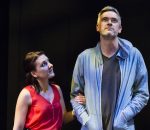
Kelly Sheridan and Peter Wilson in The Realistic Joneses. (photo by Nancy Caldwell)

The unfortunate truth is that we are all going to die some day. How we cope with our mortality defines our approach to life. Playwright Will Eno encapsulates this concept in his award-winning play The Realistic Joneses, produced by the Mint Collective and currently running at the Vancouver Culture Lab at the Vancouver East Cultural Centre until Dec. 17.

The New York Times has called Eno, “a Samuel Beckett for the Jon Stewart generation.” His life view comes through an intellectual lens of verbal dexterity and abstract projections that, at first blush, seem disjointed and oddly out of place, but eventually morph into a revelatory and provocative perspective on death and dying. Eno is a wordsmith but it takes some time and mental effort to understand exactly what is happening on stage.

The play had its debut at Yale Repertory Theatre in 2012 and then went on to a successful Broadway run in 2014, including a Drama Desk Award Special Award.

Next-door neighbours, both with the surname Jones, live in smalltown America. Bob and Jennifer, middle-aged longtime residents, are the foils for the newly wed 30-somethings John and Pony, whose lives intersect through the tragedy of the male side of each couple having the same degenerative neurological condition that affects memory and speech. Both men are undergoing experimental treatments from a local specialist. Each knows there is no cure and deals with this reality in his own way. Their coping mechanisms define the play and expose the vulnerability and pathos of those with terminal conditions.

The action is portrayed in a series of vignettes, snapshot moments in the lives of these two generationally divided families as they forge an uneasy friendship in the dance towards death. These people are real, albeit a little weird. The dialogue is witty and fast-paced – in this play, “the words are the thing.” Despite the dark nature of the subject matter, there are some very funny moments.

Joan Bryans is brilliant as Jennifer, the long-suffering and brave wife who has given up her career to become her husband’s caregiver and tries to give his deteriorating life a sense of normalcy. Community member Charles Siegel plays Bob with an almost childlike, naive demeanor as his memory slowly fades. As the younger couple, Peter Wilson plays John, the quirky doting husband, in a maniacal sort of way and Kelly Sheridan is the scatterbrained Mrs. Jones Junior.

The intimacy of the black-box Culture Lab adds to the audience experience. The divided set is simple: one half is the backyard of the older Joneses, the other half is the kitchen of the younger duo. Lighting and sound design complement the simplicity of the production. It is smalltown in anywhere America on a summer’s eve, replete with chirping crickets, hooting owls, barking dogs and chiming church bells.

There is no easy resolution at the end of the play, no happy ending tied up with a shiny bow to send audiences on their merry way out into the night, just the thought that this is the reality of life, with all its complications, and maybe, just maybe, that’s OK.

Tickets and more information can be found at thecultch.com or by calling 604-251-1363.

Tova Kornfeld is a Vancouver freelance writer and lawyer.

Format ImagePosted on December 15, 2017December 14, 2017Author Tova KornfeldCategories Performing ArtsTags Cultch, death
We must plan for end-of-life

We must plan for end-of-life

The Oct. 29 Jewish Seniors Alliance Fall Symposium on Preparing for End-of-life Transitions drew 160 participants to the Peretz Centre for Secular Jewish Culture. (photo by Alan Katowitz)

The Oct. 29 Jewish Seniors Alliance Fall Symposium on Preparing for End-of-life Transitions drew 160 participants to the Peretz Centre for Secular Jewish Culture. Several aspects of the topic were discussed, with Dr. Sue Hughson speaking on the importance of advance care planning, and Rabbi Philip Bregman presenting some of the Jewish perspectives to be considered.

JSA president Ken Levitt opened the afternoon, welcoming attendees and encouraging them all to become supporters or members of JSA, if they weren’t already. He then introduced Gyda Chud, JSA vice-president, who moderated the symposium, and introduced each speaker.

Hughson has been practising veterinary medicine since 1990. She has been involved in social activism in various forms over the years and currently serves as past president of the British Columbia Humanist Association. Along with her duties on the national board of Dying with Dignity Canada, she is co-chair of the DWDC Vancouver chapter. One of DWDC’s stated purposes is to “educate Canadians about all of their legal end-of-life options, including the constitutional right to medical assistance in dying … and the importance of advance care planning.”

Hughson began by pointing out that talking about dying won’t kill you and that supporting end-of-life choices is pro-choice not pro-death. She outlined the various documents that should be completed in order to plan, in advance, for orderly outcomes. Some of the documents that need to be completed are an advance directive; a representation agreement; and an enduring power of attorney. These documents should be easily accessible – keep them in the freezer, for example. If they are in a safety deposit box, they will not be easily accessed. She also suggested bringing them to the hospital so that the staff is aware of your wishes. These issues should be discussed well in advance with family and close friends so that everyone involved is cognizant of the planning.

In British Columbia, said Hughson, we have the right to a second opinion, the right to refuse treatment, the right to end our own life and the right to assisted death (if a person qualifies).

There are a number of organizations that can help expedite the planning. One is Nidus, another is Dying with Dignity. They have a lot of information on their websites and are also accessible by telephone. Other helpful aids are estate lawyers and financial planners.

One point about the representation agreement, she pointed out, is that there are two forms: No. 9 is the form for capable adults and No. 7 is for those unable to complete it on their own. In this type of agreement, you are outlining your choices, so that, should you become incapable, those acting on your behalf can carry out your wishes. You can register your documents with Nidus. It is interesting to note that eight out of 10 doctors have done advance care planning because they see the importance of doing so.

Bregman was senior rabbi at Temple Sholom from 1980 to 2013. He has been Jewish chaplain at the University of British Columbia since 2013 and serves as executive director of Hillel BC. He explained the importance in Judaism of having an ethical will, where you record the beliefs and ideas that you want to pass on to future generations. This has been a practice in Judaism for thousands of years, he said.

An ethical will can be written on paper or take the form of a video. Bregman emphasized how important it is to have the discussion about end-of-life with your family: what you want to happen regarding funeral arrangements, burial, etc. If the dying person avoids the issues because they think their family is afraid to discuss them, the dying person may feel isolated.

Bregman explained that the Vidui is said at the deathbed if the dying person is unable to say it themselves. It is a prayer asking God for forgiveness. He stated that people usually die at night or early morning, and he thinks it may be because they wish to be alone. But he has experienced what he called the awesome feeling of being present at the moment of death and being aware of the soul leaving the body. The tradition of naming children after a departed relative stems from the idea of the continuation of the neshamah (soul) in a new being, he explained.

The rabbi emphasized the importance of organ donation as helping with life. It is not against Jewish tradition, he said, and is accepted even by the Orthodox. He said people should talk with the Chevra Kadisha (Burial Society) to learn more about the traditions surrounding the preparation of the body for burial. For example, in order to be kosher, the coffin must be biodegradable. There must also be holes in the coffin for a quicker return to nature. We are, after all, only burying the vessel, the neshamah has already departed.

To a question about cremation, Bregman replied that, in Judaism, nothing should be done that is disrespectful to the body and burning is considered disrespectful by most rabbinical authorities. Regarding leaving your body to science or a postmortem, he said it is important to specify that the body be returned for Jewish burial, otherwise it will be cremated. Finally, he stated how important it is to make funeral arrangements in advance, how helpful that is for the family and, again, he encouraged everyone to become an organ donor and help save a life.

Chud then thanked the speakers and invited everyone to partake of the refreshments. A video of the entire event, as well as the PowerPoint by Jack Micner, an estate lawyer who was unable to speak at the symposium due to unforeseen circumstances, will be available on the Jewish Seniors Alliance website.

Shanie Levin, MSW, worked for many years in the field of child welfare. During that time, she was active in the union. As well, she participated in amateur dramatics. She has served on the board of the Jewish Federation of Greater Vancouver and is presently on the executive of Jewish Seniors Alliance and a member of the editorial committee.

Format ImagePosted on November 10, 2017November 9, 2017Author Shanie LevinCategories LocalTags death, end-of-life, JSA, seniors
Talk of death is healthy

Talk of death is healthy

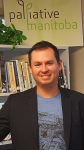
Mike Goldberg, community outreach and education coordinator at Palliative Manitoba. (photo from Mike Goldberg)

Despite the fact that the vast majority of us have lost a loved one, fear and misunderstanding often complicate the grieving process, according to Mike Goldberg, community outreach and education coordinator at Palliative Manitoba.

“Death is not a part of our culture,” said Goldberg. “We tend to revere youth and vitality over age and wisdom, as opposed to Eastern cultures.”

Goldberg, who grew up through the Jewish school system in Winnipeg – attending Ramah Hebrew School and Gray Academy of Jewish Education – earned his master’s degree in gerontology from the University of Regina. He gives many presentations and talks to people in different communities about palliative care and what he describes as “our death-denying society” – and how we can positively change that culture. He also facilitates educational programs at Palliative Manitoba for healthcare aides and support workers; assists people with intellectual disabilities; works with members of First Nations communities; and facilitates grief support groups for kids ages 9 to 12 (called Kids Grieve Too) and 13 to 17 (called Teens Grieve Too).

There was a time when people “just aged in place and the family took care of them at home … and there was nothing else to say about it,” said Goldberg. “That was just the way things were done. But, now it’s more commonplace to see somebody who is getting older being supported in a healthcare facility, a seniors care home.

“It certainly has to do with technology and the economy. You don’t see a lot of people with families that have one primary breadwinner, while the others are able to support family members who are elderly or sick in the family. Everybody seems to have to work, right?”

He said that more Eastern cultures, and sometimes South American ones, can be “more communal and more of a collective society.” He said, “I think we’d like to think we’re communal and collective in Canada, but we’re very much individualistic and self-reliant here. And, we’re very similar to the U.S. in that way.

“We don’t really have a lot of space to care for our elderly family members when it comes to the aging process, so we’ve established these support systems outside the home. And then, it sort of perpetuates itself – this cycle of having the aging experience happen outside the home … and the dying experience happens outside the house. And that has contributed to a fear or denial of death. It just doesn’t happen in our purview.

“If a person is approaching end-of-life, if they have a terminal illness or if they simply have a life-limiting illness … if they need extra supports at their place of residence, we can connect a worker to them to meet with them at home and to provide a supportive presence, to be a companion with them,” he said about Palliative Manitoba.

“For those looking for grief support,” he continued, “we have volunteers that can call you and have a conversation over the phone with you about once a week. Again, they’re not there to provide advice, they’re just there to listen and provide a supportive presence. We find the most appropriate way to support somebody through grief is to listen to them.”

Goldberg is a proponent of inviting open conversations about death and dying, and of exposing kids to death, grief and loss at a young age, not sheltering them. He suggested being as direct as possible with kids and with anyone you meet in terms of language, while also being hyper-aware of word usage – not using euphemisms and metaphors concerning death.

“It’s difficult to talk about death, because it’s something that is going to happen to all of us and represents this unknown,” he said. “But, it’s universal and, to better support each other, we need to talk about it.

“We also need to educate professionals working in this field, who are supporting those approaching end-of-life. These are the people on the ground, experiencing life and death every day. They need to have a high quality of understanding of how to communicate, what the right and wrong things are to say, and being better listeners.

“That’s really crucial,” he stressed. “It doesn’t matter what role you have in society – a nurse or whoever – if we just became better at listening to each other, then that would go a long way in having more direct conversations about death and dying, and changing the culture around it.

“The thing that I’ve come to understand working in this field is that it’s not homogenous emotions we experience. It’s a wide variety of emotions and sometimes a rollercoaster of emotions. The grieving process is not the five-step staircase we tend to think it is. It’s a fluid process that you could go back and forth between the stages.

“There’s certainly a lot of hope in grief and in death,” he said, “and I see that when people tell me that they couldn’t imagine doing what I do, because of the sadness that comes along with grief. I just tell them that I’m able to be with people in one of the most important and sacred times of their life, at the end of life. And, to be able to work with somebody and hear their stories and be with them is a privilege.

“The reality is, everybody grieves differently. There’s no right or wrong way. It’s just however you’re able to make sense of what’s going on.”

Rebeca Kuropatwa is a Winnipeg freelance writer.

 

Format ImagePosted on November 10, 2017November 9, 2017Author Rebeca KuropatwaCategories LocalTags death, end-of-life, family, health
The truest act of kindness

The truest act of kindness

Howard Jampolsky tells the story of how community members came together to support a family after the death of their husband, father. (photo from Schara Tzedeck Cemetery Board)

Taking care of the deceased is known as a chesed shel emet, or “the truest act of kindness.” The Schara Tzedeck Cemetery Board and Chevra Kadisha practise this every day.

We take care of our community’s deceased, and help their families from the time of death through the funeral service. Of course, because we have financial obligations like any other organization, we charge for our services. However, every family is charged the same price for burial plots and funeral services, and we only offer a traditional burial with all the proper rites. We treat every deceased person and their families equitably.

This practice varies only if a family is not in a financial position to pay the full costs. Sometimes, families simply need an extended period to pay for the funeral – for example, when funds are only available from the estate. Sometimes, families cannot pay the full amount, as this would cause a significant hardship. And then, there are times when a family is simply not able to pay anything at all. In all of these cases, we provide the same services as we provide everybody: it is our core belief and mission to provide a full and proper Jewish funeral according to all the customs and laws.

We carry out about 125 funerals each year and, while each is unique, there are some that truly stand out. This chronicles one such story.

On a cold and rainy day in October, I received a call from Rabbi Hillel Brody, who serves as the religious leader of the Louis Brier Home and Hospital. He told me there was a resident who was dying and his wife, who we will call “Margaret” (names have been changed in this story to protect privacy), was worried for a variety of reasons. Margaret and her husband “Shmuel” had moved to Vancouver about 10 years earlier and, because of Shmuel’s failing health, much of their time was spent visiting doctors and caring for him. They tried to connect with the community, but were unable and, earlier that year, Shmuel was moved into the Louis Brier. Margaret began to find some connection to people just by being in the more active setting of the home, but, still, her focus was almost entirely on caring for Shmuel. This devotion to her husband was admirable, but it came with a price – they did not have any close friends.

Margaret had no idea where to begin when it came to planning for Shmuel’s burial. To make matters worse, Margaret and Shmuel did not have the money to pay for a funeral or a burial plot. Rabbi Brody assured Margaret that the Schara Tzedeck Cemetery Board and Chevra Kadisha would take care of things. He told me that the only family was a daughter, who lived in Toronto, and he told me that she had decided to visit a few weeks earlier to see her father and say her goodbyes while he was still alive. As she could only make one trip, she had made this difficult choice, and was not going to be able to come for the funeral.

When Shmuel passed away, I called Margaret and arranged to meet her at her apartment to go over the details and get all the necessary paperwork signed. Margaret and Shmuel had been together for almost 50 years, and life had always been hard. They were both Holocaust survivors, both were born in Hungary. Shmuel had been held by the Nazis as a very young boy of less than 10 years old and, because of the conditions that he and other Jews were under, he became very ill from malnutrition and as a result of Nazi torture. He was fortunate to not have been murdered by the Nazis, as so many were, but though he survived and was rescued, he never truly recovered.

Margaret and I completed the paperwork required for registering Shmuel’s death, and talked about the funeral. She was shocked and humbled when I told her that we would provide Shmuel with a full and proper Jewish funeral and she would not have to pay anything. Her tears flowed again, but this time from relief.

Margaret told me she did not even know how she would be able to get to the cemetery. She had sold her car some years earlier, and would take the bus every day to be with Shmuel at Louis Brier. I told her that Rabbi Brody had offered to drive her to the cemetery. Again, she was surprised and grateful.

At this point, the funeral would be one of the smallest I had ever attended. It was looking like Margaret, Rabbi Brody and I would be the only people there. I knew that Margaret needed more help. The thought of her being dropped off at her small apartment to be alone after burying her husband was upsetting. She needed more support, and I asked Margaret if it would be OK if we purchased an airline ticket for her daughter, “Monica,” to come to Vancouver to be here for a few days, including for the funeral.

Margaret was at first confused by the question. I’m not sure she even comprehended what I was saying. But Monica accepted our offer and, later that day, an airline ticket was purchased for her.

With Monica in town, Margaret would be able to get to the cemetery, as Monica’s good friend, “Bill,” had agreed to drive them. Two more people would be there to help bury Shmuel.

I went home that evening feeling both exhausted and energized. I had worked hard that day to make sure everything would work for Margaret, but the weight of the day was offset by the buoyancy of the good deeds that were also done. Margaret was going to get through this a little easier now, and it felt good.

On arrival the next morning at shul, I saw Rabbi Brody. He told me he was inspired by what we had offered Margaret, and mentioned that he had advised Congregation Schara Tzedeck’s Rabbi Andrew Rosenblatt that the funeral was taking place the following morning. He said he had asked Rabbi Rosenblatt to announce the funeral to his congregation and, if anyone could attend, they should contact me.

I approached a congregant who is a wills and estates lawyer, and he offered to provide Margaret with legal help in dealing with her husband’s affairs, for no charge.

At the end of the service, another congregant approached me and asked me to contact Omnitsky Kosher and order food for the family to be sent over following the funeral, with the bill directed to her.

Neither of these people had ever heard of Margaret, or Shmuel, or Monica. They just were part of a community that was beginning to rally around a fellow community member to give her the support we would all need in such a situation.

The weather was forecast to be very windy and wet for the Sunday funeral, but we were lucky that it was still dry. Monica had told me she let a few people know about the funeral, and that they may come, so I was not surprised when I saw two people walking into the small cemetery. As they approached, I asked them if they were friends of Monica. They told me they did not know anyone by the name of Monica, but had heard there was funeral this morning for a Holocaust survivor, and that there would be only a few people here, and they wanted to come to support the family.

A few moments later, another car drove up – a man with his two sons arrived for “a funeral they had heard about.” Car after car arrived. More and more people gathered, some who had driven almost an hour to lend support to a total stranger and to participate in the mitzvah of laying Shmuel to rest.

When the funeral started at 11 a.m., there were close to 30 people there – none of whom had ever met Shmuel, Margaret or Monica.

The beauty of a chesed shel emet is that everyone gains. I know that everyone at the funeral, and everyone who helped in some way or another, benefited from this experience. But, most of all, Margaret benefited and will continue to benefit from a community that supported her in her darkest hour, and will continue to help her.

Margaret will mourn and grieve. She does not know how she will be able to live on without Shmuel, and cannot imagine ever recovering from this physical and emotional blow.

But she will.

Howard Jampolsky is executive director of Schara Tzedeck Cemetery Board.

Format ImagePosted on March 31, 2017March 31, 2017Author Howard JampolskyCategories LocalTags bereavement, chesed shel emet, death, Judaism, Schara Tzedeck

Posts pagination

Previous page Page 1 Page 2 Page 3 Page 4 Next page
Proudly powered by WordPress