Skip to content
  • Home
  • Subscribe / donate
  • Events calendar
  • News
    • Local
    • National
    • Israel
    • World
    • עניין בחדשות
      A roundup of news in Canada and further afield, in Hebrew.
  • Opinion
    • From the JI
    • Op-Ed
  • Arts & Culture
    • Performing Arts
    • Music
    • Books
    • Visual Arts
    • TV & Film
  • Life
    • Celebrating the Holidays
    • Travel
    • The Daily Snooze
      Cartoons by Jacob Samuel
    • Mystery Photo
      Help the JI and JMABC fill in the gaps in our archives.
  • Community Links
    • Organizations, Etc.
    • Other News Sources & Blogs
    • Business Directory
  • FAQ
  • JI Chai Celebration
  • JI@88! video

Recent Posts

  • Eby touts government record
  • Keep lighting candles
  • Facing a complex situation
  • Unique interview show a hit
  • See Annie at Gateway
  • Explorations of light
  • Help with the legal aspects
  • Stories create impact
  • Different faiths gather
  • Advocating for girls’ rights
  • An oral song tradition
  • Genealogy tools and tips
  • Jew-hatred is centuries old
  • Aiding medical research
  • Connecting Jews to Judaism
  • Beacon of light in heart of city
  • Drag & Dreidel: A Queer Jewish Hanukkah Celebration
  • An emotional reunion
  • Post-tumble, lights still shine
  • Visit to cradle of Ashkenaz
  • Unique, memorable travels
  • Family memoir a work of art
  • A little holiday romance
  • The Maccabees, old and new
  • My Hanukkah miracle
  • After the rededication … a Hanukkah cartoon
  • Improving the holiday table
  • Vive la différence!
  • Fresh, healthy comfort foods
  • From the archives … Hanukkah
  • תגובתי לכתבה על ישראלים שרצו להגר לקנדה ולא קיבלו אותם עם שטיח אדום
  • Lessons in Mamdani’s win
  • West Van Story at the York
  • Words hold much power
  • Plenty of hopefulness
  • Lessons from past for today

Archives

Follow @JewishIndie
image - The CJN - Visit Us Banner - 300x600 - 101625

Why are you attached to Israel?

I was recently invited to speak to an Ottawa-based Israeli-Palestinian relations group on the topic of Canadian Jews and Israel. Unfortunately, there is a dearth of public opinion data available on Canadian Jewish attitudes. We have some broad strokes on identity issues, though. In addition to Conservative Judaism – rather than Reform – being our largest denomination, Canadian Jews, compared to American Jews, are one generation closer to the Holocaust, are more likely to speak Hebrew, educate their kids Jewishly, and to have visited Israel. Most central to my talk though, was how Canadian Jewish institutions are responding to attempts to challenge Israel as a Jewish state, including the boycott movement.

A lively Q&A followed, but there was one question that stopped me in my tracks. What is it about Israel, a man asked, that makes you feel attached to it? He seemed genuinely curious and rather puzzled, so puzzled that he asked it twice.

Being in the field that I am in, I have a ready answer, but I know I am not typical. My own attachment to Israel centres primarily on a deep passion for Hebrew and Israeli culture. I lived in Israel for three separate years in my 20s, I speak only Hebrew to my kids, I alternate my Netflix watching with Israeli dramas and I am as likely to binge listen to “The Last Waltz” as to Kaveret’s final concert album. My daughter’s d’var Torah at her bat mitzvah was the only one I’ve heard reference Arik Einstein lyrics. Of course, the attention I devote to Israel is partly a function of my profession, but I chose my area of study based on a great sense of attachment to the country and a desire to understand how the Israeli-Palestinian region can become a more just and humane place.

But what of my fellow Canadian Jews? Those of my parents’ generation, who grew up in the shadow of the Holocaust, might view Israel as an insurance policy in the event of the unthinkable. Religious Jews might feel a profound spiritual connection to the land. But what of the many less religious Canadian Jews of my generation (and younger), those for whom Canada, with its absolute commitment to freedom, tolerance and multiculturalism is as safe a haven as any they could imagine; those for whom particular stones on particular bits of territory are not understood to hold sacred meaning, and for whom Hebrew or Israeli contemporary culture is not something that pulls them?

What does Israel mean to these Jews who are unlike my parents, unlike religious Zionists and unlike me?

I encourage my fellow Canadian Jews to articulate their attachments. Doing so with nuance and open hearts may help uncover new political arrangements. Maybe it would point to two states, maybe a confederation system where everyone has access to all the land but possesses citizenship in only one state (as Dahlia Scheindlin and Dov Waxman have proposed), and maybe even a single state where both languages and cultures are carefully preserved. We should ask what threat, exactly, does refugee return pose, rather than leave it as an imaginary bugaboo. Being explicit about our emotional ties – while being open to hearing the emotional experiences of others – may bring us closer to supporting creative peace efforts.

A postscript. A survey of the Canadian Jewish community is currently being circulated by Jewish Federations of Canada-United Israel Appeal, and British Columbians can respond online via svy.mk/20qCWb7. The survey is being conducted by David Elcott and Stuart Himmelfarb, both of New York University’s Wagner Graduate School of Public Service. As I recall, there is only one question on Israel, which asks whether the respondent feels “attached” to the country. Attachment is associated with many different perspectives, and says nothing about one’s commitment to human rights for those under Israel’s control, for example. I hope that we may soon see more in-depth survey research on Canadian Jewish attitudes towards Israel and its policies.

Mira Sucharov is an associate professor of political science at Carleton University. She is a columnist for Canadian Jewish News and contributes to Haaretz and the Jewish Daily Forward, among other publications. This article was originally published in the CJN.

 

Posted on July 1, 2016June 29, 2016Author Mira SucharovCategories Op-EdTags Holocaust, Israel, Zionism
New award on literary scene

New award on literary scene

A new Canadian literary prize was announced recently – the Joan Betty Stuchner Oy Vey! Funniest Children’s Book Award.

photo - Joan Betty Stuchner’s friends have created a children’s book award in her memory
Joan Betty Stuchner’s friends have created a children’s book award in her memory. (photo by Tom Kavadias)

“With this award, we honor Joan Betty Stuchner’s life-affirming humor and encourage other children’s writers to laugh it up on the page the way she did,” reads the award website. The $1,000 prize will be given out once every two years to a Canadian author and/or illustrator who creates the most hilarious book for readers ages 12 and under.

“We feel that Joan would have loved this prize that supports authors who make children laugh,” said Cindy Heinrichs, one of the award committee members, in an interview with the Independent. “The name of the award is probably the longest and funniest book award name in literary history. Joan would love it. She would laugh at it, if she were alive. I can almost hear her laughing.”

Stuchner, one of the funniest authors of children’s books in Canada, passed away unexpectedly in 2014. She was only 67 years old.

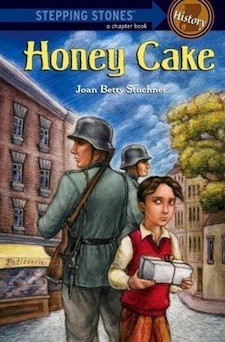
“I met Joan in 2006,” Heinrichs recalled. “I edited one of her books, Honey Cake, for Tradewind. I was a young editor then, and Joan was very supportive. She had a knack for making everyone she met feel like they were her friend.

“We did become friends. Later, when she was already sick, I helped her with the final edits for her two latest books, Bagels the Brave and Bagels on Board [both illustrated by Dave Whamond]. I wasn’t working for her publisher then, I did it as a friend, because she was too ill to do it alone. It gave her a great deal of pleasure to complete these books and a great deal of satisfaction to know that they would find their way into the world. Both books were published posthumously by Orca Books.”

book cover - Honey CakeHeinrichs remembered how shocked all Stuchner’s friends were by her passing. “Joan was a wonderful friend, warm and generous. She loved children. She loved books. She was a little lady with a big personality and a great sense of humor.”

Born in England, Stuchner moved to Canada when she was 18. After graduating from the University of British Columbia, she worked as a library assistant, taught part-time, acted in community theatre and performed as a storyteller.

“My life is full of books … and my house is like a mini library – despite the fact that I moved in 2009 and had to give away many of my books. Not an easy thing to do,” Stuchner herself wrote in her bio.

She always liked to write, particularly for children. Her stories and poetry were published in children’s magazines before her first book, Peanut Butter Waltz, illustrated by Diana Durrand, came out in 1990.

“She wanted to write full-time,” said Heinrichs. “At 64, she retired to make that dream come true. Sadly, she died only three years later.”

After the funeral, several of Stuchner’s friends, including Heinrichs, got together to reminisce and to talk about Stuchner’s literary legacy, her funny and heartwarming children’s books.

“We realized that there was no prize in Canada for humorous children’s books. We thought, Joan would love such a prize, we should found one.”

They did. And, in honor their departed friend, they named the prize after her. The members of the award committee include Heinrichs, fellow writers Caroline Adderson and Silvana Goldemberg, and artist/ illustrator Kathryn Shoemaker.

book cover - Peanut Butter Waltz“We all met through CWILL BC – Children’s Writers and Illustrators Society of B.C.,” Heinrichs said. “When we started with the prize, we didn’t know what to do. Everything was a first for all of us, and everything was done by volunteers. There are no administrative fees. No paid staff. We asked people to help – to make a logo, to make a website, to help with fundraising, to donate books – and everyone jumped in. Orca and Tradewind donated books to raise the funds for the prize. Shar Levine is helping us with fundraising, too. She has so many amazing ideas, even though she is not a member of the committee.”


Submissions for the inaugural prize, which will be awarded in 2017, already have started pouring in, from publishers and writers organizations across Canada, although the committee decided not to accept submissions from self-published writers, at least for now. Heinrichs explained that decision: “While there are wonderful examples of self-published books for children, many self-published books are in need of a thorough editorial process. Most book prizes don’t accept them at this time, but that may change. Our prize is brand new and we are learning. We expect it will grow as we do.”

To learn more, visit joanbettystuchneraward.org.

Olga Livshin is a Vancouver freelance writer. She can be reached at [email protected].

Format ImagePosted on July 1, 2016June 29, 2016Author Olga LivshinCategories BooksTags award, children's books, Joan Betty Stuchner
Shinshin program’s first year

Shinshin program’s first year

Shinshiniot, left to right, Ophir Golombek, Tomer Tetro and Lian Swissa. (photo by Michelle Dodek)

Nine months ago, Ophir Golombek, Lian Swissa and Tomer Tetro were just the names of three Israeli 18-year-olds brought to Vancouver by the Jewish Federation of Greater Vancouver and the Jewish Agency for Israel. Having spent the school year helping at Vancouver Talmud Torah (VTT), Richmond Jewish Day School (RJDS), King David High School (KDHS), the Jewish Community Centre of Greater Vancouver and the Hebrew schools at congregations Beth Israel, Beth Tikvah and Temple Sholom, these young women are now known and loved by many across the Lower Mainland.

The women have been here for a shnat sherut (year of service, for which the acronym is shinshin) before entering the army, not as an alternative to time in uniform. The program has been running in other cities for more than a decade, but this was the first year for Vancouver. Designed to spread a connection and love for the people and country of Israel, the shinshiniot (female plural for shinshin) engaged the youth of Vancouver’s Jewish community through dance, song, food and educational programming.

The Shinshin program hinges on a series of homestay experiences where families with children in high school or younger host a shinshin for a three-month period. Federation works to match each shinshin with families that are a good fit in order to facilitate a connection between the families and the shinshiniot, sharing the Canadian experience and Israeli culture while bonding as Jewish people.

“The best thing about the year was the host families,” said Swissa. “I made amazing deep connections and was welcomed as part of the family. It’s such a crucial part of the program.”

The Friedman-Leidemann family – parents Diane and Mark and 13-year-old son Isaac – opened their home to Golombek. Living very close to VTT, it was convenient for Golombek to get to and from her daily work at the school and the family was happy to open their home to her.

“Hosting Ophir was a lovely experience,” said Friedman. “We have hosted ‘traditional’ homestays for 10 years, so we have lots of experience to compare this to and it was truly wonderful.”

She added, however, that having the shinshiniot work six days a week made exploring very difficult. “It would be nice if the girls could have a two- to three-day weekend once a month so that they could explore areas near Vancouver not conducive to day trips,” said Friedman.

Lissa Weinberger, manager of Jewish education and identity initiatives at Federation, was tasked with rolling out the Shinshin program in Vancouver. “It has been an amazing first year,” she said. “From the first time I had a child excitedly talk about the visit their class had from the shinshin to the last goodbye hugs, there has not been an experience quite like this in Vancouver. The biggest highlight of the year was having them for Yom Hazikaron and Yom Ha’atzmaut. Our community and especially our kids had such a positive Israeli experience, one that could only be created by the firsthand experience of Israeli teens.”

The year has not been without its challenges. Federation recognizes that culture shock and homesickness were real issues, and they plan to have a native Hebrew-speaking social worker or psychologist as part of the support team next year. They are currently reaching out for host families, as well. “We are looking for families who have the routine of the school year, of having kids, because hosting a shinshin is bringing a teenager into your family,” said Weinberger.

Tanyss Bugis, who has two teenagers attending KDHS, said, “Hosting Lian was good for our family and my teenaged kids and it was good for Lian. For us, it was a terrific experience.”

The skills and warmth of the shinshiniot were put to a variety of uses over the year. Tetro is an accomplished dancer and she worked with Grade 4s at VTT and RJDS to prepare for Festival Ha’Rikud. At Beth Israel, Swissa used her artistic skills to create props and 3-D games about Israeli customs, culture and holiday celebrations. All three women did Israeli programming at the synagogue Hebrew schools, where they worked alternating Sundays; the weekends they were not at Hebrew school, they provided youth programming on Shabbat mornings.

“The kids we met now have a better understanding of the complexity of being a teen in Israel,” said Swissa. “They have a better idea that Israel is a nuanced, complex country. We were also able to bring a better understanding of really important events like Yom Hazikaron.”

During the school week, RJDS, VTT, KDHS and the JCC had programming provided by one or more of the shinshiniot. Golombek was full-time at VTT, visiting the classes with age-appropriate lessons on everything from women in Israeli society and history to Yom Hazikaron traditions. Jennifer Shecter-Balin, director of admissions and communications at VTT, said, “Having a young Israeli emissary at the school was a logical and natural way to build bridges with – and interest in – Israel.”

Shecter-Balin also acted as a host-mother. “For our family, hosting a shinshinit was a wonderfully positive experience,” she said. “After our time with Ophir, we feel as though we now have another close family member living in Israel and we anticipate maintaining our bond. We would definitely host again!”

Of the challenges, Shecter-Balin said there were inevitable hiccups but that VTT sees the benefits of increasing the scope of the program with two shinshiniot for next year. “We anticipate a smoother transition and integration with two emissaries working together and supporting each other,” she said.

During Shabbat services on June 25, Swissa organized a party with Israeli snacks and games. It turned out to be a surprise farewell party for her, too. It was the second such party for her on a Shabbat morning; the other was for her 19th birthday.

“We love having Lian here. She’s awesome!” said 10-year-old Aria Levitt.

Swissa said it was hard for her to say goodbye to the kids. “As a shinshinit, we develop a deep connection to the kids. It’s sad to say goodbye.”

Not quite finished their service in our community yet, Tetro is off to Camp Hatikvah for the summer and Golombek will be at Camp Miriam. Both will help with programming, adding to the already rich Zionist fabric of the camps. Swissa continues her stay in Vancouver contributing an Israeli flavor to the JCC’s Camp Shalom.

Tetro summed up her experience in a goodbye speech at a party thrown by Federation for the shinshiniot. “The Jewish community here is amazing and I am so grateful to have been part of it,” she said. “I am so thankful to have met all these incredible people, thank you for being my extended family for the year.”

Federation is looking for families to host a shinshinit for a three-month period in the coming school year. The new group of four young women will arrive at the end of August for an orientation. If you are interested in being a host family, contact Federation at [email protected] or call Shelley Rivkin at 604-527-5111.

Michelle Dodek is a mother and a writer in Vancouver whose children benefited greatly from their relationships with the shinshiniot.

Format ImagePosted on July 1, 2016June 29, 2016Author Michelle DodekCategories LocalTags Federation, homestay, Israel, shinshin, shinshiniot
El Al aids sheep

El Al aids sheep

Friends of the Jacob Sheep directors Jenna and Gil Lewinsky with their flock. (photo by Mustard Seed Images)

El Al has agreed to come on board as a partner and subsidize the flight of the Jacob sheep from Canada to Israel. The flight would take place from an airport in North America with logistics to be determined.

The airline’s announcement came as the Israeli Ministry of Agricultural and Rural Development gave the green light for the export of the Jacob sheep flock of approximately 120 animals, subject to a quarantine on both the Canadian and Israeli side, and medical testing. Despite having a low incidence of blue tongue in Canada, the quarantine is to protect the sheep. After the Canadian quarantine, the sheep will be medically tested for blue tongue and then flown to Israel.

The Israeli agricultural ministry told the Times of Israel in June that Canada is not on the list of countries that are approved to export livestock to Israel, so the Jacob sheep flock “will be approved under special circumstances, on a one-time basis for tourism purposes only.”

The project has been endorsed by the Israeli embassy in Ottawa, which blessed the endeavor to return the sheep “to their land of origin, the state of Israel,” in a letter released in May.

The Jacob sheep’s return also has received rabbinical endorsements. Rabbi Amram Vaknin of Ashdod has called the return of the sheep a “highest mitzvah” and wishes to be there to bless their return. Late last year, local Chabad Rabbi Falik Schtroks visited the Jacob sheep flock for parashat Vayeitzei, to deliver a sermon and to wish them a safe return to the land of Israel.

Friends of the Jacob Sheep directors Gil and Jenna Lewinsky have started a crowdfunding campaign to help fundraise for the costs of transporting the sheep to Israel, for feeding costs and to build appropriate infrastructure for them on the Israeli side. The campaign can be found at gofundme.com/jacobsheep.

Format ImagePosted on July 1, 2016June 29, 2016Author Friends of the Jacob SheepCategories LocalTags El Al, Israel, Jacob sheep, Lewinsky

Judaism beyond shul

Despite being unsure about God, Lawrence Hoffman embarked on his journey as a student in a New York rabbinical school nonetheless. The now-longtime rabbi has since authored more than 40 books and has been teaching at the Hebrew Union College in New York since 1973.

HUC is a seminary for Reform rabbis and cantors. Hoffman teaches courses in liturgy, worship, ritual, spirituality and theology – and, increasingly, synagogue transformation.

The synagogue transformation endeavor has Hoffman traveling constantly, both addressing congregations throughout North America and as a consultant aiding in transformation issues.

photo - Rabbi Lawrence Hoffman
Rabbi Lawrence Hoffman (photo from huc.edu)

In 1995, Hoffman began to suspect that synagogues were not keeping up with the changes in North Americans’ views of religion and that, as a result, they were in for some hard times.

“This was already evident the generation prior, the generation after the baby boomers,” said the rabbi. “I became convinced that synagogues needed to become what I came to call ‘spiritual and moral centres for the 21st century.’

“I co-founded something called Synagogue 2000 … investigating how synagogues might transform themselves into this kind of synagogue. It would involve a new kind of spiritual affirmation and a focus on what a spiritual mission might be for the synagogue … what synagogue life might become for the new century.”

After experimenting with these concepts via Synagogue 2000, Hoffman began traveling from place to place to help synagogues undergo the process. This has become his main passion.

As the rabbi teaches at a Reform seminary, most of his current work is with Reform congregations, but he has worked across the spectrum. “After all,” he said, “the impact of the environment and the new age is felt equally across the ranks of all synagogues.”

A recent visit to Winnipeg’s Temple Shalom was part of Hoffman’s initiative to spread the word and help communities that would otherwise not be able to afford his normal rates as a scholar-in-residence.

Hoffman – who is originally from Kitchener, Ont. – included the stop in Winnipeg on his way to a Western Canadian vacation with his wife.

“All my life, I wanted to see Western Canada and never had, and I decided it was time,” he said. “I realized I hadn’t seen Winnipeg after having arranged the vacation out West. I knew there was a small synagogue [Temple Shalom].… I phoned them, offering to come to Winnipeg and give them a lecture and meet the community…. In return, they were willing to show me around and host me.”

The rabbi spoke briefly at the synagogue during the erev Shabbat service on May 27. His topic was Authentic Jewish Spirituality. He returned the following evening to speak again.

“The idea was to investigate what might be a kind of Jewish spirituality that would go deep into Jewish text and practice,” said Hoffman. “A lot of people think that spirituality is equivalent to meditation, silence retreats, yoga … all of which is fine … and there are Jewish versions of that, which I applaud, but I think there are forms of Jewish spirituality that are connected more deeply with things that are consistently found often quite uniquely in Judaism, as a series of sects, practices, Jewish traditions, a deep way of looking at Jewish spirituality.”

Hoffman believes we are living in the third revolution, with the first having brought rabbinic Judaism and the second having been the development of modern denominations. This current revolution, according to Hoffman, is courtesy of technology, the baby boomers and other general changes with respect to religion in North America.

“I explored the new revolution we are living through, the excitement of it, and the opportunities and positive nature of what might result,” said Hoffman of his talks in Winnipeg. “We ended up with well over 100 people, which was quite amazing to me. In fact, I was able to see, through them and through the people who were kind enough to host my wife and myself, the vitality of the Jewish community in Winnipeg in a way that I never would have anticipated.

“The Temple Shalom Jewish community, at the moment, doesn’t have a full-time rabbi, so services were actually led by lay people, but they did a spectacular job. I was very impressed.”

Hoffman spoke about what he means when he says transformation – that, until recent years, most Jews would not have moved into a town without joining a synagogue, referring to this as “a Jewish civic duty.” But, today, Hoffman said, “What’s happening in the new world is that people like that don’t necessarily belong to a synagogue anymore. They associate the synagogue with what they call ‘religion,’ saying they are not religious. Instead, they say, they’re spiritual. Spirituality is rising and the claim that people are not religious is rising, as well.

“Synagogues need to transform themselves into places of serious Jewish identity through identification, this search for meaning … [in] so far as people can find meaning in synagogue and they don’t just join for their kids, because they think it’s the Jewish thing to do, then synagogues will do well.”

The actual transformation, Hoffman conceded, is a serious, difficult task that does not occur overnight.

“People were very interested in what I had to say, finding it exciting to be living in a moment of opportunity,” said Hoffman. “Not all of them saw it as a moment of opportunity. Many felt it was a difficult moment. For example, intermarriage is rising – some people see that as almost a death to Judaism. In my perspective, it’s just the opposite. I think it’s an enormous opportunity for us to reach so many new people. If people actually are intermarrying and then coming to synagogue with their spouse, it’s a wonderful opportunity. I think people were intrigued by the possibility and by my optimism.”

According to Hoffman, many synagogues are growing rapidly via Jews by choice.

Another issue that was discussed was how young people are not coming to synagogue, but how this is changeable. It’s just that, at the moment, they do not see a reason to attend, said Hoffman.

“The problem that people have when they say, ‘I’m not religious’ – and I’m talking largely about people who aren’t in the Orthodox camp – is that they assume that religious means keeping all of Jewish law,” he said. “They know they don’t do that, so they assume they’re not religious, but they may be religious in other ways. They may do this, but not that. They may show up on Yom Kippur. They have their own way of keeping Judaism, so it would be wrong to say they are not religious.

“Secondly, a lot of people think that to be religious means to belong to the institution. I talk about a deeply understood sense of being religious, in a spiritual sense … a sense in which Judaism, as a religion, provides meaning for people’s lives.

“One has to reevaluate what we mean by religion and help people find a way to associate with Judaism’s depths to give their life meaning and direction,” said Hoffman.

Ruth Naomi Livingston, a member of Temple Shalom’s board of trustees and a past president, was one of the Hoffmans’ hosts.

“I was raised in a secular Jewish home, but had a very religious grandfather who lived with us,” said Livingston. “I identified as Jewish by culture, rather than by religion. The topic [discussed by Hoffman] that resonated most with me was when he explained the basic differences between Judaism, Christianity and Islam. They are Hellenistic religions and are faith-based. To be a good Christian, one must believe in Jesus as a God; not to do so makes one a bad Christian or not one at all.”

Livingston came out of the experience feeling energized and empowered to follow the teachings handed down from her grandfather about the need for action in fixing the world to be a good Jew.

Of Hoffman specifically, Livingston added, “He was the most passionate and dynamic speaker I have ever seen. He had the crowd of about 90 people in the palm of his hand. There were people from a variety of synagogues present as well as several non-Jews.”

Rebeca Kuropatwa is a Winnipeg freelance writer.

Posted on July 1, 2016June 29, 2016Author Rebeca KuropatwaCategories NationalTags Judaism, Lawrence Hoffman, spirituality, synagogue

Storytelling overtaken by facts

Isaac Bashevis Singer and Sholem Aleichem gave us delightful fables about the shtetl, the overcrowded villages of Eastern Europe, with endearing characters that contended with abysmal poverty, deadly pogroms and false messiahs. However, life in the shtetl was not always so dreary.

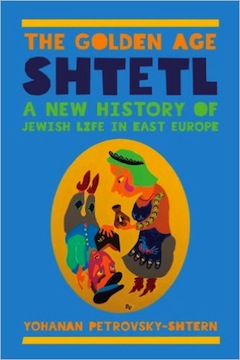
In a new book that effectively undermines the archetypical shtetls of our imagination, Yohanan Petrovsky-Shtern in The Golden Age Shtetl: A New History of Jewish Life in East Europe (Princeton University Press) redraws the image of the shtetl. A professor of Jewish studies at Northwestern University and author of several books, Petrovsky-Shtern documents a brief period in history, from the late 17th century to the mid-18th century, when life was not so bad in those towns of our ancestors in eastern Poland and Ukraine.

book cover - The Golden Age Shtetl: A New History of Jewish Life in East EuropePetrovsky-Shtern looks closely at three provinces with 44 shtetls in Eastern Europe. Relying mostly on documents that were previously overlooked, he discovers that many of the shtetls at that time were neither poor nor especially pious. On the contrary, they were thriving communities with stable economies built around popular market fairs. Some shtetls had trading firms that rivaled those found in large cities. Some had fancy restaurants and a rich cultural life.



Although Jewish businessmen were prominent, the Jews were a minority in many of the towns. Jews and Christians lived and worked together.

As might be expected in any neighborhood, the Jewish community also had its share of characters of questionable integrity. Petrovsky-Shtern goes through historic court records that reveal stories of bribes, counterfeiting, smuggling, informants and collusion of Jewish businessmen with crooked clerks. Even the rabbinical leadership comes under his microscope.

Jews came to Eastern Europe with the Greek colonizers more than 2,000 years ago but the Jewish presence in the region was minimal until Polish nobility encouraged Jewish migration from Western Europe.

The Jews were invited to run country fairs and sell liquor, two activities that provided significant tax revenues to the Polish authorities. The Jewish businessmen brought new “Western” approaches to trade. They put stores and stalls under one roof, and sold exotic merchandise from distant lands. They opened inns offering a place to drink and a bed. They injected a cosmopolitan slice of urban life into rural agricultural areas. They expanded trade, bringing prosperity to the region.

By 1840, however, the golden era had started to fade. The Russian monarchy, which had ruled the region with benign neglect since the partition of Poland in the late 1700s, began asserting its authority. Discriminatory laws against Jews contributed to the decline of the shtetl, as authorities shifted economic and political power to larger urban centres. Once-vibrant communities turned into depressed outposts of the Russian Empire, the shtetl of popular Yiddish literature. They struggled to survive in their diminished state, until the Nazi regime wiped them out.

A fascinating and often ignored aspect of the shtetl described by Petrovsky-Shtern is the relationship of the shtetl Jews with the Holy Land.

In the late 18th century, about 500 Jews from the Polish-Lithuanian Commonwealth went to Palestine to build a religious utopian community. Followers of Rabbi Eliyahu ben Zalman, the Mitnagdim idealists, were convinced that resettlement would pave the way for the Messiah. The rabbi, also known as the Vilna Gaon, had predicted the Messiah would arrive in 1840, coinciding with the year 5600 in the Jewish calendar.

Not to be undone, followers of the Ba’al Shem Tov, the rival Chassidic sect, made aliyah in even greater numbers, settling in Safed, Tiberias, Hebron and Jerusalem. By 1800, the Jewish population of Palestine had expanded to 6,000, accounting for roughly two percent of the population.

Petrovsky-Shtern recounts the impact of this aliyah on those who remained behind in the shtetl. In some respects, reverberations of the migration continue to be felt almost 200 years later.

The pioneers in Palestine faced unimaginable challenges: poverty, illnesses, natural disasters, famine and discriminatory Ottoman Empire laws. In order to survive, the Jews of Palestine developed a sophisticated network of rabbinic fundraisers who went from shtetl to shtetl, giving sermons, selling books and sparking the imagination with stories about the Holy Land, including tales about inscriptions on the tombs of the prophets.

The rabbinic messengers assured shtetl Jews that supporting Jews in the Holy Land was comparable to fulfilling the commandment of settling in the Holy Land themselves. The rabbis, who kept meticulous records, told donors that prayers were chanted on their behalf at the Cave of Machpelah, the gravesite of Abraham, Isaac,

Jacob, Sarah, Rebecca and Leah.

The authorities tried to stop the flow of funds to Palestine. They suspected that the Jews, who they blamed for the death of Jesus, were sending money to rebuild the Temple in Jerusalem. They believed that the fundraising was reinforcing Jewish separateness, undermining assimilation, increasing fanaticism and possibly hindering Jews’ ability to pay local taxes.

Also, as the years passed, raising funds for the Jews in Palestine was viewed as aiding an enemy of the state. By the 1800s, the Polish-Lithuanian Commonwealth had been partitioned and territory that included many of the shtetls became part of the Russian Empire, which had hostile relations with the Ottoman rulers.

Yet, Jewish communities still managed to raise money, especially in the years from 1810 to 1830. Aiding the Jews of Palestine became one of the highest priorities for Eastern Europe’s Jews, comparable only to the commandment of ransoming prisoners, Petrovsky-Shtern says.

The communal leadership of dozens of shtetls in the provinces of Volhynia and Podolia imposed a tax to help establish a synagogue in Jerusalem and maintain Chassidic groups. Charity boxes were on many dining tables and store counters. As well, sacks of earth from the Holy Land and ritual objects produced by the Jews of Palestine found their way into everyday life of the shtetl. Unpublished manuscripts by Holy Land rabbis and mystics were much sought-after reading, passing from hand-to-hand in the shtetl.

In a tale that echoes across two centuries, Petrovsky-Shtern recounts the role of the legendary charity boxes that are now found in many Jewish homes in North America. He writes that Jewish women in the shtetl of Kremenets, and possibly surrounding towns, turned the “commandment” to help the Jews of Palestine into an intrinsic part of the blessings over candles before Shabbat: right before the blessing, they put some money aside in a wooden charity box or tin mug to support the Holy Land communities.

By the time of the devastating earthquake in Safed in 1837, whatever hurt Palestine was felt just as strongly in the shtetls of Eastern Europe. The relationship between the shtetl and the Jews of Palestine appears to have many similarities with contemporary links between Israel and the Diaspora.

Petrovsky-Shtern provides a wealth of information about many different aspects of daily life, woven between lively vignettes to illustrate the comfortable standard of living enjoyed by many shtetls before their precipitous disintegration.

Unfortunately, the book is too easy to put down. Petrovsky-Shtern’s encyclopedic descriptions of the shtetl provide solid background for an academic understanding of the shtetl, but the pace is uneven. Interesting stories, such as the account of the relationship to the Holy Land, are interspersed with lengthy reports of dry historical records.

As Petrovsky-Shtern wanders back and forth across the years and jumps from shtetl to shtetl, the locations and dates turn into boring lengthy lists of trivia. Despite the endless string of names of real people, the reader does not come to know anyone in the shtetl. The facts may be on Petrovsky-Shtern’s side, but Isaac Bashevis Singer and Sholem Aleichem tell much more memorable stories.

Robert Matas, a Vancouver-based writer, is a former journalist with the Globe and Mail. This review was originally published on the Isaac Waldman Jewish Public Library website and is reprinted here with permission. To reserve this book or any other, call 604-257-5181 or email [email protected]. To view the catalogue, visit jccgv.com and click on Isaac Waldman library.


Posted on July 1, 2016June 29, 2016Author Robert MatasCategories BooksTags history, Petrovsky-Shtern, shtetl
Perlman wins Genesis Prize

Perlman wins Genesis Prize

(photo from Ashernet)

Prime Minister Binyamin Netanyahu awards this year’s Genesis Prize to violinist Itzhak Perlman at a June 23 ceremony in Jerusalem. The annual prize of $1 million is given to “an exceptional human being who has attained outstanding excellence and international renown in his or her chosen field, is a role model in the community and who can inspire the next generation of Jews worldwide.” Perlman said he plans to direct his prize money to philanthropic projects in the fields of music and support for individuals with disabilities.


Format ImagePosted on July 1, 2016June 29, 2016Author Edgar AsherCategories IsraelTags Genesis Prize, Israel, Netanyahu, Perlman, tikkun olam
סטארט תל אביב

סטארט תל אביב

סטארט אפ קנדה עומדת לסיים את הליך ההתמודדות לבחירת אישה יזמית של סטארט אפ לתחרות הבינלאומית ‘סטארט תל אביב’, שתערך בחודש ספטמבר הקרוב.

אישה ממציאה: מסתיים הליך ההתמודדות לבחירת אישה יזמית של סטארט אפ לתחרות בינלאומית בתל אביב

סטארט אפ קנדה עומדת לסיים את הליך ההתמודדות לבחירת אישה יזמית של סטארט אפ לתחרות הבינלאומית ‘סטארט תל אביב’, שתערך בחודש ספטמבר הקרוב. התחרות תתקיים במשך חמישה ימים (25-29) וישתתפו בה נציגות משלושים מדינות שונות. הפרוייקט של סטארט אפ קנדה לבחירת הנציגה שתגיע לתל אביב מתקיים בחסות שגרירות ישראל בקנדה וחברת יו.פי.אס. הזוכה תזכה בכרטיס זוגי ואירוח מלא בתל אביב.

התנאים להצגת מועמדות להשתתפות באירוע בתל אביב: אישה עד גיל ארבעים, ממציאה של סטארט אפ, הסטארט אפ נמצא ופועל מחוץ לקנדה, הסטארט אפ מבוסס על טכנולוגיה או עושה שימוש בטכנולוגיה בדרך חדשנית וקריאטיבית. יצוין כי רק נציגה אחת מכל חברת סטארט אפ יכולה להציג מועמדותה לאירוע. המועד האחרון להגשת מועמדות נקבע לארבעה ביולי.

במסגרת הביקור בתל אביב הנציגה הקנדית ביחד עם הנציגות מהמדינות הנוספות תפגשנה יזמים ישראלים בולטים, משקיעים, אמנים, יוצרים ומדענים. בהם: ראש עיריית תל אביב רון חולדאי, יוסי ורדי, אורלי שני ורותי קורן. האורחות מחו”ל ישתתפו בפסטיבל החדשות של עיריית תל אביב הנקרא ‘אולד’ וכן במספר בהרצאות וסדנאות בינלאומיות. הפסטיבל משמש זירת מפגש בין עולם ההיי-טק והחדשנות בישראל, לבין הזירה הבינלאומית והציבור הרחב. הפסטיבל כולל אירועים, סיורים, מפגשים, ביקורים בחברות סטארט אפ ועוד. יצויין כי ‘סטארט תל אביב’ מנוהל על ידי משרד החוץ של ישראל ומתקיים מזה חמש שנים.

סטארט אפ קנדה יצא לדרך בשנת 2012 על ידי היזמית ויקטוריה לינוקס. הארגון משתף פעולה עם שלוש מאות גופים ברחבי קנדה, בניהול מאתיים אירועים בארבעים קהילות שונות. עד היום כעשרים אלף איש השתתפו באירועים של סטארט אפ קנדה. הארגון הצליח כבר ליצור קשר בין שלושת אלפים יזמים עם סטארטאפיסטים. על השותפים של המסחרים של סטארט אפ קנדה נמנים: סקוטיה בנק, מיקרוסופט, יו.פי.אס והפיינשל פוסט.

לפי נתונים של בנק אוף מונטריאול מיליון וחצי קנדיים מועסקים על ידי חברות בבעלות נשים. ואילו על פי נתוני בנק אר.בי.סי עסקים בבעלות נשים בקנדה תורמים מאה ארבעים ושמונה מיליארד דולר לכלכלה הקנדית מדי שנה.

אישה מתחזה: אישה מחופשת עם פאה ומשקפיים התייצבה למבחן נהיגה ברכב במקום אמה

בוחן נהיגה וותיק במחוז אונטריו הופתע מאוד לראות שלמבחן נהיגה ברכב (טסט) שהייה אמור להתקיים עם נבחנת מבוגרת בת 73, התייצבה אישה חבושה בפאה ועם משקפיים כהים. הבוחן לא היה צריך להתאמץ במיוחד לראות שהנבחנת לידו (במושב הנהג), נראית הרבה יותר צעירה מאישה בת 73. לאחר שהתעשת הבוחן החליט כן לאפשר לצעירה המחופשת לבצע את הטסט במקום אמה. בו בזמן הוא הודיע למנהליו במשרד על האירוע החמור, ואלו הזעיקו מייד את השוטרים שעצרו אותה.

האישה בת ה-39 הודתה בחקירתה בתחנת המשטרה כי היא בתה של הנבחנת המבוגרת שלנחצה מאוד מהטסט ופחדה להיכשל. הבת (ששמה לא פורסם בשלב זה על ידי המשטרה) הוסיפה עוד, כי היא חשבה שהיא דווקא כן פעלה נכון כיוון “כשעזרה” לאמה, והתייצבה למבחן הנהיגה במקומה. במשטרה כמובן לא קיבלו את הסבריה אלה של המתחזה והיא תעמוד למשפט במהלך חודש יולי הקרוב. שני סעיפי האישום נגד האישה: התחזות ועבירה פלילית. אם תורשע העונש המקסימלי על שתי עברות אלה הוא חצי שנה בכלא וקנס בגובה חמשת אלפים דולר. סביר להניח שהנאשמת תתרחק מתחפושות לפחות בתקופה הקרובה.

Format ImagePosted on June 29, 2016June 29, 2016Author Roni RachmaniCategories עניין בחדשותTags driving exam, entrepreneur, Ontario, startup, Tel Aviv, Victoria Lennox, wig, women, אונטריו, ויקטוריה לינוקס, יזמית, מבחן נהיגה ברכב, סטארט אפ, פאה, תל אביב
Share in collectors’ passions

Share in collectors’ passions

Yosef Wosk with his collection of circus memorabilia, some of which can be seen in the Museum of Vancouver exhibit All Together Now: Vancouver Collectors and Their Worlds. (photo by Rebecca Blissett)

Prosthetics. Menus. Corsets. Artificial eyes. Seeds. Public transit documents. One wouldn’t necessarily think of these items as “collectibles,” yet they form part of a new exhibition that opened on June 23 at the Museum of Vancouver (MOV).

All Together Now: Vancouver Collectors and Their Worlds presents wall-to-wall displays of rare and unconventional items from 20 local collectors. Rounding out each exhibit is an opportunity for a fun, hands-on experience and a profile of the collector, including his or her motivations for collecting.

The exhibition explores the questions: Why do people collect and how do private collections touch public consciousness?

“The act of collecting is a fascinating way to engage with one’s identity, history and community,” Viviane Gosselin, curator of contemporary culture at the MOV, said in a release. “This exhibition enables visitors to enter into the rich, often unknown worlds of collectors and to think about how private collections can affect our understanding of the past. In this way, it reminds us of the importance of collectors as memory-keepers.”

Some of the exhibition’s “memory-keepers” include Imogene Lim, an anthropologist who collects Chinese-Canadian restaurant menus. She does so because they connect to her family story and her interest in intercultural history. David Moe collects vintage artificial limbs because they connect to his father’s profession and provide insight into the development of medical technology.

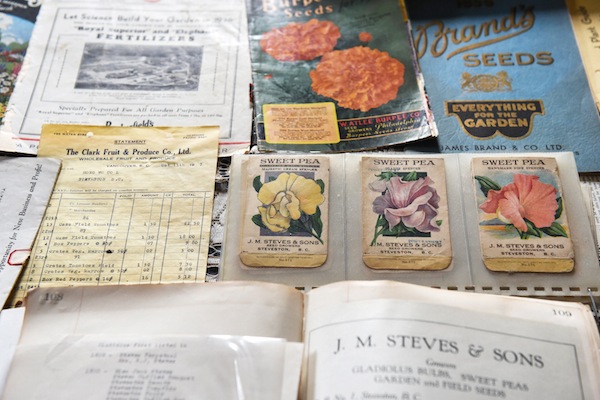
Gosselin noted that many of the collections form the basis for larger conversations about important societal issues. For example, Harold Steves’ collection of heirloom seeds ties to environmental history and issues of sustainability and food security. Prosthetics stimulate discussions about visibility, accessibility, social stigmas associated with disability and prosthetic design developments.

photo - Harold Steves’ collection of heirloom seeds ties to environmental history and issues of sustainability and food security
Harold Steves’ collection of heirloom seeds ties to environmental history and issues of sustainability and food security. (photo by Rebecca Blissett)

For Yosef Wosk, whose circus memorabilia was chosen by MOV curators to feature in the exhibition, collecting represents “an assembly of ideas, feelings, interesting people, travels and experiences so that the whole world, in a way, is a great museum.” He believes that the selection of his circus memorabilia for exhibition was “serendipitous,” as he considers the circus a “metaphor for life … usually a joyous place and sometimes an adventure.”

Wosk has been an avid collector of art and other diverse objects for many years. His 20 different collections encompass paintings, sculptures, photographs, furniture, carpets, lamps, textiles, glass, books (subdivided into 15 to 20 categories), toys and religious articles, including Judaica. He cherishes his collection of Torah scrolls from around the world, including Syria, Yemen, Iraq, Iran, Morocco and Tunisia.

As a child, Wosk collected coins, stamps, marbles and comics, but he is nostalgic in remembering the purchase of his first piece of “real art” at the age of 16. It was a Japanese scroll that he decided was worthy of his entire summer salary as a junior counsellor at Camp Hatikvah.

Over the years, Wosk built up his collection while studying and working in different cities around the world, such as Jerusalem, New York, Toronto, Philadelphia and Boston. As a student in Toronto, he acquired (with the help of his father) an Andy Warhol screenprint, “Ten Portraits of Jews of the Twentieth Century,” which he kept in a cardboard case under his bed.

Perhaps naturally, it was in Jerusalem that Wosk started to collect Judaica. Noting that, “collecting is an external manifestation of inner thoughts, feelings and spirituality,” he regards his Jewish collections, in particular, as an appreciation of Creation. He points out that the first description of G-d in the Torah is as an artist, as Creator. Moreover, the earth, and everything that fills it, is G-d’s collection. As such, Wosk has a profound appreciation for human creativity as an extension of the individual but, ultimately, of G-d. “That is how I feel about the collection, which is part of the world and the universe, which emanates from the Creator,” he said.

Wosk also believes that, as a collector, he has a responsibility to share his prized possessions with others.

“Sharing is as important as the collecting,” he said. “I find that collecting is not just owning, but along with ownership comes responsibility … to the object, the artist and the community.”

Wosk also emphasized, “People shouldn’t be afraid to collect and give it away.” He is a proud patron of the arts, serving on local and national boards of directors for various museums and art organizations (he was a founder of the Jewish Museum and Archives of British Columbia), donating art to hospitals and institutions of higher learning, and lending his collections to different exhibitions. His collection of Judaica has been displayed in Philadelphia and Boston, as well as in Vancouver, including at the Jewish Community Centre of Greater Vancouver’s Sidney and Gertrude Zack Gallery. He hopes to coordinate an exhibition in Israel in the future.

Wosk’s remarkable collections, and his enthusiasm to share his “wealth” with diverse communities, warrants his honorific as a “memory-keeper.” For a man who once worked as a teaching assistant for one of the greatest memory-keepers in history, the esteemed Elie Wiesel, this is perhaps not so serendipitous.

All Together Now: Vancouver Collectors and Their Worlds is at the Museum of Vancouver until Jan. 8, 2017. If you fancy yourself a collector and would like to participate in this exhibition, the MOV invites the public to post pictures of themselves with their collections on social media using the hashtag #mycollectionatMOV. Images will be projected onto a wall of photos. For more information, visit museumofvancouver.ca.

Alexis Pavlich is a Vancouver-based freelance writer.

Format ImagePosted on June 24, 2016June 22, 2016Author Alexis PavlichCategories Visual ArtsTags collectibles, Museum of Vancouver, Wosk
Networking over breakfast

Networking over breakfast

Jonathan Kallner, event speaker and managing partner, KPMG, talks with Eli Joseph, senior account manager, business and personal, RBC Royal Bank, at Schara Tzedeck’s LinkYid networking event June 3. (photo by Baila Lazarus)

There is a theory that you are the average of the five people you hang around with the most. Thus, creating and interacting with a successful network of businesspeople should, over time, increase your own level of success.

With this in mind, Jonathan Kallner, managing partner, KPMG Vancouver, opened LinkYid’s first complimentary career networking breakfast with the topic, How to Unleash the Power of Your Network.

LinkYid is a Congregation Schara Tzedeck program that connects immigrants, professionals and entrepreneurs with mentors, employment and business opportunities that match their potential. They held their first event at KPMG on June 3.

“This topic ties into a core pillar in our strategy [at KPMG], which is community,” said Kallner. “We believe in building networks and helping networks succeed.”

Talking about his own experiences in school, in his job and the industry, Kallner admitted that, when he needed to make major decisions, he turned to his contacts.

“If you nurture the networks, they become your supporters,” he said. But, he added, “I didn’t appreciate how important that was until later in my career. I never realized what a difference there could have been in my life.”

Using Blockbuster as an example of failed relationship-building, Kallner pointed out how successful the video rental company had been, with an outlet in every neighborhood and relationships with everyone in the local community.

“If you wanted to watch a movie, you went to Blockbuster and, in four years, they destroyed it,” said Kallner. “Because they did not maintain the relationships with their customers, they allowed someone else to come in and own that relationship.

“It’s no different in our everyday lives,” he said. “The world can change around you but your relationships can stay constant.”

Kallner outlined four key points in building networks and relationships:

1. Know your goals. Each person needs to establish their own personal plan for their business, looking forward one, two and five years. Focus on the skills you have that you can capitalize on and what you need to develop. Use your networking connections to seek advice and consider it.

“When you’re looking at strengths and weaknesses, be very honest,” said Kallner. People looking to hire want to know that candidates have a good understanding of this, he said.

2. Consider getting a coach or mentor. Many of those who have gone before you in the industry will be willing to share their experiences with you, said Kallner. “They can challenge you to think differently and push your boundaries. They can act as a connector, help you develop your personal goals and work with you to define the next steps in your career.” Mentors will also be candid with you to encourage your business and personal growth.

“I still seek the guidance of mentors,” said Kallner, adding that the mentor or coach will also get value out of the relationship.

3. Build and work your network. Any search for business groups on Meetup will yield dozens of groups you can connect with in the Lower Mainland in any given week, but there are more and less effective ways of working your networks. Talk to new people at each event, said Kallner.

Respect their time and don’t be a salesperson, he added, as the key to networking is building relationships. “Don’t overlook how networks build naturally and don’t rush it,” he advised.

4. Take advantage of social media. While online presence is essential, especially when building your digital networks, there are things to look out for, said Kallner. Select the right platform. LinkedIn is considered the best platform for business operators. Others can be beneficial but you have to manage your brand closely, keep active on the site on a regular basis and make sure your profile is professional.

“Facebook can kill a brand if you’re not careful to be professional with your posts,” he said.

The LinkYid networking session drew students, entrepreneurs and professionals seeking work, looking for new hires or simply to start their relationship-building.

Erez Iancu Ben Haim, an MBA student at Sauder School of Business, was there to start building his connections and discuss his goals with people in the room. Eli Joseph, a senior account manager with RBC Royal Bank, wanted to meet some new people and find new businesses that might be looking for government loans.

“Being in the business world, people come to me if they’re looking for connections, as well,” said Joseph.

In closing his talk, Kallner reminded people of two key takeaways:

  • Follow up after meeting with someone at an event with a personalized invitation to connect.
  • Networking doesn’t only happen at events. It can happen anywhere.

To find out more about LinkYid, visit linkyid.net, email Rachael Lewinski at [email protected] or call 604-736-7607.

Baila Lazarus is a freelance writer and media trainer in Vancouver. Her consulting work can be seen at phase2coaching.com.

Format ImagePosted on June 24, 2016June 22, 2016Author Baila LazarusCategories LocalTags Kallner, KPMG, LinkYid, networking, Schara Tzedeck

Posts pagination

Previous page Page 1 … Page 487 Page 488 Page 489 … Page 650 Next page
Proudly powered by WordPress