Skip to content
  • Home
  • Subscribe / donate
  • Events calendar
  • News
    • Local
    • National
    • Israel
    • World
    • עניין בחדשות
      A roundup of news in Canada and further afield, in Hebrew.
  • Opinion
    • From the JI
    • Op-Ed
  • Arts & Culture
    • Performing Arts
    • Music
    • Books
    • Visual Arts
    • TV & Film
  • Life
    • Celebrating the Holidays
    • Travel
    • The Daily Snooze
      Cartoons by Jacob Samuel
    • Mystery Photo
      Help the JI and JMABC fill in the gaps in our archives.
  • Community Links
    • Organizations, Etc.
    • Other News Sources & Blogs
    • Business Directory
  • FAQ
  • JI Chai Celebration
  • JI@88! video

Recent Posts

  • Story of Israel’s north
  • Sheltering in train stations
  • Teach critical thinking
  • Learning to bridge divides
  • Supporting Iranian community
  • Art dismantles systems
  • Beth Tikvah celebrates 50th
  • What is Jewish music?
  • Celebrate joy of music
  • Women share experiences 
  • Raising funds for Survivors
  • Call for digital literacy
  • The hidden hand of hate
  • Tarot as spiritual ritual
  • Students create fancy meal
  • Encouraging young voices
  • Rose’s Angels delivers
  • Living life to its fullest
  • Drawing on his roots
  • Panama City welcoming
  • Pesach cleaning
  • On the wings of griffon vultures
  • Vast recipe & story collection
  • A word, please …
  • מארק קרני לא ממתין לטראמפ
  • On war and antisemitism
  • Jews shine in Canucks colours
  • Moment of opportunity
  • Shooting response
  • BC budget fails seniors
  • Ritual is what makes life holy
  • Dogs help war veterans live again
  • Remain vital and outspoken
  • An urgent play to see
  • Pop-up exhibit popular
  • An invite to join JWest

Archives

Follow @JewishIndie
image - The CJN - Visit Us Banner - 300x600 - 101625

Category: News

Champions of Jewish values

Champions of Jewish values

Left to right, Dr. Mehmet Oz, Rabbi Shmuley Boteach, Sean Spicer and Ron DeSantis, at the Champions of Jewish Values International Awards Gala in New York on March 8. (photo by Dave Gordon)

What do an American soldier, a former athlete and a former U.S. press secretary have in common? According to the World Values Network (WVN), they are all – in their own way – defenders of the Jewish people and Israel.

The Champions of Jewish Values International Awards Gala took place on March 8 in New York City at the Plaza Hotel. The event was led by well-known rabbi and author of 32 books Shmuley Boteach, director of WVN.

Several awards were given out, honouring individuals who, according to the network, have shown exemplary actions to further the causes of human rights and the defence of Israel in the public forum.

Former Olympian and reality star Caitlyn Jenner was given the Champion of Israel and Human Rights Award.

“I’ve been thinking about the Jewish community, and how it has affected me several times in my life,” she said. Her father, William Jenner, was part of the unit that liberated Buchenwald concentration camp. Later in life, he showed Caitlyn the pictures that still haunt her to this day.

Jenner broke the decathlon Olympic record in Montreal in 1976. In the 1972 Olympics in Munich, a then-22-year-old Jenner witnessed the terror activity from an adjacent dormitory.

About Israel, she said the Jewish state’s example “should be followed, as a nation that has succeeded in dissolving many of the prejudices against the trans and gay communities. It is now celebrated as having the best city in the world for gays – Tel Aviv.”

She added that Israel is one of only 19 countries where members of the trans community can serve in the army.

In an overall message of inspiration, she said, “Our communities have no borders and our love is without borders. Every person in the world deserves to receive dignity.”

The Elie Wiesel Award was posthumously given to Yonatan Netanyahu and Taylor Force. Netanyahu was killed in the line of duty in the 1976 Entebbe rescue, and Force was a U.S. soldier killed by a Palestinian terrorist in Tel Aviv on March 8, 2016, exactly two years prior to the gala event.

During his life, Wiesel, among other things, wrote the book Night, in which he narrates his own experience as a young boy in Auschwitz death camp, as well as more than 35 other publications dedicated to the subject of the Holocaust.

In introducing the award, American television show host Dr. Mehmet Oz noted, “Elie Wiesel saw a spark of dignity in everyone that he met.”

In presenting the award, Elisha Wiesel (Elie’s son), spoke about how the Force family is advocating for the cessation of American aid to the Palestinian Authority until the PA stops financially rewarding terrorist acts. It is through the Forces’ efforts that the Taylor Force Law has been passed by Congress and now only needs a signature by President Donald Trump to become law.

Accepting the awards were Yonatan’s brother, Israeli Prime Minister Binyamin Netanyahu, via a previously recorded video, and Taylor’s father, Stuart, mother, Robbi, and sister, Kristen.

“Elie Wiesel showed such devotion to our people and showed that we control our destiny,” said Netanyahu in his remarks. “Elie spoke to the soul of our consciences. He was a great warrior on the battlefield of conscience, and can inspire many of us on our own quests for justice.”

As for other honours that were given out, Florida congressman Ron DeSantis was given the Falic Family Defender of Israel Award. In his acceptance, DeSantis said he led a trip to Israel last March to look for appropriate sites for the new U.S. embassy in Jerusalem. The embassy is slated to open May 14, coinciding with the 70th birthday of Israel. DeSantis ended his speech by saying, “At least in terms of the embassy we can say, ‘this year in Jerusalem.”’

Sean Spicer, former White House press secretary, was given the Friend of Israel Award. Of Trump, he said, in regard to how the president would treat Israel, “We knew he was going to be a real friend who was going to get results.”

Dave Gordon is a Toronto-based freelance writer whose work has appeared in more than 100 publications around the world.
Format ImagePosted on March 23, 2018March 23, 2018Author Dave GordonCategories WorldTags Caitlyn Jenner, Israel, Judaism, Mehmet Oz, Ron DeSantis, Sean Spicer, Shmuley Boteach, Taylor Force, Yonatan Netanyahu
Gerrer Rebbe’s “tent”

Gerrer Rebbe’s “tent”

Gerrer Chassidim consider the burial place of Rebbe Avraham Mordechai Alter and his son, Rabbi Pinchas Menachem Alter, a holy site in Jerusalem. (photo by Gil Zohar)

Among the many events this spring marking 70 years of Israel’s independence is the yahrzeit of Rebbe Avraham Mordechai Alter, known as the Imrei Emes, who served as the fourth admor (rabbinic sage) of the Gerrer Chassidim from 1905 until his death in Jerusalem on June 3, 1948, during Shavuot.

Since the capital of the nascent Jewish state was under siege during the War of Independence, the rebbe’s disciples were unable to bury their sage in Mount of Olives Cemetery, where the pious have been laid to rest since biblical times. Unwilling to bury their master in the city’s improvised graveyard in the abandoned Palestinian village of Sheikh Bader (today Givat Ram), they instead turned his shtibl (small house of prayer) on Yehosef Shwartz Street near the Machane Yehuda food market into a mausoleum.

The Sfas Emes Yeshiva, which Alter founded in 1925 during a visit to Palestine, and where he lived from 1940 – after escaping Nazi-occupied Poland when his followers paid an enormous bribe to gain his release – has today evolved into one of the most unusual shrines in Jerusalem. His son, Rabbi Pinchas Menachem Alter, the seventh Gerrer Rebbe, also resided in the yeshivah complex and was buried alongside his father in 1996. On the yahrzeits of the two rebbes, thousands of Gerrer Chassidim – who distinguish themselves from other Chassidic groups by placing their peyot (sidelocks) into their skullcaps and tucking their pants into their socks, called hoyzn-zokn – flock to the pilgrimage site.

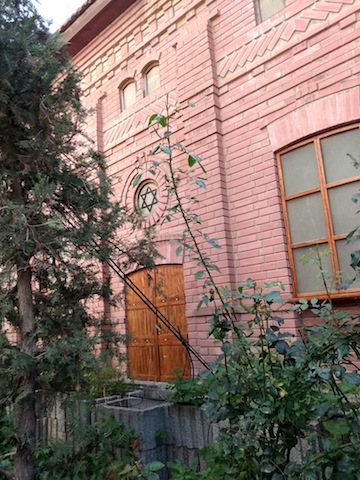
photo - A garden lies to the side of the ohel, and the façade of the adjoining building recalls the original Ger yeshivah in Góra Kalwaria, Poland
A garden lies to the side of the ohel, and the façade of the adjoining building recalls the original Ger yeshivah in Góra Kalwaria, Poland. (photo by Gil Zohar)

The decision to entomb Pinchas Alter, known as the Pnei Menachem, beside his father sparked opposition from the Jerusalem municipality, but the funeral went ahead. A red-brick ohel (tent) was erected over their twin graves, turning the courtyard into a holy site for the Gerrer Chassidim, who constitute the largest such ultra-Orthodox group in the country, numbering more than 100,000 members, who are concentrated in Jerusalem, Bnei Brak and Ashdod.

The ohel includes separate men’s and women’s sections. A garden lies to the side of the ohel, and the façade of the adjoining building recalls the original Ger yeshivah in Góra Kalwaria, Poland – a small town on the Vistula River, 25 kilometres southeast of Warsaw. A partially open roof above the ohel permits ritual impurity from the dead to exit so that kohanim (Jews of the priestly caste) may visit the gravesite.

Toronto businessman and philanthropist Daniel Goldberg wants to build on the fame of Jerusalem’s Gerrer shrine to secure and restore the sect’s historic home in Góra Kalwaria. The name means Mount Calvary or Skull Hill in Polish, explained Goldberg, whose mother’s family came from the area. But the town, called Ger or Gur in Yiddish, was also called Nowa Jerozolima (New Jerusalem), reflecting its holiness for both Jews and Christians.

Goldberg, who together with other Canadian donors has supported the preservation of several historic synagogues in Hungary, views the restoration of Jewish landmarks in Góra Kalwaria as critical to combating antisemitism and acknowledging Poland’s complex role in the Holocaust.

“I am visiting Poland after Pesach and will be meeting with various people from our Jewish community there,” he said. “I have been in contact with the different leaderships, including in Gur. So many communities were wiped out during the war. It is vital that we support our history in such places.”

In 1802, Góra Kalwaria’s “de non tolerandis Judaeis” law prohibiting Jewish settlement was annulled, and Jews became the predominant ethnic group in the town, Goldberg noted. Between 1852 and 1939, the Jewish population tripled, from 1,161 (half of the town’s population) to around 3,600, as Góra Kalwaria became an important Chassidic centre.

When the Nazis invaded Poland in September 1939, they immediately targeted Góra Kalwaria’s Jews. The town’s ethnic German mayor Ewald Jauke banned Jewish residents from engaging in trade, crafts and pigeon breeding. Jews were also forbidden from listening to radio broadcasts. A group of 100 Jews was conscripted daily in front of the town hall for forced labour.

In the spring of 1940, some 400 Jews from Lodz, Pabianice, Aleksandrow, Sierpc, Wloclawek and Kalisz were deported to Góra Kalwaria. That June, a ghetto was established with 3,500 residents. The ghetto was liquidated Feb. 25-26, 1941. About 3,000 Jews were deported to the Warsaw Ghetto, and ultimately murdered in the summer of 1942 in the Treblinka death camp. Only 35 of Góra Kalwaria’s residents survived the war. The Jewish community was never reconstituted after liberation.

For Goldberg, the coming 70th yahrzeit of the Imrei Emes and the controversial amendment to Poland’s 1998 Act on the Institute of National Remembrance by the country’s ruling Law and Justice party, criminalizing the words “Polish Holocaust,” offer an opportunity to celebrate Jews’ deep roots in the country.

Goldberg wants to preserve the physical remains of Góra Kalwaria’s Jewish community. These include the 1903 synagogue building at ulica Pijarskiejj, now used as a shop. Across the street is a metal gate at the yard that marks the home and house of prayer of Rabbi Yitzhak Meir Alter (1798-1866), the founder of the Gerrer dynasty, known as the Chiddushei HaRim, after his primary rabbinic tome by that title. Above the entrance, one can still see the Magen David rosette window depicted in the Gerrer Jerusalem mausoleum.

“I am continuing my efforts [in Góra Kalwaria and elsewhere] despite the discomfort it always causes politically with the local municipalities. No town or city likes to admit to antisemitism,” said Goldberg.

Gil Zohar is a journalist based in Jerusalem.

Format ImagePosted on March 23, 2018March 23, 2018Author Gil ZoharCategories WorldTags Canada, Daniel Goldberg, Gerrer Chassidim, Góra Kalwaria, history, Imrei Emes, Israel, Pnei Menachem, Poland
Israeli horses’ ancient links

Israeli horses’ ancient links

In 2016, under the supervision of Prof. Jodi Magness of the University of North Carolina at Chapel Hill, archeologists excavating at the fifth-century CE Huqoq synagogue found a mosaic floor on which there is an image of an Egyptian soldier and his horse floundering in the Red Sea. (photo by James Haberman)

Who doesn’t have some mental picture of the crossing of the Red Sea? Now, you can check how your subjective image matches the “facts on the ground,” as it were. In the summer of 2016, under the supervision of Prof. Jodi Magness of the University of North Carolina at Chapel Hill, archeologists excavating at the fifth-century CE Huqoq synagogue in Israel’s Lower Galilee found a stunning mosaic floor. Of relevance to the soon-to-be-upon-us Pesach holiday is an image of an Egyptian soldier and his horse floundering in the Red Sea (see Exodus 14:28). The Egyptian has separated from his horse and is about to become a large fish’s dinner.

The horse is not one of the animals that immediately comes to mind when thinking of both ancient and modern Israel. Most people would probably think of camels, donkeys, goats or sheep, rather than horses. Yet, the horse and Israel “go way back.” This history possibly starts at Ubeidiya, a location close to the southern end of the Sea of Galilee. There, Israeli archeologists found a horse bone dating back to the Lower Paleolithic Period. At the Hayonim Cave in Israel’s Galilee region, Israel Antiquities Authority archeologists discovered an image of a horse engraved in limestone, a find that dates back to the Upper Paleolithic Period.

From these and other digs, we can assume Israel’s ancient inhabitants were familiar with the horse. This is confirmed, for example, in the City of David, where archeologists uncovered a horse figurine from the Iron Age II. Indeed, there is concrete evidence that, thousands of years ago, people had already domesticated horses and were using them as a means of transportation. Thus, during the first millennium BCE, the horse was transformed from a yoked animal pulling some kind of wagon or cart to an animal that could be mounted. Archeologists discovered another horse-and-rider pottery set at the Tel Erani excavation in southern Israel, near Kiryat Gat, which dates to the Persian Period. Furthermore, an Achziv (located along Israel’s northern Mediterranean coast) discovery of a clay horse and rider, also dating back to the Iron Age II, indicates that the horse was already being used in battle, as the rider is holding a round shield.

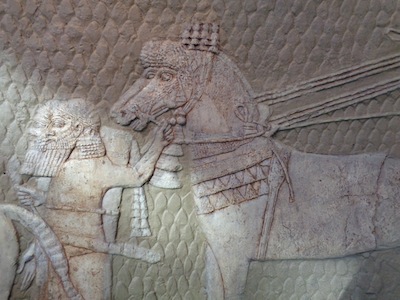
A visual depiction of the Assyrian destruction of the town of Lachish in 701 BCE – the original relief is housed at the British Museum while a copy hangs at the Israel Museum – clearly shows that the conquerors used warhorses. Also at Lachish, archeologists dug up an even older piece crafted from gold. This piece is a plaque from the 13th century BCE, the Late Bronze Age. It depicts a naked goddess, probably Astarte or Anat, standing on a horse.

While on the subject of conquests of ancient Israel and pagan gods, the Hebrews returning from Egypt were instructed not to raise horses nor to return to Egypt to obtain horses (Deuteronomy 17:16). In the later period of the kings, King Josiah took away the horses of the kings of Judah, as “they had given them to the sun.” (II Kings 23:11)

Horses are also mentioned in early administrative documents of ancient Israel. Hence, at Arad in southern Israel, archeologists recovered a list written in ink on pottery. This fourth-century BCE list supposedly details items to be given to a particular person named Qos. The list includes a horse.

photo - A copy of panels depicting the Assyrian destruction of Lachish, part of Israel Museum’s archeology collection. The original panels date to the Late Iron Age, First Temple Period, 1000-586 BCE, and are housed at the British Museum
A copy of panels depicting the Assyrian destruction of Lachish, part of Israel Museum’s archeology collection. The original panels date to the Late Iron Age, First Temple Period, 1000-586 BCE, and are housed at the British Museum. (photo by Deborah Rubin Fields)

Moving to northern Israel, archeologists in the Dan region discovered a unique Aramaic inscription, which was part of a monumental basalt stone slab. (In the ancient world, Aramaic was, for a time, the Near East’s lingua franca of commerce and trade.) The writing, which dates to the ninth-century BCE, commemorates the military victories of Hazael, king of Aram. In the text, the king claims he killed 70 kings who harnessed thousands of chariots and thousands of horsemen (horses).

Probably the earliest literary reference to horses is found in the Book of Genesis (47:17), where it says that, during a famine in Egypt, Pharaoh’s right-hand man, Joseph, gave “bread in exchange for horses.” And, from the report in I Kings 10:26, it seems King Solomon had 400 chariots and 12,000 horsemen. Moreover, there is a legend, possibly originating with the Bedouins, which states that the Queen of Sheba presented King Solomon with a mare named Safanad. All Arabian horses are supposedly descended from this mare. As it happens, Israel’s Arabian Horse Association is today made up of both Jews and Arabs, and the organization’s bilingual website is indicative of the members’ cooperation.

Later rulers of the divided kingdoms of ancient Israel likewise used horses. Thus, at Tel Meggido, the remains of King Ahab’s (869-850 BCE) stables have been discovered. Evidence, however, of ancient stables does not end there. Rock-hewn Crusader stables and water troughs from 1140 CE are still visible at the Tomb of Samuel the Prophet (also called Kever Shmuel ha-Nevi, Nebi Samwil or Mont de Joie). It stands to reason that, instead of returning to their European (or Asian) home countries, the Crusaders and later conquerors of the Holy Land acquired local horses when they needed to resupply their armies.

The horse has continued to importantly figure in Israel’s more modern period. For political and religious reasons, in 1898, Kaiser Wilhelm II (the last German emperor and king of Prussia) presented himself in Jerusalem on a white horse. Less than 20 years later, after the Ottomans had been defeated, Britain’s General Edmund Allenby dramatically rode on horseback to Jerusalem’s Jaffa Gate (but then purposely entered the Old City on foot).

At the end of October 2017, some 200 visiting members of the Australian Light Horse Association reenacted at Beersheva River Park the charge of the Australian Light Horsemen. In this battle, mounted Allied soldiers helped take Beersheva from the Ottomans. In the 100-year commemoration, original First World War uniforms were worn.

Israel’s horse connection continues to this day. Although it is an expensive pleasure, some Israelis ride for enjoyment. Therapeutic riding schools exist for people with special needs. And Israeli police use horses for crowd control.

How to summarize Israel’s long interest in horses? With this Song of Songs (1:9) quote: “I have compared you, my love, to a company of horses in Pharaoh’s chariots.”

The documentary Lachish the Epic was released earlier this year. It can be found on YouTube.

Deborah Rubin Fields is an Israel-based features writer. She is also the author of Take a Peek Inside: A Child’s Guide to Radiology Exams, published in English, Hebrew and Arabic.

Format ImagePosted on March 23, 2018March 23, 2018Author Deborah Rubin FieldsCategories IsraelTags history, horses, Israel, mosaics
Genetics or lifestyle?

Genetics or lifestyle?

Study brings hope for improving our health.

The question of nature versus nurture extends to our microbiome – the personal complement of mostly friendly bacteria we carry around with us. Study after study has found that our microbiome affects nearly every aspect of our health; and its microbial composition, which varies from individual to individual, may hold the key to everything from weight gain to moods.

Some microbiome researchers have suggested that this variation begins with differences in our genes, but a large-scale study conducted at the Weizmann Institute of Science challenges this idea and provides evidence that the connection between microbiome and health may be even more important than we thought.

Indeed, the working hypothesis has been that genetics plays a major role in determining microbiome variation among people. According to this view, our genes determine the environment our microbiome occupies, and each particular environment allows certain bacterial strains to thrive. However, the Weizmann researchers were surprised to discover that the host’s genetics play a very minor role in determining microbiome composition – only accounting for about two percent of the variation between populations.

The research was led by research students Daphna Rothschild, Dr. Omer Weissbrod and Dr. Elad Barkan from the lab of Prof. Eran Segal of the computer science and applied mathematics department, together with members of Prof. Eran Elinav’s group of the immunology department, all at the Weizmann Institute. Their findings, which were published last month in Nature, were based on a unique database of around 1,000 Israelis who had participated in a longitudinal study of personalized nutrition.

Israel has a highly diverse population, which presents an ideal experimental setting for investigating the effects of genetic differences. In addition to genetic data and microbiome composition, the information collected for each study participant included dietary habits, lifestyle, medications and additional measurements. The scientists analyzing this data concluded that diet and lifestyle are by far the most dominant factors shaping our microbiome composition.

If microbiome populations are not shaped by our genetics, how do they nonetheless interact with our genes to modify our health? The scientists investigated the connections between microbiome and the measurements in the database of cholesterol, weight, blood glucose levels and other clinical parameters. The study results were very surprising: for most of these clinical measures, the association with bacterial genomes was at least as strong as, and in some cases stronger than, the association with the host’s human genome.

According to the scientists, these findings provide solid evidence that understanding the factors that shape our microbiome may be key to understanding and treating many common health problems.

“We cannot change our genes,” said Segal, “but we now know that we can affect – and even reshape – the composition of the different kinds of bacteria we host in our bodies. So, the findings of our research are quite hopeful: they suggest that our microbiome could be a powerful means for improving our health.”

The field of microbiome research is relatively young; the database of 1,000 individuals collected at the Weizmann Institute is one of the most extensive in the world. Segal and Elinav believe that, over time, with the further addition of data to their study and those of others, these recent findings may be further validated, and the connection between our microbiome, our genetics and our health will become clearer.

Elinav’s research is supported by the Adelis Foundation; Andrew and Cynthia Adelson; the estate of Bernard Bishin; Valerie and Aaron Edelheit; the European Research Council; Jack N. Halpern; the Leona M. and Harry B. Helmsley Charitable Trust; the Bernard M. and Audrey Jaffe Foundation; the Else Kroener Fresenius Foundation; the Park Avenue Charitable Fund; the Lawrence and Sandra Post

Family Foundation; the Rising Tide Foundation; Vera and John Schwartz; Leesa Steinberg; and Yael and Rami Ungar. Elinav is the incumbent of the Sir Marc and Lady Tania Feldmann Professorial Chair.

Segal’s research is supported by the Adelis Foundation; Judith Benattar; the Carter Chapman Shreve Family Foundation; the Crown Human Genome Centre, which he heads; the European Research Council; Jack N. Halpern; the Else Kroener Fresenius Foundation; Donald and Susan Schwarz; and Leesa Steinberg.

For more on the work being done at the Weizmann Institute, visit wis-wander.weizmann.ac.il.

Format ImagePosted on March 23, 2018March 23, 2018Author Weizmann InstituteCategories IsraelTags genetics, health, microbiome
מדד השחיתות

מדד השחיתות

מדד המדינות המושחתות בעולם: קנדה במקום השמיני וישראל רק במקום השלושים ושתיים. (צילום: Cynthia Ramsay)

בימים האחרונים התפרסם מדד המדינות המושחתות בעולם לשנת 2017. המדד כולל מאה ושמונים מדינות שנסקרו, ומיקומן נקבע על פי השחיתות במגזר הציבורי, באמצעות שלושה עשר מקורות מידע משנים עשר מכוני מחקר עצמאיים ובלתי תלויים.

מהתוצאות עולה כי קנדה נמצאת במקום השמיני והגבוה בקרב המדינות הכי פחות מושחתות. ואילו ישראל איך לא לאור פרשות השחיתות הרבות שמאפיינות אותה, ובעיקר את ראש הממשלה, בנימין נתניהו, נמצאת מאחור במקום השלושים ושתיים.

להלן העשירייה הראשונה של המדינות הכי פחות מושחתות: ראשונה – ניו זילנד, שנייה – דנמרק, שלישית – פינלנד, רביעית – נורבגיה, חמישית – שוויץ, שישית – סינגפור, שביעית – שבדיה, שמינית – קנדה, תשיעית – לוקסמבורג ועשירית – הולנד.

העשירייה השנייה: אחד עשרה – בריטניה, שתיים עשרה – גרמניה, שלוש עשרה – אוסטרליה, ארבע עשרה – הונג קונג, חמש עשרה – איסלנד, שש עשרה – אוסטריה, שבעה עשרה – בלגיה, שמונה עשרה- ארצות הברית, תשעה עשרה – אירלנד ועשרים – יפן.

העשירייה השלישית: עשרים ואחד – אסטוניה, עשרים ושתיים – איחוד האמירויות הערביות, עשרים ושלושה – צרפת, עשרים וארבעה – אורגוואי, עשרים וחמשה – ברבדוס, עשרים וששה – בהוטן, עשרים ושבעה – צ’ילה, עשרים ושמונה – איי בהאמה, עשרים ותשעה – פורטוגל ושלושים – קטאר.

אחריהן במקום השלושים ואחד טיוואן, במקום השלושים ושתיים ישראל, במקום השלושים ושלושה ברוניי, במקום השלושים וארבעה בוטסואנה ובמקום השלושים וחמשה פולין.

ערים מתקדמות הופכות אשפה למשאב: ונקובר פועלת להיות העיר הירוקה בעולם

ערים רבות בעולם פועלות בשנים האחרונות לחסוך את העלות הגבוהה של סילוק פוסלת האשפה, הנוצרת בהן מדי יום בכמויות ענק. הן פועלות להפחית את כל צורות הפסולת שלהן, ולהשתמש בפסולת עד כמה שאפשר כמאשב, כך שהיא תהפוך לחומר גלם אחר. כך מדווח אתר הידען מישראל המפרסם מידע בתחום המדע והטכנולוגיה.

הערים בעולם הופכות למאוכלסות יותר וראשי הערים מחוייבים לשאת באחריות למצוא ולפתח פתרונות להרי הזבל שנוצרים בהן. הנוף העירוני הוא כיום הסביבה, שבה מתרכזים האתגרים הכרוכים בניהול חיים אנושיים מורכבים. בערים מתבזבות כמויות גדולות של אנרגיה, פחמן דו-חמצני, מזון, מים, מרחב וזמן. העירייות יכולות לפתור מספר בעיות בעת ובעונה אחת, ולהבטיח לתושבים, הפחתה משמעותית של חלק מהפסולת, תוך הפיכתה למשאב בעל יתרונות כלכליים.

כיום אין בהזרמת הפסולת למי הביוב פתרון סופי ויש להפחית מראש את הפסולת שנוצרת בערים, ולהשתמש בחלק גדול ממנה, לשימושים יעילים יותר. פעילות זו נקראת “כלכלה מעגלית”.

באתרי הטמנה האשפה של ונקובר לוכדים את גז המתאן הנפלט מהאשפה הרבה, ובחום שנוצר משריפתו משתמשים לחימום חממות בסמוך להם, בהן גדלות עגבניות. זו דוגמא טובה של יצור אררגיה חיובית מאשפה.

ונקובר שפועלת להיות העיר הירוקה ביותר בעולם, מחלקת לתושבים מיכלים נפרדים לאשפה רגילה, לפסולת אורגנית (כמו שאריות מזון, ענפים וגזם), לפסולת זכוכית, פסולת נייר, פסולת פלסתיק ועוד. עיריית ונקובר שמצפה מאזרחי העיר שיפעלו בהתאם עם הפסולת לסוגייה כמתבקש, שולחת מעת לעת פקחים לבדוק שזה אכן נעשה.

מן הפסולת האורגנית העירייה מפיקה את גז המתאן, וכן מוצרים מוצקים שיכולים לשמש לדישון הקרקע. לפתרונות אלה מספר יתרונות בעת ובעונה אחת: הם חוסכים לעיר הוצאות על אנרגיה, הם מפחתים משמעותית את הצורך בהטמנת פסולת באתרי האשפה וכן הם מועילים לענף החקלאות.

Format ImagePosted on March 21, 2018March 14, 2018Author Roni RachmaniCategories עניין בחדשותTags Canada, corruption, environment, Israel, Vancouver, waste reduction, הסביבה, הפחתת פסולת, השחיתות, ונקובר, ישראל, קנדה
Winnipeggers reach to Israel

Winnipeggers reach to Israel

Samara Carroll, second from the left, with Dawit Demoz, right, and members of his host family – Sunita and her daughter Persia. (photo from Samara Carroll)

Soon after Samara Carroll returned from a yearlong program in Israel, she took action to help African asylum seekers in Israel come to Canada.

Carroll grew up in Winnipeg, went to Talmud Torah and then to Gray Academy. She was involved in many aspects of the Jewish community growing up, including with B’nai B’rith Youth Organization, leading trips to Israel, and attending Camp Massad for 17 years (for two of which she was the camp director).

In 2012, Carroll was accepted to be the first Canadian participant of the New Israel Fund Social Justice Fellowship. “This fellowship gives you the opportunity to choose an Israeli nonprofit and work there for a year,” Carroll told the Independent.

“I chose ASSAF – Aid Organization for Asylum Seekers and Refugees – located in south Tel Aviv. I worked as a community organizer, activist and counselor, supporting families who had fled, mostly from Eritrea and Sudan, and were dealing with the trauma related to their past experiences and the ongoing challenges of being in Israeli society.”

During her time at ASSAF, Carroll heard hundreds of gut-wrenching stories, but also learned many things from the asylum seekers with whom she worked.

“The Israeli government does not have a proper process to assess whether or not someone is an asylum seeker,” said Carroll. “So, instead of creating a system, they have created policies that make life extremely difficult for asylum seekers…. They do not have basic access to healthcare, proper housing, employment or education. And, they face significant racism, directly from the Israeli government. They have been referred to as a ‘cancer.’

“The Netanyahu government claims that the asylum seekers have come to Israel for employment opportunities, but you only have to hear one story from an asylum seeker about their experience facing genocide and dictatorship in their country of origin – leaving behind everything they knew, being smuggled, human trafficked and tortured by smugglers in Sinai and then arriving in a foreign country – to understand that they are fleeing desperate situations.

“When you ask many asylum seekers where they’d want to be, they say ‘back home,’ but they cannot go back home,” Carroll said, summing up her belief using a quote from writer Warsan Shire: “You have to understand no one puts their children in a boat unless the water is safer than the land.”

After her year in Israel, Carroll decided to pursue a master of social work degree at the University of Toronto. About six months after she had arrived in Toronto, she was approached by Dawit Demoz, an Eritrean asylum-seeking man who was an activist in Israel, about giving asylum seekers more rights in Israel.

“He approached me, asking if I would sponsor him to Canada,” explained Carroll. “He felt that, although he loved the community he had established in Israel – his Israeli friends, the food and the culture – the policies of the Israeli government were just getting worse and he knew he had to try to leave the country if he ever wanted freedom.

“I agreed to sponsor him and did so through a SAH (Sponsorship Agreement Holder). The sponsorship process is detailed, but is very manageable and I believe more people would be open to sponsoring asylum seekers if they understood this.”

photo - Samara Carroll and Dawit Demoz
Samara Carroll and Dawit Demoz. (photo from Samara Carroll)

Demoz arrived in Toronto in March 2016. “He says this is the first time in his life he has felt free,” said Carroll. “He studies psychology at York University, works as an interpreter for a refugee organization, led canoe trips through Algonquin Park as a counselor last summer, and worked as a counselor at the Heart to Heart Program through Camp Shomria. He also plays soccer on a team, hosts Eritrean dinners for his many Jewish friends, and enjoys life.

“Five of our friends have submitted a Group of Five sponsorship to bring his mother [who he hasn’t seen in 10 years] to join him in Toronto,” said Carroll.

Following her example, Carroll’s parents, Sharon Chisvin and Marshall Carroll, have sponsored an Eritrean couple with the support of a local church-based sponsorship agreement agency, Jewish Child and Family Service Winnipeg and donations from friends, family and community members. The couple – Tsege and Kidane – arrived in Winnipeg in May 2016.

“They are generous, wonderful people and have created a strong community for themselves in Winnipeg, and they also support other newly arrived asylum seekers,” said Carroll. “While it is clear that you can positively shape someone’s life who has never experienced freedom before, you do not know how much they will positively impact your life.”

According to Carroll, the situation for asylum seekers in Israel has worsened since 2016. Prime Minister Binyamin Netanyahu has signed an order to deport asylum seekers from Israel to third-party countries, such as Uganda and Rwanda, she said. “This is a human rights violation, as we do not know what is waiting for them in these new countries – countries they have no connection to. Men who have already been deported there have been given no status or rights.”

For her part, Chisvin has started working with Canadians Helping Asylum Seekers in Israel (CHAI), which she described as “a grassroots group formed in Toronto in response to Netanyahu’s deportation order. It is primarily made up of Toronto Jewish activists who feel deeply that Israel’s intent to deport 38,000 African asylum seekers to third countries – and to certain suffering – is a strict violation of Jewish values, history and memory. This sentiment has been shared by 20,000 Israelis who protested against the deportation in Tel Aviv [recently], myriad Israeli rabbis, teachers, psychiatrists, El Al pilots and authors, as well as Irwin Cotler, Alan Dershowitz, the ADL [Anti-Defamation League], HIAS [Hebrew Immigrant Aid Society] and many other individuals and agencies.”

In Toronto, there is growing group of support for CHAI, and Chisvin is working to create a similar group in Winnipeg and beyond. Its goals, she explained, include raising awareness within the Jewish community about the deportation; encouraging people to ask the Israeli government to rescind its deportation order and implement a humane strategy for refugees and asylum seekers; appealing to the Canadian government to pressure the Israeli government to rescind the deportation order and work together on a solution; and encouraging people to commit to private refugee sponsorships.

“I have been assisted in my efforts, helped by a handful of people here in Winnipeg, who are helping me raise awareness in the community about the issue – urging others to speak up and fundraise for the refugees I have, and am in the process of sponsoring,” said Chisvin.

Further to that, Chisvin is in the early stages of organizing a community event to raise awareness about the issue and to explain how and why Canadian Jews should be moved by the plight of African asylum seekers who are at risk of being deported or indefinitely detained, and how and why they should commit to help sponsor some of them to Canada as refugees.

“The best solution, of course, is for Israel to rescind its deportation order, properly process the refugee claims of the asylum seekers, grant them refugee status, and all the rights inherent in that status,” said Chisvin. “But, if Israel doesn’t rescind the order, it is incumbent on Canadian Jews to lobby their government to increase the number of African asylum seekers it brings to Canada and to commit to privately sponsor African asylum seekers to Canada.”

There are many other ways to become involved, including supporting sponsors with money to help settle asylum seekers, provide housing and employment opportunities – as well as just being open and generous with newcomers. For more information, email [email protected] or visit facebook.com/canadianshelpingasylumseekersinisrael or letushelpil.org/canada.html.

“Israel needs to deal with the asylum seeker situation in their country and not force out people who have already experienced unspeakable trauma to a third country that will again violate their human rights,” said Carroll. “Our message and the message of many Jewish communities now is, ‘Do not deport. Let us help.’”

Rebeca Kuropatwa is a Winnipeg freelance writer.

Format ImagePosted on March 16, 2018March 15, 2018Author Rebeca KuropatwaCategories WorldTags asylum seekers, Canada, human rights, immigration, Israel, Samara Carroll, Sharon Chisvin
A record marathon

A record marathon

Jerusalem Marathon winner Kipkogey Shadrack (No. 1) led the field from the start. (photo from Ashernet)

photo - The half-marathon gets underway
The half-marathon gets underway. (photo from Ashernet)

More than 35,000 runners, including some 4,000 from 72 countries outside Israel, participated March 8 in this year’s Jerusalem Marathon – the largest to date. The winner of the main event was 27-year-old Kenyan runner Kipkogey Shadrack, who completed the course in 2:21.26. Participants set off opposite the Israel Museum in slightly overcast, but dry, weather. Many of the city’s streets were closed from 5:30 a.m. and scheduled to reopen at 2:30 p.m. There were five other courses apart from the 42.2-kilometre main event: a half-marathon, a 10k, a 5k, a family race (1.7 km) and a community race (800 metres) for people with special needs.

Format ImagePosted on March 16, 2018March 15, 2018Author Edgar AsherCategories IsraelTags Israel, Jerusalem, marathon
משבר כלכלי גדול?

משבר כלכלי גדול?

האם קנדה עומדת לפני משבר כלכלי גדול לאור מה שמתרחש בענף הנדל”ן? (צילום: Cynthia Ramsay)

יש סיכוי סביר שקנדה תתמודד עם משבר כלכלי חריף בקרוב לאור מה שמתרחש בענף הנדל”ן המקומי. כך מעריכים אנליסטים שעוקבים מקרוב אחר מה שקורה בכלכלה הקנדית. הם מציינים כי לאור החוב הגדול של משקי הבית בקנדה, המדינה הצפונית בפתחו של משבר נדל”ן גדול. זאת לפני שאר קבוצת המדינות בעולם המפותח.

האנליסטים מסבירים כי מחירי הנדל”ן לא מפסיקים לעלות בשנים האחרונות, בעיקר באזורים החמים – שהם ונקובר וטורונטו. גם צינון המחירים שעובר לאחרונה על בתים בשתי הערים המובילות בקנדה, לא משנה את המגמה המסוכנת.

אך יש לזכור כי מחירי הנדל”ן בקנדה עלו בשיעור הרבה יותר גבוה מהעלייה בשכר העובדים, כך שהפער להשגת בתים ודירות הלך וגדל. במקביל לאור הריבית הנמוכה במשק מחירו של האשראי נמוך במיוחד, והיה קל להשיג משכנתאות נושאות ריביות נמוכות לרכישת נדל”ן. זאת ועוד: לא היה עד כה פיקוח על כסף זר המגיע לקנדה עבור רכישת נדל”ן. כך שתושבים זרים ומטבע הדברים ברובם סינים, רכשו נדל”ן בכמויות גדולות וכמעט בכל מחיר. הסינים מאמינים כי השקעה בנדל”ן בקנדה ובעיקר בוונקובר – היא המקום הבטוח “להחנות” בו את כספם, ועדיף לאין שיעור על ביצוע השקעות בסין. אין זה מפתיע לכן שוונקובר נחשבת לעיר השניה בעולם בחוסר האפשרות לרכוש נדל”ן בהשוואה לשכר העובדים. הראשונה איך לא היא הונג קונג.

אך כעת לאור עלייה ולו הקטנה במחירי האשראי במשק הקנדי (מאז חודש יולי אשתקד הריבית במשק עלתה ל-1.25%), מתחיל הלחץ על רוכשי המשכנתאות לעשות את שלו. והיקף האשראי הזמין במשק הולך וקטן. כבר ידוע כי בטורונטו נרשמה בחודשים האחרונים ירידה משמעותית במחירי הנדל”ן, ובביקושים לרכישת נדל”ן. למשל בחודש ינואר נרשמה ירידה של כ-22% במחירות, לעומת אשתקד. מדובר בירידה החדה ביותר מזה תשע שנים.

האנליסטים מציינים עוד כי משכנתאות רבות בקנדה אינן מבוטחות בחברות הביטוח, כך שהסיכון להתמוטטות ענף הנדל”ן ועימו הכלכלה המקומית, הולך וגדל. אם בשנת 2014 כ-60% מהמשכנתאות שבידי הציבור לא היו מבוטחות, אשתקד גדל היקפן כבר לכ-75%. בוונקובר עצמה אחוז המשכנתאות הלא מבוטחות אף גבוה יותר ועומד כיום על לא פחות מכ-90%!

מה שמדאיג במיוחד הוא שיותר ויותר נשמעים באוויר מושגים של מכירות משכנתאות לצד שלישי, ו”משכנתאות שקריות”, מושגים שהובילו את המשבר הנדל”ן הגדול של ארה”ב בשנת 2008. וזה גרר את כל העולם למשבר פיננסי החריף ביותר מאז שנת 1929.

עוד סממן למשבר אפשרי בקנדה הוא מצבה של חברת המשכנתאות בסאב-פריים ‘הום קפיטל’. החברה נקלעה למצב כספי קשה בקיץ אשתקד. רק המיליארדר האמריקני וורן באפט, נחלץ להצילה לאחר שהעביר לה מימון גבוה בהיקף 2.4 מיליארד דולר.

בראשית השנה הממשלה הקנדית החליטה על הנהגת חוק פדרלי חדש, שמקשיח שוב את התנאים לקבלת משכנתאות. מעתה על רוכשי המשכנתאות להוכיח כי הם יכולים לעמוד בתשלומים – גם עם הרבית במשק תמשיך לעלות. הפעם מדובר בתנאי שיקשה מאוד על רבים לזכות במשכנתאות. גם זה לא מבשר טובות ויתכן והביקושים לנדל”ן יחלשו ברחבי המדינה. לאור החוק החדש רבים ניסו לרכוש נדל”ן אשתקד עם משכנתאות זולות וללא מגבלות. לכן שנת 2017 הייתה השנייה החזקה ביותר מבחינת היקף מכירות הנדל”ן בקנדה, וגם המחירים לא הפסיקו לעלות. ודצמבר יצויין כי רמת המכירות הגיע לשיא. כך יש שרואים משבר בפתח ויש שטוענים לא יהיה.

Format ImagePosted on March 14, 2018March 14, 2018Author Roni RachmaniCategories עניין בחדשותTags Canada, financial crisis, mortgages, real estate, הנדל"ן, משבר פיננסי, משכנתאות, קנדה
Team Kosher at work

Team Kosher at work

Team Kosher are Marat Dreyshner and Barbi Braude. (photos from Dreyshner and Braude, respectively)

Within three months of its launch, more than 700 people in the Greater Vancouver area had signed up to receive Team Kosher Vancouver’s weekly e-publication. The people behind the initiative, Barbi Braude and Marat Dreyshner, say they’re just getting started.

The weekly newsletter primarily features information on kosher products available at the Marine Drive location of Real Canadian Superstore. It highlights specials and new products, and includes community announcements and recipes.

“This is a community-based service,” said Braude. “We would like to use our newsletter to inform the community of events as well as using it as an educational tool about kashrut.”

Braude maintains that people think keeping kosher is difficult and expensive and Team Kosher wishes to change people’s minds by showing them the plentiful, affordable and healthy options available at Superstore. “It’s easy to know what’s in the store with this weekly newsletter,” she said.

Before the e-initiative, Dreyshner – who works at the Marine Drive location – said he spent hours every week answering individual inquiries via text, phone and email. “I wanted a way to reach the community as a whole rather than answering individual questions and, after several conversations with Barbi, Team Kosher was born.”

Dreyshner has been the bakery and grocery supervisor for kosher products at Superstore for several years. He orders the products, acts as mashgiach (kashrut supervisor) and produces a line of freshly baked goods – “I’m very proud of my hand-rolled sourdough bagels that have been at Superstore for a number of years now,” he said.

Ensuring that the kosher section – which is, coincidentally, in Aisle 18 – is stocked with the products people want is a complicated task. Dreyshner collaborates with several vendors in Eastern Canada, New York and Israel to get the products in and personally stocks the shelves. He said the support of former store manager Remo Mastropieri and current store manager Carlo Fierro has enabled the kosher program at the Marine Drive Superstore to grow and thrive.

The number and variety of products continues to increase, especially around the holidays. Braude said the store devotes a section right at the entrance to special holiday food. At Purim, there was a selection of hamantashen and she is anticipating more than 200 products for Passover.

To reach more Jews, Dreyshner advises other Loblaws-owned stores in Metro Vancouver on what kosher products to carry. But the local Jewish community is not the only target for this team.

“We have reached out to the Seventh Day Adventists and are looking at vegan associations. We provide a service to kosher visitors and others with dietary challenges,” explained Braude.

She said that, because kashrut supervision is an extra level of oversight, many people feel kosher food is safer, healthier and of higher quality. Many of the products that come from Israel meet the needs of vegans and, she said, when products are labeled parve, those with dairy issues can rest assured the item is dairy-free.

As Team Kosher continues to grow its database and reaches more people, Dreyshner and Braude want feedback from the community.

“I stress to people that they can reach out to me to make sure we have products at the store they want instead of making an unnecessary trip to find their favourite products out of stock,” said Dreyshner.

“We care about the Jewish community and wanted to work to get the word out that Superstore is making a huge effort to bring our community high-quality, specialty kosher products,” said Braude. “Superstore is very involved with a variety of events in our community and the whole community needs to appreciate that because we all benefit.”

With Passover approaching, Dreyshner added, “We look forward to continuing to provide the best resource for kosher food and holiday specialties.”

For more information or to sign up for the Team Kosher weekly newsletter, contact [email protected], follow them on Instagram or sign up with Kosher Chef on Facebook.

Michelle Dodek is a freelance writer living in Vancouver.

Format ImagePosted on March 9, 2018March 7, 2018Author Michelle DodekCategories LocalTags Barbi Braude, kashrut, Marat Dreyshner, Superstore, Team Kosher
Alberta’s Jewish home

Alberta’s Jewish home

On the 14th floor of Edmonton’s Our Parents’ Home, one can enjoy panoramic views. (photo from OPH)

In 2015, Edmonton opened Our Parents’ Home (OPH), still the only kosher seniors home between Winnipeg and Vancouver. OPH offers 80 independent living suites and 50 Alberta Health Services supportive-living units.

Lesley Jacobson assisted Irving Kipnes on the project for more than a decade, until recently retiring.

Jacobson grew up in Sydney, Australia. She made her way to Calgary in the early 1970s, a place she called home for 27 years, before moving to Edmonton some 20 years ago. “I was always involved in [Jewish] federations in some way or the other,” she told the Independent.

About 12 years ago, Jacobson began working for Delcon Development, which was founded by Kipnes.

“Irv is one of the major proponents of this [OPH] project, and has been on the committee working to develop this facility for over 20 years,” said Jacobson.

The project was incorporated as a nonprofit organization under the Society Act of Canada in 1996, and obtained a charitable number from Revenue Canada that same year.

“It wasn’t until about a dozen years ago, after fundraising and much discussion about what the project should entail that the committee determined to move ahead,” said Jacobson. “Irv took the lead in that, and started investigating sites and plans seriously.”

The committee included Jewish community members who felt it was important that Edmonton have a facility that caters to the needs of Jewish seniors.

It took several false starts before a site was secured, detailed drawings were developed and a $6 million grant was secured under the Affordable Supportive Living Initiative of the Alberta government at the time. Construction began in 2012 in a prime location on Jasper Avenue, at the corner of 119th Street, next door to Beth Shalom Synagogue.

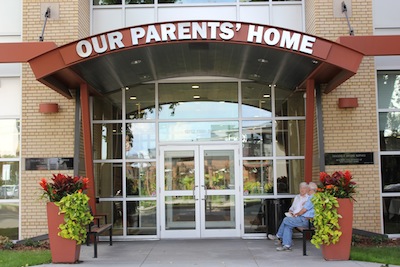
photo - Our Parents’ Home in Edmonton opened in 2015
Our Parents’ Home in Edmonton opened in 2015. (photo from OPH)

The original name chosen was the Hebrew, Beit Horim, which means Our Parents’ Home. “Once we started building and dealing with contractors, banks, etc. … many of the non-Jewish professionals who we were working with had trouble with the pronunciation…. So, we dropped the Beit Horim and just became Our Parents’ Home,” said Jacobson.

While the residence caters to Jewish seniors wanting a place to live where they can keep kosher, the home does offer menu options for people of all religions and has a non-kosher kitchen as well.

At press time, there were 17 independent living suites available (one- and two-bedroom apartments), while the supportive-living space – the units overseen by Alberta Health Services – was running at full capacity.

“They have a two-year waiting list of people trying to get into the supportive-living space,” said Jacobson. “If someone needs to be in assisted living, wants to be at OPH and they are Jewish, we try to get them to the top of the list. But, we have no control over that, because it’s mandated and controlled by Alberta Health Services…. On the independent living side of things, people are self-sufficient. The rent includes 20 meals per month, so people have that option … while those living in supportive care are provided with all meals and snacks.”

The home’s 50 supportive-living units cover three floors, which are staffed by care personnel 24/7. The two memory care floors are secured, so residents cannot leave those levels unless accompanied by someone with a fob. A third floor is for residents in need of care but with no memory issues.

Since the facility is open to the general public, regardless of religion, there are varied faith-based offerings. While there is a rabbi-led Shabbat service offered on the third Friday of each month, there is also hymn singing once a month led by a non-Jewish chaplain and a variety of other programs.

“We had beautiful seder [last] year and several non-Jewish residents of our community came, because they were interested,” said Jacobson. “People can come to whatever program they wish.”

Jacobson, while not on staff at OPH, worked with the staff to ensure the place became all that it was intended to be by the other committee members.

“It was exciting to be on the committee designing the building, to sit with the architects and interior designers,” said Jacobson. “We chose designs and fabric for the furniture, picked colours and selected the china and silverware. It was a pleasure to facilitate meetings with such dedicated and enthusiastic board members.”

According to Jacobson, when you walk into the OPH building, “it’s like walking into a boutique hotel. It doesn’t look like an old folks’ building. We have modern art on all the walls and, from the common rooms on the 14th floor, one can enjoy panoramic views of downtown Edmonton and the beautiful river valley. You walk into the dining room and it’s like walking into a first-class restaurant … linens on the tables to complement the china – no paper napkins.

“Seniors come here to live, not to die,” she stressed. “During the summertime, we take people from the memory care floors to walk in the neighbourhood, through the green streets. There are many activities designed to physically, socially and intellectually stimulate our memory care residents.

“Our independent residents live the lives they’ve always lived – they go to the opera or ballet, the gym, to their friends and to family. If they need a ride, we have a car that will take them. They live independent lives and, as a plus, enjoy all the extra activities provided – the book club, bridge club, fitness room, movies, social programs, etc.

“The people who have been involved are to be commended for their vision and enthusiasm,” said Jacobson. “Special credit needs to go to Tulane Rollingher, who conceived the idea in the very beginning, way back in the 1990s, of having a Jewish home. She was the very first person to start getting this group together.”

Rebeca Kuropatwa is a Winnipeg freelance writer.

Format ImagePosted on March 9, 2018March 7, 2018Author Rebeca KuropatwaCategories NationalTags Alberta, assisted living, Beit Horim, healthcare, Lesley Jacobson, Our Parents’ Home, seniors

Posts pagination

Previous page Page 1 … Page 190 Page 191 Page 192 … Page 322 Next page
Proudly powered by WordPress