Skip to content
  • Home
  • Subscribe / donate
  • Events calendar
  • News
    • Local
    • National
    • Israel
    • World
    • עניין בחדשות
      A roundup of news in Canada and further afield, in Hebrew.
  • Opinion
    • From the JI
    • Op-Ed
  • Arts & Culture
    • Performing Arts
    • Music
    • Books
    • Visual Arts
    • TV & Film
  • Life
    • Celebrating the Holidays
    • Travel
    • The Daily Snooze
      Cartoons by Jacob Samuel
    • Mystery Photo
      Help the JI and JMABC fill in the gaps in our archives.
  • Community Links
    • Organizations, Etc.
    • Other News Sources & Blogs
    • Business Directory
  • FAQ
  • JI Chai Celebration
  • JI@88! video

Recent Posts

  • Zionism wins big in Vegas
  • Different but connected
  • Survival not passive
  • Musical celebration of Israel
  • Shoppe celebrates 25 years
  • Human “book” event
  • Reclaiming Jewish stories
  • Bema presents Perseverance
  • CSS honours Bellas z”l
  • Sheba Promise here May 7
  • Reflections from Be’eri
  • New law a desecration
  • Resilient joy in tough times
  • Rescue dog brings joy
  • Art chosen for new museum
  • Reminder of hope, resilience
  • The national food of Israel?
  • Story of Israel’s north
  • Sheltering in train stations
  • Teach critical thinking
  • Learning to bridge divides
  • Supporting Iranian community
  • Art dismantles systems
  • Beth Tikvah celebrates 50th
  • What is Jewish music?
  • Celebrate joy of music
  • Women share experiences 
  • Raising funds for Survivors
  • Call for digital literacy
  • The hidden hand of hate
  • Tarot as spiritual ritual
  • Students create fancy meal
  • Encouraging young voices
  • Rose’s Angels delivers
  • Living life to its fullest
  • Drawing on his roots

Archives

Follow @JewishIndie
image - The CJN - Visit Us Banner - 300x600 - 101625

Category: News

Holy colour of blue

Holy colour of blue

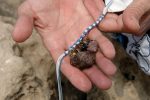
A tallit’s tzitzit with threads dyed in tekhelet blue produced from Murex trunculus snails. (photo from Ptil Tekhelet/Eugene Weisberg)

There’s only one thing missing from the comprehensive temporary exhibit Out of the Blue, which opened June 1 at the Bible Lands Museum Jerusalem (BLMJ) – the reek of the workshops along the Mediterranean coast of Phoenicia and Israel that produced the prized dyes known in antiquity as tekhelet and argaman.

Researchers at the Jerusalem-based foundation Ptil Tekhelet (Blue Thread) maintain that some 8,000 Murex trunculus mollusks were needed to produce a single gram of the luxury pigment. A demonstration of the malodorous dyeing process was carried out – in the garden of the museum – with one of the marine gastropods. A person can only imagine the stink of many thousands of the rotting sea creatures.

The Out of the Blue exhibit documents the significance of tekhelet, together with the Tyrian purple called argaman in the Torah, from antiquity to the present. Not coincidently, the exhibit opened in honour of Israel’s 70th anniversary. It traces the heavenly blue from the time it was a colour revered by the ancient Israelites and other early peoples of the Near East to its use for Israel’s national flag.

“This special exhibition looks at the magnificence as well as the significance of the colour blue in the ancient world, and ties the blue dyed threads mentioned in the Bible and extra-biblical texts to the very design of the flag of the state of Israel today. BLMJ is proud to be the one museum in the world that highlights the relevance and continuity of the roots of civilization in this region and their impact on our world today in a universal and non-sectarian way,” said museum director Amanda Weiss.

Out of the Blue spotlights ancient Near East cultures’ fascination with the colour as a symbol of divinity. In the Egypt of the pharaohs, Mesopotamia and Canaan, lapis lazuli imported at great cost from Afghanistan was used for cultic purposes.

The BLMJ exhibit continues with the lucrative imperial purple dye industry of the ancient Phoenicians, whose name means the “Purple People.”

But, for this reviewer, the core of the exhibit deals with the dyeing of sky blue tzitziyot (ritual fringes affixed to Jews’ tallitot, prayer shawls). In the eighth century, following the Arab takeover of the Levant, that technology was lost. As a result, Jews were compelled to wear white rather than blue ritual fringes on their prayer garments. Research to rediscover the lost dyeing process of the biblical commandment became synonymous with Zionism, the Jewish people’s return to their biblical homeland.

For more than 25 years, Ptil Tekhelet has dyed hundreds of thousands of sky blue tzitziyot coloured with murex snails’ distinctive tint. The azure tzitziyot remind worshippers of the sea, the sky and God’s sapphire-hewn throne, according to Tannaite sage Rabbi Meir, who was a disciple of Rabbi Akiba.

The exhibit includes a collection of the snail (hilazon) shells excavated at Tel Shikmona near Haifa, and dating back to the 10th through seventh centuries BCE, according to Yehuda Kaplan, one of exhibit’s three curators.

“You can see that, for some of them, there is a breach in the shell,” he said during a press tour of the exhibit. It was from those holes that a gland from the snail was extracted, with each yielding only a “minuscule” amount of the rare and highly coveted dye’s raw material.

“These snails, the Murex trunculus, probably about 4,000 years ago it was discovered that they could produce magnificent dyes with the most beautiful colours, dyes that were fast on wool, never faded. And that was something in the ancient world that was simply unheard of, it was priceless,” said Dr. Baruch Sterman of Ptil Tekhelet, co-author of the book The Rarest Blue: The Remarkable Story of an Ancient Colour Lost to History and Rediscovered.
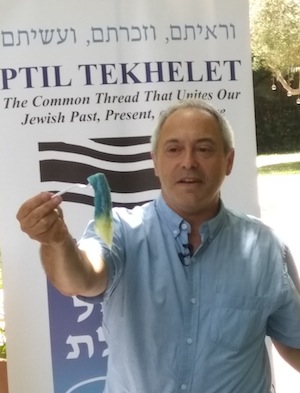
photo - Baruch Sterman of the Ptil Tekhelet foundation, and co-author of the book The Rarest Blue
Baruch Sterman of the Ptil Tekhelet foundation, and co-author of the book The Rarest Blue. (photo by Gil Zohar)

At some point, added Sterman, those dyed fabrics were “worth up to 20 times their weight in gold.”

Other artifacts on display include garment fragments discovered at Masada during archeological excavations in the early 1960s. More than 30 years later, tests using high-performance liquid chromatography (HPLC) proved the cloth had been dyed with a murex solution.

Out of the Blue concludes with the flag flown outside the United Nations in New York in May 1949, when Israel was accepted as a member state of the international body. A second Israeli flag on display was carried into orbit aboard the American Apollo spacecraft, which docked with the Soviet Soyuz rocket on July 17, 1975, in the first international manned space flight.

Sterman’s nonprofit amuta (foundation) is based on the research, in the 1980s, of Otto Elsner, a chemist at Ramat Gan’s Shenkar College of Engineering and Design, who discovered that, if a solution of the purple dye made from the hypobranchial gland of the Murex trunculus was exposed to the sun’s ultraviolet rays, it would turn a deep shade of blue.

Popularizing that knowledge has been a slow process. According to the Talmud, tekhelet is a specific azure dye produced from a sea creature known as a hilazon. Rabbinic sages ruled that vegetable indigo dyes were unacceptable.

Over the past 150 years, several marine creatures were proposed for reviving the biblical process of dyeing the tassels, among them one favoured by Israel’s first chief rabbi, Isaac Herzog, father of Israel’s sixth president, Chaim Herzog. Rabbi Herzog, who completed his PhD at the Sorbonne in Paris in 1914, believed that the violet pelagic snail, Janthina janthina, was the source of the ritual tekhelet.

Another theory was proposed half a century earlier by Rabbi Gershon Hanokh Leiner, known as the Radzyner Rebbe, who produced blue dye from the black ink of the Sepia officinalis (the common cuttlefish). But chemical analysis identified his dye as Prussian blue, an inorganic synthetic colour derived from iron filings and not from the squid itself.

That dispute continues to reverberate: most of the blue-coloured tzitziyot worn in Israel today are dyed from the inexpensive cuttlefish, acknowledged Ptil Tekhelet. (The tekhelet factory in Radzyn near Lublin in Poland was destroyed during the Holocaust, and the technology was lost but was revived in Israel after 1948 thanks to the prewar research of Chaim Herzog.)

The rediscovery of tekhelet has almost messianic implications – one rabbinic source notes, “The revelation of the hilazon is a sign that the redemption is shining near.”

According to the museum, “The tekhelet blue, which reminded every Jew of their connection to God, remained in the memory of the [Jewish] people and became an integral part of the national symbol of the state of Israel.”

Gil Zohar is a journalist based in Jerusalem.

Format ImagePosted on June 1, 2018May 30, 2018Author Gil ZoharCategories IsraelTags history, Jerusalem, Judaism, museums, tekhelet

Recognition withdrawn

B.C. Premier John Horgan has withdrawn a certificate of recognition sent to a controversial Vancouver imam, following a month-long advocacy campaign by B’nai Brith Canada. In an email sent to B’nai Brith supporters, the premier’s office confirmed it had rescinded the certificate bestowed upon Tarek Ramadan, while adding, “We strongly condemn any racist, antisemitic, homophobic or discriminatory language.” The email further asserted that the premier’s office was unaware of Ramadan’s “concerning statements” before issuing the certificate and reiterated that Ramadan had also “received certificates from previous governments in past years.”

B’nai Brith first publicly called on the premier to rescind the certificate on May 16, noting that Ramadan was exploiting the governmental plaudits to vindicate his chants against “malevolent Jews” and insistence that “all of Palestine should only be in the custody of the Muslims.”

B’nai Brith exposed further antisemitism and homophobia on Ramadan’s part and called on its followers to contact the premier’s office. Ramadan had publicly posted, then later deleted, a video on Facebook that accuses the Jewish Rothschild family of controling the world’s banks and media, while justifying the Holocaust on the basis that “the Jews sold Germany down the river.”

Another post by Ramadan, still visible on Facebook, describes Israeli soldiers as “fags,” a homophobic slur.

“We are relieved that the premier’s office has finally done the right thing,” said Michael Mostyn, chief executive officer of B’nai Brith Canada. “No one who has been exposed as a hatemonger should receive recognition from a high government official in any province.

“We look forward to working with all parties in B.C. and across the country to prevent similar situations from arising in the future.”

The Muslim Association of Canada, which runs the mosque where Ramadan preached, described his conduct as “inappropriate” in a November 2017 statement.

Posted on June 1, 2018May 30, 2018Author B’nai Brith CanadaCategories LocalTags antisemitism, British Columbia, John Horgan, Michael Mostyn, Tarek Ramadan
JSA celebrates Serge Haber

JSA celebrates Serge Haber

On June 10, Jewish Seniors Alliance fêtes one of its founders, Serge Haber, as well as his 90th birthday. (photo from JSA)

One of the community’s most dedicated and inspiring longtime leaders, Serge Haber, will be honoured on June 10, coinciding with a significant occasion in his life, his 90th birthday.

Haber has always cared passionately about community seniors and the Jewish people in general. Their well-being is on his mind constantly and, yes, anytime day or night, he’ll earnestly voice his concerns.

The tribute to this prominent community personality will take place at the Jewish Seniors Alliance (JSA) Chai Tea. The afternoon (2:30-5 p.m.) at the Peretz Centre for Secular Jewish Culture will see the serving of party sandwiches, fruit and dessert, live entertainment by Dave Ivaz Music, caricatures by artist Katie Green, door prizes and more.

Event co-chairs – community leaders Marie Doduck and Helene Rosen – extend “a most sincere and heartfelt welcome to all to attend this special occasion, which will celebrate all of our community’s wonderful seniors, along with the honouring of our dear Serge.”

It is most fitting that this tribute be mounted by JSA, as Haber was at the forefront of its formation and currently serves as its president emeritus. His dedication to the Judaic directive of tikkun olam (repairing the world) has continued in word and action throughout the years, as he has not only initiated JSA and helped the association, but many other Jewish causes, as well.

Current JSA president Ken Levitt stressed that one reason the organization has evolved to offer so many programs and services is because of Haber’s efforts. Among other things, Haber has championed vocally and positively for the quality of life of community seniors.

Haber’s experiences profoundly shaped his character. Born in Romania in 1928 to Leon and Liza Haber, he lived among the horrors of pogroms and the Holocaust, to which he lost family members – and which he barely survived himself, due to fortunate circumstances.

At the end of the Second World War, Haber took two years of university in pharmacy in Bucharest. An extensive “real-life education” followed, when he left Romania in 1947, traveling to and living in Austria, then Italy, France, Cuba, Montreal (in 1950) and Dallas (1967), followed by stays in Toronto, Montreal and, finally – and fortunately for our community – moving to Vancouver in 1978.

Haber attributes the impetus for his extensive community service to his beloved wife Elinor, z’l, who he met and married in 1955 while in Montreal, and to their three children.

“All of my community efforts are due to Elinor’s encouragement and participation – I couldn’t have done it without her,” said Haber. And, as to his children, he emphasized that he wanted to establish a connection to encourage “their recognition of the importance of their being a part of the community, contributing to it … and remaining strongly Jewish.”

Haber’s leadership has seen him serve for decades in key executive positions for a variety of major Jewish organizations, including the United Synagogue of Conservative Judaism (highlighted by a two-year term as vice-president), Congregation Beth Israel (with 18 years of executive, chairmanship and men’s club leadership), Vancouver Holocaust Education Society (passionately urging racial tolerance at its annual symposium and ongoing school programs) and Hillel BC at the University of British Columbia (helping bring about a much-needed new facility). Haber served 19 years on the Louis Brier Home and Hospital board and was a director of the Jewish National Fund for 18 years.

Additionally, deeply religious, Haber started a new Conservative congregation, Shaara Shalom, in Laval, Que., in 1958; continuously helped lead religious services at Vancouver’s Beth Israel; and has taken a key role in daily and Shabbat service leadership at the Louis Brier – for 25 years straight.

In recognition of these accomplishments, Haber has been honoured throughout the years by numerous organizations, including the Louis Brier, as one of its Eight Over 80 recipients; by Beth Israel, with its President’s Award for community involvement; and by Simon Fraser University, which named him Man of the Year, the first Jewish person to be so recognized.

And, he served the community even in his work – owning and operating Kaplan’s Delicatessen for 23 years.

Today, Haber’s children are “always there for him”: Wanda, a social worker, in Toronto; Geoffrey, a Conservative rabbi, in Toronto; and Stephen, in the computer field, in Marysville, Wash. As well, there is his sister, Sidonia, in Tel Aviv, and his dear companion here, Sheila Gordon.

Ever on his mind are seniors and, especially, the Jewish Seniors Alliance.

“I am trying so hard,” he has said, “to do crucial work on behalf of community seniors, whose numbers will double in the next 10 years … and I see JSA becoming the most important Jewish organization in the city because of its training services and resultant volunteers who substantially help community seniors in need.”

Haber has expressed hope that seniors here will soon have their own building, providing a variety of needed services.

“I have an unending love for the Jewish people generally and, in particular, for those in our community,” he emphasized.

Abundant numbers of people throughout the community would affirm that the feeling is mutual.

To celebrate with Haber and wish him mazal tov on his 90th, join the JSA Chai Tea on June 10. Tickets ($36) may be purchased from the JSA office at 604-732-1555 (press 1 for Rita Propp) or at the door.

Bob Markin served on the editorial staff of the Jewish Western Bulletin for 16 years, and has written numerous freelance stories and articles throughout the years. He is a member of the editorial committee of the Jewish Senior Alliance’s Senior Line magazine.

Format ImagePosted on June 1, 2018May 30, 2018Author Bob MarkinCategories LocalTags Jewish Seniors Alliance, JSA, Serge Haber
A special anniversary

A special anniversary

Children who lost family members fighting for Israel are seen attending a camp at Wizo’s Hadassim Youth Village, which was founded in 1947 to support the influx of refugees fleeing from Europe. (photo from Jewish Museum and Archives of British Columbia, L.10472)

Rabbi Shawn Zell remembers his Grade 10 experience vividly, even though it took place 50 years ago.

Zell, a native of Winnipeg, spent the year in Israel attending a boarding school called the Hadassim Children and Youth Village, along with 18 other Canadian and American young people. It was 1968, one year after Israel’s victory over the combined armies of its Arab neighbours, and the mood in the country was euphoric. There was unbridled optimism in the air, the feeling that anything was possible, Zell recalled.

For Zell and his Canadian contemporaries, it was a time to embrace their Judaism and create greater bonds with the state of Israel, all while getting credits towards their Canadian high school diplomas.

Zell and the others were among the first young Diaspora Jews to spend a year in Israel on a sponsored program – in their case, one organized by Canadian Hadassah-WIZO. Although decades have passed, he still keeps in touch with some of the other participants and, on June 27, most of the group, along with their spouses, children and other family members, will gather in Israel for a 50th reunion.

They will meet at Hadassim, which is located near Netanya, to have dinner, reminisce and see if they can still recognize one another after the passage of so much time.

“I think it’ll be a bunch of alter-kackers looking at each other, saying, ‘I wouldn’t recognize you,’” he said.

photo - Rabbi Shawn Zell
Rabbi Shawn Zell (photo from cjnews.com)

Zell, who serves as the spiritual leader of Tiferet Israel Congregation in Dallas, said his experience in Israel left indelible marks on him. Although he came from a proudly Zionist family, being in the country reinforced those feelings and strengthened his attachment to Judaism.

“I came back with Israel fever,” he said, “more knowledgeable, even more Jewish.”

A few years after his return, he took advantage of an offer to study at a new school for educators in New York and was later ordained as a rabbi. All the while, he has remained in touch with a few of his buddies from the trip. Of the 16 Canadians who were there with him, seven were fellow Winnipeggers, although he did not know any of them before he left. They were joined in Israel by three Americans.

While in Israel, the group was housed in dormitories, with two Canadians and two Israelis per room. It was a great way to meet Israelis and see the country, Zell said, adding that he still keeps in touch with his roommate from Halifax, Lance Webber, and an American, David Klein, among others.

With no parents to monitor them, the boys took advantage of the situation.

“We were doing a lot of horsing around,” Zell recalled, and their schoolwork suffered as a result. But, being on their own in a new country provided plenty of opportunity to develop their independence – they thought nothing of taking a bus into nearby Tel Aviv to wander around. On Shabbat, the Canadian kids organized their own services on campus, without adult supervision.

Zell has lots of memories of that experience, including the time the group was called to attend a Hadassah event that was headlined by former Israeli prime minister David Ben-Gurion. Zell still has the photo, cut out of a magazine he found back in Winnipeg, of he and the others posing with Ben-Gurion.

When Zell got the idea to organize a reunion a year ago, he wasn’t sure how it would turn out. But the response “has been much better than I thought. I didn’t think I’d be successful contacting people after 50 years,” he said.

Zell expects 13 of the original group of 16, along with their family members, to attend the reunion, bringing the total number to more than 30 people.

“We will view Hadassim through mature eyes,” said Zell. “We will see one another, rekindle friendships and share memories. Most of all, we will introspect as we ask ourselves how our year in Hadassim played a role in our lives.”

– For more national Jewish news, visit cjnews.com

Format ImagePosted on June 1, 2018May 30, 2018Author Paul Lungen CJNCategories IsraelTags CHW, Hadassah-WIZO, Hadassim, Shawn Zell
Genocide still happening

Genocide still happening

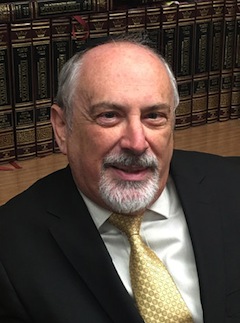
Polish-Jewish lawyer Raphael Lemkin was the first to use the term “genocide.” (photo by Moidov)

The word “genocide” was conceived by Polish-Jewish lawyer Raphael Lemkin to describe the attempt of the Ottoman Empire to efface Armenians from Turkish society. He articulated the empire’s actions as a specific category of crime – one that could be named, analyzed, resisted and penalized by the global community.

Lemkin was born in 1900 on a small farm near the Polish town of Wolkowysk. As a young man, he heard that as many as 1.2 million Christian Armenians were killed by the Ottoman Empire, the population of which was mainly Muslim. He also knew of the pogroms and violence against his own people, of course, but it was the situation of the Armenians that led him to the idea of a change in international law that could address such violence.

When the German army invaded Poland, Lemkin fled Europe for safety in the United States. He began teaching at Duke University and, in 1942, he joined the war department, where he documented Nazi atrocities. This led to the 1944 book Axis Rule in Occupied Europe: Laws of Occupation, Analysis of Government, Proposals for Redress, wherein Lemkin first introduced the word “genocide.”

“By ‘genocide,’ we mean the destruction of a nation or of an ethnic group,” Lemkin wrote. “Generally speaking, genocide does not necessarily mean the immediate destruction of a nation, except when accomplished by mass killings of all members of a nation. It is intended rather to signify a coordinated plan of different actions aiming at the destruction of essential foundations of the life of national groups, with the aim of annihilating the groups themselves. Genocide is directed against the national group as an entity, and the actions involved are directed against individuals, not in their individual capacity, but as members of the national group.”

Lemkin later worked on the Nuremberg trials, where he succeeded in getting the word genocide included in the indictment. Genocide was not yet a legal term, however, and the verdict at Nuremberg set a precedent only for war crimes. While in Nuremberg, Lemkin learned of the death of his parents, who, along with 49 other family members, were killed by the Nazis.

Lemkin was determined to see genocide added to international law and, after his return to Europe, he began agitating for this at the meetings of the then newly established United Nations. His efforts to enlist the support of national delegations and influential leaders eventually bore fruit. On Dec. 9, 1948, the United Nations approved the Convention on the Prevention and Punishment of the Crime of Genocide. As of December 2017, 149 states, including Canada, had ratified or acceded to the treaty.

Lemkin committed the rest of his life to convincing nations to pass legislation supporting the convention. He died in 1959, “impoverished and exhausted by his efforts,” according to Lemkin House, an American sanctuary for asylum seekers named in his honour.

At the 2005 World Summit, all member states of the United Nations endorsed the Responsibility to Protect (R2P) doctrine, which Canada was instrumental in promoting – on paper, at least, it carries Lemkin’s vision forward.

“The international community,” states the doctrine, “through the United Nations, also has the responsibility to use appropriate diplomatic, humanitarian and other peaceful means … to help protect populations from genocide, war crimes, ethnic cleansing and crimes against humanity … we are prepared to take collective action, in a timely and decisive manner … on a case-by-case basis and in cooperation with relevant regional organizations as appropriate, should peaceful means be inadequate and national authorities manifestly fail to protect their populations from genocide, war crimes, ethnic cleansing and crimes against humanity.”

This article was being written as almost one million Rohingya refugees were preparing to celebrate Ramadan in the camps of Cox’s Bazar, in Bangladesh – 700,000 of them have fled Myanmar since August 2017, running from what several international observers have called genocide. Yet Canada, and many others, including the UN, have shied away from using Lemkin’s term to describe the situation.

Modern Turkey still denies the Armenian genocide that was instrumental in inspiring Lemkin’s efforts. And, although some countries, notably Germany and Rwanda, have made attempts to deal with their past, with the crimes committed by their governments and civilians, the fight to prevent, identify, resist and respond effectively to genocide remains relevant.

Matthew Gindin is a freelance journalist, writer and lecturer. He is Pacific correspondent for the CJN, writes regularly for the Forward, Tricycle and the Wisdom Daily, and has been published in Sojourners, Religion Dispatches and elsewhere. He can be found on Medium and Twitter.

Format ImagePosted on June 1, 2018May 30, 2018Author Matthew GindinCategories WorldTags genocide, history, Raphael Lemkin, United Nations
Ancient donkey leads to new discoveries

Ancient donkey leads to new discoveries

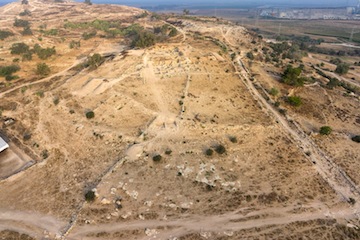
In the ancient city of Gath, now Tell es-Safi, an international team of archeologists has uncovered the earliest example of the use of a bridle bit with an equid in the Near East. (photo from Ashernet)

photo - An aerial view of Tell es-Safi
An aerial view of Tell es-Safi. (photo from Ashernet)

“The use of a bridle bit on a donkey during this period is surprising, since it was commonly assumed that donkeys were controlled with nose rings, as depicted in Mesopotamian art,” said Bar-Ilan University’s Prof. Aren Maeir, who has led the Tell es-Safi/Gath Archeological Project since its inception more than 20 years ago. Evidence of the bit was derived from the skeleton of an ancient donkey dating to the Early Bronze Age III (approximately 2700 BCE). The donkey is one of four that were found buried under neighbourhood houses, indicating the importance of the donkey in this society. Studies of the dental isotopes from this particular donkey (with the bit) demonstrate that it was born and raised in Egypt and brought to the site only in the last few months of its life, before it was sacrificed and buried beneath the floor of the house as it was being rebuilt. The research has been funded by the Canadian Social Science and Humanities Research Council, with additional funds from BIU and the University of Manitoba; the researchers come from BIU, U of M, University of Saskatchewan, Ariel University and Grand Valley State University; their findings were published in the May 16 edition of the journal PLOS ONE.

Format ImagePosted on June 1, 2018May 30, 2018Author Edgar AsherCategories IsraelTags archeology, Aren Maeir, Bar-Ilan University, history, Israel, Tell es-Safi
מכירת הבונדס תסתיים מחר

מכירת הבונדס תסתיים מחר

מפעל הבונדס ישראל יצא לדרך בסוף שנת 1950, כדי לסייע לישראל לאור הקשיים בהם נתקלה לאחר מלחמת העצמאות.

מחר (יום חמישי ה-31 בחודש) תסתיים מכירת הסדרה החדשה של אגרות החוב – בונדס ישראל של מדינת ישראל, המונפקים בקנדה לשנה זו. בוונקובר יתקיים מחר אירוע ביוזמת אגודת הידידים בקנדה של אוניברסיטת תל אביב ובונדס ישראל בקנדה, לקידום מכירת הבונדס של ישראל. אירוע דומה של ידי אגודת הידידים של האוניברסיטה מתקייים היום (יום רביעי) בקלגרי. ואילו אתמול הקיים אירוע בטורונטו. האירוע בוונקובר יתקיים במשרדים של חברת פשקן ברחוב בורארד בדאון טאון, בין השעות שמונה בבוקר לאחת אחר הצהריים. הוא יכלול ארוחת בוקר וארוחת צהריים. שלושת המרצים שישתתפו בו: ד”ר אוהד ברזילי מאוניברסיטת תל אביב, המשמש חוקר בתחום ניהול טכנולוגיה ומערכות מידע, שידבר על הפלטפרומה הדיגיטלית – ההגיון בעשייה של הכלכלה הדיגיטלית. פרופסור אוריה שביט מאוניברסיטת תל אביב, המשמש חוקר בתחום תאולוגיה ופוליטיקה באסלאם המודרני, שידבר על האסלאם הרדיקלי במדינות המערב. וכן פרופסור יניב אסף מאוניברסיטת תל אביב, המשמש חוקר במחלקה לנוירוביולוגיה, שידבר על הדור הבא של טכנולוגיית סריקת המוח.

ארגון בונדס ישראל בקנדה יקיים אירוע מיוחד להוקרת חיילים בודדים המשרתים בצה”ל בחודש הבא. האירוע יתקיים בטורונטו בבית הכנסת שערי שמיים ב-26 ביוני, בין 7.30 ל-9.30 בערב.

אגרות החוב של ישראל בונדס בקנדה מונפקים פעמיים בחודש: בראשון ובחמישה עשר. להלן התעריפים של אגרות הבונדס הבולטים בקנדה, שמחר כאמור הוא הדד-ליין לרכישתם. למי שמשקיע לפחות 25,000 דולר: שנתיים 2.58%, שלוש שנים 2.88%, חמש שנים 3.47%, עשר שנים 4.25% וחמש עשרה שנים 4.45%. למי שמשקיע לפחות 5,000 דולר: שנתיים 2.43%, שלוש שנים 2.73%, חמש שנים 3.32%, עשר שנים 4.10% וחמש עשרה שנים 4.30%.

הבונדס או בשמו הרשמי מפעל מלווה העצמאות והפיתוח הוא ארגון העוסק במכירת אגרות חוב של ישראל ליהודים בתפוצות. מפעל הבונדס יצא לדרך בסוף שנת 1950, כדי לסייע לישראל לאור הקשיים בהם נתקלה לאחר מלחמת העצמאות. את המפעל יזמו ראש ממשלת ישראל דוד בן גוריון, ביחד עם שר האוצר אליעזר קפלן ושרת העבודה גולדה מאיר. וכן עם שלושה מראשי קהילת היהודים בארה”ב: הפוליטיקאי הנרי מורגנטאו, איש העסקים, הפילנתרופ ומראשי המגבית היהודית המאוחדת שמואל (סם) רוטברג, ומנכ”ל המגבית היהודית המאוחדת והרב הרפורמי הנרי מונטור. בן גוריון זימן לישראל חמישים מנהיגים בולטים קרב קהילות היהודים בארה”ב ובארצות אחרות, והציע להם להקים את הפרוייקט שיאפשר מימון כספי לצרכים הדוחקים של המדינה. אגרות הבונדס החלו להימכר בארה”ב ב-1951, במדינות אמריקה הלטינית ב-1951, בקנדה ב-1953 ובמערב אירופה ב-1954.

בשנות השישים של ישראל הבונדס היה אחד ממקורות ההכנסה העיקריים של תקציב הפיתוח של הממשלה. הכספים שהגיעו מהיהודים בחו”ל עזרו להקמת מספר פרוייקטים לאומיים חשובים מאוד בישראל. בהם: המוביל הארצי, מפעלי ים המלח, תחנת הכוח אורות רבין בחדרה ופיתוח הנמל הימי בחיפה, הנמל הימי באשדוד והנמל הימי באילת. בשנות השמונים ולאחריהם שימשו הכספים של הבונדס כעזרה חיונית לפרוייקטים לאומיים נוספים. בהם: עליית היהודים מברית המועצת לשעבר, עליית היהודים מאתיופיה, הרחבת נמל התעופה בן-גוריון (ובניית טרמינל 3), שיפורים במערך של רכבת ישראל ותשתיות נוספות. עד סוף שנות השבעים מפעל הבונדס הצליח לגייס למעלה ממיליארד דולר. ומאז המפעל מגייס מדי שנה למעלה ממיליארד דולר. מדובר בסכום שהוא כמחצית ממה שישראל מגייסת ברחבי העולם כולו מדי שנה. עד היום מפעל הבונד גייס למעלה משלושים ושלושה מיליארד דולר.

Format ImagePosted on May 30, 2018May 31, 2018Author Roni RachmaniCategories עניין בחדשותTags Canada, Diaspora, economy, Israel Bonds, בונדס ישראל, כלכלה, קנדה, תפוצות
BGU finds key protein

BGU finds key protein

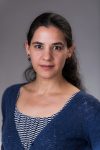
Ben-Gurion University’s Dr. Deborah Toiber will be part of a panel in Vancouver called Alzheimer’s, Dementia and You: Research, Risk Reduction and Resources. (photo from CABGU)

Alzheimer’s affects about six percent of people over the age 65 worldwide. For years, scientists have been searching for ways to treat it and to discover its roots, but without much success, until recently.

A group of Ben-Gurion University researchers, under the leadership of Dr. Deborah Toiber, is among those who have made breakthroughs. They have discovered that a certain protein, SIRT6, necessary for DNA repair, is largely missing from the brains of people with Alzheimeir’s. The absence of this protein and the gradual decline in its production by the human body as we age might be what triggers the disease.

On June 5, Toiber will be the keynote speaker at Alzheimer’s, Dementia and You: Research, Risk Reduction and Resources. She will be joined in a panel discussion by Laura Feldman from the Alzheimer Society of British Columbia and Joanne Haramia of Jewish Family Services; Simon Fraser University professor emeritus Dr. Gloria Gutman, one of the founders of SFU’s Gerontology Research Centre, will be the moderator. The event, which will be held at the Rothstein Theatre, is being presented by the Canadian Associates of Ben-Gurion University (CABGU) in partnership with the Jewish Independent, the Jewish Community Centre of Greater Vancouver’s Adults 55+ program, the Alzheimer Society of B.C., Louis Brier Home and Hospital, Jewish Family Services, Jewish Seniors Alliance, and L’Chaim Adult Day Care.

According to David Berson, executive director of CABGU, British Columbia and Alberta Region, “the purpose of the panel is to increase the awareness and understanding of Alzheimer’s disease, dementia and neurodegenerative diseases.”

“Deborah was coming to Canada to visit the community in Winnipeg for a similar event,” Berson told the Independent. “We had a wonderful opportunity to bring the young and dynamic researcher to Vancouver and we jumped at it…. Toiber’s research, as I understand it, is part of a race to discover, isolate and understand the characteristics, components and mechanisms of DNA that will allow us to identify and treat neurodegenerative diseases prior to onset.”

In her email interview with the Independent, Toiber talked about her work and her group’s discovery. She said that DNA deteriorate with age. “It is not something genetic or environmental,” she said. “We repair our DNA and continue going on, but the repairs are not perfect. Some DNA remain unrepaired. As we get older, unrepaired DNA accumulate, and their ability to produce proteins diminishes.”

She further explained: “If the DNA is damaged, and a cell feels it is too dangerous to continue with this damaged DNA, the cell may activate a self-destruct mechanism. If too many cells do this, the tissue with the dying cells will deteriorate, such as the brain.” Essentially, the deterioration of the DNA and the reduced production of SIRT6 protein mark “the beginning of the chain that ends in neurodegenerative diseases in seniors. In Alzheimer’s patients, SIRT6 is almost completely gone.”

Toiber said scientists should be focusing on how to maintain the production of SIRT6 and how to improve the repair capacity of the damaged DNA, because that is what causes Alzheimer’s and similar diseases. Unfortunately, it is impossible to introduce the needed protein directly into the brain. “There is a blood barrier that prevents things from passing into the brain,” she said. “But we are trying to find a way to increase the expression of the protein into the brain.”

Toiber has always been fascinated by the molecular biology of the human brain. “I chose this field because I wanted to understand in-depth how the brain works, to investigate what happens when things stop working,” she said. “I think that molecular biology is the answer to all those questions. It’s like being a detective on the molecular level.”

She realizes that a detective’s work is never easy or fast. “Results take years to build, as they are based on previous findings, ours and other scientists’. My current group, where I am the principal researcher, is about three years old. It is a new lab.”

The research is multifaceted and multidirectional. “We do basic science,” she said. “We use animal models and cells to understand what is happening as we age, what is the cause of disease and what can we learn from this to develop treatments or preventive actions. We also collaborate with medical professionals and other scientists to get a fuller picture of various aspects of aging and neurodegeneration, particularly Alzheimer’s disease.”

Toiber’s group doesn’t work on the pharmaceutical angle of how to introduce the protein into patients’ bodies. Instead, she explained, “We are interested in the molecular causes of aging, such as DNA damage accumulation, and how this leads to disease. We work in experimental biology. These experiments are expensive and difficult. It can take a long time to see and understand the results, but it is also rewarding. Molecular processes help us understand how our organisms work and what happens when things go wrong. We have to be optimistic and keep trying.”

Many scientists in related fields of study are interested in Toiber’s work. “I have talked about our research at the international neurochemistry meeting in Paris and at conferences in Crete and Israel,” she said.

To hear her speak in Vancouver, register at eventbrite.ca. There is no cost to attend.

Olga Livshin is a Vancouver freelance writer. She can be reached at [email protected].

Format ImagePosted on May 25, 2018May 23, 2018Author Olga LivshinCategories IsraelTags Alzheimer's, Ben-Gurion University, BGU, CABGU, Deborah Toiber, dementia, healthcare, science
Prayer, protest at JCC

Prayer, protest at JCC

Gabor Maté reads the names of Palestinians killed by the Israel Defence Forces during the Great March of Return protests in Gaza. (photo by Matthew Gindin)

“Each one of them was a full human being, with a full life,” said Rabbi David Mivasair, addressing a dozen or so people, most of whom were Jews, outside of the Jewish Community Centre of Greater Vancouver on May 21, the second day of Shavuot, for Yizkor, the traditional memorial service for the dead.

Organized by Independent Jewish Voices, the group gathered to commemorate the Palestinian protesters who had been killed by the Israel Defence Forces during the Great March of Return protests in Gaza, which began on March 31 and ended May 15 (which Palestinians observe as Nakba Day). They gathered, according to the event’s Facebook page, for another reason, as well: “We will also publicly denounce the Centre for Israel and Jewish Affairs for its continual dishonest manipulation of Canadian political leaders and media sources to silence and minimize Israel’s brutality toward Palestinians and, in this case, shift the blame for the killings to the very people who were killed.”

Those present included Gabor Maté, a physician, author and member of the Jewish community. He and others took turns reading the names of Palestinians who had been killed. Afterwards, he told a story from an article that Uri Avnery, an Israeli peace activist, had written days before. In the article, Avnery described how he, as a teenage member of the Irgun, had done similar things to those of the Palestinian protesters when demonstrating against the then-occupying British forces for Israel’s independence, but the British shot over their heads, not at them. Maté also criticized the JCC for not being inclusive enough of all Jewish voices, saying that, in practice, it was more like “the Zionist community centre.”

“The confusion between Zionism and Judaism is a tragedy,” said Maté. “I’m just glad to be here to bear witness along with the rest of you.”

Shawkat Hasan, a member of the Palestinian community and the B.C. Muslim Association, whose family lost their home in the war of 1948, also spoke, emphasizing that the conflict was not between Jews and Muslims but between Zionism and its “victims,” and calling for widespread resistance to violence against Palestinians.

The group carried out their service peacefully. The idea for it came about only days before, and the organizing of it was rushed to coincide with Shavuot. One sign read, “Murdering innocents is not a Jewish value.” Some passersby stopped to join or listen, as members of the group chanted the names and recited Kaddish, and some to express their opposition.

Mivasair told those assembled that the location had been chosen to protest CIJA, who have their offices inside the JCC. CIJA had launched a campaign calling for Prime Minister Justin Trudeau to apologize for remarks Trudeau had made that the “reported use of excessive force and live ammunition is inexcusable” and his call for “an immediate independent investigation” after a Canadian doctor was shot by the IDF while treating protesters.

“Hamas has left Israel no choice but to use force to protect the tens of thousands of Israelis who live close to Gaza,” said Shimon Koffler Fogel, CIJA’s chief executive officer, in a statement May 16. “We are outraged and saddened that Hamas is again using civilian human shields. For Israelis and the Jewish community, Palestinian casualties are painful tragedies. For Hamas, Palestinian casualties are sickening public relations achievements.”

“Everything that CIJA says is contestable,” Mivasair told the Jewish Independent following the service. “The situation in Gaza is desperate enough, due to the policies of the Israeli government, to explain the actions of the Palestinian protesters without imagining that they were primarily orchestrated by Hamas, which they were not. Why are organizations that purport to speak for the Jewish community suppressing discussion in Canada about what is really going on?”

The Yizkor service at the JCC followed weeks of protests by Palestinian solidarity groups outside of federal Justice Minister Jody Wilson-Raybould’s Vancouver constituency office.

In the conflict at Israel’s border with Gaza, the IDF faced some 50,000 protesters. More than 100 Palestinians were killed and between 8,700 and 13,000 wounded, depending on the source of the data. The IDF’s actions, in particular the use of live ammunition, has been condemned by organizations including B’Tselem, Human Rights Watch and Amnesty International. According to Israel, most of those killed were members of the terrorist group Hamas, which, the Israeli government says, organized the protests.

Matthew Gindin is a freelance journalist, writer and lecturer. He is Pacific correspondent for the CJN, writes regularly for the Forward, Tricycle and the Wisdom Daily, and has been published in Sojourners, Religion Dispatches and elsewhere. He can be found on Medium and Twitter.

Format ImagePosted on May 25, 2018May 23, 2018Author Matthew GindinCategories LocalTags CIJA, conflict, David Mivasair, Great March, IJV, Israel, JCC, Palestinians
Looking to the future

Looking to the future

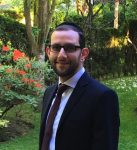
Rabbi Shlomo Gabay is the new spiritual leader of Congregation Beth Hamidrash. (photo from Shlomo Gabay)

“The Sephardic world has its own customs, its own personality – communicating that to the next generation is a priority for Beth Hamidrash,” Rabbi Shlomo Gabay told the Independent. “They needed someone who could guide the next generation in the Sephardic way.”

Gabay was explaining why he, a rabbi who most recently worked as a high school teacher in the Sephardi community of Gibraltar, was invited to take over the role of spiritual leader at Congregation Beth Hamidrash following the departure of Rabbi Ilan Acoca in August of last year.

Gabay was born in London, England, and attended yeshivah in Gateshead, a hub of Orthodox Jewish life in Britain. He married “the rabbi’s daughter,” Rachel, who works in graphic and web design, and the couple now has three daughters. Coincidentally, Rachel Gabay is the niece of another former Beth Hamidrash rabbi, David Bassous.

After the Gabays married, they spent some time in Israel, where Shlomo Gabay pursued training in kiruv, or Jewish outreach. He then landed his first job, in Gibraltar, where he worked as a teacher of Gemara and halachah at the Jewish boys high school. He also taught other classes and founded and directed the Shovavim Project, an annual six-week learning program, in Gilbraltar.

Gibraltar is a British territory on a peninsula jutting out of southern Spain, across the water from Morocco. The community is almost totally Sephardi and led by Chief Rabbi Ron Hassid.

“Gibraltar is very relaxed, it’s very beautiful,” said Gabay, who earlier this year posted on Beth Hamidrash’s Facebook page a video of himself and some monkey friends on the Rock of Gibraltar. “It’s a holiday place where everybody goes. The population is almost 30,000, but 11 million [tourists] … come a year. The streets are full all the time, you get to meet people from all over the world.”

Gabay sees some similarities between Gibraltar and Vancouver – the natural beauty, the many tourists and a more laid-back culture than London for example – although, obviously, there’s a considerable difference of scale.

Gabay and his family are settling in well and enjoying the West Coast, even the previous winter weather. “London and Vancouver,” he said, “have something in common as well – rain.”

During the interviewing process, the Gabays were invited to come for a trial Shabbaton and Beth Hamidrash decided they had a winner.

“One of the strong reasons we were chosen,” said Gabay, “was because Beth Hamidrash felt they needed to focus on the next generation. Sephardic culture is quite different from Ashkenazic culture – the food, the personality – they didn’t want it to be pulled away in a different angle from what the founders intended.”

Beth Hamidrash has been without a rabbi for a year and a half. Gabay said he is looking forward to reinvigorating what the community is known for – having a warm, family atmosphere, being a community social hub, as well as a place of culture and Torah learning. “We want everyone to be happy here,” he said.

Gabay offers Talmud classes on Tuesdays and has started a Sunday class after breakfast, which covers a different topic of discussion every week. Rachel Gabay is a trained teacher of Judaics, as well as having training in marriage counseling and preparation for marriage.

Matthew Gindin is a freelance journalist, writer and lecturer. He is Pacific correspondent for the CJN, writes regularly for the Forward, Tricycle and the Wisdom Daily, and has been published in Sojourners, Religion Dispatches and elsewhere. He can be found on Medium and Twitter.

Format ImagePosted on May 25, 2018May 23, 2018Author Matthew GindinCategories LocalTags Beth Hamidrash, Judaism, Sephardi, Shlomo Gabay

Posts pagination

Previous page Page 1 … Page 183 Page 184 Page 185 … Page 323 Next page
Proudly powered by WordPress