Skip to content
  • Home
  • Subscribe / donate
  • Events calendar
  • News
    • Local
    • National
    • Israel
    • World
    • עניין בחדשות
      A roundup of news in Canada and further afield, in Hebrew.
  • Opinion
    • From the JI
    • Op-Ed
  • Arts & Culture
    • Performing Arts
    • Music
    • Books
    • Visual Arts
    • TV & Film
  • Life
    • Celebrating the Holidays
    • Travel
    • The Daily Snooze
      Cartoons by Jacob Samuel
    • Mystery Photo
      Help the JI and JMABC fill in the gaps in our archives.
  • Community Links
    • Organizations, Etc.
    • Other News Sources & Blogs
    • Business Directory
  • FAQ
  • JI Chai Celebration
  • JI@88! video

Recent Posts

  • Zionism wins big in Vegas
  • Different but connected
  • Survival not passive
  • Musical celebration of Israel
  • Shoppe celebrates 25 years
  • Human “book” event
  • Reclaiming Jewish stories
  • Bema presents Perseverance
  • CSS honours Bellas z”l
  • Sheba Promise here May 7
  • Reflections from Be’eri
  • New law a desecration
  • Resilient joy in tough times
  • Rescue dog brings joy
  • Art chosen for new museum
  • Reminder of hope, resilience
  • The national food of Israel?
  • Story of Israel’s north
  • Sheltering in train stations
  • Teach critical thinking
  • Learning to bridge divides
  • Supporting Iranian community
  • Art dismantles systems
  • Beth Tikvah celebrates 50th
  • What is Jewish music?
  • Celebrate joy of music
  • Women share experiences 
  • Raising funds for Survivors
  • Call for digital literacy
  • The hidden hand of hate
  • Tarot as spiritual ritual
  • Students create fancy meal
  • Encouraging young voices
  • Rose’s Angels delivers
  • Living life to its fullest
  • Drawing on his roots

Archives

Follow @JewishIndie
image - The CJN - Visit Us Banner - 300x600 - 101625

Category: News

Teens bake for others

Teens bake for others

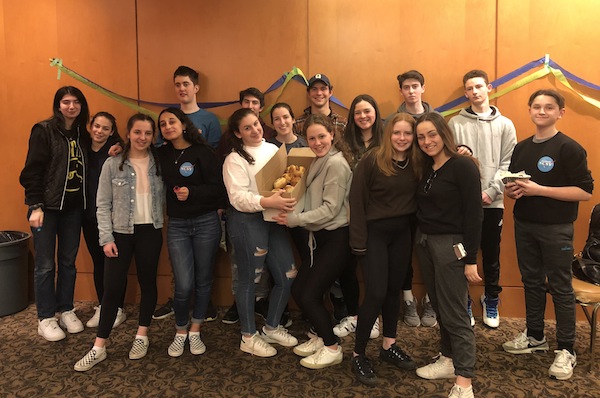
Teens from CTeens, NCSY and BBYO joined together for the Not Your Bubbies’ Babka Bake at Congregation Schara Tzedek on March 7. (photo from CTeens)

On March 17, teens from three local organizations – CTeens (Chabad Teens), NCSY (National Conference of Synagogue Youth) and BBYO (B’nai B’rith Youth Organization) – joined together for a mitzvah. Around 30 teens from Richmond and Vancouver gathered for the Not Your Bubbies’ Babka Bake at Congregation Schara Tzedek, where they learned how to braid challah and make chocolate babka.

This wasn’t an ordinary get-together, it was a mitzvah event, timed to help celebrate Purim. The challot went to seniors in the Light of Shabbat Program, and the teens took the babkas home.

The Light of Shabbat Program is run by Chabad Richmond, in partnership with the Kehila Society. Every other week, a group of volunteers makes and delivers full kosher meals, along with Shabbat candles and grape juice, to Richmond seniors who are alone on Friday nights. To find out more about the program, visit chabadrichmond.com/lightofshabbat. Part of the meal is homemade challah, which was made by these teens as part of the mishloach manot (also referred to as shalach manot), or Purim food baskets, given on the holiday.

It’s a mitzvah and tradition for adults to send a gift basket of ready-to-eat foods to at least one friend during the day of Purim. The baskets should include at least two foods, often hamantashen, chocolate, fruit, cookies or candy. The source of mishloach manot is the Megillah, or Book of Esther, which talks about “sending portions one to another, and gifts to the poor.” The idea of sending gifts of food on Purim is to strengthen our bonds of friendship with fellow Jews, as one theme of Purim is friendship and unity.

Aiden, a 15-year-old CTeen, said the reason he joined the Not Your Bubbies’ Babka Bake event was to meet other Jewish teens, and help out. “I love to bake,” he said, “and it makes me feel good knowing that the challahs we’re baking are going to seniors in our community.”

A CTeen for two years, Aiden wanted to feel more connected to the Jewish community, so he started going to shul at Chabad Richmond. Then he met Rabbi Chalom Loeub, who leads the CTeen program. Among other things, the CTeens get together every Sunday to bake cookies and cakes for seniors. Aiden also mentioned going to the CTeen International Shabbaton in New York, which he said was “incredible.” He’s now trying to get other Jewish teens involved in CTeen, too.

Jillian Marks, 17, was another participant in the challah and babka bake. She came to the event through her involvement with BBYO. As a youth leader for the Vancouver chapter, she wants to create “a pluralistic environment for everyone who wants to meet other Jews and feel safe and be whoever they want to be.” BBYO holds different events, all of which have some Jewish element to them. For this particular event, BBYO joined with CTeens and NCSY to “work together, not compete. You can be in all of the groups, not just in one of them,” said Marks.

Each of the youth groups emphasizes leadership skills, and many of their events are teen-run initiatives. Marks added that “the purpose of this challah/babka bake was not just to meet other Jewish teens, but also to volunteer and help out the community.”

All the teens echoed the same sentiments – that making challah for seniors is a mitzvah and that it feels good to volunteer. It’s a nice perk, they said, that they also get to meet other Jewish teens, adding that they would “get the word out” to their friends.

Several teens from NCSY, including Neer, 16, Jessie, 17, and Romy, 16, also attended the challah and babka bake. They run Live to Give, a social action outreach program for the local NCSY chapter. One of their projects is to take homemade baking to Louis Brier Home and Hospital residents. One of the teens said, “For seniors who have no family, or very little, it’s special for them, and it brings a lot of light to their life.”

Members of the NCSY chapter also make and deliver food to people in Oppenheimer Park. “It’s a great opportunity to help out in the community and it’s very rewarding,” said the teen.
Format ImagePosted on April 12, 2019April 10, 2019Author CTeensCategories LocalTags baking, BBYO, CTeens, Judaism, NCSY, Purim, tikkun olam, youth
The runway to healing

The runway to healing

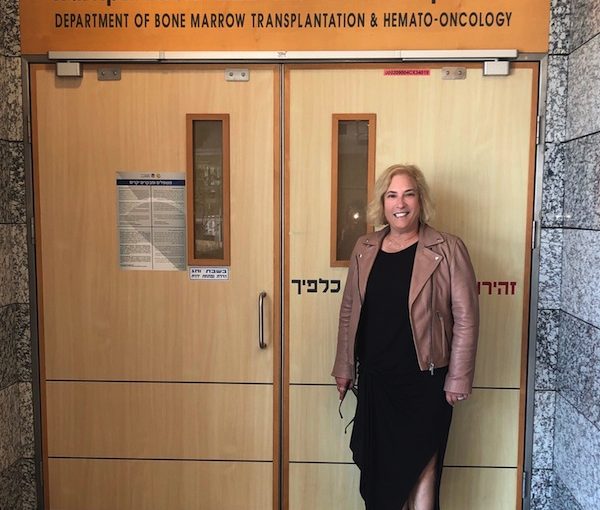
The writer at the bone marrow transplant ward at Ichilov Hospital in Israel. (photo from Ariella Stein)

Fashion is one of my many passions, as regular readers of the Jewish Independent will know by now. So, when I turned 50 this year, a milestone birthday, I decided to pursue a longtime dream – to create a fashion tract for bone marrow transplant survivors.

When I was 17 years old, I was diagnosed with Hodgkin’s lymphoma. At the time, I was in Grade 12, studying in Israel. My parents’ first reaction was for me to return to Vancouver, where they felt I should start my treatments. There was no time to waste, as it was at an aggressive stage. However, after much persuasion, I convinced my parents that I should stay in Israel. As part of the deal I made with them, I was to head back to Vancouver upon graduation and resume the next cycle of treatments.

I started chemotherapy. I had the most loving care from the staff at Tel Hashomer Hospital. I was on the road to recovery when I returned home.

After a few more bouts with chemo and some courses in radiation, however, we were given the devastating news that I had to undergo an autologous bone marrow transplant. The procedure had to start immediately. I lost the little hair I had left in just one day, couldn’t hold down any food or drink, and was separated from any ounce of humanity because I had no immunity. But I was getting better, thanks to the staff and doctors at the British Columbia Cancer Agency.

During the horrifying three-month stay in my isolated hospital room I was, paradoxically, injected with the poisonous chemo cocktail expected to cure me and the benevolent rays of light and love of my family. The support made me stronger and gave me courage. I had so much to look forward to. My two older sisters had countless discussions on having children for me if I couldn’t conceive, my father tried to grant me not just one star but the whole galaxy, my mother never left my side and my then-boyfriend-now-husband showered me with tenderness. The love in my room spread throughout the ward. Through the tears, we remembered to laugh and dream.

photo - The writer, at 18 years old, two months after being released from the hospital for treatment of Hodgkin’s lymphoma
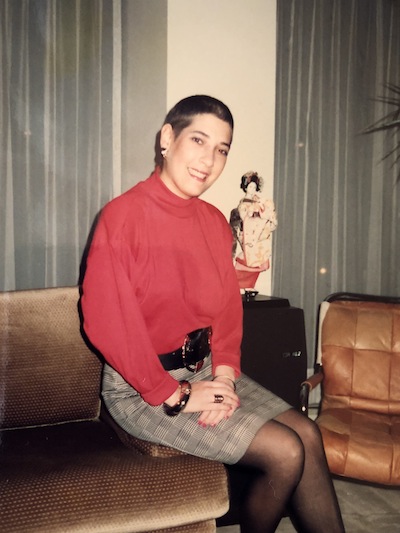
The writer, at 18 years old, two months after being released from the hospital for treatment of Hodgkin’s lymphoma. (photo from Ariella Stein)

When it was time to go home, I was nervous about leaving my protected environment but full of excitement to start my new life. All I wanted was to feel and look healthy again. I bade farewell to my dull uniform of pajamas and welcomed my new outfit, especially chosen for me. On the door, it was waiting for me, as if knowing how I was craving to look like a girl again. I fondly remember stepping out in my blue leather mini skirt, black cashmere sweater and black knee-high boots, handpicked with care by my mom, a true fashionista. I looked fabulous and felt euphoric on the 10-minute ride home, the only place I was headed for the time being.

Fast forward some 30 years, and I am the mother of two miraculous children, Daniel and Natalie, who bring me the greatest happiness and naches, spoken like a true Yiddishe Mame. I am grateful every day for my blessed life. There have been bumps along my journey, of course. I have often wondered if other women had the transformational experience I did leaving the ward. I knew the day would come for me to help other survivors in my own way. Splitting my time between Israel and Canada, I chose to initiate a fashion project in Israel.

I reached out to the head of the bone marrow transplant unit in Ichilov Hospital (Tel Aviv Sourasky Medical Centre) and, to my astonishment, within minutes was told they were on board. My dream was becoming a reality.

My mission is to offer patients, upon their release, an outfit of their wishes to raise their spirit, as my mother’s fashion choices had raised mine. I wrote letters to as many clothing stores as I could, looking to find sponsors, hoping they would donate new outfits to recipients. I received a few replies saying nice idea, good luck; some never replied. But some did reply with open hearts, willing to contribute to the project.

Getting started has been challenging, one step forward and a few back. Frustrating as it is, I understand that it will take time but, among the obstacles, I will not give up. As the writer Paulo Coelho said, “When you want something, all the universe conspires in helping you achieve it.” I have named my project Lalas Wings. Lala is a nickname, dubbed by my niece and nephew 35 years ago.

I was taught to dream big by my mentor, my father, Karl Stein. Hopefully, by sharing my dream, I can make a significant contribution to many bone marrow transplant patients, starting in Israel and eventually reaching hospitals in more and more places. My experience leads me to believe that the seemingly externally focused gift of clothing is part of a perfect beginning to the complex healing process.

If anyone has any questions about Lalas Wings, I can be reached by email at [email protected].

Ariella Stein is a mother, wife and fashion maven. A Vancouverite, she has lived in both Turkey and Israel for the past 25 years.

Format ImagePosted on April 12, 2019April 10, 2019Author Ariella SteinCategories IsraelTags Ariella Stein, cancer, fashion, health, Israel, Lalas Wings, philanthropy, tikkun olam
Couch potatoes, fitness nuts

Couch potatoes, fitness nuts

Most people know there is AIDS in Africa but few people comprehend the scope of the pandemic. In the past 30 years, 30 million people have died and 17 million children have been orphaned. Grandmothers have buried their own beloved children and are parenting again, with few resources. Vancouver’s Tikun Olam Gogos, together with other supporters of the Grandmothers to Grandmothers Campaign of the Stephen Lewis Foundation, are hosting two pledge events for African grandmothers caring for children orphaned by AIDS.

The first pledge event is For the Love of Grandmothers Fitness Challenge. Here’s how it works: you design a fitness challenge for yourself. The event period began March 8, International Women’s Day, and you must complete your self-challenge by Sept. 8, Grandparents’ Day. Choose something you enjoy and do it harder, faster or more often. Your commitment will help you reach your fitness goals.

You can do it once in a big event or work on it day by day. Then, dedicate your challenge to a grandmother you love. Examples of fitness challenges include the Sun Run, Tough Mudder, spinning 100 kilometres in a day or a month, walking or running three times a week for six months, etc. Whatever you imagine, you can do as part of this challenge – register at fortheloveofgrandmothers.weebly.com.

The second fitness challenge, back for the third year, is Solidarity Cycle, on Sept. 8. This ride is open to people of all ages. It has three track options: the Classic is a 100-kilometre cycle from White Rock to Yarrow. The Easy 50 kilometres goes from the lunch stop in Aldergrove over mostly flat, rural roads to Yarrow, and the 100-kilometre loop starts and ends in Yarrow. Stops along the way are hosted by cheering grandmothers offering refreshments and moral support. There is a celebration at the end of the ride with chili and a corn roast in Yarrow for all participants. Registration for Solidarity Cycle opens on May 1, with training and team-building rides offered throughout the summer. For more information, see solidaritycycle.weebly.com.

For both events, participants set up a secure fundraising page and ask their friends and families for contributions. Funds raised will support vital services and programs, from grief counseling to training for income-generation to support for school fees and uniforms

Format ImagePosted on April 12, 2019April 10, 2019Author Tikun Olam GogosCategories Local, WorldTags Africa, AIDS, grandmothers, health, Solidarity Cycle
Memory still debated

Memory still debated

Dr. Laura Beth Cohen (photo from Dr. Laura Beth Cohen)

Although the Srebrenica genocide – the killing of more than 8,000 Bosnian Muslims by Bosnian Serb forces in July 1995 – occurred more than 20 years ago, it still affects the people of Bosnia and Herzegovina every day, according to Dr. Laura Beth Cohen, director, Kupferberg Holocaust Centre, Queensborough Community College, City University of New York.

Cohen was in Winnipeg on March 8 to speak as part of the Mauro Centre for Peace and Justice: Brown Bag Lecture series. She spoke on the topic Conflicted Walls: Untangling Transitional Justice and Traumatic Memories at Bosnia’s Memorial.

“There was an opportunity to participate in the first fellowship called Summer University Srebrenica and so I decided to go,” Cohen told the Independent. “I learned very quickly – that was in the summer of 2010 – that, to really understand Bosnia, it was not enough to take a course and learn about it from books. It’s very important to understand what’s actually happening there, and the best way to do that is to actually go there. It’s a place with intense beauty, legacy and a wonderful history of different ethnic groups coming together, living in harmony.”

But, the legacy of the last war, which lasted from 1992 to 1995, is still very much present. In fact, she said, the current government is debating about it.

“Here, in America, we talk about the Second World War as if it’s confined to the past,” said Cohen. “But, in many places in Europe, the Second World War, that memory, is very much alive. And, once you’re in an environment like that, it really starts to help you, not only sort out what has taken place, but you can see … because you’re not part of that country, or you don’t belong to that population … you can start to see different ways that those memories of the past are interacting in contemporary life, and are incredibly problematic.”

When Cohen was in Srebrenica, she was taken by how much the memory of the genocide affects the surviving population, how much it is fought over. The country and government are split into two ethnic entities that are a result of the Dayton Accord, which was signed after the massacre in Srebrenica. One side was deemed the perpetrator; the other, the victim.

“It is not a big surprise there are very different perspectives between the sides over what happened in Srebrenica,” said Cohen. “The RS [Republika Srpska] government in the last month has created a new commission on Srebrenica to, once again, reexamine the facts and evidence to determine whether or not genocide took place … even though genocide took place and was proven multiple times, and especially in the international criminal tribunal. So, this debate over what happened and denial over what happened is still occurring within Bosnian society, as well as, particularly, in Srebrenica.”

This, of course, makes it very difficult for the residents of Srebrenica and the region to move forward, she said.

“It’s a place that would really benefit from having a lot of people just step away … and allowing the population to just live, move forward, and gain attention for things that they really need support with – economic relevance, additional support for education, and rebuilding parts of the community,” said Cohen. “But, with the memory so volatile and kept alive, it really overshadows what’s taking place there. You can imagine trying to raise your family, regardless of your ethnicity, in a place where the past is constantly looming, and it’s a grotesque past. How do you bring your children up in that world?”

According to Cohen, the constant and continued fight over the politics and memory of what happened at Srebrenica does not allow people to learn about what happened or why, and that this is preventing coping mechanisms from being put into place; mechanisms that could help stop other massacres from happening.

“We only focus internationally once a year – on July 11, during the annual commemoration of the Srebrenica genocide that takes place at the memorial – so we often don’t understand what’s taking place there the other 364 days of the year,” said Cohen.

“People visit the 9/11 memorial in downtown Manhattan. They visit Auschwitz-Birkenau in Poland. They visit Kigali Genocide Memorial [in Rwanda]. These memorials serve as an educational component. For local residents and national citizens of these countries, they also serve as places of memory making,” she said.

In Srebrenica, Cohen hopes to eventually see ways of involving the local community in dialogue initiatives that facilitate the creation of memorials, ones that speak to the locals, helping them repair their communities.

“While we, as Jews, have a view of what Auschwitz-Birkenau is, to the people of Poland, it’s a German extermination camp on Polish soil,” said Cohen. “And, to the local people in Oswiecem, which is the Polish name of the town that the camp was built by, they struggle with having that kind of site in their community.”

When it comes to Srebrenica, she said, “We get stuck in the conversation of the politics over the genocide and what happened. What then happens is, a lot of these issues play out at the memorial. Part of this conversation is theoretical, but part of it is to help us understand that these are not static locations. They are very much interactive places, where memories are not only being promoted, but shaped by the larger discourse where they are situated.”

Cohen said the part of Bosnia, Herzegovina and Srebrenica that has always drawn her is “not only the friends I’ve made, but a vibrancy of life in Bosnia that gets lost in the discussion. The culture is beautiful, the people are beautiful, the relationships that people have with each other are beautiful. And, despite all of the horror of the last war, and despite all the history, and the Second World War and before that, it’s a place where there’s a lot of love and a lot of hope. That’s something that keeps, especially, international activist scholars engaged in what’s taking place there … and that, we can’t lose sight of when we talk about all the politics and things that aren’t going well.”

Rebeca Kuropatwa is a Winnipeg freelance writer.

Format ImagePosted on April 12, 2019April 10, 2019Author Rebeca KuropatwaCategories WorldTags Bosnia, genocide, Herzegovina, Laura Beth Cohen, memorials, Srebrenica, tikkun olam
Making change her business

Making change her business

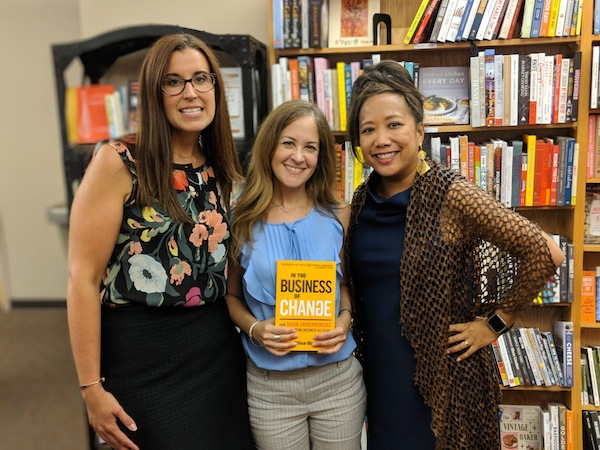
Elisa Birnbaum, centre, with Laura Zumdahl of Bright Endeavors, left, and Maria Kim of Cara Chicago. (photo from Elisa Birnbaum)

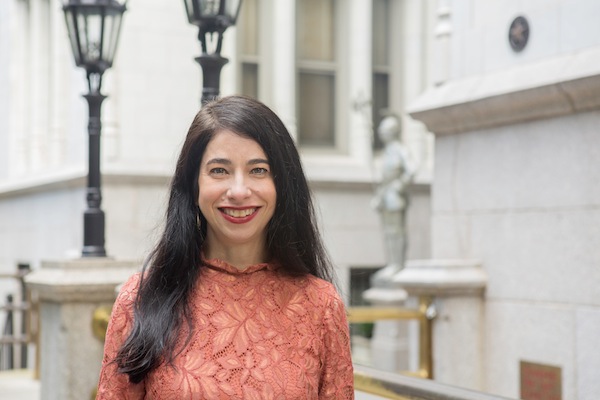
Toronto-based Elisa Birnbaum, editor-in-chief of SEE Change magazine, aims to inspire and give hope in many ways. Her book In the Business of Change: How Social Entrepreneurs are Disrupting Business (New Society Publishers, 2018) is but one of those ways.

“I’m a lawyer by training, but was always a writer on the side, enjoying writing and storytelling,” said Birnbaum, who was born and raised in Montreal in an Orthodox Jewish family. “I decided to try writing out for a little bit and to go back to law after. That was 15 years ago. I never went back to it.

“I was writing a lot about the nonprofit and charitable sector in Canada, as well as in the U.S., and I was also writing a lot about business, a strong interest of mine, too. I noticed how there was a melding of the two – how a lot of challenges in the nonprofit and charitable sector … how they could be helped through business and through business savvy…. So, when I saw what social enterprise was all about and how it was using business to solve social challenges, I realized the importance of that. I became really intrigued and interested. It was an area that, I thought, ‘Hey, this is something I really want to explore further.’”

Birnbaum started pitching stories about social enterprises to any editor who would listen. While some of her work went out via mainstream media, Birnbaum felt more was needed, so she co-founded SEE Change, which is devoted to telling the stories of social and environmental enterprises.

“I thought they symbolized a new way at looking at business,” she told the Independent. “I really felt this was the future, with how we work with business and how communities can tackle social challenges through business, and these types of savvy-ness and skills.”

After years of publishing the magazine, Birnbaum wanted to put together a book of such stories, both to delve more deeply into the phenomenon and, hopefully, to inspire and teach readers how to take on the task of starting a social enterprise.

“A lot of times, I’d get some young people or even older people who were interested in social entrepreneurship themselves, and they’d like advice and tips, and were constantly looking for more information from anyone who’d done it before,” she said. “So, I thought, I could also provide lessons learned, tips, advice and resources … so, a bit of storytelling, as well as a resource for those who are starting up or looking to start their own.”

As far as the response to the book so far, Birnbaum said she has been asked by schools and organizations to speak about the topic. “There were people who had never heard about it before and are now really inspired by the storytelling, which is great,” she said. “There are other people…. I was at a couple of universities recently, and some students there said they picked up the book and were now interested in starting their own social enterprise.”

According to Birnbaum, a very broad definition of a social enterprise is a business, whether nonprofit or for-profit, that has a social or environmental mission at its core, as opposed to a business that has profitability and sustainability at its core. The unique aspect of social entrepreneurship, she said, is that it approaches business in a new way.

In her book, Birnbaum makes a point of highlighting a large array of social enterprises from around the world, including a few in British Columbia. For example, Saul Brown’s Saul Good Gift Co. (itsaulgood.com) creates gift boxes filled with locally made artisan food that people can give their loved ones across Canada, and Reena Lazar’s Willow (willoweol.com) helps with end-of-life planning.

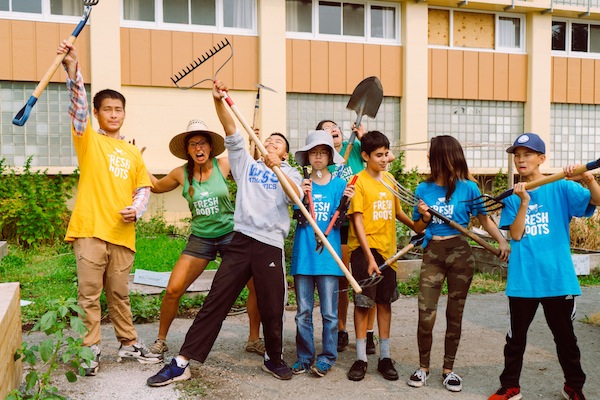
photo - Fresh Roots offers students experiential learning opportunities.
Fresh Roots offers students experiential learning opportunities. (photo from Fresh Roots)

Marc Schutzbank, director of Fresh Roots (freshroots.ca), grew up in the United States and moved to Vancouver to finish his education at the University of British Columbia 10 years ago on a Fulbright scholarship, looking at the economic viability of urban farming. This line of study led him to an organization called Plant to Plate, in Pittsburgh, Penn., where he attended University of Pittsburgh.

“As part of my research, I was looking at urban farms in Vancouver – if they were growing, how much food they grow, who they’re sharing it with,” Schutzbank told the Independent. “I have a finance degree, so I was looking at if they were making any money. As I was doing that, there were a couple of people who were doing work in the social space. So the goal wasn’t to grow and sell food; the goal was to share it or to reduce barriers to employment. And so, as I was getting to know them, Fresh Roots was moving from backyards into school grounds.”

One particular backyard caught Schutzbank’s attention. He wanted to know how much food was being grown in such a small space. He discovered, to his amazement, that this one backyard could feed three families. As they expanded to eight backyards, they could feed 35 families.

One of those backyards was adjacent to an inner-city elementary school with a rundown garden plot. The school invited Fresh Roots to develop the plot. As they did, the students, teachers and parents became increasingly interested. The teachers began using the garden as part of their curriculum, as a place to build learning capacity.

“It turns out that, when kids are outside growing food, their academic confidence increases,” said Schutzbank. “They are able to find some success, and this is often in places with kids that are having a hard time finding success inside the classroom [in straight rows]…. Learning like that doesn’t work for everyone.”

photo - Marc Schutzbank, director of Fresh Roots
Marc Schutzbank, director of Fresh Roots. (photo from Fresh Roots)

Another benefit of this was that bullying decreased at the school, as kids had a positive physical outlet. As well, Schutzbank found that, as the saying goes, “If you grow it, you eat it.”

Other schools picked up on what was happening and asked Fresh Roots to do the same at their schools. Fresh Roots is now at four high schools and one elementary school.

Fresh Roots also started a salad bar program for students – twice a week, all of the students get to eat the produce from the garden.

“In Canada, we are the only G7 nation that doesn’t have a federal meal program,” explained Schutzbank. “It’s a bit crazy that Canada doesn’t have that. All those kids without lunches are hungry, regardless of how much food is at home. It’s really critical for learning, to have food…. So, at Fresh Roots, our vision is good food for all – so everybody has access to healthy land, food and community.”

In addition to the food they grow, Fresh Roots supports and encourages teachers to have classes outside in the garden. “They need to touch, taste and feel,” said Schutzbank of the students. “Those are really critical parts of our senses and a really important way of learning.”

As well, Fresh Roots provides employment – especially in the summer – for youth who are struggling.

Schutzbank said you can’t grow food without eating and sharing it, so Fresh Roots’ philosophy is “around sharing all the food back through the programs and everything we are doing.”

Rebeca Kuropatwa is a Winnipeg freelance writer.

Format ImagePosted on April 12, 2019April 10, 2019Author Rebeca KuropatwaCategories Books, WorldTags business, Elisa Birnbaum, Fresh Roots, Marc Schutzbank, social enterprise, tikkun olam
Synchronizing rhythms

Synchronizing rhythms

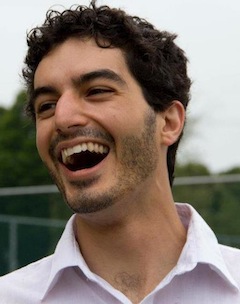
Dr. Shimon Amir researches circadian rhythms and clock genes. (photo from Shimon Amir)

When our circadian rhythm is disrupted, it can cause a brain disorder that manifests in a series of detrimental conditions too numerous to list, but that includes insomnia, depression and Parkinson’s disease.

“Circadian rhythms are daily observations in behavioural, physiological and metabolic processes,” explained Dr. Shimon Amir, professor of psychology, Concordia University in Montreal, and director of the university’s Centre for Studies in Behavioural Neurobiology. “In fact, everything you can measure in an organism follows a daily rhythm – a 24-hour cycle generated by internal clocks present in each and every cell in our bodies. And they are synchronized with the environmental light cycle. So, there is tuning between the internal rhythms and the solar cycle. Those are the rhythms.

“Most people might think that rhythms are driven by the light-dark cycle, but that’s not the case. They are generated by a clock that is present in every cell. The clocks are made of a set of genes called ‘clock genes’ and they oscillate – form feedback logs that last each cycle, with each cycle lasting about 24 hours.”

Amir was born and raised in Israel and moved to Montreal for his PhD. He went back to Israel to work at the Weizmann Institute of Science, but later returned to Montreal to teach and do research on circadian rhythms and now, too, clock genes.

According to Amir, circadian rhythms allow organisms like flies, rats, monkeys, humans and even plants to anticipate and respond to the demands of their environment.

“Rhythms can be disrupted by various means,” he said. “Ones that are most common are traveling across time zones, working shift work and eating at the wrong times. But, the main reason for the disruption is movement across time zones. Your clock is synchronized to your location. So, if you move from, say, Vancouver to Montreal, the clock has to be advanced, as you’ll wake up in Montreal three hours earlier, right? That takes time and the mismatch between environment and internal cycles causes various metabolic, behavioural, cognitive and other problems.”

While there are clocks in every cell of the body, all these clocks report to the master clock in the brain. That clock receives input from the eyes – light information that resets the master clock daily.

When we use lights at night, the master clock gets disrupted. “The clock is very sensitive to light at night,” said Amir. “Say you’re asleep and you want to go to the bathroom in the middle of the night. You turn on the light and that causes a disruption of the clock. Another way to disrupt the clock is the time that you eat. Eating should occur during the day.

“The reason light is so disruptive at night is that one arm of the clock is a hormone called melatonin. Melatonin is exceedingly sensitive to light. It is secreted during the night and is suppressed during the day. But, if you turn on the light at night – even very brief exposure to light at night – it suppresses the melatonin rhythm.”

Amir suggested using a sleep mask to keep light away, as well as learning to use the washroom at night without turning on a light. “You can adapt to the dark very quickly and be able to see,” he said.

While Amir’s initial research interest was in circadian rhythm, over the last 10 years, he has expanded his focus to other clocks in the brain – those that control different types of behaviours and pathological conditions, such as depression, anxiety, drug addiction and diseases like Parkinson’s.

Through experiments with mice and rats, Amir has been working to configure which brain clock controls, or affects, how the rodents handle stimulation and what happens if these clocks are turned off or disrupted.

“So, the clocks are made of several particular genes called clock genes,” said Amir. “We have various molecular, genetic and viral tools to manipulate those genes directly … in different regions of the brain…. We’re seeing what happens when an animal that has a brain region that doesn’t have a clock or particular clock gene that stops the clock … how the animal behaves and what are some of the pathological consequences of this condition.”

Amir and team use various animal models of disease, looking into what happens when you take out the clock and if it correlates with enhanced depression and anxiety.

“The circadian rhythm is really a very fundamental system that you can say controls everything,” said Amir. “When the system is disrupted, it has important implications for varied disorders.”

photo - Dr. Shimon Amir
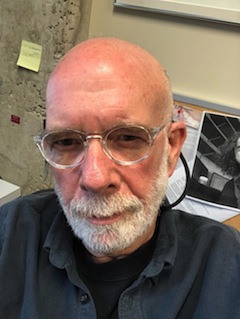
Dr. Shimon Amir (photo from Shimon Amir)

The main goal is to understand the evolutionary function of the clocks and what they do to enable adaptation of organisms to their surroundings. But, also, the hope is that, by having better understanding, it will help in identifying new avenues of therapies.

With jet lag being such a hot topic in regards to circadian rhythm, Amir suggested a few ways to keep it at bay. “There are some ways to shorten jet lag, but there’s no way to avoid it,” he said.

“When you go east, you have to be exposed to light in the morning, in order to readjust to the new time zone. When you are exposed to light early in the morning, it induces in the clock a ‘face advance,’ it advances the clock. But, if you go west, you have to be exposed to light at night, early night. The transition between the evening and night, that’s where you have to be exposed to light, and that’s where it is ‘face delay.’ It will delay the face of the clock, because you have to wake up later when you go west.

“You need to be intentionally exposed to light in the evening or have light exposure a bit longer before you go west … or wake up very early, be exposed to light early in the morning, if you go east.

“Going through jet lag is very unhealthy,” he said. “If you do it very often, it will affect you in various ways, negatively, of course. Except, you can’t avoid it … as you go see family and grandchildren, and others, in Israel.”

Rebeca Kuropatwa is a Winnipeg freelance writer.

Format ImagePosted on April 12, 2019April 10, 2019Author Rebeca KuropatwaCategories WorldTags circadian rhythm, science, sleep
Joining a recent church tour

Joining a recent church tour

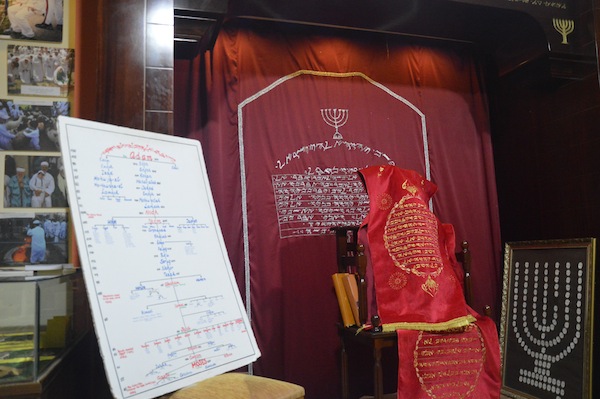
Inside the Samaritan Museum. (photo by Barry Kaplan)

It was one of the worst winter days I could remember – freezing temperatures, high winds and streets turned into rivers from the rain. Our friend, the pastor of the Jerusalem Baptist Church, had invited us to come on their church trip to Judea-Samaria.

Judea-Samaria is the area on the west bank of the Jordan River, approximately 30 miles wide, 70 miles long, not quite 2,000 square miles in area. Judea was the southern kingdom of the country with Jerusalem as its capital, and Samaria was the capital of the northern kingdom. To call this area Judea-Samaria makes clear the Jewish biblical and historical connection, but it is contentious. However, the other term for this area, the West Bank, is also a matter of contention, as that description negates the Jewish connection.

In 1922, 80% of the area of Palestine, as defined by the League of Nations (predecessor to the United Nations), was removed and became Transjordan, which was occupied then by Bedouin. During the British Mandate (1922-1948), Judea-Samaria was an integral part of the Jewish homeland and described by the British as Judea-Samaria.

In 1946, the British granted independence to Transjordan and Abdullah bin Al-Hussein was crowned king.

Jordan occupied the west bank of the river until 1950, when it annexed it to the Hashemite Kingdom. King Abdullah named it the West Bank and ruled over the area from 1950 to 1967.

Our adventure begins

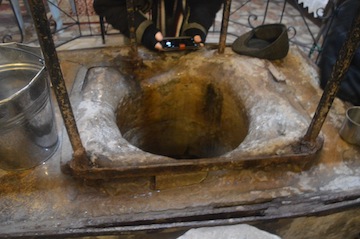
Our first stop was Jacob’s Well, which is in St. Photini Church in Nablus, or Shechem. Jewish, Samaritan, Christian and Muslim traditions all associate Jacob with a well, which lies within the monastery complex of the Greek Orthodox Church. The well is not specifically mentioned in the Hebrew Bible, but Genesis 33:18-20 states that, when Jacob returned to Shechem from Paddan Aram, he camped “before” the city, bought the land on which he pitched his tent and erected an altar. Biblical scholars contend that the plot of land is where the well was constructed.

photo - Jacob’s Well, which is in St. Photini Church in Nablus, or Shechem
Jacob’s Well, which is in St. Photini Church in Nablus, or Shechem. (photo by Barry Kaplan)

Today, Jacob’s Well is about 250 feet from the archeological ruins of ancient Shechem, which has a long history in Jewish tradition and was the first capital of the northern kingdom of Israel.

The well has been venerated by Christian pilgrims since the early fourth century CE. In the Greek Orthodox tradition, a Samaritan woman’s story at Jacob’s Well with Jesus was so powerful that many listeners became followers of Jesus, including her five sisters and two sons. The disciples heard of her experience with Jesus and came to baptize her, giving her the name Photini, meaning, “Enlightened One.” Thus, the name of the church in Nablus.

Abuna Ioustinos, a Greek Orthodox priest in Nablus, spearheaded the reconstruction project that saw Jacob’s Well restored and a new church built within the grounds of the Bir Ya’qub monastery, modeled on the designs of the Crusader-era church. Visitors access the well by entering the church and descending the stairs to the crypt.

Joseph’s Tomb is located just north of Jacob’s Well in an Ottoman-era building marked by a white dome. We could go inside the gate but no further. The tomb lies inside Area A of the West Bank, which is officially under Palestinian Authority control and the Israel Defence Forces bars Israeli citizens from entering the area without prior authorization. The site is venerated by Jews, Christians and Muslims, and has often been a flashpoint for violence. Jewish pilgrims are usually only allowed to visit the tomb once a month under heavy armed guard.

There is one synagogue in downtown Nablus, two on Mount Gerizim and two in Holon.

The Samaritans

Arriving on Mount Gerizim, our bus drove around Kiryat Luza, a village on the mountain ridge where Samaritans live. Mount Gerizim forms the southern side of the valley in which Shechem is located. On the northern side is Mount Ebal.

We stopped at the Samaritan Museum, where the grandson of the high priest and another young woman explained their history before the current high priest – the 137th generation – came to talk to us.

In 721 BCE, the Assyrians invaded, destroyed and exiled the population of the Northern Kingdom. Samaritans believe that those who remained are descendants of the original Israelites. However, when the Jews returned from exile in Babylon, they did not accept the Samaritans, so the Samaritans separated and settled near Mount Gerizim, which they believe G-d chose as his only holy place.

Samaritans say they are descendants of the Northern Kingdom’s tribes, while rabbinical sources regard them as descendants of the Assyrian colonizers who converted to Judaism. Either way, their name, Shomronim, comes from the Hebrew word shomrim, “keepers of the law.”

Today, Samaritans number about 800, half living in Kiryat Luza, half in the Neveh Marque neighbourhood of Holon, a suburb of Tel Aviv. All Samaritans are citizens of the state of Israel, and those in Holon serve in the IDF and speak Hebrew as their main language.

Shechem is mentioned in the Book of Genesis after Abraham arrives and offers a sacrifice to G-d at Alon Moreh. Jacob then came, pitched his tent and bought the land here, and Joshua made it a city of refuge. The bones of Joseph were brought here from Egypt for burial.

The three holiest places to Samaritans are where Abraham took Isaac to be sacrificed, where Joshua placed 12 stones when the Israelites entered Canaan and where the Israelites re-erected the Tabernacle. According to the Samaritans, these events all took place on Mount Gerizim.

Samaritans believe in G-d, Moses and the Torah, and base their traditions on the Torah. They speak ancient Hebrew; however, their mother tongue is Arabic. They practise ritual circumcision. They observe dietary laws. They can marry non-Samaritan women who convert, provided they are virgins when they marry. They observe biblical holidays but not post-biblical holidays, such as Purim or Chanukah. They await the Messiah.

Samaritans observe Passover, and I once attended one of their Passover celebrations. They keep alive the tradition of the Passover sacrifice, as described in the Hebrew Bible. Prior to 1967, the Jordanians only allowed them to ascend Mount Gerizim for the Passover celebration. Since the Six Day War in 1967, the Israelis have allowed them free access to the mountain.

Our trip winds up

Our adventure ended in a church in Taybeh for lunch, where we arrived cold and wet. Due to a power outage, caused by the rain, a long grill with burning charcoal was brought out so that we could warm our hands. Taybeh is the last all-Christian community in the West Bank and the home of Taybeh Brewery, one of the few breweries in Palestine.

We returned to Jerusalem around 6 p.m.

Hopefully, another trip to Shechem will take place in the spring, after the rains end.

Sybil Kaplan is a journalist, lecturer, book reviewer and food writer. She created and leads the weekly English-language Shuk Walks in Machane Yehuda, she has compiled and edited nine kosher cookbooks, and is the author of Witness to History: Ten Years as a Woman Journalist in Israel. She also writes stories about kosher restaurants on janglo.net for which her husband, Barry Kaplan photographs.

Format ImagePosted on April 12, 2019April 10, 2019Author Sybil KaplanCategories Israel, TravelTags Judea-Samaria, West Bank
A tour full of misinformation

A tour full of misinformation

The market in Jenin. (photo by Dave Gordon)

Everything is political in Israel; there’s no escaping it. Pick a corner, a street sign, a building, there’s potential for argument. So, you can imagine what it’s like to take a tour of an area as contentious as the West Bank, which, thankfully, was quiet with respect to violence when we visited. Not surprisingly, our guide almost took on the role of spokesperson for the Palestinian Authority.

Abraham Hostel, in the heart of Jerusalem, offers a three-day West Bank tour. The tours include Nablus (biblical Schechem), Jenin and the refugee camp that borders it, Jericho, Ramallah and Bethlehem.

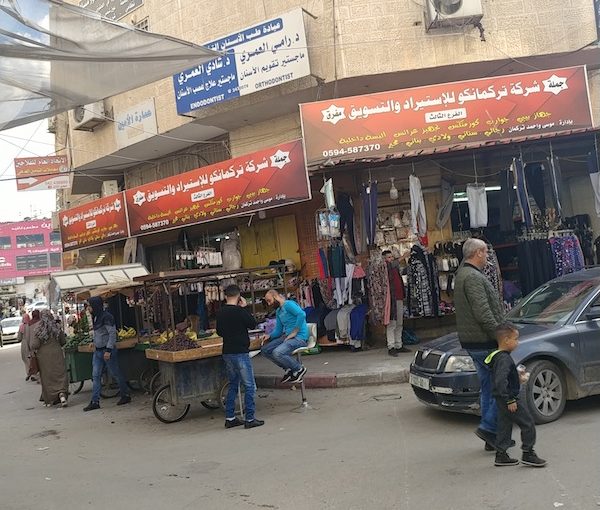
It was eye-opening for me. For one, the media frequently portrays Palestinians in the West Bank as living in squalor, often involved in conflicts with the Israel Defence Forces. We saw bustling markets, shopping centres, corporate plazas, sports cars, and plenty of American restaurant franchises, such as KFC and Pizza Hut.

Our tour guide was a wannabe biblical scholar and archeologist. “Personally,” he told us, “there could never have been a Jewish Temple.” It’s impossible, apparently, to build on top of solid rock, he explained.

He gave a brief history of the term Palestine, correctly stating that Roman invaders, Vespasian and Titus, in the first century, renamed the region from Israel/Judah. But why, particularly, call it Palestine? “Hmm,” he said, taking a moment to think. “Because they liked the name.” Not, as many scholars believe, because the Romans sought to call the area after the Jews’ sworn enemy, Philistines, to rub salt in the wounds.

While at Bethlehem’s Church of the Nativity, our guide gave his take on the Gospels, contending that it wasn’t the case that Jesus’s mother, Mary, couldn’t find a room at an inn – rather, the Jews forbade Mary to have a room because she was ritually unclean after childbirth. And that, he said, was the unwritten explanation of the manger/barn scenario.

He then proffered his views on Jews. “Since anyone can become a Jew,” he said, “they’re not really tied to the land.” Meaning that anyone who has converted, or was born to converts, has no connection to Israel.

And, he added, since the parcel of land called Judah, from which the name “Jew” was derived, was only a fraction of modern Israel, today’s Jews should only have rights to those ancient borders.

Quoting the Torah – “if you bless Israel, you are blessed; if you curse Israel, you will be cursed” (Genesis 12) – our guide insisted that the “Israel” referred to in this verse has never meant “the nation of Israel” (which it does), but only refers to the patriarch Jacob, who was later named Israel. The underlying message was that there was no concern about being cursed if you curse Jews.

For good measure, he asked, pointing toward the refugee camp, “Doesn’t it say ‘love your fellow’ in the Torah? That’s one of the top commandments.”

Almost no tour anywhere is complete without the commercial aspect – wandering through the souvenir shops and markets.

At the ice cream shop, our guide claimed, “Palestinian ice cream is made with real cream, not like the Israeli version!” At the spice store, he spoke about how Israelis use cheap ingredients in their Zaatar, but not Palestinians. And, he said, “Even Israelis agree that Palestinian beer is better than the sewer water in a can they make.”

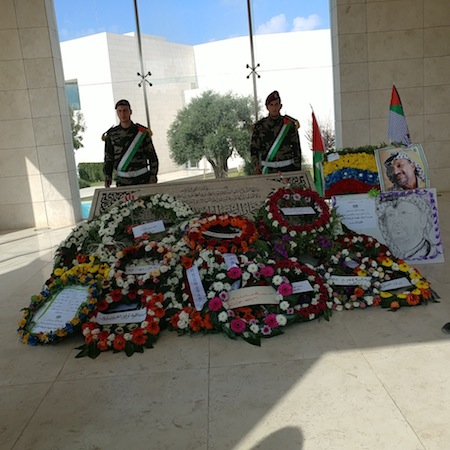
photo - Yasser Arafat mausoleum in Ramallah
Yasser Arafat mausoleum in Ramallah. (photo by Dave Gordon)

The hero worship of Yasser Arafat was astounding. Virtually every street corner in Ramallah had a wall-sized poster of him. My trip was in November, so these displays were likely timed for the anniversary of his death. Schoolchildren took a field trip to his tomb in Ramallah for a commemoration and photo opportunities.

Our guide made every effort to politicize the tour, down to the free lunch. He said there wasn’t such thing as “Israeli couscous,” only co-opted “Arab-Palestinian couscous.” Scholars and culinary experts differ, saying that Israeli couscous was created in the 1950s in response to food rationing. Alas, more was still to come from our guide.

While he had our attention, he showed us illustrations of how Palestine in 1947 comprised modern Israel and the West Bank, while today, the Palestinians only have small, scattered autonomous dots in the Palestinian Authority. As for the Palestinian part in this development, he said, “just a couple of bus bombs” derailed the peace process, but only temporarily.

Dave Gordon is a Toronto-based freelance writer whose work has appeared in more than 100 publications around the world.

Format ImagePosted on April 12, 2019April 10, 2019Author Dave GordonCategories Israel, TravelTags Judea-Samaria, West Bank
הסכם ליישום

הסכם ליישום

(international.gc.ca)

הדיון הצעת החוק של הסכם יישום הסחר החופשי בין קנדה ישראל נמשך בימים אלה. בפועל מדובר בתיקון לחוק “סי-שמונים וחמש”.

לינדה פרום (מהמפלגה השמרנית) אמרה את הדברים הבאים בדיון בהצעת החוק: אני תומכת מאוד בחקיקה זו, שלדעתי מייצגת את קונצנזוס כללי בקנדה בשני נושאים: הראשון – חוק “סי-שמונים וחמש” מייצג את הערך של הסכמי סחר חופשי בקידום השגשוג של קנדה. השני – החקיקה הזאת מדגישה את חשיבות היחסים הבילטראליים הרחבים יותר של קנדה עם מדינת ישראל. על הצד המסחרי, קנדה חתמה על הסכם סחר חופשי עם ישראל לפני כעשרים שנה. מאז סחר הסחורות בין קנדה לישראל גדל פי שלושה. לפני כשנתיים הערך הכולל שלו הגיע למיליארד ושבע מאות מיליון דולר. עיקר היצוא והיבוא של קנדה לישראל נמצא במגזרים הבאים: מכונות תעשייתיות, מטוסים וחלקים, מוצרי פרמצבטיקה, ציוד חשמלי ואלקטרוני, אבנים יקרות, מכשירים מדעיים ומדויקים. מרבית היצוא הסחורות ומהיבוא הם בענפי הטכנולוגיה העילית. ואכן, קשרי המסחר של קנדה עם ישראל אופייניים ליחסים הקיימים בין שתי המדינות המתועשות והמתקדמות מבחינה טכנולוגית.

מספר מחוזות בקנדה זיהו את ההזדמנויות הטכנולוגיות הקיימות ביחסי המסחר שלנו עם ישראל. אין זה מפתיע כי נובה סקוטיה, ססקצ ‘ואן, אונטריו וקוויבק חתמו על הסכמי מדע, טכנולוגיה וחדשנות דו-צדדיים עם ישראל.

המשק הישראלי מעניק לקנדה שוק חשוב במזרח התיכון. סך היצוא הקנדי לישראל עמד על כארבע מאות מיליון דולר בשנה, בין השנים 2015 ל-2017. במקביל יבוא של כמיליארד ושלוש מאות מיליון לקנדה מקורו בישראל.

המשק הישראלי חזק וממשיך להתרחב, עם צמיחה של שלושה וחצי אחוזים אשתקד. לכן טבעי כי קנדה תבקש להפיק תועלת נוספת ממסחר זה. לפני כחמש שנם יזמה הממשלה הקונסרבטיבית לשעבר דיונים עם ישראל, להרחיב את הסכם הסחר הדו-צדדי שלנו. מו”מ זה הושלם בחודש יולי לשנה לאחר מכן, עם עדכון ארבעה פרקים בהסכם המקורי ובהרחבת הסכם הסחר החופשי, כך שיכללו שבעה פרקים חדשים. מדובר פרקים בנושאי מסחר אלקטרוני, קניין רוחני, אמצעים סניטריים ופיטו-סניטריים, חסמים טכניים סחר, סחר וסביבה, מסחר ועבודה, וכן סיוע במסחר. לאחר שהחוק החדש יהיה בתוקף מלא, קרוב למאה אחוז מהחקלאות הקנדית, החקלאות, הייצוא והדגים מישראל, ייהנו מטיפול תעריפי מועדף. זהו שיפור של תשעים אחוז לעומת המצב היום. יהיו גם הזדמנויות חדשות עבור חברות קנדיות בתחומי התעופה והחלל, טכנולוגיות החיים ומדעי החיים, וכן מגזרי האנרגיה. תחום התעופה והחלל, בפרט, מייצג שוק פוטנציאלי משמעותי עבור חברות קנדיות. קיימות הזדמנויות לחברות קנדיות באווירונאוטיקה, במערכות תקשורת, בכלי טיס בלתי מאוישים ובמערכות אחרות.

בכל הנוגע לטכנולוגיה נקייה ולאנרגיה בת קיימא, יש גם הזדמנויות משמעותיות. מגזרים אלה לצד ניהול מים יעיל, הם סדרי עדיפויות מרכזיים עבור ישראל ועבור התעשייה הישראלית. בניגוד לקנדה, לישראל אין משאבי מים ואנרגיה משמעותיים. חברות קנדיות הפועלות בתחום הטכנולוגיה הסולארית, אחסון אנרגיה, דלקים ביולוגיים, טכנולוגיות חיטוי מים, גילוי דליפות ושימוש חוזר בשפכים, מעניקות כיום הזדמנויות משופרות בשוק הישראלי.

עם זאת יש יותר הזדמנויות ביחס לחינוך ולמחקר. מוסדות חינוך על-תיכוניים קנדיים וישראלים נהנים באופן משמעותי משיתוף פעולה בין-לאומי, המבוסס על הסכמי מוסד-מוסד. וכן על תוכניות חילופי סגל וסטודנטים. לפני כשנתיים למדו בקנדה כשבעה מאות סטודנטים מישראל. ובמקביל קנדה קידמה בברכה יותר משבעים ושמונה אלף מבקרים מישראל באותה שנה. בכיוון ההפוך, כמעט כמאה אלף קנדים ביקרו בישראל לפני כשלוש שנים.

Format ImagePosted on April 10, 2019April 10, 2019Author Roni RachmaniCategories עניין בחדשותTags Canada, Israel, trade, ישראל, סחר, קנדה
Dreamers and builders fêted

Dreamers and builders fêted

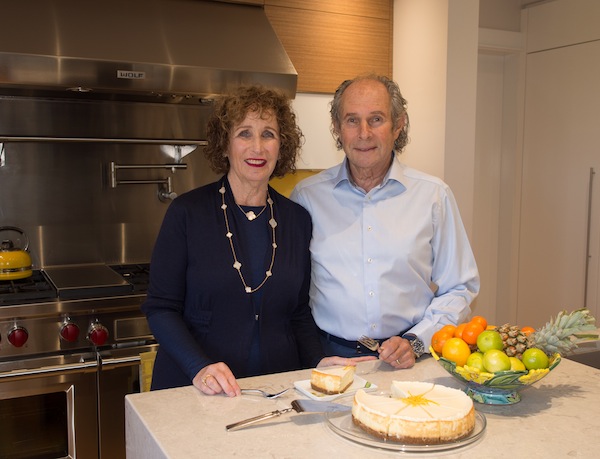
Temple Sholom pays tribute to Susan Mendelson and Jack Lutsky at its Dreamers and Builders event next month. (photo from Temple Sholom)

When Temple Sholom members and friends come together May 5, they will celebrate decades of community-building by two honourees. They will also catch a glimpse into the future, as an annual award is presented to two young people with big dreams.

Dreamers and Builders is a biennial event, the first of which was held two years ago, with renowned landscape

architect Cornelia Oberlander being honoured. This year’s honourees are Susan Mendelson and Jack Lutsky, a couple whose lives and careers have focused on building successful businesses and making philanthropic contributions.

At the same event, the annual Temple Sholom Teen Tikkun Olam Awards will be presented to young people with visionary plans for making the world better. This year, the co-winners are Sam Albert and Liana Gerber, and they will be featured in an upcoming issue of the Jewish Independent.

Mendelson is best known for the culinary empire she has built over years as a founder of the Lazy Gourmet and as a food commentator, caterer, author and business leader. Her husband, Jack Lutsky, has an equally stellar resumé as an architect and businessperson.

Lutsky, who was born and raised in Edmonton, attended the Technion, in Haifa, Israel, and completed his studies at the Architectural Association School of Architecture, in London, England. He moved to Vancouver to begin his career and soon opened an eponymous architecture firm.

“My first clients actually were from the Jewish community,” Lutsky recalled in an interview with the Independent. “People I knew, that I could approach. I did work at the Jewish Community Centre and I did work at Schara Tzedeck Synagogue.”

An addition to Temple Sholom in the 1990s, in which classrooms and flexible meeting spaces were added above the driveway, was designed by him. In addition to a few churches and other institutional projects, Lutsky’s portfolio includes many commercial and retail projects. He was also the architect for the Holocaust memorial located in Schara Tzedeck Cemetery.

Lutsky’s philanthropic work includes serving as chair of the board of Jewish Family Services, involvement in Jewish Federation of Greater Vancouver, serving on the Temple Sholom board and heading or co-leading many fundraising campaigns, including a retirement event for Cantor Arthur Guttman that raised more than $100,000 for the synagogue. Lutsky was also on the transition committee when the synagogue’s Rabbi Philip Bregman retired and current Rabbi Dan Moskovitz assumed the post, and helped raise funds to ensure that Vancouver’s high cost of housing would not affect the synagogue’s ability to hire the ideal candidate.

Mendelson’s life has been devoted to food and philanthropy. Born in Toronto, she came to Vancouver for university and began baking treats for sale at intermissions at the Vancouver East Cultural Centre. This was the genesis of Mendelson’s professional food career. A co-founder of the Lazy Gourmet, an iconic local caterer, she has been a regular media commentator on food, is the author of 10 cookbooks and has mentored countless up-and-comers in the sector. Her community work includes serving as honourary board chair of Big Sisters BC Lower Mainland, chairing Federation’s women’s campaign, serving on the dean’s advisory board at the University of British Columbia and being founding chair of Arts 149, whose mandate is to present contemporary performing arts that innovate and inspire new professional community arts practices. Already famous locally, Mendelson was featured last month in the New York Times, which credited Mendelson in part for the popularity of the Canadian dessert Nanaimo bars.

The couple joined Temple Sholom in the 1990s and they agree it is a relationship they are thrilled to nurture.

“It’s been a good move for us and we really love the congregation,” Lutsky said.

Agreeing to be honoured at this event is really a chance to strengthen Temple Sholom, added Mendelson.

“It’s been an incredible opportunity to bring so many people together to become part of this event,” she said. “When we were approached, we just thought this was a great opportunity for us to be able to find a way to help Temple Sholom using our network, our friends, our family and our passion for Temple…. They’ve honoured us with donations and participation and sitting on committees. It’s been a pretty joyous experience all around.”

The couple promises some unexpected components of the event, which is envisioned as more laid back than a typical formal gala.

“I’m not going to give out any secrets, but we want our event to be a fun event,” said Lutsky. “We are designing it so that it will be very enjoyable.”

Mendelson is especially excited about the tie-in with successive generations through the Teen Tikkun Olam Awards, which was envisioned by Moskovitz and is funded in perpetuity by Michelle and Neil Pollock.

“That’s a wonderful opportunity – to reach out and find young people in this community, the next leaders in the community,” Mendelson said. “We want other people to be inspired, as well, by these brilliant young kids who are out there doing remarkable acts of kindness and tikkun olam in the world. It really is about looking to the next generation and honouring them at the same time.”

To encourage a younger audience, the event offered half-price tickets for people 30 and under.

Helen Heacock-Rivers who, with Karen Gelmon, is co-chairing Dreamers and Builders, said the event was almost sold out.

“It is a testament to how much Susan and Jack are loved; also Temple Sholom, but Susan and Jack in particular,” she said. “They are a perfect example of people who should be honoured.”

Heacock-Rivers lauded Mendelson and Lutsky for being hands-on in promoting and planning the event.

“They are the honourees, they don’t have to do anything,” she said. “But they are very invested in making sure this is successful for Temple Sholom, to make sure that we can have the means to support the programs that they have earmarked for the monies that come in.”

Because many younger members are moving outside of the city proper, outreach programs to suburban congregants and potential members will be funded with revenue from Dreamers and Builders. Upgraded security at the synagogue is another project earmarked for funds.

Format ImagePosted on April 5, 2019April 4, 2019Author Pat JohnsonCategories LocalTags Jack Lutsky, Susan Mendelson, Temple Sholom, tikkun olam

Posts pagination

Previous page Page 1 … Page 160 Page 161 Page 162 … Page 323 Next page
Proudly powered by WordPress