Skip to content
  • Home
  • Subscribe / donate
  • Events calendar
  • News
    • Local
    • National
    • Israel
    • World
    • עניין בחדשות
      A roundup of news in Canada and further afield, in Hebrew.
  • Opinion
    • From the JI
    • Op-Ed
  • Arts & Culture
    • Performing Arts
    • Music
    • Books
    • Visual Arts
    • TV & Film
  • Life
    • Celebrating the Holidays
    • Travel
    • The Daily Snooze
      Cartoons by Jacob Samuel
    • Mystery Photo
      Help the JI and JMABC fill in the gaps in our archives.
  • Community Links
    • Organizations, Etc.
    • Other News Sources & Blogs
    • Business Directory
  • FAQ
  • JI Chai Celebration
  • JI@88! video

Recent Posts

  • המלחמות של נתניהו וטראמפ
  • Zionism wins big in Vegas
  • Different but connected
  • Survival not passive
  • Musical celebration of Israel
  • Shoppe celebrates 25 years
  • Human “book” event
  • Reclaiming Jewish stories
  • Bema presents Perseverance
  • CSS honours Bellas z”l
  • Sheba Promise here May 7
  • Reflections from Be’eri
  • New law a desecration
  • Resilient joy in tough times
  • Rescue dog brings joy
  • Art chosen for new museum
  • Reminder of hope, resilience
  • The national food of Israel?
  • Story of Israel’s north
  • Sheltering in train stations
  • Teach critical thinking
  • Learning to bridge divides
  • Supporting Iranian community
  • Art dismantles systems
  • Beth Tikvah celebrates 50th
  • What is Jewish music?
  • Celebrate joy of music
  • Women share experiences 
  • Raising funds for Survivors
  • Call for digital literacy
  • The hidden hand of hate
  • Tarot as spiritual ritual
  • Students create fancy meal
  • Encouraging young voices
  • Rose’s Angels delivers
  • Living life to its fullest

Archives

Follow @JewishIndie
image - The CJN - Visit Us Banner - 300x600 - 101625

Category: Arts & Culture

Art reflects constant change

Art reflects constant change

Carly Belzberg’s solo show is at Zack Gallery until Aug. 3. (photo by Nathan Garfinkel)

Carly Belzberg is a Zen practitioner, and her art reflects her beliefs. Her solo show at the Zack Gallery – The Spirit of Cloud, The Spirit of River – is all about change.

“I’m frequently at the Zen Centre of Vancouver,” she said in an interview with the Independent. “I study there and I realize that everything in life is in flux. A river is always changing. Water is quiet one moment, turbulent the next. It could be playful or angry, rushing or swirling, transforming from moment to moment. There are bubbles and spray and flow. Nothing is ever constant. The same is true of clouds. You can’t say a cloud is fluffy. It’s only fluffy one moment. It’s dynamic, fluid. The same is true of humans. We change from one day to the next, under the influence of the world. That’s what I wanted to express in my paintings: the freedom of change, its boundlessness. Nothing stays ‘this way.’ Everything evolves. Everything grows, and the essence of change is clearest when watching the river or the clouds.”

Watching the river or the sky helps her meditate. “Nature comes into you,” she said. “You breathe it in, and then it comes out again.”

Part of what comes out for Belzberg is her art. Colours and lines coalesce and crisscross in her abstract images of movement and form. The paintings represent the essence of change, as she sees it.

“It is my first-ever solo show,” she said, although she has participated in several group shows at the Zack in the last few years. “My art is a joy, and I wanted to spread my joy. I’m really happy to share my vision, something I’ve been nurturing for so long.”

Her path to this exhibit was as complicated as a water drop. She grew up in Vancouver, then studied at Concordia University in Montreal, Drexel University in Philadelphia and, later, at Simon Fraser University. With a bachelor of fine arts and art education and a master’s in art psychotherapy, she started her working life in Baltimore as an art therapist.

“I painted as a school girl and loved it. Had an amazing art teacher. That’s why I decided to do a master’s in art therapy. Art helped me a lot when I was sick as a teenager, and I wanted to learn how to use art to help others.”

Her work in Baltimore was in crisis intervention and with elderly dementia patients. She loved both sides of her job.

photo - Carly Belzberg at the July 5 opening of her solo exhibit at the Zack Gallery, called The Spirit of Cloud, The Spirit of River
Carly Belzberg at the July 5 opening of her solo exhibit at the Zack Gallery, called The Spirit of Cloud, The Spirit of River. (photo by Nathan Garfinkel)

“Art gives people in crisis a voice,” she said. “It soothes. It supplies cathartic relief. Art is much better than talk because it gives people distance from their trouble and their feelings. Art provides a safe outlet.”

She also explained about the people she worked with who had dementia: “Some of them lost their memories in words, but the images are still there and they come out in the … paintings, even if they don’t remember. They draw their memories.”

While she kept on painting all that time, her focus was on building her art therapy career. Like many hobbies, her painting became relegated to the sidelines of her life.

After awhile, she moved to Winnipeg and, a few years later, around 2007, returned to Vancouver.

“I didn’t do much art, and it made me unhappy,” she said. “I wasn’t connected to who I really am. I found the lack of liveliness inside. I needed art. It is something to look forward to in the morning.”

Unfortunately, between her work for the Vancouver School Board and her private therapy practice, she couldn’t seem to find a place for her own art. Then, about three years ago, things changed.

“There was a demo at Opus, the art supply shop on Hastings in downtown,” Belzberg recalled. “It was held by a wonderful Vancouver artist, Suzan Marczak. I went there and I loved it. There were some difficult people attending that demo, and Suzan dealt well with them. I was impressed, and we talked. Suddenly, I wanted to get back to my painting. I guess I needed a push in the right direction. I started studying with Suzan. She is a very talented teacher, demanding but generous.”

Since their first meeting, the two have become such good friends that Marczak helped Belzberg hang the paintings for her Zack show.

“Suzan reminded me how much I loved painting,” said Belzberg. “It happens sometimes – you forget parts of what you are, and then you remember, and you have this desire to create again.”

About the same time, Belzberg made a serious commitment to studying Zen. This also led her back to her artistic core.

And her work for the school board helped, too. “I offer art therapy classes for the children of Vancouver elementary schools. Young kids don’t have stereotypes, their minds are free,” she said. “They see everything with fresh eyes, and it meshes with the Zen philosophy. In Zen, you let go of your preconceived ideas, of stereotypes. Eternal change means there are no stereotypes.”

This approach is what led to the current exhibit. “This show was a spontaneous exploration of change, prompted by curiosity. I never knew what would happen when I started a piece. As one of my teachers said, painting without a final product in mind is akin to driving on a dark highway, where you only see a short distance ahead of you at a time. Each decision is based on moment-by-moment input, on what you see on your canvas right now.”

Despite the prolonged period of partial withdrawal from the arts, Belzberg has had some sales and commissions over the years. One of her biggest commissions was the purchase of 14 paintings for a nursing home in Winnipeg. But she doesn’t paint for money.

“If I had to paint for money only, I think I’d get sick,” she said. “I want my paintings to go to people’s homes, make their space beautiful. You know, they say sometimes, ‘This house is so you.’ That’s how it is with me in my house. I like crystals and plants, they make me feel good, so I buy them for my home. If someone buys my paintings to make them feel good, to create an environment that resonates with their souls, that makes me happy.”

The Spirit of Cloud, The Spirit of River exhibit opened July 5 and continues until Aug. 3. For more information on Belzberg and her work, visit carlybelzberg.com.

Olga Livshin is a Vancouver freelance writer. She can be reached at [email protected].

Format ImagePosted on July 13, 2018July 11, 2018Author Olga LivshinCategories Visual ArtsTags art, Carly Belzberg, painting, Zack Gallery, Zen
Musical season ending

Musical season ending

Caviar and Lace entertain at the last session of the 2017/18 Jewish Seniors Alliance Snider Foundation Empowerment Series. (photo by Alan Katowitz for JSA)

On June 25, Jewish Seniors Alliance and the Kehila Society of Richmond co-sponsored the fifth in the JSA’s Empowerment Series program. This year’s theme was “Laughter and Music: Feeding the Soul” and the subtitle for this final event in the season was “Music for our Hearts and Songs We Love.”

Toby Rubin, coordinator of Kehila, introduced the afternoon and welcomed everyone. About 100 enthusiastic attendees dug into the summertime lunch of burgers and hot dogs prepared by Stacey Kettleman.

After lunch, everyone proceeded to the sanctuary to be entertained by Caviar and Lace, comprised of Michelle Carlisle and Saul Berson. The duo performed an eclectic mix of classic, jazz and folk songs. Carlisle plays piano and Berson plays a variety of instruments, from saxophone to clarinet. They both played and sang, encouraging the audience to join in. The mix of oldies, and especially songs from the 1950s, was indeed music to the ears of the listeners, who were familiar with most of the melodies.

A new JSA Snider Foundation Empowerment Series will start in the fall.

Shanie Levin, MSW, worked for many years in the field of child welfare. During that time, she was active in the union. As well, she participated in amateur dramatics. She has served on the board of the Jewish Federation of Greater Vancouver and is presently on the executive of JSA and a member of the editorial committee.

Format ImagePosted on July 13, 2018July 11, 2018Author Shanie LevinCategories MusicTags Caviar and Lace, Empowerment, JSA, Kehila Society, seniors
Book has added spice

Book has added spice

Traditions can disappear within a blink of an eye. But keeping certain practices alive is what helps us remember where we came from and shapes how we live and be Jewish today.

I was excited and curious to read volume 1 of The New Spice Box: Canadian Jewish Writing, edited by Ruth Panofsky, and published by New Jewish Press. I wanted to see how various writers used their family’s history in stories and poems to express their views.

The book is divided into three sections: voice, place and practice. Oppression and triumph are recurring themes throughout, and the stories exhibit strength and are endearing. Panofsky has brilliantly chosen selections that represent what it means to be Canadian in a Jewish context – overcoming difference while maintaining tradition.

The Spice Box: An Anthology of Jewish Canadian Writing was first published in 1981 by Lester and Orpen Dennys; it was edited by Gerri Sinclair and Morris Wolfe. The original book featured many authors, and brought Jewish stories to the forefront in Canada, including translations from original Yiddish texts.

For this new edition, Panofsky researched extensively writings from 1980 to the present. Material that did not make it into the original book was re-evaluated. Pieces relevant to the lives of Jews today were picked out and the contributors include authors from the first edition, such as Matt Cohen and Seymour Wayne. Current pieces were added, and they complement the other writings tremendously. This contemporary collection is intended to provoke new ideologies of culture and what Jewishness means in Canada. To do so, some of the stories refer back to a time before Jews arrived in Canada, while others relate modern-day situations. Readers can see how traditions and circumstances have changed over the years.

The collected pieces within The New Spice Box present how the writers see themselves today and how moving to Canada shaped who they are. In some stories, Canada is depicted as a haven, but also as an intimidating place for new arrivals. Moving to a new location during the war would have been difficult and somewhat terrifying, and these stories show just how much tenacity these immigrants had to begin again. Their families are what kept them going; making sure the next generations would play a role in telling their histories and keeping age-old traditions current.

One story, in particular, demonstrates how daunting moving to another country is. In “My Mother’s Luck” by Helen Weinzweig, a daughter is talking. Initially, it is written in the first person, but the narrative changes into the second person as the story continues. Esther begins, telling her story, but the mother’s perspective takes over. Lily is preparing her daughter, Esther, for her journey to Germany from the United States. Esther is very reluctant to go, even though she agreed beforehand to do so, in the pursuit of a higher education. Esther is scared about the impending changes and is nervous about fitting into a new country, as well as living with her estranged father.

Lily reassures her daughter that this is what she needs to accomplish, even though she herself is skeptical about the value of a higher education, believing that people who are more educated do not necessarily get decent paying jobs in their chosen profession. This attitude is most likely based on Lily’s terrible experiences with men. For example, Esther’s father abandoned them shortly after she was born, preferring to be around his university friends. But, even if mother and daughter fight throughout, Lily’s love for Esther shines through, and Lily assures her daughter that, if everything does not go smoothly, she has a ticket to come back home.

Meanwhile, “Pesach en Provence” by Gina Roitman highlights a duty to safeguard Jewish holiday customs. The narrator describes why making a Passover meal is particularly significant. While in Alpes-Maritimes, taking a break from her life in Montreal, she is planning a seder for a friend. Most of her family was killed in the Holocaust and, besides her brother, only distant relatives remain. In planning the seder, overwhelming memories of her mother at Passover return. Because of these recollections, the narrator adds dishes to the menu other than those she initially planned. By the end of the story, she comes to understand why the meal was so prominent in her family and why Passover is something powerful to celebrate. She realizes her mother’s importance in keeping the tradition alive, and comes to appreciate both her mother and her culture more.

Chloe Heuchert is a fifth-year history and political science student at Trinity Western University.

Format ImagePosted on July 13, 2018July 11, 2018Author Chloe HeuchertCategories BooksTags immigration, Judaism, memoir, Ruth Panofsky
More literary than practical

More literary than practical

As a longtime reviewer of recipe books, I’ve come to realize there are two distinct categories in this genre. One is the practical cookbook you leave open on your kitchen counter while cooking. It delivers bright, inspiring images that lift you out of the doldrums of your everyday repertoire and offers concise, clear instructions using as little text as possible. Bottom line: it’s super-practical. The second kind is more of a bedside reading book, more literature than cooking aid. It comes with lengthy introductions and reflections on what particular recipes mean to the author and it’s not a book to pull out if you need to bake a quick batch of chocolate chip cookies for the last-minute guests about to arrive or the kids coming home from school.

This latter category perfectly fits Daphna Rabinovitch’s cookbook The Baker In Me (Whitecap Books, 2016), which received the top prize in the single subject cookbook category at the Taste Canada Awards earlier this year. The Jewish author of this 478-page tome has superb credentials that include director of Canadian Living magazine’s test kitchen, studies in Italy and co-authoring a host of other books, which have received accolades from culinary and literary critics. In this, her first solo book, she aims squarely at the ordinary baker and spends many pages explaining the basics for successful results making cookies, bars, chocolate, muffins, breads, cakes, pies and other desserts.

You’ll want to read these essays slowly and quietly before you tackle the recipes, which is why I recommend this book as good bedside reading. Thanks to Rabinovitch’s many years in the field, she has a plethora of baking tips and gems to share. She offers pragmatic advice on the art of measuring ingredients, the variety of cooking techniques (convection versus radiant) and what they are best used for, when to use chocolate instead of cocoa powder, and how to make your biscuits flaky.

Jewish readers will enjoy her challah, rugelach, Rosh Hashanah honey cakes and Passover recipes. Kid-size bakers will love the oversized peanut butter and oat cookies, the fudgy brownies and the peek-a-boo chocolate cupcakes. And grownup bakers will enjoy the challenge of a chocolate devil’s food cake with chocolate buttercream, One Damn Good Cookie, and the chocolate truffle pecan tart with spun sugar dome. There is lots here to impress friends and family with special occasion and everyday treats. But, as the title suggests, this cookbook is all about baking, so don’t approach it with a dieter’s caution. This is high-calorie fare. We’re talking the full mix of butter, sugar and chocolate with no concessions for waistlines.

Rabinovitch’s recipes aren’t that complicated or out of reach for a beginner baker, but there’s a fair amount of reading involved if you want to be sure you’re baking them the right way. For bakers who are keen learners, her expert viewpoint and strategic advice will add volumes to their knowledge of baking. For bakers who just want to get straight to the recipe with no lengthy reading process, this may not be the right choice for a handy kitchen companion.

Lauren Kramer, an award-winning writer and editor, lives in Richmond. To read her work online, visit laurenkramer.net.

Format ImagePosted on July 13, 2018July 11, 2018Author Lauren KramerCategories BooksTags baking, cookbook, Daphna Rabinovitch
Magic of Cinderella

Magic of Cinderella

Lyrie Murad is part of the ensemble in Rodgers & Hammerstein’s Cinderella, which opens July 11 at the Malkin Bowl. (photo from Theatre Under the Stars)

Lyrie Murad makes her Theatre Under the Stars debut this summer in Rodgers & Hammerstein’s Cinderella, which opens July 11.

“I’m both excited and nervous to be performing in front of 1,000 people every night,” Murad told the Independent. “I mean, that’s a lot of people! It’s great, because Cinderella is such a magical show, with such an empowering message, but it can be a lot of pressure to deliver the beloved tale. Despite this, I believe that our director, Sarah Rodgers, has done an incredible job in creating a show that will appeal to both young kids and adults, and that everyone will enjoy the love and magic the story entails.

“I am also so excited,” she said, “to be doing this show every other night with this company because everyone is so kind, funny and beyond talented, which makes the show so fun to do. I was nervous going into the rehearsal room, being the youngest in the ensemble, because I was going to be working with people up to 10 years older than me. But everyone was so welcoming, and I’ve learned a lot from all of them.”

Murad was born in Portland, Ore., but has lived in Metro Vancouver since she was 3 years old.

“My parents were both born and raised in Israel, so Israeli culture was a big part of my life growing up,” she said about her background. “My whole extended family lives in Israel, and it is extremely important to my parents to keep in contact with them, as well with the country, so they make sure we visit Israel at least once a year. I speak Hebrew fluently, which allows me to communicate with my family, as well as many people in Vancouver’s Israeli community.”

Murad went to elementary school at Vancouver Talmud Torah until Grade 6, then moved to McMath Secondary School, a late French immersion public school in Richmond. “I love learning languages, so choosing French was a no-brainer and a welcome addition to English and Hebrew,” she said.

While the family is not religious, “we observe the major holidays and traditions with various friends throughout the year,” she said. “Having gone to VTT, I have stayed very connected with the Jewish community through the friends I have from there. I’ve always felt OK with leaving VTT because I knew I could still stay connected to my roots by going to Camp Miriam, a Jewish social justice-based summer camp on Gabriola Island that has taught me a lot about different aspects of Judaism. I take pride in my Jewish identity, and I’m so happy that Vancouver has such a welcoming and inclusive community.”

Murad has been taking voice lessons and competing in local music festivals since she was 8 years old, and has been taking piano and music theory lessons since the age of 10. She has been dancing since she was 10, as well.

“I only started thinking about acting much later, so the lessons came recently,” she said. “I just finished my third year in the drama department at my school, and I’ve been taking private acting lessons for two years now. I have had the amazing opportunities and experience to perform with the Vancouver Opera in their productions of Tosca in 2013 and Hansel and Gretel in 2016.

“It’s always been hard for me to choose between classical voice and musical theatre,” she said, “so I’m very grateful for having done both opera and musical theatre performances to get a feel for each style.

“I am also so grateful to have been chosen to represent local festivals at the B.C. Performing Arts Provincial Music Festival four years in a row, where I am so honoured to have received first place in the Junior Classical Voice category, the Junior Musical Theatre category, the Junior Vocal Variety category and runner-up in the Intermediate Musical Theatre category.”

In addition to all of the performing arts activities, “when I was little, my parents also signed me up for karate at the JCC,” she added. “I just received my black belt in karate and became the first female black belt in the JCC karate club.”

She has always loved singing.

“My mom loves to tell the story of how I begged to be put into singing lessons because I thought it was so cool that your body is the instrument. I was also put into dance lessons at an early age, so I’ve been very involved in the performing arts world. But the first time I really knew I wanted to be on stage was at my first vocal competition, where I sang ‘Tomorrow’ from Annie. I was really nervous beforehand but, once I started singing, I enjoyed it so much that I didn’t want to leave the stage. I remember bowing for much longer than I should have. Once I started getting obsessed with listening to as many cast albums and different Broadway singers as I could, there was no turning back.”

Her sisters – Arielle is two-and-a-half years older and Omer is three years younger than Murad – are also very musical. “Arielle plays guitar and piano and Omer sings and plays piano, as well. We often put on shows in our house or just jam at the piano or with the guitar. They recently bought me a recording microphone for my birthday, so it’s been really fun playing around with that, as well.

“Omer also dances, so we dance together, too, whether it be at the studio or at home. Although my parents are not as theatrical as my sisters and I, they have come to appreciate the industry by either listening to musical theatre soundtracks on repeat in the car or taking us to New York to watch the actual Broadway productions.”

About the production she is in, Murad said, “Being in the ensemble of Cinderella is actually really hard work. In addition to being in all the major dance numbers, which are exhausting, we are used in all the scene transitions as well, so there isn’t a lot of time to sit in the dressing room. I have four different costumes and, though they are all gorgeous, my favourite is my ball gown. My favourite dance that we do is the ball sequence, because we get to waltz and get lifted a lot, in the beautiful ball gowns. It is also such a pleasure to sing Rodgers and Hammerstein’s music, which is so beautiful and elegant, even if we’re just oohing and ahhing!”

Having just finished Grade 10 at McMath Secondary, Murad plans on completing her high school education there. “I really want to continue my music education post-secondary and somehow keep theatre in my life,” she said.

While she doesn’t have any specific projects currently in the works, she said, “I am looking for any opportunities to be onstage. In the meantime, I will be participating in the Arts Club’s musical theatre summer intensive and continuing my training and education throughout the year.”

Encouraging JI readers to “come witness the magic in Cinderella,” Murad shared one of her favourite quotes from the show: “Impossible things are happening every day!”

Rodgers & Hammerstein’s Cinderella and 42nd Street run on alternating evenings until Aug. 18 at Stanley Park’s Malkin Bowl. For tickets ($30-$49), visit tuts.ca or call 604-631-2877.

Format ImagePosted on July 6, 2018July 5, 2018Author Cynthia RamsayCategories Performing ArtsTags Cinderella, Lyrie Murad, musicals, Theatre Under the Stars, TUTS
Line 41 through ghetto

Line 41 through ghetto

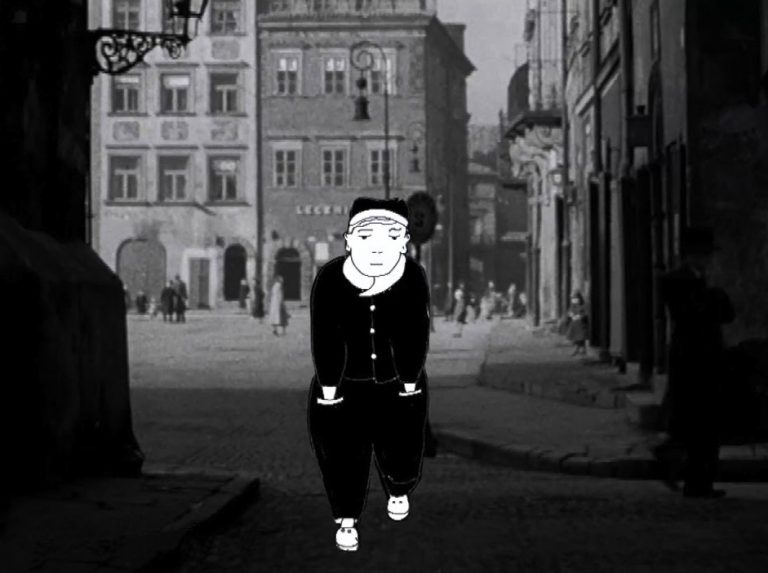
An historical photo of Line 41 blending into a drawing of the buildings and street. (photo by Marek Iwicki, drawing Tanja Cummings)

The Line 41 streetcar ran through Lodz Ghetto (Litzmannstadt). Established by the Nazis in 1939, 180,000 Jews and 5,000 Sinti and Roma were imprisoned there, in plain site of the streetcar passengers. As these travelers went about their daily routines for the next several years, 46,000 people died from hunger, disease and violence in the ghetto and practically everyone else was deported to Auschwitz or Chelmno extermination camps. By August 1944, fewer than 900 prisoners remained; the Soviet army arrived in January 1945.

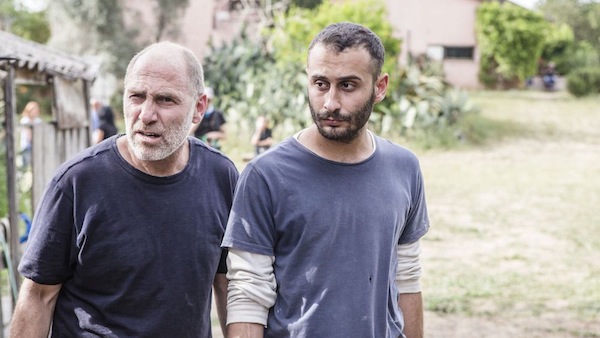
The documentary film Line 41 focuses on the story of two men: Natan Grossmann, who survived the ghetto, and Jens-Jurgen Ventzki, whose father was the Nazi mayor of the city. It will see its Canadian première on July 11, 7:45 p.m., at Vancity Theatre. The screening will be followed by a discussion between Berlin-based director Tanja Cummings and Prof. Richard Menkis, associate professor of modern Jewish history at the University of British Columbia.

“I was interested in participating,” Menkis told the Independent, “because I am a Holocaust educator, quite simply. As such, I think it is important to engage the different ways of approaching the Holocaust…. I teach the course on the Holocaust at UBC, have published on aspects of the Holocaust and have worked on museum exhibitions. I am also interested in film representations – especially in documentaries – so I am glad to be involved. The film raises several important issues, especially about ‘bystanders,’ and I look forward to having a conversation about the film and its themes.”

Released in 2016, Line 41 has screened in Germany, Poland, Austria, Romania, the United States and Australia. The film took about nine years to make, with the initial idea for it coming in 2007.

“Everything started by reading the 1937 novel by Israel Joshua Singer, Di brider Aschkenasi [The Brothers Ashkenazi],” Cummings told the Independent. “It was this great novel that raised my interest in Lodz in the very first place and it made me travel there in 2008 or so.”

Cummings was initially interested in Lodz before the Second World War. “The history of Lodz was very much influenced by German, Polish and Jewish populations since the early 19th century,” she explained. “In a positive way, one could say that these groups worked together to transform a small village into a major European centre of textile production within a few decades.”

Known variously as “the Manchester of Poland” and the “Eldorado of the East,” she said, “Immigrants from all over Europe came to this ‘Promised Land.’ This term was actually coined for this city by [Nobel Prize-winning author] Wladyslaw Reymont in a novel of that title…. Later on, the famous Polish filmmaker Andrzej Wajda made a feature film out of it, with, again, the same title (or, in Polish, Ziemia Obiecana).

“So, it was Germans, Jews, Poles and also Russians who dominated the development of Lodz. Knit together – through trade, business, politics and bureaucracy – every group played its specific role, and made up what was and still is called ‘the Lodz man,’ ‘Lodzermensch,’ a ‘man’ of special wit of life and street smarts, so this fascinated me.”

Over time, her focus shifted.

“I tried to meet witnesses of German, Polish and Jewish background who, through their family background, would be able to tell me about these prewar times,” she said, “but, ‘naturally,’ all their stories circled around the era in which this world of the Lodzermensch was destroyed – by the invasion of the German Wehrmacht, the Second World War and the times of the ghetto. This is what their stories focused on, as they themselves had experienced it as young adults, teenagers, children. Through meeting these witnesses and hearing their powerful, shattering stories, it became clear that one must record them and their stories so that they would reach a larger audience. And, early on, it was clear to me that we should try to find witnesses – last witnesses – of these various groups: roughly, the victims, the perpetrators, the bystanders.”

Cummings said, “When you walk through Lodz today or through the area of the former ghetto for that matter, which formed a large part of this city, you realize that many of the buildings, streets, backyards, hallways and flats do not seem to have changed since the time of the war…. In many streets, time seems to stand still. The buildings still stand in their roughness, but the people of the ghetto of 1940 until 1944 (or early 1945) are gone. Yet, people live there today and seem to be oblivious to what happened in their streets, flats, courtyards.

“This is especially painful if one can connect certain buildings with specific stories of people and families – through the narratives told to us; through historical literature and through diaries or other reports, for example, Berlin Jewish families whose deportation has been traced, the places where they ‘lived’ in the ghetto and what happened to them, which tragedies evolved, which terror was inflicted upon them there, or in the camps, such as Kulmhof [Chelmno] or Auschwitz.

“A key moment that shocked me deeply was when, in 2010 or 2011, a Lodz German in his early 80s – not the one whom we see in the film – walked us through streets of the former ghetto area and he showed to us the street where the streetcar line ran through, coming from the ‘free’ part of the city. This was the first time I had ever heard about this streetcar,” said Cummings. “And he told us he had been a passenger in this streetcar many times, and that the ghetto was plainly visible to him and anybody who took this streetcar – not once, many times. And, while he told us this, streetcars passed by. In Lodz, the past is very present,” as it is elsewhere, in places like Berlin, and all over Europe.

“Since that day with this elderly Lodz German (who, after the war, did not leave this city) I tried to find more witnesses from this period of the war who would tell their stories from their own perspectives: Jewish survivors of the ghetto, but also Germans and Poles who lived around the ghetto which was hermetically closed and isolated over the course of four years. Germans and Poles, what did they see, what did they know? What was told in families, at school? What was the atmosphere in the city back then?

“The ghetto was a different matter altogether, and the narratives very much circled around survival, hunger and nightmarish scenes, but also culture, resistance – so many efforts to stay human.

“As for the main protagonist, Natan Grossmann, who was a teenager during ghetto times, we also tried to find out – together with him – about the fate of his older brother. To Natan, since the day his brother vanished in March 1942 in the ghetto, he had no clue what had happened to him.”

In the main phases of filming, from 2011 to 2013, about 120 hours with witnesses was recorded, after which it was decided the documentary would focus on Grossmann and Ventzki.

“When we started, we had no clear vision of what [the witnesses] would tell us, or where we would go with them, where they would lead us – all these things developed in the process of filming – or what we, together with the protagonists, would find out, what we would learn from them,” said Cummings.

When Grossmann arrived in the British Mandate of Palestine in 1946, she explained, “he felt he was ‘reborn’ there and crossed out the past from his mind. He suppressed what had happened to him in Lodz Ghetto, in Auschwitz, other camps in Germany, the death march…. He crossed this out from his daily life and did not talk about it. He did not look for his brother Ber, whose fate was unknown to him, except one attempt, when he visited Auschwitz in the 1980s but could not find any records there on his brother.”

Only because Grossmann was persuaded “to travel with us to Lodz in 2011, visit archives and connect with historians there, did we, together, finally find out what happened to his older brother Ber.”

In the film, Grossmann searches “not only for his brother, but also for the graves of his parents, who were murdered in the ghetto, and for photographs of anybody from his once-large family, as he has none of his close family.”

Ventzki, the second main protagonist, is the son of Werner Ventzki, a Nazi official and German mayor of Lodz (then Litzmannstadt) during the German occupation. “So, the son goes on a journey as well,” said Cummings, “but from a completely different perspective – as son of a perpetrator fighting a silence, the silence in his family, and trying to find ways of dealing with the fact that his father was a Nazi perpetrator, and his mother, too.”

photo - Director Tanja Cummings with Jens-Jurgen Ventzki, one of the two main protagonists in the documentary film Line 41
Director Tanja Cummings with Jens-Jurgen Ventzki, one of the two main protagonists in the documentary film Line 41. (photo by Marek Iwicki)

During filming, Ventzki and Grossmann were kept apart. “We traveled with them separately,” she said, “as we felt then it may be too intense and heavy for both of them. Only much later, [while the film was] in the editing room already, in 2013, we decided we should try to have them meet (and start filming again).”

The meeting took place at Ventzki’s home in Austria. “In the film, you can see their first-ever meeting, moments of this meeting, which, in the film, form the most powerful and, for some, unbearable moments in the film, towards its end. In fact, these moments were the starting point of a … deep friendship between these two men.”

The film isn’t intended to be “a ‘didactic play’ or tell audiences what to think,” said Cummings, “but rather to ask questions, as the film does…. I would be glad if this kind of curiosity and openness is transmitted to the audiences.”

While the film deals with historical issues, it does so, for the most part, through “the two main protagonists, who used to stand on different ‘sides of the fence’: victims and perpetrators. But the film is not about reconciliation, but rather about meeting and listening to each other. If audiences feel how important that is, or feel the power of what happens there or may happen there, that would be wonderful. And this reaches out beyond the ‘topic’ of the Shoah or Holocaust – there is something universal about it.”

For more information, visit linie41-film.net. For tickets to the screening and discussion, which is being presented by the Vancouver Foreign Film Society, go to viff.org. Vancity classifies the film as suitable for ages 19+.

Format ImagePosted on July 6, 2018July 5, 2018Author Cynthia RamsayCategories TV & FilmTags history, Holocaust, Litzmannstadt, Lodz, Richard Menkis, Shoah, Tanja Cummings
A life of music and activism

A life of music and activism

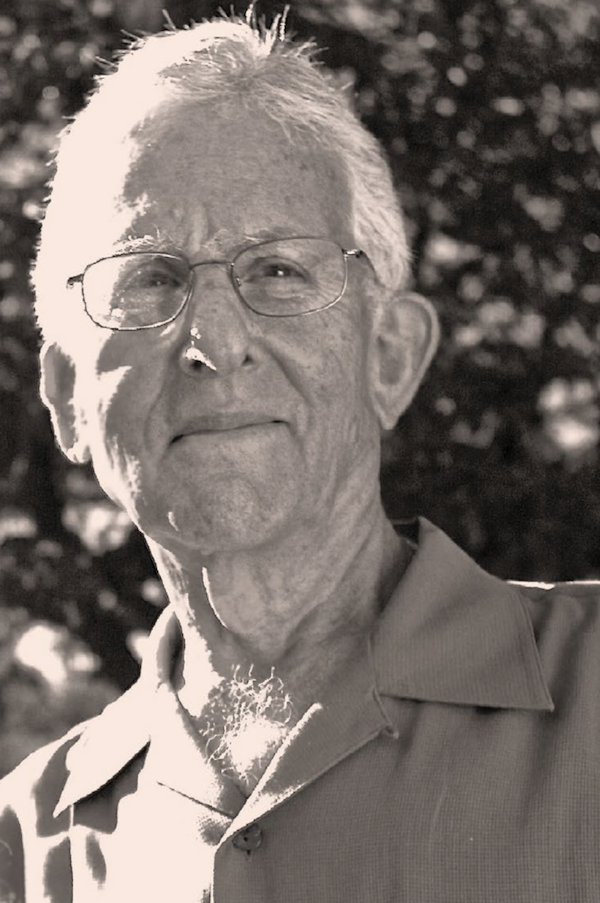
Gary Cristall (photo by Brian Nation)

‘My Jewish identity has always been associated with the struggle for basic human values and rights and freedoms,” said Gary Cristall, co-founder of the Vancouver Folk Music Festival, in conversation with the Jewish Independent. “I thought that was the centre, was the core of being Jewish. That was the way I was raised and the stories that were told. I had two identifications with being Jewish – one was social justice, and the other was culinary. I worshipped at Schwartz’s Deli in Montreal.”

A longtime advocate for both the arts and progressive politics, whose passion was forged in the Canadian left of the 1950s and ’60s, Cristall is a cultural pioneer. He co-founded the Vancouver Folk Music Festival in 1978, later serving as its coordinator and artistic director until 1994.

As well as being an educator, activist and promoter, Cristall has fought for artists, struggling to win them professional respect while also defending their rights to fair fees and copyright ownership. For his range of work, he was awarded an honourary doctorate by the University of British Columbia in 2015 and was recognized as an outstanding alumnus of Simon Fraser University in 2017.

Cristall sees his involvement in activism and folk music as natural outgrowths of the culture in which he was raised. “Jews played a major role in folk music in this country, and in the States,” he said. “There were around 50 Jews who invented folk music. It was a conspiracy that was so successful no one understood what had happened.”

Cristall estimates that about 10,000 people attended the first Vancouver Folk Music Festival in 1978. This year’s festival, which takes place July 13-15, is expected to draw more than 35,000 people to Jericho Beach, where the event has been located since 1979. Seven stages are set up in the park and every available inch of parking space in the neighbourhood disappears. This year’s festival will present more than 50 concerts or workshops by artists from around the world, as well as an artisan market and a range of food vendors.

Beyond the festival, Cristall has served in the Canada Council for the Arts and was the founding president of the Public Service Alliance of Canada.

“When the CCA hired me, I was getting tired, getting ready to leave the festival, wondering what I would do next,” Cristall said. “When I saw the job ad, I thought, they’ll never hire me, but they’ll interview me and I’ll get a free trip to see my mother in Toronto. But they were looking to make a change, and they were interested in me because I was a shit-disturber and a rabble-rouser. They called my bluff, and said, ‘OK, you want to change things, come work for us.’”

Today, Cristall is at both Douglas College and Capilano University, where he teaches Canadian cultural policy and arts administration. He has spent 18 years working on a history of folk music in English-speaking Canada, which, he joked, is “1,200 pages written so far, a few hundred pages left to go.”

Asked about what he’s looking forward to at the festival year, Cristall reeled off a list of a dozen performers and what’s special about them. Among them, he mentioned Rodney Crowell, “a brilliant songwriter”; Guy Davis, a “great blues player, son of Ossie Davis and Ruby Dee, left-wing Harlem artists going way back”; Les Poules à Colin, “young people who are the children of that first revival generation of Quebecois folk music”; the Dead South, “Saskatchewan bluegrass”; Dálava, “a Moravian group doing avant-garde classical and folk and jazz music”; Dori Freeman, whose hometown, Galax, Va., “was a centre of old-timey music”; Vancouver’s Gord Grdina, who “plays the oud and is a brilliant guitar player, got a Juno, plays with a 10-piece band”; A Familia Machado, a “great guitar player playing with two members of his family from Brazil”; and Archie Roach “from Australia, a senior aboriginal songwriter.”

As he spoke, the enthusiasm poured off of him. Cristall is clearly still a man who loves music. “They’re the real thing,” he said. “That’s what I like about the folk festival, it’s the real thing.”

In his list of highlights, Cristall notably passed over most of the more well-known acts playing at the festival, names like Art Bergmann, Ry Cooder, the Mariel Buckley Band, Neko Case and indigenous artist and 2018 Juno nominee Iskwé. “What I love about the folk festival is not just seeing the big names, but seeing someone I never heard of before and come home loving,” said Cristall.

How does the world look to a longtime activist like Cristall? What’s his advice to the next generation?

“My hope is very much alive,” he said. “My Zaida was imprisoned for political activism, and he escaped and came to Canada. I’ve been active since 1965. We have to keep on fighting, nothing says we’re going to win quickly. I’m not pessimistic. Every movement has its ups and downs and nobody said that we were going to win fast and easy. My advice to younger people is get involved, educate yourself, learn and fight. That also connects to the kind of music [at the festival], both implicitly and explicitly – the music is a struggle to survive against the behemoth of capitalism and the fact that those artists have survived is a cultural victory. Hey, it’s too late to be pessimistic.”

For the full festival lineup and tickets, visit thefestival.bc.ca.

Matthew Gindin is a freelance journalist, writer and lecturer. He is Pacific correspondent for the CJN, writes regularly for the Forward, Tricycle and the Wisdom Daily, and has been published in Sojourners, Religion Dispatches and elsewhere. He can be found on Medium and Twitter.

Format ImagePosted on July 6, 2018July 5, 2018Author Matthew GindinCategories MusicTags activism, folk music, Gary Cristall, history
Once will be enough

Once will be enough

Gili Roskies and Adrian Glynn McMorran in Once at Granville Island Stage. (photo by Emily Cooper)

Walking into the Arts Club Theatre’s Granville Island Stage and seeing a bar set up on stage is usually not a big deal. But when it turns out that the bar is a working bar for theatre-goers, well, that is a nice twist.

Not only can you go up on stage to buy your drink, the cast of the play (musicians all) hang out and mingle and eventually start playing instruments as patrons stand about chatting. Then, as audience members make their way to their seats, just a few movements on stage get the set ready for the first scene.

Once is set in Dublin’s music scene and opens with the male lead, known only as “Guy” (Adrian Glynn McMorran), singing and playing guitar despondently in a bar. “Girl” (Jewish community member Gili Roskies) admires his singing and starts up a conversation about his songs. He explains that he wrote them for a girlfriend who left him and moved to New York, and now he’s giving up his music and devoting his time to working as a vacuum salesman. Girl convinces him to fix a vacuum she has and, as payment, she’ll play piano for him. They end up at a music store where the two sing the breakout hit “Falling Slowly.” Girl, a Czech immigrant, cannot afford her own piano, so the music storeowner lets her use his.

After that, Girl insinuates herself into Guy’s life. She bugs him to go after his former girlfriend and win her back with his songs, she signs him up for an open-mic night and she even makes an appointment with a banker on Guy’s behalf to get a loan to book a recording studio. (Though broke, with no collateral, Guy gets the loan by playing a song for the banker. Ahhh, if only that happened in real life.)

As to be expected, the two fall for each other, but keep things platonic, as Girl is actually married and might reconcile with her estranged husband; and, eventually, Guy sees the possibility of getting back with his girlfriend, too.

Despite the romantic settings and interactions between the two main characters, I was never fully engrossed in this play. I didn’t find the chemistry between Guy and Girl to be that captivating and I think I got somewhat annoyed by the mixed messages and constant back-and-forth of emotions demonstrated by Girl for Guy. Guy’s feelings for her were clear; Girl was all over the map.

There are also several long, convoluted stories that seem only to end in lame jokes, and some odd dance routines whose choreography I just didn’t get. In this case, as with many productions, I found the backstory more interesting.

Once is based on a 2007 Irish film in the musical drama genre. The sleeper hit was made for only $150,000 US and grossed more than $23 million US. Part of its success was no doubt due to winning audience awards at both the Sundance and Dublin film festivals, the Independent Spirit Award for best foreign film in 2007 and an Academy Award for best original song, “Falling Slowly,” in 2008. The soundtrack was nominated for a Grammy.

The musical did even better, winning eight of 11 Tony nominations on Broadway in 2012, including best musical, as well as a host of other awards for productions around the world.

“Falling Slowly” was written, composed and performed by the film’s co-stars, Glen Hansard and Markéta Irglová, specifically for the film and recorded by Hansard’s band, the Frames. Many of the other songs in the production were provided by Hansard and Irglová and gave them material to perform together in the years following the film’s release. The film’s director, John Carney, called Hansard and Irglová his Bogart and Bacall.

Unfortunately, that chemistry is nowhere to be found on stage at the Arts Club. Thankfully, their performance of “Falling Slowly” does justice to the original, and is one of the highlights of the play, as is an a cappella version of the song “Gold,” sung by the entire cast. The voices and musicianship are all of high quality and there is definitely sweetness in this play, but once was enough for me to see it.

Once runs until July 29 at the Arts Club Granville Island Stage. For tickets, visit artsclub.com.

Baila Lazarus is a Vancouver-based writer and principal media strategist at bailalazarus.com.

Format ImagePosted on July 6, 2018July 5, 2018Author Baila LazarusCategories Performing ArtsTags Arts Club, Gili Roskies, Ireland, musicals
Encounters with the divine

Encounters with the divine

Barbara Pelman speaks at the opening of the exhibit Encounters, which is at Congregation Emanu-El in Victoria this summer. (photo by Frances Aknai)

On June 3, the exhibit Encounters opened at Congregation Emanu-El in Victoria. It is the culmination of the most recent Calling All Artists exchange, a project that has been going on for more than a decade.

“Bible has to be interpreted to be relevant,” said Barbara Pelman, coordinator of Calling All Artists since its inception. “All Renaissance art is Bible interpretation. That’s what we do with this project.”

In 2004, Pelman was the head of the adult education committee at the synagogue.

“Rabbi Harry [Brechner] came up with the idea to gather a bunch of artists and writers for a few study sessions to teach them a particular theme and its rabbinic interpretation,” she recalled. “I thought it was a wonderful idea. The sessions were conducted once a month for five months. Afterwards, the artists would offer their own interpretations of the theme, and the synagogue would have an exhibit of their works.”

While the congregation also produced colourful chapbooks – mini catalogues of the exhibitions – in previous years, they did not do so this year.

Over the course of the project, the artists have studied a variety of subjects. The first exchange was based on the topic of Paradise, and the exhibit was held in 2005. In subsequent years, themes have included dreams and prophecies; creation; the Book of Ruth; death and afterlife; and reinventing rituals.

“We missed a few years since the beginning,” said Pelman. “Once, we thought that maybe we are finished with the project and won’t do it anymore, but everyone involved said, ‘No! No! We should continue.’ Another year, holidays interfered.”

This year’s theme examines divine-human interactions.

“What happens in these encounters? What does one look like and how is it reported and remembered? What are some examples in biblical and rabbinical tales? How do we understand divinity and how does that understanding affect our worldview? These are some of the questions the artists of different genres have been exploring,” Pelman explained.

She said that not all participating artists are members of the congregation, or even Jewish. “The project is open to the community,” she said. “This year, 30 people signed up for the project; 17 artists remained to the end to exhibit their works. Five of them are not Jewish, but all of them are interested in learning.”

Studying with the rabbi is a mandatory part of Calling All Artists, Pelman said. “This entire project is about learning from those who know more than we do. The point is not to exhibit but to learn. That’s why the art is not vetted.”

photo - Encounters features a range of artistic genres, including pottery
Encounters features a range of artistic genres, including pottery. (photo by Frances Aknai)

Participating artists represent a wide variety of media and genres, as well as skill levels. Some participants are professionals; others do art as a hobby. The exhibits feature photographs and paintings, fibre art and pottery, sculpture and poetry. Every piece is accompanied by an explanation of the work by the artist.

Pelman is a poet, so her involvement in every year’s project has been a poem. For her, divinity is not an all-knowing old guy somewhere above. “It’s the biggest and best part of you, of us all,” she said. “How do we find it? How does it inform our muse?” This is what she contemplates in her poem for this year’s explorative journey.

Pelman worked as an English teacher for many years. She taught high school, college and university classes, and she has been writing poetry for a long time. “I have three poetry books published,” she said. “The last two by Ronsdale Press, a Vancouver publisher.”

Another frequent participant in the project, artist and writer Isa Milman, said, “I participated in the first Calling All Artists, The Paradise Project, in 2005. It was a spectacular experience. The combination of Rabbi Harry Brechner’s teaching, the group of artists who gathered and learned from each other, wrestling with text that most of us were unfamiliar with, was truly energizing. The process involved five sessions spread over a few months, to learn from Harry’s teachings and engage with one another, as we entered a spiritual quest for meaning. Then we went off to put our learning into practice and create our responses.”

Milman has taken part in a number of Calling All Artists projects. “I’ve written poems as well as created paintings for these projects,” she said. “Learning with Rabbi Harry is an inspiration. He’s a gifted teacher and a wonderful spiritual guide. My Jewish education was extremely Orthodox and doctrinaire and I rebelled against it. Learning Torah with Rabbi Harry is so different. It’s an invitation to engage and converse, which I so welcome.”

Olga Livshin is a Vancouver freelance writer. She can be reached at [email protected].

Format ImagePosted on June 29, 2018June 28, 2018Author Olga LivshinCategories Visual ArtsTags art, Barbara Pelman, Emanu-El, Isa Milman, Judaism, spirituality, Victoria
Movement and sound mix

Movement and sound mix

Vanessa Goodman is part of MascallDance’s OW, which premières at Dancing on the Edge. (photo from DOTE)

Audiences saw a glimpse of MascallDance’s OW last year at Dancing on the Edge. This year, the full work premiéres at the dance festival, with six performances July 6-14 at MascallDance’s home, in St. Paul’s Anglican Church downtown.

OW “analyzes timing, accents and rhythms of the sounds that erupt from the body as expressions, building a libretto of repeatable human emotions. Exploration is physically challenging and unpredictable; what has emerged to date is fast, rhythmic, often wildly funny and noisy,” explains MascallDance’s website.

Jewish community member Vanessa Goodman, artistic director and choreographer of dance company Action at a Distance, is one of the dancers in OW.

“One of the interests in the work that we keep coming back to is finding out how sound moves the body and how the body moves sound,” Goodman told the Independent. “As we dive deeper into the process, we are often faced with more questions about accessing the authentic experience of voice and movement. We started by exploring what sounds come from the body with specific physicalities and then also tried to see what happened physically when we made specific sounds.”

Goodman has been involved in the project since 2012, when MascallDance Society founder and artistic director Jennifer Mascall started doing research with her “to explore some of the thematic content that is present in OW,” said Goodman. “Then I was brought back into the process in January 2017 to continue with Walter [Kubanek], Eloi [Homier] and Anne [Cooper].”

The website notes that 17 dancers perform in the production. Also performing will be composer and violist Stefan Smulovitz and specialist in experimental voice D.B. Boyko.

“One of the inspirations for this work,” said Goodman, “was musicals – we watched a lot of clips from older films and observed the complexity of their compositions. They use tons of counter and polyrhythms, and our material was set so that we could achieve a similar result. What you are going to see is definitely not a typical musical formula, but, inside OW, some elements have been inspired by their compositions.”

Goodman has worked with Mascall before.

“My first experience with Jennifer was in 2005, when I was a student at SFU [Simon Fraser University] and she created a piece in my rep class exploring the voice of Glenn Gould. One of my favourite memories from that experience was that she watched the piece from the corner one day in rehearsal. It was one of our final runs before the show and, after watching, she declared that was how the work was meant to be seen, so we adjusted our ‘front’ to this new diagonal perspective. I loved this, as it allowed us to have a brand new experience inside the work and showed me that the creative process is always in a state of evolution.”

Working with Mascall “is fantastic,” said Goodman. “She has a deep practice of finding movement for the body from physiological systems. This is a vibrant place to work from, and I am also interested in anatomical processes and how they relate to movement.”

One of the most rewarding aspects of OW for Goodman has been working with all of the production’s collaborators. “Each artist involved on the team offers unique and critical information,” she said. “Performatively, this process has expanded my practice and has allowed me to discover new interests and curiosities.”

Dancing on the Edge runs July 5-14. For the schedule and tickets, visit dancingontheedge.org.


Format ImagePosted on June 29, 2018June 28, 2018Author Cynthia RamsayCategories Performing ArtsTags dance, Dancing on the Edge, DOTE, MascallDance, Vanessa Goodman

Posts pagination

Previous page Page 1 … Page 95 Page 96 Page 97 … Page 163 Next page
Proudly powered by WordPress