Skip to content
  • Home
  • Subscribe / donate
  • Events calendar
  • News
    • Local
    • National
    • Israel
    • World
    • עניין בחדשות
      A roundup of news in Canada and further afield, in Hebrew.
  • Opinion
    • From the JI
    • Op-Ed
  • Arts & Culture
    • Performing Arts
    • Music
    • Books
    • Visual Arts
    • TV & Film
  • Life
    • Celebrating the Holidays
    • Travel
    • The Daily Snooze
      Cartoons by Jacob Samuel
    • Mystery Photo
      Help the JI and JMABC fill in the gaps in our archives.
  • Community Links
    • Organizations, Etc.
    • Other News Sources & Blogs
    • Business Directory
  • FAQ
  • JI Chai Celebration
  • JI@88! video

Recent Posts

  • Zionism wins big in Vegas
  • Different but connected
  • Survival not passive
  • Musical celebration of Israel
  • Shoppe celebrates 25 years
  • Human “book” event
  • Reclaiming Jewish stories
  • Bema presents Perseverance
  • CSS honours Bellas z”l
  • Sheba Promise here May 7
  • Reflections from Be’eri
  • New law a desecration
  • Resilient joy in tough times
  • Rescue dog brings joy
  • Art chosen for new museum
  • Reminder of hope, resilience
  • The national food of Israel?
  • Story of Israel’s north
  • Sheltering in train stations
  • Teach critical thinking
  • Learning to bridge divides
  • Supporting Iranian community
  • Art dismantles systems
  • Beth Tikvah celebrates 50th
  • What is Jewish music?
  • Celebrate joy of music
  • Women share experiences 
  • Raising funds for Survivors
  • Call for digital literacy
  • The hidden hand of hate
  • Tarot as spiritual ritual
  • Students create fancy meal
  • Encouraging young voices
  • Rose’s Angels delivers
  • Living life to its fullest
  • Drawing on his roots

Archives

Follow @JewishIndie
image - The CJN - Visit Us Banner - 300x600 - 101625

Author: Pat Johnson

Survivor helps others

Survivor helps others

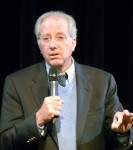
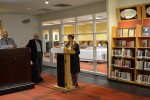
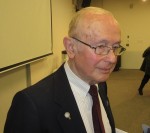
On Nov. 18, Robbie Waisman spoke at the Jewish Museum and Archives of British Columbia. (photo by Pat Johnson)

The head of Canada’s Truth and Reconciliation Commission is crediting Robbie Waisman, a Vancouver man and a child survivor of Buchenwald concentration camp, with making a significant impact on the work of the landmark national initiative.

Justice Murray Sinclair, the first Aboriginal judge appointed to the Provincial Court of Manitoba, headed the commission that handed down its report earlier this year. It is a compendious study of the legacy of Indian residential schools in Canada, with recommendations for redress. Over the course of a century, an estimated 30% of Aboriginal children in Canada were taken from their family homes and placed in residential schools. Funded by the federal government and run by Christian churches, the schools forbade children from speaking their native languages. Countless numbers were physically and sexually abused, even murdered, starved to death or died from lack of medical attention. Of the estimated 150,000 children who went through the system, 4,000 are believed to have died. Survivors have struggled for decades with the legacies of the experience. The Truth and Reconciliation Commission (TRC) was the first comprehensive nationwide effort to address the history.

Sinclair told the Independent that Waisman made a crucial suggestion that informed the work of the commission. It can be extremely difficult for survivors to tell their stories directly to their children, Waisman told Sinclair. He himself did not tell his own children about his experiences in the Holocaust; they learned some of the details by witnessing their father tell his history to others. The commission took this advice to heart, said Sinclair.

“Based on that, when we go to a community, we bring all the [residential school] survivors in and we always make a point to bring their children in so that when the survivors are talking to us, the children are hearing them,” Sinclair said. “That proved to be an exceptionally strong piece of advice for us to open the lines of communication within families. From the perspective of residential school survivors, often the most important process of reconciliation that they wanted to engage in, that they needed to engage in, was to apologize to their own families for how they behaved after residential schools and to be given an act of forgiveness by their children, their spouses, their family members.”

Waisman participated in the entire TRC process, traveling to every part of Canada to speak with residential school survivors about his own story of survival and about creating a life after experiencing the most unimaginable horrors.

“I told them that I am one of the 426 teenagers that was liberated at Buchenwald,” Waisman explained. “We couldn’t go home, we went to France and, in France, the experts that analyzed us told the French government that these kids, first of all, won’t amount to anything because they’ve seen too much and they’ll never rehabilitate. Get a Jewish organization to look after them, they told the French government. Number two, they won’t live beyond 40. So here we are. Six years ago, I phoned [Nobel laureate and fellow Buchenwald survivor] Elie Wiesel, who wasn’t going to amount to anything, and I wished him a happy 80th. And little Lulek [Yisrael Meir Lau], who became chief rabbi of Israel. This is what I related to them. You see what we have achieved? So, then I quote [Barack] Obama: ‘We did it … yes you can.’”

On Nov. 18, Waisman spoke at the Jewish Museum and Archives of British Columbia about his experience in the Holocaust and about participating in the TRC.

Waisman has been involved with First Nations communities for years. He was first contacted by Canadian Jewish Congress when David Ahenakew, a former national chief of the Assembly of First Nations, uttered antisemitic comments in 2002. CJC engaged with First Nations leaders and brought Waisman to meet with them. Waisman’s relationship with CJC goes back further – as an orphaned child survivor, he was sponsored to come to Canada by CJC.

Because of his effectiveness as a speaker, Waisman was invited to speak to residential school survivors in the Northwest Territories. As he spoke, he noticed maybe a dozen people in booths, speaking into headphones. It turned out his words were being translated into local dialects and broadcast across the territories. A trip that was supposed be a daylong in-and-out turned into a four-day sojourn as residential school survivors came from surrounding villages to meet him.

“They figured that nobody cared,” said Waisman. “Many of them have begun to talk about their horrors after they listen to me.”

Sinclair is full of warm words for Waisman. “He’s a stalwart supporter and a warm and kind and loving man who always understood what the survivors were talking about and let them know that,” said the judge.

Format ImagePosted on November 27, 2015November 24, 2015Author Pat JohnsonCategories LocalTags Holocaust, Murray Sinclair, residential schools, Robbie Waisman, survivors, Truth and Reconciliation Commission
Refugees painted village blue

Refugees painted village blue

“Running Again” by Joyce Ozier, part of her current exhibit at Fazakas Gallery. (image from fazakasgallery.com)

Chefchauen is a village in Morocco. Founded in 1471, it was home to many Jewish refugees escaping the Spanish Reconquista during medieval times. No Jews live in this village now and haven’t since the late 1940s, but this little tourist town in the Rif Mountains was the inspiration for Vancouver artist Joyce Ozier’s latest exhibit, Blue Refuge.

“I discovered Chefchauen by accident,” Ozier told the Independent. “Last year, while I was getting ready for my show at the Zack Gallery, I received lots of emails and newsletters. One of them mentioned Chefchauen, a blue town in Morocco, and included a few photographs. I was knocked out by the magic of its blue colors, but my first response was purely esthetic. I imagined how these different shades of blue – blue stucco walls, blue doors, blue roofs – would change throughout the day in the strong Mediterranean sunlight.”

photo - Joyce Ozier
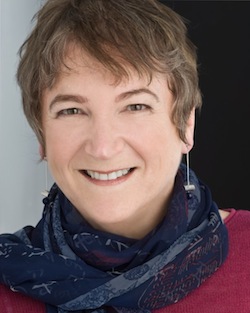
Joyce Ozier (photo by Pink Monkey Studios)

After her initial fascination wore off, she became curious. What was the reason for the town being blue? “There was a one-line explanation for the unusual color: a group of Jews running from the Nazis in the ’30s painted the town blue in gratitude for it being a safe haven. After I read that line, I wanted to know their story,” she said.

Ozier started researching the history of those Jews who gave the town its charming blue attire, while simultaneously creating her own visual narrative – the nine abstract panels reflecting their intriguing story. But, while her artistic endeavors were successful, her research path was littered with disappointments. Nobody knew much or even anything about Chefchauen and its Jewish history.

Determined to learn all she could about the people who made the town blue, she embarked on a quest to understand those long-gone Jews. After various online searches, she tried the Isaac Waldman Jewish Public Library, but to no avail. “Then I found a Jewish tour company in New York that specialized in Jewish Morocco,” she said. “I called them, thinking that they would be able to answer my questions, but they had no idea either. Their advice was to try the Jewish museum in Casablanca, Morocco.”

She made the call and spoke with the museum’s curator, but still no luck. “By this time,” she said, “I decided to imagine my own version of what had happened, how those Jewish refugees got to Chefchauen, what they went through, why they decided to paint everything blue, and what happened after. Over the years, I’ve read many personal accounts of the Holocaust and, based on those, I wrote the texts for my show, the short write-ups on each of the nine panels that comprise the show.”

Ozier wrote about the hardships the refugees would have encountered on their flight from the Nazis, about their joy at finding a safe haven, and about why they painted the town blue.

“Blue is the symbol of divinity in Judaism, being the color of sky and ocean,” she explained. “Observant Jews are required to have a blue thread in their prayer shawls, so when they pray, they are enveloped in divinity. To express their appreciation for being alive, for being able to reach Chefchauen, the refugees painted the whole village in shades of blue. The divine blue created an environment that gave them the hope they needed to go on. It helped them stay positive in a terrifying and insecure political situation. It prodded them to resume relatively normal lives once they had settled in.”

Unfortunately, as soon as the Vichy government took over Morocco, the persecution of Jews started there, too. “Their safe haven was a dream,” Ozier wrote, and her panels follow the rest of the story, as most of the Jewish citizens of the blue town left. Nobody knows what happened to them, but Ozier hoped they had headed for Israel.

“My show was almost ready, but then I panicked,” she recalled. “I needed a confirmation for my fictional story. Was it based on fact, or even a possibility of fact, or was it just my imagination?” The Vancouver Holocaust Education Centre came to her rescue.

“Phillipa Friedland, the centre’s education coordinator, was wonderful,” said Ozier. “She had not heard of Chefchauen and its blue world but she was visibly excited to see the photos and hear my story. She suggested that I contact Yad Vashem, the Israel Museum in Tel Aviv, the Museum of Jewish People in Tel Aviv, the Leo Baeck Institute in Jerusalem and the Museum of the Diaspora at the University of Tel Aviv.”

One by one, Ozier contacted each of the leads Friedland gave her, but most of the institutions couldn’t help. Some only did family research. Others specialized exclusively in the war years. “I wrote an official request for information to Yad Vashem and got a response from them much sooner than I expected. Timorah Perel from their reference and information services explained to me that most of their testimonials are written in languages other than English and would require translation. She sent me the only English testimony that came up in her search in English. It was very interesting but it did not mention Chefchauen.”

Eventually, Ozier’s persistence paid off. She contacted Tel Aviv University. “The receptionist who answered the phone told me that they had a professor who specialized in the Jews of Morocco, Dr. Yaron Tsur. She gave me his university telephone number and his email address. Excited to have a real lead after all the dead ends, I immediately wrote Dr. Tsur a long email, explaining my upcoming show and including all my photos and my texts. I asked him whether he thought my story could be based on reality or it was a total fantasy.”

She received no reply, and no response to several phone calls. “Frustrated, I called the receptionist again, thinking perhaps I’d written down the wrong number. This time, she told me Prof. Tsur was in America. He was on sabbatical this year.”

Ozier finally was able to reach him. And Tsur confirmed her story, saying in an email that “the story of the Jewish refugees that you relate and the asylum that some of them found in Morocco is historically true.” She could go ahead with her show.

“They still paint the town blue,” Ozier said, “even though no Jews live there any longer. It’s a tourist attraction now, and the local government pays for the paint, so they could retouch it annually. One more little factoid I found in my research: the blue changes during the day, resembling running water. It repels mosquitoes.”

Blue Refuge is at Fazakas Gallery, at 145 West 6th Ave., until Dec. 17.

Olga Livshin is a Vancouver freelance writer. She can be reached at [email protected].

Format ImagePosted on November 27, 2015November 24, 2015Author Olga LivshinCategories Visual ArtsTags Chefchauen, Fazakas Gallery, Holocaust, Joyce Ozier, Morocco
Israel as a problem, not a partner

Israel as a problem, not a partner

Ambassador Dennis Ross was in Winnipeg as part of the city’s Tarbut Festival to promote his new book. (photo by Rebeca Kuropatwa)

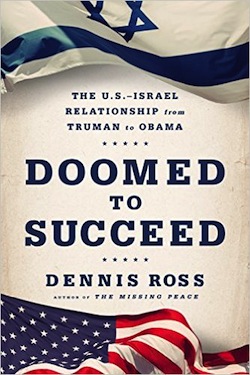
Ambassador Dennis Ross was in Winnipeg earlier this month to promote his latest book, Doomed to Succeed: The U.S.-Israel Relationship from Truman to Obama (Farrar, Straus and Giroux). He was one of the participants in the city’s Tarbut Festival.

Ross is the William Davidson Distinguished Fellow at the Washington Institute for Near East Policy, as well as a Distinguished Professor in the Practice of Diplomacy at Georgetown. He has been very involved in American peace efforts in the Middle East, especially during the administrations of presidents George H.W. Bush and Bill Clinton. Among other accomplishments, he helped Israel and the Palestinians reach an interim agreement in 1995, helped broker the Hebron Accord in 1997 and facilitated the 1994 Israel-Jordan peace treaty.

In his new book, Ross explores the attitudes and approaches of every U.S. president toward Israel, and the Middle East in general. He highlights some of the lessons that could have been learned from leader to leader, but were not, and how American presidents have shaped their country’s policies toward Israel.

Ross’ Nov. 15 talk in Winnipeg sold out a week in advance, with more than 200 in the audience at Rady Jewish Community Centre’s Berney Theatre. He began with a few words about the Paris terrorist attacks, describing them as “a sobering event.”

“This was an intelligence failure,” he said. “You had three terrorist cells that were able to operate, to acquire a substantial amount of weaponry, to wear suicide vests with explosives – to orchestrate, plan, and carry it out. My guess is they did rehearsals before they did this.”

Ross then discussed the spate of terrorist stabbings that has been occurring in Israel, referring to this as “a new normal” that we will need to get used to for the next while.

According to Ross, every administration, from Harry Truman to Barack Obama, has had people in the back office advising their president against siding with Israel. As such, to varying degrees, every president has considered Israel a problem, and not a partner.

“This mindset that tends to look at Palestinians and Arabs as something we have to be careful around … if we are going to be criticizing them, it will create a backlash against us … this is a mindset that has existed in every administration,” Ross said.

book cover - Doomed to SucceedIn his book, Ross conveys that the only American president who did not listen to these back-office advisors was Clinton, who saw the United States as Israel’s only friend.

“Because of that, we can have differences with Israel, but he [Clinton] believes that if we create a gap between us and Israel, it will give encouragement to Israel’s enemies,” said Ross. “With Clinton, the constituency existed, but it had no influence.”

Jumping from one president to the next, Ross provided glimpses of the eras and issues covered in his book. For example, Ross said, Ronald Reagan was “the only one to suspend [the supply of] F-16s to Israel as a punishment … because the Israelis bombed a [nuclear] reactor in Iraq. Reagan later acknowledges that it wasn’t a bad thing,” meaning Israel’s actions.

“Reagan goes back to his roots of being a very strong friend of Israel,” said Ross. “He feels a deep moral obligation to the state of Israel … going back to who he was, to his instincts. He believes the U.S. has a moral obligation to Israel.”

With the Reagan administration, Ross said, “For the first time, you have a constituency that arises with expertise that counters the other constituency, and sees Israel as a partner and not a problem … sees Israel as someone the U.S. should be working with.”

In Ross’ view, the constituency that views Israel as a problem has been guided by a set of assumptions that have endured since before Truman to today. In Doomed to Succeed, he lists three assumptions: “If you create distance from Israel, you’ll gain with the Arabs; if you cooperate with Israel, you’ll lose with the Arabs; [and] you cannot transform the Middle East unless you solve the Palestinian problem.”

Ross provided supporting evidence for each of these assumptions. “I’ll give you some examples from the book,” he said. “The most outrageous example was [Richard] Nixon. In March of 1970, Nixon decides to suspend F4 Phantoms to Israel. Now, I said that Reagan suspended F16s as a punishment. Nixon doesn’t do it as punishment. He’s trying to reach out to [Egyptian president Gamal Abdel] Nasser. He thinks if he suspends arms to Israel, he’ll gain with the Egyptians, gain with Nasser. What makes this an outrageous example is that he did it at the very moment that the Soviet Union was sending military personnel to Egypt.” While Nixon expected to be rewarded by Nasser, Nasser instead demanded more.

About the title of his book, Ross said, “Fundamentally, we [America] and Israel share interests and threats. That has always been true. It’s especially true now, as you look over the next 10 to 20 years, the struggle with ISIS and also Iran. We have two proxy wars. Who will dominate the region? The fighting is over identity. You fall back on the fundamental instincts.

“You have the Arab state system itself under threat now. Against that backdrop, there’s one state that actually has institutions – a rule of law, a separation of powers, independent judiciary, elections where the loser accepts the outcome, where there is freedom of speech, of assembly, and where women’s and gay rights are respected. Israel is the only democracy in that region and that’s why the title of the book is called Doomed to Succeed.”

The talk concluded with a few questions from the audience. Ross was asked about the Iranian nuclear deal and how he felt about it. Ross said he felt the deal needed tweaking to ensure a positive outcome.

“Sanctions would erode, eventually,” he said. “I still wasn’t prepared to favor the deal because, after 15 years, Iran gets treated as if it’s Japan or the Netherlands. They can build as large a nuclear infrastructure with no limitations at all. So, I identified, for me, five conditions that need to be met before I could support the deal. These conditions have to deal with how to bolster deterrents. I felt you can’t wait for 15 years to say, ‘Now, we are serious.’

“I wanted a firewall now if we see them moving toward a weapon. If we don’t do that, I can’t support it. I wanted us to make our declaratory policy much blunter, to make it clear they can’t use enriched uranium after 15 years. I wanted us to spell out now what happens if there are violations along the margins. For every transgression, there’s a price. They don’t escape. I wanted us to target new sanctions.

“I’ll tell you, the Iranians will cheat around the margins. They will test the verification. When they do, there has to be a price. If you buy 15 years, what do you do with it? I laid it out publicly before the deal was done. I wasn’t shy about this.”

In thanking Ross at the event’s conclusion, attendee Howard Morry said, “You asked the question, ‘Who has been the best friend to Israel for the past 30 years?’ It could be argued that you’ve been Israel’s best friend in the White House.”

Rebeca Kuropatwa is a Winnipeg freelance writer.

Format ImagePosted on November 27, 2015November 24, 2015Author Rebeca KuropatwaCategories BooksTags Dennis Ross, Doomed to Succeed, Israel, Obama, Truman

Co-opting history

Tonight, the Canada Palestine Association, BDS Vancouver, Canadian Boat to Gaza, Independent Jewish Voices and a few other groups will come together to address the topic Stolen Land: First Nations and Palestinians at the Frontline of Resistance. The obvious intention is to equate the history of colonial settlement in North America, Canada in particular, with the actions of Israel toward Palestinians.

The concept is flawed at its core, of course, because, as the Palestinian narrative often does, it portrays the Jews as colonial occupiers of Arab land, while denying the legitimacy of ancient and modern claims to the Jewish homeland. The logical failure here is that such a narrative recognizes the legitimacy of a 200-year-old land claim, but not a 2,000-year-old land claim, which seems like an arbitrary position.

Nevertheless, there is a larger issue here. The anti-Israel movement insists on appropriating the historical experience of other people and using it in an attempt to fortify their narrative. The most obvious example is the apartheid libel, which tries to paint Israel as the ideological descendant of South African racism. This is offensive not only to Israelis. It debases the experience of black South Africans who suffered from genuine apartheid.

Even more egregiously, the anti-Israel movement routinely uses the imagery of Nazism and the Holocaust against Israel, attempting to equate the victims of the Third Reich with its perpetrators. This deliberate rubbing of salt in Jewish historical wounds is common and, as we discussed in this space last week, the objective is clearly to inflict pain rather than to resolve grievances.

This is a deliberate strategy of the anti-Israel movement, which apparently finds its difficult to make a legitimate case of their own and, therefore, co-opts the historical experiences of others. As another example, last summer, when people in Ferguson, Mo., and elsewhere in the United States were protesting police shootings of young African-Americans, the “pro-Palestinian” movement attempted to infiltrate that movement as well, trying to portray Israeli soldiers and police in the same light as American killer cops.

The event this week has a similar purpose. Not satisfied to let Canada’s First Nations people tell their stories and have their experiences validated, the “pro-Palestinian” activists want to elbow their way in and demand that Palestine get equal time (at least).

An infinitely more constructive approach can be seen in the remarkable story of a Jewish survivor of the Holocaust who traveled across Canada as part of the Truth and Reconciliation Commission, sharing his story of survival and accomplishment after tragedy. (See the story “Survivors helps others.”)

There are ways to positively advance First Nations experiences, the Palestinian experience and the Jewish experience in order to create a more understanding and tolerant world. The organizers of this week’s event – and the anti-Israel movement more broadly – do not seem interested in that sort of progress, in that sort of world.

Posted on November 27, 2015November 24, 2015Author The Editorial BoardCategories From the JITags apartheid, First Nations, Holocaust, Israeli-Palestinian conflict, Robbie Waisman, Truth and Reconciliation Commission
Winston wins literary prize

Winston wins literary prize

Simon Fraser University professor Mark Winston’s book on his lifetime as a world-leading bee expert – Bee Time: Lessons from the Hive – won this year’s Governor General’s Literary Award for nonfiction. According to the awards jury, Winston’s book “distils a life’s devotion to the study of bees into a powerful and lyrical meditation on humanity. This compelling book inspires us to reevaluate our own relationships both with each other and the natural world. Vital reading for our time.”

photo - Mark Winston
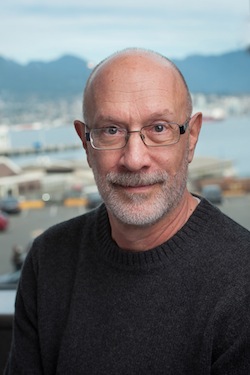
Mark Winston (photo from SFU Communications)

In Bee Time, Winston investigates the many influences bees have had on human society, and what we can learn from how bees have responded to their own societal challenges. Earlier this year, the book, published by Harvard University Press, was lauded with a Canadian Science Writers’ Association award.

“I look to the Governor General list every fall for good books to read, so for Bee Time to be on the list is an enormous thrill, and an extraordinary honor,” said Winston, who shares his reflections on three decades as a bee biologist in his award-winning book.

As one of the world’s authorities on bees and pollination, Winston has devoted his career to research and teaching, as well as writing and providing commentary on bees, environmental issues and science policy. Now a professor and senior fellow at Simon Fraser University’s Centre for Dialogue and founder of the Semester in Dialogue program (launched in 2002), he has written six previous books on topics from bees to the environment, and has been a consistently sought-out expert by national and international media.

“From altering our understanding of agricultural ecosystems to how urban planners are looking to bees to design more nature-friendly cities, I tried in Bee Time to offer practical views about the many lessons we can learn from bees, but also to express how grateful I am to bees for what they’ve taught me about collaboration, communication and interaction,” explained Winston, who continues to write a blog, winstonhive.com. A New York Times editorial he wrote (July 15, 2014) on the book was the most read NYT article for two consecutive days.

Among his many accolades, Winston is a co-winner of the Science Council of British Columbia’s 1992 Gold Medal in the natural sciences for his role in discoveries that resulted in an entirely new understanding of how bees communicate.

Governor General’s Literary Award recipients receive $25,000 and are celebrated at a gala event at Rideau Hall. This year, nearly 1,000 titles were submitted for the seven English-language categories. The awards are presented annually by the Canada Council for the Arts. For more details and a complete list of winners, see ggbooks.ca.

Format ImagePosted on November 27, 2015November 27, 2015Author SFU CommunicationsCategories BooksTags bees, Governor General’s, Mark Winston
Take Action campaign

Take Action campaign

A screenshot of the CIJA video What Would We Do?

The continuing terrorist attacks in Israel against Jewish Israelis are becoming more frequent and more deadly. Palestinian political leaders, religious officials and media have applauded the attackers as “martyrs,” spread anti-Jewish conspiracy theories and called for more attacks against Jews. In response, the Centre for Israel and Jewish Affairs (CIJA) has launched a campaign to mobilize community members to take action.

The objective of the campaign is to raise awareness among Canadians about the ongoing threat of Palestinian terrorism and the incitement that fuels it. CIJA is asking the community to take a number of actions, including sharing content in social media, signing a petition that will be presented to Canada’s leaders when Parliament returns and writing Foreign Affairs Minister Stéphane Dion asking him to speak out against Palestinian terrorism.

“Like many around the world, we are extremely concerned about the rising tide of violence against Jews in Israel, perpetrated by terrorists who are incited to violence by the Palestinian leadership,” said Shimon Koffler Fogel, CIJA chief executive officer. “We want to provide our community with a meaningful way to stand up for our extended Jewish family in Israel who are living under constant threat.

“The Take Action campaign is designed to raise awareness about the violence and what drives it,” continued Fogel. “Questions we are asking Canadians to consider include ‘What would we do if this were happening in Canada?’ and ‘What would we expect our allies to do if Canadians were being run down, stabbed and shot in the streets?”

Campaign components include the video at youtube.com/watch?v=cMYS1qSKQTs called What Would We Do? The video is a series of news clips that take real events that have happened in Israel, such as stabbings and car bombs, and put them into a Canadian context, as having happened in Montreal, Toronto and Winnipeg.

At takeactionisrael.ca, there is the petition to sign, which condemns Palestinian terrorism and incitement. As well, there is a link to a template email that can be personalized and sent to Dion that reflects the person’s concerns and asks Dion to speak out against Palestinian terrorism.

As well, people can donate to help spread the word: 100% of donations will be used to educate Canadians about the reality of the situation in Israel, the dangers posed by Palestinian terrorism and incitement, and the real obstacles to peace.

The fourth component of the campaign is a request that people forward the call to action to a friend, share it on Facebook, Twitter or other social media, and encourage friends and family to visit the website takeactionisrael.ca, as well as to learn more about the situation in Israel at learnmoreisrael.ca.

The campaign will run as long as the current wave of terror continues.

Format ImagePosted on November 27, 2015November 24, 2015Author CIJACategories NationalTags CIJA, Israel, Palestinians, Shimon Fogel, terrorism
RPL honors Daysons

RPL honors Daysons

Mayor Malcolm Brodie, left, and Philip Dayson listen as Shirley Barnett addresses the 50-plus people who attended the Nov. 18 event at Richmond Public Library that honored the Dayson family. (photo from Richmond Public Library)

On Nov. 18, the Richmond Public Library board fêted the Dayson family and the Ben and Esther Dayson Charitable Foundation at a reception attended by more than 50 people, including Richmond Mayor Malcolm Brodie, councilors Chak Au and Alexa Loo, and distinguished guests from the Jewish community.

“It was a wonderful opportunity for people to come and celebrate the Dayson family and their outstanding generosity to the community, while also having a chance to browse the popular and growing Dayson Collection,” said library communications officer Shelley Civkin.

The Ben and Esther Dayson Judaica Collection started in 2003, when the Dayson family donated their personal Judaica collection to the library, and gave $50,000 to the Richmond Public Library Endowment Fund held by the Richmond Community Foundation. In 2004, the Ben and Esther Dayson Judaica Collection was launched to the public and, since then, the Dayson family and their charitable foundation have donated a total of $110,000 to the library. The Dayson Collection has grown to include more than 1,800 books and DVDs for adults and kids.

Posted on November 27, 2015November 24, 2015Author Richmond Public LibraryCategories LocalTags Dayson Collection, Richmond Public Library, Shirley Barnett
Make time for Chutzpah!

Make time for Chutzpah!

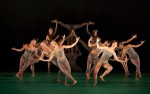
Gallim Dance (photo from Gallim Dance)

Tickets are now on sale for the 16th annual Chutzpah! Lisa Nemetz International Jewish Performing Arts Festival. The 2016 festival will run from Feb. 18 to March 13, and it will once again showcase theatre, comedy, music and dance performances and workshops by international, Canadian and local artists.

The Chutzpah! Festival’s Dance Series includes Canadian and North American premières from Italy’s Spellbound Contemporary Ballet; Israeli dance company Maria Kong performing their much-lauded Open Source; and New York-based Gallim Dance in their repertory work Wonderland by choreographer Andrea Miller, which Dance Magazine praised as “Gutsy. Wild. Smart. Original.” New to the international scene, New York City’s all-male company MADBOOTS appears in a double bill with a world première from Chutzpah’s resident dance company, Shay Kuebler Radical System Art; and Ballet Kelowna presents works by artistic director Simone Orlando, James Kudelka, Heather Myers and John Alleyne, with Toronto’s Continuum Contemporary Music accompanying (Chutzpah!PLUS, May 4-6).

photo - Baladino
Baladino (photo by Omri Barel)

The global landscape of music presented this year showcases performers from Israel, Mexico City, New York City, Canada and Cuba. Highlights include Israel’s sister group A-Wa; Juno Award-winners Odessa/Havana; trumpeter and composer David Buchbinder and Grammy-nominated Cuban piano master Hilario Durán joined by a team of jazz and world musicians; Mexico City band Klezmerson; Baladino’s interpretations of Sephardi and Ladino melodies, with Mediterranean-Gypsy grooves, electronics, improvisation and vocals; and Israel’s Victoria Hanna’s ongoing experimentation with the vocal and conceptual boundaries of language, presenting sacred Hebrew texts and spirituals in a modern context, integrating music, spoken word and video. Also on the music roster are Israel/New York jazz artists Rotem Sivan Trio; mandolinist and clarinetist Andy Statman from New York with Jim Whitney (bassist) and Larry Eagle (drummer and percussionist); and Israel’s Avishai Cohen Quartet, featuring award-winning trumpeter Avishai Cohen, described by the New York Times as “an extravagantly skilled trumpeter, relaxed and soulful … deftly combining sensitivity and flair.” (Chutzpah!PLUS, May 7)

Chutzpah!’s theatre and comedy lineup includes a world première from Israeli-Canadian B.C.-based playwright, performer and lighting designer Itai Erdal in collaboration with Maiko Yamamoto (Theatre Replacement) and Anita Rochon (Chop Theatre). The audience will enter the Jewish Community Centre of Greater Vancouver’s Dayson Boardroom for a humorous and moving play, A Very Narrow Bridge, that reveals the complexity of living between cultures and family relationships. Erdal re-lives a trial in order obtain a get (religious divorce). Joining him are local actors Patti Allen, Tom Pickett and Ryan Biel.

The festival also features two separate stand-up comedy performances from New York City comedians Jessica Kirson and Jon Steinberg, a perennial favorite on CBC Radio’s Debaters.

New this year, as part of Chutzpah!PLUS (April 2), is a memoir book reading and interview with Jennifer Teege, the bi-racial granddaughter of Nazi commandant Aon Goeth, portrayed by Ralph Fiennes in Schindler’s List. In her memoir, My Grandfather Would Have Shot Me (co-written with journalist Nikola Sellmair and newly translated from German), Teege reveals the moment she discovered her ancestry after being given up for adoption, and recounts how this discovery shook her life to the core.

Celebrating its 16th year, Chutzpah!’s artistic and managing director Mary-Louise Albert said, “Another great year with world premières by B.C. dance and theatre artists and a focus on the continuation of our established and well-warranted excellent reputation of bringing numerous outstanding international music, dance and comedy to our audiences!”

Chutzpah! performances will take place at Rothstein Theatre, Biltmore Cabaret, the J, Fox Cabaret and Frankie’s Italian Kitchen. Single tickets are $21 to $36 and can be purchased online at chutzpahfestival.com, by phone at the Chutzpah! box office (604-257-5145) or Tickets Tonight (604-684-2787). Chutzi Packs are also available: see four different shows of your choice for $89.

Format ImagePosted on November 27, 2015November 24, 2015Author Chutzpah! FestivalCategories Performing ArtsTags Baladino, Chutzpah!, Gallim Dance, Mary-Louise Albert
Continuing relationship

Continuing relationship

Abba Brodt, Richmond Jewish Day School head of school, with Sheikh Murtaza Bachoo, religious consultant of Az-Zahraa Islamic Centre. (photo from Abba Brodt)

Grade 6 and 7 students at RJDS and Az-Zahraa Islamic Academy distributed meals to homeless members of the Downtown Eastside community last week. Joining them was Downtown Eastside resident Fred Miller, with whom the students have fostered an enduring relationship.


Format ImagePosted on November 27, 2015November 24, 2015Author Richmond Jewish Day SchoolCategories LocalTags Abba Brodt, Az-Zahraa Islamic Centre, AZIA, Murtaza Bachoo, RJDS
Beautifying a sukkah

Beautifying a sukkah

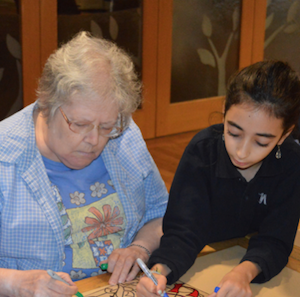
Grade 6 and 7 girls of Vancouver Hebrew Academy joined Louis Brier Home and Hospital residents in making decorations for the home’s sukkah. (photos from Vancouver Hebrew Academy)

photo - Grade 6 and 7 girls of Vancouver Hebrew Academy joined Louis Brier Home and Hospital residents in making decorations for the home’s sukkahJust before Sukkot, the Grade 6 and 7 girls of Vancouver Hebrew Academy were warmly welcomed to Louis Brier Home and Hospital, where they visited with the residents and worked on a special project. Together, the students and residents created stained glass-style decorations for the Louis Brier’s sukkah.

It is a mitzvah to beautify the sukkah and, in this art project, several mitzvot overlapped, including connecting the younger generation with those who laid the groundwork for our community – for which we are grateful – and helping both the residents and children celebrate the holiday of Sukkot with an extra level of beauty and simcha.

Format ImagePosted on November 27, 2015November 24, 2015Author Vancouver Hebrew AcademyCategories LocalTags Louis Brier Home and Hospital, sukkah, Sukkot, VHA

Posts pagination

Previous page Page 1 … Page 543 Page 544 Page 545 … Page 663 Next page
Proudly powered by WordPress