Skip to content
  • Home
  • Subscribe / donate
  • Events calendar
  • News
    • Local
    • National
    • Israel
    • World
    • עניין בחדשות
      A roundup of news in Canada and further afield, in Hebrew.
  • Opinion
    • From the JI
    • Op-Ed
  • Arts & Culture
    • Performing Arts
    • Music
    • Books
    • Visual Arts
    • TV & Film
  • Life
    • Celebrating the Holidays
    • Travel
    • The Daily Snooze
      Cartoons by Jacob Samuel
    • Mystery Photo
      Help the JI and JMABC fill in the gaps in our archives.
  • Community Links
    • Organizations, Etc.
    • Other News Sources & Blogs
    • Business Directory
  • FAQ
  • JI Chai Celebration
  • JI@88! video

Recent Posts

  • Zionism wins big in Vegas
  • Different but connected
  • Survival not passive
  • Musical celebration of Israel
  • Shoppe celebrates 25 years
  • Human “book” event
  • Reclaiming Jewish stories
  • Bema presents Perseverance
  • CSS honours Bellas z”l
  • Sheba Promise here May 7
  • Reflections from Be’eri
  • New law a desecration
  • Resilient joy in tough times
  • Rescue dog brings joy
  • Art chosen for new museum
  • Reminder of hope, resilience
  • The national food of Israel?
  • Story of Israel’s north
  • Sheltering in train stations
  • Teach critical thinking
  • Learning to bridge divides
  • Supporting Iranian community
  • Art dismantles systems
  • Beth Tikvah celebrates 50th
  • What is Jewish music?
  • Celebrate joy of music
  • Women share experiences 
  • Raising funds for Survivors
  • Call for digital literacy
  • The hidden hand of hate
  • Tarot as spiritual ritual
  • Students create fancy meal
  • Encouraging young voices
  • Rose’s Angels delivers
  • Living life to its fullest
  • Drawing on his roots

Archives

Follow @JewishIndie
image - The CJN - Visit Us Banner - 300x600 - 101625

Author: Mark Binder

Ordinary holiday in Chelm

Ordinary holiday in Chelm

Reb Cantor and Rabbi Yohon Abrahms paused at the top of the hill to watch the sun spread its warm red rays in a growing embrace across the Black Forest. (photo by Rainer Lück via commons.wikimedia.org)

It was an ordinary Chanukah in the village of Chelm, which was strange. Depending on who you talk to, Chelm is called a village of fools or of wise people, and there’s always something going wrong. This year, however … it was quiet.

Chanukah was neither early nor late. The weather was good – not too cold and not too hot. There was enough food so no one was hungry, and the lands surrounding Chelm were at peace; the Cossacks were far away. And, for once, no one got into an argument over whether the Americans should spell the holiday with an “H” or a “Ch.”

On the first night of Chanukah, families gathered and lit their candles according to the traditions of Hillel or Shammai, depending on whether they felt like building up to a big finish or starting off bright and getting more relaxed as each day passed.

“Something is going to happen,” worried Reb Cantor the merchant, as he huffed and puffed his way up Sunrise Hill for his morning exercise with Rabbi Yohon Abrahms, the schoolteacher.

“Something always happens,” said the young rabbi.

“Something bad,” said Reb Cantor. “It’s too quiet.”

“Not when you’re breathing so hard,” said Rabbi Yohon Abrahms.

They paused at the top of the hill to watch the sun spread its warm red rays in a growing embrace across the Black Forest.

“I’m still concerned,” said Reb Cantor.

“You wouldn’t be you if you weren’t,” said the young rabbi.

“I’ll race you to Mrs. Chaipul’s restaurant.”

“But you always win!” said Reb Cantor.

It was too late. The young rabbi was already running, and the fat merchant had no choice but to trundle after, hoping that he wouldn’t trip, fall and roll down the hill like a barrel.

By the time Reb Cantor caught up, Rabbi Abrahms was busy playing a friendly game with Joseph Katz, a well-known dreidel shark. Instead of wagering raisins on who would win, everyone was betting about how many coffee cups and teacups Joseph could rebound a dreidel off before landing on whatever letter he chose.

“Watch this,” Joseph said with a twinkle. He twirled a square top onto the table, where it ricocheted back and forth, striking five mugs and three cups before flying up, hovering over Rabbi Kibbitz’s plate of latkes, and then splashing down into the rabbi’s apple sauce.

“Nun!” said Joseph. “I win.” (In Chelm, foolish as it is, they say it takes nun to win.)

“You always do,” said Rabbi Kibbitz, who fished out the dreidel and wiped it off with a napkin before returning it to the young man.

“Sorry about that,” Joseph said.

Rabbi Kibbitz shrugged. “I’ve always felt that apple sauce is more of a garnish than a necessity.”

“How can you eat those latkes?” whispered Reb Stein, the baker. “I know you love your wife, but….”

Mrs. Chaipul, the rabbi’s wife (she kept her own name, which is another story) was listening from the kitchen to see how her husband would answer.

As the owner of the only kosher restaurant in Chelm, she was known as a miracle worker in the kitchen, with the exception of her lead-sinker matzah balls and her notoriously lethal latkes.

She knew, as did everyone in Chelm, that she had something of a culinary blind spot when it came to potato pancakes. She’d solved the problem at the annual Chanukah party by enlisting the help of Mrs. Rosen and her daughters, but her husband insisted that she still make her old recipe for him.

Rabbi Kibbitz smiled. “First of all, my stomach is protected by my belief in God.”

Everyone in the restaurant rolled their eyes.

“Secondly, it’s a question of scale,” he said. “When she cooks a small batch just for me, they’re quite good.”

“Really?” Reb Stein said.

“Would you like a taste?” the rabbi said, raising a piece on his fork.

“No, no, no, no!” Reb Stein said, hastily backing away. “I have work to do today.”

Even Reb Cantor, who had caught his breath by then, joined in as Reb Stein fled from the restaurant ahead of a wave of laughter.

Every night for seven more nights, candles were lit and the stories of the Maccabees were told. Songs were sung, dreidels spun, and latkes and doughnuts were fried.

More and more families were following the Schlemiel’s tradition of giving Chanukah presents to each other, but it wasn’t to excess. No one fought over whose present was best or biggest. And everyone remembered to give a little extra gelt to Rabbi Abrahms the schoolteacher to honor his contribution to their children’s lives.

On the last night it snowed, but everyone was home safe. They looked out their windows at the falling flakes, glad of their walls and roofs, and warmed themselves in front of their fires. And, as the candles finally burned down, the children were tucked into bed beneath comforters and blankets with a final goodnight kiss.

It was an ordinary Chanukah in the village of Chelm.

For once, nothing bad happened and nothing went wrong.

And that in itself was a miracle.

The End.

Mark Binder is the author of the award-winning Life in Chelm series, which includes A Chanukah Present, The Brothers Schlemiel and Matzah Mishugas. His latest book is Cinderella Spinderella. A professional storyteller, he regularly performs at synagogues, Jewish community centres and the National Yiddish Book Centre.
Format ImagePosted on December 4, 2015December 4, 2015Author Mark BinderCategories Celebrating the HolidaysTags Chanukah, Chelm
A fun family weekend away

A fun family weekend away

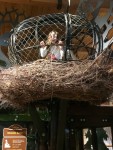
At the Hands On Children’s Museu, children learn many things, including just how large a bald eagle’s nest is. (photo by Lauren Kramer)

Most small Jewish communities decrease in size over the summer, but not Olympia, Wash. The city’s Jewish population swells by up to 600 as youth from all over the Pacific Northwest and as far afield as Las Vegas converge by bus and plane on Camp Solomon Schechter, a Jewish camp founded 60 years ago.

I ventured to Olympia, a five-hour drive from Vancouver, on a stormy, grey Friday in November, looking for a weekend away from home. Camp Schechter’s sunny season was well behind us and any leisure activities were going to be determinedly indoors. Still, I witnessed a city of 48,000 with a lively, active Jewish community, two synagogues and a Chabad presence.

We stayed in the downtown core and were thrilled to attend Friday night services at Temple Beth Hatfiloh, a Reconstructionist synagogue housed in a beautiful building on 8th Avenue downtown. The rabbi was out of town and the service, led by lay leaders and attended by locals and a good turnout of comparative religions students, was filled with song. Afterwards, at the Oneg in the dining area, I learned that the building had once been home to the Church of Christian Science and was purchased, renovated and converted into a synagogue 12 years ago. Walk the sanctuary, with its high ceilings, elegant aron hakodesh and stained glass windows and you’d never know it started its life as a place of worship for another faith.

photo - Temple Beth Hatfiloh, a Reconstructionist synagogue housed in a beautiful building on 8th Avenue downtown
Temple Beth Hatfiloh, a Reconstructionist synagogue housed in a beautiful building on 8th Avenue downtown. (photo by Lauren Kramer)

Olympia is a stately, historic city filled with soaring examples of Greco-Roman-style architecture and irresistibly browsable bookstores, galleries and boutiques. Washington’s version of Victoria, it spreads in an elegant square on either side of Budd Inlet, its beautiful state buildings on a bluff over the ocean and its 278-foot capitol dome visible from most everywhere. There are daily tours of the capitol dome and we gladly joined one led by Ed Smith, a 30-year history teacher whose father had once served in the legislature. He primed our small group on the ornate granite, European marble, carved masonry and more than 300 Tiffany lights and chandeliers that decorate the palatial interior. It’s an impressive place and one that certainly lends gravity to Washington’s history and the business of lawmaking.

It was less than fascinating for a 6-year-old, though, which is why our next stop was the very antidote: the Hands On Children’s Museum of Olympia. These days, almost every city has a generic children’s museum – but this one is far from generic. “Our goal was to only feature exhibits from the Pacific Northwest, things children might see in their own back yards,” said Jillian Henze, communications manager for the 28,000-square-foot museum. Best suited for the 3-to-8-year-old crowd, this innovative space delves into the farm to fork eating experience, the Puget Sound waterway, the forest and the lifecycle of water. Children learn how currents flow, how large a bald eagle’s nest really is, how water and wind pressure work, how to build a house and where food comes from. My daughter Maya had to be dragged out of the museum at closing time.

We left Olympia the next day for Grand Mound, 20 minutes away and home to Great Wolf Lodge, Washington’s equivalent to Disneyland. The massive indoor waterpark is a kids’ paradise, with waterslides that sweep riders on circuitous watery journeys, a large wave pool and two well-designed water play structures – one for toddlers and the other for kids 7 and younger. There’s easily enough entertainment in the waterpark alone for a half-day. But, once you dry off, there’s more to do in the rest of the resort. Around us kids were running about with wands, pointing them at treasure chests and learning their way around a game that lasts four to six hours and occupies them for the duration of their stay. Great Wolf is a hedonistic kids’ experience from which parents emerge looking flushed and exhausted from the combination of heat, chlorine and noise. By contrast, their kids come out starry-eyed and determined to return.

We took the long road back to Olympia on Old Highway 99 to get a glimpse of Tenino, a sleepy city with a fascinating history. I was anxious to learn about Tenino’s sandstone legacy, which dates back to 1888 with the discovery of a large deposit of sandstone – a valuable commodity in the pre-concrete era. In the four decades that followed, Tenino quarries supplied sandstone for buildings in San Francisco and Vancouver, B.C., among other places. The quarries closed in the late 1920s but one of them, the Tenino Stone Company Quarry, was deliberately flooded with water from natural springs by the City of Tenino. It became a 95-foot-deep swimming pool with terraced walls that bear evidence of its history. Unfortunately, most of that history remained an enigma because the doors of the Tenino Depot Museum, usually open on the weekends, were shuttered when we were in town. That’s the problem with sleepy cities, particularly in November. They tend to go into a long hibernation.

Lauren Kramer, an award-winning writer and editor, lives in Richmond, B.C. To read her work online, visit laurenkramer.net.

If you go …

  • For general information on Olympia, surf to visitolympia.com
  • The Hands On Children’s Museum is open daily until 5 p.m. and admission is usually $10.95 US, but is free on the first Friday evening of every month from 5-9 p.m.: hocm.org or 1-360-956-0818
  • Free tours of the Washington State Legislative Building run every hour on the hour from 10 a.m.-3 p.m. weekdays; 11 a.m.-3 p.m. on weekends
  • You have to stay to play at Great Wolf Lodge, where accommodation starts around $210/night for a family of four to six people, and includes water park passes: greatwolf.com or 1-866-798-9653
Format ImagePosted on December 4, 2015December 4, 2015Author Lauren KramerCategories TravelTags Beth Hatfiloh, Hands On Children’s Museum, Jillian Henze, Olympia
“Jazz up” visit to Jerusalem

“Jazz up” visit to Jerusalem

In the winter, the Yellow Submarine hosts a collection of shows, many of them jazz, as part of the International Music Showcase. (photo from itraveljerusalem.com)

This article was written several months before the daily terrorist attacks began against Israel. While tourists may be understandably hesitant to visit Israel right now, the country needs support, and a visit is one of the tangible ways in which to give that support. (Editor)

***

Jerusalem may be better known for its religious and historical context than its music scene but, below the surface, a burgeoning jazz scene featuring some of the best musicians in the country delivers a steady diet of under-the-radar concerts in Jerusalem that frequently wow unassuming tourists and locals alike.

“A lot of the best jazz musicians for a couple of generations have come out of Jerusalem,” commented Steve Peskoff, a jazz musician who has lived in Jerusalem for 30 years and teaches jazz guitar and music workshops at the Jerusalem Academy of Music and Dance. “This is the only school in the country granting a degree [in jazz] at the college level,” said the former New Yorker.

Ask around town about jazz, and you’ll typically hear about three mainstays of the scene that are constantly providing a platform for local and international jazz musicians to put their considerable talents on display for the patrons of the Holy City – Birman, Barood and the Yellow Submarine.

If you’re just visiting Jerusalem and don’t have time to wait around for concert dates, then Birman Musical Bistro is your most likely destination.

The popular “musical bistro” located just off the bustling Ben Yehuda Pedestrian street hosts local musicians every day for free-of-charge live concerts. Jazz is the music of choice at least four nights of the week, and the bistro boasts the atmosphere of an old-school music club, with a clientele made up of local musicians, students and music-lovers eager to take advantage of the live music and tasty, yet reasonably priced, food and drinks.

Jerusalem-born Dan Birron opened Birman’s about 10 years ago with live music every night, four of which are usually reserved for jazz, including the Saturday night jam session.

“All musicians in Jerusalem, especially jazz, know my place,” said Birron, who also takes the stage himself on some nights to serenade the crowd with his styles on the accordion. “I’m totally booked for months.”

The performers at Birman are a mixed bag of some of the city’s most established jazz musicians and the younger crop starting out after finishing the army or graduating from the Academy of Music. The city’s jazz scene is “very interesting, with many very talented musicians,” Birron said. “The best ones are coming to my place.”

Not far away from Birman in the picturesque Feingold Courtyard, Barood Bar and Restaurant is one of the most talked-about jazz institutions in the city. Owner Daniela Lerer remembers as a young child hearing jazz and feeling that it spoke to her more than any other genre. It would be another 30 years before she opened Barood in 1995 but, ever since, jazz records have dominated the background music at Barood. These days, you can regularly catch live shows on Saturday afternoons or evenings – in the courtyard during the summer and in the restaurant when the cold weather comes.

After working as a TV producer and at other jobs, she said, “I knew for sure I would have jazz in my bar and restaurant. I began to play jazz here all the time, then I started to bring [other] musicians.”

For many years, well-known American saxophonist Arnie Lawrence, who moved to Israel in 1997, played at Barood once a week until he died in 2005. For the past year, Israeli saxophonist Albert Piamenta, has been playing at Barood one Saturday every month, while other local musicians perform two to three times a month. You won’t find a lot of promotion for the concerts, but most of the hotels in the area keep up to date with Barood’s schedule.

While the jazz community in Jerusalem is relatively small, Lerer has nothing but praise for the local musicians, students at the academy and the small but growing scene. “Jerusalem is very open to jazz now,” she said. “The scene is growing and the young people are really good.”

In addition to the music, Barood also boasts a unique Sephardi kitchen with a Greek influence, where Lerer’s son is chef, featuring pastelicos, a special meat pie made by Lerer, as well as appetizers, salads, main courses, vegetarian dishes, stuffed vegetables, and desserts, all from her Sephardi background.

No list of Jerusalem music institutions would be complete without the Yellow Submarine, one of Jerusalem’s première music venues. For the past seven years, it has offered free weekly jazz concerts.

The weekly night dedicated to jazz is designed to give local musicians the opportunity to be heard, said manager Yaron Mohar, a talented musician, as well as being a sound technician and the director of the School of Engineering and an instructor in the music education department. He explained that the Yellow Submarine is more than just a venue – it is a multidisciplinary music centre, where musicians can rehearse, record and attend programs and performances. It also offers aspiring musicians in high school the chance to earn credits toward graduation through Yellow Submarine courses.

The Yellow Submarine is where you are most likely to catch international jazz acts. Recently, it hosted Austrian jazz guitarist and songwriter Wolfgang Muthspiel and Swedish cellist/bassist Svante Henryson as part of the Israel Festival. In the winter, the Yellow Submarine hosts a collection of shows, many of them jazz, as part of the International Music Showcase.

Within Jerusalem’s community of young, aspiring musicians, there is certainly an appreciation that bodes well for the future.

Ami, a 17-year-old, attends a high school that offers a music major. Beginning in ninth grade, the program concentrates on jazz.

“Jazz is a language,” said Ami, a second-generation pianist. “I’ve been in the program three years but I’ve only actually learned what it means to be part of a jazz community now.”

Ami’s father has a doctorate in music and had a musical career in the United States before he moved to Israel, where he plays jazz piano on a freelance basis at weddings and other venues – and, not surprisingly, frequents jazz nights at Birman.

Sybil Kaplan is a journalist, foreign correspondent, lecturer, food writer and book reviewer who lives in Jerusalem. She also does the restaurant features for janglo.net and leads weekly walks in English in Jerusalem’s market. A longer version of this article was originally published on itraveljerusalem.com.

Format ImagePosted on December 4, 2015February 24, 2016Author Sybil KaplanCategories TravelTags Barood, Birman, Dan Birron, Daniela Lerer, Israel, jazz, Jerusalem, Steve Peskoff, Yaron Mohar, Yellow Submarine
A laptop for every teacher

A laptop for every teacher

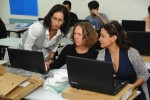
Teachers at CHW Hadassim with the new computers. (photo by Amir Alon)

Last month, the Athena Fund announced that three Israeli youth villages – CHW Hadassim Children and Youth Village, Mosenson Youth Village and Ayelet Hashachar Youth Village for Girls – have joined the Laptop Computer for Every Teacher in Israel program. The program provides laptops and 120 hours of professional training to teachers across Israel, with the aim of empowering teachers and improving student learning.

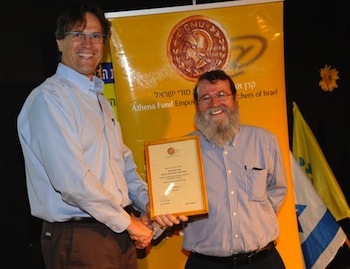
photo - Uri Ben-Ari, president and founder of Athena Fund, left, and Zeev Twito, director of WIZO Hadassim
Uri Ben-Ari, president and founder of Athena Fund, left, and Zeev Twito, director of WIZO Hadassim. (photo by Amir Alon)

Athena’s Laptop for Every Teacher in Israel program has so far distributed laptops to more than 11,000 teachers in 939 schools and kindergartens in 430 towns, cities and small communities in regional councils, together with professional training courses. The laptop distribution is made possible by contributions from Athena Fund’s various partners, including United Jewish Appeal, Bank Massad, the Israel Teachers Union’s Fund for Professional Advancement, WIZO, local authorities and others.

CHW Hadassim is located north of Tel Aviv and has 1,300 students. It is one the largest youth villages in Israel. Local area students attend the school, in addition to 200 from difficult or new immigrant backgrounds, who reside in campus dormitories.

Hadassim High School offers a full academic course of study in preparation for university. The youth village also provides a wide range of specialized studies tailored to the interests and needs of outstanding students, as well as those who are experiencing scholastic difficulties. Among the subjects offered are criminology, natural sciences, agriculture, horse breeding, therapeutic horse riding, art and sculpture, and photography. There is also a musical group called Ethiopian Sun, which performs all over Israel.

Mosenson Youth Village is in Hod Hasharon, north of Tel Aviv, with more than 800 students, nearly 130 of whom come to study in Israel from North America and countries around the world. The youth village consists of a high school and a boarding school where about 220 students live. The high school is known for many special programs, including one in agro-ecology that deals with environmental issues; a sports program that is ranked in the top five in Israel; a film and communication class; and an excellence class that studies science subjects such as math, chemistry, physics and biology at the highest levels.

Ayelet Hashachar, located on the Golan Heights, is a religious boarding high school, where about 100 girls live and study. In addition to standard subjects such as math, English, history and science, students also have an opportunity to focus on special subjects, such as communications, film and agriculture. The girls also attend a variety of enrichment classes, including nutrition, consumerism, the environment and art.

“The impact of computer use on the quality of teaching and learning in classrooms that participate in the Laptop for Every Teacher in Israel program can be clearly seen,” said Uri Ben-Ari, president and founder of Athena Fund. “Athena’s approach is to bring teachers to the digital world in which their students live. The fund believes that the computer and the accompanying training will help teachers cope with the information revolution and become mentors highly appreciated by their students.”

Format ImagePosted on December 4, 2015December 28, 2015Author Athena FundCategories IsraelTags Ayelet Hashachar, Israel, laptops, Mosenson, WIZO Hadassim

Holocaust memorial music

Musical memorials to the Holocaust tread on sensitive ground. On one hand, they perform a crucial function for humanity’s collective memory. On the other hand, there is significant risk of belittling the topic in the name of artistic expression. Two composers who have successfully navigated the risky waters of this endeavor to produce musically significant works with dignity and veneration are Charles Davidson and Sheila Silver. Released by the Milken Archive of Jewish Music earlier this year, Out of the Whirlwind: Musical Reflections of the Holocaust gives both works their rightful place in the archive’s pantheon of music of the American Jewish experience (milkenarchive.org/volumes/view/19).

Davidson’s I Never Saw Another Butterfly cantata is based on the 1960s publication (of the same name) of poems written by children interned at Terezin, a ruse camp set up by the Nazis to throw off the scent of those who suspected the mass murder of Jews under Hitler’s reign. Though it was simply a waypoint en route to the Auschwitz death camp, Terezin depicted a scenario where prisoners enjoyed relative freedom and produced significant artistic output.

Davidson’s tribute to the child poets comprises nine poem-settings for children’s choir and piano, performed here by the San Francisco Girls Chorus. From touching beauty to foreboding, despair and all points in between, his composition gives unique expression to the range of emotions contained in the poems while conveying its own identity as a work of art. I Never Saw Another Butterfly has been performed more than 2,500 times, including in 1991 at Terezin, in the presence of former Czech president Václav Havel.

Silver’s string trio To the Spirit Unconquered was inspired by the writings of Italian poet and Holocaust survivor Primo Levi. Silver uses a variety of techniques to convey different aspects of the concentration camp experience described in Levi’s writings: fear, through dark string tremolos and crashing, dissonant piano chords; memory, through floating piano lines and swooning strings; barbarism, through quick, syncopated rhythms, staccato stabs, and angular melodies; transcendence, through the soaring melodies of the final movement. In a 1998 interview with the archive (milkenarchive.org/videos/view/112), Silver claimed To the Spirit Unconquered as her most successful piece, stating that it had been widely performed and won over audiences skeptical of modern music. In her own words, it is “about the ability of the human spirit to transcend the most devastating of circumstances, to survive and to bear witness.”

Though both of these works can be appreciated on their artistic merits alone, their grounding in the maxim to never forget imbues them with an inescapable urgency. They command listeners of all faiths and backgrounds to approach them with undivided attention.

Posted on December 4, 2015December 4, 2015Author Milken Archive of Jewish MusicCategories MusicTags Charles Davidson, Holocaust, Primo Levi, Sheila Silver, Terezin
Health benefits from wine

Health benefits from wine

Ben-Gurion University Prof. Iris Shai, principal investigator of the CArdiovaSCulAr Diabetes and Ethanol (CASCADE) trial. (photo by Dani Machlis/BGU)


A glass of red wine every night may help people with type 2 diabetes manage their cholesterol and cardiac health, according to new findings from a two-year randomized controlled trial (RCT) led by researchers at Ben-Gurion University of the Negev (BGU). Additionally, both red and white wine can improve sugar control, depending on alcohol metabolism genetic profiling.

In this first long-term alcohol study, recently published in Annals of Internal Medicine, the researchers aimed to assess the effects and safety of initiating moderate alcohol consumption in diabetics, and sought to determine whether the type of wine matters. People with diabetes are more susceptible to developing cardiovascular diseases than the general population and have lower levels of “good” cholesterol. Despite the enormous contribution of observational studies, clinical recommendations for moderate alcohol consumption remain controversial, particularly for people with diabetes, due to lack of long-term RCTs, which are the “holy grail” of evidence-based medicine.

“Red wine was found to be superior in improving overall metabolic profiles, mainly by modestly improving the lipid profile, by increasing good (HDL) cholesterol and apolipoprotein A1 (one of the major constituents of HDL cholesterol), while decreasing the ratio between total cholesterol and HDL cholesterol,” the researchers explained.

The researchers concluded that “initiating moderate wine intake, especially red wine, among well-controlled diabetics, as part of a healthy diet, is apparently safe, and modestly decreases cardio-metabolic risk. The differential genetic effects that were found may assist in identifying diabetic patients in whom moderate wine consumption may induce greater clinical benefit.”

The researchers also found that only the slow alcohol-metabolizers who drank wine achieved an improvement in blood sugar control, while fast alcohol-metabolizers (with much faster blood alcohol clearance) did not benefit from the ethanol’s glucose control effect. Approximately one in five participants was found to be a fast alcohol-metabolizer, identified through ADH enzyme genetic variants tests.

Wine of either type (red or white) did not effect change in blood pressure, liver function tests, adiposity or adverse events/symptoms. However, sleep quality was significantly improved in both wine groups, compared with the water control group. All comparisons were adjusted for changes in clinical, medical and drug therapy parameters occurring among patients during the years of the study.

The two-year CArdiovaSCulAr Diabetes and Ethanol (CASCADE) randomized controlled intervention trial was performed on 224 controlled diabetes patients (aged 45 to 75), who generally abstained from alcohol. They gradually initiated moderate wine consumption, as part of a healthy diet platform, and not before driving. The trial completed with an unprecedented adherence rate of 87% after two years.

According to BGU Prof. Iris Shai, principal investigator of the CASCADE trial, and a member of the department of public health in the faculty of health sciences, “The differences found between red and white wine were opposed to our original hypothesis that the beneficial effects of wine are mediated predominantly by the alcohol. Approximately 150 millilitres of the dry red or white wines tested contained about 17 grams ethanol and 120 kilocalories, but the red wine had sevenfold higher levels of total phenols and four- to 13-fold higher levels of the specific resveratrol group compounds than the white wine. The genetic interactions suggest that ethanol plays an important role in glucose metabolism, while red wine’s effects additionally involve non-alcoholic constituents. Yet, any clinical implication of the CASCADE findings should be taken with caution with careful medical follow-up.”

The study was performed in collaboration with Prof. Meir Stampfer from Harvard University and with colleagues from University of Leipzig, Germany, and Karolinska Institute, Sweden.

In the new study that followed the research group’s three-month alcohol pilot RCT findings (Shai I., et al, Diabetes Care, 2007), the patients were randomized into three equal groups according to whether they consumed a five-ounce serving (150 millilitre) of mineral water, white wine or red wine with dinner every night for two years. Wine and mineral water were provided free of charge for the purposes of the study. Compliance with alcohol intake was tightly monitored, with patients returning their empty wine bottles and receiving their new supplies. All groups followed a non-calorie-restricted Mediterranean diet (following the group’s previous two-year dietary RCT findings; Shai I., et al, New England Journal of Medicine, 2008). Adherence was monitored using several validated assessment tools.

During the study, subjects underwent an array of comprehensive medical tests, including continuous monitoring of changes in blood pressure, heart rate and blood glucose levels, and follow-up for the dynamic of atherosclerosis and fat by ultrasound and MRI tests.

Format ImagePosted on December 4, 2015December 4, 2015Author Ben-Gurion UniversityCategories IsraelTags BGU, diabetes, Iris Shai, wine

Sperm can “see” heat

Locations of different opsins on the human sperm, viewed under a microscope, are revealed by labeling with a fluorescent antibody (bright yellow). (photo from wis-wander.weizmann.ac.il)

In their journey to the egg, sperm “feel” the heat of the fallopian tube and “taste” the chemical signals of the ova. But, a new Weizmann Institute study published in Scientific Reports shows that sperm actually make use of sensors that have mainly been known to belong to the visual system.

If a sperm, about 46 microns (thousandths of a millimetre) long, were the size of a human being, it would swim several kilometres to reach its destination. Thus, sperm need to be guided by various cues. In earlier studies, Weizmann Institute’s Prof. Michael Eisenbach and his team discovered two of these guidance mechanisms – heat-sensing and chemical cues. The heat attraction works across the longer range: the site of the fertilization is warmer than the spot at the entrance to the fallopian tube where the sperm pause for maturation, and this temperature difference points them in the direction of the egg. When they get closer to the egg, they pick up its chemical signals.

“As in all important processes in nature, the sperm rely on more than one mechanism in their navigation, so that if one breaks down, others can provide a back-up,” Eisenbach said.

The heat sensitivity of sperm is extremely high. From a distance equivalent to the length of one sperm cell, they can sense differences in temperature as miniscule as 0.0006 of a degree Celsius, less than one thousandth of a degree. This sensitivity enables them to be guided by a very gradual increase in temperature on the way to the fertilization site.

In the new study, Eisenbach’s team – Dr. Serafín Pérez-Cerezales, Dr. Sergii Boryshpolets, Oshri Afanzar, Dr. Reinat Nevo and Vladimir Kiss of the biological chemistry department and Dr. Alexander Brandis of biological services – set out to discover exactly how sperm sense the heat. The scientists examined a particular category of receptors that, based on their previous studies, were thought to be involved in conveying signals to the sperm. Within this category, they zeroed in on a family of proteins called opsins.

Opsins are best known for their role in an entirely different sphere: the visual system. One major protein in this family, called rhodopsin, serves as a photoreceptor in the cells of the retina. Studies by other researchers working with fruit fly larvae had found this protein involved in responding to heat, hinting that this could also be the case in sperm.

The Weizmann scientists found that several proteins in the opsin family of receptors were present on the surface of mouse and human sperm. Each opsin had its own distribution pattern on the sperm, and each apparently made a contribution, through its own set of signals, to heat sensing. When the researchers blocked the signals from these opsins, the sperm failed to swim from a cooler to a warmer chamber.

These findings may explain the enigmatic presence of opsins in organs that are not exposed to light, including the lungs and the liver. They suggest that the mammalian opsins may be performing heat-sensing functions in these parts of the body.

More institute news can be found at wis-wander.weizmann.ac.il.


Format ImagePosted on December 4, 2015December 4, 2015Author Weizmann InstituteCategories IsraelTags Michael Eisenbach, opsin, sperm, Weizmann

The longest shiur

Rabbi Shlomo Einhorn, dean of Yavneh Hebrew Academy, will attempt to deliver the longest uninterrupted Torah lecture ever from Dec. 23, 11:59 p.m., to Dec. 24, 6 p.m. PST. The goal of the record-setting attempt is to raise funds in support of students who can’t afford Jewish day school and to educate the public on the importance of a Jewish education.

Einhorn, author of Judaism Alive, is a graduate of Yavneh. In 2005, he became the head rabbi of New York’s West Side Institutional Synagogue. Upon returning to Los Angeles as dean of Yavneh in 2012, he began giving Torah lectures across the city, to both Orthodox and non-Orthodox groups. He is known for his memory and his ability to quote from dozens of Torah sources, while at the same time referencing pop culture, heroes and self-help gurus. To prepare for the 18-hour lecture, he is training with a vocal coach to get in shape.

The rabbi will focus on a different topic every hour for the full 18 hours. Among the topics are The Chosen People and Three Other Arrogant claims; Two Jews, Four Opinions: Why Do We Always Argue?; John Lennon’s “Imagine” Experiment: What Would the World be Without Religion?; Jacob’s Ladder and “The Stairway to Heaven”: Does Secular Culture Have a Home in this Religion?; and Did the Israelites Miss the Train?: Did the Messiah Already Come?

Einhorn will be lecturing from Yavneh Hebrew Academy. At the end of the 18 hours, there will be a dinner celebration with the student body and community members, as the students celebrate their own achievement, mastering 18,000 questions on Bereishit, Genesis, the first book of the Five Books of Moses. With a goal of raising $200,000 towards Jewish education, viewers can watch and donate by going to longestshiur.com.


Posted on December 4, 2015December 4, 2015Author Yavneh Hebrew AcademyCategories WorldTags shiur, Shlomo Einhorn, Yavneh
366 ideas for kindness

366 ideas for kindness

Areyvut, a New Jersey-based nonprofit organization whose mission is to infuse the lives of Jewish youth and teens with the values of chesed (kindness), tzedakah (charity) and tikkun olam (repairing the world), has released its 2016 A Kindness a Day Calendar.

This flip calendar offers 366 suggestions (it’s a leap year!) for people of all ages to better themselves, their communities and the world at large. For example, Jan. 1’s entry suggests, “make a New Year’s resolution that will positively impact someone else’s life.” Other entries remind readers to “call and wish Shabbat Shalom to an out-of-town relative” or to “assist someone who is unemployed with writing a resumé and finding a job.” Beneath each act of kindness is a traditional Jewish text that explains from where the act of kindness is inspired.

Areyvut debuted A Kindness a Day in 2005 and continued to create calendars through 2009, the last year that the flip-book was published. Despite a six-year hiatus, the A Kindness a Day calendar is back with suggestions, sources and inspiration that will hopefully help readers to play a more active role in their families and communities.

“Charity, kindness and social justice must be an integral part of everyone’s day,” said Daniel Rothner, Areyvut’s founder and director. “The 2016 calendar allows for these core Jewish values to become more aligned to the context of people’s daily lives. A Kindness a Day is a great educational tool for children and adults alike; as well as homes, schools and other organizations, both as a guide to help instil Jewish values into one’s life and as a springboard for discussion and study.”

The 2016 calendar also includes a thematic index that categorizes the acts of kindness by theme (for example, loving your neighbor, tzedakah, tending to the sick, volunteering, prayer, etc.) and a glossary of terms. Calendars can be purchased on Areyvut’s website areyvut.org/shop. For sample pages, and additional information, email [email protected].

Format ImagePosted on December 4, 2015December 4, 2015Author AreyvutCategories WorldTags Areyvut, calendar, chesed, kindness, tikkun olam, tzedakah
המסיבה עלתה רק מיליון ורבע דולר

המסיבה עלתה רק מיליון ורבע דולר

(צילום: רוני רחמני)

המסיבה עלתה רק מיליון ורבע דולר: משטרת ונקובר מחפשת אחרי צעירה שגרמה נזק גדול למגדל המפואר של מלון ג’ורג’יה

משטרת ונקובר מחפשת מזה מספר שבועות אחרי צעירה אלמונית שגרמה נזק גדול מאוד, למגדל דירות גבוה של אחד מבתי המלון המפוארים ביותר בדאון טאון. מגדל הדירות (פרייבט רזידנס) של רוזווד מלון ג’ורג’יה, מתנשא לגובה ארבעים ושמונה קומות וכולל מאה וחמישים ושש דירות מפוארות. מחיר הסוויטות המפוארות נע בין מיליון דולר לשמונה עשר מיליון דולר (שזה מחיר הסאב- פנטהאוז). בזמן שהותה במגדל הדירות של המלון ומסיבה לא ברורה, הצעירה החליטה לפתוח את אחד מברזי הכיבוי הגדולים שמותקנים בחדר מדרגות החירום. כתוצאה מכך זרמו מים בכמות עצומה ובלחץ גבוה בין שלוש קומות (18-20), וגרמו נזקים קשים ללא פחות מעשרים ושש דירות. כן נגרמו נזקים גדולים לקומות עצמן וחלק מהקירות. עלות נזקי המים מוערכת על ידי חברת הביטוח שמבטחת את המלון ומגדל הדירות במיליון ורבע דולר.

מחקירה ראשונה של המשטרה המקומית מתברר שהצעירה הוזמנה למסיבה באחת הדירות במגדל והיא זו שאחראית להפעלת צינור הכיבוי. המשטרה שמגששת     באפלה, ביקשה את עזרת הציבור באיתור הצעירה האלמונית, והיא קיבלה כבר מספר טיפים. בחברת הביטוח אומרים כי יש לא מעט תביעות של נזקים שנגרמו בדירות במגדלים גבוהים כתוצאה מסדקים באחד הצינורות, נזילות בחדרי האמבטיות או במכונות השונות שגרמו להצפות. אך זה מאוד נדיר שמישהו יפתח במכוון ברז כיבוי ויגרום לנזק כה גדול. באגף הכיבוי של עיריית ונקובר מציינים כי יש אפשרות להגן על ברזי כיבוי האש, מפני פתיחתם שלא לצורך. זאת באמצעות התקנת מנעולים מיוחדים שעולים כ-400 דולר (ליחידה).

מהפכה בתחום המזון: האף.די.איי האמריקני מאשר לראשונה לאכול דגים שנוצרו בהנדסה גנטית

מנהל המזון והתרופות האמריקאי (האף.די.איי) מאשר לראשונה לאכול דגי סלומון שנוצרו בהנדסה גנטית. מדובר בהחלטה חסרת תקדים בהיקפה כיוון שעד היום לא היה אישור בשום מקום בעולם, לאכול מוצרים מבעלי חיים שנוצרו בהנדסה גנטית. אישור האף.די.איי שנחשב לרגולטר המשפיע ביותר בתחום בעולם, פותח אפוא דלת לאפשר לגדל בעלי חיים נוספים בהנדסה גנטית לשם מאכל, כמו למשל בשר בקר שעמיד בפני מחלת הפרה המשוגעת. לפי הערכה יקח עוד כשנתיים עד שהדגים הגנטיים יגיעו לצלחות הסועדים.

היתרון המשמעותי בדגי הסלומון גנטיים הוא בכך שהם גדלים במהירות כפולה מזו של דגי סלומון רגילים. לדג סלומון לוקח כשלוש שנים להגיע לגודל המירבי שלו, ואילו לדג הגנטי זה לוקח כשנה וחצי בלבד. הדגים הגנטיים אף גדולים יותר בשיעור של כעשרים אחוז לעומת הסלומון הרגיל. בביצי הדגים הגנטיים מושלבים גנים של שלושה דגים: סלומון אטלנטי, סלומון צ’ינוק ודג הפוטית שההורמון שלו הוא זה שמאפשר את גידולם של הדגים לאורך כל השנה, לעומת דגי סלומון רגילים שאינם גדלים במים קרים.

את דגי הסלומון הגנטיים מגדלת חברת הביוטכנולגיה ‘אקווה באונטי טכנולוגיות אינק’ האמריקנית (שמניותיה נסחרות בבורסה ועלו לאחרונה משמעותית). אקווה באונטי מקיימת ניסויים מזה עשרים שנה, וסוף סוף זכתה להכרה משמעותית וקיבלה גושפנקא חוקית לפעילותה. ביצי הדגים הגנטיים מוחזקות במתקנים מיוחדים במפרץ שמזרח מחוז פרינס אדוארד איילנד, שבמזרח קנדה. משם הביצים מועברות להמשך גידול במיכלים עיליים בחוות דגים בפנמה. יצויין כי האף.די.איי לא מאשר בשלב זה לגדל את הדגים הגנטיים בשטחה של ארה”ב. בימים אלה גם מנהל הבריאות הקנדי בוחן את האפשרות להעניק אישור לאכול את דגי הסלומון הגנטיים המדוברים בקנדה.

Format ImagePosted on December 1, 2015November 29, 2015Author Roni RachmaniCategories עניין בחדשותTags genetically modified salmon, Hotel Georgia, בדגי הסלומון גנטיים, מלון ג'ורג'יה

Posts pagination

Previous page Page 1 … Page 542 Page 543 Page 544 … Page 663 Next page
Proudly powered by WordPress