Skip to content
  • Home
  • Subscribe / donate
  • Events calendar
  • Business Directory
  • FAQ
  • News
    • Local
    • National
    • Israel
    • World
    • עניין בחדשות
      A roundup of news in Canada and further afield, in Hebrew.
  • Opinion
    • From the JI
    • Op-Ed
  • Arts & Culture
    • Performing Arts
    • Music
    • Books
    • Visual Arts
    • TV & Film
  • Life
    • Celebrating the Holidays
    • Travel
    • The Daily Snooze
      Cartoons by Jacob Samuel
    • Mystery Photo
      Help the JI and JMABC fill in the gaps in our archives.
  • Community Links
    • Organizations, Etc.
    • Other News Sources & Blogs
  • JI Chai Celebration
  • JI@88! video

Recent Posts

  • Or Shalom reopens its doors
  • JFS from past to future
  • Need holistic approach
  • Sharing stories, advice
  • Journalist shares fears
  • Skills to live together
  • Road to independence
  • Cutting grass with scissors
  • Zionism as a solution
  • Deceit, desire & the divine
  • Reclaiming sacredness
  • Creative project ideas
  • Summer squares and cobbler
  • Thou shalt … summer commandments
  • Legal help for students
  • Revisiting myth of Lilith
  • Wrong person rebuked
  • Canada’s mixed messages
  • Questions for museum
  • Symposium on antizionism
  • Making soccer political
  • CJPAC lauds Pulver’s impact
  • City recognizes Vrba’s legacy  
  • Organ donation saves lives
  • Theodore’s March premiere
  • A healing Shabbaton
  • Supplying healthy food
  • A chime of metal tags
  • Yellowknife seder a first
  • Ishai energizes, unifies
  • A Lag b’Omer to remember
  • Expanding the healing
  • Hannah Senesh – a unique hero
  • Community milestones … May 2026
  • Деньги до зарплаты на карту Займ до зп онлайн за 5 минут 2026
  • Микрокредит онлайн в Казахстане Микрозайм в Акшамат

Archives

Follow @JewishIndie
image - The CJN - Visit Us Banner - 300x600 - 101625

Author: Cynthia Ramsay

Gonna be a fun night

Gonna be a fun night

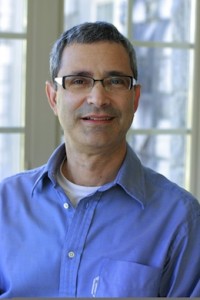
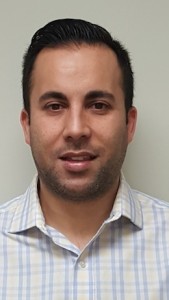
Jessica Kirson and Jon Steinberg (below) launch this year’s Chutzpah! Festival on Feb. 18. (photo from Chutzpah!)

Everyone who likes to laugh should attend the opening night of this year’s Chutzpah! Festival on Thursday, Feb. 18, at Rothstein Theatre. Watch a few of Jessica Kirson’s or Jon Steinberg’s routines and you’ll see the wisdom in Steinberg’s comment to the Independent: “Jessica and I, we have very different styles of comedy but we’re both very funny, so there’s something for everyone. If you come to the show and you don’t enjoy yourself, you may be the problem.”

Both seasoned and acclaimed performers, Kirson and Steinberg have long been funny.

“I was always the class clown,” Kirson told the Independent. “I had no idea that I wanted to do stand-up comedy. I had no idea I was capable. I never thought I could get on stage in front of people. I ended up taking a class and that’s what gave me the strength to actually perform. I was petrified. Once I did it, I fell in love with it.”

Whereas Kirson initially considered becoming a therapist, following her mother’s example, and went as far as graduate studies in social work, Steinberg’s path to stand-up was more direct.
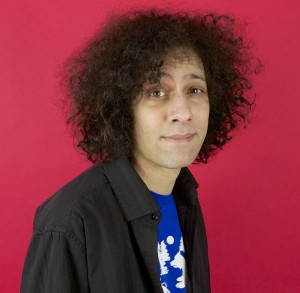
photo - Jon Steinberg
Jon Steinberg (photo from Chutzpah!)

“As a kid, I always enjoyed making people laugh,” he said. “In high school, all my friends were into skateboarding but I was really bad at it. So, when my friend Toby made a skateboard video, I did some comedy sketches to go in between the clips of kids skateboarding. It was my way of being included.

“One night, I was out with a friend, walking in the rain with a paper bag full of doughnuts when the bag tore open and all the doughnuts rolled out into the street. I started telling people about it and they found it funny, and then I figured out how to tell it in a way that was funnier and eventually this would come to be known as ‘The Doughnut Story.’ The humor came from the disproportionate level of build-up to pay-off, and also how sad I was about losing all my doughnuts.”

The success of that story led to other stories that Steinberg and a buddy would write for Steinberg’s repertoire. Later, this buddy convinced him to run for high school president, “as a joke.”

“I had to deliver a speech in front of roughly 800 students,” said Steinberg. “That made my first open mic night in front of 35 people seem way less intimidating.”

His first time seeing live comedy was in Toronto at Yuk-Yuk’s.

“It was one of those nights with 10 comics on the bill, Russell Peters, Shaun Majumder, and many other great comics. Awhile after that, I did my first open mic at the Yuk-Yuk’s in Ottawa.”

Steinberg’s comic style is nerdy and calm, his hair being the most out-of-control aspect of his act. Kirson, on the other hand, exudes energy and her facial expressions are a sight to behold.

“I am very intense like my comic persona,” Kirson said. “I am definitely not as loud. I am not ‘on’ all of the time. A lot of people assume that of comedians and it is so not true. I am very silly and love to laugh at myself and ridiculous situations around me.”

She is edgy and pushes boundaries in her performances but is, ultimately, kind-hearted. “I never want to be mean-spirited to anyone,” she said. “If I feel like I am hurting someone’s feelings, I back off. I do, like most comics, love to get people thinking.”

Steinberg, too, steers clear of nastiness. “If I write something and I believe that it’s funny, and not mean-spirited, I’ll try it,” he said. “But if it consistently gets a poor reaction from audiences, I’ll drop it from my act. Some audiences are more sensitive than others, but my goal is to make people laugh, not to make them sad, so I won’t try to cram something down people’s throats and blame them for not liking it. So, if you’re at my show and I do a joke that you don’t like, just know that I may be in the process of figuring out I shouldn’t do that joke. You might only need to hear it once to realize that I shouldn’t have said it, but I may need to say it three or four times before I come to the same conclusion, so don’t spoil it for me by coming up to me after the show and telling me which jokes I shouldn’t do.”

Despite his extensive touring, the comedy festivals and television specials, Steinberg admits to still being a little nervous when doing stand-up. However, he said, “I find that helps keep me alert and in the moment. It’s like crossing the street – you need to be a little afraid of being hit by a car, just enough that you remember to look both ways, but not so afraid that you can’t cross the street.”

Kirson, too. “I get nervous at times,” she said. “I have done so many kinds of shows for so many years that I know what to expect from certain audiences. If I get fearful, I try to remember that I am seasoned, and most likely it will be fine. I get the most nervous doing television.”

And she has done a lot of television – on Comedy Central, Nickelodeon, VH1, Oxygen, Bravo, the Women’s Television Network, NBC, Fox, ABC, Showtime … the list goes on. The Jessy K Show YouTube channel has more than 100 videos with more than 2.5 million views in total.

“I started making silly videos with a friend of mine and posting them online. People loved them and it just grew from there,” said Kirson of the show’s genesis.

Many Canadians will recognize Steinberg from CBC Radio’s The Debaters.

“My first debate was in 2010,” he said. “That was when they were doing the TV version, which was taping in Vancouver. I came back to do another one of those shortly after. They stopped doing the TV version shortly after that, but the director of that was a guy named Brian Roberts, and after that he cast me in a kids’ TV show he was doing, which allowed me to quit my day job at an electronics recycling facility. So, The Debaters has been good for me in a lot of ways. I do around three to five of the tapings a year, it helps fill out my schedule, and it exposes me to a whole different audience. I have one coming up in March in Victoria.”

While their comedy isn’t Jewish per se, Judaism or Jewish culture are a part of who they are.

“I’m very proud to be Jewish,” said Kirson. “I love the traditions, the culture. It means, family, home, it is my rooting in life.”

For Steinberg, “the things that are most Jewish are those that secular and Orthodox Jews have in common, like bagels or potato kugel. I know a lot of people think that stuff is trivial, but it’s what we have in common.”

As to what else he’d like to do career-wise, Steinberg – who has appeared on the sitcom Spun Out and the drama Remedy – said, “I’d love to do more acting. I’ve done a bit, and it’s a lot of fun, but I’m happy just doing stand-up too. My goal isn’t to be famous, it’s just to make a living doing things I enjoy, so that can include stand-up, acting, writing, or things like The Debaters, which combines all three of those things.” In 2014, he released the album Between Me and the Wall.

Kirson also enjoys a breadth of activities. In addition to performing around the world, her TV appearances and her YouTube channel, the award-winning comedian has appeared in film and she recently launched her own podcast. While she would love to have her own television show so she can draw an even bigger audience, she said, “I make a good living at doing something I love. I’m very grateful.”

For more on Steinberg, visit jon-steinberg.com; for more on Kirson, jessicakirson.com. The comedians’ Feb. 18 Chutzpah! opener starts at 8 p.m. For tickets ($36, $21 for students), call 604-257-5145 or visit chutzpahfestival.com.
Format ImagePosted on February 5, 2016February 4, 2016Author Cynthia RamsayCategories Performing ArtsTags Chutzpah! Festival, comedy, Jessica Kirson, Jon Steinberg

Calgary sponsorship efforts

Around the time of the High Holidays last year, Rabbi Shaul Osadchey, senior rabbi of Congregation Beth Tzedec in Calgary, had lunch with a congregant. Discussing various issues, they talked about the possibility of sponsoring a Syrian family.

“We decided to pursue that and have the congregation get on board and assume responsibility for a family,” Osadchey told the Independent.

With all enthusiastic and supportive of the idea, Osadchey gathered more information through Catholic Immigration Services (CIS). Later, he attended a workshop on how to sponsor a Syrian refugee family.

photo - Rabbi Shaul Osadchey of Congregation Beth Tzedec in Calgary
Rabbi Shaul Osadchey of Congregation Beth Tzedec in Calgary. (photo from Shaul Osadchey)

Through CIS, the rabbi was introduced to an executive of Armenian decent who had married a Jewish man and converted to Judaism. As the woman worked with Osadchey, she took a special interest in the congregation’s sponsorship and wanted to connect them to a particular family – a Christian Armenian family with relatives in Calgary who she personally knows.

“She had a personal connection and we thought that would be a good match, so we proceeded along those lines,” said Osadchey. “We were just simply committed to helping a Syrian refugee family and their religious background was of no particular relevance. We were prepared for Muslim or Christian, either one.” He explained that his congregation has been very active in building bridges in the local Muslim community.

After attending the workshop, the rabbi went back to the board with information about how the process works and the board unanimously passed the motion to adopt the family. Since then, they have been arranging all the paperwork, while the family to be sponsored is currently in Lebanon.

The congregation has been given some preliminary information about the family. “It’s a mother, a father and three children, ages 11 to three months old,” said Osadchey. “So, we’re preparing the various responsibility areas of helping them integrate in Calgary – things such as housing, clothing, food, transportation, jobs, and so forth.”

Osadchey has also reached out to Jewish Family Service Calgary to see if they can help with jobs; the parents are in the jewelry trade.

While the paperwork is being done, the community and congregation are offering support in many ways, from preparing to help with language needs, to collecting household furniture and other items the family may need.

While the local Armenian Christian community in Calgary is not very large (300 to 400 people), Osadchey thinks it is inevitable that the communities will form closer ties.

“I think, overall, the message that Beth Tzedec is sponsoring a family is very important, both for our members and for the community at large,” said the rabbi. “We are interested in this issue. We take it seriously. Jewish tradition calls on us to help refugees.”

Last month, leaders of Beth Tzedec had brunch with the refugee family’s Calgary relatives to learn more about them before they arrive in two or three months. It may take less time than that, depending on various factors.

“Still, we are pretty far along,” said Osadchey. “We have most of the financial commitment taken care of. It’s being underwritten primarily by one family, which is the original person I was speaking with who sort of launched the idea.”

But others in the congregation have also volunteered. For example, members of the congregation held a Chanukah party where, instead of giving gifts, they asked attendees to donate toward the sponsorship efforts. They raised $1,000.

The financial need for hosting a family of five is estimated by the federal government at $32,000, but Osadchey has been working with congregants, one of whom may be able to offer housing, which will substantially lessen this estimate.

“The $32,000 has already been raised, but we anticipate there will be other costs once they get here,” said Osadchey.

While the congregation is considering hosting more families in the future, they have decided to take it one family at a time, as this is a very new process for them.

“Somebody asked about that, and I said, ‘Go with the first family and see what the experience is like and, if we can continue to help and have support, we will do that,’” said Osadchey. “But, I anticipate it will be a very wonderful experience, both for the congregation and for the family.”

The response from the congregation has been overwhelmingly positive, and a number of prominent people have stepped forward and expressed their pride in the synagogue doing this. And the response has spilled over to Temple B’nai Tikva, which has spoken to Osadchey.

“They contacted us, but we already had the funding in place and were down the road in the process, so it wasn’t so critical that we had a partner,” he said. “We encouraged them to reach out and find someone else who might benefit from their help.”

Temple B’nai Tikva has set up a refugee assistance committee, which met last month. Committee representative Cynthia Simmons said that they have met with a couple of churches, and “we know we want to do something, but the exact nature of that something remains to be determined.”

Rebeca Kuropatwa is a Winnipeg freelance writer.

Posted on February 5, 2016February 4, 2016Author Rebeca KuropatwaCategories NationalTags Beth Tzedec, B’nai Tikva, Cynthia Simmons, refugees, Shaul Osadchey, Syria

Welcome to Saskatchewan

It doesn’t require a big community to make big things happen. It just takes a few good leaders. And Saskatoon’s small Jewish community is a prime example.

JoAnn Jaffe is a University of Regina professor of sociology and social studies and leader of Congregation Agudas Israel’s social justice committee. Raised in Dayton, Ohio, she described herself as “not the most observant person in the world, but not the least either – raised in a somewhat secular Jewish home, but with consciousness of Jewish ethics.”

photo - Prof. JoAnn Jaffe, leader of Congregation Agudas Israel’s social justice committee
Prof. JoAnn Jaffe, leader of Congregation Agudas Israel’s social justice committee. (photo from JoAnn Jaffe)

In 2001, she helped form a Jewish-Muslim dialogue group in Saskatoon. Through this group, members of the synagogue and a mosque decided to join in an effort to bring a Syrian refugee family to Saskatoon.

Jaffe and another Agudas Israel member, Willow Allen, took the lead on the Jewish community side. “At one point, as we started to hear what was going on in Syria, Willow and I started thinking that it would be really great if the Jewish community could sponsor a family,” said Jaffe. “I also started hearing from other congregation and board members that they were very interested in doing this, too, so Willow and I attended a training done by the refugee sponsorship training program.”

They soon began thinking about getting the Muslim community to join them.

“We put together a proposal and presentation to the board of the congregation,” said Jaffe. “The board said they were very interested, especially if we could get the Muslim community on board. We see this as a value-added activity for us. Not only are we sponsoring this family – it is our ethical duty, what we are taught to do, welcoming a stranger and taking care of the needy – but, if we could do this with the Muslim community in Saskatoon, then we could build relationships, build the community, have each other’s backs. If problems arise, we already have relationships with each other and know each other. We have a way of working together. After all, events in the wider world tend to pull us apart.”

Once the Islamic Association of Saskatchewan accepted the invitation, it was a matter of putting together a joint steering committee with members from both communities in equal proportion. That committee would then work to involve other community members in all the different activities involved in sponsoring a family.

The joint committee – called Children of Abraham Refugee Sponsors of Saskatoon – decided fundraising should be divided between the two communities equally. Once that was decided, the synagogue was prepared to be responsible for the entire portion the Jewish community was to raise.

“They knew they weren’t going to be on the hook for that entire amount, but that’s a beautiful gesture of good faith,” said Jaffe. “Then, we started. We set aside a fund at the synagogue called the Tikkun Olam Fund that is now dedicated to our family.”

Earlier this year, B’nai B’rith announced in a committee meeting that they would match collected funds up to a total of $5,000. “There is a family here who owns a limousine service that, one evening, they took people around on tours of the Christmas lights and then donated all the money they made from that – $1,000 – and put that into our fund,” said Jaffe. “We now have over $12,000. We are looking to raise about $15,000 to be in a comfortable place.”

Further, the group is settling the terms of an apartment and continuing to mobilize their communities, with many people stepping forward to donate items for their home, clothing, housewares and more.

“It’s amazing,” said Jaffe. “Lots of people are volunteering to do tasks. Because we are hooked up with the Islamic Association, there are quite a few people who speak Arabic who volunteer to act as translators. One of the main people on our steering committee is originally from Lebanon, so, of course, she speaks Arabic as well. We feel like things are moving forward in a really great way. I feel optimistic about it. People are very dedicated to making this work.”

The Syrian family being sponsored has five children, as well as another on the way. Four were born in Homs, Syria, while the youngest child (2 years old) was born in Amman, Jordan – an indication to how many years they have spent in a Jordanian refugee camp.

They will be here by the end of the month, said Jaffe. “They know who we are. We know who they are. They know we are here and are sponsoring them.

“The husband was born in 1980, so he’s 35 years old, about. She [the wife] was born in 1988, so she’s 27. Her birthday was a couple days ago.”

Rebeca Kuropatwa is a Winnipeg freelance writer.

Posted on February 5, 2016February 4, 2016Author Rebeca KuropatwaCategories NationalTags Children of Abraham, Islamic Association, JoAnn Jaffe, refugees, Syria

A commitment to dialogue

In commemoration of the 50th anniversary of the Nostra Aetate, the Canadian Conference of Catholic Bishops (CCCB) and the Canadian Rabbinic Caucus (CRC) committed last year to engage in “shared and sincere dialogue.”

Passed at the Second Vatican Council in 1965, the Nostra Aetate covers the Catholic Church’s relationship with non-Christians. Among other points, the fourth section affirms Christianity’s Jewish roots, states that Jews should not be blamed for Jesus’ death and decries antisemitism. The joint declaration of CCCB and CRC, issued on Nov. 25, referred specifically to that fourth section, “which profoundly changed Catholic-Jewish relations.”

The first national, bilateral dialogue between Catholics and Jews in Canada also took place on Nov. 25, in Ottawa. The joint initiative was launched the next day. It has several goals, including the strengthening of ties and increased understanding between the Catholic and Jewish communities; opposing “antisemitism and all forms of hatred”; advancing common interests in public policy, in areas such as social justice and religious freedom; and promoting civic engagement among Canadian Jews and Catholics.

photo - Rabbi Robert Daum is a delegate to the Catholic-Jewish dialogue initiative
Rabbi Robert Daum is a delegate to the Catholic-Jewish dialogue initiative. (photo from Robert Daum)

The Jewish delegation to the dialogue comprises Dr. Robert Daum, Rabbi Baruch Frydman-Kohl, Dr. Victor Goldbloom, Rabbi Reuben Poupko, Dr. Adele Reinhartz and Dr. Norman Tobias, while the Catholic delegation is Bishop John A. Boissonneau, Archbishop Paul-André Durocher, Sister Anne Anderson, Father Martin Moser, Sister Eileen Schuller and Father Hervé Tremblay.

“Jews must recognize that contemporary Catholicism was profoundly changed by Vatican II and that the historic denigration and demonization of Jews has been eliminated from Catholic teaching,” said Frydman-Kohl, co-chair of the CRC – with Rabbi Jonathan Infeld and Rabbi Reuben Poupko – in a Nov. 26 statement about the dialogue. “Catholics must comprehend that contemporary Jews and Judaism can only be understood through the twin experiences of the horrors of the Holocaust and the creative existence of the state of Israel. While differences between our two faith communities still exist, we have moved from disputation to dialogue, persecution to partnership, and confrontation to cooperation.”

“The initiative represents a very serious commitment on the part of the CCCB and of the CRC, and of the individual delegates who will be meeting twice a year for the next few years,” said Daum, a fellow, diversity and innovation, Simon Fraser University’s Centre for Dialogue, and an honorary associate professor, department of classical, Near Eastern and religious studies, University of British Columbia. “I am sure that none of us would have agreed to undertake this work without an expectation that the process would make a contribution to Canadian society.”

CRC is an affiliate of the Centre for Israel and Jewish Affairs. “As faith communities active in public policy and public discourse, we have a responsibility to speak out against manifestations of hatred in society,” said Nico Slobinsky, director of CIJA Pacific Region. “Our voice is stronger when we speak out together.”

photo - Nico Slobinsky, director of CIJA Pacific Region
Nico Slobinsky, director of CIJA Pacific Region. (photo from Nico Slobinksy)

Slobinsky noted that CRC and CCCB wrote a letter, dated Dec. 15, to Minister of Foreign Affairs Stéphane Dion, highlighting that “Christians experience religious persecution more than any other faith group on a global scale and in absolute numbers” and requesting that the “Government of Canada make a priority of advocating for at-risk Christian communities throughout the Middle East and Africa.”

He said CIJA has been “adamant in speaking for the right of religious minorities when threatened.” He described the “range of policies CIJA advocates on, from affordable housing to government support for health care and public services run by Jewish social service agencies,” and said he can see “natural areas of cooperation with faith communities like the Catholic community.”

“In the case of antisemitism,” he added, “given the sad history of Catholic discrimination and persecution of Jews, it is particularly poignant that Catholics condemn and actively counter antisemitism today, as evidenced in the pope’s recent remarks,” which continue the path of reconciliation that started at the Second Vatican Council.

Slobinsky said the Nostra Aetate “has had a profound impact within the Church leadership and clergy, though it is largely unknown by average Catholics and Jews.”

Daum described it as “a very important document. Because of that document, for example, I worked for the American Jewish Committee and the Roman Catholic Diocese of San Francisco for three years when I was working on my PhD at Berkeley. I was a guest lecturer on the topic of Judaism in five Roman Catholic high schools, so that the students could have the opportunity to learn about Judaism from a Jewish scholar.

“Like any historic document, the impact will vary from place to place, and from decade to decade, but one has to bear in mind that this relationship goes back many centuries. And there have been some very important statements issued by Jewish and Roman Catholic scholars over the past several years, including in recent months. These are related developments, which is very encouraging and very interesting.”

As for the dialogue initiative, Daum said, “We are bringing ourselves to this initiative as Jews and as Canadians, and our dialogue partners are bringing themselves as Catholics and as Canadians – in our diversity and in our unity, we will get to know each other and each other’s community better with each meeting.”

Zach Sagorin is a Vancouver freelance writer.

Posted on February 5, 2016February 7, 2016Author Zach Sagorin and Cynthia RamsayCategories NationalTags Catholic-Jewish relations, CCCB, CIJA, CRC, Nico Slobinsky, Nostra Aetate, Robert Daum
From earth to the heavens

From earth to the heavens

Ayelet Rose Gottlieb will perform Shiv’a at Performance Works on Feb. 20. (photo by Gem Salsberg)

There are so many levels on which one can experience Ayelet Rose Gottlieb’s music, and her most recent releases are no exception. Shiv’a, which comes out today, is cathartic, simply enjoyable and everything in between. Her other recent release, Gomory, is ethereal and visceral, and everything in between. Two very diverse recordings, they exemplify Gottlieb’s range of talent.

Gottlieb will perform Shiv’a on Feb. 20, 9 p.m., at Performance Works on Granville Island, as part of Winterruption. She will be joined by a Vancouver-based string quartet led by violinist Meredith Bates, and by N.Y.-based drummer Ronen Itzik (originally from Jerusalem), who is coming to Vancouver especially for the performance. The concert is part of a double bill with singer-songwriter Alejandra Ribera.

Shiv’a has been years in the making. Gottlieb began it following the deaths of three close friends, and she has described the work as “a meditation on the process of mourning.”

“I composed the piece between 2007-2010, while I was living between Wellington, New Zealand, New York City and Jerusalem, Israel,” Gottlieb told the Independent. She met the quartet ETHEL in 2009, “and they and percussionist Satoshi Takeshi were very involved in the final stages of the composition process while I was still working on the piece.

“In 2011, we did an Indiegogo crowdfunding effort and, with 75 pre-orders of the album, we were able to fund the recording of the piece in N.Y.C. Since then, I gave birth to three other albums, and three babies, until finally, in 2015, Shiv’a found the right ‘home’ as part of the roster of 482music, a unique record label that features mostly N.Y.- and Chicago-based musicians.”

It was 482music that suggested releasing the recording as an LP rather than a CD. “For me,” said Gottlieb, “releasing music in this format has been a lifelong dream. LPs are my favorite format to listen to music in. I love the warmth of the sound and the physical feeling of holding a record. It also allows for a true feature to the artwork.

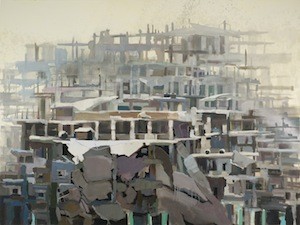
image - Noa Charuvi’s painting “Babel,” which Ayelet Rose Gottlieb chose for the cover of Shiv’a.
Noa Charuvi’s painting “Babel,” which Ayelet Rose Gottlieb chose for the cover of Shiv’a.

“I chose to use Noa Charuvi’s painting ‘Babel’ for the cover,” she continued, “as it seems to me to portray beautifully what I was trying to convey with the music of Shiv’a – something is broken, but that fragility holds much beauty, becomes abstract, allows for the imagination to roam. What was there before that is now lost? What will come in place of these ruins? What work needs to be done in order to clear the mess and rebuild? These same sentiments are found in Yehuda Amichai’s poem ‘An Old Toolshed,’ which serves as the epilogue to Shiv’a.”

When the Jewish Independent spoke with Gottlieb just over a year ago about her album Roadsides (“Music is the poetry of life,” Jan. 9, 2015), the Vancouver-based musician, who has called various places home, said she was still looking for her language here in the city. “I think this is an ongoing search,” she said when the JI caught up again with her about her two new releases. “I have a band here in Vancouver that I really love working with, though it has been a little while since we last had a gig. It features some of Vancouver’s most creative musicians – Aram Bajakian on guitar, Peggy Lee on cello, Dylan Van Der Schyff on drums and Meredith Bates on violin. Last spring, I composed a new song cycle, ‘12 Lunar Meditations,’ which they performed along with the Voice Over Mind Choir (led by D.B. Boyco) as part of the Western Front’s vocal festival. This was the first substantial piece of music I had composed since I moved here, and these musicians, Vancouver and the changes in my personal life, all blended into this composition.”

In addition to writing and performing her own material, Gottlieb forms part of the Mycale quartet, the group that recorded Gomory, part of John Zorn’s Masada project.

“John Zorn’s Masada project has been ongoing for over 25 years and has become a ‘cult’ project with a huge following worldwide,” explained Gottlieb. “These compositions all use the ‘Jewish scale,’ which gives them a klezmer-ish feel with a contemporary edge.

“In his second book of compositions for this project, The Book of Angels, Zorn commissioned different musicians to arrange and interpret his music. Among the musicians who participated in this Book of Angels series of recordings are guitarist Pat Metheny, trumpeter Dave Douglass, saxophonist Joe Lovano and many others. This is a magnificent list of artists for those of us who love jazz.”

And this is where Mycale comes in. Zorn formed the all-female a cappela quartet in 2009.

“We are Sofia Rei from Argentina, Malika Zarra from Morocco, Sara Serpa from Portugal (who joined the band in 2013 in place of Basya Schechter) and myself, from Israel,” said Gottlieb. “We all are band leaders and composers of our own individual projects and bring our musical styles into our arrangements of John Zorn’s music. We sing in Hebrew, Spanish, Portuguese, Arabic, Berber and French. John Zorn invited us to record two albums for this special series of recordings. The first was released in 2010 – Mycale: Book of Angels, Vol. 13 – and the latter was released in May of 2015, Gomory: Book of Angels, Vol. 25. We feel very honored to have been invited to participate in this incredible series, and especially to tour with Mr. Zorn globally as part of his Masada Marathon performances, which took us all over the world – Europe, Canada, U.S.A., Australia and South America.”

All of Zorn’s compositions in this work, added Gottlieb, are titled after angels and demons. “Gomory is a demon who disguises himself as a beautiful woman riding a camel,” she explained.

As for current and future projects, Gottlieb said, “My primary project right now is my family. My third little girl was born just one month ago, so we are all in search of a new rhythm to dance by. Other than that, I recently recorded a duo album (which is still in the works) with my longtime collaborator, pianist Anat Fort. I am hoping to keep performing and developing my new piece ‘12 Lunar Meditations,’ which, following the Vancouver debut, was performed in N.Y.C. last fall with some remarkable participants, including legendary jazz-vocalist Jay Clayton. I am working on some new collaborations here in Vancouver, which hopefully I’ll be able to share with you soon.”

In addition to the Feb. 20 concert at Performance Works, Gottlieb and Itzik will be giving a workshop at the Jewish Community Centre of Greater Vancouver (604-257-5111) on Feb 21, 2 p.m. Open to all, the cost to attend is $15 per person.

For more on Gottlieb and to purchase Shiv’a, Gomory or other of her recordings, visit ayeletrose.com.

Format ImagePosted on February 5, 2016February 8, 2016Author Cynthia RamsayCategories MusicTags Angels, Ayelet Rose Gottlieb, Gomory, John Zorn, Mycale, Noa Charuvi, Shiv’a, Winterruption

Foreign policy of fools

There was a tempest recently when National Public Radio, the listener-funded American radio network, published a map on their website that erased Israel and called the region between the Mediterranean and the Jordan River “Palestine.”

There were other errors on the map – Turkey and Cyprus were also omitted as part of the Middle East and Afghanistan and Pakistan were included, despite not being considered part of Middle East. The map was removed from the website after complaints from HonestReporting.

It is good that watchdogs like HonestReporting exist and that media outlets that make errors – or deliberate misrepresentations – respond when challenged. However, there is a degree of irony in the fact that more attention is given to erasing Israel from the map on a relatively irrelevant webpage than there is to the near-universal erasure of Israel from the curricula and foreign policies of almost every country in the region.

In textbooks, including some funded by the United Nations, Israel is omitted from maps that teach children geography, replaced, as in the NPR case, with the word Palestine. This is by far the bigger concern.

The reality is that, from the foreign-policy perspective of most Arab and Muslim-majority countries, Israel doesn’t exist and never has. Foreign policy toward Israel among members of the Arab League is one of aggressive denial, in which Israel is referred to obliquely as “the Zionist entity,” or worse. In Iran, there is less denial that Israel exists and more overt determination to literally wipe it from the map.

Yet, all of these facts are effectively ignored by Western European foreign policies, like that of France recently. French Foreign Minister Laurent Fabius has called for a peace conference “to preserve and achieve the two-state solution.” Fabius said that, if his plan for a negotiated settlement did not break the status quo, his government would unilaterally recognize a Palestinian state, as Sweden did in 2014.

Rightly, Israeli Prime Minister Binyamin Netanyahu rejected the idea on Sunday. The French proposal, he correctly noted, provides the Palestinians with a disincentive to negotiate in good faith. Failure of a negotiated settlement is pretty much guaranteed by promises like that of France. Historically, the Palestinian leadership has rarely been willing to compromise, confident, correctly, that their Western allies would endorse their position without it – there has been no need to recognize Israel’s right to exist, to negotiate borders or other outstanding issues. From far too few countries has there been recognition that there are actually two legitimate sides with competing claims.

Aside from being a foreign policy of fools, the French proposal reflects the false narrative that is dominant in Western circles, one that sees Israel as the only obstacle to peace. If Israel does put roadblocks in the way of European proposals for a negotiated settlement, it is because European countries have shown too little concern, if any, to the very legitimate concerns Israel has about its security and indeed its continued existence with the very real potential for a terrorist state immediately abutting its tiny territory. If governments run by Hamas and Fatah are not worrisome enough, their stability in the face of threats from even worse terrorist organizations, namely ISIS, may be of no concern to the French, but it is a very serious concern for Israelis and those who care whether they live or die.

Alleged Israeli obstructionism, exemplified by the admittedly unhelpful expansion of settlements, is held up in the West as the main obstacle to peace, while the genocidal incitement that is rampant among Palestinians and in other parts of the region is dismissed as a temporary by-product of Israeli policies. In other words, as so often in history, Jews are blamed for bringing catastrophe upon themselves.

It is not a good thing that a news organization like NPR would redraw the boundaries of Israel and Palestine. Of far more concern should be efforts by the government of France and other Western powers to force such reconfigurations on a region they clearly do not understand.

Posted on February 5, 2016February 4, 2016Author The Editorial BoardCategories From the JITags antisemitism, Binyamin Netanyahu, HonestReporting, Israel, Laurent Fabius, NPR

NGOs should flaunt funding

The Transparency Bill, also known as the NGO Bill, received cabinet approval in December and is, therefore, closer to becoming law in Israel. The bill requires any Israeli nongovernmental organization receiving more than half its funding from foreign governments to disclose this in all written communications with elected officials; to declare it orally when meeting in places where public officials gather; and, perhaps most chillingly, to require these NGO representatives to wear a badge indicating this funding whenever they visit the Knesset. The government’s coalition members have already agreed to support the bill when it is presented to the Knesset.

It’s no wonder left-wing NGOs and their supporters are bristling at the bill, seeing it, rightly, as targeting them specifically. Right-wing NGOs tend to get their foreign funding from individuals (who are often more difficult to track) rather than from governments. Given the current composition of the Israeli government, right-wing NGOs also naturally seek to support and intensify existing government policies, whereas left-wing NGOs are more likely to challenge the government’s policies. The bill is also somewhat redundant, since all NGOs are already required to declare their funding sources.

Nonetheless, should the bill pass, NGOs should wear their scarlet letter proudly. Unlike the literary figure Hester Prynne who flouted her community’s norms by committing adultery, Israeli NGOs are not only upholding the democratic norms of their own country, but are indeed enacting the norms of a much larger world than their own: specifically, global international society.

Consider the foreign government funding sources of ACRI, Israel’s premier civil liberties association. These donor countries are exclusively democracies. Ditto the country donors to B’Tselem, Israel’s premier human rights organization. Adalah, New Israel Fund, Sikkuy: all of these rights groups in Israel receive funding not from authoritarian regimes who trade in tyranny and persecution, but from democracies.

What do democracies have in common? Namely, a mission to uphold the practices that define them: openness, transparency, protection of the individual and of minorities, human rights, civil liberties and freedom. Expressing these norms is one of the main explanations for one of the most enduring features of the international system: the tendency for democracies to never go to war with one another. In believing that fellow democracies act with similar degrees of openness and debate, democratic governments inherently trust one another to solve disputes peacefully.

Democratic governments also have another unique quality: by design, they speak for their majority. Right now, the donor countries to these NGOs are mostly European. (Some United Nations bodies are represented, as well as USAID.) Imagine if every democracy in the world chose to funnel some of their foreign aid budget to Israeli NGOs: these Israeli groups would then be acting as an extension of global democratic society writ large, the best slice of human capital the world currently boasts.

On the day of the vote, the Zionist Union wore protest tags declaring “a Jew doesn’t mark another Jew: a Jew doesn’t mark another human being.” Galei Tzahal, Israel’s army radio, has revealed that 98% of Netanyahu’s campaign donations are from donors abroad. An American petition is circulating urging “President Obama and Congress to support U.S. legislation and regulations that would ensure that similar restrictions to whatever is enacted in the Knesset against ‘foreign funding’ of Israeli human rights groups are applied in the U.S. to private U.S. funding of the Israeli right and the settler movement.” And now, a group of American citizens have filed a lawsuit against the U.S. Treasury, attempting to rescind the nonprofit status of 150 American NGOs that apparently send billions of dollars to the settlements and to the Israel Defence Forces.

These are understandable rearguard actions. But perhaps supporters of human rights and civil liberties are looking the wrong way.

The Israeli government worries about Israel being “delegitimized” in international circles. The best hope for Israel is for the country’s fellow democracies to believe in Israeli civil society enough to continue to boost it. Until the upholders of democratic values give up on Israel altogether – and I sure hope that does not happen – Israeli NGOs should boast proudly of their foreign democratic government funding. It follows, too, that the Israeli government should be grateful for it. Amid all the delegitimization stemming from Israel’s running of a patently undemocratic regime in the West Bank, which regularly flouts human rights and civil liberties, the good work of these Israeli NGOs – the cornerstone of Israeli civil society – is the best reminder that there is hope for democratic Israel yet.

Mira Sucharov is an associate professor of political science at Carleton University. She is a columnist for Canadian Jewish News and contributes to Haaretz and the Jewish Daily Forward, among other publications. A version of this article was originally published on haartez.com.

Posted on February 5, 2016February 4, 2016Author Mira SucharovCategories Op-EdTags delegitimization, democracy, Israel, NGO Bill, Transparency Bill
Shabbat 100 success

Shabbat 100 success

Among the many Shabbat 100 volunteers were, from left to right, Ben Felstein (Chabad Jewish Student Club and Israel on Campus), Daniella Malpartida (Jewish Students Association), Anna Kapron-King (Progressive Jewish Alliance), Lior Bar-el (JSA and PJA), Michelle Levit (CJSC), Sydney Switzer (CJSC), Katrin Zavgorodny (CJSC board), Jennifer Brodsky (CJSC) and Becca Recant (Hillel BC). (photo from Chabad at UBC)

More than 140 students, faculty and alumni gathered in University of British Columbia’s newly built AMS Student Nest on Jan. 22 for Shabbat 100, which was organized by Chabad Jewish Student Centre-Vancouver.

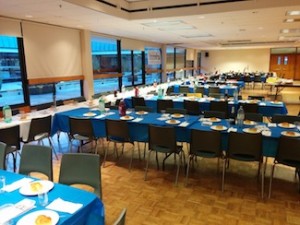
photo - Prepared for the 140 guests to arrive for Shabbat 100
Prepared for the 140 guests to arrive for Shabbat 100. (photo from Chabad at UBC)

The event was co-sponsored by Jewish Federation of Greater Vancouver, Lohn Foundation, Chabad of Richmond and Great Canadian Superstore on Marine Drive, and co-hosted by Chabad Jewish Student Club, Hillel BC, and all of the Jewish clubs at UBC: Jewish Student Association, Progressive Jewish Alliance and Israel on Campus.

Guests enjoyed a three-course Shabbat dinner by Forty One Catering, and the evening included ice-breaker games, Shabbat songs and a presentation from each club.

Chabad hopes this will become an annual gathering. “It was so nice to see so many Jewish students coming together for this event,” said Rabbi Chalom Loeub of Chabad UBC. “We are on a high and look forward to bigger and better next year!”

Format ImagePosted on February 5, 2016February 4, 2016Author Chabad at UBCCategories Celebrating the HolidaysTags Chabad, Shabbat 100, UBC
This week’s cartoon … Feb. 5/16

This week’s cartoon … Feb. 5/16

For more cartoons, visit thedailysnooze.com.

Format ImagePosted on February 5, 2016February 4, 2016Author Jacob SamuelCategories The Daily SnoozeTags Sisyphus, thedailysnooze.com
A long time in China

A long time in China

A model of the Kaifeng synagogue at an exhibit at the Diaspora Museum in Tel Aviv in 2011. (photo by Sodabottle via commons.wikimedia.org)

With the Chinese New Year taking place next week, it is an appropriate time to reflect on the close and positive relationship between Jewish and Chinese peoples, which reaches back almost 2,000 years.

It might be simplest to begin with the fall of Jerusalem to the Romans in the year 70 of the Common Era. This was the climax of the first of three Jewish-Roman wars that would take place over the first and second centuries. The net result of these conflicts was the deaths of hundreds of thousands of Jews, the enslavement of many others, and those who managed to escape such tragedies fled as refugees. This scattering of Jews across the world we call the Diaspora ultimately resulted in the formation of the various communities we are familiar with today, such as the Ashkenazi, Sephardi and Mizrahi Jews. But there was a smaller, lesser-known Diaspora community that settled in China.

Between 206 BCE and 220 CE, China was ruled by the Han Dynasty. The Han established a vast international trading network that came to be known as the Silk Road. According to the oral history of the Chinese Jews, their ancestors first settled in China during the late Han Dynasty. Such a period would correspond with the Diaspora that followed the Jewish-Roman wars.

After the collapse of the Han Dynasty, the Silk Road trading network collapsed, but was reestablished in 639 CE during the Tang Dynasty. The Silk Road interconnected Tang Dynasty China with the wealthy states of India, East and North Africa, across Asia and into Europe. During the Medieval period, many Jews made their living as merchants. At this time, Christians and Muslims refused to trade directly with each other, and Jews earned great profits acting as intermediaries.

Many Jews traded along the Silk Road, the most prominent group of whom were the Radhanites, who inevitably found themselves in China. It is during this period that the first document indicating the presence of Jews in China has been found. It describes how a rebel leader executed foreign merchants and Jewish residents in the city of Guangzhou. Discovered at an important stop along the Silk Road in northwest China, the document dating to some point around the eighth or ninth centuries was written in a Jewish-Persian script on paper, which at the time would have only been available in China. Some historians have suggested that the Radhanites were responsible for bringing Chinese paper technology to Europe, although this theory is contested. The presence of Jews in Guangzhou at this time should not be surprising, considering it was an important port city linking Chinese and Middle Eastern trade. Guangzhou has one of the oldest mosques in the world and, at the beginning of the ninth century, may have had a population of as many as 100,000 foreigners.

In 908 CE, the Tang Dynasty fell, the Silk Road trading network again collapsed for several centuries and the prominence of the Radhanites declined. But this did not mean the end of the Jewish presence in China. Between 960 and 1279 CE, China was ruled by the innovative and prosperous Song Dynasty, with their capital city at Kaifeng. Kaifeng has been described as the New York of its day. It was a massive cosmopolitan city, a centre of global trade and the largest city in the world, reaching a population of 1.5 million people.

Though Jews would settle in other cities, such as Hangzhou, Ningbo, Ningxia and Yangzhou, most were in Kaifeng, and it became the centre of Chinese Jewry. The first synagogue was built in Kaifeng in 1163 CE. It was made of wood, in a Chinese architectural style. It would be destroyed and rebuilt many times throughout its history. The Jews of Kaifeng were held in high esteem by the Song emperors, and went on to pursue successful careers not only as merchants, but as court officials, scholars and soldiers. There is still a Kaifeng Jewish community today.

In the early 12th century, the first Jin emperor, Wanyan Aguda, unified the Jurchen, a group of tribal peoples living in Manchuria. The Jurchen waged war against the Song Dynasty and, in 1127, Jurchen forces conquered Kaifeng, an event that has come to be known as the Jinkang Incident. After this battle, the Song capital was moved south to Hangzhou, and many of the Kaifeng Jews accompanied the Song rulers in their migration. Nevertheless, there were some who stayed in Kaifeng. The Jurchen established the Jin Dynasty, and continued to wage war against the Song Dynasty for more than 100 years. Eventually, both the Jin and the Song were conquered by the Mongols in the 13th century.

In 1232, the Mongols besieged Kaifeng. During the conflict, the Jin used rockets against the Mongol invaders, which is the first use of rockets in warfare in recorded history; a technology all-too-familiar to the modern residents of Israel. In the mid-14th century, the Mongol rulers of China established the Yuan Dynasty, with their capital in Beijing. When Marco Polo traveled to Beijing in 1266, he wrote about the importance of Jewish merchants there.

In 1276, the Mongols conquered the Song capital of Hangzhou. In 1280, the Mongol emperor, Kublai Khan, issued a decree banning Jews from kosher practices and circumcision. Yuan Dynasty documents written in 1329 and 1354 issue a request of Jewish residents in China to go to Beijing to pay taxes. Though many atrocities occurred during the Mongol invasions, their rule was nevertheless marked by flourishing trade and the Jewish communities of China persisted.

At the site of the synagogue in Kaifeng, several stone steles have been recovered. The oldest, written in 1489, commemorates the construction of the synagogue in 1163. It describes how the Jews first entered China during the late Han Dynasty, and the Jinkang Incident, including how many of the Jewish population of Kaifeng fled to Hangzhou. Also inscribed on this stele were the following words: “The Confucian religion and this religion agree on essential points and differ in secondary ones.”

A second stone stele was made in 1512, which describes Jewish religious practices, which is fascinating considering it is written in Chinese. In 1642, a third stele commemorated the reconstruction of the synagogue in Kaifeng after it was destroyed by a flood. The synagogue was destroyed again by a flood in 1841, but was not rebuilt. This is likely due to the sociopolitical turmoil occurring in China at the time. It is interesting to note that, while Jews were persecuted, rejected and alienated by the nations of Europe, they were accepted and assimilated into Chinese culture.

During the 19th and early 20th centuries, persecution of Jews in Europe began again on a massive scale. The worst events of these times were the many pogroms in the Russian Empire, where hundreds of thousands of Jews were murdered, raped, robbed. Many Jews were forced to flee as refugees, some migrating to North America, some to Palestine, and some to China. The Russian Revolution in 1917 resulted in the deaths of around 250,000 Jews, and the orphaning of around 300,000 Jewish children. Many Russian Jews fled to the city of Harbin, in Manchuria, whose Jewish population reached 20,000. However, when the Japanese annexed Manchuria in 1931, many among that population left for Shanghai, Tianjin or Palestine.

Many Chinese intellectuals understood the plight of the Jewish people, and compared it to their own. The Chinese Nationalist and founder of the Republic of China, Dr. Sun Yat-sen, made the following comparison: “Though their country was destroyed, the Jewish nation has existed to this day…. Zionism is one of the greatest movements of the present time. All lovers of democracy cannot help but support wholeheartedly and welcome with enthusiasm the movement to restore your wonderful and historic nation, which has contributed so much to the civilization of the world and which rightfully deserves an honorable place in the family of nations.”

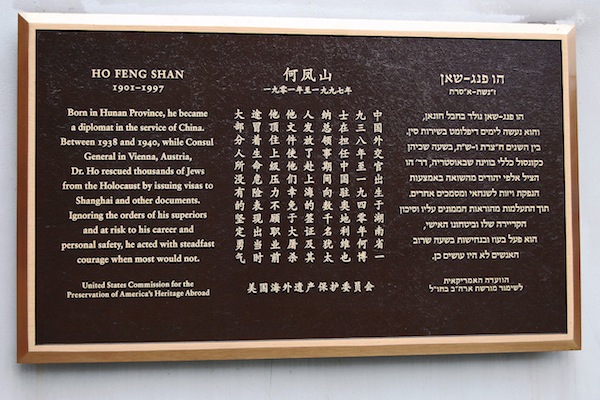
During the course of the Second World War, the Jewish population in China would swell to 40,000, many of whom resided in Shanghai. A number of Chinese diplomats helped smuggle in Jews using special protective passports. One such hero, a Chinese diplomat working in Vienna named Ho Feng Shan, helped Jews from Nazi-occupied Europe get to China, ultimately saving around 3,000 lives. Ho Feng Shan was posthumously awarded the title Righteous Among Nations by Yad Vashem in 2001.

photo - A plaque erected at Shanghai Jewish Refugees Museum and Ohel Moishe Synagogue in China in honor of the late Chinese diplomat Ho Feng Shan (1901-1997) who saved thousands of Jews between 1938 and 1940
A plaque erected at Shanghai Jewish Refugees Museum and Ohel Moishe Synagogue in China in honor of the late Chinese diplomat Ho Feng Shan (1901-1997) who saved thousands of Jews between 1938 and 1940. (photo by Harvey Barrison via commons.wikimedia.org)

In 1943, the Japanese forced the 20,000 Jews living in Shanghai into a ghetto that was around one square kilometre in size, with conditions described as squalid, impoverished and overcrowded. The Shanghai ghetto was also inhabited by some 100,000 Chinese residents.

The Nazis pressured the Japanese to execute the 40,000 Jews living in China, but the Japanese purposefully delayed the planned atrocity, ultimately saving the Jews’ lives. When the Japanese military governor of Shanghai informed the leaders of the Jewish community of the planned execution and asked them why the Germans hated them, one rabbi responded by saying “because we are short and dark-haired,” a reply that allegedly caused a smile to appear on the serious face of the governor. After the war, most of the Jews in China migrated to the newly formed state of Israel.

Ben Leyland is an Israeli-Canadian writer, and resident of Vancouver.

Format ImagePosted on February 5, 2016February 4, 2016Author Ben LeylandCategories WorldTags China, Diaspora, Holocaust, Radhanites

Posts pagination

Previous page Page 1 … Page 538 Page 539 Page 540 … Page 670 Next page
Proudly powered by WordPress