Skip to content
  • Home
  • Subscribe / donate
  • Events calendar
  • Business Directory
  • FAQ
  • News
    • Local
    • National
    • Israel
    • World
    • עניין בחדשות
      A roundup of news in Canada and further afield, in Hebrew.
  • Opinion
    • From the JI
    • Op-Ed
  • Arts & Culture
    • Performing Arts
    • Music
    • Books
    • Visual Arts
    • TV & Film
  • Life
    • Celebrating the Holidays
    • Travel
    • The Daily Snooze
      Cartoons by Jacob Samuel
    • Mystery Photo
      Help the JI and JMABC fill in the gaps in our archives.
  • Community Links
    • Organizations, Etc.
    • Other News Sources & Blogs
  • JI Chai Celebration
  • JI@88! video

Recent Posts

  • Or Shalom reopens its doors
  • JFS from past to future
  • Need holistic approach
  • Sharing stories, advice
  • Journalist shares fears
  • Skills to live together
  • Road to independence
  • Cutting grass with scissors
  • Zionism as a solution
  • Deceit, desire & the divine
  • Reclaiming sacredness
  • Creative project ideas
  • Summer squares and cobbler
  • Thou shalt … summer commandments
  • Legal help for students
  • Revisiting myth of Lilith
  • Wrong person rebuked
  • Canada’s mixed messages
  • Questions for museum
  • Symposium on antizionism
  • Making soccer political
  • CJPAC lauds Pulver’s impact
  • City recognizes Vrba’s legacy  
  • Organ donation saves lives
  • Theodore’s March premiere
  • A healing Shabbaton
  • Supplying healthy food
  • A chime of metal tags
  • Yellowknife seder a first
  • Ishai energizes, unifies
  • A Lag b’Omer to remember
  • Expanding the healing
  • Hannah Senesh – a unique hero
  • Community milestones … May 2026
  • Деньги до зарплаты на карту Займ до зп онлайн за 5 минут 2026
  • Микрокредит онлайн в Казахстане Микрозайм в Акшамат

Archives

Follow @JewishIndie
image - The CJN - Visit Us Banner - 300x600 - 101625

Author: Maayan Jaffe-Hoffman JNS.ORG

Abrahamic faiths’ traditions

Abrahamic faiths’ traditions

A chuppah in Jerusalem. (photo by Nikki Fenton)

Mazal tov. Mabrouk. Congratulations. No matter one’s religion or language, a wedding is generally a joyous occasion.

While there is no apparent consensus, varying reports say that between 60% and 80% of all marriages in the United States are performed in a religious ceremony. Where do the religious wedding traditions come from? What are the similarities and differences between the marriage traditions of the three Abrahamic religions – Judaism, Christianity and Islam?

The most obvious similarity between Jewish, Christian and Islamic marriages is that, in each case, the tradition requires that the union be between a bride and a groom of the same religion. In other words, according to the letter of the religious law, intermarriage is forbidden.

The Torah, New Testament and Quran indulge in many stories designed to warn men against marrying women who worship foreign gods or are nonbelievers.

Deuteronomy 7:3-4 states, “Do not intermarry with them. Do not give your daughters to their sons or take their daughters for your sons, for they will turn your children away from following me to serve other gods, and the Lord’s anger will burn against you and will quickly destroy you.” For Christians, 2 Corinthians 6:14-17 explains that one should not be “yoked together with unbelievers,” and should “touch not the unclean thing” if one wants to be received by the Lord. In Sura 60:10, Muslims learn, “Do not maintain your marriages with unbelieving women.”

In Israel, where couples can wed only through religious ceremonies administered by the Chief Rabbinate, the intermarriage rate is relatively low. The 2015 Israeli Democracy Index survey found more than one-third of both Jewish (36%) and Arab (38.8%) Israelis support organizations that work to prevent Jewish women from marrying Arab men, even if their activities are radical and/or violent.

In the United States, however, intermarriage is almost the norm. The 2013 Pew Research Centre survey of American Jews found an intermarriage rate of 58%, up from 43% in 1990 and 17% in 1970. Among non-Orthodox Jews, the intermarriage rate is 71%.

How do these intermarried couples plan their weddings? Are the traditions similar enough to make it work?

The modern idea of a secular marriage based on love is rooted in Christianity. But, according to Karen Armstrong’s The Gospel According to Woman, the first detailed account of a Christian wedding in the West dates back to the ninth century and was identical to the old nuptial service of ancient Rome. This is likely because, at its core, Christianity looks down upon marriage.

In the New Testament (Matthew 22:23-30), Christians are taught that in heaven there are no marriages. St. Paul describes marriage as a last resort for those who cannot restrain themselves, saying that being chaste is the ideal.

In contrast, there are deep Jewish and Islamic marriage traditions that begin even before engagement. Arranged marriages – or the use of a shadchan (matchmaker), in Jewish terms – is something that’s not only condoned, but encouraged by both faiths.

Rabbi Etan Mintz, leader of B’nai Israel Synagogue in Baltimore, said matchmaking is experiencing a resurgence. There are now any number of religious- and secular-rooted websites helping couples meet and match. Likewise, there’s a growing phenomenon of executive matchmakers.

In the time of the Talmud, Jewish engagement (erusin) looked very different than it does today, Mintz explained, as engagement and marriage nuptials (nissu’in) were different ceremonies that took place about one year apart. When a man wanted to marry a woman, he would ask her father for permission, and documents of commitment would be signed. During that time, the couple was able to plan their lives, but no direct or immodest contact was allowed.

Today, the erusin and the nissu’in ceremonies generally happen at the same time – under the chuppah (wedding canopy). The ceremonies are divided by the reading of the ketubah (marriage contract).
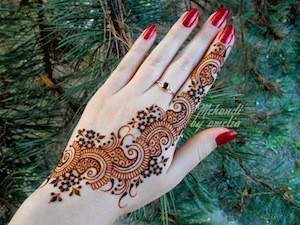
photo - An Islamic bride’s hand is decorated as part of the henna pre-wedding ritual
An Islamic bride’s hand is decorated as part of the henna pre-wedding ritual. (photo by Ibtisam Mahameed)

This is not too different from how Muslim engagement practices look today, in some circles. Ibtisam Mahameed, a Muslim woman from the village of Faradis in Israel, told JNS.org that, in order for a couple in her town to get engaged, the man and his family must meet with the woman’s family.

“The boy has to come and sit in the parents’ house and say he wants to marry the daughter. The parents have to agree. If they don’t agree, the couple cannot be married,” she explained.

If the parents agree, then the village sheikh will come to the house of the woman’s parents and go over Muslim marriage law – what is owed to the bride and groom, the obligations of the man to the woman, and the ramifications of divorce.

“The rights are fully explained before the wedding,” Mahameed said.

Both Muslims and Jews enjoy rich pre-wedding rituals.

The Jewish bedeken (veiling ceremony) is “so powerful,” said Mintz. Often marking the first time a bride and groom are seeing each other after a week of separation before the wedding, the bedeken is wrought with emotion.

While one understanding of the bedeken is that it relates to the fact that the biblical patriarch Jacob was forced to marry Leah instead of Rachel when the brides were switched by their father Laban – and, by extension, today, the groom symbolically makes sure he is marrying the right bride by checking and then veiling her – Mintz said there are other more spiritual interpretations of ritual.

“Rabbi Shlomo Carlebach asks, ‘If the purpose is to make sure she is the right one, why does he veil the bride at the bedeken? Shouldn’t he be taking the veil off?’ Carlebach says the radiance of the bride is so powerful under the chuppah, so beautiful, that the chatan (groom) veils her. That intensity, that beauty, is just for the two of them in their own personal space,” Mintz said.

Mahameed described Islam’s “henna” ceremony as powerful and intimate, too. She said the groom’s best friends and relatives gather in his home to mix and paint the henna dye. Then, they mix more of the dye to deliver to the bride. Carrying a uniquely woven basket with a golden plate of henna, the groom and his mother walk hand-in-hand to make the henna delivery to the bride.

Read more at jns.org.

Format ImagePosted on February 26, 2016February 25, 2016Author Maayan Jaffe-Hoffman JNS.ORGCategories WorldTags Abrahamic faith, chuppah, henna, weddings
התפתחות מפתיעה לגבי המופע של אחינועם ניני

התפתחות מפתיעה לגבי המופע של אחינועם ניני

אחינועם ניני (צילום: noasmusic.com)

התפתחות מפתיעה לגבי המופע של אחינועם ניני: שגרירות ישראל בקנדה תעניק חסות לאירוע שמעורר הדים

התפתחות מפתיעה לגבי המופע של הזמרת אחינועם ניני ביום העצמאות בוונקובר. נציגיה הרשמיים של מדינת ישראל החליטו להעניק חסות למופע של ניני שמעורר הדים רבים בחדשות בישראל ובקנדה, וויכוחים אין ספור בין תומכים למתנגדים. שגרירות ישראל בקנדה והקונסוליה הישראלית בטורונטו, יעניקו חסות רשמית לאירוע שיתקיים על ידי הפדרציה היהודית של אזור ונקובר, ב-11 במאי במרכז צ’אן בוונקובר. את ישראל תייצג באירוע סגנית הקונסול הכללי, אירית סטופר. כל זאת ימים ספורים לאחר החלטת השלוחה הקנדית של קק”ל שלא להעניק חסות למופע.

הפדרציה ממשיכה בתוכניותיה לקיום המופע של ניני. גם נסיונותיו של סגן שר הביטחון, הרב אלי בן דהן (מסיעת הבית היהודי), להפעיל לחץ על הפדרציה לבטל את המופע של ניני לא צלחו. הפדרציה הודיעה אתמול כי היא מודה לחברי הקהילה שהביעו את עמדתם לגבי האירוע, החיובית או השלילית כאחד. “חברי הקהילה שלנו מחזיקים בדעות מגוונות כלפי ישראל והקהילה שלנו. אנו מברכים את מגוון הדעות, שהיא אחת מנקודות החוזק של הקהילה שלנו. לכל אחד יש את הפרספקטיבה שלו וכולנו מונעים על ידי אהבתנו לישראל”. יו”ר חבר הנאמנים של הפדרציה היהודית, סטיבן גרבר אומר: “התרגשנו שהשגרירות והקונסוליה פנו אלינו עם ההצעות להיות נותני חסות רשמיים של חגיגת יום העצמאות שלנו. כנציגים רשמיים של מדינת ישראל, אנו רואים בתמיכתן של השגרירות והקונסוליה מסר חזק שיש מקום לגיוון, בתוך ישראל ובתוך הקהילה שלנו. אנו שמחים שסגנית הקונסול הכללי, מתכננת שוב לייצג את מדינת ישראל באירוע שלנו”. למעלה מחמישים גופים קהילתיים יהודים בוונקובר מעניקים את תמיכתם למופע של ניני.

כאמור השלוחה הקנדית של קק”ל נכנעה ללחצים של מספר תורמים וישראלים צעקניים שזועמים על עמדותיה הפוליטיות של ניני. יו”ר השלוחה הקנדית, ג’וש קופר, שלא הזכיר את ניני אמר: “לאור העמדות של האמן שיופיע בחגיגות יום העצמאות השנה, אנו לוקחים הפסקה של שנה מלתת חסות לאירוע. הבדרן שנשכר לאירוע אינו משקף ולא מתאים למנדט ולערכים של שלוחת קרן קיימת בקנדה”. בהנהלת קק”ל בישראל לא אהבו את החלטת השלוחה בקנדה. יו”ר קק”ל דני עטר, אמר כי ההחלטה של השלוחה בקנדה התקבלה שלא על דעת הנהלת הארגון בישראל. הנושא יועלה לדיון בפגישה בין שתי ההנהלות שתתקיים בשבוע הבא בירושלים. צויין כי בניגוד שלוחה של קק”ל בקנדה, השלוחה של האוניברסיטה העברית בוונקובר ממשיכה לעמוד מאחורי הפדרציה בתמיכתה באירוע של הזמרת. ניני קיימה הופעה באטלנטה ארה”ב החודש, והסניף המקומי של שלוחת קרן הקיימת לישראל בארה”ב כן נתן חסותו להופעתה.

מנכ”ל הפדרציה, עזרא שנקן, אומר כי הדיווחים שפורסמו בעיתונות הישראלית שהפדרציה כביכול תומכת בחרם על ישראל אינם נכונים ויש לגנות אותם. שנקן: “על דבר אחד הפדרציה היהודית לא מתווכחת וזה על זכותה של ישראל להתקיים. לכן אפשר לדמיין את הדאגה הרבה שלנו כאשר בטעות קישרו אותנו לחרם על ישראל על ידי חברי קהילה מקומיים, שאינם מסכימים עם החלטתנו להביא את ניני לאירוע של יום העצמאות, כיוון שהעמדות הפוליטיות שלה שונות מהעמדות שלהם. אנו ברורים בהתנגדותנו באופן חד-משמעי לחרם על ישראל”.

ניני הודיעה פרשה מאמ”י לאור ההחלטה להעניק לזמר אריאל זילבר פרס מפעל חיים. לדבריה הפרס הוענק למי שתומך בכהנא, בברוך גולדשטיין וביגאל עמיר. לפני שנתיים סירבה ניני לקבל את פרס אקו”ם כיוון שהוא הוענק גם לזילבר.

Format ImagePosted on February 24, 2016February 24, 2016Author Roni RachmaniCategories עניין בחדשותTags Achinoam Nini, Ezra Shanken, Federation, JNF, Stephen Gaerber, Yom Ha'atzmaut, אחינועם ניני, יום העצמאות, סטיבן גרבר, עזרא שאקן, פדרציה, קק"ל
Let’s talk about Nini …

Let’s talk about Nini …

Screenshot of Noa’s official website, where she shows that she retains a sense of humor towards the press: “Believe half of what you hear and nothing of what you read! :)”

Internationally known, award-winning Israeli singer and songwriter Achinoam Nini – who has served in the Israel Defence Forces, who has been a goodwill ambassador for Israel and who has been honored for her peace work – has been invited to headline the Vancouver Jewish community’s Yom Ha’atzmaut celebrations this year. Apparently, this is a controversial choice for some in our community.

Nini (widely known as Noa) is clear about her political views and, so far, her critics have come up with the following to explain their upset at her invitation. She hates – a strong word, but it applies in this case from what we’ve read – Israeli Prime Minister Binyamin Netanyahu. She rejected an award from one artists organization and resigned from another because they honored someone she thought was too right-wing. She may have written in a since-deleted Facebook post that she supported B’Tselem, Breaking the Silence and New Israel Fund for their work supporting peace. In 2012, she expressed hope that Palestinian leader Mahmoud Abbas could help bring peace to the region. Also in 2012, she took part in an alternative Remembrance Day event organized by Combatants for Peace, which describes itself as “a group of Palestinians and Israelis who have taken an active part in the cycle of violence in our region: Israeli soldiers serving in the IDF and Palestinians as combatants fighting to free their country, Palestine, from the Israeli occupation.” The ceremony mourned Palestinians and Israelis who had been killed in the conflict.

One of her critics has compiled a curious mix of her posts to supposedly show why she is an inappropriate choice to perform, including: “We believe in two states for two peoples, Israel and Palestine, living side by side, supporting, protecting and nurturing each other…. We believe in three simple steps: recognize each other, apologize to each other and share the little we have.” We, too, believe in two states for two peoples, and in reconciliation.

With plenty of Vancouverites apparently scouring the internet for “evidence” against her, there may be more to come. Nini’s political views are not above criticism. Nobody’s are. But she stands behind her opinions, acts on her beliefs, and is very clear about who she supports – some people might be surprised that B’Tselem and Breaking the Silence are not among those listed on her website as groups she endorses – and who she doesn’t support. Unlike some of her local critics, who are hiding behind the anonymity of social media and don’t put their names and reputations behind their opinions, Nini owns her views. Whether or not you agree with her, that’s worth respect.

Should we be inviting someone with whom we don’t all agree to headline our Yom Ha’atzmaut ceremonies? What about someone who criticizes the Israeli government?

We who love and support Israel understand that holding a large community-wide celebration once a year feels good and offers a sense of solidarity. But what kind of Jewish community is it that doesn’t brook differences in opinion? Such uniformity certainly does not reflect one of Israel’s – and Judaism’s – greatest attributes and secrets to continuity: openness to debate and discussion.

Skipping over what Judaism says about character assassination, the harm that can be done with words, the fact that lashon hara is worse than theft because money can be repaid but the destruction of a person’s reputation can never be completely mended, is there a line that shouldn’t be crossed when making out a Yom Ha’atzmaut invitation list?

As we argued in this space last week, it is our view that boycott, divestment and sanction (BDS) is a movement steeped in racism (though not everyone who supports BDS is an antisemite, of course). Rightly, Canada, the United Kingdom and other democratic countries formally condemn BDS. If we were to draw a red line not to be crossed, support for BDS might qualify as a deciding factor in whether or not to bring an artist to perform at a Yom Ha’atzmaut – or any – event. It also might not.

Despite what the emails in your inbox might say, Nini has explicitly said that she is against BDS. At most, she might associate with groups that might have supporters that also support BDS – groups that are legal in Israel and part of the vital discourse there.

In a democracy, all voices that don’t incite hatred against an identifiable group are to be, if not welcomed, at least tolerated. This includes those who believe that Nini should not sing for Vancouverites on Yom Ha’atzmaut this year. However, the right to speak is not predicated on being right. This applies to Nini as well as her detractors.

Some people are demanding that the invitation for Nini to perform at our Yom Ha’atzmaut celebrations be rescinded. If successful, it won’t matter much to Israel’s future, or to Nini’s. We should not overinflate our self-importance. But such an act – a boycott of Nini – would certainly affect our community’s future. It would be a signal of intolerance, of closed-mindedness and an unwillingness to brook the very presence of a Jew, an Israeli, a veteran of the IDF and a great singer, simply because some disagree with her politics – and, worse, that we rely on innuendo and rumor to make our decisions. How solid a foundation is that upon which to build our community? What lesson would that teach our children? This is what we talk about when we talk about Achinoam Nini.

Format ImagePosted on February 22, 2016February 22, 2016Author The Editorial BoardCategories From the JITags Achinoam Nini, Jewish Federation of Greater Vancouver, Noa, Yom Ha'atzmaut
פרק נוסף בפרשת אחינועם ניני

פרק נוסף בפרשת אחינועם ניני

אחינועם ניני (צילום: Rs-foto via Commons Wikimedia)

פרק נוסף בפרשת אחינועם ניני: קק”ל מתנגדת להחלטת השלוחה בקנדה לביטול החסות להופעה בוונקובר

הקרן הקיימת לישראל מתנגדת להחלטת השלוחה הקנדית של הארגון לבטל את החסות להופעתה של הזמרת, אחינועם ניני, במופע המרכזי של יום העצמאות בוונקובר. יו”ר קק”ל, דני עטר, הבהיר בתקשורת כי ההחלטה לביטול החסות התקבלה על ידי השלוחה של קק”ל בקנדה, ולא על דעת הנהלת הארגון בישראל. עטר ציין כי הוא מתנגד להחלטה ויביע את עמדתו בפגישה בין הנהלת קק”ל לראשי קק”ל קנדה שתתקיים בקרוב בישראל.

ניני קיימה הופעה באטלנטה שג’ורג’יה ארה”ב ב-14 בחודש. הסניף המקומי של שלוחת קק”ל בארה”ב נתן חסותו להופעתה ביחד עם שותפה המוסיקאלי גיל דור (משמש גם המנהל המוסיקאלי). האירוע נערך כדי לתמוך במכון הערבה ללימודי הסביבה שממוקם בקיבוץ קטורה שבערבה ו-20 שנה מלאו לפעילותו.

לעומת סניף קק”ל באטלנטה כאמור השלוחה הקנדית של קק”ל השתפנה ונבהלה מהביקורת על השתתפות ניני באירוע יום העצמאות בוונקובר. קק”ל קנדה נתנה חסות קבועה לאירועי יום העצמאות של הפדרציה היהודית של מטרו ונקובר. בצעד חסר תקדים היא החליטה להסיר את חסותה מהאירוע השנה שיתקיים ב-11 במאי. בהודעה לקונית של מנכ”ל שלוחת קק”ל בקנדה, ג’וש קופר, שלא טרח להזכיר את שמה של ניני נאמר: “לאור העמדות של האמן שיופיע בחגיגות יום העצמאות השנה, אנו לוקחים הפסקה של שנה מלתת חסות לאירוע. הבדרן שנשכר לאירוע אינו משקף ולא מתאים למנדט ולערכים של שלוחת קרן קיימת בקנדה”.

לאור ההשמצות בתקשורת והכעס על הופעת ניני הגיעה באטלנטה כתב מייקל ג’יקובס, העורך אטלנטה ג’ואיש טיימס: “אפשר לחשוב שניני שרה את ההימנון של החמאס במקום את התקווה. שהיא תומכת בחרם על ישראל ורוצה ששטחה של פלסטין יהיה מהים עד הנהר”.

ומה התגובות באתרי האינטרנט לקראת הופעת ניני בוונקובר מצד ישראלים, שברובם אנונימיים: “לא זמרת ולא בן אדם”, “מגעילה ומטומטמת להחריד ופסיכית”, “מעניין לי את הבוהן המשמאלית מה המכוערת הזאת חושבת”, “כל הכבוד למחרימים את האישה הנבזית הזאת. היא לא שנויה במחלוקת, היא נמצאת בצד האויב באופן גלוי ומוצהר”, ”מזמינים ערבייה לציון יום הנכבה, אחינועם ניני היא המייצגת הטובה ביותר של הנכבה הערבית”, “ניני צריכה להופיע אך ורק לפני מוסלמים שואפי שלום”, “אולי היא בכלל ערביה? מישהו חשב על זה?”, “שתופיע בסוריה”.

אמזון החליטה לטוס: תחכור עשרים מטוסים להובלת מטענים

אמזון עומדת להיכנס לתחום פעילות חדש של הובלת מטענים באוויר. ענקית המסחר האלקטרוני האמריקנית לא עוצרת לרגע ומשיכה להשתלט על ענף הובלות המטענים בכל צורה אפשרית. לחברה נמאס לקבל תלונות רבות וקבועות מלקוחות כועסים על איחור בהגעת החבילות לידיהם. לכן היא החליטה לקחת את תחום הובלת המטענים באוויר לידיה ולהטיסם בעצמה, ולא באמצעות גוף שלישי. בכך אמזון עומדת להתחרות ראש מול ראש במובילות שילוח מטענים באוויר הקלאסיות החברות הענק האמריקניות כמו יו.פי.אס ופדקס.

אמזון עומדת לחכור בשלב ראשון עשרים מטוסי קרגו מסוג בואינג 767 כולל צוות הטייסים. החברה מנהלת מגעים עם מספר חברות אמריקניות להחכרת מטוסים בהן אטלס אייר וורלדוויד, קאליטה אייר ואייר טרנספורט סרוויסז גרופ. כראה שהעיסקה תיסגר בקרוב כך שהמטוסים יכנסו לפעילות בתוך תקופה קצרה.

כפי שפרסמנו כבר אמזון מבצעת כבר מספר חודשים ארוכים ניסויים במערב קנדה (בגבול עם מדינת וושינגטון ששם נמצא מטה החברה) להעברת מטענים על ידי מזל”טים. אזור הניסויים נשאר חסוי כדי למנוע מהמתחרות לדלות מידע.

Format ImagePosted on February 22, 2016February 22, 2016Author Roni RachmaniCategories עניין בחדשותTags Achinoam Nini, aircraft cargo, Amazon, JNF, Noa, אחינועם ניני, אמזון, מטוסים להובלת, קק"ל
Leaving some things hidden

Leaving some things hidden

Olga Campbell and Larry Green’s shared exhibit at the Zack, Hidden, is on until March 6. (photo by Olga Livshin)

In the new exhibit at Zack Gallery, Hidden, the pieces are united not only by theme but also by media. Both artists featured, Olga Campbell and Larry Green, mostly use photography, which they then play with in Photoshop. The computer-generated effects contribute to the graceful and faintly mystical feel of the images. Hazy silhouettes hide behind the splashes of paint. Eyes peek through the veil of the unknown. Mysterious places and partial faces open the gates of subconscious and let us witness the artists’ creative cores, their emotions.

The images are distinct, echoing each artist’s personality, but the common approach makes their double show almost seem inevitable. And the meshing of their artistic visions spills into life beyond the gallery. Both chose careers in the helping professions, for example. Campbell was a social worker until she retired. Green is a psychotherapist and a professor of psychology. But they didn’t really know each other before the idea of a mutual exhibit took root.

Campbell explained how it happened: “Last year, I participated in Culture Crawl. Linda Lando, the Zack Gallery director, came to see my pieces. She asked me if I wanted to have a show at the Zack Gallery.”

Green added: “I was with Linda that day – we are partners. I remembered Olga’s art from other shows…. I like what she does. Someone suggested we have a show together. That’s how this collaboration started, but, even before that, we were vaguely aware of each other. We saw and admired each other’s art at group shows. We knew many of the same people: friends, neighbors, co-workers.”

After the dates of the exhibit were set, the artists met to decide on the theme. “Larry came up with the Hidden, and I thought it was wonderful,” said Campbell. “There is so much in the world that is hidden. People hide things from others and from themselves, adopting layers of masks and veils. When we put obstacles in the way of seeing the world, we hide not only the shadows, but also the light. When we acknowledge the shadows, then we are able to see the light. Most of the really profound and rewarding things in life are hidden beneath the layers of mystery.”

In Campbell’s pieces, the layers are frequently photographs superimposed upon each other in Photoshop, plus special effects and the occasional addition of multimedia. She admitted that she doesn’t do much pure painting although she studied it.

“I always liked doing art,” she said. “In 1986, I took several art classes and then I thought, what to do with it? So I enrolled in Emily Carr. Afterwards, I worked as a social worker part-time and on my art part-time, until I retired. Art is not a hobby for me. I have to do it.”

Green’s path was a bit different. “I did a lot of art until I was about 25. Then I dropped it for 20 years before starting again, first with pottery and then with other stuff. When I worked with clay, sometimes my hands knew better than my brain what I wanted to say. I made a sculpture and now, years later, I look at it and think: Oh, that’s what I meant. Of course! My brain has caught up with my hands.”

The intuitive application of their skills underlines both artists’ creative courage. They are not afraid to experiment.

“I play around with Photoshop,” said Campbell. “I don’t know it very well. I try different things and I often get something I like by accident. Later, I can’t always reproduce the effect, so I never repeat myself.”

Green concurred. “I like Photoshop,” he said. “I learn it as I go. My ideas pull me through the learning process…. Using Photoshop, I can realize my vision much faster than with paint and canvas, but it is all trial and error. I keep worrying at the piece until something comes along. Or not. If it comes, I go for it. If it doesn’t, I don’t. Some pieces take years to come together. For example, years ago, I saw a single pink running shoe in a park and snapped a photo of it but I didn’t do anything about it. Then, recently, in a different place, I saw a single pink glove, and photographed it. I brought them together in Photoshop, and now they are not lonely.”

Many of Green’s pieces at the Zack are foggy landscapes. “I’ve always been fascinated by fog,” he said. “A foggy landscape has a particular dreamlike quality to it. Shapes are indistinct and, therefore, invite the viewer in, in an attempt to give the scene some definition. Alternately, the viewer can rest in the soft tranquility of the scene rather than be overwhelmed by details…. People who come to me for therapy are often afraid of the fog, especially inside themselves, but they’re also interested in it, in what it might reveal. Everything I do, in both art and psychology, is basically the same: trying to reveal the underlying reality, the hidden connections behind the apparent.”

“The same for me,” Campbell agreed. “Although not everything should be revealed. Some parts of the whole are better hidden, while the essence should be revealed.”

Olga Livshin is a Vancouver freelance writer. She can be reached at [email protected].

Format ImagePosted on February 19, 2016February 18, 2016Author Olga LivshinCategories Visual ArtsTags Larry Green, Olga Campbell, Zack Gallery
Don’t let the fear overwhelm

Don’t let the fear overwhelm

Itai Erdal brings A Very Narrow Bridge to Chutzpah! March 5-13. (photo by Emily Cooper)

There’s the family into which you were born, and the families you create yourself. Itai Erdal has built a life in which he is surrounded by family, both on and off stage. He often shares vulnerable aspects of himself and his family in his work, and he is one of the more collaborative playwrights out there.

While A Very Narrow Bridge, which runs March 5-13 at this year’s Chutzpah! Festival, is about Erdal’s “relationship with his sisters, Judaism and the state of Israel,” it is written by Erdal, Anita Rochon (artistic director of the Chop theatre company) and Maiko Yamamoto (artistic director of Theatre Replacement), is directed by Rochon and Yamamoto, and co-stars Erdal, Anton Lipovetsky, Patti Allan and Tom Pickett. The original score is written and performed by Talia Erdal.

“It is a dream come true for me to work with my sister,” Erdal told the Independent. “She is a brilliant musician and I’ve always admired her talent and her spirit. Talia is much younger than me … and we’ve been very close from the day she was born. In the past few years, she has become religious and, since I am not religious at all, I was worried that it would pull us apart. This fear of mine is indeed addressed in this show, which makes her being here and participating in the show even more special.”

The play’s description is minimal: Erdal “relives a trial in order to obtain a get – a divorce document in Jewish religious law – where everything he knows is at stake.” Its title comes from a teaching of the founder of the Breslov Chassidic movement, Rabbi Nachman of Breslov (1772-1810): “All the world is a very narrow bridge, and the most important thing is not to be overwhelmed by fear.”

That certainly seems to be Erdal’s approach to creativity. A Very Narrow Bridge is not the first work in which he puts a part of his life on a public stage.

“I’ve always been a very candid and open person,” he said. “I am an extrovert and I enjoy telling stories and being the life of the party. Having said that, in all my shows I talk about very personal things and sometimes about things that are hard to reveal or even to admit to myself. But I’ve learned that when something is hard to talk about, it often makes for good dramatic material, and I really trust my collaborators, who are all brilliant and steer me in the right direction.”

And they have. How to Disappear Completely, which was also a collaborative writing effort, is a one-man show that deals with the last months of Erdal’s mother’s life before she passed away from lung cancer. First produced by Chop Theatre for Chutzpah! 2011, it has since been mounted in many other cities, and continues to tour. It was nominated for Jessie and Dora awards, which both honor excellence in theatre.

Rochon was one of the writers of How to Disappear Completely, and its producer. Erdal, who is also an award-winning lighting and set designer, has worked with Yamamoto before, as well.

“One of the things I like the most about theatre is the collaborative nature of the process, and knowing each other well and understanding each other’s strengths and weaknesses makes it that much more rewarding,” he said. “The three of us have done many shows together, in different capacities. I have lit five shows for Maiko’s company, Theatre Replacement, some of which she acted in, some of them she directed and all of them she produced…. All this familiarity makes for a very symbiotic process and a totally democratic room, where no one is precious about anything and the best idea always wins.”

Erdal is the artistic director of Elbow Theatre, which is presenting A Very Narrow Bridge. He explained how the collaboration with his fellow artistic directors on this work came about.

“I always wanted to do a show about my sisters and my complicated relationship with Judaism and the state of Israel, and I always wanted to work with my dear friend Maiko, so I approached her and pitched her this project about three years ago and we’ve been working on this project ever since.

“Initially, we thought that Maiko would be on stage with me, so we approached Anita, who is in my mind the most exciting director in Vancouver. When we started writing this play, the focus shifted from my sisters to a show about immigration and Judaism, we added the three rabbis and Maiko’s role has changed from performer to writer and director.

“Creating a show from scratch is very hard and you never know which direction it will take,” he added, “so it’s important to stay open and do whatever serves the play. The various directions this process took have led us to create an exciting piece of theatre that we are all proud of.”

Would A Very Narrow Bridge exist if Erdal had never left Israel?

“Since this play is about emigrating from Israel, I am sure I couldn’t have written it if I still lived there,” he said. “Even though I am very happy in Canada, immigration is a very hard thing to do and this show is about the lingering doubt in the back of every immigrant’s mind: Did I do the right thing? Would I have been happier had I stayed home?

“When I grew up in Israel, everybody around me was Jewish, so I never felt particularly Jewish. I knew that there were people in the world who weren’t Jews, but I had never met them. Since moving to Canada, I feel a lot more Jewish because I am defined as a Jew by my surroundings. It’s a bit like family: you take it for granted when it’s there and you start appreciating it when it’s gone. Moving to Canada made me appreciate my heritage and my family, and this show is about both.”

A Very Narrow Bridge runs March 5-10, 12-13, 7 p.m., in the Dayson Board Room of the Jewish Community Centre of Greater Vancouver. For tickets ($29/$25/$21), call 604-257-5145 or visit chutzpahfestival.com.

Format ImagePosted on February 19, 2016February 18, 2016Author Cynthia RamsayCategories Performing ArtsTags Chutzpah!, Israel, Itai Erdal, Judaism, Narrow Bridge
World is at your fingertips

World is at your fingertips

At the latest Empowerment session, co-hosted by Jewish Seniors Alliance and JCC Seniors on Jan. 27, Philip Morris offers advice on avoiding fraud, scams and identity theft. (photo by Binny Goldman)

It was interesting to me – a person who still enjoys using one of the “original computers,” namely, the pencil – that I was about to attend a workshop entitled Technology: Give us the Tools to Finish the Job.

On Jan. 27, about 100 people gathered in the Jewish Community Centre of Greater Vancouver’s Wosk Auditorium to hear three experts in the field of technology at a workshop hosted by Jewish Seniors Alliance in partnership with the JCC seniors department. It was the second session of the current season’s JSA Snider Empowerment series.

JCC seniors program coordinator Leah Deslauriers welcomed the audience and outlined the afternoon’s activities, while Gyda Chud welcomed everyone on behalf of JSA. Chud explained how she was introduced to JSA via the Peretz Centre for Secular Jewish Culture four years ago and that JSA is always looking for new partners in its aim to make its workshops easily available and accessible to all who may be interested. Chud added that she hoped the Technology session would help build her own confidence when it came to computers and other aspects of the tech world.

Noting that living is learning, the first speaker, Stan Goldman, demonstrated the simplicity of mobile technology. Once one learns how to use the iPad, the knowledge can be applied to the iPhone, which uses the same system, and one may watch free movies, read free ebooks and newspapers, and get email by accessing the right app. To illustrate, Goldman and Deslauriers used voice commands to ask for directions, dictate an email and do advanced math. Goldman offered a seemingly endless list of things that can be done with this technology, including Skyping with family and friends in other countries, enjoying music, playing games, etc. – all by using apps, many of which are free. The world is, indeed, at your fingertips.

Philip Morris, an expert on fraud, scams and identity theft, spoke next. He said that, once we have let the world in, so to speak, we must be cautious when using our devices – protecting them with passwords, and keeping private our personal information (social insurance numbers, birth certificates, passports, etc.) and not easily accessible to hackers. Morris advised shredding all discarded documents and, when buying a new cellphone, making sure all of the personal information has been deleted from the old phone, as hackers can retrieve data from seemingly wiped phones. It is important to be alert in public places, to keep wallets and purses out of easy reach and to ensure that you have received your own credit card from the server in a restaurant. He also suggested taking a photograph of passports and credit cards in case of theft.

New words have been coined, such as “smishing,” the ability to obtain information from people’s texts. Morris recommended changing passwords annually and, when writing cheques in payment for credit cards, to reference only the last four numbers of the card. To report a theft or loss, Morris gave two numbers to call to check your credit profile: 1-800-465-7166 (Equifax) or 1-800-663-9980 (TransUnion Canada). For instances of fraud, he said to call the Canadian Anti-fraud Centre, 1-888-495-8501.

Mark White, “the gizmo guru,” gave advice on the latest fun gadgets, including some lesser-known ones, and where to get them. As far as finding directions, however, he warned people to keep paper maps on hand in case the technology fails to connect. White added that he reads the Vancouver Sun’s online version, and that the library offers many newspapers online to members. In order to keep Skype conversations private, he suggested using earphones if Skyping in a public place.

Isaac Waldman Jewish Public Library librarian Rossana Caritey explained that the Waldman has an extensive collection of ebooks, which can be read on any device – ebook readers, laptops, for example. If someone brings in their device, a librarian or volunteer can show them how to download books. Waldman librarian Helen Pinsky handed out further information to attendees.

Chud thanked the speakers, noting that each of them had exhibited in their talks the mission and ideals of JSA – that of advocating for, inspiring, educating others to be the best they can be.

The audience retired to enjoy light refreshments. Long lines formed at the workstations set up in the auditorium, clearly showing the keen interest in the session. The workshop may have eased many fears, allowing timid souls to venture through the now-open doors leading to new technological possibilities.

Binny Goldman is a member of the Jewish Seniors Alliance of Greater Vancouver board.


Format ImagePosted on February 19, 2016February 18, 2016Author Binny GoldmanCategories LocalTags ebooks, Empowerment, iPad, iPhone, Jewish Seniors Alliance, smishing, technology, Waldman Library
JNF inspires entrepreneur

JNF inspires entrepreneur

Recent Blue Box packages have included artisanal jams from Bustan Confiture. Each month, the featured products change. (photo from Emily Berg)

There are many ways to support Israel and Israeli businesses. A new concept, Blue Box Israel, connects artisan Israelis with Israel supporters abroad.

Blue Box Israel is the brainchild of Emily Berg, 29. Born and raised in Toronto in a secular, Zionist Jewish household, Berg made aliyah in 2012. In her first three years in Israel, she worked in fundraising and as a strategic consultant for several different nongovernmental organizations. It was during Operation Protective Edge (Tzuk Eitan) in 2014 that she saw a need for Blue Box.

“My fiancé was called to reserve duty and was basically gone from the first until the 40th and final day,” Berg told the Independent. “It was a very quiet period. People were not going out much. And, it was the first time I was able to really reflect on my life, purpose and future here.”

photo - Emily Berg, founder and chief executive officer of Blue Box Israel
Emily Berg, founder and chief executive officer of Blue Box Israel. (photo from Emily Berg)

Berg received daily emails, calls and messages from friends and family abroad, asking how they could help.

“One day, my mother forwarded me an email she had received urging her to ‘buy Israeli products from the south,’” said Berg. “All of the links were either broken or led to Judaica sites that didn’t have the capacity to ship abroad.

“Having spent years here, I knew that there were dozens, if not hundreds, of great businesses in the south that could benefit from this type of transaction. I realized that Israel’s supporters want to buy products from Israel, but that there was not really any way to do so.”

With the Jewish National Fund’s blue and white tzedakah box etched into her mind since childhood, Berg saw it as a “portal to Israel.” In a similar vein, she wanted to give people around the world an opportunity to connect with small Israeli businesses and support them by buying their products.

“I decided to call it Blue Box, not in any way meant to be in competition with JNF; rather, to pay respect to this important artifact,” she said.

Fast forward a few months and the Blue Box concept developed into a subscription-based model, wherein customers pay a fixed price and receive a monthly package from Israel, with each focused on a different vendor.

“Blue Box is about giving Israel’s supporters a monthly taste of Israel, sending them high-quality, innovative and unique products, and giving them a chance to support a variety of hand-picked Israeli vendors,” said Berg.

Each box includes a postcard with the vendor’s story on it, written by Berg. “For me, Blue Box is first and foremost about supporting small business in Israel, but it’s also about sharing Israel’s treasures – its products and its people – with my customers.”

Berg is constantly searching for suppliers and personally visits the site of each business that she chooses to feature – whether it’s a farm, a studio or a home office. She enjoys seeing how and where the products are made, and speaking with the business owners and workers. These interactions help her get a sense of the business’ culture when writing the postcards.

“In the past, I have decided not to work with particular vendors, because I was not satisfied with the level of cleanliness or even the conditions of the workers,” said Berg. “Whether the business is run ethically is very important to me. I choose businesses with interesting stories behind them. I choose products that are well-made, suit the price point, and meet weight and customs requirements.”

The main thing for Berg is to send innovative, artisanal products (often organic or handmade) as opposed to just sending Bamba or random Judaica. And her focus is on products from Israeli-owned companies.

As the founder and chief executive officer of Blue Box, Berg has a wide network of support, most notably, a mentor via Keren-Shemesh, an organization that helps young entrepreneurs in their first two years of business.

“I also have a team of Israeli student interns from the Ruppin Academic Centre who help me with marketing, PR and social media,” said Berg. “Most people hear about the business, are so excited about it, and just want to help.”

There are many different companies that send gift baskets from Israel, mostly for the holidays, i.e. kosher items for Rosh Hashanah or Pesach. There are also a few subscription businesses in Israel that ship makeup samples or promotional items. Berg says that Blue Box is different because she features one handpicked vendor each month and includes not only a selection of their products but also their story.

“Israel is literally bursting at the seams with innovation, creativity, craft and talent,” she said. “Using fresh ingredients, high-quality materials and unique design methods, there are literally thousands of small businesses scattered throughout the country, tucked away in little-known moshavim or small studios.

“These businesses, of course, don’t necessarily have access to the global market, nor do they have the capacity to ship abroad. We work with small businesses, family businesses, kibbutzim, artists, designers, entrepreneurs, social businesses, NGOs and much more.”

Recent boxes have included items such as artisanal jams (from Bustan Confiture), honey (from Kibbutz Ein Herod), spices (from Derech HaTavlinim), organic soap and shampoo (from Arugot Habosem), hand-woven baskets (from Kuchinate, the African Refugee Women’s Collective), organic olive oil (from Rish Lakish) and organic dried fruits (from Kibbutz Neot Semadar).

The boxes are packaged at a space in southern Tel Aviv. They are shipped at the beginning of each month, and Canadian customers can expect them to arrive within 10 business days after shipping (around the middle of a month). During months with a Jewish or Israeli holiday, Berg takes special care to ensure the packages arrive on time.

Purchasing a one-time box will run you $50 (including taxes and shipping). If you choose to subscribe – and customers can cancel at anytime – the price drops. For a three-month plan, it’s $46/month, for a six-month plan, $40/month, and, for a 12-month plan, $36/month.

“We ship a different box each month,” said Berg, and “everyone receives the same box that month. So, for example, every January, a subscriber will receive organic desert-grown dates, raisins and fruit leather from Kibbutz Neot Semadar for Tu b’Shevat.

“I want Blue Box to become a household name and something that hundreds of thousands if not millions of subscribers look forward to each month. Eventually, I would like to create an online shuk [market] to sell and ship Israeli goods abroad.”

For more information, visit blueboxisrael.com or the blog at blueboxisrael.wordpress.com.

Rebeca Kuropatwa is a Winnipeg freelance writer.

Posted on February 19, 2016February 18, 2016Author Rebeca KuropatwaCategories IsraelTags Blue Box, business, Diaspora, Emily Berg, Israel

Racism at the root of BDS?

The Canadian Union of Postal Workers is again attacking Israel and urging its members to support the campaign to boycott, divest from and sanction the Jewish state. Last week, the union’s national president, Mike Palecek, sent a communiqué to members packed with boilerplate calls for attacking Israel economically and politically, including a call to end the Canada-Israel Free Trade Agreement.

The BDS movement lays bare a stark moral dissonance among so-called “progressives.” In confronting almost every other conflict and issue, these are people who urge discussion, negotiation, compromise, dialogue, conciliation. Except when it comes to Israel.

Why is Israel treated differently in this, as it is in so many other realms?

Obviously, Israel is held to a higher standard, as so many critics have noted, because it is a democracy, it prides itself on human rights and rule of law. However, the standards to which the world holds Israel are impossible ones that no country could measure up to when faced with the continual threats and violence that the country has endured for nearly seven decades.

The Jewish country – given the Bible, the Holocaust, the principles upon which it was founded – is expected to be the quintessence of morality and humanity. Which it might have been capable of, were it not for the fact that those who seek its destruction recognize no parallel standards of morality or humanity.

BDSers and other extreme critics of Israel shield themselves in a blanket rejection of the idea that their ideology could in any way be influenced by negative perceptions of Jews. Be that as it may, Donald Trump, of all people, may have illustrated the situation perfectly while speaking with Jewish Republicans last December.

“Look, I’m a negotiator like you folks; we’re negotiators.… This room negotiates perhaps more than any room I’ve spoken to, maybe more,” he said.

To Trump, being an expert negotiator is a compliment, though compliments often have double edges.

The stereotype of Jews as unconquerable negotiators is a driving force behind BDS. It is so universal a stereotype that Trump didn’t even realize it might be offensive, just as so many BDSers are blind to the bigotry inherent in their worldview.

Consider Sept. 28, 2000. The Israeli-Palestinian peace process was proceeding and an independent Palestinian state was in reach. Then Yasser Arafat left the negotiating table and began the Second Intifada. A decade and a half of continued statelessness for Palestinians has followed, as well as endless violence and thousands more deaths. World reaction should have been to rear up against Arafat’s rejection of negotiation and his return to violence. It wasn’t. Despite all reason, the world nearly unanimously empathized with Arafat’s actions. Why? Because many in the world, consciously or not, hold to ideas that let them believe the Palestinians were never going to get a fair shake. Despite all evidence suggesting that negotiation was leading to a two-state solution, violence was completely understandable because, you know, no one bests the Jews at negotiating.

Of course, there is the other factor – that Arafat seems to never have wanted a two-state solution, but this does not explain the reaction of erstwhile progressives and peace-seekers around the world.

Other stereotypes of Jews also drive the tactics of BDS. Note the two primary targets of the movement. First, it’s about attacking Israel economically. Secondly, it’s about academic boycotts. First, hit them where it hurts: in the pocketbook. Then sock it to them in the intellect.

It is hard not to draw the conclusion that, at its root, BDS is a movement steeped in racism.

Posted on February 19, 2016February 18, 2016Author The Editorial BoardCategories From the JITags antisemitism, BDS, boycott, Canadian Union of Postal Workers, CUPW, Donald Trump, racism, stereotypes
This week’s cartoon … Feb. 19/16

This week’s cartoon … Feb. 19/16

For more cartoons, visit thedailysnooze.com.

Format ImagePosted on February 19, 2016February 18, 2016Author Jacob SamuelCategories The Daily SnoozeTags Tetris, thedailysnooze.com

Posts pagination

Previous page Page 1 … Page 535 Page 536 Page 537 … Page 670 Next page
Proudly powered by WordPress