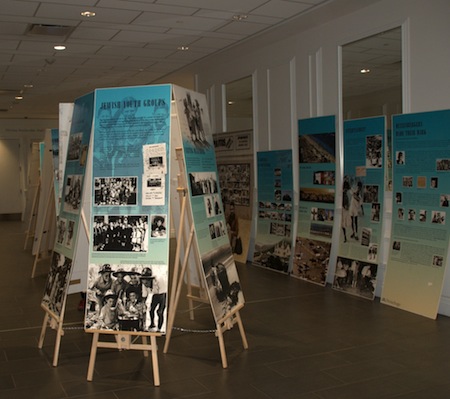
Muizenberg, South Africa, was a hub for Jewish families from the 1900s onward. (photo from Stephen Rom)
For Vancouverites who hail from South Africa, the name Muizenberg carries significant resonance. The small seaside town was a hub for Jewish families from the 1900s onward, a place where children played on the long stretch of white-sand beach, young people fell in love, business deals were discussed, family relationships deepened and friendships nourished. So, when the Memories of Muizenberg exhibit opens for its 15-day span at Congregation Beth Israel on July 10, there’s an excellent chance of hearing South African accents in the voices of attendees.
The exhibit was created in 2009, when it debuted in Cape Town, chronicling the Jewish presence in Muizenberg between 1900 and the early 1960s. After that, it began a whirlwind tour to Johannesburg, London, Israel, Perth, Sydney, Melbourne, Toronto and San Diego before it finally landed in Vancouver. For each of its moves a former South African Jew adopted the exhibition, gathering fundraisers, assistants and exhibit spaces in their respective cities. In Vancouver, that man is Stephen Rom, originally from Cape Town, who immigrated to Canada in 1986 and moved to Vancouver in 1992.
“I’m just a shlepper that was interested in the exhibit,” he said with a laugh. “When a friend told me the exhibit was in San Diego, I thought we needed to get it trucked up to Vancouver. I think it’s important to keep Memories of Muizenberg circulated – a hell of a lot of research went into it and it’s beautifully put together.”
The exhibit opening in Toronto. Created in 2009, Memories of Muizenberg debuted in Cape Town and has been to Johannesburg, London, Israel, Perth, Sydney, Melbourne, Toronto, San Diego and, now, Vancouver.
Rom arranged for the crate containing the 40-panel exhibit to be stored in the warehouse of fellow former South African Lexie Bernstein, and solicited donors to cover the costs associated with transportation and opening night festivities. Muizenberg has a special place in his heart and memories, he confided.
“It was a place my family and extended family spent every Sunday – you loaded the car, took the food and you didn’t need to look for friends – they were always there,” he reflected. “No one phoned to say, are you going to Muizenberg? You just knew, everyone in your community was going to be there. You’d go swimming, get attacked by bluebottles, get knocked over and soaked by a wave from the creeping high tide, have the wind blowing in your hair and eat homemade rusks (cookies) mixed with sand. It was part of our DNA.”
Bernstein, who moved from Cape Town to Vancouver in 1987, recalls catching the train with his friends in the summer months to get to Muizenberg. “When the train pulled into the station, the conductor would shout out ‘Jerusalem!’” he said. “I think ex-South Africans in Vancouver will love this exhibition, and other Jews in the community will be fascinated about where we come from.”
Rom’s only regret about the exhibit is that it ends in 1962 instead of continuing. He’s asking former South Africans in Vancouver to email photographs that pertain to their history in Muizenberg and that might be shown as a slide show at the exhibit’s opening night, July 10, 7 p.m. To submit your memories, email Rom at [email protected].
Lauren Kramer, an award-winning writer and editor, lives in Richmond. To read her work online, visit laurenkramer.net.
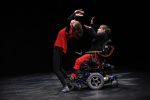
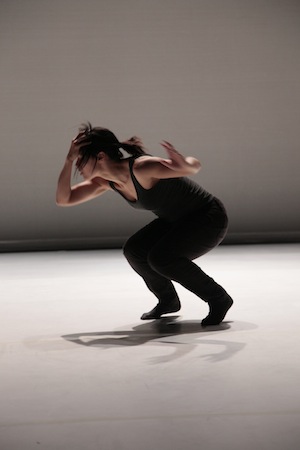
Naomi Brand’s En Route will be performed by members of All Bodies Dance Project. (photo by Chris Randle)
New works and the pushing of boundaries. Just what audiences expect from the Dancing on the Edge contemporary dance festival, and just what the three participating Jewish community members have created.
This year’s Dancing on the Edge (DOTE), which takes place July 7-16, includes work by Tara Cheyenne Friedenberg, Amber Funk Barton and Naomi Brand.
Friedenberg’s I can’t remember the word for I can’t remember is an excerpt from a work-in-progress – a new solo she is creating with director John Murphy.
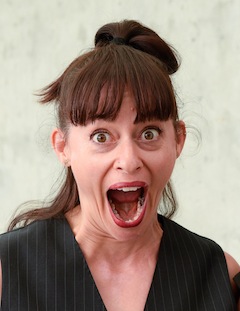
Tara Cheyenne Friedenberg has worked with actor John Murphy to create I can’t remember the word for I can’t remember. (photo by Wendy D Photography)
“I will be performing but a lot of what we’ve been making has come out of our conversations about memory and the displacement of our memories in the digital world,” she explained. “The piece explores how our minds, our selves escape us and the panic that brings.”
Friedenberg and Murphy met years ago, when she was choreographing a Fringe show in which he was performing.
“He is one of the funniest performers I know and a very smart playwright and director,” said Friedenberg. “I wanted to do research into narrative structure and comic writing, as well as explore being ‘myself’ onstage. Once John and I started researching, we both got excited about turning the research into a piece. Marc Stewart will create an original score for the work as well.”
As for other future projects, Friedenberg said she had recently returned from a residency in Italy where she was collaborating with Italian dance-theatre-performance artist Silvia Gribaudi. “We will be premièring our duet next year at the Scotiabank Dance Centre – it’s a co-production with the Dance Centre and Chutzpah!”
In addition to DOTE, Friedenberg is also choreographing West Side Story for Theatre Under the Stars this summer.
“It’s my first time working for TUTS and the cast is fantastic!” she said. “The amazing Sarah Rodgers is directing – I also met her years ago on the same Fringe show where I met John. It’s a very edgy take on West Side and I am able to bring my contemporary vision to it.”
Barton is also bringing a new work to DOTE that she hopes will evolve into something larger – Village, a 15-minute group piece, performed by members of the response.’s apprenticeship program.
Dancers from response.’s apprenticeship program will perform Amber Funk Barton’s Village. (photo by Chris Barton)
About it, Barton said, “I am always interested in working with narrative and story and, lately, I seem to be inspired by small towns and their intimate interactions. When I travel, I find it fascinating that, as a human race, we all have a similar rhythm to our lives but the diversity of how we carry out this rhythm is what continues to make us interesting to one another. We all wake up. We all eat breakfast. We all go to work. We all struggle to define what our short lives on this planet mean. We all love and have our hearts broken. We all want to be loved. We struggle to attain happiness…. So, I’ve decided that I would like to make a dance that reflects these inspirations; I want to portray a group of people who live by the sea and survive a storm.
“My intention in creating Village for the festival this year,” she continued, “is that it is a starting point for a much more developed work with possibly a larger cast. But, to start, I am working with four dancers – Andrew Haydock, Antonio Somera Jr., Marcy Mills and Tessa Tamura – who have all gone through my company’s apprentice program. So, this is also a special endeavor, as it is giving these emerging dancers an opportunity to perform in the festival, as well as working with them as professional dancers. It’s really exciting to witness their growth. I’ve also decided not to perform in Village because I want to focus solely on the creation of it.”
Another focus of Barton’s has been working to make VAST, her first full-length solo, a reality. “I’ve been doing a lot of movement research and performing works-in-progress in support of it and I’m currently working towards a 2017 première,” she said.
“I’ve also held two more cycles of my company’s apprentice program. It’s hard to believe, but my company’s 10th anniversary is on the horizon, so I’m dreaming about what I would like to create to celebrate that. I’m also teaching regularly and am currently on staff as the head of contemporary at Avant Dance Company in Burnaby.”
And, if that weren’t enough, Barton recently did a residency with the company EDAM Dance.
“This spring,” she said, “with the support of EDAM, I was invited to create a 20-minute work for three dancers. I called the trio Scenes for Your Consideration and it was recently performed at EDAM’s Induction performance series.” The work featured Elya Grant, Somera Jr. and Haydock, she added, “and became a collection of scenes and interactions where the relationships between the dancers continued to shift. When I watch the work, I see them shift between friends, enemies, lovers, siblings – all the various roles that we encounter in our everyday lives.”
Brand’s work for DOTE is about a different form of shifting. Called En Route, it “explores different ways to traverse public spaces and negotiate our place in a crowd. The piece celebrates and exploits the fine line between practical and performative ways of getting from point A to point B.” To the program description, Brand added, “Directionality and determination to get somewhere are contrasted with meandering, circuitous pathways towards our goal.”
The piece will be performed in the inner courtyard of the Woodward’s Building, which, she said, “requires me to think more creatively about the three-dimensional experience of watching a living choreography. The Woodward’s space is also a space with its own complex choreography of people moving through it in myriad diverse ways towards their own destinations. We are excited to build upon the existing dance of that space.”
En Route will be performed by members of All Bodies Dance Project, which she described as “an inclusive group of movers who experience and perceive the world differently.”
Brand launched All Bodies Dance Project in September 2014 with Mirae Rosner and Sarah Lapp.
“The three of us were/are interested in making a space in Vancouver to explore an inclusive dance practice that was open to movers of all abilities,” said Brand. “We have been really fortunate to partner with the Vancouver Parks Board and the Roundhouse to make this project possible.
“All Bodies Dance Project is accessible to anyone and welcomes difference as a creative strength,” she continued. “Our work poses questions about dance and how it is practised: Who has access to dance training? Who gets to make dances? What is the artistic potential of different types of people dancing together?
“By bringing together ‘standing dancers’ with dancers who use wheelchairs and other mobility aids, our practice seeks to challenge the ideas of normalized dancing bodies and make space for a new and innovative community of dance makers. We want to widen the spectrum of who dances and what dance can be.”
All Bodies Dance Project has created two full evening productions to date, See & Be Seen (2015) and TRACE (2016), and have done numerous community performances in local festivals and events, said Brand. “We are interested in continuing to create new and innovative pieces of choreography, allowing new audiences to see the choreographic possibilities of difference.”
In the fall, she said, there will be a new session of the group’s open classes at Trout Lake Community Centre and the Roundhouse, in addition to a new class it is launching for young dancers ages 8-12 at Mount Pleasant Community Centre and a new group at Sunset Community Centre (allbodiesdance.ca).
In addition, Brand continues “to make and perform contemporary dance across a wide spectrum of contexts, from my own solo work to work with professional dancers to dance with diverse populations. I have just completed a three-year residency at the Roundhouse, where I was working with an ensemble of 20 older adults called the Ageless Dancers.”
As well, when the JI contacted Brand by email for this interview, she was on Toronto Island where, she said, “I am working with a group of 24 dance makers from across Canada on a project called 8 DAYS. This is my fourth time at this intergenerational gathering that aims to connect choreographers, to share their practices and create dialogue about the form.”
For the full schedule and tickets for the DOTE festival, visit dancingontheedge.org.
Voters in the United Kingdom – well, in England and Wales, at least – have decided to quit the European Union. The referendum last week turned British politics, and world economic markets, upside down.
The potential for a Scottish withdrawal from the United Kingdom is again front and centre. More than this, politicians and commentators worldwide are extrapolating the vote’s meaning across Europe and North America to try to comprehend the potential impacts of a coalescence of disgruntled, anti-elitist, populist, nativist and xenophobic tendencies. Already, the result seems to have given licence to some people to act out on xenophobic hatred, with numerous incidents of verbal and physical assaults against visible minorities reported across Britain in just the couple of days following the referendum.
Among those who supported the losing “Remain” campaign are some who threaten to move to Canada. This is a default for Americans and now, apparently, Brits who dislike the democratic outcomes in their own countries. The Canada strategy is much talked about but rarely executed. Ironically, people from countries that move toward exclusionary practices and tightened immigration policies assume that Canada is an uncategorically welcoming place that would greet them with open arms. On Canada Day, of all times, we should take it as a compliment that our reputation is one of haven and acceptance.
And yet … while Europe may be aflame with xenophobia and demagoguery, Canada is not immune to strains of something nasty. The current example comes from none other than Canada’s Green party.
For a movement that ostensibly subscribes to the precept of thinking globally and acting locally, the policy resolutions for the party’s August convention are starkly parochial. Only two items proposed for consideration approach foreign affairs issues – and both attack Israel.
One resolution calls for the party to join the BDS movement to boycott, divest from and sanction the Jewish state. More hypocritically still, the Green party is seeking to have the Jewish National Fund of Canada’s charitable status revoked. That a Green party would target one of the world’s oldest and most successful environmental organizations is symptomatic of something irrational in the mindset of those who promulgated the resolution. Whether it advances to the convention floor – and what happens then – will tell us a great deal about the kind of people who make up the Green Party of Canada.
In a world where human-made and natural catastrophes seem unlimited, from the entire population of Green party members across Canada, only two statements of international concern bubble to the surface – and both are broadsides against the Jewish people.
Elizabeth May, the party’s leader and sole MP, said she opposes both resolutions but, since the determination of policy is made on the basis of one member one vote, there is a limited amount she can do. She met last week with Rafael Barak, Israel’s ambassador to Canada, and said the Green party’s support for Israel’s right to exist is “immovable.”
Citing both changing social practice and traditional Jewish values, the international association of Conservative rabbis passed a resolution on May 22 calling on Jewish institutions and government agencies to embrace the full equality of transgendered people.
The Rabbinical Assembly’s Resolution Affirming the Rights of Transgender and Gender Non-Conforming People begins, “Whereas our Torah asserts that all humanity is created b’tzelem Elohim, in God’s divine image….” It discusses historical evidence of “non-binary gender expression” in Jewish texts dating back to the third-century Mishnah. It calls on synagogues, camps, schools and other institutions affiliated with the Conservative movement to meet the needs of transgender people and to use the names and pronouns that people prefer. It also encourages Conservative institutions to advocate for national and local policies on behalf of transgender people. In light of its passing, the Jewish Independent spoke with several local rabbis from across denominations about the resolution and about transgender inclusivity in their communities.
“The statement feels comprehensive and as positive and embracing as it should be,” said Rabbi Hannah Dresner of Or Shalom, which is part of the Jewish Renewal movement. “We need always to try to get to the heart of what the halachah (Jewish law) and the mitzvot are trying to do for us. The way they were concretized in another century does not limit them for all time. Halachah is a process. I think it is beautiful when any part of the community pulls up a chair at table and says we are participating in the ongoing evolution of halachah. This is at the heart of what it means to continually create Torah, to turn Torah over and over, to continually participate in the exchange between the Holy One and human beings, which is God giving the written Torah and our response by taking it in and answering in the voice of our humanness. This is at the heart of what the halachic process is and should be in any sphere.”
LGBTQ people are fully welcomed at Or Shalom, and people are called to the Torah by their preferred gender identification. Or Shalom is currently working on infrastructural and ritual changes to be more explicitly and fully inclusive of LGBTQ people in all spheres. “There are alternatives that are easy and sweet,” said Dresner. “We just have to do our work.”
When asked what he thought of the Conservative resolution, Rabbi Dan Moscovitz of Temple Sholom, a Reform congregation, replied with typical humor: “Great, welcome to the party.” He said he views the resolution as a return to the deep values of the tradition, not a departure. “This is at the core of who we are commanded to be as human beings – to find the tzelem Elohim (image of God) inside of each individual and to not be confused or distracted by outside appearances, generalizations or labels,” he said.
The resolution is largely the same as that passed by the Reform movement in November 2015. As early as 1965, the Women of Reform Judaism called for the decriminalization of homosexuality. In 1977, Reform’s Central Conference of American Rabbis adopted a resolution calling for legislation decriminalizing homosexual acts between consenting adults, and an end to discrimination against gays and lesbians. In the late 1980s, the primary seminary of the Reform movement, Hebrew Union College-Jewish Institute of Religion, changed its admission requirements to allow openly gay and lesbian people to join the student body. In 1990, gay and lesbian rabbis were officially affirmed and, in 1996, so were same-sex civil unions. In 2000, a resolution followed fully affirming sanctified Jewish unions for same-sex couples and, in 2003, there was a resolution affirming the full acceptance of trans- and bisexual people, a stance confirmed and elaborated in the 2015 resolution.
“We have trans members, both adults and children, who we embrace and welcome fully,” said Moscovitz. “We call up to the Torah by preferred gender and gender-neutral pronouns which are present on our gabai [person who calls people to the Torah] sheet…. All bathrooms are multi-gendered or non-gendered.”
Moskovitz cited the case of a bar mitzvah boy who now identifies as a female and was offered a mikvah ritual as a transitional symbol, as well as a new Hebrew name and the reissue of the bar mitzvah certificate as a bat mitzvah.
The Conservative movement has been slower to change its position on LGBTQ sexuality than the Reform. In 1990, the Rabbinical Assembly’s Committee on Jewish Law and Standards (CJLS), which sets halachic policy for the movement, stated their desire to “work for full and equal civil rights for gays and lesbians in our national life.” Nevertheless, the CJLS maintained a ban on homosexual conduct, the ordination of homosexuals as rabbis and same-sex marriage unions until 2006, when LGBTQ people were first admitted for rabbinical ordination; in 2012, the Israeli Masorti (Conservative) movement followed suit. In 2012, the CJLS allowed same-sex marriages, with the U.K. Masorti movement following in 2014. The 2016 resolution is a milestone for the Conservative movement.
Rabbi Jonathan Infeld of Congregation Beth Israel, which is part of the Conservative movement, applauds the new document. “Kevod ha’ briyot [the dignity of all created beings, cited in the CJLS resolution] is very important…. For me, the over-arching concept of respecting all human beings and making them feel welcome, bringing them into the Jewish community is vitally important and is the keystone of the resolution.”
Infeld said the resolution is an expression of foundational Jewish values. “It is critically important to recognize the humanity and holiness of every person and that’s the essence of the resolution,” he said.
Beth Israel has private, non-gender-specific washrooms available, and calls to the Torah for an aliyah are done on the basis of the gender with which the person identifies, he noted. “We don’t loudly announce our stance so much as we are very happy to have trans and gay people in our synagogue as a natural part of the social fabric of our shul, by being warm and welcoming to everyone who walks in the door,” he said.
Speaking to the JI only days after the mass shooting at the Pulse nightclub, Infeld said, “The Orlando massacre is another reminder of the need to fight discrimination on every level and recognize the humanity of every person.”
Unlike non-Orthodox denominations, Orthodox Jews maintain traditional rabbinic stances against homosexual conduct, and behaviors such as cross-dressing or identifying with a gender aside from one’s birth gender. Nevertheless, there are a number of Orthodox rabbis and Jewish groups that are openly LGBTQ and/or call for greater inclusivity in Orthodox communities. And, in recent years, a number of Orthodox statements have been issued – mostly from within the Modern Orthodox world but also from others – calling for the expression of love, support and inclusion of LGBTQ people without condoning LGBTQ behaviors.
“We do not judge anyone here,” said Chabad Rabbi Shmulik Yeshayahu of Ohel Ya’akov Community Kollel. “We love and welcome everyone. We follow the Orthodox halachah that the Torah only allows union between a man and a woman, but gay, lesbian and transgender people are welcomed in our community and no one will judge them or condemn them. We do not ask questions about people’s behavior or police them. We love people, and we do not make everything they do or don’t do our business. We have had and do have gay and lesbian couples here and, in the past, even one Orthodox gay couple, and they were not judged, no one is saying anything to them. Everyone is welcome here.”
In the historic referendum last week, the United Kingdom voted to leave the 28-nation European Union (EU), sending shockwaves throughout Europe and the international community. The results of the so-called “Brexit” vote – 52% in favor of exiting the EU and 48% opposed – spurred the resignation of U.K. Prime Minister David Cameron and called into question the identity and strength of the EU, while leaving many nations, including Israel, wondering how the vote will affect policy and trade in the years ahead.
“It’s hard to know what is going to happen, and nothing is going to happen right away,” said Dr. Oded Eran, the former Israeli ambassador to the EU. “There is no doubt that Israel will be left to follow the agreements that will be made between the United Kingdom and the European Union, and to adjust its economic and trade relations with Britain accordingly.”
Opposition leaders in France and the Netherlands have hailed British voters’ decision, calling for similar referendums on EU membership in their countries. “This is the dilemma that the European Union will face,” Eran said. “If Britain was a singular case, then this would be a simpler situation.”
A major factor in the Brexit vote was the influx of Muslim immigration into Europe. Supporters of the Brexit suggested that Muslim immigration threatens the distinct character of European nations.
Opponents of leaving the EU cited growing xenophobia and anti-Islamic sentiment in British society, often coupled with antisemitic sentiments.
According to Fiamma Nirenstein – a former Italian parliamentarian who served as vice-president of the parliament’s committee on foreign affairs and as a member of the Italian delegation to the Council of Europe – there are opposing views within Europe’s Jewish communities on the causes and potential consequences of the Brexit vote.
Nirenstein noted that one school of thought views the Brexit vote “as a sort of punishment for Europe” for growing anti-Israel and antisemitic sentiment.
“Over the past century, Europe has been so bad to the Jews,” she said. “And, increasingly now, Europe is against Israeli actions, and Europe is seeing an explosion of antisemitism. So, in the view of one camp, there is something wrong with Europe and something needed to happen to demonstrate that, and the Brexit vote represents this.”
On the other side, Nirenstein suggested, is a second camp that views the Brexit vote negatively – “as an event that strengthens and empowers an illiberal right-wing sentiment throughout Europe,” a sentiment that is simultaneously antisemitic and anti-Islamic and, at its core, anti-immigration.
“As a people that have ourselves been strangers in many lands, Jews have always identified with the value of welcoming the other, so this camp of Jews is against the [Brexit] vote,” said Nirenstein, who also served as chairperson of the International Council of Jewish Parliamentarians.
I was recently invited to speak to an Ottawa-based Israeli-Palestinian relations group on the topic of Canadian Jews and Israel. Unfortunately, there is a dearth of public opinion data available on Canadian Jewish attitudes. We have some broad strokes on identity issues, though. In addition to Conservative Judaism – rather than Reform – being our largest denomination, Canadian Jews, compared to American Jews, are one generation closer to the Holocaust, are more likely to speak Hebrew, educate their kids Jewishly, and to have visited Israel. Most central to my talk though, was how Canadian Jewish institutions are responding to attempts to challenge Israel as a Jewish state, including the boycott movement.
A lively Q&A followed, but there was one question that stopped me in my tracks. What is it about Israel, a man asked, that makes you feel attached to it? He seemed genuinely curious and rather puzzled, so puzzled that he asked it twice.
Being in the field that I am in, I have a ready answer, but I know I am not typical. My own attachment to Israel centres primarily on a deep passion for Hebrew and Israeli culture. I lived in Israel for three separate years in my 20s, I speak only Hebrew to my kids, I alternate my Netflix watching with Israeli dramas and I am as likely to binge listen to “The Last Waltz” as to Kaveret’s final concert album. My daughter’s d’var Torah at her bat mitzvah was the only one I’ve heard reference Arik Einstein lyrics. Of course, the attention I devote to Israel is partly a function of my profession, but I chose my area of study based on a great sense of attachment to the country and a desire to understand how the Israeli-Palestinian region can become a more just and humane place.
But what of my fellow Canadian Jews? Those of my parents’ generation, who grew up in the shadow of the Holocaust, might view Israel as an insurance policy in the event of the unthinkable. Religious Jews might feel a profound spiritual connection to the land. But what of the many less religious Canadian Jews of my generation (and younger), those for whom Canada, with its absolute commitment to freedom, tolerance and multiculturalism is as safe a haven as any they could imagine; those for whom particular stones on particular bits of territory are not understood to hold sacred meaning, and for whom Hebrew or Israeli contemporary culture is not something that pulls them?
What does Israel mean to these Jews who are unlike my parents, unlike religious Zionists and unlike me?
I encourage my fellow Canadian Jews to articulate their attachments. Doing so with nuance and open hearts may help uncover new political arrangements. Maybe it would point to two states, maybe a confederation system where everyone has access to all the land but possesses citizenship in only one state (as Dahlia Scheindlin and Dov Waxman have proposed), and maybe even a single state where both languages and cultures are carefully preserved. We should ask what threat, exactly, does refugee return pose, rather than leave it as an imaginary bugaboo. Being explicit about our emotional ties – while being open to hearing the emotional experiences of others – may bring us closer to supporting creative peace efforts.
A postscript. A survey of the Canadian Jewish community is currently being circulated by Jewish Federations of Canada-United Israel Appeal, and British Columbians can respond online via svy.mk/20qCWb7. The survey is being conducted by David Elcott and Stuart Himmelfarb, both of New York University’s Wagner Graduate School of Public Service. As I recall, there is only one question on Israel, which asks whether the respondent feels “attached” to the country. Attachment is associated with many different perspectives, and says nothing about one’s commitment to human rights for those under Israel’s control, for example. I hope that we may soon see more in-depth survey research on Canadian Jewish attitudes towards Israel and its policies.
Mira Sucharovis an associate professor of political science at Carleton University. She is a columnist for Canadian Jewish News and contributes to Haaretz and the Jewish Daily Forward, among other publications. This article was originally published in the CJN.
A new Canadian literary prize was announced recently – the Joan Betty Stuchner Oy Vey! Funniest Children’s Book Award.
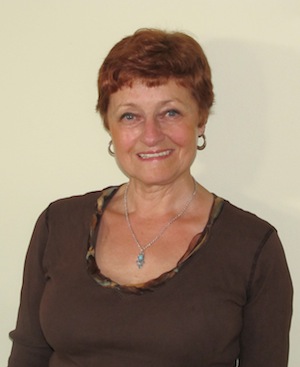
Joan Betty Stuchner’s friends have created a children’s book award in her memory. (photo by Tom Kavadias)
“With this award, we honor Joan Betty Stuchner’s life-affirming humor and encourage other children’s writers to laugh it up on the page the way she did,” reads the award website. The $1,000 prize will be given out once every two years to a Canadian author and/or illustrator who creates the most hilarious book for readers ages 12 and under.
“We feel that Joan would have loved this prize that supports authors who make children laugh,” said Cindy Heinrichs, one of the award committee members, in an interview with the Independent. “The name of the award is probably the longest and funniest book award name in literary history. Joan would love it. She would laugh at it, if she were alive. I can almost hear her laughing.”
Stuchner, one of the funniest authors of children’s books in Canada, passed away unexpectedly in 2014. She was only 67 years old.
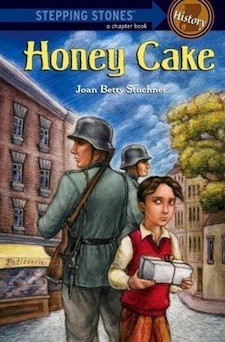
“I met Joan in 2006,” Heinrichs recalled. “I edited one of her books, Honey Cake, for Tradewind. I was a young editor then, and Joan was very supportive. She had a knack for making everyone she met feel like they were her friend.
“We did become friends. Later, when she was already sick, I helped her with the final edits for her two latest books, Bagels the Brave and Bagels on Board [both illustrated by Dave Whamond]. I wasn’t working for her publisher then, I did it as a friend, because she was too ill to do it alone. It gave her a great deal of pleasure to complete these books and a great deal of satisfaction to know that they would find their way into the world. Both books were published posthumously by Orca Books.”
Heinrichs remembered how shocked all Stuchner’s friends were by her passing. “Joan was a wonderful friend, warm and generous. She loved children. She loved books. She was a little lady with a big personality and a great sense of humor.”
Born in England, Stuchner moved to Canada when she was 18. After graduating from the University of British Columbia, she worked as a library assistant, taught part-time, acted in community theatre and performed as a storyteller.
“My life is full of books … and my house is like a mini library – despite the fact that I moved in 2009 and had to give away many of my books. Not an easy thing to do,” Stuchner herself wrote in her bio.
She always liked to write, particularly for children. Her stories and poetry were published in children’s magazines before her first book, Peanut Butter Waltz, illustrated by Diana Durrand, came out in 1990.
“She wanted to write full-time,” said Heinrichs. “At 64, she retired to make that dream come true. Sadly, she died only three years later.”
After the funeral, several of Stuchner’s friends, including Heinrichs, got together to reminisce and to talk about Stuchner’s literary legacy, her funny and heartwarming children’s books.
“We realized that there was no prize in Canada for humorous children’s books. We thought, Joan would love such a prize, we should found one.”
They did. And, in honor their departed friend, they named the prize after her. The members of the award committee include Heinrichs, fellow writers Caroline Adderson and Silvana Goldemberg, and artist/ illustrator Kathryn Shoemaker.
“We all met through CWILL BC – Children’s Writers and Illustrators Society of B.C.,” Heinrichs said. “When we started with the prize, we didn’t know what to do. Everything was a first for all of us, and everything was done by volunteers. There are no administrative fees. No paid staff. We asked people to help – to make a logo, to make a website, to help with fundraising, to donate books – and everyone jumped in. Orca and Tradewind donated books to raise the funds for the prize. Shar Levine is helping us with fundraising, too. She has so many amazing ideas, even though she is not a member of the committee.”
Submissions for the inaugural prize, which will be awarded in 2017, already have started pouring in, from publishers and writers organizations across Canada, although the committee decided not to accept submissions from self-published writers, at least for now. Heinrichs explained that decision: “While there are wonderful examples of self-published books for children, many self-published books are in need of a thorough editorial process. Most book prizes don’t accept them at this time, but that may change. Our prize is brand new and we are learning. We expect it will grow as we do.”
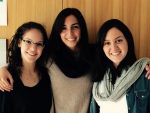
Shinshiniot, left to right, Ophir Golombek, Tomer Tetro and Lian Swissa. (photo by Michelle Dodek)
Nine months ago, Ophir Golombek, Lian Swissa and Tomer Tetro were just the names of three Israeli 18-year-olds brought to Vancouver by the Jewish Federation of Greater Vancouver and the Jewish Agency for Israel. Having spent the school year helping at Vancouver Talmud Torah (VTT), Richmond Jewish Day School (RJDS), King David High School (KDHS), the Jewish Community Centre of Greater Vancouver and the Hebrew schools at congregations Beth Israel, Beth Tikvah and Temple Sholom, these young women are now known and loved by many across the Lower Mainland.
The women have been here for a shnat sherut (year of service, for which the acronym is shinshin) before entering the army, not as an alternative to time in uniform. The program has been running in other cities for more than a decade, but this was the first year for Vancouver. Designed to spread a connection and love for the people and country of Israel, the shinshiniot (female plural for shinshin) engaged the youth of Vancouver’s Jewish community through dance, song, food and educational programming.
The Shinshin program hinges on a series of homestay experiences where families with children in high school or younger host a shinshin for a three-month period. Federation works to match each shinshin with families that are a good fit in order to facilitate a connection between the families and the shinshiniot, sharing the Canadian experience and Israeli culture while bonding as Jewish people.
“The best thing about the year was the host families,” said Swissa. “I made amazing deep connections and was welcomed as part of the family. It’s such a crucial part of the program.”
The Friedman-Leidemann family – parents Diane and Mark and 13-year-old son Isaac – opened their home to Golombek. Living very close to VTT, it was convenient for Golombek to get to and from her daily work at the school and the family was happy to open their home to her.
“Hosting Ophir was a lovely experience,” said Friedman. “We have hosted ‘traditional’ homestays for 10 years, so we have lots of experience to compare this to and it was truly wonderful.”
She added, however, that having the shinshiniot work six days a week made exploring very difficult. “It would be nice if the girls could have a two- to three-day weekend once a month so that they could explore areas near Vancouver not conducive to day trips,” said Friedman.
Lissa Weinberger, manager of Jewish education and identity initiatives at Federation, was tasked with rolling out the Shinshin program in Vancouver. “It has been an amazing first year,” she said. “From the first time I had a child excitedly talk about the visit their class had from the shinshin to the last goodbye hugs, there has not been an experience quite like this in Vancouver. The biggest highlight of the year was having them for Yom Hazikaron and Yom Ha’atzmaut. Our community and especially our kids had such a positive Israeli experience, one that could only be created by the firsthand experience of Israeli teens.”
The year has not been without its challenges. Federation recognizes that culture shock and homesickness were real issues, and they plan to have a native Hebrew-speaking social worker or psychologist as part of the support team next year. They are currently reaching out for host families, as well. “We are looking for families who have the routine of the school year, of having kids, because hosting a shinshin is bringing a teenager into your family,” said Weinberger.
Tanyss Bugis, who has two teenagers attending KDHS, said, “Hosting Lian was good for our family and my teenaged kids and it was good for Lian. For us, it was a terrific experience.”
The skills and warmth of the shinshiniot were put to a variety of uses over the year. Tetro is an accomplished dancer and she worked with Grade 4s at VTT and RJDS to prepare for Festival Ha’Rikud. At Beth Israel, Swissa used her artistic skills to create props and 3-D games about Israeli customs, culture and holiday celebrations. All three women did Israeli programming at the synagogue Hebrew schools, where they worked alternating Sundays; the weekends they were not at Hebrew school, they provided youth programming on Shabbat mornings.
“The kids we met now have a better understanding of the complexity of being a teen in Israel,” said Swissa. “They have a better idea that Israel is a nuanced, complex country. We were also able to bring a better understanding of really important events like Yom Hazikaron.”
During the school week, RJDS, VTT, KDHS and the JCC had programming provided by one or more of the shinshiniot. Golombek was full-time at VTT, visiting the classes with age-appropriate lessons on everything from women in Israeli society and history to Yom Hazikaron traditions. Jennifer Shecter-Balin, director of admissions and communications at VTT, said, “Having a young Israeli emissary at the school was a logical and natural way to build bridges with – and interest in – Israel.”
Shecter-Balin also acted as a host-mother. “For our family, hosting a shinshinit was a wonderfully positive experience,” she said. “After our time with Ophir, we feel as though we now have another close family member living in Israel and we anticipate maintaining our bond. We would definitely host again!”
Of the challenges, Shecter-Balin said there were inevitable hiccups but that VTT sees the benefits of increasing the scope of the program with two shinshiniot for next year. “We anticipate a smoother transition and integration with two emissaries working together and supporting each other,” she said.
During Shabbat services on June 25, Swissa organized a party with Israeli snacks and games. It turned out to be a surprise farewell party for her, too. It was the second such party for her on a Shabbat morning; the other was for her 19th birthday.
“We love having Lian here. She’s awesome!” said 10-year-old Aria Levitt.
Swissa said it was hard for her to say goodbye to the kids. “As a shinshinit, we develop a deep connection to the kids. It’s sad to say goodbye.”
Not quite finished their service in our community yet, Tetro is off to Camp Hatikvah for the summer and Golombek will be at Camp Miriam. Both will help with programming, adding to the already rich Zionist fabric of the camps. Swissa continues her stay in Vancouver contributing an Israeli flavor to the JCC’s Camp Shalom.
Tetro summed up her experience in a goodbye speech at a party thrown by Federation for the shinshiniot. “The Jewish community here is amazing and I am so grateful to have been part of it,” she said. “I am so thankful to have met all these incredible people, thank you for being my extended family for the year.”
Federation is looking for families to host a shinshinit for a three-month period in the coming school year. The new group of four young women will arrive at the end of August for an orientation. If you are interested in being a host family, contact Federation at [email protected] or call Shelley Rivkin at 604-527-5111.
Michelle Dodekis a mother and a writer in Vancouver whose children benefited greatly from their relationships with the shinshiniot.
Friends of the Jacob Sheep directors Jenna and Gil Lewinsky with their flock. (photo by Mustard Seed Images)
El Al has agreed to come on board as a partner and subsidize the flight of the Jacob sheep from Canada to Israel. The flight would take place from an airport in North America with logistics to be determined.
The airline’s announcement came as the Israeli Ministry of Agricultural and Rural Development gave the green light for the export of the Jacob sheep flock of approximately 120 animals, subject to a quarantine on both the Canadian and Israeli side, and medical testing. Despite having a low incidence of blue tongue in Canada, the quarantine is to protect the sheep. After the Canadian quarantine, the sheep will be medically tested for blue tongue and then flown to Israel.
The Israeli agricultural ministry told the Times of Israel in June that Canada is not on the list of countries that are approved to export livestock to Israel, so the Jacob sheep flock “will be approved under special circumstances, on a one-time basis for tourism purposes only.”
The project has been endorsed by the Israeli embassy in Ottawa, which blessed the endeavor to return the sheep “to their land of origin, the state of Israel,” in a letter released in May.
The Jacob sheep’s return also has received rabbinical endorsements. Rabbi Amram Vaknin of Ashdod has called the return of the sheep a “highest mitzvah” and wishes to be there to bless their return. Late last year, local Chabad Rabbi Falik Schtroks visited the Jacob sheep flock for parashat Vayeitzei, to deliver a sermon and to wish them a safe return to the land of Israel.
Friends of the Jacob Sheep directors Gil and Jenna Lewinsky have started a crowdfunding campaign to help fundraise for the costs of transporting the sheep to Israel, for feeding costs and to build appropriate infrastructure for them on the Israeli side. The campaign can be found at gofundme.com/jacobsheep.
Despite being unsure about God, Lawrence Hoffman embarked on his journey as a student in a New York rabbinical school nonetheless. The now-longtime rabbi has since authored more than 40 books and has been teaching at the Hebrew Union College in New York since 1973.
HUC is a seminary for Reform rabbis and cantors. Hoffman teaches courses in liturgy, worship, ritual, spirituality and theology – and, increasingly, synagogue transformation.
The synagogue transformation endeavor has Hoffman traveling constantly, both addressing congregations throughout North America and as a consultant aiding in transformation issues.
In 1995, Hoffman began to suspect that synagogues were not keeping up with the changes in North Americans’ views of religion and that, as a result, they were in for some hard times.
“This was already evident the generation prior, the generation after the baby boomers,” said the rabbi. “I became convinced that synagogues needed to become what I came to call ‘spiritual and moral centres for the 21st century.’
“I co-founded something called Synagogue 2000 … investigating how synagogues might transform themselves into this kind of synagogue. It would involve a new kind of spiritual affirmation and a focus on what a spiritual mission might be for the synagogue … what synagogue life might become for the new century.”
After experimenting with these concepts via Synagogue 2000, Hoffman began traveling from place to place to help synagogues undergo the process. This has become his main passion.
As the rabbi teaches at a Reform seminary, most of his current work is with Reform congregations, but he has worked across the spectrum. “After all,” he said, “the impact of the environment and the new age is felt equally across the ranks of all synagogues.”
A recent visit to Winnipeg’s Temple Shalom was part of Hoffman’s initiative to spread the word and help communities that would otherwise not be able to afford his normal rates as a scholar-in-residence.
Hoffman – who is originally from Kitchener, Ont. – included the stop in Winnipeg on his way to a Western Canadian vacation with his wife.
“All my life, I wanted to see Western Canada and never had, and I decided it was time,” he said. “I realized I hadn’t seen Winnipeg after having arranged the vacation out West. I knew there was a small synagogue [Temple Shalom].… I phoned them, offering to come to Winnipeg and give them a lecture and meet the community…. In return, they were willing to show me around and host me.”
The rabbi spoke briefly at the synagogue during the erev Shabbat service on May 27. His topic was Authentic Jewish Spirituality. He returned the following evening to speak again.
“The idea was to investigate what might be a kind of Jewish spirituality that would go deep into Jewish text and practice,” said Hoffman. “A lot of people think that spirituality is equivalent to meditation, silence retreats, yoga … all of which is fine … and there are Jewish versions of that, which I applaud, but I think there are forms of Jewish spirituality that are connected more deeply with things that are consistently found often quite uniquely in Judaism, as a series of sects, practices, Jewish traditions, a deep way of looking at Jewish spirituality.”
Hoffman believes we are living in the third revolution, with the first having brought rabbinic Judaism and the second having been the development of modern denominations. This current revolution, according to Hoffman, is courtesy of technology, the baby boomers and other general changes with respect to religion in North America.
“I explored the new revolution we are living through, the excitement of it, and the opportunities and positive nature of what might result,” said Hoffman of his talks in Winnipeg. “We ended up with well over 100 people, which was quite amazing to me. In fact, I was able to see, through them and through the people who were kind enough to host my wife and myself, the vitality of the Jewish community in Winnipeg in a way that I never would have anticipated.
“The Temple Shalom Jewish community, at the moment, doesn’t have a full-time rabbi, so services were actually led by lay people, but they did a spectacular job. I was very impressed.”
Hoffman spoke about what he means when he says transformation – that, until recent years, most Jews would not have moved into a town without joining a synagogue, referring to this as “a Jewish civic duty.” But, today, Hoffman said, “What’s happening in the new world is that people like that don’t necessarily belong to a synagogue anymore. They associate the synagogue with what they call ‘religion,’ saying they are not religious. Instead, they say, they’re spiritual. Spirituality is rising and the claim that people are not religious is rising, as well.
“Synagogues need to transform themselves into places of serious Jewish identity through identification, this search for meaning … [in] so far as people can find meaning in synagogue and they don’t just join for their kids, because they think it’s the Jewish thing to do, then synagogues will do well.”
The actual transformation, Hoffman conceded, is a serious, difficult task that does not occur overnight.
“People were very interested in what I had to say, finding it exciting to be living in a moment of opportunity,” said Hoffman. “Not all of them saw it as a moment of opportunity. Many felt it was a difficult moment. For example, intermarriage is rising – some people see that as almost a death to Judaism. In my perspective, it’s just the opposite. I think it’s an enormous opportunity for us to reach so many new people. If people actually are intermarrying and then coming to synagogue with their spouse, it’s a wonderful opportunity. I think people were intrigued by the possibility and by my optimism.”
According to Hoffman, many synagogues are growing rapidly via Jews by choice.
Another issue that was discussed was how young people are not coming to synagogue, but how this is changeable. It’s just that, at the moment, they do not see a reason to attend, said Hoffman.
“The problem that people have when they say, ‘I’m not religious’ – and I’m talking largely about people who aren’t in the Orthodox camp – is that they assume that religious means keeping all of Jewish law,” he said. “They know they don’t do that, so they assume they’re not religious, but they may be religious in other ways. They may do this, but not that. They may show up on Yom Kippur. They have their own way of keeping Judaism, so it would be wrong to say they are not religious.
“Secondly, a lot of people think that to be religious means to belong to the institution. I talk about a deeply understood sense of being religious, in a spiritual sense … a sense in which Judaism, as a religion, provides meaning for people’s lives.
“One has to reevaluate what we mean by religion and help people find a way to associate with Judaism’s depths to give their life meaning and direction,” said Hoffman.
Ruth Naomi Livingston, a member of Temple Shalom’s board of trustees and a past president, was one of the Hoffmans’ hosts.
“I was raised in a secular Jewish home, but had a very religious grandfather who lived with us,” said Livingston. “I identified as Jewish by culture, rather than by religion. The topic [discussed by Hoffman] that resonated most with me was when he explained the basic differences between Judaism, Christianity and Islam. They are Hellenistic religions and are faith-based. To be a good Christian, one must believe in Jesus as a God; not to do so makes one a bad Christian or not one at all.”
Livingston came out of the experience feeling energized and empowered to follow the teachings handed down from her grandfather about the need for action in fixing the world to be a good Jew.
Of Hoffman specifically, Livingston added, “He was the most passionate and dynamic speaker I have ever seen. He had the crowd of about 90 people in the palm of his hand. There were people from a variety of synagogues present as well as several non-Jews.”



 Heinrichs remembered how shocked all Stuchner’s friends were by her passing. “Joan was a wonderful friend, warm and generous. She loved children. She loved books. She was a little lady with a big personality and a great sense of humor.”
 “We all met through CWILL BC – Children’s Writers and Illustrators Society of B.C.,” Heinrichs said. “When we started with the prize, we didn’t know what to do. Everything was a first for all of us, and everything was done by volunteers. There are no administrative fees. No paid staff. We asked people to help – to make a logo, to make a website, to help with fundraising, to donate books – and everyone jumped in. Orca and Tradewind donated books to raise the funds for the prize. Shar Levine is helping us with fundraising, too. She has so many amazing ideas, even though she is not a member of the committee.”