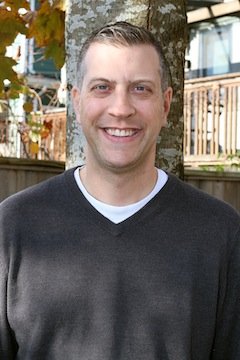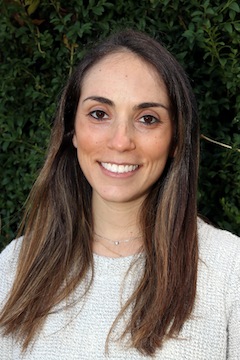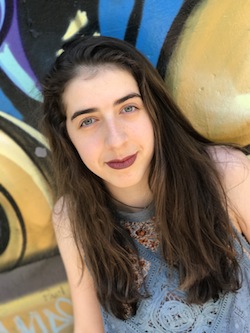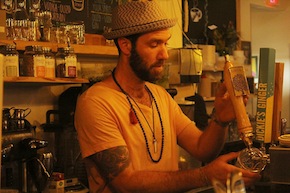
Meet the JI’s 18 Under 36 honourees – our first group (alphabetically)

Fall fun with some of the JI’s 18 Under 36. (photo by Lianne Cohen)

***

Over the past month, each of the JI’s 18 Under 36 honourees has taken the time to do an email or phone interview with Pat Johnson, so we could get to know them a little better. Once you meet them, you’ll understand why these 18 young achievers and community-minded folk were chosen by the JI’s selection panel with the help of external adjudicator Kara Mintzberg, B.C. regional director of CJPAC (the Canadian Jewish Political Affairs Committee).

The first group of honourees at the JI Chai Celebration on Dec. 6 at the Rothstein Theatre were (alphabetically): Rebecca Baron, Ezequiel Blumenkrans, Erin Brandt, Marcus Brandt, Ayelet Cohen Weil, Courtney Cohen, Aaron Friedland, Sam Heller and Talya Mallek. Mazal tov!

***
Rebecca Baron
Age 17
Student

As a philanthropy project when she was a student at Vancouver Talmud Torah, Rebecca Baron helped raise funds for Room to Read, a nonprofit that promotes gender equality and literacy in developing countries.

photo - Rebecca Baron
Rebecca Baron

“The ability to provide impoverished girls with quality education had inspired me to continue volunteering and raising awareness for global equality,” she says. “In 2015, I became a student ambassador for Room to Read’s Vancouver branch. As a member of the board, I have raised awareness, planned events and helped fundraise over $1 million. Furthermore, I have kickstarted Room to Read’s Run for Global Literacy, a school event that promotes girls’ education.”

This dedication to equality, combined with her love of biology, has led her to promote female advancement in the fields of science, technology, engineering and math (STEM).

“It is an issue that I care about because many young girls have experienced cultural biases and stereotypes within these fields. I believe that someday we will eliminate the gender gap in STEM, but as of this moment there is still a lot of work to be done.”

Her own work in science has gained her national recognition. A science fair project on indoor air quality led to her discovery that a bacteria, Pseudomonas putida KT2440, can help improve indoor air quality. For this, she won the platinum award at the Canada-Wide Science Fair in 2015.

That same year, Baron participated in the SHAD program, which empowers exceptional high school students to recognize their own capabilities and envision their extraordinary potential as tomorrow’s leaders and change-makers. There, in addition to winning the best business plan award, she met Betsy McGregor, the founder of a global network of professional women in agriculture.

“As we spoke, I mentioned my interest in developing a nonprofit organization to encourage young girls in STEM. With her support and connections, I have been able to kickstart my nonprofit organization, Because of Her.”

In its preliminary stage of development, Because of Her has already received support from researchers, professors and students.

Earlier this year, Baron won the inaugural Temple Sholom Teen Tikkun Olam Award, which recognizes a young person who “has demonstrated a vision to heal the world and has done exceptional work in the community.”

Her perspective on gender equality is partially due to her Jewish identity and the first words of Torah.

“The creation story is a perfect example of the way in which Judaism values gender equality,” she says. “Throughout this story, the Torah emphasizes the emotional and physical differences between men and women. However, these defining characteristic are not seen as inferior or superior to one another, but instead are considered to have cause for equal celebration. I believe that these values parallel with the issue of empowering young girls in STEM. As a student who has received a Jewish education, I was taught at an early age how to encourage and celebrate differences. For this reason, Judaism has helped me persevere through the cultural biases and stereotypes that litter the path towards an academic career.”

Baron has shared her experiences and interests with large and diverse audiences, including on numerous panels, as a TEDx speaker and on CBC Radio. The long list of her other activities and achievements includes participation in Vancouver Science World’s Future Science Leaders Program and serving on the Kitsilano Community Centre Youth Council.

In addition, she has been a member of the Whistler Blackcomb Freeride Skiing Team, was a competitive jazz and acro dancer and a National Rhythmic Gymnast.

***
Ezequiel (Zeke) Blumenkrans
Age 23
Medical Student

A Chassidic teaching says that Reb Simcha Bunim carried two slips of paper (another version says they were stones), one in each pocket. On one he wrote, “bishvili nivra ha’olam,” “for my sake, the world was created.” On the other, he wrote “v’anokhi afar v’efer, “I am but dust and ashes.”

This is a teaching that Zeke Blumenkrans has taken to heart.

“On one hand,” he says, “realize that you been given so much in life and that you need to make the most of it and don’t get scared. At the same time, don’t let the success get to your head. Remember to be humble and realize that, at the end of the day, we are all going to be in some form dust and ash, not too long from now. Just make the most of every day and try to add as much meaning into what you do in your life and try to help the people around you and make their lives a bit better, too.”
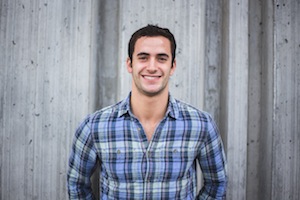
photo - Ezequiel (Zeke) Blumenkrans
Ezequiel (Zeke) Blumenkrans

Born in Buenos Aires, Argentina, Blumenkrans came to Vancouver at the age of 3. Growing up in a home infused with Jewish identity, and graduating from Vancouver Talmud Torah and King David High School, he absorbed ideas of tikkun olam and chesed. In 2011, he began volunteering at Canuck Place, North America’s first hospice for pediatric palliative care.

“Canuck Place allows me to interact with some of the most courageous and incredible children in the world, all while goofing around and helping them have fun and forget about their tough situations for awhile,” Blumenkrans told the Independent last year.

At Canuck Place, Blumenkrans met David, who had been diagnosed with spinal cancer. After David died, Blumenkrans started Generocksity, a philanthropic organization that has now grown to eight branches across Canada and in New York.

“One of my most memorable moments with David was when he was voicing his frustration about how he felt like he simply did not have enough time to do all the things he wanted to do in his life,” Blumenkrans says. “He had always thought, as most of us do, that you can always leave stuff for later and there will always be time in the future. Although he never knew it, David is the reason why I started Generocksity, so every success and achievement my team and I experience, I share with him for being my eternal inspiration.”

Generocksity organizes concert and party fundraisers for various causes and delivers educational workshops that help young adults who want to start their own philanthropic projects.

After completing his undergraduate degree in kinesiology (during which he won a long list of awards and scholarships), and before beginning med school at the University of British Columbia this year, Blumenkrans worked full-time at the Vancouver Native Health Clinic in the Downtown Eastside, which focuses predominantly on people who are current or former injection drug users and people who are HIV-positive. He is also doing research with the B.C. Centre for Excellence in HIV/AIDS, focused on needle-sharing and the spread of HIV in the Downtown Eastside. He volunteered for Magen David Adom, the Israeli branch of the Red Cross organization, and received top marks in the practical and written exams following the organization’s 100-hour first aid training course.

In addition to all of this, he has been a soccer trainer and assistant coach in the Downtown Eastside, vice-president of UBC’s Israel on Campus Club, senior coordinator of children’s events at the Jewish Community Centre of Greater Vancouver and a counselor at Camp Solomon Schechter and at Camp Shalom.

“In Judaism, they say a mitzvah is not a good deed but rather a commandment. I feel that, given all the amazing things that have occurred in my life, it’s really the least that I can do – and it’s not a whole lot,” says Blumenkrans. “But it’s a start.”

***
Erin Brandt
Age 30
Employment Lawyer

Community is at the heart of Erin Brandt’s life, and Erin Brandt is at the heart of her community.

“Community has always been very important to me,” she says. “Jewish life is founded in community. All of our religious and ritual practices are centred around community life.”

Brandt grew up in Kingston, Ont., where she was involved with United Synagogue Youth and attended Jewish summer camp. During her undergraduate studies at McGill, she was involved in Hillel and served on the board of the legendary Ghetto Shul, an innovative student-run Jewish community in downtown Montreal.

photo - Erin Brandt
Erin Brandt

Soon after coming to Vancouver to study law at the University of British Columbia, she founded a Jewish law students’ group. Later, she was a founding board member of Axis, the Jewish Federation of Greater Vancouver’s network of Jews in their 20s and 30s. Through her role with Axis and, now, as a member of the Young Adult Committee of Beth Israel Synagogue, she has been instrumental in many initiatives for members of the community in their 20s and 30s. She is also an active member of the Canadian Jewish Political Affairs Committee.

Brandt sees herself as a “connector,” and is motivated by fairness and innovation. In her career as an employment lawyer, she advises leaders in emerging industries, as well as more established businesses who want to “do right,” and she focuses on finding reasonable, collaborative solutions to workplace issues. As a speaker at the annual Vancouver Startup Week, Brandt is the voice of employment law for many local new business.

She mentors the next generation of professionals as a supervising lawyer at UBC’s Law Students’ Legal Advice Program and supports the professional development of her peers as a member of the executive of both the Employment Law Subsection and Young Lawyers Section of the Canadian Bar Association (B.C.). She presents regularly at the annual Continuing Legal Education Employment Law Conference in Vancouver, speaking on topics such as directors’ and officers’ liability and disability and workplace accommodation.

As a founder of many community-based initiatives, Brandt subscribes to the idea that, if you build it, they will come. “There are always people who want to participate in whatever it is you’re doing,” she says. “You see a need for something and then you create it.”

At this point in her life, being an integral part of her community is not even a matter of personal choice. “It’s a habit that I can’t even break,” she says, laughing.

***
Marcus Brandt
Age 32
Chartered Professional Accountant

Marcus Brandt credits those who have come before as the inspiration for his community commitments today.

“Giving back to the community was something that was taught to me at a young age by my parents,” he says. “Having three grandparents who are Holocaust survivors has taught me the importance of community, and perseverance. Looking at the incredible examples that we have in our community, be they lay leaders and/or philanthropists, they have set a good example for this generation to try and follow in their footsteps.”
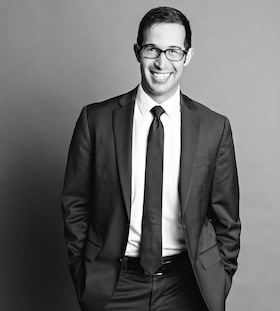
photo - Marcus Brandt
Marcus Brandt

Brandt’s community involvements are plentiful. During studies at the University of Victoria, where he received a bachelor’s of commerce degree with distinction, he was active in Hillel. He moved to Vancouver and became a chartered professional accountant (CPA, CA), and is now a manager at DMCL Chartered Professional Accountants, in their private enterprise group.

Professionally, Brandt provides assurance, accounting, taxation and business advisory services to owner-managed businesses including incorporated professionals, individuals, estates and trusts.

Even as his career has advanced, his community activities have grown. In addition to serving on the board of Congregation Beth Israel, he leads services, serves on committees and helps run young adult programs.

He is a co-chair of the young professional division at Jewish Federation of Greater Vancouver and, having been in this role for a number of years, has personally canvassed a large proportion of the community’s young adult philanthropists. In 2014, he was the co-recipient of the Federation’s Young Leadership Award, which is presented in recognition of outstanding leadership in the Metro Vancouver Jewish community. He served on the steering committee of Axis, Federation’s young adult network, of which he was a founding member.

Brandt is on the board of the Vancouver Holocaust Education Centre, and serves as its treasurer, and was co-chair of Jewish National Fund’s JNF Futures (previously JNF Young Professionals Network). In his free time, he plays hockey and ultimate Frisbee, bikes, hikes, skis, cooks and entertains.

His future plans are to continue to develop professionally and build a practice within his firm, while continuing to support the Jewish community where he is able and where he is needed the most. “Jewish community and myself are inexorably linked,” he says. “The community is as much a part of my life as anything else, and I would not change that.

“It’s an absolute honour to be recognized in this way by our community,” he says. “Community does not create itself. We must all build it together and ensure that it continues to grow from strength to strength.”

***
Ayelet Cohen Weil
Age 34
Campaign Manager, Major Gifts,
Jewish Federation of Greater Vancouver

Ayelet Cohen Weil left Vancouver in 2012. This summer, she returned with her husband, Zohar, and their year-old daughter Shai. It is the most recent relocation in a life that has triangulated between Mexico, British Columbia and Israel.

“I am what I call Mexican-born Israeli Jew,” says Cohen Weil. “Being Jewish is what ultimately defines me. It has defined who I am, where I come from, where I’m going, why I am who I am, and who I want my children to be.”

The identity and sense of belonging has been handed down through the diverse and conflicted history of her family.

“I come from a family of very devoted Zionists and devoted Jews,” she says. “From my maternal grandparents, who lost most of their family in the Holocaust, to a great-grandfather from Salonika, who was deeply involved in the early Zionist movement and was to become the first president of the Sephardic community in Mexico and the first president of the Comité Central Israelita de México (the main operating body of the Jewish community in Mexico, the equivalent of the Federation), to my paternal grandparents, who did everything to get to Israel from an Arab country in the ’50s.… I can only dream to get close to the legacy they have left for me to pass over to my children.”

Cohen Weil’s father is Israeli, the son of Iraqi Jews who immigrated to Israel in 1950. Her mother is the daughter of European Jews who migrated to Mexico in the early 1900s.

After high school, Cohen Weil volunteered on a kibbutz for a year and then joined the Israel Defence Forces at the age of 19 as a lone soldier.

photo - Ayelet Cohen Weil
Ayelet Cohen Weil

“I did basic training, a course for operational sergeants of the ground forces, and served in the Liaison and Foreign Relations Division,” she says.

The Foreign Relations Division was established to build, reinforce and maintain diplomatic relations and to represent the IDF to other countries. Cohen Weil served in the division’s Latin American and African section.

After her service, in 2005, she moved to British Columbia to complete a bachelor’s degree in political science and Middle Eastern studies at the University of Victoria. While there, she was an active volunteer in Hillel’s Israel on Campus Club and Jewish Students Association.

After completing her undergraduate degree, Cohen Weil returned to Israel for a yearlong academic excellence programs at the Hebrew University. Then, she returned again to British Columbia, where she took up a position as Hillel director at the University of Victoria for three years before moving to Vancouver and serving another two years as Hillel’s managing director of programs for the province.

Then, she was back to Israel again, obtaining a master’s degree, with distinction, in public policy, specializing in conflict resolution and mediation, at Tel Aviv University.

She served as a research assistant on strategic peace and security studies at the Institute for National Security Studies and, later, as head of marketing and admissions of graduate programs at the Interdisciplinary Centre (IDC), in Herzliya, where she also ran the Latin American desk.

During this time, she also served as a board member and mediator for Minds of Peace, an organization designed to involve the people in the peace process through provoking a public debate over central issues.

This past July, she took up the position of campaign manager, major gifts, for the Jewish Federation of Greater Vancouver.

“Through my mixed background, life experiences and years of involvement in Jewish organizations, I have witnessed and, in many cases empowered, young Jews in Canada and abroad to fulfil their Jewish journey in Israel or in their home country,” she says. “Jewish professionals don’t have an easy task, especially in our world today. But, seeing young Jews discover (for the first time, at times) and build their Jewish identity with the support of our local Jewish organizations, witnessing their journey and ultimately meeting them in Israel after they had made aliyah, that is what inspires me. That is what motivates me to keep doing what we do.”

***
Courtney Cohen
Age 29
Special Needs Support Worker

When Courtney Cohen’s grandmother, Rose Lewin, passed away in 2012, she struggled to find a meaningful way to honour the memory and legacy of her bobba (grandmother), a survivor of the Holocaust.

She created Rose’s Angels – honouring both Lewin and her paternal grandmother, Babs Cohen – to bring light into the lives of people in the often-dark month of February.

photo - Courtney Cohen
Courtney Cohen

The fifth annual event, this coming February, will see 1,000 care packages distributed to people affected by poverty through 19 service providers, including Richmond Family Place, the Richmond Food Bank, Turning Point Recovery, the Jewish Food Bank and the Light of Shabbat Program. The packages contain non-perishable foods, toiletry items, new socks, pairs of gloves and toques. Operating under the umbrella of the Kehila Society of Richmond, the program has already delivered 2,500 packages.

“I was very close to both my grandmas and they both were highly involved in giving back to the Jewish community of Vancouver,” Cohen says. “They volunteered for Hadassah, always had open-door policies at their homes and were always ready to feed my friends and family. Through their tzedakah, they inspired me to create an event that helps those less fortunate receive care packages full of items and love.”

Earlier this year, Cohen told the Georgia Straight that, even with all of the hardships her grandmother Lewin had known, “she was the most positive person I knew.”

“She always welcomed everybody into her home and, no matter what, she offered them food,” she says. “I wanted to create a token of appreciation for her life and legacy by paying it forward to the less fortunate.”

Cohen chose February for the project in part because it was her bobba’s birthday month and also because many people can feel especially isolated around Valentine’s Day.

“I hope that they feel a little bit of love, to have a gift coming to them on Valentine’s Day, when you might not have a loved one around,” Cohen told the Straight. “It’s about letting them know that there is someone out there that cares about them.”

Earlier this year, Cohen was honoured with Canadian Hadassah-WIZO’s Heroes Among Us Award. (A decade ago, she received the Rick Hansen Leadership Award.)

In addition to running Rose’s Angels, Cohen is also on the board of the Kehila Society, Richmond Jewish Day School, Richmond Homeless Connect, Richmond Poverty Response Committee and Axis Vancouver. She recently organized a young adult event for Jewish Family Service Agency (now called Jewish Family Services), educating peers about the work JFSA does around mental health outreach. She was also co-organizer of the young adult tables for JFSA’s Innovators Luncheon earlier this year.

“My parents and grandparents instilled in me at a very young age that it was important to give back to others,” she says. “It was even more meaningful to give to others whom you know could never repay you. Growing up with such giving family surrounding me, I chose to get my education in the not-for-profit sector, and it ultimately determined my career path.”

Cohen is a special needs support worker with Vancouver School Board and, as one of her nominators said, “Courtney continues to exude a passion for helping people. Her family’s strong values and her bobba’s teachings taught Courtney at a very early age to ‘always see the best in people’ and to ‘treat people who are less fortunate as equals.’”

Her near-future plans are for a very successful 2018 Rose’s Angels event and planning more tikkun olam projects for young Jewish adults.

“Through my volunteering, I hope to get more young adults involved in giving back within the Jewish community,” she says.

***
Aaron Friedland
Age 25
Founder/Executive Director, The Walking School Bus

When Anderson Cooper presented Aaron Friedland with the Next Einstein Award, the CNN host commended the Vancouverite for helping students in developing countries access education by reducing barriers in a sustainable way.

To reach school, kids in many countries have to walk several kilometres, which presents a primary barrier to their advancement. Friedland created the Walking School Bus organization, intending to purchase buses, to address that part of the problem for benefiting schools. But he soon realized that, in addition to getting to school, additional barriers were presented by hunger and poor literacy.
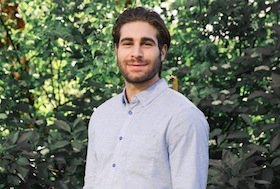
photo - Aaron Friedland
Aaron Friedland

The Walking School Bus (TWSB) evolved into a three-legged initiative addressing access, nutrition and curriculum. TWSB’s economic model is to make school buses self-funding because, when not shuttling kids to class, they will generate revenue as taxis in the community. The organization confronts the hunger issue through a complex of water collection systems, chicken coops and community-supported agriculture, providing students with nutritious meals. Solar-powered classrooms address the availability of power. Finally, TWSB developed an app through which students in places like Vancouver record themselves reading aloud, creating audio books that peers around the world can use to enhance their English language proficiency by seeing the words and hearing English-speakers reading them.

The three communities in Uganda where the organization started are in primarily Jewish schools serving the Abayudaya Jews indigenous to Uganda. A new team is beginning operations in India, focused on research in conjunction with four Indian universities.

The Walking School Bus is reinforced by Friedland’s love of economics. Each component was developed using economic models developed by Friedland and fellow econ students at the University of British Columbia and elsewhere. The organization now has partnerships with several universities and is aiming for more. There is also a think tank where ideas for further programs are imagined and modeled.

An economics lecturer at Coquitlam College and a PhD candidate at UBC, Friedland’s personal experiences inspire his work. Born in South Africa and brought to Vancouver at the age of 1, Friedland’s anti-apartheid parents, he says, ensured that he understood that, “regardless of the social norms wherever you are, you know what right looks like.”

Friedland also had to overcome challenges in his own education.

“As someone who has grown up with dyslexia and has struggled academically with dyslexia, I know how much I realize the kind of social safety net I was given in Vancouver – the extra lessons, the extra tutoring, this incredible social safety net that I think we often take for granted. I realize how fortunate I was,” he says. When he visited Uganda, India and other places, he realized that, had he been born there, he probably wouldn’t have received an education at all.

“My parents likely wouldn’t have been able to justify that educational expenditure because, if you’re not a good student, we’ll send one of your siblings to school,” he says.

Friedland and his team, which boasts an advisory group of leading thinkers and doers, has plans for expansion. In the next year, TWSB aims to purchase more buses, put in place two more solar-powered classrooms, and set up more chicken coops, water catchment systems and community-supported gardens. By 2020, the goal is five more buses, five more solar-powered classrooms and 20 more water systems, as well as more community gardens and chicken coops. On the think tank side, Friedland hopes to have 40 academic or research institutions generating 120 research papers a year.

Personally, in 10 years, Friedland would like to be a tenure-track professor of economics.

***
Sam Heller
Age 32
Managing Director, Hillel BC

Judaism and the history of the state of Israel are integral to Sam Heller’s identity. A longtime camper at Habonim Dror’s Camp Miriam, and later a staffer there, Heller went on to become the president of Hillel’s Israel Action Committee at the University of British Columbia. But, before he completed his degree in political science, he took a major detour.

Camp and campus helped shape his already strong Jewish and Zionist identity, but he was motivated to go deeper.
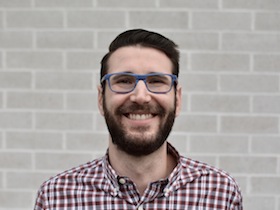
photo - Sam Heller
Sam Heller

“Sitting and debating the nitty-gritty political issues of the day really helped me understand that being connected to the community is more than just having a superficial understanding,” he says. “You gotta get your hands dirty and challenge yourself with ideas that may make you uncomfortable.… I left for Israel right after I finished my last summer working at camp.”

He served in the Israel Defence Forces’ Nahal Infantry Brigade, Battalion 50, from 2010 to 2012, and received the Exemplary Soldier Award at the end of advanced training. When his service was complete, he worked for a time in the financial sector in Israel, but realized his calling was elsewhere. He returned to UBC to complete his degree, with the intention of rededicating himself to Jewish community service. His degree in hand, Heller didn’t leave campus. He became a staffer at Hillel, now in the role of managing director, overseeing programming across British Columbia.

These have not been easy years for Jewish and Zionist students. Heller coordinated the responses to three anti-Israel boycott, divestment and sanctions campaigns – with a 100% success rate.

Heller’s Jewish and Zionist commitments did not emerge from nowhere. They were passed down from generation to generation.

“I grew up in a religious and Zionistic home,” he says. “My father, Ilan Heller, was born in Israel and grew up in Montreal when there were still signs up saying ‘No Jews, No Dogs Allowed.’ My mum, Gail Heller, was born and raised in Vancouver and was very connected to the community. She passed away when I was 13 and, since then, I always felt that I needed to be involved. I do a lot of what I do with her in mind, always.”

His maternal grandparents, Regina and David Feldman, survived the Holocaust and have been a strong influence on him.

His paternal grandfather, Benjamin Heller, was born in Romania and survived the war in Russia, though his parents, two sisters and a brother were killed by the Nazis; he made it to Israel in 1948, was an officer in the artillery corps of the IDF and was involved in the 1956 Suez campaign. Heller’s paternal grandmother, Haya Novik Heller, was born in Mandate Palestine and, along with her brothers, was involved in the founding of the state of Israel.

“My great-uncles, Yehuda Harari and Moshe Marienburg, were with the Jewish underground,” he says. “My savta [grandmother] was with another group in the underground, and my great-uncle Rafael Algor (where I get my middle name) was in the Haganah. Basically, they were all involved with the founding of the state and I grew up on their stories. I felt a need to go and explore my roots, which is how I ended up in Israel.”

Heller says he is motivated by a belief in Jewish peoplehood.

“I feel that if you care about your fellow human (and fellow Jew) then you inevitably will care about Israel and other Jewish communities around the world,” he says. “We need to reconnect to Jewish peoplehood. I want to make sure that my great-great-grandchildren will grow up learning and connecting to Jewish traditions and thought that have been around for thousands of years.”

A friend once said something that has stuck with Heller: “I don’t want to live a life that’s been lived a thousand times over.”

***
Talya Mallek
Age 33
Museum Programs Coordinator and Heritage Harbour Master,
Vancouver Maritime Museum

Talya Mallek is devoted to education, a commitment she is realizing through her work as a museum professional.

“Building community relationships and engaging students in meaningful and inspiring learning experiences is my passion,” she says. “I believe that teaching critical thinking skills will build more proactive citizens and a brighter future.”

photo - Talya Mallek
Talya Mallek (photo by Lianne Cohen)

Born and raised in Vancouver (with a couple years living in Israel as a kid), Mallek taught Hebrew and Judaic studies at Or Shalom and at Temple Sholom religious school. After double majoring in international relations and English literature at the University of British Columbia, she obtained a master’s of education degree in museum education there.

Before joining the Vancouver Maritime Museum, she worked at Lynn Canyon Ecology Centre, North Vancouver Museum and Archives and Burnaby Art Gallery. She has had two academic papers published on the topic of youth art apprenticeships.

Mallek researched and wrote a significant paper about Holocaust survivor Rudolf Vrba, interviewing him and contributing primary research to the story of the man who escaped Auschwitz and warned the world about the extent of the Final Solution. Vrba, who immigrated to Canada and became an associate professor of pharmacology at UBC, is credited with saving as many as 200,000 lives, though he believed that more could have been saved were his warnings shared more widely within the Hungarian Jewish community.

Mallek participated in the Canadian Arctic Expedition, traversing the Northwest Passage during the summer of 2015, then published a blog exhibit called Across the Top of the World: Words and Photos from the Arctic. She also researched, wrote and presented Extreme Explorers, an adult education program about the history of Arctic exploration with particular focus on the Franklin Expedition. The program continues to be presented by museum staff in Metro Vancouver and in the Arctic.

In addition, she helped create partnerships in the Jewish and Japanese communities and did research for Invisible Threads: Lifesaving Sugihara Visas and the Journey to Vancouver, a Vancouver Maritime Museum exhibit about Chiune Sugihara, a Japanese government official who, during the Second World War, helped thousands of European Jews flee Nazism via Lithuania and Japan.

An alumna of Vancouver Talmud Torah, Camp Miriam and volunteer positions at Jewish Community Centre of Greater Vancouver summer camp, she is now carrying on the tradition to the next generation.

“I have carried this on in my own young family, with Shabbat dinners and celebrating Jewish holidays,” she says. “Professionally, being part of an ethnic minority has allowed me to engage with other diverse communities and to understand and appreciate each of their unique circumstances, and adjust appropriately to their learning needs, goals, and interests.”

Mallek, who is currently on maternity leave from the museum, aims “to progress professionally and concurrently to raise a happy, healthy Jewish family.”

Meet the JI’s 18 Under 36 honourees – our second group (alphabetically)

Fall fun with some of the JI’s 18 Under 36 continued. (photo by Lianne Cohen)

***

Over the past month, each of the JI’s 18 Under 36 honourees has taken the time to do an email or phone interview with Pat Johnson, so we could get to know them a little better. Once you meet them, you’ll understand why these 18 young achievers and community-minded folk were chosen by the JI’s selection panel with the help of external adjudicator Kara Mintzberg, B.C. regional director of CJPAC (the Canadian Jewish Political Affairs Committee).

The second group of honourees at the JI Chai Celebration on Dec. 6 at the Rothstein Theatre were (alphabetically): Ariel Martz-Oberlander, Logan Presch, Maya Rae Schwartz-Dardick, Michael Sachs, Allie Saks, David Schein, Rotem Tal, Carmel Tanaka and Rabbi Levi Varnai. Mazal tov!

***
Ariel Martz-Oberlander
Age 24
Theatre Artist and Community Organizer

Ariel Martz-Oberlander describes herself as “a theatre artist, writer and teacher.” As a “Jewish settler on Coast Salish territories with diasporic and refugee ancestry,” her practice is rooted in a commitment to place-based accountability through decolonizing and solidarity work. She divides her time between theatre and community organizing, and specializes in creative protest tactics on land and water.

photo - Ariel Martz-Oberlander
Ariel Martz-Oberlander (photo by Lianne Cohen)

Those values have led her to co-found Kids for Climate Action while in high school, and to become vice-president of Fossil Free U of T, a leader of B.C. Sea Wolves, a Vancouver-based “kayaktivist” group, and an organizer of Paddle for the Peace (against the Site C hydroelectric project). She worked with aboriginal activists re-occupying and protecting their traditional land, Unist’ot’en Camp, in northern British Columbia, was a founding member of the Peace Camp at BC Hydro offices and has staged protests against the Kinder Morgan TransMountain pipeline.

This year, she received the (Vancouver) Mayor’s Arts Award for Community Engaged Arts in the emerging artist category. Her award citation stated, in part: “Martz-Oberlander is a facilitator with the True Voice Theatre Project, producing new shows by residents of the Downtown Eastside and vulnerably housed youth, in collaboration with the Gathering Place and Covenant House. Her most recent work, created with support from the LEAP program, won a research and development prize from the Arts Club. Martz-Oberlander is also the associate producer for Vines Festival, presenting accessible, free eco-art in Vancouver parks.”

She received a community grant to screen environmental documentaries at Gordon Neighbourhood House, and theatre fellowships involving writing and directing original works. She has directed, written and acted in plays, and was a program director for Vines.

She has guest-taught senior students at King David High School on issues of social justice and volunteered as a facilitator for Or Shalom’s Dialogue Project, as well as leading children’s services at Or Shalom.

“My work seeks to invite people to take global issues personally. As the descendant of diasporic refugees, it is my desire to fight for the right of the people of this land to maintain their ancestral homelands and inheritance,” she says. “Community, belonging, my inheritance all give me a sense of my right to be in this world.”

Her future goals? “To get a puppy.”

***
Logan Presch
Age 21
Business Student

photo - Logan Presch
Logan Presch

Logan Presch is a University of British Columbia student and a member of Alpha Epsilon Pi, the traditionally Jewish fraternity.

Presch, who is from Salmon Arm, B.C., is also a member of the Jewish Students Association, although he is not Jewish.

“Throughout my life, members of the Jewish community have always accepted me, been my friend, and helped shaped who I’ve become,” he says. “I care deeply about my friends, brothers and mentors, and want to reach out and help in my fullest capacity.”

Putting that caring into action, Presch has been a leading opponent of the anti-Israel boycott, divestment and sanction movement at UBC. He filed a petition that stated, in part, that the BDS referendum question “creates a toxic atmosphere for students supportive of the state of Israel, and is destructive of open and respectful debate on an important issue.” He went on to say that the campus referendum “drove a wedge between religious groups on campus who had previously enjoyed inter-faith outreach and collaboration.”

After university, Presch hopes to follow his passion to work in the music industry, as a manager, agent or touring manager, and possibly pursuing a career in singing as well.

***
Michael Sachs
Age 36
Wholesaler of Diamonds/President of The Bayit

The Bayit describes itself as a warm and vibrant synagogue in Richmond committed to making everyone feel included and, as the name suggests, at home.

The suburban shul has recently seen a dramatic uptick in membership due to the leadership team of Michael Sachs, the synagogue’s president, and spiritual leader Rabbi Levi Varnai.

photo - Michael Sachs
Michael Sachs (photo by Lianne Cohen)

Born in Stamford, Conn., Sachs moved to Vancouver in 1993. Three years ago, with his wife Shira and two children, he moved to Richmond. While his day job is as a wholesaler of diamonds with ERL Diamonds, since last year he has been busy not only with the routine business that comes with the job of a congregational president, but with tasks that go above and beyond.

“I can be caught on my drives to or from work, calling members of our community to see how their job search is going,” he says. “Dealing with other professionals in the community, seeing how the apartment hunt is going for a family, checking in with someone who may be under the weather, touching base with the Bayit team on the status of current projects.”

One of his nominators calls Sachs a “problem solver, creative thinker, a sort of advisor at times, and often a sounding board to both individuals and organizations.”

In addition to raising a family and taking care of business, Sachs is also founder of Marc’s Mensches, an initiative directed at youth to encourage and reward good deeds, and is the political liaison for the Kehila Society of Richmond.

“Judaism is the core of my life, from keeping kosher to attending synagogue, and even for guidance in difficult decisions,” he says.

And his efforts have been noticed. He was co-recipient of the Jewish Federation of Greater Vancouver’s 2017 Young Leadership Award.

“After moving to Richmond almost three years ago, and experiencing all that the Jewish community offers in Vancouver,” he says, “I felt a calling to jump in and serve to do whatever I can to help the Richmond Jewish community to continue to grow. My goal is simple: keep growing the Richmond Jewish community. Our community is growing every day at record rates, especially with the higher cost of living in Vancouver.”

Says Sachs of his fellow recipients of the JI’s 18 Under 36 Awards, “Every one of these 18 members of our community is an ambassador of the Jewish people. Every positive ambassador from our community creates a ripple effect across the world.”

***
Allie Saks
Age 29
Occupational Therapist

As an occupational therapist working in hospital settings with people who have Parkinson’s disease, Allie Saks saw a problem.

“The medical system tends to treat patients once they are already quite progressed in the disease,” she says. “In reading the research, I knew that exercise can delay the progression.”

She heard about a program called Rock Steady, which was founded in Indianapolis by Scott Newman, who was diagnosed with Parkinson’s at age 39. Newman discovered that non-contact boxing training lessened his symptoms.

photo - Allie Saks
Allie Saks (photo by Lianne Cohen)

Rock Steady boxers train to improve overall fitness and strength, as well as speed, balance, agility, reaction time, hand-eye coordination, mental focus, and range of motion. The ultimate goal is to delay the progression of the disease and improve overall quality of life. The movement has now expanded to almost 500 affiliates worldwide, helping people with Parkinson’s “fight back.” One of those affiliates is Rock Steady Boxing Vancouver, which Saks founded in May 2016.

“I wanted to provide that to people living with Parkinson’s in our community,” says Saks, who also practises as an occupational therapist in Fraser Health Concussion Clinic. In this role, she provides intervention and follow-up services to individuals who have experienced a concussion or mild to traumatic brain injury, in order to manage symptoms and facilitate speedy recovery.

“In addition to the physical benefits, Rock Steady Boxing also provides a means for people to build social connections and community,” she says. “This is especially important for the Parkinson’s population, that can often become quite reclusive.”

Helping people with Parkinson’s live better lives accounts for Saks’ motto that, when life gives you lemons you make lemonade.

“I was always taught being diagnosed with Parkinson’s can be the ultimate ‘lemon.’ I hope I can make a meaningful contribution to my boxers, to delay the progression of the disease with Rock Steady Boxing, and make those ‘lemons’ a little sweeter,” she says.

Her Jewish heritage and commitment to tikkun olam also play a role in making Rock Steady accessible to all.

“Soon after starting our program, people with Parkinson’s started to call saying they could not afford the cost of the program,” she says. “I felt I could not turn people away because of this, and that everyone should have equal opportunity to participate, despite financial barriers. I decided to create a scholarship program, where people pay what they can, and the remainder is covered by funds raised during Rock Steady fundraisers. We have held three successful Rock Steady fundraisers to date, which have helped cover anywhere from 75% to 100% of the cost of our classes for a number of our boxers.”

Saks’ future plans are to expand Rock Steady to reach as many individuals living with Parkinson’s disease in Vancouver as possible.

***
David Schein
Age 28
Director, Food Stash Foundation

When David Schein saw the documentary Just Eat It: A Food Waste Story, it had a profound impact on him.

The film follows a Vancouver couple, the filmmakers Grant Baldwin and Jenny Rustemeyer, as they survive for six months only on discarded food in order to draw attention to massive food waste in North America.

Seeing people living with hunger while tons of food went to waste, motivated Schein to found Food Stash Foundation. The group has a straightforward, twofold mission: “to rescue food from producers and suppliers that would have been destined for the landfill, and to deliver edible food items to food-insecure households and individuals in Vancouver.”

photo - David Schein
David Schein (photo by Lianne Cohen)

Food Stash picks up edible food from bakeries, restaurants and grocery stores, things like imperfect produce, day-old bread and grain products, items that aren’t moving quickly off the shelves and food that has reached its best-before date but remains fine. The food is subsequently delivered to households and individuals who need it, and to charities that feed people. Suppliers include Whole Foods, the August Market, COBS Bread, Rosemary Rocksalt, IGA, Cupcakes, Tractor, Windset Farms, Virtuous Pie, Nesters, Terra Breads, Elysian Coffee, and many other shops, restaurants, cafés and bakeries.

Among the agencies Food Stash supports are the Island Refugee Society of British Columbia, Mount Pleasant Neighbourhood House, the Kettle Society, MPA Society, Steeves Manor, Watari, Masjid Al-Salaam and Education Centre, Vancouver Aboriginal Friendship Centre Society, Directions Youth Services, AMS UBC Food Bank, Atira Women’s Resource Centre, and South Granville Seniors Centre, among others.

“I think change happens by starting small in one’s community and setting an example that other communities can follow,” Schein says. “I don’t want to wait for government policy to change or be the driver in creating more sustainable communities, but instead think that we can help and contribute to making our communities better in whatever ways are most important to us.”

Last year, Food Stash was responsible for rescuing and redistributing 167,110 pounds of edible food – and the amounts are rising daily. The foundation has only one paid employee, a part-timer who is a refugee from the Philippines. A volunteer team of 16 does the rescuing and delivery. Schein has recruited students to support Food Stash, including some from King David High School, where he previously taught French and Spanish.

A new pilot program is underway, in partnership with Jewish Family Services. The Grocery Box Program will deliver fresh food to those most in need. The pilot will initially provide 10 Richmond families with four boxes per month of healthy, fresh, quality food. These include produce, bread, dairy and juice, items not frequently available at the food bank because of a lack of ability to store perishable foods.

Of Schein, one of his nominators stated: “His humility is a measure of the loving kindness of his food justice mission and of his acknowledgement that he’s at the beginning of a journey to learn more about how to solve a complex and systemic problem and how to build community partnerships.”

***
Maya Rae Schwartz-Dardick
Age 15
Student/Musician

Maya Rae Schwartz-Dardick recorded her debut album this year and has already been recognized by CBC Music as one of Canada’s Top 35 Jazz Musicians Under the age of 35.

Under the performing name Maya Rae, she was just 13 when she performed at the Vancouver International Jazz Festival. While her voice has wowed audiences, it is also her philanthropic spirit that is gaining attention. She routinely performs at fundraisers for organizations and causes, raising $20,000 to date. Of this, $6,000 was raised to help resettle two refugee families in British Columbia. Other causes for which she has shared her talents include support of homeless youth, anti-bullying campaigns and a fundraiser for Nepal earthquake victims. The CD release party for her first album was a fundraiser for Covenant House, which helps youth 16 to 24 who have fled physical, emotional and/or sexual abuse or are street-involved.

photo - Maya Rae Schwartz-Dardick
Maya Rae Schwartz-Dardick

“I like to use music to make the world a better place,” she says. “I like the way my music touches people.”

A member of Temple Sholom’s Youth Board, Schwartz-Dardick enjoys singing at synagogue and reading Torah during the High Holidays. She plays regularly at Louis Brier Home and Hospital to bring music to seniors in the community.

Now working on her second album, she plans to tour in 2018, and “continue to use my music to help raise awareness around important community issues.”

“The world of jazz has been blessed with child prodigies for as long as the genre has existed,” CBC Music writer Scott Morin wrote of Schwartz-Dardick. “Maya Rae is faithfully continuing the tradition of young, prodigious voices taking their incredible talents to the jazz art form, and at only 15 years old she has an incredibly bright future ahead.… Her debut album, Sapphire Birds, produced by Cory Weeds, one of the hardest-working cats in the business, was released earlier this year on the Cellar Live label, and shows a supremely gifted artist who is able to phrase like Sarah Vaughan but write a lyric like Joni Mitchell. Watch out for this talented singer and composer.”

“If my music can make a difference towards helping people and making the world a better place, I can’t think of anything else that I’d rather be doing,” Schwartz-Dardick told the Independent last year.

***
Rotem Tal
Age 34
Restaurant and Food Truck Owner/Entrepreneur

Rotem Tal was born in Haifa, Israel, and has been in Vancouver since 2008. But the décor in the Main Street restaurant Chickpea, which he cofounded with fellow sabra Itamar Shani, shouts “Israel!”

The entrance sports a Dizengoff Street sign, winking at the Tel Aviv hotspot, and a mural features David Ben-Gurion, Moshe Dayan, Theodor Herzl and Golda Meir crossing Abbey Road.

photo - Rotem Tal
Rotem Tal

After traveling the world following his military service, Tal settled in Vancouver for its laid-back vibe, yoga classes and mountains. He studied at Simon Fraser University, where he was active in Hillel and, after graduation, took a job as Hillel’s outreach and special events director. That involved a lot of cooking and hospitality. He was also a founding resident of Vancouver’s Moishe House, a hub for young Jewish adults.

Tal is committed to environmental sustainability. At Hillel, he replaced all plastic utensils with reusable ones and instituted a composting program.

He also made a very personal commitment to the health of children in the developing world. He raised $3,500 in a fundraising effort for Save a Child’s Heart by cutting off his signature dreadlocks. Save a Child’s Heart is an Israeli charity that provides life-saving heart surgeries to kids in Africa, Asia and Eastern Europe.

Tal left Hillel to follow his dream of becoming a professional full-time chef and restaurateur. With his friend Shani, Tal started the Chickpea food truck, an Israeli vegetarian option that gained quick fame and a strong following. Earlier this year, they opened the 2,400-square-foot storefront restaurant on Main Street and took the vegetarianism a step further, eliminating eggs and dairy to make the place vegan. Even the shakshuka replaces eggs with a spicy vegetarian sausage.

While running a restaurant has been a long-term goal, now that he has realized it, there’s another vision on the horizon.

“Myself and Itamar – aka Chickpea – are going to open a few more restaurants and raise money for our ultimate goal: opening up a farm/retreat-wellness centre/space for music festivals and arts,” he says. “We are working towards finding a piece of land around 200 acres and designating it to being a community space. We will grow our own food (within the limitations of the seasons), have our Chickpea community live there, and hold space for healing and rejuvenating others. Think permaculture, Burning Man, yoga centre = Chickpea.”

Tal’s connection with his Judaism emerged largely after he left Israel. “I was traveling for many years by myself, or would meet friends in different countries like Australia or the States,” he says. “I noticed that, although Judaism never played a major role in my upbringing (since I was raised in Israel and Jewishness is just all encompassing), wherever I landed, no matter where I came from, the Jewish community always welcomed me with open arms. I was always able to find a place to stay, work, and friends.

“Although I truly believe that connection and helping others is a human attribute,” he continues, “I think that it is strongly ingrained in Jewish culture … probably because we were persecuted for so many years and we had to stick together. I myself try to bring this vibe to everyone, not only the Jewish community. I believe that the Jewish community is a special one within the human community, and I strive to make connections with everyone.”

***
Carmel Tanaka
Age 30
Community Relations Manager,
Centre for Israel and Jewish Affairs, Pacific Region

Carmel Tanaka credits her unique family history with helping form her worldview and ability to meet people on their own terms.

“Turns out, I’m pretty good at connecting people and building bridges,” she says. “Might have something to do with my eclectic professional background and varied personal interests and experiences, which helps me relate to anyone.”

She found this out, she says, while serving as the director of Hillel Victoria, where she enhanced the connections between the Jewish students organization and other individuals and groups on campus. That bridge-building was on full display during Hillel’s Holocaust Awareness Week at UVic last year.

photo - Carmel Tanaka
Carmel Tanaka (photo by Lianne Cohen)

Tanaka created an imaginative and moving commemoration. As is traditional, six candles were lit in memory of the six million Jewish lives lost in the Shoah. A seventh candle was lit to symbolize hope. To light the candles, she brought together the diversity of the campus community, including representatives of First Nations, African, German and Slavic communities. UVic’s Multifaith Services participated, as did the Jewish Federation of Victoria and Vancouver Island and advocates from the Sexualized Violence Task Force. UVic Holocaust educators and representatives of the administration lit candles, as did children of Holocaust survivors. Student leaders, including some who had returned from the university’s I-witness Field School, which takes students to Central Europe to explore how the Holocaust is memorialized, joined the ceremony.

In another symbolic act, recollecting Kristallnacht, participants took shards of a broken window and pieced them back together, creating a “resilience window” that has been used at subsequent community commemorations.

During the ceremony, Tanaka spoke about her family’s history. She is a granddaughter, on her mother’s side, of survivors of the Holocaust. On her father’s side, her Japanese-Canadian grandparents were interned during the Second World War, losing everything, including a prosperous fishing and cannery business, which was confiscated by the federal government. “It takes a community to overcome trauma and rebuild a peaceful future,” Tanaka said at the commemoration. “It also takes a community to prevent trauma from happening in the first place.”

During her time in Victoria, Tanaka also assisted the Jewish Federation of Victoria and Vancouver Island’s Yom Hazikron and Yom Ha’atzmaut events. To help raise funds for a Syrian refugee family sponsored by Victoria’s Congregation Emanu-El, she performed as the Fiddler, as well as volunteering as the music director, in a staging of Fiddler on the Roof.

Tanaka recently took the position of community relations manager at the Centre for Israel and Jewish Affairs, Pacific Region, another role that requires making connections. “In many ways, my new role is a natural progression from what I did at a local level, just now at the provincial level,” she says.

Recently, she says, she has been putting her health first, “becoming part of the Megaformer (Lagree Method) fitness family, shedding 30 pounds and counting, strengthening my core and breaking under 200 pounds on my 30th birthday! It’s going to make the upcoming ski season so much more amazing.”

Her family history also reflects her food choices. “I identify as ‘Jewpanese’ and it permeates everything that I do, especially in my cooking,” she says. “Soy sauce and chicken schmaltz are my two secret ingredients in just about every dish.”

***
Rabbi Levi Varnai
Age 29
Rabbi, The Bayit

The Richmond synagogue known as the Bayit has its roots back a few decades in the Eitz Chaim congregation, an early institution in the emerging Jewish community of the southern suburb.

As young families have been priced out of the Vancouver real estate market, a large number of them have moved across the bridge to find more affordable housing. In response, a plethora of Richmond-based organizations have popped up to meet the demands of the growing Jewish population.

photo - Rabbi Levi Varnai
Rabbi Levi Varnai

The Bayit, though, had fallen on difficult times for a few years. After a series of rabbis, the congregation went a spell without a spiritual leader until July 2016. That’s when a new congregation president and a new rabbi took the helm, ushering in a younger leadership team and sparking what has been, so far, a dramatic renaissance in the life of the shul.

Rabbi Levi Varnai was assistant rabbi at the Ohel Ya’akov Community Kollel on West Broadway, providing spiritual care and connections especially for young families. Then, Michael Sachs, who had recently moved from Vancouver to Richmond, became president of the Bayit and, at the first board meeting, the congregation hired Varnai as rabbi. In little more than a year, the synagogue has grown exponentially.

“Richmond is becoming a pretty big place,” says Varnai. “There are many, many young families here and, of course, you’ve got Richmond Jewish Day School. We do a monthly Friday night dinner, which is very, very popular for young families. We get an average of 100 people for such an event. On the holidays, we’ve got 250, 300, sometimes even 350.”

Varnai laughs that, as a born Vancouverite, moving to Richmond meant breaking down a stigma. But it wasn’t the biggest move in his life.

When he was 12, his family made aliyah. He studied in yeshivah in Israel, then went to New York for rabbinical studies. He married an Israeli woman and served as chaplain to the elite, top-secret intelligence unit 8200.

“Of course, I had nothing to do with the unit itself,” Varnai clarifies. “I just ran the synagogue and supervised the kosher food in the kitchen.” Nevertheless, he adds, “It was quite an experience.”

Because of economics, Varnai says, the Richmond Jewish community is diverse and comparatively youthful. “You talk about the young South African family, the young Russian family, the young Israeli family or a family from Montreal,” he says. “You’re moving to B.C. because it’s a beautiful province and you have the option of either living in Vancouver or paying 30% or sometimes 40% less in Richmond. It’s like a no-brainer.”

Reaching young families is key to the future, he says. “If our parents are involved but we can’t get our kids involved, where is the future of Judaism?” Religious services are only part of the Bayit’s appeal, he adds.

“In English, we say synagogue, in Yiddish we say shul. The word in Hebrew is beit haknesset, meeting place,” he says. “A gathering place. When Jews gather, obviously one of the things they do is have services. But the main point is the gathering place. That’s where the emphasis is. A place where the Jewish community is together, to laugh, to have fun, to gather together, to have social events and whatever it may be that provides community and takes care of one another.

“I see a huge potential here,” he says.

Communities dialogue

Teens from Temple Sholom and Al-Jamia Masjid at a dialogue session. (photo from Temple Sholom)

“We enjoy great conversation and great food and sharing some bad jokes,” Tariq Tayyib said in a recent phone interview. He was talking about the Jewish-Muslim dialogues that have been quietly underway between Temple Sholom and Al-Jamia Masjid. (Masjid is the proper Arabic name for what is often called a mosque, according to Tayyib.)

The dialogues began when Tayyib, a community volunteer involved in outreach efforts for Al-Jamia Masjid, and Haroon Khan, formerly its president and now trustee, came as observers to a Friday night service at Temple Sholom after arranging it with Rabbi Dan Moskovitz.

Tayyib and Khan have been hard at work over the past several months on an initiative called

Islam Unraveled, which seeks to explain Islam to the average Canadian and dispel stereotypes and misunderstandings.

“I wake up in the morning and turn on CNN and, more often than not, I find some crackpot doing something crazy in the name of Islam,” said Tayyib. “Muslims and non-Muslims both feel this way. Muslims are like, ‘Oh no, not another one,’ and non-Muslims are like, ‘What is it with this faith?’”

Tayyib and Khan spoke to Moskovitz about holding a dialogue, and Moskovitz suggested one for high school-age teens involved in the synagogue’s program and teens in the Al-Jamia community. In the following weeks, the teens met, and a series of other meetings occurred as well. The imam of Al-Jamia spoke at Temple Sholom to a group of seniors, and the Muslim group was invited to a Shabbat service and lunch afterward at Temple Sholom, catered by local Israeli vegan restaurant Chickpea. Following that, a delegation from Temple Sholom visited Al Jamia Masjid, bringing to a close a month of discourse events between the two communities.

Al-Jamia Masjid was founded in 1963. Khan’s father was instrumental in its founding. He said the masjid has been at the forefront of interfaith and multicultural work for generations.

“The masjid had a longstanding relationship with Rabbi [Philip] Bregman, and now with Rabbi Moskovitz,” said Khan.

In another dialogue event, Imam Aasim Rashid from the Al-Ihsan Islamic Centre in Surrey came to talk to the seniors. The meeting went well, even though the seniors asked some hard questions, according to Moskovitz – questions dealing with antisemitism in the Arab world and questions about the Israeli-Palestinian conflict, for example.

After expressing interest, Moskovitz was invited along with a group of other Temple Sholom members to the Al-Jamia, where they had a “wonderful visit.”

“Some of the members said that they had previously wanted to visit a mosque, but were unsure whether they would be welcome. It was meaningful to them to see how warmly they were met and embraced by the Al-Jamia community,” said the rabbi.

The visitors from Al-Jamia also enjoyed their Shabbat visit to Temple Sholom. “We saw many passages in the prayers which were reminiscent of the Quran,” they said. “We were very heartened by the welcome we received.”

The interaction between the teens, around 20 in total, has been particularly meaningful for both communities. The teens asked each other about their perceptions of the other community, and about similarities and differences in practice, comparing, for instance, kosher and halal.

“The questions tended to be more social and cultural than political or theological,” said Moskovitz. After the initial discussion, the teens went downstairs to hang out informally, and the adults report hearing sounds of lively and friendly conversation.

“We really saw the commonality that we share as being inspired by the Abrahamic principles and the teachings of the prophets,” said Khan. “All of the prophets of God carry a similar message. We have more in common than not. We should all make common cause to build bridges of understanding.”

Matthew Gindin is a freelance journalist, writer and lecturer. He writes regularly for the Forward and All That Is Interesting, and has been published in Religion Dispatches, Situate Magazine, Tikkun and elsewhere. He can be found on Medium and Twitter.

דוגווקר נמצאה בריאה

אנט פויטרס, דוגווקר שנעלמה בטבע ,נמצאה בריאה ושלמה עם הכלבים לאחר שלושה ימים. (צילום: Marcel Poitras via CBC)

אפשר להגדיר זאת כמעט כנס: דוגווקר שנעלמה עם שלושה כלבים בהר איגל הנחשב לאזור טבע פראי ליד קוקויטאלם, כאשר גשם לא מפסיק לרדת ומלווה במשבי רוח חזקה, נמצאה בריאה ושלמה לאחר שלושה ימים. אנט פויטרס (בת 56) שנחבלה נמצאה בהשגחת בית החולים ושוחררה לביתה בימים האחרונים. בעלה מרסל פויטרס שכמעט ואבדה תקוותו, פשוט עמד חסר אונים לנוכח הידיעה כי אשתו נמצאה והכל בסדר. בהתרגשות רבה כשהוא מתקשה לנשום הציע פוטירס לכל בני הזוג לחבק את בן הזוג השני שלהם חזק חזק.

פויטרס הנחשבת לדוגווקר מקצועית (היא אף מטפסת הרים בעלת ניסיון רב), הכלבים אוהבים אותה ובעליהם בוטחים בה לחלוטין. היא מכירה היטב את ההר ואזור הטבע הפראי, את השבילים והמעברים הרבים ופעמים רבות כבר צעדה שם עם כלבים. כאמור באחד הימים הגשומים ביותר השנה, פויטרס יצאה להליכה ארוכה עם שלושה כלבים (אחד מהם הוא שלה). לאחר שלא שבה הבייתה ושעות עברו מאז שנראתה לאחרונה, בעלה נאלץ להזעיק את המשטרה הפדראלית. שוטרי האר.סי.אם.פי גייסו מומחים בחיפושים מכל בריטיש קולומביה, וקראו לעזרה לצוות החילוץ והצלה של קוקיטלאם שמאתר מטיילים שאבדו בטבע. בכוחות משותפים הם יצאו לחפש אחר הדוגווקר. כמאה איש עסקו בחיפוש המאסיבי בעזרת כלבים מיוחדים, שני רכבי שטח ושני מסוקים שנעו מעליהם ללא הרף (עם חיישני אינפרה אדומים שיוכלו לקלוט את חום גופה של פויטרס). רק ביום השלישי לחיפושים שכמעט כבר כולם איבדו תקווה במיוחד לאור העובדה כי מזג אוויר קשה שרר באזור, נמצאה פויטרס בשעות הבוקר ביחד עם שלושת הכלבים. הליקופטר אחד פינה אותה מהאזור למקום מבטחים, בזמן שעיניה כוסו כיוון שהיא סובלת מפחד גבהים. שם היא הולבשה בבגדים חמים והועברה לטיפול והשגחה בבית החולים. שני הליקופטורים נוספים פינו את שלושת הכלבים שנמצאו בריאים ושלמים. הכלבים הועברו לבעליהם והאיחוד היה מרגש מאוד.

שוטרי האר.סי.אם.פי מסרו כי הדוגווקר נמצאה באזור סבוך ליד קו הימים שהוא מחוץ לאזור המיועד למטיילים. מתברר כי היא החליקה על בול עץ, בגלל הרטיבות לאור גשם החזק. צלעותיה כאבו מאוד והיא ולא יכלה ללכת עוד. בזמן החלקה הטלפון שלה הלך לאיבוד. כל שנותר לה היה למצוא מחסה עם הכלבים, כאשר היא חיממה אותם והם חיממו אותה. ביום השלישי להיעדרותה כאשר מזג האוור השתפר במקצת, היא הבחינה באחד המסוקים שחג מעליה אך הטייסים שבו לא רואה אותה. היה ברור לה כי היא לא תוכל להחזיק מעמד לילה נוסף בחוץ, בקור וברטיבות הרבה. למזלה צוות המחפשים שנע באזור השמיע קריאות וציפצף במשרוקיות מיוחדות. היא ענתה והכלבים נבחו וכך כולם נמצאו.

מרסל פוטירס לא שכח להודות ממושכות לכוחות ההצלה והמחפשים הרבים שמצאו את אשתו ושלושת הכלבים, באזור קשה לתנועה ומסוכן להליכה. הוא הזכיר לכולם לקחת ערכות הצלה ושמיכות כי אף פעם אי אפשר לדעת מה יכול לקרות בשטח.

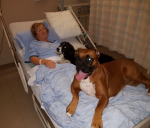
לאחר שפוטריס התאוששה במקצת, בעלי שני הכלבים ששהו עימה בשלושת הימים הקשים בחייה, הגיעו לבקרה בבית החולים. מיד שהכלבים נכנסו לחדרה הם קפצו למיטה שלה ולא הפסיקו ללקק את פניה באהבה רבה. אחד הכלבים אף נשכב לידה והניח את ראשו על גופה שהיה מכוסה בשמיכה של בית החולים. הדוגווקר שכאמור השתחררה כבר מבית החולים, סביר להניח שתחזור בקרוב לעבודה שהיא אוהבת ותמשיך לטייל עם הכלבים.

Modern ancient Jewish tales

“Golem,” by Dina Goldstein. Pigment print on paper. 32 x 40 3/8 inch. (© Dina Goldstein)

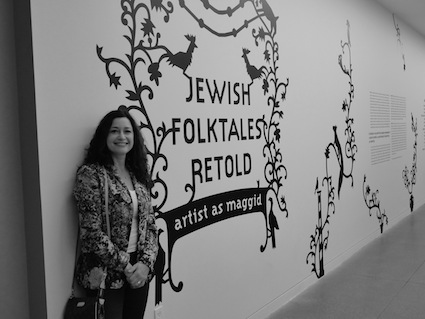
Artist Dina Goldstein is a proven storyteller, so it’s not surprising that she was asked to take part in the exhibit Jewish Folktales Retold: Artist as Maggid, which opened at the Contemporary Jewish Museum in San Francisco on Sept. 28. Metro Vancouverites will also have the chance to see her photographic interpretations of 11 “classic Jewish tales” – Snapshots from the Garden of Eden – at the Zack Gallery this month.

Jewish Folktales Retold was inspired by the book Leaves from the Garden of Eden: One Hundred Classic Jewish Tales by Howard Schwartz (Oxford University Press, 2008). As CJM executive director Lori Starr explains on the exhibit’s website: “Schwartz elucidates four varieties of these tales: fairy tales, folktales, supernatural tales and mystic tales. Fairy tales, he writes, are ‘fantasies of enchantment.’… Folktales ‘portray the lives of the folk as they imagined them, with … magical and divine intervention.’… Supernatural tales portray fears about the powers of evil entities and, finally, mystical tales are teaching stories of the great rabbis.”

“I was asked to participate over a year and a half ago,” Goldstein told the Independent. “At first, I discussed this with the curator, Pierre-François Galpin. At that time, I was planning on starting another series and I told Pierre-François that I just couldn’t take this on, as I saw it as quite an ambitious project.”

But, Goldstein was curious enough that she asked Galpin – who worked with CJM chief curator Renny Pritikin on the exhibit – to send her Leaves from the Garden of Eden so she could take a look.

“After receiving it,” she said, “I found that I really enjoyed reading these ancient stories. I told him that I could possibly photograph a few pieces as a contributing artist.

“I became intrigued by a few specific characters in the book and proceeded to take on more than I had anticipated at the beginning. I continued to photograph 11 pieces for the exhibit. I also decided to photograph the series in black-and-white large-scale tableau.”

Goldstein had free creative rein. “The museum did not give me any direction at all,” she said. “In fact, I came back to them with the chosen characters and ideas that I had for the retelling of these folktales. They did not see the work until it was completed.”

photo - Dina Goldstein was one of the artists whose work was commissioned by the Contemporary Jewish Museum in San Francisco for the exhibit Jewish Folktales Retold: Artist as Maggid
Dina Goldstein was one of the artists whose work was commissioned by the Contemporary Jewish Museum in San Francisco for the exhibit Jewish Folktales Retold: Artist as Maggid. (photo from Dina Goldstein)

The characters Goldstein has reinvented for contemporary audiences include Lilith (from the story “The Queen of Sheba”), Elijah (“The Cottage of Candles”), Golem (“The Golem”), King Solomon (“The King’s Dream”), the Princess in the Tower (in the story of the same name), the positive spirit Ibbur (“The Soul of the Ari”), the malicious spirit Dybbuk (“The Dybbuk in the Well”), the Tree of Life (“An Apple from the Tree of Life”) and Ashmodai (“The Bride of Demons”). She has also created an image inspired by the story “The Hair in the Milk.”

“I selected characters that were relevant and reappear throughout many of the tales in the collection,” Goldstein told the Independent. “I chose characters from each of the four types of tales: folktales, fairy tales, supernatural and mythical tales.”

She created two images for Ashmodai.

“I very much enjoyed this narrative, ‘The Bride of Demons,’ with relevant themes of desire and retribution,” said Goldstein. “The story is quite long, so I wanted to create a diptych to illustrate and interpret it in my own way.”

The Snapshots catalogue explains, “A devil king, Ashmodai is mentioned in talmudic legends and Renaissance Christianity. He is regarded as the demon of lust and is responsible for twisting people’s sexual desires.”

In one of the Ashmodai images, a woman in a bridal dress looks happily at herself in a half-length mirror; there are other mirrors in the room, which show her from different angles. In the second image, we see what looks like a garden, with the woman, buried, screaming, only her head and bridal veil above ground. The quote accompanying this disturbing scene is, “… And he longed to look at her … but he remembered the words of the rabbi and did not turn his gaze away from the king of demons. If he had, he would have seen his bride buried in the earth up to her neck, for she was almost lost to the Devil.”

All of Goldstein’s tableaux are striking, fascinating to explore and contemplate.

“I very much enjoyed uncovering these richly textured ancient tales and short stories, which include magnificent characters: kings and queens, princes and princesses, witches, mystics and malevolent wandering spirits,” she said. “Each of the characters face extraordinary challenges – placed in front of them by fate – that they must overcome. Every society is replete with myths and legends that transform and bend into parables that attempt to make order of life. It is this impact on culture, old and new, that led me to create a body of work that plays with satire, metaphor and irony.”

Goldstein’s photographic creations challenge viewers’ perceptions, asking them to reconsider the stories they’ve been told. Her collections include Fallen Princesses, which imagines how 10 of Disney’s princesses would face the challenges of real women; In the Dollhouse, which focuses on Ken and Barbie’s not so happily ever after; Gods of Suburbia, which brings various deities down to earth; and Modern Girl, which looks at consumerism in Western culture using the imagery of Chinese pinup girls from the 1930s.

The creative process for Snapshots from the Garden of Eden was similar to that of these previous works.

“I do my usual research online and then I hit the library for historical references,” said Goldstein. “I like to get a sense of how these characters have been depicted in art throughout history, what has been written about them from various sources. Many of these characters are actual historical figures. Others are supernatural and exist in various forms throughout the stories.”

It took her eight months to produce and photograph the series, she said. “Much of my work is in preproduction, organizing the cast and crew, the locations, and collecting all of the props and costumes and details that are germane to the final result of the piece.”

She concluded, “I am very fortunate to live in the city which has so much talent to utilize. All of the cast and crew are from Vancouver. I reached out on Facebook and social media to find all sorts of strange items – people pulled together to help out. I am thankful to Gordon Diamond, who has been a great supporter of my work throughout the years. Gordon will donate the series for viewing at the Jewish Community Centre in December.”

And, because of that, local community members will have the chance to see Goldstein’s work at the Zack. Snapshots from the Garden of Eden opens Dec. 14, 7 p.m., and runs until Jan. 20.

Reinventing old-time music

Woody Forster and Devora Laye of the Burying Ground. (photo by Mary Matheson)

Contrary to what you might expect, given the band’s name, there is much joy in the Burying Ground. Woody Forster and Devora Laye obviously love what they do, and it comes through in their music, their performances, their promotional photos and even in their responses to an email interview. So, from where does the name come?

“The name came from the Blind Lemon Jefferson song ‘One Kind Favor,’ where he uses the line to describe his resting place,” explained Forster. “I also see it as maybe a metaphor for us finding this music for ourselves that has essentially been buried and forgotten in popular music today, and we are trying to draw from that place and explore those musical styles again.”

The Burying Ground plays 1920s and ’30s blues, ragtime, country and jazz, as well as original works in those genres. Their upbeat songs evoke images of musicians jamming away on the wooden porch of a farmhouse, people dancing and enjoying some moonshine. Their hurtin’ songs, with Forster’s gravelly voice, can make you feel like pouring yourself a stiff drink. The pair share the vocals, with Forster on guitar and Laye on myriad instruments, including the washboard, cymbals, tin can and cowbell – the sounds she produces with the saw will make you shiver. Various other musicians join the duo for performances and recordings.

“I can’t exactly find a reason why I love the music from that era,” said Forster. “I just seemed to get drawn deeper into it as I explored the history and the musicians that created it all. There is certainly a raw intensity in the sounds, as well as a very genuine feeling that I maybe don’t get out of other types of popular music through the last century.”

In November, the Burying Ground released a vinyl version of their eponymous album, which came out in June this year. It followed by a mere six months the group’s January 2017 release, Country Blues & Rags, which is “a collection of the band’s renditions of some of their most beloved songs.” The Burying Ground’s first album was Big City Blues, in 2015.

“The new EP is 11 original songs,” Laye told the Independent. “Our process is different from song to song. The last song on the album, ‘Longing for Home,’ is a song that I wrote for guitar and voice. The melody often comes to me while I’m walking around. For this particular song, I was walking around Vancouver when I smelled woodstove smoke, which made me miss living on Hornby Island, where I spent a couple years in my mid-20s. I sang it for Woody and he played along.

“‘Mean Spirit Blues’ was a trickier process for it’s a more complex song. I hummed the melody to Woody and he put the music to it. He often suggests a bridge or middle part of the song and we just play around with the ideas. We bounce ideas off of each other and give each other feedback. It’s fun, challenging and a nonstop learning process.”

“We are always bouncing ideas off of each other creatively to see whether we are liking what the other is bringing to the table, and tweaking the songs so we are both happy with the final outcome,” agreed Forster.

“We are learning a lot about writing music together and pushing ourselves to constantly grow and improve – and, at the same time, having a lot of fun doing it,” he added.

The two are definitely in sync. They have known each other a long time.

“Devora and I met around 15 years ago now, although we didn’t start playing music with each other until much later,” said Forster. “The Dire Wolves [band] started around 2008 and it was originally formed as a three-piece with me on mandolin, Blake Bamford on guitar and Joshua Doherty on harmonica, with Devora joining in on washboard a short time after. When the band split up around 2013, Devora and I kind of threw around the idea of starting a new project – we were both huge fans of early Americana music and both got more serious about it. And, from there, it has grown into the project we have created, and continues to grow.”

Both Laye and Forster come out of Vancouver’s punk scene, having been in different groups over the years. “As time went on, I gradually got more into old-time, and started studying it seriously in the last five years,” said Forster. “One of our first performances was at a venue called the China Cloud and I can remember being super-nervous, my hands were shaking, and I forgot lyrics, but somehow got through it with out train-wrecking the show. It has taken me awhile to get used to singing and playing guitar in front of people in such a stripped-down form of acoustic music. Not to say I still don’t get nervous, but I can hide it a little better now.”

Laye’s musical path has been varied.

“At home,” she said, “I was always surrounded by music. My dad plays guitar and has always written songs. He used to sing and play for us at bedtime and, of course, many other times. Growing up, I was exposed to different types of music, from classical to folk to Jewish music (Shlomo Carlebach was a big hit for me). My part of going to synagogue every week was the singing. When I was old enough to walk to the synagogue on my own, I would go for the evening/ma’ariv service on Saturdays to sing the zemirot with the enthusiastic congregation.

“I always loved to sing and play,” said Laye. “My eldest sister, Aviva, played the flute and I thought that was really cool and decided I wanted to learn how to play. I started taking lessons from Andrea Minden when I was 7 years old. Started on the recorder, of course, because my hands were too small for flute!

“Anyhow, I studied with Andrea until I was about 14. She was in a family band called the Minden Ensemble and they’d play all sorts of unusual instruments, such as vacuum hoses, bottles, spoons, pots and pans and the saw. Andrea showed me how to hold and bow the saw. When I was in my early 20s, I decided to pick it up and teach myself how to play along to songs, and have been having a lot of fun with it ever since.”

And how did she come to the washboard, which she also plays in the Myrtle Family Band?

“I’ve always loved to tap on nearby objects,” she said. “I’d tap on tables, chairs, find music and rhythm in glasses. I think my parents have learned to appreciate that side of me! Haha. I taught myself to play a drum kit when I moved out of my parents’ house, and played drums for some years before picking up the washboard. I had a partner who played old-time banjo and he suggested that I pick up the washboard so we could jam. I wasn’t sure it was a real instrument and thought it slightly inferior to a stringed instrument but, soon after, realized it added a lot to the music and can really be the backbone of a band. I ended up getting more and more into the old styles and into the playing and here I am today playing every day.”

Forster and Laye are based in Vancouver now, but this has not always been the case.

“I spent much of the past year on the Sunshine Coast and commuting to the city for gigs and to see family and friends,” said Laye. “The coast has been really great. I love to be surrounded by the trees, down the street from the ocean – bears, deer, coyotes and cougars through my backyard! Room to think in the quiet.

“The community on the coast has been so supportive of the Burying Ground,” she said. “I didn’t really have any expectations of what it would be like. I didn’t really know anyone when I moved over to Gibsons, and feel very grateful to have met such kind, supportive and inspiring people. Smaller communities are often more supportive, there is the time for that when the pace is slower. The city can be real tricky to break into. There are so many musicians, so much going on all the time.

“The coast is also limiting,” she added. “As professional musicians, there are only so many gigs you can play. Our band lives in the city.”

For more information about the Burying Ground, to hear their music and check out their upcoming shows – including the JI Chai Celebration on Dec. 6 – visit theburyingground.com.

Helping Save a Child’s Heart

Left to right, panelists Dr. Tommy Gerschman, Dr. Thuso David and Randi Weiss at the screening of A Heartbeat Away in Vancouver on Nov. 2. (photo by Cynthia Ramsay)

More than 4,400 children from 55 countries in the developing world have received life-saving heart surgeries because of the efforts of volunteers associated with Save a Child’s Heart Foundation. Thousands more have been saved by doctors trained by the organization’s volunteers.

The Israel-based organization is aiming to expand its reach in British Columbia. A screening of the film A Heartbeat Away in Vancouver on Nov. 2 shared the anxious, sometimes tragic and often uplifting stories faced by medical volunteers associated with the agency.

Marni Brinder Byk, executive director of Save a Child’s Heart Canada, introduced the film and moderated a panel discussion afterward. She explained that when Vancouverite Lana Pulver joined the national board of the organization, it presented an opportunity for more on-the-ground activities in the city.

Save a Child’s Heart (SACH) has another strong Vancouver connection. Vancouverite Randi Weiss recently moved back after spending several years in Israel, where she served as a full-time volunteer with SACH.

The foundation is committed to saving children’s lives by improving the quality and accessibility of cardiac care. Israeli medical experts, and some from other countries, provide free, life-saving surgeries to children from developing countries and also train surgeons and medical teams from those countries, helping them build their own skills.

Entirely as volunteers, SACH doctors travel to Africa, Asia, Eastern Europe and other parts of the Middle East to assess potential candidates. A few less urgent cases are treated on the spot, while more serious cases are transported to Israel, where the child and a parent can spend weeks or months during surgery and recovery. A new home, accommodating 61 patients, family members and medical staff, recently opened near the Wolfson Medical Centre in Holon, where the Save a Child’s Heart medical facilities are based.

The film depicted the heartbreaking choices doctors are forced to make during their trips abroad, as young patients whose cases are simply too advanced for an encouraging prognosis have to be rejected. But the film also follows the story of Julius, a kindergarten-age boy from Tanzania, as he travels to Israel and gets a fresh lease on life after a harrowingly complicated surgical procedure.

Weiss said that about half the kids SACH treats are from the Palestinian Authority or other places in the Middle East. About 40% are from African countries, including Ethiopia and Tanzania, she said, while others come from Romania, Moldova and wherever there is a need not being met.

Weiss was joined on the panel after the film’s screening by Dr. Thuso David, a pediatrician from Botswana who arrived in Vancouver in early August to continue his training at B.C. Children’s Hospital. He noted that, in many African countries, there are few medical specialists, so a complex medical issue like congenital or acquired heart disease is rarely treated.

Dr. Tommy Gerschman, another Vancouverite, was also on the panel. He volunteered as a medical intern for SACH in Israel a decade ago.

Save a Child’s Heart Canada was founded in Toronto in 1999 by the late A. Ephraim “Eph” Diamond. Brinder Byk said that SACH’s annual budget is about $6 million US, about one-sixth of which is provided by Save a Child’s Heart Canada. The Canadian contingent has also stepped up in a big way to help fund a new wing at the Wolfson Medical Centre designated especially for SACH’s use.

“We have a lot to be proud of as Canadians, that we will be helping that many more children and training that many more doctors,” said Brinder Byk. “The children of Israel are also going to benefit because, if they live in the catchment area of the Wolfson Medical Centre, they will be able to use their services as well.”

Help share aliyah story

An illustration from Yerus Goes to Jerusalem. (photo from Sid Tafler)

The Ethiopian aliyah to Israel inspired people around the world when it was first revealed in the 1980s. Today, there are 125,000 first-, second- and third-generation Israelis from Ethiopia.

The story of the courage and determination of the community to return to Eretz Yisrael after 2,000 years of isolation from the rest of the Jewish world is told in the beautiful children’s book Yerus Goes to Jerusalem. About a young girl’s experience making the difficult journey from her village in Ethiopia, the award-winning book, written in Hebrew and illustrated by Ethiopian artist Moran Yogev, is well known to thousands of Israeli students and their parents. A new crowdfunding campaign will translate it into English, to make it accessible to Jewish schoolchildren everywhere, so they can share in the triumph of the Ethiopian community in achieving their dream.

Everyone is invited to join this venture with a donation of any amount, large or small. Only $20 will reserve one of the first copies of Yerus Goes to Jerusalem published in English for your children, grandchildren or your synagogue or Hebrew school.

This campaign is led by Dror Yisrael, a service organization in Israel, and a committee of organizers, mostly in Israel and the United States, including Sid Tafler of Victoria, the only Canadian on the committee.

To donate to the crowdfunding campaign, which ends Dec. 1, and for more information, visit jewcer.org/project/yerusgoestoyerusalem or facebook.com/yerusgoes. For the options of how to donate after Dec. 1, email Gilad Perry at gilad@drorisrael.org.il.

Millers to receive Lamplighter

This year’s Lamplighter Award recipients are Emily, left, and Jessie Miller. (photo by Josh Bowie Photography)

The Centre for Judaism of the Lower Fraser Valley has selected Emily and Jessie Miller, Grade 10 twin sisters at Prince of Wales Secondary School, as the recipients of this year’s Lamplighter Award, which honours youth who have performed outstanding acts of community service.

In 2016, Emily and Jessie initiated a social action program called Live2Give in conjunction with Vancouver NCSY. Their goal was to do more volunteer work and good deeds in the community, and they organized events that included feeding the homeless in Vancouver’s Downtown Eastside and baking challah for the residents of Louis Brier Home and Hospital. Among their fundraising activities to support their work was a successful paper clip exchange at Richmond Centre.

“These events prompted many other Jewish teens to become involved with NCSY and the community as a whole, spreading goodness and kindness,” said Simie Schtroks, co-director of the Centre for Judaism. “It also helped many people work towards their Duke of Edinburgh Award by fulfilling the 13-hour community service requirement.”

Emily and Jessie are planning Live2Give events for 2018 and intend on making contributions to the food bank and donating toys to sick children. They feel honoured to be considered for this award and hope to continue to get more people involved in helping the community.

“Chanukah celebrates the victory of light over darkness and goodness over evil,” Schtroks said. “This is a most appropriate opportunity to motivate and inspire young people to make this world a brighter and better place, by filling the world with goodness and kindness – that light can dispel all sorts of darkness.”

Emily and Jessie will receive their awards on Sunday, Dec. 17, 6 p.m., at the Centre for Judaism’s annual public menorah lighting at Semiahmoo Shopping Centre’s food court, 1701-152 St. in South Surrey. Dignitaries, including the mayors and some councilors of White Rock and Surrey, as well as representatives from Langley and Delta, will be in attendance, as will members of the Legislative Assembly. For more information or to help sponsor this project, please email c4j@shaw.ca.

Judaica in Metro Vancouver

Among the items featured in Buchan’s Judaica section is a set of six hammered liquor cups on a pomegranate branch from Yair Emanuel, for any Shabbat or holiday table. (photo from facebook.com/BuchansKerrisdaleStationery)

If you’re looking for a new menorah or some cool Chanukah gifts over the next few weeks, you’ll want to target your search to three stores that have become the only hotspots for Judaica in the Lower Mainland. Sure, there are items here or there that you can find elsewhere, but not with much selection. And, you can shop online, but the problem with click-and-purchase is you don’t get to hold the weight of an object in your hand, to see the real symmetry of a piece from your screen, how it will fit into your home. Here’s where to go if you’re in the market for Jewish objets d’art.

Buchan’s Kerrisdale Stationery sits right next door to Garden City Bakery in Richmond, the Lower Mainland’s number one challah maker. The store has had a small selection of Judaica for several years but, when Inna Vasilyev took ownership a year ago, she decided to up the ante and significantly increase the variety. Vasilyev, who also owns the original Buchan’s Kerrisdale, on West 41st Avenue in Vancouver, aims to please everyone in her product choices. You’ll find 99 cent Chanukah candy, inexpensive wooden dreidels over which small kids can drizzle candle wax, fancy hand-painted dreidels and the plastic ones that disappear into the corners of a house each year. Buchan’s has Chanukah games, gelt, colouring books, tea towels, napkins with Jewish designs and menorot.

photo - Beth Tikvah’s gift store offers several different styles of menorot and a host of other Chanukah gifts, including shaped cookie cutters, games and books
Beth Tikvah’s gift store offers several different styles of menorot and a host of other Chanukah gifts, including shaped cookie cutters, games and books. (photo from btikvah.ca/support/beth-tikvah-gift-shop)

“We have designer pieces by well-known designers and a good selection of candles, too, from simple ones to deluxe ones that burn for ages and smell beautiful,” she said.

Vasilyev also stocks non-Chanukah-related Judaica like mezuzot and candlesticks. For shoppers averse to crossing the bridge into Vancouver (or into Richmond), this accommodating store owner will transfer product between the stores to make life more convenient. She’s in the throes of updating her website and hopes to eventually display all her products on it.

Also in Richmond is one of the Lower Mainland’s longest-lasting synagogue stores, the gift shop at Beth Tikvah. Vicki Northy has been the manager and chief volunteer for the past seven years.

In the hours the office is open, office staff will gladly open the store to shoppers and handle the transactions. Northy buys new products every year, choosing a variety of fun items like bagel spreaders and mensch mugs, functional items like Kiddush cups, candlesticks and challah boards, and Judaica art by well-known artists including Yair Emanuel, Gary Rosenthal, Lily Art, Adi Sidler and Agayof. The store will be open 11 a.m.-12:30 p.m. on Dec. 3 and 10 this year to accommodate Sunday shoppers.

Olive+Wild, the gift and home décor store at 4391 Main St., is quite possibly Vancouver’s only retailer selling Judaica. Owners Simon and Bella Zaidel have 18 different menorah designs in stock right now, ranging from menorot that will get your kids excited about Chanukah to artistic beauties in brass, silver and glass.

photo - Olive+Wild has some 18 different menorot from which to choose, as well as Judaica for Shabbat and other Jewish holidays and occasions
Olive+Wild has some 18 different menorot from which to choose, as well as Judaica for Shabbat and other Jewish holidays and occasions. (photo from oliveandwild.com/collections/judaic)

“We stock Judaica designs by Nambé, Michael Aram, Yair Emmanuel and Carrol Boyes. And, given the demand, we’ve expanded our collection with various price points to make our products available to all different budgets,” Simon Zaidel said. The store opened last September and the response from the community has been “incredible,” he added. “Since Temple Sholom’s gift store closed down, there’s a limited availability of Judaica in Vancouver,” he noted. “We carry Kiddush cups, Shabbat candles, tzedakah boxes, Havdalah sets, challah covers and boards, kippot, tallises, mezuzahs, hamsas and Judaic jewelry, most of the products made in Israel.”

After the sugar-rush from the combination of Chanukah gelt and sufganiyot has worn off and the aroma of frying latkes is leaving your kitchen, you’ll want to begin “the Great Menorah Cleanup.” If there’s candle wax on your glass surface, it’s a relatively easy job involving a dollar store scraper and a hairdryer to melt any stubborn excess wax. Candle wax on silver candlesticks can be harder to eliminate without scratching your metal. Experts suggest placing your candlestick holder or menorah in the freezer for at least 20 minutes and then using your fingernails to flick off the frozen wax. A cotton ball with silver polish or rubbing alcohol can also be a useful resource to swap the area until it’s clean.

Lauren Kramer, an award-winning writer and editor, lives in Richmond. To read her work online, visit laurenkramer.net.