Is it time to end IJV herem?

When Vancouver-based songwriter and musician Daniel Maté wrote on his public Facebook page that he had declined an invitation from Jewish Federation of Greater Vancouver to accompany some singers on Yom Hazikaron, since he “couldn’t in conscience do that as long as we don’t honor the far more numerous victims of the terror ‘our’ side inflicts,” he received an invitation from an Independent Jewish Voices (IJV) member to get involved in their group.

Sarah Levine was that IJV member. “It’s important to me to stand with other Jews who are working for Palestinian human rights,” she told me. “I think we have a particular role as Jews to think critically about Zionism, since the state of Israel often claims that it does things ‘in our name’ and with our support.”

Along the political spectrum of Jewish groups in Canada devoted to matters pertaining to Israel and Palestine, IJV – which bills itself as a human rights organization – tries to carve out a space rejecting traditional Zionist principles. In an organized Jewish community where conservative positions on Israel prevail, this doesn’t make it many friends.

Writing in the Huffington Post, IJV campaigns coordinator Tyler Levitan cites the silent treatment he regularly receives from an array of Jewish institutions when he seeks to publicly debate issues including Jewish National Fund discriminatory land-lease policies and the boycott, divestment and sanction movement. IJV considers BDS “a last resort,” as the group’s website says, and, while most observers would characterize IJV as anti-Zionist, it says that it “does not define itself in terms of Zionism.”

I spoke with Levitan. “Eroding that support base [for political Zionism] would be weakening the glue that binds the community,” he said. “That’s the fear. But we at IJV feel that having difficult and honest conversations is what makes the community stronger.”

For several years, I’ve watched IJV operate from close quarters. As a self-defined progressive Zionist, I have not signed onto IJV’s platform. But, as someone who values serious debate within the Jewish community, I have twice participated in an IJV-hosted forum. Mostly, I find it a sign of community weakness that most of the engines of the Jewish community attempt to shut IJV out of the conversation entirely.

Some Jewish papers (namely this one and the Jewish Post & News in Winnipeg) are open to including IJV perspectives, but the Canadian Jewish News and the Ottawa Jewish Bulletin keep a wide berth around IJV. Yoni Goldstein, CJN’s editor, will not grant IJV editorial space. As Goldstein put it, “… even though we promote inclusion as a virtue, there are limits to how inclusive we’re willing to be. Abetting BDS and rejecting Israel’s future as a Jewish state crosses the line.” Goldstein added: “Independence has its benefits, but the comfort of community is not usually one of them.”

With the exception of the Peretz Centre in Vancouver and the Winchevsky Centre in Toronto, no Jewish community locale will host IJV events – or even rent space to them, according to Levitan. But they’re not giving up on trying to be heard within Jewish community walls. “We’re persistent,” he said.

To reject Zionism indeed does place IJV outside of the mainstream community tent. It is this way, but should it be?

Like all political “isms,” Zionism’s meaning comes from the effects of the policies with which it is associated. While the debate between statist Zionism and those who foresaw other possible arrangements for Jewish liberation in the early 20th century was robust and active, non-Zionist voices receded as Jewish statehood emerged. But now, almost seven decades later, Israel is in crisis. It may be time to ask whether Jewish privilege should be rolled back in favor of some more inclusive and democratic arrangement. A frightened community, however, may view this very question as akin to treason.

IJV’s adherence to the Palestinian right of return is the biggest stumbling block for those who support Israel’s identity as a Jewish and democratic state. But even here, consider the wording on IJV’s website: “Peace will only be possible when Israel acknowledges the Palestinian refugees’ right of return and negotiates a just and mutually agreed solution based on principles established in international law, including return, compensation and/or resettlement.”

Any solution – even a two-state one – will likely involve some return, some compensation and some resettlement. While IJV does speak in terms of “rights,” in practice we might see their call as somewhat more pragmatic than many assume.

The thing is, even reasoning out these complicated dilemmas as I’m trying to do here is well-nigh impossible as long as groups like IJV remain excluded by the sort of herem (excommunication) with which they’ve been saddled. One thing on which Levitan and mainstream Jewish community leaders seem to agree is that there’s a lot of fear. And, sadly, we know all too well the kinds of politics to which fear can give rise.

Mira Sucharov is an associate professor of political science at Carleton University. She is a columnist for Canadian Jewish News and contributes to Haaretz and the Jewish Daily Forward, among other publications.
Our sons, daughters

What happened last month in Hebron is heartbreaking. A young soldier is being vilified for killing a terrorist who had come for the sole purpose of murdering Jews. He is now facing charges of manslaughter.

One of the most difficult things about our decision to make aliyah was knowing our four children would have to serve in the Israel Defence Forces. After all, it was our decision, not theirs, to leave the safety, security and comfort of their birthplace, Australia, to make a new life in Israel.

That was in 1971, two years before the Yom Kippur War erupted. But we stayed, and they grew up here knowing that it was a duty, even a privilege, to set aside their ambitions temporarily and devote a few years to serving their country. They became Israeli gradually and, by the time they were 18, regarded army service as a natural rite of passage.

Nevertheless, as a mother, I found it hard. I will never forget the trauma of standing on the beach at Palmachim (near Ashkelon) with the other parents and watching our younger son make his first parachute jump. Forty young paratroopers jumped that day. Because of the altitude of the planes, it was impossible to see our sons’ faces until they almost landed. We watched breathlessly to see the parachutes open, one by one. I thought each one was my son and, finally came to the realization that they were all my sons.

The years passed. Our sons and daughters enlisted, with one son fighting in Lebanon. They went to university, married, had children of their own. It was lovely to be grandparents of babies, toddlers and then young children. But now, most of them are grown up and following in their parents’ footsteps. Some have completed army service, some are currently serving and some will soon reach that significant age of 18.

We have attended numerous ceremonies where we have watched hundreds of boys take an oath of allegiance. We sang “Hatikvah” with that catch in the throat one gets at moments of high emotion. We laughed as they threw their caps in the air, signaling the end of the formal proceedings. We were so proud of them, and so afraid of what they might be called to do, what decisions they would have to make.

Just like the young soldier in Hebron.

To every parent whose children have served in the IDF, how can our hearts not go out to this young soldier’s family?

Every soldier is our son, our daughter.

Dvora Waysman is a Jerusalem-based author. She can be contacted at dwaysman@gmail.com or through her blog dvorawaysman.com.


Possibility of a better future

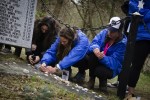
Teens light candles on March of the Living. (photo from March of the Living Canada)

In April 2015, a group of 80 teens, under the guidance of three chaperones and a Holocaust survivor, arrived in Poland for a two-week journey exploring Poland’s tragic events and followed by the joy of celebrating the birth of the Jewish state on Yom Ha’atzmaut.

The mission of March of the Living is to pass the torch of Holocaust memory to new generations. The experience provides young people with an opportunity to bear witness to the Holocaust and to the stories of survivors, so that this important part of our collective history is never forgotten. It is also a unique opportunity to strengthen our children’s Jewish identity and to strengthen their connection to Israel.

The march itself took place on Yom Hashoah, and we marched from Auschwitz to Birkenau with nearly 10,000 other young people. The march commemorates the death marches that the last surviving prisoners were forced to take, where many perished, but a few survived thanks to the liberation by the Allies. It is the most powerful event imaginable, and one that unites all young Jewish and non-Jewish people across the world.

By the end of the trip, these beautiful young people were so open in their expression of their deepest and most profound insights and emotions. They were no longer afraid to show their vulnerability, because the support they received from each other throughout the trip was absolutely unconditional. It was a beautiful experience and a privilege to be a part of.

The commitment to Judaism and Israel that the participants acquire on this trip is so clearly represented in the following statements by March of the Living participant,

Barbie Clark:

“For me, March of the Living created an emotional connection to my tradition, enabling me to understand and appreciate the importance of remembering our history.

“During the trip, we witnessed firsthand the magnitude of mass destruction that occurred during the Holocaust. As we traveled around the country, we were constantly reminded of these horrors in every city, town and community that we visited. At the height of Auschwitz’s productivity, it was able to murder and cremate up to 12,000 Jews a day – a number greater than the mass of us who were able to complete the walk. To realize that every single one of us participating in the march could have been destroyed in the space of one day, defies understanding and description. Also, at Majdanek, we were witness to a horrifying monument containing ashes and bones of … 20,000 Jews killed in the Nazi’s Fall Festival of 1943. This monument is alarmingly large, reiterating the magnitude of what occurred. I found this terrifying and incomprehensible.

“The horrors witnessed in Poland are to be contrasted with what I experienced in Israel,” continued Clark. “While in Israel, I had the unique privilege to witness both Yom Hazikaron – Israel’s Remembrance Day for its soldiers – and Yom Ha’atzmaut, Israel’s birthday. On Yom Ha’atzmaut, the entire country is in celebration – the euphoria is palpable. Despite the sadness one is left with after [bearing] witness, I was left with contagious optimism and hope. Hope for a future without enemies; hope for the Jewish people and the Jewish nation surviving despite all previous oppression.

“The entire experience created for me a new sense of being connected to Judaism, in a way I never thought possible…. The trip symbolized for me all [the] adversity, intolerance and persecution of Jewish people, yet at the same time creating a sense of survival and the possibility of a better future, for not just the Jewish people, but for all mankind.”

Charlotte Katzen, co-chair, March of the Living committee, was a chaperone on the 2015 trip. This article was originally published in Jewish Federation of Greater Vancouver’s Yachad. More information about March of the Living, click here. For information on the adult program – which is new this year – click here.


Expanding outreach to Island

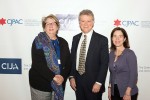
Left to right: Members of the Legislative Assembly of British Columbia Dr. Moira Stilwell (Liberal), George Heyman (NDP) and Selina Robinson (NDP). (photo from Canadian Jewish Political Affairs Committee)

Israeli wines met Canadian cheese on March 8, when more than 100 people came together for a CJPAC (Canadian Jewish Political Affairs Committee), CIJA (Centre for Israel and Jewish Affairs) and Jewish Federation of Victoria and Vancouver Island reception in Victoria.

Attendance included four provincial government ministers – the Hon. Norm Letnick (agriculture), the Hon. Steve Thomson (forests, lands and natural resource operations), the Hon. Naomi Yamamoto (minister of state for emergency preparedness) and the Hon. Amrik Virk (technology, innovation and citizens’ services) – 28 members of the Legislative Assembly of British Columbia, 39 staffers and many community members, some of whom came to the event from Vancouver. John Horgan, leader of the Official Opposition, attended as well.

Also present were Jason Murray (chair, Local Partner Council, CIJA Pacific Region), Gabe Garfinkel (CIJA Local Partner Council member and CJPAC Fellowship alumnus), Ed Fitch (CIJA national board member), Ezra Shanken (chief executive officer of Jewish Federation of Greater Vancouver), Stephen Gaerber (JFGV board chair) and Chabad of Vancouver Island Rabbi Meir Kaplan.

While an annual wine and cheese event is held at the federal level in Ottawa, this is the first year that CJPAC and CIJA have held the joint reception in British Columbia.

“It is critical that our community get involved in the Canadian political process, and events such as these help facilitate that engagement,” said Kara Mintzberg, CJPAC’s B.C. regional director.

CJPAC’s mandate is focused on getting the Jewish and pro-Israel community involved in the democratic process. As the advocacy agent of the Jewish Federations of Canada, CIJA’s mandate is to build and nurture relationships with leaders across the country, including in government, civil society and other faith and ethnic communities, in order to advance issues of common cause for the benefit of all Canadians.

“Events like the wine and cheese in Victoria allow us to bring members of our community together with provincial officials in order to deepen the excellent relationships our community has with our elected representatives,” said Nico Slobinsky, director of CIJA Pacific Region.

Guests at the reception sampled a range of Israeli wines and many B.C.-produced cheeses.

“I was delighted that a number of members of the board of the Jewish Federation of Victoria and Vancouver Island were able to be there,” said JFVVI president Dr. Aaron Devor. “Both CIJA and CJPAC do tremendous work and it’s exciting to see them focus their outreach on communities on the Island.”

Mintzberg said that B.C. community members can expect more CIJA/CJPAC events in the future.

“Although our organizations have different mandates, we are both working toward a common goal and we think these joint events are a great way to show the community what we have to offer,” she said.

For more information about CIJA or CJPAC in the province, contact Slobinsky (nslobinsky@cija.ca or 604-340-2437) or Mintzberg (kmintzberg@cjpac.ca or 604-343-4126), respectively.

An update from Aleph

Among other activities, Aleph in the Tri-Cities Israeli culture club is getting ready for Passover. (photo from facebook.com)

Looking back at 2015, Aleph in the Tri-Cities Society reports that last year’s food bank donations amounted to approximately 2,000 kilograms (more than two tons) of food items for the SHARE Family and Community Services Society and other missions around the Lower Mainland.

For Purim this year, Aleph cooked and delivered mishloach manot directly to the homeless. Community members prepared 100 trays with pasta, rice, beans, tacos and organic orange juice and distributed the food at the corner of Main and Hastings streets.

“We care. We do. Community connections” is Aleph’s slogan. The nonprofit has been helping the larger community and its neighbors since 2010. It operates as an Israeli-Canadian culture club, welcoming more than 120 young families, including many newcomers and other local Jewish families mixed with Canadian friends, all celebrating life through Israeli culture.

Aleph programs include marking the Jewish holidays and educational programs, such as Hebrew lessons, computer classes, nature walks for families, as well as providing donations to the food bank, networking and supporting each other.

The society is self-supported, relying on volunteers and donations to sustain itself. The community is preparing for Passover and will be holding a seder on April 22, 6 p.m. Anyone interested in becoming involved in the seder and other activities can do so through Aleph’s Facebook page.


מריחואנה מייצרת הרבה כסף

(צילום: Evan-Amos)

ההכנסות ממיסוי מכירת מריחואנה באופן חוקי בקנדה צפויות להגיע לכחמישה מיליארד דולר בשנה. כך מעריכים האנליסטים של בנק סי.איי.בי.סי. עד כה גם הדוחות האופטימיים ביותר לא העריכו הכנסות כה גבוהות ממיסוי הסם. ההכנסות שיועברו לקופות הממשלה הפדרלית ולממשלות המחוזות השונים שוות לכרבע אחוז מהתוצר הגולמי של קנדה.

הממשלה הליברלית בראשות ראש הממשלה, ג’סטין טרודו, הכריזה עם בחירתה לפני כארבעה חודשים, כי בתוך שנה היא תאשר את לגיליזציית הקנאביס. מפקד משטרת טורונטו לשעבר שנבחר לחבר פרלמנט מטעם הליברלים, ביל בלייר, הוא זה שאחראי על בניית המודל הרגולטורי להסדרת חוקיות ובקרת השימוש בסם. בפני בלייר ניצב אתר לא פשוט והוא מתכוון לעמוד בו, ולסיים את עבודתו כמה שיותר מהר.

טרודו הצהיר בצורה חד שמשמעית כי לגיליזציית המריחואנה לא נובעת מהרצון להגדיל את הכנסות המדינה, וכי כל הכספים יוקצו לטיפול במכורים ולאלה שיש להם בעיות נפשיות.

יצויין כי מאז הכרזת ממשלת טרודו כי עישון המריחאונה יהפוך להליך חוקי במדינה, עלו מניות החברות שעוסקות בגידול הקנאביס בצורה ניכרת.

סקס אנד דה סי: הרצאות באקווריום של ונקובר על חיי המין של בעלי החיים בים

הנהלת האקווריום שנמצא בסנטלי פארק של ונקובר חיפשה גימיק תקשורתי שימשוך מבקרים רבים יותר לאתר. היא מצאה כי הרצאות על חיי המין של בעלי החיים הימיים יעשו את המלאכה על הצד הטוב ביותר. ואכן ביקוש גבוה נרשם להרצאות היוצאות דופן שמתקיימנה בשעות הערב (בין שש לעשר). ההרצאות מטבע הדברים מיועדות למבוגרים בלבד.

ההרצאות מתקיימות באקווריום בזמן שהוא סגור לקהל הרחב. עלות הכניסה ליחיד עשרים ותשעה דולר. המוזמנים להרצאות יכולים לרכוש משקאות אלכוהוליים ולשבת בניחותה על הכיסאות שנמצאים סביב האקווריום הגדול, ולצפות להנהתם בבעלי החיים הימיים עושים אהבה לילית. בין בעלי החיים הנצפים: דגים מסוגים שונים כולל כרישים, צפרדעים וסוסוני ים. ההרצאות כוללות גם דברי הסבר מצד המדריכים של האקווריום בצרוף מצגת ווידאו מעניינת. דוברת האקווריום מציינת כי ההרצאות דומות בעצם או מזכירות את ערוץ הדיסקברי בפעולה.

יצויין כי האקווריום של ונקובר נחשב לאחד האקווריומים הגדולים והחשובים בעולם. גרים בו כיום כשבעים אלף בעלי חיים ימיים.

יוגה לארנבים: שיעורי ספורט להגברת המודעות על מצבם הקשה של בעלי החיים

“נא לשכב בבקשה על הגב. יש להניח את רגל שמאל על המזרון ואת רגל ימין ישרה קרובה לחזה. לא לשכוח שיש לשמור על כתפיים שיהיו צמודות למזרון כל הזמן. הזהרו שלא לפגוע בטעות בארנבים ששוכבים לידכם על המזרנים”. אלה פחות או יותר הוראות של מדריכי היוגה בקורס חדש שנקרא “יוגה ארנבים”. הקורס היוצא דופן בניהול עמותה שלא למטרות רווח, מיועד להגברת המודעות לאור מצבם הקשה של הארנבים במחוז בריטיש קולומביה שמספרם הולך וגדל, ויש לצורך במציאת בית חם עבורם.

ההשתתפות בשיעורי היוגה עם הארנבים עולה עשרים דולר. כל הכיתות לשיעורי הספורט עם הארנבים מלאות ורשימת הממתינים לשיעורים נוספים ארוכה מאוד. כעשרה ארנבים מסתובבים חופשי בסטודיו לספורט בכל שיעור, בו משתתפים בין עשרים לעשרים ושבעה מתרגלים. הארנבים שוכבים על המזרנים ואוכלים בנננות וירקות. בעמותה מדווחים על כך שחלק מהמשתתפים בקורס החליטו כבר לאמץ ארנבים שנחשבים לבעלי חיים שקטים וחמודים.

בעוד בקנדה מנסים לעזור לארנבים מתברר שבישראל יש חנויות שעדיין מוכרות פרוות שעשויות מעורם של ארנבים.

Jazz to benefit refugees

Maya Rae performs April 9. (photo by Robert Albanese)

Only 13 years old and already a veteran of the Vancouver International Jazz Festival. Only 13 and already dedicating her time and talents to helping others.

Maya Rae and her Rhythm Band perform an evening of jazz and soul at Temple Sholom on April 9.

“This show is a benefit concert for the settlement of two Syrian refugee families,” Rae told the Independent. “If my music can make a difference towards helping people and making the world a better place, I can’t think of anything else that I’d rather be doing. Tikkun olam is about the pursuit of social justice and I believe strongly that we need to help refugees of all parts of the world to find a safe place to settle.”

She added, “Right now, the Syrian refugee crisis is one that is very prominent, and of epic proportions. Millions of innocent people have been displaced with nowhere to go. I felt compelled to participate and to do something meaningful at a local level. Our rabbi at Temple Sholom, Dan Moskovitz, has urged the Temple Sholom congregation to take action, and this is my way of doing so.”

Scheduled to join her at Temple Sholom are Luis Giraldo (piano), Eli Bennett (saxophone), Ayla Tesler-Mabe (guitar), Ethan Honeywell (drums), Evan Gratham (double bass) and Benjamin Millman (piano and ukulele).

The Grade 8 student at York House started taking singing lessons when she was in Grade 3. “My first official performance was for the jazz festival in 2012. I remember singing the solo part of ‘Lean On Me’ by Bill Withers, with Cecile Larochelle’s Anysing Goes choir supporting me with the beautiful chorus line. It was an extremely memorable experience for me.”

Earlier this year, she was asked by the organizers of the jazz festival – Vancouver Coastal Jazz and Blues Society – to perform in the Women in Jazz series, which took place in March. “As part of that preparation,” said Rae, “I was introduced to some wonderful young musicians who I asked to support me for those two shows. As we were preparing for those performances, I was inspired to do a benefit concert in my synagogue with the same set and the same musicians…. I’ve since decided to add another set, and a few more musical friends and surprises to expand the show. I’m really happy with the results so far and can’t wait for April 9th.”

Rae said she chooses to cover “songs that deliver meaningful messages through their lyrics. I also like to pick songs that could have impact on the listeners, and also spark awareness about the significant issues we are facing in this generation.”

She has a YouTube channel on which there are a few videos, including for the song “I’m Still Waiting for Christmas,” which was released last year and is on sale on iTunes, as well.

“I have co-written a few songs with various artists/musicians that will be released in the near future,” she said, adding that she is hoping to have more time to write this year.

“My goal is to continue to enjoy playing and making music with others,” she said. “It would certainly be a dream come true to make a living through my music.”

This summer, she’ll be busking on Granville Island, and she invited everyone to “please stop by.”

More information about Rae’s upcoming events and recordings can be found at mayaraemusic.com. For now, though, her focus is on the April 9 concert, which starts at 8 p.m., at Temple Sholom. Tickets are $18 for adults, $14 for children/students, and the proceeds will aid two refugee families. RSVP to Temple Sholom at 604-266-7190 or register at templesholom.ca.

Royal City welcomes Tevye

Jewish community members in Royal City Musical Theatre’s production of Fiddler on the Roof, left to right: Erin Palm, Warren Kimmel and Zach Wolfman, with Michael Wilkinson in front. The show runs April 7-23 at Massey Theatre. (photo by Tim Matheson)

This year’s Royal City Musical Theatre production is Fiddler on the Roof. Playing the legendary lead character of Tevye the Milkman is Jewish community member Warren Kimmel.

Addressing the community, Kimmel acknowledged that Fiddler is “one of those pieces of art that have just become part of the culture almost by osmosis.” But, he added, “Fiddler on the Roof is an intensely Jewish musical and, although musical theatre is hugely populated by Jewish composers and performers, Fiddler is perhaps the only mainstream musical that deals directly with the Jewish experience. So, although your children might know ‘If I Were a Rich Man’ by cultural absorption, I would urge you to bring them all to see this piece. It’s a fundamental part of who we are and I think it’s going to be a great production.”

Directing and choreographing the RCMT show is Valerie Easton and the musical director is James Bryson, who will lead a full orchestra. Kimmel will be joined by three other Jewish community members on stage: Michael Wilkinson (Fiddler), Zack Wolfman (Perchik) and Erin Palm (Fruma Sarah). They and the rest of the cast have a challenge in making their iconic characters their own.

“I have made the character my own by growing a real beard!” said Kimmel, noting that it took three months to grow and has changed his life. “Seriously though, the fact that the role is iconic has been a real issue for me because I actually grew up watching that movie and I think that it is not for no reason that Topol is world-famous from only one identifiable role. I think it’s a brilliant movie and a landmark performance, so it has been quite difficult not to copy what he’s doing. At the same time, I think what would be worse would be to try and do something different just for the sake of being different. So, what I’ve tried to do, and I guess what I always try to do, is find the truth of the story for that character and play that. But they are big boots to fill, no doubt, and an even bigger beard!”

“It’s definitely hard when there is a fixed idea of how a character should be,” Wolfman said. “I am steering clear of the trap by approaching the role like I would any other. I look at the words on the page and the circumstances the character finds himself in. The show is iconic because the characters and story are well written, and it makes our jobs easier as actors because that information is all on the page for us to use…. When I say the same words in the same order, it is the character, and I suppose it will become my own when it comes out of my mouth!”

For her part, Palm said she loves “when an actor really takes risks and brings new life to the characters they play. I think I make Fruma Sarah my own by really trying to understand what she wants, in the most honest way possible.”

Fiddler on the Roof was one of the first musicals Palm ever saw. “It made a huge impact on me,” she said. So, for her, part of the fun of being in this production “comes out of years of being excited about the opportunity to do the show and then getting a chance to do it. I love the music and the story.”

Part of the challenge is to convey the time and place of the action. Based on Tevye and his Daughters and other stories by Sholem Aleichem, Fiddler is set in 1905 in Anatevka, a fictional Russian village. It centres around Tevye and his efforts to maintain Jewish traditions while trying to keep his wife and five daughters happy and safe.

“Being that we don’t live in Anatevka and it is 2016,” said Palm, “it’s relating to those social and economic differences and times that makes it a challenge … capturing the old world feeling in a way that is truthful and heartwarming, that’s what sweeps you away to Anatevka, that’s the charm of the show.”

For Wolfman, “Having the opportunity to play a character that is playing against the traditional values of the characters in the play is fun. Perchik has more modern sensibilities and, in a way, he acts as a proxy for the audience to see the differences in beliefs on stage. It is fun to play a character with a strong point of view who is willing to fight for what he believes in…. The challenge for me has been finding the balance between the Perchik who is warm and loving, and the hard-nosed revolutionary. Of course, both sides exist within the character, so it’s interesting to grapple with what comes out at what times. It’s an ongoing question for me so, as my old acting professor Stephen Heatley would say, I’m ‘keeping the questions open and active.’”

In a somewhat similar vein – trying to find balance within a character – Wilkinson said, “It’s been very fun and exciting for me to find the way the Fiddler fits in as a metaphor in Tevye’s mind but also has a personality and character of his own.”

Not only does Wilkinson have to figure that out, but he is also playing a Russian dancer in the song “To Life.” He said that Easton “has given us wonderful choreography and the Russian dancing is particularly fun, but also challenging – especially since most of us don’t have training in Russian dance!”

Kimmel described Easton as “one of the real jewels of this city’s theatre community and we have worked together enough times now that I know I can allow her to guide me in my performance and that, if I trust her, she will make it a better one. That’s meant to be the director’s job, I guess, and it’s what you always hope for as an actor, but it doesn’t happen nearly as often as you would hope.”

Last year, Kimmel worked with both Easton and Bryson on RCMT’s My Fair Lady. “Both brilliant,” he said. “Also, there are a few cast members from My Fair Lady that have reappeared in Yiddish garb and large beards and it’s always great to be on stage with people you know and trust. However, all the people I have close relationships with in the piece – my wife and five daughters – are all performers I’ve never worked with before and that’s quite exciting.”

It is also Wilkinson’s second production with Easton, Bryson and RCMT. He was in the ensemble of Annie in 2014. “The Vancouver theatre community isn’t huge, so usually there are some familiar faces when a new production starts rehearsals. I’ve met a bunch of new wonderful people in this production, as well as a few with whom I’ve worked before.”

Wolfman was at the University of British Columbia with a couple of the other leads, including Jenika Schofield, and has acted before with several members of the cast. “In fact,” he noted, “Jenika actually played my love interest in Titus: The Light and Delightful Musical Comedy and now she’s playing Hodel, who falls in love with Perchik. Crazy, right?!”

While this is his first time working with Easton and Bryson, Wolfman said, “Patrick Ray, our piano player, accompanied a show I did in the past, and maybe saved my life musically more than once.”

Palm worked with Easton right after graduating from Capilano University. It was in an Arts Club on Tour production of the musical The Thing About Men, where, she said, “I played 13 different characters, that was a highlight of my career. I just love her as a director. She’s just so present and physical in her directing skills. She’s very giving, she’s very much an actor’s director…. Also, I am a big fan of female directors. There are so few of them and so, when you get an opportunity to work with a director with such a clear vision who is a woman, I celebrate that.”

Palm also knows some of Fiddler’s cast from previous acting work, she took voice lessons for awhile with Sylvia Zaradic (Yente) and did a video with Natasha Zacher (Tzeitel) and others called Finding Face Time: A YouTube Musical!, which is online.

In the casting process, Palm was called back for two different roles: Tzeitel and Fruma. She said she is grateful to have been chosen “as part of the vision of the show and cast as Fruma Sarah.”

“I think the casting is very well put together and I couldn’t imagine the show being cast any other way,” she said. “We really have worked together as a collective, the chorus is really strong. There are a lot of talented actors and singers in this show, lots of young and up-and-coming talent, too, who really bring something special, new and exciting to the roles they play.”

Initially, Wolfman wasn’t sure for which role he would audition. During Oliver! at Theatre Under the Stars last summer, he said, “[M]any of the cast members in the show were buzzing about Fiddler on the Roof auditions during the run. A fellow cast mate, Kat Palmer, said I should go out for Perchik if I got a chance, so the show fell on my radar. When I first auditioned, I was thinking about Motel and Fyedka as possible roles, but after re-reading the script, I definitely had my heart set on Perchik and that’s what happened!”

When Wilkinson auditioned, he said, “I had to sing a song in front of the directing team and take part in the group dance call. I didn’t go in with a specific role in mind and was just hoping to be a part of the show in some capacity. It worked out well and I’m having a great time being a part of the production.”

As for the patriarch of the show, Kimmel said, “I originally auditioned for the role of Yente the Matchmaker but I lost that role, unfortunately, and had to settle for Tevye. No, in reality, I think Tevye has always been one of the roles that I felt I would have to do at some point or other, being Jewish for a start, and just loving this play since I was a child. So, I asked Val if I could audition. Honestly, I thought I was a bit young for the role and I still feel I struggle with the [emotional] weight of Tevye…. Also, there are a few performers in town that have been very successful playing the role and I was pretty sure they would be offered it, but it seems my audition – together with a large cheque made out to Val – clinched it for me.”

RCMT’s Fiddler on the Roof takes place at Massey Theatre, 735 Eighth Ave., in New Westminster, Wednesday-Sunday, April 7-23. Ticket are $47 ($38 seniors/students, $29 children 13 and under) from ticketsnw.ca and 604-521-5050.

Iran dominates AIPAC talks

Republican presidential hopeful Donald Trump upset AIPAC organizers when he criticized President Barack Obama. (photo by David Zam)

There were clear signs of discord in Washington, D.C., as representatives of AIPAC publicly rebuked presidential hopeful Donald Trump after he harshly criticized the sitting president.

At the pro-Israel organization’s policy conference last month, in front of some 18,000 attendees, visibly upset AIPAC president Lillian Pinkus admonished Trump on stage for his remarks a day earlier.

“Whatever policy disagreements we may have, we must not condemn the sitting president on stage,” she said. “There are people in our AIPAC family who were deeply hurt last night and, for that, we are deeply sorry.”

Chairman of the board Robert A. Cohen said that booing and clapping speakers when they attack another person was unacceptable at the event, and that “AIPAC doesn’t pick sides.”

Trump, who was cheered wildly for noting that it was President Barack Obama’s last year in office, said that “Obama rewards our enemies” and “Hillary was a total disaster as secretary of state…. Obama and Hillary have been very bad to Israel. Obama may be the worst thing to happen to Israel.”

Every major party candidate for president spoke at the dais, except the senator from Vermont, Democrat Bernie Sanders, who is Jewish. All candidates who spoke placed heavy emphasis on Iran.

GOP frontrunner Trump didn’t mince words. He called the Iran deal brokered by the P5+1 – the United States, China, Russia, France and the United Kingdom plus Germany – “awful” and “bad for Israel, the Middle East and the world.”

The $150 billion channeled to Iran in the agreement, by his reckoning, was “unbelievable” with “nothing in return,” and that the Islamic Republic will have a nuclear bomb within several years.

As president, Trump said he would “stand up to Iran’s aggression” because “I know how to deal with aggression and that’s why I’ll win.”

The Middle East’s terror activity has Iran’s fingerprints all over it, he continued, including Hezbollah in Lebanon, Hamas in Gaza, reward money for Palestinian terrorists, and influence in at least two dozen other countries.

“I will dismantle Iran’s global terror network,” Trump said. “We will enforce this deal like you’ve never seen a contract enforced before.”

The New York billionaire mogul and reality TV host took aim at two other threats to Israel, the United Nations and Palestinian terror activity.

“The UN is incompetent and no friend of Israel,” he said. “A [peace] agreement imposed by the UN would be a total disaster. And the U.S. must use our veto, which I will use 100%.”

The Jewish state, he said, has always been willing to strike a deal with its neighbors, noting that prime minister Ehud Barak in 2000 offered nearly the entire West Bank as a Palestinian state, but the offer was dismissed by then-PLO leader Yasser Arafat. Other times, he said, “Palestinian leadership has rejected very good offers.”

Trump noted that, under his purview, the U.S. embassy would move “to the eternal capital of the Jewish state, Jerusalem.”

Texas Senator Ted Cruz, trailing a distant second to Trump in GOP delegates, began his speech, “America will stand with Israel and defeat Islamic terror.”

He spoke about his three trips to Israel as senator, including a visit to Israeli hospitals that treated Syrian refugees. He noted that he had proposed legislation to ban the Iranian ambassador to the UN from entering the United States since he was involved in the 1979 Iranian hostage crisis. It passed in both the Senate and House.

Taking a jab at the Obama administration, he said it was “unjust” for them to impose a travel ban on Israel in the summer of 2014. He further called out Democrats for boycotting Israeli Prime Minister Binyamin Netanyahu’s speech last year at AIPAC.

photo - At AIPAC, Democrat frontrunner Hillary Clinton advised a three-pronged approach to global security, focusing on Iran, extremism and the attempts to delegitimize Israel
At AIPAC, Democrat frontrunner Hillary Clinton advised a three-pronged approach to global security, focusing on Iran, extremism and the attempts to delegitimize Israel. (photo by David Zam)

Hillary Clinton, the Democratic presidential frontrunner, was taken to task for saying that Hamas fires rockets from civilian areas because Gaza is tight for space. “Rather,” said Cruz, “it’s because Hamas are beasts who use human shields.”

As for the “fundamentally immoral” Iran deal, Cruz said he will “rip it to shreds on the first day,” since the Islamic Republic won’t follow it anyway.

“Hear my words Ayatollah Khomeini: If I am president and Iran launches a missile test, we will shoot that missile down,” said Cruz. “And, in January 2017, we will have a commander-in-chief who says under no circumstances will Iran be allowed to acquire nuclear weapons: either you will shut down your nuclear program or we will shut it down for you.”

Cruz compared the Iran deal to the failed 1938 agreement between British prime minister Neville Chamberlain and Adolf Hitler, which led to the Third Reich’s takeover of Czechoslovakia and allowed its continued military build-up.

If elected president, Cruz said he would move the U.S. embassy from Tel Aviv to Jerusalem, yank federal funds from schools that boycott Israel and veto any UN unilateral declaration of a Palestinian state.

Governor of Ohio John Kasich, running third in the GOP delegate count, noted his 35-year support for Israel and his role in helping erect a Holocaust monument in his state.

He called for the suspension of the Iranian nuclear deal, particularly after recent test missiles in contravention of international treaties. As president, he would “defeat ISIS and stop arms flows to Hezbollah.”

He also spoke out against the boycott, divestment and sanction movement, and antisemitism on campus. On Israel, he noted the “culture of death that the Palestinian leadership has promoted for decades,” and that “Palestinians cannot continue to promote hatred.” In sum, he called Jerusalem the eternal capital of Israel.

When she took to the stage, Clinton noted that the “the ideological gap between the parties has increased, but there’s still common agreement on Israel.”

She took a three-pronged approach to global security: Iran’s aggression, the growing tide of extremism, and efforts to delegitimize Israel. “The deal with Iran is making the world safer, including Israel,” she said. “The supreme leader still calls all the shots in Iran, but we should support voices who want to bring change in Iran.”

Regarding other parts of the region, she said that “ISIS must not be contained; it must be defeated.”

On the issue of Israel, she noted that Palestinian leadership has to stop inciting violence. “Children should not be taught to hate in schools,” she said, adding that she would oppose any attempts to “push a [unilateral two-state] solution,” including in the UN. “Palestinians should be able to govern themselves in their state,” she said, while adding that Israeli “settlements are not helpful to peace.”

She condemned BDS and said, “we have to fight against it” because “antisemitism has no place in American society.”

Meanwhile, U.S. Vice-President Joe Biden took a risk mentioning to the 18,000 attendees at the policy conference that Israeli “settlements are a barrier in the way of a two-state solution.” That risk was welcomed by a chorus of boos – despite attendees being cautioned by AIPAC leadership to not do so.

Biden insisted that, notwithstanding political differences, the United States is “united in our unwavering commitment to the Jewish state of Israel.”

However, “violent acts of retribution must stop,” he continued, “terror is terror is terror … and it must be stopped.”

The White House “stands with Israel against delegitimization” and believes that “Israel is stronger today because of the Obama-Biden administration,” he said.

Biden touted last year’s Iran deal as a “success,” explaining that many “Iranian facilities are dismantled and destroyed” and that “Iran is further away from the possibility of being nuclear. If Iran violates [the deal] there will be consequences.”

Speaking by video link from Israel, Netanyahu both criticized, and suggested salvaging, the U.S.-brokered Iranian nuclear deal.

“Those who worked for the deal and against the deal can work together to ensure that the deal is followed,” he insisted, noting that, in March, Iran tested a missile that posed a threat to Israel.

“The writing isn’t just on the wall; it’s on the missile,” said Netanyahu.

He said that Israel is singled out for condemnation at the UN and said he hopes the United States will continue its moral voting record at the Security Council.

With regard to Israel’s neighbors, he said Palestinian children are taught to hate, and showed a video of television broadcasts that illustrate his point.

“We cannot compromise with terror and must defeat it,” he said. “We need a two-state solution with a demilitarized Palestinian state.… We are ready for negotiations anywhere and anytime without preconditions.” But, he said, Mahmoud Abbas, the leader of the Palestinian Authority, “isn’t ready or willing to come” to the negotiating table.

David Zam has covered political, cultural and historical events for Landmark Report, including the 50th anniversary of the Selma to Montgomery voting rights march as White House-approved press, two AIPAC policy conferences and several other political conventions. He has degrees in history and law.