

For more cartoons, visit thedailysnooze.com.
Month: February 2015

Mixed welcome at Downton
In Downton Abbey, Rose (Lily James) is smitten with Atticus Aldridge (Matt Barber). (photo from pbs.org/wgbh/masterpiece)
Jewish characters have finally joined the impeccably attired throng at Downton Abbey, and it’s not an altogether happy day.
While Lord and Lady Grantham welcome the arrivals with exquisite manners and the perfectly calibrated amount of modest warmth, series creator and writer Julian Fellowes is a good deal less hospitable. He has devised a nuclear family of cardboard cutouts that fit unflattering Jewish stereotypes and generate viewer antipathy.
Before we rush to judgment or leap to conclusions, however, we should allow for the possibility that the uncomplimentary presentation of the Aldridge family in Season 5 is merely a teaser for Season 6 (and beyond, given the series’ extraordinary popularity in the colonies). It’s not a stretch to imagine Fellowes using the Aldridges as a means of exposing and examining British antisemitism as Downtown Abbey rolls into the late 1920s and early 1930s.
As everyone knows, PBS’s hit Masterpiece series has long featured a character with Jewish ancestry. Lady Grantham, aka Lady Cora Crawley, is the American-born daughter of the late Isidore Levinson. Cora is Episcopalian, like her mother, but she doesn’t view Jews as “the other.”
I must reveal a spoiler, namely that Lord Grantham’s niece, Rose, doesn’t see Jews as different, either. That is, not when they’re as hunky as Atticus Aldridge, a square-jawed banker’s son who chivalrously shelters Rose with his umbrella in one of the least-inspired meet-cutes in the annals of television.
One could trace Rose’s open-mindedness to last season’s colorblind liaison with a black jazz singer, and her naive modernity to her fight with Lord Grantham over bringing a wireless into the sacred realm of Downton Abbey. But Atticus is so assimilated and so devoid of personality that he wouldn’t register as Jewish if he didn’t tell us. In other words, Rose is smitten with an Englishmen of her status and breeding, and whose Jewishness is incidental rather than fundamental. In fact, the moment when he confides that he’s descended from Jews who left Odessa after particularly brutal pogroms doesn’t belong to him but to his listeners – bitter, broke Russian expatriates of the pre-Revolution regime who insult Atticus over their shoulders as they walk away.
Now, Atticus is of the right class and has parents of means, and those are the credentials that matter in Downton’s rarefied world. However, his perpetually unsmiling father, Lord Sinderby, is less sanguine about his son’s involvement with a shiksa, and the utterance of the epithet stamps him as intolerant and clinches our dislike.
There are certainly valid arguments against intermarriage, and Fellowes could have written an impassioned monologue for Lord Sinderby that expressed the costs and worth of Jewish identity, and the weight and meaning of traditions and rituals. Instead, Lord Sinderby has a couple angry lines that leave the impression that he prizes money and influence above all else. While much is made of Lord Sinderby’s family values, namely his hatred of divorce, it’s presented as evidence of his inflexibility and anachronism rather than allegiance to vows and moral behavior. As for Lady Sinderby, she is totally gracious and agreeable, but in an unwaveringly superficial way.
To keep things in perspective, Downton Abbey is an upstairs/downstairs soap opera that is generally more concerned with the romantic complications of its female characters (Rose, in particular) than with the big picture of class-conscious Britain. I find the series most interesting, though, when it invokes and reflects the changes in British society after the First World War (and evokes contemporary parallels). Fellowes has introduced a story arc that’s tailor-made for illuminating antisemitism between the wars. On those grounds, I’m already anticipating Season 6.
Michael Fox is a writer and film critic living in San Francisco.

Making money your friend
Marissa Cepelinski during the 2014 Run for Water. (photo from Marissa Cepelinski)
Some people spend their entire lives trying to figure out what they want to be when they grow up. Some know when they’re just a kid.
At a rather young age, Marissa Cepelinski already knew two key things about herself that would lead her to her current position as co-founder of Capital Core Financial: she loved numbers and she wanted to help people.
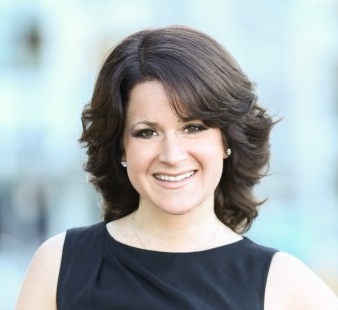
Cepelinski is the daughter of an Israeli computer engineer who spent many hours tutoring her in the art of finances. “He had me tracking all my money in a blue Hilroy notebook when my babysitting career began at 11,” she said. “I had to enter all the debits and credits and I loved it.
“I also loved working with people,” she added. “So I knew I wanted to somehow pair the two.”
After completing her minor in psychology at university, Cepelinski targeted the financial advisor career path, leading to what now has been a 12-year career in the industry.
Doing what she loved was the first step. The second was finding a way to make that career choice satisfy her need to help others.
“I became very clear on what I wanted to build and what we needed more of in the financial world,” she explained. “I wanted to work with people on a goals-based approach rather than just working with the money.”
After teaming up with Franco Caligiuri on a consultation basis for several years, the two realized their goals aligned, leading them to partner in starting their own boutique firm, Capital Core Financial. Through her work at Capital Core, Cepelinski has engaged in many charitable programs, both as a donor and as a participant. Specifically, she advises many individuals, families and businesses on strategies to help direct more funding toward causes they care about.
“We found that many people simply didn’t know or understand how they have the option to choose a cause to donate to rather than ‘donating’ their money to Canada Revenue Agency (CRA),” she explained. “Being able to present a cheque for $100,000 to a charity … is a feeling I can’t even describe.”
Cepelinski said that Capital Core Financial has a goal to help redirect at least $1 billion to be donated to the nonprofit sector.
Community building is one of Capital Core’s main values. As such, Cepelinski also donates a lot of her time to various causes, highlighted in the past year by her participation in the Run for Water ultra-marathon, the Covenant House Sleep Out to raise awareness and the 24-Hour Famine for a Better Life Foundation. She personally raised more than $22,000 for these charities in 2014.
Earlier this year, she and colleague Alli Warnyca spoke at the Recharge Conference at the Jewish Community Centre of Greater Vancouver. They talked about how people could change their attitudes about money and debt, and feel good about their finances.
As for her typical client base, Cepelinski insisted she doesn’t really have one. “We work with people who are committed to their goals, that have values that align with ours,” she explained. “People who are wanting to raise the bar in their life and remove their emotional limitations in regards to building wealth.
“I’ve worked with business owners on corporate planning, young families starting to save to buy a home and struggling artists or actors learning to budget and commit to a plan,” she continued. “Many of us walk around with money stories we created at a very young age. We will spend some time discussing those with clients because it’s important that people look at the patterns they are running in regards to their money.”
To set up a meeting with Cepelinski or any member of her team, contact Capital Core Financial at 604-685-6525 or go to capitalcorefinancial.com.
Kyle Berger is a freelance writer living in Richmond.

Hundreds learn at Limmud Vancouver
This year’s Limmud Vancouver had about 35 percent more attendees than it did last year. (photo by Robert Albanese)
About 350 lifelong learners spent the day exploring a huge diversity of Jewish ideas at the second annual Limmud Vancouver event Feb. 1.
Limmud is a worldwide confederation of festivals of Jewish learning, entertainment, ideas and exploration. Started in the United Kingdom in 1980, Limmud is now an annual event in 80 cities. The local event last year was held at King David High School, but this year, it took place a few blocks away, at Eric Hamber, which accommodated 350 registrants, where last year’s had to be capped at 260.
“That’s about a 35 percent growth,” said Avi Dolgin, a founder and organizer of the Vancouver event. The structure changed a little as well, with 40 individual sessions, up from 36 last year, but over five blocks instead of six as was done previously.
“We had eight options per timeslot to drive people truly crazy,” said Dolgin. At breaks between sessions, participants shared take-aways from the many lectures, events, performances and panel discussions.
King David teacher Aron Rosenberg led a session called Love, Hate and the Jewish State, based on a program developed by the New Israel Fund. Participants were asked to move around the room in response to questions of core values around attitudes about Israel, Canada, citizenship, human rights, religion and other hot button topics. Participants moved left or right across the room depending on their level of agreement or disagreement with statements such as “Christmas should be a federal holiday in Canada” or “serving in the Israeli military is a Jewish value.” The room broke into smaller groups to discuss statements about Israel with which they agreed or disagreed.
In another session, comedian and inspirational speaker Adam Growe explained his mathematical formula for measuring success at tikkun olam. (The formula is: S=(hti)c*k.)
In a session on the messianic idea in Judaism, Beth Israel Rabbi Jonathan Infeld said that Judaism is “100 percent about bringing Moshiach” and added that “we have a problem with this idea.” Part of the problem, he said, is that Jews have a history with false messiahs, from Jesus and Bar Kochba to Marx and the Lubavitcher Rebbe.
As an example of how messianism – a belief in a future of perfect existence ushered in by the Messiah – permeates Judaism, Infeld said that the Passover seder, which is almost universally accepted as a metaphor for the Exodus from bondage in Egypt, is actually about redemption from this world. And the wish “next year in Jerusalem” is not so much an aspiration for the literal city in Israel, but for the place and time of the Messiah.
Dolgin took special pride in the diversity of Limmud Vancouver’s offerings. “It was a mix of some text, some history … this year we had a lot of arts and culture – Bernstein and opera and Shakespeare, Jews and Western literature,” he said. “This year, we also had workshops, group discussions about what’s your relationship with Israel and Jewish identity, traditional talmudic study chavruta-style. We had a panel talk which included a debate on the issue of Shmita, which is the seventh year in which the land and the economy is supposed to revert to the situation before.”
In future, Dolgin said, he hopes Limmud will beef up children’s programming and attract more Orthodox participants. He noted that, on forms submitted by presenters, a large proportion said they were shomer Shabbat and keep kosher.
“We look like were kind of a Renewal or Reform outfit, but a quarter or maybe as much as a third of the presenters said they observe Shabbat,” he explained.
Organizers are already priming volunteers and presenters for next year. In addition to attracting teachers who may not see themselves as teachers, Limmud is looking for volunteers in such areas as technology and publicity.
“As a young organization, we’re still easy to hijack because we have no allegiances to anybody except the people working in it,” Dolgin said. “So, if people have a vision for what Limmud could be, then they should come in and steer it in that direction and they will be met with open arms.”
Pat Johnson is a Vancouver writer and principal in PRsuasiveMedia.com.

Learning, fun at Limmud cabaret
Moishe House (and friends) show off their “Most Jewish Table” certificates. From left to right are Alexei Schwartzman, Benjamin Groberman, Carol Moutal, Jordan Stenzler, Shayna Goldberg and Kevin Veltheer. (photo by Robert Albanese)

Music. Storytelling. Video. Flash dance. These were just some of the elements in Limmud Vancouver’s first-ever Saturday night cabaret, which took place on Jan. 31, the night before the all-day learning festival.
One hundred and sixty people gathered around tables of food, books and Havdalah candles in a transformed Jewish Community Centre of Greater Vancouver auditorium, awash in colored lights and humming to the music of Sulam. The event, co-produced by JCCGV and LimmudVan ’15, brought a cabaret of storytelling (Shoshana Litman of Victoria and local raconteur Michael Geller), drama (Michael Armstrong of Victoria’s Bema Theatre), songs (singers Harriet Frost and Wendy Rubin), Talmud (Tracy Ames), a quiz show (former Vancouverite Adam Growe), Havdalah (Rabbi Laura Duhan Kaplan), dancers (led by Nona Malki) and lots of good food.

A highlight of the evening was an inter-table contest of personal Jewish experiences: Who has climbed Masada? Who attended Camps Miriam or Hatikvah? Who speaks Ladino? etc. The winners, a group of Moishe House residents and friends, beat the opposition in a spirited event that included spontaneous renditions of Adon Olam, and were proclaimed “Most Jewish Table.”
Rise of modern management
Since Scottish economist Adam Smith published The Wealth of Nations in 1776, arguing the importance of the division of labor and launching the era of specialization, a formal managing role – initially personified by the owner of the enterprise – became necessary to coordinate the diverse tasks and operations of machines and workers.
 As a modern profession, management is relatively new. It rose in importance during the 20th century as formerly unskilled preindustrial workers transformed into skilled workers, and their increasingly specialized knowledge and skills needed coordinators and supervisors to ensure the attainment of organizational objectives. Although the managerial role subsequently shifted from owners to professional managers, the latter tended to pursue similar goals as the wealthy elite who retained corporate ownership interest.
Comparing business owners in two of the largest English-speaking nations, the United States and the United Kingdom, suggests they were quite distinct from each other. The American business leader was typified by Horatio Alger-type stories of rising from the depths of poverty to the height of financial success. The rapid economic growth of the Gilded Age in the decades that followed the Civil War contributed to a stereotype of achievement, suggesting the existence of “equality of opportunity.” This American cultural striving for – and adulation of – achievement reflects the strength of individualism in American society. In contrast, the role of the businessman in Britain and Canada was different. Australian sociologist Sol Encel suggests that the typical representative during the 18th and 19th centuries was not just a male who owned a small business but one who was capable of seizing the opportunities provided by technological change to increase the size of his plant or create a completely new enterprise, revealing “a tradition of hard work, self-denial, the ploughing back of profits and the gradual building up of small firms into large ones.” There was less ruthless competition and vicious battles with trade unions compared to the United States but, similar to the U.S. tradition, British leaders of industry were viewed as “self-made men,” typified by a Scotsman like Samuel Smiles.
Encel rightfully alludes to Alger and Smiles for they provided flattering images of individuals who successfully built up their enterprises ostensibly on their own initiatives, whose achievements were admired by their peers and workers alike. There is a notable absence of such images in Australia where, in contrast with these other cultures, Encel observes, “Businessmen, apart from isolated individuals, are not generally regarded as having contributed prominently to the ‘development’ of Australia.” Credit for this largely belongs to members of the working class who championed egalitarianism and preferred flatter hierarchies, often to the chagrin of the more individualist managerial class.
As the managerial role evolved following the Second World War, it was no longer seen exclusively in the context of business. In the words of American management guru Peter Drucker, management “pertains to every human effort that brings together in one organization people of diverse knowledge and skills.” In a modern sense, “management” applies as much to the functioning of nonprofit organizations – from religious institutions, charities, social service agencies and public academic institutions – to the world of business and government. The term “manager,” therefore, signifies a role known by various titles, from supervisor, director and department head, to team leader and coordinator, among numerous other possibilities. Regardless of the title, contemporary managers focus their efforts on controlling, directing or coordinating the work of others.
Although the activities of managers have evolved to include a more supportive role to help the work efforts of people by coaching and otherwise supporting their labors, whether first-line, middle or top managers, they have customarily been defined as people to whom other people directly report. This arrangement suggests vertical hierarchy with management above workers, so the term manager applies to holders of positions of authority who not only possess the ability to influence how people work or behave but also indirectly impact their quality of life. Hence, the origins and implications of differences between Australian and Canadian egalitarianism and the role of political ideology in the development of the managerial outlook expose subtle variances in managerial culture. Management models also provide a window to identify salient Anglo-Celtic cultural features in managerial style. How workers organized is also revealing.
Unions in Australia and Canada emerged in the late 19th century as powerful representatives of workers in their dealings with management. In the last quarter of the 20th century, however, there was a rise in employment arrangements with individual employees rather than the workforce as a collective entity, a development that reflects a largely Anglo-Protestant management’s preference to reduce as much as possible union involvement in employment policy matters. Even in instances when union involvement could not be excluded from the bargaining process, the heightened focus on the individualization of employment has been evident in the increased use of performance-based pay systems over job- or grade-based pay, and with greater reliance on individual goal-setting procedures and appraisal, and more direct communication with individuals instead of unions as an intermediary. Prior to the rise of this individualist trend, however, collectivism strongly affected employment policies due to the strength of unions and the ideological and ethnic influences that helped shape Australian and Canadian society. The ideological influences on each culture were not identical. But what do the terms individualism and collectivism mean when applied specifically to the context of management? Above all, they provide a useful way to see influences on labor-management relations.
Arthur Wolak is a freelance writer based in Vancouver. He received his PhD in management from Macquarie Graduate School of Management, Australia. He has published articles in Australian, Canadian, U.S., U.K. and Israeli academic journals, as well as written for numerous newspapers, including the Jerusalem Post and the Jewish Independent. This is an excerpt from his book The Development of Managerial Culture: A Comparative Study of Australia and Canada (Palgrave Macmillan, 2015).

Cleaning up oil in Arava
The Tran-Israel oil pipeline spill near the Evrona Nature Reserve in the Arava Desert has harmed flora and fauna. (photo by Menachem Zalutzki via Israel Ministry of Environmental Protection)
On Dec. 3, 2014, a fractured pipe created the biggest oil spill in Israel’s history, releasing some five million litres of crude oil far into the Arava Desert. In the days that followed, experts from around the world were contacted to clean it up, including from the Hebrew University of Jerusalem.

Dr. Yoel Sasson, a professor at Hebrew University’s Casali Institute of Applied Chemistry, specializes in environmental catalysis, and he and student Dr. Uri Stoin have developed a soil decontamination process that can treat waste caused by any organic compound, including oil.
According to Sasson, spills are common in countries where oil is being moved by pipes and, considering how old the pipe is in Israel, it was just a matter of time that such a leak would occur, he said.
Exacerbating the situation was that it took hours for the break to even be detected. “It’s horrible, because the oil is simply killing everything,” said Sasson. “All the farmland, the flora and fauna … nothing is left alive once the oil is there.”
The Ministry of the Environment is now in charge of cleaning up the spill and they will have to select the contractor to do the job. According to Sasson, there are several companies that have placed bids, one of which is Man Oil Group, the Swiss company licensed to commercialize this technology developed at HU.
A superoxide, the technology is a variation of an oxygen molecule. “Unlike the oxygen molecule, which is relatively inert, superoxide is a very aggressive, free agent,” explained Sasson. “And it actually oxidizes every organic material.”
It works by breaking down the organic (carbon-based) matter into water and CO2, and the organic material very rapidly oxidizes, he explained. “Normally, within 10 minutes, oil simply disappears … the soil re-mineralizes,” he said.
“As the oil is killing everything, when you apply the agent, you do not revive the plants, but you take the soil back to its virgin condition. And then, with time, nature will come back. We estimate six to 12 months, [then] it comes 100 percent back to life.”
The CO2 released in the process can also be neutralized and turned into sodium carbonate, which is soluble with water. With rain, it will be washed away.
Typically, technologies of this kind are termed as either “biological” or “chemical.”
Biological means bacteria is applied (i.e. eating or digesting the oil), a technique that has been used for many years. While this does work, it has some drawbacks. “It’s very slow,” said Sasson. “It would take a half a year to a year to start to see something developing. And it requires excavating the soil, digging it out, so the bacteria will have some air. They are aerobic material.
“Our method is chemical,” he continued, “which means it’s fast, a matter of minutes, actually.”
Sasson estimated that the oil did not seep deeply into the Arava soil, approximately 10 or 20 centimetres maximum. Regardless, he said, the agent is not limited to any particular depth. It can be drilled into the soil and the whole treatment can take place underground.

Man Oil Group has been cleaning up oil spills with superoxide in Siberia, Africa and in the Gulf States, and is now looking at the soil in the Arava. The areas that it cleaned in Siberia were larger than that of the Arava spill, and the company has also conducted a successful test cleaning a stretch of a Swiss railway track. The track base, which is comprised of limestone, was restored to its white state, eliminating years of oil drips that were becoming an environmental problem, killing everything around it. Man Oil also conducted a test on the Arava spill site, with positive results.
According to Sasson, oil-caused damage is a worldwide problem that is very serious. But he is focused on cleaning up other contaminated areas as well, one of which is the result of military industries that have left organic pollution underground in Jerusalem.
“This particular case involves mainly those from a group of materials called ‘organic chlorine compounds,’” said Sasson. “These types of compounds, nature doesn’t recognize, and they are polluting underground water. It’s really a disaster.
“When we started, we worked on the destruction of these materials. This was very successful. But, we noticed it takes a lot of time with the authorities to get permission. It takes many years to start such a cleanup. Meanwhile, the oil cleanup is faster and is needed in many more places.”
Another application focus for Sasson is sewage sludge, a by-product of bacteria used to digest sewage waste being disposed of into the environment, causing contamination.
“You feed bacteria your waste,” said Sasson. “They convert the waste into CO2 and water again but, at the same time, they are growing. And, normally, for one kilogram of waste, you will build up a weight of about 450 grams of bacteria (about 50 percent) and then you create a new waste. So, instead of having one kilogram of waste, now you have half a kilogram. But you’re still stuck with it, because there’s nothing to do with the bacteria. So, what we are trying to do is really decompose this waste using our agent. So far, initial experiments show it is working but, of course, we have to substantiate it and develop it into larger scale.”
At press time, Sasson was still waiting to hear from the Ministry of the Environment if the process they developed will be chosen to clean up the Arava spill.
***
The Evrona Nature Reserve rehabilitation team began its work on Jan. 12, 2015, with a meeting headed by Deputy Environmental Protection Minister Ofir Akunis. Air quality tests found that there has been a 90 percent reduction of pollution in Evrona, one of the sites most harmed by the December 2014 oil spill in Israel’s southern Arava region. Some 30 companies are now vying to be selected to decontaminate the soil that was contaminated by the oil spill. The reserve, noted Akunis, will open once there is no fear that the health of visitors could be affected. The hope is that this will be in the near future.
– Israel Ministry of Environmental Protection (sviva.gov.il)

One day to raise $1 million
Twenty Orthodox Jewish outreach groups to fundraise together.
The Association for Jewish Outreach Professionals (AJOP) has issued a challenge to North American Orthodox Jewish outreach organizations to raise $1 million in one day collaboratively. And it’s all or nothing.
Each of 20 outreach organizations will have 24 hours to raise approximately $50,000 or more, each using the crowdfunding platform charidy.com:
- All donations pledged online on Feb. 17 will be matched by three donors, quadrupling each gift.
- If the organizations do not meet their online goals within 24 hours, none of the pledges will be processed or collected for any of the organizations.
Rabbi Yitzchok Lowenbraun, national director of AJOP, explained, “This ambitious event is designed to increase support for the participating organizations, allowing them to spend more of their time on outreach, and less time on fundraising. At the same time, we hope to give hundreds of people who would give a gift to kiruv [bringing secular Jews closer to Orthodox Judaism] a chance to show their support, as well as encourage new donors who have an affinity for kiruv and would give $10, $18 or $100 if they had an easy way to do it. At the end of the day, donors at all levels will see how significant their support is and that they are partners in a much bigger picture – their donation to a local organization will help leverage $1 million for the klal [whole].”
Participating organizations include UJCEEA (United Jewish Communities of Eastern Europe and Asia), Judaic Heritage (University of Maryland, Baltimore), Meor NYU (New York University), Aish Israeli, Aish Jerusalem, OU (Orthodox Union) NextGen and NCSY (National Conference of Synagogue Youth) alumni program.
The donation page (charidy.com/millionforoutreach) will only be open on Feb. 17, but earlier this week, information about the event was posted on millionforoutreach.com.

Israel-China economic ties keep growing
A senior delegation from Shengjing visits JVP in Jerusalem. (photo by Yael Rivkind, JVP, via israel21c.org)
Fiona Darmon, a partner at JVP, one of Israel’s most successful venture capital funds, was recently in China at a meeting with a large investor. She sat in his office for more than an hour, chatting with him about everything but business. Only then, she said, did he nod to his subordinates, and Darmon was taken into another room, where the business discussions began.
“The mindset in China is that if we’re going to do business and I’m going to entrust you with my capital, let’s see if we have a personal rapport before I even move to the next step,” Darmon told this reporter. “It’s about you as a person, first.”
Israelis are not known for their patience, and that can be a challenge, said Ilan Maor, a managing director of Sheng-BDO (Business Development Organization) and a former Israeli consul in China. Yet economic ties are “booming,” he said.
“The most important aspects of the commercial cooperation are gradually moving from buying and selling toward the main pillars of the future of technology and investment,” Maor explained. “China is taking its place gradually as a strategic player in the Israeli market.”
As an example, the Chinese company Bright Star is on the verge of buying a majority stake in Tnuva, Israel’s iconic dairy company. The company is so central to Israel’s image of itself that, on leaving Israel, the last thing you see on the way to duty free is the logo of Tnuva’s cottage cheese container made out of flowers. If the sale goes through as expected, China and Israel’s kibbutz cooperative movement will share ownership of the dairy company.
More and more Chinese business people are visiting Israel looking to invest and to learn from Israel’s entrepreneurs.
“Israel is not only the ‘startup nation,’ it is also the ‘innovation nation,’” said Xueling Cao, director of the Shengjing Group, who was in Israel when she spoke with this reporter. “China is a huge consumer market and Israel is a huge source of innovation and technology, and we can match the two together.”
Read more at themedialine.org.

Patent lawyer feeds Israelis
Leket provides 25,000 volunteers every year to pick crops in the field of Sandy Colb. (photo from israel21c.org)
Along with his Ivy League diplomas, a second-grade “master gardener” certificate hangs on the wall of Rehovot patent attorney Sandy Colb’s office. Now 66, the former Cleveland schoolboy went on to cultivate a unique farm-based philanthropy.
Through his Tov V’Hameitiv Foundation, Colb partners with 70 Israeli social service agencies to distribute 100 tons of fruits and vegetables every week, harvested from a total of 250 acres of fields he has leased, bought and borrowed.
Along with seeds and fertilizer, Colb contributes a significant sum of shekels to the project. The return on his investment is the satisfaction of nourishing Israel’s most vulnerable citizens while feeding his own love of the land. “It’s expensive, but this is my veggie habit,” he said.
Although Colb spends considerable time traveling for business and pleasure, and typically works 16-hour days, when he’s home in Rehovot he devotes two mornings a week to planting and picking with his 60 paid workers.
Forty of those workers are older Ethiopian Israelis with few employment opportunities. Eight others have special needs. In coordination with Leket, Israel’s national food bank, Colb hopes to bring more people with various challenges to work in the fields.
As one of Colb’s distribution partners, Leket also provides some 25,000 volunteers to pick crops every year. Many of the volunteers are tourists who devote a morning to the charitable project.
“Wherever I go around the world, I meet people who have picked in our fields, and they always remember what they picked,” Colb said.
A few people have considered trying to duplicate Colb’s enterprise in other countries, “but I don’t know of anyone actually doing it. You need a place where you can plant and grow all year round,” he explained.
Even in Israel, of course, each kind of vegetation has its season. Depending on the time of year, Colb’s workers are planting, tending and gathering citrus fruits, pecans, avocados, peaches, plums, apples, root vegetables, leeks, cabbage, cauliflower, broccoli, celery, eggplant, peppers, tomatoes and more – altogether about 40 varieties of produce.
Tomatoes for everyone
Colb moved to Israel in 1974, just after earning his law degree at Harvard. Two years later, he founded Sanford T. Colb and Co. Intellectual Property Law.
Right from the start, he planted a vegetable patch in his backyard because. In fact, ever since second grade, he has never stopped gardening – even as a student at the University of Pennsylvania, Cambridge and Harvard universities.
“I would find a piece of land and start digging,” he said. “It’s wonderful to see stuff grow, especially big zucchinis. I have a picture of my older son, who is now 40, holding a zucchini that’s bigger than he is.”
When Colb’s crops in Rehovot became too plentiful for the family of six, a neighbor offered to take excess produce for clients in the food-distribution program run by Ezer Mizion.
“When the winter came, I had no tomatoes to give her, [but] she said people needed them. So, a friend and I started going once a week to the wholesale market in Rehovot and buying veggies to donate,” said Colb.
Realizing the vast need, he slowly began acquiring farming equipment, personnel and land. Some fields he bought, some he leases from nearby kibbutz and moshav communities, and some he borrows from owners of unused or underused fields. Recently, the Weizmann Institute of Science – not far from where he lives – offered 50 unused acres for him to till.

Colb’s biggest single plot is 350 dunams (86-plus acres). He was outbid on this plot when he tried to buy it about 10 years ago, but arranged with the buyer to pay $60,000 per year to lease it. However, when the owner came from New York and saw Colb picking cabbages for the needy, he decided on the spot to issue a refund. The $60,000 still changes hands annually, going back to Colb to plow into his foundation.
The Rehovot municipality has encouraged his efforts and provided land for a greenhouse. One advantage of the greenhouse is that Colb can use it to grow vegetables during sabbatical years such as this one, when open fields are not sown but only harvested in keeping with biblical and rabbinic agricultural laws.
Following every Shmita year, Colb and his workers plant wheat designated for Passover matzah for the next eight years. Colb and his wife, Paula, invite “tons of people” to join them in annual baking sessions at a facility run by Jerusalem’s Karlin Chassidim.
With four grown children and 13 grandchildren in whom they hope to instil an appreciation of agriculture, the Colbs have not neglected their home vegetable patch. “We have a little asparagus and carrots, fennel and various exotic fruits,” said Colb, and even this gets shared; he takes much of the produce to his synagogue for fellow worshippers to enjoy after Shabbat services.
Israel21C is a nonprofit educational foundation with a mission to focus media and public attention on the 21st-century Israel that exists beyond the conflict. For more, or to donate, visit israel21c.org.