Skip to content
  • Home
  • Subscribe / donate
  • Events calendar
  • News
    • Local
    • National
    • Israel
    • World
    • עניין בחדשות
      A roundup of news in Canada and further afield, in Hebrew.
  • Opinion
    • From the JI
    • Op-Ed
  • Arts & Culture
    • Performing Arts
    • Music
    • Books
    • Visual Arts
    • TV & Film
  • Life
    • Celebrating the Holidays
    • Travel
    • The Daily Snooze
      Cartoons by Jacob Samuel
    • Mystery Photo
      Help the JI and JMABC fill in the gaps in our archives.
  • Community Links
    • Organizations, Etc.
    • Other News Sources & Blogs
    • Business Directory
  • FAQ
  • JI Chai Celebration
  • JI@88! video

Recent Posts

  • Legal help for students
  • Revisiting myth of Lilith
  • Wrong person rebuked
  • Canada’s mixed messages
  • Questions for museum
  • Symposium on antizionism
  • Making soccer political
  • CJPAC lauds Pulver’s impact
  • City recognizes Vrba’s legacy  
  • Organ donation saves lives
  • Theodore’s March premiere
  • A healing Shabbaton
  • Supplying healthy food
  • A chime of metal tags
  • Yellowknife seder a first
  • Ishai energizes, unifies
  • A Lag b’Omer to remember
  • Expanding the healing
  • Hannah Senesh – a unique hero
  • Community milestones … May 2026
  • Sharing her testimony
  • Fall fight takes leap forward
  • The balancing of rights
  • Multiple Tony n’ Tina roles
  • Stories of trauma, resilience
  • Celebrate our culture
  • A responsibility to help
  • What wellness means at JCC
  • Together in mourning
  • Downhill after Trump?
  • Birth control even easier now
  • Eco-Sisters mentorship
  • Unexpected discoveries
  • Study’s results hopeful
  • Bad behaviour affects us all
  • Thankful for the police

Archives

Follow @JewishIndie
image - The CJN - Visit Us Banner - 300x600 - 101625

Month: February 2015

Funding for entrepreneurs

Funding for entrepreneurs

Digital Shmita is one of four projects that received 2015 Natan Grants for ROI Entrepreneurs.

A digital Shmita project, Israel’s version of the radio show This American Life, a global initiative promoting tourism to Jewish communities and a foundation supporting Israel Defence Forces soldiers who served in the Yahalom unit were all awarded 2015 Natan Grants for ROI Entrepreneurs.

In late January, the Natan Fund, a giving circle for young professionals, issued its third annual round of dedicated grants for ROI Entrepreneurs, totaling $40,000, to four ROI (“return on investment”) Community members from the United States, Israel and Latin America. These grants will kickstart projects that invite young Jews and the broader community to explore and experience diverse and creative ways of bringing Jewish values and culture into their lives.

The partnership between Natan and ROI Community was formed to connect Natan Fund’s young philanthropists with ROI members who have developed cutting-edge projects to deepen global Jewish engagement. The recipients of the 2015 Natan Grants for ROI Entrepreneurs are:

Digital Shmita (Israel): Digital Shmita is taking the idea of Shmita (Fallow) to the internet. Digital Shmita works in collaboration with Labshul’s FallowLab and the Print Screen Festival for digital culture in Israel. Its ultimate goal is to produce free solutions that will allow everyone to experience Shmita in their daily connected lives. fallowlab.com/digitalshmita.

Israel Story/Sippur Israeli (United States and Israel): Israel Story is a new radio program dedicated to telling the story of a different, diverse Israel. Modeled after National Public Radio’s This American Life, this show seeks to portray the intricacies of Israeli society and showcase its plurality. It seeks to amplify and humanize voices that are rarely heard on the airwaves; to tell long-form, non-fiction tales by, and about, regular Israelis. israelstory.org.

Judaic Tourism (Latin America): Judaic Tourism is a project that works to strengthen Jewish identity through the preservation and enhancement of Jewish heritage. It connects people with history, culture and Jewish life in cities around the world, promoting tourism to Jewish sites and communities and connecting visitors to local Jewish culture. turismojudaico.com.

Yahalom Foundation (Israel): The Yahalom Foundation will be the first nonprofit organization benefiting current and former soldiers of Yahalom, a special forces combat engineering unit in the IDF. The foundation is dedicated to supporting Yahalom commandos during their active-duty service and afterwards, during their reserve duty. amplifiergiving.org/organization/131/yahalom-foundation.

The work of these ROI activists and entrepreneurs dovetails with the Natan Fund’s mission (natan.org) to provide early-stage funding for creative approaches that seek to address some of the central challenges facing the Jewish people and Israel. Among Natan’s goals is to create new access points to Jewish life, especially for younger Jews who are less engaged with existing communal organizations. Its members pool their charitable contributions, set the philanthropic strategy and agenda for the foundation, and allocate funds to organizations that are building new visions for the Jewish people and the state of Israel.

Founded in 2006, ROI Community (roicommunity.org) is part of the Charles and Lynn Schusterman Family Foundation, a global organization that encourages young people to create positive change for themselves, the Jewish community and the broader world. ROI Community members channel a diversity of perspectives, skills and interests toward a shared passion for advancing ideas and partnerships that will strengthen Jewish communities and improve society.

Format ImagePosted on February 13, 2015February 12, 2015Author PuderPRCategories WorldTags entrepreneurship, fundraising, Natan Fund, ROI community
3-D compass in the brain

3-D compass in the brain

Researchers have shown that the brains of bats contain neurons that sense which way the bat’s head is pointed and could, therefore, support the animal’s navigation in 3-D space. (photo from wis-wander.weizmann.ac.il)

Pilots are trained to guard against vertigo: a sudden loss of the sense of vertical direction that renders them unable to tell up from down, and can lead to crashes. Coming up out of a subway station can produce similar confusion: for a few moments, you are unsure which way to go, until you regain your sense of direction. In both cases, the disorientation is thought to be caused by the temporary malfunction of a brain circuit that operates as a three-dimensional compass.

Weizmann Institute scientists have now for the first time demonstrated the existence of such a 3-D compass in the mammalian brain. The study was performed by graduate student Arseny Finkelstein in the laboratory of Prof. Nachum Ulanovsky of the neurobiology department, together with Dr. Dori Derdikman, Dr. Alon Rubin, Jakob N. Foerster and Dr. Liora Las. As reported in Nature on Dec. 3, the researchers have shown that the brains of bats contain neurons that sense which way the bat’s head is pointed and could, therefore, support the animal’s navigation in 3-D space.

Navigation relies on spatial memory: past experience of different locations. This memory is formed primarily in a deep-seated brain structure called the hippocampal formation. In mammals, three types of brain cells, located in different areas of the hippocampal formation, form key components of the navigation system: “place” and “grid” cells, which work like a GPS, allowing animals to keep track of their position; and “head-direction” cells, which respond whenever the animal’s head points in a specific direction, acting like a compass. Much research has been conducted on place and grid cells, whose discoverers were awarded the 2014 Nobel Prize in physiology or medicine, but until recently, head-direction cells have been studied only in two-dimensional settings, in rats, and very little was known about the encoding of 3-D head direction in the brain.

To study the functioning of head-direction cells in three dimensions, Weizmann Institute scientists developed a tracking apparatus that allowed them to video-monitor all the three angles of head rotation – in flight terminology, yaw, pitch and roll – and to observe the movements of freely behaving Egyptian fruit bats. At the same time, the bats’ neuronal activity was monitored via implanted microelectrodes. Recordings made with the help of these microelectrodes revealed that in a specific sub-region of the hippocampal formation, neurons are tuned to a particular 3-D angle of the head: certain neurons became activated only when the animal’s head was pointed at that 3-D angle.

The study also revealed for the first time how the brain computes a sense of the vertical direction, integrating it with the horizontal. It turns out that, in the neural compass, these directions are computed separately, at different levels of complexity. The scientists found that head-direction cells in one region of the hippocampal formation became activated in response to the bat’s orientation relative to the horizontal surface, that is, facilitating the animal’s orientation in two dimensions, whereas cells responding to the vertical component of the bat’s movement – that is, a 3-D orientation – were located in another region. The researchers believe that the 2-D head-direction cells could serve for locomotion along surfaces, as happens in humans when driving a car, whereas the 3-D cells could be important for complex manoeuvres in space, such as climbing tree branches or, in the case of humans, moving through multi-storey buildings or piloting an aircraft.

By further experimenting on inverted bats, those hanging head-down, the scientists were able to clarify how exactly the head-direction signals are computed in the bat brain. It turned out that these computations are performed in a way that can be described by an exceptionally efficient system of mathematical coordinates (the technical term is toroidal). Thanks to this computational approach used by their brain, the bats can efficiently orient themselves in space whether they are moving head up or down.

This research supports the idea that head-direction cells in the hippocampal formation serve as a 3-D neural compass. Though the study was conducted in bats, the scientists believe their findings should also apply to non-flying mammals, including squirrels and monkeys that jump between tree branches, as well as humans.

“Now this blueprint can be applied to other species that experience

3-D in a more limited sense,” writes Prof. May-Britt Moser, one of the 2014 Nobel laureates, in the News and Views opinion piece that accompanies the Weizmann study in Nature.

Weizmann Institute news releases are posted at wis-wander.weizmann.ac.il, and are also available at eurekalert.org.

Format ImagePosted on February 13, 2015February 12, 2015Author Weizmann InstituteCategories IsraelTags 3-D compass, Arseny Finkelstein, hippocampal formation, Nachum Ulanovsky, science, toroidal
ישראל איבדה ידיד קרוב

ישראל איבדה ידיד קרוב

נשיא מדינת ישראל בעת פגישת עבודה מדינית עם שר החוץ של קנדה, ג’ון ביירד – 18 בינואר. (צילום: דוברות בית הנשיא)

ישראל איבדה ידיד קרוב: שר החוץ הקנדי פרש מתפקידו במפתיע
שר החוץ של ממשלת קנדה ג’ון בירד, הודיע ביום שלישי האחרון על פרישתו מהתפקיד. בירד עזב את ממשלת השמרנים ברשות סטיבן הרפר, כבר בשבוע שעבר, והוא אמור כנראה לעבור למגזר הפרטי ולעשות לביתו.
הכרזתו של בירד התקבלה בהפתעה גמורה, ואף אחד מהפרשנים הפולטים לא חזה אותה. זאת בעיקר כיוון שעזיבתו בעת הזו גורמת נזק גדול להרפר, שמבקש שוב להיבחר לרשות הממשלה, בבחירות הכלליות שיתקיימו בחודש אוקטובר.
בירד נחשב היה עד היום לשר הבכיר והמקורב ביותר להרפר.
ההתפטרות עוררה גל שמועות על הסיבות שהביאו את בירד לעזוב את ממשלת הרפר. ובהן: מחלוקות קשות על מדיניות החוץ עם הרפר, רצונו להתמודד על תפקיד לרשות הממשלה מטעם השמרנים בעתיד, דווקא כשהוא לא מעורב במערכת הפוליטית היום יומית, מחיר שהוא נאלץ לשלם על כך שלפני מספר שנים בילה במשך שבוע עם חברים על חשבון משלם המסים, במעון של קנדה בלונדון, ועוד.
בירד והרפר נחשבים לידידים קרובים מאוד לישראל, והם תומכים חד-משמעית במדיניות ראש הממשלה, בנימין נתניהו. כיום אין לנתניהו בעולם עוד תומכים בשיעור של בירד והרפר, ולכן פרישתו של שר החוץ פוגעת בישראל.
בירד בן ה-45 עבד בשירות הציבורי במשך כעשרים שנים, והוא משמש שר החוץ מאז 2011. קודם לכן החזיק בתפקידים בכירים שונים (בהם שר התחבורה ושר האנרגיה) בממשלות הרפר, שמכהן בתפקיד ראש ממשלת קנדה מאז 2006. בירד נחשב כאמור לפוליטיקאי המקורב ביותר להפר כיום, והוא מוזכר כמועמד להחליפו ביחד עם השר ההגנה החדש, ג’ייסון קני (שגם הוא תומך גדול בישראל ובמדיניותה), מטעם השמרנים, עת יפרוש הרפר מתפקידו.
בירד ביקר בישראל מספר פעמים, ותמיד הביע תמיכה גדולה וחד-משמעית במדינה ובמדיניות ממשלת נתניהו. בביקור האחרון במהלך ינואר, בעת שביקר במשרד החוץ הפלסטיני ברמאללה, פעילים מקומיים זרקו על בירד ביצים ונעליים, לאור תמיכתו החד-צדדית בישראל. ביקור אחר של בירד בישראל באפריל 2013, זכה אף הוא לכותרות, כיוון שהוא פגש את שרת המשפטים לשעבר, ציפי לבני, במשרדה במזרח ירושלים. הפלסטינים ביקרו את בירד קשות על מהלכו זה, שלטענתם פוגע בריבונות שלהם על מזרח העיר. עד כה מדינאים ודיפולמטים זרים שהגיעו לישראל, נמנעו מלפגוש את עמיתיהם הישראלים במזרח ירושלים.
באופן מפתיע הרפר מינה בסוף את שר ההגנה, רוב ניקולסון, לשר החוץ החדש.

סטארבקס הופכת לבר: תמכור אלכוהול משעות אחר הצהריים
רשת בתי הקפה הגדולה בעולם סטארבקס תתחיל למכור אלכוהול בסניפיה בקנדה, לקראת סוף השנה. החברה נכנסת אפוא לתחום פעילות חדש, לאחר שמצאה שאין מקום לפתוח סניפים נוספים, מעבר לכ-1,500 שהיא מפעילה בקנדה. אלכוהול מוגש כבר במספר סניפים של סטארבקס בארצות הברית, ולאור ההצלחה, הוחלט לעשות את אותו הדבר בקנדה.
האלכוהול יוכנס בעיקר לסניפים עירוניים, ובשלב ראשון ימכר במסגרת פרוייקט ניסיוני, בכ-12 חנויות בערים הגדולות, בהן: טורונטו, מונטריאול, ונקובר וקלגרי.
בירה ויין יוגשו החל מארבע אחר הצהריים בשילוב תפריט מיוחד של חטיפים (עם לחם, גבינות, זיתים ופיצוחים). בשעות אלה הסניפים מתרוקנים משמעותית כיוון שקנדים רבים בניגוד לישראלים, מפסיקים לשתות קפה החל מהשעות המוקדמות של אחר הצהריים.
כשישים אחוז מהלקוחות של מלקוחות סטארבקס כך מתברר הן נשים, והן ירגישו יותר בנוח לשתות אלכוהול באחד הסניפים, באשר להיכנס לברים או פאבים חשוכים ומנוכרים.
סטארבקס נאלצה לסגור בינואר את כל סניפיה ב-133 החנויות של רשת ‘טרגט’ האמריקנית, שהודיעה על הפסקת פעילות בקנדה לאחר שנתיים, לאור הפסדים של 1.5 מילארד דולר.

Format ImagePosted on February 11, 2015February 22, 2015Author Roni RachmaniCategories עניין בחדשותTags John Baird, Rob Nicholson, Starbucks, ג'ון בירד, סטארבקס, רוב ניקולסון
Dance launches Chutzpah!

Dance launches Chutzpah!

Maria Kong opens this year’s Chutzpah! festival on Feb. 19. (photo by Guy Prives)

The 15th season of Chutzpah! kicks off Feb. 19 with Tel Aviv-based dance troupe Maria Kong. Founded in 2008 by former Batsheva Dance Co. members, Maria Kong combines dance with art, sound, light, visual effects and technology. And, for the opening of Chutzpah! they take their performance off the stage and into the audience – or, rather, they bring the audience “backstage.”

The JI spoke with Israel’s Talia Landa, Maria Kong performer, artistic director and co-founder (with Anderson Braz from Brazil), in anticipation of the presentation in Vancouver of Backstage, which will take place at Red Room Ultra Bar.

JI: From where does the name Maria Kong come? What is its significance?

TL: We are “Virgin Marias” and “King Kongs” (not necessarily defined by gender). Together, we make Maria Kong.

JI: There is so much innovative dance coming from Israel. What makes the dance scene so “fertile” there?

TL: There could be many reasons why that happens; some more obvious than others. Israel is a great place where people from all over the world meet, connect and meld their talents in order to create magic. It’s a place where creativity and innovation are a driving force in our lives, hearts and souls. We have our fair share of challenges, so we are pushed to approach them with unique solutions. It’s no secret that Israel is the land of high-tech and start-ups; it only makes sense that this creative research and innovation would spread to the world of dance. We have a drive to do things passionately and intuitively, triggered by an inner impulse to never stop moving.

JI: Your vision centres on teamwork. How does Maria Kong’s creative process work in general? How is it decided what ends up in a performance? As artistic director, do you have “final” say?

TL: Maria Kong’s creative process works like this:

1) An idea is born.

2) The idea is placed on the table.

3) The team members from all of the different divisions (dance, music, light, sound and technology) come together to share their unique input and express their particular perspective.

4) The idea transforms from a 2-D piece of paper on the table, to a three-dimensional creation, which we continue to develop together.

Yes, perhaps I have the “final” say, but each creation undergoes many stages of dialogue before the concluding decision is made.

JI: The show planned for Chutzpah!, Backstage, is choreographed for “off the dancer’s stage,” so to speak. In what ways, if any, is the performers’ (and technical crew’s) preparation different for this type of show from that for a stage-based performance? And is there anything the audience should do to prepare?

TL: Backstage is unique in the way that it takes any given space and transforms it into a stage, but not in the conventional manner where the performers are on stage and the audience takes their seats. In Backstage, the members of the audience can grab a beer, join friends at the opposite end of the venue, change views, and experience the performance from a number of different angles.

The audience, time and space are a fundamental element of Backstage. Every venue has its unique infrastructure and particular vibe. In order to prepare for our performance for Chutzpah!, we inserted the Red Room Ultra Bar’s measurements and properties into our computer programs, as we aim to ensure that the graphics and choreography fit the venue and our energies can dance with the people of Vancouver. We reshape our bodies, mind and soul in order to create a tailor-made unique experience in each performance.

Should the audience do anything to prepare? Bring an open heart and wear comfortable shoes.

JI: Backstage, and other Maria Kong pieces, have featured live musical performances, including known vocalists. Will the Vancouver show feature live vocals? If so, can you share from whom?

TL: We are very lucky to have great friends with great talents who are happy to join us on our journey to this great festival. I don’t want to give it all away, but I will share that one of the special guests we are bringing is very close to my heart, and happens to have Canadian roots.

JI: For the simple fact of being an Israel-based group of artists, there was a call by some in India to boycott your performance there in November. How do you respond to such efforts?

TL: Maria Kong is a team of artists with a shared vision: a vision of common values. Our artistic creations are a result of open dialogue and passionate collaboration between the Israeli, French, Brazilian, Russian and Japanese members. We strongly believe in the language of movement: a language that knows no border and holds no passport. It is boundless, endless, holds no limits – a language of human connection, a language of physical and spiritual communication, traveling through all forms of artistic creation. Think of yourself, right now, as you read this text. You are probably in a room, inside a building, within a city, territorially bound by a country, on this wild earth that contains us all. As you continue going through this text, our wonderful earth is dancing in perfect synchronization with our sun, infinitely spinning within our endless universe. The beautiful language of movement is our core – it is fundamental to our survival, and an inseparable element of our existence.

JI: If there is anything else you’d like to add, please do.

TL: I would just like to say that the artistic director of Chutzpah!, Mary-Louise [Albert], along with her team, are the coolest people ever to have believed in us and chosen us to come and share our magic in Vancouver. We are really looking forward to it. So thank you, and see you soon!

Backstage will be at Red Room Ultra Bar Feb. 19, 21 and 22, 8 p.m., and Feb. 22, 4 p.m. Tickets are $29/$25/$20. By way of dance, Chutzpah! 2015 will also feature Shay Kuebler Radical System Art, Idan Sharabi and Dancers with Vanessa Goodman, Bodytraffic, ’Namgis T’sasala Cultural Group and, in Chutzpah!Plus, Serge Bannathan/Les Productions Figlio. For the full schedule of performances, tickets and other information, visit chutzpahfestival.com.

Format ImagePosted on February 6, 2015February 5, 2015Author Basya Laye and Cynthia RamsayCategories Performing ArtsTags Chutzpah!, dance, Maria Kong, Talia Landa

Let’s talk about security, privacy

Last week, the federal government introduced proposed legislation intended to strengthen anti-terror powers of police, the intelligence service and the military.

The legislation would make it illegal to advocate or promote terrorism, would allow courts to remove terrorist propaganda from the internet, and make it easier for authorities to apprehend suspected terrorists before they act.

Civil libertarians waded in immediately. The British Columbia Civil Liberties Association, which is already engaged in litigation against the federal government over allegations of electronic surveillance without warrants, warned that the legislation would give new powers to security agencies that have “shamefully inadequate oversight and are hostile to accountability.”

The proposed legislation comes on the heels of two terror attacks in Canada last year by apparent lone wolves in Ottawa and Saint-Jean-sur-Richelieu, Que. In its press release announcing the measures, the government pronounced the world “a dangerous place” and reminded us that “Canada is not immune to the threat of terrorism.” Fair enough.

But Canada is also not immune from the threat of government overreach. There is a very critical line and a democracy needs to struggle to find precisely the right balance around these issues. While a terror attack can come out of the blue and kill, threats to individual liberties tend to emerge more slowly and the harm they do is not as immediately clear.

Israel is probably the most illustrative example of a democratic society trying to balance individual rights with protection of civilians from determined terrorists.

The balance that Israel has struggled to find between the rule of law, protection of civilians and the preservation of core civil liberties has been one of the defining and divisive characteristics of Israeli life for decades.

Balancing the physical safety of civilians with the preservation of the freedoms that define that country invigorates a vibrant public discourse, an ongoing, hand-wringing, conscience-challenging debate that carries on with extraordinary passion in a vibrant political ferment.

Among the problems with applying the Israeli model to Canada’s is that, put simply, Canada is not Israel. Canada has had nothing even remotely comparable to the onslaught of terror attacks Israel has endured. Nothing should diminish the grief and determination we felt collectively after the two incidents last year in this country, but neither should we pretend that our society is under imminent threat of sustained, existential violence from ideological forces. That is simply not the case. Proponents of the legislation might say that we need to make sure that things do not get out of hand by getting ahead of it early. Perhaps. But then a wiser solution still would be to work with and support communities where radicalization is taking place, or threatens to take place, and empower the moderates and reformers to identify and help those at risk of succumbing to ideological extremism. There are other approaches as well.

We should not be lulled into any sense of complacency about the sort of world in which we live. But neither should we succumb to hysteria and assume that the sky is falling. Neither should we pretend that this is all white hat/black hat drama. In Canada and, especially, in the United States, in recent months, we have seen those in authority – police – shoot several innocent civilians. And we have plenty of examples of overreach by intelligence and security agencies that seem to view their constitutional limitations as mere suggestions. This may be a time to strengthen laws that protect our civilian populations from terrorists, but citizens should likewise ask when we will see legislation that ensures our civil liberties are as secure as our physical well-being.

Underpinning all of this discussion, though, is a problem far more immediate to Canadians: political polarization. Would it be too much to ask that, on an issue the federal government rhetorically insists is so extraordinarily urgent as protecting Canadians from terrorism, that they might reach across the aisle and work with opposition members, rising above partisanship to develop responses to genuine national security threats?

Imagine if, instead of a government-initiated security bill pushed through by a majority government, we engaged opposition parties and Canadian citizens to discuss and propose a consensus around these issues that balances the demand between our freedoms and our personal and collective security. That would be an exercise in democracy that would truly define the difference between the enemies who seek to destroy us and the values we cherish.

Perhaps it’s too much to expect in an election year.

Posted on February 6, 2015February 5, 2015Author The Editorial BoardCategories From the JITags privacy, terrorism
Stand against extremism

Stand against extremism

(image from abouddandachi.com)

On Jan. 27, commemorations were held worldwide in remembrance of the Holocaust. Seventy years after the liberation of the Auschwitz concentration camp, these remembrances are as necessary as ever, as evidenced by the past year’s rising tide of antisemitic attacks the world over. And while it may be impossible to stop every terrorist attack everywhere in the world, the manner in which societies and individuals react to such atrocities is just as important as “killing the bad guys.”

A case in point would be the terrorist attack on the French satirical magazine Charlie Hebdo in early January. In the aftermath, a massive two million-strong march was held in the heart of Paris in support of freedom of expression. The phrase #JeSuisCharlie became the most widely used hashtag in Twitter’s history. To meet the increased demand from multitudes of first-time readers seemingly eager on making a statement against extremism, the publication run for the magazine’s Jan. 12 issue was increased from 60,000 copies to three million, and increased again to five million, and, again, to seven million copies.

Marches, Twitter campaigns and a massive surge in readership. Yet, largely relegated to the background was the fact that Jews were specifically targeted during those three terrible days in Paris. Indeed, for months before the Paris terrorist atrocities, Jews in much of Europe had been subjected to a relentless wave of vicious antisemitic attacks. An atmosphere of raw, unchallenged hatred for all things Jewish preceded the events in Paris, and the warning signs were there for anyone who cared to pay attention. When Jews in Denmark trying to hold an event calling for religious coexistence are chased off the streets by “Allahu akbar”-screaming, black-banner-waving thugs, then very soon someone will get it into their head to try to kill Jews in Paris.

Marches, Twitter campaigns and millions of new readers. Momentary, short-term reactions to a very long-term problem, one that has been building up for years. In the wake of such atrocities, it is natural for individuals to feel a strong need to act. And nothing reputes terrorism as effectively as making a stand with its intended targets and victims: by making a stand with the Jewish communities of Europe and the world over.

One effective, long-term method of displaying solidarity with Jewish communities worldwide is to show the same enthusiasm for their publications as the world has displayed for scooping up issues of Charlie Hebdo. To repudiate global extremism, one only needs to act on a very local level.

Salom, the Turkish Jewish weekly tabloid, isn’t exactly an easy publication to find in Istanbul unless you know where to look. But with a circulation of just a few thousand, it has for almost seven decades managed to put out a highly professional and relevant newspaper (far more substantial and better produced than the hopeless Syrian regime mouthpieces Al-Baath or Al-Thawra, even with the resources of the state), and over the years some of Turkey’s most prominent writers and journalists have written for it. Over the years: over the span of no less than 68 years.

A community, any community’s, newspaper is a chronology and journal of the times and events of that community’s history and its place in the world, the events that they were affected by or had an effect on, the opinions, hopes, dreams and fears of that community’s individuals. As a source for a history of the times, websites don’t come close.

And few things strike at the heart of a community’s sense of safety or belonging as attacking or intimidating its publications. For a community to lose its publication would be a devastating blow to its sense of identity, history and continuity within the larger society it inhabits.

And so, when a community is under sustained attack from fringe extremist elements, one of the best long-term demonstrations of solidarity is to adopt that community’s publications. And it was in this spirit that millions of people around the world suddenly felt a compulsion to own a copy of Charlie Hebdo, regardless of their opinions on the merits (or lack thereof) of the paper’s contents over the years. In the aftermath of a terrorist event, ordinary people are driven to respond with an act that loudly and clearly expresses their rejection of and revulsion at the attack.

Marches are all very well and good, but it is highly unlikely that the scale of the January Paris march will ever be repeated for years to come. Twitter hashtags? Very fleeting and very much of the moment. A long-term response is necessary to support a community under long-term threat.

And, while Jews in one’s local community may not face the same level of violence and intimidation as Jews in other parts of the world, the nature of global antisemitism is such that Jews anywhere can, at anytime, become targets from any source, no matter how distant or remote the threat may seem, as evidenced, to take a recent example, by the Hezbollah terrorist organization’s threats to strike Jews anywhere in the world in retaliation for its recent high-level losses in Syria.

Not everyone can be a Lassana Bathily, the Mali-born employee of the Hyper Cacher, the targeted Paris kosher supermarket, who saved countless lives by hiding customers during the attack. Individuals can still achieve a great deal by standing with those whom extremists would target, however. Heaven forbid that anyone should ever suffer a terrorist attack ever again, but let’s not wait until after an atrocity to express “Je suis (insert latest victims here).” Society’s embrace and acceptance of its minorities are the surest shield and protection against opportunistic acts of hate against those minorities. Terrorism thrives in an atmosphere and environment of unchallenged and unchecked hatred.

Holocaust commemorations are held just once a year, and by the time a society feels compelled to respond to atrocities in its midst with million-person marches, it is probably too late, extremism has already dug its roots deep into that society. Extremism is more effectively fought on the individual level, with small, daily acts of kindness towards those that may be vulnerable, and the ostracizing of those groups and individuals who are hateful in their speech and behavior (I’m looking at you George Galloway, you shameful carpetbagger). Global extremism is most effectively fought by very local acts of consideration.

In this day and age, fighting extremism can be as simple as buying a newspaper. Salom.

Aboud Dandachi is a Syrian blogger based in Turkey. He has been cited on issues relating to the Syrian conflict on the BBC, NPR, the Los Angeles Times, the Guardian, Al-Arabiya and Turkiye Gazetesi. This article originally appeared on his blog From Homs to Istanbul, which can be found at abouddandachi.com. It is reprinted with permission.

Format ImagePosted on February 6, 2015February 5, 2015Author Aboud DandachiCategories Op-EdTags antisemitism, Charlie Hebdo, Hyper Cacher, terrorism
One play, two opinions

One play, two opinions

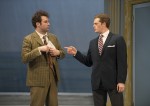
Left to right: Andrew McNee as Francis and Martin Happer as Stanley Stubbers in One Man, Two Guvnors at the Arts Club Stanley Theatre. (photo by David Cooper)

It’s always disconcerting when sitting in a theatre listening to everyone laughing while thinking, “What’s so funny?”

That was my experience at the media opening of One Man, Two Guvnors Jan. 28. I’m thinking, therefore, that this review is going to be controversial. Judging by the audience response to the play, I was, with the dozen or so others who left at intermission, clearly in the minority.

Perhaps the problem was that reading the name of the play and about its background, and having been to British period comedies in the past, I had high expectations. I anticipated caustic wit and clever verbal jousting; instead, I was witness to very lame jokes and antiquated slapstick comedy.

Slapstick? Really?

For much of Guvnors, I felt as though I was in a studio audience watching a bad sitcom. It hearkened back to when, as a child, I watched my parents roll in laughter at the likes of Wayne and Schuster’s antics – certainly performances that would draw yawns today.

Now, just in case I’m coming across as a humorless Scrooge who wouldn’t release a guffaw unless I was on laughing gas, let me remind readers of previous reviews. I have snickered at the wit in The Philanderer, joined the multitudes who guffawed to The Producers and fell off my seat convulsing in laughter during Dirty Rotten Scoundrels. But those plays were smart. Witty.

Guvnors seems to play to the lowest common denominator of predictable, parochial humor at the level of arm-pit noises and fart jokes. The main character Francis is compared by the director to Will Ferrell. ‘Nuf said.

Now, before I continue on my rant, let me delve into the plot for some context. The play takes place in 1963 in England, starting in London where Pauline and Allan are preparing for a marriage that looks like it’s going to be thwarted: Pauline’s former fiancé, Roscoe, appears to have come back from the dead. It turns out that Roscoe is, in fact, Rachel, Roscoe’s twin sister, who must keep up the sham that Roscoe is alive until she can collect on the 6,000 pounds Pauline’s father is supposed to give him/her, at which point Rachel plans to run away to Australia with her lover Stanley, who is actually Roscoe’s murderer. Rachel and Stanley become the two “guvnors” to Francis, a poor sod who’s either starving for food or starving for love.

The story picks up in Brighton where the farce of mistaken identities really takes off. Francis, who is the consistent backbone to the plot, finds himself serving both guvnors in one hotel, trying to keep them apart, not knowing their hidden connections. In the end, there is a “happy” ending, with two avoided suicides and three marriages.

In an unusual twist, the performance is introduced by a quartet of musicians, a guitarist, a banjo player, stand-up bass and washboard – the first I’ve seen at the Stanley – that introduces the first and second acts and intersperses the play with fun tunes and singing.

As well, during the show, a few audience members are coerced to come on stage and be part of the performance. (Don’t worry, it’s all part of the act.)

At intermission, I was told by friends enjoying the performance that it is supposed to be silly. Indeed, the director’s notes state that it pays tribute to the vaudeville era of entertainment, the play itself being an adaptation of the beloved 18th-century Italian playwright Carlo Osvaldo Goldoni’s A Servant of Two Masters, which itself is based on the commedia dell’arte of the 16th century.

But so what? In a play where the comedy is predictable, does it really matter if it’s due to bad actors doing a bad job versus good actors intentionally doing a bad job? What’s the difference between a show that recreates outdated theatrics well and one that is simply outdated?

In fact, the play itself suggests there is no difference. In one conversation one character asks, “Does he smell of horses or does he smell like horses?” Suggesting the difference is that a man who smells of horses might have been riding them and, therefore, comes from good stock; whereas a man who smells like horses just smells bad.

His counterpart responds, “Well, it’s all the same in the end, isn’t it?”

Quite so.

Guvnors runs until Feb. 22 at the Stanley Theatre. The Jewish community’s multitalented Anton Lipovetsky is not only the musical director and lead-guitar player in the quartet but also has a small part in the play. Another bright community talent, Ryan Beil, plays the love-struck Allan Dangle. Israeli Vancouverite Amir Ofek designed the sets that hearken back to the Stanley’s original life as a vaudeville house.

Baila Lazarus is a freelance writer, painter and photographer. Her work can be seen at orchiddesigns.net.

Format ImagePosted on February 6, 2015February 5, 2015Author Baila LazarusCategories Performing ArtsTags Amir Ofek, Anton Lipovetsky, Carlo Osvaldo Goldoni, commedia dell’arte, Guvnors, Ryan Beil
Training Haitian physicians

Training Haitian physicians

Dr. Neil Pollock, second from the left, in Haiti. (photo from Neil Pollock)

Vancouver-based Dr. Neil Pollock has recently returned from a mission to Haiti, where he trained surgeons in newborn male circumcision to help fight against HIV.

Among other benefits, “circumcision reduces AIDs transmission by 60 percent and that would reduce a man’s risk of acquiring HIV. The reason is, the foreskin has receptor cells that selectively bind the HIV virus and promote its uptake into the body. So, by removing the foreskin, you remove the portal of entry for the virus,” explained Pollock, who specializes in circumcision and adult vasectomy.

Pollock was approached to lead the Haiti mission by Dr. Jeffrey Klausner, a medical doctor and professor of medicine at UCLA, specializing in infectious disease. Klausner volunteers with GHESKIO, a nongovernmental organization run out of the Centre for Global Health at Weill Cornell Medical College in partnership with the Haitian government.

In a phone interview with the Independent, Klausner said that, around 2007/08, “evidence became very clear that circumcision was a highly effective prevention intervention for HIV and the first priority was to get adolescents and young men circumcised. And, over time, we scaled up progress for newborns.”

After moving from South Africa to Los Angeles, Klausner started working in various countries. It was in Haiti in March 2012 that he connected with GHESKIO. He said it was one of the first NGOs to respond to the AIDs crisis in the early 1980s. Through GHESKIO, he was introduced to Haiti’s first lady, Sophia Martelly, in Washington, D.C., at the International AIDs Conference. Klausner said that, when talking to Martelly about the prospect of introducing newborn circumcision to Haiti, she said, “Absolutely, we’d love to do that, but we don’t have the resources, we don’t have the technical expertise, so we really need to rely on people like you to help us.”

Klausner returned to GHESKIO and worked to organize “a physical place, the proper clean procedure room … certain types of equipment and supplies and autoclaves, sterilized surgical equipment, and the tab was running into tens of thousands, about $50,000…. Once we had the supplies and materials, then the next step was to get the training, and I’m not a surgeon. I contacted the head of circumcision programs in Kenya, a guy named Robert Bailey.”

Bailey directed Klausner to Pollock. Klausner said he was “encouraged by [Pollock’s] enthusiasm and … set up a training program for May 2014.” (see jewishindependent.ca/vancouver-doctor-will-train-doctors-in-haiti-in-circumcision) However, the mission had to be postponed to November, as just days before they were set to depart, an “outbreak of chikungunya fever hit, which is a rare [virus] that causes fever, joint pain, and about one of 100 people can get lifelong arthritis.” In addition, “there was a fire in a supply room and we lost some of the tables we had bought and one of the autoclaves,” and “a box of supplies went missing.”

Despite these and other challenges in organizing and executing the mission, such as difficulties in communication due to power outages and poor internet connections, Klausner said, “I have been doing international work, research and programs for 25 years now and [obstacles are] par for the course. This actually went smoother than many other projects [in which] I have been involved.”

For the Haiti mission, said Klausner, “We had to make sure there were at least 200 parents and babies that were already pre-examined, pre-consented, pre-educated and prepared” because for “a training program like this to be successful you really need to do between 50 to 100 [surgeries] a day in a short period with a lot of cases to make sure the people you are training learn, and learn effectively so they can go on and do this independently and confidently.”

Pollock said he had “arranged to train two surgeons, in case one of them did not have the aptitude to succeed – in the end, one did not, and it was difficult of course to tell him that, but it was clear that it would not be safe to pass him and enable him to operate on patients.”

With the use of the technique he taught in Haiti, said Pollock, recovery time will be reduced compared to current Haitian practices “because there is so little trauma caused during surgery.”

Klausner offered three measures for the mission’s success. “One is the actual conduct of safe, well-done circumcision on the babies that Dr. Pollock and his colleague Pierre Crouse did. That’s an achievement in itself: they did over 100 infants in two and a half days. The second part is that the surgeon and the teams that were trained, they continue to do it themselves, so they have done an additional 100 since we left. And then the third piece is that we have trained the trainers, and now other teams are being trained” to perform the surgery.

Klausner’s and Pollock’s efforts in combating HIV and AIDs received notice from some high-profile celebrities. “I was quite surprised to get a text from Sean Penn on the day after we landed in Port-au-Prince that he wanted to come down and meet and observe what myself and my team were doing and discuss synergies between our global interests in promoting health care,” said Pollock. Penn was joined by Charlize Theron, “who was also interested in discussing collaborative efforts in association with her foundation helping improve health care for the people in her native country of South Africa.”

Klausner said, “I have been working in eastern South Africa, KwaZulu-Natal province … with the public health leaders there to introduce a similar effort where we would train surgeons, create a permanent resource, such as a training program, to expand the number of trained doctors or medical officers in newborn circumcision.” In that province, he said, “40 percent of people have HIV infection” and “75 percent of women aged 30 have HIV. So, right now, that part of South Africa … is in a complete, out of control, HIV epidemic. I helped introduce adult circumcision there, but I think, to have greater impact in the long term, we need to introduce newborn circumcision.”

He added, “I believe Dr. Pollock had a very positive experience [in Haiti] and I suspect he is optimistic about the possibility to go and do it again elsewhere.”

Zach Sagorin is a Vancouver freelance writer.

Format ImagePosted on February 6, 2015July 2, 2020Author Zach SagorinCategories WorldTags AIDS, circumcision, GHESKIO, Haiti, HIV, Jeffrey Klausner, Neil Pollock
This week’s cartoon … Feb. 6/15

This week’s cartoon … Feb. 6/15

For more cartoons, visit thedailysnooze.com.

Format ImagePosted on February 6, 2015February 5, 2015Author Jacob SamuelCategories The Daily SnoozeTags For more cartoons, Table of Elements, thedailysnooze.com, visit thedailysnooze.com.
Clues to the end game

Clues to the end game

On Jan. 28, Israeli soldiers in the northern Mount Dov region are pictured after an Israel Defence Forces patrol came under anti-tank fire from Hezbollah terrorist operatives. The Hezbollah attack killed two Israeli soldiers and injured seven others. (photo by Basal Awidat/Flash90)

Who was behind the Jan. 28 attack on northern Israel that killed two Israeli soldiers and wounded seven others? The easy answer is the Lebanon-based terrorist group Hezbollah, which claimed responsibility for the attack. But the wider view suggests Hezbollah’s state sponsor: Iran.

Dr. Ely Karmon, a senior research scholar at Israel’s International Institute for Counterterrorism, said that Hezbollah’s actions represent “an attempt to change the strategic rules of the game.” According to Karmon, Iran and Hezbollah have been working for months to take advantage of instability in Syria in order to create a forward military position against

Israel in Syria’s Quneitra region, close to the triple Syria-Lebanon-Israel border.

“This is actually an Iranian project,” Karmon told this reporter. “They have around 1,500 people on the ground in Syria, most of whom are counseling or training Syrian militias, and they have Hezbollah providing military support.”

On Jan. 28, Hezbollah fired five Kornet guided anti-tank missiles at an Israeli military convoy approximately 2.5 miles inside Israel’s border with Lebanon. A day earlier, less sophisticated mortars were fired from southern Syria into Israeli territory, with no damage reported.

In response to the Jan. 28 attack, Israeli Prime Minister Binyamin Netanyahu said, “Whoever is behind today’s attack will pay the full price.” Netanyahu – like Karmon – stressed that the attack points back to Iran, adding, “with the assistance of Hezbollah, Iran has been for some time trying to open another front against Israel on the Golan Heights. We are acting with force and determination against these attempts.”

“Because of the weakness of the Syrian regime, the Iranians are now permitted to have a foothold directly on Israel’s border, which until now they didn’t have,” Karmon explained.

Israel is widely believed to be responsible for a Jan. 18 airstrike against that foothold in southern Syria, which killed six Hezbollah operatives and six Iranians, including notorious Hezbollah commander Jihad Mughniyeh and Iranian general Mohammad Ali Allahdadi.

Karmon believes the airstrike “was a message sent by Israel” to forewarn Iran and Hezbollah not to continue their military efforts in Syrian territory.

The retaliatory attacks by Hezbollah following the deadly airstrike were widely expected. That the more sophisticated Kornet anti-tank missiles were fired from Lebanon and not Syria provides a strong indication that the Syrian position is not as well-stocked with weaponry as southern Lebanon – a zone that was supposed to remain completely demilitarized under United Nations Security Council Resolution 1701, which arranged for the cessation of hostilities following the Second Lebanon War of 2006.

“Resolution 1701 calls for complete disarmament in southern Lebanon and, yet, Hezbollah, instead of disarming, they have amassed some 80,000-90,000 missiles,” Karmon said.

“Now, they want to achieve the same equation in southern Syria. If Israel does not stop them, and there are two to three years with relative quiet, with only occasional penetrations of our border and sometimes mortar fire and so on, a kind of ‘war of attrition,’ then all of a sudden we will find ourselves staring at 5,000-10,000 missiles,” he said.

Read more at jns.org.

Format ImagePosted on February 6, 2015February 5, 2015Author Alex Traiman JNS.ORGCategories WorldTags Binyamin Netanyahu, Ely Karmon, Hezbollah, Iran, Israel, Syria, terrorism

Posts pagination

Previous page Page 1 … Page 5 Page 6 Page 7 Next page
Proudly powered by WordPress