Skip to content

  • Home
  • Subscribe / donate
  • Events calendar
  • News
    • Local
    • National
    • Israel
    • World
    • עניין בחדשות
      A roundup of news in Canada and further afield, in Hebrew.
  • Opinion
    • From the JI
    • Op-Ed
  • Arts & Culture
    • Performing Arts
    • Music
    • Books
    • Visual Arts
    • TV & Film
  • Life
    • Celebrating the Holidays
    • Travel
    • The Daily Snooze
      Cartoons by Jacob Samuel
    • Mystery Photo
      Help the JI and JMABC fill in the gaps in our archives.
  • Community Links
    • Organizations, Etc.
    • Other News Sources & Blogs
    • Business Directory
  • FAQ
  • JI Chai Celebration
  • JI@88! video
image - Weizmann Canada Physics Tournament 2025
image - The CJN - Visit Us Banner - 300x600 - 101625

Recent Posts

  • Vrba monument is unveiled
  • Music to build bridges
  • A better future possible
  • Anne Frank exhibit on now
  • Human rights in sport
  • Telling the story of an icon
  • Crawl bigger than ever
  • JCC Maccabi in Toronto
  • A way to meet fellow Jews
  • Time to include
  • Add Jewish joy to the mix
  • Reminder of humanity’s light
  • From the archives … editorials
  • Year-round holiday recipes
  • מדוע עזבתי את ישראל ואינני חושב לחזור ארצה
  • OJC hosts Oct. 7 memorial
  • A journey beyond self
  • Antisemitism a problem
  • Young man is missed
  • Orr action sparks complaint
  • Prison sentence for hate
  • Etgar Keret comes to Vancouver
  • New fall lecture series
  • Series explores music
  • Doc on Zapiro screens Nov. 6
  • Joy of shared existence
  • Community milestones … October 2025
  • MAID vs Jewish values
  • Cheshvan a great month, too
  • Bull, bear or bubble?
  • From the archives … a coin, etc.
  • מדוע האנטישמיות הולכת וגואה בעולם
  • New bio gives Vrba his due
  • Joy brighter than ever
  • When approaches differ
  • New leadership at the JCCV

Archives

Follow @JewishIndie

Tag: Middle East

רובטר פיסק בוונקובר חלק שני

רובטר פיסק בוונקובר חלק שני

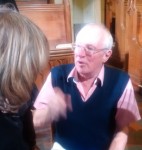
בחודש שעבר הגיע לוונקובר העיתונאי האנגלי של “האינדיפנדנט“, רוברט פיסק, שנחשב למומחה בנושאי המזרח התיכון. הוא נתן הרצאה בפני אולם מלא פה לפה בכנסייה המאוחדת בדאון טאון. (צילום: Roni Rachmani)

חוסר הצדק והיעדר חינוך יצרו את המלחמות והפליטים הרבים

אם לתושבים במזרח התיכון היו מוענקים צדק, חופש וחינוך לא היו מלחמות, לא היו כובשים זרים ולא היה את דאעש. ממשלות המערב השקיעו כספים ומשאבים אדירים לאור הפחד מאל קאעידה או מדאעש, כדי שפעולות הטרור לא יגיעו אל המערב. אם הן היו משקיעות את המשאבים בחינוך והייתה מתקיימת חברה יציבה ועובדת, התושבים המקומיים היו יודעים שהמדינות שייכות להם, ולא לדיקטטורים, קבוצות דתיות או שלטון זר, אז לא היו תופעות כמו של שמונה מאות אלף פליטים ולא דאעש.

מי זה ארגון דאעש וכיצד הוא פועל?

הבעייה עם דאעש היא שאיננו מכירים בעצם את הארגון ולא יכולים לסקר מה קורה באזוריו, כי אם נגיע לשם חבריו יוציאו אותנו להורג. בשנה האחרונה אני מנסה ללמוד את דאעש, הקשבתי שפתם וכיצד הם מתבטאים, ולצערי נאלצתי לצפות בכל הקלטות הנוראיות שלהם. מדובר בדבר חדש במזרח התיכון שלא היה קיים עד כה. בפרוש לא מדובר בדת אלה בפולחן דתי. מדובר באנשים אכזריים, קרים, חסרי רגישות, רגשות ותשוקות, למעט דרישתם להקמת המדינה האיסלאמית. הם מפחידים וזו כוונתם המוצהרת, ופועלים כמו טילים או מכונות במלחמה. ביקרתי עם כוחות הצבא הסורי בכנסייה לאחר שאנשי דאעש היו במקום, ונדהמתי לראות כיצד הם גרמו להרס. הם חתכו תמונות שמן עתיקות באופן מחושב במכונה לחיתוך, ולא בצורה אמוציונלית עם כעס ושנאה תוך שימוש בסכינים. כאמור מדובר בתופעה חדשה במזרח התיכון ואין לי מושג מי עומד מאחורי הנשק הזה שנקרא דאעש, אם כי אי אפשר לשלול את הקשר האפשרי בין דאעש לערב הסעודית.

מה על קנדה לעשות כיום במשבר הנוכחי במזרח התיכון?

קנדה בשום פנים ואופן ללא צריכה להתערב במלחמה עם דאעש וזה לא מתפקידה. הקנדים צריכים לעשות חשיבה מחדש ולעזור לאו”ם בשליחת משקיפים לאזור ולפקח על מה שקורה בשטח. וכן לעזור לאלה שסובלים וכידוע יש רבים מאוד שסובלים.

כיצד מתנהלת המלחמה של המערב בדאעש?

אני לא שחושב כלל שהמלחמה מול דאעש מתנהלת כמו שאנו חושבים. לא נראה לי שמדינות המערב ממש נלחמות מול דאעש, אלה שהן מקיימות בסך הכל תרגילים צבאיים. אם ארה”ב, רוסיה ואיראן היו רוצות לפעול ביחד, הן היו פותרות את הבעייה בסוריה ביום אחד. אך עובדה שזה לא קורה. להערכתי ארה”ב פוזלת יותר ויותר לכיוון של איראן השיעית, ופחות ופחות לכיוון ערב הסעודית הסונית. וכנראה שבשיחות הגרעין הארוכות עם איראן, בחצי מהזמן האמריקנים דנו עימם במשבר בסוריה, ועל הפיכתה של איראן לשוטר של המזרח התיכון. אני מעריך עוד שתתרחש הפיכה גם בערב הסעודית אך היא לא תבוא מכיוון האוכלוסייה, אלא מתוך בית המלוכה על ידי חלק מהנסיכים שיבצעו אותה.

מה קורה עם הסכסוך הישראלי-פלסטיני?

לגבי הסכסוך הממושך בין ישראל לפלסטינים, יש לזכור שגם לשני צדדים אלה הובטחו הבטחות שווא שיקבלו מדינות גדולות. אני יכול לקבוע בצער כי מדינה פלסטינית לא תקום, כיוון שממשלות ישראל השונות בנו ובונות בשטחים הכבושים בצורה כזו, שלא יהיה רצף טריטוריאלי לפלסטינים וזו עובדה מוגמרת. כל עוד תתקיים תמיכה אמריקנית בישראל שום דבר לא ישתנה ואני צופה שזה יביא לאסון באזור.

Format ImagePosted on October 7, 2015October 14, 2015Author Roni RachmaniCategories עניין בחדשותTags al-Qaeda, ISIS, Israel, Middle East, Palestinians, Robert Fisk, Sykes-Picot, אל קאעידה, דאעש, ישראל, מזרח התיכון, סייקס-פיקו, פלסטינים, רוברט פיסק1 Comment on רובטר פיסק בוונקובר חלק שני
רוברט פיסק בוונקובר חלק א

רוברט פיסק בוונקובר חלק א

בשבוע שעבר הגיע לוונקובר העיתונאי האנגלי של “האינדיפנדנט”, רוברט פיסק, שנחשב למומחה בנושאי המזרח התיכון. הוא נתן הרצאה בפני אולם מלא פה לפה בכנסייה המאוחדת בדאון טאון. (צילום: Roni Rachmani) 

בשבוע שעבר הגיע לוונקובר העיתונאי האנגלי של “האינדיפנדנט”, רוברט פיסק, שנחשב למומחה בנושאי המזרח התיכון. כבר שנים רבות שהוא מסקר את המתרחש באזור המסוכן הזה, תוך שהוא צובר עשרות שעות של ראיונות עם ראשי מדינות, ארגוני טרור ואנשי מפתח אחרים. פיסק מקיים סדרה של הרצאות ברחבי קנדה. בוונקובר הוא נתן הרצאה בפני אולם מלא פה לפה בכנסייה המאוחדת בדאון טאון. פיסק לא מסתיר את דעותיו וניתן מייד להבין שהוא שייך למחנה השמאל. לדבריו במדינות כמו אנגליה וקנדה לציבור הרחב יש דעות שונות ממשלותיהם, ודעות אלה לא באות לידי ביטוי. פיסק ממליץ לשומעיו שלא לבחור שוב בראש הממשלה הנוכחי סטיבן הרפר. “יש ביקורת גדולה על ממשלת קנדה בנושא הטיפול בפליטים, שמגיעים בהמוניהם מהמזרח התיכון. צריך להיות מנהיג כמו הקנצלרית של גרמניה אנגלה מרקל ולא כמו הרפר”. להלן עיקריו דבריו.

הסכם סייקס-פיקו הוא זה שיצר את הבעיות הנוכחיות הקשות במזרח התיכון

המזרח התיכון לפני כמאה שנים (1916) על ידי הצרפתים והבריטים, במסגרת הסכם סייקס-פיקו, היא שיצרה את העיוות נוראי ואת תוצאותיו שאנו רואים היום. בסיום מלחמת העולם הראשונה ביקשו שתי המדינות לחלק את האימפריה העות’מאנית ובעצם להשתלט על אדמותיה. זאת בטענה כביכול עד שיוקמו שלטונות עצמאיים. מעניין שהערבים לא שותפו כלל והצרפתים והבריטים קבעו לבדם את גבולות סוריה, עיראק, ירדן, לבנון ופלסטין. הוקמו מדינות שלתושבים בהן אין שום דבר משותף, גם לא מהבחינה הדתית. ובעצם צרפת ובריטניה ביקשו לשלוט במדינות אלה, באדמותיהן וכמובן גם במשאבים שלהן. לתושבים לא הוענקו צדק וחופש ונגרם להם עוול נוראי. לאחר מכן שתי המדינות עזבו את האזור והשאירו דיקטטורים ומלכים, ואף תמכו בהם ונתנו להם כסף ונשק. כיצד המוסלמים שמאמינים באלוהים דוכאו והושפלו על ידי מנהיגים שלא מאמינים באלוהים? כיצד מדינות המערב הדמוקרטיות תמכו כל השנים באותם דיקטטורים? מבחינת התושבים דמוקרטיה היא לא כמו במערב אלה פשוט דיקטטורה. אני לא זוכר בהפגנות נגד השליטים במזרח התיכון בארבע השנים האחרונות, אפילו מפגין אחד שרצה דמוקרטיה.

המצב בסוריה והפליטים הרבים

המצב בסוריה הוא גרוע ביותר מאי פעם במזרח התיכון. להערכתי יש כבר כשלוש מאות אלף הרוגים. מפקדי הצבא הסורי מסרו לי כי רק מצידם נהרגו כחמישים אלף חיילים. לבנון קלטה 1.5 מיליון פליטים ומדובר במדינה קטנה בת חמישה מיליון איש בלבד. אז האירופאים יכולים לדבר עד כמה קשה לקלוט פליטים? המצב במחנות הפליטים בלבנון קשה ביותר. סיירתי שם וראיתי ילדים שצריכים ללכת לבתי ספר עובדים בשדות בתנאי עבדות של ממש. כשמונה מאות אלף פליטים מציפים כיום את אירופה, ולהערכתי מרביתם לא מתכוונים לחזור למזרח התיכון כי אין להם לאן לחזור. הם לא מאמינים עוד במבנה המדינות הנוכחי, שנקבע בעצם בהסכם סייקס-פיקו. המצב הקשה והסבל הנוראי האנושי הזה קורה באזור בעיקר כיוון שלא תכננו שום דבר מראש. וינסטון צ’רצ’יל למשל הקים ועדה מיוחדת לתכנון מה יקרה בגרמניה הנאצית ארבע שנים לאחר נפילתה. צריך היום לשבת ולתכנן מה יקרה במזרח התיכון בעוד שישים שנה.

מי הטובים ומי הרעים במזרח התיכון?

היום אי אפשר לדעת במזרח התיכון מי הם הטובים ומי הם רעים. בעצם אף פעם לא ידענו. שום גורם צבאי לא יעמוד בקריטריונים של הארגונים לזכויות האזרח. בין אם מדובר בסוריה, ערב הסעודית, דאעש, ישראל או ארה”ב.

Format ImagePosted on September 30, 2015October 14, 2015Author Roni RachmaniCategories עניין בחדשותTags Middle East, Robert Fisk, Sykes-Picot, מזרח התיכון, סייקס-פיקו, רוברט פיסק
Fighter returns to Israel

Fighter returns to Israel

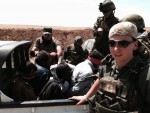
Former British Columbian Gill Rosenberg spent nine months fighting the Islamic State in Iraq and Syria. (photo from Gill Rosenberg)

Gill Rosenberg returned to Israel a month ago, after spending nine months fighting the Islamic State in Iraq and Syria (ISIS).

Born in Surrey, Rosenberg, 31, grew up in White Rock and graduated from King David High School before continuing her studies at B.C. Institute of Technology, finishing a program in airport operations management. She moved to Israel in 2006 to serve in the Israel Defence Forces, volunteering through a program called Mahal (the overseas volunteer IDF program). During the course of her service, she made aliya. She now lives in Jerusalem.

“I served as a search and rescue NCO (non-commissioned officer) and as an instructor at the Search, Rescue and Civil Defence School,” Rosenberg told the Independent. “It was a great experience.”

She also spent time training the Kenyan Armed Forces and helped them establish a disaster response unit in their country.

Growing up in British Columbia taught Rosenberg “to respect the diversity of culture, beliefs and religion,” she said. “As well, being raised Jewish, I had a strong education on the Shoah and participated in the March of the Living, visiting the concentration camps in Poland.”

After that experience, Rosenberg was invited to speak at the B.C. Legislature on behalf of Jewish youth when the government voted to enact Holocaust Memorial Day legislation, when Ujjal Dosanjh was premier.

Intolerance and totalitarianism are two things that she has vowed to never tolerate. “I fully believe that when we say ‘Never again,’ we don’t mean just for us Jews,” she said. “We can’t stand by and stay silent to any genocide taking place – and that’s what I saw happening to the Yazidi population on Sinjar Mountain. The Christians and Yazidis in Iraq have lost the most in this war.”

Rosenberg fought in Syria with the YPG/YPJ (Kurdish militia groups) for three months and then headed to Iraq for six months, fighting with the Assyrian Christian militia, Dwekh Nawsha.

“In Syria, I was in Serekaniye and it was a pretty static front over the winter months,” she said. “It was bitterly cold, always raining, muddy, and darkness like I’ve never experienced anywhere else.

“There’d be a firefight at least once a day, but it was mostly from a distance of over one kilometre. My first day on the frontline, a suicide bomber blew himself up about 50 feet from our checkpoint. He intended to get closer, but because of the deep mud, his vehicle got stuck and, thank God, he was the only casualty that day.

“In Iraq,” she continued, “I was at a frontline 25 kilometres from the city centre of Mosul. They were in Baqofa and Telskuf, and the next town over, called Batnay, was already Daesh-occupied.

“The Daesh [ISIS] are hitting that position with mortars, Katyusha rockets and heavy machine gun fire daily and especially at night. They attempt to ambush, but both Dwekh Nawsha and the Peshmerga at that frontline have prevented any advancement of ISIS forces.”

Rosenberg said she was treated with the utmost respect and not any differently than other fighters. “They feel like the world has forgotten them, so for an Israeli Jewish woman to pick up a weapon and stand with them on the frontlines meant a lot to them,” she said. “I still keep in touch with the leader there and he tells me I’ll be a part of them forever, that we’re family.”

As she was fighting, Rosenberg wore the Canadian flag on her uniform proudly. “I feel that Canada is one of few countries that still stands tall and supports democracy and freedom, and it isn’t afraid to condemn those committing evil in this world. And that’s something to be very proud of.”

Earlier in the interview, she noted, “Stephen Harper is the only world leader condemning the nuclear deal with Iran and speaking out against the evils of this world and standing with our best allies.”

Since returning to Israel, Rosenberg has met with several members of the Knesset and shared with them some of her experiences. She also has been approached by several nongovernmental organizations working in Syria and Iraq for her help with their efforts.

“I want to continue helping women and children in Syria and Iraq,” she said, “so I have to determine where my experience and abilities can be best put to use. As far as returning to the frontline, I have no plans to return at this stage.”

Rosenberg was very clear that she does not see herself as a recruiter. “I very adamantly would advise against anyone traveling to the region to fight,” she said. “There are many ways to help, including a Montreal Jewish foundation called CYCI (the Liberation of Christian and Yazidi Children of Iraq), which are buying and liberating the children that are sold like sheep in the market in ISIS-controlled areas.

“Pikuach nefesh [to save a life] is an obligation we have as Jews, and the Talmud even requires us to spend money to save a life if we have that ability,” she said. “This organization [CYCI] gives us that ability.”

Another Canadian organization, also coming from the Jewish community, is Rape Is No Joke (RINJ). This group provides medical care to women and children who have been victims of rape and other brutality in Syria and Iraq.

From what Rosenberg has been hearing, the dynamics on the battlefield have changed in recent weeks, with the Iranians making gains in Iraq against ISIS. However, she was quick to add, “They might be fighting ISIS just as I was, but, ultimately, they’re not a friend and I believe they’re a much greater threat than is ISIS.”

Reiterating her discouragement of anyone traveling to the region to fight, Rosenberg said, “I believe that if we don’t stop ISIS now, they’ll be at our doorstep before we know it. ISIS are geniuses at social media and media and know how to look strong and strike fear in the hearts of the West.

“I can tell you, from my personal experience on the ground, that they fight in a very cowardly manner and often run away when challenged. This is especially true when it’s the women of the YPJ. Their beliefs are such that they think if they’re killed by a woman, they will go to hell. So, my only question is this, What happens to them when that woman is also Jewish and Israeli?”

Rebeca Kuropatwa is a Winnipeg freelance writer.

Format ImagePosted on August 21, 2015August 19, 2015Author Rebeca KuropatwaCategories WorldTags Gill Rosenberg, IDF, ISIS, Islamic State, Israel, Middle East, terrorism
U.S.-Israel relations

U.S.-Israel relations

U.S. Secretary of State John Kerry, right, with Michael Oren, then the Israeli ambassador to the United States, at Ben-Gurion International Airport in Tel Aviv on April 9, 2013. (photo from U.S. State Department via jns.org)

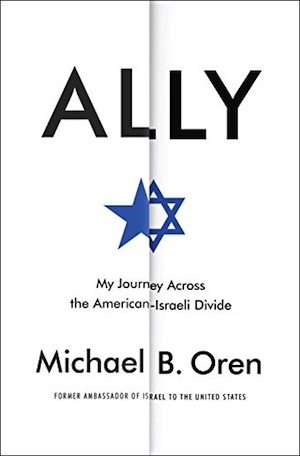
It’s safe to say that in the coming weeks you’ll be reading a great deal about the memoir Ally: My Journey Across the American-Israeli Divide (Random House, June 2015), authored by Israel’s former ambassador to the United States, Michael Oren.

book cover - Ally: My Journey Across the American-Israeli Divide by Michael OrenOren spent the years 2009-13 as Israel’s envoy in Washington. Once a dual national of both the United States and Israel, the New Jersey-raised Oren had to surrender his U.S. passport at the American embassy in Tel Aviv before taking up his ambassadorial post – an emotionally wrenching episode that he describes in detail. Oren’s complicated identity as an American and an Israeli is a theme that runs throughout the book, and his treatment of this subject is a welcome tonic to the dreary and rather smelly charges of “dual loyalty” that too often accompany examinations of the relationship that Jews in the Diaspora have with the Jewish state.

The main attraction of the book, of course, is its account of the Obama administration’s Middle East policies, and Oren’s candor has already gotten him into trouble. Dan Shapiro, the current U.S. ambassador to Israel, who makes several appearances in Oren’s memoir, told Israel’s Army Radio that Ally is “an imaginary account of what happened,” belittling Oren for having, as a mere ambassador, a “limited point of view into ongoing efforts. What he wrote does not reflect the truth.”

This is a serious charge, and it remains to be seen if Shapiro will attempt to substantiate it. In the meantime, it should be pointed out that what makes Ally such a fascinating read is that it provides, from Oren’s perspective, a detailed sense of the bitter atmosphere in both Washington and Jerusalem that underlay diplomatic efforts on the issues we are all intimately familiar with, from the negotiations over Iran’s nuclear program to the stalled Israeli-Palestinian peace process. Unlike other diplomats, Oren didn’t wait 20 years to publish his story – most of the key individuals in his book, most obviously U.S. President Barack Obama and Israeli Prime Minister Binyamin Netanyahu, are still in power, and the bilateral tensions that Oren agonizingly explains haven’t been lessened since his departure from Israel’s Washington embassy. Diplomats aren’t supposed to be this transparent, which is why Oren will be regarded in many circles as a man who broke “omertà,” the code of silence which ensures that we ordinary mortals are kept in the dark about what our leaders are saying in private.

While it’s true that Obama comes in for heavy criticism, Oren rubbishes the claim that the president is “anti-Israel.” The reality is more complex; as Oren writes, “the Israel [Obama] cared about was also the Israel whose interests he believed he understood better than its own citizens.” One might add that this paternalistic approach has informed Obama’s stance on the entire region, resulting in a sly policy that presents itself to Americans as a much-desired withdrawal from the Middle East’s endless bloodshed while, at the same time, fundamentally redistributing the region’s balance of power in favor of Iran, whose rulers have spent almost 40 years chanting, “Death to America.”

Read more at jns.org.

Format ImagePosted on June 26, 2015June 25, 2015Author Ben Cohen JNS.ORGCategories BooksTags Barack Obama, Binyamin Netanyahu, Israel-U.S. relations, Michael Oren, Middle East
A more realistic future

A more realistic future

Ari Shavit speaks at Winnipeg’s Shaarey Zedek Synagogue. (photo by Rebeca Kuropatwa)

As part of the Jewish Heritage Centre of Western Canada’s Annual Sol and Florence Kanee Distinguished Lecture Speaker Series, leading Israeli columnist and writer Ari Shavit addressed a packed room of 300 people on the topic Is Peace Dead? The talk took place April 19 at Shaarey Zedek Synagogue in Winnipeg.

Shavit, who described himself a “diehard peacenik,” said he is more comfortable referring to what some call “the Arab Awakening” as “the Arab Chaos.”

He explained, “We were hoping for an Arab Spring. It turned into something else and the result is the Arab Chaos. The old order that ruled over the Arab world has collapsed, but it was not replaced by any liberal democracy. It was replaced with more tribalism, more fanaticism and much more violence. We now see a human catastrophe engulfing a large part of the region and the acute situation of instability. I care about my fellow humans and we have to be saddened that we have such a terrible human catastrophe.”

Even worse, in Shavit’s view, “There is no more chance in the upcoming years to have the old kind of peace we hoped for,” he said. “I don’t think we can have the kind of peace agreement like with Egypt or Jordan in the coming years, because those were peace agreements that were signed with tyranny.”

Shavit used Syria as an example, saying that, back in the 1990s and in early 2000, he very much supported a peace agreement with Syria. But, he said, “Now, there is no one to make peace with.

“The good news is the more clear division within the Arab community. Many Arab moderates are now terrified by Iran, by ISIS, by the Islamic Brotherhood, by Al-Qaeda, by extremists, [so] they actually are closer to Israel than they ever were in the past. So, there is a kind of interesting potential within this sad, tragic, acute situation.”

According to Shavit, the road to peace today begins with the understanding that we cannot reach a two-state solution with the Palestinians in the coming months or years.

“We won’t have the comprehensive peace we hoped for,” said Shavit. “But, on the other hand, we should not accept the status quo. And, I think we should launch a two-state dynamic, which would lead to a two-state state to start with, and eventually lead to a two-state solution.”

Regionally, Shavit stressed the need for Israel to work much more closely with Egypt, Saudi Arabia, the Gulf countries and Jordan, as, he said, “They are closer to Israel than they ever were.”

Though Shavit conceded that the likelihood of signing a new formal peace agreement may not currently be in the cards, he encouraged “building a kind of peace based on economic interests, mutual interests and strategic interests.”

What Shavit envisions is “the kind of peace agreement [Israel] had with Jordan before the 1994 peace signing. There were no embassies, there were no Nobel Prizes, no White House ceremonies, but we had a very close, intimate relationship – quite a lot of the time – better than after the formal signing. That should be an example of what can be done in this new chaotic situation.”

Shavit sees potential for “cooperation as opposed to a utopian peace.” Potential partners for this cooperation, Shavit suggested would include “the major Arab Sunni nations led by moderate people…. [People who] are not deeply concerned or interested in human rights or democracy, but they don’t want extremists. Saudi Arabia and the other Gulf States fall into that category. So, the strategic game now is pretty much controlled by two non-Arab countries – Israel and Turkey – and, I would say, Egypt and Saudi Arabia.”

As to whether or not these partners are interested in just cooperation or a more lasting peace, Shavit said, “I think they want to live and they want stability. Therefore, if we promote this new peace concept, I think there’s a chance of having a better relationship. I think many of them see Israel as a partner in that.

“It’s not that they are going to have a religious conversion…. I don’t see a kind of relationship that France and Spain have or Canada and the U.S. do, but, I do see a kind of Middle East-style relationship – the ability to create a structure that can be formed again if we endorse the right ideas.”

Regarding Israel’s recent elections, Shavit feels that the left lost more than the right won. “The lack of a peace plan of action had a lot to do with that. Even the left-wing part[ies] were not very aggressive at promotional peace. The peace talked about in the national community is a kind of peace that is totally detached.”

Shavit is hopeful that Israelis will open their hearts to peace, in the case where “a kind of new peace, a concept that is more realistic, comes around. As long as the community talks about European-style peace, when we have a kind of evil political reality in a large part of the Middle East, Israelis will not buy into that.”

International support is critical to any potential peace progress and, while Shavit loves Canada in many ways, he said, “I appreciate that Canada is supportive of Israel, when there aren’t many that support Israel in such a way. [But] obviously, the real relevant player is the United States.

“I hope that America will endorse a new kind of peace policy and then build a wide coalition – first of all with Canada, then with the European powers and then with the moderate Arabs and Israelis – addressing the issues in a realistic way.”

Shavit believes that the “dysfunctional relationship” of Binyamin Netanyahu and Barack Obama is not advancing the situation. “I hope I can be successful in encouraging an intellectual process to be helpful in bringing some change to that,” he said.

Shavit, like many others in Israel and around the world, is waiting to see what kind of Israeli government will be formed. “If we do have a right-wing government, with [Avigdor] Lieberman being the centre, I worry that we will have unpleasant legislation that will alienate the Arab minority even more and jeopardize the fragile relationship with them. If it will be more moderate in the centre, there is less danger.

“I think the last six months were very troubling, with unprecedented legislation or attempts [to discriminate], though most failed. I hope and pray that our power will not go back to that kind of approach. I think it will endanger Israel’s soul in a serious way.”

Shavit is hopeful that minority rights will not be trampled, as “the tradition of the historic Israeli right always combines nationalism with liberalism, with a deep respect for democracy. I really hope we will not see dark forces in Israel rising to power.”

Rebeca Kuropatwa is a Winnipeg freelance writer.

Format ImagePosted on May 1, 2015April 29, 2015Author Rebeca KuropatwaCategories IsraelTags Ari Shavit, Israel, Middle East, peace, two-state solution

Biggest improbability?

In September of 1978, U.S. president Jimmy Carter was at his wit’s end after 12 days of face-to-face negotiations between himself, Egyptian president Anwar Sadat and Israeli prime minister Menachem Begin.

Neither party was at all inclined to make peace, both had legitimate grievances with the other nation, advisors were telling them peace was not possible and that the leader and the nation each man represented could not be trusted. Things got so heated that all three parties had packed their bags and prepared statements that the talks had failed. Cars were idling in the Camp David driveway and Marine One, the presidential helicopter, was being readied to return Carter to Washington empty-handed.

Failure then, in the midst of the Cold War, would have meant an opening for the further arming of Egypt by the USSR and the nuclearization of the Middle East, where ultimately the fanatical forces that were then lurking in the shadows could very well force the Superpowers into a feared nuclear standoff. This was much like what was happening in East and West Germany at the time, only in the hot desert sands of the Middle East, it was far more likely that tempers would boil over.

These were the stakes at Camp David. The proposition was that Israel give back the Sinai Desert, land it had captured in the Six Day War, land that served as their saving buffer zone in the Yom Kippur War just five years earlier. Land that contained settlements of Israeli citizens that Begin had pledged on his life never to abandon. To do all of that in exchange for a piece of paper that promised peace, signed by three men who did not trust each other.

No one thought it probable or possible, not between these three men, Begin and Sadat, who had spent a lifetime fighting each other, and Carter, who lacked power at home and credibility abroad.

And, yet, they signed a lasting peace treaty. Israel had been at war with Egypt in one form or another for literally millennia, since the days of Pharaoh. They have not been at war since and, next to Jordan, Egypt is Israel’s closest ally in the region today.

Mark Twain said, “History doesn’t repeat itself but it often rhymes.” No two eras or events are the same, but many if not all have similarities.

Three years before Camp David, president Gerald Ford had announced that the United States would be reevaluating its relationship with Israel because of Israel’s power play, along with France, in the Suez Canal. A crisis, if you recall, that nearly, like the Cuban Missile Crisis, was only a series of missteps away from another nuclear confrontation between the United States and the USSR.

You could not have had Camp David if you had not also had the sobering realization of the Suez Canal Crisis. Carter could not have pressured Begin to do the good and hard thing for the future of Israel if Ford had not created enough daylight between the United States and Israel for Begin to see the light at the end of the endless wars with Egypt tunnel.

“History doesn’t repeat itself but it often rhymes.” I am neither a politician, nor a political scientist – though in truth I have a degree in the latter and every rabbi must ultimately learn the skills of the former. I am a student and teacher of history, the history of our people both in the land and yearning for the Land of Israel – and in all that has happened in these past many years, really since the assassination of Yitzhak Rabin (alav ha’shalom), I hear the rhyme of history.

Call it “darkest before the dawn,” but while I am filled with worry, the seriousness of the matter gives me hope that it can no longer be ignored or put off. That the pressure of absolutes that made Camp David possible has returned to make peace between the Israelis and Palestinians possible, though still improbable once again.

The region and its people are under near-bursting pressure. But pressure such as faces Israel also clarifies priorities. The greatest achievements of diplomacy have often come in the face of the most extreme pressure or, as Carl von Clausewitz wrote, “War is diplomacy by other means.”

Let’s examine the pressures in play.

In Israel, the status quo between Israelis and Palestinians is set to devolve into a third intifada. Meanwhile, there is a seismic schism between the Jews in Tel Aviv who voted overwhelmingly for the left and the Jews in Jerusalem who voted overwhelmingly for the right. Israelis on left and right are living two different realities, and they want two different futures for themselves and for the Palestinians.

In the Arab world, the forces of fundamentalism have shaken what little remains of the nation-states from their complacency with and tolerance for radicalization. Arab armies are mobilized against radicalism and terror. Yes, there is a vacuum of leadership throughout the Arab world, including among the Palestinians – but that also creates space for a leader to emerge.

Outside of the Middle East there is a fundamental disagreement between Western democracies that want Israel to act more like them, and Israel that wants the West to see that the terrorist threat confronting its democracy today is coming to their shores tomorrow. And for much of Europe tomorrow is today.

Jews are under attack around the globe. Antisemitism has come out of hiding once again. Much of antisemitism is ignorance and, yet, where do we find it? Most shockingly in our institutions of higher learning, where, in the most distorted and twisted forms, they equate Jews with Nazis. We see this happening particularly in the BDS campaigns that are sweeping across North American university campuses and right here at the University of British Columbia. These same antisemites defend terrorists as “heroes,” inviting them as speakers on campus. The Talmud says, “olam hafouch,” the world is upside down. Indeed, bigotry masquerades as fairness.

The pressure is not only external; it is internal, as well. The relationship between Jews in the Diaspora and Jews in Israel is becoming a dysfunctional marriage. It’s not headed for divorce but maybe separate bedrooms, as each tries to focus on things they love about the other, even when they are disappointed in the other.

It seems hopeless, I know, this election result whether you are left or right – the winner of the election was “hopelessness” itself. As Binyamin Netanyahu declared, in his view, there will never be a Palestinian state while he is prime minister. Those who voted for him believe that to be true and those who voted against him believe that to be true. That is the very definition of being without hope.

There is no solution to this conflict in this neighborhood, in this region, in this time. And, with no Palestinian leader who can do the same, it’s just not possible.

And, yet, we said the same before Camp David. We never thought Rabin would shake Arafat’s hand or make peace with Jordan. That Sharon, who built the settlements in Gaza would dismantle them, and that it didn’t lead to civil war.

Begin, Rabin, Sharon. These were not peace seekers, these were warriors, evolved Hawks.

We are not ready for another Camp David today; Netanyahu is not anywhere near ready, and there is no leader on the other side who can be a Sadat or a King Hussein of Jordan, a warrior who has the credibility to make peace.

By the same token, the only one in Israel right now who has the credibility to make peace with the Palestinians is Netanyahu. If he signs off on it, the people will believe it.

We are in a dark period and it may get darker. The pressure on Israel will only increase. The choices the country will have to make are impossible to understand right now. Our own solidarity both with Israel and with each other as fellow Jews will be tested, and there will be cracks. But that is nothing new for us, or for Israel. We don’t always agree, as Jews here or there, past or present, we seldom agree. In the end, however, what we have always done is survive. There’s the biggest improbability of all: that we are still here.

Israel is 67 years old. By comparison, it took the United States 150 years to reconcile slavery, a process that included a civil war, incomprehensible social disorder and civil unrest. And the United States, which is almost 200 years older than Israel, is still not yet resolved on the issue of race, as Ferguson – among many other events – reminds us.

Canada could say some of the same about true reconciliation with First Nations. We are not yet there.

This election was part of the growing pains of a nation and, in the age of nations, Israel is barely a teenager. Israel is the bat mitzvah girl who stands proudly, if not ironically, before the congregation and declares, “Today, I am a woman!” And we all smile and say to ourselves, “Not yet, but today you gave us a glimpse of the woman you will one day be. It would be more accurate to proclaim, “Today, I will no longer act like a child.”

“The arc of history is long,” Martin Luther King Jr. preached, “but it bends toward justice.” That’s the history of the world and it’s the story of our people, a story we are telling again around our seder tables this week.

What do you take away from the seder? That Pharaoh was cruel? That slavery was terrible? Yes, but also that we were redeemed; that the pressure on Pharaoh ultimately helped him see the light.

“La’yehudim hayta orah” we sang just recently on Purim and every week, as we end Shabbat with Havdalah. “The Jews enjoyed light and gladness, honor and joy. May we, too, experience these same blessings.” In another dark time, when all hope appeared lost, there was light. Let there be light once again!

Dan Moskovitz is senior rabbi of Temple Sholom in Vancouver.

Posted on April 3, 2015April 1, 2015Author Rabbi Dan MoskovitzCategories Op-EdTags Anwar Sadat, Binyamin Netanyahu, Camp David Accords, Israel, Israeli-Palestinian conflict, Jimmy Carter, Menachem Begin, Middle East, peace

The word “Palestine”

Does Palestine exist? A blogger on the often-provocative website JewsNews doesn’t think so. A package of dates marked “Palestine” must be “magic,” he says, since there’s no such country. And this echoes Moshe Arens’ trotting out of the old canard that Palestine doesn’t exist, but Jordan – the real Palestinian state – already does.

There are at least two issues at stake for Israelis: legitimacy and security. Yet a closer look reveals that neither concern is quite what it seems.

Part of the reason that many Jews have been allergic to the word Palestine is that it has long been used to negate the legitimacy of Israel. In this view, the land between the Mediterranean Sea and the Jordan River (or west of that, to the Green Line, depending on one’s view) is like a blue and white transparent film revealing a red, white and green film, containing a different narrative beneath. Since time is linear and space is finite, there seems to be room for only one people and one narrative on that tiny slice of Middle East territory. One cannot reverse the flow of the sands of time. Israel exists, so Palestine, the logic goes, cannot.

But, surprise! Those who would wish to roll back history and replace Israel with Palestine, as the Palestinian national movement claimed to want to do for decades, have now indicated – at least via their official leaders – that they will be satisfied with a mere 22 percent of the land they originally claimed as theirs. A state of Palestine, in other words, need no longer negate the symbolic right of Israel to exist.

Complicating all of this, though, is the one little word one often hears from Israeli officials, and which every state and all people deserve: security. For example, Bibi Netanyahu, in a video posted Dec. 27 to the Prime Minister of Israel’s Facebook page, contained an address to an enthusiastically nodding U.S. Senator Lindsey Graham.

In the span of a few seconds, Bibi managed to call out Palestinian negotiator Saeb Erekat’s rhetorical hyperbole (Erekat’s comparison of ISIS’s Islamic state desires with Bibi’s Jewish state utterances), while associating the Palestinian negotiator’s “incitement” with the throwing of a firebomb on an Israeli girl in the West Bank. The kicker: the folly of the Palestinians seeking to bring to the United Nations Security Council a proposal – a “diktat” Bibi calls it – containing provisions that “seek to undermine our security.”

The trouble with the security discourse is that, just as stating “there is no Palestine” (or “there is, but it’s in Jordan”), it tends to serve as a rhetorical trump card. We all deserve security but we also know that full and total security is ultimately elusive. Where security threats were traditionally measured solely in terms of territory, now security experts also think in terms of environmental safety, immigration and contagious diseases. There are always new threats on the horizon. All the while, we must recall that conventional security threats never really disappear – for anyone.

On top of all this we must ask whether the little girl who was tragically burned by the act of terrorism in the West Bank was in fact more secure by Israel holding onto that territory and moving its population there. Counterfactual reasoning is never foolproof, but one could certainly make the argument that occupying a hostile population for decades on end is itself a security liability, rather than a security guarantee.

Many have indeed made this argument. More than 100 retired Israeli generals, other high-ranking officers, Mossad officers and police chiefs have even told their prime minister as much, writing a letter last November urging him to “adopt the political-regional approach and begin negotiations with moderate Arab states and with the Palestinians (in the West Bank and in Gaza, too), based on the Saudi-Arab Peace Initiative.”

Obviously Israel wants security. So do the Palestinians. When it comes to the nasty world of international politics, there are no absolute security guarantees – but there are calculable risks. For starters, peace treaties tend to hold better than wishing that an occupied people will sit on their hands for decades. With 59 internal checkpoints in the West Bank, not counting the 40 near the entry to Israel at B’Tselem’s last count, I would even suggest that hoping that your own civilian population can move freely and safely within the occupied territory where an enemy population resides is where the magical thinking really lies.

So, as for that blogger and those dates, I would advise him to take a bite out of the dried fruit. I doubt that those dates are magical, but there is indeed a sweet spot that reveals the best chance for peace between two peoples vying for security and independence. And it doesn’t involve keeping the status quo going, unhappily ever after.

Mira Sucharov is an associate professor of political science at Carleton University. She blogs at Haaretz and the Jewish Daily Forward. A version of this article was originally published on haartez.com.


Posted on January 23, 2015January 21, 2015Author Mira SucharovCategories Op-EdTags Israel, Israeli-Palestinian conflict, JewsNews, Lindsey Graham, Middle East, Moshe Arens, Netanyahu, Palestine, peace, Saeb Erekat, security
מרדכי קידר מגיע לוונקובר

מרדכי קידר מגיע לוונקובר

image - interesting in news 13 - Kedar lecture, baby left for dead in Winnipeg

Format ImagePosted on January 14, 2015Author Roni RachmaniCategories עניין בחדשותTags Bar-Ilan University, Middle East, Mordechai Kedar, Robert Keno, Temple Sholom, בבר-אילן, טמפל שלום, מזרחן, מרדכי קידר, רוברט קנו

How to talk about the Middle East peacefully

Some of the violence in the Middle East has inflamed tensions closer to home. Online, there is a recent interview conducted by the University of British Columbia with its resident expert Prof. Robert Daum, who offered his thoughts on navigating these frictions. Daum is a faculty associate with the Institute for Gender, Race, Sexuality and Social Justice, a faculty member of Green College, project lead in UBC Transcultural Leaders, a Reconciliation ambassador for Reconciliation Canada and a dialogue associate at Simon Fraser University’s Centre for Dialogue.

UBC: How do conflicts afar, like the Israel-Gaza situation, spark local tensions?

RD: Sadly, some conflicts push people into rigid positions rooted in insufficiently rigorous, self-critical and nuanced analysis. Simplistic narratives about historical and contemporary events resulting in loss of life raise tensions. Inadequate media coverage heightens tensions, and people tend to gather in narrowly circumscribed assemblies of like-minded thinkers. Conflicts such as these are teachable moments, but learning and teaching require an attitude of openness to authentic inquiry on the part of everyone.

Imagine what we can do in addressing any number of complex conflicts and challenges if we can cultivate a culture of evidence-based, authentic inquiry and dialogue. I have seen this approach in action in my work with UBC’s Transcultural Leaders 2014 Conversation Series, SFU’s Centre for Dialogue and Reconciliation Canada.

UBC: Have you been surprised by the tensions arising locally and across Canada?

RD: No. In the context of genuine human suffering, we encounter hateful slogans, racist images, one-sided narratives, vicious social media comments and self-righteous oversimplifications. This does not honor the dead. Inflammatory rhetoric gets most of the headlines. Research shows that anxiety and clear thinking tend not to be compatible. Our discourse has to be as levelheaded, sober and reasonable as possible. People need to feel that they can learn in an environment of safety, civility and mutual respect. I consider myself to be a principled pragmatist. It is precisely when we feel angriest about world events that we need to take a deep breath. Imagine if the Supreme Court had to reach decisions under fire. If we cannot learn how to share narrative space – that is, how to reconcile competing, deeply held, national narratives, in a way that does not require the annihilation or complete negation of the other’s position – then how can we expect geographical space to be shared at one of the most fraught intersections of regional and global politics?

I have participated in forums on antisemitism, Islamophobia, homophobia, the Indian residential schools and many other issues. Two years ago, I co-sponsored with the Vancity Office of Community Engagement a three-hour public forum downtown on Islamophobia, featuring a critical media analyst, three Muslim speakers from very diverse backgrounds and perspectives, and three equally diverse non-Muslim speakers, including myself. A mixed audience of more than 250 listened to stories of prejudice experienced and prejudice confronted. It was a thoughtful, nuanced and multi-layered conversation over the course of three hours. And we were just getting started.

UBC: What are some healthy ways in which people can deal with tensions that may arise between themselves and others?

RD: Seek to engage in a dialogue, rather than a debate. Ask genuine questions: “What did you mean by that? What are you trying to say? Have you considered different perspectives on this? Have you tried to understand why others hold positions different than yours? On what can we agree? Is there another way to understand the phenomenon, whereby our positions might be reconciled, even partially?” Try building on ideas and making connections between ideas. Don’t reduce multi-faceted conflicts to a single variable such as religion or oil, for example.

Politics, history and ethics are not reducible to simple equations. Complex questions can rarely be reduced to the logic of black and white, right and wrong. I may see the world very differently than you, but that does not necessarily make you (or me) wrong. Of course, moral assessment matters, and I believe that some behaviors, like the intentional murder of civilian non-combatants as prohibited in the Geneva Conventions, are abhorrent. But, as any first-year law student knows, such an assertion is the beginning, not the end of the inquiry. If such matters were simple enough to be reduced to trial by megaphone, we would not need faculties of law or courts, let alone courses in ethics, history, politics, religion, gender, media or much else.

This interview was originally published by UBC News/University of British Columbia. It is reprinted with permission.

Posted on August 29, 2014August 28, 2014Author UBC News/University of British ColumbiaCategories Op-EdTags Israel, Middle East, Palestinians, Robert Daum

Posts pagination

Previous page Page 1 Page 2 Page 3
Proudly powered by WordPress