B’nai mitzvah tutoring

Sasha Kaye (photo from B’nai Mitz-Van)

Sasha Kaye recently launched B’nai Mitz-Van, a tutoring service that prepares b’nai mitzvah students for their Torah and Haftarah readings. She also offers basic voice training, performance anxiety management and d’var Torah writing support.

Kaye completed a double major in voice performance and psychology for her bachelor’s degree from the University of British Columbia, and she has a master’s degree in performance science from the Royal College of Music in London, England. In her master’s thesis, Kaye examined the experiences of musicians with moderate-to-severe performance anxiety in simulated performance environments.

“I came back to Vancouver in January 2023,” Kaye told the Independent. “Most of my time so far has been spent unpacking and readjusting to life in Vancouver!”

Kaye grew up attending Congregation Har El, where she is a member. She has led services as a lay cantor. “I performed at various holiday and milestone community events, and participated in extracurricular, Jewish-led activism with peers from King David High School,” she said about her younger years.

Kaye has performed with the University Singers choral ensemble, UBC Opera, the Vancouver Orchestra Club and Postmodern Camerata, among other groups. She performs as a solo recitalist and has almost 10 years of teaching experience.

“I came up with the idea for B’nai Mitz-Van while I was still in London, and the idea was partially inspired by my master’s thesis,” she said of her latest venture. “In addition to struggling with an anxiety disorder, I had particularly vivid performance anxiety as a musician. The two collided pretty spectacularly for my own bat mitzvah. Despite being well-prepared for it, I was constantly ruminating on potential mishaps and catastrophizing the consequences. What if I got so anxious that I forgot the trope for my Torah reading? What if I forgot the words? What if my voice cracked? What if I dropped the Torah? I would let my family down. These cognitive distortions are evident to my adult self, but the distress was very real to 12-year-old Sasha. When I told people I was anxious, they told me I had nothing to be anxious about. While I’m sure they were trying to reassure me, this ultimately dismissed my feelings and made me feel much worse. I had zero tools to cope with or manage my anxiety.”

Kaye said she has little recollection of the bat mitzvah itself. “I was so anxious, I essentially blacked out,” she said. “Based on second-hand information, I did well enough on the day, but I was unable to enjoy the simchah – and that’s ultimately what the day should have been about. B’nai mitzvot should be joyous occasions for everyone, including the b’nai mitzvah themselves.

“As someone who knows how to chant Torah and Haftarah, and knowing what I know now about performance anxiety, my hope is that B’nai Mitz-Van can both teach young adults what they need to know for their special day, and also give them the tools to manage feelings of nervousness or anxiety that they may have.”

Kaye has experience teaching b’nai mitzvah-age kids from when she used to teach singing lessons, which she did for about three years, and she has five more years of experience teaching older students.

“Performance anxiety is extremely common,” said Kaye. “While it may or may not necessarily impact the quality of your performance, that doesn’t make it any less uncomfortable to deal with.

“The experience can manifest cognitively, meaning through the kinds of thoughts you have, like fixating on the possibility of making mistakes in performances and overestimating the consequences; physiologically, meaning through bodily sensations like racing heart, dry mouth, shaking or feeling restless; emotionally, like feelings of nervousness, dread or irritability; or behaviourally, like avoiding practising.

“How to manage performance anxiety is the million-dollar question!” she said. “There are a number of techniques and methods that have been researched, and different things may work for different people. Some things that can help pretty reliably, if they are practised, are feeling prepared in your material; breathing exercises, like box breathing; grounding exercises that focus your senses on the here and now; and examining your self-talk, that is, how you talk to yourself in your own mind.

“Retraining self-talk can take a long time and it can be very challenging,” she acknowledged, “but it helps to start by noticing how you talk to yourself. Would you speak that way to a friend who was going through the same thing? If not, chances are your self-talk needs some adjusting from the harsh and self-defeating to the encouraging and self-supporting.”

About working with b’nai mitzvah-aged kids, Kaye said they “are at a really fascinating stage in life. They’re starting to come into their own sense of self, and they’re able to start thinking critically about the world around them without the cynicism that can follow us as adults. There’s an enthusiasm and idealism for tikkun olam that’s really refreshing.”

And, given her years of experience as a tutor of academic writing, Kaye can help students organize their enthusiasm and their ideas into a clear and concise d’var Torah. “More importantly,” she said, “I help them find their own way of relating to their parsha, so they can find the lesson they want to share with the congregation.”

Kaye offers both in-person and online lessons. She can be reached at bnaimitzvan@gmail.com or 236-515-9469.

Fashion with a long history

“Consecration of Aaron and His Sons,” an illustration from the 1890 Holman Bible, 1890. Aaron’s high priest attire is elaborately described in the Hebrew Bible. (photo from Wikipedia)

Fashion in the Bible? What does that mean? The biblical text actually offers us an idea of what people wore in those times – and even why.

For the majority of us, the most familiar example of biblical fashion is found in Genesis 37:3 in the description of young Joseph’s problematic coat of many colours. This coat, which was gifted by Joseph’s father Jacob, served to anger and increase the jealousy Joseph’s brothers towards him. Consequently, they throw him in a pit to be left to his fate: to die of thirst, to be killed by a wild animal or to be picked up by traveling merchants.

From a chronological point of view, however, the first real example of Old Testament fashion comes at the very beginning of Genesis. In this instance, G-d has decided to exile Adam and Eve from the Garden of Eden. As we all know, G-d was angered by Adam and Eve’s disobedience in eating from the Tree of Knowledge. While He is upset with them, He obviously still cares enough to provide them with warm coverings, more than the fig leaves they chose for themselves: “the Lord G-d made garments of skin for Adam and his wife and clothed them.” (Genesis 3:21)

Moving on in the Book of Genesis, we read that, when Abraham’s servant Eliezer escorts Rebecca (who will become the second Matriarch) back from Aram-Naharaim, she sees Isaac (who will become the second Patriarch) for the first time. She asks Eliezer about Isaac’s identity. After he tells her, she modestly conceals her face: “‘It is my master.’ And she took her veil, and covered herself.” (Genesis 24:65)

Veils are used for a different purpose in the story of the widow Tamar and her widowed father-in-law Judah. In this story, Judah does not fulfil his promise to make his youngest son her husband in accord with the practice of levirate marriage. (Judah thinks that Tamar has basically brought about the death of his first two sons when, in fact, it was G-d’s doing.) Judah also subjects Tamar to widowhood when she should have been free to remarry.

In response, Tamar takes drastic action. She hides her true identity behind a veil. She sits at the side of the road, where, presumably, she could be taken for a harlot or public woman: she “put off … the garments of her widowhood and covered herself with her veil and wrapped herself.” (Genesis 38:14) Without Judah being any the wiser, she allows him to have intercourse with her and, when a pregnant Tamar presents Judah with his staff and seal, he realizes what he has done and acknowledges his wrongdoing. The Bible tells us that she secures her place in the family by having twin sons from this union. The biblical reader doesn’t know more about Tamar, but one knows that Perez, one of her twins, will provide the lineage for King David.

One might think that, after hundreds of years of slavery, the Hebrews would want no reminders of their life in Egypt. But, according to the biblical text, the Hebrews took clothes from the Egyptians: “And the children of Israel did according to the word of Moses; and they borrowed from the Egyptians … clothing.” (Exodus 12:35) Significantly, before the Hebrews hear G-d declare the 10 Commandments, Moses instructs them to prepare themselves by laundering their clothes: “And Moses went down from the mount unto the people and sanctified the people; and they washed their garments.”(Exodus 19:14)

According to Rabbi Simeon – a scholar who was active between 135 CE and 170 CE – at the time of the Exodus from Egypt, the Hebrew weavers did not take their looms. Yet the Hebrews’ clothes never wore out in the 40 years of desert wandering. In Deuteronomy 8:4, it states: “Thy raiment waxed not old upon thee.”

We read that, in keeping with her status as part of the royal family, King David’s daughter Tamar (like Joseph before her) wore a vibrant robe: she “had a garment of many colours upon her; for with such robes were the king’s daughters that were virgins appareled.” (2 Samuel, 13:18) Not befitting royalty, King David’s firstborn son Amnon rapes Tamar, his half-sister, then throws her out.

Both violated and rejected, Tamar tears her robe, going into mourning: “And Tamar put ashes on her head and rent her garment of many colours that was on her; and she laid her hand on her head and went her way, crying aloud as she went.” (2 Samuel, 13:19) Absalom, her full brother, has her stay in his household for the rest of her life. Two years later, Absalom takes revenge by having Amnon killed.

When Queen Esther had to talk with her husband, King Ahasuerus, she put on her royal apparel (Scroll of Esther 5:1). Had Esther been made wary by the fate of her predecessor, Queen Vashti? As we recall, King Ahasuerus ordered Queen Vashti to appear “wearing her royal crown.” (Scroll of Esther 1:11) One rabbinical tradition interprets this to mean that the king’s instructions were to wear only her royal crown; in other words, to appear naked (Babylonian Talmud, Megillah 12b). According to that tradition, Queen Vashti refused because she did not want to be put on display before a bunch of guys who had been drinking for a week straight. Vashti’s refusal apparently resulted in her banishment. Admittedly, she paid a heavy price, but it would appear as if both these queens admirably set the terms for how they would respond to their husband.

Of all the given examples, the most elaborate description is given to the clothes Aaron (Moses’s brother) wore as the high priest. The description is more or less repeated in a few places, but here is the narrative of Moses dressing Aaron: “And he put upon him the tunic, and girded him with the girdle, and clothed him with the robe, and put the ephod upon him, and he girded him with the skilfully woven band of the ephod, and bound it unto him therewith. And he placed the breastplate upon him…. And he set the mitre upon his head; and upon the mitre, in front, did he set the golden plate, the holy crown.” (Leviticus 8:7-9) The clothing, like the text itself, is meant to impress.

The Hebrew Bible has been around a long time; in its present form, most likely since the second century CE. The clothing it describes may truly be termed sustainable fashion.

Deborah Rubin Fields is an Israel-based features writer. She is also the author of Take a Peek Inside: A Child’s Guide to Radiology Exams, published in English, Hebrew and Arabic.

A unique bat mitzvah

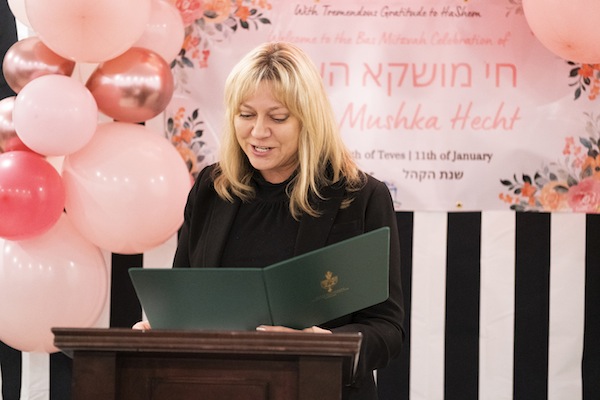
Chaya Mushka Hecht gives her bat mitzvah speech. (photo from Chabad Okanagan)

More than 50 women and girls gathered recently to celebrate a Jewish community milestone in Kelowna. It was the bat mitzvah of Chaya Mushka Hecht, the eldest daughter of Rabbi Shmuly and Fraidy Hecht, who have been serving together as co-directors of Chabad Okanagan for the last 12 years.

Raising their family while serving the Kelowna and outlying communities, the rabbi and his family have made it a priority to try and infuse their next generation with the gift of passion for a life of service and dedication to community, and making the world better for all.

In her bat mitzvah speech, Mushka spoke about her namesake, Chaya Mushka Schneerson, the Lubavitcher Rebbe’s wife, of blessed memory (obm). She shared a story about the rebbetzin helping prevent a family – who she did not know – from being evicted from their home. (For the full story, see jewishpress.com/judaism/parsha/a-beautiful-story-about-the-rebbetzin/2021/02/11.)

“I learn from this story to help someone else whenever I can, even when I know I will not get anything in return,” said Mushka. “I also learn from this story to help others just for the mitzvah and not to show off to others how great you are that you helped someone.”

For her part, Mushka has initiated several programs, including arranging a Monday night class for women that ran for almost a year. The class was about trusting in G-d and the healing it can bring to people. The book they learned from, Gate of Trust, was originally written in Arabic by 11th-century Spanish Torah scholar Rabbeinu Bachya Ibn Pekudah, and they started the last chapter just before Mushka’s bat mitzvah.

Mushka also carries with her Shabbat candle sets, which include candles, matches, blessings and a prayer, to give to any Jewish women that she meets while she’s out. She does this to encourage Jewish women to appreciate the gift of Shabbat and to celebrate their power in bringing Divine light to the world.

As well, she has stood with her brother on a street corner in downtown Kelowna distributing free cookies that she baked. Many passersby – none of whom were Jewish – expressed their surprise and appreciation.

After seeing Mushka around over the last couple years, and knowing the rabbi and his family and the work they do, Member of Parliament Tracy Gray (Kelowna-Lake Country) said she was “honoured to bestow upon Chaya Mushka a special parliamentary award for young leadership in honour of her bat mitzvah.”

The certificate offered congratulations to Mushka on her bat mitzvah and best wishes for her life journey. It read, in part: “This certificate recognizes your life dedicated to the service of others, even at such a young age, and your initiation into the prominent leadership role as a proud Chabad woman.”

photo - MP Tracy Gray reads the certificate she presented to Chaya Mushka Hecht on the occasion of Mushka’s bat mitzvah
MP Tracy Gray reads the certificate she presented to Chaya Mushka Hecht on the occasion of Mushka’s bat mitzvah. (photo from Chabad Okanagan)

“At the event, the women celebrated the honourable feminine power of leadership,” said Rabbi Hecht. “My role model and beloved life teacher was the Lubavitcher Rebbe, obm, who was passionate about establishing women in leadership groups and conventions as early as the ’50s.”

Fraidy Hecht spoke about the infinite and unconditional value of every human soul, and how precious children ought to be to their parents, first and foremost, for simply being a child of G-d here on earth in their care, and how blessed they are to be their child’s Divinely chosen custodian.

Everyone in attendance at the bat mitzvah received a book of Psalms, a mini-biography of Chaya Mushka Schneerson, and a copy of the novelette that Mushka wrote and published in honour of her bat mitzvah. The message of the novelette was how girls her age are being called upon to be a light and positive influence in the world.

Attendees participated in various activities, including beading, singing and dancing, and had dinner together.

Mona Steinberg, a member of the Chabad Okanagan community, shared her reflections of the event.

“Mushka’s bas mitzvah was just so wonderful, Mushka’s speech was so intelligent and mature,” she said. “I can tell she has worked hard to become an important and dedicated future leader and inspiration for Jewish women. [They] should be very proud.”

“The world has become a better place,” remarked Olya Krasavina, from Yumster Life Photography in Kelowna.

– Courtesy Chabad Okanagan

Promises can be motivating

Most of us have to work for a living. Even if we enjoy most of what we do, it’s rare to find someone who feels every moment of their job is a joy. After all, if they’re paying you to do it, my brother and husband would joke with me, “there’s a reason they call it work.”

However, sometimes things happen at work that just aren’t OK or comfortable. Long ago, I worked at an hourly job at a university doing educational administration. It was a mind-boggling number of obligations, managing hundreds of short courses, from instructor attendance lists and access codes to editing course descriptions, proofreading course catalogues and scheduling classrooms. I even set up chairs and tables myself for some courses. It was not my favourite job.

When Passover came along, I had to request time off to clean and cook at home, as I was expecting family to visit. It was not a standard holiday at this university and, although I was asking for time off without pay, the dean questioned me in detail about why it was necessary to grant this to me.

I needed the job. I’d finished my graduate degree but my husband hadn’t finished his yet. We needed the income. I tried to politely field the questions. I knew she was just curious and likely hadn’t ever had the opportunity to ask a Jewish person these kinds of things before. She took pride in wishing me happy holidays – by name – even when she got the Jewish holidays wrong or shared the greetings at the wrong times of year. Even so, she was in a position of power as my boss and I had no option but to answer her if I wanted to keep my job.

The weird part about this encounter is that it doesn’t only happen to religious minorities working for a majority culture boss. I’ve experienced similar questioning as a freelancer working for Jewish organizations, too – everyone wants to know what your observance level is, whether they know your family, if you have a plan for the holidays. Perhaps it’s meant to be friendly and supportive but it can also feel uncomfortable or intrusive. If one answers truthfully, sometimes the outcome doesn’t align with whatever the boss’s preferences would be.

If you work in a large organization with a human resources department, maybe there’s help there, but, most of the time, bringing it up elsewhere can result in more trouble than it’s worth. If diversity and inclusion at your organization don’t recognize “Jewish” as one of the categories, you may have singled yourself out for even more difficulties later on.

The commitments we make Jewishly vary, and everyone chooses their own boundaries. However, these promises we make, to ourselves and our families, are in some ways vows that we must honour and reconcile with our work lives.

This made me think about the talmudic tractate of Nedarim (Vows), which I just finished studying. Much of the tractate is spent trying to help people understand why rabbis think vows of any kind are just a bad idea. Culturally, too, this tractate seems to recognize a time when someone could announce that “all vegetables are forbidden to me” and suddenly this very poorly thought out vow becomes real and must be observed. Hence, the rabbis spent a lot of time suggesting that people just avoid taking vows altogether: better to skip making serious promises you can’t keep. That said, eventually, the Kol Nidre prayer was developed for erev Yom Kippur – it is a blanket prayer releasing us from all the vows we could not keep over the past year.

Rabbi Elliot Goldberg taught an interesting perspective in an online siyyum (celebration at the end of the tractate) on My Jewish Learning. Goldberg points out an example from Nedarim 8a that, even if one is committed to doing mitzvot (commandments), making a vow to do more is motivating: “Rather, it teaches us this: it is permitted for a man to motivate himself to fulfil the mitzvot in this manner, although the oath is not technically valid.” For example, if someone decides that, this year, it would be good to attend services or to donate more to charity, these are not technically vows, but more like New Year’s resolutions. We’re already supposed to do these things, but if we voice a commitment to doing them, it is motivating.

What does this have to do with our uncomfortable moments at work? Sometimes, even knowing that a situation will be awkward, we decide to do it anyway. It would have been easier for me to work right through Passover instead of going through the question-and-answer situation with the university dean. Instead though, this hard encounter motivated me even more to take the time off to clean, cook and spend time with visiting relatives.

Sometimes, finding a way to cope with a difficult situation at work can result in a deeper personal commitment to one’s own beliefs and values. In my case, even though I was very happy to leave that job, I believe that my year working in the Short Course program made a difference. When I left, colleagues told me that they’d learned from me and respected what I’d offered the department.

Our household finances often dictate our work lives – we all have to pay the bills and eat. Yet, sometimes Jewish law, provincial or federal law also affect our finances and ability to make our way in the wider world. We shouldn’t make vows, but promising ourselves to try harder next time to do what’s right just might be motivating in situations that don’t make those choices easy.

Joanne Seiff has written regularly for CBC Manitoba and various Jewish publications. She is the author of three books, including From the Outside In: Jewish Post Columns 2015-2016, a collection of essays available for digital download or as a paperback from Amazon. Check her out on Instagram @yrnspinner or at joanneseiff.blogspot.com.

Women deserve to be seen

As a mom of twin toddlers about 10 years ago, I was desperate for childcare. Call it preschool, nursery school, daycare or old-fashioned babysitting, it was impossible to come by when we were looking. Every place had long waitlists. I was told by more than one place that I should have put our family on the list for childcare before I gave birth. (An absolute no-go from my position, due to Jewish traditions.) Then I heard about the possibility of spots at a local Chabad preschool.

I am a feminist and, while really invested in Jewish life, I’m on the liberal, egalitarian part of our tradition. I hadn’t even looked at Chabad as an option. I am still amazed by how we were welcomed there and how much help the preschool teachers and other families gave us. Older kids from other families even helped walk my 2-year-olds up and down the stairs to the school when I couldn’t manage. It was a gift when I truly needed a break.

At first, my twins could only manage preschool in the mornings, so I couldn’t get back to work. It allowed me three hours at a time on my own and I used it get long overdue medical support for myself or for one twin at a time. I accomplished basic household needs like grocery shopping or changing bedding. Sometimes, I got to rest. My twins didn’t sleep through the night until they were four-and-a-half years old. Eventually, the kids stayed longer hours at preschool and I worked a little, but it was a challenging time.

While in this sleepless, liminal state, I met Jewish women I’d never encountered before. Moms with more than 10 kids, for instance – a situation I’d scarcely considered before my kids went to this preschool. While some of my extended family made negative comments about my encounters with this pocket of traditional Jewish observance, I marveled, realizing that some parents raised big families with skill and love. Other families struggled with only a child or two. Large families were not inherently “bad” nor small families “good.” I learned many things from these experienced parents. They did not judge us. They helped whenever they could. Their kindnesses were a blessing.

Winnipeg, our city, is crisscrossed by train tracks. It wasn’t uncommon to be stuck at a train crossing going to preschool. I joked about this with a mom who was very involved in the Lubavitch community and had a big family. My twins loved trains, so we unrolled the car windows to hear the horn and the bells and trains rattling on the tracks and enjoyed the moment. She smiled and said she too enjoyed the unexpected wait at train crossings. She used the time to pray. She had a pocket-sized book of tehillim (psalms) and another siddur (prayer book) that she kept in the minivan specifically for occasions like this.

I was flummoxed, impressed by her piety but surprised. This woman, who was so incredibly busy, also invited my family to her kids’ huge birthday parties. She found time at train crossings to pray? Wow.

Afterwards, if her older kids sought me out at a Shabbat dinner or community event, I made room at the table, tried to treat them like I would treat my kids. Her mentorship and thoughtfulness made a deep impression.

I’ve been reminded of this because, lately, Haredi and Modern Orthodox women have been in my social media feed. In recent years, some Haredi publications have stopped using women’s faces or bodies in their photos and advertisements. I follow Chochmat Nashim, an organization that fights to keep images of observant women’s and girls’ images in traditional Jewish publications, so that Jewish women can see themselves in the world around them.

I also read about agunot (chained women), whose husbands will not grant them a get (a Jewish divorce) so that they can remarry. In some cases, these women wait years, are forced to pay large sums of money, or give up custody rights to their children so they can be granted a divorce. Since they observe Jewish law, a secular or civil divorce isn’t enough, and they can’t remarry in their communities without a get. One of the only ways they get “seen” is through loud protests held by other Orthodox women, who stand as allies, trying to bring attention to the situation. Sometimes, this public shaming is the only chance they have to receive a get. Imagine what this allyship means if it is one’s only recourse to escape domestic violence or to be free to remarry.

Another example: a concert was held in London, a special Orthodox women’s-only concert, designed so that Jewish women could sing and other women could attend. (In these parts of the Jewish community, it’s considered alluring and inappropriate for men to hear women sing. This is a way for talented women to perform and other women to enjoy their amazing gifts.) Despite all their precautions, there were rabbis who said that attending this women-only event would be forbidden. Guess what? Women went anyway. The event was sold out.

For me, “seeing” the strong moms of big families as mentors and friends was an eye-opener. They taught me so much, both about their everyday lives and how they viewed Judaism, orthodoxy and Hasidism. Despite a truly overwhelming load of parenting, work, religious and household obligation, they modeled for me how to find time for things that are important. Whether it is helping a kid with learning disabilities or praying at train crossings, they make time for what matters to them.

To some extent, these are all the same women. The ones whose images are banned from publications, who might suffer because they are denied a Jewish divorce, or who might be kept from attending even a women-only concert of religiously acceptable music – they are also perhaps the same mentors who model good parenting, find room for prayer and care for others’ children as their own.

Regardless of our level of religious observance, Jewish women deserve to be seen, loved and treated with respect. This may seem obvious, but it still isn’t happening.

Joanne Seiff has written regularly for CBC Manitoba and various Jewish publications. She is the author of three books, including From the Outside In: Jewish Post Columns 2015-2016, a collection of essays available for digital download or as a paperback from Amazon. Check her out on Instagram @yrnspinner or at joanneseiff.blogspot.com.

Reluctant kids loved camp

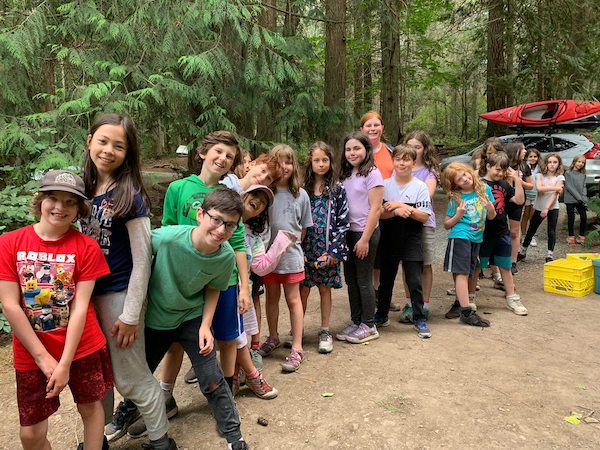
Generations of kids have “the best summer of their lives” at camp. (photo from Camp Miriam)

“There’s no way we are going to a Jewish camp,” my kids declared with absolute resolve. Wait. What? Why??? They explained that they knew “enough” Jewish people and plenty of culturally Jewish things, so camp was not necessary. OK, I thought, that’s completely, totally and utterly crazy.

While we’ve been involved at Temple Sholom for years, speak Hebrew at home and celebrate the holidays, my kids are the only Jewish kids in their classes at public school. They are often told they don’t look Jewish, let alone Sephardi. Whatever that means – there’s a huge span between Barbra Streisand and Ofra Haza. They weren’t excited about their identity, but begrudgingly went along with being Jewish. It was the equivalent of cultural, ethnic and faith feet dragging.

My disappointment couldn’t be missed because I literally said, “I’m so disappointed to hear you say that.” I thought guilt might move them – a powerful tool of every Jewish mother. They apologized. Yes. I was moving the needle. And then, they immediately asked me if they could go to a Christian horse camp. Nope. I failed, while concurrently being mortified. To be clear, I wasn’t horrified of considering a different faith camp, but because they are wildly allergic to horses. Who wants to be the parent that gets a phone call that their kids can’t handle equines? Not me. Too embarrassing.

Moreover, it was a complete reversal of my experience. I begged my parents to send me to a Jewish camp. I started going from the age of 10, eventually visiting Israel and managing to get a coveted staff position. My camp time was the most incredible and defining experience of my youth. I wished, hoped and prayed for my kids to have the same experience. They had shut down the idea, but before I wrote them off as blasphemers, I decided to let it sit and cook in their minds like a delicious shakshuka.

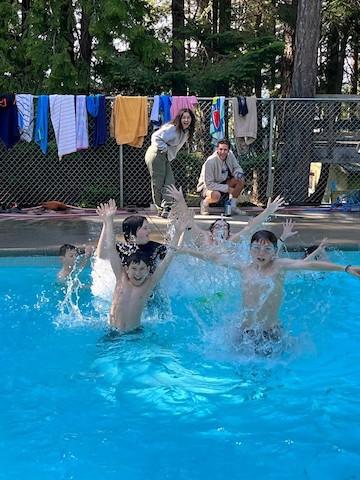
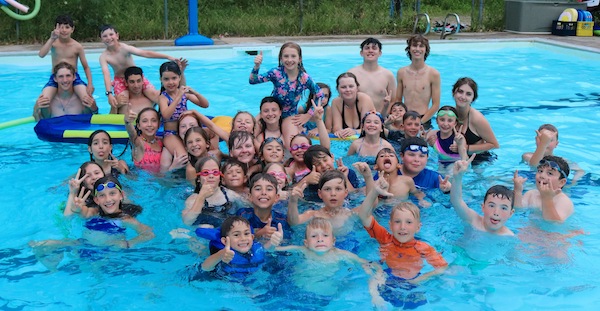
photo - kids in the pool at Camp Miriam
(photo from Camp Miriam)

For a couple of months, they pondered a tough year of COVID-19 shutting down so much of life – and the idea of being away for several weeks with a lot of independence became very appealing. They finally agreed to “let me send them” to Camp Miriam, which was very similar to the camp I went to back east. They diligently packed, were welcomed by friends at registration, got on the bus and did not look back. I got two postcards. The first informed me that they hadn’t been eaten by wild island dogs, and the second told me they were having the best summer of their lives.

The kids came back transformed both physically and figuratively. They both grew half a foot, and something in their psyche profoundly shifted. They loved, I do mean loved, all things Jewish because of Camp Miriam. They had a magical summer that every parent wishes their kid to have. A tight group of friends, a deep respect for their beloved staff and a passion for the programming. Frankly, they wouldn’t zip it about how much they adored Camp Miriam.

They bragged about doing avodah (work), one choosing garbage duty and the other cleaning the sherutim (bathrooms). Umm … what happened? I couldn’t get them to make their beds at home, and they were doing legitimate work at camp? It struck me. Camp Miriam had instilled a profound sense of pride. For weeks, and I do mean weeks, they would prompt a conversation with, “At Camp Miriam….” Some of their most profound moments were having Shabbat at the Point, feeling a deep connection of chevra (community) and telling me they felt understood for the first time. They didn’t have to explain themselves, and that was mind-blowing.

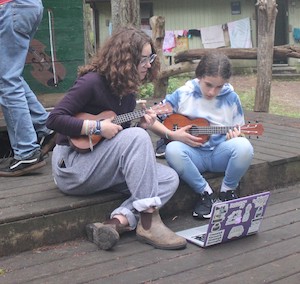
photo - two people playing guitars at Camp Miriam
(photo from Camp Miriam)

Going to Camp Miriam coalesced for my kids a sense of identity; they felt seen and heard, so could go deep into what this meant. We were able to have a shared generational experience, which was pretty awesome, considering my kids think electricity was barely invented when I was a kid. I corrected them and explained that the cutting-edge technology of faxing existed when I was a child.

Last week, I overheard them at Sunday Temple Sholom school bragging that Camp Miriam was the best camp ever. And there it is. My kids not only needed Jewish camp, but they also desperately wanted to be there. I feel utterly indebted to Camp Miriam for giving my kids such a brilliant and rich Jewish experience and, although I couldn’t say it to their faces, I was satisfied thinking, “Yes! In your faces. You suck. I was soooooo right about everything, and you were so unequivocally wrong.” Also, now I can breathe easy, knowing they can’t wait to go back to Camp Miriam and build a lifetime of memories and friendships.

– Courtesy Camp Miriam

An open letter to Camp BB

Photos from camp captured kids’ joy and excitement while appeasing the anxious parents at home. (photo from Camp BB Riback)

Let me start by saying how grateful I am my son has returned from his first three-week camp experience clean, smiling and with a head full of exciting stories!! Thank you Stacy Shaikin, Jordyn Wright and the staff for making this first year back memorable.

Today, in the joyful chatter of the reunions with our kids, we feel it in our hearts and bones: Camp BB Riback must continue to survive and thrive in Alberta.

As my son unpacks his duffle bag, he unpacks his memories not yet knowing they will remain with him for a lifetime. It is a very special role Camp BB plays in our children’s lives, providing a summer full of social, physical and cultural experiences unique to the Jewish community.

Camp BB’s influence and lifelong impact on our kids individually and collectively informs the future of Jewish communities in our cities, province and beyond. I am grateful to have strong leadership in Stacy and a supportive board of directors from both Edmonton and Calgary, some of whom have given years of service.

I give props to the photographer who captured absolute joy and excitement while appeasing the anxious parents at home. I often found myself playing “Where’s Waldo?” – happily, searching for my kid in the background because he was busy living his best camp life … completely neglecting his duty to send a thumbs up or other such emoji so mom and dad could be OK! His actions in the background spoke louder than his hand signals ever could.

A highlight of the photo gallery was seeing the action in and around the newly refurbished pool. Stacy and the board worked tirelessly to fund that project during COVID. The dedication and generosity of everyone involved is translated onto the faces of every happy camper that leapt, dove, flipped, slipped and eased their way into that pool this summer and for every summer hereafter.

photo - kids at the pool at Camp BB Riback
(photo from Camp BB Riback)

We wouldn’t be enjoying the gallery photos or stories shared by our kids tonight if it weren’t for the extraordinary outpouring of generosity that kept Camp BB Riback’s doors open during the unprecedented two-year shut down. I had the privilege of serving on the board and stewardship committee during that time, working and witnessing the unity of our community as we championed to save Camp BB Riback – it was and continues to be an exhausting amount of work.

So, today, I hope we (camp parents and families) will find it in our hearts and budgets to donate right now to support the continued revitalization of old and outdated structures and fund new projects at camp.

photo - kids dancing at Camp BB Riback
(photo from Camp BB Riback)

My family’s favourite way to donate is through the monthly auto-donation subscription plan and the Skip the Depot program. It is a small amount each month for us that, over time, builds to a lasting impact at camp.

More importantly, I know, in my heart and bones, that through our regular support of camp we are building a legacy of philanthropy in our family so that, one day, when our kids are grown, they will support camp in their own way … and the cycle of nourishing our community, the Jewish community, continues.

Today please consider the gift of memories and lifelongfriendships (see what I did there?!) for future generations.

Thank you Camp BB Riback and everyone you have touched. Until next summer.

– Courtesy Camp BB Riback

Strong connection to Israel

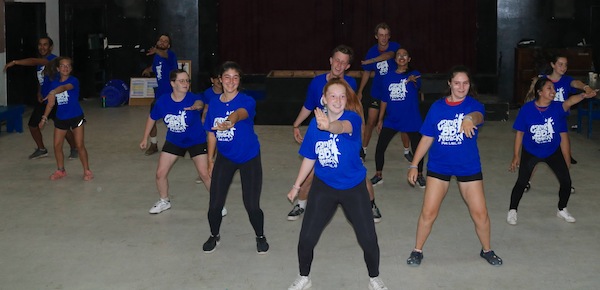
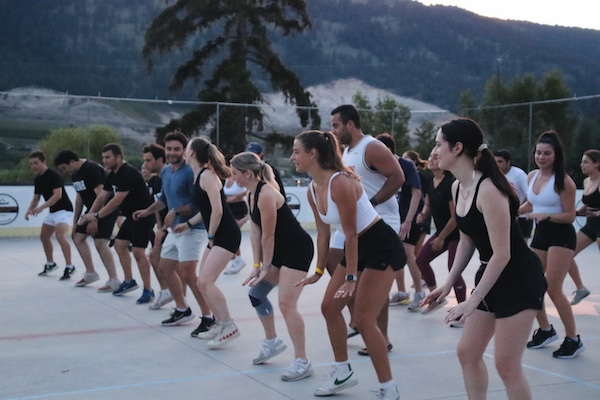
Counselors last summer learning the words and moves to Israeli pop music so they can teach the campers. (photo from Camp Hatikvah)

As Israel prepares to celebrate its 75th birthday, Camp Hatikvah looks back fondly at its long and meaningful connection to the Jewish state.

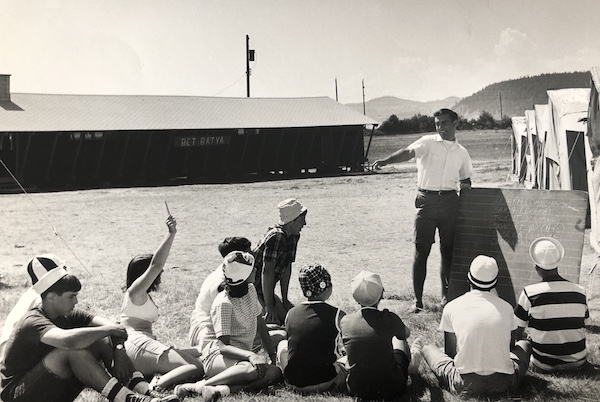
Established by members of the Young Judaea youth organization, Camp Hatikvah was Western Canada’s first Zionist summer camp. Developed in the aftermath of the Holocaust, Hatikvah was created to “produce proud, happy Jewish youth who were earnest and sincere in their beliefs” and committed to the rebuilding of the Jewish people and homeland. Activities offered included arts and crafts, drama, music, athletics, singing and dancing, but the basis of the program was designed around providing campers with a strong background and knowledge of Jewish and Zionist affairs.

One of the original goals of the camp was to promote aliyah and many of the camp’s participants have indeed gone on to join a kibbutz, study in Israel, serve in the Israel Defence Forces or raise their families in Israel. However, the camp leadership eventually realized that mass immigration was unlikely and began focusing on another important task – ensuring that Canadian Jewish youth truly understood the importance of the Jewish state and their role in nurturing and protecting it.

For campers of the 1950s, ’60s and ’70s, programming was focused around concepts of pioneering and perseverance. Israel was still so young and so vulnerable and participants united in their shared passion not only for its success but its survival. The counselors were impassioned leaders who created meaningful opportunities for learning. Education was key and advocacy was a responsibility.

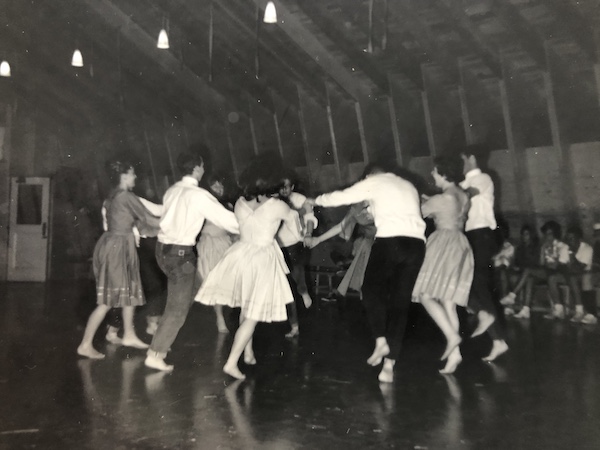
photo - Israeli dancing in the early 1960s at camp
Israeli dancing in the early 1960s at camp. (photo from Camp Hatikvah)

By the 1980s, things were changing. The campers of that era were used to the idea of a strong Israel and much of the Jewish state’s impressive accomplishments felt like distant “history” to many of the young campers. This created a challenge for the camp but one to which they rose. Rather than sitting the campers down and lecturing them, Hatikvah used the uniqueness of the camp setting to provide active education. Field games were used to teach about geography, history and conflict, with campers learning a great deal without even knowing it (that’s the best kind of education).

The early 1990s were a time of great hope. With the Oslo Accords having been signed, it was an exciting time for Israel and for Hatikvah but, unfortunately, it was short-lived.

In the late 1990s and early 2000s, Israel was shaken by one horrendous terrorist attack after another. While our community stood in solidarity with our mishpachah (family) in Israel, many Hatikvah families were not comfortable sending their children on Biluim Israel, a sister program that runs an Israel experience for Hatikvah’s campers the summer before they become counselors. The result was that, for several years in a row, Hatikvah had very few counselors on staff who had ever been to Israel. This reality created a radical shift in the camp’s Israel education strategy.

Joanna Wasel, current board president, was the program director at Hatikvah at the time. She recalled, “since our participants were no longer going to Israel, we knew we had to bring Israel to them.”

The focus of Hatikvah’s Israel education shifted from the past to the present. While campers still learned about important historical figures and events, most of the programming began to focus on culture.

“It was important to us that our campers saw beyond what was in the news,” said Wasel. “We didn’t want them to think of Israel only in terms of conflict. We wanted them to see the beauty and uniqueness of this truly special and resilient country.”

photo - Campers in the early 1960s learning the Hebrew words for their activities
Campers in the early 1960s learning the Hebrew words for their activities. (photo from Camp Hatikvah)

Thankfully, the situation in Israel eventually stabilized and campers once again returned to Israel, bringing back their knowledge and passion when they became counselors the following year. But the affinity towards more modern Israel programming stuck, and the focus at the camp remains based on building bridges between Canadian and Israeli cultures.

“Friday nights at camp are amazing,” shared Liza Rozen-Delman, camp director. “After prayers and a traditional Shabbat dinner, our campers spend the evening dancing to Israeli pop music. It is incredible to see. They know all the words – which are in Hebrew – and the fun dances their peers in Israel are doing. It’s so natural and so beautiful.”

These programs are facilitated by young Israeli shlichim (emissaries), who continue to be an important part of Hatikvah’s program. “With the exception of 2022, when COVID restrictions were in place, Hatikvah has always had Israeli shlichim,” said Rozen-Delman. “The experience is so meaningful both for them and for us.

“Hatikvah was founded to promote the dream of an independent Jewish state and so it is really special for us, some 75 years later, not only to celebrate how far Israel has come but to also recognize how important our partnership was both then and now,” she concluded. “As we say at Camp Hatikvah, may they – and we – continue with chazak ve’ematz (strength and courage).”

– Courtesy Camp Hatikvah

Why we need summer camp

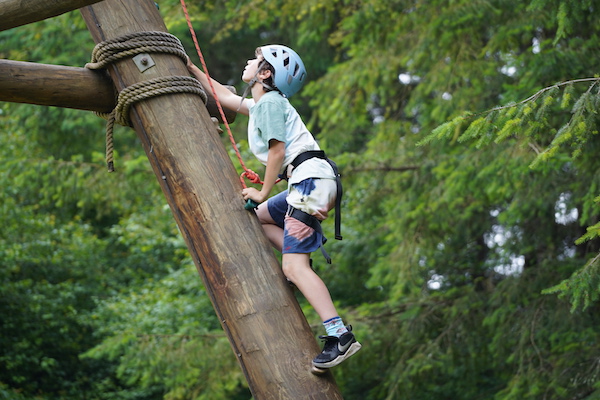
Summer camp helps foster grit, creating space for kids to develop independence and author their own stories. (photo from URJ Camp Kalsman)

As a parent of three, I know how hard it is to balance the overwhelming desire to make sure my kids “have it all” – diverse extracurricular activities, best schools, quality family time, etc. – and, at the same time, to know when to let go (and actually do it!) so they can experience the power of paving their own way. Skinned knees, bruised egos, broken hearts and all.

As a summer camp director, I also know that parents like me are not alone. In fact, there is a whole army of incredibly kind and passionate young adult role models, often dressed up in silly costumes, ready to be my partner in this “gritty journey” of adolescence and the teenage years.

Ask anyone who grew up at overnight summer camp – Jewish or otherwise – and most will tell you it felt like their second home. At Camp Kalsman, where my children and I have spent the past six years, we welcome campers and staff members “home” each summer. But what does this really mean and why is this important for fostering grit in our kids and teens?

I’d argue that home, a place of true belonging, is prime real estate for failure, learning and growth – home is where grit is born. Often, when we think of home we think of being safe and protected, perhaps shielded from the real world. I would argue that home is more of a safety net, giving a child the reassurance that not only is failure OK but that, when they do ultimately fail at something, we’ll be there to catch them and help them bounce back, stronger and more resilient.

What are the top three reasons why you, as a parent, guardian or loving adult, need summer camp, too?

1. Creating space to deepen connection. I’m going to say something that might make some people uncomfortable – your kids need a break from you just as much as you need one from them. Camp gives you the chance to create that space, knowing that you have a trusted partner to create that same safety net for your child. Absence makes the heart grow fonder is a cliché and it’s also a deeply true statement. By creating (physical) space for a finite period of time, your child has the chance to broaden their perspective, test everything you’ve taught them, try something on their own and learn from other trusted adults. When a camper has a temporary moment of sadness at camp (sometimes referred to as homesickness), that feeling is validated – “how wonderful is it that you have such great folks at home who love you, believe you can do this and know you will be safe and cared for at camp?” Camp simultaneously builds a sense of self separate from the family unit and strengthens the roots of that family tree from afar.

photo - kid kayaking at Camp Kalsman
(photo from Camp Kalsman)

2. Declaration of independence. How often do you wish your kid would make their own lunch for school, make their bed without you asking, pick up those socks that have been next to the couch for what seems like days? At camp, where “nagging” parents are replaced with super-cool counselors who are the perfect combination of Julie Andrews and Dick Van Dyke from Mary Poppins, kids learn a sense of communal responsibility, pride in keeping their space clean, and come to understand how their action (or inaction) can have ripple effects on those around them. At the beginning of the summer, they will have contributed to creating a cabin covenant (at Camp Kalsman, we use the Hebrew term brit kehillah), a shared understanding, co-created by their bunkmates and counselors, about how they will live and play together for the camp session. Campers have to navigate social situations without adult or teacher intervention (those cool counselors are also trained in conflict-resolution and will help out, of course). The ownership children and teens feel about their time at camp helps foster confidence and self-awareness and helps calibrate their inner moral compass for when they return home and to school.

3. Sharing the stories. It may happen in the car-ride home, over that first “real-world” meal after so many days of camp food, or a few days after they get home and have had time to process, but your child might just freely and willingly tell you stories about the summer. It won’t be like their one-word answer when you ask about school. With their new-found independence and confidence (see #2!), they might tell you about the friends they made, the new food they tried, the counselor they loved, maybe even the silly dance they made up. And, after you’ve listened intently, controlling your need to ask 1,000 follow-up questions, and instead basking in their joy and nostalgia, you’ll say, “Wow, that sounds like one incredible summer!” You will have given your child the gift of summer camp, and they will have given you the gift of sharing in their joy and confidence and gratitude.

While there are many, many more reasons that we all need summers at camp (a second home), the combination of creating space, developing independence and authoring their own stories is, at its core, the secret sauce of raising a gritty and resilient generation of children, teens and parents!

Rabbi Ilana Mills is camp director, URJ Camp Kalsman. If you are interested in learning more about the camp, visit campkalsman.org or contact Rabbi Ilana at imills@urj.org.

Opportunities for growth

Moving into an old house that needs fixing is a challenge many people aren’t prepared to consider. I’ve heard this repeatedly from people who are both impressed and stunned by our choice.

We’ve just moved into our fifth old house as a married couple. We can see the big yard, friendly quiet neighbourhood, the structure’s amazing character features from 1913, and feel this was a good choice, if an expensive one. We’ve been married almost 25 years, too. We’ve become smart enough, as partners, to hire contractors to help us cope with the things that are far beyond what we can manage to do ourselves. So far, we’ve had fewer arguments this time around.

However, there are moments when I doubt my choices. This house has a lot of broken window panes. In some cases, someone just enclosed the window in a wall, so it sat there for perhaps 50 years, broken or not. When our contractors opened up one of the walls, well, all became clear. It was no wonder that plumbing pipes froze there in a Winnipeg winter – in a dark space with a broken window. Never mind triple-paned argon-filled glass, just closing some of the windows with regular, unbroken glass would have made a world of difference.

My husband took the first few windows to be repaired at a local hardware shop. When these came back, fixed properly and affordably, he carefully fitted them back in where they belonged. Then he watched a This Old House YouTube video to figure out how to get out still more of these broken beauties. Then, he described how he’d need my help to slide out the next large storm window.

I got anxious. This involved broken glass, fragile window frames, standing on a mudroom ledge (while he stood on a ladder outside) and December weather. Also, it involved cooperating with one’s spouse, which can sometimes be stressful, too! Luckily, the Winnipeg December weather was mild, right around freezing. I eased myself onto the ledge, over some stairs, and held onto the window exactly as instructed. I had some serious nerves.

To my surprise, the broken storm window, which had been partially concealed behind drywall for many years, slid right out. There was barely time to admire the buttery paint of the inside window, although we took a second to notice the old-fashioned curtain rod. Someone took the time to drywall in this entire window but left the curtain rod hooks still completely intact. Go figure.

When I climbed down, I was oddly proud. I hadn’t fallen off the ledge, we’d removed the window, and I’d gotten up close and personal with a really old part of my house that was still in good working order. Then I remembered to go wash my hands right away. I’d just been grasping with sweaty hands onto peeling lead paint on the window frames … but I digress.

We all need growth opportunities. Lots of people take on new extreme sports or complicated hobbies. Others learn new languages, develop new relationships or take journeys to new places. Perhaps because of the pandemic, or having younger kids, I have had small expectations of myself. I’m not taking any solo international vacations or racing fancy cars. Even so, I’ve had growth opportunities. Life offers them free of charge, when you least expect it, whether it’s house renovations, new professional or Jewish learning experiences or just wintertime in Manitoba.

I’m also several years into some Jewish learning, doing Daf Yomi, a page of Talmud a day, which takes more than seven years to complete. I’ll be the first to admit that, some days, I breathe a sigh of relief when I find that it is a very short page. (Nedarim-Vows, the current tractate, has a few of these!)

And, I’m experiencing this house renovation, complete with having a major plumbing overhaul done last weekend. This included not having a stack at all for a long afternoon. (The stack lets waste water leave your home. Without a working one, well, nobody flushes the toilet or runs a faucet. It was quite a wait.)

We currently have a completely gutted kitchen and might not have a finished kitchen again for quite awhile. Slow cooker meals and the kitchenette in the first floor powder room require forethought and improvisation. Again, maybe, seen optimistically, these, too, are chances for growth and learning.

Most of my experiences aren’t extreme. I’m not climbing Kilimanjaro, yet it was quite the adrenaline rush just standing on the ledge above the stairs, dealing with the broken window. It’s these moments that help keep us stimulated, challenged, changing and growing as people.

As a kid, I remember how hard it felt leaving for a Jewish summer sleep-away camp. It was exciting and terrifying, all at once. Big milestones in life – major birthdays or, say, hitting 25 years of marriage – can also be seen as colossal events. However, my daily life seems to be full of those moments that some see as inconsequential, until they become teaching moments.

I’m reminded of one squishy deep-snow spring day. I got my car stuck in our back lane parking spot. It was a goopy mess. If my four-wheel-drive SUV got stuck, well, anyone’s could. Alone with my twins, I had to manage to fix it. With their help, I got us out, using all the tricks my dad had taught me long ago, including my floor mats for traction, rocking the car back and forth, and more. My kids and I cheered, sweaty and covered in disgusting slush and completely late for whatever we’d set out to do, but we’d gotten the car out together.

We didn’t climb the highest peak. Far from it. We got ourselves out of a rutted, snowy prairie back lane in springtime. Judaism offers us a whole list of blessings to memorize and recite, and many of them are for small moments. When we eat bread, bless our kids on Shabbat, pray for rain, see a rainbow or just get up in the morning, we have a chance for a blessing. Yet, the moment we pause to reflect on what happened, maybe we realize that those growth moments – going to summer camp, buying and renovating an old house, one window at a time, or teaching kids important winter driving skills – weren’t quite so small after all.

Here’s to growth moments.… May yours in 2023 be meaningful and not too painful!

Joanne Seiff has written regularly for CBC Manitoba and various Jewish publications. She is the author of three books, including From the Outside In: Jewish Post Columns 2015-2016, a collection of essays available for digital download or as a paperback from Amazon. Check her out on Instagram @yrnspinner or at joanneseiff.blogspot.com.