Skip to content
  • Home
  • Subscribe / donate
  • Events calendar
  • News
    • Local
    • National
    • Israel
    • World
    • עניין בחדשות
      A roundup of news in Canada and further afield, in Hebrew.
  • Opinion
    • From the JI
    • Op-Ed
  • Arts & Culture
    • Performing Arts
    • Music
    • Books
    • Visual Arts
    • TV & Film
  • Life
    • Celebrating the Holidays
    • Travel
    • The Daily Snooze
      Cartoons by Jacob Samuel
    • Mystery Photo
      Help the JI and JMABC fill in the gaps in our archives.
  • Community Links
    • Organizations, Etc.
    • Other News Sources & Blogs
    • Business Directory
  • FAQ
  • JI Chai Celebration
  • JI@88! video

Recent Posts

  • Story of Israel’s north
  • Sheltering in train stations
  • Teach critical thinking
  • Learning to bridge divides
  • Supporting Iranian community
  • Art dismantles systems
  • Beth Tikvah celebrates 50th
  • What is Jewish music?
  • Celebrate joy of music
  • Women share experiences 
  • Raising funds for Survivors
  • Call for digital literacy
  • The hidden hand of hate
  • Tarot as spiritual ritual
  • Students create fancy meal
  • Encouraging young voices
  • Rose’s Angels delivers
  • Living life to its fullest
  • Drawing on his roots
  • Panama City welcoming
  • Pesach cleaning
  • On the wings of griffon vultures
  • Vast recipe & story collection
  • A word, please …
  • מארק קרני לא ממתין לטראמפ
  • On war and antisemitism
  • Jews shine in Canucks colours
  • Moment of opportunity
  • Shooting response
  • BC budget fails seniors
  • Ritual is what makes life holy
  • Dogs help war veterans live again
  • Remain vital and outspoken
  • An urgent play to see
  • Pop-up exhibit popular
  • An invite to join JWest

Archives

Follow @JewishIndie
image - The CJN - Visit Us Banner - 300x600 - 101625

Tag: Jewish life

Immersed in Judaism

Immersed in Judaism

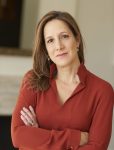
Abigail Pogrebin, author of My Jewish Year: 18 Holidays, One Wondering Jew. (photo from Abigail Pogrebin)

A few years ago, author Abigail Pogrebin spent an immersive year studying the Jewish calendar and attempting to observe it. She chronicled her experience in a column in the Forward and, subsequently, in the book My Jewish Year: 18 Holidays, One Wondering Jew (Fig Tree Books, 2017). On Nov. 19, she was in Winnipeg for the city’s Tarbut Festival.

“I did not approach this as a gimmick,” she told the Independent. “It was really a sincere stab at an understanding I never had, which is the origins for all of these chaggim [holidays] … and also, not just the origins, but the underpinnings, because these are obviously … human-created milestones that have endured for thousands of years. I wanted to understand both how and why they were conceived – what they’re supposed to mean for us today, not just to our ancestors. I definitely had a hunch that, for something to have endured for as long as it has, it has to resonate wherever you are in your life – at least for a large swath of people who live by this calendar.”

Pogrebin recognizes that there is a segment of the population that adheres to it simply because they inherited it, without questioning. Yet, for many people, Jewish observance, particularly of holidays, is a deliberate choice.

Pogrebin grew up in New York City. Her mother, writer and activist Letty Cottin Pogrebin, was instrumental in promoting women’s rights in the 1970s, and her writing includes analyses of what it means to be Jewish and female.

“I was not someone who celebrated nothing before this,” said Abigail Pogrebin. “I had sort of the five or six tent poles of Jewish holidays in my life…. I grew up with Shabbat…. It wasn’t enforced, but it was observed when we were together as a family. I went to synagogue on the High Holidays. We had always lit the menorah for eight nights, and I went to two seders back-to-back. Then, also, the feminine seder, which was a tradition that was started in mid-1970s by a group of women, including my mother.

“So, those were the basics that I’d grown up with. But, obviously, I was missing the majority of the signposts of the Jewish year. It bothered me that I didn’t know [them]. I also wanted to experience them in a way that might lead me to more meaning in my life.”

book cover - My Jewish Year: 18 HolidaysAs examples of what she learned on her journey, Pogrebin said she had never understood before that the process of atonement and introspection needs to start far in advance of Rosh Hashanah and Yom Kippur.

“During the month of Elul, we’re supposed to do what is called, in Hebrew, cheshbon hanefesh (accounting of the soul). And, when I asked various rabbis how I might go about that, because there’s not a clear blueprint for observance, quite a few suggested taking the middot (characteristics) and breaking them down, exploring one a day. So, I chose to do that for 40 days leading up to Yom Kippur.

“I did this with a friend, a study partner, essentially. So, my friend, Catherine, and I took these 40 middot that a rabbi had posted online. One day, you’d do anger, another you’d do courage, another envy, another humility.”

As the women went through the days, they aimed to look at themselves as deeply and honestly as they were able and to write their reflections on each characteristic at the end of each day.

“By the time I got to synagogue on Rosh Hashanah and Yom Kippur, I felt like I was in a very different zone for reflection,” said Pogrebin. “On Yom Kippur, I went to a mikvah [ritual bath] for the first time, and that was extremely meaningful.”

Pogrebin spent Sukkot in Los Angeles, interviewing four rabbis in two days, with each one discussing a different aspect of Sukkot that she never had understood before.

“One emphasized the fragility, the impermanence of our structure, and our shelters in our lives,” she explained. “How resonant that is today, with natural disasters and poverty, and all kinds of things that should shake our foundations, both literally and metaphorically.

“Another talked about the fertility, the imagery that is in Sukkot – the shaking of the lulav and etrog, which was much racier than I ever understood. Another talked about agriculture, and the land and connecting – reconnecting with the earth in ways we don’t do in other times of the year.

“Another rabbi talked about wandering, the importance of being lost and being comfortable with being lost; embracing the idea of the most important lessons and reckonings when we don’t know where we are going.”

Pogrebin also mentioned Yom Hashoah, which commemorates victims of the Holocaust. According to her, not many people know when it takes place. “I think it’s just not in the fabric of how many of us were raised, but it seems to me to be a crucial holiday, even though it could never be adequate to mark such a vast and devastating history and persecution,” she said.

“I went to B’nai Jeshurun, which is a Conservative synagogue on the Upper West Side that, in partnership with the JCC in Manhattan, does something called the naming of the names, where they have this book from Yad Vashem … devastating lists of families who perished. Starting at 10 p.m. and going all night into the next day, people tak[e] turns reading those names,” said Pogrebin.

About how the yearlong experience has changed her and her family, Pogrebin said, “In a way, it’s changed completely and, in a way, it hasn’t changed radically. I’d say it’s changed completely in the sense that I don’t look at time, relationships, obligations, the same way anymore. I think, if the holidays do anything, they are constantly reminding us to ask ourselves who we are in the world and whether we are doing what we could be doing to alleviate someone else’s suffering or pain.”

Pogrebin is always looking for ways to bring the lessons of her journey into her day-to-day life, to make them come alive in a way they didn’t for her when she was a child.

About the book, she said, “If one wants to understand the arc of the year, you will. It’s not that there are not people who might disagree with this or that, but it was researched and tested with people who live this and teach this at a very high level. So, it’s not just Abby saying it to be true. It’s me putting on my journalist hat and making sure when I explain something that it’s definitely rooted in scholarship. I hope … it’s an enjoyable and entertaining book.

“The people who read it are coming along with me and my experience with the holiday for the first time. They are also getting, I think, a fairly thorough template of what a Jewish year involves and demands. I think that, whether you’re Jewish or an interfaith family that wants to explain or introduce … some of these holidays in your own home and you’ve never done them before, it’s absolutely a door into learning how.

“There is something magical,” she said, “about not just living by someone else’s clock, but by an ancient roadmap…. I think there’s something very powerful about embracing … whether it’s Judaism or any religion, what it imposes on you, in terms of [laying out] what you should be thinking about besides your own needs and wishes – to me, that’s an important takeaway that I think other people should explore.”

Rebeca Kuropatwa is a Winnipeg freelance writer.
Format ImagePosted on December 1, 2017November 29, 2017Author Rebeca KuropatwaCategories BooksTags Abigail Pogrebin, Jewish life, Judaism
The beauty of the light

The beauty of the light

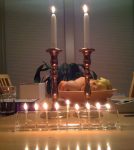
(photo from flickr.com/photos/scazon)

The sky turns shades of orange and mauve as I glance outside my dining room window and notice the sun slipping behind the trees. The havoc and chatter in the house has peaked. I call my daughter to come and light the Shabbat candles with me. It’s time. Eighteen minutes before sunset.

We light the candles, nine for me, representing each of our family members, and one for her. We cover our eyes and circle the flames three times with our hands as we say the blessing that ushers in the holy Shabbat. “Baruch ata Adonai Eloheinu Melech HaOlam, asher kidshanu b’mitzvotav, v’tzeevanu l’hadlik ner shel Shabbat kodesh.” (“Blessed are you, G-d, our Master of the Universe, who has sanctified us with His mitzvah, and commanded us to light the candle of the holy Shabbat.”) Instantly, the chaos subsides and peace and serenity reign. It’s visceral, and a mystery to me how it occurs every Friday evening.

The Shabbat candles warm the atmosphere of the Shabbat table. Their soft glow draws us in. All week, we run from home to work and school, activities and errands that fill our days. Many of us do not share meals or spend time together at all!

Only on Shabbat do we have the opportunity to have precious moments with family and share meals, discuss our week’s events, share Torah thoughts and stories of the parashah, to enjoy each other’s presence as well as that of our Shabbat guests.

Shabbat, the seventh day of the week, is the gift that G-d has given us in order to reconnect with family and friends, and teach us, by His example, to rest as He did after creating our beautiful world for us in only six days. We reconnect with our G-dly souls and recharge our batteries for the busy week ahead. We pray at home and in a synagogue and get a special spiritual feeling as we connect to G-d and our community.

We also have Chanukah, an eight-day festival of lights, falling yearly on the 25th day in the winter month of Kislev. Chanukah recalls the Jews’ victory, with a small army, over the huge Greek army in the second century BCE. It also commemorates the miracle of the tiny bit of light, enough to burn for one day, which lasted for eight days, until the rededication of the Temple was possible after the struggle.

The Shabbat candles are placed inside our homes, while the Chanukah candles are placed so they can be seen from outside our homes. Why the difference?

On Shabbat, we are supposed to enjoy and benefit from the holy glow of the Shabbat candles as they shine over the beautifully set Shabbat table, with its white tablecloth and lavish settings. It is the main attraction for those fortunate to have a place around the table.

On Chanukah, we are forbidden to use the light of the menorah for any practical purpose. As the Chanukah candles melt, we are not supposed to do any housework at all. Only after they’ve melted, can we celebrate the miracle of the oil with food and games.

From this, we can extrapolate an essential difference between Shabbat and Chanukah. Shabbat is for us, the Jewish people; it nourishes and reinforces us weekly. Chanukah reaches beyond the warmth of the home to light up the darkness of the outside world. It reminds us not to be afraid, even in the harshest times. And Chanukah candles teach us to stand up and speak out for those who do not possess this strength. This feeds a pride that transcends ego. This is our proud Jewish heritage and our gift to the world.

As I polish my Shabbat candelabra, candlesticks and our family’s chanukiyah, I smile as memories of past Shabbatot and Chanukah celebrations mingle with anticipation. This year, Chanukah begins on the evening of Dec. 12 and continues until the 20th. Wishing you a very happy and festive Chanukah.

Esther Tauby is a local educator, writer and counselor.

Format ImagePosted on December 1, 2017November 29, 2017Author Esther TaubyCategories Celebrating the Holidays, Op-EdTags Chanukah, Jewish life, Judaism, Shabbat
House no longer home

House no longer home

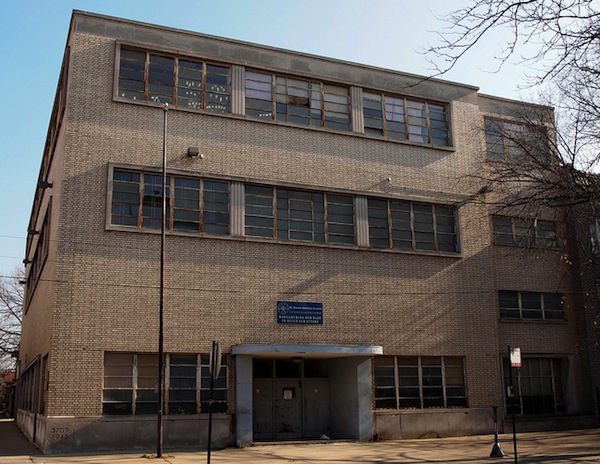
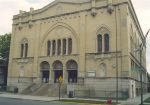
South Side Hebrew Congregation.  (photo by Deborah Rubin Fields)

“It has seemed to me sometimes as though the L-d breathes on this poor grey ember of Creation and it turns to radiance – for a moment or a year or the span of a life. And then it sinks back into itself again, and to look at it no one would know it had anything to do with fire, or light.” (Gilead by Marilynne Robinson, 2004)

Once I had turned onto Chicago’s Congress Parkway, I shut off Waze. I told myself that, from here on, I could navigate from long-stored memory. My destination: my old South Shore neighbourhood. My objective: by means of an on-site visit, to share recollections of my Chicago-based formative years with our four Israeli-bred children, so they could have a real sense of where I came from and why I am the way I am.

I expected the community I’d lived in from birth until halfway through my adolescence to be much changed. It’s a fact of life, people change, places change. Certain relatives and friends, however, discouraged my visiting where I’d grown up; some even informed me the local press had renamed the area Terror Town.

Consequently, with a bit of trepidation, we drove into South Shore to begin my guiding and reminiscing. South Shore (named for its proximity to the southern shore of Lake Michigan) had been a middle-class neighbourhood. Some upper-middle-class (probably closer to the lake), some lower-middle-class, lots of solid middle-class.

As I explained to my children, when I was growing up, my area was a religiously mixed Caucasian neighborhood, but we got along with our non-Jewish neighbours. I played with the Christian kids on our block.

Moreover, when it came to schooling, my parents likewise wanted my brothers and me to be broadly exposed, meaning we attended both Chicago Board of Education public schools (not Jewish day schools) and a five-day-a-week afternoon Hebrew school and Hebrew high school. But, even though we attended a public school, there were different rules for different people. For instance, a special bell rang in our elementary school one day a week at 2 p.m., signifying that practising Catholic kids were free to leave for catechism lessons. When we missed school for a Jewish holiday, we had to return to school with a note from our parents explaining why we had been absent. Needless to say, we had to make up whatever work or tests we missed.

Significantly, in those days, Chicago had other forms of “acceptable” discrimination. Jews and other minorities were not allowed to live in certain areas and were not given membership in certain clubs. The nearby South Shore Country Club was one such restricted place. In the late 1960s, when the rules changed (because of hard-fought anti-discrimination legislation), one of my parents’ closest friends, a history professor, was belatedly invited to join. He relished responding, “I don’t want to belong to any club which hadn’t wanted me.”

Now that I had the chance, I wanted to see the inside of the club. It had been converted into a municipal public park, golf course and cultural centre, close to where former President Barack Obama’s library will be constructed. Either the grounds had not been maintained at their previous level or the previous standard had been over-imagined, but I was underwhelmed by what I saw. Spontaneously, my children – who have all visited the remains of Nazi concentration and death camps – commented the club’s gatehouse reminded them of the entrance to Auschwitz.

Though we had lived in a mixed neighbourhood, there was a Jewish community centre, plus seven synagogues (representing various streams of Judaism) within walking distance of our apartment – more than in my current Jerusalem neighbourhood! Because my parents had “shopped around” until I was about 6 years old for the synagogue that best met our family’s needs, I was acquainted with just about all of them.

photo - Deborah Rubin Fields went to Hebrew school five days a week in this building owned by South Side Hebrew Congregation. The Men’s Club also met there. For awhile her grandfather was the president
Deborah Rubin Fields went to Hebrew school five days a week in this building owned by South Side Hebrew Congregation. The Men’s Club also met there. For awhile her grandfather was the president. (photo by Deborah Rubin Fields)

Now, as I drove my children through South Shore, I saw that South Side Hebrew Congregation, Congregation Habonim, Congregation Bnai Bezalel, Congregation Agudat Achim and South Shore Temple had become churches. Beth Am Congregation was now a school. The buildings by and large looked the same, except for the signs identifying the churches that now occupied the premises, and the occasional cross on the windows. The brick menorot were still on the façade of Torah Synagogue and the mikvah, but at least part of the complex had become a beauty supply shop.

I recalled one story from my club at the Jewish Youth Centre. My group went for a picnic supper at Rainbow Beach. My neighbour and friend, D., disregarded our warnings, returning home with what she called a gift for her mother, a long-dead alewife. When D. entered her apartment complex, the rest of us raced to the back of the building to snicker at D.’s mother screaming about the smelly fish.

And, speaking of social functions, my old synagogue, South Side Hebrew Congregation, played a social role, as much as it did a religious role. It wasn’t just a place for praying, as are many Israeli synagogues, it was a place to meet up with people with whom we shared a common core. For synagogue members like us who felt like part of a minority group, SSHC offered a sense of belonging, of comfort and of security.

Hence, every Shabbat morning, I went to the junior congregation. One our Hebrew teachers, Mr. Wolfson, with his heavy eastern European accent, directed our tefillot. My parents often went to the adult service. I have lots of good memories about SSHC, especially listening to Sparky Rosenstein, the president of the shul trying, but never really succeeding in blowing the shofar; stringing fresh cranberries and popcorn to hang in the giant communal sukkah (though we traditionally ate dinner in the sukkah of family friends, wrapped up in our coats, as Chicago was so cold already); walking around with a flag, apple and chocolate Kisses on Simchat Torah; and going up on the bimah to get the cantor wet when we started reciting the prayer for rain.

Years ago, I had gone on tours of old Jewish neighbourhoods with Prof. Irving Cutler. Back then, I had marveled at how Jews had established themselves in so many of Chicago’s districts. Yet now, seeing what had become of the Jewish institutions of my childhood, I was saddened no one had stayed around to keep them going. I whimsically thought it was too bad the Jews of South Shore hadn’t called on the Golem to protect these synagogues. Of consolation was the fact that people have continued to use most of the buildings as houses of worship.

During the entire trip, way-back-when scenes flooded my mind. Many I shared with my family. If the content wasn’t always complete, the emotion was. And this feeling my children will always have and it will be enough.

“… the end of all our exploring / Will be to arrive where we started / And know the place for the first time.” (T.S. Eliot, Four Quartets).

Deborah Rubin Fields is an Israel-based features writer. She is also the author of Take a Peek Inside: A Child’s Guide to Radiology Exams, published in English, Hebrew and Arabic.

Format ImagePosted on December 1, 2017November 30, 2017Author Deborah Rubin FieldsCategories TravelTags Chicago, family, Jewish life, memoir
Scottsdale’s beauty and fun

Scottsdale’s beauty and fun

The view of Camelback Mountain from Mountain Shadows resort. (photo by Masada Siegel)

On a late Thursday afternoon in August, my husband arrived home from work and excitedly said, “You have to come out front and see the double rainbow – it’s stunning!” I picked up our little boy and rushed outside to see the mystical wonder that glittered through the raindrops of the Arizona sky.

When I turned to go back inside, I noticed an Orthodox Jewish man on a cellphone standing outside our neighbour’s house, which is an Airbnb. Every few days, a new group of people arrives, but this time I walked over and introduced myself. He told me that 10 yeshivah boys from all over the United States and Canada were staying in the house for two weeks on a summer trip to see Scottsdale and explore Arizona. I told him I was a travel writer and would be happy to help with any suggestions on what to see, where to go, where the kosher restaurants were located and about the local synagogues.

They had chosen the home because it was in walking distance of Ahavas Torah, an Orthodox synagogue, where the community warmly welcomed them. I laughed and said, “There is actually another shul in walking distance, Beth Tefillah, which is led by Rabbi Allouche, who is an amazing leader who gives incredibly insightful sermons, and someone also to check out.”

The conversation then turned to kosher restaurants that are nearby. One is Milk and Honey, located inside the Jewish community centre, which boasts food like chipotle salmon wraps, kale tacos and shakshuka. The other kosher restaurant is Kitchen 18, which has an eclectic menu, from Israeli food to Chinese to sushi.

My new neighbours had done their research and had also koshered their kitchen, so they were ready to explore their beautiful new surroundings that I call home.

Chaim, who was from Toronto, was the ringleader, otherwise known as the organizer of the group, so he told me about some of their travel plans. Every other night or so, we got a report about their activities as we bumped into them outside their home of the next two weeks.

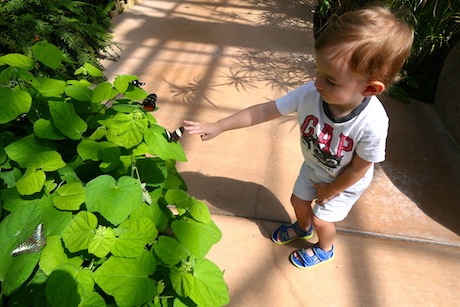
photo - Butterfly Wonderland offers wonders you can touch
Butterfly Wonderland offers wonders you can touch. (photo by Masada Siegel)

Scottsdale is known for its outdoor activities and one fun hike is Camelback Mountain, where the views are phenomenal. There are two trails, one is shorter and more vigorous, and the other is longer but not as steep. After a few-hour walk, locals and tourists alike often head to downtown Scottsdale to indulge at one of the many breakfast places, as well as to stroll around. The Scottsdale Civic Centre is a park filled with fountains and is close to the Scottsdale Centre for the Performing Arts, which has a great gift store. Pop into the library, too, just to see the architecture, buy a book or have a coffee in their café.

Nearby is one of my favourite casual restaurants, called AZ88. Often in the winter months, there are international festivals in the park across the way.

Scottsdale has the most gorgeous winter weather and also provides engaging activities for families. A perfect place for a picnic, especially with young kids, is McCormick-Stillman Railroad Park. Visitors can ride the 1950s-vintage Allan Herschell carousel and then jump on the mini-train and ride around the park. There is also a 10,000-square-foot model railroad building where trains zip around. Check out the museum, which houses the Roald Amundsen Pullman Car, best known for being used by every president from Herbert Hoover through Dwight Eisenhower.

For more active adventure, iFLY allows you to experience skydiving without actually jumping out of a plane at 12,000 feet. I call it “reverse skydiving” because you don’t jump down, you start standing as opposed to falling. The new facility is state-of-the-art and it has activities for the whole family.

For the tamer at heart, all in one complex are Butterfly Wonderland, OdySea Aquarium and Dolphinaris, where people can swim with dolphins.

Butterfly Wonderland is the largest indoor butterfly pavilion in the United States and is home to thousands of butterflies from all over the world. Prior to entering the pavilion, visitors also can see the emergence gallery, where the little creatures are in various states of life, many in metamorphosis.

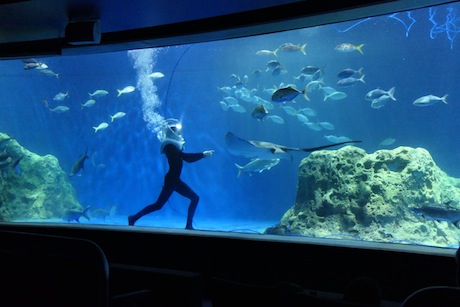
photo - OdySea is the largest aquarium in the southwest
OdySea is the largest aquarium in the southwest. (photo by Masada Siegel)

And OdySea is the largest aquarium in the southwest. It features more than 30,000 animals, 50 exhibits and an aquatic presentation, where guests sit in a theatre and rotate around an enormous tank filled with sharks, sea turtles, seals and sea lions.

A must-see while in Arizona is the Musical Instruments Museum, which displays more than 6,000 instruments and is the world’s only global instrument museum, with items from 200 countries and territories. The museum is an award-winning Smithsonian Affiliate and guests can see and hear the instruments, as well as watch them being played.

Scottsdale has many public parks, such as Cactus Park and McDowell Mountain Ranch Park, where visitors pay a mere $3 per person to be able to use the Olympic-size swimming pools and gym facilities.

While being my next-door neighbour is optimal, if you want a personalized tour, the house is often rented, but there are several resorts in the area.

Mountain Shadows provides views of Camelback Mountain, offers gym facilities with myriad classes and has an award-winning chef. The hotel restaurant, Hearth 61, an open kitchen concept, has excellent meals, a friendly and helpful wait staff and incredible views. And guests can sign up for a class with photographer Erik Merkow.

While Mountain Shadows is a modern resort, it was completely rebuilt from the ground up, and takes the place of a hotel with a Hollywood past, welcoming such stars as Bob Hope and Lucille Ball.

Another accommodation option is the Scottsdale Resort, which has a relaxed, charming atmosphere, comfortable rooms, swimming pools and Kitchen West Restaurant, where every meal is delicious. The hotel also has lots of open spaces to walk around and explore, and is a perfect place for a family with kids.

The Shabbat before our temporary neighbours returned home, they invited us to come over and spend some time with them. They marveled at Scottsdale and a few of them said they were definitely coming back, as the community had welcomed them with open arms. It was nice to see my hometown through their appreciative eyes, as often we forget to notice in our own community the beauty that surrounds us and the people who lovingly embrace us.

We need such reminders every so often. And, sometimes, it’s as simple as rushing out of your house to see a double rainbow and getting a double surprise, making new friends as well.

Masada Siegel is a writer living in Scottsdale. Follow her on Twitter @masadasiegel.

Selected resources:

Mountain Shadows (mountainshadows.com)
Photography class (mountainshadows.com/resort/events/photography-essentials)
Scottsdale Resort (destinationhotels.com/scottsdale-resort/resort)
Kitchen 18 link (thekitchen18.com)
Milk and Honey (milkandhoneyjcc.com)
Ahavas Torah (ahavastorah.org)
Beth Tefillah (bethtefillahaz.org)

Format ImagePosted on December 1, 2017November 30, 2017Author Masada SiegelCategories TravelTags Arizona, Jewish life, Scottsdale, tourism

Trying to be gracious of spirit

My family recently came back from a trip to Alberta. My husband (a professor) helped run a conference at the University of Calgary. We took our twins and went on vacation, too. I won’t lie. I felt intimidated about managing a strange city on my own with two active 6-year-olds, but I planned like crazy. Due to some lucky breaks, it went well.

More than once, I was reassured by a comforting sense of community. The first day, we took the fancy mini-van (an unexpected rental car upgrade) and it began to ding. A tire was low. I worried. I warned my kids that we might have to stop – if I could find a gas station – and check the air on the tire. Before I’d managed that, we’d arrived at Heritage Park.

We were surprised to find the Montefiore Institute (original 1916 prairie synagogue) had been moved there. The living-history interpreter sang Yiddish folk songs to us. She’d been raised in Winnipeg, where I now live. However, the most comforting thing? The man next to me as we watched our children on the kiddy rides. He said the new car sensors were overly sensitive and that if I checked the tires, I might find nothing wrong. (We did. He was right.)

On the way out, I mistakenly turned down an (empty) one-way street. A woman yelled, “Wrong way! Wrong way!” and frightened us terribly. I apologized to her. I figured out the problem and turned around. She, too, was looking out for me.

Next day, we were at the zoo – enjoying the eclipse and how it made crescent-shaped shadows on the pavement – with my friend and her baby. We commiserated about how scary it is to be raising kids. We want to help them be strong in what is suddenly a more threatening environment for minorities. She also waited, smiling, while my kids and I recited a brachah (blessing) I’d found online over the wonder of seeing the eclipse. My friend is Muslim. Her parents were born in Jerusalem.

In Drumheller, at the Royal Tyrrell Museum, my kids had a blast until exhaustion hit. It was very hot. We dragged them out in mid-tantrum. In the parking lot, my husband handed the expensive tickets to another family to use. We ended up at a restaurant. Everything was better after eating in air conditioning. On the way out, I apologized to the senior citizens near us if we had disrupted their meal. They smiled graciously. One mentioned that everyone had been a kid once.

On our day trip to Banff, we wandered into a theatre. We were the only people attending a magnificent children’s show, filled with dancing animals and an amazing set done by artist Jason Carter. The performers said, “Be our guest!” It turned out we saw an $80 show for free.

Why am I telling you this? In recent issues of the Jewish Post & News, some have commented on a child who happened to go up on the bimah (pulpit) of a congregation during services. Some bemoaned how children are poorly behaved in “adult” restaurants and theatres, as well.

While I would be the first to ask children to try to behave and to suggest that synagogues develop good Jewish programming options for them, the thing is, a synagogue isn’t a theatre or a restaurant. A shul is a house of learning, community and prayer. Who should learn to pray in a loving community? Kids.

During my trip, I encountered embarrassing learning moments (“Wrong way!”) and moments of gracious compassion. (“We were all kids.”) I also consistently had my kids in public, in theatres and restaurants, where I worked awfully hard to make sure they behaved – and those around me were big enough to understand the challenges of the task.

I wasn’t sure what to write for this column. Late last night, I lay awake, near an open window. Noise kept me up. Adults were laughing and shouting on a nearby patio of an upscale restaurant as they drank. In warm weather, this happens several times a week. I was tempted to march out in my pajamas to tell them to be quiet so I could sleep but, instead, I tried to be more understanding. I didn’t call the cops.

To those who would say that this child disrupted them during services, I suggest to perhaps be a little more generous of spirit. Synagogue is about community. That means it’s not just about “me” and what I should get out of the experience. It’s about what we can offer each other – as we learn, pray and support each other. Sometimes, it’s challenging, embarrassing, hard or sad and, you know, that’s life. It’s not a fancy dinner with cocktails, or an expensive concert.

Rosh Hashanah is upon us. It’s time to evaluate how we can aim higher and do better next year. There are plenty of things for which I can atone, things I haven’t done well and want to do better. Meanwhile, I just heard from old friends (who went to Cornell University as undergrads with me) who live in Houston. They are OK. Their house is OK. But, in their brief email, they relayed such horrible stories about flooding and drowning all around them. They mentioned that they were trying to help those nearby who were less fortunate.

We’re so very lucky, I thought. That random community of helpers is so important, whether in Houston or Calgary or Winnipeg. It helped me through a big first vacation on my own in an unfamiliar city with kids. Those people lifted me up and helped me do it, despite the challenges. My friends survived a major hurricane, and they were going to help gut a friend’s flooded house. Upon reflection, I’d say, we can all be that “better person” and help out.

Next time a kid acts out?  Smile. Meet the family. Ask if you can chase her down the aisle to give the parents a five-minute break. Heaven knows they need it.

Wishing you a sweet, happy, productive, meaningful 5778.

Joanne Seiff, a regular columnist for Winnipeg’s Jewish Post and News, is the author of a new book, From the Outside In: Jewish Post Columns 2015-2016. This collection of essays is available for digital download, or as a paperback from Amazon. See more about her on joanneseiff.blogspot.com.

Posted on September 8, 2017September 5, 2017Author Joanne SeiffCategories Op-EdTags Jewish life, Judaism, kindness

Teach it to your children

You’re reading the weekly congregational email. Something radical seems to have happened. Within a week, everything has changed. Well, maybe the format seems the same, ready to lull you into “services this week, events, make a donation …” but then it hits you. It’s like a revolution happened. Instead of the regular schedule, where the adult service is happening at 8 p.m. Friday night, and davening starts at 9:30 Saturday morning, it’s all changed. Imagine this:

Come for our weekly great Kabbalat Shabbat service at 4:45! Join us for prayers, story time, snack, dancing and singing. The service ends by 5:45, followed by an Oneg Shabbat with fruit, veggies, cheese cubes, challah and grape juice.

Want to stay up later? Join us in the sanctuary for a summer camp-style sing-along of Shabbat music and study the Torah portion with the rabbi and your friends.

On Saturday morning, daven with us! Services begin at 8:45, with morning prayers, movement activities, another great story (with a picture book!) and three dances to help us learn new psalms. We’ll learn the Torah portion of the week, act out some of it, and end with a rousing Adon Olam. Let’s march around and pretend we’re playing in a band.

Services end by 10:30. We’ll provide a healthy Kiddush snack, including whole grain crackers, juice and water, lots of fruits and veggies, and more. (It’s a nut-free environment, but feel free to bring along dairy or pareve snacks to share.)

If the weather’s good, after snack, let’s play outside at the shul playground. If not, we’ll run in the shul gym so you can get tired before going home to have a big Shabbat lunch and nap.

In the evening, join us for Havdalah at the shul at 5! We’ll be serving pizza and salad, with cookies for dessert. (Click here for costs, to register and for the Jewish movie of the week.) After dinner, we’ll be showing a G or PG movie in the gym for families who want to stay out late.

Also there’s a Saturday evening study session. This week: Jewish advice for managing our busy modern family life, at 6:30 in the library. (Free.)

Note: If doing the rabbi’s Saturday evening study session, please be sure one parent or friend is in the gym to supervise your offspring and enjoy the movie together.

Reminders: On Sunday morning, the shul opens bright and early as usual for religious school, yoga for parents, coffee klatch and the usual lecture series after the morning minyan.

Our congregational soup kitchen, visit to the local Jewish seniors centre, nursing facilities and once-a-month cemetery clean-up all meet on Sunday afternoons. (Cemetery group, next week is our hike at the lake, so bring your boots and bathing suit and we’ll see you on the bus – we might let others attend if there is room! Click here to register.)

See you then!

* * *

OK, as you read this, you’re thinking, this is all well and good for those few young families out there. I mean, maybe my children or grandchildren might go sometimes? But, for me, well, I feel left out. This doesn’t seem like what I’m used to.

But consider the model some congregations still use: Join us for a family Shabbat dinner! (It happens only once or twice a year.) Services start by 5:30. Food is offered, one course at a time, starting after 7. There’s no finger food or even challah on the table. The kids’ food comes after the salad course. Parents who don’t want to create a scene take their children home long before dessert is served to avoid a train wreck…. And nobody wants to come back.

Should Jewish life be all about young families? Well, no. We shouldn’t give up traditional services or customs, but the V’ahavta says “we should teach it [Judaism] to our children.” How do you do that better, so there will be Jews a generation from now? Should your congregation include positive experiences for younger people? Does that create a plan for the future?

Based on a random sampling of kids’ events in my Jewish community (Winnipeg) over the last six years, here’s a generic sampling of what I’ve seen.

If a shul schedules a Tot Shabbat irregularly – although kids thrive on routine – it happens during kid dinnertime or even at bedtime. If your preschooler eats dinner at 5:30 and is in bed at 7:30, how does that service at 6:15 work for you? Hear any angry screaming in that sanctuary?

How about the big kid events scheduled for 1-3 p.m.? Many kids are grouchy creatures around then. We love naps. If we’re skipping them, well, the activity had better be fabulous … and tolerant of crying, hitting and screaming.

Many congregations do a great job of integrating families into their activities and planning. Instead of having kids’ events as an afterthought once a year, most events are designed with whole families in mind … and preschool activities meet the needs of families with babies and small kids.

Teenagers and adults have relevant events. People of all ages have good family programming, too. Sometimes, this is all the same service. Can kids have roles in the service, like saying the Shema or leading a song? Can kids’ restless behaviour be tolerated at the same level as we tolerate adults’ conversation and restless behaviour?

How about making registration accessible and online? Include active learning as part of all events, so Judaism remains relevant?

The kicker – somebody always says: It can’t be done. This isn’t the way we do it here. It’ll be expensive. It’s not possible.

I say: dream bigger.

Joanne Seiff, a regular columnist for Winnipeg’s Jewish Post and News, is the author of a new book, From the Outside In: Jewish Post Columns 2015-2016. This collection of essays is available for digital download, or as a paperback from Amazon. See more about her on joanneseiff.blogspot.com.

Posted on August 18, 2017August 16, 2017Author Joanne SeiffCategories Op-EdTags continuity, education, family, Jewish life, Judaism, synagogues
Mystery photo … Nov. 25/16

Mystery photo … Nov. 25/16

United Synagogue Youth Cycle-athon, 1971. (photo from JWB Fonds, JMABC L.09838)

If you know someone in this photo, please help the JI fill the gaps of its predecessor’s (the Jewish Western Bulletin’s) collection at the Jewish Museum and Archives of B.C. by contacting [email protected] or 604-257-5199. To find out who has been identified in the photos, visit jewishmuseum.ca/blog.

Format ImagePosted on November 25, 2016January 17, 2017Author JI and JMABCCategories Mystery PhotoTags Jewish life, JMABC, USY, youth

Okanagan’s New Year

The Okanagan Jewish community celebrated the High Holidays with spiritual leaders Rabbi Larry Seidman and Rabbi Linda Seidman from California officiating at the services. The husband-wife team had prepared special pamphlets for everyone in the community to be able to participate.

There was an erev Rosh Hashanah service on Oct. 2, as well as morning services the next day, which were followed by a potluck luncheon. For Yom Kippur, there were also two services, with Kol Nidre on the erev and a day-full of services on Oct. 12, which included a discussion period, Yizkor and a break-fast potluck.

The services were all well-attended and Rabbis Larry and Linda were warmly welcomed to Kelowna and to the celebrations.

Rabbi Larry has a background in research and management, encompassing communications, satellites, aerospace, wind energy and telemedicine. He holds many degrees, as well as being skilled in engineering and management, and has been sought after for presentations. He has given talks around the world.

Throughout his career, he has been dedicated to Jewish practice and study, having served as a lay leader of minyans and Torah study groups, and has continued to pursue both formal and informal Jewish education. A few years ago, he retired from his position as a senior manager in Phantom Works, the research and development organization of the Boeing Company, which has allowed him to increase his engagement in Jewish activities.

He was ordained as a rabbi by the Academy for Jewish Religion, in California, and is a member of the Southern California Board of Rabbis. His practice is dedicated to being a rabbi who combines Jewish tradition with modern thought.

A 2010 ordinee, Rabbi Linda currently serves as a prison chaplain in Orange County, Calif. Donning her uniform and bullet-proof vest, Rabbi Linda, who is certified as a deputy chaplain, works with the county jails, offering counseling and other services to 80 or 90 people per month. “If anybody had told me 10 years ago, when I was an aerospace engineer, that I would be doing this, I would have said ‘in your dreams,’ but life takes funny turns,” she said.

Admitting that she failed at retirement, she said she became interested in the Academy for Jewish Religion, which is a non-denominational rabbinical school, when she heard that it offered a part-time program. She enrolled a year after her husband. Today, in addition to the jail chaplaincy, she serves as the chaplain at a hospice, performs an occasional funeral and leads services and Bible study at a senior living facility.

Rabbi Linda believes that there is “a tremendous amount of security in knowing what to do and when to do it,” and that traditional Judaism meets the needs of some people who are happy and comfortable with their roles. But, she feels that women bring another approach to Judaism. “We see things differently than men,” she said. In other areas, however, such as women’s health and children’s issues, “our concerns are rooted in same values, and there is plenty to unite us.”

* * *

In other recent OJC news, one of the community’s newer members, Philippe Richer-Lafleche, became a bar mitzvah on Oct. 15. Not having had the opportunity to have a bar mitzvah when he was a boy, Richer-Lafleche had looked forward to the special day, which took place after many months of studying under the guidance of OJC’s religious chair, Evan Orloff. The services were followed by a potluck lunch, which included dishes provided by Richer-Lafleche.

* * *

Finally, OJC celebrated Sukkot on Oct. 17 with a mixture of 60 adults and children in attendance. The rains dispersed and the ground dried so that everyone could enjoy the experience of building and decorating the sukkah.

A special thank you to Natasha for organizing crafts, and to the parents who helped construct the sukkah without the help of Google or Siri. The construction was followed by a potluck inclusive of pizza cooked by one of the OJC Golf Classic food sponsors, Mr. Mozzarella Pizza and Wings.

* * *

The Okanagan Jewish Community Centre’s mission “is to work towards building a strong and unified Jewish community in the Okanagan Valley of British Columbia. The OJCC encourages an inclusive atmosphere of understanding and respect amongst Jews of different backgrounds, and maintains cooperative relationships with other regional and national Jewish community organizations. The OJCC also aims to promote a positive and active relationship with the Okanagan community at large.”


Posted on November 11, 2016November 11, 2016Author Okanagan Jewish CommunityCategories LocalTags High Holidays, Jewish life, Judaism, Okanagan
Unique rabbinical road

Unique rabbinical road

Sandra Lawson is studying at Reconstructionist Rabbinical College. (photo from Sandra Lawson)

Sandra Lawson, an African-American lesbian who converted to Judaism after being raised in a secular home, is now studying to be a rabbi at Reconstructionist Rabbinical College, in Wyncote, Penn.

Born in St. Louis, Mo., Lawson’s dad was in the military, so the family moved around a lot, though mainly stayed in the Midwest. Her dad was a military recruiter and career counselor.

“My dad was raised a Christian, but I really had no religious upbringing when I was a child,” Lawson told the Independent. “I knew about Jesus, and we would occasionally get invited to church, but there really was no religion in our house.

“On my mom’s side, we had a back story of an ancestor who was Jewish. Like folklore, it really meant very little to me until I started on this Jewish path myself.”

This path began when Lawson was an undergraduate student and needed another class to graduate. The only course available at the time was one on the Hebrew Bible, which Christians refer to as the Old Testament. The teacher was a Christian academic from Kenya.

“When I got to the class, the teacher told everyone they needed to get a Bible for the class,” said Lawson. “But, he said to not get a King James version, as, he said, it’s a bad translation.

“This class opened my mind a little bit to the Bible as a piece of literature. He made the Bible acceptable for me. It wasn’t a book to be feared. Years later, I have a Jewish girlfriend and her sister invites me for Shabbat dinner. I thought, I like this. It’s really cool. I shared with my girlfriend at the time that an early ancestor was Jewish, but that I know nothing about Judaism.”

From that first Shabbat dinner, Lawson went to her girlfriend’s family home every Friday night.

“They weren’t Orthodox,” said Lawson. “They were just a modern family that would stop everything for Shabbat. It was really cool. I loved the ritual. I loved how open the family was. I loved how they accepted and treated me.”

Around this time, Lawson met Rabbi Joshua Lesser of the Reconstructionist Congregation Bet Haverim in Atlanta. Lesser hired Lawson as his personal trainer and, over the course of the two or three years she worked in that capacity, their friendship evolved and he invited her to his shul.

“I was hesitant,” admitted Lawson. “I shared with him the story of my great-grandfather. Eventually, I did go and I fell in love with the community – not necessarily Judaism, at the time – but I loved the community. That’s how I got interested.

“I started going to services regularly. The community has straight people, gay people and kids but, mostly, it is a space where I felt like I could be myself – something I’d never experienced before in a religious community.”

Lawson went on to learn more about Judaism and, in 2003, she told Lesser she was thinking about converting. In the conversion classes she took, the teacher helped her see a broader view of Judaism.

“I loved the class,” said Lawson. “I loved learning about the Jewish calendar and reading the Bible again, as a piece of literature. I loved learning about Jewish history.”

After about a year of studies, the class was over. And, on Oct. 13, 2006 – the day before her 35th birthday – she converted to Judaism.

Lesser asked Lawson to be a congregational representative on the board for the gay members of the synagogue. A year later, when gay marriage was a hot topic in the presidential election debate, Lawson took her stance a bit further.

“It was sort of funny, because I didn’t know anyone in my gay life who was even thinking about trying to change marriage laws,” she said. “We were all just happy that we could be legally gay. Josh [Lesser] asked if I wanted to join the gay and lesbian task force, as they were coming to Atlanta to do some training. I was like, sure. And he’s like, the good thing about it is, they need more diversity. They need more black and brown voices on these issues.”

Lawson later joined a clergy-based group working on the issue. This group, according to Lawson, was all over the map as far as sexual orientation and most everything. But, what they did agree on was that the state had no business legislating what you did behind your own closed doors.

“The more I started to do volunteer work, the more I realized I wanted to have a more powerful effect, more ability to effect change … that I would need the title of rabbi … and here we are today, as I work on becoming one,” said Lawson.

“Obviously, I’m different. There aren’t a lot of rabbis that look like me. I think being on the edge of the fringes of Judaism allows me to be more flexible or more creative in the things I do.”

One of the required classes that Lawson took last year was on entrepreneurship and thinking outside of the box. During that time, she was approached by the Jewish owner of a local vegan café she went to often, asking if she would be willing to lead services at the café on Friday evenings.

“I went back to class and told my teacher about it,” said Lawson. “I wrote it up as a grant … so I had the grant to lead services at this Lansdale café (outside Philadelphia).”

They have been running services at the café for months now. Every Friday, Lawson shows up with two vegan challot and grape juice. Arnold (the café owner) sets up the place and invites friends and customers to stay for the service.

“Every time, we’ve had at least a minyan,” said Lawson. “It’s been a lot of fun. People can show up as they are, with their sandals, their shorts. We sing. We do a little Torah and welcome the Shabbat.

“People come because they want to see what’s happening in the café … I think it was last week, Arnold had a flautist there, and people came to hear this guy play the flute. Also, I think, in May, there was a couple there who were not Jewish, but they had been taking a Christian class on Judaism. The class was finished, they saw this service and came to learn more about Judaism.”

Next on Lawson’s mind is leading services outside. “I don’t know how I’m going to pull it off yet,” she said. “Right now, I’m in this stage of trying to get a lot of buzz around different ways that people can do Shabbat.

“My dream, I don’t know when it will happen, is to have a Shabbat morning service in the future, in a park. I’m someone who, I see God in nature a lot. To be running in the woods, when the sun is coming up, is the best way for me to pray in the morning. I know a lot of people could connect their Judaism to nature. I haven’t quite figured it out yet, but I hope to.”

Lawson is set to graduate rabbinical school in 2018.

Rebeca Kuropatwa is a Winnipeg freelance writer.
Format ImagePosted on November 11, 2016November 11, 2016Author Rebeca KuropatwaCategories WorldTags Jewish life, Judaism, Reconstructionist, spirituality
Feeling at home in Ecuador

Feeling at home in Ecuador

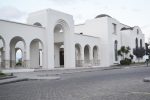
The Jewish Community Centre of Quito is a magnificent building containing two synagogues, its architecture reminiscent of Old Jerusalem. (photo by Lauren Kramer)

It was Friday night in Quito, Ecuador, and, as dusk fell, my husband and I approached the Jewish Community Centre, a magnificent one-hectare complex whose light stone walls and graceful architectural arches are reminiscent of Jerusalem. We joined the community for Kabbalat Shabbat, singing the same Ashkenazi tunes we knew so well from Vancouver as an impassioned, young Brazilian rabbi led the service. With us was Pedro Steiner, a member of the Ecuadorian Jewish community who’d graciously offered to pick us up from our hotel and drive us to and from the synagogue that night.

I admit, it had felt odd sending out an email requesting hospitality over Shabbat a few weeks prior. But, as the melody of L’Cha Dodi washed over the large synagogue, its domed roof meticulously hand-painted and inscribed with the words of the Shema, I figured it was well worth it. We were 4,000 miles from home, but we felt very much closer in the warm embrace of Quito’s Jewish centre.

Our host was a first-generation Ecuadorian whose Czech and Austrian parents had arrived in the country just before the Second World War. They were among 4,000 European Jews who found refuge from the Holocaust in Ecuador, granted entry permits on the proviso that they work in agriculture. Most of those Jews had been merchants, industrialists and businessmen and, while they were grateful to escape the war, most had no interest in pursuing an agrarian lifestyle. After the rich culture they knew in Europe, Ecuador seemed small and culturally impoverished. Perhaps that’s why at least half of those new immigrants left by 1950 for lives in Israel, America, Argentina and Chile.

Steiner’s parents opted to stay. “My dad bought a book on agronomy and read it while on the ship to Ecuador,” he recalled. “After arriving, he found work on a farm south of the city and, by 1955, he’d established a small dairy factory in Quito.” Years later, he sent his son to college in the United States and Pedro spent a decade there with his wife before the two returned to Quito to raise their children.

There are some 600 Jewish families remaining in the city. “I realized that, in coming back to Quito in the 1970s, we were delaying the decision to move for another generation,” Steiner reflected.

Until the early 1970s, most Jews in Quito sent their children to American School, a liberal institution created by Galo Plaza Lasso, one of the country’s past presidents. Then a student at the school won a prize for his review of Mein Kampf and the Jewish community, insulted this could happen, determined it was time to establish a new school. In 1973, Collegio Alberto Einstein was founded with “an atmosphere of Jewishness.” The K-12 school, ranked among the top educational institutions in Ecuador, offers classes in Jewish studies but “it’s not a religious school,” Steiner emphasized. Of the 700 students at Alberto Einstein, only 10% are Jewish.

That’s where Steiner’s kids were educated. And, firmly committed to building Jewish life in Quito, Steiner helped obtain the funding and donations necessary to build the Jewish Community Centre in 2000. He proudly toured us around the impressive site. With a ballroom, conference rooms, two synagogues, a kosher kitchen, a swimming pool, large sports grounds and rooms for Jewish youth movements and Hebrew classes, the JCC is an enviable facility. “But it’s underutilized,” Steiner said, his voice tinged with regret.

Days before Steiner picked us up from our Quito hotel, we had spent time in the Ecuadorian highlands two hours north, at Hacienda Zuleta, the family home of the late Lasso. Built in the 1600s, the expansive property is set in a bucolic valley surrounded by the Andes Mountains. Cows bellowed gently outside our bedroom window, a fireplace lit the 17th-century paintings on the ancient stone walls at night and hot soups with traditional Ecuadorian dishes warmed our bellies at meal times.

photo - Fernando Polanco, grandson of the late Ecuadorian president Galo Plaza Lasso, holds a Tanach given to his grandfather on a diplomatic visit to Israel in the 1970s
Fernando Polanco, grandson of the late Ecuadorian president Galo Plaza Lasso, holds a Tanach given to his grandfather on a diplomatic visit to Israel in the 1970s. (photo by Lauren Kramer)

The Lasso family library contains more than 1,000 books but, minutes after arriving, we’d extracted the only one of Jewish significance: a Tanach inscribed and given to Galo by a chief rabbi when he visited Israel in the 1970s. In another book documenting his political legacy, we found a photograph of Golda Meir welcoming him to the country. “My grandfather was loved by the Jewish community of Ecuador because he helped Jews relocate to Latin America,” said Fernando Polanco, Galo’s grandson, who now runs the Lasso family home.

Hacienda Zuleta hosts visitors for overnight stays, horseback rides into the mountains and bike excursions on its cobbled roads. During our stay, we explored the organic vegetable garden, toured the cheese factory, cycled past the dairy farm with its herd of 500 cows and marveled at the size of caged condors at a rehabilitation project to help protect this critically endangered bird. Most of these are initiatives Galo put into place.

In the ornate Lasso hacienda, we perused portraits of a family that helped shape Ecuador, marveling at Galo’s generosity of spirit. This was a man who helped shape the policies that welcomed Jews to the country, and who divided up his own 50,000-acre fertile estate, giving parcels to the Zuleta locals who lived and worked there.

“My grandfather’s clear vision, environmental responsibility and social consciousness back in the 1940s made him one of Ecuador’s best presidents,” said Fernando, beaming with pride. “Zuleta was his trial and error, his conscience.”

If you go: Adventure Life, a company specializing in travel in Ecuador, coordinates itineraries throughout the country, including Quito city tours, highland hacienda adventures, Galapagos island cruises and visits to the jungle (adventure-life.com or 1-800-344-6118).

Lauren Kramer, an award-winning writer and editor, lives in Richmond. To read her work online, visit laurenkramer.net. This article was originally published in Canadian Jewish News.

Format ImagePosted on November 11, 2016November 11, 2016Author Lauren KramerCategories TravelTags Ecuador, Jewish life, Judaism, Quito

Posts pagination

Previous page Page 1 … Page 3 Page 4 Page 5 Next page
Proudly powered by WordPress