Skip to content
  • Home
  • Subscribe / donate
  • Events calendar
  • News
    • Local
    • National
    • Israel
    • World
    • עניין בחדשות
      A roundup of news in Canada and further afield, in Hebrew.
  • Opinion
    • From the JI
    • Op-Ed
  • Arts & Culture
    • Performing Arts
    • Music
    • Books
    • Visual Arts
    • TV & Film
  • Life
    • Celebrating the Holidays
    • Travel
    • The Daily Snooze
      Cartoons by Jacob Samuel
    • Mystery Photo
      Help the JI and JMABC fill in the gaps in our archives.
  • Community Links
    • Organizations, Etc.
    • Other News Sources & Blogs
    • Business Directory
  • FAQ
  • JI Chai Celebration
  • JI@88! video

Recent Posts

  • Sharing her testimony
  • Fall fight takes leap forward
  • The balancing of rights
  • Multiple Tony n’ Tina roles
  • Stories of trauma, resilience
  • Celebrate our culture
  • A responsibility to help
  • What wellness means at JCC
  • Together in mourning
  • Downhill after Trump?
  • Birth control even easier now
  • Eco-Sisters mentorship
  • Unexpected discoveries
  • Study’s results hopeful
  • Bad behaviour affects us all
  • Thankful for the police
  • UBC needs a wake-up call
  • Recalling a shining star
  • Sleep well …
  • BGU fosters startup culture
  • Photography and glass
  • Is it the end of an era?
  • Taking life a step at a time
  • Nakba exhibit biased
  • Film festival starts next week
  • Musical with heart and soul
  • Rabbi marks 13 years
  • Keeper of VTT’s history
  • Gala fêtes Infeld’s 20th
  • Building JWest together
  • Challah Mom comes to Vancouver
  • What to do about media bias
  • Education offers hope
  • Remembrance – a moral act
  • What makes us human
  • המלחמות של נתניהו וטראמפ

Archives

Follow @JewishIndie
image - The CJN - Visit Us Banner - 300x600 - 101625

Tag: Canada

ביקור מוצלח

ביקור מוצלח

שרת החוץ של קנדה כריסטיה פרילנד ניפגשה עם נשיא המדינה ראובן ריבלין. (צילום: Mark Neiman, GPO)

שרת החוץ של קנדה כריסטיה פרילנד קיימה ביקור בישראל לפני כשבועיים, שנחשב למוצלח מבחינת שתי המדינות. מדובר בביקור ראשון של השרה פרילנד בישראל. זאת מאז נכנסה לתפקידה בחודש ינואר אשתקד (עת החליפה את סטפן דיון), בממשלה הליברלית של ראש הממשלה הנוכחי ג’סטין טרודו.

פרילנד קיימה בישראל שלוש פגישות רשמיות. היא ניפגשה עם ראש הממשלה בנימין נתניהו. לאחר מכן עם נשיא המדינה ראובן ריבלין. ולבסוף עם יושב ראש הכנסת יולי אדלשטיין. השרה הקנדית קיימה אף ביקור בכותל המערבי.

לאחר הביקור בישראל כמתוכנן שרת החוץ הקנדית ביקרה גם במחנה פליטים פלסטיני, וכן היא ניפגשה עם שר החוץ של הרשות הפלסטינית ריאד אלמלכי. יצוין כי הביקור הרשמי בישראל של שרת החוץ לא זכה לדיווחים נרחבים במיוחד בתקשורת המקומית. בישראל כנראה מתייחסים עדיין לקנדה כאל מדינה שולית כבעבר. ובכך מתעלמים מעליית קרנה של קנדה בעולם בעיקר נוכח העומד בראשה טרודו. עוד שוכחים בישראל את העובדה שבקנדה יש כיום את אחד הריכוזים הגדולים ביותר של יהודים בעולם.

פרילנד ציינה בצער את הפגיעות ביהודים הגרים בקנדה. היא אמרה בסוגייה הקשה הזאת את הדברים הבאים: “אני מצטערת להגיד שהיהודים הם הקבוצה הפגיעה ביותר כיום בקנדה מפעילות של פשעי שנאה. בין אם מדובר בוונדליזים, גרפיטי, תעמולה של שינאה או תגובות גיזעניות ברשת”. השרה הוסיפה כי בניין הג’ואיש קומיונטי סנטר באזור הבחירה שלה בטורונטו, קיבל איומים על פצצה שכביכול הוטמנה בו בשנה שעברה.

בנושאים המדיניים אמרה פרילנד: “לגבי מה שקורה בגבול עם עזה זו תזכורת לכולנו כמה הביטחון שם שברירי, ושצריך לעבוד יחד ולחתור לשלום ביחד. אנחנו תומכים בזכות של ישראל לחיות בשלום במזרח התיכון”. לדברי שרת החוץ ישראל וקנדה ירחיבו את שיתוף הפעולה בנושא מלחמה בטרור.

פרילנד הודיעה עוד בפגישה עם ראש ממשלה כי קנדה מתעתדת להעביר כסף במזומן לרצועת עזה, כדי לתרום לשיפור המצב הכלכלי שם. בפועל מדובר על מיליוני דולרים שקנדה תעביר לרצועת עזה. פרילנד אמרה בנושא: “קנדה נענתה לבקשה בנושא של שליח האו”ם למזרח התיכון ניקולאי מלדנוב, אשר הסביר כי ברצועה יש מחסור במזומנים וזה מאוד מקשה על קיום מסחר”. נתניהו מצדו אמר כי ישראל אינה מתנגדת לכוונת קנדה לעביר מזומנים לרצועת עזה, אך ביקש להדגיש כי יש לדאוג לכך שהכסף לא יגיע לידי טרוריסטים ולא לידי אונר”א.

בפגישה עם הנשיא אמרה שרת החוץ הקנדית כי הביקור מהווה הזדמנות להעמיק את קשרי הידידות בין שתי המדינות, וכן לשוחח על האתגרים עימם מתמודדות כיום הדמוקרטיות השונות ברחבי עולם. הנשיא ריבלין אמר לשרה כי יקיים בשנה הבאה ביקור גומלין בקנדה. על כך הגיבה פרילנד: “אני שמחה ונרגשת מביקורך ואנו מצפים לקבל את פניך בברכה”.

בפגישה עם יו”ר הכנסת אמרה פרילנד: “היחסים החמים בין שתי המדינות אינם צריכים להיות מושפעים מפוליטיקה. טיב היחסים בין קנדה לישראל הוא אסטרטגי. עבדנו קשה ואנחנו שומרים על כך בהצלחה”. שרת החוץ אמרה עוד כי אוכלוסיית היהודים בקנדה היא השלישית בגודלה בעולם, והקהילה היהודית בקנדה פעילה ומשפיעה מאוד במדינה”.

קנדה וישראל החליטו בעקבות הביקור של שרת החוץ הקנדית בישראל, לקדם מספר פרוייקטים משותפים. ובהם: אישרור אמנת הסחר החופשי המעודכנת, קידום שיתוף הפעולה בטנכנולוגיה, בסחר, בחלל, בתעופה ובביטחון הסייבר. ובמקביל לשתף פעולה עם מדינות שלישיות כמו עם מדינות אחדות באפריקה.

Format ImagePosted on November 14, 2018November 8, 2018Author Roni RachmaniCategories עניין בחדשותTags Canada, Chrystia Freeland, Gaza, Israel, terrorism, trade, UNRWA, אונר"א, טרור, ישראל, כריסטיה פרילנד, סחר, קנדה, רצועת עזה
Recalling the heyday of radio

Recalling the heyday of radio

The writer’s father listening to the radio, circa 1940. (photo from Libby Simon)

This black-and-white picture, lined with age, was taken of Papa in about 1940. His attire reflects a time when a vest was commonly worn under a man’s suit jacket. It is rarely seen today, nor is the armband on his shirtsleeve. His white shirt makes the ensemble too formal to be worn at home, especially with his often-repaired dress shoes. But Papa was a Hebrew teacher and, perhaps uniquely to him, he always dressed as if he were going out. The bare, worn floor reveals a modest home, not uncommon in the 1930s, considering the widespread impacts of the Great Depression.

He sits in rapt attention, hunched on a stool, his expression tense, his eyes fixed on an old, brown, wooden floor radio. We grew up with that radio the way people grow up today with television. It connected our family with the outside world, but each for different reasons. As immigrants, Yiddish was our first language and, for him, radio undoubtedly served as an opportunity to hone his English, as well as to receive its messages. Although I was still a preschooler, I remember what he was listening to because the scene in this photo was repeated several times every day from 1939 to 1945, the years of the Second World War. Papa was listening to the news. But the true catastrophic human saga unfolding beyond the photo, even as he listened, would not emerge until after the war ended.

Fortunately, we here in Canada escaped the devastating fate of our relatives. As a child, I was only aware that certain foods were rationed, like tea, coffee, sugar and butter. My four brothers and I would fight over the krychik (Yiddish for the end piece of a rye bread). It was not the bread itself, but the limited availability of butter on the krychik that made this a special treat worthy enough to be fought over. If Papa were home, he would assign it to me as the youngest and as the only girl, much to the dismay of my brothers. But the rations coupon books provided by the Canadian government gradually extended to include many other staples, such as meat, cheese and evaporated milk. These were needed for the soldiers and the war effort.

I also remember short musical promotions appealing to Canadians to buy Victory Bonds. As a second-grader, I stood up in class one day and patriotically sang one such little ditty, which still reverberates in my memory. My substitution of the word “bun” for “bond” exposes my childhood ignorance that I only came to realize in retrospect as an adult. The lyrics go as follows:

“Buy a ‘bun’ V for Victory / Show you’re fond of your liberty / Keep on buying to keep them flying, / And don’t ever stop till they’re over the top.

“Every dollar makes Hitler holler / And every ‘bun’ you buy will make him groan / So help flood our Chest, / Do your best and invest / In Canada’s Victory Loan.

“Oh, Canada, we stand on guard for thee.”
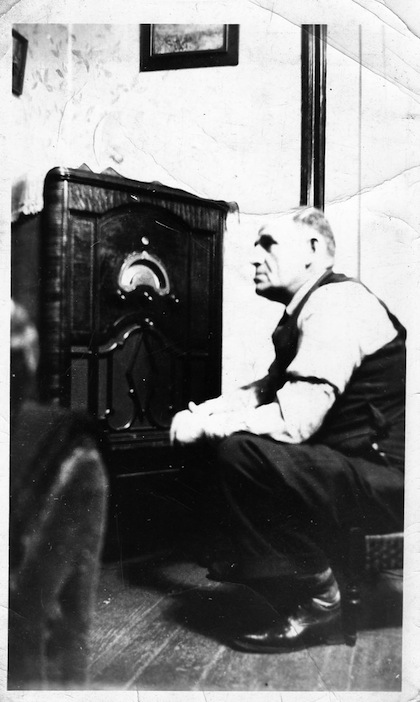
photo - The writer’s father listening to the radio, circa 1940The radio became such a central focus and source of news that, when the war ended in 1945, I wondered what would happen to it. “Papa,” I asked, “now that the war is over, will they close the radio?”

“Why do you think they will close the radio?”

“Because,” I answered, “what else would they have to talk about?”

It was then I learned that radio not only delivered news about war. It also provided entertainment. For example, I discovered Hockey Night in Canada. My brothers and I would huddle around the radio every Saturday night and listen to Foster Hewitt, in his inimitable high-pitched excitement shout, “He shoots! He scores!” The contagion caused a clutch of five kids to holler in unison along with the sound of the roaring crowd – but only for the Toronto Maple Leafs. In time, I became a hockey aficionado, and could spout names like Syl Apps, Turk Broda or even Conn Smythe, their manager. Establishment of the Hot Stove League began during those early years and continues to this day.

We used to listen to shows like John & Judy, a serial about life in a small Canadian city, and Share the Wealth, with Bert Pearl. And Second World War songs filled the airwaves, like the “White Cliffs of Dover,” referring to the Battle of Britain. “We’ll Meet Again,” a song that resonated especially with soldiers off to battle and their families and sweethearts who had the heartbreak of waiting and not knowing if they would ever return.

Papa’s faded photo tells not only a personal story, but the story of many in Canada. It also highlights the role of radio in our lives. It served to bring the world into our homes between two catastrophic events – the Great Depression and the Second World War. We cannot overlook its importance as a medium of communication that brought the world into millions of living rooms across the country.

Of course, time brings change. My parents are long gone and my siblings and I have dispersed across North America. Radio was eventually muscled out by television but, today, you can “turn your radio on” in a resurgence of popularity. As a segment of mass media, the power of radio has infiltrated our lives again, even on the internet. And, online, you can go back to your childhood with “retro music” and shows like Roy Rogers and The Lone Ranger. It still connects us, though without taking up nearly as much floor space.

Libby Simon, MSW, worked in child welfare services prior to joining the Child Guidance Clinic in Winnipeg as a school social worker and parent educator for 20 years. Also a freelance writer, her writing has appeared in Canada, the United States, and internationally, in such outlets as Canadian Living, CBC, Winnipeg Free Press, PsychCentral and Cardus, a Canadian research and educational public policy think tank.


Format ImagePosted on November 9, 2018November 7, 2018Author Libby SimonCategories Op-EdTags Canada, history, radio, Second World War
שוק הקנאביס הרותח

שוק הקנאביס הרותח

(Wikipedia)

שוק מגדלי הקנאביס בקנדה רותח בימים אלה בעקבות החלטת הממשלה הפדרלית, כי מכירת מריחואנה היא חוקית החל השבעה עשר בחודש.

שלוש מגדלות הקנאביס הגדולות בקנדה הן: במקום הראשון – טילריי שמניותיה נסחרות בבורסה בשווי של למעלה משלושה עשר מיליארד דולר קנדי, במקום השני – קנופי שמניותיה נסחרות בבורסה בשווי של כאחד עשר מיליארד דולר קנדי ובמקום השלישי – אורורה קנאביס שמניותיה נסחרות בבורסה בשווי של כעשרה מיליארד דולר קנדי.

אורורה קנאביס רכשה לאחרונה את חברת מדריליף הקנדית תמורת כשניים וחצי מיליארד דולר קנדי. מדובר בעסקת המיזוג הגדולה ביותר בענף שוק הקנאביס עד כה. חברת תיקון עולם הנחשבת לגדולה ביותר בישראל (בבעלות צחי כהן ודורית כהן) החזיקה בעשרה אחוז ממניות מרדיליף, ובעקבות המיזוג היא קיבלה רבע מיליון דולר קנדי. תיקון עולם הייתה שותפה בהקמת מרדיליף (בשנת 2014). זאת כדי שיתאפשר לחברה הישראלית לשווק את זני המריחואנה שלה בשוק הקנדי. בעקבות רכישת מרדיליף תיקון עולם תשווק מעתה את מוצריה בקנדה באמצעות אורורה קנאביס.

בראשית השנה רכשה אורורה קנאביס חברה נוספת בענף – קאנימד – תמורת מיליארד דולר קנדי. עתה מועסקים קרוב לכשש מאות עובדים באורורה קנאביס וכושר הייצור שלה נאמד בקרוב לשש מאות טון קנאביס בשנה.

אורורה קנאביס שהונפקה בשנת 2014 והפכה לאחת ממגדלות המריחואנה הגדולות בעולם, ניהלה לאחרונה מגעים עם חברת קוקה קולה, לייצור משקה קל שמבוסס על מריחואנה.

קנדה נחשבת כיום ליצרנית הקנאביס הגדולה בעולם. במקביל לשיווק המריחואנה לשווק המקומי היא מספקת את צמחי הסם למדינות רבות נוספות. בהן: גרמניה, ברזיל, אוסטרליה, קרואטיה, צ’ילה וצ’כיה. היקף שוק הקנאביס העולמי הוערך בכתשעה מיליארד דולר בשנת 2016. ולפי התחזיות של האו”ם הוא צפוי להגיע לכמאה וחמישים מיליארד דולר בעוד כשבע שנים (בשנת 2025). היקף שוק הקנאביס בקנדה מגיע כיום ללמעלה ממיליארד דולר, ולפי תחזיות האנליסטים המקומיים הוא צפוי להגיע לשישה מיליארד דולר בעוד כשבע שנים (בשנת 2025).

חברת אהלוט מטורונטו מחפשת בימים אלה מבקרים של קנאביס (או בהגדרה המקצועית “אוצרי קנאביס”) שיוכלו להבדיל בין הזנים השונים, ולהסביר זאת ללקוחות במילים פשוטות, בין היתר באמצעות פרסום פוסטים ברשתות החברתיות. במודעות הדרושים שלה מפרטת אהלוט: “דרושים מומחים אניני טעם שחיים יחד עם הקנאביס מספיק זמן, כדי להבין ולבטא את ההבדלים הדקים בין זן למשנהו. בואו להשתכר חמישים דולר לשעה להערכת המיטב שיש למגדלי הקנאביס בקנדה להציע. את העבודה ניתן לבצע מהבית בכל רחבי קנדה”. לדברי מנכ”ל אהלוט, גרג פנטליק, החברה מחפשת “אוצרי קנאביס” כדי להדריך את הלקוחות, כיוון שצפוי שיהיה קשה לבחור בין הזנים השונים והרבים כל כך.

בניאגרה קולג’ שבמחוז אונטריו נפתחה תוכנית ללימוד סטודנטים איך לגדל צמחי המריחואנה באופן מסחרי. וזאת כדי לאפשר לסטודנטים להשתלב בענף שכאמור צובר תאוצה גדולה בקנדה. תוכנית הלימודים כוללת בין היתר את האספקטים הבאים: מסחר, ביולוגיה, תרבות ובריאות של גידול, מכירת ושימוש בקנאביס. הסטודנטים ילמדו למשל איך לתכנן מערך שתילה, איזה תאורה נחוצה לגידול הצמחים בחחמות, איך להשקות את שתילי המריחואנה, תהיליך הדישון הדרוש, הגנה, בטיחות ומעקב אחר הגדילת השתילים, בדיקה פיננסית של עלויות הגידול, מעקב כמה העבודה דרושה עבור הליך הגידול, ניתוח ומחקר היכן עדיף לגדל את הצמחים ועוד. בשלב זה כבר עשרים וארבעה סטודנטים נרשמו לתוכנית הלימודים היחודית ללמוד אך לגדל מריחואנה.

Format ImagePosted on October 31, 2018October 30, 2018Author Roni RachmaniCategories עניין בחדשותTags Canada, cannabis, Israel, marijuana, ישראל, מריחואנה, קנביס, קנדה
סוף סוף: מריחואנה היא חוקית

סוף סוף: מריחואנה היא חוקית

(WikiProject Cannabis)

החל מיום רביעי שעבר (ה-17 בחודש) מכירת מריחואנה היא הליך חוקי בקנדה. בכך מקיימת הממשלה הליברלית ברשות ג’סטין טרודו, הבטחה מקמפיין הבחירות, להפוך את השימוש במריחואנה לחוקי בקנדה. כמובן שיש מתנגדים, בהם שמרנים שלא יכולים לסבול התקדמות כשלהי וגורמים באופוזיציה מטעם מפלגת השמרנים שתמיד יחפשו לשלול החלטות של ממשלת הליברלים. אצלם הפוליטיקה היא בראש וטובת האזרח לא תמיד נראית באופק. בממשלה הליברלית מציינים כי הלגיליזציה של הקנאביס תצמצם את השימוש במריחואנה על ידי בני נוער ובמקביל תצמצם משמעותית את הפשיעה בתחום.

קנדה היא בסך הכל המדינה השנייה בעולם שהופכת את השימוש במריחואנה לחוקי, אחרי אורוגוואי שעשתה זאת לפני כחמש שנים. באורוגוואי מותר לאזרחים לרכוש עד ארבעים גרם של הסם מדי חודש מבתי המרקחת. לחילופין הם יכולים לגדל את צמחי המריחואנה בעצמם, או להצטרף למועדוני עישון הסם באופן חוקי.

מדינות רבות בעולם וכן ארגון ברית מדיניות הסמים (שפועל מוושינגטון) יעקבו מעתה אחרי מה שקורה בקנדה בתחום המריחואנה, כדי לראות מה ההשפעה לאור האישור לשימוש בה, מעבר לצרכים הרפואיים הידועים.

עשרות חנויות למכירת מריחואנה ממתינות לאישור המיוחל לשיווקה ברבים. אם קבלת האישור כאמור לפני שבוע צפוי שחנויות רבות נוספות יפתחו ברחבי קנדה למכירת הסם. הממשלה הפדרלית תאפשר גם את מכירת הסם באמצעות רשת האינטרנט. במקביל כמאה ועשרים גופים עד כה קיבלו אישור מיוחד לגדל את צמחי המריחואנה בחממות. חלק מגופים אלה נסחרים בבורסות של קנדה וארה”ב כאשר מחירי מניותיהם עולים כל הזמן.

עדיין לא ברור כיצד משטרות התנועה ברחבי קנדה יוכלו לבדוק אם נהגים צרכו מריחואנה, כפי שהם נבדקים אם צרכו אלכוהול. נראה שבתוך מספר חודשים ימצאו המכשירים חדשים לבדיקת כמויות הסם בדמם של הנהגים.

לקנדים שישתמשו בקנאביס באופן חוקי או שיעסקו בתחום גידול ומכירת הסם צפויות בעיות בכניסה לארצות הברית, כך מסתבר. זאת כיוון שבארה”ב הקנאביס אינו חוקי ונחשב לסם מסוכן. אמנם תשע מדינות בארה”ב אישרו את השימוש במריחאונה אך עדיין החוק הפדרלי האמריקני אוסר זאת. לפיכך קנדים שיעברו את הגבול לארה”ב צפויים להיחקר בנושא השימוש בסם, או להישאל האם האם משתייכים לתעשייה ליצור ומחירת המריחואנה. כבר ידוע לפחות על מקרה אחד של קנדי מתעשיית המריחואנה שגורש מארה”ב ונאסר עליו לתמיד לבקר בה שוב. יש כבר מספר קנדים העוסקים בתחום שהודיעו כי לא יבקרו עוד בארה”ב מהחשש שמה אף הם יגורשו ממנה.

כיצד מגיבים הגולשים מישראל לידיעה כי קנדה הפכה את השימוש במריחואנה לחוק? להלן לקט תגובות מעניינות שפורסמו באתר ווינט:

“הסטלנים חושבים שהקנביס יביא להם מיליארדים. שימשיכו בהזיות”.

“קנאביס זה רעל מסוכן הגורם נזק חברתי ואישי. בבתי חולים בארץ יש לא מעט צעירים המגיעים לאישפוז בשל שימוש בקנאביס ואף משימוש חד פעמי. זה מידע בדוק שקיבלתי מאחד ממנהלי בתי החולים לשעבר”.

“הטייקונים מפחדים שאנשים יפסיקו לצרוך אלכוהול, טבק, תרופות בכמויות. וגם אנשים יתחילו לנהוג לאט יותר ואז את מצלמות המהירות יהיה אפשר לזרוק לפח”.

“כולם נהיו פה נרקומנים חולים”.

“זאת בכייה לדורות”.

“עיוולת בדומה לאלכוהול”.

“איך הצביעו לג’סטין טרודו? בקושי מסוגל לנאום, שהוא עומד ליד טראמפ הוא מתחיל לרעוד, הגבות המודבקות שלו הם בכלל בדיחה. ג’סטין טרודו הוא השמאל הכי קיצוני בעולם עכשיו בזמן שכל המדינות עוברות ימינה. אם הוא אישר את מכירת המריחואנה אז זה כנראה לא דבר טוב”.

Format ImagePosted on October 24, 2018Author Roni RachmaniCategories עניין בחדשותTags Canada, cannabis, marijuana, מריחואנה, קנביס, קנדה
קבוצות באתר פייסבוק – חלק שני

קבוצות באתר פייסבוק – חלק שני

ישראלים קונים, מוכרים ומוסרים בוונקובר והסביבה: מדובר בקבוצה סגורה בנושאי מכירה, קנייה ומסירה.

הישראלים שגרים בקנדה הקימו קבוצות באתר פייסבוק בערים שונות, בנוסף על קבוצות הישראלים בטורונטו ובוונקובר. בעיר השנייה בגדולה בקנדה – מונטריאול, פועלות מספר קבוצות של ישראלים. בהן: ישראלים במונטריאול – מדובר בקבוצה סגורה שמתמקדת בעסקים, שירותים, מודעות דרושים ואירועים המיועדים לקהילה בעיר. הקבוצה כוללת כשבע מאות חברים והיא נוסדה לפני כשנתיים. קרובים רחוקים במונטריאול – מדובר בקבוצה סגורה שמתמקדת במפגשים חברתיים לקדם את התרבות הישראלית והשפה העברית בקרב הישראלים, וכן לאפשר חיבור בין הישראלים שכבר חיים במונטריאול לישראלים שעוברים לגור בה. הקבוצה כוללת כחמש מאות וארבעים חברים והיא נוסדה לפני כארבע שנים. מועדון קוראות מונטריאול – מדובר בקבוצה סגורה שכוללת מפגשים פעם בחודש בנושא ספרים בכלל ומה שקורה בחיים בפרט. הקבוצה כוללת כשבעים חברים והיא נוסדה לפני כארבע שנים. אירועים בעברית במונטריאול – מדובר בקבוצה פתוחה שפועלת לרכז את כל האירועים בשפה העברית. הקבוצה כוללת כשישים חברים והיא נוסדה לפני כשלוש שנים. קבוצות קטנות נוספות במונטריאול: מונטריאול, לשאול, לטייל ולשתף ואין טראנזיט-קבוצת פרוייקט מונטריאול.

גם לישראלים באוטווה יש קבוצה: מדובר בקבוצה סגורה שכוללת כחמש מאות ושמונים חברים והיא נוסדה לפני כשש וחצי שנים. יש אף קבוצה קטנה לישראלים בוויניפג: מועדון אוהבי הספרים-ויניפג מניטובה. מדובר בקבוצה סגורה שכולל כשלושים חברים בלבד והיא נוסדה לפני כשלוש שנים.

במחוז אלבטרה יש שתי בקבוצות. ישראלים באדמונטון: מדובר בקבוצה פתוחה שמתמקדת בעסקים, שירותים, מודעות דרושים ואירועים המיועדים לקהילה בעיר. הקבוצה כוללת מאה ארבעים ושמונה חברים והיא נוסדה לפני קרוב לארבע שנים. ישראלים בקלגרי והסביבה: מדובר בקבוצה סגורה שנוסדה כדי להכיר אחד את השני, לעזור אחד לשני ולקרב לבבות. הקבוצה כוללת כארבע מאות וארבעים חברים והיא נוסדה לפני כחמש שנים.

להלן עוד מספר קבוצות קטנות בוונקובר: ישראלים קונים, מוכרים ומוסרים בוונקובר והסביבה: מדובר בקבוצה סגורה בנושאי מכירה, קנייה ומסירה. הקבוצה כוללת כשלוש מאות ושמונים חברים והיא נוסדה לפני כשנה. ישראלים שטוב להם בוונקובר: מדובר בקבוצה סגורה לניהול דיונים בנושאים שונים. הקבוצה כוללת כארבע מאות ועשרים חברים והיא נוסדה לפני כשלוש שנים. ישראלים מבשלים בוונקובר: מדובר בקבוצה סגורה שחברים בה כמאתיים ושישים חברים והיא נוסדה לפני כשנתיים וחצי.

להלן מספר קבוצות נוספות של ישראלים בקנדה. סטודנטים ישראלים בקנדה: מדובר בקבוצה סגורה שמיועדת לסטודנטים הלומדים בקנדה, או כאלה שרוצים ללמוד בה, וכל כל מי שמעוניין לקבל כל סוג של מידע על לימודים בקנדה. הקבוצה כוללת כשש מאות וארבעים חברים והיא נוסדה לפני כשנתיים. קנדה למטיילים: מדובר בקבוצה סגורה כדי לחלוק ולשתף מידע על ההכנות הדרושות לטייל בקנדה, טיפים והמלצות ממי שכבר טייל כאן וייעוץ למטייל. הקבוצה כוללת כאלף שמונה מאות וחמישים חברים והיא נוסדה לפני כשלוש שנים. ישראלים צעירים בקנדה: מדובר בקבוצה סגורה שמיועדת לצעירים שחיים או מבקרים בקנדה ומעוניינים להיות חלק מהקהילה כאן. הקבוצה כוללת כאלפיים חברים והיא נוסדה לפני קרוב לשנתיים. ישראלים בקנדה-ארה”ב: קבוצה סגורה למי שמחפשים עבודה, עובדים, עסקים נדל”ן, מידע על אירועים חברתיים, אטרקציות, בתי ספר וגנים, מלונות, מתכוני אוכל, בייביסטרים, בתי כנסת ועוד. הקבוצה כוללת כשלושת אלפים חברים והיא נוסדה בראשית השנה הנוכחית. קבוצות קטנות של ישראלים בקנדה: ישראלים גולשים בקנדה, חילופי בתים בין ישראלים בקנדה וארה”ב, ישראלים בקנדה מעבירים הלאה וישראלים בקנדה זה הכי טוב שיש.

Format ImagePosted on October 17, 2018October 14, 2018Author Roni RachmaniCategories עניין בחדשותTags Canada, Facebook, Israelis, ישראלים, פייסבוק, קנדה
הסכם סחר חדש

הסכם סחר חדש

סוף למשבר העמוק ביחסי ארצות הברית וקנדה בעידן טראמפ: שתי המדינות הגיעו סוף סוף להסכם סחר חדש. בפועל קנדה תצטרף להסכם הסחר שהושג כבר בין ארה”ב למקסיקו בסוף חדש אוגוסט. הסכם הסחר המשולש בין המדינות של צפון אמריקה שיחליף את הסכם נפט”א (נחתם באלף תשע מאות תשעים וארבע), יקרא יו.אס.אם.סי.איי (ארה”ב, מקסיקו וקנדה). הוא אמור להיחתם בין הצדדים בסוף נובמבר בטקס חגיגי, לאחר שיקבל את אישורי בתי המחוקקים של שלוש המדינת.

קנדה יש לזכור היא שותפת הסחר השניה בגודלה של ארה”ב לאחר סין. ועל כן להסכם החדש יש משמעות כלכלית גדולה מאוד לשתי המדינות השכנות, וכמובן גם למקסיקו. ההסכם החדש דן בתחומים רבים. ובהם: יבוא מכוניות, יבוא מוצרי חקלאות, יבוא חלב, יבוא תרופות, סוגיות של קניין רוחני, סוגיות של סחר דיגיטלי והמנגנון לפתרון סכסוכים בין המדינות. תוקפו של ההסכם שש עשרה שנים, ושלוש השותפות יבדקו אם יש מקום להכנסת שינויים בו רק בתום שש השנים הראשונות.

מיד עם היכנסו לבית הלבן לפני קרוב לשנתיים הודיע הנשיא האמריקני, דונלד טראמפ, כי הסכם נפט”א הוא הסכם גרוע מאוד לארה”ב ויש להחליפו. טראמפ החל במסע איומים קשים נגד קנדה ומקסיקו. זאת כדי לאלצן לחתום על הסכם סחר חדש. טראמפ הפנה את זעמו בעיקר לכיוון קנדה ומסע ההשמצות וההשפלות כנגדה הגיע לשיאו, עת הנשיא האמריקני סירב ללחוץ את ידו של רה”מ קנדה, ג’סטין טרודו, באו”ם בסוף חודש ספטמבר. טראמפ הגדיל לעשות והצהיר כי “אנחנו לא ממש אוהבים את הנציגים שלהם”. הנשיא האמריקאי התכוון בוודאי לשרת החוץ הקנדית, כריסטיה פרילנד, שעשתה רבות להשגת ההסכם המדובר. לטראמפ יתכן והפריע שפרילנד הוכיחה שהיא עומדת על שלה ופועלת בנחרצות לטובת האינטרסים הקנדיים – ועוד מדובר באישה! בשל התנהגותו הבוטה של טראמפ מערכת היחסים בין שתי המדינות שנחשבו לקרובות בעולם, הידרדרה לרמה שלא זכורה מעולם.

נציגי ארה”ב, קנדה ומקסיקו פתחו במגעים מואצים וארוכים להגיע להסכם החדש. לאחר שלושה עשר חודשים תמימים של משא ומתן הושג ההסכם הראשון בין ארה”ב ומקסיקו, בסוף החודש באוגוסט. ואילו ביום ראשון לפני כעשרה ימים (ה-1 באוקטובר), הושג ההסכם השני בין ארה”ב וקנדה. כל הצדדים נאלצו לוותר על חלק מהדרישות והתנאים המוקדמים להשגת הסכם סחר חדש של מדינות צפון אמריקה. נושא טעון אחד נשאר מחוץ להסכם ועל קנדה וארה”ב מוטל להמשיך ולדון בסוגיה, עד להשגת פתרון מוסכם. מדובר במכסי המגן שהאמריקנים מטילים על ייצוא של פלדה ואלומיניום מקנדה. מכל מקום מחלוקת זו לא תמנע את החתימה המשולשת על ההסכם החדש.

האופוזיצה בקנדה מיהרה לתקוף את ממשלת טרודו על כביכול הוויתורים הגדולים שעשתה לאמריקנים, כדי להגיע להסכם. לעומת זאת בנק אוף אמריקה מציין כי קנדה עשתה וויתורים סמליים בלבד. לפי אנליסטים של הבנק חלק מסעיפי ההסכם הם סמליים בעיקרם. ההסכם כולל הפחתה קטנה בפרוטקציוניזם לרפתנים מקנדה. עתה ליצרני החלב האמריקאים תהיה גישה ל-3.59 אחוזים משוק החלב הקנדי לעומת 3.25 אחוזים שהיו נהוגים עד כה. השינוי הנ”ל יגדיל את ייצוא החלב האמריקני לקנדה בכ-70 מיליון דולר בלבד.

עם השגת ההסכם אמר טראמפ על טרודו: “הבעייה היחידה של ג’סטין היא שהוא אוהב את העם שלו, הוא נלחם קשה למען עמו. תמיד היו לנו יחסים טובים והם קצת הידרדרו בחודשיים האחרונים”.

Format ImagePosted on October 10, 2018October 4, 2018Author Roni RachmaniCategories עניין בחדשותTags Canada, Mexico, NAFTA, trade, United States, USMCA, ארה"ב, הסכם נפט"א, יו.אס.אם.סי.איי, מקסיקו, סחר, קנדה

Tweets raise questions

Dimitri Lascaris, chair of the board of Canadians for Justice and Peace in the Middle East (CJPME), last week tweeted what is being condemned as a blatantly antisemitic swipe at two Jewish members of Parliament.

Despite CJPME’s name, the messaging from the group doesn’t indicate that the “justice and peace” they seek will be particularly just or peaceful for Jewish residents of the Middle East. What happened last week should clarify where the group – or at least its leader – stands.

“Apparently,” Lascaris tweeted, “Liberal MPs Anthony Housefather and Michael Levitt are more devoted to apartheid Israel than to their own Prime Minister and their own colleagues in the Liberal caucus.” The tweet was a bit of a non sequitur. Lascaris had posted on a different platform about a B’nai Brith Canada rally in Toronto, after which two women who had attended the event posted a video saying that Prime Minister Justin Trudeau should face the death penalty. Weirdness all around, certainly, but how Lascaris connected this incident with two Liberal MPs is an open question. Ultimately, whatever link there may be is irrelevant in the bigger context.

Accusing Jews of dual loyalties, of being “others” who are not fully of a society, is an age-old charge almost universally accepted as antisemitic at its core. Encouragingly, politicians of every stripe (as well as plenty of other Canadians) have tweeted or otherwise made clear their dismay at Lascaris’s comment.

The next move is up to members of the organization. If the members of CJPME reject their chair’s remarks and remove him from his role, they will have demonstrated that they understand something about justice. If not, Lascaris and the group he represents should be snubbed by elected officials and anyone with a genuine interest in peace and justice.

* * *

Another interesting tweet came from Tory Senator Linda Frum last week, in response to the announcement that Trudeau would issue an apology for the Canadian government’s refusal in 1939 to allow the MS St. Louis, carrying 907 Jewish refugees, to land in Canada. Forced to return to Europe, 254 of the passengers were murdered in the Holocaust.

“I’ve made this warning before: if Trudeau’s apology for Canada’s rejection of the ‘voyage of the damned’ compares Jews fleeing the Nazis to the contemporary crisis of illegal economic migrants, he will require an apology for his apology. Think carefully,” tweeted Frum.

Thinking carefully is indeed what everyone involved should do.

Leaving aside the criticism about the merits of historical apologies, which we have addressed in this space previously, Frum makes a useful point. To be heartfelt, the apology should stand on its own merits as the voice of a nation genuinely regretful about a scar on our national honour. The apology – scheduled for the week in November that marks the 80th anniversary of Kristallnacht – should be about the St. Louis, its passengers, the victims of Canada’s decision and perhaps the broader lesson of what was not done to aid the mortally endangered Jews of Europe. It should not be taken out of context through the universalizing of the story. That the passengers on the ship were Jews is absolutely critical to understanding the history of the St. Louis and our country’s history of institutionalized antisemitism.

At the same time, what is the point of these apologies, or any commemoration of a past wrong, if we do not learn and apply the lessons to the choices we make in our world today? There is a fine line to walk in respecting the individuality of the St. Louis, on the one hand, and ensuring that the apology and associated discussion results in positive changes in our approach to current and future issues we must confront.

Regrettably, Frum threw an additional wrench in the works with her use of the term “illegal economic migrants.” This is apparently a reference to the concern that some in her party and elsewhere have that the migrants who are entering Canada via the United States from Latin America are not legitimate refugees fleeing persecution or danger, but rather people simply seeking to advance the wealth and condition of their families. While it is fair to bring attention to the illegal crossings, it seems odd for a Conservative (or a conservative) to imply that there is something particularly disagreeable about a person seeking economic advancement, either through migration or other means.

That aside, the apology will almost certainly be welcomed by most Jewish Canadians. It will be an opportunity for Canadians to remember – and, for those who do not yet know, to learn – this history. Once we as a country have made what small penance we possibly can for this tragedy, there will be time to consider how contemporary events can be informed by what we learn from thinking about the St. Louis and its passengers. That is part of the purpose of this entire exercise.

Posted on September 14, 2018September 12, 2018Author The Editorial BoardCategories From the JITags antisemitism, B'nai B'rith, B’nai Brith Canada, Canada, Dimitri Lascaris, Linda Frum, St. Louis

Opening Pandora’s box

Maxime Bernier quit the Conservative party last week, at the precise moment that Conservatives from across the country were gathering in Halifax for their national convention, preparing for the federal election that is 13 months away.

Canadian political history would suggest that the former cabinet minister’s departure and his promise to form a new federal political party will be little more than a footnote in the history books when all is written.

The ostensible point of division between Bernier, who came a very close second to Andrew Scheer in last year’s Conservative leadership contest, is supply management. Supply management is an agricultural policy that limits supply in an attempt to stabilize prices so that Canadian farmers can make a decent living. It’s the reason we pay what we do for cheese, milk and poultry and it is prefaced on the understanding that the few extra dollars we pay weekly keeps the agricultural sector viable.

Bernier, who lambasted his former party over the issue, is correct. Support for such meddling in the economy is antithetical to conservative economic values. But it is an oddly Canadian consensus by which parties across the spectrum essentially accede to the status quo for political, if not policy, reasons. Opponents of Bernier in last year’s leadership race expressed fears that his opposition to supply management would undermine the Conservatives precisely where they are most popular: in rural Canada.

If less interventionist economic policies become the basis for Bernier’s new political party, it is hard to imagine how it will catch fire among Canadian voters. From a political standpoint, such a platform seems like a loser from the gate.

But there is a potential wild card in this scenario. Though he skirted the subject during his news conference last week, Bernier’s recent social media statements play to xenophobic, anti-immigrant sentiments. This, far more than economics, has the potential to get the attention of Canadian voters.

The Liberal government under Prime Minister Justin Trudeau likes to be associated with openness and a welcoming diversity, which contrasts nicely with developments to the south. But a recent poll suggests Canadians may not be as settled on this approach as some of us would like to believe.

The poll asked whether Canadians believed that there are too few, too many or the right number of immigrants to Canada. Overall, 18% of Canadians said there are too few immigrants coming to Canada, while 38% said there were too many and another 38% said the numbers were about right. The poll’s breakdown by party label indicates just how divisive this discussion could become. Only 12% of self-declared Liberals said that Canada has too many immigrants, while 73% of Conservatives hold that position.

Canadians, to an extent, have avoided opening a Pandora’s box in the form of a national discussion about immigration, perhaps happy in our complacency and self-image as a welcoming place. If Bernier’s new party – or, indeed, if the Conservatives – see an opening, we may be about to lift the lid somewhat on this issue.

If Bernier decides that he has nothing to lose and something to gain from upsetting accepted wisdom, it won’t necessarily prove a winning formula for his new party. However, if, by raising these topics, he forces other parties to articulate more specifically the generalized approach to multiculturalism and diversity that we take for granted, we may be headed for a reckoning on immigration, diversity and openness.

The election of Doug Ford as premier of Ontario suggests that populist messages are not anathema to Canadian voters. The Quebec provincial election, now underway, may very well provide a test case for some of these ideas that challenge our cherished notions of diversity.

When voter turnout hovers around the 50% mark, mobilizing one’s political base can be as crucial as convincing the undecided. If suspicion of outsiders appears likely to excite an identifiable core of the electorate, ambitious politicians will certainly consider how they might benefit by exploiting it.

Confronted by a heckler in Quebec last week, the prime minister shut her down by dismissing her as racist. It turns out, she may well be. But she also may not be the voice in the wilderness that some, including the prime minister, would like to believe. These people, too, will demand to be represented in Parliament and in the national discussion.

The rest of us, then, will need to have more than happy axioms and comforting self-satisfaction if we are to successfully defend diversity, inclusiveness and the social and economic value of new Canadians.

Posted on August 31, 2018August 29, 2018Author The Editorial BoardCategories From the JITags Canada, Conservatives, elections, immigration, inclusion, Justin Trudeau, Maxime Bernier, politics
קנדה: “זה הבית שלי”

קנדה: “זה הבית שלי”

פעם שנייה: סוכן כפול עיראקי-ישראלי לשעבר נלחם למנוע שוב את גירושו לתוניסיה. (צילום: Amy Keus)

סוכן כפול לשעבר של שירותי הביטחון של עיראק בתקופת הרודן סאדם חוסיין, וכן של “המוסד” הישראלי, חוסיין עלי סומדייה, מנסה למנוע את גירושו לתוניסיה בפעם השניה. סומדייה (53) יליד עיראק שמחזיק גם באזרחות תוניסאית (ששם נולד אביו), הגיש ערעור לבית המשפט הפדרלי של קנדה. זאת, לאחר ששרותי ההגירה המקומיים הפקיעו את תושבות הקבע הקנדית שלו. כשהכוונה היא בעצם לגרשו בשלב השני שוב לתוניסיה.

סומדייה עבד עם מנגנון הביטחון הסודי העיראקי לשעבר – המחובראת, במהלך שנות השמונים, עת למד באנגליה. הקשר עם המחובראת נוצר בעקבות היכרותו של סומדייה עם בניו של הדיקטטור העיראקי: עודאי וקוסאי חוסיין. הוא מסר מידע נרחב למחובראת שהביא בין היתר לחשיפת כשלושים וחמישה איש ובני משפחותיהם. לדברי סומדייה הוא הוטרד מהעובדה שהוא עובד בעצם “למען המפלצת סאדם ומכונת ההרג שלו”, ולכן החליט לחצות את הקווים ולהתחיל לעבוד עם “המוסד” הישראלי. סומדייה טען אז כי במסגרת עבודתו עבור “המוסד”, הוא אסף מודיעין על השגרירות של עיראק בבריסל, וכן ריגל אחרי חברי הארגון לשחרור פלסטין. בגלל שחשש לשלום משפחתו שוב חצה את הקווים וחזר לעבוד עם המוחבראת, עד שב-1990 עזר אומץ וברח לקנדה וביקש מקלט מדיני כאן.

שלטונות ההגירה הקנדיים לא רצו שסומדייה ישאר בקנדה בטענה שיש סבירות גבוהה שבעבודתו כסוכן, חשף לא מעט אנשים למעשי עינויים ואפילו הוצאה להורג. בעצם מדובר בפשעים שהוא ביצע נגד האנושות. לפיכך לאחר שנים של הליך משפט ארוך שכלל ערעורים אין ספור של סומדייה שכולם נדחו, הוא גורש לבסוף לתוניסיה ב-2005.

סומדייה טען שברגע נחיתתו בתוניסיה הוא נעצר על ידי רשויות החוק המקומיים. הוא הובא לחקירות קשות שכללו מעשי אלימות ועינויים. לאחר כשנה הצליח סומדייה לברוח מתוניסיה לאג’יריה, עבר דרך אמסטרדם והציג לרשויות בהולנד מסמכים מזוייפים של בקשת מקלט מדיני בקנדה. לאור זאת ההולנדים העניקו לו דרכון חרום וכך טס בחזרה לקנדה בקייץ 2006. מאז שוב עניינו נדון בבית המשפט בזמן שרשויות ההגירה מסרבות להעניק לו תושבות קבע, לאחר שעשה שימוש במסמכים מזוייפים. לאחר שנה (ב-2007) רשויות ההגירה הסכימו עם טענתו של סומיידה שאם הוא יגורש שוב לתוניסיה, צפויה סכנה לחייו. עם זאת ב-2016 החליטו ברשויות ההגירה לבדוק שוב את התיק שלו, לאחר שהושמעו טענות שהמידע שמסר על כך שכביכול עונה בתוניסיה אינו אמין (ובו בזמן שתוניסה לא משמשת עוד הבסיס של הארגון לשחרור פלסטין). סומדייה לא וויתר והגיש שוב ערעור על עמדת הממשלה האומרת, כי לא נשקפת סכנה עם יגורש לתוניסיה. הוא טען לעומת זאת כי כאחד ששיתף פעולה עם ישראל נשקפת לו סכנת חיים ממשית, אם יחזור למדינה ערבית כלשהי. לעיתון הטורונטו סאן אמר סומדייה: “המילה “המוסד” היא המילה הכי מפחידה והשנואה ביותר בעולם. כל אחד יודע שמי שקשור למדינה היהודית, יעשה לו לינץ’ על ידי ההמון ברחובות של כל עיר ערבית אליה יגיע”.

בינתיים בעת שהותו בקנדה במשך כשלושה עשורים הספיק סומדייה להתחתן בפעם השלישית, ויש לו כבר שלושה ילדים. המשפחה גרה כיום בהמילטון (במחוז אונטריו) והוא אף מחזיק בחברת בנייה. בראיון לעיתון הנשיונל פוסט אמר סומדייה: “אלו היו עשרים ושמונה שנים. יש לי את החיים שלי, יש לי את המשפחה שלי, יש לי את העסק שלי. מיקמתי את עצמי כאן בקנדה. זה הבית שלי”.

Format ImagePosted on July 25, 2018July 17, 2018Author Roni RachmaniCategories עניין בחדשותTags "המוסד", Canada, Hussein Ali Sumaida, Iraq, Israel, Mossad, Tunisia, חוסיין עלי סומדייה, יראק, ישראל, קנדה, תוניסיה
Consul general speaks with JI

Consul general speaks with JI

Consul General Galit Baram was in Vancouver last month. (photo from Consulate of Israel)

Galit Baram, consul general of Israel to Toronto and Western Canada, was in Vancouver last month.

“The visit was very good,” she told the Independent in a phone interview. “It included some political meetings and an academic meeting and I addressed the Jewish community and I attended the Negev Dinner of the JNF…. I had the opportunity to see the city, which is beautiful, and the weather was nice.”

Baram will be returning to Vancouver in November, when the late Dirk Pieter and Klaasje Kalkman will be honoured as Righteous Among the Nations for the assistance they provided to Jews during the Holocaust. The ceremony will be held in conjunction with Yad Vashem Canada and the Jewish Federation of Greater Vancouver.

Baram’s June meetings explored the opportunities of expanding cooperation between Israel and British Columbia in innovation and entrepreneurship.

“I believe that there is great potential in economic cooperation between Israel and British Columbia,” she said.

The provincial government, she said, “is making its initial steps now…. There is interest, there is curiosity, there is awareness of what Israel has to offer in innovation, in the medical field. When it comes to pharma, when it comes to cybersecurity, Israel is a leading country in the international arena in many of these fields.

“We had very good relations with the previous government and we hosted a mission … in November of 2016, a mission that was led by then-minister of finance [Michael] de Jong; there were representatives of different business sectors in British Columbia…. [It] is our intention to work very closely with the current government as well.”

The change in the federal government in 2015 also hasn’t affected Canada-Israel cooperation. On May 28, in Montreal, François-Phillippe Champagne, minister of international trade, and Eli Cohen, Israel’s minister of the economy and industry, announced the signing of the modernized Canada-Israel Free Trade Agreement.

Cohen spent two days in Canada, said Baram, adding, “I hope that Minister Champagne will soon reciprocate and visit Israel as well.

“I believe this is very important to have visits on such a high level … because I believe that governments can contribute greatly to bringing countries together. But we have to remember that, at a certain point, governments have to take a step back and leave it up to the business sector and the private sector to build bridges and to bring the countries together, but, as governments on both sides, Israel and Canada, we do as much as we can in order to strengthen and broaden our bilateral relations.”

Baram also sees the possibility of building a groundwork for peace in Israel through business and trade.

“I believe that economic mobility plays an integral role in bringing communities together,” she said, “and we are watching with pride the growing high-tech sector in the Israeli-Arab community, especially in the Greater Haifa area, in cities such as Nazareth…. We would like to see more Israeli-Arab students concentrating on science, concentrating on business, in business management and innovation and entrepreneurship.

“When it comes to building social bridges between Israelis and Palestinians, not necessarily Jews and Arabs, there are many activities that concentrate on that … and they are conducted by civil societies in Israel and it is heartwarming to see that. I would like to mention the activity of an organization such as Save a Child’s Heart … [which] brings children to Israel [for cardiac care] from Arab countries, from the Middle East, from Muslim countries in general, and they do wonderful, wonderful things in building bridges…. Another example I can give you is the upcoming visit of Dr. Yossi Leshem, one of Israel’s greatest experts on bird migration – he is going to be in Vancouver towards the end of August and he will be accompanied by his friends from [elsewhere in] the Middle East, and they are going to present beautiful regional projects in a conference that will be held in Vancouver…. Two other organizations that I would like to mention … are Ultimate Peace, that organizes Frisbee tournaments for youth … and another project, by Danny Hakim – Budo for Peace – teaches martial arts to Israeli Jews and Arabs, Palestinians, Jordanians and others, and they have instructors coming to Israel from Japan and from other countries…. I believe that such organizations can do so much good for Israeli society in general, for the Palestinians and for neighbouring countries in the Middle East.”

Of course, there are significant obstacles to peace, not the least of which are the ongoing altercations at the Gaza border.

“When it comes to the situation on the Gaza border, we are facing some very serious challenges,” admitted Baram. “It is an uphill battle. We see that there is sometimes a deterioration, sometimes the situation stabilizes a little bit and then there is another deterioration, the situation changes constantly.

“There are many, many challenges on a daily basis that are facing not only IDF [Israel Defence Forces] soldiers and the Palestinian civilian populations, but also the civilian population on the Israeli side of the border. Sometimes there is a tendency to forget about them but there are families, there are entire communities, that raise their children on the Israeli side of the border and because of this intifada of burning kites and balloons, they have to deal with arson cases on a daily basis, with a loss of crops and forest in the south of Israel, and it’s heartbreaking to see that because so much work has been put into making the desert bloom, especially in those regions.”

She added, “The one very disappointing thing for me to see as a former director of the department for Palestinian affairs was the fact that the Kerem Shalom border crossing that was built in the first place to enable trucks to enter Gaza was burned down by Hamas activists and by other terrorists and it’s a shame to see that because so much money was invested in that, so much effort was done in order to make trade between Israel and the Palestinian Authority, and especially Gaza, easier and simpler for us but especially for the civilian population in Gaza. And it’s difficult to see a civilian population that is being held captive by a terror organization…. Of course, there is awareness of the situation in Israel and understanding that the main enemy that has to be dealt with is definitely Hamas and not the people of Gaza.”

As for the Canadian government’s initial statements after the violent March of Return protests – in which Canada admonished Israel, saying its “use of excessive force and live ammunition is inexcusable,” and called “for an immediate independent investigation to thoroughly examine the facts on the ground” – Baram said, “I would like to mention that, after Hamas started attacking Israel, [with] renewed rocket attacks to the south of Israel, there were statements that were released by Prime Minister [Justin] Trudeau and by Minister of Foreign Affairs [Chrystia] Freeland condemning Hamas for this activity and I believe we should concentrate on these statements.”

And Canada’s reluctance to move its embassy to Jerusalem?

“When it comes to Jerusalem,” said Baram, “we believe that all countries should move their embassies to the capital of Israel and the capital of Israel is Jerusalem. Every sovereign country has the right of defining and choosing its own capital and we believe that we don’t have to prove over and over again the story connecting the people of Israel and the land of Israel, between the people of Israel and its eternal capital, Jerusalem.”

With respect to the almost 40,000 Eritrean and Sudanese asylum seekers in Israel, Baram said, “We have to remember that the first Western country that these people from Africa, from Eritrea, from Sudan, asylum seekers, work migrants – define them as you wish – the first Western country they encounter is Israel. And, several years ago, many of them came to Israel…. This is never an easy issue to deal with because the personal stories are very emotional and very difficult, and these people, many of them have been through terrible ordeals, until they reached Israel.

“The issue of migration in general … is an issue that is dealt with in Europe and in other parts of the world,” she said. “In the Middle East, for example, the issue of Syrian refugees is a very big issue that many countries deal with and, now, Syrian refugees, for example, are coming knocking on the doors of European countries, as well, but this is a problem that many Middle Eastern countries have dealt with for quite awhile, a long time now.

“With the African refugees or asylum seekers or work migrants, definitely a solution must be found in order to protect them, protect their rights. On the other hand, we have to keep the sovereignty of the state of Israel and we cannot allow floods of refugees entering Israel because we have to think about our population and … providing an answer that would satisfy all parties involved. This is not easy,” she said.

And neither is Israel’s relationship with Diaspora Jews always easy.

“When you look at Israeli society, you see that the public debate in Israel is very heated and emotional,” said Baram. “This is how we do things in Israel. People are very opinionated … they don’t hide their views and opinions, and I think this is wonderful. This is the strength of Israeli democracy.”

She recalled a statement made by Israeli President Reuven Rivlin about a year ago. “He talked about the four tribes of Israeli society, and he referred to secular Jews, to Orthodox Zionists Jews, to the ultra-Orthodox community in Israel and to Israeli Arabs…. And he called for these four tribes to join hands to discuss the future of Israeli society for the benefit of the country. Later on, he added the fifth tribe … and I believe this is very important to mention that the fifth tribe is Diaspora Jews because Israel is the homeland of the Jewish people…. I am actually very encouraged when I visit Jewish communities throughout Canada and people ask me sometimes challenging questions … about the nature of Israel and about the nature of Israeli society, and what should be done and what is done correctly, or what should be corrected in Israel. I encourage that and I welcome it, because it shows love and devotion and interest in Israel.

“And I encourage people to come visit Israel and express their opinions and to keep us Israeli diplomats on our toes … and I thank Jewish communities for participating in this ongoing discussion. I think this is vital not only for Israel by the way – this ongoing discussion is vital for Diaspora Jews as well.”

To participate in and to follow some of that discussion, follow the consulate on Facebook and Twitter.

Format ImagePosted on July 20, 2018July 18, 2018Author Cynthia RamsayCategories WorldTags asylum seekers, British Columbia, Canada, consul general, Diaspora, economics, Galit Baram, Gaza, Israel, trade

Posts pagination

Previous page Page 1 … Page 17 Page 18 Page 19 … Page 26 Next page
Proudly powered by WordPress