BI to honour beloved couple

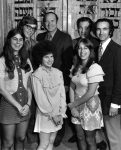
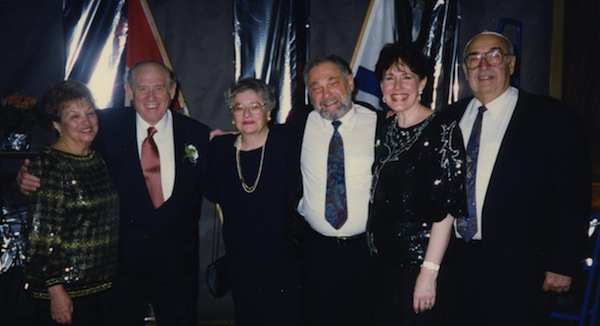
Phyllis and Rabbi Wilfred Solomon, centre, with Cantor Murray Nixon and his wife Dorothy, left, and Sharon and Irving Kates, at Beth Israel’s 60th anniversary gala in 1992. (photo from Congregation Beth Israel fonds, JMABC L.22263)

On June 17, Congregation Beth Israel will pay tribute to Rabbi Emeritus Wilfred (Zev) and Phyllis Solomon. The rabbi was spiritual leader of the synagogue from 1964 to 1997. During that time, gala co-chair Marcy Schwartzman told the Independent, he officiated at more than 4,000 lifecycle events, including about 500 brit milot and baby namings, 750 weddings, 800 b’nai mitzvah, 250 conversions, 900 funerals and 900 unveilings.

But the cause for celebration goes beyond numbers, of course.
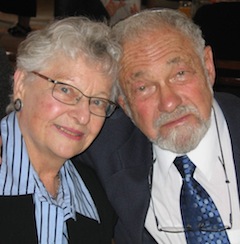
photo - Phyllis and Wilfred Solomon are being honoured by Congregation Beth Israel on June 17
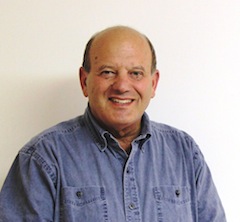
Phyllis and Wilfred Solomon are being honoured by Congregation Beth Israel on June 17. (photo from Beth Israel)

“Rabbi Zev and Phyllis Solomon were the heart and soul of Congregation Beth Israel for many years,” said board president Helen Pinksy. “Together, they gave our synagogue honour and status as a warm, caring, forward-thinking and progressive community of committed Jews in Vancouver. The role of emeritus for Rabbi Solomon indicates his distinguished service and was not awarded pro forma, but because he, together with his wife, accomplished much and were beloved by the people they served. It is a true pleasure to be honouring him in return with this gala.”

Pinksy and her family have been members of Beth Israel for about 25 years. Upon joining the synagogue, she said, “Almost immediately, I asked Rabbi Solomon to teach me Torah and Haftarah reading, because I wanted to have an adult bat mitzvah. Under his tutelage, it took place. After that, my oldest son Isaac was in Rabbi Solomon’s last bar mitzvah cohort, in 1997.”

Current spiritual leader of Beth Israel, Senior Rabbi Jonathan Infeld, met the Solomons at his installation 13 years ago.

“Rabbi Solomon was beloved because of his warmth, love and concern for the Jewish people, the Vancouver Jewish community and the members of our synagogue,” said Infeld. “He worked extremely hard to bring Torah and love to everyone in his realm. I always hope to emulate his examples.”

Both Infeld and Pinsky attended the Rabbinical Assembly, which took place this year in Montreal May 5-8. Solomon was one of six rabbis honoured by the Conservative movement organization on the first night of the convention.

“Conservative rabbis from across the world were in attendance,” said Infeld. “Unfortunately, Rabbi Solomon and Phyllis were not able to make it because they live in Jerusalem. Rabbi Lionel Moses organized and chaired the ceremony. I spoke about Rabbi Solomon and his wife, Phyllis. Liberal MP Anthony Housefather presented an award that Helen Pinsky received on Rabbi Solomon’s behalf.”

“As soon as I heard about the tribute ceremony for the Solomons, I wanted to be there,” said Pinsky. “It was an extreme honour to accept the certificate of merit and tribute on their behalf. The certificate is signed by Prime Minister [Justin] Trudeau, and the prime minister filmed a message of congratulations to the Rabbinical Assembly to welcome us there.
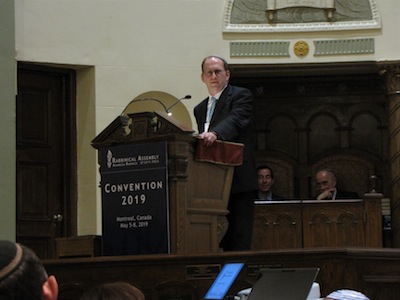
photo - Congregation Beth Israel Senior Rabbi Jonathan Infeld speaks about BI Rabbi Emeritus Wilfred Solomon at the Rabbinical Assembly in Montreal on May 5-8
Congregation Beth Israel Senior Rabbi Jonathan Infeld speaks about BI Rabbi Emeritus Wilfred Solomon at the Rabbinical Assembly in Montreal on May 5-8. (photo from Beth Israel)

“The greatest thrill,” she said, “was to hear Rabbi Infeld describe the accomplishments and the personal courage and integrity of the Solomons to the assembled rabbis and other guests at the assembly. It was easy for us to decide to attend, because we didn’t want this opportunity to honour the Solomons to go by without proper acknowledgement.”

The Solomons worked for the benefit of the synagogue and the larger community. “They became friends with many of their congregants and the families that made up the synagogue, grew up with the Solomon family,” said Pinsky. “Rabbi Solomon took a leading role in advocating for human rights and protecting human dignity within the Vancouver Jewish community and neither he nor Phyllis hesitated to stand up for what they believed to be fair. He was involved in demanding freedom of Soviet Jews, in the exodus of Ethiopian Jews, and he supported Martin Luther King and other leaders who fought for racial and social equality during the ’60s, ’70s and onwards. The Solomons also aided in the synagogue’s adaptation to include women as equals within the Conservative movement. Their impact was huge.”

The couple made aliyah right after Rabbi Solomon’s retirement in fall 1997, said Pinsky. “They have lived in Jerusalem ever since,” she said. “In around 2006, they attended and Rabbi Solomon officiated at my niece’s bat mitzvah at the Southern Wall, just below the Western Wall, and we socialized all weekend. The Solomons retained a warm and friendly relationship with my extended family, as they did with most of the families in the synagogue. They had known my parents since the ’70s, for example, and were quick to send us kids kind notes of sympathy on the passing of our father and then our mother. I know of many congregants who have lunched with the Solomons each time they visit Jerusalem, and still maintain that special relationship that one can have with ‘my rabbi.’”

“I see them every time that I am in Israel,” said Infeld. “We also talk on the phone and email.”

Infeld is joined in leading the congregation by Assistant Rabbi Adam Stein, Ba’alat Tefillah Debby Fenson and youth director Rabbi David Bluman. The synagogue has more than 640 member families, according to its website.

“Rabbi Solomon and Phyllis gave so much to Beth Israel and the entire Vancouver Jewish community. We are as we are today as a synagogue because of the two of them. They built so much. We should always be grateful to them,” said Infeld. “Our gala will be just one way to continue to show them our gratitude and appreciation.”
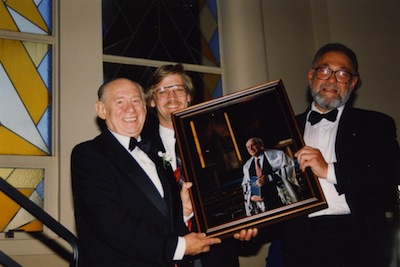
photo - Cantor Murray Nixon, left, and Rabbi Wilfred Solomon, right, hold a framed photo of Nixon taken by Don McGregor, middle, at Beth Israel, circa 1995
Cantor Murray Nixon, left, and Rabbi Wilfred Solomon, right, hold a framed photo of Nixon taken by Don McGregor, middle, at Beth Israel, circa 1995. (photo from Congregation Beth Israel fonds, JMABC L.22388)

For the last while, the gala committee, which Schwartzman co-chairs with Leatt Vinegar, has been asking the community to send in photographs of and stories about the Solomons. These photos will be shared throughout the event in different ways, said Schwartzman.

“It is going to be a lovely evening of celebrating our beloved Rabbi and Mrs. Solomon,” she said, “but it is also a celebration of our congregation and how it touches our lives at those lifecycle pivotal moments.”

In this vein, a new exhibit is being mounted.

“We are excited to officially open the museum cases in the synagogue once again,” said Schwartzman. “Jean Gerber and Lissa Weinberger have been working hard at bringing back these displays. Phyllis Solomon helped develop the original museum in the old building and she has been involved in helping to decide which pieces will be in this new display that officially opens at the gala.

“We will also be naming the street that leads down to our parking lot … and, if technology holds up, we will be trying a live link to the Solomons in Israel.”

A special book of messages is being designed to give to the Solomons as a keepsake, and a digital version will also be created, so that everyone can view it. To contribute to the book, contact Esther Moses-Wood at esther@bethisrael.ca.

Proceeds from the gala and book will support the operation of the synagogue. For tickets ($180), call 604-731-4161 by June 1.
A story of survival and safety

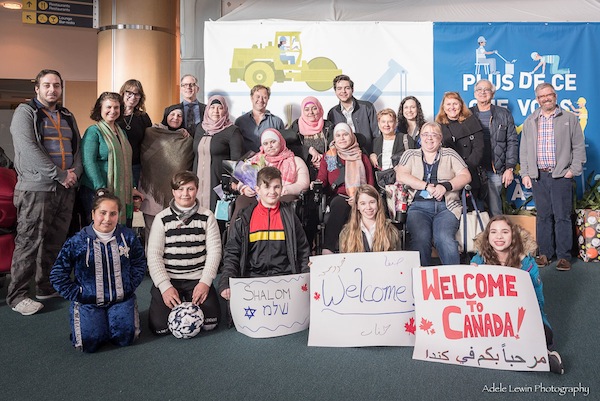
Welcomers of the Alsedawe family at Vancouver International Airport Jan. 21. (Adele Lewin Photography)

More than three years ago, Hanan Alsedawe’s family story of survival began as a waiting game on both sides of the ocean. But, on Jan. 21, 2019, the wait became a welcome as Hanan and her children stepped foot on Canadian soil.

In early 2015, congregations Beth Israel and Beth Tikvah began the long process of sponsoring and reuniting a Syrian refugee family with family who already lived in Vancouver. We worked with the government-approved sponsorship agreement holder – the Anglican Diocese – to prepare and submit our private sponsorship application to the Canadian government. It was a journey requiring perseverance by our coordinating committee, and patience and understanding from the many donors of both synagogues who demonstrated belief in our efforts regardless of the length of time it was taking.

On the Jordanian-Saudi Arabian border, in the Azraq Refugee Camp, Hanan and her two children – Mahros and Safa – shared limited resources with more than 55,000 refugees. Their extended family had made their way to Canada under government sponsorship, but Hanan had stayed behind, in Duma, Syria, because her husband, Raslan Abdulmalik, had been taken away by Syrian government forces and she had no idea of what had happened to him. She waited, she hoped, she prayed, but, eventually, with no sign of Raslan being alive, yet with no confirmation that he was either in prison or dead, Hanan decided to escape from Duma. She made her way with her two young children to Amman, Jordan, and eventually was placed in the Azraq refugee camp. There, she waited for a miracle.

Sept. 2, 2015, was a watershed moment that captured the hearts of people around the world and galvanized Canada into accepting 25,000 Syrian refugees into the country. Hanan’s mother and five siblings came to our shores under those auspices. But it would take years of work and hope to bring the last of Fayzeh Alsedawe’s daughters, with her children, to join the family here.

More than three years after initiating the sponsorship, Beth Israel and Beth Tikvah fulfilled Hanan’s dreams of joining her mother and siblings in Vancouver. On Jan. 21, representatives of both synagogues were on hand at Vancouver International Airport to welcome their sponsored family.

On any given day, at any given time, the international arrivals hall at YVR is a kaleidoscope of colours. On that Monday in January, the full spectrum was visible, augmented by the cacophony of diverse languages and a blending of bodies. Clearly, Canada is at its most multicultural in an airport setting.

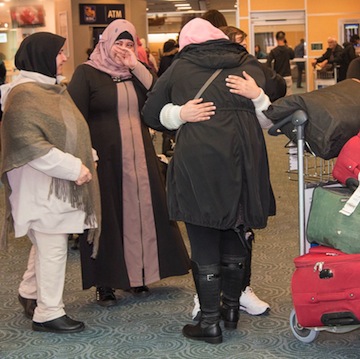
photo - Members of the Alsedawe family at YVR: Fayzeh, Hanan, Mahros and Hanadi
Members of the Alsedawe family at YVR: Fayzeh, Hanan, Mahros and Hanadi. (Adele Lewin Photography)

Also palpable was the range of emotions. There was the full gamut of human feelings on display among those awaiting families, friends and strangers to enter the hall. Contrasts abounded: joy competed with sadness, anticipation with angst, relief with uncertainty. Each person arriving searched for familiar faces, welcoming arms and handwritten signs, indicating that someone was there for them.

In this swirl of humanity were representatives of Beth Israel and Beth Tikvah, their dream to sponsor a refugee family from Syria finally reaching fruition. Sharing this moment – indeed, at the centre of this moment – was the local family: the mother, Fayzeh, and her five adult children, Hanadi, Huda, Maha, Hatem and Mohammed, who had arrived in Canada three years ago and had waited anxiously to be reunited with the remainder of their family.

There was something so surreal, yet so tangible and in the moment at that airport reunion. Words are inadequate to describe the outpouring of relief and love when Hanan and her children emerged in the arrivals hall. An invisible bubble enclosed the family, as they looked at each other for the first time in more than four years. And then, quickly, the bubble grew, as our delegation surrounded the family with our own contributions of hugs, gifts and welcome. One gift in particular seemed to unite the new family with our Canadian sponsors – a Whitecaps soccer ball given to 13-year-old Mahros. Soccer, a universal language for children and adults alike!

Every family has a history, a story that captures the essence of their character and experiences. The Alsedawes’ story is one of courage and hope. Their life in Syria was destroyed by war but their determination to escape, under circumstances almost impossible for us to comprehend, means that, today, their story is one of hope and gratefulness. In Hanan’s own words to the committee, “I thank God and I thank you.”

Settlement requires patience. Never has the Hebrew word savlanut meant so much to our small committee. Patience was required in the very lengthy process from application to arrival. Patience is required as we work to settle the children in school, the mother in English-as-a-second-language classes and the family into a way of life totally foreign to them. Within weeks of their arrival, the family had visited a family physician, dental appointments were booked, the children were enrolled in public school, bank accounts were set up and, important in this day and age, cellphones and tablets were provided to them.

Our year of sponsorship has only just begun, but this journey has been undertaken with the generosity of many people. Our donors have compassion and commitment, and understand that, “There but for the grace of God go I.”

Rosalind Karby is co-chair, with Miranda Burgess, of Beth Israel Congregation’s Committee for the Syrian Refugee Sponsorship Initiative.

Mystery photo … Dec. 14/18

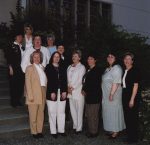
Women at the Beth Tikvah Sisterhood spring conference, which took place at Beth Israel, 2000. Shelley Ail is the first on the right, but the others are unknown. (photo from JWB fonds, JMABC L.11302)

If you know someone in this photo, please helpthe JI fill the gaps of its predecessor’s (the Jewish Western Bulletin’s)collection at the Jewish Museum and Archives of B.C. by contacting archives@jewishmuseum.ca or 604-257-5199. To find out who has been identified in the photos,visit jewishmuseum.ca/blog.

Lessons of Kristallnacht

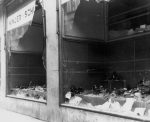
Kristallnacht, which took place 80 years ago this month, saw hundreds of synagogues burned, Jewish-owned businesses destroyed, 100 Jews murdered and 30,000 incarcerated. (photo from commons.wikimedia.org)

Kristallnacht, which took place 80 years ago this month, was the “Night of Broken Glass” that saw hundreds of synagogues burned, Jewish-owned businesses destroyed, 100 Jews murdered and 30,000 incarcerated. The state-sanctioned pogrom was staged to look like a spontaneous uprising against the Jews of Germany, annexed Austria and occupied Sudetenland. It is frequently seen as the beginning in earnest of the Holocaust. According to Prof. Chris Friedrichs, who delivered the keynote address at the annual Kristallnacht commemorative evening Nov. 8, global reaction to the attack, which took place on the night of Nov. 9-10, 1938, sent messages to both Nazis and Jews.

“The world was shocked,” said Friedrichs, professor emeritus of history at the University of British Columbia. “Newspapers in the free countries of Europe and all over the Americas reported on these events in detail. Editorials thundered against the Nazi thugs. Protests took place. Demonstrations were held. Opinion was mobilized – for a few days. But soon, Kristallnacht was no longer front-page news. What had happened was now the new normal in Germany, and the world’s attention moved elsewhere. And this is what the Nazis learned: we can do this, and more, and get away with it. Nothing will happen.

“And the Jews of Germany learned something too,” said Friedrichs, himself a son of parents who fled the Nazi regime. “By 1938, many Jews had emigrated from Germany – if they could find a country that would take them. But many others remained. Much had been taken away from them, but two things remained untouched: their houses of worship and their homes. Here, at least, one could be safe, sustained by the fellowship of other Jews and the comforts and consolations of religious faith and family life. But now, in one brutal night, these things, too, had been taken from them. Their synagogues were reduced to rubble, their shops vandalized, their homes desecrated. Nothing was safe or secure. The last lingering hopes of the Jews still living in Germany that, despite all they had suffered at the hands of the Nazis, they might at least be allowed to live quiet private lives of work and worship with family and friends, collapsed in the misery of fire, smashed glass, home invasions, mass arrests and psychological terror on Nov. 9, 1938.”

Friedrichs’ lecture followed a solemn procession of survivors of the Holocaust, who carried candles onto the bimah of Congregation Beth Israel. The evening, presented by the Vancouver Holocaust Education Centre (VHEC) and Beth Israel, was funded by the Jewish Federation of Greater Vancouver annual campaign, with support from the Robert and Marilyn Krell Endowment Fund of the VHEC and the Azrieli Foundation, which provided every attendee with a copy of Dangerous Measures, the memoir of Canadian Joseph Schwartzberg, who witnessed Kristallnacht and fled Germany with his family soon after.

“We are gathered tonight in the sanctuary of a synagogue,” said Friedrichs, who retired in June, after 45 years of teaching and researching at UBC. “A synagogue should indeed be a sanctuary, a quiet place where Jews can gather, chiefly but not only on the Sabbath, for prayer, worship and contemplation. Recent events have reminded us only too bitterly that this is not always the case.

“Our minds are full of mental images of what happened in Pittsburgh less than two weeks ago, but I invite you to call up a different mental image,” he said, taking the audience back to the time of Kristallnacht. “Think of a synagogue. Just a few days earlier, on the Sabbath, Jews had gathered there, as they have gathered in synagogues for 2,000 years, for prayer, worship and fellowship with other Jews. But now, suddenly, in the middle of the night, a firebomb is thrust through a window of the synagogue. As the window glass shatters to the floor, the firebomb ignites a piece of furniture. Within minutes the fire spreads. Soon the entire synagogue is engulfed in flames. It is an inferno. The next morning, the walls of the synagogue are still standing, but the interior is completely gutted. No worship will ever take place there again.”

Friedrichs paused to note that some in the audience would recall a similar attack that destroyed Vancouver’s Reform synagogue, Temple Sholom, on Jan. 25, 1985. He recounted the reaction of police and firefighters, civic leaders and the general public, who rallied around the Vancouver congregation at the time, and compared that with the reactions of non-Jews in Germany and the territories it controlled at the time of Kristallnacht.

“Police and firefighters are on the scene,” Friedrichs said of the situation during Kristallnacht. “But the firefighters are not there to put out the blaze. They are there only to make sure the fire does not spread to any nearby non-Jewish buildings. The police are there only to make sure no members of the congregation try to rescue anything from the building.

“The next morning, crowds of onlookers gape at the burnt-out shell of the synagogue. Some of the furnishings and ritual objects have survived the blaze, so they are dragged out to the street and a bonfire is prepared. But first, the local school principal must arrive with his pupils. Deprived of the opportunity to see the synagogue itself in flames during the night, when they were asleep, the children should at least have the satisfaction of seeing the furnishings and Jewish ritual objects go up in smoke. Most of those objects are added to the bonfire, but not all. Not the Torah scrolls – the Five Books of Moses, every single word of which, in translation, is identical to the words found in the first five books of every Christian Bible. No, the Torah scrolls are not added to the bonfire. They are dragged out to the street to be trampled on by the children, egged on by adult onlookers, while other adults rip apart the Torah covers to be taken home as souvenirs.

“And now consider this: events like this did not happen in just one town,” Friedrichs said. “The same things took place in hundreds upon hundreds of cities and towns throughout Germany and Austria, all on the very same evening and into the next morning. There were minor variations from town to town, but the basic events were exactly the same, for it was a nationwide pogrom, carefully planned in advance.”

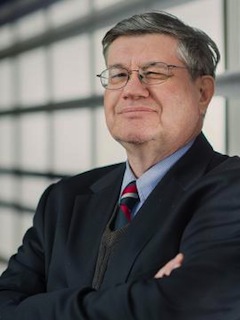
photo - Prof. Chris Friedrichs
Prof. Chris Friedrichs (photo from VHEC)

Friedrichs, who devoted 25 years to serving on the organizing committee of the Kristallnacht commemorative committee, including eight as president, reflected on the history of Holocaust remembrance in Vancouver, including the decision to single out this date as one of the primary commemorative events of the calendar.

“Why should we commemorate the Shoah at this particular time in November?” he asked. “Consider this: 91 Jewish men died on Nov. 9th and 10th, 1938. Yet, on a single day in the busy summer of 1944, up to 5,000 Jewish men, women and children might be murdered in the gas chambers of Auschwitz on one day. Why not select some random date in August 1944 and make that the occasion to recall the victims of the Shoah? Why choose Kristallnacht?”

The earliest Holocaust commemorations in the city, he said, citing the work of local scholar Barbara Schober, was an event in 1948 marking the Warsaw Ghetto Uprising.

People who had founded the Peretz School in Vancouver, in 1945, hoped to preserve the memories and values of the East European Jewish culture, which had been almost totally wiped from the map, he said. “Yet, rather than focus on the six million deaths, their intention was to honour those Jews who had actually risen up to fight the Nazi menace – the hopeless but inspiring efforts exemplified above all by the heroic resistance of the Warsaw Ghetto fighters who used the pathetically meagre supply of weapons they could find to resist the final liquidation of the ghetto by the Nazis in the spring of 1943,” said Friedrichs. “That effort failed, but it was not forgotten.”

This event continued, with the support of Canadian Jewish Congress, into the 1970s, he explained.

“There was an emerging concern that Jews should not just recall and pay tribute to the victims of the Shoah,” said Friedrichs. “The increasing visibility of the Holocaust denial movement made it apparent that Jews should also make their contribution to educating society as a whole – and especially young people – about the true history of what had happened. Prof. Robert Krell and Dr. Graham Forst undertook to establish an annual symposium at UBC at which hundreds of high school students would learn about the Holocaust from experts and, even more importantly, from hearing the first-person accounts of survivors themselves. It was in those years, too, that the Vancouver Holocaust Education Society was established to coordinate these efforts. The survivor outreach program, through which dozens of survivors of the Shoah in our community spoke and continue to speak to students about what they experienced, became the cornerstone of these educational efforts. Their talks are always different, for no two survivors ever experienced the Shoah the same way, but the ultimate object is always the same – not just to teach students what happened to the Jews of Europe between 1939 and 1945, but to reflect on the danger that racist thinking of any kind can all too easily lead to.”

But this was education, he noted, not commemoration.

“With the decline of the Warsaw Ghetto event in Vancouver, the need to commemorate the Shoah came to be filled in other ways. One of those ways was the emergence of the Vancouver Kristallnacht commemoration. The origins of this form of commemoration lie right here in the Beth Israel congregation. In the late 1970s, members of the Gottfried family who had emigrated from Austria in the Nazi era, now members of Beth Israel, proposed that their synagogue host a commemoration of Kristallnacht.”

Friedrichs spoke of the burden carried by each of the survivors who carried candles onto the bimah moments earlier.

“You might think that a candle is not very hard to carry, but, for each one of these men and women, the flame of the candle has reignited painful memories stretching back 70 or 80 years, to a dimly remembered way of life before their world collapsed,” he said. “These men and women survived, and sometimes a few of their relatives did as well, but all of them, without exception, you’ve heard this before, had family members – whether parents, grandparents, uncles, aunts, siblings, or cousins – who were murdered. One could not reproach these men and women if they had chosen to stay home on a night like this. But, instead, they are here.

“Many of these men and women have done more, even more, as well,” he continued. “For many of them have done something for years and continue to do so even now: to speak of their experiences to students in the schools of our province. To stand in front of two or three or four or five hundred students of every race and every heritage and describe life in the ghetto or the camp or on the death march or the anxiety of living in hiding and being pushed into a basement or a closet every time some unwanted visitor arrived – this is not easy. But there is a purpose. The young people of our province are barraged with images and messages and texts telling them that people of certain religions or races or heritages are inferior and unwanted members of our society. They must be told just what that kind of thinking can lead to. No textbook, no video, no lecture can do the job as powerfully as hearing a survivor describe exactly what he or she experienced during the Shoah.”

Corinne Zimmerman, vice-president of the VHEC, welcomed guests and introduced the candlelighting procession. Cantor Yaacov Orzech chanted El Moleh Rachamim, the memorial prayer for the martyrs. UBC Prof. Richard Menkis delivered opening remarks and Helen Pinsky, president of Beth Israel, introduced Sarah Kirby-Yung, a Vancouver city councilor who read a proclamation from the mayor. Nina Krieger, executive director of the VHEC, introduced Friedrichs. Beth Israel’s Rabbi Jonathan Infeld provided closing remarks, and Jody Wilson-Raybould, minister of justice and member of Parliament for Vancouver Granville, sent greetings on behalf of the Government of Canada.

Mystery photo … Sept. 21/18

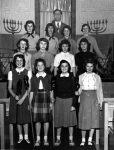
Congregation Beth Israel, circa 1955. (photo from JWB fonds, JMABC L.09737)

If you know someone in this photo, please help the JI fill the gaps of its predecessor’s (the Jewish Western Bulletin’s) collection at the Jewish Museum and Archives of B.C. by contacting archives@jewishmuseum.ca or 604-257-5199. To find out who has been identified in the photos, visit jewishmuseum.ca/blog.

Mystery photo … June 29/18

Beth Israel Synagogue, 1972. (photo from JWB fonds, JMABC L.09793)

If you know someone in this photo, please help the JI fill the gaps of its predecessor’s (the Jewish Western Bulletin’s) collection at the Jewish Museum and Archives of B.C. by contacting archives@jewishmuseum.ca or 604-257-5199. To find out who has been identified in the photos, visit jewishmuseum.ca/blog.

Mystery photo … Feb. 23/18

Beth Israel Synagogue, 1967. (photo from JWB fonds, JMABC L.09754)

If you know someone in this photo, please help the JI fill the gaps of its predecessor’s (the Jewish Western Bulletin’s) collection at the Jewish Museum and Archives of B.C. by contacting archives@jewishmuseum.ca or 604-257-5199. To find out who has been identified in the photos, visit jewishmuseum.ca/blog.

Klondike’s Jewish links

Entrance of the Jewish Cemetery in Dawson City, Yukon. The sign reads Bet Chaim (House of the Living). The photo was taken in 1961. (photo by Irving Snider; Dr. Irving and Phyliss Snider fonds; Jewish Museum and Archives of BC L.18992)

As visitors to the traveling exhibit The Jewish Presence During the Klondike Gold Rush 1897-1918 will learn, while the hope of striking it rich drew thousands upon thousands to the Klondike during the gold rush, most had left the region within five years, many as poor as when they arrived.

The exhibit, created by the Jewish Cultural Society of Yukon, is currently at Temple Sholom and will open at Congregation Beth Israel on Jan. 31, 7:30 p.m. The opening will feature a talk by Michael Schwartz of the Jewish Museum and Archives of British Columbia, and the exhibit will be on display at BI until Feb. 7.

The first panel, called “Gold Fever Strikes,” begins, “It was at Schwabacher’s dock on Seattle’s Elliott Bay that the steamer Portland arrived on July 17, 1897, with her ‘ton of gold’ that electrified the world and sparked the Klondike gold rush. Soon thousands would leave that dock and others on their way to Alaska.” It notes that the Schwabachers – Abraham, Sigmund and Louis – who founded their Seattle merchandising business in 1869, had been born “in Germany of Jewish heritage” and “they left to escape the oppression of Bismarck.” The rest of the panel highlights several Jews who were involved in supplying goods and transportation to Yukon.

The second panel – “Life in the Klondike” – relates some of the stories of successful, and not so successful, Jewish prospectors and merchants. For example, “Louis Brier, a native of Romania, followed the rush and provided grubstakes to prospectors on a percentage basis. He eventually left for British Columbia with what he called ‘a rather bulging bankroll,’” it notes.

One of the less happy outcomes is that of the Shudenfreis. Among the first Jews to arrive, in fall 1897 to Dawson City, Solomon and Rebecca Shudenfrei came to the Klondike without their children. By September 1898, Rebecca had left and, soon after a fire in March 1899 that destroyed many of the city’s homes and businesses, including Solomon’s hotel, Solomon also left. The loss of the hotel was a mixed blessing, according to a letter he wrote: “I only lost all I had, which is not much, and I was glad that the fire occurred so that I could get rid of all my bed-bugs, which I could not do otherwise … the loss is not so great when you come to consider that we would have to remove the building anyhow by May 1, and [that] would have been a great expense to me…. The whole town is on the buy, and all my acquaintances are not any better off than I. This is the only consolation we have.”

The second panel also touches upon other aspects of life at the time – religious observance, politics, the Jewish cemetery and crime (of which Jews, as much as anyone else, were among the victims and perpetrators). The third panel, “After the Gold Rush, Where Did They Go?” provides brief descriptions of where some 15 Jews went after the rush was over.

The exhibit includes a booklet, as well as four videos, each about eight minutes long. They centre on the finding and rededication of the Jewish cemetery in Dawson City in 1998. One video shows the finding of the cemetery, which was established in 1902 but fell into disrepair as the Jewish presence in the area disappeared; one video covers the cemetery’s restoration; and one the July 31, 1998, rededication ceremony, which included many guests, including then-deputy prime minister Herb Gray, who spoke at the ceremony. (Gray passed away in 2014.) The fourth video, explains the document about the exhibit’s setup, “is the CBC TV coverage of the arrival of a Torah, the first time in history that Shabbat services were held in Whitehorse, a little tour of Dawson City … and the rededication services.”

That Torah, in 1998, was only the second to have been brought to Whitehorse – the first having been brought during the gold rush. With the rededication, the Dawson City Jewish cemetery, Bet Chaim (House of the Living), once again became a place where Jews can be buried.

photo - Rick Karp, president of the Jewish Cultural Society of Yukon
Rick Karp, president of the Jewish Cultural Society of Yukon. (photo from JCSY)

“Cyril Leonoff’s book Pioneers, Pedlars and Prayershawls: The Jewish Communities in British Columbia and the Yukon was what started all of our research,” said Rick Karp, president of the Jewish Cultural Society of Yukon, in an email. Additional research was contributed by Dr. Brent Slobodin, who has a doctorate in Canadian history from Queen’s University and was the assistant deputy minister of advanced education in Yukon. Slobodin has been a member of a number of heritage advisory and volunteer boards.

Karp’s day job is president of the Whitehorse Chamber of Commerce, and Slobodin joined the chamber when he retired to manage its Partnering for Success Program, Karp told the Independent. “As an historian, he was fascinated with the work we were doing on the Jewish presence during and after the Klondike gold rush and we hired him to work on the research, design and preparation of the mobile display,” said Karp.

Now that the exhibit has been completed and displayed both within and outside of Yukon, Karp said the cultural society has two main priorities, the first of which is keeping “the display going across the country, so, after Vancouver, it will go to Edmonton, Calgary and Winnipeg. Then we will get it back here and it will go to Alaska and a few other cities in the U.S.”

The second priority is closer to home. “We are also educating the Yukon on what it is to be Jewish so, for example, we celebrate Passover and have the seder in the United Church meeting hall (about 40 people attended last year), and we are part of the interfaith community in Whitehorse,” said Karp.

“We also have more than 12 Israelis living in Whitehorse and have visits from Israel often,” he added. “For example, we have Dr. Wayne Horowitz coming … from Hebrew University and we will have him do presentations when he is here, and Dr. Paul Sidoun, as well, who is coming in February.”

Mystery photo … Nov. 3/17

Congregation Beth Israel event, 1990. (photo from JWB fonds, JMABC L.09769)

If you know someone in this photo, please help the JI fill the gaps of its predecessor’s (the Jewish Western Bulletin’s) collection at the Jewish Museum and Archives of B.C. by contacting archives@jewishmuseum.ca or 604-257-5199. To find out who has been identified in the photos, visit jewishmuseum.ca/blog.

Goldman memoir is a must-read

Breakfast at Andrésy circa 1945. René Goldman is holding his bowl out for more food. The children peering through the windows are from another dining room, who had likely finished their meal but had not yet been given permission to leave. (photo from memoirs.azrielifoundation.org)

René Goldman’s account of his childhood – A Childhood Adrift (Azrieli Foundation) – is set in Belgium and France during the Second World War, when Hitler’s plan was to annihilate all European Jews. Each European Jewish child was automatically sentenced to death. Only between six and 11% of European children survived the Holocaust. Ironically, this memoir describes both a heartbreaking and an uplifting story of one Jewish boy’s struggle to stay alive and sane despite all odds against him.

A Childhood Adrift is both personal and, at the same time, an important historical document. The story, written with a spatter of tongue-in-cheek humour, is a fascinating labyrinth of multiple narratives; stories within stories. It is not only about René the child, but also René the man, who revisits the past and examines the wounds left by war.

Goldman weaves his experiences throughout the periods of war and postwar, when he is a young man who travels back to the places that sheltered him and other children lost in the horror of war. The entire narrative is skilfully infused not only with historical and political facts but with the geography of various places so poignantly described one can feel and see them.

Goldman writes about the time when children lost parents, siblings and homes. These children had to depend on the kindness of strangers or were left alone to fend for themselves.

Goldman was 6 years old when the Nazis invaded his native Luxembourg, where he was born, and Belgium, where his family had taken refuge. In 1942, the family fled Belgium for France. From the last station before the French border, they walked on foot to the Demarcation Line between the German Occupied Zone and the Free Zone. No sooner did they cross the line than they were arrested by the French police, who were rounding up Jews escaping from the Occupied Zone, and the family was interned in Lons-le-Saunier. On Aug. 26, Goldman and his mother were taken to the city’s train station for deportation. His aunt appeared from nowhere and tried to take him away, but to no avail. Eventually, she found someone in authority to send two officers to rescue the young boy and save him from boarding the train. His mother was already in one of the cars waving goodbye as the train was pulling out of the station. This was the last time Goldman saw his mother. He was 8 years old.

His father disappeared that morning and it was only in 1944 that Goldman was reunited with him for a brief time, until his father was arrested and taken away. Only after the war did Goldman find out that his father died at the end of the death march from Auschwitz, in January 1945.

In 1942, Goldman was placed in the care of the OSE (Oeuvre de Secours aux Enfants) and brought to Château du Masgelier. After two weeks, he was taken to the village of Vendoeuvres, where a young couple offered to take care of him. Soon afterward, the Free Zone was invaded by the Germans.

What followed for Goldman were moves to several homes due to the changing circumstances, which necessitated a constant search for safe places for children.

Left an orphan in 1945, Goldman was placed in the care of the CCE (Commission Centrale de l’Enfance), an organization inspired by communist ideology, which was instrumental in shaping his political beliefs. His faith in this system remained unshaken until he lived in Poland for three years, when he became disillusioned, even shocked, by it.

He writes, “I can now in all candidness recognize that I caught myself wondering whether communism was not the greatest lie of the century, if not of all time.”

Goldman’s narrative strength, among his many others, leans towards the lyrical.

One of the immediate postwar places to which Goldman was moved in France was the town of Andrésy and its Manoir de Denouval, which inspired poetic instincts in him. Here, he found the beauty of gardens and serenity, a “sanctuary” that shielded him for a time from his loneliness and the postwar chaotic reality. Interestingly, Marc Chagall, who donated funds for the children’s care, would occasionally visit the manor.

“I was enthralled with the Enchanted Manor,” writes Goldman. “It nourished in me a fascination with mystery as I explored it for hidden nooks and ventured up the narrow winding steps that led to the turret, sometimes even in the dark of night.” And, indeed, these were dark times in the young boy’s life for it was then that he realized he was an orphan.

Friendships played a huge part during the war and in the postwar period. In the boys and girls Goldman befriended along the way, and some of the kind teachers, he found a certain relief from the loneliness he felt, and from the lack of affection and support. One person who played an important role in his life was Sophie Micnic, who became his caregiver and friend. This woman, a founding leader of the MOI, the Jewish communist resistance movement in Paris and Lyon during the war, later became the director of CCE. It was she who took Goldman under her wing, and recommended that he live in the “Enchanted Manor.”

A Childhood Adrift – a must-read – is a powerful testimony of a child’s response to the calamities of war and their everlasting imprint on his life. It is also a statement of courage and survival in the face of adversity. Eventually, Goldman developed a tremendous hunger for knowledge, education and a desire for communication in as many as 10 languages.

In the last section of the book, the author reveals himself as a poet and a grown man still deeply immersed in his past.

Lillian Boraks-Nemetz is a Vancouver Holocaust Education Centre outreach speaker, an award-winning author, an instructor at the University of British Columbia’s Writing Centre and the editor of the No Longer Alone section of VHEC’s Zachor, in which a longer version of this book review was originally published. René Goldman will be the keynote speaker at the community’s Kristallnacht commemoration on Nov. 5, 7 p.m., at Congregation Beth Israel. Copies of his memoir will be distributed to those in attendance. Holocaust survivors are invited to light a memorial candle. The ceremony is presented by VHEC, Beth Israel and the Azrieli Foundation. For Pat Johnson’s review of Goldman’s book, which was initially called A Childhood on the Move, visit jewishindependent.ca/fragmented-childhood.