כאן אצלנו רבים מהאזרחים שומרים על החוק ולא מתלוננים נגד ההחלטה על הטלת הסגר, שפוגעת קשות בחיי היום יום שלנו, אך מצילה חיים של רבים מאיתנו. (רוני רחמני)
עוד שבוע עבר בצל משבר הקורונה וכמעט שום דבר לא השתנה. נשארנו לכודים בתוך הבתים, שמענו את אותן חדשות ישנות מכל מקום בעולם, חיפשנו תקוות והתרגלנו כמעט לשמוע חדשות לא טובות. בקיצור שעמום רבתי.
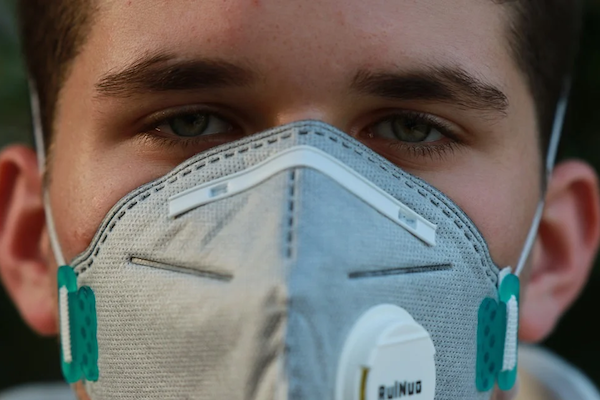
מדי יום מתרבים הוויכוחים על הצורך בשימוש במסכות למיגון הפנים בעת שיוצאים החוצה ובעיקר כאשר עושים קניות בחנויות האוכל. רבים מהמומחים טוענים שמסכות רגילות (שאינן אן תשעים וחמש) לא יגנו עלינו מהווירוס הנורא, אם כי הן יכולות למנוע מאיתנו אולי מלהפיץ אותו לאחרים, כאשר אנו כבר חולים. אך הלחץ והפניקה של הציבור עושים את שלהם. יותר ויותר מנהיגים בעולם מבקשים מהאזרחים שיחבשו מסכות בעת הם יוצאים החוצה. לדעת רופאים בכירים השימוש במסכות יכול להיות מסוכן כיוון שרבים לא יודעים כיצד להתשמש בהן ובעיקר כיצד להוריד אותן מהפנים. וכן יש לא מעט שחושבים שעם המסכות הם מוגנים ואינם זקוקים עוד להמשיך ולבצע את הפעולות הבאמת חיוניות יותר להגן על עצמם, בהן רחיצת ידיים ושמירת מרחק.
ובהקשר זה: שר התחבורה הקנדי, מארק גרנו, הודיע כי כל הטסים אל קנדה וממנה מחויבים לכבוש מסכות החל מראשית השבוע הנוכחי. זאת כיוון שבביקורת הגבולות לא ניתן תמיד לשמור על מרחק פיזי בן שני מטרים, בין נוסע אחד למשנהו. ההחלטה נוגעת גם למי שמגיעים לקנדה בטיסות קונקשן. מי שלא יחבוש מסכה לא יוכל להעלות לטיסות ההמשך. השר גרנו אמר במסיבת העיתונאים לאמצעי התקשורת : “על אזרחי קנדה להמשיך ולעקוב אחרי ההנחיות בנושא בריאות הציבור ולהישאר בבתים במידת האפשר. אך אם בכל זאת צריכים לטוס, כיסוי הפנים במסכות הוא אמצעי נוסף להגן על נוסעים אחרים שנמצאים מסביב, במיוחד במצבים בהם לא ניתן לשמור על הנחיות של הריחוק הפיזי”.
בעיתות משבר ניתן ללמוד רבות על התנהגות בני האדם ואלו שאמורים להנהיג אותנו. במשבר כה קשה כמו הנוכחי – מגיפת הקורונהת שאנו סובלים ממנו כל יום, דבר נכון שבעתיים. אנו יכולים לראות בבירור את ההבדלים למשל בין אזרחי קנדה לארצות הברית, ובין מנהיגי שתי המדינות. כאן אצלנו רבים מהאזרחים שומרים על החוק ולא מתלוננים נגד ההחלטה על הטלת הסגר, שפוגעת קשות בחיי היום יום שלנו, אך מצילה חיים של רבים מאיתנו. לעומת זאת אצל השכנה מדרום המצב שונה. יש לא מעט אמריקנים שמצפצפים על השלטונות וממשיכים לבלות בחוץ ובעיקר במסיבות חוף. רבים יוצאים בימים האחרונים להפגין נגד המנהיגים המקומיים שמבקשים להמשיך ולשמור על הסגר. אצלנו ראש הממשלה ג’סטין טרודו, זוכה להערכה וכמנהיג רציני הוא ממשיך יום יום לעדכן אותנו במה שקורה ובמה שנדרש מאיתנו. אין לו כמעט אופוזיציה בימים אלה. לעומתו נשיא ארה”ב, דונלנד טראמפ, ממשיך בהתנהגות החסרת אחריות שלו – מה שמאפיין אותו מדי יום בתקופת שלטונו. טראמפ מעודד בימים אלה את המפגינים שיוצאים נגד ההחלטה להמשיך ולשמור על הסגר, ובעצם יוצר דה-לגיטמיצה למנהיגים של אותן מדינות. זהו אותו טראמפ שטען בתחילת המשבר שארצו שולטת במצב והחיידק יחלוף תוך שבועות בודדים. טראמפ כרגיל מאשים את המפלגה הדמוקרטית בכל ובעיקר את קודמו בתפקיד, ברק אובמה.
בהקשר יחסי קנדה וארה”ב יש לציין שטרודו וטראמפ החליטו יחדיו להאריך את מצב סגירת הגבול היבשתי בין שתי המדינות לחודש נוסף, עד העשרים ואחד במאי. זאת למעט מי שצריך לעבור בין שתי המדינות בהם משאיות עם ציוד ואוכל.
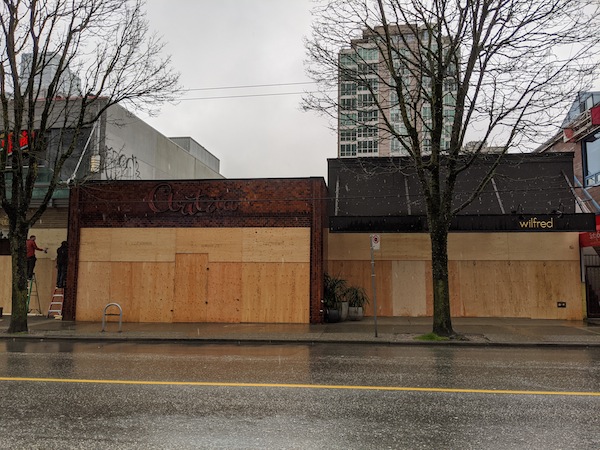
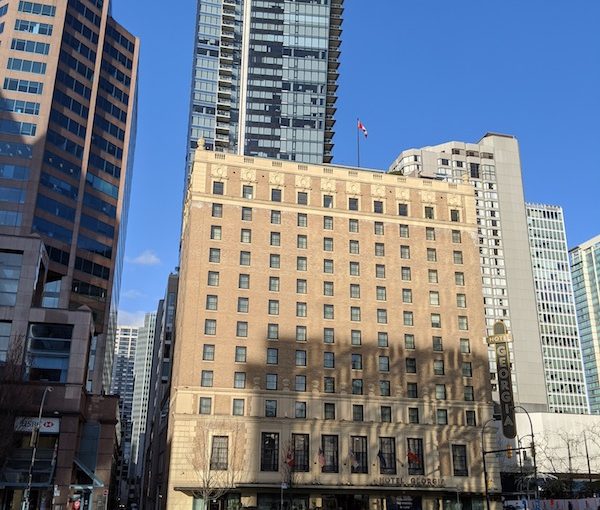
כשאני יושב לכתוב שורות אלה אני מנסה להיזכר איזה יום הוא היום. ומדוע? כיוון שכל הימים נראים אותו הדבר, הכל שקט וכמעט דומם, החדשות הן אותן חדשות והן עוסקות רק בנוגע למשבר הקורונה הנוראי, לא פוגשים חברים, כן מדברים עימם בטלפון לשיחות ארוכות. כמעט ואין שינויים בחיי היום יום שלנו גם כאן בוונקובר.
העולם הפך להיות דומה, בשיחות הטלפון עולה אותה תמונת מצב עגומה. נראה שכמעט כולנו ממתינים בסבלנות שהולכת ופוקעת לחדשות טובות לשם שינוי. כן נמאס לנו להיות נעולים בבתים במרבית שעות היום, כאשר לחלק לא מבוטל אין בכלל אפשרות לצאת החוצה ולנשום קצת אוויר צח. מה כבר ביקשנו?
למדתי בשיחות הטלפון הרבות שאני עושה מדירתי שבדאון טאון ונקובר ללכת תוך כך שאני מחזיק את הטלפון. כך אני צובר לפחות קילומטר בכל שיחה ארוכה. החברים שואלים מה חדש? ואין לי מה לחדש להם. אני יכול רק לספר על הקשיים בעבודה, הפגיעה הקשה במעט החסכונות שיש לי. שום דבר חיובי בעצם. אני יכול לספר להם על ההליכות בחוץ שאני עושה כשהכוונה להגיע לכעשרה ק”מ מדי יום. האם זה באמת מעניין מישהו? כשאני עובר לשלב השאלות התשובות של חברים דומות מאוד לאלו שלי. לפעמים לכן אני אומר לבת זוגתי שאין טעם בכלל לדבר עם חברים או בני משפחה בימים טרופים אלה, כאשר אין לנו ממש דברים לחדש בהם? בנימה סקרסטית אני אומר כי כיום כולנו באותה סירה אך בסירה יש גם מספר חורים.
נזכרתי הבוקר כאשר התעוררתי לאור השקט המדהים בחוץ והלווואי והיה נובע מהסיבות הנכונות, בביקורי בישראל בסוף פברואר. זה נראה כי הוא התקיים לפני חודשים ארוכים מאוד לאור מה שקרה וקורה בחיינו מאז. אני עוד הספקתי לטוס מקנדה לישראל לפני שהמדינות נעלו את שעריהן. כשחזרתי בראשית מרץ עוד לא נדרשנו אז להיכנס לבידוד עצמי של שבועיים. ניצלתי בעור שיני אני אומר לעצמי כדי לעודד קצת את רוחי הקודרת.
הביקור בארץ הקודש ארך בדיוק שבוע ימים. נחתי בשישי בלילה בנתב”ג כדי שלא אפגוש בחרדים והמראתי בשבת בבוקר מאותה סיבה. כך אני מספר לחברים. אך בעצם נחיצותי בעבודה היא שקבעה את לוח הזמנים הקצר לביקור במולדת הרחוקה.
מה הסיפקתי לעשות שם: קודם כל להיות עם הורי בתל אביב שעברו כבר את גיל התשעים ומצבם בסך הכל לא רע. הם נשואים רק שבעים שנה וכנראה ישברו את שיא גינס. במקביל פגשתי מספר חברי משפחה נוספים בהם אחי. יצאנו לארוחת צהריים טובה במסעדה יוקרתית ליד בתי המשפט בתל אביב, כאשר הפעם לשם שינוי הוא לא איחר אלא אפילו הקדים.
במהלך כל השבוע נשארתי רק בתל אביב ולא מצאתי סיבה לבקר בעיר הולדתי ירושלים. לא אוהב את מה שקורה שם ומעדיף שלא לראות את זה מקרוב.
בסך הכל הצלחתי לדחוס לשבוע הישראלי לא פחות משש עשרה פגישות. רובן עם חברים וכן עם עמיתים לתחום המדיה בו עסקתי במשך שנים רבות. השיחות היו מעניינות ועסקו בנושאים שונים. במשך השנים הצלחתי לשמור על קשר עם מרבית חברי הטובים. עברנו ביחד הרבה וזה טוב לדעת שגם כשעוברים למדינה רחוקה מאוד אפשר להמשיך ולהישאר בקשרי ידידות.
שמחתי עד מאוד לחזור הביתה לוונקובר הנעימה. בת זוגתי קיבלה אותי בחמימותה ולשאלתה היכן אני מרגיש בבית? עניתי ישירות: בוונקובר.
סכסוך קשה ראשון נתגלע בין קנדה לארצות הברית בעידן משבר הקורונה. זאת לאור החלטת נשיא ארצות הברית, דונלד טראמפ, לעצור את יצוא מסכות אן תשעים וחמש עבור קנדה. מדובר במסכות הרפואיות הנחוצות למערכת הבריאות בקנדה. המנהיגים במערכת הפולטית הקנדית זועמים של החלטתו חסרת התקדים של טראמפ. יש לציין שטרמפ ניצל את חוקי החירום שעומדים לשרותו ואסר על חברת ‘שלוש אם’, שמייצרת את האן תשעים וחמש, לייצא אותם לקנדה. בסך הכל יש שתי יצרניות של מסכות רפואיות אלה בארה”ב ולכן הנזק למערכת הבריאות בקנדה נחשב למשמעותי.
ראש הממשלה של קנדה, ג’סטין טרודו, סירב לציין בשלב זה כמה מסכות אן תשעים וחמש קנדה צריכה מארה”ב. הוא הדגיש כי קנדה מקבלת בימים אלה משלוח של מיליוני מסכות אן תשעים וחמש דווקא מסין. קנדה מחזיקה במחסן גדול בסין שעוזר בקליטת ציוד החירום והטסתו למדינה.
‘שלוש אם’ שבסיסה במניסטוה מייצרת כמאה מיליון מסכות מדי חודש. כשליש מיוצר בארה”ב והשאר במקומות אחרים ברחבי העולם. החברה מציינת כי טאמפ אוסר עליה לייצא את המסכות הרפואיות לקנדה, ויהיו לכך השלכות הומנטריות משמעותיות. הדבר יכול לגרום בעצם למדינות כמו קנדה לעשות את אותו הדבר לארה”ב – ולהפסיק לייצא אליה מוצרים חיוניים בעיקר בעת המשבר הנוכחי.
טרודו טוען כי כל העת מתמשכות השיחות עם ארה”ב לשמירה על זרימת הסחורות והשירותים הדו-כיווניים. זאת לאחר שהגבול הארוך בין שתי המדיניות נסגר לנסיעות לא חיוניות. טרודו: “אנו מקבלים אספקה חיונית מארה”ב, אך גם ארה”ב מקבלת אספקה ומוצרים חיוניים. וכן אנשי מקצוע בתחום הבריאות מקנדה בכל יום ויום. יש לזכור שאלה דברים שהאמריקאים מסתמכים עליהם, וזו תהיה טעות ליצור חסימות או להפחית את כמות הסחר הלוך ושוב של סחורות ושירותים חיוניים, כולל סחורות רפואיות, מעבר לגבולנו. זו הנקודה שאנחנו מסבירים באופן ברור מאוד לממשל האמריקני ברגע זה”.
טראמפ ניצל את הוראות החירום הפדרליות שעומדות לרשותו וכאמור הודיע ל’שלוש אם’, לספק מעתה את המסכות הרפואיות אן תשעים וחמש רק לשוק האמריקני. זאת לאור ביקורת קשה המוטחת בנשיא האמריקני כמעט כל יום על כך, שציוד רפואי חיוני חסר בבתי החולים ברחבי ארה”ב.
יועץ המסחר של הבית הלבן, פיטר נווארו, ציין בהקשר זה כי במהלך הימים האחרונים החליט ממשל טראמפ לדאוג שייצור הציוד הרפואי בארה”ב יעמוד לראשות המערכת הרפואית המקומית, ויגיע למקומות הנכונים. נווארו: “אז מה שהולך לקרות, שעם החתימה על הצו הזה, אנחנו הולכים לפתור את הבעיה. ככל הנראה עד מחר ייסגר העסק כיוון שאנחנו לא יכולים להרשות לעצמנו עוד להפסיד ימים או שעות, אפילו דקות בתוך המשבר הזה”.
סגן ראש הממשלה הקנדית, כריסטיה פרילנד, הצביעה על כך שהיא מבינה כמה חשוב להמשיך ולהעביר הזמנות לקנדה ובמקביל גם לארה”ב, מכיוון שיש הרבה סחר שחוזר קדימה ואחורה בשירותים חיוניים, וזה יכול בסופו של דבר לפגוע באמריקאים, כפי שזה יכול לפגוע בנקדה. היא מקווה שהקשר בין שתי המדינות ימשיך להיות חזק ויציב ולא יהיו הפרעות בשרשראות האספקה לשום כיוון.
הפרמייר של מחוז אונטריו, דאג פורד, הודיע כי הוא מאוכזב מאוד מהנשיא האמריקני ולעולם לא יסתמך עליו יותר. פורד: “אני לא יכול להדגיש עד כמה אני מאוכזב מהנשיא טראמפ בגלל קבלת ההחלטה הזו. אני לא מתכוון לסמוך שוב על טראמפ”.
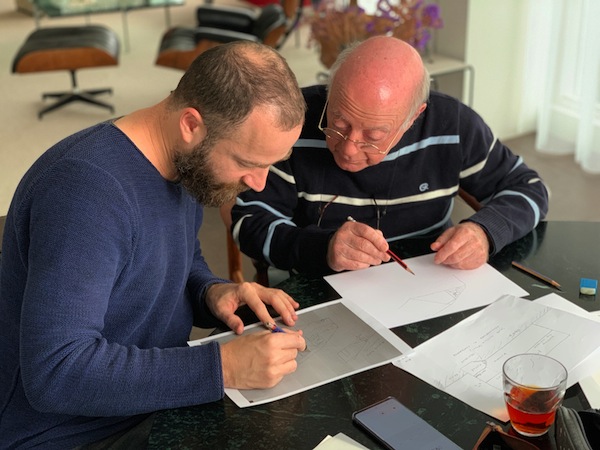
Gilad Seliktar, left, and Rolf Kamp in Amsterdam. They are drawing the last hiding place of Nico and Rolf Kamp in Achterveld, which was liberated in April 1945 by Canadian troops. (photo from UVic)
A University of Victoria professor is orchestrating an international project that links Holocaust survivors with professional illustrators to create a series of graphic novels, thereby bringing the stories of the Shoah to new generations.
Charlotte Schallié, a Holocaust historian and the current chair of UVic’s department of Germanic and Slavic studies, is leading the initiative, which connects four survivors living in the Netherlands, Israel and Canada with accomplished graphic novelists from three continents.
The project, called Narrative Art and Visual Storytelling in Holocaust and Human Rights Education, is supported by the Social Sciences and Humanities Research Council of Canada. Its aim is to teach about racism, antisemitism, human rights and social justice while shedding more light on one of the darkest times in human history.
UVic is partnering with several organizations in the project, including the Canadian Museum for Human Rights in Winnipeg, the Anne Frank House in Amsterdam and the Vancouver Holocaust Education Centre.
Many historians of the genre have argued that the rise of graphic novels as a serious medium of expression is largely due to the commercial success of Art Spiegelman’s Maus in 1986. Maus, the first graphic novel to win a Pulitzer Prize, depicts recollections of Spiegelman’s father, a Shoah survivor, with Jews portrayed as mice, Germans as cats and Poles as pigs.
Schallié told the Independent that the idea for the project came from observing the interest her 13-year-old son has in graphic novels and the appeal Maus has had among her students, who have continually selected it as one of the most poignant and memorable materials in her classes.
“Though a graphic novel, Maus could hardly be accused of treating the events of the Holocaust frivolously,” she said from her office on the campus of the University of Victoria.
As most survivors are now octogenarians and nonagenarians, the passage of time creates an ever more compelling need to tell their stories as soon as possible.
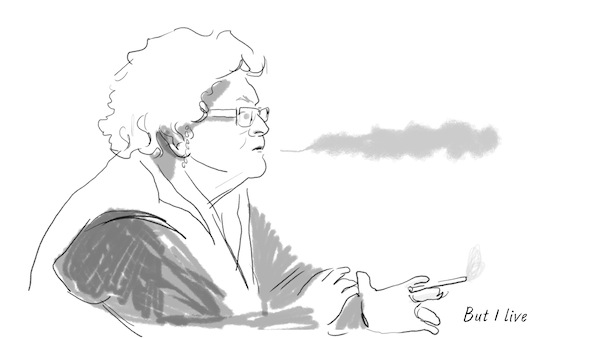
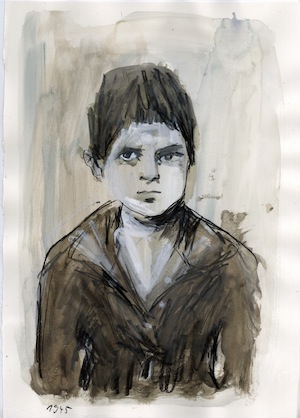
Barbara Yelin’s illustration of Emmie Arbel, now. (image from UVic)Barbara Yelin’s illustration of Emmie Arbel, then. (image from UVic)
“Given the advanced age of survivors, the project takes on an immediate urgency,” said Schallié. “And what makes their participation especially meaningful is that each of them continues to be a social justice activist well into their 80s and 90s. They are role models for the integration of learning about the Shoah and broader questions of human rights protection.”
The visual nature of a graphic novel allows it to bring in elements or depict scenes that are not possible with an exclusively written work, according to Schallié. A person may describe an event in writing but leave out aspects of a scene that might add more to the sense of what it was like to be there at the time.
One of the survivors participating in the project, David Schaffer, 89, lives in Vancouver. He is paired with American-Israeli comic artist Miriam Libicki, who is also based in the city. The two met in person in early January so that Libicki could learn the story of how he survived the Holocaust as a child in Romania.
In 1941, Schaffer was forcibly sent with his family to Transnistria, on the border of present-day Moldova and Ukraine, by cattle car. There, they suffered starvation and were subjected to intolerable and inhumane living conditions.
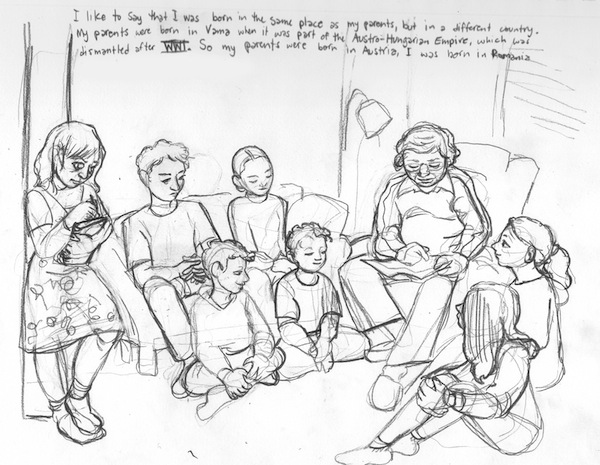
One of the illustrations by Miriam Libicki, who is working with survivor David Schaffer. (image from UVic)
“The most important thing is to share the story with the general population so they realize what happened and to avoid it happening again. It’s very simple. History has a habit of repeating itself,” said Schaffer.
Libicki, who was the Vancouver Public Library’s Writer in Residence in 2017, is the creator of jobnik!, a series of graphic comics about a summer she spent in the Israeli military. An Emily Carr University of Art + Design graduate, she also published a collection of essays on what is means to be Jewish, Toward a Hot Jew. (See jewishindependent.ca/drawing-on-identity-judaism.)
“The more stories, the better. The wiser we can be as people, the more informed we can be as citizens and the more empathy we can have for each other,” Libicki said. “Graphic novels are not just a document in the archives; they’re something people will be drawn to reading.”
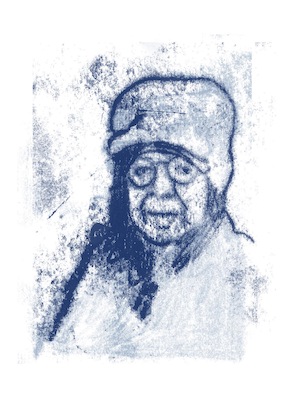
Gilad Seliktar drew this sketch of Rolf Kamp. (image from UVic)
The other illustrators are Barbara Yelin, a graphic artist living in Germany, and Gilad Seliktar, who is based in Israel. Yelin is the recipient of a number of prizes for her work, including the Max & Moritz Prize for best German-language comic artist in 2016. Seliktar has illustrated dozens of books – from publications for children to adult graphic novels – and his drawings frequently appear in leading Israeli newspapers and magazines.
Brothers Nico and Rolf Kamp in Amsterdam and Emmie Arbel in Kiryat Tiv’on, Israel, are the other three survivors who are providing their accounts of the Holocaust.
The books will be available digitally in 2022. A hard copy version of each book is planned, as well. When finished, the graphic novels will be accompanied by teachers guides and instructional material designed for schools in Canada, Germany, Israel, the Netherlands, the United Kingdom and the United States.
UVic hopes to match a larger number of survivors with professional illustrators in the future. To learn more, contact Schallié at [email protected]. You can also visit the project’s website at holocaustgraphicnovels.org.
Sam Margolishas written for the Globe and Mail, the National Post, UPI and MSNBC.
There are many new routines in this unusual time. Social media feeds suggest baking has become the comforting go-to for many of us. Binge-watching shows and finally getting to the books we’ve been meaning to read is another. Cleaning those closets that were filled with mismatched sheets sets and nearly empty rolls of birthday wrapping paper was a long-overdue task.
But, at 7 p.m. each night now for a couple of weeks, another, less solitary routine has emerged. Metro Vancouverites – and people further afield – take a step outside, onto their balconies or into their driveways, and make like it’s New Year’s Eve. Clanging pots and pans, applauding, shouting cheers and generally making as much noise as possible for a minute, the behaviour is not merely burning off steam by a people holed up and stir crazy. It is a heartfelt act of solidarity and gratitude for the frontline healthcare workers, first responders and others whose responsibilities to protect the public require them to remain at their posts. It is also a way for us to say hello to our neighbours, and to receive reassurance that, while the streets and stores may be almost empty, humanity has not been wiped out, just relegated to our homes.
The nightly event was given steam by Rory Richards, a member of the Jewish community who understands the meaning of the power of one. Several years ago, at the height of the refugee crisis in the Mediterranean, she traveled to Greece and helped welcome those fleeing their homelands, while mobilizing support for the effort back home via social media. In this time of need, she saw what others were doing in the world to express themselves, while staying in quarantine, and brought the practice to her West End neighbourhood. And it has resonated with many – so many that the Vancouver Park Board has decided to change the firing time of Stanley Park’s Nine O’Clock Gun to 7 p.m. until the end of April.
The noisemaking trend is still relatively new, but already we hear of the emotional impact it is having on exhausted and anxious frontline workers. As is the solidarity at 7 p.m. nightly of their fellow emergency workers – fire trucks, police cars and ambulances driving the streets around their local hospitals, flashing their lights and sounding their sirens.
Mostly unsung are other frontline workers, those whose jobs, until this crisis, were not considered dangerous or irreplaceable: grocery store workers, cashiers, fruit and vegetable store operators, bakers, letter carriers, parcel delivery personnel, bank tellers, people maintaining the internet, bus drivers, garbage and recycling collectors, city workers who are making sure the traffic lights and other essential services remain operational, employment insurance office staff and other bureaucrats who are rushing to put aid programs into place. The list goes on. These people are continuing their work of keeping the world functioning at the level it must, without the luxury of sheltering in place.
In the Jewish community, agencies and individuals are stepping up. Jewish Family Services continues to deliver its vital programs, knowing that the physical, emotional and economic toll this crisis is taking is not yet at its peak. Jewish Federation of Greater Vancouver has launched a fund to help the community address the crisis, with specific emphasis on food security, housing support and subsidies to ensure that the economic impacts of the pandemic do not prevent individuals and families from participating to the greatest extent possible in Jewish communal activities. The Centre for Israel and Jewish Affairs has mobilized, creating a COVID-19 resource guide that is a clearinghouse for related information nationally and in each province. And organizations such as the Canadian Council for Reform Judaism and Reform Rabbis – which sent a letter to the federal government last week – are working to ensure that relief efforts centre on the most vulnerable, “including those who are homeless or housing insecure, migrants or refugees, living in underserved indigenous communities, being held in detention facilities or at risk of domestic violence.”
Locally and internationally, synagogues, day schools and community organizations have turned on a dime to use online platforms as an alternative meeting space for virtual services and gatherings. Some senior Sephardi rabbis in Israel are releasing opinions that would allow observant Jews to leave Zoom running for Passover seders, so that separated families can join together to celebrate our Festival of Freedom.
How many of us, three weeks ago, had heard of Zoom? An old long-distance telephone ad declared, “It’s the next best thing to being there,” which is true of this new technology, but we can’t deny that the shmoozing before and after (and during) services and events isn’t quite the same. Humans are likely to take for granted anything we receive almost as soon as we have it, so it is worth taking a moment to consider the incredible good fortune that allows us to have technology that we could barely dream about 30 years ago to keep us virtually together when we are, most of us, actually apart.
There’s no question that the emotional toll of our separateness will be keenly felt next week as the seders that, for our entire lifetimes, have meant the coming together of extended families and close friends, will be massively different than in the past. There will be a seat at the table for Eliyahu, but many others also will be there only virtually, and they will be missed.
When we participate in the 7 p.m. clangfest, or even if we just watch it from our homes, let’s consider the clapping, hollering and pan-banging as a testament to our admiration for medical and other frontline personnel, including the people who never imagined that they would be so crucial a part of maintaining our society’s functioning but who are, irreplaceably, ensuring that many of us are able to shelter in place in relative privilege and comfort.
The Jewish Federation of Greater Vancouver has released $400,000 to address the immediate needs of its local partner agencies over the next month. The funds will address needs in the key areas of food security, to increase the capacity of the food bank and other food distribution programs in our community; housing support, subsidies for community members unable to make their rent payments; seniors services, to help them stay safe, healthy and connected to community while they are self-isolating in their homes; tuition support so that families with children in Jewish day schools can keep their children enrolled; subsidies for Jewish programs, daycare, summer camps and part-time educational programs; and support so that Jewish supplementary schools can provide alternatives to classroom learning and maintain uninterrupted delivery of Judaic studies to the children and families they serve.
For more on Federation’s response to the COVID-19 crisis, as well as what other community organizations are doing at this time, visit jewishvancouver.com/covid-19-updates.
***
With the support of Jewish Federation, Jewish Family Services (JFS) has launched the JFS Community Care Hotline as an emergency response resource. It is available from 9 a.m.-9 p.m., seven days a week and staffed by JFS to provide emergency essential services. Priority services include meal or food bank grocery delivery; counseling/emotional support; and friendly phone “visiting.”
If you know anyone who needs to lean on JFS at this time, please share this information via your social media networks and other forms of communication. JFS also has a volunteer registration page, as many people have offered to help.
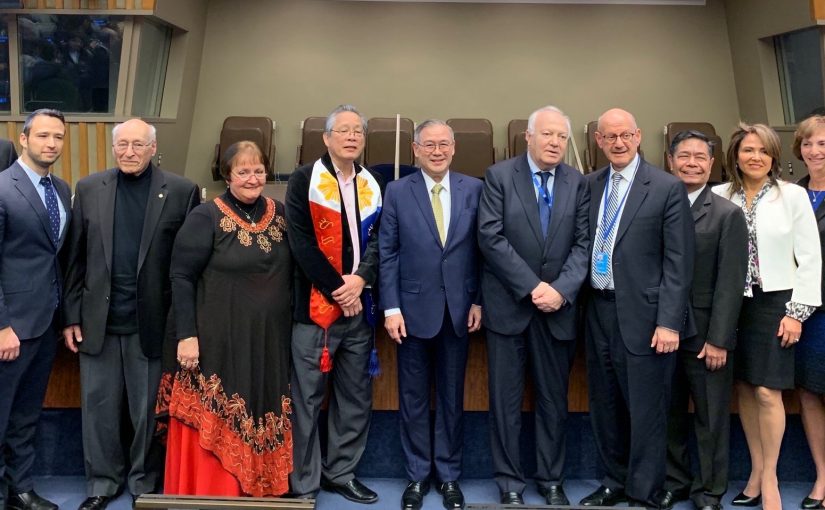
On Holocaust Remembrance Day, Jan. 27, B’nai Brith International (BBI) honoured former Philippine leader Manuel L. Quezon with a special panel discussion at the United Nations in New York City. BBI chief executive officer Dan Mariaschin is fifth from the right. (photo from BBI)
On Holocaust Remembrance Day, Jan. 27, B’nai Brith International (BBI) honoured a former Philippine leader at the United Nations building in New York, for having saved Jews during the Holocaust.
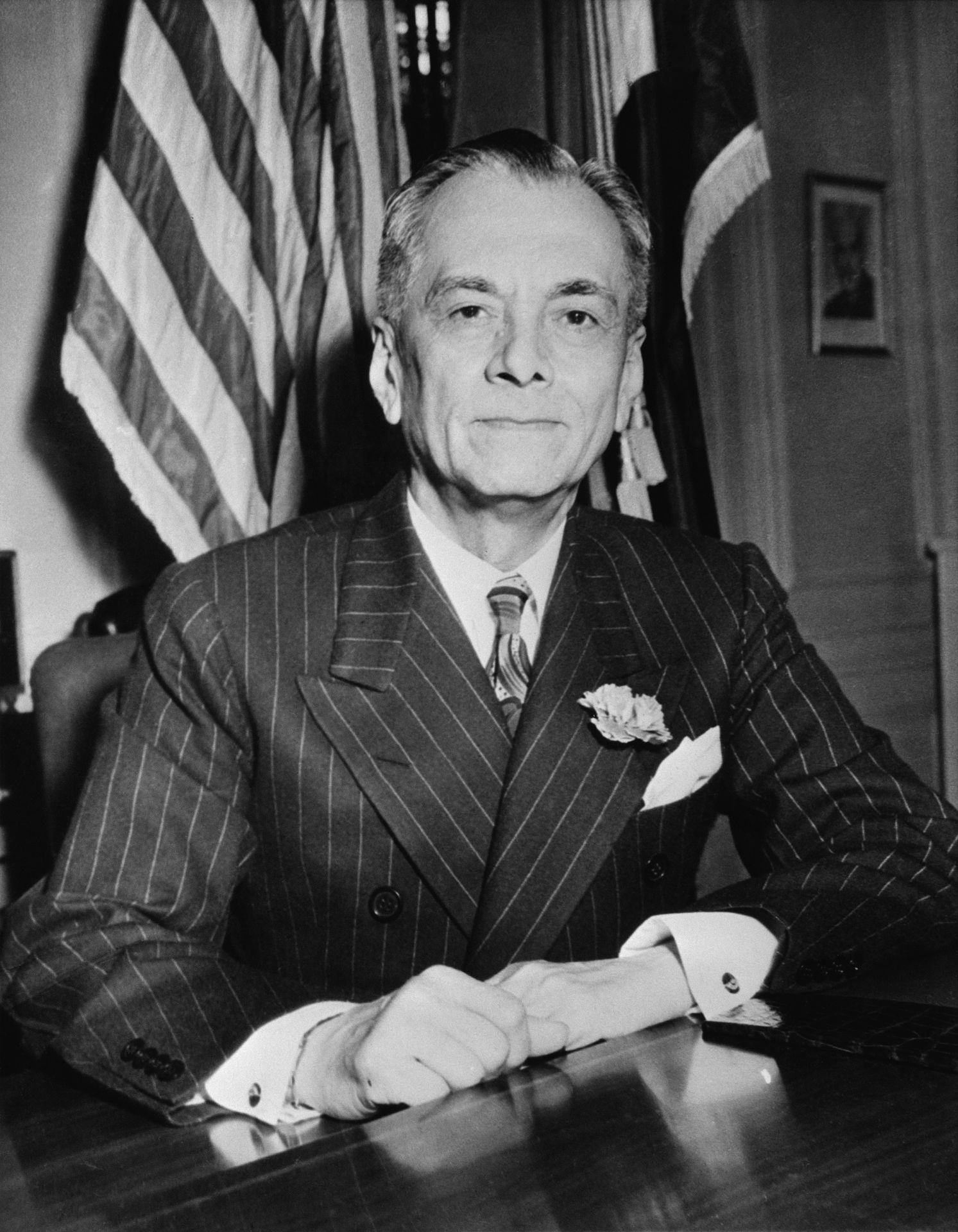
At a time when the Philippines was still under American sovereignty, the appointed Philippine president, Manuel L. Quezon, invited and welcomed 1,300 refugee Jews who were fleeing Nazi persecution.
Quezon, who was born in 1878 and died in 1944, was a statesman, soldier and politician. He served as president of the Commonwealth of the Philippines from 1935 to 1944.
According to Philippine Secretary of Foreign Affairs Teodoro Locsin, the reason why Quezon chose to help when many other world leaders refused to do so, is that he acted in the tradition of “Do unto others as you would have done unto you.”
Not only did Quezon welcome as many Jews as he could get visas for, he also offered them his private land to grow food and develop a kibbutz.
“I think it’s a case of, there are individuals who, I’m a firm believer in this, whose moment comes at the most opportune time,” said Daniel S. Mariaschin, BBI chief executive officer. “In the case of Manuel Quezon, I think he was a good-hearted individual. There was nothing in this for him.
“He really was a compassionate person who heard this story, thousands and thousands of miles away, and was moved to act. And now we are finding out, as more becomes known, that he was willing to save many, many more … and was, unfortunately, not able to do so. I think he stands very high … as one of the Righteous Among the Nations, who acted to save Jews.”
At that time, from 1937 to 1941, as news reports were revealing Hitler’s plans, Quezon secured the necessary visas from the American visa office for a Jewish-American family by the name of Frieder, who manufactured cigars in Manila.
Former Philippine President Manuel L. Quezon invited and welcomed 1,300 refugee Jews who were fleeing Nazi persecution. (photo from U.S. Library of Congress LC-USW33-019075-C)
“I think the family, together with the president, were able to get word out, they were able to get those visas … although, again, unfortunately, when he wanted to save more, the ability to get more visas was just not available to him,” said Mariaschin.
Years later, the Philippines was the only Asian nation to vote for the Partition Plan in 1947, to form the state of Israel in 1948, which continued to pave the way for the positive relations Israel has with the Philippines to this day. In 2009, in Rishon Lezion, a monument was erected to honour Quezon.
The BBI event in January was well-attended and included remarks from Locsin, Mariaschin, historian Bonnie Harris, and Hank Hendrickson, who is the executive director of the U.S.-Philippines Society and a refugee who was personally saved by Quezon.
In between the various speakers, director Noel (Sunny) Izon, who made the documentary about Quezon called An Open Door: Holocaust Haven in the Philippines, shared a clip from the film. According to Izon, some 11,000 descendants of the refugees Quezon saved owe their life to him and Izon is one of them. He explained that one of the refugees Quezon saved was a doctor who saved his father’s life soon after arriving in Manila.
Another highlight of the January event was having refugee Ralph Preiss present. Preiss had been saved by Quezon, and shared his experience with attendees.
While no one from Quezon’s immediate family attended, nearly half the attendees were of Filipino descent who now live in New York.
Mariaschin said, while the event was in recognition of Quezon, it was, by extension, “in recognition of the Philippines.”
“The books, the films, the documentaries and the stories will live on from this point, forever,” said Mariaschin about other recent recognitions of Quezon’s actions. “That’s the best tribute you can have, that, rather than have this be just considered a footnote of history, it’s now becoming an important piece of the story … of the courageousness, the humanitarian impulses, of a relatively few individuals.”
According to Mariaschin, Quezon is on equal standing with the handful of other leaders who had a hand in saving Jews during the Second World War, and he said we need to continue highlighting their stories before we lose our few remaining survivors.
“I think we have to do this while there are still survivors who are living,” said Mariaschin. “Unfortunately, the clock is running down on that. In the lifetimes of those people who they saved, it’s extremely important that we say thank you.
“And we were fortunate, as I said, to have one refugee at our program, to have them say thank you and to talk about their story. It’s something that really we need to do every year now and in between, in order to memorialize those who saved Jews.”
Five years ago, the International Raoul Wallenberg Foundation posthumously bestowed Quezon with the Wallenberg Medal, which also acknowledged the Philippines as a whole for having saved Jews during the Holocaust. In Winnipeg, the local B’nai Brith branch is working to organize an event, together with the Winnipeg Filipino community, to honour the former president.
To view the video of the BBI event in New York, visit webtv.un.org and do a search for “Safe Haven: Jewish Refugees in the Philippines – Panel Discussion.”
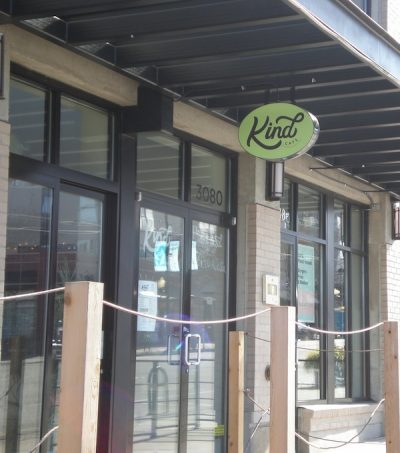
Samantha Emerman opened Kind Café last year. While closed during the COVID-19 pandemic, they are operating a pickup service twice a week. (photo by Olga Livshin)
Kind Café is a warm, airy space, a place for friends to meet and eat together. Or, at least it will be a welcoming meeting place again, after the coronavirus pandemic is over. In the meantime, the restaurant is offering takeout service only.
Jewish community member Samantha Emerman, with her father, Marvin Emerman, opened the café in August 2019. The main idea behind it was threefold: no meat, no dairy, no waste.
“I became a vegan in 2013. I went to a nutritionist college here, in Vancouver. I learned where our meat and milk come from, so I stopped eating them,” Samantha Emerman told the Independent in a recent interview.
Initially, she opened an online business, ran some seminars on healthy eating habits and offered nutrition coaching. She supplemented her income by working at local restaurants and coffee shops.
“Do you know how much garbage Starbucks produces?” she said by way of but one of many possible examples. “In a busy location, they take out the garbage every hour. I wanted to create a space for people to enjoy their meals, while generating no garbage at all. It’s a much kinder way to feed people – kinder to the environment, to our planet.”
Emerman started doing research on what kind of restaurant she wanted. “There are other vegan restaurants in Vancouver. Being vegan has become trendy, but there is no other vegan café, except ours,” she said. “And no eating establishment in the city offers the ‘no waste’ policy, except ours.”
The next important decision was where to set up shop.
“I researched for a long time. We looked into downtown locations,” she said, “but most people in downtown rely heavily on their daily to-go coffee. We checked out the suburbs, like White Rock. In the end, we decided that the best location for our café would be Main Street, with its diverse people.”
And, last August, Kind Café opened its doors on Main Street.
“We offer a vegan menu and we don’t generate any garbage. We don’t even have a garbage can inside,” Emerman said proudly. “We don’t have any plastic or any single-use items here. Everything is reusable.”
The zero-waste initiative extends to all areas of eating, including the takeout aspect of the business. The café doesn’t have paper coffee cups or foam containers for to-go orders.
Before the coronavirus hit, Emerman said, “If people want[ed] takeout, they should come in with their own containers. It took awhile for the people to get used to that idea, but now, most of our customers who want a takeout come with their own containers.”
She called this policy BYOC (bring your own container). “We are passionate about BYOC,” she said. “When you dine inside, we have you covered with metal cutlery, ceramic plates, mugs and glasses. Otherwise, instead of the disposable plastic utensils, paper cups and single-use food containers that are polluting the environment, we kindly ask our customers to bring their own.”
Even with the COVID-19 restrictions, Emerman isn’t sacrificing her environmental beliefs. Instead, she is extending the practice of “renting” containers, which was in place before the virus. The café is temporarily suspending its BYOC policy and is now only offering customers food served in new glass containers for which there is a monetary deposit that will be returned to the customers at a later date, when they return the container so that it can be washed and reused.
“We’re trying to shift the focus away from the single-use mindset altogether,” she said. “Why use any product only once and throw it away? We are here to shake up the food industry, change people’s behaviour pattern, and to make BYOC the norm.”
The demographics of Kind Café are as diverse as the Main Street population. “About 60% of our customers are regulars who work or live in the area,” Emerman said. “Most of them are between 14 and 40, professionals and students. The rest are walk-ins. All kinds of people, really. And people are still discovering us.”
Kind Café opened its doors on Main Street last August. (photo by Olga Livshin)
As a way for people to discover the new café, Emerman has been offering the space for events and seminars on healthy eating. One of the events that fit the café’s no-waste strategy was a clothing swap. “It’s the same principle,” she said. “You don’t want this sweater, but someone else might want it. No throwing away anything.”
The no-waste guidelines apply to the restaurant’s suppliers as well.
“We don’t accept the products in plastic bags. We have our own large containers for the supplies we use,” said Emerman. “The only bags we do accept are paper and reusable. But it took some time to find suppliers who share our beliefs. That’s why we have 11 suppliers for different products, not two or three, like Starbucks.”
The café is a family business. “My father is my partner and mentor,” Emerman said. “He taught me a lot. Most of the recipes are our family recipes or my own, although now that we hired a chef, he contributes, too. My sister is the office admin. My mom does everything that needs to be done. We are a very close family.”
Of course, they have some hired staff, all of whom happen to be, like the Emermans, vegan. “It is not a requirement for working here,” she stressed, “but our staff want to work for us. There are not too many vegan places in the city.”
The majority of work falls to Emerman herself. “Owning this café is the hardest thing I’ve ever done. I do everything. I bake. I manage front and back. I look for suppliers. I do advertising on social media – Facebook and Instagram. It’s a 24/7 job and the most rewarding I’ve ever done.”
To order takeout and for more information on the café, visit kindcafe.ca. The website notes, “We know that getting your hands on certain groceries, specifically vegan food, during this time can be challenging. Although we do not currently have a delivery service, we will be open for a small window, of three hours, twice a week, for you to come pick up orders!”
They request that customers preorder by Friday, 10 a.m., for Saturday pickup and Monday, 10 a.m., for Tuesday pickup. There is an online form to fill out, and an invoice will be provided once your order is confirmed.
Olga Livshin is a Vancouver freelance writer. She can be reached at [email protected].
Listening to Geoff Berner’s Welcome to the Grand Hotel Cosmopolis will break your heart one minute and stir you to historic rage the next. (photo by Mischa Scherrer)
In November 2019, myriad Chutzpah! Festival and Geoff Berner fans (not always the same bedfellows) and I crowded into the WISE Hall in Vancouver to be introduced to Berner’s new album, Welcome to the Grand Hotel Cosmopolis. The hotel is a real place in Augsburg, Germany. The liner notes describe it: “half the space is living quarters for refugees and asylum seekers, and half of it is a beautiful, inexpensive hostel…. It’s a wonderful thing for me, as a Jew, to see this project in Germany, where ordinary Germans are committed to truly welcoming traveling people in trouble, who are seeking help and a new home.”
The title of the first song on the album, “Not the Jew I had in Mind,” comes from a lecture by Thomas King called “You’re Not the Indian I had in Mind.” Berner wrote to King to get permission to use the title, and King responded, “Don’t need my permission…. Nice thing about words (except for the ones the corporations try to corral) is that they’re free…. So go for it … and no need to credit me.… Maybe I’ll run into one of your songs and craft a novel around one of the lines.”
The album catches at being Jewish in ways that are profoundly political and not always specifically Jewish – the song, “Why Don’t We Just Take the Billionaires’ Money Away,” for example. Berner’s lyrics and melodies will break your heart one minute (“What Kind of Bear Am I”) and stir you to historic rage (“Zog Nit Keyn Mol”) the next. When I heard “Would You Hide Me” for the first time at the launch, I burst out laughing. And then looked around warily. I had thought it was only me who wandered around occasionally wondering this.
The music is klezmer punk but not always punk. “Vilne,” for example, is a beautiful song about displacement. Berner is dynamite on the accordion and is accompanied by a stellar group of musicians. Dancing is a must: as the lyrics to “The Drummer Requests” say, “Dancing in your chair is part of please continue dancing.” Berner also provides seamless translations for those of us who are sadly not fluent in Yiddish.
I’m sure I’m not the only Jew who takes this album personally – my grandfather was born in Lithuania (“Vilne”) but I’m not alone in that. As I continue to listen to the songs, I am encouraged that I can be part of a movement that is about being both honestly Jewish and radical. The music is a powerful testament to the kind of Judaism that I’m always looking for and often can’t find.
Buy the album – you will be supporting Berner and the other musicians. And read the liner notes while you’re listening to the songs. They are some of the most interesting I’ve ever read.
You can find more information about Welcome to the Grand Hotel Cosmopolis at grandhotel-cosmopolis.org/de and Berner’s website is geoffberner.com.
Penny Goldsmithsings with the Solidarity Notes Labour Choir, the Highs & Lows Mental Health Choir and, occasionally, with the Vancouver Jewish Folk Choir. She is the owner of Lazara Press, a small, independent publishing house in Vancouver.
Montreal-based musician Elizabeth Leslie has a new EP out, Brave Animal, which, among other topics, tackles climate change. (photo from Eric Alper PR)
It had always been musician Elizabeth Leslie’s dream to visit Scotland, which her Sephardi ancestors had made their home. For years, she had envisaged hiking the Highlands, reveling in its beauty and experiencing the misty, “dreary” British weather that she had heard so much about.
Learning about the Leslie clan and their lives as Jews intrigued the young Canadian musician, who had been raised in Eastern Canada and is now based in Montreal. But so did the idea of experiencing a truly Scottish spring. So it came as a rude shock, she said, when she finally arrived to the British Isles to be greeted by a drought of parched hillsides and 25˚C weather. Her image of Scotland’s Highlands, she admitted, appeared to be sorely out of date.
“It wasn’t green rolling hills anymore. It was just glaring sun,” said Leslie. “I was peeling off layers and [there was] yellow grass and rampant tourism.”
That experience became a seminal moment for the musician, who attributes the erosion of the Highlands to humanity’s greed and the unrealistic goals of 21st-century capitalism. “Capitalism affects everything,” she told the Independent. “It’s a selfish beast and it’s unsustainable.… Capitalism mixed with climate change and the fact that climate change is a product of capitalism, [makes it] glaringly obvious that we need to completely reimagine the way we live.”
Her recently released EP recording, Brave Animal, speaks to that urgency. Its lead song, “To the Next,” is the summation of what she sees for future generations left to navigate the impacts of a warming planet. Its dark-wave melody is as hypnotic as its lyrics:
“There is only one place left to go / And I’m afraid that it is far / If you listen close / You will soon hear / All their words / Are full of fear.
“Men might be masters of this world / But little girl / We’re going to the next / Men might be fighting against this world / But little girl / We’re fighting for the next.”
According to Leslie, the song was written before Swedish climate change activist Greta Thunberg rose to notoriety. Still, its refrain hits to the heart of a question that is commonly voiced these days.
“When I wrote this song,” Leslie said, “Greta wasn’t around … but [she is] exactly the kind of girl I am speaking to in the song and she is metaphorically what that little girl is.”
Leslie added, “I mean, who is there to comfort Greta Thunberg? Why is there a teenager fighting [against] climate change and why aren’t the older guys in suits doing it with their millions of dollars?”
In Leslie’s eyes, change is motivated by leadership, and she believes there is a dearth of examples for young people to follow these days.
“There’s really no adult role models out there who are really standing up – at least in music,” or none willing to tackle a topic that is already defining a generation’s social and environmental expectations, she said. “I am just trying to give them some glimmer of hope, I guess.”
For this artist, probing difficult questions seems to come naturally, even when the questions are unpopular with those around her. When she learned some years ago that her Scottish ancestors were Jewish, she searched for more information and unearthed stories of the Leslie clan – started by a Jew who had served in a distinguished position for Mary, Queen of Scots, and was a Knights Templar – despite warning from her mother about antisemitism.
Although her mother wasn’t Jewish, she was concerned about her daughter taking on an identity that had been subjected to persecution throughout millennia. The warnings, though, didn’t deter Leslie, who later converted to Judaism.
“My mom had like 10 cups of tea per day and my dad drinks scotch every other night and my uncle plays the bagpipes and all that stuff, so it was a huge surprise in a lot of ways,” said Leslie about discovering her Jewish heritage. “But, for some reason … I always had a feeling about it.”
Although Leslie said her visits to shul are more infrequent these days, she sees a parallel between the values she was raised with and the ethics that Judaism espouses. Fairness and protecting the environment are at the heart of both her identity as a Jew and as a musician, she said. As is social justice. She said she was incensed when she found a book about the Leslie clan and learned that her ancestors were forced to convert to Christianity.
“That connection with the culture and values and also a really deep need to right the wrongs of the past” were key to her decision to convert, she said. “I just found it so unrighteous that my family was forced into this religion [of Christianity]. We already had a religion. I just felt it was so unfair and I wanted to turn back the clock.”
Her identity as a Jew has also been shaped by her relationships. Leslie, who self-describes as a non-binary queer person, was first introduced to Judaism when she dated a woman who had been raised Charedi and maintained a Jewish household. Leslie said the exposure to Jewish traditions was both fascinating and “extremely familiar.”
“I think one thing I love about Judaism is … we have never forgotten who we are,” said Leslie. “And I think that sort of cultural preservation is really important, especially in the face of recent antisemitism, in face of capitalism and climate change and everything, that sort of centreness is a power. And I think it is really important.”
Leslie’s music can be purchased through a number of online venues, including Spotify or by connecting through her Facebook page.
Jan Lee’s articles and blog posts have been published in B’nai B’rith Magazine, Voices of Conservative and Masorti Judaism, Times of Israel, as well as a number of business, environmental and travel publications. Her blog can be found at multiculturaljew.polestarpassages.com.