Skip to content
  • Home
  • Subscribe / donate
  • Events calendar
  • News
    • Local
    • National
    • Israel
    • World
    • עניין בחדשות
      A roundup of news in Canada and further afield, in Hebrew.
  • Opinion
    • From the JI
    • Op-Ed
  • Arts & Culture
    • Performing Arts
    • Music
    • Books
    • Visual Arts
    • TV & Film
  • Life
    • Celebrating the Holidays
    • Travel
    • The Daily Snooze
      Cartoons by Jacob Samuel
    • Mystery Photo
      Help the JI and JMABC fill in the gaps in our archives.
  • Community Links
    • Organizations, Etc.
    • Other News Sources & Blogs
    • Business Directory
  • FAQ
  • JI Chai Celebration
  • JI@88! video

Recent Posts

  • Zionism wins big in Vegas
  • Different but connected
  • Survival not passive
  • Musical celebration of Israel
  • Shoppe celebrates 25 years
  • Human “book” event
  • Reclaiming Jewish stories
  • Bema presents Perseverance
  • CSS honours Bellas z”l
  • Sheba Promise here May 7
  • Reflections from Be’eri
  • New law a desecration
  • Resilient joy in tough times
  • Rescue dog brings joy
  • Art chosen for new museum
  • Reminder of hope, resilience
  • The national food of Israel?
  • Story of Israel’s north
  • Sheltering in train stations
  • Teach critical thinking
  • Learning to bridge divides
  • Supporting Iranian community
  • Art dismantles systems
  • Beth Tikvah celebrates 50th
  • What is Jewish music?
  • Celebrate joy of music
  • Women share experiences 
  • Raising funds for Survivors
  • Call for digital literacy
  • The hidden hand of hate
  • Tarot as spiritual ritual
  • Students create fancy meal
  • Encouraging young voices
  • Rose’s Angels delivers
  • Living life to its fullest
  • Drawing on his roots

Archives

Follow @JewishIndie
image - The CJN - Visit Us Banner - 300x600 - 101625

Katz makes difference

Katz makes difference

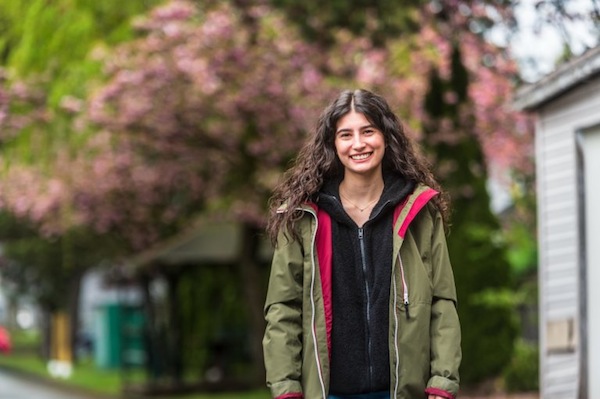
University of British Columbia student Ava Katz has been helping people with errands since the pandemic began. (photo by Paul Joseph/UBC)

First-year kinesiology student Ava Katz commutes to the University of British Columbia from Kerrisdale, where her housemates include her 91-year-old grandmother and a mother with a heart condition. In these extraordinary times, Katz doesn’t want her loved ones risking their health with unnecessary trips to the grocery store. So, in March, she began making those trips herself. As she was transporting groceries home from Save-On Foods, something occurred to her.

“It dawned on me that there are people in the community who don’t have family, who don’t have anyone else to go out for them,” said Katz.

Her final exams were just a couple of weeks away. It’s the time of year when most students’ instincts are telling them to clear their schedules of any distractions. Katz’s instincts were telling her to do something else.

She posted a public note on Facebook: “In wake of the spreading pandemic, I would like to offer my services to anyone who is compromised during this time. If you or someone you know is in need of groceries, household items, etc., please contact me directly and we can arrange for me to complete your needed errands free of charge.”

She indicated where she lived and her phone number, assuring people, “I will not enter your homes, only drop items off at the door. Priority goes to elders and individuals with compromised health. Please do not contact me to run errands for you if you are able and in good health.”

She asked readers to share the post. The calls came quickly. Just a couple at first, but more and more as her friends returned from school in the United States and overseas. They all had to self-isolate for 14 days, so they couldn’t do anything for their own grandparents who were shut in. Katz stepped in.

“That was just kind of a no-brainer for me,” she said. “I was happy to do those things, and still am.”

Katz has been shuttling to and from supermarkets and pharmacies all over Vancouver. Each outing brings her into the orbit of people who potentially carry the virus. Katz has heard the stories about the toll COVID-19 takes on its victims. She wears a mask and takes great care not to bring the virus to the people she’s helping.

She still makes the trips for her mom and grandmother, walks her two dogs, and also delivers food between two seniors homes twice a week as a volunteer for Congregation Beth Israel. It’s a lot to do, but, as far as Katz is concerned, it’s the least she can do.

“It definitely scares me that I could be exposing myself, but people need help,” she said. “I’d rather sacrifice myself than have a senior go into a grocery store and contract the virus instead.”

Many of the volunteers who were delivering food between the two seniors homes when COVID-19 arrived were older folks themselves. It was too risky for them to continue, so the congregation put out a call for new volunteers. Katz was among the first to step up, despite her busy exam schedule.

“Crisis brings out the best and the worst in people, and I think Ava is one of those examples of it bringing out the best,” said Krystine McInnes, volunteer coordinator for the synagogue. “The idea of selfless service and loving our neighbours as ourselves – she really embodies that.”

Helping people is in Katz’s blood. Her grandfather was a doctor for more than 60 years. She came to UBC thinking she would go into medicine eventually, too. Nothing during her first year has changed that. In fact, the COVID-19 outbreak has given her even more respect for the healthcare and support workers who keep our hospitals functioning every day.

“They are real heroes,” said Katz. “I have a huge respect for what it takes to provide care to so many people at a time like this and it reinforces my commitment to be a part of it.”
Format ImagePosted on May 15, 2020May 14, 2020Author Erik Rolfsen UBC Media RelationsCategories LocalTags Ava Katz, coronavirus, COVID-19, seniors, tikkun olam, UBC
Challah delivery

Challah delivery

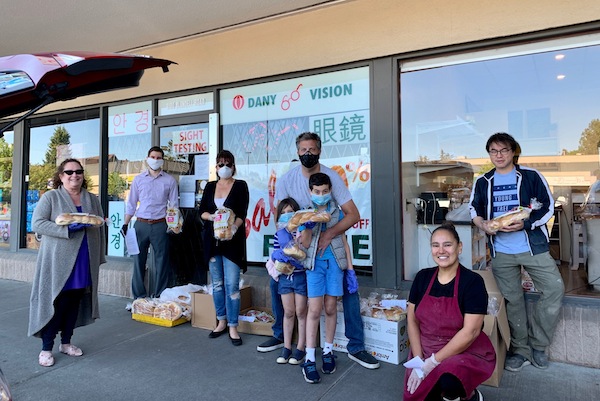
Left to right are Lynne Fader (Kehila Society), Adam Ben-Dov (Connect Me In), Toby Rubin (Kehila Society), Michael Sachs (with daughter Desi and son Izzy), Monica Flores and Steve Uy (Garden City Bakery). (photo from Kehila Society)

The Covid Challah Initiative was started by Michael Sachs and is a partnership between Richmond’s Kehila Society, Richmond’s Garden City Bakery, Jewish Federation of Greater Vancouver’s Connect Me In and North Vancouver’s Congregation Har El. The initiative aims to ensure that everyone in Metro Vancouver who needs a (free) challah is delivered one. (For the story of how the initiative started, see citynews1130.com/2020/05/03/challah-delivery-covid-richmond-family.) To sign up for a challah contact, visit jewishvancouver.com/challah-delivery. Each week’s registration opens on Monday and closes Thursday at noon – and people need to register each week, as this is not a recurring service.

Format ImagePosted on May 15, 2020May 14, 2020Author Kehila SocietyCategories LocalTags challah, Garden City Bakery, Har El, Jewish Federation, Kehila Society, Michael Sachs, tikkun olam

Share your COVID story

The COVID-19 pandemic has impacted the lives of everyone in our local Jewish community, as it has impacted people around the world. Daily events like school, work, visiting with friends and family, as well as grocery shopping and other errands, have been transformed by public health recommendations.

The Jewish Museum and Archives of British Columbia has a responsibility to collect and document history as it happens – and needs your help to document this historic time. What are the important aspects of this moment that our community should recall years from now?

Each of us is experiencing this crisis in our own unique way, and the Jewish Museum and Archives wants to gather as many of those experiences as possible. Not sure what to say? The museum can help with that. The JMABC has recruited the assistance of Carly Belzberg, a specialist in guided autobiography, who will be helping community members put their experience into words.

The museum would like to know how daily routines around your house, including work, school and fitness have changed; how you’re staying in touch with family and friends; and what Jewish traditions look like for your family this year. For example, how did you celebrate Passover? How are you keeping Shabbat?

If you are interested in sharing your experiences, or simply would like to learn more about this project, contact JMABC archivist Alysa Routtenberg at [email protected].

Posted on May 15, 2020May 14, 2020Author JMABCCategories LocalTags archives, coronavirus, COVID-19, history, Jewish museum, memoir
Doctors talk about COVID

Doctors talk about COVID

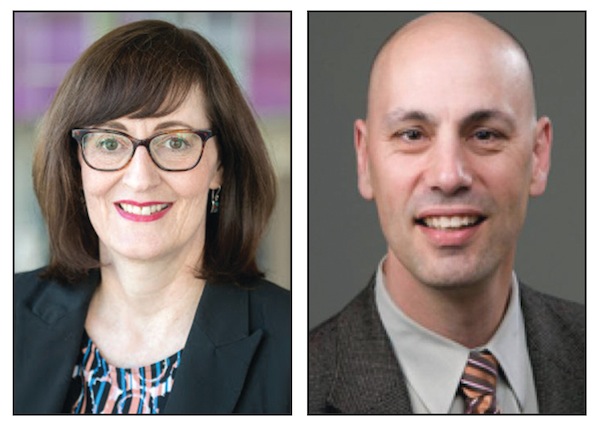
Dr. Patty Daly and Dr. Eric Grafstein were the featured speakers of Temple Sholom’s May 1 Let’s Talk About It webinar. (photos from Temple Sholom)

Temple Sholom began the first of a series of four (possibly five) webinars, called Let’s Talk About It, on May 1 with a public health forum that featured guest speakers Dr. Patty Daly, Vancouver Coastal Health’s chief medical officer, and Dr. Eric Grafstein, the regional head of emergency at VCH and Providence Health Care.

Together, the doctors provided a report from the medical frontlines in Vancouver, as the city responds to the COVID-19 pandemic. They later addressed several concerns raised by members of the community.

Grafstein offered reassuring remarks for those who may be apprehensive about visiting emergency departments. “Emergency departments are a safe place to go during a pandemic,” he said. “If you have things like chest pains or symptoms that you think may be a stroke, then you should be coming to the emergency department.”

Emergency visits declined sharply after a state of emergency was declared in British Columbia on March 18, dropping by half compared to last year, suggesting that people might be holding off from visiting the hospital, he said.

“When people come to a hospital with suspect cases, they are segregated. People who do not have COVID are not put at risk,” Grafstein said. As of the webinar date, about two people per 1,000 who had come to an emergency department in VCH had tested positive for COVID-19, he said.

Physical distancing in the emergency department is done through placing COVID patients in a different area than other patients. The risk of infection is further reduced by fewer people coming to EDs and creating more space in the hospital, he said.

Grafstein said the supply of personal protective equipment for medical workers is secure.

Though the first case of COVID-19 in British Columbia was identified on Jan. 15, the spread of the virus to the region came in early March, likely the result of traffic between British Columbia and the state of Washington, the first area in the United States to experience an outbreak. The number of reported cases in VCH peaked in mid-March and there has since been a decline.

Vancouver’s numbers have compared favourably to those of Toronto and Montreal, and the vast majority of cases here have been mild, said the doctors. The population most at risk is the elderly. Many of the deaths in the region have occurred at long-term-care facilities.

“We’ve done a very good job of flattening the curve – not only in our region but across B.C.,” Daly said. “Our modeling suggests that we can think about lifting some of the measures we have in place.”

Indeed, the province announced its Restart Plan last week. Outpatient services and elective surgeries are to be among the first medical activities to be resumed. An increase in the number of outdoor spaces that the public can access is also planned.

Some daycares – for the children of essential workers – have already reopened, and it is hoped that students will return to schools before the end of the academic year. Bars, restaurants and personal service businesses, such as hairdressers, could potentially reopen in the coming weeks as well, as long as measures, similar to those in grocery stores, are in place.

Universities may return to classes in the fall, though many classes will remain virtual.

There have been few cases of COVID-19 in the region among those under the age of 18, and day camps for children might take place this summer, said Daly.

Gatherings for groups of 50 or more people, such as weddings, funerals and religious services, will be among the last restrictions to be lifted.

“It will be done slowly and in a way that doesn’t lead to a dramatic increase in cases,” Daly said.

“The ultimate solution is a vaccine,” she said.

Neither doctor could predict when a vaccine would be ready, though some trials appear promising. Both doctors reinforced the messages that officials everywhere have been giving for months: stay home if you are sick, cough or sneeze into your elbow, don’t touch your face and wash your hands frequently.

“Anyone with the classic symptoms for COVID – fever, shortness of breath, cough, loss of sense of smell, nausea, diarrhea – should be tested,” Grafstein stressed.

Calling 811 will provide a person with the nearest testing facility. Every positive result is followed up and people who may have had close contact with that person are reached and advised to stay home for 14 days.

VCH covers a population of 1.25 million people, encompassing not just Vancouver but Richmond, the North Shore, the Sunshine Coast and some rural communities, such as Powell River. As of May 8, there had been 866 reported cases of COVID-19 within the VCH region; of those, 78 patients have died and 583 have recovered and discontinued isolation.

“As we open things up, we are doing everything we can to prevent a second wave. We need to also continue to help the most vulnerable,” Daly concluded.

Convened by Temple Sholom’s Rabbi Dan Moskovitz, the webinar was co-sponsored by the Jewish Federation of Greater Vancouver and was attended by more than 200 people. A video recording of the event can be found on Temple Sholom’s website and on YouTube.

Other talks in the Temple Sholom series have been discussions on financial planning and on effective parenting; a session on estate planning is scheduled for May 20.

Sam Margolis has written for the Globe and Mail, the National Post, UPI and MSNBC.

Format ImagePosted on May 15, 2020May 14, 2020Author Sam MargolisCategories LocalTags coronavirus, COVID-19, Eric Grafstein, health, Patty Daly, Temple Sholom, Vancouver Coastal Health
Filmmaker aims to inspire

Filmmaker aims to inspire

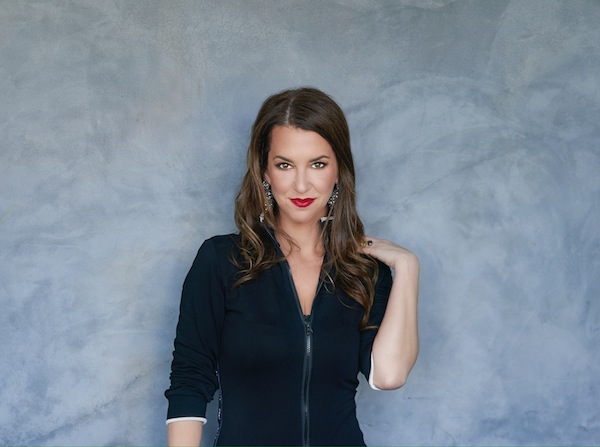
Esther Turan has produced an eclectic range of work. (photo from Moviebar Productions)

There is a Hungarian expression that translates roughly as “you are as many people as the number of languages that you speak.” This aptly describes the versatility of Budapest-born director and producer Esther Turan.

Turan, who spoke to the Independent from her home in Los Angeles, has melded eclectic cinematic styles into a considerable body of work. And she has done so within both a society and an industry frequently faulted for their limited opportunities for women. Among her credentials are director of documentaries about Budapest’s underground music scene; co-producer of an adaptation of G.K. Chesterton’s novel The Man Who Was Thursday; producer of In the Same Garden, a Bosnian film about Turkish-Armenian relations; and creator of commercials for dozens of internationally recognized companies.

Ever since the fall of the Iron Curtain, Budapest’s rich architecture and comparatively low production costs have made the city an attractive film location. Turan was barely out of her teens when, as a student at Hungary’s University of Drama and Film, her proficiency in English won her assignments as a casting director for several films shot in Budapest in the early 2000s, including Den of Lions, with Bob Hoskins.

In 2004, she became a founding member of Moviebar Productions, a full-service production company with offices in Budapest and – as of 2017 – Los Angeles. “I teamed up with a woman named Viktoria Tepper and we started producing television commercials,” explained Turan. “Soon our clientele grew, and we took on more projects for international companies.”

To date, Moviebar has produced 30 films and TV productions, in addition to more than 500 television commercials for brands such as BMW, Vogue and Nike.

“I have around 20 projects, in differing stages of development, underway at both the Budapest and Los Angeles offices,” Turan said. “One of my goals as a filmmaker is to tell stories that could inspire other women. My first TV series idea is about an exceptional woman who created a revolution and was a rebel herself. It’s also important for me to collaborate with other female filmmakers from all over the world and to share our visions. I would love to be involved in more projects, both with European and American female filmmakers.”

Currently, Turan is working on a miniseries about fashion designer Klara Rotschild, the “Coco Chanel of the East,” and contemplating a documentary about her grandfather, famed mathematician Paul Turan. His friendship and collaboration with eccentric mathematical icon Paul Erdos, known as “the oddball’s oddball,” would figure prominently in the film. Erdos was renowned for traveling from math conference to math conference around the globe, with a suitcase containing all his worldly goods.

Turan, too, has traveled to pursue her passions and her heritage. She studied at Hebrew University in Jerusalem, for example, to perfect her Hebrew. “Because of the fondness I had for it from earlier trips, I found myself missing Israel,” she recalled.

One of her latest projects is the anticipated The Reckoning, a horror film about a witch hunt set in 1665 New England that stars Charlotte Kirk (Vice), Joe Anderson (The Crazies) and Steven Waddington (The Imitation Game). Coincidentally, the movie is set against the backdrop of the Great Plague, and portrays the witch hunts conducted in its wake. Protagonist Grace Haverstock (Kirk) grapples with the tragic death of her husband, Joseph (Anderson), in a society consumed by fear and death. Later, in retaliation for having rejected the advances of her landlord, Squire Pendleton (Waddington), Grace is falsely accused of being a witch, and is imprisoned for a crime she didn’t commit.

In addition to The Reckoning, the third instalment of Turan’s documentary series Budapest Underground was just released. In it, in collaboration with co-director Anna Koltay, she explores Budapest’s musical subcultures in the late 1990s. This latest instalment focuses on electronic music. Accompanied by selected archival footage, it examines the genre’s emergence and growth, its key players, styles and sub-genres. The previous episodes delved into hardcore punk and hip-hop.

As Eastern Europe emerged in the late 1990s and early 2000s from several decades of communist rule, Budapest’s nascent underground music scene flourished, a blend of Western influences combined with a distinctively Magyar flavour. “I was into all this new music happening in Budapest at the time, especially rock and hip-hop,” said Turan. “It was really a great time.”

A fourth instalment in the series will be about underground rock and is currently in production.

For more information about Turan, her company and her career, visit movie-bar.net and her Facebook page, facebook.com/moviebar.productions.

Sam Margolis has written for the Globe and Mail, the National Post, UPI and MSNBC.

Format ImagePosted on May 15, 2020May 14, 2020Author Sam MargolisCategories TV & FilmTags Budapest, documentaries, Esther Turan, film, Moviebar Productions, women
Diverse Jewish communities

Diverse Jewish communities

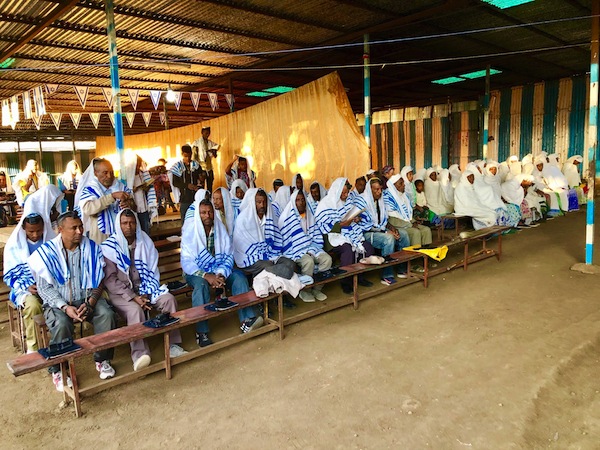
Morning prayers in Gondar’s Tikvah Synagogue. (photo from David Breakstone)

Since Dr. David Breakstone, deputy chair of the executive of the Jewish Agency, had to cancel his scheduled talks in Calgary and Winnipeg because of COVID-19, the Jewish Independent reached him by phone to learn more about his planned topic – Beta Israel and the Emerging Jewish Communities of the Amazon and Latin America.

Born and raised in the United States, Breakstone made aliyah in 1974 and has been involved with Jewish education for more than 50 years.

“The Jewish Agency (JA) really is the largest global Jewish organization that represents the full spectrum of the Jewish people,” said Breakstone. “JA itself is a partnership of the World Zionist Organization, the Jewish Federations of North America. It makes for a very dynamic, stimulating environment with incredible reach and ability, impacting our major issues and agenda items regarding world Jewry. To be in a position to impact all of that and influence things is, for me, a very exciting and demanding challenge.”

JA’s four major goals are connecting Jews around the world to one another, their Jewish heritage and to Israel; facilitating aliyah; serving those in need in Israeli society and fighting antisemitism; and assuring the safety and security of Jews everywhere.

The term Beta Israel refers to the Ethiopian Jewish community, thought to be descendants of the Hebrew tribe of Dan, explained Breakstone.

“Back in the 1950s, the JA was building schools and developed a teaching seminary in Ethiopia to work with the community,” he said. “Ethiopian Jewry has presumably been around for thousands of years, but has only been known about for the last 1,000 years…. The Beta Israel are unquestionably fully Jewish. Ovadia Yosef, chief rabbi of Israel back in 1973, confirmed the decision of a response of the Radbaz [David ben Solomon ibn Abi Zimra] from the 16th century. What’s happened, however, is that there are those of Jewish descent from Beta Israel who, over the years, converted to Christianity … and, so, there are major questions still being argued about whether they converted out of duress or whether they converted freely or for economic reasons.”

photo - Dr. David Breakstone, deputy chair of the Jewish Agency
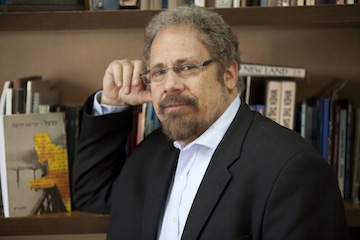
Dr. David Breakstone, deputy chair of the Jewish Agency. (photo from David Breakstone)

Regardless, said Breakstone, “There’s full agreement by the authorities in Israel on whether they are all … zera Israel (of Jewish seed), even if they are not, according to halachah [Jewish law], Jewish.”

The JA is involved with this community because of its Jewish roots. Today, said Breakstone, there are somewhere between 7,500 and 9,000 people from this community who have been waiting anywhere from 10 to 20 years or more to be allowed to make aliyah, all of whom have close relatives in Israel. The JA, he said, is committed to bringing to Israel all Ethiopians who are eligible to come.

Breakstone noted that there are other isolated Jewish communities throughout Africa, South America and India, which he referred to as “the emerging communities of Jews around the world.”

“The Ministry of the Diaspora, a couple of years ago, expressed a great deal of interest in these emerging communities,” he said. “And they put together a very high-level committee that really delved into the issue in depth and came up with the astounding figure of – believe it or not – some 350 million people around the world who have some sort affinity to the Jewish people.

“Affinity is a very vague term,” he cautioned. “In fact, a recent DNA report indicated that 24% of Latin Americans had a significant amount of Jewish DNA…. Most claim ancestry going back to the Marranos, Conversos and Crypto-Jews from Portugal and Spain who had moved to South America and kept various traditions going.

“In Brazil,” he said, “there was supposed to be – they just got notification that it was cancelled – there was going to be the first conference of Jewish communities of Brazil that are not recognized by the established Jewish community there … all of whom are connected through their belief that they are descended from Marranos, Conversos.”

Despite the cancelation of the conference, the Jewish Federation of Brazil is in contact with those communities and is exploring whether or not to recognize them and invite them into the larger community.

“At this point,” said Breakstone, “the JA is also exploring the history in conjunction with the established Jewish community, trying to figure out what to do with those who have not been part of the traditional Jewish establishment and yet, are living life as Jews. That’s quite an interesting phenomenon.”

Uganda is home to a Jewish community that claims no Jewish roots, Breakstone added. In that community, the founding chief was converted by Christian missionaries more than a century ago. And the chief, becoming well-versed in religious studies through the Bible, decided Judaism was the right path.

“Since 2002, they started going to formal conversion, through the worldwide Conservative movement,” said Breakstone. “They now have a local rabbi who studied at one of the Conservative movement theological seminaries … in California and they are fully embraced by the Conservative Jewish world. The JA, too, officially recognizes them as being Jewish. They’ve had a number of people come to Israel through various programs and a number of them are in the process of making aliyah.

“I think the diversity of the different Jewish communities, backgrounds, traditions and cultures that people bring to Jewish life are also something to be celebrated,” he said, “as it broadens the Jewish mosaic.”

Rebeca Kuropatwa is a Winnipeg freelance writer.

Format ImagePosted on May 15, 2020May 14, 2020Author Rebeca KuropatwaCategories WorldTags Beta Israel, David Breakstone, Diaspora, Ethiopia, Jewish Agency
Rewriting memory not sci-fi

Rewriting memory not sci-fi

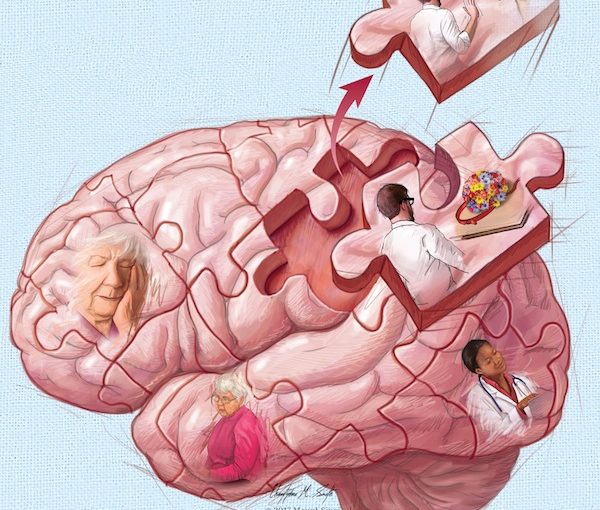
(printed with permission from ©Mount Sinai Health System)

To alleviate trauma victims’ suffering, specialists are working to reduce the emotion attached to painful memories. A leader in this field is Israeli-born scientist Daniela Schiller, who has been living in New York for the last 10 years, working as director of the Laboratory of Effective Neuroscience at Mount Sinai School of Medicine.

“I’m interested in emotions in general, because emotions can limit our freedom,” said Schiller, giving fear as an example. “It’s something that is very limiting. It’s like a dictator is taking over our brain and controlling our emotions, thoughts, decisions and behaviour.”

According to Schiller, we have the ability to change the emotions we experience, including when it comes to memories of trauma. “We have much more flexibility,” she said. “It’s a dynamic process and we can engage in that process.

“We used to think of this as a one-time process – memory creation – wherein you have them forever. In the ’60s, there was a hint that maybe it’s not a one-time process and that, actually, when you retrieve a memory, it might return to an unstable state, something similar to a newly formed memory. Then, it has to be stored again. It was termed ‘reconsolidation,’ because you repeat that process of storage.”

Schiller explained that returning a memory to an unstable state is a built-in mechanism that allows people to mix in new data about an event that happened. This built-in sensibility allows for better predictions in the future – it’s a survival system.

With the reconsolidation of memory becoming better understood, scientists are trying to find ways to use the process in real-life scenarios with trauma victims, including people suffering post-traumatic stress disorder. However, since the process also can be used to manipulate memory in a negative way, there are ethical questions that need to be addressed. At the recent Harvey Weinstein trial, for example, expert psychologist Elizabeth Loftus was called on behalf of the defence to explain how memory can change over time.

“You can easily influence eyewitness testimony when you do an investigation, by the way you ask questions and shake people’s memories,” explained Schiller. “You can plant information, and they will generally believe that this is what they remember.”

Loftus pointed to the fragility of memory, including the neurological basis to that effect, said Schiller. And, in her testimony, Loftus shared that the presence of mind-altering chemicals, like drugs and alcohol, can affect how memory is stored.

The research Schiller is conducting is geared to finding ways to lessen the emotional volume involved. “We want them to understand what happened, but the memories have to be manageable emotionally,” she said. “And the emotional advantage you had in your past or in your childhood, the emotions wear out, they become less and less emotional. Memory changes and, if it doesn’t, that means it’s a problem.”

Schiller speculated that many of the treatments that already exist capture only part of the process. For example, treatment with a therapist could be toward memory activation – meaning, you would be going into your traumatic memory. While you were in that memory, your therapist would work with you to change the emotional tone of it.

“In animals,” said Schiller, “we know the cellular processes that indicate memory is now moving and that it has been mobilized into a stable state where things are now happening and, now, you can either block it with a drug or with behaviour. We have very accurate measurements. But, with humans, we don’t know. We don’t know still what it means if the memory is actively stable in the brain. We speculate that, if you express it and you show emotions, it’s probably unstable. And then, you’d move forward and either get the drug or do behavioural therapy of some sort.

“For example, image extinction, wherein you think about the event and re-script it in a certain way, so it gives you the possibility to rewrite it – there are many different methods. There can be indirect methods that generate interference, like doing something else or using a blocker drug. These are all methods that can reactivate the memory.”

Although research on humans has shown some promise, Schiller said much more research is needed before any treatments can be developed. “We are still looking for the exact way to manipulate it to some degree, especially to tailor it to each individual,” she said.

What Schiller finds promising is that it’s a natural process – one that people practise every day, unconsciously. With that in mind, we should be able to find ways to do it consciously, by thinking about particular memories we want to rewrite and incorporate new information, she said. “Align yourself to reactivate it and try to incorporate it into the present. Again, this is not scientific advice on how to do it – this is what the science sees, the direction you can take.”

In studying the brain patterns of sleeping subjects who have experienced trauma, scientists have pinpointed where the subject’s memory was processing the parts of the trauma that induced emotion, causing bodily changes.

“They are unconscious to some extent, until they reach the conscious level and you have feelings and interpretations,” said Schiller. “That’s a whole different level and whole different process in the brain. So, we do need to look at these various levels, and then we need to adjust our therapy to these levels.

“I think it has deep meaning and I think it’s still within the scientific domain, but it will get interesting when these insights get more and more into the social realm and public awareness … because people tend to think of their memories as accurate, especially their emotional memories. I hope that the more we understand and the more science progresses, the more people will learn about it. And, the more it will change and give us flexibility, freedom, and more tools for change.”

Rebeca Kuropatwa is a Winnipeg freelance writer.

Format ImagePosted on May 15, 2020May 14, 2020Author Rebeca KuropatwaCategories WorldTags Daniela Schiller, health, memory, Mount Sinai School of Medicine, technology

Uniting in significant times

For some, this pandemic has been lonely. For families with children, like mine, it’s a lot of togetherness and work. The offer to listen to deep thinkers from three religious traditions by myself for an hour was a rare chance. I’m busy – homeschooling, working, cooking and constantly being “in community” with my twin 8-year-olds. We’re missing our relatives, school and social gatherings, but I’m working constantly. During this pandemic, I’m almost never physically alone.

For an introvert like me, this has been hard. So, I jumped at the chance to cover a webinar with religious insights on the pandemic.

While we’re physically isolated, we’re also more connected by technology than ever before. This is how moderator Dr. Reinhard Krauss began a Zoom webinar, hosted by the American Jewish University, called “Muslims, Jews and Christians: Coming Together in Extraordinary Times.”

The three panelists were all distinguished educators who do interfaith dialogue. Each also offered their personal take on their religious traditions. Rabbi Dr. Elliot Dorff shared Jewish insights, Sister Deborah Lorentz, a member of Sisters of Social Justice, offered a Catholic perspective and Jihad Turk, the president and founder of Bayan Claremont Islamic Graduate School, spoke about Islam.

Much of the webinar highlighted our faith communities’ shared values, including strong support of science and medicine as a way forward. All three panelists, speaking from their faith traditions, pointed out the risky behaviour of extremists who have chosen to ignore medical advice around social distancing. Whether it’s ultra-Orthodox Charedim gathering illegally in Brooklyn or churches choosing to meet on Easter, the consensus was that these choices to disregard social distancing science were crazy. They were, according to Dorff, against Jewish law in terms of saving a life. Jewish teachings regarding social distancing, illness and separation go all the way back to Leviticus.

The need to stay put and social distance is in Islamic teachings, too. Turk quoted a 1,400-year-old hadith (saying of the prophet Mohammed) that said: “Usama b. Zaid said the Prophet said: ‘If you hear of a plague in a land do not enter it; and if it breaks out in the land where you stay, do not leave.’”

All three faith communities talked about the history of community and our traditional strengths in gathering together. Sister Deborah mentioned St. Benedict’s teachings about living in community together. This, she said, is a longstanding support system that we all need.

However, when we can’t gather, we must find other solutions. Catholics must look inward and find “the Jesus Christ within” to gain strength, she said.

Dorff talked about how, when we as Jews are isolated, we miss the most routine things, like going to a movie theatre or grocery store – and then we must innovate. He used a personal anecdote to explain a Jewish historic pattern, mentioning how, for the first time, he and his wife were using technology to chat virtually with all four of their adult children and their families at once. They’d replaced their usual Sunday afternoon movie outing with a virtual family gathering. This had never occurred to them before the pandemic. In isolation, they missed their routine and, therefore, innovated.

The most painful loss for many of us was not being able to gather physically for big holidays – Passover, Easter and, now, Ramadan. Ramadan is an intensely communal holiday, in which families join every evening for iftar to break their fast. Many Muslims also gather at mosques to break their daily fast, and to pray together. Yet, none of that can happen this year. Yes, there are virtual events, but it’s not the same as being together.

So, people must change their routines and pray at home. Turk spoke of “challenging people to work at home. Develop and refine the art of supplication, reaching out from your heart to G-d to what you are most in need of. Strengthen that muscle.”

All three panelists said almost in unison that things should not “return to normal” when it comes to our great societal inequities. Feeding, clothing and housing those in need were recurrent themes. Sister Deborah spoke about how, despite all the struggles that this experience might cause, it also might offer us great gifts. It’s up to us to do the work and find the gifts we’re being taught.

These reflections provided me with food for thought. I was struck by the notion that during this Ramadan, Muslims must work hard to pray at home and “strengthen that muscle when it comes to opening yourself up to G-d.” Often, when I pray in Jewish communities, we’re reciting the prayers but not doing that introspective work.

Sister Deborah’s notion that we must find the gifts in a challenging time was also a perspective that I struggled to find on my own. She encouraged everyone to use this to make change in the future – to envision the way we can take responsibility to right wrongs and inequities we all see in society.

The webinar ended with encouragements to show our love to our families, our friends and the world. We must return to society with, in Dorff’s words, “a greater appreciation for people who do service for us. Farmers, truckers, medical professionals, teachers – we need each other.”

The hour I spent alone listening to this panel discussion was precious. It’s rare indeed for parents to be alone at all during this pandemic! As a bonus, I also heard ideas common to all three faiths: science, work, social responsibility, community connection, and the need to love one another. All these are rooted in Jewish tradition. It’s well worth considering these common and important ideas as we face our lives in a new, post-pandemic landscape.

Joanne Seiff has written regularly for CBC Manitoba and various Jewish publications. She is the author of three books, including From the Outside In: Jewish Post Columns 2015-2016, a collection of essays available for digital download or as a paperback from Amazon. Check her out on Instagram @yrnspinner or at joanneseiff.blogspot.com.

Posted on May 15, 2020May 14, 2020Author Joanne SeiffCategories Op-EdTags American Jewish University, coronavirus, COVID-19, Deborah Lorentz, Elliot Dorff, interfaith, Jihad Turk, lifestyle, multiculturalism

Blessings during COVID-19

It’s far too easy to think of all the hardships and sacrifices that have come with COVID-19. They’re ubiquitous and abundant. They’re in our face the second we step outside our front door, turn on the TV or go online. A barrage of bad news. A surfeit of sadness. A plethora of pathogens. A deluge of disease. Stop me anytime.

It’s getting to be too much. But that’s beside the point. As Prime Minister Justin Trudeau keeps telling us, “moistly,” and with practised gravitas, “We are all in this together.” Sadly, that is no consolation. There is one thing that does help though: making a habit of feeling grateful. While some of you will shut me down right now as being a cliché, that’s where I’m coming from.

Every day or two, when I go for a short walk in my neighbourhood, I look around and wonder when spring happened. How is it that I missed seeing the nascent buds on the magnolia trees, which are now strutting their huge pink flowers like botanical catcher’s mitts? When did the hydrangeas arrive at the party? And when did everyone start walking around the local park in facemasks and latex gloves?

Nothing I have experienced in my 64 years comes close to this COVID-19 pandemic. Same goes for most of us, I’m sure. There is nothing to compare it to, thank G-d. I am at a loss for synonyms. Only antonyms hit the mark: normal, regular, run-of-the-mill. We will likely never return to what we knew as normal ever again. At least not the same variety. But that’s not necessarily a bad thing. Perhaps we will come to redefine normal in an even better light. I know one thing: most people have become kinder, more thoughtful, more aware. This is huge.

In the face of the overwhelming upheaval, illness and sadness we’ve been witness to, I choose to feel grateful. Because there are always gems among the dross, moments of pure beauty and holiness. I assure you, I’m not some Pollyanna who views life through rose-coloured glasses all the time. However, challenged by what’s going on around us, I need to believe that there is still much to be thankful for in this COVID-19 world. For my part, that includes my health, my husband, my family. As well as these sunny days. The last remnants of snow on our pristine mountains. Less traffic. Clear skies. A shocking dearth of commerce. My pension. Food in the freezer and enough pasta to last until I’m 90. I feel luckier than most.

I can’t begin to comprehend the suffering that’s going on around me. Not only the illness and death that’s affecting families and communities all over the world, but the sheer panic and anxiety from loss of jobs, loss of homes, not enough to eat, wondering what’s next. But I’m shored up knowing that there are still people out there who are putting themselves at risk to help others, by delivering food, picking up medications and, of course, all those frontline workers who turn up every day.

For now, I take comfort in the little things, which, I’m realizing have become the big things. Like a walk in fresh air, and hearing good news of any sort. It doesn’t take much. The drugstore has facemasks and latex gloves in stock – woo hoo! I can finally buy Lysol wipes again – victory! Oh, how perception has shifted. If I’ve learned one thing, it’s that this pandemic has taught us to reevaluate our priorities.

Time and a sense of accomplishment are a whole other story. At the beginning of the pandemic, the pattern of my days rotated around things instead of ideas and concepts. Back then, I thought a productive day was accomplishing this:

  • Buying a box of disposable facemasks at Canadian Tire.
  • Spending two hours and successfully finding a store that sells alcohol swabs.
  • Making fried matzah with cinnamon and honey bananas for my husband.
  • Ironing our laundry.
  • Dusting (two rooms).
  • Successfully (or not?) diagnosing myself with eczema from constant and somewhat obsessive handwashing.

Not much, but at least I did things instead of sitting around binge-watching Netflix all day. As the weeks passed, I began to tip the scales by attending online seminars throughout the day; some from the Rohr Jewish Learning Institute, some from Chabad, and others.

Between running around doing, and sitting and learning, I struggle to distinguish between wasted time and purpose. It seems almost counterintuitive, even ridiculous, to call anything purposeful right now. I mean, how much purpose can we have during a pandemic? Who can we influence for the good? What kind of mitzvot can we do?

Believe me – or don’t – but the answers to those questions are: lots, many, and endless. It takes scant energy to say hello to a stranger on your daily walk and ask how they’re doing. People just need to experience or see one good deed to carry it forward. There are countless ways to do a mitzvah – phone an elderly relative or friend; buy a few extra groceries and give them to someone in need; make a meal for your neighbour and deliver it to their doorstep. Simple. Simple. And simple. Just get outside yourself.

The world, and we humans, are not that complicated. It doesn’t take Herculean effort or huge sums of money to pull someone out of an emotional hole. It simply takes an open heart. We spend countless hours building our bodies so they can withstand the weight of the world. Now it’s time to build our hearts. In fact, there is no better time than right now. So go forth and be your best self – for yourself, and for others.

Shelley Civkin is a happily retired librarian and communications officer. For 17 years, she wrote a weekly book review column for the Richmond Review. She’s currently a freelance writer and volunteer.


Posted on May 15, 2020May 14, 2020Author Shelley CivkinCategories Op-EdTags coronavirus, COVID-19, gratitude, lifestyle

Clearing the decks

In every grouping of humans, there is a leadership structure. That’s the way it works for humans. That’s the way it works for animals, too, when they organize in groups.

Generally, for animals, it’s a combination of smarts and strength that wins the day, with physical strength often being an important part of the equation. The same must have been true for humans in our primitive days, and still is to an extent. In some periods of human history, there were those who were able to establish dynasties, where successive generations achieved leadership by right of birth, sometimes sanctioned by what was called “divine right.” The deity was called in to account for the continuing rule by a family in tribal or national context.

In more recent times, leadership has often been gifted to those who exhibited merit, rather than pure might. Those who were successful at their life tasks were called upon to serve in leadership roles to the benefit of those for whom they took responsibility. Therefore, many in leadership positions are more advanced in age, except in the most competitive arenas.

Well, guess what? There is suddenly a new selector in town! Coronavirus!

Some people are forecasting that we will see as much as three-quarters of the world’s population infected by COVID-19. Try as we might, and even as we may be successful in flattening the curve, most of us will eventually have to face the test of living through an infection by the virus. If we can find a vaccine, that will alleviate the losses. But, for the next year-and-a-half, at least, many of us will have to face the test. If our healthcare systems can sustain themselves under the onslaught, again, the losses will be fewer. If not, the choices will favour the younger and those more likely to survive. What this all means is that those who are older, those who are more likely to be among those in leadership, will be more likely to be among the fallen. Fate has taken a hand in our succession planning.

I am among the somewhat longer in the tooth, facing my 86th birthday. It is apparent that, in the current environment, this epistle may turn out to be my eulogy. Not many in my situation have the opportunity to deliver this kind of message ahead of time.

I have had meaningful work and the satisfaction of making, in my own mind, a worthwhile contribution to the lives of others, of my fellows. I feel my parents would have been proud of me. I had the joy of fathering children who have turned out to be good human beings. I have had the joy of finding and living with the love of my life. Flawed as I am, I am content. I am among the fortunate in this world. I am not abandoning the race but I am prepared for whatever the future holds. I wish the same for all my fellows.

This event we are living through is a feature of any life on any planet in our cosmos. A meteor struck our globe millennia ago, causing a global winter, which doomed the dinosaurs and permitted a mammalian ascendancy. Homo sapiens has prospered. We have survived plagues and influenzas. We have conquered many communicable diseases. We have managed to increase our food production capabilities so we did not starve when our numbers on this planet increased so much that our wise men believed we were doomed. We have continued to consume that arable land for our structures at a rapid pace and yet survive.

We are facing a crisis in the way we pollute our air and our waters, one we have yet to come to terms with. Rising temperatures on our globe may yet reach a point of no return. The pandemic we are facing, as other life forms on our planet seek their place in the sun, may turn out to be the least of the problems we will have to cope with.

In the meantime, this pandemic is clearing the decks of those in the age range I share. I don’t know about you, but it has captured my full attention – I can feel the target on my back. Keep your physical distance, please!

Max Roytenberg is a Vancouver-based poet, writer and blogger. His book Hero in My Own Eyes: Tripping a Life Fantastic is available from Amazon and other online booksellers.

Posted on May 15, 2020May 14, 2020Author Max RoytenbergCategories Op-EdTags aging, coronavirus, COVID-19, health, lifestyle

Posts pagination

Previous page Page 1 … Page 263 Page 264 Page 265 … Page 664 Next page
Proudly powered by WordPress