Skip to content
  • Home
  • Subscribe / donate
  • Events calendar
  • News
    • Local
    • National
    • Israel
    • World
    • עניין בחדשות
      A roundup of news in Canada and further afield, in Hebrew.
  • Opinion
    • From the JI
    • Op-Ed
  • Arts & Culture
    • Performing Arts
    • Music
    • Books
    • Visual Arts
    • TV & Film
  • Life
    • Celebrating the Holidays
    • Travel
    • The Daily Snooze
      Cartoons by Jacob Samuel
    • Mystery Photo
      Help the JI and JMABC fill in the gaps in our archives.
  • Community Links
    • Organizations, Etc.
    • Other News Sources & Blogs
    • Business Directory
  • FAQ
  • JI Chai Celebration
  • JI@88! video

Recent Posts

  • Eby touts government record
  • Keep lighting candles
  • Facing a complex situation
  • Unique interview show a hit
  • See Annie at Gateway
  • Explorations of light
  • Help with the legal aspects
  • Stories create impact
  • Different faiths gather
  • Advocating for girls’ rights
  • An oral song tradition
  • Genealogy tools and tips
  • Jew-hatred is centuries old
  • Aiding medical research
  • Connecting Jews to Judaism
  • Beacon of light in heart of city
  • Drag & Dreidel: A Queer Jewish Hanukkah Celebration
  • An emotional reunion
  • Post-tumble, lights still shine
  • Visit to cradle of Ashkenaz
  • Unique, memorable travels
  • Family memoir a work of art
  • A little holiday romance
  • The Maccabees, old and new
  • My Hanukkah miracle
  • After the rededication … a Hanukkah cartoon
  • Improving the holiday table
  • Vive la différence!
  • Fresh, healthy comfort foods
  • From the archives … Hanukkah
  • תגובתי לכתבה על ישראלים שרצו להגר לקנדה ולא קיבלו אותם עם שטיח אדום
  • Lessons in Mamdani’s win
  • West Van Story at the York
  • Words hold much power
  • Plenty of hopefulness
  • Lessons from past for today

Archives

Follow @JewishIndie
image - The CJN - Visit Us Banner - 300x600 - 101625

Category: News

שמו של רחוב יהדות קנדה שונה לרחוב אריק איינשטיין

שמו של רחוב יהדות קנדה שונה לרחוב אריק איינשטיין

image - interesting in the news 14: Arik Einstein, Boeing 787, diamond mining, talking taxi meters

Format ImagePosted on January 21, 2015January 20, 2015Author Roni RachmaniCategories עניין בחדשותTags accessible taxis, airplanes, Arik Einstein, Boeing, Canadian Jewry Street, David Yosef, diamond mining, Dreamliner, oil prices, Or Yehuda, talking meters, אור יהודה, אריק איינשטיין, בואינג, דוד יוסף, הדרימליינ, לכריית יהלומים, מונים מדברים, מחירי הנפט, מטוס, רחוב יהדות קנדה
More Canadas needed

More Canadas needed

Israeli Ambassador to the United Nations Ron Prosor speaks in Vancouver on Feb. 3 and in Victoria on Feb. 4. (photo from Ron Prosor via Jewish National Fund Vancouver)

Israel’s ambassador to the United Nations says Canada’s foreign policy is at the “heart of the world’s moral compass.”

In an email interview with the Jewish Independent, Ambassador Ron Prosor credited Canada as being a voice of reason and justice.

“Prime Minister [Stephen] Harper and Foreign Minister John Baird have proven time and again to be true friends to Israel,” Prosor said. “They are at the heart of the world’s moral compass.… Canada is standing with Israel as we stand on the frontline in the battle against terror. They are often the first to denounce the anti-Israel bias and stand up as the voice of justice and reason. There are many examples of this bond: Canada was a strong proponent of the effort to make Yom Kippur an official UN holiday; it partnered with us to organize the upcoming special session in the General Assembly on antisemitism; and was one of the few countries to condemn the Syrian delegate … for comparing Israel’s policy to that of the Nazis.”

Prosor spoke to the paper in advance of his visit here in early February, hosted by Jewish National Fund of Canada, British Columbia. He will speak Feb. 3 in Vancouver at Congregation Beth Israel, at 7:30 p.m., and in Victoria the following day, at 7:30 p.m., at Congregation Emanu-El.

Prosor criticized efforts by the Palestinian Authority to gain recognition at the UN and at the International Criminal Court, saying it is an effort to avoid a negotiated resolution to the conflict.

“The Palestinians have found every possible opportunity to avoid direct negotiations with Israel,” he said. “They have engaged in a never-ending string of political games, literally shooting in all directions and missing the real target. The fact of the matter is that their habit of bypassing negotiations by taking unilateral action and blaming everyone but themselves will only move us further from peace. It’s time for the Palestinians to aim higher and find constructive solutions – beginning by engaging in meaningful dialogue.”

The United Nations is the body that, in 1947, passed the Partition Resolution intended to create a Jewish and an Arab state in Palestine. Israel’s critics routinely note that the very agency that is responsible for its existence is repeatedly on record condemning Israeli policies. Prosor responds that the UN is not the same body it was nearly 70 years ago.

“The landscape of the UN has changed dramatically since its founding,” Prosor said. “Today, fewer than half of its member states are democracies. The halls of the UN used to ring with calls for human rights and human dignity; today, they ring with voices demonizing and delegitimizing the Jewish state. This year, the UN passed 20 resolutions condemning Israel. In comparison, the world’s worst human rights abusers – Iran, Syria, and North Korea – each received one condemnation. This anti-Israel bias pervades the UN system.”

Many of the UN’s most vociferous condemnations of Israel emanate from the UN Human Right Council (UNHRC).

“For years, the Human Rights Council has singled out Israel for condemnation,” Prosor said. “I have to note that some of the world’s most repressive regimes, including Saudi Arabia and Cuba, are members of the Human Rights Council.”

Saudi Arabia is currently in the international spotlight for carrying out the first of 20 court-ordered floggings of democracy blogger Raif Badawi. After Friday prayers a week ago, Badawi, who created the blog Free Saudi Liberals, was lashed 50 times over the course of 15 minutes in a public square in front of a mosque in Jeddah. He is scheduled to receive the same punishment for a total of 20 successive Fridays, or 1,000 lashes. This is in addition to his sentence of 10 years in prison.

Despite this immediate example and other atrocities perpetrated by elected members of UNHRC, the body’s attentions are overwhelmingly focused on the Jewish state, Prosor said.

“To date, there have been 22 emergency meetings of the HRC to deal with situations around the world – 33 percent of them dealt with Israel,” Prosor said. “Additionally, Israel is singled out during regular sessions. Article 4 of the Council’s agenda examines the abuses of every single country in the world, except one. Israel – and Israel alone – has its own permanent place on the agenda: Article 7. This isn’t just a double standard, it’s a triple standard. One standard for democracies, one standard for dictators and a whole other impossible standard for Israel.”

“Another example is the UN’s UNISPAL [UN Information System on the Question of Palestine] website,” Prosor said. “It has advertised ‘apartheid tours’ in Israel and promoted a petition calling for the Canadian prime minister to cancel a visit to Israel.

“The UN could be playing a more constructive role by investing less time targeting Israel and more time advancing peace and security, economic growth, women’s rights, minority rights and so on,” he said. “None of this will be possible so long as the institution is held hostage by the world’s most repressive regimes.”

Though he is the lead representative of Israel at an organization that sometimes seems to have condemnation of the Jewish state as its primary mission, Prosor insists he is not intimidated.

“I walk the halls of this organization tall and proud of my extraordinary nation, one of the freest and more democratic countries on earth,” he said. “At the UN, I feel it is important to show the world what Israel is about beyond our conflict. We have so much innovation and ingenuity to share in agriculture, medicine, high-tech, education and more. We are a nation of just eight million that has produced 12 Nobel prizes, that sends satellites into space, puts electric cars on the road and develops the technology to power everything from cellphones to solar panels to medical devices. I feel privileged to represent Israel and the Jewish people.”

Prosor said he is bringing a message to Canada that emphasizes the parallels between the two countries.

“Israel and Canada share the same value system – we believe in democracy, justice, human rights and peace,” he said. “Together, we are standing firm amidst the stormy seas of global diplomacy to make the world a more peaceful place. The UN needs more countries like Canada – countries that are willing to take a stand and defend our common values.”

Pat Johnson is a Vancouver writer and principal in PRsuasiveMedia.com.

Format ImagePosted on January 16, 2015January 16, 2015Author Pat JohnsonCategories LocalTags Israel, Jewish National Fund, JNF, Ron Prosor, UN, United Nations

Israeli representative at UN

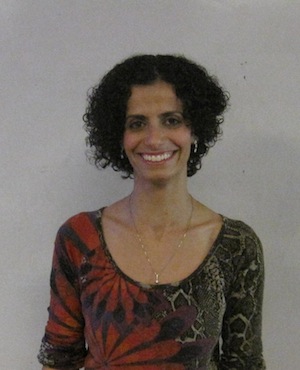
Rasha Athamni was the first Israeli selected to represent the nation as a youth delegate to the United Nations General Assembly in New York, serving during the 69th session from September through November 2014. The youth delegates program was started 1981 but, until then, Israel had not chosen to participate.

photo - Rasha Athamni was the Israeli youth delegate to the 69th session of the General Assembly, which ran from September through November 2014
Rasha Athamni was the Israeli youth delegate to the 69th session of the General Assembly, which ran from September through November 2014. (photo from undesadspd.org)

Athamni, 29, was raised in the Israeli Arab town of Baka Al-Gharbiyah, the youngest of nine children and the first in her family to graduate high school and university; her parents do not read or write. She earned a bachelor’s degree in psychology and English literature from Jerusalem’s Hebrew University and is currently working on her master’s in English literature. She also guides tours of Israel’s parliament, the Knesset. In her first interview with media, Athamni spoke with the Media Line.

TML: What prompted you to apply to become a United Nations youth delegate … and on behalf of the state of Israel, no less?

RA: Ever since I was a child, my biggest dream was to become a member in this UN society because that’s the ideal, the universality, people go out and help others that are in need. I am a citizen of Israel and I have a right to apply and to go through the interviews, and that’s what I did. When I got the acceptance letter, I was just thrilled. Hundreds applied after there was a call for applicants published on the Ministry of Foreign Affairs’ website. Only 12 or 13 were invited to go through the interview and I was one of them. And then, after the final decision, I got be the first and only youth delegate for Israel for the UN.

TML: Is there a distinction between Israeli Arabs and Palestinians living in Israel and, if so, what is the difference?

RA: Well, it’s a bit complicated – that’s the best adjective that I can use to describe it. It’s a question every Arab citizen in Israel has to answer sooner or later. On the one hand, my mother’s side is Arabic; my parents are Arabs. On the other hand, I live in the centre of Israel and I have an Israeli ID and passport. But, I’m not Jewish, so it’s very complicated. You really need to establish a sense of yourself that is solid enough to represent Israel, especially at the UN.

TML: How did you end up where you are today, studying for a second degree at Hebrew University?

RA: I was primarily motivated by my mother because, ever since I was a little kid, she told me it was very important for me to go to school because that would be the best [chance] that I would have in our society and that I should appreciate that because she herself couldn’t do it. All she really wants in life is that one of her kids becomes a doctor. I didn’t become a doctor. That was disappointment number one, but I did get a degree in psychology and English literature from the best university in Israel, and now I’m doing my master’s in English literature.

TML: How did you get involved with the Israeli government?

RA: About two years ago, the students association at the Hebrew University was looking for a coordinator for a coexistence project that brought together eight Jewish and eight Arab Israeli women students. I applied and got the job. It was a very fascinating year for me and for each one of those students that participated.

It’s very funny when you think about it. Even though they study the same courses and they go to the same classes, you’d see the majority of Jewish students would sit on one side of the hall and the minority on the other side, so there’s this psychological barrier between them. After they got to learn about each other and meet each other, then the hate recedes. That’s beyond nationality, ethnicity or religion. That’s when that barrier just disappeared and they started to sit and study with each other. The Jewish girl would go and teach the Arab girl Hebrew and the Arab girl would go and teach the Jewish girl English.

One of the girls used to work as a tour guide in the Knesset. I needed to support myself, so I got information from her and I applied for the job, and I still give tours in Arabic, Hebrew and English.

TML: How did your family react to that?

RA: My family is very apolitical. They grew up in a society where it was taboo to talk about politics because for them that meant either jail or exile. For me, now, that sounds like paranoia, being afraid to express your own opinion because of your background. There is some truth in that, but they just took it to the extreme. My family was really scared that my being involved in politics or social change or anything that has to do with the state of Israel could mean the demise of my image in my own community, and that’s a fear that they’re still experiencing. My mother, every time I call her, tells me that I shouldn’t do that and it’s never too late back out.

TML: Was there backlash from other Arabs or from Arabs who happen to be of Israeli descent?

RA: At the UN, no. They’re all very diplomatic. Whenever I introduced myself, they said, “Good job as the youth delegate of Israel,” even though that person was from Jordan, Yemen or Egypt. It just didn’t make any sense because they would attack Israel in the committee for human rights but they had no problem talking to an Israeli in the corridors.

TML: You said you represented Israel, responding to different discussions that go on in the United Nations.

RA: After I was picked to represent the youth of Israel, I had a two-month training period at the Foreign Ministry, then traveled to New York for three months, where my job was to summarize the meetings of the committee on human rights. I attended informal briefings at which UN delegates would discuss the terms and wordings of the resolutions, and would also go to events that the delegation would be invited to.

My most prominent moment came when I delivered a speech on behalf of the youth of Israel. This was at the opening of the first meeting of the human rights committee. When it was time for the youth delegation to speak, they spoke about the rights of the youth, why is it really important. Youth belong to a very strange category because they are not children and are not yet adults, so we tend to disregard their needs. A person needs to get a first degree and a second degree in order to just have the opportunity to apply for a job. These are just some of the topics that we covered, along with health, gender equality and education, which is very basic in our country but in other countries is a goal to strive for.

TML: Two of your passions are human rights and social responsibility. What issues were most challenging?

RA: Whenever I attended meetings of the committee for human rights, I had to sit in Israel’s space and, just sitting there, I felt terrified. On my first day, to my left there was Iran. In front of me was Egypt and Jordan, and behind me was Qatar. I felt what Israel feels like at the international level, being under attack even though this was my first experience hearing the attacks. What was interesting for me was how every country would attack Israel disregarding what they do within their own borders. You’d hear the delegation from Syria attacking Israel for violations on human rights, which doesn’t make much sense. A country representing their own people needs to address their own problems rather than pretending that everything is fine within their own borders, and then attack[ing] another country and join[ing] with others who are against it. That country most of the time happens to be Israel.

TML: As an Israeli citizen, how did that make you feel?

RA: It didn’t feel fair. There are always two sides to a conflict. It seemed that one side is more represented than the other side – that other side is Israel. I just felt that someone needs to be given a floor to express and talk about [the] good things that Israel is doing: the humanitarian assistance that Israel is giving to Gaza and the West Bank. There is a project called Save a Child’s Heart. Every Tuesday, a child from Gaza goes to Israel for heart surgery. There are also negatives, but you can’t just focus on that. There is much hope that is being missed when everyone focuses on the bad stuff.

Read more at themedialine.org.

Posted on January 16, 2015January 14, 2015Author Felice Friedson TMLCategories IsraelTags Israel, Rasha Athamni, UN, United Nations
Help soldier-students

Help soldier-students

Canadian Friends of Hebrew University (CFHU) is raising money to sponsor soldier-students pursuing their undergraduate degrees.

The Jewish calendar is full of remembrances and commemorations underscoring that, as a people, we find value both spiritually and culturally in reflecting and celebrating regularly. This year, the Hebrew University of Jerusalem marks 90 years of post-secondary education and research. Almost a quarter of a century prior to the establishment of the state of Israel,

Hebrew U was laying the foundations for a university, to facilitate higher learning and produce an educated population to build a well-rounded society.

Ninety years is a milestone for any institution. Given the difficult circumstances in which Hebrew U was established, there is even more cause for celebration. To honor this achievement, Canadian Friends of Hebrew University (CFHU) is raising money to sponsor soldier-students pursuing their undergraduate degrees who face financial insecurity as a result of having had to return to active duty with their units instead of earning money to pay for their education this past summer.

More than 1,000 Hebrew U students, many of them from combat units, had their lives put on hold during the Israel-Gaza conflict last year. All of these students had already delayed their entrance into university for three or four years to serve in the Israeli army. Finished with army service, they finally had the opportunity to attend Hebrew U and pursue their educational aspirations. However, during the summer months when they were working to fund their studies, they were called up to join their units and engage in active duty.

CFHU has recognized a tangible, significant way to help these students. Their duty to their country has interrupted their ability to finance their academic interests and CFHU is helping to eliminate the financial stress with scholarships to undergraduate students.

For the Soldier-Student Scholarship fundraising campaign, CFHU has formed a partnership with the elite undercover operation unit of Duvdevan. What better way to recognize the 90th anniversary of Hebrew U than to help students who protect Israel? The campaign will culminate in a celebratory event on Sunday, May 3, at Beth Israel Synagogue. The evening will feature a presentation from Duvdevan soldiers and will give the community an opportunity to understand what it means to be a soldier-student.

For more information about the campaign and the May 3 event, contact the CFHU office at 604-257-5133 or visit cfhu.org/news/the-soldier-student-scholarship-campaign.

Format ImagePosted on January 16, 2015January 14, 2015Author Canadian Friends of Hebrew University Pacific RegionCategories NationalTags Canadian Friends of Hebrew University, CFHU, Duvdevan, Gaza, Israel, soldier-student
Auschwitz survivors at 70th

Auschwitz survivors at 70th

(photo by Alexander Vorontsov via Auschwitz-Birkenau State Museum)

More than 100 Auschwitz survivors from at least 17 countries will travel to Poland to participate in the observance of the 70th anniversary of the liberation of the Nazi concentration and extermination camp Auschwitz on Jan. 27, on the occasion of International Holocaust Remembrance Day. The official event will be organized by Auschwitz-Birkenau State Museum and the International Auschwitz Council. World Jewish Congress and USC Shoah Foundation – The Institute for Visual History and Education will be among the organizations supporting this commemorative event.

The main commemoration will take place in front of the Death Gate at Birkenau. The ceremony will be under the high patronage of Poland’s President Bronislaw Komorowski. Countries from around the world will be sending official delegations, some of which will include Auschwitz survivors.

“This anniversary is crucial because it may be the last major one marked by survivors. We are truly honored that so many of them, despite their age, have agreed to make this trip,” said Ronald S. Lauder, president of World Jewish Congress. “Few moments in the drama that was World War II are more etched in our collective memory than the day Red Army troops came upon, perhaps, the greatest evil of our time.”

“We have to say it clearly: it is the last big anniversary that we can commemorate with a significant group of survivors,” said Dr. Piotr M.A. Cywinski, director of the Auschwitz-Birkenau State Museum. “Until now, it has been them who taught us how to look at the tragedy of the victims of the Third Reich and the total destruction of the world of European Jews. Their voices became the most important warning against the human capacity for extreme humiliation, contempt and genocide.”

“On this special day, we want to show the survivors and the whole world that we, the postwar generation, have matured to our own responsibility for remembrance,” Marek Zajac, secretary of the International Auschwitz Council, added.

Lauder praised the efforts to preserve the site where at least 1.1 million people, most of them Jews, were murdered within less than five years. “Twenty-five years ago, when I saw the stunning truth of Auschwitz for the first time, every part of the former camp was disintegrating. Now, after a monumental effort, it has been preserved for future generations, and that is important in an age of Holocaust deniers.”

Twenty years ago, Lauder, along with Kalman Sultanik and Ernie Michel, raised $40 million from 19 countries in order to ensure that what remained in Auschwitz-Birkenau forever be preserved and bear witness for future generations. Lauder also financed the creation of the conservation laboratory at the Auschwitz Memorial, which preserves every shoe, every document, and every building that remains at the site.

The financing of the long-term preservation is continued by the Auschwitz-Birkenau Foundation. It was created in 2009 to collect €120 million ($151 million US) for the perpetual capital that will finance conservation work and preservation of all authentic remains of the former Auschwitz camp. To date, 32 countries have contributed more than €102 million ($128 million US). The foundation has started the 18 Pillars of Memory campaign to raise the remaining €18 million and it hopes to be able to announce the completion of the project on the day of the 70th anniversary of liberation.

Ahead of the event, World Jewish Congress has located Auschwitz survivors from at least 17 countries who are able to travel to Poland, especially from countries from which Jews were deported to Auschwitz during the war and from countries where significant numbers of survivors settled after the Shoah.

With the help of archivists from the Auschwitz-Birkenau State Museum, USC Shoah Foundation has identified the children from the historic photo seen above, taken by Red Army photographer Alexander Vorontsov who, in 1945, documented the liberation of the death camp. The surviving children are now between the ages of 81 and 86 and have been also invited to participate in the official commemoration.

“Faced as we are with the loss of living witnesses,” said Stephen Smith, USC Shoah Foundation executive director, “it is imperative we honor them and take their stories with us into the future so those who come after us will have no excuse to let such atrocities happen again. Survivors speak not only for themselves, but for the millions whose voices were violently silenced.”

Posted on January 16, 2015January 14, 2015Author Auschwitz-Birkenau State MuseumCategories WorldTags Auschwitz, Auschwitz-Birkenau State Museum, Holocaust, survivors, USC Shoah Foundation, World Jewish Congress
מרדכי קידר מגיע לוונקובר

מרדכי קידר מגיע לוונקובר

image - interesting in news 13 - Kedar lecture, baby left for dead in Winnipeg

Format ImagePosted on January 14, 2015Author Roni RachmaniCategories עניין בחדשותTags Bar-Ilan University, Middle East, Mordechai Kedar, Robert Keno, Temple Sholom, בבר-אילן, טמפל שלום, מזרחן, מרדכי קידר, רוברט קנו
Dosanjh courage recognized

Dosanjh courage recognized

Ujjal Dosanjh will receive the inaugural Civil Courage Award at the 10th annual Raoul Wallenberg Day on Jan. 18. (photo by Patrick Tam)

In honor of the 10th annual Vancouver Raoul Wallenberg Day, the Wallenberg-Sugihara Civil Courage Society will present its inaugural Civil Courage Award to the Hon. Ujjal Dosanjh on Jan. 18.

WSCCS was formed by members of the Swedish and Jewish communities in 2013, with the goal of continuing the legacy of the Wallenberg Day in Vancouver and commemorating Raoul Wallenberg, Chiune Sugihara and others like them through the establishment of an award for civil courage. The award is given to an individual associated with British Columbia who has helped improve the lives of others and society while defying unjust laws, norms, conventions or unethical behaviors of the time and place. The choice of Dosanjh as a recipient was unanimous in the panel of three, which includes Thomas Berger, a Canadian politician of Swedish descent and retired Supreme Court justice, Georgia Straight publisher Dan McLeod, and Thomas Gradin, honorary Swedish consul, former hockey player and a scout for the Canucks. Dosanjh was selected as the award recipient “for his actions as a critic of sectarian violence and his advocacy for social justice, often at great risk to his personal safety. As a critic of extremism and champion of liberal democracy he has been a great benefit to Canada and an inspiration to us all.”

Dosanjh is well known as Canada’s first Indo-Canadian provincial premier and for his roles as attorney general, federal health minister and a member of Parliament until 2011. Back in 1985, after the Indian army attacked the Golden Temple in the Punjab to flush out Sikh extremists, Dosanjh warned the Canadian government that sectarian violence could spill over into Canada. His warning fell on deaf ears. Four months later, on June 23, 1985, Air India Flight 182 was bombed, killing 329 people, 280 of whom were Canadian. In the wake of this tragedy, Dosanjh consistently and publicly denounced violence as a means of establishing an independent Sikh homeland in India.

As a result these calls, Dosanjh has been subjected to death threats since the 1980s, he was attacked and severely beaten with a metal bar outside his law office and he had a Molotov cocktail thrown into his constituency office in 1999. He recalls a Facebook page set up in 2010 to discuss openly how to execute his murder. Despite these harrowing encounters, Dosanjh said he has always felt “safe enough” living in Canada. “Canadians are a peace-loving people who respect each other’s right to speak, no matter how distasteful one’s remarks might be,” he said. The threats subsided after 2010 but by then he had learned to live with them. “You can’t let these threats beat you into fear,” he added.

In an interview with the Independent, Dosanjh said he was “totally humbled” when he learned he would be receiving the award a few weeks ago. Though he’d not heard of the WSCCS, he was familiar with the story of Raoul Wallenberg. “To be honored in his name is something I could never have imagined in my wildest dreams,” he confessed. “I’m extremely honored to be associated with Wallenberg’s name, though what he did was under much more difficult circumstances and, therefore, all the more important. Still, to be acknowledged in your own lifetime for things you stood for, that some may find disagreeable, is great because it’s good to have friends.”

Dosanjh is presently writing a memoir and said though he misses the “gut and thrust” of politics, he has no longing for the weekly commutes to Ottawa and, prior to that, to Victoria.

WSCCS will present the award at the Wosk Auditorium at the Jewish Community Centre of Greater Vancouver on Sunday, Jan. 18, 1:30 p.m. B.C. lieutenant governor, the Hon. Judith Guichon, will attend the ceremony, which will include a screening of the film The Rescuers by Michael King, which tells the story of 13 heroic diplomats who saved tens of thousands of lives during the Second World War. Admission is by donation.

Lauren Kramer, an award-winning writer and editor, lives in Richmond, B.C. To read her work online, visit laurenkramer.net.

Format ImagePosted on January 9, 2015January 8, 2015Author Lauren KramerCategories LocalTags Ujjal Dosanjh, Wallenberg-Sugihara Civil Courage Society, WSCCS
Join Kosher Lust revolution

Join Kosher Lust revolution

Rabbi Shmuley Boteach will speak at the Rothstein Theatre on Jan. 17. (photo from Shmuley Boteach)

Rabbi Shmuley Boteach will be in Vancouver later next week to talk about his most recent book, Kosher Lust: Why Love is Not the Answer. Boteach, a rabbi, author, television host, pundit and in-demand speaker who has been called “America’s Rabbi,” is being presented by the North Shore Jewish Community Centre/Congregation Har El with support from the Jewish Federation of Greater Vancouver. His talk will be followed by a Q&A and a meet and mingle over refreshments.

Boteach described Kosher Lust as “a revolutionary book,” in an interview with the Jewish Independent. “Most books about marriage, about sex or about romance, are about how you can create love in a relationship, how you can increase love. This book argues that love has been the problem all along. Why do we have such a high divorce rate? Why, if [marriages] do work, they work on a practical level but not on a level of deep desire? And my book argues the reason is that love has always been the problem.” He stressed, “The foundation of a marriage is supposed to be lust and desire, rather than love and friendship.”

In recognizing that “we live in a modern world where marriage as an institution is in common decline,” Boteach said he is “trying to make arguments for sustaining, enhancing and promoting marriage.” The bestselling author said his newest book “gives us three rules of lust. Number one, unavailability; number two, mystery; number three, sinfulness.” The book “teaches couples how to bring the three rules of erotic lust into their marriages and relationships.” These three rules of lust are from the Song of Solomon on which, he explained, the book itself is based.

Untangling the first rule, Boteach said that unavailability is “what we call erotic obstacles, erotic impediments [or] things which frustrate desire.” These include “things that get in the way of desire … that actually increase desire,” he said.

A problem with modern marriage “is that there is no mystery,” he said. “Marriages today are based on openness and a lack of mystery, and constant availability…. I actually argue a different kind of marriage.”

When asked how an ideal marriage would look, Boteach said, the “whole belief that marriage is about this constant openness and constant availability is incorrect.” Jewish law, he suggested, argues instead “for ‘sinful’ marriages. Notice that husband and wife become forbidden to each other for a period [of time] every month [during niddah]. Then, you have the element of sinfulness under the laws of modesty that are all about things being concealed, mysterious, covered, not just always available.”

Are there dangers or limitations to lust? “From a Jewish perspective, all things in life are neutral, and it really depends on their application as to whether they are positive or negative,” he said.

“There is unkosher lust,” Boteach added, “like what a husband will feel towards a woman who is not his wife. Unkosher lust is the kind of lust that is generated by pornography and the objectification of women and demeaning women.” Kosher lust, however, “like the desire that a husband has for his wife and that a wife has for her husband, is a beautiful thing and a ‘kosher’ thing.”

His book contends that “women are as lustful as men are,” Boteach explained. “One of the central arguments in my book is that women are much more sexual than men, and female sexuality has been belittled in our time and prior to our time.” Women “lust in a uniquely feminine way … in a much deeper more emotional way,” Boteach suggested, while men “lust in a uniquely physical way, that is often very two-dimensional, very predictable, very monotonous and very boring.”

The book has received several positive reviews in mainstream media, but also a critical review in Haaretz, Boteach said. In his opinion, this is “no coincidence … because Jews are the ones who always have an issue with a rabbi giving them advice about sex, because so often we belittle our own religion.”

Boteach continued, “I am not looking to write specifically to a Jewish audience. I am writing to a mainstream audience…. Jews have to learn how to assert their Jewishness in the midst of a multicultural society. And that’s what I do … I’m promoting Jewish identity, which can be affirmed and asserted anywhere and everywhere. We can’t create ghettoized Judaism that is only affirmed in the presence of other Jews. But I also believe that the universal teachings of Judaism are universally applicable and, therefore, it’s not just for Jews.”

The prolific author – he has published 30 books to date – will continue to focus his writing on relationships, but he is also continuing his foray into television with a new pilot for a show to be broadcast in Canada on Vision TV.

Boteach will speak Jan. 17, 7 p.m., at the Norman and Annette Rothstein Theatre. Tickets are available online at harel.brownpapertickets.com.

Zach Sagorin is a Vancouver freelance writer.

Format ImagePosted on January 9, 2015January 8, 2015Author Zach SagorinCategories LocalTags Har El, Kosher Lust, Rothstein Theatre, Shmuley Boteach
How to identify skin cancer

How to identify skin cancer

Dr. Victoria Taraska (photo by Rebeca Kuropatwa)

On Dec. 11, the National Council of Jewish Women of Canada, Winnipeg section, held an information session at the Rady Jewish Community Centre about recognizing skin cancer. The talk, part of the section’s Women’s Health Series, was given by Dr. Victoria Taraska, a dermatologist at the Derm Centre.

Taraska received her doctorate in medicine at the University of Manitoba before doing a fellowship in dermatology at the University of Ottawa. She has been practising in Winnipeg since 1998.

In her presentation, Taraska gave many examples, including an array of images, to give the approximately 60 lecture-goers a better idea of how to recognize the three main forms of skin cancer.

“Luckily, women do find most cancers for themselves or someone in their family, because they listen to what we tell them, are concerned about their health, and do get checked,” said the doctor. “Men don’t fare that well. They don’t do as well. We [women] are the nags in the family, right? We definitely save their lives and our lives, too.”

The three main forms of skin cancer Taraska discussed were basal cell carcinoma, squamous cell cancer and melanoma. Although other skin cancers exist, they are rare, she said.

Every year in Canada, 80,000 skin cancers cases are diagnosed. In the United States each year, there are two to three million. “It’s a big burden and a lot of health-care dollars, as well,” said Taraska. “A lot of it could be prevented early by screenings and watching your skin.”

Taraska went on to say that there are about 6,500 cases of reported melanoma a year, which is a cancerous form doctors “most like to avoid,” she said. “Basal cell carcinoma isn’t that aggressive and it’s highly curable if diagnosed early.”

Sun protection is critical in preventing skin cancer, with ultraviolet rays being the most important element to block.

“Even though there are people who are more at risk, anyone can get it,” said Taraska. “Black people can get it, white people who are fair, blond, blue eyed … anyone can get skin cancer. Everyone needs to protect themselves from the sun, or even from tanning beds…. If you have a lot of moles, you might be at higher risk. Anyone who’s on immune suppressant medication has a higher risk for skin cancer. Squamous cell cancer is actually the second highest cause of death in transplant patients, with infection being number one.”

UVA vs. UVB protection

A UVA warning relates to aging, while a UVB warning relates to burning, explained Taraska. “While both are bad and are related to skin cancer, most sun protection products focus on blocking UVB,” she said. “When you’re in your car and you think you’re safe, you’re not. UVA can go through the windows, though the physicality of the window blocks UVB.”

Even when using sunscreen, we are not always protected, as the level of protection noted on sunscreen products refers to UVB. “There’s no number for UVA,” she noted.

Regardless, Taraska is an avid proponent of sunscreen use, applying more of it and more often then you might think is needed. “The way we apply a SPF 15 probably ends up being only an eight or a four, because it’s only a 15 if you can see the sunscreen on your body. But, if you’re putting it on properly, a 15 does block 94-96 percent. We never get up to 100 percent.

“With a 30 or a 50, you have a little play, but if you only buy a 15, you don’t have that. For people who break out from sunscreen, there are sunscreen powders. For those not wanting to use chemical-based sunscreen, they need to understand that the chemical-free products use physical sun blockers – like zinc and titanium – and, as such, these creams are meant to stay on the surface of the skin and will be more visible when applied properly (stay white).

“Regardless, applications need to happen every couple of hours when in the sun for an extended period of time. A bottle of sunscreen shouldn’t last more than a week if you’re on a beach.”

About UV

UV changes some of the nucleic acids in the cell’s DNA. It can change the nucleic acids of tumor suppressors or tumor stimulators.

“If your tumor suppressors are insufficient, you’re not going to be able to clean up the damage,” said Taraska. “If you knock out a couple of the workers, you’ll have a problem healing the skin cancer. We’re always producing skin cancer cells – actually daily – but our body usually has checks and balances to get rid of the cancers, to get rid of the duds.”

There should always be a balance. Some people genetically have deficiency in their suppressors. “When you see families that have many cases of skin cancer, they likely have a deficiency of the P53 enzyme,” said Taraska.

While we can now test for the P53 enzyme, it would be too costly to test everyone. “We should all be checking ourselves regularly, whether we have the family history or not,” she said.

While the UV index is a lot lower in the winter, if you’re a dog walker, skier or jogger, you can still get sunburned, so sunscreen is still important. As for getting your fill of Vitamin D during the winter, Taraska believes that it should be taken in via a supplement, noting, “It’s easy to take 1,000 units of Vitamin D.”

Detection and treatment

While basal cell carcinoma is the most common form of cancer, it is also often easily curable. “It shouldn’t really kill or harm anyone who is reasonable,” said Taraska. “They are slow growing. No one … should die from it.”

Signs to watch for include a pink scaly patch, an open sore that will not heal, or a shiny lump or a scar that is new or changing. Although the nose, for example, is a common place to see such signs, they can appear anywhere.

“For those that have gone aggressive or deeper, there is an oral medication that we can use that does very well for patients with more aggressive basal cell carcinoma,” said Taraska.

Squamous is more common in connection to being sun exposed, but again, it can happen anywhere. “Transplant patients are the highest risk,” noted Taraska, “but, if it’s caught early, it can be treated with cream, scraped off by a doctor or cut out in surgery.”

Melanoma is more serious. “We’re not cavalier with these melanomas,” said Taraska. “We like things to be done quickly. A normal mole is nice, round and even. If you divide a mole into quarters, each quarter should look roughly the same. If it doesn’t, then we worry.

“If it’s shaped like a country with irregular borders, that’s when you want to see a doctor, or if the mole has more than one color…. They are usually really flat. They will grow within the skin first, spread along the surface first. Bigger than the head of a pencil eraser is a sign.

“The risk of getting melanoma is about 0.08 percent, so it’s fairly low in the population and 90 percent are curable (mostly from early detection).”

Rebeca Kuropatwa is a Winnipeg freelance writer.

Format ImagePosted on January 9, 2015January 8, 2015Author Rebeca KuropatwaCategories NationalTags health, National Council of Jewish Women of Canada, NCJW Winnipeg, skin cancer, Victoria Taraska

Federation sustains success

As the 2014 Jewish Federation of Greater Vancouver annual campaign draws closer to a record $8 million mark, preparations are well underway to build on that success in 2015.

Cindy Behrmann, campaign director since 2012 and one of the primary drivers behind this year’s campaign will be heading off to a well-deserved retirement. Over the past few months, Federation was hard at work reviewing the financial resource development (FRD) department in advance of Behrmann’s departure at the end of December and has announced the following changes.

photo - Michelle Pullan
Michelle Pullan (photo from Jewish Federation of Greater Vancouver)

Michelle Pullan, Federation’s women’s philanthropy director since 2011, will assume the role of campaign director. Pullan has considerable experience in philanthropy and fund development, having enjoyed success as a fundraising manager at Ballet BC and director of development at Vancouver Heritage Foundation before joining Federation’s FRD team. She has taken on leadership and volunteer roles on behalf of Jewish schools in the community and has served on the boards of Camp Solomon Schechter and Camp Hatikvah.

Campaign coordinators Eva Bach and Anna Vander Munnik have been promoted to the role of campaign managers. Vander Munnik, with Federation since 2011, will focus her effort on managing the men’s philanthropy division, while Bach, who joined Federation in 2013, will manage the women’s philanthropy portfolio. Also returning in January from maternity leave will be director, marketing and communications, Becky Saegert.

Led by associate executive director Marcie Flom, the FRD team is well positioned to capitalize on and sustain the success enjoyed in 2014.


Posted on January 9, 2015January 8, 2015Author Jewish Federation of Greater VancouverCategories LocalTags Anna Vander Munnik, Becky Saegert, campaign, Cindy Behrmann, Eva Bach, Jewish Federation of Greater Vancouver, JFGV, Marcie Flom, Michelle Pullan

Posts pagination

Previous page Page 1 … Page 291 Page 292 Page 293 … Page 314 Next page
Proudly powered by WordPress