Skip to content
  • Home
  • Subscribe / donate
  • Events calendar
  • News
    • Local
    • National
    • Israel
    • World
    • עניין בחדשות
      A roundup of news in Canada and further afield, in Hebrew.
  • Opinion
    • From the JI
    • Op-Ed
  • Arts & Culture
    • Performing Arts
    • Music
    • Books
    • Visual Arts
    • TV & Film
  • Life
    • Celebrating the Holidays
    • Travel
    • The Daily Snooze
      Cartoons by Jacob Samuel
    • Mystery Photo
      Help the JI and JMABC fill in the gaps in our archives.
  • Community Links
    • Organizations, Etc.
    • Other News Sources & Blogs
    • Business Directory
  • FAQ
  • JI Chai Celebration
  • JI@88! video

Recent Posts

  • Zionism wins big in Vegas
  • Different but connected
  • Survival not passive
  • Musical celebration of Israel
  • Shoppe celebrates 25 years
  • Human “book” event
  • Reclaiming Jewish stories
  • Bema presents Perseverance
  • CSS honours Bellas z”l
  • Sheba Promise here May 7
  • Reflections from Be’eri
  • New law a desecration
  • Resilient joy in tough times
  • Rescue dog brings joy
  • Art chosen for new museum
  • Reminder of hope, resilience
  • The national food of Israel?
  • Story of Israel’s north
  • Sheltering in train stations
  • Teach critical thinking
  • Learning to bridge divides
  • Supporting Iranian community
  • Art dismantles systems
  • Beth Tikvah celebrates 50th
  • What is Jewish music?
  • Celebrate joy of music
  • Women share experiences 
  • Raising funds for Survivors
  • Call for digital literacy
  • The hidden hand of hate
  • Tarot as spiritual ritual
  • Students create fancy meal
  • Encouraging young voices
  • Rose’s Angels delivers
  • Living life to its fullest
  • Drawing on his roots

Archives

Follow @JewishIndie
image - The CJN - Visit Us Banner - 300x600 - 101625

Category: News

Investing in our futures

Investing in our futures

Left to right are Stephen Gaerber (Jewish Federation of Greater Vancouver board chair), Mayor Ilan Orr of Yesod Hamaaleh, Mayor Rabbi Nissim Malka of Kiryat Shmona, Mayor Giora Saltz of Galil Elyon, Vancouver Deputy Mayor Andrea Reimer, Mayor Binyamin Ben-Muvchar of Mevoot Hahermon and Ezra Shanken (Federation CEO). (photo by Rhonda Dent courtesy of JFGV)

One of the goals of the Jewish Federation of Greater Vancouver is to strengthen the community’s partnership region in Israel, Etzbah HaGalil (the Galilee Panhandle). The efforts of Federation are combined with five other Jewish communities across Canada (Atlantic Canada, Ottawa, Winnipeg, Calgary and Edmonton). Known as the Partnership2Gether (P2G) Coast-to-Coast initiative, this is the framework on which relationships between the people of Etzbah HaGalil and these communities of Canada are built and strengthened. The relationships foster a love of Israel and a long-term commitment to Jewish peoplehood, promoting the growth and health of each community involved.

The P2G Coast-to-Coast’s partnership is governed by a joint steering committee comprised of representatives from five Israeli and six Canadian partner cities, and Federation recently hosted the committee’s biannual meetings from June 15-17. Representatives from the local community included Stephen Gaerber, national chair of the Coast-to-Coast partnership; Karen James, chair of the Israel and overseas committee and P2G; and Pam Wolfman, chair of the local Gesher Chai (Living Bridge) committee. The meetings were an opportunity for representatives from Israel and across Canada to review funded projects together and explore potential investments in Etzbah HaGalil’s ongoing progress in three key areas: youth and education, the Gesher Chai program (which includes people-to-people exchanges between the two countries) and capacity building (social programming and regional development).

Etzbah HaGalil is geographically, economically and politically isolated. Residents often miss out on the social, educational and employment opportunities available to those living in central Israel. Through P2G, Federation strategically invests funds to reverse the north’s overall vulnerability by laying foundations for community resilience, emergency preparedness and economic growth.

One of the many projects in which Federation is investing is a new initiative called Green Farms, which develops and supports organic farming in the region. Through a partnership with the Centre for Sustainable Food Systems at the University of British Columbia Farm, two professors mentor and work closely with Israeli farmers; they have been to Israel and will be going again. During the recent P2G meetings, committee members visited UBC Farm to see their environmentally responsible farming project. Committee members were surprised to discover such a beneficial program in our own backyard. “I was impressed by the extent of the farm, the diversity of plants grown, and how they are mentoring some Israeli farmers,” shared James. The goal of the program is to build a healthier, more sustainable food system in northern Israel. Program like this are a key focus of the partnership and of Federation’s investment.

Format ImagePosted on July 10, 2015July 8, 2015Author Jewish Federation of Greater VancouverCategories LocalTags Diaspora, Israel, Jewish Federation of Greater Vancouver, JFGV, P2G, Partnership2Gether, UBC Farm
Showtimers wow audience

Showtimers wow audience

JCC Showtime’s cowgirl dance was an audience favorite. (photo by Binny Goldman)

The duet sung by Maurice Moses and Debbie Cossever, “Teach the World to Sing,” set the tone for the entire afternoon performance by JCC Showtime at the last of this year’s JSA Snider Foundation Empowerment Series, which had as its theme, “A Smile on Your Face, a Song in Your Heart.”

Toby Rubin, executive director of Kehila Society of Richmond, welcomed the crowd of 100 who gathered June 29 at Congregation Beth Tikvah for the Jewish Seniors Alliance of Greater Vancouver and Kehila event.

Rabbi Howard Siegel, who led the Hamotzi, joked with those assembled that the reason there was no clock on the wall was because it would not suffice to record the length of his sermon (which he said he was about to deliver), as his would require a calendar.

After the BBQ lunch catered by Stacey Kettleman – and just before a huge cake honoring all the volunteers was served – Rubin called up a number of those volunteers from her various committees and presented them with certificates.

Rubin said that, in the audience, there were people from the Louis Brier Home and Hospital, L’Chaim Adult Day Centre, JSA, Angels There for You, CARP and seniors from Beth Tikvah, as well as people who had heard about the event through publicity.

The program began with “Happy Opening“ and showcased the talents of the JCC Showtime performers, accompanied on piano by Muriel Morris and with Gary Zumar as sound technician.

photo - Arnold Selwyn leads other JCC Showtimers in a song
Arnold Selwyn leads other JCC Showtimers in a song. (photo by Binny Goldman)

Each number presented new and charming scenarios, which included quick and clever costume changes. Some crowd favorites were the duets “Together” and “Let’s Call the Whole Thing Off” by Arnold and Nassa Selwyn; the guest appearance of “Dolly,” Marshall Berger dressed as a woman; Cossever belting out “Can’t Get a Man with a Gun”; Moses engaging the crowd with “Beautiful Morning”; and the striking cowgirl dance, as well as “Chattanooga Choo Choo.” Two of the last songs, “Tzena Tzena” and “Hava Nagila,” led by Moses and Arnold Selwyn, took the crowd to Israel as they sang along.

Complex choreography and the blink-of-an-eye costume changes were all conceived and created by the founder of JCC Showtime, Beryl Israel, who immigrated in 2002 from South Africa, where she had been involved with a similar program.

photo - Videographer Stan Shear, left, and performer Maurice Moses
Videographer Stan Shear, left, and performer Maurice Moses. (photo by Binny Goldman)

Rounding out the Showtime lineup were Sara Bernstein, Rona Black, Lisa Conn, Andria Engel, Tamar Glaser and Susan Goldstein.

Just as the performers were about to leave the stage, Berger was handed the microphone and asked to sing “Happy Birthday” to his wife, Marilyn Berger, president of JSA, who was celebrating her birthday that afternoon. He was joined by all the performers in the singing of a touching rendition of the song.

Marilyn Berger thanked the performers for a wonderfully joyful afternoon that traveled down memory lane and she also gave a short talk about JSA, highlighting its advocacy and its peer support program. She then handed out gifts for each of the cast, helped by Kenneth Levitt, one of JSA’s vice-presidents.

Stan Shear, with Karon Shear, JSA coordinator, by his side, made a video of the performance, which will be posted at jsalliance.org.

It was an afternoon that definitely put smiles on faces and songs in hearts.

Binny Goldman is a member of the Jewish Seniors Alliance of Greater Vancouver board.


Format ImagePosted on July 10, 2015July 8, 2015Author Binny GoldmanCategories LocalTags Beth Tikvah, JCC Showtime, Jewish Seniors Alliance, JSAGV, Kehila Society
A look into the Ashernet archives

A look into the Ashernet archives

Traveling by car between Tel Aviv and Jerusalem in 1973. (photo by Edgar Asher)

In the 1970s, Edgar Asher worked at BBC Television News as a photojournalist. In 1973, he went to Israel to take photos of the country, mainly for the Ministry of Tourism, but also to update the BBC stills library. It was his first trip – he and his family would make aliya in 1975.

photo - With café culture yet to be established, Dizengoff Street was one of the only places to go and, noting the average age of the clientele in this photo, the “city that never sleeps” did not apply to 1970s Tel Aviv
With café culture yet to be established, Dizengoff Street was one of the only places to go and, noting the average age of the clientele in this photo, the “city that never sleeps” did not apply to 1970s Tel Aviv. (photo by Edgar Asher)
photo - Adiv Hotel on Ben Yehuda Street in Tel Aviv, 1973
Adiv Hotel on Ben Yehuda Street in Tel Aviv, 1973. (photo by Edgar Asher)


Format ImagePosted on July 10, 2015July 8, 2015Author Edgar AsherCategories IsraelTags Adiv Hotel, BBC, Ben Yehuda, Dizengoff
The love of chocolate

The love of chocolate

Goodies from Sarina Chocolate’s kids workshop. (photo by Viva Sarah Press)

Israeli chocolatiers aren’t worried about the reported shortage of the sweet treat despite warnings by the world’s largest cocoa grinder, Barry Callebaut, that a potential chocolate shortage by 2020 is imminent.

“There will always be chocolate,” Limor Drucker of Sarina Chocolate told this reporter. “As long as there’s a demand, people will make it.”

“Originally, only kings were able to get chocolate. As long as people want it, people will grow it. I think reports of a shortage in chocolate are a marketing tool to get people to pay more,” added Jo Zander, co-founder of Holy Cacao.

photo - Chocolate spoons from Galita Chocolate
Chocolate spoons from Galita Chocolate. (photo from israel21c.org)

Visitors centres and chocolate-making workshops like Sarina have popped up around Israel as the domestic gourmet chocolate scene continues to grow. From Sweet N’ Karem in Jerusalem to Sarina Chocolate in the Sharon region, to Galita Chocolate Farm near the Kinneret to De Karina Chocolate Factory in the Golan Heights, to Hagit Lidror’s Vegan Chocolate in the Western Galilee, hands-on workshops on making pralines and other chocolate treats are popular.

Israel has a Chocolate Museum in the Upper Galilee and annual chocolate festivals.

“What’s more important for me than how many chocolatiers there are in Israel, is what kind of chocolate Israelis are eating. There’s more awareness of good quality chocolate,” Drucker said. “The level is going up. Today, people understand what makes good chocolate.”

Israeli cacao trees?

At Sarina Chocolate, the workshop begins at the hothouse. This is the only place in Israel where visitors can see cacao trees.

Drucker had worked as an English teacher before becoming a chocolatier. In 1999, her husband, Gil, who is an agriculturalist and grows oranges, was relocated for a job to Germany and they lived there for six years. During that time, she decided to take a course in chocolate-making at Barry Callebaut Academy.

She was hooked. Fine-tuning her craft came via internships and visits to chocolatiers in Europe and North America. Upon returning to Israel in 2005, she and her husband decided to “build this centre from scratch on our own land” in Ein Vered, a moshav near Netanya. After five years of bureaucracy and licensing procedures, Sarina Chocolate opened at Rosh Hashanah 2010.

The Druckers decided that cacao trees would add an educational element to their venture. On a visit to a nursery not far from their home, they met a salesman who had brought cacao seeds to Israel from Brazil “because he wanted to be able to say that he had every type of tree at his nursery.” He had tried to grow the trees in Israel with little success. The Druckers bought all six of his seedlings.

Though Israel’s weather is not ripe for these tropical trees, the Druckers created a singular hothouse replete with special air-conditioning units, sprinkler systems and drip irrigation. The six cacao trees may need pruning so as not to split open the roof of the hothouse, but their yield is zilch.

“We don’t make our own chocolate. Six trees are not enough to make chocolate,” she said. “So, why do we have this place if we don’t make chocolate? We have them to teach and show people how the process is made. We leave the cocoa fruit on the trees as long as possible for people to be able to see.”

The Druckers received a one-time grant from the Ministry of Agriculture and Rural Development of Israel when they first set up the hothouse, but today all energy and care costs are their responsibility. “It’s worth the investment because we’re the only ones in Israel with the cacao trees,” she said. “It’s special.”

Get your hands dirty

From the hothouse, visitors are taken to a square mosaic at the entrance to the centre. Here, Drucker tells the abbreviated history of chocolate from the Mayans to the Aztecs to Christopher Columbus presenting these brown beans to King Ferdinand and Queen Isabella, to Spanish explorer Hernando Cortez, who is credited with being the first to add sugar to cocoa beans, to modern-day chocolate habits.

A short film highlights the health benefits of chocolate, and shows how the beans are dried, ground and mixed into chocolate sludge before being cooled, molded and packaged.

Visitors, decked out in aprons and chef hats, are now ready to get their hands dirty.

Eating chocolate is one thing, but actually trying to mold it is a whole other experience. Squeezing the chocolate through a cornetto (funnel) is harder than it looks, as the chocolate quickly hardens.

The kids workshop includes fondue dipping, cupcake decorating and making milk-chocolate discs with outlined white-chocolate pictures, as well as three-chocolate molded lollipops. Adult workshop participants get to play with alcohol fillings, premium ingredients and chocolate-making techniques. Like the other chocolate centres throughout Israel, Sarina has workshops for families, businesses, wedding parties, bar- and bat-mitzvah events and birthday parties.

Drucker – who was born in Congo, grew up in South Africa and immigrated to Israel with her family in her late teens – conducts the workshops in both English and Hebrew.

“The centre is designed to be an experience for all the senses,” she said. When the hardened chocolates are brought out of the refrigerator and displayed on the counter, they look almost too good to eat.

Demand for quality

Whereas mass-produced, low-grade chocolate candy bars used to suffice, today Israelis demand better texture and flavors.

Most of the chocolatiers in Israel – and around the world – use ready-made industrial chocolate processed in Europe. The innovation and creativity kicks in when the imported product is formed into pralines, truffles or flavored confections.

One Israeli company, Holy Cacao, actually imports cocoa beans, grinds them and mixes its own chocolate.

“We’re proud to be Israeli chocolate. Do we do it to be the most profitable? No. We grind our own beans for quality,” said Zander.

“The demand for chocolate has always been more than the supply. The demand for our chocolate is greater outside of Israel. We sell to the health market. I’m not sure why our top sellers are 100% cocoa mass with no sugar.”

Sarina Chocolate, named for Drucker’s late mother, adds its own flavors to fine Belgian chocolate. “I love working with chocolate,” she said, confiding that she prefers working with it than eating it. She also loves the reaction her job elicits from others. “I just tell people I’m a chocolatier, and they start smiling.”

Israel21C is a nonprofit educational foundation with a mission to focus media and public attention on the 21st-century Israel that exists beyond the conflict. For more, or to donate, visit israel21c.org.

Format ImagePosted on July 10, 2015July 8, 2015Author Viva Sarah Press ISRAEL21CCategories IsraelTags chocolate, Holy Cacao, Jo Zander, Limor Drucker, Sarina
Montreal can be the model

Montreal can be the model

Montreal Mayor Denis Coderre at the Jan. 11, 2015, rally in Montreal in support of the victims of the Charlie Hebdo shooting. (photo by Gerry Lauzon via commons.wikimedia.org)

A hate crimes department within the city’s police force might be a good idea, Montreal Mayor Denis Coderre said following a meeting with Jewish community leaders from Quebec and France at Montreal’s city hall on June 25.

Coderre and members of his executive committee held a two-hour closed-door session to discuss what role cities can play in combating antisemitism in Montreal and globally. He underlined the frequent link between antisemitism and radicalization and its violent expression.

Unlike forces in many North American cities, the Service de Police de Montréal (SPVM) does not have a unit dedicated to investigating crimes suspected to be motivated by hatred of identifiable groups. Coderre said he will meet the SPVM to pursue the possibility.

“We have good people [in the police] who are doing a good job now, but we have to look into whether we can do things a better way and learn from best practices [elsewhere],” he said.

That was the most concrete suggestion coming out of the meeting.

The mayor’s main message after the meeting was that “we have to call a spade a spade.… Antisemitism exists, here and around the world. We have to denounce it, we have to talk about it, we have to understand that clearly something is going on and we must be there to fight it.”

The meeting was the fulfilment of a promise that Coderre had made to leaders of the French Jewish community when he visited Paris in February, shortly after the murderous terrorist attacks at the Charlie Hebdo magazine office and Hyper-Cacher kosher grocery store.

Present at the meeting, from France, were Serge Dahan, president of B’nai B’rith France, and Yonathan Arfi, vice-president of the Conseil Représentatif des Institutions Juives de France, as well as leaders of Federation CJA, the Centre for Israel and Jewish Affairs (CIJA), the Communauté Sépharade Unifiée du Québec and B’nai Brith Canada.

Julien Bauer, a Université du Québec à Montréal political science professor, and Mount Royal MP and human rights activist Irwin Cotler participated as experts on antisemitism.

Coderre hopes that Montreal and Paris can cooperate especially closely on strategies to combat antisemitism and make their cities safer.

Coderre called antisemitism “the oldest and most persistent” form of racism and warned against a tendency to “trivialize” it. He also recognized that anti-Zionism often cloaks contemporary antisemitism.

The meeting was also a followup to the June 10-11 Montreal Summit on Living Together, a gathering of 23 mayors from around the world convened by Coderre to examine how municipalities can prevent radicalism and ensure security, starting by promoting respect for diversity and harmony among the different cultural groups in their citizenry.

The City of Montreal, also in the wake of the Paris attacks, announced plans for a new centre aimed at preventing violent radicalism. So far, it consists of a telephone hotline to report information on suspected radical activity. Coderre said that the centre can play a role in preventing antisemitism. He wants to form partnerships with the schools, civil society and others in this endeavor.

Coderre said he plans to make the discussion on antisemitism an annual event, and believes that Montreal can serve as a model of how to combat racism and radicalism, while achieving “a balance between openness and vigilance.”

“The more we talk about it, the more it will have a positive effect,” he said.

CIJA Quebec vice-president Luciano Del Negro applauded Coderre’s commitment in taking on the “challenge” of combating antisemitism.

He especially appreciated that the mayor recognizes the distinctiveness of antisemitism among forms of racism, and that antisemitism is not only a phenomenon of the extreme right, but also the far left.

Similarly, Cotler applauded Coderre’s “exemplary leadership” and recognition that “municipalities not only have a role, but a responsibility, to combat antisemitism.”

– For more national Jewish news, visit cjnews.com.

Format ImagePosted on July 3, 2015July 3, 2015Author Janice Arnold CJNCategories NationalTags antisemitism, Charlie Hebdo, CIJA, Denis Coderre, Luciano Del Negro, Montreal, radicalism, terrorism

Receptionist to owner

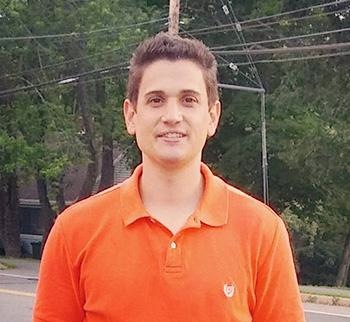
When Judy Spackman, 61, started working as a receptionist at Cando Rail Services Ltd. in Brandon 25 years ago, she felt it was a good starting place and the people were nice. Little did she know that, one day, she’d be an owner.

Born and raised in Neepawa, Man., Spackman moved to Brandon in 1987 to attend community college in the administrative accounting program. After graduating, she worked as an order operator at Richardson Greenshields for two years before coming on board with Cando.

photo - Judy Spackman
Judy Spackman (photo from Judy Spackman)

At Cando, she started out as a receptionist before moving into the accounts payable and receivables section. She later moved to the company’s offices in downtown Brandon. Today, she works for the abandonment department as their administrative assistant for trucking and rail logistics.

“Cando Rail is a railway associated company,” said Spackman. “Anything that they do has got to do with a railroad in one way or another, from tearing up abandoned tracks and building new tracks to selling components of the track.”

Seven years after she joined the company, Cando’s owner introduced Judy SpackmanJudy Spackmanan employee share ownership plan (ESOP). Unsure at first if she wanted to opt in, Spackman changed her mind when she saw the returns some of her colleagues were taking home.

“It happened in 1996,” said Spackman about the ESOP. “It was something that Gord Peters, the owner, knew about. He understood the process of employee ownership and thought it would be a good fit for Cando employees.”

Some employees went into it right away. “By year two, you could see what those people got, the share payout – putting their money into the company, they shared its profit,” she said. “That got me thinking that it was a good idea, so I started working the second year, trying to make sure I had enough matching funds to be able to participate in the program.”

In 1996, shares in Cando were worth $2.74. They are now worth more than $40.

The ESOP is set up as a retirement savings plan, wherein employees can make monthly contributions. “They helped us set something up within the company to be able to contribute to an RSP through payroll deduction,” explained Spackman.

Everybody qualifies to buy a block of shares, according to a formula based on a percentage of their T4 or total earnings. Also, employees are given a $100 bonus for every year they have been with the company. “Say they made $50,000, that’s times four percent, so they would get $2,000 of a match there,” she said. “And, for me, I’ve been with the company for 25 years, so I get $100 for every year I’ve worked. So, I get a $2,500 match…. I’d qualify for a $4,500 match.… If I bought $4,500 worth of Cando shares, they’ll match those funds and give me $4,500.

“So, now I have $9,000 worth of Cando shares…. The formula and the calculation is the fairest way to do it.

“You don’t have to do that match if you choose not to. You could only put in $2,000, then they will only match you the $2,000. If you don’t match your true potential, you don’t get that potential match. So, it gives you the initiative to make sure you put away enough to cover your match.”

Spackman’s first-year share block investment is now worth more than $25,000. She has created a spreadsheet to keep track of her shares and their growth and, as she is nearing retirement, she has made a second spreadsheet called, “Retirement.”

“Knowing the difference between RSP and non-RSP, and knowing the best way to have a mix of both and how to be diversified is key,” said Spackman. “You don’t want all eggs in one basket.

“It does make you learn a lot about finances and projections, and looking past today and into the future – doing calculations to make sure you have enough in your retirement fund.”

There is no pension offered at Cando. Instead, by creating this program, Peters gave his employees a way of creating their own pension plan.

“It’s an individual choice of how much you want to go in,” explained Spackman. “You can max everything into this and make it grow. Some are uncomfortable going in very much, [but] when they learn the system and see and do calculations, they realize the potential of growth is amazing.”

Peters’ philosophy is that employees work hard to make a company successful and that they should share in the success; shares in ownership give employees a more vested interest in the company.

“He takes great pride in people who learn the program and understand the financial and growth side of the program,” said Spackman of Peters. “I think it’s a viable program for any company and is feasible and acceptable for companies to run a program like this and be successful.”

The ESOP has helped Cando’s performance because employees who are also shareholders benefit directly when the company does well. There are “quarterly reports on how the company is doing, so we know throughout the year what’s going on and it tells us [about] new business, what’s coming up, giving us an idea of what the company is doing and how it is growing,” explained Spackman.

Every May, the projection/payout conversation starts, and the employees go back to work for another year. It’s like playing the lottery except in this case they are guaranteed to win as long as the company grows and they have some shares.

“There is a possibility that some years we may not get a payout or a big growth in the company, like this year,” said Spackman. “Worst-case scenario, it may stay the same one year. But, that’s OK, because we retain … our shares.

“You have to be in the real world. There is potential for this to go down. In 18 years, I haven’t seen it go down, but you have to keep that in mind. You have to have other investments.

“Being a Cando shareholder gives me pride, being an employee-owner. It’s an avenue for a comfortable retirement and a financial education that benefits my personal financial practices.”

Rebeca Kuropatwa is a Winnipeg freelance writer.
Posted on July 3, 2015July 3, 2015Author Rebeca KuropatwaCategories NationalTags Cando Rail, employee-share program, ESOP, Gord Peters, Judy Spackman
Parents’ silence hurts

Parents’ silence hurts

Hundreds of thousands came out to watch Toronto’s Pride Parade on June 28 despite the inclement weather. (photo by Najin Lin via facebook.com/pridetoronto)

Years ago, at a particularly low point, Chaim Silver (not his real name) was so desperate to be straight that he ingested a white powder that a naturopath had sent to him by mail, claiming it had “cured” a lesbian of her same-sex desires.

“I actually took it,” Silver laughed over the phone. “It was before anthrax, before 9/11.”

Silver is Modern Orthodox and came out to his parents when he was in his late 20s. While they’ve never explicitly rejected him, he said their approach has always been, “We can fix this.”

Over the years, they’ve oscillated between encouraging Silver to marry a woman and presuming he’ll accept a life of celibacy. “They’ve said to me, ‘You’ll just make your life about your siblings’ kids,’” said Silver, who is now in his 40s.

They’ve also suggested he try reparative therapy, a controversial practice that aims to make a homosexual person heterosexual. But, more than anything, Silver’s sexual identity is something about which his parents, plus many people at the Orthodox synagogue he attends in Toronto – most of whom, Silver believes, know about his sexuality – say nothing.

He once went away on a trip with a non-Jewish boyfriend, he noted, and nobody in his family acknowledged it.

“At synagogue, if I’m single, celibate and alone … I don’t think anyone actually cares … they’ll give me aliyot. But if I’m going to have a partner and want a life that’s celebrated, I don’t think that can happen in orthodoxy.”

On the whole, Silver said he’s grown pessimistic about the notion – touted by activists such as Rabbi Steven Greenberg, dubbed the only openly gay Orthodox rabbi in North America – that Orthodox Judaism can make space for homosexual people. “The two seem incongruous to me. [Being gay is] this innate thing that’s felt to be prohibited,” Silver said. “Not everything can be fixed in life. As you get older, you realize that some things just suck.”

Silver’s cynicism and his parents’ denial are arguably more acute because of Orthodox Judaism’s strict adherence to Torah, but anecdotal evidence shows that many Jewish parents from more liberal denominations are also uncomfortable having an LGBTQ kid and default to silence on the matter.

Justine Apple, executive director of Kulanu Toronto, a Jewish LGBTQ social and cultural group, said Jewish parents, ranging from secular to Modern Orthodox, have reached out to her, seeking counsel about their children’s sexual orientation. “People who are Orthodox tend to have a harder time dealing with this but, at the end of the day, it’s an individual process,” she said. “There are still so many parents in the community who know their kids are gay but are very secretive about it.”

Apple said when she herself first came out, her family, who have since made huge strides, didn’t want to hear about her personal life, making her feel “invisible.”

Many parents won’t ask their LGBTQ children about their romantic lives due to internalized homophobia and ignorance about what it means to be gay, she said. “A lot of parents equate being gay with what happens in the bedroom. But queer Jews, like any Jews, connect to their loved ones on multiple levels – emotional, spiritual, intellectual.”

Parents should recognize that being gay isn’t a choice and doesn’t negate that “we still have Jewish values, we’re still connected to family, community,” Apple said. “It’s important for parents to give kids support, make them feel part of family gatherings and ask them what’s happening in their personal lives.”

Apple said she reached out to several LGBTQ Jewish colleagues and friends to see if their parents would speak to the CJN about their experiences of their children coming out, but all of the parents declined. “It seems to be a sensitive topic for parents, more so than for their children,” she noted.

Maya Benaim (not her real name) came out a decade ago to her parents, who belong to a Conservative synagogue. She joked that she wishes they had taken some kind of course. “They didn’t understand it, and I wasn’t the person who could explain. It was too personal for me,” she said.

Over the years, her parents have rarely inquired about her partners and haven’t known how to act when one of her relationships ended. “I learned not to mention stuff.… I’d be going through tremendous pain from a breakup and would have to hide it from them,” she said.

Benaim, 30, said she’d be happy for her parents to seek external support – “anything that would contribute to understanding and de-stigmatizing and improve our relationship” – but she’s adamant that the onus not be on her to “hold their hands” through the process. “I’m already in pain enough from them not understanding,” she said. “I’d really appreciate if the community stepped in for that sort of thing. I think that’s what being an ally is about – doing that work so the people who are the victims of misunderstanding or hate don’t have to.”

Toronto social worker Elsia La Caria works with adolescents and young adults. She said for someone who’s come out, negative reactions from parents typically aggravate existing issues. “The person is often already struggling with feelings of not being accepted, so when the people closest to them don’t provide the right support, this can exacerbate their feelings of loneliness, sadness and feeling excluded,” she said.

Regarding parents’ silence about a child’s sexuality, she said, “this can reinforce the idea that they’re different in a bad way, that they don’t belong anywhere.”

Rabbi Michael Dolgin is senior rabbi of Toronto’s Reform Temple Sinai Congregation, where he and associate Rabbi Daniel Mikelberg officiate at same-sex weddings.

Canada’s legalization of same-sex marriage has helped affirm that “same-sex life is consistent with a focus on family, continuity and other Jewish values that I think, in the past … people assumed [LGBTQ people] were breaking with,” Dolgin said.

While parents of LGBTQ kids occasionally seek his guidance, Dolgin said young people nowadays generally seem more comfortable “being out,” and the North American Federation of Temple Youth, the youth group affiliated with the Reform movement, is widely considered a safe space for LGBTQ youth to participate without “the stress of having to choose between being Jewish and being homosexual.” The best response to a child who has come out is to love them, to listen and to work toward “an open, understanding relationship in which they can express their feelings,” he added.

Apple stressed that parents have a responsibility to educate themselves about what it means to be gay and Jewish. Kulanu’s doors are open to those seeking a safe space to discuss this, she said, but support is offered on more of an informal basis and she may refer families to Jewish Family and Child Service, and non-Jewish organizations such as PFLAG Canada and the 519, a Toronto agency that “respond[s] to the evolving needs of the LGBTQ community, from counseling services and queer parenting resources to coming out groups, trans programming and seniors support.”

“Right now, our goal is primarily to run events for the LGBTQ community and its allies,” said Apple.

Resources geared to Jewish families in this situation are only available in Canada “in pockets,” and are less abundant than in the United States, she acknowledged.

There’s a need in the community for more “open forums [for parents] to share their fears and concerns,” Apple said, adding that she sees future opportunities for Kulanu to develop a network to help parents who are struggling.

Indeed, Silver’s sense of hopelessness is tied, at least in part, to location. Toronto’s Jewish community is quite religiously conservative, unlike New York’s, where a Friday-night minyan of Orthodox LGBTQ Jews launched last year, he said.

Dating has been tough as it is – a secular Jewish partner couldn’t understand why Silver wanted to belong to a world that didn’t accept him, while a non-Jewish boyfriend wouldn’t give up Christmas – without the added problem that many in his position have left the Orthodox community or remain in hiding. “Many of us have simply disappeared,” he said, “so it’s not an issue the Orthodox community feels they have to face.”

Rabbi Noah Cheses, assistant rabbi at Shaarei Shomayim Congregation, one of Toronto’s largest Modern Orthodox shuls, said that supporting young people and their parents as the former share their sexual orientation with family and friends is an issue he cares deeply about. “But I try to take a line that distinguishes between supporting and endorsing. It’s a fine line. I can support an individual with the struggles he or she has, but I’m reluctant to endorse a lifestyle or culture that runs in opposition to a verse in the Torah, though I understand that being gay is not a choice,” he said.

Having recently moved to Toronto from Connecticut, he said he knows of several groups and online networks that support LGBTQ Orthodox people and their families there, but he isn’t aware of similar organizations in the Toronto area.

“On many different social and gender-related issues, my sense is Toronto has been not as advanced as many modern Orthodox communities in the States,” he said.

– For more national Jewish news, visit cjnews.com.

Format ImagePosted on July 3, 2015July 3, 2015Author Jodie Shupac CJNCategories NationalTags Elsia La Caria, Justine Apple, Kulanu Toronto, LGBTQ, Michael Dolgin, Noah Cheses, Shaarei Shomayim, Steven Greenberg, Temple Sinai, Toronto Pride
מיועד לעשירים בלבד

מיועד לעשירים בלבד

תה ‘פו-אר’ נדיר מסין מוצע למכירה בשש מאות אלף דולר. (צילום מסך: theprovince.com)

תה שנראה עם עוגה ועוגה שהיא בעצם תה: תה ‘פו-אר’ נדיר מסין מוצע למכירה בשש מאות אלף דולר

מיועד לעשירים בלבד: לאחרונה מוצע למכירה באזור ונקובר תה ‘פו-אר’ נדיר במחיר שיא של שש מאות אלף דולר. מדובר בתה שחור מותסס שיוצר במחוז יונאן בסין לפני מאה וחמש שנים ב-1910. התה היוחדי ארוז בחבילה עגולה ודחוסה היטב היטב, שדומה ממש לעוגה ומשקלה שלוש מאות וחמישים גרם. בעולם יש כיום לפי הערכה רק ארבעים ותשע ‘עוגות תה’ מאותה שנה (1910) וכולן אגב נמצאות באי הונג קונג. זאת למעט עוגת תה אחת שהובאה במיוחד לוונקובר, בעיקר כיוון שסינים עשירים רבים מתגוררים כאן. בדומה לחפצי אמנות לאספנים, ‘עוגות התה’ הנדירות נשמרות בכספות מיוחדות עם טמפרטורה ולחות מבוקרים. לדברי מומחים התה נחשב למדהים בטעמו. אך ברגע שמחליטים לפרק את העוגה לצורך שימוש בתה, ערכה הכספי בקרב האספנים יורד משמעותית.

‘עוגות התא’ נרכשות בדרך כלל בסין לציון אירועים חשובים ביותר כמו חתונות ולידה של תינוקות. לפי המסורת הסינית קיסרים ונזירים היו נוהגים לשתות את ‘הפו-אר’ והתנהלו אף מלחמות להשיגו, בגלל תכונות המרפא היחודיות שלו.

תה ‘הפו-אר’ עובר תהליך חליטה מורכב וארוך, והייבוש בחדרים עם לחות גבוהה ואף רוח כולל גם תהליכי יישון (בדומה ליין), שנמשך לפעמים אפילו חמישים שנים. ככל שהתה מתיישן יותר עך איכותו וערכו הכספי עולים, בדומה ליין אדם איכותי וויסקי איכותי.

 אהבה בלתי אפשרית ממרחקים: קנדי מוונקובר טס עד לסין לחפש בחורה שהכיר דרך האינטרנט

סיפור אהבה מהסרטים שלא נראה שיוכל להחזיק מעמד במציאות. קנדי בן שישים מוונקובר שהכיר צעירה סינית דרך אחד מאתרי היכרויות באינטרנט, מאמין שהוא יצליח למצוא אותה בעיר שבה היא גרה. אשרי המאמין אם יש כאלה בכלל. אך יש למלון בעייה אחת לא פשוטה ואפילו גדולה: הסינית שלו אמורה לגור בעיר הנמל שנג’ן, שגרים בה לא פחות מעשרה מיליון איש.

ג’ק מלון המקומי הכיר כאמור באתר ההיכרויות צעירה נאה למראה בשם רילי. במשך קרוב לשנה הם התכתבו והתכתבו ושלחו אחד לשני כמעט כארבע מאות אימיילים. כאשר מלון התחיל לדבר עם רילי על כך שהגיע הזמן לקיים פגישה ממשית ביניהם ולא רק להמשיך בקשר הוירטואלי, לדבריו היא קיבלה פתאם “רגליים קרות” וניתקה את קשר עמו. מלון המאוהב המאוכזב עד מאוד וכמעט נואש, החליט שהגיע הזמן לעשות מעשה של ממש. הוא פשוט עלה על מטוס וטס מוונקובר לשנג’ן הרחוקה, בניסיון בלתי אפשרי ממש למצוא את אהובתו מהאינטרנט.

מלון הפך את עצמו למדיה נעה. הוא מסתובב בשבועות האחרונים ברחובות השוקקים והעמוסים לעייפה של שנג’ן כאשר שלט גדול מוצמד לגופו, ועליו מודבקים תמונתה היפה של רילי ומספר פרטים מעטים שיש לו עליה. ומעל התמונה מופיע בגדול הסלוגן “אהובך הקנדי מחפש אותך”. הקנדי המוזר למדי עוצר עוברים ושבים ברחוב שמביטים בפליאה על השלט שעליו. הם שואלים שאלות ומנסים לשמור מרחק, וגם הוא שואל מצדו שאלות ומחפש מידע עליה. בשלב זה מלון לא השיג שום דבר על אהובתו היקרה, למעט עובדה אחת מאוד מצערת שנתגלתה לו, ולאולי מרמזת על עתיד הקשר ביניהם. כשהגיע מלון לכתובת בה הייתה אמורה להיות ממוקמת חברת הבגדים בבעלותה של רילי, הוא מצא שהעסק הזה שכביכול היה שלה נסגר כבר לפני שנים רבות.

Format ImagePosted on July 2, 2015July 2, 2015Author Roni RachmaniCategories עניין בחדשותTags 1910, Chinese, online dating, Pu'erh, Pu-erh, tea cake, Yunnan, היכרויות באינטרנט, יונאן, סין, עוגות התה, פו-אר
Looking for Cape Breton Jews

Looking for Cape Breton Jews

The former Congregation Sons of Israel in Glace Bay. In 1902, the structure was the first purpose-built synagogue in Nova Scotia. It permanently closed in July 2010. To the left of it is what was the Talmud Torah community centre, also now closed. This was the location of the Hebrew school and functions like bar mitzvahs and wedding dinners. (photo by Abebenjoe via commons.wikimedia.org)

PhD candidate Ely Rosenblum is looking for former Cape Breton Jews to interview as part of a research project called Diversity Cape Breton.

The 26-year-old University of Cambridge student is assisting Cape Breton University professor Marcia Ostashewski with a research project that investigates ethnocultural communities, including the Jewish community.

Rosenblum explained that, while his PhD focuses on cultural musicology, he has a background in folklore and ethnographic study. He met Ostashewski, the Nova Scotia university’s Canada Research Chair in Communities and Cultures, and became involved in her research project about three years ago when he worked for a nonprofit organization she was directing, called Friends of the Ukrainian Village Society.

“When I met Marcia and started working with her on a different project and she discovered that my family is from Cape Breton, she got very excited and we started working on this project together,” Rosenblum said. “I have family members who are from Cape Breton. My dad is from Cape Breton, and the entire Rosenblum side of the family is from Glace Bay, N.S.”

Rosenblum said he has been meeting with members of the Jewish community from Cape Breton and collecting oral histories on and off for the past three years.

“I’m collecting oral histories and … talking about their experiences and their family histories, how they arrived in Canada in the first place, why they moved to Nova Scotia, their experiences on Cape Breton Island, both as a Jewish community and how they interacted with other communities, and celebrating some of the multiculturalism on Cape Breton Island that people don’t really know about.”

Last year, Ostashewski and Rosenblum held an event at York University about Jewish life in Cape Breton and in small towns in Canada, and put archival photos on display.

photo - The former Congregation Sons of Israel in Glace Bay in 1932
The former Congregation Sons of Israel in Glace Bay in 1932. (photo from Beaton Institute, Cape Breton University)

“We had a roundtable panel discussion … [about] what immigration patterns look like and what it has meant for these Jewish communities,” he said. “So many of them, especially from Cape Breton, so many people have moved to Toronto, Montreal, Ottawa – bigger cities where their kids have moved. It’s certainly a pattern, but it’s an indicator of the kinds of lives that Jewish parents wanted for their kids.”

He said that, today, there isn’t much of a Jewish community in Cape Breton. According to the Atlantic Jewish Council, Cape Breton’s Jewish community peaked in 1941, when it boasted a population of 939 Jews.

“The few who live there, they have trouble making a minyan … it’s incredibly challenging. Sometimes, people go from city to city so they can have a minyan, but there really aren’t more than 10 Jews on the island still. I believe there is one Jewish child, but that can’t be entirely verified,” he said.

Rosenblum said that, for him, this research project is “deeply personal. It’s a part of my family history, but I also think, for Jewish communities to have a strong sense of what kind of national identity they have, how they fit into the idea of Canada as a multicultural country, as a place where you’re free to be whoever you are, [is important],” he said. “I think the stronger the sense of where our parents came from and the kinds of experiences they had in these small towns, the better we can mobilize communities in these larger cities.”

Rosenblum said he hopes to find more Jewish Cape Breton natives who are willing to share their stories, photos and video or audio recordings, so that they can be archived.

“The most important part for me, the most exciting part, is seeing these amazing collections that families have, these incredible photos and memories that I’m hoping they can preserve.”

Diversity Cape Breton, a web portal launched this month, is available to anyone who wants to learn more about the history of the Jewish community and other communities in Cape Breton. Visit diversitycapebreton.ca.

For more national Jewish news, visit cjnews.com.

Format ImagePosted on June 26, 2015June 25, 2015Author Sheri Shefa CJNCategories NationalTags Cape Breton, Ely Rosenblum, Marcia Ostashewski
Helping kids, entertaining

Helping kids, entertaining

Jerry Maslowsky, executive director of Variety, the Children’s Charity of Manitoba. (photo from Jerry Maslowsky)

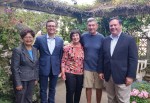
Jerry Maslowsky, executive director of Variety, the Children’s Charity of Manitoba, has a long history with the organization.

Maslowsky, 57, started off in performing arts as a teenager, in Rainbow Stage productions. Coming from a musical family, the stage was where he felt most at home.

He later became a member of a band called Special Blend and, for 18-19 years, he was with them, playing for many weddings, bar mitzvahs and graduations. He came across Variety in his early 20s, singing on the charity’s telethon in the 1980s. However, his work with them was yet to come.

Maslowsky was approached by CJOB radio station to take on the role of marketing director, with a major aim being to bring the Winnipeg Blue Bombers and the Winnipeg Jets to the station. Then, in 1999, he was hired as director of sales by the Winnipeg Blue Bombers, becoming their vice-president of marketing and sales, and working with the team for 15 years.

A year ago, Maslowsky felt it was time to move on, as an opportunity with Variety came up. The organization’s previous executive director, who Maslowsky knew very well, was retiring.

Since Variety started as an entertainer’s charity, it was something in which Maslowsky was very interested – working with kids and giving back, as well as “ensuring that all kids are having a childhood just made sense,” he said.

The original chapter started in Pittsburgh in 1927 as an international children’s organization, the initiative of a group of 11 men involved in show business, who set up a social club, which they named the Variety Club.

Maslowsky explained, “On Christmas Eve 1928, a small baby was left on the steps of the Sheridan Square Film Theatre, with a note. The note read, ‘Please take care of my baby. Her name is Catherine. I can no longer take care of her. I have eight others. My husband is out of work. She was born on Thanksgiving Day. I have always heard of the goodness of show business people and pray to god that you will look after her.’ Signed, ‘A heartbroken mother.’

“Since efforts to trace the mother failed, the members of Variety Club named the child Catherine Variety Sheridan, after the club and the theatre on which steps she was found. They undertook to fund the child’s living expenses and education. Later, the club decided to raise funds for other disadvantaged children.”

Today, there are more than 44 Variety “tents” (described as “tents” for its circus component) throughout the world. Manitoba’s Variety started in 1978, and it has helped more than 800,000 children throughout the province, raising more than $30 million. The B.C. chapter celebrates its 50th anniversary this year; over that time, it has raised more than $170 million, every year assisting more than 1,200 children. There are other tents in Canada, with a new one slated to open in Montreal.

Maslowsky credited Gene Telpner with bringing a Variety tent to Winnipeg. He got the idea, “then called his good friend, Monty Hall of Let’s Make a Deal, and they were able to formulate a tent in Winnipeg that was really run by a lot of the people from the Jewish community in the entertainment and hotel industry – people like Mickey Levine from the International Inn and Harvey Nairn. A lot of people in the entertainment industry took a hold of this and created the organization and telethons.”

Variety’s mission is to meet the tangible needs of children with all abilities. “This means that every child does have an ability,” explained Maslowsky. “Some children’s abilities are different than others’. We basically look at every child, the abilities they have, and other abilities maybe they lack. That’s where Variety comes in, in how we can support the child as well as the family.

“When children belong here, we call them part of Variety family, because it’s just not always the immediate need we look after. We also look after ensuring the child’s and family’s needs throughout those years, before they come into 18 years old, that Variety stays a part of their life.”

Part of Maslowsky’s mandate at Variety is to reach out to alumni, “kids” who are now 36- and 37-years-old, to see how they are doing, and to bring them back as mentors for younger Variety children.

“One of the things we did that was important for me when I came back was going back to our roots of showbiz, circus and entertainment,” said Maslowsky.

He went to work, calling on his friends from his entertainment past. “So, we were able to plan a Come One, Come All – Under the Big Top event,” said Maslowsky. “I wanted it to be entertaining and I wanted people to come to an event where they could see it through the eyes of kids. And we’ve all grown up with the circus … we can relate to it. It was important to then get talent, not just dancers and speakers.” The event was held May 9.

Reflecting on his younger days, Maslowsky said, “My sister and I, we’ve always been teased as ‘the Jewish Donny and Marie.’ My sister does a lot of performing in the city and we did Folklorama [multicultural festival] for many, many years (at Shalom Square, the Israeli pavilion).”

He added, “Growing up in a Jewish family, knowing how to give and that you’re not always the best, that you just do what you can, you just be sure that you’re a giving person, that was certainly instilled into us by our parents.”

Rebeca Kuropatwa is a Winnipeg freelance writer.
Format ImagePosted on June 26, 2015June 25, 2015Author Rebeca KuropatwaCategories NationalTags children's charity, Gene Telpner, Jerry Maslowsky, Variety Manitoba

Posts pagination

Previous page Page 1 … Page 283 Page 284 Page 285 … Page 323 Next page
Proudly powered by WordPress