Young philanthropist Yosef Nider receives recognition. (photo from Naomi Nelson Photography)
On Sunday, Dec. 21, the Centre for Judaism in Surrey/White Rock held its annual menorah lighting at Semiahmoo Centre, and awarded its inaugural Young Lamplighter Award to Yosef Nider, pictured here. The young violinist, a student at Vancouver Hebrew Academy, received the award for raising more than $10,000 for cancer research. Mayors Wayne Baldwin and Linda Hepner presented the award.
The lighting was attended by local city councilors and Jewish community members, all welcomed by the centre’s Rabbi Falik and Simie Schtroks.
To nominate for next year’s award a youth between ages 5-18 who is illuminating his or her part of the world by promoting goodness and kindness, email c4j@shaw with Lamplighter Award in the subject line. Nominations will be accepted through September 2015.
This year’s Gold Plate Dinner marks 40 years that Lubavitch B.C., led by Rabbi Yitzchak Wineberg, third from the right, has been in Vancouver. (photos from facebook.com/LubavitchBC)
Chabad Lubavitch BC held its 39th Annual Gold Plate Dinner, paying tribute to the Rebbe, his vision and 40 years in British Columbia on Dec. 2, at Schara Tzedeck Synagogue. Guests enjoyed a reception, followed by a five-course meal, during which several speakers shared how Chabad Lubavitch has impacted their lives. Throughout the evening, several prizes were raffled, including hockey tickets, vacation packages, 40-year-old scotch and the grand prize of a 2014 BMW i3. The evening concluded with an entertaining performance by comedian Marc Schiff.
Harvey Dales, 2014 Federation annual campaign general chair, speaks at a Jewish Federation of Greater Vancouver donor event. (photo from Jewish Federation of Greater Vancouver)
As he tallied up the fundraising dollars earlier this month for this year’s Federation annual campaign, Harvey Dales noted with satisfaction that almost $7 million had been pledged in Vancouver since the campaign began in September. With a month to go until it wraps up in January, he’s aspiring to reach the $8 million mark.
“Our campaign had been relatively stagnant for the past few years, with only slight increases,” he reflected. “This year, which is my last year as campaign chair, I felt it was important to reach the $8 million mark because there are just so many needs.”
Dales and his team established a matching fund, where six donors promised a total of $125,000 in matching funds; that meant every unrestricted dollar of increase to the campaign made by any other donor would be matched. Another matching campaign was established with a focus on 20-to-35-year-olds, this one a two-for-one match.
The two matching funds have been so successful that Federation found itself on the verge of running out of matching funds a few weeks ago. “We went out and raised further funds, another $30,000, to top up the fund and ensure we could continue with the matching,” Dales said. “We’re still seeking additional funds for the match fund, and I’m very confident it will bring us to our $8 million goal.”
For the first time in many years, each one of Federation’s divisions has seen an increase in the dollars pledged compared with gifts from the same donors last year. That includes major donors, men’s philanthropy, women’s philanthropy, community and young adults. “The gifts that have come in have been incredible,” he told the Independent. “One individual who hadn’t made a gift before pledged $750. Another newly wedded couple explained they’d really stretched their budget by giving us $360 last year, but this year they were giving us $540 because of the matching funds.”
“I believe it’s so important for the community to know how vital Federation is,” he continued. “It’s our social needs network for the community, whether it’s funding for social services, education, youth, outreach or seniors. Both here, overseas and in Israel, there are so many recipient agencies that rely on Federation for the bulk of their funding to provide desperately needed services.”
Vancouver’s community is extraordinary for how many individuals commit to volunteering and canvassing for the annual campaign, he added. “In campaigns in other cities, the canvassing is done by professionals, but here in Vancouver our community is just so involved.”
The consecration of Schara Tzedeck Cemetery in New Westminster in 1929. Eliya Ahroni, left, shammas of the synagogue, with shul president Chaim Leib Freedman, who was also founder of the Vancouver Chevra Kadisha in 1910. (photo from Jewish Museum and Archives of British Columbia L.00306)
The organization that oversees three of Metro Vancouver’s Jewish cemeteries does not want to discourage anyone from planning ahead and purchasing plots right now. They do, however, want to dispel rumors that the cemeteries are running out of space.
“I’m not trying to discourage people from buying plots,” said Howard Jampolsky, executive director of the Schara Tzedeck Cemetery Board, “but we do have adequate land in New Westminster [for now]. We feel that we have probably between 25 and 40 years left in New Westminster of burial land available, based on projections and current rates.”
The Schara Tzedeck Cemetery Board operates Schara Tzedeck Cemetery in New Westminster and a newer one in Surrey. It also is involved with the City of Vancouver in overseeing the Jewish area at Mountain View, the city-owned cemetery on Fraser Street.
Other Jewish cemeteries in the area are run by Temple Sholom, the Reform synagogue in Vancouver; Har-El, the Conservative congregation on the North Shore; Beth Israel, the Conservative congregation in Vancouver; and Beth Tikvah, the Conservative congregation in Richmond.
In an interview with the Independent, Jampolsky clarified the administrative structure of Jewish funerals and burials in the Vancouver area. Although other congregations have cemeteries, the Schara Tzedeck Cemetery Board is solely responsible for everything that happens in the preparation for Jewish funerals, regardless of affiliation or denomination.
The Chevra Kadisha, the Jewish Burial Society, effectively operates as an adjunct to the cemetery board, which is an independent organization originally created in 1929 under the auspices of Congregation Schara Tzedeck, the oldest and largest Orthodox synagogue in Vancouver. The Chevra Kadisha, which literally means the “holy society,” consists of volunteers who prepare the deceased for burial. More than three millennia of Jewish rites are embodied in the rituals performed by the Chevra Kadisha.
Beyond this most intimate act, the cemetery board also oversees the entire process before the service at the cemetery.
“We provide all the funeral services,” Jampolsky said. “[These include] the registration of the deceased, the picking up at the hospital or the home, taking them out to our funeral home, which is attached to the cemetery in New Westminster, providing the ritual preparation for burial, services of the Chevra Kadisha, which include sitting with the deceased from the time they come to us until the burial, and everything to do with the conducting of a funeral.” Rev. Joseph Marciano is Schara Tzedeck’s funeral director.
If the funeral is at one of the Schara Tzedeck cemeteries, the entire process remains under the board’s purview. If the deceased is to be buried in another cemetery, the cemetery board is responsible for everything up until they transport the person to the cemetery, where the rabbi and congregation take over. As a result, regardless of denomination, all Jewish deceased in Metro Vancouver receive full Orthodox preparation for burial.
Jampolsky stressed that one does not need to be a member of Schara Tzedeck to be buried in one of their cemeteries, one need only be Jewish.
The board, which is made up of eminent community members, is co-chaired by Jack Kowarsky and Charles Diamond. Diamond’s father, Jack Diamond, z”l, initiated the board’s current structure decades ago.
The Mountain View Jewish Cemetery has been undergoing a restoration this year, after decades of limited attention. J.B. Newall, the monument company located across from the cemetery, has renovated many of the oldest headstones.
“The headstones that are 100 years old look like they’re brand-new,” Jampolsky said. “It’s going to be a really remarkable place to walk through.”
In addition to the physical restoration taking place under the leadership of Shirley Barnett and a committee of volunteers, a campaign aims to raise funds for perpetual care to maintain the cemetery as it should be.
The oldest Jewish cemetery in the metro area – and the only one inside Vancouver city limits – still sees one or two funerals a year, Jampolsky said, despite the widespread belief that it is full.
Unlike the cemeteries in New Westminster and Surrey, which are fully operated and maintained by the cemetery board, the Jewish section of Mountain View remains under the ownership and operation of the city, like the larger cemetery from which it is separated by a hedge.
The Schara Tzedeck Cemetery Board operates Schara Tzedeck Cemetery in New Westminster (pictured) and a newer one in Surrey. (photo from wikimapia.org)
Jampolsky said a leading cemetery architect told him that the New Westminster cemetery is among the nicest in North America, in terms of natural beauty, upkeep and maintenance. Hollywood North has noticed, too.
“We’ve had movie companies come and want to film there and we’ve turned them away,” Jampolsky said. “We don’t need the revenue from that. We don’t think it’s respectful to the deceased.”
The board is a nonprofit organization and costs are covered by funeral expenses – $11,000 includes every aspect of preparation and the funeral if the deceased is being buried in a Schara Tzedeck cemetery; $5,575 if they are to be buried in one of the other Jewish cemeteries. The cost of the plot is also currently $11,000 at the Schara Tzedeck Cemetery in New Westminster. Twenty percent of all plot fees are set aside in trust for perpetual maintenance.
Families with financial constraints are offered discreet, compassionate assistance, said Jampolsky. “We believe that every Jewish person has a right to a Jewish burial, a full halachic Jewish burial that is like any other, and we’ll never turn back from that.”
Jewish tradition makes funerals not only plain in style and appearance, but comparatively simple in terms of planning, Jampolsky noted. Every Jewish person is buried in identical caskets, made of plain unadorned wood and no metal, with holes in the base to hasten decomposition and return of the body to the earth. There is none of the competitive materialism typical of the funeral industry, where anecdotes abound of families being upsold on higher-end caskets and elaborate ceremonies.
Jewish funerals are almost identical, he said, regardless of the individual’s position in life. The same care is given to respect the individual throughout the preparation.
“I really believe that we do an important, invaluable job for the community and that we do good and holy work, we do it well, every single person is treated with the utmost care, respect, whether they’re living or they’re deceased.”
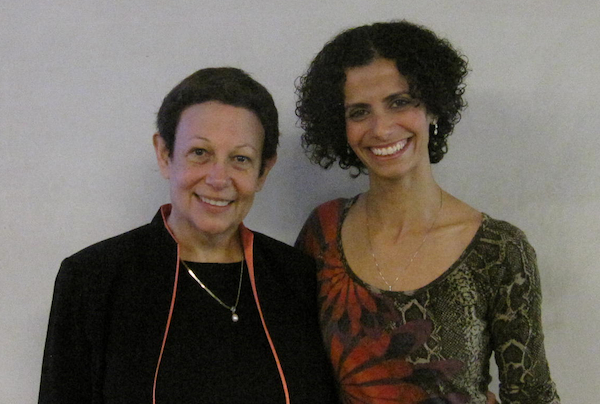
At NCJW’s 90th anniversary party, left to right, Robyn Lenn, Ezra S. Shanken, Debby Altow, Catherine Stoller, Sharon Allentuck and Cynthia Ramsay. (photo by Joanne Emerman)
Left to right: Gloria Hendin, longtime supporter of NCJW Vancouver section, hosted Sharon Allentuck and Robyn Lenn and members of the organizing committee following the celebration of the section’s 90th birthday. (photo by Linda Arato)
The Vancouver section of National Council of Jewish Women of Canada welcomed national president Sharon Allentuck of Winnipeg and Robyn Lenn, president of International Council of Jewish Women, to a jam-packed 90th anniversary party at VanDusen Botanical Garden on Nov. 16.
Vancouver president Catherine Stoller and anniversary committee members greeted the approximately 125 people to a farmers’ market of food, bubbly and partner-agency displays. Council members had a chance to renew friendships, visit the displays of B.C. Transplant Society, Vancouver Coastal Health, HIPPY/MOSAIC, the JCC Jewish Book Festival, Children of the Street, Elizabeth Fry Society, and Council’s signature projects, Books for Kids, Operation Dressup and ALUMA of Israel.
Eppy Rappaport welcomes new and old customers to Omnitsky’s new location at 5775 Oak St. (photo by Cynthia Ramsay)
Kreplach. Smoked meat. Tongue. Turkey pastrami. Salami and eggs. If this list of dining options makes your mouth water, read on because the new Omnitsky’s is open for business.
Taking over the location previously occupied by Kaplan’s, Eppy Rappaport has done a gut-renovation of the space in order to create a 21st-century kosher deli. The new Omnitsky’s has actually been open since just before Rosh Hashanah, but only for the retail end of the business. After a number of setbacks, Rappaport was able to cut through the last of the tangles of red tape and, once the licensing came through late last month, he was able to unveil his brand new restaurant and kitchen.
Eppy Rappaport (photo by Michelle Dodek)
About the delays, Rappaport was pragmatic. “I want it to be right,” he told the Independent. He’s excited to reveal the new space to the public. At long last, he said, his dream is coming true.
The new Omnitsky’s concept is different from the old store on Cambie at 43rd Avenue. There has been a reduction in dry goods available, but a large expansion of the refrigerated and frozen sections of the retail space. The increase in retail and take-out deli products reflects an emphasis on the expanded menu the new Omnitsky’s has on offer.
“The designer and contractor got the maximum out of the space,” Rappaport explained, adding that he hopes the look and layout will foster positive dining and shopping experiences. The deli has a traditional feel, with both food and décor to match. There are tables with banquets along the walls and the fresh deli counter is located at the back by the kitchen.
Rappaport has developed several new products, as well, including an apple turkey sausage that is nitrate-free, along with other sausages he makes himself in his plant on Annacis Island. “We have an expanded product line including fresh baked goods, salads, four soups every day,” he said. There will be the usual chicken soup with noodles or kneidelach, but now you can add kreplach, as well.
Alongside an array of deli sandwiches, there are several hot items on the menu, including kasha and shells, knishes, three kinds of hot dogs with five choices of toppings, and turkey shwarma. Omnitsky’s signature dish? “Deli done the old-fashioned way,” Rappaport said proudly.
Not only has he added variety to the menu, but Omnitsky’s hours are also extended. Monday through Thursday, he plans to serve breakfast, lunch and an early dinner, staying open 8 a.m.-8 p.m. Friday and Sunday, he will be open for breakfast and lunch – with plenty offerings to take home for dinner. To satisfy those who crave breakfast all day, he said that salami and eggs, a classic, is an all-day affair.
Rappaport is thrilled that his restaurant is finally open for business and reaching a new and expanded clientele. The Oak Street location has brought him a much bigger client base, he said. “People remember the old Kaplan’s. I’ve had old Kaplan’s customers returning, wishing me luck and waiting for the restaurant to open.”
Along with the street parking available for much of the day, Rappaport said there are 20 or so parking spots behind the restaurant. He believes that the growth in the kosher meat business is on the restaurant side of things and, with his new and expanded menu and a loyal customer base, he’s ready for things to really take off.
One of the well-loved features of Kaplan’s was the baking, the desserts that reflected an Old World taste and style. Fortunately, Rappaport said that the same woman who baked those familiar treats is working in his new kosher kitchen. This is welcome news for people who are looking to nosh on a shtikl kuchen after a chazerai of smoked meat on rye.
Wait no more, lovers of kosher meat and all that it can become. Omnitsky’s doors are open and the blue tarp that has covered the rear half of the store for months is gone. Whether it’s a trip down memory lane you’re looking for or a new culinary experience with an “old” twist, the only classic kosher deli west of Winnipeg is open for business.
Michelle Dodekis a freelance writer and community volunteer living in Vancouver.
Left to right: Cathy Golden, MP Wai Young, Erin Kizell, Pamela Martin, Dr. Tracy Ames, MLA Selina Robinson, Jes Simkin, Maya Russell, Enav Zusman, Eleanor Millar, MP Dr. Hedy Fry and Karen James. (photo by Lianne Cohen)
On Nov. 13, Canadian Jewish Political Affairs Committee (CJPAC) hosted its second annual Women in Politics event at Congregation Schara Tzedeck, bringing together a multi-partisan group of more than 40 community members of all ages, genders and cities to learn more about what it is like to be a woman in politics.
Inspiring stories were shared and thoughtful questions were posed throughout the evening as the moderators and committee members, some of whom are graduates of CJPAC’s Fellowship program, helped facilitate the conversations.
“Events such as these are a key part of CJPAC’s mandate to mobilize and engage Jewish and pro-Israel Canadians in the democratic process and increase political participation,” said committee member Karen James. “I think that it is especially important to increase the political engagement of women in our community because we often bring a different perspective to the issues.”
Participants gathered in small groups and met with MPs Dr. Hedy Fry and Wai Young, MLA Selina Robinson, Pamela Martin, Maya Russell and Eleanor Millar. These women spoke about life as an elected official or political staffer and the unique challenges often faced by women in this milieu.
“Listening to those wonderful, powerful women talk about the path they took in life and how they ended up where they are today was inspiring and motivational. As a young woman at the beginning of my career, I learned a lot from participating in the event,” said Enav Zusman, one of the moderators.
Erin Kizell, another of the evening’s moderators, noted, “The women who spoke at the CJPAC event really showed why political engagement is important. It doesn’t require the full-time commitment of being an elected official or political staffer – even just a few hours of volunteer work can make a huge difference. What’s most important is that we all get involved to ensure that our voices are heard.”
CJPAC recently opened a new office in Vancouver and will be hosting events into the new year and in advance of the 2015 federal election. CJPAC can offer guidance on how to volunteer on a campaign of your choice, and can organize volunteer training sessions for your staff, students, board or sports team. To learn more, contact Kara Mintzberg, CJPAC B.C. regional director, at [email protected] or 604-343-4126.
Attendees at the Nov. 16 event at the Louis Brier Home and Hospital check out the Gallery of Donors Wall. (photo from Louis Brier Jewish Aged Foundation)
On Nov. 16, the Louis Brier Jewish Aged Foundation honored donors on its Gallery of Donors Wall, located in the walkway linking the Louis Brier Home and Hospital and the Weinberg Residence. The afternoon celebration, which was attended by more than 100 people, was led by event chair Lisa Sirlin, who introduced foundation president Harry Lipetz.
Jazz duo Dave Ivaz and Julie Boton were among the entertainers on Nov. 16. (Photo from Louis Brier Jewish Aged Foundation)
Lipetz spoke of the importance of donors to the vitality of both the Louis Brier and the Weinberg. He also thanked Dvori Balshine, who retired last month from the foundation after 12 years as its director of development.
Louis Brier board chair Arny Abramson thanked all of the donors as well for their continued support and chief executive officer Bob Breen detailed how the funding from the foundation is being used. Breen emphasized that the Louis Brier is the only home in the Lower Mainland that staffs several full-time occupational therapists and physiotherapists, as well as a full-time music therapist.
The Sunday afternoon event hosted donors, friends, family and residents, who enjoyed performances by the JCC Or Chadash dancers, musical interludes from Annette Wertman on piano, and the jazz duo Dave Ivaz and Julie Boton. The audience was in full spirits as they moved from the social hall to the boardroom, where the Zalkow family were honored for their donation towards its renovation and a plaque was unveiled, honoring the Edith Lando Charitable Foundation for its donation of audiovisual equipment.
Attendees then moved on to the Gallery of Donors Wall, where Rabbi Yitzchak Wineberg was on hand to say Shehecheyanu, as guests enjoyed a l’chaim. The wall was marked with green, yellow and purple bows, delineating donors who participated in the Maintain, Sustain and Enhance 2014-2016 campaign, plaques moving to a higher category and new donors on the wall. Final words were given by Balshine, who conveyed her appreciation to all the donors, emphasizing that their support is vital to the Brier and the Weinberg Residence.
A reception at the Weinberg, hosted by Chabad Catering with music by Wertman, Ivaz and Boton, concluded with another performance by the Or Chadash dancers. Guests went home with a chocolate confection donated by Chabad Catering.
Paul Harnett felt “compelled to understand the nature of the shofar, and what it embodied.” (photo from Paul Harnett)
In 2000, Paul Harnett was living in Vancouver. On the day before a flight to the East Coast for a family reunion, his mother asked him to purchase her a shofar. He found one at Temple Sholom. He didn’t know it at the time, but that purchase would lead him on a journey of personal transformation, turning him – 14 years later – into one of the Lower Mainland’s main shofar producers.
Harnett, 53, who lives in Abbotsford with his wife Iris, is inspired by Judaism but not halachically Jewish himself. When asked what brought him to shofar making, he said, “The shofar picked me, I felt drawn by it.” Moreover, he felt “compelled to understand the nature of the shofar, and what it embodied…. Shofar making requires lots of practise and perseverance and getting the horn blown properly takes many months to perfect the art.”
Paul Harnett is one of the Lower Mainland’s main shofar producers. (photo from Paul Harnett)
In 2009, an Orthodox Jewish friend from Montreal claimed Harnett’s shofars were not kosher due to the type of horn used. Concerned, Harnett wrote to Rabbi Eliezer Danzinger of chabad.org, who responded, citing Orach Chaim (586:1), that they are indeed kosher because his horns come from kosher animals. With renewed confidence, Harnett committed to producing the highest quality shofars that he could for his customers around the country.
Harnett sources raw horns from Israel, England, Africa and the United States. Each horn has a unique sound and, if properly tuned, can be used as musical accompaniment. Composer Herman Berlinski, for example, and others have explored the dynamics of this ancient instrument.
On two occasions, Harnett has blown the shofar for visiting dignitaries from the Knesset, once in order for them to honor and recognize the Tsawwassen First Nation. Among other events, he also accompanied a blowing of the shofar at a Holocaust memorial hosted by Beth El Synagogue in St. John’s, Nfld.
In addition to the command to blow the shofar on Rosh Hashanah, there are other reasons to own your own. “The shofar is not only a prayer without words,” said Harnett, “it is a visible testament of our identity when displayed as a beautiful ornament in your home.”
As accessories, he makes custom stands out of granite for the shofar, while his wife makes shofar bags from chintz.
Prices for Harnett’s shofars range from $50 to $500, depending on the quality of the horn itself and the time spent making the shofar; shofars can be shipped, upon request. For more information, Harnett will soon have a new website, beharshofars.com.
Gil Lavieis a freelance correspondent, with articles published in the Jerusalem Post, Shalom Toronto and Tazpit News Agency. He has a master’s of global affairs from the Munk School of Global Affairs at the University of Toronto.
Where the Jewish section is planned at Seaview Cemetery. (photo from Sunshine Coast Jewish Burial Society)
About 18 months ago, a small group of Jewish seniors living on British Columbia’s Sunshine Coast approached the Sunshine Coast Regional District (SCRD) asking that a section of Seaview Cemetery in Gibsons/Roberts Creek be set aside to accommodate Jewish burials. Since then, the Sunshine Coast Jewish Burial Society has been incorporated and, after many discussions and meetings, an area of the cemetery has been designated for such use.
The SCRD has allocated 30 burial plots for burials according to Jewish rites and practices and, this Sunday afternoon, Dec. 7, Rabbi Lindsey Bat Joseph will officiate at the dedication of the site.
The Sunshine Coast Jewish Burial Society was incorporated as a society under the B.C. Society Act on Jan. 7, 2014, and as a nonprofit society on Oct. 1, 2014, with Irene King, Rita Sadlik and Michael Weiner as members of the board. Renee Switzer has also recently joined the board.
During this project, the committee discovered through speaking with many of the Jewish people living in (and moving to) this part of the province that it may help form a more cohesive community, as more people choose to live in the region. The small towns and villages are quite spread out along Highway 101, though residents do get together from time to time to celebrate and mark Jewish occasions or festivals, with the occasional visit from a rabbi.
If there should be a death, it is important to feel a sense of community and for people to come together to sit shivah and support the mourners. The society will form a local Chevra Kadisha and would appreciate help and guidance from other such groups in the Lower Mainland.
In the meantime, for anyone in the Sunshine Coast area on Sunday, the dedication at the cemetery will take place at 2 p.m. For more information (and offers of support), call Sadlik at 604-886-4906.