Skip to content
  • Home
  • Subscribe / donate
  • Events calendar
  • News
    • Local
    • National
    • Israel
    • World
    • עניין בחדשות
      A roundup of news in Canada and further afield, in Hebrew.
  • Opinion
    • From the JI
    • Op-Ed
  • Arts & Culture
    • Performing Arts
    • Music
    • Books
    • Visual Arts
    • TV & Film
  • Life
    • Celebrating the Holidays
    • Travel
    • The Daily Snooze
      Cartoons by Jacob Samuel
    • Mystery Photo
      Help the JI and JMABC fill in the gaps in our archives.
  • Community Links
    • Organizations, Etc.
    • Other News Sources & Blogs
    • Business Directory
  • FAQ
  • JI Chai Celebration
  • JI@88! video

Recent Posts

  • Last hostage home
  • New bill targets hate crimes
  • Concerning actions
  • Recipes not always required
  • Survivor urges vigilance
  • Seniors profoundly affected
  • Farm transforms lives
  • Musical legacy re-found
  • A range of Jewish literature
  • A concert of premieres
  • Variety telethon on Feb. 22
  • Victoria club’s many benefits
  • Avodah dedicated to helping
  • Artists explore, soar, create
  • Life’s full range of emotions
  • Community needs survey closes March 29
  • Jerusalem marathon soon
  • Historic contribution
  • Chronicle of a community
  • Late-in-life cartoonist
  • Cashflow vs growth portfolio
  • My new best friend is Red
  • ישראלים רבים ממשיכים לתמוך בטראמפ ועדיין אינם מבינים במי מדובר
  • עשרים ואחת שנים בוונקובר
  • Supporting the Iranian people
  • The power of photography
  • A good place to start
  • When boundaries have shifted
  • Guitar virtuosos play
  • Different concepts of home
  • Broadway’s Jewish storylines
  • Sesame’s breadth and depth
  • Dylan Akira Adler part of JFL festival
  • Mortality learning series
  • A new strategy to brighten up BC
  • Sharing latkes and light

Archives

Follow @JewishIndie
image - The CJN - Visit Us Banner - 300x600 - 101625

Category: Local

Eight Over Eighty celebration honors leadership and vision

photo - Serge Haber
Serge Haber
photo - Dr. Arthur and Arlene Hayes
Dr. Arthur and Arlene Hayes
photo - Stanford and Seda Korsch
Stanford and Seda Korsch
photo - Samuel and Frances Belzberg
Samuel and Frances Belzberg

(Haber, Hayes and Korsch photos by Lorne Greenberg)

Louis Brier Jewish Aged Foundation’s Eight Over Eighty celebration honors eight individuals/couples who have shown exemplary leadership and vision in the community. Last week, the Independent profiled honorees Dr. Marvin and Rita Weintraub, Rita Akselrod, Dr. Jimmy White and Chaim Kornfeld. This week, the JI features honorees Serge Haber, Dr. Arthur and Arlene Hayes, Stan and Seda Korsch, and Samuel and Frances Belzberg.

SERGE HABER
Zeal and vision

Serge Haber was born in Romania in 1928. After the war, he spent two years in Cuba, arriving in Montreal in 1949, where he worked in the garment business. Amid growing Quebec nationalism, Serge moved his family to Vancouver in 1978 and bought Kaplan’s delicatessen.

It wasn’t hard to move West, Serge told the JI. And, he said, “It turned out that it was the best move I made because my trade took a terrible nosedive two years later; I would not have been able to remain in business. I got out just in time by sheer luck.”

Telling his wife was another matter. “I came home and my wife almost killed me. ‘What do you know about the restaurant business?’ So, I told her, I said, ‘If I survived for so many years in the textile business with the sharpest Jewish people in the trade, I will in the business of restaurants, and I will do well,’ and I did.” He sold Kaplan’s in 1993.

Serge has been involved in synagogue life since arriving in Montreal, where he helped found a Conservative congregation in Laval and held leadership positions in United Synagogue of Conservative Judaism. In Vancouver, he joined Beth Israel. “It’s not just that I find a cause – I have to love that cause … [and] feel that it’s needed for the community, for the development of my life … and, once I got involved, I embraced it totally, in the sense that I ate, slept and drank the organization that I was working for.”

For 20-plus years, Serge has been leading services at Louis Brier, where he served on the board for 17 years. Serge has also been on the board of Jewish National Fund, Vancouver.

“When I was young, I got involved with B’nai B’rith Hillel Foundation and I became the president … I created an environment in which things can grow and develop from that point on…. It was not a question of being president or anything else. I felt that we can do something good for the community … my intent was to help out as much as I can.”

In “retirement,” Serge co-founded and is president of the Jewish Seniors Alliance of Greater Vancouver. About community work, he said, it “is a question of ideals and what you want to accomplish in life and how do you want to be regarded in the community in which you live.”

He pointed to his parents as role models. His father, in particular worked very hard, said Serge, “so I had a model to look at and I felt that every community embraced me and gave me whatever I needed, nurturing a common sense of family and community, so I should give back whatever I can, and that’s what I did.”

Serge is particularly concerned with the availability of seniors services and programming. He believes that “the need of the Jewish seniors in Greater Vancouver will be tenfold greater than what it is today because … the Jewish seniors community will at least double what it is today.” The time to prepare is now, he said, adding that he would like to see the building of a Jewish seniors centre here like they have in Montreal, Winnipeg and other cities, “a community centre specifically related to seniors.”

About being part of Eight Over Eighty, he said he is “overwhelmed” by the tribute because it was unexpected, and he felt good about his work regardless. “I’m not a person who works for the honoring, that is far removed from my mind … but I think it’s good in the sense that there are many people in the community that are doing phenomenal work and sometimes the community bypasses them and takes it for granted that they are supposed to volunteer and do all kinds of things without being recognized.”

DR. ARTHUR AND ARLENE HAYES
Selflessness, Yiddishkeit, devotion

Art Hayes grew up in rural Alberta. “A few miles away was another small town – Rumsey – and it is in this general area where a group of Jewish farmers, mainly from Russia, settled,” he said. “They built a synagogue, which was in use during Jewish holidays. At one time, they were even able to employ a Jewish teacher.”

He spoke fondly of his childhood, and highlighted the special role his grandparents played. They lived close to the one-room school that was eventually built, “and this was our stopping point on the way home. Here, we were treated with love and kindness, and lavished with special treats.

“After we left the farm, my father was involved in business in small mining towns in Alberta where we were usually the only Jews. I envied the Jewish life my cousins had in Calgary and enjoyed it with them whenever I was able to visit. Fortunately, my grandparents now lived eight miles away and I would spend my weekends with them. I learned about Judaism from my kind zaida, whom I loved dearly. Their love and attention to me was so complete that seemingly I was the centre of their universe.

“I was inspired by both my parents and grandparents – their selflessness, their Yiddishkeit and devotion to family and their love gave me my outlook on life.”

Arriving in Vancouver in 1947 after graduating in dentistry from the University of Alberta, Art pursued specialty training in orthodontics at Columbia University in New York. “When I returned two years later,” he recalled, “I found a community that functioned almost entirely with volunteers. There was respect for those who accepted the responsibility to take on the work and high regard if not reverence for the pioneers of the community.”

Art highlighted two projects undertaken when he was president of Beth Israel. “The first was to raise the funds pay off the $50,000 for our share of one-third ownership with synagogues in Seattle and Portland of Camp Solomon Schechter.” The second was providing their assistant rabbi – who came when their rabbi was on sabbatical – with a residence. “We bought a house in excess off $100,000, which we paid for by fundraising over the next year. This same house was recently sold by Beth Israel for more than $2 million and became the largest single contribution to the fund for the reconstruction of the synagogue.”

Art also co-founded Shaarey Tefilah and has been involved with the Louis Brier, Canadian Friends of Hebrew University locally, Vancouver Holocaust Education Centre, the Jewish Historical Society of British Columbia, Richmond Country Club, Jewish Federation/United Jewish Appeal, among others, and day school education. Noting the many attempts to open a Jewish high school, Art thanked Gordon and Leslie Diamond for their contribution to King David High School, “an outstanding institution,” and shared that some of the remaining assets of Shaarey Tefilah were used to establish an endowment fund for KDHS with Federation “to assist students who are financially unable to pay full tuition. In this way, Shaarey Tefilah will continue to be an influence to further Judaism in this community.”

Leadership “evolves during participation in the work of the community to the best of one’s ability,” Art said. “Anything that is achieved in the community is the result of the efforts of many people working together in harmony. Leadership is historically inherent in Judaism, which emphasizes the need to create a tolerant Jewish society with a very deep concern for all its members, the old and young, the rich and poor, the sick and well.”

“I grew up in a wonderful Jewish community in Regina, Sask. I was very fortunate, indeed,” Arlene Hayes said of her early years. “I had an idyllic childhood filled with a good elementary and secondary education system, a rabbi, a shul and an active Young Judaea movement, which played a huge part in my life. We even had a Young Judaean summer camp for six years in a row. My wonderful parents saw to it that I attended every one. Who could ask for anything more?

“I attended the University of Saskatchewan for three years in Saskatoon, met my husband-to-be on a summer visit to Vancouver, was married six weeks later and, as the saying goes, the rest is history.”

In Vancouver, Arlene worked as a lab technician while Art got established.

Art said of Arlene’s commitment to the community, “At the time, we were just starting out and, with three young children and a household to manage without help, Arlene was on her own many nights of the week. There was never a complaint from her, only encouragement and interest in the work being done. It was Arlene alone that it made it possible for me to participate and she is equally if not more responsible for whatever was accomplished.”

“I think is important to recognize people who have been community leaders for two reasons,” said Arlene. “One, it is the right thing to do. Secondly, one hopes these deeds will motivate others to ‘step up to the plate.’ I hope that, going forward, succeeding generations will learn from the examples of their predecessors. People of Art’s generation, and the preceding generation, have been true ‘chalutzim.’ They have given unstintingly of their time – after a full day’s work – to build their community. They believed in the teachings of Judaism: be generous, be kind, help the disenfranchised, share, build Israel, reinforce Jewish life in our own community.”

Of her hopes for the community, she said, “If successive generations follow in the footsteps of their predecessors, the community will continue to flourish.”

STANFORD AND SEDA KORSCH
From the ground up

While Stan Korsch was born and raised in Vancouver, Seda was born in Winnipeg and raised in Calgary before coming to Vancouver. Stan met Seda at a Beth Israel youth dance and they married in 1948, a week before the synagogue opened at Oak and 27th.

After moving around a bit, they settled back in Vancouver and into the family business, which was real estate. Stan was inducted as a fellow of the Real Estate Institute of Canada in 1958 and, today, is its oldest continuous member.

Seda’s involvement with Hadassah is longstanding and she has held many roles within the organization, including being a founding member and president of Shalom chapter, assisting with the bazaar’s silent auction, and serving as vice-president, card-chair and men’s youth aliyah chair on the council. Her kitchen was the annual headquarters for the baking of kiffles for the bazaar. She was also a member of the Beth Israel Sisterhood.

“I started a chapter of Hadassah in 1947 and we did a lot of money raising,” said Seda, later sharing, “On our first trip to Israel, we toured all the Hadassah projects and I realized that we just had to keep on doing this because there was such need. It was very gratifying to see some of the accomplishments we had done in Israel through our money raising. Hadassah was my main forte.”

Stan’s Jewish community involvement began before the Second World War. Over the years, he has held leadership positions with Young Judaea, Beth Israel Synagogue, the Menorah Society student group at the University of British Columbia, B’nai B’rith Lion’s Gate Lodge, Jewish Community Fund and Council (Federation’s predecessor), Canadian Zionist Federation, Lion’s Gate Building Society, Louis Brier Home and Weinberg Residence. He still is an active member of his synagogue, especially in its daily morning minyan. For his work with the Lion’s Gate Lodge, in 1999, he was awarded a Tikkun Olam Award for exceptional service to the community.

“I had three major influences in my life,” Stan said. “They were all something to do with being Jewish. Israel has always been in my heart, and right from my high school days, before Israel was there. We wanted to provide a homeland for the Jewish people…. We were good at what we did. We had the youth group, which was active and, by that, I mean we also communicated with other Jewish young people in other Canadian cities.

“My goal was always to keep Israel in mind, and the other one was housing. Because I was realtor, I realized there was a need – not cooperative housing – but for housing for those who are financially in need. I’ve always been a part of that in the community here; that’s why I was on the oversight committee and it took a lot of our time and effort those big projects,” including Haro Park, which took some 10 years to come to fruition.

“It was the only time in Canada that three levels of government were able to work together,” Stan said. “It was very difficult because each time the government changed, you had to start again with the new government. It was a miracle that we managed to build Haro Park. And we built some others. That was one of the main parts of my activities. The other one, of course, is the synagogue…. My parents were part of the group that formed the charter members. Right from day one I was involved…. I was there the day they opened, their first installation, back in the old Jewish community centre days, and then we moved onto 27th and Oak and now, today, we are now just completing a new facility on 27th and Oak. It’s quite gratifying.”

Stan said he’s seen many changes in the community over the years, and he is optimistic about its future. Seda is also positive: “I feel that the young people are taking over, which is great,” she said. “I know my daughter is quite active in Hadassah. I’m happy to see that, and it’s time the old people step back and enjoy it!”

Both are honored to be one of the Eight Over Eighty. However, said Stan, “We don’t do these things for kavod. We can see the need and we are not just talk. We see the need and we get out there and do it.

“Seda and I believe that when one joins a society, one should be active in it, and that’s the way we’ve lived our life.”

SAMUEL AND FRANCES BELZBERG
Combining business with philanthropy

International businessman and philanthropist Sam Belzberg was awarded the Order of Canada, as well as an honorary doctorate from Simon Fraser University in 1989. He received the Governor General of Canada Award in 1992 and, in 2002, was promoted to Officer of the Order of Canada. In 2009, he was awarded the Order of British Columbia for his extraordinary philanthropy and community leadership.

Investing leadership, time and resources, Sam helped found the Simon Wiesenthal Centre in Los Angeles in 1977 with a donation of $500,000. He is also the founder of both the Canadian and American Dystonia Medical Research Foundations.

As an Action Canada co-founder and co-chair of the board, Sam is called “one of British Columbia’s most forward-thinking philanthropists” who “specializes in ambitious and innovative solutions to pressing issues, focusing his prodigious efforts on causes that appeal to his deep caring for humanity.” In addition to his many other accomplishments, Sam led and inspired SFU’s first fundraising campaign, which raised $68 million. His company, Gibralt Capital, today owns and manages real estate and capital investments.

Frances Belzberg was raised in Los Angeles. Also involved with Action Canada, Fran is noted for her early involvement with racial issues as well as her early commitment to the state of Israel.

Frances and Sam married in 1950 and settled in Edmonton, where Fran was involved with several charities and became active in amateur theatre. The family moved to Vancouver in 1968 and Frances sat on the boards of Vancouver Art Gallery, Vancouver Playhouse and Vancouver Children’s Hospital. She was awarded the Order of Canada in 1995.

To attend Eight Over Eighty, call 604-261-5550 or visit thelouisbrierfoundation.com. To read about the other four honorees, see “Help celebrate a generation.”

Posted on May 16, 2014May 14, 2014Author Basya LayeCategories LocalTags Eight Over Eighty

Israeli worker is worried about his future in Canada

For 25-year-old Israeli Anton Soloviov, the dream of working in Canada turned into a nightmare. Brought into the country as a temporary foreign worker seven months ago, he and others in the same situation allegedly worked without pay for their former employers, who are accused of using the threat of deportation to keep their employees in line.

photo - Anton Soloviov
Anton Soloviov (photo from Anton Soloviov)

Last fall, while still in Israel, Soloviov said he saw an online advertisement for work abroad that promised earnings of up to $5,000 a month. Though his best friend warned him it looked too good to be true, it was an opportunity Soloviov couldn’t pass up. He applied online, interviewed with Canadian business owner and former Israeli Dor Mordechai over the phone and flew into Vancouver in October 2013. Mordechai and his wife Anna Lepski hired Soloviov as a foreign worker for their company, 0860005 B.C. Ltd., which operates kiosks in British Columbia malls, both in the Lower Mainland and on Vancouver Island. Soloviov, 25, said he met two fellow workers, also Israelis, on the ferry to the island and worked with them at Nanaimo’s Woodgrove Centre, at kiosks selling the Pinook Massage device and cosmetics, among other products. Soloviov said Mordechai and Lepski arranged housing for him and his fellow workers in a sparsely furnished house in Nanaimo, charging them $450 per month each in rent.

At first things were OK. “The first few weeks were wonderful, they showed us around and took us to Service Canada to get our SIN numbers,” Soloviov recalled in an interview. Left with $300 after paying for his $1,900 airfare to Vancouver – a fee that is supposed to be paid by the employer of a temporary foreign worker – Soloviov managed to pay for food for the first month. But payday offered the first indication, he said, that the work was far from kosher.

“Instead of paying us for a month’s work, our supervisor, Azi Qizel, also an Israeli, announced that we were working on commission so, after rent deductions and paying him $500 for our work permits, we didn’t actually earn anything,” Soloviov claimed. When he objected, Soloviov alleges that Qizel informed him that if he didn’t want to work, his work permit could be canceled and he would be deported by Immigration Canada.

By December 2013, Soloviov said he had worked hundreds of hours and made a total of $300 after the fines for which he claimed he and his fellow workers were penalized. “I was fined for everything you can imagine,” he alleged. “Qizel would come up to the kiosk, see something missing and fine everyone who worked that day $100. If we were seen on our phones, we’d be fined. If we were caught talking to each other, we were fined $100.”

Over the course of those months, Soloviov said he did some research and contacted a lawyer. He said he approached his then employers and asked to be paid what he was owed, “or else I’d file a complaint with Employment Standards.” That’s when Soloviov said that he and his family were threatened, though he was less worried about himself than his family. “I’m ex-military, I can take care of myself. But the threat to my family was a blow. I was afraid for my mother, who lives with my baby sister. She didn’t do anything wrong.”

A few days before New Year’s, Soloviov went to the Nanaimo RCMP with his story, and then to the Salvation Army Emergency Shelter, since he had no money or accommodation. What’s more, he was unemployable, since his temporary foreign worker permit allowed him to work only for Mordechai’s company.

Today, thanks to the intervention of the Central Vancouver Island Multicultural Society, which helped Soloviov find an immigration lawyer, he now has an open work permit and has found employment at a fast-food outlet in Nanaimo. A friend has offered him a place to stay for the time being. But Soloviov’s future still feels uncertain.

“I want to stay on in Canada but I’m not going back to that mall because I know they’re still there,” he said, referring to his former employers. “My friend still gets approached by people asking where I am and I don’t want to have to look over my shoulder all the time.”

Immigration officials say that Soloviov fits in the category of a “victim of trafficking in persons.” He has filed a complaint against Mordechai and Lepski with Employment Standards and the RCMP are investigating the death-threat complaint against Qizel.

Some of Mordechai and Lepski’s mall kiosks are still operating today. The pair are now being formally investigated, according to the office of Jason Kenney, Canada’s minister of employment. Since the case deals with potential human trafficking, it is being handled by the Ministry of Public Safety.

Citizenship and Immigration spokesperson Rémi Larivière said the Government of Canada takes the issue of exploitation and mistreatment of temporary foreign workers (TFWs) very seriously and that improvements to the program took effect on Dec. 31, 2013. These include allowing Citizenship and Immigration and Employment and Social Development Canada officials to conduct inspections of employers who hire TFWs to ensure that they’re meeting the conditions of employment. Service Canada has also made some changes, launching a public tip line to encourage Canadians who have any complaints, to share them with the agency’s Integrity Services.

Lauren Kramer, an award-winning writer and editor, lives in Richmond, B.C. To read her work online, visit laurenkramer.net.

Posted on May 16, 2014May 14, 2014Author Lauren KramerCategories Local
Retirement is something for which we must prepare, or “rewire”

Retirement is something for which we must prepare, or “rewire”

It was a capacity crowd at Jewish Senior Alliance’s Spring Forum on May 4. (photo by Binny Goldman)

Gyda Chud, co-convener and current board member of the Jewish Seniors Alliance of Greater Vancouver, as well as an original member of the Peretz Centre for Secular Jewish Culture, enthusiastically welcomed a capacity crowd of 180 to this year’s annual JSA Spring Forum, which took place on May 4 at the Peretz. The theme was “Retired/Rewired.”

Chud acquainted those attending with the philosophy, programs and purpose of JSA and reminded us that life learning leads to the best quality of life. She advocated that we should all be volunteers, saying, “Volunteers are not paid – not because they are worthless but rather because they are priceless.”

Bev Cooper read her poem about how she came up with the word “rewired,” rather than retired. For Cooper, the word “rewirement” has become her cue to search for ways to ride the waves in the difficult times. And, in the more comfortable times, rewirement propels her to use the opportunity to seek out new challenges.

Cooper then called upon Gloria Levi, social worker, consultant in the field of gerontology and co-author of Dealing with Memory Changes as You Grow Older, to be the moderator of the afternoon’s forum. She spoke of her personal connection to JSA and introduced gerontologist Roz Kaplan, director of the seniors program at Simon Fraser University’s continuing studies.

Kaplan said that most people nowadays will live some 30 years after retirement and that we need to prepare for that time. Retirement is not a destiny but a journey for which we should “pack” essentials and, as with all journeys, some of us will be better equipped and prepared than others for the trip.

With the average life span for Canadians now into the 80s, we were encouraged to keep learning: an instrument, a language, dance steps, the means to rise to challenges and accept change.

We were told we needed confidants, connections, community and having a passion. This journey would be a path to opportunity and, as we age, we should divest ourselves of “extra luggage” to enable us to reinvent ourselves. Most of us got through life identifying ourselves with our work, noted Kaplan, and reinvention would allow us a chance to ease into retirement.

The stages of life usually encompass birth, education, work, retirement, death. It is up to us to fill in the gaps with personal growth. Many of us return to an encore career. Family, friends, fitness, travel, volunteering and various hobbies serve to keep us vital. A recommended read was Creating a Healthy Retirement by Dr. Ronald and Lois Richardson.

After a brief question period, Levi introduced speaker John F. Helliwell, an officer of the Order of Canada, a fellow of the Royal Society and senior fellow and co-director of the Canadian Institute for Advanced Research. As a professor emeritus at the University of British Columbia, Helliwell has written articles on “how to build happy lives,” the topic of his talk, and is a co-editor of The World Happiness Report.

We started by singing “If You’re Happy and You Know It.” Helliwell asked if we were any happier after the shared singing than before, and most, if not all, of us were.

How do we measure happiness? Usually this is not a question asked by our doctor or therapist; rather, we are asked if we are sad or depressed or possess negative feelings. Negativity is not only a state of mind but also affects our physical well-being, Helliwell explained.

An example was given of students in a hotel room who were all exposed to the rhinovirus. Those with negative feelings/attitude generally succumbed to the cold germ, whereas those with a positive outlook were much less affected, with some even escaping being sick entirely. It was also suggested that we need to concentrate more on health building rather than health repair.

Economic factors are far less important to happiness than bonds with other people and assisting each other to overcome strife and difficult circumstances. Iceland and Ireland were given as examples of quality of life because the people living there showed, on average, more concern and care for one another.

Aristotle stated that a fine quality of life brings happiness to individuals in a variety of forms but we all agreed on aspects needed for good quality of life: food, health, trust, freedom (to make decisions and feel actively engaged in one’s life) and generosity (doing nice things for others raises one’s own happiness).

Another example offered by Helliwell was of a care home in Denmark, where the staff had been asked to design the home as if they themselves were to be its residents. Their advice was to do away with uniforms for staff, to dispense with bibs and to make mealtimes variable. At one of the homes, the chef even drove the residents to a local movie theatre and they all enjoyed annual holidays together, more like one would expect if one were with close family.

In a residence where there were two floors, one known as generally happy, the other, unhappy, residents on the “unhappy floor” were asked to design the space in which they would be living in a new building and suggestions were made, followed and increased happiness ensued.

In another instance, a seniors residence was combined with a day care, and seniors and juniors interacted happily, all benefiting, a little like symbiosis. No one broke the rules, nobody wandered away searching for the home they had left – they all felt they were home.

During the question period, it was asked why Israelis are happy even though they live such stressful lives. The answer seemed to be that there really is no time for introspection. As well, all are united in the common bond to continue to defend and build their country and that aim/purpose builds happiness.

A last question was about how we can continue to be selfishly happy if many of the rest of the world seems so unhappy. The answer was, “Whose misery is lessened by our being unhappy?”

After summarizing the two speakers’ talks, Levi spoke of JSA president Serge Haber and his countless contributions to the community through the years and of his being one of those honored at the Louis Brier Jewish Aged Foundation’s Eight Over Eighty (on May 25).

Haber asked everyone to rise for a moment’s silence to mark Yom Hazikaron, commemorating fallen soldiers; he pointed out the Israeli flags in the centre of each flower arrangement, celebrating Israel’s Independence Day. As refreshments prepared by Bagel Club Catering were served by JSA volunteers, Haber thanked those who had convened the forum and emphasized that much of this would not have been possible without the efforts of the amazing staff, Karon Shear and Rita Propp. Shear also took a video of the forum, which will appear on the JSA website.

Herb Calderwood, the afternoon’s musical entertainer, handed out songbooks and charmed the crowd by announcing that he may not know all the songs in the book, as he does not read music, but he asked us to call out our request by number. He delighted us as well with a game of “Name That Tune,” and those who guessed the tune were rewarded with a prize. Door prizes further kept the happiness quotient high and the afternoon came to a happy conclusion, as the audience did indeed leave rewired.

Binny Goldman is a member of the Jewish Seniors Alliance of Greater Vancouver board.

Format ImagePosted on May 16, 2014May 14, 2014Author Binny GoldmanCategories LocalTags Bagel Club Catering, Bev Cooper, Gloria Levi, Gyda Chud, Herb Calderwood, Jewish Seniors Alliance of Greater Vancouver, John F. Helliwell, Karon Shear, Louis Brier Jewish Aged Foundation, retirement, Rita Propp, Roz Kaplan, Serge Haber
Local classrooms get technologically smart with help from ORT

Local classrooms get technologically smart with help from ORT

A smart classroom in Israel that uses technology and expertise provided by ORT. (photo from ORT Vancouver)

ORT is an organization that doesn’t seem to register a great deal of recognition in Vancouver. It is, however, one of the largest and perhaps the oldest international Jewish nongovernmental organizations. Established more than 130 years ago in Russia (ORT is an acronym for the Russian words that translate as the Society for Trades and Agricultural Labor), ORT sought to train Jews in modern trades and agricultural practices. It established schools for technical training all over the world and currently provides technology-focused training in 100 countries. But who knew?

Vancouver ORT would like to everyone to know. In order to raise awareness of the work ORT does around the world and in Israel, Vancouver is hosting a pilot project new not only to Canada, but a first internationally. “ORT Canada has always sent support to Israel. Now ORT Israel is supporting ORT Vancouver,” said Naomi Pulvers, one of Vancouver’s longest- serving ORT volunteers.

photo -  ORT Israel has developed a successful program in schools around Israel’s physical and socio-economic periphery, bringing cutting-edge educational technology into the classroom
ORT Israel has developed a successful program in schools around Israel’s physical and socio-economic periphery, bringing cutting-edge educational technology into the classroom. (photo from ORT Vancouver)

With its emphasis on technological education, Pulvers explained, ORT Israel has developed a successful program in schools around Israel’s physical and socio-economic periphery, bringing cutting-edge educational technology into the classroom. Started in 2010 in the Galilee, the program expanded to the Negev when Israel’s Ministry of Education recognized the benefits of this interactive way of teaching. Currently, 420 classrooms around Israel are using ORT’s program.

This technology will soon be implemented in three local Jewish schools.

“We have chosen King David High School, Richmond Jewish Day School and Vancouver Talmud Torah as the recipients of a ‘smart classroom,’” Pulvers noted. “We will have to raise $25,000-$35,000 locally for each classroom.” Equipment provided includes projectors, Smart Boards, remote software, laptops, handheld slates, wireless routers and speakers. In addition, some classrooms may need to be hardwired for the technology to run. Eventually, students will benefit by having the opportunity to interact with learning in ways they not have been able to before.

The equipment provided is just one part of the program, however. The crucial element to implementing any system effectively is in understanding how to use it properly. Instruction and technical support are the other ingredients ORT provides to make this program effective.

“For the third week of May,” Pulvers explained, “two specialists from Israel, named Nechama Kenig and Udi Gibory, are coming with over 1,000 hours of experience with these smart classrooms. They will assemble what is already in the schools here and survey what is still needed. They will also give teachers more instruction, as well as the IT people from the schools.”

While here, Kenig and Gibory will also help ORT publicize its program by presenting two educational evenings intended to raise investments from local donors for what ORT sees as the future of education. These meetings, on May 20 and 21, will mark a new era in engagement and fundraising in Vancouver, targeting local Jewish education with an eye to the future.

Pulvers explained that ORT has always focused on the end goal of employment. “What kinds of jobs will be available in the future? We need technology to keep things going. In medicine, industry … they all need technology, and this is what ORT does. We help kids branch out into all aspects of technology,” through the use of smart classrooms. Evidence from the use of these technologies in Israel suggests that they boost the confidence and morale of students who have been reluctant learners or participants. Students are able to collaborate in the lesson, and with each other and the teacher, in new ways.

There is one more long-term goal, according to Pulvers. ORT has a respected international reputation and seeks to build bridges with local, non-Jewish organizations, as well. Pulvers explained, “We’ll start with Jewish schools and hopefully become a focal point of education. Eventually, looking down the road, we’d like to collaborate with the Vancouver School Board and meet with the minister of education.”

For more information or to attend the May 20-21 meetings, contact the director of ORT Vancouver, Mary Tobin, at 604-276-9282 or [email protected].

Michelle Dodek is a writer, mother and community volunteer who has been involved with many Jewish organizations in Vancouver.

Format ImagePosted on May 9, 2014May 8, 2014Author Michelle DodekCategories LocalTags King David High School, Naomi Pulvers, Nechama Kenig, ORT, Richmond Jewish Day School, Udi Gibory, Vancouver Talmud Torah
JFSA Innovators Lunch raises record amount

JFSA Innovators Lunch raises record amount

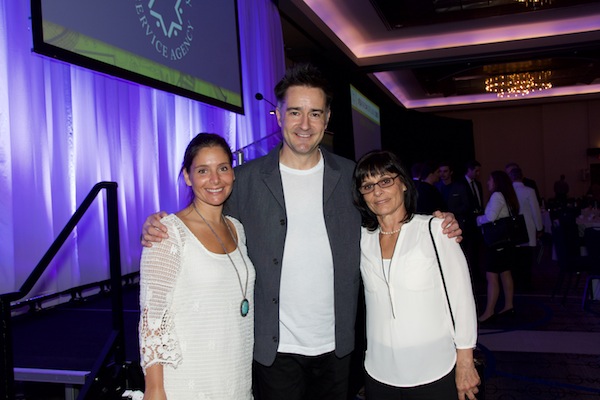
David Chilton, second from the right, with Josh, Michelle and Dr. Neil Pollock. (photo by Robert Albanese Photography)

More than 650 people attended the Jewish Family Service Agency’s 10th annual Innovators Lunch on May 1. This year’s keynote speaker was Wealthy Barber author and Dragons’ Den investor David Chilton.

JFSA board chair Joel Steinberg welcomed attendees to the event, which took place at the Hyatt Regency Vancouver, and introduced Beth Israel Rabbi Jonathan Infeld to make the HaMotzi. The rabbi explained the blessing and connected it to JFSA, describing the agency as “God’s partner in sustaining the most needy in our community, working together and bringing God’s blessing down from heaven and providing it in a real way.”

In his thanks and remarks, Steinberg noted how the Innovators Lunch had grown over the years, generating “significant funds for many important programs and services provided by JFSA.” Through corporate sponsorships, ticket sales and donations, this year’s lunch raised a record amount – more than $315,000, JFSA director of development and communications Audrey Moss told the Independent Monday.

The annual video, introduced by JFSA executive director Charlotte Katzen, not only highlighted the services offered by JFSA – this year focusing on mental health counseling and outreach – but celebrated the driving force behind the Innovators event, Naomi Gropper Steiner z”l, whose “dream, vision and tireless efforts” helped launch it. As the program noted, “Naomi was a remarkable person who dedicated her exceptional talents to helping others.”

Event chair Jackie Cristall Morris echoed those sentiments in her comments and offered thanks to all those who contributed to the lunch as she invited Dr. Neil Pollock to the podium. He and his wife Michelle were this year’s event angel donors, matching dollar for dollar any new gifts or portion of increased gifts, up to $20,000. “I can see that every additional dollar that I give helps to make the life of someone in need, in our local community, a little bit better. That is why we decided to offer the matching gift opportunity for the JFSA this year,” he said. Pollock praised JFSA as “a lifeline” for many, and encouraged everyone to give outside of their comfort zone, reassuring them that it would not change their circumstances, but would help change the lives of JFSA clients.

Shay Keil of Keil Investment Group at ScotiaMcLeod, which co-sponsored the lunch with Austeville Properties, introduced Chilton, who proceeded to entertain the audience with several jokes and stories, all of which had a humorous element. He started off bemoaning Fifty Shades of Grey’s unseating of The Wealthy Barber as Canada’s all-time bestselling book. He then recounted what happened when he first returned to public speaking after a brief retirement, during which he was engaged in various projects, including homeschooling his kids for a few years.

His first tour was for CIBC, he said, speaking to the company’s high-end wealth-management clients, and it started in Victoria. It was an elderly crowd. He joked, “The average age was deceased…. I normally talk about save 10 percent and max your RRSP; these people were too old for RIFs. I didn’t know what to say.” When he finished his speech, two elderly women asked his advice on their portfolio. “‘Well,’ he said, ‘I can’t answer that here. I don’t know your risk tolerance level, your pension involved, your income needs, your age, your health, I’d have to ascertain all that before I can give you any advice.’ And the second lady cut in and said, ‘Please just give us a broad general counsel.’ And I said, ‘Well, do you mind me asking how old are you two?’ She said, ‘We’re twins … we’re 93.’ I said, ‘Oh my, I’d spend it.’”

When the laughter subsided, Chilton shared a couple of funny stories about the beginning of his career. One happened at the start of his tour for The Wealthy Barber. He was waiting at the Calgary airport for a flight and visited the bookstore. Seeing his book on display, he offered to sign some copies, only to have the clerk want to know why he would want to do that, not believing that the 25-year-old in front of her could have written it.

The entire season of Dragons Den is filmed in 21 days and, for these 21 days, the dragons must always wear the same clothing because the decision as to which pitches form each individual show are made only after all the filming is complete.

Chilton spoke of how he became involved in Dragons’ Den (“I’ve had so much fun doing the show”), how it has changed his life (he’s no longer always asked whether it’s best to pay off one’s mortgage or max one’s RRSP, but rather whether his fellow dragon, Kevin O’Leary, is really a jerk), how it attracts very passionate fans, some of whom are inspired to go into business, and a few of his favorite entrepreneurs and most profitable or surprising investments. He also shared other tidbits. He explained, for example, that the entire season is filmed in 21 days, over which they see 230 pitches. For these 21 days, the dragons must always wear the same clothing because the decision as to which pitches form each individual show are made only after all the filming is complete, and there needs to be continuity within each show.

Outside of Dragons’ Den, Chilton has invested in other businesses. Notably, he helped cookbook authors Janet and Greta Podleski – after about a year of them wooing him. He spoke with obvious fondness and admiration for the sisters, who almost went bankrupt (paying their mortgage with credit cards!) before they saw success. Their first book, Looneyspoons, spent almost two years on the national bestseller list and sold 850,000 copies in Canada alone. They have since published more cookbooks and expanded into other food-related ventures.

Chilton ended his speech with a call for perspective. Describing himself as always being in a good mood, he noted that this isn’t the case with many others. “People say that Canada’s national pastime is hockey, but I’d argue, after 25 years on the road, it’s complaining. Everywhere you go,” he said, “people whine about absolutely nothing. It is amazing to me how many people voluntarily decide to be in a bad mood about a trivial matter.”

An economist by training, Chilton said, “I believe the number one thing holding back productivity in many people’s lives is their whining and complaining, they’re always focused on something negative and it’s usually something trivial. People have lost perspective. In Canada, we have lost the ability to discern the difference between a minor inconvenience and a major problem. A long lineup at Tim Horton’s is not a major problem, but it spins people into bad moods for hours. It’s crazy. Look around the world right now and what’s happening in so many places, Ukraine obviously, but think about Syria. We’re talking about a relatively wealthy developed country disintegrating right in front of our eyes, and it’s happening everywhere in the world.”

“I’m telling you right now, if you are healthy and you live in Canada, especially if you live here [in Vancouver], it doesn’t get any better than right here and right now. You’ve got to step back and see how fortunate we are. It’s that perspective, I think, that leads to more generosity, more community involvement, all of that.”

Not only are Canadians better off relative to most other countries, but to previous centuries. “We are living such better lives than at any point in history. It’s crazy that people don’t notice that. And I’m not talking back to medieval times, I’m talking 20 and 40 years ago, one or two generations. Everything, and I repeat, everything is way better now than it was then, everything.” He gave many examples – cars, phones (which now have “more computing power than the entire Apollo 11 mission”), air travel, television, wages, home sizes and building materials, health care. “I’m telling you right now, if you are healthy and you live in Canada, especially if you live here [in Vancouver], it doesn’t get any better than right here and right now. You’ve got to step back and see how fortunate we are. It’s that perspective, I think, that leads to more generosity, more community involvement, all of that. That’s what days like this are all about.”

For more information about JFSA, call 604-257-5151 or visit jfsa.ca.

Format ImagePosted on May 9, 2014May 8, 2014Author Cynthia RamsayCategories LocalTags Audrey Moss, Charlotte Katzen, David Chilton, Dragons' Den, Greta Podleski, Jackie Cristall Morris, Janet Podleski, Jewish Family Service Agency, Jonathan Infeld, Looneyspoons, Neil Pollock, Shay Keil, The Wealthy Barber, The Wealthy Barber Returns
Death must be confronted

Death must be confronted

From left, David Karp, Dr. Romayne Gallagher, Katherine Hammond, Rabbi Dan Moskovitz, Stephen Quinn and Dr. David Silver. (photo by Shawn Gold)

In a night of many interesting and challenging ideas, one of the most interesting came late in the question period. Determining when a person has died is not just a matter of biology, but of choice. According to Dr. David Silver, the question to ask is, When is the person who is valuable and valued gone, even if the body remains alive?

Silver, chair in business and professional ethics and director of the W. Maurice Young Centre in Applied Ethics at the University of British Columbia, was one of five panelists participating in A Community Conversation about Death and Dying, hosted by Sisterhood of Temple Sholom, Women of Reform Judaism, at the synagogue. Organized by Sisterhood’s Brenda Karp, the event was hosted by CBC broadcaster Stephen Quinn and also featured Dr. Romayne Gallagher, head of the palliative care division of the department of community and family medicine at Providence Health Care; Rabbi Dan Moskovitz, senior rabbi at Temple Sholom; lawyer David Karp, partner at Myers, McMurdo and Karp; and Katherine Hammond, a registered nurse, whose family is fighting for their mother’s right to die. Some 350 people came to hear the conversation.

Taming our inner monsters

Noting that his eldest daughter’s introduction to death began with a pet snail, Silver said that he and his wife have explained death to their children. They understand that Mom and Dad will die and that they, too, will die one day, but they have much more to learn, he said, admitting that he, and most of us, “have not advanced far beyond this child’s relationship with death.”

But, he argued, we have an obligation to reach a more mature relationship with death, as well as with sex and spirituality, all of which inhabit “the wild places of our minds.” As Max, the protagonist in Maurice Sendak’s Where the Wild Things Are, tamed the wild things, we must try and tame our own monsters, such as loneliness, physical decline, loss of loved ones, and other such concerns, he said. “Each of these is a real and legitimate source of fear, but a trick to avoid terror is to name these fears, to separate them so that they do not confront us all at once.”

Silver’s core terror in facing death, he said, is saying goodbye to himself, “the person he has known the longest.” He has been searching for an answer to this fear by looking for role models. In this regard, he quoted from an interview Sendak did in 2012, the year he died, with NPR’s Terry Gross: “I have nothing now but praise for my life. I’m not unhappy. I cry a lot because I miss people. They die and I can’t stop them. They leave me and I love them more…. There are so many beautiful things in the world which I will have to leave when I die, but I’m ready, I’m ready, I’m ready.”

Palliative care is about quality of life

Preparation for death is important, agreed Gallagher. Avoidance is one way of dealing with the fear, she said, but most people seek a way of coping, trying to control as much as possible this part of their life. Palliative care, she stressed, is not “just for the dying,” it’s about living well as long you can. In palliative care, death is a part of life.

Gallagher referenced Dr. Elisabeth Kübler-Ross’ research on death, in particular the book Death: The Final Stage of Growth. She remarked how people near the end of life continue to grow spiritually and emotionally, despite the physical breakdown of their bodies. This growth, of course, is hard if you’re in pain, and one of palliative care’s aims is to relieve the suffering as much as possible, and help people deal with the pain that cannot be relieved.

People nearing the end of life are vulnerable, she continued – physically frail, worried about their loved ones, perhaps they have financial pressures – so when someone in this situation expresses a desire for the dying process to go faster, you need to ask them what it is that they are feeling. In most cases, she said, there is something that can be done to help with the acceptance of the changes that are occurring.

Unfortunately, palliative care is currently a patchwork of services, she said. More funding is needed and, Gallagher suggested, we’re perhaps spending too much on technology and finding cures and too little on figuring out how to live well with a chronic illness.

She advised that people help family members by making a plan, letting your family know how you would like things to progress. It won’t guarantee a good or easy death, she said, but it can ease the suffering and help you live as long as possible as well as possible.

Judaism wants us to know death

“The most important thing we learn in life is that life is finite,” said Moskovitz when he took the mic. This is one of the lessons of Adam and Eve, who eat from the Tree of Knowledge and learn that they are mortal. God casts them out of the garden, telling them they should go and live their life. In this way, God does them a favor because the clock is now ticking for them. Not surprisingly, the first thing they do is have a child, “because the way that we try to instil our immortality is through our progeny … and so that knowledge, that moment, is so critically embedded in our spiritual understanding and religious life and it’s a story that’s shared in many different forms amongst all the religious traditions.”

Knowing that we’re going to die helps us prioritize our choices, our purpose, said Moskovitz. There are many Jewish rituals connected with death, sitting shivah, the lighting of yahrzeit candles, Yom Kippur, for example – “all of this is so that death is not a stranger to us, but death is as much a part of life … as birth is.”

Moskovitz referred to Ernest Becker’s The Denial of Death as one of the most important books he has ever read. Becker posited that, even though we know we are going to die, we don’t believe it: we deny death so that we don’t become paralyzed by fear. One of Becker’s astute observations, said Moskovitz, is that our obsession with not dying gets in the way of our fully living.

We don’t talk about death, or we whisper “cancer,” out of a superstition that it will bring death about. However, Judaism wants us to do the opposite, to do teshuvah (repentance) every day, for any day may be our last.

Martin Heidegger, in Being and Time, taught that, in order to live authentically, we need to confront death head on. The rabbi translated from the German, “If I take death into my life, acknowledge it and face it squarely, I will free myself from the anxiety of death, the pettiness of life and only then will I truly be free to become myself.”

One of the Jewish customs that embraces the reality that no one lives forever is that of ethical wills, said Moskovitz. They used to be part and parcel of life. Parents would write a letter to pass on values to their children and grandchildren, summing up what they had learned and what they wanted their children/grandchildren to know/live in their own lives. Ethical wills are not easy to write, he acknowledged – it is not easy to determine what is worth noting from one’s entire life – nor are they easy to read or to receive. He suggested that people imagine, if you had just one letter to write, to whom would it be addressed, and what would you like them to know?

About such things as ethical wills and personal directives, Karp pointed out in the Q&A that they are not legally binding. However, Gallagher noted, they are helpful to family, friends and caregivers, advising people to restrict the content to value matters rather than types of treatment, which may put caregivers in a difficult position.

Courts consider whether a person has the right to die

In his talk, Karp spoke about some of the legal issues relevant to assisted suicide (suicide committed with the help of others) and euthanasia (the killing of another to relieve dire suffering). The latter is only legal in Belgium, the Netherlands and Luxembourg, he said, and assisted suicide only in Switzerland; there are assisted dying laws in Oregon, Washington and Vermont.

In Canada, he said, while suicide is no longer illegal, assisting a suicide is, and it carries a maximum jail sentence of 14 years. Parliament’s rationale, he explained, was a desire to “prevent people from assisting suicide [of] those that are not mentally capable of … making their own decisions and, because of the values that Canadian people had, that society places on human life, which might easily be eroded … if assistance in committing suicide were decriminalized.”

Karp said the seminal case in this matter was the 1993 Rodriguez v. British Columbia (Attorney General). In a 5-4 decision, the Supreme Court of Canada voted against terminally ill Sue Rodriguez’s right to assisted suicide.

Another important decision came from the B.C. Supreme Court in 2012, which “struck down the prohibition against physician-assisted suicide, calling the law discriminatory, disproportionate and over-broad.” Justice Lynn Smith suspended her ruling to give Parliament time to redraft the legislation, said Karp.

Within a month, however, the federal government appealed, arguing “that the current legislation is in place to protect the vulnerable who might be induced in moments of weakness to commit suicide and that the B.C. Supreme Court had no right to overrule Rodriguez….” (The case is called Lee Carter, et al., v. Attorney General of Canada, et al.)

The federal government won the appeal but the decision noted, “Should the Supreme Court of Canada revisit this issue … consideration should be given to … ‘constitutional exemption,’ … essentially to say, we don’t agree with the law either but our hands are tied…. So, what that’s done in practical effect now is it’s re-opened the debate and left the door open to re-argue Rodriguez at the Supreme Court of Canada but, until then, physician-assisted suicide remains illegal in Canada.”

The Supreme Court of Canada agreed in January of this year to an appeal of the appeal, and so will be considering this issue again. Karp predicted that the court will rule against the government, given how Canadians’ views have changed and the experience of physician-assisted suicide where it is legal – there is no evidence of increased deaths among women, lower-income, uninsured and members of other vulnerable populations.

Family tries to have mother’s wishes honored

Hammond and her family have been fighting their own legal battle for her mother Margot Bentley’s right to die.

Hammond shared a bit about her mother’s life before she was diagnosed with Alzheimer’s in 1999. Eight years prior, Bentley wrote a one-page living will. In it, said Hammond, she wrote, “If there is no reasonable expectation of my recovery from extreme physical or mental disability, I direct that I be allowed to die.” Her mother also indicated that she “wanted no nourishment or liquids” in this situation. “My mom did not fear death, she was a very spiritual person,” said Hammond. “What she did fear though was a long, slow, lingering, gradual degradation and, as she saw it, her loss of dignity, and she talked about this a lot with us, her family.”

Hammond described the mental and physical decline of her mother. In a care home for years now, her mother can’t walk, stand, she is unresponsive, kept alive with spoon-feeding. In 2011, said Hammond, the family showed the living will to the care home and, initially, they agreed to follow it, but Fraser Health (the regional authority) intervened and legal proceedings ensued, with the decision that her mother will be cared for despite her expressed wishes.

It’s a human rights issue, said Hammond, according to lawyer Kieren Bridge, who offered to represent her family on a pro bono basis. The family continues to fight – Hammond said she is sure they are doing the right thing.

As advice to others, she recommended that people fill out a representation agreement. If your doctor won’t honor your wishes, she said, find another one. She also recommended that people join the group Dying with Dignity.

After the Q&A, Sisterhood president Reesa Devlin closed the event, thanking the panel, Brenda Karp and other volunteers.

Format ImagePosted on May 9, 2014May 8, 2014Author Cynthia RamsayCategories LocalTags Brenda Karp, David Karp, Dr. David Silver, Dr. Roymayne Gallagher, Katherine Hammond, Rabbi Dan Moskovitz, Reesa Devlin, Sisterhood of Temple Sholom, Women of Reform Judaism
Yom Hashoah ceremony includes survivors and next generations

Yom Hashoah ceremony includes survivors and next generations

Marie Doduck, third from the left, with her family. (photo by Cynthia Ramsay)

“Although the sheer number of Jews who perished in the Holocaust, six million, is seemingly beyond human comprehension, we must remember that each life snuffed out belonged to a person, an individual with a past, present and a promise of the future, a human being endowed with feelings, thoughts and dreams. Tonight, we light candles in memory of the six million Jews, one and a half million of whom were children … and in memory of the millions of other victims – we commemorate them as persons, as individuals.”

Ian Penn of the Second Generation set the tone, as master of ceremonies, for Vancouver Holocaust Education Centre’s Yom Hashoah commemoration on Monday, April 28. A standing-room-only crowd at the Jewish Community Centre of Greater Vancouver’s Wosk Auditorium attended.

Survivors from the local community lit candles in memory of all those who died. Chazzan Yaacov Orzech (Second Generation) chanted El Maleh Rachamim and survivor Chaim Kornfeld, the Kaddish. Dr. Moira Stilwell, MLA, spoke on behalf of the province.

“Those who cannot learn from history are doomed to repeat it,” she reminded the audience. “Yom Hashoah is not just about learning from history, but about passing those lessons on to the next generation. Today, we honor the six million voices that were silenced during the Holocaust, we mourn them, we remember them, and by remembering them, we pledge to never let genocide happen again. Today, we join together and speak for them.”

Penn spoke briefly, but movingly, of his mother, Lola, who died in January, just shy of her 92nd birthday. She survived the Holocaust but, as with most, not without sustaining great losses and witnessing much horror. Addressing his peers, he said, “We grew up with physical comforts but some strangeness and confusion, with marginal understanding and appreciation of the difficulty of becoming normal. Our parents, like Lola, clung to their traditions, confronted the modern, the world they were jettisoned into, their escape route, as best they could, and drove us forward to fulfil their stolen dreams…. Our parents, your parents, were, perhaps, no less complicated than Lola, at times positive and resilient, loving and strategic. And, just as likely, suspicious and threatening, ever vigilant and occasionally hyper-vigilant…. They had to create and re-create themselves, their fears, their terrors, opaque to us, whilst we, their prized possessions, were shepherded with passion … they were survivors in every sense of that word.”

Survivor Mariette Doduck spoke. “The person you see before you is Marie Doduck, a mother, a grandmother and a community volunteer. But there’s another me, Mariette Rozen. A frightened little girl, a tough kid, an enfant sauvage who lived through a lost childhood.” She was only three and a half years old, living in Brussels, when her “life was suddenly ripped apart and irrevocably changed by Nazis.”

In 1939, her family – she was the youngest of 11 – was separated. “We were put into peril by the fact of our Jewishness, a crime under the rule of Nazis’ Europe…. My mother had made a fatal mistake of following orders and registering us at the police station as of Jewish descent. She was told that, if she did, she would not be [taken] … nor would any of us. We had to run and vanish in order to survive. We children were separated and put into different homes. We became the children of silence, like robots, no talking, no crying, no disturbance, a blank mind, with no feelings and really no future. We lived in the moment, we felt nothing except hunger, feelings like loneliness were a luxury.”

Her mother and her brother Albert were murdered in Auschwitz. Doduck saw them being loaded into the trucks. “I had come out of hiding to celebrate my seventh birthday. I hadn’t seen my mother since I was three and a half years old. That was the last time I saw my mother and my brother alive.” Her brother Jean, part of the French Resistance, was hanged by the Gestapo; her brother Simon died three weeks after liberation – “after eating, from the mistaken kindness of the American and Canadian soldiers who liberated the concentration camps and fed the fragile, thin and starving prisoners food that they could no longer digest.”

To survive, Doduck hid with non-Jewish families and in orphanages, took refuge in storm sewers, cellars, as well as in a hayloft, from which she bears a scar from a pitchfork wielded by a Nazi soldier looking for Jews. “I lived mostly in darkness, literally.” When she returned to Brussels years later, she said, she couldn’t recognize it in the light.

“I became tough and streetwise and, because of my young age and my unusual photographic memory, I was used as a messenger in the French Underground. I was even smuggled into a prison to pass a message into my sister Sarah…. Like a fugitive, I lived in fear and confusion in more than one country…. The people I lived with often beat me, and often treated me like a slave … even though they were paid by my family to keep me in hiding. There were also those that risked their lives to save me.” Among them, a convent’s mother superior and a German friend of Doduck’s brother.

Doduck recalled a friend’s death. Savagely beaten, the girl died in her arms. “If I had not forgotten to make my bed and, therefore, been forbidden to go outside [the convent],” said Doduck, she, too, would have been killed.

Doduck also experienced illness, one in which pustules covered her whole body; her skin had to be scrubbed with sulfur. “Despite this sickness and all of the physical and mental anguish, I, like millions of others, did survive, not unscarred, and, in a sense, wise for it. In a perverse way, perhaps, one could even say that I was fortunate because I have seen both sides of humanity.”

“It was only with great pressure from the Jewish community … [that, eventually] 1,123 Jewish orphan children and young adults were brought out of wartorn Europe to make a new life in Canada.”

Reading the book None Is Too Many, Doduck said she had to put it down often, so angered was she that such attitudes existed in Canada as well, “attitudes that nearly kept me, my brothers and sisters out of Canada. People like Prime Minister Mackenzie King and his sidekick Mr. [Frederick] Blair, then director of immigration, did everything in their power at that time to keep Jews out of Canada, even orphan refugee children. It was only with great pressure from the Jewish community,” she said, that, eventually, “1,123 Jewish orphan children and young adults were brought out of wartorn Europe to make a new life in Canada.”

Doduck was one of those children. “When I first started to tell people what had happened to me, they said, ‘Forget about the past.’ But I say to you, I learned from my experiences, both good and bad. Whatever we experience in life contains a message. God provides these vehicles, however painful. It is up to us to interpret and accept them. This we can choose to do either positively or negatively. Without sounding immodest, I had the courage, even as a child, to go on despite the feeling of mistrust, fear, pain and loathing. These lessons are in a significant way responsible for who I am today.”

Doduck arrived here in 1947, 12 years old and, once again, “plunged into a world of strangers.” Here, she said, “I saw goodness in people that I shall never forget, and that’s my adoptive family, Joe and Minnie Satanov and many other wonderful families that took in children of the Holocaust across Canada.”

The Satanovs raised Doduck as their daughter. They bought her first bike, her first pair of skates and many other such things. “You’ve got to understand, we survivors had no toys to play with, we had no blanket to hold on to, we had nothing…. Through their patience and love and understanding, they brought me back to my Jewishness and gave me back my humanity.” But it wasn’t easy, and she ran away from home many times in the first year. “How can you understand how angry, hurt, lonely I was, missing my own mother, brothers, sisters?”

With the Satanovs’ love and support, Doduck graduated high school. “I entered the business working world and eventually met my husband, whom they liked and, as good parents would do, they paid for our wedding. They are both at rest now, but the memory of them is forever ingrained in my heart and in my daughters’, who loved them as grandparents.”

Although encouraged to hide her Jewish identity during the war, between her brother’s reminders that she must remain Jewish and memories of her mother, for example, lighting Shabbat candles (her father died when she was a toddler), Doduck said, “My Jewishness was always part of me…. Now, I take pride in passing this on to my children and grandchildren, unafraid and unabashed, to show and teach them what it is to be … proud of their heritage. Yet, the future is not assured for them. What happened to me and to millions of innocents could happen again … we have the obligation to tell the world the horror of the Holocaust, to teach our children, and they to theirs, so that the past will not repeat itself.”

The hurt will never go away, but life for her has been “a step-by-step process, not something to take for granted, but to fight for. We turned out, survivors, we turned out [to be] decent people that help other people. We are involved in whatever is good: fighting hatred, fanaticism and racism. Although our childhood has been robbed from us – look what we have achieved.”

“I read that the truth is not only violated by falsehood, it may be equally outraged by silence. And I refuse to be silent. Future generations must know and learn. This must be done, however painful. It is our sacred duty – prejudice, hatred, racism, antisemitism have no place in our society.”

She warned, however, that there “are many who are now denying the Holocaust and so we must bear witness…. Because we survived, we have a duty, an obligation, to see to it that these truths are not forgotten…. I read that the truth is not only violated by falsehood, it may be equally outraged by silence. And I refuse to be silent. Future generations must know and learn. This must be done, however painful. It is our sacred duty – prejudice, hatred, racism, antisemitism have no place in our society.

“Tonight, we meet to mark Yom Hashoah, presented by Vancouver Holocaust Education Centre, of which I’m a founding member. I have spoken to countless groups of students about my experiences as a Holocaust survivor. Not everyone can understand how extremely painful it is for me, for us, to remember things I would rather forget. But we do it, I do it, regardless of the sleepless nights that follow. I do it because I know that education is the only key to prevention.”

Doduck concluded, “When I speak to young people, I speak as a child, Mariette; tonight, to you, as a peer, Marie. Yet, standing here before you, I find that I cannot separate the two so easily. But maybe these two different people, one that witnessed the horrors of the Holocaust and the other an active citizen in our community, are essential in the present day: essential to the remembrance of the Shoah and essential to working to ensure that it will never happen again.”

Throughout the evening, musical selections were performed by Claire Klein Osipov or members of an ensemble that included Gil Ashkenazy, Megan Emanuel, Samantha Gomberoff (Fourth Generation), Maya Kallner, Sasha Kaye, Jared Khalifa; Kathryn Rose Palmer, Brian Riback, Talya Kaplan Rozenberg, Ayla Tesler-Mabe and Lorenzo Tesler-Mabe, all of the Third Generation. Wendy Bross Stuart, who produced the evening with husband Ron Stuart, was on piano, Eric Wilson on cello. The organizing committee was Cathy Golden, Ethel Kofsky and Rome Fox, all of the Second Generation.

Format ImagePosted on May 9, 2014May 9, 2014Author Cynthia RamsayCategories LocalTags Marie Doduck, Vancouver Holocaust Education Centre, Yom Hashoah

Help Louis Brier celebrate a generation with Eight Over Eighty

photo - Rita and Dr. Marvin Weintraub
Rita and Dr. Marvin Weintraub
Rita Akselrod
photo - Dr. Jimmy White
Dr. Jimmy White
photo - Chaim Kornfeld
Chaim Kornfeld

(photos by Lorne Greenberg)

Honoring one’s parents is one of the Ten Commandments. In Judaism, respecting and deferring to our elders is not just a value, it’s the law. That said, the opportunity to honor our elders in front of the entire community doesn’t come around very often. Which is just one of the reasons Louis Brier Jewish Aged Foundation’s Eight Over Eighty is so unique.

On May 25, noon, in the Great Hall at the Vancouver Law Courts, LBJAF will honor eight individuals/couples in their eighties who all have one thing in common: “They have each led by example.”

Four of the honorees are featured in this article: Dr. Marvin and Rita Weintraub, Rita Akselrod, Dr. Jimmy White and Chaim Kornfeld. Next week’s Jewish Independent will feature profiles of honorees Dr. Arthur and Arlene Hayes, Stan and Seda Korsch, Samuel and Frances Belzberg, and Serge Haber.

“I know the eight and they are wonderful,” event chair Mel Moss told the Independent, noting about the planned celebration, “Eight over Eighty is modern, yet staged in a traditional way. It is a tribute. It is light and bright yet respectful, it is a vibrant, swinging and ‘with it’ event.”

Dvori Balshine, LBJAF director of development, said, “This will be an event that the community has not seen before. People have been saying, ‘What a brilliant idea!’…. We came up with something fresh, in a new place and at a new time of day.” Even the nomination process, she added, was incredibly well received by the community

RITA AND MARVIN WEINTRAUB
Books and education

Marvin Weintraub was born in Poland and came as a child to Ontario, where he ultimately received a PhD in plant physiology. Rita (Enushevsky) was raised in southwestern Ontario, near Niagara Falls, and graduated in sociology and philosophy. Both studied at the University of Toronto, where they met. They married soon after.

Settling for a decade in St. Catharines, which at the time had a Jewish population of about 500, together they started an adult education series and Rita launched a Jewish library in the synagogue that doubled as a community centre. Some of the librarians still working at the desk were originally trained by Rita.

“I have great faith in the value of education of all kinds, but particularly for Jewish adults and for youngsters,” said Marvin, who taught in the synagogue’s afternoon school. They both became active in Canadian Jewish Congress (CJC) and she in National Council of Jewish Women (NCJW).

Marvin took a job at the University of British Columbia in 1959 and the young family moved west, immersing themselves in synagogue and community life. Rita became vice-president of Beth Israel Sisterhood and NCJW, taking special interest in global concerns like Vietnamese boat people and Soviet Jewry. She also brought her dedication to adult education, which she championed in Vancouver as she had in Ontario.

Marvin was elected president of Beth Israel and, later, Pacific Region chair of CJC, during which time he focused on addressing challenges of Jewish schools and helping teachers upgrade their skills.

Invited to the USSR in 1968 by the Soviet Academy of Science to lecture on plant virology, Marvin took the opportunity to smuggle in a suitcase filled with tefillin, tzitzit, siddurs and machzors. He attended shul morning and night for a month, using his serviceable Yiddish to identify daveners who could use the items.

In 1973, with Dr. Sid Zbarsky and Dr. Robert Krell, Marvin began the process that would lead to the first professor and program of Judaic studies at UBC, which now has three full-time and one part-time faculty.

In 1978, he was awarded a Queen’s Medal for service to Canadian science.

When the Jewish community centre at Oak and 41st was being designed, Rita convinced planners to set aside space for a Jewish library. Then Marvin set up a lunch between Rita and Sophie Waldman, during which Rita convinced Waldman to memorialize Waldman’s recently deceased husband, Isaac, with a library. Rita remains chair of the Friends of the Waldman Library and the annual fundraising telethon, which she began 20 years ago. She also has been a volunteer with Shalom BC, welcoming newcomers to the local Jewish community.

Of all her achievements, the library holds a special place for Rita. “It’s the focal point of the JCC,” she said.

RITA AKSELROD
From tragedy to action

Rita Akselrod’s early experiences were forged by life in Romania, first under the Nazis, then under communism. At seven, she was barred from attending public school because she was Jewish, so a makeshift Jewish school was formed. She and the other Jews in Bacau were forced to wear the yellow star, were subject to curfews and forbidden from assembling in groups. The men in her family were conscripted into forced labor.

By the time Rita was ready for high school, the Russians had taken over and she was taken by her uncles to high school in Bucharest. Her brother wanted to go to university, but the communist regime wanted him in the army, so he fled the country. The rest of the family soon fled also, making their way to Budapest, then trekking through cornfields to an American-controlled zone before landing in a displaced persons camp in Austria.

There, she met “my Ben,” who she recently lost after more than a half-century of marriage. The couple made their way to Israel. But life was difficult in the state’s earliest years, and more so when Rita lost a baby three days after birth. They chose to move and were helped by Leon Kahn, a friend of Ben’s who had settled in Vancouver.

“Leon Kahn sent us papers and we came to Canada,” she said, acknowledging that when she first looked at an atlas, she was alarmed. “I couldn’t believe that we would come to Vancouver when I saw Alaska close by. When I was in Israel and we were corresponding, I said, ‘What’s Vancouver? It’s cold. It’s near Alaska.’ But we did come.”

Kahn set them up in a room in a shared house that had seen many Holocaust survivors and Ben began collecting junk with a horse and buggy, which he would then sell to used-goods dealers. “My husband wasn’t a businessman,” Rita said. “He came from camps and ghettos, he didn’t know the city, he didn’t know the business.”

But the family succeeded, and later sponsored Rita’s parents, brother and his family from Israel.

In 1979, tragedy struck, when the Akselrods’ daughter, Sherry, was killed by a drunk driver. She was a parole officer who had offered to trade shifts on Dec. 26 so a colleague could spend Christmas with family. The loss spurred Rita to bring the group Mothers Against Drunk Driving to British Columbia. She also became involved in grief support, which was taking place in a church.

“I was speaking to a rabbi and said, ‘Can we have it in the Jewish community? Do I have to go to a church?’” Jewish Family Service Agency started a grief support group and Rita attended. Eventually, they asked her to take it over, which she did for many years as a volunteer. As well, she has been actively involved in substance abuse education programs.

She and Ben were founding members of the Vancouver Holocaust Education Centre and, for more than 20 years, Rita coordinated the speakers program, which has allowed tens of thousands of young British Columbians to learn about the Shoah directly from survivors. She is a past president and a life governor of the centre.

She also spent nearly three decades on the board of the Louis Brier, stopping only because she needed to devote more time to Ben when he developed Alzheimer’s. She is immensely proud of her work on denominational health, which ensured that faith-based agencies like the Louis Brier were treated appropriately when the province devolved health delivery to regional boards. A master agreement was signed between the province and the boards, and Rita noted that it “was signed in the Louis Brier, in front of the synagogue, with a priest there and other members of the denominations.”

She is a recipient of the YWCA Women of Distinction Award for community and humanitarian service and, on the 50th anniversary of the Universal Declaration of Human Rights, she was awarded with honorary Canadian citizenship in Ottawa as a Holocaust survivor who has contributed to Canadian life through remembrance and education.

JIMMY WHITE
Make friends with change

Change has been a constant for Jimmy White. He was born in Ohio but the family moved to Saskatchewan during the Depression. His father ran a store before thinking better of it and moving the family to the coast. Jimmy studied at UBC but, since there was no medical school here at the time, he headed to Toronto to become a doctor. While there, he met Beulah and they returned to British Columbia as a married couple.

Jimmy saw even more of Canada through assignments at military hospitals during the war. When peace came, he took up practice downtown and became an institution in the community.

Beulah passed away young, leaving Jimmy and two daughters. He would later marry Miriam Brook, who was widowed with three girls of her own. Sadly, Miriam, too, has since passed away, but Jimmy said he is thrilled to have five daughters.

In addition to his work and family obligations, Jimmy has been a leading voice for Zionism, as an activist in Young Judaea, then the Vancouver Zionist Organization. He was president of the Jewish Community Council (precursor to the Federation) and of the Richmond Country Club. He was a key fundraiser who helped obtain the land for and construct the JCC at Oak and 41st.

These days, he is the head of the residents council at the Weinberg Residence and enjoys yoga, concerts, bridge, art classes, detective novels and debates on politics and language.

The guiding advice of his life came from his mother, he explained. “She said, ‘Make friends with change.’ In her day, there was a horse and buggy. Then the automobile came in. What a big change that automobile made. And now computers and everything! If you don’t make friends with that, you’re left behind. You don’t have to like it, but you have to make friends with it.”

He was amused by a young visitor recently who came to the Weinberg Residence from a Jewish day school. “One of the kids said to me, ‘You’ve had so much change in your lifetime, now there’s no more change left, there’s no more to discover … iPads and iPods,’” Jimmy recalled. “I said, ‘It’s just beginning.’ He said, ‘What else is there to discover?’ I said, ‘That’s exactly what they said when the automobile was invented and when the computer came along. Somebody’s going to invent an antigravity pair of shoes.’”

CHAIM KORNFELD
Never give up

Chaim Kornfeld was born in 1926 in a small town in northeastern Hungary, the youngest of eight children. While his father ran a grocery store and his mother managed the large, observant family, Chaim studied at cheder and yeshivah – until 1944. It was at that comparatively late period in the war when the Jews of his town, and of much of Hungary, were placed in ghettoes before being transported to camps.

In May 1944, Chaim was separated from his parents, sisters and grandmother on the platform at Auschwitz. Dr. Josef Mengele sent Chaim to the right and the rest of his family to the left. His father’s last words to Chaim, before he and the others were sent to the gas chambers, were “Never forget that you are a Jew.”

Chaim survived Mauthausen and Gusen, where he worked in an airplane factory. He survived a death march just four days before liberation in May 1945. Of his large family, only Chaim, a sister and two brothers survived. He finished his secondary education in Budapest and was preparing to enter rabbinical school when the Jewish Agency offered him the chance to go to Israel. He leapt at the opportunity, joined the Israeli air force, and was a founding member of Kibbutz Ma’agan. But educational and professional advancement was limited in Israel’s early years and Chaim took his brother up on a sponsorship to Canada.

In Saskatoon, Chaim taught Hebrew school in the afternoons and evenings, while attending university. During this time, he corresponded with a young woman he had met in the Israeli military, Aliza Hershkowitz, and convinced her to join him on the Prairies. Chaim and Aliza would raise four children (a fifth passed away in infancy).

While at the University of Saskatchewan law school, he served as camp director for Camp B’nai B’rith in Pine Lake, Alta. Practising law continuously since 1960, he is proud to be one of the oldest in his profession.

Chaim is a board member, past president and life governor of the Louis Brier Home. He shares his story of survival and accomplishment with students at the annual high school Holocaust symposium and he swims six days a week at the JCC, where he has been a member for 40 years.

For years, he has served as a Torah reader at the Louis Brier synagogue. Responding to the honor of being recognized for his dedication to community, Chaim said he is embarrassed by the fuss. “I don’t look for honor,” he said. “I never looked for kavods.”

His advice for others? “I would advise people – and I still do in my office sometimes – to never give up. That is my motto in life. Whatever comes up, I won’t just lie down and take it.”

He emphasized his enduring love for his wife Aliza and added, “I always come home for dinner.”

Pat Johnson is a Vancouver writer and principal in PRsuasiveMedia.com.

To attend Eight Over Eighty, call 604-261-5550 or visit thelouisbrierfoundation.com.

Format GalleryPosted on May 9, 2014May 8, 2014Author Pat JohnsonCategories LocalTags Arthur and Arlene Stan Korsch, Chaim Kornfeld, Dvori Balshine, Eight Over Eighty, Frances Belzberg, Jimmy White, LBJAF, Louis Brier Home and Hospital, Louis Brier Jewish Aged Foundation, Marvin Weintraub, Mel Moss, Rita Akselrod, Rita Weintraub, Samuel Belzberg, Seda Korsch, Serge Haber

Louis Brier seeks two years of support with Eight Over Eighty

A fundraiser for the Louis Brier Home and Hospital is urging community members to make a two-year commitment so the facility can rely on sustainable funding to plan for the future.

“We are asking for people to consider making a commitment for two years so that we can tell the Louis Brier ‘we have raised this much money, we will know that it’s there for two years, you go ahead and make the plan you need to make that will take maybe two years to come to fruition and to give the maximum benefits to your residents,’” said Bernard Pinsky, co-chair of the Sustain, Maintain and Enhance campaign.

Bernard Pinksy
Bernard Pinksy (photo from Louis Brier Jewish Aged Foundation)

The last campaign raised $600,000 in each of three years, Pinsky said, and organizers hope this effort will be at least as successful, if not more. The campaign has been underway for several weeks and culminates at the end of this month. A major celebration – Eight Over Eighty – takes place May 25, when eight individuals and couples will be recognized for lifetimes of dedication to building community.

The campaign is important to the facility, Pinsky said, because the calibre of the home and hospital depends on the support of donors. The Louis Brier does not receive funding from the Jewish Federation of Greater Vancouver allocations or from United Way, Pinsky said, and the Jewish-specific components of the home’s character are not funded by government allocations.

“In order to make sure that we have the best facilities for seniors in our community the Louis Brier Aged Foundation needs to raise the money to distinguish it from other seniors facilities – many of which are very good, but they do not have the Jewish component,” he said.

Pinsky identified programs and activities such as kosher food, daily services, Shabbat services on Fridays and Saturdays, Yiddish and Hebrew classes, Jewish-themed discussion groups, films, lectures and performances as examples of the type of “extras” the fundraising supports. Louis Brier also has top-notch physiotherapy, art therapy and music therapy programs, he said. The differences made by these services are significant, he added.

“Most people in the Jewish community have had someone connected to them who has been in the Louis Brier and we also know from people who have loved ones, relatives or acquaintances in other facilities that the Louis Brier is a step above in many respects,” said Pinsky. “And we owe it to the people who established this community to give them the kind of dignity and the kind of retirement and life that they would want at this stage of their lives and it’s only us who can help because nobody else will pay for that.”

photo - Harry Lipetz
Harry Lipetz (photo from Louis Brier Jewish Aged Foundation)

Harry Lipetz, co-chair of the campaign with Pinsky, emphasized the Louis Brier’s dependence on the generosity of the community. “The Louis Brier Home and Hospital doesn’t have memberships such as synagogues [do] to draw upon,” said Lipetz, who is also president of the Louis Brier Jewish Aged Foundation. “We simply rely on the entire Jewish community.”

Lipetz said the Louis Brier’s reputation is due to the resources provided by community support. “The level of care that’s provided is probably rated the highest in British Columbia due to the additional funding that the foundation provides annually,” he said. “I am satisfied that our efforts really do bring quality of life to people, as we say, ‘adding life to years and years to life’ is something we are accomplishing.”

Lipetz asks people to take the initiative to support the campaign. “We have a limited ability to reach out to individuals,” he said. “It is a relatively large Jewish community. We would hope that individuals would come forward whether they are contacted or not to support this campaign.”

Pat Johnson is a Vancouver writer and principal in PRsuasiveMedia.com.

Posted on May 2, 2014May 3, 2014Author Pat JohnsonCategories LocalTags Bernard Pinksy, Harry Lipetz, Louis Brier Jewish Aged Foundation
There are many reasons to visit Summerhill Pyramid Winery

There are many reasons to visit Summerhill Pyramid Winery

Left to right, Ari Cipes, Rabbi Shmuly Hecht and Ezra Cipes have joined forces to help make Summerhill Pyramid Winery’s Tiferet, the only kosher uncooked wine in Canada. (photo from summerhill.bc.ca)

The rolling hills and verdant valleys of British Columbia’s Okanagan region are home to more than 200 wineries, many of which are internationally renowned and award-winning. In fact, a number of Canada’s most prestigious wineries call this region home – Mission Hill, Cedar Creek, Sumac Ridge, to name a few – with one singled out as “B.C.’s most visited winery” by Tourism Kelowna.

There are several possible reasons for Summerhill Pyramid Winery’s popularity. It could be the incongruous sight of the enormous, dazzling white pyramid towering over the central terrace (more on that later). Perhaps it’s because of the estate’s Peace Park or the quality of its 100 percent organic vineyard. Then there’s the winery’s most recent offering, Tiferet (Hebrew for beauty/glory), a new, top-of-the-line kosher wine whose very name reflects the exceptional landscape from which it was created.

Summerhill Pyramid Winery was founded by native New Yorker Stephen Cipes, who moved to the Okanagan with his young family in 1986 and felt an immediate spiritual connection with the land. The developer-turned-vintner purchased Summerhill Vineyards, replanted the existing table grapes with winemaking European grapes and set to work. Located on Kelowna’s Lakeshore Wine Route, the mid-size winery has been producing organic, award-winning wines ever since, making a name for itself in European capitals.

Now, three of Cipes’ four sons are involved in managing the family business. Chief executive officer Ezra Cipes spoke with the Jewish Independent from his office, which overlooks the magnificent, blue waters of Lake Okanagan.

The immediate question at hand was why the winery had decided to produce a kosher wine, especially an extremely limited edition one (1,200 bottles) with a hefty price tag ($100 per bottle). Cipes explained that he was inspired by his friendship with Okanagan Chabad Rabbi Shmuly Hecht and a desire “to share the beauty of natural, uncooked wine with Hecht and all Sabbath observant Jews.”

photo - Left to right, Stephen Cipes, Ari Cipes, Rabbi Levy Teitlebaum and Rabbi Shumly Hecht taste the 2012 crop of grapes
Left to right, Stephen Cipes, Ari Cipes, Rabbi Levy Teitlebaum and Rabbi Shumly Hecht taste the 2012 crop of grapes. (photo from summerhill.bc.ca)

Cipes and Hecht formed a deep bond while “studying texts together and drinking mevushal [cooked] wine together,” Cipes explained. “None of [the cooked kosher wines] can compare with living, uncooked wine, and I realized that Rabbi Hecht did not know the pleasure of living wine. There was none available to share with him, so we decided to make it ourselves, and we set out to make it as beautiful as possible. We used the best grapes of the vintage, bought the best barrels from France and now, a year and a half later, I am pleased to say that the wine we made exceeded my expectations.”

Kosher winemaking is somewhat complicated. Governed by the same kashrut laws pertaining to food (prepared under supervision of a rabbi, containing only kosher ingredients, using rabbinically certified equipment), kosher wine is further divided into two categories: uncooked and cooked. Although both are considered equal with respect to kashrut, their production and final result couldn’t be more different.

To qualify as kosher uncooked wine, the wine’s entire production – from “vine to wine” in vintner vernacular – must be handled exclusively by Sabbath-observing Jewish males. And that includes pouring. Understandably, it is well-nigh impossible for commercial producers to comply with these conditions and most opt to make the cooked category of kosher wine, if they produce such wine at all. Kosher cooked winemaking allows non-Jews of both genders to handle production and serving, however, the other regulations are no less strict. For a wine to qualify as kosher cooked, it must be heated to 1850F, which, well, cooks it. And therein lies the rub.

Exposure to such high temperatures significantly compromises the wine’s flavor and texture and, while most producers now use flash-pasteurization techniques to minimize the damage, there is simply no way around it. “Wine is a living thing…. By cooking the wine, we are destroying the wine,” Cipes’ explained matter-of-factly. The dilemma facing kosher wine vintners is best summed up as having to choose between quality and quantity, taking into account the obvious economics that accompany those choices.

photo - Rabbi Levy Teitlebaum and Rabbi Shmuly Hecht manage the grape-crushing process
Rabbi Levy Teitlebaum and Rabbi Shmuly Hecht manage the grape-crushing process. The wine’s entire production – from “vine to wine” in vintner vernacular – must be handled exclusively by Sabbath-observing Jewish males. (photo from summerhill.bc.ca)

Which brings us back to Tiferet, whose kosher uncooked status partly explains its steep price. Cipes acknowledged the challenge of producing uncooked wine and described Tiferet’s creation as “a labor of love.”

photo - Pressing of the wine post fermentation.
Pressing of the wine post fermentation. (photo from summerhill.bc.ca)

“The complication is that only the hands of Sabbath-observant Jews could touch the wine, equipment or any unsealed vessel containing the wine,” he said. “We had to make the wine away from our regular wine cellar, and without the trained hands of our regular team. But otherwise, it was the most simple and natural process: crush the grapes, allow the fermentation to happen … press the juice from the skins … age in barrels, blend the barrels … allow the solids to settle … rack the wine … and seal it in a bottle. Rabbi Shmuly or myself was there every single day except for Shabbos, checking the temperature of the room or performing some task. For such a simple process, the quality of the wine comes from the quality of the fruit, the careful handling, and creating the correct conditions for the fermentation and maturation.”

Tiferet was made with a relatively new “meritage” blend (merit/heritage), a delicate balance of Bordeaux-inspired grape varieties – merlot (60 percent), cabernet sauvignon (20 percent) and cabernet franc (20 percent) – cultivated in the semi-arid conditions of an Osoyoos organic vineyard and then brought to Summerhill to be turned into something that sounds much more than a run-of-the-mill premium wine.

“Making [Tiferet] with the rabbis changed its way,” Cipes said, trying his best to explain his sense that something else was at work during the creation of Tiferet. “In a way, the wine made itself, there was some magic that happened there. It’s hard to put my finger on it … a certain element of magic happened naturally that wouldn’t have happened otherwise … it was the work of the elements, and of natural forces beyond our control. We can only take credit for partnering with these forces to create this incredible wine.”

photo - Tiferet bottle
Only 1,200 bottles of Tiferet were made.

The description of Tiferet on Summerhill’s website diverts sharply from adjectives usually associated with wine flavor and aromas. Forgoing the more mundane “‘fruity” or “crisp,” Summerhill goes out on a metaphorical limb declaring, “Tiferet has the aroma of baby’s breath and the flavor of mother’s milk.” (If you’re wondering, as did I, the reference is not to genus Gypsophila, most commonly found in English country gardens!)

On the telephone, Cipes struggled to articulate the sensory sensations evoked by this wine. “It has a sweet milkiness … an unusual flavor, a sweet dairy note that doesn’t linger for long … it’s almost an effervescence. The texture is … full- bodied, soft and kind of silky in your mouth, elegant, fresh, fruity. There’s an added complexity to the wine,” before returning to the rather odd-sounding, “It’s like baby’s breath.” Tiferet wine, Cipes concluded, is for a drinker who “want[s] to have an experience of beauty.” With my request for a sample politely but firmly declined, and a price tag sadly out of reach, I’ll just have to take his word for it.

But, wait. What about the promise for more about that huge, looming pyramid, rivaling only the great pyramids of Egypt for alignment and precision? And the new-age-sounding Peace Garden? You’ll have to visit the winery in person to learn more – and, while you’re there, could you bring me back a bottle of that magic?

Nicole Nozick is a Vancouver-based freelance writer and communications specialist.

(Tiferet, $100 per 750-millilitre bottle, is available only through the winery: summerhill.bc.ca/product/2012-tiferet.)

Format ImagePosted on April 25, 2014April 27, 2014Author Nicole NozickCategories LocalTags kosher wine, Lakeshore Wine Route, mevushal, Okanagan, Shmuly Hecht, Stephen Cipes, Summerhill Pyramid Winery, Tiferet, Tourism Kelowna

Posts pagination

Previous page Page 1 … Page 171 Page 172 Page 173 Page 174 Next page
Proudly powered by WordPress