

Skip to content
  • Home
  • Subscribe / donate
  • Events calendar
  • News
    • Local
    • National
    • Israel
    • World
    • עניין בחדשות
      A roundup of news in Canada and further afield, in Hebrew.
  • Opinion
    • From the JI
    • Op-Ed
  • Arts & Culture
    • Performing Arts
    • Music
    • Books
    • Visual Arts
    • TV & Film
  • Life
    • Celebrating the Holidays
    • Travel
    • The Daily Snooze
      Cartoons by Jacob Samuel
    • Mystery Photo
      Help the JI and JMABC fill in the gaps in our archives.
  • Community Links
    • Organizations, Etc.
    • Other News Sources & Blogs
    • Business Directory
  • FAQ
  • JI Chai Celebration
  • JI@88! video

Recent Posts

  • BGU fosters startup culture
  • Photography and glass
  • Is it the end of an era?
  • Taking life a step at a time
  • Nakba exhibit biased
  • Film festival starts next week
  • Musical with heart and soul
  • Rabbi marks 13 years
  • Keeper of VTT’s history
  • Gala fêtes Infeld’s 20th
  • Building JWest together
  • Challah Mom comes to Vancouver
  • What to do about media bias
  • Education offers hope
  • Remembrance – a moral act
  • What makes us human
  • המלחמות של נתניהו וטראמפ
  • Zionism wins big in Vegas
  • Different but connected
  • Survival not passive
  • Musical celebration of Israel
  • Shoppe celebrates 25 years
  • Human “book” event
  • Reclaiming Jewish stories
  • Bema presents Perseverance
  • CSS honours Bellas z”l
  • Sheba Promise here May 7
  • Reflections from Be’eri
  • New law a desecration
  • Resilient joy in tough times
  • Rescue dog brings joy
  • Art chosen for new museum
  • Reminder of hope, resilience
  • The national food of Israel?
  • Story of Israel’s north
  • Sheltering in train stations

Archives

Follow @JewishIndie
image - The CJN - Visit Us Banner - 300x600 - 101625

Byline: Mira Sucharov

Tsabari gives voice to place

Tsabari gives voice to place

Ayelet Tsabari’s short stories win Rohr Prize. (photo from @AyeletTsabari)

One of the best contemporary works of fiction I’ve read in the last few years has been Israeli-Canadian Ayelet Tsabari’s The Best Place on Earth, her 2013 debut collection of short stories. The characters and settings draw the reader in effortlessly. The conflicts are both internal and situational, and they feel urgent and real. The writing is intelligent, sexy and restrained. The judges of the prestigious Sami Rohr Prize for Jewish Literature clearly thought so, too, as the book is the newest winner of the $100,000 US award.

I recently caught up with the Toronto-based Tsabari by phone in Israel, where she was visiting family and friends. She is insightful, thoughtful and articulate, as well as warm and humble – she told me she was “shocked” when she heard the news of the prize. We spoke about identity, the short story form, her favorite summer spot, what makes a novel Canadian and Israeli, and how to write a decent sex scene.

One of the first things that comes to mind in Ayelet’s writing is the ethnicity of the characters: almost all are Mizrahi, a label with which she herself identifies. “It was really important to me to have Mizrahi characters who go about their lives, and not having their Mizrahi [identity] be an issue. That’s never questioned when you have stories about Ashkenazis; that’s the default. I wanted to shatter that, to break the pattern.”

Some of Tsabari’s stories are set in Canada. There is a memorable one set on Hornby Island – the tiny B.C. oasis whose peacefulness Ayelet found she was mentally contrasting with the intensity of Jerusalem – and another in Toronto. Most are set in Israel, though, revealing important themes about life, love and loss set against the background of physical insecurity. Ayelet wrote the book in Canada, was mentored by another Canadian author, Camilla Gibb, and acknowledged that others have told her the book possesses a Canadian sensibility.

Ayelet confided that she tried to avoid writing a conventionally “political” book. “I didn’t want to write about the war, about conflict. What I’m interested in is people’s lives…. But I wanted to set it against that backdrop. This is how I grew up; it’s always there, the conflict, that sense of menace.”

Still, she did have what she considers a political aim. She wanted to give voice to a place that is often better known to outsiders through the media. She wanted to “complicate things,” she told me, to “focus on the lives of one family … and one person, rather than the mass of people you see when you watch the news.”

Why the short story form?, I asked her. While she is currently working on a couple of longer-form projects, she told me that she “love[s] the brevity of [short stories]; I love imagining a life in a short span; I love the idea of a collection.” She added, “It’s kind of like traveling…. You get to know people, you really feel like they’re a part of you, you forge what you think are lifelasting relationships, then you move on. And because so many of the characters [in the book] are transient and nomads, immigrants, and travelers, I felt that the container fit….”

As for how to write a good sex scene, Ayelet explained that writers should provide as much detail as they would for any other type of scene, include it only if it advances the plot and, above all, avoid euphemisms. It’s good advice, really, that could be applied to most everyday interactions: as we encounter one another, we should strive to understand the inner lives of people as they really are. And, as readers, we can be grateful for glimpses of our country’s fine new voices helping us understand other places at the same time as we are able to discover new truths about ourselves.

Mira Sucharov is an associate professor of political science at Carleton University. She blogs at Haaretz and the Jewish Daily Forward. This article was originally published in the Canadian Jewish News. For an Oct. 11, 2013, interview with Tsabari (“Making a home in Canada”) about The Best Place on Earth, visit jewishindependent.ca.
 

Posted on March 27, 2015March 26, 2015Author Mira SucharovCategories BooksTags Ayelet Tsabari, Sami Rohr Prize
Apology spoof short-sighted

Apology spoof short-sighted

As election season progresses in Israel, how Israelis are seeking to position themselves is becoming clearer than ever. In its attempt to unseat Bibi Netanyahu, the joint Labor-Hatnua slate is billing itself as the “Zionist Union,” a moniker that rankles many, including prominent Arab-Israeli writer Sayed Kashua in a recent piece in Haaretz. The left-wing Meretz slate, which features a young politico who happens to have proud cousins in the Ottawa Jewish community (disclosure: I am one of them), is taking a different tack, underscoring the degree to which its policies differ from what has come before. “Revolution with Meretz,” its campaign posters declare. Most fascinating to me, though, is one of the ads coming out of right-wing-nationalist Naftali Bennett’s campaign.

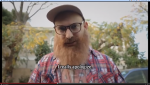
In it, Bennett, head of the Jewish Home (HaBayit HaYehudi) Party, is dressed as a bearded hipster. As he makes his way around Tel Aviv, he is afflicted by a comedic apology problem. In a café, the waitress spills coffee; he apologizes. On a narrow residential street, his car gets rear-ended; he apologizes. On Rothschild Boulevard, a fellow denizen makes her way to a rented bicycle after he’s claimed it; he anxiously backs away, apologizing. Finally, he is shown on a park bench, reading the liberal-leaning Israeli broadsheet Haaretz, where he is reading a reprinted column from the New York Times, headlined “Israel needs to apologize.”

“From now on, we’re going to stop apologizing,” Bennett tells the camera, removing his costume. “Join HaBayit HaYehudi now.”

It’s a bit of brilliant campaigning, the message is seeking to appeal to Israelis’ collective core sense of self. No one wants to feel that their very existence requires an apology.

The policy question, of course, lies in whether Israel’s ongoing conflict with the Palestinians entails giving up the country’s core identity, or whether there is something else going on, namely the occupation. It’s an ongoing tension in how we understand the situation. On one hand are contemporary depictions like those in the otherwise excellent series The Honorable Woman (now streaming on Netflix) that suggest that Israelis and Palestinians just need to leave each other alone and peace will prevail. The unspoken truth, though, is that there is a very real overlapping set of territorial claims being cruelly manifested not only by Hamas rockets from Gaza and terrorist attacks from east Jerusalem and the West Bank, but also by the Israeli occupation. There, in the West Bank, day-to-day Palestinian freedom of movement is curtailed by settler-only roads and staffed checkpoints.

As Bennett has made clear in his increasingly vocal policy pronouncements, under his rule, the occupation would not end – it would simply morph into a sort of apartheid-like area in which Israel annexes part of the West Bank, with Palestinians granted autonomy in the others. In other words, no Palestinian state.

Bennett’s ad suffers from another problem: a reluctance to consider the idea that so much mutual pain has been inflicted by both sides – whatever one thinks of his annexation plan – that some conflict resolution measures may need to include mutual apology, just as mutual recognition has been an important currency of Israeli-Palestinian relations.

There is one area where Bennett’s ad does contain some wisdom: in identity politics. But it’s really only half a serving of wisdom. The crux of the Israeli-Palestinian conflict has been that neither side has been willing to truly recognize the material and identity needs of the other. Through riffing on the idea of apology being absurd, for Bennett to imply that Israel has a right to exist, is fine. But unless Israel recognizes the right of the Palestinians to the same, Bennett’s platform will appear to exist in a moral, political and strategic vacuum.

Mira Sucharov is an associate professor of political science at Carleton University. She blogs at Haaretz and the Jewish Daily Forward. This article was originally published in the Ottawa Jewish Bulletin.

Format ImagePosted on March 13, 2015March 12, 2015Author Mira SucharovCategories Op-EdTags HaBayit HaYehudi, Israeli election, Jewish Home Party, Naftali Bennett

The value of duty, empathy

When Vancouver-based philanthropists Rosalie and Joe Segal announced a lead gift of $12 million towards a new centre for mental health, I felt deeply moved. I had had occasion to visit a loved one at the old facility a few years ago. By any measure, it was a depressing, dilapidated and lifeless space. The new facility promises the kind of physical atmosphere of compassion and dignity so necessary to recovery.

The planned $82 million centre is slated to open in 2017. In recent Globe and Mail coverage, a reporter asked Joe Segal what brought them to this latest philanthropic decision.

I’ll depart here for a moment to mention that there is a common journalistic convention whereby the writer introduces a quote by paraphrasing. In this case, the reporter said that the Segals’ decision “came from a place of empathy.” Then came the actual quote from Joe Segal: “You have an obligation, if you live in the community, to be sure that you do your duty.”

Are empathy and duty the same thing?

The two vantage points at first seem quite different. Empathy is about actually experiencing the plight of another. There is clearly an affective component. Duty somehow feels more legalistic, perhaps even at odds with emotion. As philosopher Immanuel Kant famously said, “Duty is the necessity to act out of reverence for the law.”

If empathy is more about feeling, experience and emotion, and if duty is more cognitive and legal, it seems we need to be concerned with how to summon both values across society. I turned to colleagues to help me better understand the relationship between the two concepts. For some, a viscerally emotional connection between the two is indeed present.

International theory scholar Daniel Levine points out that, for a sense of duty to function, citizens need to feel reverence for institutions, even those that we ourselves have created. Or, perhaps having created laws and ways of living for ourselves is precisely what motivates a sense of duty, “we revere it precisely because it’s ours; we are the sovereign,” Levine suggests. “We are free because we legislate and judge for ourselves.”

For professor of Jewish philosophy Zachary Braiterman, the cognitive and emotional elements are intertwined, “duty has an affective element, an excitement of the senses around a task at hand.”

And, for Jewish filmmaker Eliyahu Ungar-Sargon, “duty flows from empathy, in that moment when I connect the suffering of another to my own experience and that touches a kind of primal anger which motivates action.”

In Jewish tradition, philanthropy – or tzedakah – is considered a legal imperative. The Hebrew word itself shares a root with righteousness and justice, and it does not contain the affective aspects that the Greek-based word philanthropy does, meaning love of humankind.

Empathy in general seems to be less obviously discussed in Judaism, until one realizes that the Torah’s golden rule – “Love your neighbor as yourself” – is ultimately an empathy imperative.

When it comes to mental illness, it’s especially important to keep both duty and empathy in mind. Empathy can be extra hard to summon towards those who are in the throes of the disease. Some forms of mental illness cause sufferers to refuse treatment. Some victims act socially or otherwise inappropriately. Sometimes the sufferer no longer even seems like the actual person.

The Segals are clearly aware of how insidious and invisible mental illness can be, and the challenges around recognizing it and treating it. As Joe Segal told the Globe and Mail, “Mental health was under the rug, and we tried to lift the rug so it can become visible.”

It’s a powerful reminder of how empathy and duty are important elements in building a better society – both for helping those in personal crisis and for enabling us all to live the values of kindness, generosity and compassion.

Mira Sucharov is an associate professor of political science at Carleton University. She blogs at Haaretz and the Jewish Daily Forward. This article was originally published in the Ottawa Jewish Bulletin.

Posted on March 6, 2015March 4, 2015Author Mira SucharovCategories Op-EdTags duty, empathy, Joe Segal, mental health, Rosalie Segal, tzedakah

The godliness of survival

As the 70th anniversary of the liberation of Auschwitz approached last month, discussion turned to the shrinking number of survivors. My father-in-law, Bill Gluck of Vancouver, was one of them, having been deported to Auschwitz from Hungary in 1944, a beautiful boy of 13 with piercing green eyes, a compact frame and a knockout grin. We mentally celebrated his life on that anniversary. But not 24 hours later, his ailing body gave out.

As we began to grieve my father-in-law’s death, I became aware of the delicate dance between remembering Holocaust survivors for the individuals they were, and invoking their identity as survivors.

Esteemed psychoanalyst and child survivor of the Holocaust Anna Ornstein specializes in trauma. Yet even she bristles at being called a “survivor,” telling the Washington Post on Jan. 23, “That’s almost like another crime.” She added, “We were reduced to a race…. This is my name, I had parents who raised me a certain way, and that was not washed away.”

Mourners don’t have the luxury of asking the departed how they wish to be remembered. In any case, we each carry our own points of salience with us when we remember.

At my father-in-law’s funeral and shiva, Bill’s nephew recalled dancing on his uncle’s feet. My husband described the invisible love that had been all around him, like clean air. Bill’s daughter reflected on the heartiness of autumn’s last remaining leaves as she had helped make her father comfortable during his final weeks. And there were his fellow Holocaust survivors, coming to pay respects to a departed member of their own.

Before I met him some 20 years ago, my father-in-law had visited Vancouver schools, telling students his personal story of survival and freedom. For some of the audience, this was their first experience of learning about the Holocaust. One of these students later befriended a young man from Toronto when they studied together at Queen’s University. That young Torontonian would, a few years later, become Bill’s son-in-law.

My stepmom encountered Bill years before I met him, hearing him relay his personal account one evening at Vancouver’s Jewish community centre. I, too, recall reading about Bill’s journey in the pages of the Jewish Western Bulletin (now the Jewish Independent) before meeting his son, who I would go on to marry.

Survivors manage to touch so many, directly and indirectly. Yet, as each one is, my father-in-law was so much more than the sum of those harrowing experiences. Along with his wife, my beloved mother-in-law, Bill built a life of love out of the depths of inhumanity. He lavished a great deal of affection and nurturing on his family, and found his own moments of serenity and solitude as he took up distance sailing around the islands of British Columbia in his later years.

As the rabbi spoke about my father-in-law at the graveside service, he spoke of the godliness that surely ran through him. In young Bill’s harrowing months at Auschwitz, he had found ways to help his fellow inmates. Perhaps most profoundly, Bill had also committed to memory details of instances of kindness amid the horror. Sometimes a certain German guard in the camps would help him – pulling him out of a work line to give him a less strenuous task, placing him on a bicycle during a long march, even giving him his gun to hold. These stories of goodness didn’t die with Bill, for my father-in-law had taken pains to impress these anecdotes upon his children.

Perhaps the godliness of survival is also the godliness of looking for kindness wherever it happens to be, and instilling goodness in the everyday. Bill wanted life to be simple and good; he wanted to find kindness around him, and he hoped others did too.

Mira Sucharov is an associate professor of political science at Carleton University. She blogs at Haaretz and the Jewish Daily Forward. A version of this article was previously published in the Canadian Jewish News.

Posted on February 13, 2015February 12, 2015Author Mira SucharovCategories Op-EdTags Anna Ornstein, Auschwitz, Bill Gluck, Holocaust, survivors

Why is media Israel obsessed?

More senseless violence has hit Jerusalem in recent months, with the brutal murder of four worshippers at a synagogue in the Har Nof neighborhood late last year and multiple stabbings and car attacks. Some folks, while on the one hand wanting to ensure the world learns of these heinous acts, will, on the other hand, continue to ask why the media is so obsessed with Israel.

I was reminded of this question not too long ago via a short CNN video clip with journalist Matti Friedman in which he discusses an article he wrote for Tablet last summer that’s taken on a new life online. To make his case that the media is unfairly biased against Israel, Friedman cites the 2013 death toll in Jerusalem compared to Portland (more deaths in Portland), and the century-long Arab-Israeli conflict toll compared to the ongoing carnage in Syria (more lives lost in Syria). He adds that, in the overall reporting on the Israeli-Palestinian saga, Israel is unfairly portrayed as the aggressor while the Palestinians are cast as victims rather than as agents of their own fate.

The question of presumed agency is a key one in the conflict: how the conflict actors themselves see it, and how others can serve to reinforce these roles. It’s a fair point.

However, to truly understand why individuals, media markets, foreign policy actors and international organizations devote so much time and energy to the Israeli-Palestinian nexus, we’d need some in-depth research to really understand their motivations. For now, here are several plausible reasons that seek to raise the discussion beyond the reductionist assumption that there is a “media bias against Israel” and the related, if unspoken, accusation that the world simply hates the Jewish state.

Perhaps most importantly, American taxpayers provide a significant annual sum of money to Israel, via the $3 billion in annual U.S. aid granted to Israel. It’s natural that the government and the voters in that country at least would disproportionately concern themselves with the region.

Second, the Israel-Palestine core is the heartland of the three main monotheistic religions. The role of religious symbolism in Western art, literature, film and culture in general is significant. The region, in short, has long captured the imagination of many.

Third, Israel – unlike Syria – is a democracy. Citizens of democracies tend to hold other democracies to democratic standards. That means that violence committed in the name of democratic values – for better or worse – sometimes gets more airtime.

Fourth, as others have written before, Israel is seen by many as a colonial transplant. There are very good arguments against a simplistic understanding of Israel as a colonial project. (There is no core state to which settlers send extracted resources, for example.) But there is no getting around the fact that Israel’s birth was precipitated in part by Europe’s carving up of the region into mandate territories after the First World War. The shred of the colonial shadow succeeds in galvanizing a certain political consciousness that other conflicts, especially civil ones within non-democracies, simply don’t, unfortunately perhaps.

Fifth, once Israel came into existence, it was seen by many as a plucky state surviving against all odds. It’s a narrative that Israel and the engines of Diaspora Jewry have themselves succeeded in promoting. That the world continues its fascination with Arab-Israeli geopolitics, played out now partly through the Palestinians, is, therefore, not surprising.

Sixth, Jews tend to punch above their collective weight in many aspects of popular culture: entertainment, the arts, literature and so on. That the Jewish state and its goings-on figure so prominently in the media can be seen as a benign extension of this. Add to this the fact that some of the players in the contemporary Israeli-Palestinian saga also hold American citizenship (three of the victims of the Har Nof synagogue attack held dual Israeli-U.S. citizenship, while the fourth was British Israeli) and the effect is magnified.

Finally, as for Friedman’s comparison between the disproportionate attention given to death and destruction in Israel compared to, say, in Portland, one could say that political violence naturally garners more international concern – again, sadly for those who are ignored – than death caused by typical urban ills such as poverty, petty crime, drugs or traffic accidents.

In sum, I’ve suggested seven plausible reasons why the world might be “obsessed” with Israel, none of them having to do with base hatred of the country or of Jews. Of course, there’s nothing saying that any of these possible reasons obviate the need to look antisemitism in the eye wherever it genuinely appears, or to spend more time analyzing the Palestinian part of the equation. But let’s at least consider the array of possibilities out there before we assume that the world is against us.

Mira Sucharov is an associate professor of political science at Carleton University. She blogs at Haaretz and the Jewish Daily Forward. A version of this article was originally published on haartez.com.


Posted on January 30, 2015January 29, 2015Author Mira SucharovCategories Op-EdTags antisemitism, Israel, Israeli-Palestinian conflict, Palestine

The word “Palestine”

Does Palestine exist? A blogger on the often-provocative website JewsNews doesn’t think so. A package of dates marked “Palestine” must be “magic,” he says, since there’s no such country. And this echoes Moshe Arens’ trotting out of the old canard that Palestine doesn’t exist, but Jordan – the real Palestinian state – already does.

There are at least two issues at stake for Israelis: legitimacy and security. Yet a closer look reveals that neither concern is quite what it seems.

Part of the reason that many Jews have been allergic to the word Palestine is that it has long been used to negate the legitimacy of Israel. In this view, the land between the Mediterranean Sea and the Jordan River (or west of that, to the Green Line, depending on one’s view) is like a blue and white transparent film revealing a red, white and green film, containing a different narrative beneath. Since time is linear and space is finite, there seems to be room for only one people and one narrative on that tiny slice of Middle East territory. One cannot reverse the flow of the sands of time. Israel exists, so Palestine, the logic goes, cannot.

But, surprise! Those who would wish to roll back history and replace Israel with Palestine, as the Palestinian national movement claimed to want to do for decades, have now indicated – at least via their official leaders – that they will be satisfied with a mere 22 percent of the land they originally claimed as theirs. A state of Palestine, in other words, need no longer negate the symbolic right of Israel to exist.

Complicating all of this, though, is the one little word one often hears from Israeli officials, and which every state and all people deserve: security. For example, Bibi Netanyahu, in a video posted Dec. 27 to the Prime Minister of Israel’s Facebook page, contained an address to an enthusiastically nodding U.S. Senator Lindsey Graham.

In the span of a few seconds, Bibi managed to call out Palestinian negotiator Saeb Erekat’s rhetorical hyperbole (Erekat’s comparison of ISIS’s Islamic state desires with Bibi’s Jewish state utterances), while associating the Palestinian negotiator’s “incitement” with the throwing of a firebomb on an Israeli girl in the West Bank. The kicker: the folly of the Palestinians seeking to bring to the United Nations Security Council a proposal – a “diktat” Bibi calls it – containing provisions that “seek to undermine our security.”

The trouble with the security discourse is that, just as stating “there is no Palestine” (or “there is, but it’s in Jordan”), it tends to serve as a rhetorical trump card. We all deserve security but we also know that full and total security is ultimately elusive. Where security threats were traditionally measured solely in terms of territory, now security experts also think in terms of environmental safety, immigration and contagious diseases. There are always new threats on the horizon. All the while, we must recall that conventional security threats never really disappear – for anyone.

On top of all this we must ask whether the little girl who was tragically burned by the act of terrorism in the West Bank was in fact more secure by Israel holding onto that territory and moving its population there. Counterfactual reasoning is never foolproof, but one could certainly make the argument that occupying a hostile population for decades on end is itself a security liability, rather than a security guarantee.

Many have indeed made this argument. More than 100 retired Israeli generals, other high-ranking officers, Mossad officers and police chiefs have even told their prime minister as much, writing a letter last November urging him to “adopt the political-regional approach and begin negotiations with moderate Arab states and with the Palestinians (in the West Bank and in Gaza, too), based on the Saudi-Arab Peace Initiative.”

Obviously Israel wants security. So do the Palestinians. When it comes to the nasty world of international politics, there are no absolute security guarantees – but there are calculable risks. For starters, peace treaties tend to hold better than wishing that an occupied people will sit on their hands for decades. With 59 internal checkpoints in the West Bank, not counting the 40 near the entry to Israel at B’Tselem’s last count, I would even suggest that hoping that your own civilian population can move freely and safely within the occupied territory where an enemy population resides is where the magical thinking really lies.

So, as for that blogger and those dates, I would advise him to take a bite out of the dried fruit. I doubt that those dates are magical, but there is indeed a sweet spot that reveals the best chance for peace between two peoples vying for security and independence. And it doesn’t involve keeping the status quo going, unhappily ever after.

Mira Sucharov is an associate professor of political science at Carleton University. She blogs at Haaretz and the Jewish Daily Forward. A version of this article was originally published on haartez.com.


Posted on January 23, 2015January 21, 2015Author Mira SucharovCategories Op-EdTags Israel, Israeli-Palestinian conflict, JewsNews, Lindsey Graham, Middle East, Moshe Arens, Netanyahu, Palestine, peace, Saeb Erekat, security

Open Hillel raises questions

On the issue of Jewish belonging, I have always pushed for as wide a tent as is necessary to accommodate the range of Jewish experience. Inclusion, rather than ideational boundaries, has been my watchword.

But now, since the Open Hillel conference held at Harvard in October – which billed itself as helping create a “Jewish community that all Jews can feel included in, not just those who pass a political litmus test” – I’ve been feeling a little bit more prescriptive around what values should matter, especially around the centrality of Israel to Jewish life.

On one hand, I’m instinctively positively predisposed to a movement like Open Hillel. Previous reports of a Hillel student board member stating he was forced to step down because he sought to host a Palestinian solidarity activist speaker following the screening of a Palestinian documentary give me chills. And I find Hillel’s guidelines about rejecting speakers who hold Israel to a “double standard” frustratingly enigmatic. There is good conceptual reason to hold Israel, a democracy, to a different standard than Syria, for example. And there is an understandable reason to “single out” Israel when we, as Diaspora Jews, devote more emotional, financial and political resources to the Jewish state than to almost any other.

But, now, my doubts. First was LGBTQ and Palestine solidarity activist Sarah Schulman’s Facebook remarks about the conference. In her post, she railed against the “bullshit of LGBT Birthright,” accusing it of being a forum for “pinkwashing.” I’m partly sympathetic to the pinkwashing charge, awareness of which Schulman herself helped propel in a 2011 New York Times op-ed. There is much to be criticized in Israel’s hasbarah efforts, especially in light of the government’s apathy towards the morally corrosive occupation. But there is a gap: Where is the desired opportunity among Open Hillel activists and participants like Schulman to encourage a deep and textured cultural and political engagement with Israel? Birthright may not be the answer. But what is?

Echoing my thoughts were Steven M. Cohen’s reflections, also posted publicly on Facebook. There, Cohen praised the Open Hillel conference for opening up a much-needed debate on Israeli policies, including criticism of the occupation, but he lamented the apparent “abjuring of the primacy of Jewish or Israel attachment” among participants.

And then came an essay by Holly Bicerano in the Times of Israel, where she criticizes Hillel International’s “Vision for Israel,” which states that “Hillel desires that students are able to articulate why Israel plays an important role in their personal Jewish identities and how Israel continues to influence Jewish conversations, global Jewish peoplehood and the world.”

Bicerano is concerned that, “This particular vision is predicated on the supposition that having a Jewish state must be an integral part of every deserving Jew’s identity.”

My personal, liberal variant of Zionism abhors the occupation, desires to redress political inequalities among the state’s ethnic groups, and opposes the general trend towards illiberal legislation in the Knesset. But, at the very least, I see an important role for Israel’s existence in the life of the Jewish people. While theological commitments are subject to the debates of rationalists, Israel helps secure a sense of peoplehood. Where Jews now speak the languages of their host societies, Israel’s Hebrew revival reminds us of our shared heritage. Where Diaspora Jews must negotiate a minority identity within a majority culture, Israel enables a sense of collective Jewish autonomy.

It follows that were I to find myself in the position of coordinating a campus-based, non-denominational Jewish organization such as Hillel, I would surely encourage students’ right to wrestle with, criticize and protest the policies of Israel. But I would rue the day that the notion of Israel as a component of collective Jewish identity was simply left at the curb.

So, I support the diversity of political views around Israel that were given an airing at the Open Zion conference and I welcome a much-needed, on-the-record conversation about the indignities of the occupation. But if, like Cohen, I am troubled that some of the Open Hillel proponents reject the relevance of sensitive and textured Jewish cultural and political engagement with Israel writ large, what am I to conclude about the fledgling movement?

What I conclude is that we must encourage more Open Hillel gatherings to be held. We must convene discussion not only among the converted. In the marketplace of ideas and attachments, we must realize that the most compelling identity markers will win. Therefore, we must seek to understand how, if Israel is so central to the Jewish identity of so many, it is precisely not this way to so many others. And, if it happens to be decades of Israeli settlements and occupation that have helped push younger Jews away, we must double down – as if we needed a further reason – to do something about those policies too.

Mira Sucharov is an associate professor of political science at Carleton University. She blogs at Haaretz and the Jewish Daily Forward. A version of this article was originally published on haartez.com.

Posted on January 9, 2015January 8, 2015Author Mira SucharovCategories Op-EdTags free speech, Israel, Open Hillel, Zionism1 Comment on Open Hillel raises questions

Time to put the Hebrew back

With the school year in full swing, and with Chanukah just beginning, I’d like to take the opportunity to offer a single wish for Jewish community life in Canada. It’s quite specific and straightforward but, I believe, far-reaching.

I hope and wish that our community’s supplementary and day school teachers would speak Hebrew to their students. In other words, I’d like to see us put the Hebrew back in Hebrew school.

Having experienced more than one supplementary school via my own kids, this column is not meant to impugn any particular school, but rather is meant to capture a troubling dynamic I’ve witnessed in more than one place, and with more than one teacher.

For example, seldom have I heard the teachers say the simplest of Hebrew phrases – such as boker tov (good morning) – to the kids when greeting them. As I picked up my kids recently, I puzzled over why the teacher was asking the students to put the chairs on the tables in English when Hebrew would work beautifully for a simple command involving two common nouns.

Some months ago, I approached one school director about my concern, citing Ottawa’s very successful French immersion program as a model. (Recall that, until recently in Ottawa, where I live, kindergarten classes were only a couple of hours per day, showing that even direct application of spoken French in a limited time can have profound results.) The director’s response was that, for French immersion schools, French is akin to a religion. Here, on the other hand, the director explained, “We are in the business of teaching kids how to be Jews.”

I’ve been mulling over the distinction since then. Is Hebrew language acquisition conceptually distinct from “teaching kids to be Jews”?

Now, admittedly, I’m one of the more passionate Hebrew-philes there is, having elected to speak only Hebrew to my kids since they were infants. I realize not everyone shares my obsession for Hebrew and Israeli sitcoms, music and news.

I decided to tackle that director’s implication. I started by thinking about the one Hebrew word that virtually everyone living in a North American city knows. By dint of the craze around Christmas, probably the first Hebrew word children learn – even before shalom, ima or Shabbat – is Chanukah.

Now, most everyone knows that Chanukah is the name of the Jewish holiday commemorating the Maccabees’ victory over the Assyrian-Greeks. But, how many of us actually know the literal meaning of the word? Here’s a further challenge: I would wager that knowing the literal meaning of the word Chanukah provides key links to three seemingly unrelated things: a) better recall of the meaning of the holiday, b) an understanding of the causes of the First Intifada, and c) a deeper conceptualization of the entire relationship between Jewish identity and education.

So, here goes. Chanukah is the Hebrew word for dedication or inauguration. Knowing this would help kids remember that central to the holiday was the rededication of the Second Temple, and would render intelligible the chanukat ha’mizbayach phrase in the popular holiday song whose Hebrew words often register in kids’ minds as gibberish, unless they are schooled in the language.

Chanukat ha’bayit is also the Hebrew phrase for housewarming. A bit of modern Israeli political history reveals that Ariel Sharon’s provocative Muslim Quarter housewarming party in December 1987, during Chanukah, is understood by many political observers to have helped fuel the first Palestinian intifada. (Perhaps his housewarming party was meant to be a word play on the Festival of Lights, falling as it was at the same time. Perhaps not, but it also serves as a useful memory mnemonic for students of Israeli politics.)

Finally, all Hebrew words derive from a three-letter root. The root of Chanukah is the same as the root for chinuch (education) and for chanich (camper, initiate). In other words, in a beautiful piece of poetic connection, understanding Hebrew can be seen to be an early step of being initiated into the Jewish people in a meaningful way. In any event, the idea of education in Jewish life – whether formal, through school, or informal, through camps and youth groups – is meant to remind kids they are joining something much larger than themselves. And that can only be helped by being regularly exposed to the rich and eternally clever language of our people.

Mira Sucharov is an associate professor of political science at Carleton University. She blogs at Haaretz and the Jewish Daily Forward. This article was originally published in the Ottawa Jewish Bulletin.

Posted on December 12, 2014December 11, 2014Author Mira SucharovCategories Op-EdTags Chanukah, Hebrew, school

The tent is getting smaller

Amid what had been a steady stream of volunteer commitments I had undertaken in the Jewish community, it seems I now have some more free time. I could be pleased by the fact that I am freed from a major board commitment, but I’m not. Because something’s rotten in the state of Diaspora Jewish communal discourse.

Let’s back up. After seven years of dedicated service on the board of a large Jewish organization here in Ottawa, where I helped initiate policies around ecological sustainability, reform the board’s governance and procedures, work on LGBTQ inclusion, and reformulate our mission statement to better reflect the organization’s values, I found myself having risen through the ranks of the board’s executive to the position of vice-chair. All this along with teaching adult education classes at the institution, creating an innovative women’s athletic program there and being a regular user, along with my family, of a variety of programs and services. Normal board succession procedures imply that I would be next in line for chair – a position I had made plain to those in charge that I was willing to take on.

But rumblings over the past half-year suggested that I was potentially radioactive in the minds of some donors. Why? Because of my writings on the subject of Israel. In short, the board’s selection committee made clear that they’d be better off without me.

Readers of my columns know that while I am frequently critical of Israeli policies around the occupation and other anti-democratic moves afoot in Israel, I am squarely in the camp of liberal Zionism. This means that, in addition to criticizing the occupation and pressing Israel to make the necessary conditions to engage in a meaningful peace process, I oppose full-out boycott of Israel leading to the undermining of its core identity as a Jewish state. I have publicly debated anti-Zionists and non-Zionists – both in person and in print – on these issues, and I regularly tout the importance of Israel engagement and Jewish and Hebrew literacy. These are all ideas that I also put forth both in my columns in local Canadian Jewish papers and in international media, in Haaretz, the Forward and, before that, in Open Zion at the Daily Beast. Still, it seems that when it comes to positions of community leadership, none of this is enough to establish one’s loyalty to a tent that is rapidly shrinking.

We’ve heard this all before, of course. Witness the stonewalling reaction Peter Beinart received by the Toronto-based Centre for Israel and Jewish Affairs when his organizers tried to get him an audience with Hillel on campus during his three-city Canadian tour a couple of years ago. And then there’s the canceling of David Harris-Gershon’s talk at the Jewish community centre in Washington, D.C., earlier this year.

It’s by now a truism that the breadth of policy debate among Israelis themselves far outsizes what is evidently permitted within the Diaspora Jewish community. But then, neither do Israeli Jews have to actively work to inculcate Jewish identity, as I frequently have in my writings, including promoting Jewish education, pushing for the active use of Hebrew, examining the value of synagogue affiliation, defending Jewish and Zionist summer camping experiences and, yes, insisting on the value of a Diaspora connection to Israel.

So, I’m left to ask this: what is it, ultimately, that we, as Jewish community volunteers and activists, are being asked to be loyal to? Are we being asked to promote Jewish community vitality, wrestle with ideas around Israeli politics and policies, encourage Jewish literacy, and consider realities that preserve Israel’s Jewish and democratic character? Or are we being asked to simply support the endless occupation just as we see Israel’s democratic character crumbling before our very eyes, as the country becomes more and more of a pariah state? I think I know the answer. But how I wish it weren’t so.

Mira Sucharov is an associate professor of political science at Carleton University. She blogs at Haaretz and the Jewish Daily Forward. A version of this article was originally published on haartez.com.

Posted on December 5, 2014December 3, 2014Author Mira SucharovCategories Op-EdTags community, Diaspora, Diaspora Jews, Israel

“Temporary” occupation

It’s a question that defines the debate over Israel’s policies and the state’s grand strategy: do Israeli human rights organizations monitoring the occupation merely serve as a fig leaf, adding an ethical patina to what is a fundamentally immoral situation?

Four months into his new position as head of B’Tselem, having come from the Association for Civil Rights in Israel, Hagai El-Ad and I spoke by phone recently about this and other issues. [To read the JI’s interview with El-Ad, click here.]

Given that the Israeli occupation of the West Bank and Gaza was supposed to be “temporary,” El-Ad is well aware that “at some point the term loses its meaning.” So, as he took the helm of B’Tselem last May, the organization issued a position paper provocatively named 47 Years of Temporary Occupation. As El-Ad put it, B’Tselem is shifting its focus from “fighting against human rights violations under occupation to a strategy [emphasizing] that the occupation will forever violate the human rights of Palestinians.” To this end, B’Tselem is now trying to end the occupation – not just help manage it.

It’s a laudable goal. But how achievable is it?

B’Tselem is starting with some concrete steps, however limited. For one, they have recently announced that they will not cooperate with Israel Defence Forces military investigations around Operation Protective Edge. Calling it “theatre of the absurd,” El-Ad believes that the military investigation system is one intended to “always result in impunity.” And this protected military violence is a necessary “lifeline of the occupation.” Hence, the need to squelch it.

As far as the bigger picture goes, El-Ad was cautiously optimistic: probably a necessary blend for anyone in human rights work in the Israel/Palestine morass. He takes comfort from what he sees as B’Tselem’s mission being fundamentally buttressed by the very human rights discourse extant in Israel. That the concept of human rights is a “relevant currency” in Israeli politics gives the organization an important starting point by which to leverage societal consensus. Though without the clout or mandate to engage in electoral lobbying efforts, working to end the occupation must be done very much at arm’s length from the policy sphere. Still, it’s a start.

El-Ad adds that he invites others to see what they can do “in their own communities” to disrupt the idea of the occupation as “business as usual.”

OK, so most of us can agree that the occupation is an undesirable situation, but what about the argument, issued frequently by Israel’s most strident defenders, that the status quo is a security imperative? If Hamas didn’t launch rockets, the thinking goes, the war in Gaza wouldn’t have been necessary. And, if West Bank Palestinians didn’t seek to blow up Israelis, the checkpoints and night raids and (the various) separate roads could be dismantled. And we all know about the apartheid, uh, separation, ahem, security wall.

Trading off between security on one hand, and human rights and ending occupation on the other, is a false dichotomy, El-Ad explained. In Gaza, “we’ve encountered time and again the theory that using more and more force will provide the desired outcome. But that’s not really working.” When it comes to day-to-day military policing in the West Bank to ensure the safety of Israeli citizens, we all know the chicken-egg argument: the internal checkpoints would be unnecessary were there not settlements (illegal under international law) to protect, hence, B’Tselem’s claim, in its 47 Years of Temporary Occupation document, that settlements are “the heart of the matter.”

Now that the fighting in Gaza has died down, B’Tselem is reflecting on its work compiling data on casualties, monitoring international humanitarian law violations – including by Hamas – and collecting first-person testimonies, attempting to put a face to the Palestinians in Gaza. El-Ad is quick to note that the media coverage in Israel tended to be one-sided, with little coverage of the war experience for Gazans. As an antidote, B’Tselem relied heavily on social media and web coverage to get additional information disseminated, despite a hacking attempt that left their website site crippled for a few days.

After talking to El-Ad, I’m left with a strange combination of hope and cynicism. As someone who cares deeply about seeing an end to the occupation, I’m buoyed by the fact that the head of Israel’s most important human rights organization has this broader goal top of mind. At the same time, absent the apparent political will in the top echelons of the Israeli government, I can’t escape the belief that intelligent, passionate and committed Israeli change-makers like El-Ad are too often left clapping with one hand.

Mira Sucharov is an associate professor of political science at Carleton University. She blogs at Haaretz and the Jewish Daily Forward. A version of this article was originally published on haartez.com.

Posted on October 17, 2014October 17, 2014Author Mira SucharovCategories Op-EdTags B’Tselem, Gaza, Hagai El-Ad, IDF, Israel, Israel Defence Forces, Palestinians, West Bank

Posts pagination

Previous page Page 1 … Page 4 Page 5 Page 6 Next page
Proudly powered by WordPress