

Skip to content
  • Home
  • Subscribe / donate
  • Events calendar
  • News
    • Local
    • National
    • Israel
    • World
    • עניין בחדשות
      A roundup of news in Canada and further afield, in Hebrew.
  • Opinion
    • From the JI
    • Op-Ed
  • Arts & Culture
    • Performing Arts
    • Music
    • Books
    • Visual Arts
    • TV & Film
  • Life
    • Celebrating the Holidays
    • Travel
    • The Daily Snooze
      Cartoons by Jacob Samuel
    • Mystery Photo
      Help the JI and JMABC fill in the gaps in our archives.
  • Community Links
    • Organizations, Etc.
    • Other News Sources & Blogs
    • Business Directory
  • FAQ
  • JI Chai Celebration
  • JI@88! video

Recent Posts

  • Eby touts government record
  • Keep lighting candles
  • Facing a complex situation
  • Unique interview show a hit
  • See Annie at Gateway
  • Explorations of light
  • Help with the legal aspects
  • Stories create impact
  • Different faiths gather
  • Advocating for girls’ rights
  • An oral song tradition
  • Genealogy tools and tips
  • Jew-hatred is centuries old
  • Aiding medical research
  • Connecting Jews to Judaism
  • Beacon of light in heart of city
  • Drag & Dreidel: A Queer Jewish Hanukkah Celebration
  • An emotional reunion
  • Post-tumble, lights still shine
  • Visit to cradle of Ashkenaz
  • Unique, memorable travels
  • Family memoir a work of art
  • A little holiday romance
  • The Maccabees, old and new
  • My Hanukkah miracle
  • After the rededication … a Hanukkah cartoon
  • Improving the holiday table
  • Vive la différence!
  • Fresh, healthy comfort foods
  • From the archives … Hanukkah
  • תגובתי לכתבה על ישראלים שרצו להגר לקנדה ולא קיבלו אותם עם שטיח אדום
  • Lessons in Mamdani’s win
  • West Van Story at the York
  • Words hold much power
  • Plenty of hopefulness
  • Lessons from past for today

Archives

Follow @JewishIndie
image - The CJN - Visit Us Banner - 300x600 - 101625

Byline: Lauren Kramer

Serving healthy, tasty food

Serving healthy, tasty food

Susan Mendelson launched Mendelson’s Kosher Gourmet from the kitchens at Vancouver Talmud Torah earlier this fall. (photo from Susan Mendelson)

Susan Mendelson, the entrepreneur at the helm of Lazy Gourmet Catering for the past 38 years, debuted Mendelson’s Kosher Gourmet from the kitchens at Vancouver Talmud Torah earlier this fall.

Mendelson and her team of six are now serving a selection of 25 lunches a week to VTT children and offering the Jewish community their kosher event catering services, as well as the opportunity to purchase BCKosher-certified challahs, babkahs and cinnamon buns.

Months ago, Cathy Lowenstein, VTT’s principal, approached Mendelson and asked her to help create a request for proposals that the school could use to obtain bids from potential caterers.

“I felt this would be a great opportunity to get back into the Jewish community,” Mendelson reflected. So, she put in a proposal, her bid was accepted and she worked with the school to create a kitchen space that would work.

Construction finished just as the first orders needed to be prepared, which meant the timing was tight and every detail needed attention. “When we need to order sheet pans and dishes, they have to be dipped three times in the mikvah before we can use them, so it’s much more complicated than anything I’ve done before,” she said.

Step One was finding a great team. Vancouver chef Marat Dreyshner is presiding over the kitchen while his spouse Ella Dreyshner is managing the operation.

Since both are mashgichim, all the kosher details are fully supervised. “They’re fabulous people and I’m lucky to have them,” Mendelson said.

Students were audibly impressed by their pre-ordered meals, which were based on focus groups with VTT kids earlier in the year. Lunch options include hot dogs, burgers (made from scratch), roasted turkey sandwiches, chicken noodle soup and sushi. There are gluten-free and vegan options daily, and the Mendelson’s Kosher Gourmet team is dedicated to healthy meals, with grains made from sprouted whole wheats and treats like banana chocolate chip bread served only on Fridays. “The rest of the time, it’s Caesar salad, kale chicken wraps, Israeli salad and dishes like that,” she said.

Sustainability is another key word for Mendelson, so you won’t find any take-out containers in her serving materials. Instead, the children are using regular silverware and melamine dishes for their meals.

Mendelson has spent her lunch hour walking around the school, creating systems and processes to streamline service and gauging reactions to the food. “It’s exciting to me that the kids are really enjoying this healthy food,” she admitted. “Today they were coming back for second and third portions of soup and, if there’s extra, we’re happy to give them more.”

The kosher catering orders are also coming in fast, leaving Mendelson fully energized, engaged and up planning from 3 a.m. She credits Lowenstein for getting her involved. “She’s an extraordinary partner, a brilliant, kind, thoughtful and accommodating woman who is always looking at how to make things work. If it wasn’t for her, I probably wouldn’t have pursued this,” she said.

Meanwhile, Lazy Gourmet Catering is still going strong with a staff of 170 and contracts for conference work downtown with Simon Fraser University and the University of British Columbia. There’s the womb-to-tomb events Mendelson’s been catering the past four decades and a new Chinese website is helping secure business from Vancouver’s Chinese community. “For one Chinese wedding, we had six days to cater for an event with 200 people,” Mendelson said.

“I’m exhausted,” she admitted. “But I’m energized. With Mendelson’s Kosher Gourmet I thought to myself, this might make a difference. If I can turn these kids on to a healthy way of eating, maybe I’ll make a difference in this world.”

To place kosher orders, visit mendelsonskosher.ca.

Lauren Kramer an award-winning writer and editor, lives in Richmond. To read her work online, visit laurenkramer.net.

Format ImagePosted on September 30, 2016September 28, 2016Author Lauren KramerCategories LocalTags catering, gourmet food, kosher, Lazy Gourmet, Vancouver Talmud Torah, VTT
Potential to change kids’ lives

Potential to change kids’ lives

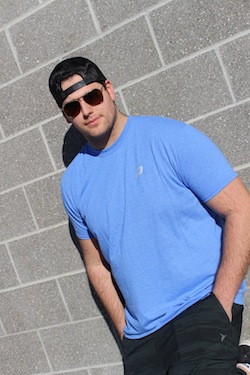
Potential Apparel co-founder Shane Golden. (photo from Shane Golden)

There’s one thing on the mind of Vancouverite Shane Golden, 24, and that’s tikkun olam. The Richmond native is co-founder of Potential Apparel, a sports clothing company that donates a portion of sales from each of its garments to the Make-A-Wish Foundation, and has contributed $20,000 to the charity over the last three years.

“Since my earliest days at Jewish elementary school, even when I was a toddler at Beth Tikvah preschool in Richmond, I was taught the ideology of repairing the world,” Golden told the Independent. “It was reinforced through my family’s actions in the Jewish community. From my earliest memories, I grew up knowing that every action I take has an opposite and equal reaction. I’ve always asked myself, how can I use these physics to help the world around me, to help repair the lives of individuals I’ve never met, and faces I’ll never see?”

Golden and David Dotan founded Potential Apparel three years ago, while Golden was studying engineering at Simon Fraser University. He switched to marketing management at B.C. Institute of Technology but left 18 months ago to work on Potential Apparel full-time. The concept behind the company was Dotan’s, he said. “David used to play professional hockey in the NHL, and we thought we could use his connections and network to start developing the brand.” Those connections include professional athletes Brendan Gallagher, Martin Jones and Ryan Johansen of the Nashville Predators.

photo in Jewish Independent - The concept behind Potential Apparel came from company co-founder David Dotan
The concept behind Potential Apparel came from company co-founder David Dotan. (photo from Shane Golden)

“We develop the shirts with them to create a product that they want to wear,” Golden explained. “Sure, they might have deals with Nike to wear clothes, but they’re wearing Potential Apparel when they want to be comfortable – and they’re definitely influencers.”

To date, Potential Apparel has sold more than 200,000 shirts, most of them in Canada. The clothing, which includes hats and hoodies, is made in Burnaby – which costs more, he conceded. “It’s interesting having to spend a bit more money to manufacture locally but we find people really appreciate locally made products,” he said. “Between local manufacturing and donating a portion of sales to charity, our business has been an interesting challenge, but we’ve figured it out, and we’re making money.”

One thing that’s helped is the charitable golf tournament the pair began last summer in Whistler (whistlerinvitational.com). They matched participants with NHL players for a round of golf and raised $16,000 for the Make-A-Wish Foundation. This summer, the tournament will be held Aug. 5-7 in Whistler, hosted by Johansen and fellow NHLer Brenden Dillon of the San Jose Sharks. “This year, we’re hoping to double last year’s donation,” Golden said.

Asked why he and Dotan selected Make-A-Wish as their charity of choice, Golden said, “At one time, I asked Ryan Johansen why he chose to spend so much of his free time working with charities. He told me that were it not for the privileged lifestyle in which he was raised, with parents who could drive him to the rink every morning and buy him new gear every couple of years, he wouldn’t be where he was today. Make-A-Wish grants terminally ill children the ability to achieve their dreams, and that ability to empower a child is what resonates with us. Whether we choose to stay with Make-A-Wish or, down the road, swap over to helping another charitable organization, it will always be to help kids.”

Golden’s hopes are that Potential Apparel will become a household name that makes a statement. “The statement is that you’ve chosen to reach your potential and help others achieve theirs as well,” he said. “Potential Apparel, since day one, has always been more than just clothing. We are a movement empowering people to take a leap of faith and inspire others while doing so.”

Golden said he’s always looked up to entrepreneurs and philanthropists Mark Cuban and Elon Musk, but that it’s his parents and grandparents who have shaped his character. “My grandmother Marie and late grandfather Sidney Doduck created a legacy called the Marsid Family Foundation, which actively contributes to the Jewish community and causes which they deem important,” he said. “I plan on following suit in a similar manner.”

Lauren Kramer, an award-winning writer and editor, lives in Richmond. To read her work online, visit laurenkramer.net.

Format ImagePosted on July 15, 2016July 13, 2016Author Lauren KramerCategories LocalTags charity, clothing, David Dotan, golf, Make-A-Wish, NHL, Potential Apparel, Shane Golden, tikkun olam, Whistler
Remembering Muizenberg

Remembering Muizenberg

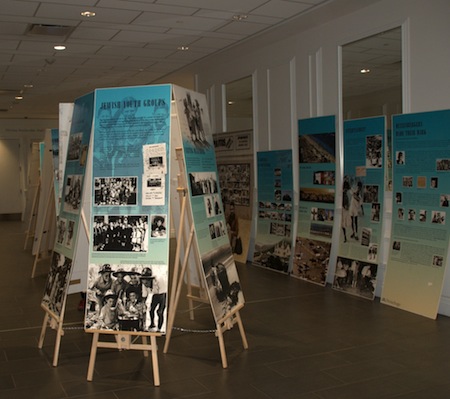
Muizenberg, South Africa, was a hub for Jewish families from the 1900s onward. (photo from Stephen Rom)

For Vancouverites who hail from South Africa, the name Muizenberg carries significant resonance. The small seaside town was a hub for Jewish families from the 1900s onward, a place where children played on the long stretch of white-sand beach, young people fell in love, business deals were discussed, family relationships deepened and friendships nourished. So, when the Memories of Muizenberg exhibit opens for its 15-day span at Congregation Beth Israel on July 10, there’s an excellent chance of hearing South African accents in the voices of attendees.

The exhibit was created in 2009, when it debuted in Cape Town, chronicling the Jewish presence in Muizenberg between 1900 and the early 1960s. After that, it began a whirlwind tour to Johannesburg, London, Israel, Perth, Sydney, Melbourne, Toronto and San Diego before it finally landed in Vancouver. For each of its moves a former South African Jew adopted the exhibition, gathering fundraisers, assistants and exhibit spaces in their respective cities. In Vancouver, that man is Stephen Rom, originally from Cape Town, who immigrated to Canada in 1986 and moved to Vancouver in 1992.

“I’m just a shlepper that was interested in the exhibit,” he said with a laugh. “When a friend told me the exhibit was in San Diego, I thought we needed to get it trucked up to Vancouver. I think it’s important to keep Memories of Muizenberg circulated – a hell of a lot of research went into it and it’s beautifully put together.”

photo - The exhibit opening in Toronto. Created in 2009, Memories of Muizenberg debuted in Cape Town and has been to Johannesburg, London, Israel, Perth, Sydney, Melbourne, Toronto, San Diego and, now, Vancouver
The exhibit opening in Toronto. Created in 2009, Memories of Muizenberg debuted in Cape Town and has been to Johannesburg, London, Israel, Perth, Sydney, Melbourne, Toronto, San Diego and, now, Vancouver.

Rom arranged for the crate containing the 40-panel exhibit to be stored in the warehouse of fellow former South African Lexie Bernstein, and solicited donors to cover the costs associated with transportation and opening night festivities. Muizenberg has a special place in his heart and memories, he confided.

“It was a place my family and extended family spent every Sunday – you loaded the car, took the food and you didn’t need to look for friends – they were always there,” he reflected. “No one phoned to say, are you going to Muizenberg? You just knew, everyone in your community was going to be there. You’d go swimming, get attacked by bluebottles, get knocked over and soaked by a wave from the creeping high tide, have the wind blowing in your hair and eat homemade rusks (cookies) mixed with sand. It was part of our DNA.”

Bernstein, who moved from Cape Town to Vancouver in 1987, recalls catching the train with his friends in the summer months to get to Muizenberg. “When the train pulled into the station, the conductor would shout out ‘Jerusalem!’” he said. “I think ex-South Africans in Vancouver will love this exhibition, and other Jews in the community will be fascinated about where we come from.”

Rom’s only regret about the exhibit is that it ends in 1962 instead of continuing. He’s asking former South Africans in Vancouver to email photographs that pertain to their history in Muizenberg and that might be shown as a slide show at the exhibit’s opening night, July 10, 7 p.m. To submit your memories, email Rom at [email protected].

Lauren Kramer, an award-winning writer and editor, lives in Richmond. To read her work online, visit laurenkramer.net.


Format ImagePosted on July 1, 2016June 29, 2016Author Lauren KramerCategories Visual ArtsTags Beth Israel, Cape Town, Muizenberg, South Africa
Meet Next Einstein winner

Meet Next Einstein winner

Aaron Friedland’s Walking School Bus garnered the Canadian Friends of the Hebrew University of Jerusalem’s 2016 Next Einstein award. (photo from Aaron Friedland)

When Vancouverite Aaron Friedland, 23, heard his Walking School Bus digital reading program was the recipient of the Canadian Friends of the Hebrew University of Jerusalem’s 2016 Next Einstein competition, he was surprised to say the least. Studying for his master’s dissertation on applied economics at the University of British Columbia, he’d entered it into the contest without ever thinking his would be the $10,000 grand prize winner out of 1,400 submissions.

Friedland was born in South Africa and immigrated to Vancouver with his family in 1993, when he was a year old. In 2011, while he was attending King David High School, he and his family visited Uganda’s Abayudaya community on a “voluntourism” project that would change his life and inspire the Walking School Bus.

“Three things left an impression on me during that trip,” he reflected. “One was the distance Ugandan students were walking to school, with many traveling five to eight kilometres each way. They needed a school bus. Then, I noticed their daily nutrition of maize meal and wondered, what’s the point in bringing them to school when they haven’t eaten anything for breakfast? And when the curriculum at the school is almost nonexistent?”

Back in Vancouver, Friedland had two goals: to raise awareness of the plight of Uganda’s students by publishing a book, The Walking School Bus, and to use the money from book sales to buy a school bus. An Indiegogo campaign raised $12,000 and Friedland is negotiating publication of the book with a major publisher. “But I received so much interest in what I was doing that I realized the efforts should end with an organization, not a book.”

He learned the tools of creating such an organization at McGill, where he studied economics and economic development, and, later, as an analyst in a fellow position at United Nations Watch in Geneva. It was in Geneva that he became determined to form an organization around The Walking School Bus that might accomplish all three of his goals: not just the school bus, but agricultural training that would enable locals to grow more nutritious food and an enhanced school curriculum that would engage students better in learning.

The Walking School Bus was incorporated into a nonprofit foundation in 2015 and is presently in the throes of conducting economic research. “We’ve raised $25,000 to buy our first school bus, developed the models we need to ensure that bus can be sustained in the community and raised awareness in Vancouver, North America and parts of Australia about what it is to access education,” he said. He will soon lead a group of 18 economists, professors, educators and volunteers to Uganda to deliver the school bus.

In the Walking School Bus’ digital reading program, volunteers create audiobooks that are shared with partnering schools in Uganda, Canada and the United States – a total of 40 schools to date. Friedland has also created a Hebrew textbook, read by students at KDHS, that will help Ugandan Jewish students learn Hebrew. “We’re looking for students to help us create more books,” he said, and encouraged Canadian teachers to learn more about helping out with the reading program online at thewalkingschoolbus.com.

The prize money from the Next Einstein competition is being used to create a downloadable app that will allow people anywhere in the world to read books and poems from their cellphones. “They will be able to see text and even record themselves and send it in to our servers. Our team will engineer those recordings and send them on to empower literacy for students.”

Far from limiting his sights to Uganda, Friedland’s vision for the Walking School Bus is global. When he delivered a TEDx talk in India in recent months, he toured the Dharavi slum in Mumbai and noticed again the distance children were walking to school. He immediately assembled a team, comprised mostly of students from the Delhi Technological University, to investigate the possibility of building a suspension bridge. With a bridge across the river, students could walk 100 metres instead of the five-kilometre route around it. “We’re doing our due diligence right now, scoping out project locations and conducting cost-benefit analyses,” he said.

Friedland said his parents, Phillipa and Des, laid the foundations for his work by teaching their children “how everyone was equal, regardless of what the media said or what the social norms of the time were.”

He said, “My entire life I’ve watched my incredible parents do good things, whether it was my dad picking up earthworms so they wouldn’t be crushed by traffic, or my mom giving money to every single homeless person she saw. I saw how they were able to positively impact people, and how good it made them feel. That motivated me to apply those same principles as an adult.”

To read more on Friedland, visit jewishindependent.ca/better-access-to-education.

Lauren Kramer, an award-winning writer and editor, lives in Richmond. To read her work online, visit laurenkramer.net. A version of this article was originally published in the Canadian Jewish News.

Format ImagePosted on June 24, 2016June 22, 2016Author Lauren KramerCategories LocalTags Canadian Friends of the Hebrew University, CFHU, Next Einstein, tikkun olam, Uganda, Walking School Bus
Our national movie history

Our national movie history

Making Movie History panelists during DOXA Industry Day at the SFU Goldcorp Centre for the Arts on May 7, left to right: Michelle van Beusekom, head of the National Film Board of Canada’s English-language production branch, and filmmakers Mort Ransen, Bonnie Sherr Klein and Anne Wheeler. Panel moderator was Marsha Lederman of the Globe and Mail. (photo by Fortune Hill Photography courtesy of NFB)

When it comes to their own history, Canadians haven’t had a great track record for recording their success stories. So, when Michelle van Beusekom had an opportunity to produce Making Movie History: A Portrait in 61 Parts, an anecdotal history of the National Film Board of Canada, she was thrilled to jump on board. Told through portraits of legendary artists and filmmakers who have worked at the NFB since its establishment in 1939, the free iPad app was released last month at the DOXA Film Festival in Vancouver.

Present at the launch were B.C.-based filmmakers Mort Ransen, Bonnie Sherr Klein and Anne Wheeler, who participated on a May 7 panel with van Beusekom, who is head of the NFB’s English-language production branch. The panel was moderated by Marsha Lederman of the Globe and Mail.

It took five years to make Making Movie History, which consists of 30 profiles in French and 30 in English, and van Beusekom is hoping movie lovers will watch it.

“It delivers a fascinating look at the origins of cinema in Canada and insight into the stories of early founders of cinema craft in this country,” she told the Independent.

The portraits are of individuals who participated in the NFB from the 1940s through the 1980s, with a special focus on the earlier years, when the NFB was founded as a government-funded but independent organization with a vision to primarily create documentaries in the public interest. “It created this space where talented people could practise their art, develop a filmmaking tradition in this country and use this art form in the public interest,” she explained.

Over the course of working on the app, van Beusekom gained a keen appreciation of the role of women at the NFB from early on.

“As young men went overseas to fight in World War Two, it created opportunities for women in secretarial roles, cinematography, camera, editing and directing, and many were recruited to the NFB,” she said. “When people talk about women’s cinema in Canada, they talk about Studio D, which started in 1974. Until now, the 1940s generation of pioneers of women in Canadian cinema has almost been forgotten. I learned about Gudrun Parker, Evelyn Spice Cherry, Jane Marsh Beveridge and Laura Boulton, which was huge for me. These were names we didn’t know much about and it changed our perception of women’s roles in Canadian cinema.”

The intention of the app is not to be a comprehensive overview, but to provide a portrait that ideally captures the spirit of the individuals profiled and the spirit they brought to the organization. One of those individuals is Klein, who came to Canada with her spouse as a conscientious objector and worked at the NFB. One of her projects was Challenge for Change, where she used film to address social problems such as chronic poverty. Klein was also a foundational figure at Studio D, which operated from 1974 through 1996.

She recalls the NFB as “a Mecca for documentary films, the only place in the world with a government-funded but independent filmmaking agency” in 1975, when she became involved. “We were using films to give people a voice, people who hadn’t spoken for themselves before on screen,” she told the Independent.

Newly graduated from Stanford University at the time, Klein remembers that, back then, the only documentaries around were those made by National Geographic. At Studio D, Klein helped make films by, about and for women, training and nurturing filmmakers, including camera and sound women in this country for the first time.

Things have changed since then for women in the industry, but not that much, she said. “Now, it’s superficially better. There are a lot more women in the film world and graduating from film schools and a lot more diversity among those women. But, are women really getting a chance to tell their own stories, as opposed to just being in the workforce and working on the same old stories?”

Klein noted that nine out of 10 of the last Telefilm Canada (government-funded) films were directed by men. “Women will tell you there’s still a glass ceiling,” she said. “They can only make films up to a certain budget, and they’re not making series, so it’s not great. But the NFB just made a historic commitment for gender equity across the board in all its projects. That commitment sets the bar and challenges other agencies who have lots of money, to do the same.”

According to the Women in View On Screen Report (October 2015), of the 2013-14 fiscal year’s feature-length films by Telefilm Canada, women represented 17% of directors, 22% of writers and 12% of cinematographers credited; in the under $1 million category of film investment, women directors constituted 21%; in the over $1 million category of film investment, women directors constituted four percent. Of the English-language drama TV series between 2012 and 2013, 17 of the 29 series did not have a single woman director on any of their 151 episodes, and not one of the 293 episodes employed a female cinematographer.

The Making Movie History app is available from the iTunes Canada app store, as well as at nfb.ca/makingmoviehistory.

Lauren Kramer, an award-winning writer and editor, lives in Richmond. To read her work online, visit laurenkramer.net.
Format ImagePosted on June 10, 2016June 8, 2016Author Lauren KramerCategories TV & FilmTags DOXA, NFB, women in film
Help for substance abusers

Help for substance abusers

Rebecca Denham, director of services for Jewish Addiction Community Service of Vancouver. (photo by Wendy Oberlander)

The first comprehensive effort to reach Jewish individuals suffering from addictions launched this month in Vancouver when the Jewish Addiction Community Service of Vancouver came into being. Its goal is to approach substance abuse issues – specifically alcohol and drugs – within a Jewish context.

The first two services being offered by JACS Vancouver are a support group for families living with substance abuse and navigational support, to help direct individuals and families to the right channels in the support system, whether they want access to recovery programs, counseling or other resources. But those services will expand rapidly to include community education and awareness building.

“We want to teach people how to identify when someone is in trouble with substance abuse, and to get them to the right services,” said Rebecca Denham, director of services for JACS, who will be providing assistance from an office at JHub in Richmond (8171 Cook Rd., Suite 212).

Denham is planning to do this outreach at schools, synagogues and camps by hosting events that promote awareness. “We want to start conversations” she said, “because that’s where it has to begin: people talking about addiction, where they’re seeing it and how substances are being used and abused.”

Calls for assistance are beginning to come in as Denham reaches out to Lower Mainland addiction service providers, psychologists and counselors to inform them that JACS exists and the kind of support it offers.

“We want to let people in the Jewish community know that there will be services that incorporate their traditions and values, and acknowledge that some of their circumstances may be unique,” she explained. If someone needs to enter a treatment facility, JACS would like to ensure they have access to kosher food and rabbinical support, if they want it. When they’re exiting such facilities, JACS can offer help on moving back to the community safely, and on how to attend Jewish events that may incorporate alcohol, for example.

Denham, an Ottawa native with 15 years’ experience in mental health, addiction and youth at risk, moved to Vancouver in 2010 and worked with Jewish Family Service Agency in its mental health outreach program. She is available to take calls for appointments Monday through Thursday, 9 a.m.-1 p.m.

JACS Vancouver will offer some of the programs provided by JACS Toronto, founded some 15 years ago. There are other JACS programs in cities including Winnipeg, Seattle and Chicago, and Denham is looking forward to partnering with Jewish services across North America and emulating some of their successful programs.

JACS Vancouver’s funders include the Jewish Community Foundation, the Betty Averbach Foundation, the Diamond Foundation, the Kahn Foundation, the Al Roadburg Foundation and the Snider Foundation, as well as private donors. For more information, call 778-882-2994 or email [email protected].

Lauren Kramer, an award-winning writer and editor, lives in Richmond. To read her work online, visit laurenkramer.net.

Alcohol use in Canada – data from Health Canada

The following are excerpts on alcohol use from the Canadian Alcohol and Drug Use Monitoring Survey, which was an annual general population survey of alcohol and illicit drug use among Canadians aged 15 years and older that ran from 2008 through 2012. There is much more information contained in this survey, which can be accessed at hc-sc.gc.ca/hc-ps/drugs-drogues/stat/_2012/summary-sommaire-eng.php. The Independent was referred to it by Rebecca Denham, director of services for Jewish Addiction Community Service of Vancouver.

In 2012, 78.4% of Canadians reported drinking alcohol in the past year. Similar to previous years, in 2012, a higher percentage of males than females reported past-year alcohol use (82.7% versus 74.4%, respectively) while the prevalence of past-year drinking among adults aged 25 years and older (80%) was higher than among youth (70%).

In November 2011, the Canadian federal, provincial and territorial health ministers received Canada’s Low-Risk Alcohol Drinking Guidelines, which consist of five guidelines and a series of tips. Low-risk drinking guideline 1 (chronic) is defined as people who drink “no more than 10 drinks a week for women, with no more than two drinks a day most days and 15 drinks a week for men, with no more than three drinks a day most days. Plan non-drinking days every week to avoid developing a habit.” Low-risk drinking guideline 2 (acute) is defined as those who drink “no more than three drinks (for women) or four drinks (for men) on any single occasion. Plan to drink in a safe environment. Stay within the weekly limits outlined [in guideline 1].”

In 2012, among people who consumed alcohol in the past 12 months, 18.6% (representing 14.4% of the total population) exceeded guideline 1 for chronic effects and 12.8% (9.9% of the total population) exceeded guideline 2 for acute effects. A higher percentage of males than females drank in patterns that exceeded both guidelines.

The guidelines were exceeded by youth aged 15 to 24 years at higher rates than among adults aged 25 years and older. One in four (24.4%) youth drinkers versus 17.6% of adult drinkers exceeded the guideline for chronic risk, while the acute-risk guideline was exceeded by 17.9% of youth drinkers and 11.9% of adult drinkers.

In 2012, for the first time, CADUMS asked about four harms people may have experienced in the past 12 months due to someone else’s alcohol use. Types of harm include being verbally abused, feeling threatened, being emotionally hurt or neglected and being physically hurt. One in seven (14.2%) Canadians aged 15 years and older experienced at least one of these harms as a result of another person’s drinking. Verbal abuse was the harm reported by the largest percentage of Canadians (8.9%), followed by being emotionally hurt or neglected (7.1%) and feeling threatened (6.3%), while being physically hurt was experienced by 2.2%.

Format ImagePosted on May 27, 2016May 27, 2016Author Lauren KramerCategories LocalTags addiction, alcoholism, Denham, drugs, JACS
Seek Peace initiative

Seek Peace initiative

Steve McDonald, deputy director of communications and public affairs for the Centre for Israel and Jewish Affairs. (photo from of Steve McDonald)

Every day, a handful of the approximately 500 volunteers at Road to Recovery head to one of the crossing points in Israel, pick up Palestinians who have medical permits for appointments or treatments in Israeli hospitals, and escort them there and back. Entirely volunteer-driven, this is the kind of peaceful bridge-building that rarely makes the media headlines, but that the Centre for Israel and Jewish Affairs is hoping to highlight through its recently relaunched program, Seek Peace and Pursue It.

“This program is designed to encourage Canadian individuals and organizations who are concerned about the absence of peace in the Holy Land to rethink the issue by engaging in practical, positive initiatives that help build peace from the ground up,” said Steve McDonald, deputy director of communications and public affairs for CIJA. “Rather than getting distracted by destructive initiatives like the boycott, divestment and sanctions movement, Road to Recovery is exactly the sort of thing that will bolster Israeli initiatives to bring the two sides together and keep activists focused on positive engagement.”

The idea for Seek Peace was hatched by former CIJA executive Len Rudner in 2012, after the United Church of Canada declared it would boycott Israeli settlements. At that time, CIJA reached out to UCC leaders.

“We told them BDS does nothing to advance peace or improve life for average Palestinians, we don’t think it fulfils your own interest in helping Palestinians,” said McDonald.

The efforts were in vain and the UCC continued to advocate a boycott, something McDonald says was a betrayal of average UCC members in Canada, as well as an undermining of longstanding Jewish-Christian ties in this country.

One of McDonald’s tasks is to develop CIJA’s relationship with Christian churches and leaders in Canada, many of whom are interested in Israel and want to get engaged in peace-building activities. At the end of May, he will deliver a presentation at the Toronto School of Theology to Baptist, Anglican and Catholic representatives. His focus will be on one organization: Hand in Hand, a network of Jewish-Arab integrated bilingual schools focused on mutual recognition, inclusion and equality.

“There’s tremendous interest among some of our Christian partners for this sort of work,” explained McDonald. “When they see we’re pro-Israel but not anti-Palestinian, they are somewhat surprised that the organized Jewish community is so interested in peace. We want to show them there are constructive alternatives to BDS, positive ways we can be helping build peace.”

Seek Peace is not directly about fundraising, but rather about providing a catalogue of positive initiatives. The organizations featured include Heart to Heart, where Jewish and Palestinian Israeli youth live together in a camping environment for three weeks and tackle politics, culture and identity through dialogue. There is Project Rozana, which is about delivering medical access for Palestinian-Israeli children who need pediatric intensive care, and there is Tsofen, which promotes the integration of Israel’s Arab citizens into the high-tech industry. These are just a handful of the many constructive, peace-building programs that Seek Peace is trying to bring to the forefront, organizations doing impressive work that often goes unreported.

Within a few years from now, McDonald said he’d love to see churches and synagogues partner to host events that highlight one of these particular or similar causes.

“My goal would be for this to be taken on at a local and national level by our Christian friends,” he said, “but it’s not specifically for Christians – any community can get involved.”

In Vancouver, the CIJA team already has strong interfaith relationships and is well-positioned to pitch this project to its existing contacts, he added. “I think Vancouver is a place where there could be a lot of appetite for this kind of thing,” he said.

For more information on Seek Peace, visit cija.ca/resource/seek-peace-and-pursue-it.

Lauren Kramer, an award-winning writer and editor, lives in Richmond. To read her work online, visit laurenkramer.net.

Format ImagePosted on May 27, 2016May 25, 2016Author Lauren KramerCategories NationalTags CIJA, Israeli-Palestinian conflict, peace, tikkun olam
Noa concert sells out

Noa concert sells out

Achinoam Nini performs for a full house at the Chan Centre on Yom Ha’atzmaut, May 11. (photo from cjnews.com)

Despite the controversy in the months leading up to her Yom Ha’atzmaut performance at the Chan Centre for the Performing Arts on May 11, Noa’s concert attracted a full house and every one of the 1,185 seats was sold.

“After all the harrowing events leading up to this concert, I am so thrilled to be here and truly grateful to the Jewish Federation [of Greater Vancouver] for not folding and the Israeli ambassador for supporting!” the Israeli singer, whose full name is Achinoam Nini, posted on her Facebook page soon after she touched down in the city.

Performing barefoot throughout, the singer thanked the audience, Federation staff and the Vancouver Jewish community repeatedly during her show “for sticking up for me.”

In February, the Jewish National Fund of Canada, an annual sponsor of Vancouver’s community Yom Ha’atzmaut concerts, withdrew its support, saying it would take a one-year hiatus “due to the views of the entertainment booked for this year’s celebration.”

The organization’s chief executive officer, Josh Cooper, said “the entertainer that has been hired does not reflect nor correspond to the mandate and values of JNF of Canada.” Its decision followed an article in the Jerusalem Post, later retracted, that claimed Vancouver Jews were “outraged” over Nini’s performance and alleged that she supports the boycott, divest and sanctions (BDS) movement against Israel. She has repeatedly denied the allegation.

After JNF Canada withdrew, the Israeli embassy and the Consulate General of Israel in Toronto stepped in as sponsors. Irit Stopper, deputy consul general in Toronto, represented the state of Israel at the event. It was also attended by Linda Kislowicz, president and CEO of Jewish Federations of Canada-UIA, Vancouver City Councilor Geoff Meggs and Burnaby-Lougheed NDP MLA Jane Shin.

Outside the Chan Centre, Michael Brosgart, president of the Jewish Defence League in British Columbia, stood with a handful of supporters and a few placards declaring “Terrorists are obstacles to peace; Biblical Zionists are not.”

A folding table held pictures of an Israeli couple murdered by Palestinian terrorists, and Brosgart distributed material to bystanders. The pages contained excerpts from letters expressing objections to Nini’s performance from community member Frances Belzberg and Israel Defence Forces Lt.-Col. Eyal Platek, as well as links to articles about the singer.

“Noa is supporting the most divisive groups in Israel – B’tselem, Breaking the Silence, BDS and JStreet,” Brosgart said. “Unfortunately, Jewish Federation and the Israeli embassy, because they’re funding this, are supporting her. We think this is rotting the Jewish community.”

On JDL’s Facebook page Brosgart elaborated. “This performance will be extremely divisive, distasteful, disrespectful and does not represent the views and interests of the community. Especially at the time we need unity the most. This is not about free speech. Nini can sing her sh—y songs anywhere she wants. However, this is Israel’s Independence Day. To bring an anti-Israel, terror-sympathizing, enemy-strengthening performer on this day is to spit in the face of all who have lost loved ones defending the nation of Israel.”

One Israeli who attended the concert but asked not to be named said she disliked that Nini “does not separate her political views from her artistry. I’m sorry the selection committee didn’t do more research before they chose her, but I think they learned a lesson,” the woman said.

After seeing the Facebook responses of Israelis in Vancouver opposed to the performance, she decided to attend nevertheless. She added that, once Nini was invited to Vancouver, “I think it was the best thing to keep her here instead of canceling the performance.”

The kosher restaurant Shuk Eat & Play hosted an alternative Yom Ha’atzmaut celebration dinner for 110 attendees the same night.

“I heard Noa’s political sayings and I didn’t appreciate it,” said Shuk owner Alon Volodarsky. “So, some people who didn’t like her suggested we hold this dinner for those community members who still wanted to celebrate Yom Ha’atzmaut but didn’t want to attend the concert.”

Lauren Kramer, an award-winning writer and editor, lives in Richmond. To read her work online, visit laurenkramer.net. This article was originally published in the Canadian Jewish News.

Format ImagePosted on May 20, 2016May 18, 2016Author Lauren KramerCategories LocalTags Brosgart, Federation, Israel, JDL, Jewish Defence League, Nini, Noa, Shuk, Yom Ha'atzmaut
Saying what he wants

Saying what he wants

Ari Shaffir was in Vancouver Feb. 18-20 as part of Just for Laughs NorthWest. (photo from Ari Shaffir)

Ari Shaffir is a long, long way from his yeshivah. The 42-year-old stand-up comedian and actor who lives in New York and Los Angeles appeared in Vancouver Feb. 18-20 as part of Just for Laughs NorthWest and entertained packed audiences with his deep baritone and casual conversation, drawing plenty of laughter.

Shaffir grew up Orthodox and shomer Shabbat in Kemp Mill, Md., attending Hebrew academy and the Jewish day school before spending two years at Beth Midrash HaTorah, a now defunct yeshivah in Jerusalem. When he returned, he enrolled at Yeshiva University in New York. That was the year he lost his religion.

“Mostly it was inward reflection that caused me to turn away,” he said. “I was doing these religious things because I was expected to, and I was succeeding, but I’d never stopped to think why I was doing them. When I really thought about it, I didn’t see a belief inside me. It just wasn’t there.”

At 20, he left Yeshiva University for the University of Maryland, taking arts courses like English and screenwriting. His parents and friends were dismayed by his change in lifestyle. “My friends tried to talk me out of it,” he said. “They would be happier if I were dating a Jewish girl who was a completely worthless human being as opposed to Mother Teresa. When I thought about it, I started feeling mad and decided this is not the way I should live my life.”

When a friend moved to California, Shaffir decided to join him. “I’d done stand-up once in college and had always thought about it, because I was one of the funnier guys at school, but it didn’t seem like a legitimate career,” he said. “Initially, I tried to find a fun regular job, but couldn’t, so I did an open mic one time in California and that was it. I was totally focused.”

Shaffir’s career has been on an upward swing in recent years. His stand-up album Revenge for the Holocaust was released in 2012 and went to No. 1 on iTunes and amazon.com the week of its première. His show Passive Aggressive premièred on chill.com in 2013 and on Comedy Central in 2015, while his weekly storytelling series This is Not Happening premièred on Comedy Central in 2015. Season 2 of This is Not Happening will air this year, and it was recently picked up for a third season on Comedy Central. He hosts the podcast The Skeptic Tank, a weekly interview show that averages more than 100,000 downloads per week, and he just shot a feature film, Keeping Up with the Joneses, slated for release this spring.

He didn’t completely lose his cultural identity, if his performance on Feb. 18 was anything to go by. In one part of his show, he joked about visiting Germany and urinating outdoors anywhere he could, hoping to pee on Hitler’s grave. “If anyone tried to stop me, I’d play the Jew card,” he said. (The part about urinating outdoors was no joke, he admitted in a telephone interview. “I did that.”)

Shaffir says the Bible is now his least favorite book: “There’s a lot of holes in the story.”

He enjoys using material he learned in his religious life in a completely opposite way than how it was intended. “I get joy out of that,” he said. “For example, the Torah says if someone is coming to kill or rob you, you’re allowed to defend yourself up to the point of killing them. A child cost $500,000 to raise and they’re going to take that from you, so the Torah would tell you to kill them to protect your income.”

Defying his parents’ expectations and leaving the community of Kemp Mill wasn’t easy, and there are still things Shaffir misses from that life. “It took my parents years to get over it. My mother was more concerned with me losing the culture of Judaism, the songs on Pesach, the camaraderie. My dad was angry. He had swayed from religion for a little while, but I swayed way further. Years later, he realized he didn’t want to lose me as a son and we were able to move on.”

Shaffir’s casual, unassuming storytelling style accounts for his popularity. His stand-up routine is peppered with sex and toilet jokes, rants on why he hates kids and anecdotes from his travels. Throughout his routine, he appeared relaxed and at ease, and his hour-long performance went by quickly.

If he has any remaining link to his Jewish life, it’s cultural, Shaffir said. “When I hear a news story come on about Israel, my ears perk up a little more than they would about another country. Otherwise, I have nothing left to do with the religion. But I miss the community I had in Kemp Mill, where everyone knew me. You had this gigantic family that you’d see in synagogue every weekend. To lose all that – now I’m on my own and I’m just floating. You lose those friends. You can’t go to restaurants with them because we’re into different things. They’re into family and religion, I’m not into either.”

A page on his website is called Shroomfest and, on it, Shaffir has taken time to write everything he feels others should know about mushrooms. “That’s not a joke, it’s real, and I do it a few times a year,” he said. “I took a lot of time to write that and it helps a lot of people take mushrooms the right way.”

Shaffir described feeling free on stage to say what he wants, but when it catches up with him in a private setting, he feels some guilt and embarrassment. “I feel guilty about all sorts of stuff, not committing to women, not being monogamous. If I’m at a dinner party and it comes up that I had a threesome last week, then, yes, I’m embarrassed.

“I’m proud that I’m a free comedian,” he reflected. “I say and do what I want, what I feel is correct creatively, and both criticism and praise are irrelevant to me. I’m living as a stand-up comedian! It’s one of the coolest jobs in the world and I have an apartment I pay for, just by doing that!”

For a link to his podcast visit arishaffir.com/category/podcast.

Lauren Kramer, an award-winning writer and editor, lives in Richmond. To read her work online, visit laurenkramer.net.

Format ImagePosted on March 11, 2016March 10, 2016Author Lauren KramerCategories Performing ArtsTags comedy, Just for Laughs, Shaffir
Mixed reaction to Nini

Mixed reaction to Nini

Achinoam Nini at the 21st UNESCO Charity Gala 2012 in Dusseldorf, Germany. (photo by Michael Schilling via commons.wikimedia.org)

The Jewish Federation of Greater Vancouver’s invitation to Israeli singer Achinoam Nini (Noa) to perform at the community’s Yom Ha’atzmaut celebrations has received mixed reactions, including a withdrawal of support for the event by Jewish National Fund of Canada, Pacific Region.

In a Feb. 18 statement, JNF Canada chief executive officer Josh Cooper said the organization would be taking a one-year hiatus from its tradition of sponsoring the Yom Ha’atzmaut event “due to the views of the entertainment booked for this year’s celebration. The entertainer that has been hired does not reflect nor correspond to the mandate and values of the Jewish National Fund of Canada.” When pressed to answer where, specifically, Nini diverged from JNFs mandate, Cooper said he had “nothing further to add.”

Among the many Jewish community partners in a Jewish Federation of Cincinnati-sponsored performance by Nini and Mira Awad in June 2015 was JNF, and JNF was one of the sponsors of a Nini and Gil Dor concert in Atlanta less than two weeks ago. About the different mandates and values of JNF Canada and JNF USA, Cooper said “JNF/KKL has offices in 48 countries. While we all work together in Israel, we operate independent of each other in our respective countries.”

Jewish Federation of Greater Vancouver issued a statement saying the organization was “disappointed” by JNF’s decision to withdraw support: “JNF has been a valued sponsor of our Yom Ha’atzmaut celebration for many years, and we look forward to welcoming them back next year.”

In a Feb. 20 article, the world chair of Keren Kayemeth LeIsrael (KKL)-JNF, Danny Atar, told Haaretz that he was against JNF Canada’s withdrawal of support over Nini’s views, saying, “I intend to express my opinion on the decision directly to the leadership of JNF Canada at a meeting we will be having shortly in Israel.”

Locally, Nini’s scheduled appearance is drawing strong reactions from some community members.

Richmond resident Arnold Shuchat expressed his “complete opposition to the decision to engage the controversial artist” in a Feb. 18 letter to Ezra Shanken, chief executive officer of the Jewish Federation of Greater Vancouver, and to its board of directors. “The purpose of a Jewish community event should be to marshal and unify our community as opposed to fragment it,” he wrote. “It had to be obvious to any reasonable person who might have investigated her political positions that she would be a polarizing figure to many in the community. This decision is a regressive and irresponsible one and should be reversed as quickly as possible to prevent damage to both the reputation and fundraising ability of our Federation.”

René Ragetli, also from Richmond, agreed. “I think she’s a divisive figure and it’s a big mistake to have her here, especially for Yom Ha’atzmaut. She’s said some outrageous things – called our leaders fascist thugs and expressed admiration of Mahmoud Abbas. The woman is not balanced,” he said. “Her bringing comfort to the widow of a terrorist at an event to honor the Israeli fallen – it’s insulting. Sure, people are entitled to their own opinions, but having her on the stage for Yom Ha’atzmaut degrades the event. This is a storm that’s not going away, and a mistake that needs to be corrected.”

An online petition titled “Stop Achinoam Nini from performing at our Yom Ha’atzmaut celebration” had almost 400 signatures at the time of publication. Cynthia Ramsay, publisher of the Jewish Independent, said she has received several letters and emails about Nini.

“Every person who’s tried to get me to run a letter or has cc’d me on an email to Federation has the exact – and I mean exact – same two points: she supports B’Tselem and Breaking the Silence, and she’s anti-Israel or pro-BDS,” Ramsay said. (See “Let’s talk about Nini…” by the JI editorial board.) “No one has provided any evidence, not even a Jerusalem Post quote, to support their allegations, some of which are even nastier and also with zero proof. Because of the wording of most people’s emails/letters, I think it’s a chain reaction, everyone’s just repeating what they’ve heard from someone else without doing any research of their own. The main concern seems to be about BDS and she is against BDS from what I’ve read.”

Shuchat said the issue with Nini was not about BDS. “This has been very divisive because she’s very controversial, she’ll offend a lot of people and it was very foreseeable that this would happen. She’s polarizing so it was a dumb decision to invite her. Mainstream media are going to see this and say, ‘Look at all these heebs fighting with each other!’ Federation should cancel the engagement and focus on building a cohesive community.”

Ramsay disagreed. “I think it would be very sad if Federation withdrew its invitation or if Nini declined it because of the controversy it’s causing, which, I think, is unmerited.”

A Feb. 22 letter to Federation board chair Stephen Gaerber signed by more than 30 Israeli Canadians also urged “Federation to stick to the invitation.” It notes that “the current political climate in Israel condemns every person who advocates for peace and human rights, and campaigns, such as the recent one by Im Tirzu and other similar extremist groups, single out progressive artists, including Amos Oz and David Grossman to name a few.

“By canceling the invitation of Achinoam Nini to perform in Vancouver,” the letter continues, “we will not only be missing the opportunity to experience a great musician, it will also mean taking a stand against everything Vancouver and Canada is proudly known for, our belief in tolerance, pluralism, human rights, these same core values as they are reflected in our Jewish heritage. Here in Vancouver we must not get entangled in the type of intimidation that is going on in Israel. If the opportunity to bring her is missed due to politics, it sends a terrible message and may create rupture in the local Jewish community and will distance plural and liberal people like us from it.”

Lauren Kramer, an award-winning writer and editor, lives in Richmond. To read her work online, visit laurenkramer.net. A version of this article was published by Canadian Jewish News.

 

Format ImagePosted on February 26, 2016February 25, 2016Author Lauren KramerCategories LocalTags Achinoam Nini, Arnold Shuchat, Cynthia Ramsay, Danny Atar, Jewish National Fund, JNF, Josh Cooper, Noa, René Ragetli, Yom Ha'atzmaut

Posts pagination

Previous page Page 1 … Page 8 Page 9 Page 10 … Page 14 Next page
Proudly powered by WordPress