Skip to content
  • Home
  • Subscribe / donate
  • Events calendar
  • News
    • Local
    • National
    • Israel
    • World
    • עניין בחדשות
      A roundup of news in Canada and further afield, in Hebrew.
  • Opinion
    • From the JI
    • Op-Ed
  • Arts & Culture
    • Performing Arts
    • Music
    • Books
    • Visual Arts
    • TV & Film
  • Life
    • Celebrating the Holidays
    • Travel
    • The Daily Snooze
      Cartoons by Jacob Samuel
    • Mystery Photo
      Help the JI and JMABC fill in the gaps in our archives.
  • Community Links
    • Organizations, Etc.
    • Other News Sources & Blogs
    • Business Directory
  • FAQ
  • JI Chai Celebration
  • JI@88! video

Recent Posts

  • Sharing her testimony
  • Fall fight takes leap forward
  • The balancing of rights
  • Multiple Tony n’ Tina roles
  • Stories of trauma, resilience
  • Celebrate our culture
  • A responsibility to help
  • What wellness means at JCC
  • Together in mourning
  • Downhill after Trump?
  • Birth control even easier now
  • Eco-Sisters mentorship
  • Unexpected discoveries
  • Study’s results hopeful
  • Bad behaviour affects us all
  • Thankful for the police
  • UBC needs a wake-up call
  • Recalling a shining star
  • Sleep well …
  • BGU fosters startup culture
  • Photography and glass
  • Is it the end of an era?
  • Taking life a step at a time
  • Nakba exhibit biased
  • Film festival starts next week
  • Musical with heart and soul
  • Rabbi marks 13 years
  • Keeper of VTT’s history
  • Gala fêtes Infeld’s 20th
  • Building JWest together
  • Challah Mom comes to Vancouver
  • What to do about media bias
  • Education offers hope
  • Remembrance – a moral act
  • What makes us human
  • המלחמות של נתניהו וטראמפ

Archives

Follow @JewishIndie
image - The CJN - Visit Us Banner - 300x600 - 101625

Byline: Lauren Kramer

Emanu-El’s Avodah helps broader Victoria community

Emanu-El’s Avodah helps broader Victoria community

Avodah volunteer Daryl Levine makes latkes for last year’s latke lunch during Chanukah. (photo by Penny Tennenhouse)

Before 2003, Rabbi Harry Brechner of Congregation Emanu-El in Victoria had focused mostly on religious services and education. But that year, an Israeli mentor he’d known 15 years earlier paid him a surprise visit in a dream.

“I hadn’t thought about him in many years,” said Brechner, “but he came to me vividly and asked me what the real work was that I was doing. He told me I needed to go and serve, and that’s when I determined we need to devote our congregation’s energy to social action.”

Brechner wrote about his dream in his newsletter to synagogue members, hoping it would inspire the formation of a group of volunteers. It did. A social action group came together under the name Avodah, meaning work or service. Their goal was to put three main beliefs into action: to love thy neighbor as thyself, to repair the world and to commit to acts of loving kindness.

“Avodah is at the heart of being a holy congregation. There’s no being without doing and, through acts of loving kindness, we repair the world and transform our spiritual lives,” said Brechner.

Their first goal was to find out how the group could be of useful, meaningful service. They approached local organizations, such as Our Place Society and Cool Aid, to find out what they needed and one immediate answer was socks. It turned out there was a dire shortage of clean socks among the homeless. Thus, the Sock Project began.

Michael Bloomfield, a founding Avodah member, called Abe Lipson, chief executive officer of McGregor Socks Canada (a part of McGregor Industries), a Toronto-based sock designer and distributor. “I’m wearing your socks,” he told Lipson. “And the Island’s poor and homeless need your help.”

The first shipment arrived in 2005, and Bloomfield and his team fully expected it to be a one-time donation. They were wrong; a great relationship had started. Another shipment arrived in 2006 and every year that followed. To date, Avodah has worked with 27 organizations across the community to distribute some 54,000 pairs of socks.

At McGregor Socks, Lipson said the world stands on three pillars: the study of Torah, avodah and gemilut hasadim, or good deeds. “We make socks, which have a direct linkage to helping people stay warm,” he reflected. “So, socks we’re able to give. What we’re doing is actually quite small in comparison to the effort made by wonderful people who are helping the needy.”

The success of the Sock Project led to other efforts. The group began holding monthly birthday parties at Laurel House and Our Place Society, which provides assistance for the homeless, hungry and hurting. Every third Thursday, its members arrive with five buckets of ice cream and slab cakes, providing live music and birthday cards for those who have celebrated a birthday that month. “We’ve put on over 80 birthday parties, and there are usually a couple hundred people there,” said Penny Tennenhouse, Avodah’s chairperson. Avodah contributes to the Our Place annual Christmas party, and monthly to Laurel House.

Avodah also has initiated a partnership with the YMCA Outreach Van and Out of the Rain Youth Night Shelter, providing hot meals for those in need. In 2010, they expanded their involvement, opening the synagogue’s doors so that youth could sleep in the synagogue’s social hall on cold nights between October and April, as well. The meal program has become a weekly event and the synagogue has offered a warm night’s sleep for about 20 youth each week.

“We’ve tried to partner members with things they love doing,” said Tennenhouse. “In this case, we have wonderful cooks in our community who make marvelous casseroles and nutritious food for the children, and they love doing it.”

Another project, started in 2009, is a rent-supplement program to help families who are going through a crisis. Five years ago, Avodah began collaborating with the Burnside Gorge Community Association by aiding one family with $120 per month. Today, Avodah is assisting three families with their rent, providing $360 a month. As of May 2014, Avodah had contributed $19,320 for 161 rent subsidies.

“We’re trying to help with food, clothing and shelter,” said Tennenhouse, “but we also want to do what we can to help reduce poverty.” Avodah is a member of Faith in Action, an inter-faith group united by mutual concern for the poor and vulnerable in British Columbia, and dedicated to encouraging governments and community groups to address the root causes of poverty in the province.

Avodah has received many requests to help other community groups implement their own social action initiatives. To this end, it has created a presentation (available at congregationemanuel.ca/avodah.html) that outlines the work Avodah members have performed and offers a 10-step program for organizing, delivering and sustaining a community social action program.

“We want to help others to help their neighbors in need, too,” said Brechner. Avodah has brought a lot of pride to Congregation Emanu-El, he reflected. “We have a reputation of being small but mighty, of being a shining example in Victoria of what you can do when you’re determined.”

Lauren Kramer, an award-winning writer and editor, lives in Richmond, B.C. To read her work online, visit laurenkramer.net.


Format ImagePosted on June 20, 2014June 18, 2014Author Lauren KramerCategories LifeTags Abe Lipson, avodah, Emanu-El, gemilut hasadim, loving kindness, McGregor Socks, Michael Bloomfield, Penny Tennenhouse, Rabbi Harry Brechner
Five summer “must haves”

Five summer “must haves”

Nozone Swimwear has a full range of cover-all swimsuits for kids. (photo from Nozone)

As summer begins to show its face in Vancouver, it’s time to replenish those supplies that keep us safe and entertained throughout the season. Here’s my list of five top “must haves” – or “would be really nice to haves” – for the sunny weather.

Skin-safe swimwear: Made on Vancouver Island, Nozone Swimwear has a full range of cover-all swimsuits for kids that look great, are comfortable to wear and protect that sun-sensitive skin from ultraviolet rays. Best of all, they last forever. My daughter’s, a hand-me-down that goes back at least eight years, is showing no signs of wear and tear and remains a go-to favorite. From $30, they’re available at nozoneclothing.com or from select Vancouver retailers, including Crocodile (2156 West 4th Ave.), Duck Feet (1447 Marine Dr., West Vancouver) and Splash Swim and Cruise (2950 West 4th Ave.).

Kiss My Face is non-greasy sunscreen.
photo - AquaSphere goggles won’t leave you with raccoon-like eyes after your swim
AquaSphere goggles won’t leave you with raccoon-like eyes after your swim.
photo - If your kids are remotely prone to swimmer’s ear, consider AquaEars.
If your kids are remotely prone to swimmer’s ear, consider AquaEars.
photo - With Zoku Quick Pop Maker, it only takes seven minutes to make a popsicle.
With Zoku Quick Pop Maker, it only takes seven minutes to make a popsicle.

Sunscreen sans grease: There’s nothing like that greasy feeling you get when you’ve smeared sunscreen all over your skin. Kiss My Face is a non-greasy alternative in an easy-spray container. It’s gluten free, paraben free, phthalate free and contains no artificial fragrance, which means you won’t smell like an overripe coconut once it’s on your skin. An eight-ounce spray bottle of SPF 30 sun spray lotion will set you back $16.49 online, at kissmyface.com.

No-leak goggles: If you love swimming but hate the effect of chlorine or saltwater on the naked eye, you’ll want to invest in a pair of AquaSphere goggles. The company offers a wide range of designs to fit the faces of women, men and kids. Most offer 180-degree visibility, easy and quick strap adjustments and a leak-resistant Silicone skirt that does not leave you with raccoon-like eyes after your swim. At $25-$30, they’re a little pricier than generic brands, but the extra price is worth it because the goggles last longer, are supremely comfortable on the eyes and – get this! – keep the water out of your eyes. There’s more information at aquasphereswim.com or stores specializing in outdoor recreation.

Ear protection: There’s nothing like the pit-of-the-stomach feeling you get when your kid announces painful ears. Swimmer’s ear claims many victims among children each summer and can be an extremely painful affliction, particularly when it occurs over the weekend when, inevitably, doctors’ offices are closed and hospital ER rooms are packed. If your kids are remotely prone to swimmer’s ear, consider investing in AquaEars: soft silicone, latex-free earplugs that are moldable to any size ear and appropriate for kids age three and up. They’re available in designs that include Hello Kitty, SpongeBob, Disney Cars and LittleMermaid. At cirrushealthcare.com, it’s $5.99 for a three-pair pack.

Homemade popsicles: In my house, I can’t keep up with the demand for popsicles, since every time it’s sunny, someone gleefully declares, “Popsicle weather!” and heads to the freezer. The Zoku Quick Pop Maker is a great alternative to store-bought popsicles. The device has a compact base that gets stored in the freezer when it’s not being used. When you want to use it, extract it from the freezer, put it on the countertop and wait seven minutes while it freezes ice pops quickly and without electricity. The kit includes six durable, reusable, plastic popsicle sticks, as well as drop guards. A perfect solution for healthy, homemade ice cream, yogurt or fruit-based popsicles. On zokuhome.com, you can order a maker for $49.95.

Lauren Kramer, an award-winning writer and editor, lives in Richmond, B.C. To read her work online, visit laurenkramer.net.

Format ImagePosted on June 13, 2014June 12, 2014Author Lauren KramerCategories LifeTags AquaEars, AquaSphere, Kiss My Name, Nozone, Zoku
Road trip! Explore Chuckanut Drive

Road trip! Explore Chuckanut Drive

There’s immense beauty along Chuckanut Drive whatever time of day you choose to meander those winding roads. (photo by Robert James)

The spring sunshine is warming your car, tempting you with a day drive on an open road that promises breathtaking scenery and interesting stops along the way. Where do you go? Head south, I say. An hour from Vancouver across the Peace Arch border, just as you veer out of Bellingham, there’s a sign for Chuckanut Drive. Take it. You won’t be disappointed.

The scenic byway that connects Whatcom County to Skagit Valley, Chuckanut Drive begins in Bellingham’s historic neighborhood of Fairhaven. From there, it winds along the rocky shoulder of the Chuckanut Mountains, following the shoreline 200 feet above sea level. On its curvaceous route, it offers incredible views of Chuckanut Bay and Samish Bay, the Olympic Mountains, the San Juan Islands and Lummi Island. We’re not just talking about pretty scenery. These are the kind of views that compel you to stop, take out your camera and marvel at the beauty of the Pacific Northwest, delivering “aha!” moments that remind you exactly why you chose to live in this part of the world.

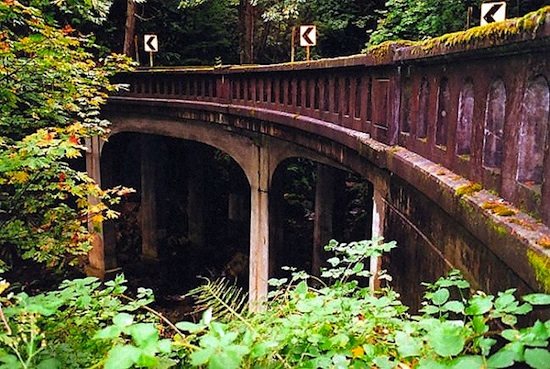
photo - There are continuous canopies of trees shading the bridges on Chuckanut Drive, a lush landscape of forest and mountain.
There are continuous canopies of trees shading the bridges on Chuckanut Drive, a lush landscape of forest and mountain. (photo by Sommer Cronck)

Some drives can get monotonous, but this is not one of them. Chuckanut traverses two very different landscapes. At its northern end, there are mountains, ocean, cliffs, trees, bays and islands. Its southern end takes you through the delta of the Skagit River, past wide, open farmland. It’s a great route for a long, peaceful drive.

The place to begin is in Fairhaven, an historic district filled with galleries, restaurants, bookshops, crafts and artisans. Consider picking up a picnic lunch for the drive at one of the many delis and restaurants in the village, unless you’re planning to eat at a restaurant on Chuckanut Drive.

Once you leave Fairhaven, don your sunglasses, wind down the windows and set your car stereo to your favorite music. If you’re in the mood for a short hike, pull over at Mile 18, the Teddy Bear Cove trailhead, where a wooden staircase takes you down a steep trail to the beach. It’s the unofficial nudist beach, so don’t be surprised if you encounter a bit of bare skin along the way. The beach is a great place for spotting seals and is full of nooks and crannies where you can enjoy a private picnic lunch surrounded by sea gulls, crashing waves and whiffs of salt in the air.

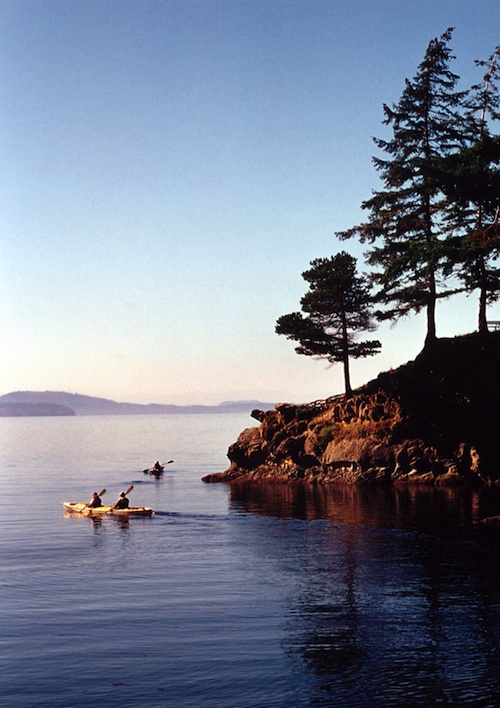
photo - Kayaking in Wildcat Cove provides a close-up view of the life in the beautiful bay.
Kayaking in Wildcat Cove provides a close-up view of the life in the beautiful bay. (photo by Robert James)

An alternative place, one where exposed flesh is much less likely to be seen, is Larrabee State Park, a magnificent, 1,885-acre site along the shores of Samish Bay, with a lush growth of Northwest foliage. A short walk gets you down to Clayton Beach and tidal pools. Bring water shoes and a swimsuit – it’s so beautiful that you might even find the courage to defy the cold Pacific with a quick dip. This is another great place for your picnic lunch, if you’re having one. If not, your next stop could be the Oyster Bar on Chuckanut Drive (theoysterbar.net; 1-360-766-6185), a seafood restaurant with ocean views to die for and cuisine that’s just as inspiring. Much of its fare is local and, in fact, some of the non-kosher variety is grown minutes away at Taylor Shellfish on Samish Bay. However, if seafood isn’t your preference, there are more restaurants along the way.

If you are feeling energetic, there are several trailheads leading to hikes that range from three to six miles long. Regardless, make sure you’ve brought along U.S. dollars, as you might need them when you reach Mile 8, at which point organic produce and farm stands come into view, selling local honey, vegetables, cheese and flowers. Miles seven through one careen past farmland, with a few stores along the way, such as the antique shop, espresso stop and hot dog stand at Mile 3. When you reach Burlington, you’ve come to the exhilarating end of Chuckanut Drive, at which point you may well choose to turn around and do it again the other way. If you’re ready for home, though, take the faster route back to Canada on the Interstate 5 – filling up on gas before you hit the border!

If you go:

• Remember your passport! You cannot cross the U.S.-Canada border without one.

• Check border waits before you go to avoid long lines. On the radio, News 1130 AM delivers the wait times every 10 minutes with its traffic report.

• To get to the exit for the northernmost end of Chuckanut Drive, take #250 off the I-5.

• Pick up a driving guide to Chuckanut from Whatcom County Tourism’s Visitors Centre at 904 Potter St. in Bellingham, call 1-800-487-2032 or visit bellingham.org.

Lauren Kramer, an award-winning writer and editor, lives in Richmond, B.C. To read her work online, visit laurenkramer.net.

Format ImagePosted on June 13, 2014June 12, 2014Author Lauren KramerCategories TravelTags Chuckanut Drive, Clayton Beach, Larrabee State Park, Samish Bay, Taylor Shellfish

David Katz creates plastic currency

If there’s one act of tikkun olam to which David Katz is dedicated, it’s an effort to clean up the oceans and waterways of the world by recycling and reprocessing plastic waste.

The 45-year-old Port Moody, B.C.-based founder of the Plastic Bank recently returned from Greece, where he was awarded the Global Citizen of the Year Award from the Entrepreneurs Organization. The honor recognizes an entrepreneur who is making a mark on the global landscape, impacting communities, inspiring support and effecting positive change.

photo - David Katz
David Katz, founder of the Plastic Bank. (photo from plasticbank.org)

Katz’s approach to the clean up of plastic at the world’s shorelines is innovative and, if it succeeds, its potential is huge. The idea is that waste-pickers in the most poverty-stricken countries will collect the plastic garbage and deliver it to reprocessing facilities where they’ll receive a credit at the Plastic Bank. They can then use the credit towards education, loans and access to 3-D print shops, where the plastic can be transformed into tools, parts and household items.

Katz is engaged in a pilot project with Ciuda Saludable in Peru, an organization that works with communities to increase the volume of plastics collected. He’s in partnership talks with similar organizations in Columbia and has had partnership requests from organizations in 40 different countries to date.

Back at home, he worked with the University of British Columbia to develop an extruder, which creates recycled plastic 3-D printing filament, and he’s working with a local plastic reprocessor to create Social Plastic, a brand of recycled plastic. Katz hopes to convince companies to purchase it as a socially responsible alternative to creating new plastics.

“There’s enough plastic in the world right now that we would never have to make more of it,” he explained. “And once it’s reprocessed, the plastic doesn’t degrade, which means it can be used for a wide variety of purposes and continue to be upcycled. It could be turned into fibre for clothing, or into prosthetics.”

Lush Cosmetics is one of the companies that has shown an interest in using Social Plastic in their cosmetics tubs and, at the time of publication, Katz was awaiting the final paperwork on Lush’s participation. Convincing companies to come on board with the concept of Social Plastic may be challenging, though. “Potential customers are concerned that once they start using Social Plastic, they’ll always have to use it,” he said.

Katz said he’s always been drawn to the shore, and with that attraction has come an exposure to its continuous degradation. “It’s a symbol of the global catastrophe occurring because of people’s misunderstanding of environmental issues,” he said. “We’re hoping that by turning plastic waste into a currency that can be exchanged, we can help lift people out of poverty and transition them into a self-sustaining life of entrepreneurship.”

Lauren Kramer, an award-winning writer and editor, lives in Richmond, B.C. To read her work online, visit laurenkramer.net.

Posted on June 6, 2014June 6, 2014Author Lauren KramerCategories WorldTags Ciuda Saludable, David Katz, Lush Cosmetics, Plastic Bank, Social Plastic
Taking on good deeds

Taking on good deeds

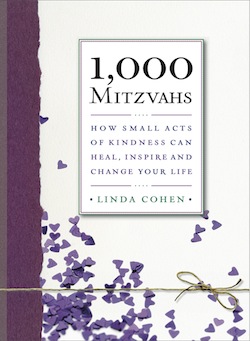
Linda Cohen, author of 1,000 Mitzvahs, spoke at King David High School’s Teaching for Tomorrow earlier this month.

Imagine channeling your grief at the loss of a loved one into something exceptionally positive and using that something to honor their memory.

That’s what Linda Cohen, 45, set out to do two years ago when she undertook the lofty goal of doing 1,000 mitzvot in honor of her late father. “My goal was to heal from the grief I was feeling,” said the Portland, Ore., mother of two. “The idea of doing 1,000 mitzvahs came to me in the night, during a dream. When I woke up and told my husband about it, he wondered how I might keep track of my mitzvahs, which is why I started a blog. But I never expected people would actually read the blog!” she admitted. “It was just a place to track what I was doing.”

image - 1,000 Mitzvahs book cover
Linda Cohen’s blog became the book 1,000 Mitzvahs.

The blog evolved into a book, 1,000 Mitzvahs, published in 2011 by Seal Press. The book contains stories about those mitzvot, why they matter and what readers might glean from each one. Each mitzvah is described in a page or two with another paragraph on why it is important and what readers might do to implement something similar in their own lives. Last week, Cohen flew into Vancouver as the guest speaker at King David High School’s Teaching for Tomorrow annual lecture program and fundraiser, to discuss her mitzvah project. The Teaching for Tomorrow event supports the school’s chesed programming.

The word mitzvah literally means commandment, but Cohen defined her mitzvahs as good deeds and acts of loving kindness. The mitzvot she documents in her book range from fundraising for important causes to giving someone else’s kid a ride home, from volunteering on a committee to giving someone a cake. She said none of the mitzvot she took on was life-changing or particularly huge but they did change her life. “It made me more aware of opportunities to do good things, more attuned to what other people were doing,” she reflected. “Though my mitzvah project ended two-and-a-half years ago, I think I’m still as aware today of the importance of doing mitzvahs.”

The mitzvah that stands out most in her mind was a visit to her rabbi, Rabbi Yonah Geller, when he was on his deathbed. She had been conflicted about visiting during his short illness but, in the end, felt she had to be there. “My five minutes with him made me so happy,” she recalled. “For me, that was the most significant mitzvah.”

On a personal level, focusing her energies on mitzvot helped Cohen heal from the loss of her father in December 2006, a man with whom she admittedly had a troubled relationship for many years. “My dad was an amazing man and though our personal relationship was challenging, I feel gifted by the fact that we knew he was dying and had a year to put our affairs in order,” she said. “But I do feel sad that we wasted some of our years together struggling.” In her book, she writes of her grief and describes feeling very connected to her father. “Whenever I need him and am unsure of anything, he’s right near me, holding my hand and helping me get through the experience,” she said. “I feel like he visits me as a black crow.”

Lauren Kramer, an award-winning writer and editor, lives in Richmond, B.C. To read her work online, visit laurenkramer.net.

Format ImagePosted on May 23, 2014May 22, 2014Author Lauren KramerCategories LocalTags 1000 Mitzvahs, King David High School, Linda Cohen, Teaching for Tomorrow

Israeli worker is worried about his future in Canada

For 25-year-old Israeli Anton Soloviov, the dream of working in Canada turned into a nightmare. Brought into the country as a temporary foreign worker seven months ago, he and others in the same situation allegedly worked without pay for their former employers, who are accused of using the threat of deportation to keep their employees in line.

photo - Anton Soloviov
Anton Soloviov (photo from Anton Soloviov)

Last fall, while still in Israel, Soloviov said he saw an online advertisement for work abroad that promised earnings of up to $5,000 a month. Though his best friend warned him it looked too good to be true, it was an opportunity Soloviov couldn’t pass up. He applied online, interviewed with Canadian business owner and former Israeli Dor Mordechai over the phone and flew into Vancouver in October 2013. Mordechai and his wife Anna Lepski hired Soloviov as a foreign worker for their company, 0860005 B.C. Ltd., which operates kiosks in British Columbia malls, both in the Lower Mainland and on Vancouver Island. Soloviov, 25, said he met two fellow workers, also Israelis, on the ferry to the island and worked with them at Nanaimo’s Woodgrove Centre, at kiosks selling the Pinook Massage device and cosmetics, among other products. Soloviov said Mordechai and Lepski arranged housing for him and his fellow workers in a sparsely furnished house in Nanaimo, charging them $450 per month each in rent.

At first things were OK. “The first few weeks were wonderful, they showed us around and took us to Service Canada to get our SIN numbers,” Soloviov recalled in an interview. Left with $300 after paying for his $1,900 airfare to Vancouver – a fee that is supposed to be paid by the employer of a temporary foreign worker – Soloviov managed to pay for food for the first month. But payday offered the first indication, he said, that the work was far from kosher.

“Instead of paying us for a month’s work, our supervisor, Azi Qizel, also an Israeli, announced that we were working on commission so, after rent deductions and paying him $500 for our work permits, we didn’t actually earn anything,” Soloviov claimed. When he objected, Soloviov alleges that Qizel informed him that if he didn’t want to work, his work permit could be canceled and he would be deported by Immigration Canada.

By December 2013, Soloviov said he had worked hundreds of hours and made a total of $300 after the fines for which he claimed he and his fellow workers were penalized. “I was fined for everything you can imagine,” he alleged. “Qizel would come up to the kiosk, see something missing and fine everyone who worked that day $100. If we were seen on our phones, we’d be fined. If we were caught talking to each other, we were fined $100.”

Over the course of those months, Soloviov said he did some research and contacted a lawyer. He said he approached his then employers and asked to be paid what he was owed, “or else I’d file a complaint with Employment Standards.” That’s when Soloviov said that he and his family were threatened, though he was less worried about himself than his family. “I’m ex-military, I can take care of myself. But the threat to my family was a blow. I was afraid for my mother, who lives with my baby sister. She didn’t do anything wrong.”

A few days before New Year’s, Soloviov went to the Nanaimo RCMP with his story, and then to the Salvation Army Emergency Shelter, since he had no money or accommodation. What’s more, he was unemployable, since his temporary foreign worker permit allowed him to work only for Mordechai’s company.

Today, thanks to the intervention of the Central Vancouver Island Multicultural Society, which helped Soloviov find an immigration lawyer, he now has an open work permit and has found employment at a fast-food outlet in Nanaimo. A friend has offered him a place to stay for the time being. But Soloviov’s future still feels uncertain.

“I want to stay on in Canada but I’m not going back to that mall because I know they’re still there,” he said, referring to his former employers. “My friend still gets approached by people asking where I am and I don’t want to have to look over my shoulder all the time.”

Immigration officials say that Soloviov fits in the category of a “victim of trafficking in persons.” He has filed a complaint against Mordechai and Lepski with Employment Standards and the RCMP are investigating the death-threat complaint against Qizel.

Some of Mordechai and Lepski’s mall kiosks are still operating today. The pair are now being formally investigated, according to the office of Jason Kenney, Canada’s minister of employment. Since the case deals with potential human trafficking, it is being handled by the Ministry of Public Safety.

Citizenship and Immigration spokesperson Rémi Larivière said the Government of Canada takes the issue of exploitation and mistreatment of temporary foreign workers (TFWs) very seriously and that improvements to the program took effect on Dec. 31, 2013. These include allowing Citizenship and Immigration and Employment and Social Development Canada officials to conduct inspections of employers who hire TFWs to ensure that they’re meeting the conditions of employment. Service Canada has also made some changes, launching a public tip line to encourage Canadians who have any complaints, to share them with the agency’s Integrity Services.

Lauren Kramer, an award-winning writer and editor, lives in Richmond, B.C. To read her work online, visit laurenkramer.net.
Posted on May 16, 2014May 14, 2014Author Lauren KramerCategories Local

Plan your giving in Leave a Legacy Month

If you don’t have a will, get it done. That’s the message of the Canadian Association of Gift Planners, an organization that’s designated the month of May as Leave a Legacy Month. Calvin Fong, chair of the national program titled Leave a Legacy, said the program’s goal is to raise awareness of the importance of having a will, as well as the idea that people consider leaving a gift to charity in their will.

“If you die without a will you really have no control over how your estate gets distributed – legislation will dictate that instead,” Fong told the Independent. “Without a will, for example, you have no way of leaving a gift to your favorite charity or creating a trust for your spouse. Having a will ensures your wishes are articulated and carried out after your death.”

Just six weeks ago there were changes to the Wills, Estates and Succession Act (WESA) with important implications. The minimum age to create a will has been lowered from 19 to 16, wills created prior to marriage are still valid after marriage, and the courts have been granted authority to recognize non-compliant documents as wills, and ensure that a deceased person’s last wishes will be respected. For example, legislation now allows for the possibility that electronic versions of wills might be recognized. “The changes modernize legislation created over 100 years ago and streamlines things for the public,” Fong explained.

Tax savings is another reason to consider creating a will. Gifting money or assets to charity makes your estate eligible for a tax deduction upon your death, while creating a trust in your estate allows you to defer taxation of certain assets.

If considering gifting money to charity, start by figuring out what you want your personal legacy to be, advised Marcie Flom, director of the Jewish Community Foundation, which is housed at the Jewish Federation of Greater Vancouver. JCF works one-on-one with donors to create their legacies, using bequests, gifts of life insurance, gifts of cash and in-kind donations, annuities and charitable trusts. To date, it has 330 endowment funds and assets of $42 million that it manages on behalf of donors in the community.

With gifts of life insurance, donors name JCF as the owner and beneficiary. Upon their death, the proceeds of the policy enter an endowment fund they created during their lifetime, supporting causes that were important to them. “Some donors have various life insurance policies and discover that they no longer need them, so they decide to donate them to the foundation,” Flom explained.

With bequests, individuals stipulate a gift to the foundation in their will to support those causes. “It can take various forms, such as a set amount or a percentage of their estate,” Flom said. “It’s very personal, and usually people meet with me to talk about what they want to do, the idea being that we want to help increase your current income or estate value, while also creating a lasting legacy for the community.”

That legacy can involve donations to Jewish and non-Jewish causes, as the JCF distributes funds to both. And there’s a broad range of donors, Flom said, with some funds established with as little as $1,000, or no assets at all if it’s a planned gift. “Some donors make a modest contribution to their fund each year to build it over time,” she explained, “but legacy planning is not limited to those with means. Anyone can establish a fund in any amount and build it over time or establish a fund with a planned future gift.”

Some individuals use their legacy to involve and engage their children in active philanthropy. “They work with us on their philanthropy during their lives, but also use it as a method to engage their kids to take over that philanthropy after they’re gone,” Flom said. The children continue their parents’ legacy of lifetime giving by working together to direct support to their parents’ favorite charities and/or the charities that they are passionate about.

For more information, call the Jewish Community Foundation at 604-257-5100 or visit jewishcommunityfoundation.com. For more on Leave a Legacy Month, WESA changes and more, visit leavealegacy.ca or cra-arc.gc.ca.

Lauren Kramer, an award-winning writer and editor, lives in Richmond, B.C. To read her work online, visit laurenkramer.net.
Posted on May 16, 2014May 14, 2014Author Lauren KramerCategories LifeTags Calvin Fong, Jewish Community Foundation, Leave a Legacy, Marcie Flom, planned giving
Israel: a bucket list for kids

Israel: a bucket list for kids

Holon Children’s Museum is a children’s museum unlike any other.
(photo by Lauren Kramer)

Take small kids with you to Israel and one thing is for sure: you’ll want to have more on your itinerary than holy sites and 2,000-year-old ruins. Fortunately, this small country has a diverse range of fun family attractions that appeal to toddlers, kids and preteens. From a biblical zoo to a chocolate factory and science museum, here are some highlights that will keep your kids smiling in the Holy Land.

Jerusalem Biblical Zoo (jerusalemzoo.org.il). This 100-acre zoo started as a petting zoo in the 1940s and now includes more than 300 species, a quarter of them animals that were mentioned in the Bible, such as Syrian brown bears, Persian fallow deer, Asian lions, Nile crocodile and the Asian leopard. There are also many non-biblical animals in this expansive zoo, which easily takes a half-day to explore. Look out for Sumatran tigers, a rhino and a hippo, giraffes, kangaroos, wolves and fruit bats. Many of the animals are under threat of extinction. Israel is the only country in the Middle East offering protection to wolves, for example, and the wolf exhibit tries to raise awareness on how wolves and people can live in harmony. Open year round, the zoo charges $28 for admission for adults and $11 for kids.

Bloomfield Science Museum (mada.org.il). When it first opened 21 years ago, the Jerusalem museum was the only one in the country: today, it’s one of four. Its interior is far from fancy, but it more than compensates in its wide range of innovative exhibits, a selection geared to entertain and engage all age groups, from 3 through 83. “Hands-on” is the theme here and, in every exhibit, visitors are encouraged to touch, play and explore. We visited during Chanukah, when the museum had set up a station for kids to build their own unique spinning tops using recycled materials. We loved the light and shadow exhibit, a labyrinth of rooms that combine art with the science of how light and shadow interact. Other exhibits explain the connection between physics and how amusement parks work, how electricity is distributed, and how science and technology play out in some of Israel’s favorite children’s stories. Free for kids under five, the museum charges $12 for kids and adults or $45 for families.

Galita Chocolate Factory (galita.co.il). Combine kids and chocolate and the result is delight, especially if the experience includes making your own treats. The chocolate factory at Kibbutz Degania on the Sea of Galilee offers a selection of kid-focused workshops with various candy-making projects, from building and decorating a miniature chocolate candy house to creating chocolate lollipops, truffles and more. Kids play with mixtures of white and brown chocolate and carefully decorate their creations before the finished versions are refrigerated and taken home. An on-site chocolate shop sells the creations of Galit Alpert, the Belgium-trained Israeli owner whose delicacies are irresistible. Prices range from $11-$22 per person, depending on the project, and reservations are recommended.

Holon Children’s Museum (childrensmuseum.org.il or 03-6503000, ext. 3). Don’t be fooled by its name – this is a children’s museum unlike any other you’ll ever set foot in. Its four segments cater to vastly different age groups. Kids age nine and up will love Dialogue in the Dark, an exhibit wherein visitors get to experience what it is like to have no vision by taking a tour in complete darkness, in the company of blind guides. Along the way, they experience the various rooms they enter by relying on their other senses. Likewise, in Invitation to Silence, adults and kids age 10 and up get immersed in a tour of silence, one wherein they need to use other methods of communication – hands, face and body – to communicate emotions and reactions. In Dialogue with Time, visitors explore the concept of aging through experiences and games. They’re invited to identify various songs and objects that crisscross the generation gap, and to experience what it feels like to lose dexterity in the hands and feet by donning special gloves and shoes. Talking figurines reflect on their different experiences of aging and the entire experience invites discussion, dialogue and contemplation on what it means to age gracefully. Finally, in the only segment of the museum that remotely resembles a typical children’s museum, children ages 4-8 get to explore the making of music and art using unconventional instruments and objects, led by actor guides. Each tour lasts between 90 minutes and 1.5 hours and costs $15 per segment. Reservations are essential.

Lauren Kramer, an award-winning writer and editor, lives in Richmond, B.C. To read her work online, visit laurenkramer.net.
Format ImagePosted on April 11, 2014April 16, 2014Author Lauren KramerCategories TravelTags Bloomfield Science Museum, Galita Chocolate FActory, Holon Children's Museum, Jerusalem Biblical Zoo
Tibetan refugees will receive help from Momo Minyan to resettle in British Columbia

Tibetan refugees will receive help from Momo Minyan to resettle in British Columbia

Members of the Momo Minyan. (photo by David Berson)

Sometime in the next three months, two Tibetans will arrive in Vancouver from Arunachal Pradesh, a poor, remote region in the far northeast of India. When they get here, a group of Jews from Vancouver’s Or Shalom Synagogue will be waiting for them, ready to aid with their resettlement in this country. The group, which calls itself the Momo Minyan – momo after a Tibetan steamed dumpling – formed in June 2013 with the sole purpose of helping these Tibetans create a new life in British Columbia. In February, they completed and filed the sponsorship papers. Now, they wait. When the newcomers arrive, their work will begin in earnest.

The group will be supporting the two Tibetans financially, but their involvement will go beyond hard cash. “It means receiving them at the airport, finding a place for them to stay, ensuring they get registered for health benefits, helping them learn the language and find a job, and assisting them as they integrate socially,” said David Berson, a member of the minyan. The group will be responsible for accommodating the Tibetan refugees and ensuring they can access the services they require. It promises to be no small undertaking.

Back in 2010, at the urging of His Holiness the Dalai Lama, Prime Minister Stephen Harper agreed to allow 1,000 Tibetans from this rugged, contested area to resettle in Canada. Arunachal Pradesh is claimed by China as “South Tibet” and for the past 55 years the strip of land along this border has been home to thousands of Tibetans. To determine who was chosen to go to Canada, a lottery was held in the village’s public square, eventually granting a new life to one-sixth of the Tibetans from this area. The first wave of 55 arrived in Canada in December 2013. By the program’s conclusion, there will be approximately 200 refugees in British Columbia and others in Calgary, Ottawa and Toronto.

To make the transition to Canada possible, each one required sponsorship by a Canadian group or individual before they could obtain special travel documents and enter the country as landed immigrants.

Vicki Robinson, a facilitator for the Momo Minyan, said Or Shalom is the first synagogue in Canada to sponsor Tibetans under this program. The minyan has partnered with the Tibetan cultural society in this project. The United Church of Canada, a government sponsorship holder, has also helped to get the applications completed. “The United Church has a lot of experience in resettlement, working with the Canadian Immigration Committee and getting all the permits lined up,” Berson said. “They’re a conduit more than a partner for us.”

The Momo Minyan will be responsible for the Tibetans’ entire integration package, including finding and paying for an apartment, paying for health insurance and food. “Until we know who we’re absorbing, it’s difficult to know what kind of work will be appropriate,” Berson said of the process. The refugees, who have varying levels of education, come from poverty-stricken villages in this region, where they have limited access to medical care and often have to send their children away to school. “Their lives are threatened and they are a stateless people living in a disputed territory,” he noted.

The Tibetans have neither Chinese nor Indian citizenship. Some have more work experience than others, said Berson, who recently learned the Tibetans in this area tried to cultivate apple orchards for the past 10 years, but were more successful growing kiwi. Some worked in the agricultural sector in Israel, as foreign workers, he added. “The Canadian government is going to Arunachal Pradesh this month to interview them, so we’ll hear very soon about the Tibetans we will be receiving.”

The minyan has begun fundraising in the Or Shalom community and will extend its efforts to the wider community once more is known about the particular immigrants they are sponsoring. Eligibility for social assistance is not a possibility under the agreement with the Canadian government, which estimates sponsorship costs at $12,000 per person per year. With the cost of living in Vancouver, that won’t be enough, Berson said. “It’s guiding our efforts in terms of fundraising, but we think we’ll need more than that. The government is very nicely providing them with landed immigrant status, but not any other aid, per se, in the process. After five years, they will be eligible to apply for Canadian citizenship like any other landed immigrant.”

Members of the Momo Minyan united in a mutual agreement to participate in this humanitarian effort, one that resonated with many in the synagogue, Berson said. “The opportunity for us to be able to extend our hospitality to another group that has suffered exile and have a diaspora is probably one element why I got involved. The Tibetans are amazing people but they’re very reserved and shy in their mannerisms,” he added. “There’s going to be big cultural differences.”

Robinson was eager to step forward and join the minyan after visiting Tibet in 1994. “The Tibetan people stole my heart,” she admitted. “They are amazing, beautiful, spiritual, good people who are struggling in a very difficult situation. Since my visit there, I’ve been involved working with the Tibetan community in exile. I spent time working with the Tibetan Women’s Association in India for a year, where I met Tibetans from Arunachal Pradesh.” Robinson’s family came to Canada fleeing persecution, which was another reason she wanted to get involved. “I thought this would be good work to do – a way of giving back to the country that welcomed us,” she said.

Those interested in contributing to the resettlement efforts can contact Berson by email at [email protected].

Lauren Kramer, an award-winning writer and editor, lives in Richmond, B.C. To read her work online, visit laurenkramer.net.

Format ImagePosted on March 14, 2014April 14, 2014Author Lauren KramerCategories LocalTags Canadian citizenship, Dalai Lama, David Berson, Momo Minyan, Or Shalom Synagogue, Stephen Harper, Tibetan Women's Association, United Church of Canada, Vicki Robinson

Saskatchewan Jewish history moves to Quebec

At the age of 80, after 40 years of researching and collecting material on the Jewish farming colonies of Saskatchewan, scholar Anna Feldman donated the entire body of research to the Canadian Museum of History in Gatineau, Que. Among the materials are audiocassettes with songs, interviews and oral narratives, personal memoirs and other textual documents. It’s a rich contribution that sheds light on those small colonies and the hopes and dreams of their Jewish inhabitants, said Judith Klassen, music curator at the museum.

“It really makes sense for it to be here,” Klassen said. “The breadth of Anna’s work is really exciting. For example, she didn’t record only one particular genre of song as she looked at Yiddish song and culture. Rather, she recorded different types of music from a broad spectrum of people, including cantorial training, ornamentation, traditional song and storytelling.”

How Jews ended up in Saskatchewan

Jews arrived in Saskatchewan in the 1880s, many fleeing from persecution in Europe. They established farming colonies with names like New Jerusalem, Sonnenfeld and Edenbridge and, by 1930, those colonies were populated by thousands of Jewish farmers and their families. The Jewish colonies’ decline started in the 1930s with the Depression and drought. By the 1960s, most of the farm colonists had left the land for larger cities. Today, all that remains is open prairie where homes and settlements once were, small cemeteries marking the graves of the original settlers. In Edenbridge, the Beth Israel Synagogue, constructed in Carpenter Gothic style in 1906 and used until the 1960s, is now a municipal heritage site. But for any kind of context about the lives lived here, you have to go to the museum.

Fortunately, material like Feldman’s, which is being processed for the public archives, is accessible. To immerse yourself in the collection you have to travel to Gatineau, but for those who are looking for specific documents, those can be ordered, copied, scanned or mailed. “We’ve already had inquiries from people interested in this collection, even from outside of Canada, which shows it’s of interest beyond our borders,” Klassen said.

The origins of the research

Feldman’s interest in the Jewish pioneers was sparked when she married the son of a pioneer family from the Sonnenfeld homestead. Her late spouse was attached to Sonnenfeld all his life and Feldman’s first interview was in 1978, with his mother.

An accomplished scholar, Feldman returned to university as a mature student and obtained an ARCT in singing, a bachelor of music and a master’s degree in Canadian studies from Carleton University. In 1983, she received the Norman Pollock Award in Canadian Jewish Studies. Today, she lives in a seniors residence in Toronto.

Feldman began donating her collection of music to the Museum of History’s Centre for Folk Culture Studies in early 2000. The first 188 audio cassettes containing interviews with Jewish musicians, homesteaders, merchants and professionals who were part of the rural farming communities in Saskatchewan have been processed and are available in the catalogue. Part two of her collection is still being processed.

“In terms of Jewish cultural expression and settlement in Saskatchewan, this collection is foundational,” Klassen noted. Partly, that’s due to Feldman’s skill as an interviewer. “She’s very pointed in her questioning and very thoughtful in how she asks questions. She allows her subjects to talk about their background and interests, but guides them so she covers the key areas she is interested in. In the breadth of her fieldwork and interviews, you get a nuanced perspective on the experiences people had; for example, on antisemitism, but also on mutual respect. You see there’s a broad spectrum of opinions even within the particular settlement. That’s one of the really unique things about this collection.”

The importance of Feldman’s work

“I don’t want the people of Canada, especially the Jews, to be unaware that we had pioneers in Canada who came here when there was no one else in the land. Jews don’t know about this and neither does the general public, and I think people should know about it,” Feldman has reflected.

After her first interview, she traversed Canada twice looking for Jewish pioneers and their children. “I remember visiting one family in Winnipeg whose elderly mother was a descendent of a Jewish pioneer family,” she recalled. “She was blind and unwell, but when she heard about my interest she met me and we had a wonderful time. She was reminiscing and we sang songs together until 2 a.m.!”

What she learned from those interviews is that the early Jewish pioneers in Canada suffered a great deal. “They had the economic depression, problems with weather, land and soil, and all sorts of plagues, but they had the strength to survive,” Feldman said. “They weren’t farmers when they came, and Canada didn’t want Jews, but the Canadian government was afraid the Americans would take over the Prairie provinces, so because of that they allowed the Jews to come.”

She continued, “I think people should have pride in all [that] those Jewish pioneers accomplished. They survived in spite of all the difficulties they had and they made a tremendous contribution to Canada – them, their children and their children’s children.”

A list of the material catalogued thus far is available on the museum’s website at historymuseum.ca. Search the archives by author Anna Feldman to find a description of the material in each box.

Lauren Kramer, an award-winning writer and editor, lives in Richmond, B.C. To read her work online, visit laurenkramer.net.
Posted on February 28, 2014April 11, 2014Author Lauren KramerCategories NationalTags Anna Feldman, Beth Israel Synagogue, Canadian Museum of History, Carpenter Gothic, Edenbridge, farming colonies of Saskatchewan, Judith Klassen, New Jerusalem, Norman Pollock Award, Sonnenfeld

Posts pagination

Previous page Page 1 … Page 13 Page 14 Page 15 Next page
Proudly powered by WordPress