
Skip to content
  • Home
  • Subscribe / donate
  • Events calendar
  • News
    • Local
    • National
    • Israel
    • World
    • עניין בחדשות
      A roundup of news in Canada and further afield, in Hebrew.
  • Opinion
    • From the JI
    • Op-Ed
  • Arts & Culture
    • Performing Arts
    • Music
    • Books
    • Visual Arts
    • TV & Film
  • Life
    • Celebrating the Holidays
    • Travel
    • The Daily Snooze
      Cartoons by Jacob Samuel
    • Mystery Photo
      Help the JI and JMABC fill in the gaps in our archives.
  • Community Links
    • Organizations, Etc.
    • Other News Sources & Blogs
    • Business Directory
  • FAQ
  • JI Chai Celebration
  • JI@88! video

Recent Posts

  • Sharing her testimony
  • Fall fight takes leap forward
  • The balancing of rights
  • Multiple Tony n’ Tina roles
  • Stories of trauma, resilience
  • Celebrate our culture
  • A responsibility to help
  • What wellness means at JCC
  • Together in mourning
  • Downhill after Trump?
  • Birth control even easier now
  • Eco-Sisters mentorship
  • Unexpected discoveries
  • Study’s results hopeful
  • Bad behaviour affects us all
  • Thankful for the police
  • UBC needs a wake-up call
  • Recalling a shining star
  • Sleep well …
  • BGU fosters startup culture
  • Photography and glass
  • Is it the end of an era?
  • Taking life a step at a time
  • Nakba exhibit biased
  • Film festival starts next week
  • Musical with heart and soul
  • Rabbi marks 13 years
  • Keeper of VTT’s history
  • Gala fêtes Infeld’s 20th
  • Building JWest together
  • Challah Mom comes to Vancouver
  • What to do about media bias
  • Education offers hope
  • Remembrance – a moral act
  • What makes us human
  • המלחמות של נתניהו וטראמפ

Archives

Follow @JewishIndie
image - The CJN - Visit Us Banner - 300x600 - 101625

Byline: Lauren Kramer

Belzberg honored

Belzberg honored

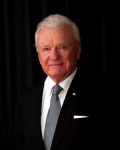
Samuel Belzberg is being honored as a “leading man” on Nov. 16 in Toronto. (photo from Weizmann Institute)

When Weizmann Canada’s Leading Men Gala is held Nov. 16 in Toronto, Samuel Belzberg will be one of the 10 honorees and the only one from Western Canada. Vancouver-based Belzberg will be in the audience of 500 that night and he and other honorees will address the audience in a video presentation, revealing their thoughts, comments and inspiration.

“We’ve never had an event on this scale before,” said Susan Stern, national executive director for Weizmann Canada. “But it’s our 50th anniversary and we wanted to do something really special.” The national event has an ambitious financial goal of raising $5 million to support the Weizmann Institute of Science in Rehovot, Israel. Speakers include actor William Shatner and Prof. Oded Aharonson, who will deliver a multimedia presentation about his research on extraterrestrial oceans.

Stern said she expected the dinner to sell out, adding that tables start at $50,000 and that there are various levels of sponsorship.

In selecting the honorees for the gala, Weizmann Canada’s goal was to find individuals who had distinguished themselves as leaders in their field, who understood the value of giving back and who had done something special in areas of research that were close to their hearts. Belzberg was an easy choice.

Founder and chairman of Gibralt Capital Corp. and Second City Real Estate, his two companies manage and own more than $500 million of real estate and capital investments. Back in 2001, he created Action Canada, which, in partnership with the federal government, endows 20 fellowships each year to Canadians who want to make a difference in the world.

It’s easy to look at the dollar figures his companies represent and assume that life has been just rosy for Belzberg, a father of four who boasts 16 grandchildren and eight great-grandchildren. But look a little deeper and it becomes clear that every family has its own unique battles. In Belzberg’s case it was the illness of one of his daughters, Cheri, who was diagnosed with dystonia, a neurological disorder that impacted her mobility and speech. Back in the 1970s, when doctors were trying to diagnose her condition, finding the right diagnosis took four to five years. “Nobody knew the first thing about it in those days,” he said.

Belzberg would change that, establishing the Dystonia Foundation with neurologist Stanley Fahn in 1976. The foundation has made significant contributions to clinical and diagnostic treatments though, sadly, none of them helped Cheri. Still, Belzberg is encouraged by the progress in research and the fact that it has given thousands of people cures for the disorder, as well as counseling and support.

“We have now learned that there are many different types of dystonia and we’ve been at the forefront of learning about them and finding either cures or short-term help,” he said. “For example, there’s a kind of dystonia that’s like writer’s cramp, or where a musician all of a sudden couldn’t play the piano.”

Belzberg has established many other initiatives, too. “He’s done so much for the community, locally, nationally and internationally – it’s unbelievable,” Stern said. In 1977, he created the Simon Wiesenthal Centre and the Museum of Tolerance in Los Angeles. The mission of the centre is to confront antisemitism, promote human rights and ensure that the Holocaust is never forgotten.

Belzberg, however, credits his success to picking the right partners for his projects. “It’s relatively easy to donate money, but it’s not so easy to take your time and actually work at a project,” he admitted. “I’ve been very lucky in that I’ve picked good partners. They carry the ball and I help the best way I can.”

He added that his involvement with Weizmann Canada over the years was prompted by a belief that the Weizmann Institute “is among the greatest institutes in Israel. The scientists at Weizmann have accomplished so much, and it’s a great honor to be playing a small part in moving the research forward.”

Lauren Kramer, an award-winning writer and editor, lives in Richmond, B.C. To read her work online, visit laurenkramer.net.


Format ImagePosted on November 14, 2014November 13, 2014Author Lauren KramerCategories NationalTags Samuel Belzberg, Weizmann Canada, Weizmann Institute
Soup ladled with love

Soup ladled with love

Sharon Hapton (photo from Random House of Canada) 

When she first got together with friends to make soup for women and children fleeing domestic abuse in Calgary, Sharon Hapton recalled how the chef at the shelter broke down in tears when she saw their delivery of kosher-style chicken soup.

“The reason the chef was overcome with emotion was that there were Jewish women at the shelter at that time, and she knew how much it would mean to them,” she explained.

Hapton and her friends were overcome, too, but more with surprise than anything else. They were stunned to learn the shelter was accommodating Jewish women. “Not one of us had thought we were making soup for someone in our own community,” she admitted. “It was a humbling and defining moment to know that domestic abuse crosses all cultures.”

image - The Soup Sisters and Broth Brothers Cookbook  cover
The Soup Sisters and Broth Brothers Cookbook features recipes by acclaimed B.C. chefs, including Vikram Vij, Karen Barnaby, Rob Feenie and Lesley Stowe, among others.

That was five years ago and since then Hapton has been busy with Soup Sisters and Broth Brothers, her nonprofit social enterprise that organizes soup-making events in some 20 cities nationwide. She visited Vancouver on Oct. 8 to launch her second cookbook, The Soup Sisters and Broth Brothers Cookbook, featuring soup recipes by acclaimed B.C. chefs, including Vikram Vij, Karen Barnaby, Rob Feenie and Lesley Stowe, among others. Hapton’s favorite, though, is the recipe she grew up with, her mother’s potato leek soup. “There’s so much memory and nostalgia in it, it’s really delicious, simple and beautiful,” she says of the recipe.

The mandate for Hapton’s organization is to nurture and nourish women and children fleeing domestic abuse and family violence and seeking shelter in some 30 shelters across the country, including those in Vancouver, Burnaby, Surrey, TriCities, Kelowna, Victoria and soon Penticton, too. Participants pay $55 to attend an event in partnership with a cooking school, where they help to make up to 200 servings of soup under the guidance of a chef facilitator. Afterwards, participants enjoy a meal of soup, salad, bread and wine with other cooks in the kitchen. “It’s a night out where you learn about the shelter you’re supporting and enjoy the camaraderie in the kitchen,” Hapton said. Ninety-five percent of the participation fee goes to the culinary partner, which supplies the ingredients and the kitchen where the soup is made. By uniting with a culinary partner the organization ensures participants will receive good service, fresh ingredients and operational excellence as they make their soup.

Since March 2009, more than 500,000 servings of soup have been delivered to Canadian shelters, thanks to a network of 12,000 participants. Hapton said the need in women’s emergency shelters is endless. “Most of those shelters are unfortunately always full, typically with up to 50 women and children at any time.”

Soup Sisters and Broth Brothers has also been supporting youth in crisis, specifically kids aged 16 to 24 who are transitioning from being street involved. While women being housed in the shelters don’t tend to communicate much to the organization (perhaps because of security concerns, or the stigma associated with being a victim of domestic abuse), the kids are really communicative, she said. “We receive letters from them with thanks, telling us how the soup made them feel, and the results of a simple, simple gift are very tangible.”

Batches of fresh soup are delivered in containers adorned with handwritten labels. Quantities are supplied to last until the next event when soup is made, which can be up to a month away.

“My experience of being a soup maker led me to understand that soup is a very powerful way of taking care of people,” Hapton reflected. “I believed very strongly five years ago that this could be something bigger, and that’s exactly what has happened now.”

These days, she receives emails from people all over Canada who have heard or read about the program. When new communities show an interest in starting the program, she asks to meet three main coordinators for each group and helps them implement it.

“Every city, big or small, has a shelter,” she said. And many of them are now being supplied with tasty, fresh, regular batches of soup.

In Vancouver, Soup Sisters supplies soup to Kate Booth House, Imouto Housing for Young Women and Koomseh transition house, in partnership with the Dirty Apron Cooking School. The next soup-making event is Jan. 25, at 11 a.m. For more information, visit soupsisters.org or email [email protected].

Lauren Kramer, an award-winning writer and editor, lives in Richmond, B.C. To read her work online, visit laurenkramer.net.

 

Format ImagePosted on October 24, 2014October 23, 2014Author Lauren KramerCategories NationalTags Broth Brothers, Sharon Hapton, Soup Sisters
21st-century furniture

21st-century furniture

An Eli Chissick-designed mirror, which will exclusively be available from SwitzerCultCreative in November. (photo from SwitzerCultCreative) 

You could say Renee Switzer got her love of the furniture business from her grandfather, who arrived in Canada from Poland in 1920 and opened a second-hand furniture store in Calgary. The tradition continued when her father entered the industry, too, with a company specializing in the manufacture of antique reproductions. Switzer worked in the family business until it was sold in 2010. A year later, she launched SwitzerCultCreative, motivated by a desire to create opportunities for Canadian designers.

“I love the furniture industry and the people involved in it, and I wanted to maintain the contacts I’d developed over the years,” she told the Jewish Independent. “After I moved from Vancouver to the Sunshine Coast in 2006, I discovered there’s a tremendous amount of homegrown talent that’s hidden away and needed to be developed and promoted, so that’s what I decided to do.”

Switzer builds and maintains business relationships between furniture designers, the craftsmen who create those designs and the clients who purchase the finished product. Her focus is modern, luxurious and sustainable 21st-century designs and her emphasis is on knowing every detail about the products she represents. That includes how pieces are made and finished, what materials are used, who creates and builds those pieces and why they are environmentally sustainable.

Among the collections she promotes is the Coupland Collection by Canadian novelist Douglas Coupland, the Baumhaus Collection by Jess and Nicolas Meyer, the Barter Collection from Kenneth Torrance and the AHRPA Collection created by Umberto Asnago, an Italian furniture designer.

More recently, Switzer was also determined to find an Israeli designer whose work would fit in with the collections she already promotes. “I really believed it was important to try and do something to counteract all the anti-Israel boycotts going on right now, boycotts that are nonsense,” the Roberts Creek resident said.

In an effort to find the right fit, Switzer began reaching out to organizations in Israel, making inquiries about different designers. When she saw the work of Eli Chissick, its high quality and focus on sustainability resonated with her immediately. “His pieces are unique and made primarily from salvaged woods,” she said of the 30-something award-winning designer. “He’s interested in sustainability and, though it’s hard to reduce the carbon footprint of a designer based in Tel Aviv, we are able to do that by making his pieces in North America.”

Chissick is a designer, artist and carpenter who is passionate about environmental sustainability. His latest series of recycled art is called “Wood-Con-Fusion” and each piece within the series began its life as an off-cut on the floor of a carpentry studio, destined for the scrap heap. “Eli is able to see the potential in the most unassuming pieces of fibreboard, veneer and Formica, and nothing goes to waste as he collects and sorts these pieces and presses them into sheets, which he uses to create unique pieces of furniture,” Switzer explained.

Two of Chissick’s designs are presently being manufactured in Vancouver and will be ready in November, licensed exclusively to SwitzerCultCreative. His five-foot mirror will sell for $2,800 and Switzer is confident it will quickly find a home.

Her buyers are primarily interior designers and architects for residential and hospitality projects all over North America through sales representatives with whom she has exclusive relationships and who believe in the products she represents. With no physical showroom in Vancouver, most of Switzer’s pieces are exhibited on her website, switzercultcreative.com. Her company also sponsors an annual design competition for students, where the winner has their design built and marketed for a year by SwitzerCultCreative. “Our aim is to promote unknown talent by providing a launching point for new designers to build their own brands,” said Switzer.

Lauren Kramer, an award-winning writer and editor, lives in Richmond, B.C. To read her work online, visit laurenkramer.net.

Format ImagePosted on October 17, 2014October 17, 2014Author Lauren KramerCategories WorldTags Eli Chissick, furniture, Israel, Renee Switzer, SwitzerCultCreative
People-centred vision

People-centred vision

Entrepreneur Brian Scudamore’s success is due in part to lessons he learned from his grandparents about how to treat people. (photo from O2E)

When Brian Scudamore addressed business owners at Small Business BC’s Inspire event, held Sept. 29 at the Telus World of Science, his Jewish grandparents, Kenneth and Florence Lorber, were on his mind.

The founder of 1-800-Got-Junk? says they were the source of his inspiration, first-generation Americans who lived in San Francisco, owned a store called Lorber’s Surplus and, whenever possible, recruited the help of their grandson.

“I spent every summer and holiday working there and I learned a lot, especially from my grandfather,” Scudamore told the Independent. “He really cared about his employees and treated them like part of the family. Both my grandparents had a reputation on the street for being lovely people. They treated everyone with respect and would do anything to help other people. Even when homeless people came in to ask for money, they would listen to them, ask how they were and care about them.”

From his grandfather, Scudamore inherited the drive and ambition that would lead him to establish the company O2E, which stands for “Ordinary to Exceptional,” and includes the brands 1-800-Got-Junk?, Wow 1 Day Painting and You Move Me. The latter was created in 2013, inspired by a less-than-desirable experience with a local mover. In Scudamore’s version of a moving company, uniformed, trained movers bring coffee for clients on moving day and leave a housewarming plant when they go.

For 1-800-Got-Junk?, Scudamore’s goal is to double the company’s revenues from $100 million to $200 million by 2016. “We’re nearly there,” he said of the company that began in 1989 with $700 and a beat-up truck. Today, it’s the world’s largest junk removal service.

“It’s always about finding the right people, ensuring we consistently hire top-performing, A-players,” he said.

Back in 1994, not long after he started the company, he let go all 11 of his employees and started over from scratch. “I felt I hadn’t hired the right people and hadn’t spent time training them,” he recalled. “Today, we hire great people who have the potential to do great things.” What’s more, he goes out of his way to keep them happy.

He’s quick to attribute his success to his roots and the lessons he learned about how to treat people. Kenneth Lorber would take his employees out for a meal to thank them for their hard work. But, when you have 300 employees in Vancouver and Toronto, and 3,000 when you include the 200 franchise partners that stretch across North America and in Australia, a thank-you dinner isn’t quite possible. So, the innovative entrepreneur created the 101 Life Goals program, where his employees could list their measurable, specific goals and he could help them achieve them, when rewards were warranted.

“One employee wanted to get his scuba certification, so we signed him up for lessons. Another wanted a ride in a hot air balloon and a third wanted to read the book Anna Karenina in Russian, her father’s mother tongue. I found a copy in Moscow and had it shipped over to her. It’s just a little, creative way to thank someone with a personal connection that has meaning outside of the company,” he said.

Scudamore also attributes his success to having a clear vision of what he wants the future to look like. It hasn’t always seemed so bright and promising and he admitted there have been dark places in his life when he felt he wasn’t as successful as he wanted to be. “At that time, I sat down and sketched my vision for the future. It called for my company to be in 30 cities in North America, even though we were only in one at the time,” he explained. “We wanted to be on the Oprah Winfrey Show, too. All those things came through, and I believe that having the vision is a big piece of the puzzle.”

Adopted into a Jewish family as an infant, Scudamore said his Jewishness keeps him connected to his family and gives him a deeper appreciation of “the culture of community and connectedness. I’m not a very religious person,” he admitted, “but I’m very connected to the religion and community side of my mother’s side of the family.”

For more on Scudamore, visit 1800gotjunk.com/us_en/about/brian_scudamore.

Lauren Kramer, an award-winning writer and editor, lives in Richmond, B.C. To read her work online, visit laurenkramer.net.

Format ImagePosted on October 3, 2014April 12, 2021Author Lauren KramerCategories LocalTags 1-800-Got-Junk?, Brian Scudamore, Small Business BC
Idaho’s whitewater family adventure

Idaho’s whitewater family adventure

The magic on the journey down the Salmon River comes from exhilarating rapids safe for the whole family and from the experience of being disconnected from “real life” and the electronics that distract us from the here and now. (photo from Lauren Kramer)

There’s nothing quite as thrilling as a whitewater rafting adventure, especially when you can do it with your kids. For safety reasons, most rafting companies restrict the participation of kids 12 and under for anything other than a bland float downstream. With one exception, that is: ROW Adventures’ five-day Family Magic rafting excursion on the lower fork of Idaho’s Salmon River. Here, the rapids are safe enough for a 5-year-old and just sufficiently exciting to get parents’ adrenaline pumping, without ever feeling dangerous. Add a “River Jester” to the mix, a staff member whose job it is to keep kids busy, happy and engaged, and you have the recipe for a perfect family vacation.

 “Now try to imagine 10,500 turkeys moving with each passing second and you get a sense of the strength of the current.”

The city of Lewiston is the point of departure for the trip and a place where five families from Ohio, British Columbia, New York and California make cautious introductions, as their kids, who range in age from 5 through 15, nervously check each other out. We learn that we’ll be rafting up to 16 miles a day, that lifejackets are mandatory and that the river is flowing at 10,500 cubic feet per second. “One cubic foot is about the size of a turkey,” explains our head guide, Mark. “Now try to imagine 10,500 turkeys moving with each passing second and you get a sense of the strength of the current.”

Clambering aboard seven rafts, we let the river carry us through arid gulches and canyons to a beach with silver-streaked, powder-soft sand. By the time we arrive, guides have assembled our tents and appetizers are being prepared in the camp kitchen. Audrey, an undergraduate student spending her summer as the River Jester, quickly gathers the children for games in and around the shallow eddy of our beach, while the adults wade in the cool water and get to know each other over glasses of wine. We’re in a river valley where Idaho’s schist mountains soar to 2,200 feet around us and, but for the sounds of the river, there’s utter peace. Disconnected from our iPhones, iPads, emails and texts, a gradual relaxation begins, one enhanced by nightly campfires and meals that consistently defy our distance from civilization: huckleberry-flavored salmon, prime rib, casseroles and spectacular desserts baked in a Dutch oven. “We bloat ’em, and then we float ’em,” jokes our guide, Jake, a physics PhD student.

The days start early at camp, with breakfast served at 7:30 a.m., but we’re on river time, grateful to watch the sun rise and happy to be packed up and on our boats by 9 a.m. as the mercury hits 90 degrees Fahrenheit. By midday the Salmon River provides an easy respite from the 100-degree heat. In the calm stretches of river, we gladly hop overboard, drifting effortlessly downstream in our lifejackets and clambering back in the boats at the first sign of riffles on the water. My son rides the helm of one boat, his face locked into a smile as the waves lift the boat, tossing it like a leaf in the current. My husband and I take a two-person “ducky,” navigating the thrashing waves with pounding hearts and swimsuits drenched by spray.

The days are bisected by fabulous lunches at remote beaches and stopovers at places of historical interest. At one site, we gaze at pictographs inscribed on the rock walls thousands of years ago by ancestors of the Nez Perce tribe, who once claimed this land as their own. At another, we inspect the ruins of stone houses constructed by Chinese miners in the late 1800s and, at a third, we are awed by the columnar basalt rock formations lined up along the river banks with soldier-like precision. More than half of our guides are teachers and each offers a unique perspective on the environment. Distributing Oreo cookies to the kids, one guide, Matt Phillipy, uses the chocolate layers to explain the movement of tectonic plates, which created the landscape we observe. As he speaks, a hush descends over the children in our group. Utterly absorbed, they are learning, stimulated and engaged. It occurs to us they’ve not used the phrase “I’m bored” even once since entering the river.

With their kids amply entertained, parents form easy friendships over plates of crackers and goat cheese.

An antidote to the amusement park vacation, there’s certainly magic on the Family Magic rafting tour. Without links to the digital world, families can truly play together. Kids of all ages bond over games of soccer and volleyball. Fathers and sons compete for the longest vault into the water on a waterslide created by an upturned boat. With their kids amply entertained, parents form easy friendships over plates of crackers and goat cheese. They talk about their kids, their jobs and their challenges. They play long, contemplative games of Scrabble and cards, share stories and abandon their tents for the beauty of sleeping directly under the starry Idaho skies.

By 10 p.m., everyone at camp is fast asleep, exhausted by the excitement of white water rapids that have challenged our paddling skills, splashed and soaked us, and left us exhilarated and eager to head out the next day. Among us are grandparents in their 70s, kids in kindergarten and everyone in between, united by the serenity and thrill of the Salmon River and its rapids.

On day four, we have hair streaked and matted by sun, sand and water, skin plastered with umpteen layers of sunscreen and body odor; none of it bothers us in the least. Within 24 hours, we will disperse, each family traveling to their respective homes, plugged in, distracted and wired once again. But, in this moment, we’re suspended on a pristine, isolated beach amid Idaho’s majestic canyons, surrounded by rugged mountains that soar into a cloudless sky. Strangers have become friends, once-meek paddlers have surged with confidence and a sense of magic hangs quite tangibly in the air.

Lauren Kramer, an award-winning writer and editor, lives in Richmond, B.C. To read her work online, visit laurenkramer.net.
 

Format ImagePosted on September 19, 2014September 26, 2014Author Lauren KramerCategories TravelTags family travel, Idaho, Matt Phillipy, ROW Adventures, Salmon River

Filmmakers withdraw from Queer Film Fest over Israeli flag

Over the 11 days of the Vancouver Queer Film Festival, which ended Aug. 25, two directors withdrew their films from the program because the festival included an advertisement from Yad b’Yad, a Vancouver-based group that supports the Jewish LGBTQ community. The advertisement depicted an Israeli flag alongside a pride flag and wished VQFF mazal tov on its 26th anniversary.

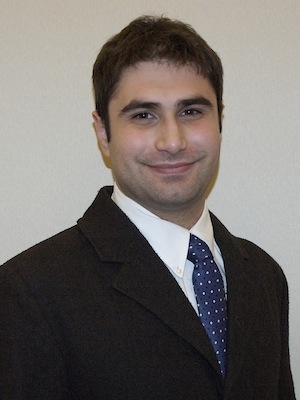
photo - Jonathan Lerner, chair of Yad b’Yad
Jonathan Lerner, chair of Yad b’Yad. (photo from Jonathan Lerner)

“We formed a few months ago and decided to put ads out in the community to let people know we exist,” said Jonathan Lerner, chair of Yad b’Yad. “Our intention was to celebrate pride and congratulate the film festival on 26 years, and we used the two flags to show our solidarity with the community. The ad was not intended to be political.”

Patty Berne, director of the film Sins Invalid, was the first to withdraw from VQFF, on Aug. 14, stating she was “angered and disappointed” that VQFF accepted the ad. The ad, she said, “attempts to portray the state of Israel as a friend to LGBTQ communities, particularly in the current moment as the people of Palestine are living through hell and dying in staggering numbers daily.”

Can Candan, director and producer of My Child, withdrew his documentary a few days later because, he said in an open letter to VQFF organizers, the festival had not taken a “public and vocal stand against the Israeli government’s unacceptable policies.” He cited an obligation to join the BDS (boycott, divestment and sanctions) campaign “as filmmakers and human rights activists with conscience.”

The filmmakers’ withdrawal from the festival was disappointing, said Drew Dennis, VQFF executive director. “We had many conversations encouraging them to keep their films in the festival, so I was saddened that they withdrew, but we want to respect them for the decision they made for themselves.”

image - Yad b'Yad was at the centre of a controversy at this year’s Vancouver Queer Film Festival for its ad, which included an Israeli flag
Yad b’Yad was at the centre of a controversy at this year’s Vancouver Queer Film Festival for its ad, which included an Israeli flag. (image from Jonathan Lerner)

Dennis said neither of the two withdrawn films contained any content relevant to the Middle East and insisted that VQFF had no political stance. “We heard from a number of filmmakers who were voicing concerns about the ad, but the festival is a place where we bring people together and allow a diversity of viewpoints. Our mandate is pretty simple: to bring communities together and provide a platform for safe, open dialogue around those films.”

Mik Turje, another director who raised concerns but did not withdraw his film, also issued a statement, as did Queers Against Israeli Apartheid and the Simon Fraser Public Interest Research Group, a student-run centre. Their statements claimed that ads like Yad b’Yad’s attempt to “pinkwash” Israel’s image by focusing on the state’s gay rights rather than on its treatment of the Palestinians. Turje said although the VQFF has made it clear it has no position on the issue, “I believe that choosing neutrality in a situation of oppression is a form of complicity. The project of pinkwashing dehumanizes Palestinians in our name, it frames Israel as a liberal democracy in our name, and it fuels Islamophobia and racism in our name.”

After concerns about the ad were raised back in July, VQFF decided to donate Yad b’Yad’s $630 in ad revenue to Just Vision, an organization whose stated goal is to use film and multimedia to help foster “peace and an end to the occupation by rendering Palestinian and Israeli nonviolence leaders more visible, valued and effective in their efforts.” Dennis said there’s “concern, compassion for what’s happening in the region right now, but it’s not part of our mandate to look at this, so we chose to make the donation in an effort to contribute in a more productive way.”

That didn’t sit well with Lerner and members of Yad b’Yad. “By treating our ad revenue differently from every other group and ad, they essentially bowed to the pressure, succumbed to the bullies,” he said. “The gay community knows full well what it feels like to be alienated and excluded, but that’s what the VQFF is promoting by treating our ad revenue differently. They’ve made us feel unwelcome because of our religion and our nation of origin.” Lerner said Yad b’Yad was not given a choice about where its ad money would be donated. “I don’t know much about Just Vision, but we don’t support our money being donated. It’s not what we paid for,” he said.

Dennis said the VQFF board would be meeting in the fall to review its policies and practices, and that the controversy over this year’s film festival had raised the fact that “something as complex as this issue is not served by our policy. There wasn’t a large organizational decision around advertisements,” Dennis said. “We focus much more on the films than on the ads, but there’s an opportunity for us to look at that in the fall.”

Lerner told the Independent that VQFF has asked for public input on the issue be sent to [email protected].

Lauren Kramer, an award-winning writer and editor, lives in Richmond, B.C. To read her work online, visit laurenkramer.net.

Posted on September 5, 2014September 3, 2014Author Lauren KramerCategories LocalTags Drew Dennis, Israel, Jonathan Lerner, Vancouver Queer Film Festival, VQFF, Yad b'Yad

Playing to win

I’m home when my phone buzzes with a text from my son. Playing for the school basketball team in a city an hour away, his five words carry disappointment, sadness. “I’m just a benchwarmer, mom.”

I’m not one of those parents who cheers on sports games from the sidelines. Perhaps I’m still scarred from high school athletics, when my best friend and I were consistently the last members picked for any team during PE classes, a painful memory to this day. It sounds callous but, for me, sports has never held even a glimmer of interest, not even when my own children are playing.

But something changed when I learned my son had spent most of that game on the bench, watching instead of playing. What upset me was the injustice of his exclusion. He’d attended practices dutifully and loved being part of the team – until that game. “I’m not a bad player,” he insisted. “I don’t know why they didn’t give me a turn.”

The indignation of having been left out hung around the house like a damp cloud for a few days. I felt hurt on his behalf, compelled to try and make things right. So, I did what most writer-parents would do – I penned a letter to the principal. It wasn’t fair, I declared. I was under the impression that in team sports everyone gets a turn. How could the coach exclude certain players and justify that exclusion by the team’s victory? Wasn’t the victory hollow when only the best players had performed?

We don’t guarantee that every player will get to play, the principal responded. Sure, they can get a place on the team, but it’s the coach’s decision about who plays the games – and we play to win.

A friend explained it in a gentler way to me a few days later. In elementary school, the games are all about playing fair, giving everyone a turn and learning to be a good sport. Not so in high school, where the emphasis shifts to winning. “The weaker players sit on the bench so the team can have its best shot at victory,” she said. “That’s just the way it is, regardless which sport we’re talking about.”

I was astonished, but enlightened, too. As parents, we want desperately to defend our kids from insult, bruised egos and perceived injustice. Their hurt becomes our hurt, and we feel compelled, angered even, to speak out on their behalf.

But sitting on the bench might offer some important life lessons. The humility to admit you’re not the strongest player. The insight that you need to work harder to be chosen for the next game. The understanding that, as unifying as the word “team” appears to be, it’s composed of members who are not equally competent: you either shine, or are outshone.

It’s going to be the same scenario at every job interview a few years down the line. The strongest candidates will be selected while the rest will warm the bench on the sidelines until they improve their game.

So, maybe warming a bench a few times is a crucial part of the game, in that it deftly illustrates the distance between where you are and where you want to be. It’s what you do with that knowledge that makes all the difference, on the basketball court and off.

Lauren Kramer, an award-winning writer and editor, lives in Richmond, B.C. To read her work online, visit laurenkramer.net.

Posted on August 22, 2014August 21, 2014Author Lauren KramerCategories Op-EdTags school sports
More Than Just Mrs. exhibit online

More Than Just Mrs. exhibit online

NCJW members unload boxes of toys headed for Israel as part of the Ship a Box to Israel program launched by NCJW Tikvah branch, Vancouver Harbor, 1947. (photo from JMABC L.11998)

Much of the work of Jewish women in Vancouver has occurred, both historically and still today, behind the scenes. The Jewish Museum and Archives of British Columbia is trying to change that with its online exhibit, More Than Just Mrs. Accessible at morethanjustmrs.wordpress.com, the exhibit discusses the history of the National Council of Jewish Women, Hadassah-WIZO (CHW) and Na’amat, the three predominant Jewish women’s organizations mid-century. It includes audio clips from local women who worked for these organizations and focuses exclusively on the work of the B.C. chapters.

“We’re trying to raise awareness of the Jewish community in B.C. and its history,” said Michael Schwartz, coordinator of development and public programs at JMABC, located in the Peretz Centre for Secular Jewish Culture in Vancouver. “When it came to these chapters of the organizations, I knew a few of the stories but wanted to fill in the gaps and learn more. I thought we should look at the organizations in greater detail, at the differences in their philosophies and the influential women who worked for them.”

The website has an introduction and then individual sections on each of NCJW, Hadassah and Na’amat, each one containing letters, certificates and other historical material relevant to the work the organizations performed. There are a total of six audio clips online but those who want to hear entire interviews may visit the Jewish museum offices to listen to them.

The exhibit offers a fascinating glimpse into Jewish life in Vancouver in the 1940s and ’50s: its fashions, the organizations’ priorities and their fundraising strategies. These women were professional volunteers, individuals who were not content to be “just Mrs.,” and insisted on devoting their time and talents to improving and meeting the needs of their local communities and communities in Israel and elsewhere. The name for the exhibit was drawn from an interview with one of the volunteers some 20 to 30 years ago, wherein she mentioned the phrase, “More than just Mrs.,” adding that, for her, doing this volunteer work was an opportunity to step out of her husband’s shadow.

NCJW supported an orphanage in Holland, for example, sending regular shipments of food and clothing to the aid of the 220 destitute war orphans being cared for in Bergstichting. The exhibit includes a letter from the orphanage dated April 1947, describing the difficult conditions at the orphanage. “The physical condition of our pupils being still rather week [sic], we had to fight with a scarlatina [scarlet fever] epidemic during five months,” wrote the director. “Sixty of our people were taken with this illness. But fortunately, your valuable gifts reached us just in those distressful months.”

The online exhibit was launched in September 2013 and some 2,500 people have visited the site since it was launched. Schwartz estimates it takes 60 to 90 minutes to read the material, which was produced by Annika Friedman last summer with the aid of Young Canada Works, a granting program subsidized by the federal government. Schwartz said another online exhibit is being produced this summer under the same program. Called Oakridge: The Final Frontier, it will chart the rise and decline of the Jewish community in the neighborhood. Elana Wenner, a master’s candidate in Jewish studies at Concordia University, will be interviewing community members and gathering photographs, videos and other relevant materials for the new exhibit. To contribute and for more information, Wenner can be reached at [email protected].

Lauren Kramer, an award-winning writer and editor, lives in Richmond, B.C. To read her work online, visit laurenkramer.net.

Format ImagePosted on July 25, 2014July 23, 2014Author Lauren KramerCategories LocalTags CHW, Hadassah-WIZO, Jewish Museum and Archives of British Columbia, JMABC, Michael Schwartz, More Than Just Mrs., Na'amat, National Council of Jewish Women, NCJW
Bubble tea: artsy, tasty sugar fix

Bubble tea: artsy, tasty sugar fix

Tapioca pearls cluster at the bottom of a green apple Calpis green tea. (photo by Lauren Kramer)

It’s a typical summer barbeque scene: parents clustered in groups catching up on each other’s lives and kids running amok in games of barefoot tag, stopping only briefly for refreshments as afternoon turns to evening. When they refuel, though, it’s bubble tea they’re reaching for, that sweet, sticky, frothy beverage that’s slurped through giant straws. Part meal, with its candy-like tapioca beans, and part beverage, bubble tea has become a natural choice for many kids and preteens. A mixture of fruit juice and tea, it’s a drink that’s both a plaything and a thirst quencher. What’s more, it delivers an explosion of flavor, an instant sugar rush that’s as fun to drink as it is to look at.

“At bubble tea shops, young people are ordering their bubble tea the way coffee aficionados order their Starbucks,” said Julia Montague, a bubble tea fan and my companion on this hot afternoon. We’ve just taken a seat at Zephyr Tea House in Richmond (7911 Alderbridge Way), positioning our massive pink straws into a shared glass of taro milk tea. A burst of taste that can only be likened to a gummy candy milkshake hits our palates, an energizing, refreshing encounter that brings us right back to childhood.

Enter a bubble tea shop and you have to be decisive. First choice is the type of tea – black, green, milk or herbal? Each category has some 30 varieties, from kiwi black to mango green, pudding milk to sesame and hazelnut milk. Once you’ve narrowed that down, you choose the bubbles you want: pearl, otherwise known as tapioca balls, coconut jelly, pudding, grass jelly or coffee jelly. Finally, you determine if you want your tea hot or cold.

We order a tall glass of Zephyr milk tea next, the house special that comes with coffee jelly, black sugar, creamer and black tea, served with whipped cream on top. The mocha-colored drink is punctuated by balls of black jelly, delivering another major whammy of sweetness – one that almost demands a food accompaniment, just to neutralize the sugar.

Bubble tea made its first inauspicious appearance in Taiwan in the 1980s, when some food entrepreneur mixed the light taste of tea with fruit flavoring, shaking it up to even out the flavors and naming it for the bubbles that would form when the mixture was combined. Later, someone reinforced the name by adding tapioca balls to the drink, as well as a large straw through which they could be consumed.

The beverage became a hit, particularly with younger folk. Bubble tea shops started popping up all over Asia and in parts of North America heavily populated by Asian immigrants, like Vancouver and Richmond, where you don’t have to search hard to find bubble tea and, when you find it, it’s eye candy in the purest form.

At the Pearl Castle Café (3779 Sexsmith Rd.), which is not far from Zephyr, the bubble tea menu features an entire page of listings for each of the black, green, milk and green milk tea. Between innovative flavors like green apple Calpis green tea, tangerine green tea with dried plum, caramel green milk tea and wheat germ green milk tea, it’s hard to narrow it down.

Our Calpis tea arrives looking like a piece of art. A layer of beer-like foam sits on the top, the drink’s bright green hue contrasts with the black tapioca pearls that cluster at the bottom. For contrast, we try hot jasmine green tea, whose soothing, subtle jasmine flavor is combined with sweetened condensed milk, providing another major sugar rush.

We exit the restaurant fired up with energy and ready to take on the day, a heady mixture of calories and sugar coursing through us as four tall glasses of bubble tea work their way through our bodies. One thing’s for sure: this is no end-of-the-day soother.

Lauren Kramer, an award-winning writer and editor, lives in Richmond, B.C. To read her work online, visit laurenkramer.net.

Format ImagePosted on July 11, 2014July 9, 2014Author Lauren KramerCategories LifeTags bubble tea, Pearl Castle, Zephyr Tea House
Take a day drive to Port Moody

Take a day drive to Port Moody

When driving in the area, be careful, as deer sometimes meander across the roads. (photo by Lauren Kramer)

I’ve lived in Vancouver for just 14 years, so I know I’ve just barely begun to discover all the beauty in the Lower Mainland and beyond. But recently, when I suggested to friends who’d lived in the city all their lives that they join us in Port Moody, their response stunned me. “What’s there?” they asked. It occurred to me then that though I’ve been taking the (close-to) hour-long drive to Belcarra every year I’ve called British Columbia home, for many, even locals, it remains one of the Lower Mainland’s best-kept secrets.

Be warned: the beauty doesn’t start until Barnet Highway, when you leave the congestion of Vancouver and Burnaby behind and enter a landscape of lush forests and ocean vistas. The trees tower on both sides of the highway as you turn onto Port Moody’s Ioco Road and any residue of stress is replaced by a clear sense of joie de vivre, or what I like to call “B.C. moments,” those rare times of year when you sigh in wonder at the sheer exquisiteness of this province and say to yourself, “This is why I live here.”

The curvaceous Ioco Road is home to some of Port Moody’s most luxurious homes, many of them nestling the sloping hillside and prefaced by rolling lawns, manicured flowerbeds and, for those perched overlooking the ocean, private docks. Between the acreages are forested sections with wildflowers and towering trees aplenty. With our car’s sunroof open, we saw eagles glide gently in the blue skies above us, the sun warm on our shoulders.

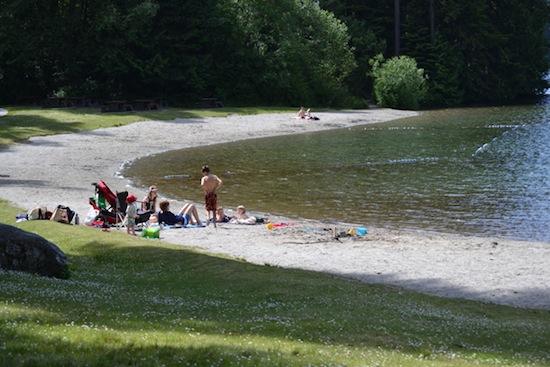
One of my favorite summer destinations in this area is the Village of Anmore, a semi-rural residential community that’s home to White Pine Beach on Sasamat Lake. The lake’s sandy beach and warm waters are a perfect playground for kids building sandcastles, athletic swimmers and those who want nothing more than to drift away on an inflatable mattress and soak up the sunshine. The air is filled with the delighted shrieks of children playing in the shallows as families grill their meals on portable gas barbeques, the smells lingering in the air. Our sandwiches didn’t seem quite so tempting!

You have to be organized if you’re headed to White Pine Beach and, in my house, that means preparing the night before for the day ahead, packing picnic baskets, shopping for food, and ensuring that towels, swimsuits and beach paraphernalia are ready for an early departure. On weekends, the parking lot fills up by 9:30 a.m., and those spots are coveted. Once they’re all occupied, the gate on Sunnyside Road closes to vehicular traffic and access to the lake requires a long walk. Still, it’s well worth it to have a rejuvenating day on the lake that reminds you how good it is to be alive.

photo - The options are numerous at White Pine Beach: you can rest and absorb the serenity, take a swim or or build a sandcastle
The options are numerous at White Pine Beach: you can rest and absorb the serenity, take a swim or or build a sandcastle. (photo by Lauren Kramer)

If you’re keen to kayak, canoe or challenge yourself to a long hike, continue north up Sunnyside Road until you reach the glacial waters of Buntzen Lake, a larger body of water surrounded by numerous hiking trails. The Buntzen Lake Trail, an eight-kilometre route that circles the lake, is a glorious walk through the shady forest and one of the shorter hiking paths in the area. The massive lake offers an off-leash canine beach, a large grassy picnic area shaded by towering hemlocks, a swimming beach and a dock from which kids can learn to fish – a skill they’ll be able to use every summer. For $45 you can rent a kayak for a full day from Anmore Grocery ($60 for a canoe, 604-469-9928) and, if you’ve not stocked up on provisions, call ahead to order croissants, muffins and/or sandwiches.

After a day on the beach, it felt glorious to drive around Port Moody, soaking up its views. As we careened along Bedwell Bay Road, we admired the mansions, envious of their ocean views. While at the Belcarra picnic area, Burrard Inlet glimmered before us, a rocky beach begging to be explored at low tide, preferably with ice cream in hand.

Sure, we got lost on those winding roads, but that was all part of this glorious day drive. At one point, we slowed for two deer that cautiously picked their way across the road right in front of us, posing cooperatively for photos before they disappeared into the forest. The road clear, we headed back into Port Moody, stopping at Suter Brook Village to replenish on smoothies and healthy snacks. Then, we reluctantly traded the wonderfully rural ambience in Port Moody for the road construction, stoplights and heavy traffic of Burnaby and Vancouver, knowing one thing for certain: we’d be back for sure this summer.

For maps and information on Belcarra Regional Park, which encompasses Belcarra, Anmore and Port Moody, call 604-520-6442 or visit metrovancouver.org.

Lauren Kramer, an award-winning writer and editor, lives in Richmond, B.C. To read her work online, visit laurenkramer.net.
Format ImagePosted on June 27, 2014August 18, 2014Author Lauren KramerCategories TravelTags Buntzen Lake, Port Moody, Sasamat Lake, Suter Brook Village, White Pine Beach

Posts pagination

Previous page Page 1 … Page 12 Page 13 Page 14 Page 15 Next page
Proudly powered by WordPress