Skip to content
  • Home
  • Subscribe / donate
  • Events calendar
  • Business Directory
  • FAQ
  • News
    • Local
    • National
    • Israel
    • World
    • עניין בחדשות
      A roundup of news in Canada and further afield, in Hebrew.
  • Opinion
    • From the JI
    • Op-Ed
  • Arts & Culture
    • Performing Arts
    • Music
    • Books
    • Visual Arts
    • TV & Film
  • Life
    • Celebrating the Holidays
    • Travel
    • The Daily Snooze
      Cartoons by Jacob Samuel
    • Mystery Photo
      Help the JI and JMABC fill in the gaps in our archives.
  • Community Links
    • Organizations, Etc.
    • Other News Sources & Blogs
  • JI Chai Celebration
  • JI@88! video

Recent Posts

  • Or Shalom reopens its doors
  • JFS from past to future
  • Need holistic approach
  • Sharing stories, advice
  • Journalist shares fears
  • Skills to live together
  • Road to independence
  • Cutting grass with scissors
  • Zionism as a solution
  • Deceit, desire & the divine
  • Reclaiming sacredness
  • Creative project ideas
  • Summer squares and cobbler
  • Thou shalt … summer commandments
  • Legal help for students
  • Revisiting myth of Lilith
  • Wrong person rebuked
  • Canada’s mixed messages
  • Questions for museum
  • Symposium on antizionism
  • Making soccer political
  • CJPAC lauds Pulver’s impact
  • City recognizes Vrba’s legacy  
  • Organ donation saves lives
  • Theodore’s March premiere
  • A healing Shabbaton
  • Supplying healthy food
  • A chime of metal tags
  • Yellowknife seder a first
  • Ishai energizes, unifies
  • A Lag b’Omer to remember
  • Expanding the healing
  • Hannah Senesh – a unique hero
  • Community milestones … May 2026
  • Деньги до зарплаты на карту Займ до зп онлайн за 5 минут 2026
  • Микрокредит онлайн в Казахстане Микрозайм в Акшамат

Archives

Follow @JewishIndie
image - The CJN - Visit Us Banner - 300x600 - 101625

Byline: Cynthia Ramsay

Storytellers excel at Fringe

Sold out. That pretty much describes every show the Jewish Independent saw during the Vancouver Fringe Festival last month – two even made the Pick of the Fringe, which ran the week after the festival.

There were at least five shows in which a member of the Jewish community was involved. Kerry Sandomirsky directed and Lynna Goldhar Smith was the production manager for Beverley Elliott’s … didn’t see that coming, which made the Fringe Picks, along with Goldhar Smith-directed Dirty Old Woman. Both of these shows featured confident, funny older women in the lead.

Elliott’s was a one-woman show, but pianist Bill Costin added well-played and well-timed musical (and other sound) accompaniment, as well as being funny in his own right, and he provided some lovely harmonies in the vocal arena. The performance moved along quickly, with Elliott sharing both humorous and touching stories of her life, from her lack of success with internet dating – “47 coffee dates and I’m going broke” – to a longtime friend committing suicide, to a New Year’s Eve show at Vancouver’s Royal Hotel, hot yoga and more. Interspersed with the stories were many songs, several of which were original numbers, and they, too, ranged from the silly to the sentimental. It was a standing-ovation-garnering performance.
photo - Charlie Varon
Storytellers Charlie Varon (photo from Tangeret via Charlie Varon) and Naomi Steinberg (photo from Naomi Steinberg) were among the highlights of this year’s Vancouver Fringe Festival.

While the audience remained seated after Dirty Old Woman, they certainly whooped it up during the show, the actors having to pause more than once before the laughter subsided so that their next lines could be heard. The “dirty old woman” was played with impeccable comedic timing by Susinn McFarlen, who also made Nina a character with whom the audience empathized and for whom they rooted. She was surrounded by the excellent cast of Robert Salvador as Gerry, the much-younger and very handsome man with whom Nina strikes up a relationship; Emmelia Gordon as Liza, Nina’s daughter, who is somewhat jealous and completely unsupportive of her mother’s new relationship; and Alison Kelly as Diane, Nina’s best friend, whose marriage is “fine,” until it’s not. Written by Loretta Seto, the play didn’t feel scripted, but rather like watching snippets of real life.

Another writer who seemed to bring real people to the stage at this year’s Fringe was Charlie Varon, with Feisty Old Jew. Varon actually performed in front of the stage, a glass of water and a music stand the only props or set. As he enacted 83-year-old Bernie’s encounter with three 20-something surfers with whom he’s hitchhiked a ride back to his retirement home, Varon became each character.

Sharing not only what is said aloud between the people in the car, but what is going on in Bernie’s head, Feisty Old Jew is very funny and it is obvious that this production, these stories, are, as Varon told the audience, “a love letter” to his parents and that generation of Jews. Varon also shared a couple of short stories about another retirement-home resident, Selma, and, when he was finished, it was as if we’d met her. Varon said he has completed eight of 12 stories that he plans to publish as a collection in the next couple of years – it’ll be a fantastic read.

At the other end of the age range was Trey Parker’s Cannibal: The Musical, presented by Awkward Stage Productions, which provides young actors and crew the opportunity to learn theatre by doing. Young, of course, doesn’t mean inexperienced and the cast and crew of this Fringe show did an excellent job from start to finish – especially considering that there is no official script for Cannibal, which includes cartoons and animated backdrops, songs, dancing and dialogue. A lot goes on in this story, “loosely based” (to say the least) on that of Alferd Packer, “the first American to ever be convicted of cannibalism.” Not nearly as gross as it sounds, except for the short opening cartoon, this show was funny throughout and extremely well-executed.

photo - Naomi Steinberg
Naomi Steinberg

Rounding out the entertaining Fringe fare enjoyed by the Independent this year was Naomi Steinberg’s Goosefeather, which was quirky, thought-provoking, innovative and mesmerizing. In 2011, Steinberg interviewed her grandfather at his Paris apartment. She asked him 100 questions – about his youth, his first job, how he helped her grandmother survive the war, why he finds measurement so fascinating, why she, Naomi, is so stubborn. “You were born like that,” he responds in what turns out to be characteristically brusque fashion.

But this isn’t straight narrative. An experienced storyteller, Steinberg intersperses what she knows and learns about her grandfather with observations about the concept of measurement, of time and space. What do we measure? Our waists, our burdens? What are our favorite measuring tools? A yardstick, the position of the sun? There is no such thing as an exact measurement, she notes – scientists always allow for a margin of error.

Steinberg adds goose honks and other sounds, ticks of time passing, packaging tape unrolling; she responds to questions and reactions from the audience; she hugs a plastic blow-up globe, hangs a pocket watch on the wall; she is dressed in a corset made from her grandfather’s ties. The presentation as a whole is much more than the sum of its parts.

Currently traveling the world, “crossing longitudes and latitudes, carrying [her] own prime meridian” and making a map, Steinberg told the Independent in an email that she is “working on shows in California, Australia, China, Japan, England, Switzerland, France, Israel and then returning through NYC and across Canada.” When Goosefeather lands again in Vancouver, take the time to see it.


Posted on October 3, 2014May 5, 2025Author Cynthia RamsayCategories Performing ArtsTags Beverley Elliott, Charlie Varon, Kerry Sandomirsky, Lynna Goldhar Smith, Naomi Steinberg, Susinn McFarlen
Butt Kapinski – not your children’s clown

Butt Kapinski – not your children’s clown

Deanna Fleysher as private eye Butt Kapinski. (photo from Deanna Fleysher)

Think you’re going to go sit and watch Butt Kapinski at the Cultch next month? Think again. You’re going to be an integral part of the show.

An award-winning hit at last year’s Vancouver Fringe Festival, Deanna Fleysher is returning to Vancouver with her alter ego, Elmer Fudd-meets-Philip Marlowe private eye Butt Kapinski. It is funny, raunchy, unpredictable humor that involves the audience. In her expert hands, they become a crime boss, a femme fatale, a prostitute, all participating in the telling of a unique-every-time murder mystery.

photo - Deanna Fleysher
Deanna Fleysher (photo from Deanna Fleysher)

“We humans crave that feeling of spontaneity, of witnessing and being part of something that has never happened quite this way before and will never happen quite this way again,” Fleysher told the Independent about her preferred type of performance.

“I am convinced that theatre will become increasingly interactive, as theatre practitioners realize that the best way to entice people to put on pants and leave their homes is to include them in the experience somehow. We can’t let flat screens and underwear win the war!”

Fleysher is on the front lines, so to speak, having made interactive theatre a focus of her career. In addition to performing as a clown, in improv and in other capacities, Fleysher is a teacher, writer and director. Among the interactive and clown/bouffon shows she has created or co-created is the erotic production Foreplay, which ran for a year at the People’s Improv Theatre in New York City, as well as at the Chicago Improv Festival, and she created, produced and performed in Kill Me Loudly: A Clown Noir, and directed and co-wrote Red Bastard. She started the Naked Comedy Lab, in which participants learn how to perform interactive comedy and clown/bouffon, and she teaches labs in Los Angeles and around North America.

“My parents are both creative people, although they did not pursue the arts specifically,” shared Fleysher about her background. “Nonetheless, I was in theatre classes from probably 6 years old onwards. My sister is also a performing artist and teacher, specializing in Middle Eastern dance. So, two nice Jewish people ended up with a belly dancer and a clown for children. So it goes.”

Butt Kapinski, however, is not for children. The character is described as a “noir-loving, gender-troubled little fellow-gal who wears a trench coat and a streetlight strapped to his/her back and goes into crowds and solves mysteries.” He/she has appeared in previous Fleysher creations.

“I found Butt Kapinski on a street corner in the East Village, but also, Butt has been with me my whole life,” explained Fleysher about his/her origins. “I used to have many speech impediments as a child, so speaking that way is very natural for me. Also, I am a huge film noir buff, a lover of Raymond Chandler novels and spontaneous poetry and trench coats. Butt is just me without my ‘Normal Disguise.’

“I used to wear a nose, partly because I was worried about being too ‘pretty’ or ‘normal’ (or, hell, ‘feminine’) without it. But Butt is quite different than the me everyone sees, and losing the nose [that Butt used to sport] was the best choice I could have made.

“The streetlight that I wear came into the act once I decided to go solo. What I wanted was a true interactive experience with the audience, but I do not like when performers bring people up on stage. My light lets me take the show right into the audience, where everyone can stay comfortable, and still be a part of things.”

Asked about what attracts her to Kapinski, to the private-eye genre in general, Fleysher responded, “I have always delighted in the dark side. Butt allows me to share that delight with others, to make a community ritual out of a usually private kind of fetish for the sicker shit in life.”

In a 2012 interview with LAFF! (Ladies Are Funny Festival), Fleysher is quoted as saying she once heard Fran Lebowitz say, “Every Jewish woman wants to be a private eye.” About that comment, Fleysher explained to the Independent, “My mother found the first guy I ever slow danced with on JDate. How did she even remember his name? I went steady with him at sleep-away camp for about a week, and she found out all about who he is now … you know … just in case. That is a kind of sleuthing I tip my hat to.

“Fran Lebowitz was introducing some mystery/crime fiction writers at a reading in N.Y. many years ago, when she said, ‘Every Jewish woman wants to be a private eye.’ In that moment, my mother’s passionate curiosity was united with my noir world.”

Fleysher has always been a writer/actor at heart. “I was always more interested in creating my own theatre rather than reading/interpreting someone else’s words,” she said. “It’s not my thing to sell hand soap or be Battered Wife #3 in a cop drama. All of this means that I’d much rather be poor and creatively empowered than poor and at the mercy of casting agents.”

As for her interest in physical comedy/theatre versus more “serious” fare, Fleysher said, “My first theatre teacher was a clown, and I think I always had a strong bent toward comedy. Of course, the root of comedy is despair – so you get two for the price of one!”

Butt Kapinski is at the Cultch from Sept. 30-Oct. 11. For tickets, visit tickets.thecultch.com.

Posted on September 26, 2014September 25, 2014Author Cynthia RamsayCategories Performing ArtsTags Butt Kapinski, Cultch, Deanna Fleysher, Fran Lebowitz, LAFF!
Small sample of VIFF

Small sample of VIFF

Nadav Lapid’s The Kindergarten Teacher raises some interesting ideas, but is lacklustre overall. (photo from VIFF) 

The rollercoaster ride of emotions continued this week, as the Jewish Independent reviewed another set of films that will be featured at the Vancouver International Film Festival, which runs Sept. 25-Oct. 10.

Last week, the JI was inspired by the documentary Ilya and Emilia Kabakov: Enter Here (which the paper has sponsored), we enjoyed meeting the plucky street musicians on which Jalanan focused, and we were once again horrified by the banality of evil in learning more about Heinrich Himmler in the ironically-named The Decent One. This week, we went from mild boredom with Nadav Lapid’s The Kindergarten Teacher (Israel/France) to engaged interest with Nancy Kates’ documentary Regarding Susan Sontag (United States) to heart-racing dread with Alexandre Arcady’s 24 Days (France).

The Kindergarten Teacher raises some potentially thought-provoking questions about the origins of creativity, ie. what allows some people to craft magnificent works (in this case, poems) and others to never achieve anything above mediocrity. It does so through the relationship of kindergarten teacher and aspiring poet Nira and one of her students, five-year-old Yoav, who we’re supposed to believe is a poetic genius.

Understanding that this is a work of fiction, the bounds of believability are strained nonetheless on more than one occasion: for example, Yoav’s father fires Yoav’s nanny without pausing upon hearing Nira’s unsubstantiated accusations; and Yoav’s poems, while good for a child are hardly earth-shattering. What’s more frustrating is what passes for internal conflict – Nira staring, staring, staring – or genius at work – Yoav pacing, pacing, pacing. Ultimately, there’s nothing grossly wrong with the storytelling or filmmaking here, the movie just needed a better editing job and more focus. At an hour-and-a-half, The Kindergarten Teacher might have been stimulating; at almost two hours, it’s sleep-inducing.

***

photo - Nancy Kates’ Regarding Susan Sontag is an entertaining personality profile
Nancy Kates’ Regarding Susan Sontag is an entertaining personality profile. (photo from VIFF)

Kates does a far better job at rousing curiosity, raising questions about the nature of art, culture, sexuality, happiness and other such topics. For those who already know a lot about Susan Sontag, Kates’ documentary likely won’t be that illuminating about her as a person or writer/critic/filmmaker, as the biographical and professional moments highlighted seem pretty basic. But, for those who know little of Sontag, this is a great introduction, which captures not only Sontag’s strengths but also her vulnerabilities. For both types of viewers, the excitement of intellectual, philosophical and personal discovery (and re-discovery) that Sontag felt and expressed is catching.

***

photo - A scene from 24 Days: Ilan Halimi’s girlfriend and parents speak with the lead investigator on the case
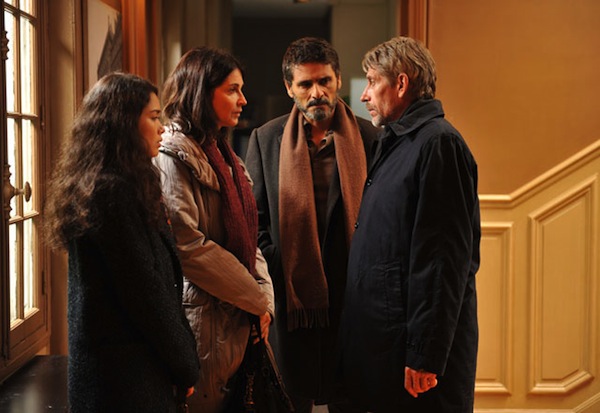
A scene from 24 Days: Ilan Halimi’s girlfriend and parents speak with the lead investigator on the case. (photo from VIFF)

We know how 24 Days will end. It’s based on the true, tragic, terrifying story of the kidnapping and subsequent murder of Ilan Halimi. Yet, Arcady manages to make us hope – throughout the entire film – that, somehow, Halimi will survive.

Overwhelming at times, between his family’s grief, the police’s desperation and his captors’ anger, 24 Days apparently sticks quite closely to the events as they happened in Paris in early 2006, as recorded by Halimi’s mother, Ruth, in the book 24 jours, la vérité sur la mort d’Ilan Halimi, which she co-wrote with Emilie Frèche.

Targeted for kidnapping because he was Jewish – the logic being all Jews have money and, therefore, could afford to pay a large ransom – Halimi was tortured, starved and, literally, left for dead when the negotiations for the ransom failed. His family was traumatized by ever-changing demands, graphic photos of their beaten son, expletive-filled threatening phone calls (more than 600 in 20 days) and false hope. The police are portrayed as genuinely trying to find and free Halimi, but as sadly ineffective – and completely insensitive to the antisemitic motivations of the criminals.

***

Other films with Jewish content or creative talent include Zero Motivation (Israel), a black comedy by Israeli writer/director Talya Lavie about everyday life for a unit of young, female Israeli soldiers; and Welcome to Me (United States), a “dramedy” directed by Shira Piven, about a lottery winner (played by Kristen Wiig) who has borderline personality disorder and makes some questionable decisions about what to do with her windfall. For the full festival lineup, visit viff.org.


Format ImagePosted on September 19, 2014September 17, 2014Author Cynthia RamsayCategories TV & FilmTags Alexandre Arcady, Ilan Halimi, Nadav Lapid, Nancy Kates, Susan Sontag, Vancouver International Film Festival, VIFF

Life lessons in many forms

image - Bagels Come Home cover
image - The Magician of Auschwitz cover
image - What Grandma Built cover
image - Plagues of Kondar cover
image - Victoria cover
image - Rachel’s Hope

It is amazing how many common themes run through even the most disparate books. The selection reviewed by the Jewish Independent this year includes both picture books and novels for teens; the topics range from genocide and oppression, to a grandmother dying and a family getting a dog; the stories take place in fictional worlds and all too real places. Yet, the vast majority of lessons or values imparted are the same.

The importance of family, friendship, resilience, responsibility, creativity, compassion, caring for those less fortunate or more vulnerable, accepting the reality of death – all make an appearance in the books that follow.

From the wonderfully imaginative mind of Joan Betty Stuchner, who sadly passed away earlier this year, Bagels Come Home (Orca Echoes, 2014) is the story of Bagels, a behavior-challenged but friendly dog that the Bernsteins adopt from a shelter. He joins the family’s goldfish, Lox, and their cat, Creamcheese. However, when it proves almost impossible to train him, 8-year-old Josh (who suggested getting a dog in the first place) and his 5-year-old sister Becky must work together (keenly on her part, not so much on his) to keep their parents from returning Bagels. The black and white illustrations by Dave Whamond complement the jovial energy and mood of Stuchner’s tale.

Inspired by a discussion that author Michelle Gilman had with her children after their grandma (bubbie) died, What Grandma Built (Gilman Press, 2014) deals with death straight on. The book – with colorful, childlike drawings by Jazmin Sasky – introduces readers to Grandma when she falls in love with Grandpa. We share in a few of the highlights of their lives, building a house, having children, becoming grandparents. Much of the story is about the fun times that their grandchildren have with them. But then Grandma becomes ill and, despite all the love and care she receives, passes away. The house that Grandma helped build may not last forever, but the home she built, her “cathedral,” will, “especially in the hearts and memories of our family.”

The Magician of Auschwitz (Second Story Press, 2014) by Kathy Kacer is also based on a true story. During the Holocaust, young Werner – whose father died years ago, whose older sister went into hiding with a Christian family two years earlier and who last saw his mother at the police station where he was held before being sent to the concentration camp – is fortunate to meet Herr Levin, whose wife and son are also in the camp, “somewhere.” A gentle soul, Levin treats Werner with kindness so, when Levin is awakened one night, Werner is afraid he may lose his only friend. However, the guards order Levin: “Do your magic!” And he does. Levin’s magic not only saves his life, but Werner’s – a gift Werner never forgets.

The illustrations by Gillian Newland are in dark, rich tones, appropriate for the subject matter, and brightening for the image of an elder Werner teaching his sons the card trick Levin taught him. The book includes a section about the real-life Werner and Levin (the Great Nivelli).

Lynne Kositsky’s The Plagues of Kondar (Dundurn Press, 2014) takes readers to a planet divided by a dense wall of fog: the sun shines on Lightside, while only darkness prevails on Oscura. Arien, 14 cycles old, lives in Lightside, but her life goes from brightness to hardship soon after we meet her. Short on food supplies, her parents set off to see if another settlement has grain to spare, but they don’t make it back. Sold into slavery to pay her parents’ alleged debts, Arien must be strong, confident, resourceful – and kind – to survive. When some Oscurans inadvertently bring a plague to Lightside, Arien is at the centre of the efforts to cure it, and not just for her own people but for the Oscurans, despite the long-told tales that describe them as “ghosts and ghouls.”

Silvana Goldemberg’s Victoria (Turnaround, 2013) is translated from the Spanish by Emilie Smith. Victoria’s title character and her younger twin brothers live with their aunt until the aunt’s boyfriend attempts to sexually assault the 14-year-old. Victoria flees to the streets of Paraná, Argentina, where she must fend for herself among drug dealers and other dangers. Taking control, and keeping to her personal values, Victoria works hard, makes new friends and builds a life that promises better things for her and her brothers.

Building a new life is also central to Rachel’s Hope (Second Story Press, 2014), the third in Shelly Sanders’ Rachel trilogy. We first met Rachel at age 14, in Kishinev, Russia. Her dreams of being a writer are put on hold, as the murder of a Christian man leads to pogroms and chaos, beginning Easter Sunday 1903; however, among all the bad, she is helped by Sergei, a non-Jewish boy.

The unrest in Russia continues and the next time we meet Rachel, her father has been killed and she and the rest of her family flee to Shanghai, where they save money for a ship to America; Sergei remains in Russia, becoming a factory worker, but the horrid conditions lead him to join the rebellions.

Rachel’s Hope begins in winter 1905: Rachel, her sister and brother-in-law, and their young charge, Menahem, have made it to San Francisco (her mother dies in Shanghai); Sergei is still in Russia, part of the revolutionaries. This part of the trilogy introduces readers to the many challenges immigrants face when coming to a new country, encountering a new language, a new culture. But, as hard as life may be in the United States, as unequal as women’s or immigrants’ rights may be, as hard as it is to recover from a natural disaster (the 1906 earthquake in San Francisco), the comparison with Russia at that point in its history is stark. The devastating effects of violent oppression last well beyond the attainment of freedom.

Posted on September 19, 2014September 18, 2014Author Cynthia RamsayCategories BooksTags Dave Whamond, Emilie Smith, Gillian Newland, Jazmin Sasky, Joan Betty Stuchner, Kathy Kacer, Lynne Kositsky, Michelle Gilman, Shelly Sanders’, Silvana Goldemberg
From yeshivah to TV

From yeshivah to TV

Joshua Malina will help launch the Jewish Federation of Greater Vancouver’s annual campaign on Sept. 21. (photo from Joshua Malina)

The title of his talk is How to Make it in Hollywood and Remain a Mensch. From the one minute and 20 second video he made to help the Jewish Federation of Greater Vancouver promote the Sept. 21 launch of this year’s annual campaign, you can tell he knows that of which he speaks. Joshua Malina exudes menschlichkeit.

But that doesn’t mean the actor’s a pushover. Follow him on Twitter and you’ll see that he knows how to push back. He also has a wicked sense of humor, and not just in writing apparently – he has a reputation for being a prankster on set. He’s currently co-starring in the hit show Scandal, which may sound far removed from his yeshivah roots, but his character, David Rosen, has the clearest moral compass of the bunch. Not that it matters, of course, as actors, well, act, and Malina told the Jewish Independent that he “was intent on becoming an actor from about age 8 onwards. Prior to that, baseball player, Good Humor man and rabbi were all options I considered.”

As to whether his athletic or sales skills would have been up to the challenge is unclear, but anyone who has read about Malina – or watched that minute-plus video – knows that he could have easily been a rabbi.

“My parents’ decision to send me to yeshivah from first through eighth grades was a major factor in establishing my Jewish identity,” he told the Independent. “At Westchester Day School (in Mamaroneck, N.Y.), I acquired many of the skills that are helpful in living a substantive Jewish life. I studied Torah, learned about the holiday cycle, was taught to pray and to leyn, and so on. But, probably more crucially, I was taught there to consider the ethical decisions of everyday life. We were taught about tikkun olam, the concept that it’s every person’s responsibility to help repair this imperfect world.

“I’m a middle child, with a sister who’s two and a half years older than I, and a sister eight years younger,” he continued. “My family has always been extremely close, and my parents helped us all forge strong Jewish identities by raising us in a home that valued and celebrated Jewish tradition.

“Seeing how others live and observe Judaism reminds me of the resiliency and creativity of our people. It’s one of the reasons I get such pleasure from visiting different communities when I go out to speak.”

“So, I grew up in a Conservative household, attended an Orthodox shul, and spent eight years at an Orthodox day school. I ended up marrying a convert, and now my family attends a Reconstructionist synagogue, so you could say that I’m the ultimate Jewish mutt. Rather than a liability, though, I’d say that my exposure to a broad variety of Jewish experience has enhanced my own faith. Seeing how others live and observe Judaism reminds me of the resiliency and creativity of our people. It’s one of the reasons I get such pleasure from visiting different communities when I go out to speak.”

Malina now lives in Los Angeles with his wife and their two children. In addition to Scandal, his ABC biography notes that, “during his hiatus, he filmed a role in writer/director Warren Beatty’s latest Howard Hughes feature.”

Malina has had many career successes, in such television shows as The West Wing and the acclaimed but short-lived Sports Night. He has appeared in numerous other popular TV programs, as well as first-rate films, and was executive producer on Bravo’s Celebrity Poker Showdown, which “broke ratings records for the network.” But there also have been some downs since he made his professional debut in Aaron Sorkin’s A Few Good Men on Broadway.

“Ah yes, ‘professional uncertainty,’ I know it well,” he said. “I consider myself luckier than most who pursue a career in acting, but it has certainly been a rollercoaster. Work can be very hard to come by, and a job can disappear as quickly as it materialized. The emotional aspect I’m pretty good with. I don’t take rejection personally, and I understand that I may book one job for every 50 I’m considered for. Also, my self-image is not wrapped up in my success as an actor. I am much more concerned about being a good father and husband than I am in being well-known, or anything like that. That said, I do have responsibilities. I need to put food on the table and a roof over my kids’ heads. It is not always easy in this profession.”

And Malina isn’t just concerned with putting a roof over his own family’s heads.

“I try to support a variety of organizations, but I am particularly fond of groups that take their inspiration from Judaism, and do good on behalf of everybody, regardless of religious affiliation,” he said in response to a question about his charitable endeavors. “Jews are a wonderfully philanthropic community, and I like for the world to see that. Mazon – A Jewish Response to Hunger, is a nonprofit that addresses hunger issues in Israel and the U.S. They do terrific work, as does Bet Tzedek, which is a pro bono law firm in Los Angeles that takes its motivation from the Torah verse that states ‘Justice, justice you shall pursue.’

“Of course, I am also supportive of organizations that help Jews specifically, and that insure that we are a community that takes care of its own.”

One of the causes Malina supports is the Creative Community for Peace.

“We may not all share the same politics or the same opinion on the best path to peace in the Middle East,” reads the About Us explanation on the group’s website. “But we do agree that singling out Israel, the only democracy in the region, as a target of cultural boycotts while ignoring the now-recognized human rights issues of her neighbors will not further peace.

“We understand the power that our music, our films, our television shows, and all arts have. They have the power to build bridges. Foster better understanding. Encourage dialogue. And hopefully lead toward greater mutual acceptance.”

Among Creative Community for Peace’s initiatives is an anti-boycott petition, headed “Don’t Let Israel’s Detractors Politicize Art,” and the statement “Commitment to Peace and Justice.”

“The idiocy of accusing Israel – which attempts to minimize civilian casualties – of attempted genocide, while ignoring the words of Hamas’ charter, which call for the extermination of every Jew, is maddening.”

“It was a very easy decision for me to sign that statement,” he told the Independent. “It expressed grief for the loss of life among Israelis and Palestinians and, without explicitly referencing the Almodovar-Bardem-Cruz letter, it indirectly responded to its foolishness. The idiocy of accusing Israel – which attempts to minimize civilian casualties – of attempted genocide, while ignoring the words of Hamas’ charter, which call for the extermination of every Jew, is maddening. One can only come to the conclusion that those engaging in this type of false accusation are either maliciously dishonest or out of touch with reality.

“And please understand, I do not vilify everyone who is critical of Israel. I have criticisms of my own. But the vicious and intellectually dishonest nature of the double standard applied by many to the Gaza conflict requires a response. Hence, my signature on the letter.

“I have heard from many as a result of my signing the statement. The vast majority has been quite positive, some of it’s been very negative. But that’s all right. I expected it, and I can take it. I’m an actor; I have thick skin.”

Tickets for the campaign launch Sept. 21, 7:30 p.m., at Chan Centre for the Performing Arts are $40 ($18 students), with group discounts available (Anna Vander Munnik, 604-257-5109 or [email protected]). For more information and to buy tickets, visit jewishvancouver.com.

Format ImagePosted on September 12, 2014September 10, 2014Author Cynthia RamsayCategories LocalTags Creative Community for Peace, Jewish Federation of Greater Vancouver, Joshua Malina, Scandal
VIFF screens humanity’s best/worst

VIFF screens humanity’s best/worst

Ilya Kabakov is the subject of Amei Wallach’s lya and Emilia Kabakov: Enter Here. (photo from VIFF)

This year’s Vancouver International Film Festival (Sept. 25-Oct. 10) will take viewers on a rollercoaster ride, if the films reviewed by the Independent this week are any indication. We went from soaring heights of imagination and freedom with Ilya and Emilia Kabakov: Enter Here to the music-filled yet poverty-ridden streets of Jakarta in Jalanan to the horrifyingly shallow depths where evil is normal in The Decent One.

“What interests me is where is the border between reality and the dream,” says artist Ilya Kabakov in Enter Here. With this film that the Jewish Independent has sponsored at VIFF, Amei Wallach follows Ilya and his wife and partner Emilia Kabakov in the months leading to a massive retrospective in Moscow in 2008. She captures the couple’s personalities: Ilya, with his mind anywhere but on earth, still traumatized by his life – and that of his mother, who led a very difficult existence – in the Soviet Union, which he escaped in 1987, and Emilia, the organizer, fearless. The exhibit marked his first return to Russia, and there is trepidation about how it will be received, and how he will handle his memories.

Kabakov’s paintings and installations are unbelievable. They inspire contemplation and awe at their scope and creativity. Most of the ones highlighted in the documentary critique what Russia would have been – and seemingly has become again – to live in: the surveillance, distrust, harshness, bureaucracy. His works are influenced by various events and people, including his mother who, at his behest, wrote a diary when she was in her 80s.

In his New York studio, Kabakov reflects on three types of losers: mankind in principle, his feelings about himself despite his self-acknowledged success, and his reaction to Russia. He describes Russia as “permanent rainy,” and speaks of life there as “two-faced,” the public front and the personal. As a non-state-sponsored artist, he created much work, but only exhibited twice in his home country. For Kabakov, for whom the museum is akin to the church, “The last haven of our history and our spirit,” this alone would have been reason to flee. For the many around the world who have glimpsed his great mind through his work, we’re very lucky he did.

***

photo - Of the 12 million people living in Indonesia’s capital city, some 7,000 earn their living as buskers, according to the film, and Jalanan follows the lives of three of them – Boni, Ho and Tuti – over a five-year period.
Of the 12 million people living in Indonesia’s capital city, some 7,000 earn their living as buskers, according to the film, and Jalanan follows the lives of three of them – Boni, Ho and Tuti – over a five-year period. (photo from VIFF)

Director Daniel Ziv obviously fell in love with the street musicians he profiles in Jalanan. Their aspirations, energy, passion, kindness, and resilience – he communicates all of it, such that you almost don’t notice it’s a documentary about poverty, development, corruption, and the treatment of women, the place of art in society, and other such weighty subject matter.

Of the 12 million people living in Indonesia’s capital city, some 7,000 earn their living as buskers, according to the film, and Jalanan follows the lives of three of them – Boni, Ho and Tuti – over a five-year period. In the face of hardship, the troubadours remain optimistic and driven to create and share their music. Nothing gets them down: Boni and his family are evicted from their 10-year “home” under a bridge, Ho gets jailed for just being on the streets and Tuti is unable to live with any of her three children.

As writes Ziv in a director’s statement, “This isn’t the type of documentary that feeds off tragedy … this is not about thousands of lives being threatened … this isn’t even about the poorest of the poor. Rather, Jalanan traces the lives of a forgotten, marginalized community that slips through society’s cracks. The dilemmas and conflicts here represent a huge segment of urban population in the developing world…. This film is meant to give them a voice, to raise awareness for their conditions and struggle.”

Ziv takes the awareness beyond the film, with a campaign to raise money to buy homes for Boni, Ho and Tuti: fundrazr.com/campaigns/dgEM6.

***

photo - Vanessa Lapa’s The Decent One is based on personal letters, documents and photographs that were found in the Himmlers’ home by U.S. soldiers in 1945
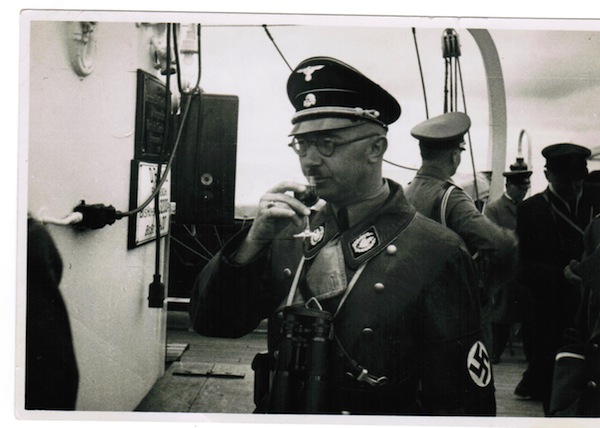
Vanessa Lapa’s The Decent One is based on personal letters, documents and photographs that were found in the Himmlers’ home by U.S. soldiers in 1945. (photo from VIFF)

And then, there is a person like Heinrich Himmler, who could write home to his family with love and affection while on a trip visiting concentration camps. Vanessa Lapa’s The Decent One is based on personal letters, documents and photographs that were found in the Himmlers’ home by U.S. soldiers in 1945, but which weren’t handed over to the military authorities. They became the property of Lapa’s father somehow, and she has used them to make this documentary.

The Decent One is very stylized. Voice actors read the letters, diary entries and documents from Himmler, his wife, daughter, mistress and others, archival footage has sound effects and/or music added, and benign-sounding excerpts from the writings are juxtaposed against brutal images. Viewers follow Himmler from a young age to his rise in the Nazi party and through much of the war. The cumulative effect is powerful. The most upsetting and scary conclusion is that understanding evil is nigh impossible.

Format ImagePosted on September 12, 2014September 10, 2014Author Cynthia RamsayCategories TV & FilmTags Amei Wallach, Daniel Ziv, Emilia Kabakov, Heinrich Himmler, Ilya Kabakov, Jalanan, Vancouver International Film Festival, Vanessa Lapa
Liqueurs add zest and spice

Liqueurs add zest and spice

Sukkah Hill Spirits’ Howard and Marni Witkin. (photo from sukkahhill.com)

There are any number of traditional Jewish holiday foods, but not nearly as many holiday-related beverages. Hands down, wine dominates. But, company has arrived. Two new – and already medal-winning – artisanal liqueurs will be a welcome addition to your table.

Los Angeles-based Sukkah Hill Spirits’ Etrog Liqueur and its Besamim Liqueur both won gold in the 2013 SIP awards: out of some 300 entries, Etrog was deemed the best fruit-based liqueur and Besamim the best herbal/botanical. Both liqueurs are kosher (including for Passover), gluten-free and made with no additives or stabilizers. Not only are they a pleasure to drink, they are aromatic as well – lemon and cloves, respectively. Take a sip of either, and a host of recipe possibilities come to mind.

When the Independent heard about Sukkah Hill liqueurs, the first question was whether we can get it in Canada.

“We will be in stores in Washington, Oregon and the Pacific Northwest in the next few months, and have a list of stores that ship listed on our website,” responded Howard Witkin. “We are adding a number of new online retailers and will update the site as we put it together.”

Witkin’s wife and business partner Marni is the creative force behind these products. He refers to her as the “Taste Mistress” – “No barrel goes to bottling unless she has tasted it and approved it,” he said.

“Marni’s been making liqueur for almost 10 years,” he explained. “She started out making it for our own home, and to share with friends. Soon, she was making dozens of bottles at the request of friends all around the community. When we were approached by a local storeowner who suggested he could sell whatever we could make, we realized that we had a product that people really enjoyed, and which could become a new business.”

The inspiration to use etrogim came from the fate many of the fruit face after Sukkot – the compost.

“Marni wanted to do more with it than allow it languish after the holiday,” said Witkin. So important during the festivities, “it seemed like a waste to let its potential just fade away. So, we started bottling it.

“Besamim is based on a twist of a traditional spice mixture from Havdalah,” he continued. “Besamim at Havdalah gives an extra lift to your soul as Shabbat wanes. We wanted to tie into those wonderful family times and warm moments. Smell has such ties into memories and experiences. I feel the warmth and closeness of Havdalah and Shabbat every time I taste our Besamim liqueur.”

Transforming something done for pleasure into something commercial can sometimes diminish its enjoyment

“Because we make everything by hand, and use the same pure and simple ingredients and processes we started with, it still feels like a fun project,” said Witkin. “Just the barrels are a lot bigger, and there are thousands of bottles to label. We’ve thoroughly enjoyed the creative process of putting together labels and art, and sharing what we are making with so many more people.”

***

Sukkah Hill Spirits’ website offers several drink ideas. In response to a request for food suggestions, Howard Witkin offered the following recipes, noting also that biscotti dipped in a glass of Besamim is delicious, as is either liqueur over ice cream or sorbet.

GRILLED TROUT WITH ETROG

Combine Etrog Liqueur, brown sugar, black pepper and tarragon vinegar. Marinate red trout fillet – skin on – for up to four hours.

Spray/brush the grill with olive oil. Cover the skin side of the fillets with a thick coating of olive oil and lay on the oiled grill. Leave in place until the top of the fish starts to become opaque. Shake a light rub of brown sugar and pepper over the trout, lightly mist with olive oil.

You should now be able to lift the fillet with a spatula from the skin and flip it over back onto the skin, which has remained on the grill. (The skin protects the trout from burning.) Drizzle the remaining marinade over the fish, sprinkle with brown sugar rub. Cook until flaky (a few extra minutes).

Variation: Drizzle soy sauce on the trout as it grills.

BESAMIM YAMS

4 large carrots
3 medium yams
3 tbsp Besamim Liqueur
Cinnamon to taste (3-6 tsp)

Preheat oven to 400°F. Arrange carrots and yams cut to size in a baking pan. Spoon liqueur over the carrots and yams and sprinkle with cinnamon. Bake for 45 minutes or until tender, stirring occasionally.

ETROG HONEY CAKE

Dry ingredients:
3 1/2 cups all-purpose flour
1 cup granulated sugar
1/2 cup brown sugar
2 tsp baking soda
2 tsp baking powder
2 tbsp ground cinnamon

Liquid ingredients:
1 cup clear honey
1 cup vegetable oil
1 cup strongly brewed black tea, cooled to room temp.
3 large eggs
1/3 cup Etrog Liqueur
1 cup plus 2 tbsp applesauce
1 tsp vanilla extract

For finishing:
honey and Etrog Liqueur (approx. 1/2 cup each)

Preheat oven to 350°F. Grease three eight-by-four-inch loaf pans.

Combine dry ingredients in large bowl. In small bowl, combine honey with oil, then add to dry ingredients and whisk in remaining liquid ingredients. Mix thoroughly.

Pour batter into prepared pans and bake for 45-55 minutes until cake springs back when lightly pressed and cake tester tests clean.

Cool the cakes in the pans for 10 minutes, then poke all over with a skewer and very slowly spoon the honey/Etrog Liqueur mix over the cakes, allowing the liquid to thoroughly saturate them. When cool, remove from the pans. Wrapping and storing the cakes for a day improves the flavor.

When ready to serve, top with confectioners’ sugar if desired.

For more about Sukkah Hill Spirits, visit sukkahhill.com.

Format ImagePosted on September 12, 2014September 10, 2014Author Cynthia RamsayCategories Celebrating the HolidaysTags besamim, etrog, Howard Witkin, liqueur, Marni Witkin, Sukkah Hill Spirits
Mideast future bleak

Mideast future bleak

Prof. Shlomo Hasson of the Hebrew University of Jerusalem speaks with audience member Marvin Weintraub after his presentation on Israel’s geopolitical situation. (photo by Cynthia Ramsay)

While Prof. Shlomo Hasson of the Hebrew University of Jerusalem offered some hope that Israel will one day live in peace, he did not offer many reasons to be optimistic about the future of the Middle East.

Speaking to more than 150 people at the Jewish Community Centre of Greater Vancouver on Sept. 4, Hasson put the current geopolitical situation of Israel into context, and discussed four possible futures for the Middle East in general, and for Israel in particular. These scenarios were derived at HU’s Shasha Centre for Strategic Studies, which Hasson heads.

Hasson, who is also a professor in HU’s department of geography, School of Public Policy, and the Leon Safdie Chair at the Institute of Urban and Regional Studies, began by sharing his belief, as a strategist, that, “In every crisis, there is also embedded an opportunity.”

The main issues, he explained, are Israel’s identity as a Jewish and democratic state and its security within recognized (legitimate) borders, the conflict with Hamas and the regional upheaval. The question is which map(s) and policy(ies) can best deal with all these issues (demography, democracy, legitimacy and geography) and what are the driving forces (internal, regional and global) shaping this map.

The dilemma is not new, said Hasson. “We have always asked ourselves, ‘How can we sustain Israel as a Jewish and democratic state with secure and legitimate borders?’” What is new, however, is the context.

According to Hasson, the new aspects of Israel’s dilemma include that the United States doesn’t have a comprehensive Middle East strategy; the cold war in the region (states fighting each other indirectly using proxies, such as extremist groups); the region’s instability (failed states, non-state actors); the increase in criticism of Israel (even by allies) and antisemitism; and the indeterminate results of Operation Protective Edge.

About the war with Hamas over the summer, Hasson divided the results into achievements and failures. Achievements included the devastation Israel inflicted on Hamas, the tunnels it destroyed and the top commanders it killed, the effectiveness of the Iron Dome, the isolation of Hamas, the resilience within Israel and Israelis’ support of the war. On the negative side, he said, Israel did not manage to defeat Hamas; the Israeli government exhibited reactive policy, a lack of creativity and an absence of strategy during the conflict; there were rifts with the United States; the recognition of Hamas as a political actor; and, within Israel, there was bitterness and political division. Hasson questioned whether the war had achieved greater security or served as deterrence.

Hasson went through four predominant opinions on Israel’s possible future, ranging from the Greater Land of Israel to no Jewish state. One of the reasons that progress in achieving agreement is hard, he said, is because people approach it with their own “inevitability assumptions” about such things as to where Israel’s borders should lie: for example, the 1967 borders are inevitable because they stem from moral/progress imperatives, or the Greater Land of Israel borders are inevitable because of a divine promise.

Israel’s decisions and border preferences are not the only ones that will influence its future. Other forces are at work: the super powers (United States, China, Russia, European Union), regional powers (Turkey, Iran, Israel, Saudi Arabia/Egypt), developments in the Arab world, relations between Israel and the Palestinian Authority, as well as developments within the PA.

Hasson highlighted the importance of the Sunni versus Shi’a conflict, explaining some of the possible regional outcomes: national-religious states, democracy, the prevalence of moderate autocrats or the rise of extremists. He said that Israel cannot only focus on its relations with the Palestinians, but must take a broader view, including in its strategizing the Arab world, non-state actors, regional rivalries, and global competition over resources and positions.

He described four scenarios and hypothesized their likelihood.

“Pax Americana,” in which the United States returns to the region as a major actor, the Arab nations engage in democratization and Israel returns to the 1967 borders was one of them. Hasson said, “If you ask me, what are the chances, or the probabilities, of this scenario, I would say … very slim. So, when people talk about the ’67 borders, I share their expectation and I have the highest respect for the people who believe in a two-state solution … unfortunately, the leading driving forces are not taking us in this direction….”

Hasson described both the regional hegemony of Sunnite moderate parties (“a moderate Hamas” may prevail in this scenario) and “clash of civilizations” (between Islamic and non-Islamic forces, but also within Islam, where the extremists will take over) as having a moderate chance of occurring, and the potential for anarchy (with even the superpowers fighting each other) as high.

The Middle East will be unstable for a long time and a two-state solution cannot come to fruition, at least in the short term, he concluded. While a bi-national state might be possible, it is not desirable from Israel’s perspective, he said, and there is a need for another approach.

Hasson recommended that Israel recognize a Palestinian state without recognizing its borders, continue to engage in negotiations with the Palestinians and work toward international legitimacy. If negotiations fail, he said Israel has “to consider the possibility of unilateral withdrawal to defensible borders because we shouldn’t give the Palestinians a veto right over Israel’s existence as a Jewish and democratic state…. So, Israel must ensure its security and international legitimacy but also its demography.”

Hasson, referring to the Shasha Centre scenarios he outlined, predicted that Israel in 2020 will have defensible borders, and that the future will involve unilateral acts by the Palestinians (turning to the United Nations, for example) and Israel (more settlement building, for example) – “there will be mutual adaptation and, from time to time, we will have a cycle of violence in the Middle East. But, currently, we don’t see any prospect of getting to the ’67 borders.”

Dina Wachtel, executive director of the local Canadian Friends of the Hebrew University, welcomed the audience, and CFHU board member Dr. Sam Bugis introduced Hasson.

Format ImagePosted on September 12, 2014September 10, 2014Author Cynthia RamsayCategories WorldTags CFHU, Hebrew University, Israel, Palestinians, Shasha Centre
Federation’s new CEO

Federation’s new CEO

Ezra S. Shanken has been busy since arriving in Vancouver. (photo from Ezra S. Shanken)

“I said at our AGM that I want a Federation today that is with you in your brightest and darkest times, not because of what you give but because of who you are, and I intend to spend my years here using that statement as a driver of my performance.”

A praiseworthy benchmark for Ezra S. Shanken, Jewish Federation of Greater Vancouver’s new chief executive officer. Since he began in June, he has been busy, attending the launch of JHub in Richmond, participating in Federation’s June 16 annual general meeting, attending several community events, appearing on the radio show JFSA Voice, helping organize the community response to the Israel-Hamas conflict, joining volunteers at the Surrey Fusion Festival’s first-ever Israel pavilion, visiting various local community institutions, traveling to Israel, the list goes on.

Born in New York City, Shanken grew up in Teaneck, N.J. He is the third generation of Shankens to be involved in Jewish communal service. “For me, this is a family business of sorts,” he told the Independent, adding, “… that is something I take great pride in.”

His father was cultural arts director at the Jewish community centre when Shanken was in nursery school, before becoming an inner city high school teacher. Shanken’s grandfather flew 55 missions over Europe in the Second World War as a bombardier and then became a rabbi; he also participated in the Freedom Rides, which successfully challenged segregation in interstate bus terminals in the American South. “He is a true inspiration and I keep a picture of him and his bomber crew on my wall in my office,” said Shanken.

While Shanken has become a community professional, he admitted in an interview with ejewishphilanthropy.com that his career in this field was unexpected. About his move to Colorado after college, he told the online publisher, “The idea was to go for a year to escape from NYC, but that one year turned into eight years and into the building block to who I’ve become as a Jewish communal professional.”

Needing a job, he applied to the Allied Jewish Federation of Colorado. He credits Susan Kramer, now JEWISHcolorado chief development officer, with seeing something in him. “I went from somebody seeing something in me to me seeing something in myself to having an opportunity to see something in other people and help them along,” he told ejewishphilanthropy.com.

Shanken was at JEWISHcolorado for six years, working there in different capacities, ultimately becoming senior manager of the young adult department and major gifts. He also co-founded E-3 Event in Colorado, an organization focused on arts-based events for younger Jews (20s through early 40s). Shanken comes to Vancouver from New York, however, where he directed Emerging Leaders and Philanthropists at UJA-Federation of New York from mid-2011.

Growing up through the public school system – but attending Jewish summer camp (Ramah in the Berkshires) – Shanken did his undergraduate degree in political economics at the University of Hartford, where he was president of Hillel, and his graduate work in nonprofit management at Regis University.

“As a kid, I wanted to be a garbage man, fireman, fighter pilot but by high school I had the experience of going to Washington, D.C., and volunteering during the Clintons’ second inauguration, and that got me on to the idea of being involved in public service,” Shanken told the Independent.

Internships in his “junior and senior years of high school for a local Jewish congressman … connected to internships and experiences far out into the future,” he added.

Now, at 34, he is one of the youngest CEOs in the Federation system. And his approach has reflected that, with Shanken having been an avid user of social media throughout his career.

“I have been a big believer in social media as an outreach tool in Jewish communal work,” he said. “There is no question in my mind that if we want to engage the next generation of Jews, we are going to have to engage in the social media space. I am active on Twitter under the handle @eshanken, Facebook and Instagram. I love to share what I and we are doing every day with my followers and friends because what we do and where I get to be is truly special.”

While encouraging people to follow him on any of these media, he noted that the internet has limitations with respect to its ability to bring people and ideas together.

“To this date, I never turn down an offer to have coffee, and judge the success of my week by how many people I get together with.”

“It is my opinion that, to date, there is not a platform that replaces two chairs, a table and cups of whatever you choose,” he said. “My goal in using online platforms is to move the relationship offline. When I was developing the young leadership department at the Colorado Federation, I found the best thing we did was have hundreds of coffees where we asked young professionals, ‘Under what circumstances could you see yourself getting more involved in the organized Jewish community?’ To this date, I never turn down an offer to have coffee, and judge the success of my week by how many people I get together with.”

Informal and formal discussions will determine Federation’s – and the community’s – future trajectory.

Said Shanken, “We will be entering into a strategic visioning process with the goal of having these types of conversations. The ultimate goal is to move from strength to excellence in each of our fields of practice. For me, personally, I am more interested in the processes over the product. Creating long-lasting change in Jewish communal life is like speeding up the rotation of the earth a little at a time so people don’t fall down.”

About relocating to the other side of the continent? “Rachel and I feel truly blessed to be here in Vancouver,” said Shanken of his and his wife’s move here. “We have been blown away by the beauty of the scenery and the warmth of the community. The biggest challenge for us was figuring out how to sort our garbage at the house but once we figured that out we saw such value in it. Work-wise, my summer has been dominated, like many in our community, by the crisis [in Israel-Gaza]. However, through the crisis, I have seen the community come together in beautiful ways to show their support for Israel and each other during this difficult time.

“This community has one very special thing going for it because of the hard work of those who are around me and came before me,” he said. “We have rabbis who have built relationships across the streams of Judaism and agencies that, on the whole, get along with each other. I take it as a personal mission to keep those relationships strong because with relationships like we have, the sky is the limit to what we can accomplish.”

Format ImagePosted on September 5, 2014September 3, 2014Author Cynthia RamsayCategories LocalTags Ezra S. Shanken, Jewish Federation of Greater Vancouver, JEWISHcolorado, JFGV
Israel trip inspires choreographer

Israel trip inspires choreographer

Crystal Wills in rehearsal for The Way They Walked Through the World. The work includes the use of more than 300 pairs of army boots. (photo by Christie Wood)

The female experience of war. This part of the description of choreographer Caitlin Griffin’s The Way They Walked Through the World – a contemporary dance piece set to première at the Scotiabank Dance Centre’s open house on Sept. 13 – particularly intrigues me.

Despite the number of conflicts taking place around the world, images of women are few and far between, except for the odd photo, in which the subject(s) is either screaming out in anguish or quietly wiping tears in mourning. Other images come to mind with more thought, but not many, and words also have fallen short in helping me understand my feelings about the violence in general, but my concern and sadness over the situation in Israel specifically. Perhaps a dance performance, its physicality, its abstract nature, will allow me to process some of the emotions that have, to this point, eluded identification, expression.

I have known Griffin for several years. I don’t know her well, but well enough to know that she is a very talented dancer and teacher – and a mensch. When she told me that she was applying to a program at Kibbutz Contemporary Dance Company, I was thrilled. When she came back from five months in Israel with a new work in progress, one inspired by her time there, I knew I would want to see it once it was ready to be shared publicly. Fortunately, while I missed an earlier version that was performed at the Firehall Arts Centre’s BC Buds showcase in May, a good friend attended. She was impressed, not only with the performance, but with Griffin; so much so that she connected me to Griffin, not knowing that I already knew her. When I asked Griffin to send me some information on The Way They Walked, she included the following:

“The preliminary movement vocabulary [for the work] was created there [in Israel], as a personal answer to the questions I began to ask myself after seeing armed conflict in a new immediate perspective. I was inspired by the maturity of the young Israelis preparing to serve, and by the strength of Israeli mothers whose realities included the conscription of their children. I was struck by the intense beauty of life framed by conflict.”

It was only weeks later that Israel and Hamas went to war.

“The current conflict has definitely hit close to home for me, as I still have several friends living in Israel who send updates regularly,” shared Griffin in a recent interview with the Independent. “The changes that have happened within the work aren’t at all to do with the content … or message of the work, but a general change in tone – almost a sadness, a level of more raw exposure. I think the work has lost a bit of its naivety.”

photo - Kibbutz Ga’aton, where KCDC’s International Dance Village is located
Kibbutz Ga’aton, where Kibbutz Contemporary Dance Company’s International Dance Village is located. (photo by Caitlin Griffin)

The Way They Walked has been an ongoing project since Griffin was in Israel in the first part of 2013.

“Some of the solos that are featured in the show in its current form were created from single images that came to me while living on the kibbutz,” she said, referring to Kibbutz Ga’aton, where KCDC’s International Dance Village is located. “Most of the imagery in the work was born in the studios after long days of rehearsals, while processing the overwhelming stimuli of my new surroundings. It has taken many months to explore those images and find out what was so intriguing to me about them. It’s been a process of uncovering what happens before and after these images in the dance, and how to frame them to resonate with an audience.”

Griffin, who is not Jewish, discovered KCDC online, and applied to its Dance Journey (Masa) program, which, explains the website, offers dancers 18-35 years old from around the world the “opportunity for professional development while dancing side by side with KCDC dancers [and] learning from one of the leading dance companies in the world.”

“I learned about the long-term immersive environment available to young performers and decided it was something that fit what I was looking for creatively and personally,” she explained. “I began writing grants and researching ways to make it a possibility. It took just over a year to gather the necessary resources, and to heal a broken foot I had sustained in the meantime. In 2012, I was awarded a professional development grant to attend the program from the British Columbia Arts Council. I successfully wrapped up a crowd-funding campaign that brought over 65 individuals and in-kind corporate sponsors together and, a few short months later, I was on a plane to Tel Aviv.

“I attended the program from February 2013 to June 2013, along with 24 other young artists from across the globe. The experience of living in the Galilee Dance Village, surrounded by other equally passionate and determined artists has changed everything for me. The friends I made continue to support me personally and professionally. In fact, much of the rehearsal footage from The Way They Walked has made its way to these friends – in Mexico, in Italy, in the U.S., who have all informed the direction of this work and inspired pieces of it along the way.”

Performing in The Way They Walked are Delphine Leroux, Crystal Wills and Heather Dotto. Griffin first worked closely with them in 2011, when MOVE: the company performed in the 13th International Festival of Dance and Music in Bangkok, in celebration of 50 years of Thai-Canadian relations.

Leroux, Wills and Dotto “have been absolutely integral” to The Way They Walked, said Griffin. “These are some of the most supportive and lovely artists I have had the pleasure of sharing a studio with. To date, my professional choreographic experience has been exclusively creating on myself, which is an entirely different process than directing three dancers of world-class calibre. Each of them has contributed not only their artistic expertise to the process, but has shared ideas about the work that have informed its direction. They have breathed life into something that at one time was an idea and some simple movements and pictures in my head.”

The Way They Walked has undergone several phases of development so far.

“We are currently working under Restless Production’s Project CPR5, which is a choreographic research opportunity run by Claire French, providing rehearsal space and guidance to emerging choreographers,” said Griffin, describing French as “an invaluable mentor during this process, and it is with her whom we have been working the most closely.”

In addition to the show at the Firehall, the group also had rehearsals in May and June through the Dance Centre’s 12 Minutes Max program.

Griffin said the piece will continue to evolve, as long as she feels there’s something to say with it. “I am thrilled to have the opportunity to showcase the work at this phase and will be welcoming audience feedback from the Dance Centre open house event in September to take on into the next, yet-to-be-determined developmental phase,” she said. “My hopes are that audience members can find something to relate to, coming from inside the work. Whether it’s reacting directly to a dancer’s actions, an image we create, a sound, a relationship between the dancers. To give people a chance to escape even for a moment into an atmosphere that we created would be a big success.”

Griffin, who was born in Toronto, grew up in Oakville, Ont. Dancing since the age of 4, she said she “realized it was a career option around 13 years of age.” Her family was “extraordinarily supportive … instilling in me the ideals of equality, family, hard work and creativity.”

“I have given some consideration to returning to a more traditional academic path, but honestly have never been fulfilled in the same way with any of my brief explorations into other fields. My passionate curiosity lies within the processes of performing, creating and teaching dance.”

“I had considered alternate careers and educational opportunities,” she admitted. “After graduating from high school with outstanding academic excellence, I deferred my acceptances from the science programs at Queen’s University and a scholarship from Guelph University to pursue my continued dance training with the Goh Ballet Academy in Vancouver. I have given some consideration to returning to a more traditional academic path, but honestly have never been fulfilled in the same way with any of my brief explorations into other fields. My passionate curiosity lies within the processes of performing, creating and teaching dance.”

Griffin was among the performers at the opening ceremonies of the 2010 Olympic Games. In rehearsal, she said, “Witnessing k.d. lang’s ‘Hallelujah’ to a near empty stadium in the days leading up to the event was hauntingly beautiful, and is one of my most treasured memories.” Another is teaching a ballet class to her peers in the Masa program, “with several of the KCDC company members in attendance. This is a teaching highlight for sure, though I have many highlights from my teaching career that are simply moments of understanding lighting the faces of my students. When I can teach someone that dance and well-being can go hand in hand, that’s a highlight.”

As to the future? Following the performance at the Dance Centre open house, Griffin said, “I will be headed to Montreal to dance with Les Grands Ballets Canadiens de Montréal’s annual production of Casse-Nosisette. In December, I will be accompanying Team Canada West to Poland for the International Dance Organization’s World Dance Championships. I’m not sure what’s in store after this, but I’m excited to find out!”

***

The Way They Walked Through the World premières as part of the Restless Productions CPR5 showcase at the Scotiabank Dance Centre’s open house on Sept.13, at 4 p.m., in conjunction with other performances. Updates on the work can be found at facebook.com/caitlingriffincpr5.

Format ImagePosted on August 29, 2014August 28, 2014Author Cynthia RamsayCategories Performing ArtsTags Caitlin Griffin, Israel, Kibbutz Contemporary Dance Company3 Comments on Israel trip inspires choreographer

Posts pagination

Previous page Page 1 … Page 81 Page 82 Page 83 … Page 85 Next page
Proudly powered by WordPress