Skip to content
  • Home
  • Subscribe / donate
  • Events calendar
  • News
    • Local
    • National
    • Israel
    • World
    • עניין בחדשות
      A roundup of news in Canada and further afield, in Hebrew.
  • Opinion
    • From the JI
    • Op-Ed
  • Arts & Culture
    • Performing Arts
    • Music
    • Books
    • Visual Arts
    • TV & Film
  • Life
    • Celebrating the Holidays
    • Travel
    • The Daily Snooze
      Cartoons by Jacob Samuel
    • Mystery Photo
      Help the JI and JMABC fill in the gaps in our archives.
  • Community Links
    • Organizations, Etc.
    • Other News Sources & Blogs
    • Business Directory
  • FAQ
  • JI Chai Celebration
  • JI@88! video

Recent Posts

  • Story of Israel’s north
  • Sheltering in train stations
  • Teach critical thinking
  • Learning to bridge divides
  • Supporting Iranian community
  • Art dismantles systems
  • Beth Tikvah celebrates 50th
  • What is Jewish music?
  • Celebrate joy of music
  • Women share experiences 
  • Raising funds for Survivors
  • Call for digital literacy
  • The hidden hand of hate
  • Tarot as spiritual ritual
  • Students create fancy meal
  • Encouraging young voices
  • Rose’s Angels delivers
  • Living life to its fullest
  • Drawing on his roots
  • Panama City welcoming
  • Pesach cleaning
  • On the wings of griffon vultures
  • Vast recipe & story collection
  • A word, please …
  • מארק קרני לא ממתין לטראמפ
  • On war and antisemitism
  • Jews shine in Canucks colours
  • Moment of opportunity
  • Shooting response
  • BC budget fails seniors
  • Ritual is what makes life holy
  • Dogs help war veterans live again
  • Remain vital and outspoken
  • An urgent play to see
  • Pop-up exhibit popular
  • An invite to join JWest

Archives

Follow @JewishIndie
image - The CJN - Visit Us Banner - 300x600 - 101625

Author: Abigail Klein Leichman ISRAEL21C

Technology for your home

Technology for your home

Singlecue recognizes hand motions for remote control. (photo from Singlecue via Israel21c.org)

Bezeq, Israel’s largest telecom, set up in late 2015 a model “smart home” at its Tel Aviv headquarters and in the IKEA store in Netanya to demonstrate its Bhome subscription service – a package of wifi-enabled sensors and monitors to help keep out intruders and save energy. But you don’t necessarily have to live in Israel to take advantage of Israeli smart-home technologies. Here are some of the many options available now or coming soon.

SwitchBee is a Netanya-based startup that provides a platform including programmable switches, a central control unit, a smartphone/tablet application and cloud-based data services. The plug-and-play devices, featured in the Bhome model home, are designed to embed in existing outlets quickly and wirelessly. The company says you can convert a light switch into a smart switch in less than two minutes, or turn your whole house into a smart home in less than 90 minutes. Using the app’s secure dashboard, the user can program custom preferences for each SwitchBee-enabled light or device including on/off and fine adjustments.

Singlecue is made by eyeSight Technologies, a Herzliya company whose machine-vision systems have been built into devices made by OPPO, Lenovo, Toshiba, Hisense, Phillips and other manufacturers since 2005. It is a standalone device that lets you use touch-free gestures to control infrared- and wifi-enabled media and smart-home devices in its range of sight. You can do everything from lowering the thermostat to lowering the TV volume to lowering the blinds.

Ramat Gan digital health company EarlySense has released myEarlySense, an under-mattress automatic sleep-monitoring system designed to integrate with smart-home solutions. Users can adapt their home environment based on the sleep-cycle data collected from the myEarlySense sensor – for example, arming and disarming home security systems, turning off the TV, turning on the coffeemaker and adjusting the thermostat. The myEarlySense technology is built into Samsung’s new SleepSense IoT (Internet of Things) device.

photo - GreenIQ’s Smart Garden Hub allows you to adjust irrigation based on past, current and forecasted weather
GreenIQ’s Smart Garden Hub allows you to adjust irrigation based on past, current and forecasted weather. (photo from GreenIQ via Israel21c.org)

Launched at Home Depot stores across the United States and also sold online, GreenIQ’s Smart Garden Hub allows you to adjust irrigation based on past, current and forecasted weather – without stepping outside – yielding water savings of up to 50%. The device connects to the internet via wifi or cellular connection and is controlled from an iOS or Android app. The Petah Tikva-based company’s app can also adjust outdoor lighting and can connect to a Netatmo weather station and rain gauge or a water-flow sensor for leak detection.

Sensibo’s tagline is “Give your old air conditioner a brain.” The system includes a pod that sticks onto your A/C and heating unit, and an intuitive app that lets you monitor and modify your settings from any smartphone, tablet or computer. If you’ve got a Samsung in the living room, an LG in the bedroom and a Friedrich in the study, Sensibo will control all of them with one interface. A new public API for developers will enable integration of a Sensibo device with other home appliances as well.

SmarTap’s digital shower system, currently available in Israel and the United Kingdom and next year in the United States, was chosen for Bezeq’s Bhome demo to show how the product can reduce water and energy use by enabling precise control of flow and temperature. An app lets users program actions such as preheating the shower, setting a maximum temperature and flow rate, and specifying how high to fill the bath. The Nesher-based company will be adding functions such as automatic leak detection, opening cold-water pipes to prevent freezing and monitoring usage patterns; the software will be upgraded remotely with each new feature. IBM Research in Haifa is now researching how SmarTap can help reduce water and energy use in commercial buildings.

Anything plugged into a power source can be connected to PointGrab’s PointSwitch product to enable gesture-controlled adjustments and on/off actions up to 17 feet away, even in full darkness. This Israeli gesture-control technology is already powering tens of millions of devices made by Fujitsu, Acer, Asus, Lenovo, Samsung, TLC and Skyworth. The company is based in Hod Hasharon.

ENTR is a battery-operated smart lock from Mul-T-Lock in Yavneh. It is designed to be retrofitted into existing doors and lets users control entry from a smartphone, tablet or other Bluetooth-enabled device. You can create or disable virtual keys immediately, lock or unlock the door at pre-programmed times and monitor the system remotely. The underlying algorithms were developed at the Israeli research and development facility of American chipmaker Freescale.

Evoz turns an iOS device into a virtual baby monitor. Its technology is built inside the Belkin-Evoz WeMo monitor (which stores and graphs baby’s cries and analyzes the information to provide parenting tips) and in British Telecom’s next-generation home video devices. Evoz also can be used for monitoring housebound seniors, detecting and sending alerts about safety and security, and evaluating electricity usage.

WeR@Home by Essence, a Herzliya-based company, is a cloud-administered wireless system that lets users manage and communicate with a large variety of third-party-connected home devices, such as lighting, thermostats and door locks.

photo - BwareIT’s SmartH2O home water meter makes it easy to watch water usage on any faucet
BwareIT’s SmartH2O home water meter makes it easy to watch water usage on any faucet. (photo from BwareIT via Israel21c.org)

Attach BwareIT’s SmartH2O home water meter to your sink or shower tap or your garden hose, download the app and you can see exactly how much water your household is using, how long the water is running and at what temperature, and how much it’s costing you. Now being incubated in Startup Scaleup, the European Commission’s IoT accelerator, the device could be on the market within a year to give conservation-oriented users an unprecedented awareness of water consumption. The app will also inform you of any leaks, and show how your water usage compares with the average in your region or country. If you’re proud of how you stack up to your neighbors, you can share your rating on social media.

Last but not least, Mybitat, an IoT company headquartered in Herzliya, is partnering with Samsung to develop a smart-home solution aimed at helping the elderly remain in their own homes longer and enhancing their quality of life. The technology combines advanced sensors, cloud-based software and behavior analytics to monitor an individual’s daily routine and wellness. If it detects changes in behavior or health, the system will send alerts to preselected family members or caregivers.

Israel21C is a nonprofit educational foundation with a mission to focus media and public attention on the 21st-century Israel that exists beyond the conflict. For more, or to donate, visit israel21c.org.

Format ImagePosted on March 11, 2016March 10, 2016Author Abigail Klein Leichman ISRAEL21CCategories IsraelTags Evoz, GreenIQ, Israel, Mybitat, myEarlySense, PointSwitch, Sensibo, Singlecue, SmarTap, SmartH2O, technology, WeR@Home
אפשר למות רק מההמתנה

אפשר למות רק מההמתנה

(waittimes.alberta.ca)

אפשר למות רק מההמתנה: חולה ממתינה “רק” עשר שנים לניתוח אורטופדי

הביורוקרטיה ואוזלת היד של מערכת הבריאות הקנדית שהיא דבר לא חדש גרמה לקטי ברנאפ בת החמישים ושש, להמתין כבר עשר שנים לניתוח אורטופדי. הניתוח המסובך אמור לאחות שני דיסקים בצווארה וכן לאחות את האגן הפגוע שלה. ברנאפ שסובלת מכאבים עזים שנים על גבי שנים, “מבלה” מזה כעשור במיטתה כשכסד כרוך סביב צווארה. כל תקופת ההמתנה הארוכה הזו היא בולעת כמות אדירה של משככי כאבים. הניתוח המיוחל יבוצע בה רק בעוד למעלה משנה. ברנאפ אומרת בתסכול רב: “אני פשוט מבזבזת את כל חיי בלעשות כלום. יכלתי כבר מזמן להיות במקום אחר. מערכת הבריאות נכשלה בטיפול בי”.

לברנאפ שגרה לא רחוק מאדמונטון במחוז אלברטה בעיות אורטופדיות קשות עוד מתקופת הילדות, שנובעות מעקמת ודלקת פרקים ניוונית כרונית. היא נשלחה בשנות השבעים למספר ניתוחים במיניאפוליס שבארצות הברית. ב-1982 היא נפצעה בתאונת דרכים ושוב נשלחה לניתוח בארה”ב. בעשר השנים האחרונות מצבה הבריאותי החמיר מאוד והיא נאלצה להפסיק לעבוד. מאז הוקפצה למספר בדיקות בין רופאים שונים באדמונטון ומיניאפוליס אך לא קיבלה אישור לניתוח. בסוף 2010 הוחלט סוף סוף שתעבור את הניתוח דווקא בוונקובר, אך כיוון שרשימת הממתינים כידוע ארוכה מאוד כאן, המועד נקבע ל-2013. מאז חודש מרץ 2013 הרופא המנתח מוונקובר מחפש את מספר הטלפון של ברנאפ ללא הצלחה. רק בהתערבות עיתונאית שראיינה את ברנאפ לכתבת תחקיר לרשת החדשות של סי.בי.סי, הוא קיבל את הטלפון שלה לאחרונה. ברנאפ צריכה להמתין עדיין בין שנה עד שנה וחצי לניתוח. שר הבריאות של אלברטה פתח בחקירה מואצת לברר מדוע התרחשו כשלים כה רבים וחמורים במערכת, שגרמו לברנאפ להמתין לניתוח כבר למעלה מעשור. זה פשוט בזיון אומרים במערכת הבריאות.

נכנסה וודקה יצאו מים: המשטרה חוקרת מי מילא בקבוקי וודקה במים

מאמן ההוקי הוותיק ריק קרומפטון בן השישים ושתיים מטורונטו רכש בקבוק וודקה מסוג סמירנוף, תוך כוונה לשתות ממנו ביחד עם אשתו מרלין קרומפטון בת החמישים ושש. זאת, בשבת בערב בשעה שהם צופים כרגיל בטלוויזיה. קרומפטון פתח את בקבוק הפלסתיק של הסמירנוף במטבח, ומזג ממנו את המשקה לשתי כוסות וערבב אותו עם תפוזים וסודה. הוא התיישב בנחת מול המסך הדלוק ולקח לגימה מהכוס אך הופתע מאוד מהטעם המוזר. מרלין נכנסה לסלון ובעלה ביקש ממנה לטעום מהמשקה שהכין. ואכן גם היא טענה שלוודקה יש טעם “לא רגיל”. מרלין התעשתה מהר ונכנסה למטבח בבהילות והריחה את המשקה שבבקבוק הפלסתיק, והבינה מייד שהוא חסר ריח כיוון שמדובר פשוט במים. למזלם של בני הזוג הבקבוק לא היה מלא ברעל.

קרומפטון חזר למחרת לחנות המשקאות הממשלתית בה רכש את הסמירנוף והחזיר את בקבוק הוודקה שהכיל מים. הוא קיבל במקום החזר כספי מלא והודיע כי איננו מעוניין להגיש תביעה נגד החנות. הנהלת החנות הזדרזה והורידה מהמדפים את כל בקבוקי הוודקה סמירנוף מפלסתיק. לאחר בדיקה מואצת התברר שאלמוני החזיר את בקבוק הוודקה שקרומפטון רכש. המשטרה נקראה לחקור את הפרשה המוזרה, ומצאה שאותו אלמוני החזיר בקבוקי וודקה נוספים מלאים במים לחנויות משקאות ממשלתיות אחרות שבאזור. עתה מנסים במשטרה לאתר את החשוד במעשה החמור ולהבין את מניעיו. מכל מקום במשטרה מודים שזו חקירה מאוד לא שגרתית והם שמחים לציין שלמזלם של כל הנוגעים בדבר, אף אחד לא נפגע משתיית המים.

Format ImagePosted on March 9, 2016March 8, 2016Author Roni RachmaniCategories עניין בחדשותTags health system, orthopedic, Richard Crompton, vodka, אורטופדי, וודקה, מערכת הבריאות, ריק קרומפטון
A-WA to electrify Biltmore

A-WA to electrify Biltmore

A-WA plays at the Chutzpah! Festival on March 12. (photo by Tal Givony)

For a breakup song, “Habib Galbi” is pretty darn upbeat. And the three women in the video – who are singing of a lover who has left – don’t seem too crushed. In fact, they end up dancing the Yemenite step with three young men in tracksuits and baseball caps, who seem to have popped in from a hip-hop video. Colorful clothing contrasts with bleak desert, a traditional melody pulses with a pronounced electronic beat. In a word, A-WA.

The three women are sisters Tair, Liron and Tagel Haim. They hail from the village of Shaharut in southern Israel. The video for the title track of their first CD was filmed nearby, though the sisters have been based in Tel Aviv for about five years now. “Tel Aviv is one of our favorite cities in the world and one of the coolest places in terms of culture, food, fashion and music,” they told the Independent in an email interview.

And they have been to many cities in recent years, touring all over Israel, Europe and now North America. On March 12, they perform at Biltmore Cabaret as part of the Chutzpah! Festival. The week later they’re in Toronto. The only other place they’ve performed in Canada to date is Montreal. “We had so much fun and we can’t wait to be back again!” they said.

A-WA’s CD Habib Galbi (The Eighth Note, 2015) is described as “electronic, funk/soul, folk, world and country”; its style, “Afrobeat.” Produced by Tomer Yosef of Balkan Beat Box, it comprises 12 traditional Yemenite songs that have been modernized with the help of Yosef’s unique vision, for sure, but the Haim sisters grew up listening to, creating and/or performing an eclectic musical mix, from “Greek music, Yemenite music, jazz, R&B, hip-hop, reggae, progressive rock and more,” according to their website. And they grew up in a culturally mixed household, with their father’s parents having come to Israel from Yemen and their mother being of Ukrainian and Moroccan heritage.

“We grew up in a very musical family,” they explained to the Independent. “Our parents are both music lovers and they used to play records around the house all the time; a lot of Middle Eastern stuff, but also a lot of great pop from the West. Our dad used to play his bouzouki and guitar every day – he’s obsessed with old Greek music. We have one brother and two younger sisters and they all sing and play instruments. Our brother is a sound engineer and he helped us from the very beginning to record demos for the album. Our littlest sister, Tzlil, is working on composing the film score of her dreams.”

When the sisters heard the recording by Yemeni singer Shlomo Moga’a of “Habib Galbi,” they were hooked. “From there,” reads their website, “a door was opened [to] a hidden treasure of ancient Yemenite women’s chanting, that was passed from generation to generation for centuries and has been recorded a few times. Moga’a was one of the only chief curators of these songs and after passing has left a legacy just waiting to be discovered.”

“When we released the track ‘Habib Galbi,’ we had no idea how people would react to it, but we loved it and wanted to share it with the world,” the sisters told the Independent. “We always had a good feeling but the fact that it went viral so fast and reached so many people worldwide is still overwhelming for us. It was such an awesome surprise!”

In an August 2015 article in the Forward, writer Madison Margolin describes A-WA – pronounced Ay-Wah, and meaning yes or yeah in Arabic – as “part of a movement that celebrates Jewish-Israeli cultural roots in Arabic. Now, after decades of discrimination, the younger generation of Mizrahim is rediscovering their Jewish ethnic identity as Middle Easterners and reclaiming their heritage.”

“It seems like there is a revival of Mizrahi culture and also a longing for the magic and simplicity of old times, not only in Israel, but in the whole world, and we think it’s great,” the sisters told the Independent. “People feel a strong desire to explore their histories, especially artists, who are constantly seeking inspiration from their roots. For us, Yemenite culture was always really fascinating and something we are very proud of.”

The sisters said that, in school, they all took dance, theatre, art and voice lessons, and performed as much as they could around the area. But then they went their separate ways for a spell. Tair got a BA in music and did her master’s at Levinsky College of Education, Liron got a degree in architecture and interior design, and Tagel studied illustration and visual communication.

“We started A-WA,” they said, “because we were always already playing music together and just wanted to keep creating, so the project was born. Music was always our passion and having our own band is a dream come true. We actually are best friends (really!) so working together is a lot of fun and it keeps our bond strong.”

About touring, they said, “Being on tour means having a very dynamic schedule with long hours of traveling, but the chance to meet new people, see cool places for the first time, expand our own perspectives, and opportunities to try a lot of different food, make it all worth it. It is also really challenging because of the feeling of being away from our home and family and close friends, but, in a way, it keeps us and the whole band very united.”

While they’ve already started working on their next album, the sisters said, “We’re mainly focused right now on the release of our debut Habib Galbi in the U.S. and Europe, but, in the meantime,” they admitted, “we’re already jotting down songs for the next album and finishing up collaborations with some musicians we’re really excited about. We will always keep true to our funky Yemenite sound and might mix in some English stuff, but as for the Greek” – the music their father loves so much – “we’ll have to wait and see.”

For more on A-WA, visit a-wamusic.com. Their March 12 performance at Biltmore Cabaret, 2755 Prince Edward St., starts at 8:30 p.m. For tickets ($29/$25/$21), call 604-257-5145 or visit chutzpahfestival.com.

Format ImagePosted on March 4, 2016March 3, 2016Author Cynthia RamsayCategories MusicTags A-WA, Chutzpah!, Habib Galbi, Haim, Mizrahi, Shlomo Moga’a, Yemenite
Stand-up rabbi returns

Stand-up rabbi returns

Rabbi Bob Alper will perform as part of Congregation Beth Israel’s Purim festivities on March 23. (photo by Sultan Khan)

It’s too good not to lead with – Pope Frances’ honorary comedic advisor, Rabbi Bob Alper, will be bringing his comic stylings to Congregation Beth Israel on erev Purim March 23.

A professional comedian for some 30 years now, Alper said his life hasn’t changed that much since he became the papal advisor last fall. “I now drive my very own popemobile in my hometown in Vermont,” he said. “It gets 150 miles to the gallon, but is not great in blizzards. Otherwise, nothing has changed, though I do ‘use’ the title whenever I can. It’s a great story.”

No doubt, Alper will be flying to Vancouver. He was invited by the congregation, “people who obviously know how to make Purim rock,” he said.

He’s been here twice before, “once for a show at Temple Sholom and, earlier, for a Federation event. One of the most difficult of my career, since it fell just two weeks after 9/11.

“I’ll only be in Vancouver for a day or two,” he added about this month’s trip, “but I hope to do the highlights. The best part of every trip, for me, is performing!”

Alper won the title of honorary comedic advisor to the Pope in a contest held by the Pontifical Mission Societies in honor of the Pope’s September 2015 visit to the United States and to raise awareness and money for three pontifical missions. He beat out more than 4,000 people from 47 countries, including fellow American funnymen like Bill Murray and Conan O’Brien. You can watch his video, as well as those of the other contestants, at jokewiththepope.org, but the joke is: “My wife and I have been married for over 46 years, and our lives are totally in sync. For example, at the same time I got a hearing aid, she stopped mumbling.”

“I grew up in a religious Reform family for whom our synagogue was central, and my uncle was a Reform rabbi,” said Alper of his background. “My father loved humor, and told long ‘shaggy dog’ stories, which, naturally, prompted me to take the opposite route into the quick-hit world of stand-up. Bob Newhart, Shelley Berman and Mel Brooks records were my childhood companions and, in Jewish youth group, in high school, I would memorize and perform their routines at regional convention talent nights, thereby attracting the hottest girls. Comedy is good.”

Nonetheless, Alper was ordained as a rabbi in 1972 and then worked in congregations for 14 years. It was another contest that led him to become a comedian.

“In 1986, living in a Philadelphia suburb and armed with a doctoral degree from Princeton Theological Seminary, Bob was charting a different path, trading congregational life for a counseling practice,” writes editor David Crumm in the introduction to Alper’s book Thanks. I Needed That. And Other Stories of the Spirit (Read the Spirit Books, 2013). “But, at that same time, comedy reared its ugly head in the form of a ‘Jewish Comic of the Year Contest.’ Bob entered, came in third behind a chiropractor and a lawyer, and went on to make stand-up a full-time career.”

Alper’s wife, Sherri, is a psychotherapist. On his website, it notes, “Professionally, he makes people laugh, while she helps people cry.”

With literally thousands of shows under his belt, Alper has made a lot of people laugh. “It gets easier and easier,” he said about performing. “That’s how comedy works. I agonized before I did my first five minutes in 1986. Now performing is a delight and, since stand-up is cumulative, I have tons of material from which to choose.”

Among Alper’s shows are duos with Muslim comedians.

“My Muslim colleagues include Ahmed Ahmed, of Egyptian background, Azhar Usman, of Indian background, and Mo Amer, a Palestinian born in Kuwait,” writes Alper in Thanks. I Needed That. “We do Muslim-Jewish shows, frequently enhanced by the addition of a Baptist minister, Rev. Susan Sparks. And we have so much fun at each performance, it’s almost criminal.

“We call our shows Laugh in Peace.

“Back in late 2001, Ahmed and I were brought together as a gimmick by a savvy publicist,” he continues. “Our relationship quickly developed into a friendship based on the camaraderie of fellow artists and the breezy banter of guys who really enjoy one another’s company. We laugh together a lot.”

Alper began working with Usman when Ahmed became more focused on acting, and he also works with Amer quite often.

He admits, “No question, Laugh in Peace was conceived initially as a way to further our comedy careers, to book more gigs, to raise our visibility. It would be disingenuous to suggest anything else. But as the act and our personal relationships evolved, we quickly understood how Laugh in Peace brought a sense of hope and relief and healing that shared laughter, especially shared laughter between communities in frequent tension, can provide.”

Alper is also the author of Life Doesn’t Get Any Better Than This, a collection of stories, and the cartoon book A Rabbi Confesses, and he has produced two CDs and a DVD. For more information and a five-minute demo of Alper’s comedy, visit bobalper.com. Readers can also watch the video “Rabbi Bob Alper’s dog respects religions” and many others on YouTube.com.

Beth Israel’s Purim celebration starts at 6:15 p.m. on March 23 with a kid-friendly Megillah reading and costume parade, followed by carnival activities. The full Megillah reading and comedy by Rabbi Bob Alper starts about 8:15 p.m. Food will be for sale during the evening. Visit bethisrael.ca for more information and to register for the kids events.

Format ImagePosted on March 4, 2016March 3, 2016Author Cynthia RamsayCategories Performing ArtsTags Alper, Beth Israel, comedy, Pope, Purim
Yom Ha’atzmaut confirmed

Yom Ha’atzmaut confirmed

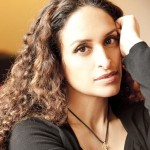
Achinoam Nini (photo from Federation)

The Jewish Federation of Greater Vancouver has confirmed that it has invited Israeli singer Achinoam Nini (Noa) to perform at the Vancouver Jewish community’s Yom Ha’atzmaut celebrations on May 11 at the Chan Centre.

After initial controversy because of Nini’s political views, including a petition that has stalled at just over 430 signatures and the withdrawal of funding by JNF Canada, Pacific Region, support has grown.

The Jewish Independent was one of the first to publicly support Federation’s decision, telling the Canadian Jewish News in a Feb. 19 article that the controversy was “unmerited,” and following up in a JI editorial that was published online Feb. 22 and in the newspaper last Friday. (jewishindependent.ca/lets-talk-about-nini) Also on Feb. 22, a group of more than 30 Israeli Canadians sent a letter urging Federation to “stick” to its invitation.

On Feb. 23, Federation announced two new event sponsors: the embassy of Israel in Canada and the consulate general of Israel in Toronto, which is the official representative office of the government of Israel in Ontario and the Western provinces. “We were thrilled when both the embassy and the consulate approached us with offers to be official sponsors of our Yom Ha’atzmaut celebration,” said Stephen Gaerber, chair of the Federation board, in a statement. “As official representatives of the state of Israel, we see support from the embassy and the consulate as strong messages that there is room for diversity both within Israel and within our community. We are also very happy that the deputy consul general is once again planning to represent the state of Israel at our Yom Ha’atzmaut celebration.”

JNF Canada chief executive officer Josh Cooper and president Jerry Werger issued a statement on Feb. 25 clarifying JNF’s position: “We want to be absolutely clear that JNF Canada is not protesting, boycotting, delegitimizing or censoring this event. After hearing from so many of our donors, we simply are not comfortable using charitable funds to support this particular artist.

“JNF Canada is a non-political organization which believes in strengthening the state of Israel for all of her citizens. It remains our position that Yom Ha’atzmaut celebrations and other community events should be inclusive.”

Last week, Federation received letters of support that are cited here and can be found in their entirety at jewishvancouver.com.

In addition to saying, “in no way can we allow for differences of opinion to undermine those core values which unite us in our desire for a strong Jewish future with a strong Jewish democratic Israel at the centre,” Natan Sharansky of the Jewish Agency for Israel wrote, “As one who has often had the pleasure of enjoying Noa’s outstanding voice and spectacular talent, I applaud the Vancouver Federation and I know your Yom Ha’atzmaut celebrations will be wonderful.”

The director general of the Jewish Agency for Israel, Alan Hoffmann, also issued a supportive statement: “Canada and Israel share the same democratic values that allow for a wide range of opinions, including diverse expressions of Zionism. An inclusive dialogue about Israel is at the heart of JAFI’s efforts to build a thriving Jewish future and a strong Israel.”

Former CEO of the Jewish Federation of Greater Vancouver, Mark Gurvis, who is now executive vice-president of Jewish Federations of North America, wrote, “In today’s political environment, which is so highly polarized, it has become all too common to brand political opponents as enemies – disloyal, treasonous. It isn’t unique to Israel – we see it today in every Western democracy. It is a phenomenon that is ultimately a far greater threat to communal or national cohesiveness than the different ideas themselves.”

Gurvis spoke of the compromise that was necessary to arrive at the recent landmark decision in Israel to create an egalitarian prayer space at the Kotel. He concluded that there should be a place at the celebration of “Israel’s central place in our collective Jewish gestalt … for the broadest possible cross-section of people who love Israel. The only way we have a future together as a people is if we make our tent larger, and not smaller. It doesn’t mean we have to agree with one another. It just has to mean we recognize and accept each other’s place in our collective journey.”

Julia Berger Reitman and Linda Kislowicz of Jewish Federations of Canada-UIA also stressed the importance of pluralism and the need to “support the values of Israel and Canada where democracy and freedom of expression are promoted.” They pointed out, “Artists often play a unique social role. Not only do they entertain us, they also help us to confront issues and stretch beyond the usual sensibilities. They help us find new forms of expression through their art.”

From several local rabbis, Federation received letters of support, or was copied on letters that thanked Israel’s representatives for Israel’s support and/or discussed the importance of a large tent and a multiplicity of opinions in Judaism. Writers included Rabbi Dan Moskovitz of Temple Sholom, Rabbi Andrew Rosenblatt of Congregation Schara Tzedeck and Rabbi Philip Bregman of Hillel BC. Beth Israel Rabbi Jonathan Infeld wrote a letter thanking Israeli Ambassador to Canada Rafael Barak and made a short video for his congregation, which can be viewed on the home page of jewishindependent.ca.

Members of the Rabbinical Association of Vancouver – Moskovitz, Infeld, Rosenblatt, Bregman, Beth Tikvah Rabbi Howard Siegel, Har El Rabbi Shmuel Birnham and Or Shalom Rabbi Hannah Dresner – expressed their “appreciation to all of those that have come out in support of our community’s Yom Ha’atzmaut concert and celebration…. Our community, like others, has a spectrum of opinion about Israel, its policies and politics. We are grateful that the spirit of democracy, which is one of Israel’s trademarks in the Middle East, has been championed in Vancouver by Israel’s diplomats.”

The RAV letter concluded with the hope that members of the community would include the May 11 concert “among their observances of Yom Ha’atzmaut.”

More than 50 Jewish community organizations support the annual event.

Format ImagePosted on March 4, 2016March 4, 2016Author Cynthia RamsayCategories MusicTags Achinoam Nini, Jewish Federation, Noa, Yom Ha'atzmaut
Replace your fear with hope

Replace your fear with hope

David Diamond, Theatre for Living, directs Reclaiming Hope. (collage graphic design by Dafne Blanco, photos by Wolfgang Rappel)

Starting on March 10, Theatre for Living (formerly Headlines Theatre) will be presenting a new event. Called Reclaiming Hope, it will “engage communities in identifying and transforming the narrative of fear that permeates our culture.”

Reclaiming Hope, led by Theatre for Living’s co-founder and artistic director David Diamond, will take place 12 times from March 10 to April 2 at various locations.

“The work that I do is really based in using theatre as a way to create dialogue in the community. We are a professional theatre company, but one that is really committed to collaborations with people in all communities,” said Diamond.

Diamond originally trained as a professional actor and came out of theatre school in 1975. He worked in professional theatre, radio, television and film for a few years before creating Theatre for Living with some of his peers.

“A number of us, writers, directors, actors, became frustrated in the late ’70s with the kind of work we were being asked to do. We wanted to do some kind of theatre work that was socially relevant. After complaining about that for a very long time, we decided we would stop sitting around and complaining, and we would do something about it.”

In 1981, Diamond and his peers created a play about affordable housing. It was a hit, and thus began the establishment of Theatre for Living.

Reclaiming Hope, Theatre for Living’s newest work, was born out of an unexpected turn of events. Diamond and company were initially planning a new project entitled Freedom, which would focus on the idea that corporations may unethically possess the freedom to generate exceptional wealth. But, as Theatre for Living was raising money for this production, the Canadian federal election took place.

“The impulse for that project was grounded, frankly, in Harperism. It isn’t that those issues have now gone away, the issues still exist out there, but the juice of it changed dramatically. Changing the government hasn’t solved all of those problems, but changing the government has changed the perception of those problems.

“We had to really reframe the project. Added to that, we were having trouble raising money for that project, because it was really challenging the financial structures that we have built around us. One of the elements of Freedom that we decided to focus on in Reclaiming Hope is that we are being asked to be afraid, we are being asked to live in fear from so many different sectors,” said Diamond.

Theatre for Living decided they would mount a series of theatrical events that would look at the different ways that various communities are experiencing being asked to live in fear. They would use theatre to identify those voices of fear that take up residence in the community’s psyche. They would also use theatre to try to change the community’s relationship to those voices, so that, according to Diamond, society could move into a more actively hopeful realm.

“‘Hope’ is a verb. ‘Hope’ isn’t just sitting in your living room wishing things were different. ‘Hope’ is getting up off your ass and doing something to make our communities safer in a really human type of way for everybody.

“Somehow,” he said, “we have decided on this little blue speck of a planet, that there is a ‘them.’ That decision that there is a ‘them’ out there, that there is more than just ‘us’ living here is fueled by voices of fear.”

Diamond believes that he and his peers are not inventing something new, but rather reaching back into something ancient. Moreover, he intends to bring back the ancient idea that art itself can once again be seen as the psyche of the community.

Diamond and his company believe that the community may reclaim its collective hope through art.

“Years ago, both as an artist and as an activist, I got really tired of working against a world that I did not want. I made a real choice to work towards a world that I do want. So, at the heart of our theatre work, is the sense of reclaiming positive action,” he said.

An audience member unfamiliar with Theatre for Living’s style should expect to be very active when attending Reclaiming Hope. The event, though structured, will be different every night, as it unfolds with the stories of its nightly participants. As each show will be sponsored by different co-hosts, Diamond anticipates that the chemistry of the audience will be different every night. (For the schedule and tickets, visit theatreforliving.com.)

Diamond will begin each show with a discussion about the idea of living in fear. The audience will then choose one story that resonates the most. The person whose story that is will assume a role on stage, interacting with other audience members who will act out the voices of fear found in the story.

“Audience members will come to play those characters not because they want to play a theatre game,” said Diamond, “but because they have information to share, they understand the ‘voice.’”

Each event will be highly improvisational, and Diamond expects both funny and profound moments to occur. Judging by past events, Diamond expects about 60 to 150 people per night.

On April 3, the series of events will culminate in a day of action planning. This day will only be open to individuals who have attended at least one of the Reclaiming Hope performances. The daylong session will consist of a facilitated workshop where people will form groups based on ideas gathered from Reclaiming Hope. These groups will then make concrete plans for actions that will be the ultimate realizations of Reclaiming Hope.

“On some level,” said Diamond, “I think it is important as a culture, as an over-arching Canadian culture, that we understand and reclaim this idea that culture is not a commodity, that theatre is not a commodity, but it is a language, and we are all supposed to speak. And if we were all of us in our daily lives speaking more art, we would be living in a healthier world.”

Jonathan Dick is a freelance writer living in Toronto. His writing has appeared in the Canadian Jewish News, and various other publications in Canada and the United States.

Format ImagePosted on March 4, 2016March 3, 2016Author Jonathan DickCategories Performing ArtsTags David Diamond, hope, Theatre for Living
Celebrating our unity

Celebrating our unity

Left to right, Anna Karatchun, Malka Pischanitzkaya and Jenya Friedman at the N’Shei Chabad Unity Event on Feb. 22. (photo by Esti Loeub)

On Feb. 22, Chabad Lubavitch of Vancouver hosted the N’Shei Chabad Women’s Unity Event. Introduced by Henia Wineberg, it was organized to coincide with similar gatherings taking place in 50 cities in 15 countries on six continents in honor of Hakhel, a year of gatherings.

photo - Left to right: Shula Klinger, Pamela Shapiro, Miki Mochkin with Anya, and Genny Krikler
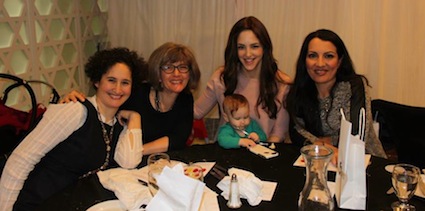
Left to right: Shula Klinger, Pamela Shapiro, Miki Mochkin with Anya, and Genny Krikler (photo by Esti Loeb)

The local dinner and lecture was attended by more than 120 women. The meal, prepared by Menajem Peretz of FortyOne Catering, was followed by the talk given by Freidy Yanover.

Yanover spoke about joy in the days leading up to Purim. Given that we have two months of Adar this year – being a Jewish leap year – we have two opportunities to consider what it means to live with joy, she explained. Her talk was illustrated with reference to the Torah and her own anecdotes and personal stories. It was followed by live music by Adina Selfinger and her singers.

Every seat came with a party bag containing pamphlets from mikvahcampaigns.org about Shabbat candles and the role of the mikvah. To illustrate the scale of the event, each table carried a globe with stickers showing where the events were taking place.

The atmosphere was relaxed and light-hearted, with diners being encouraged to mingle with new acquaintances. Introductions were helped along by a Connect 4 game provided at each seat, along with conversation starters, such as “Talk to someone who bakes challah” or “Talk to someone from out of town.”

Shula Klinger is an author, illustrator and journalist living in North Vancouver.

Format ImagePosted on March 4, 2016March 3, 2016Author Shula KlingerCategories LocalTags Chabad-Lubavitch, FortyOne Catering, Hakhel, Henia Wineberg, N’Shei Chabad
Sheep closer to home

Sheep closer to home

Jenna and Gil Lewinsky with Israeli Ambassador to Canada Rafael Barak, who is holding one of the Lewinskys’ Jacob sheep. (photo from Friends of the Jacob Sheep)

Israeli Ambassador to Canada Rafael Barak was recently hosted by Friends of the Jacob Sheep, a Jewish organization in Abbotsford whose mandate is to conserve the endangered four-horned heirloom Jacob sheep and to send them to a future heritage park for their conservation in the Golan Heights. Barak visited the sheep barn on Feb. 16.

Barak came to give an endorsement of the Jacob sheep project – led by Gil and Jenna Lewinsky – and offered to continue to help facilitate the sheep’s return to Israel.

“The first thing I did when I heard of this [project] from Jenna, was I opened the Bible to see if this is a true story … and, behold, the story was there. It is real,” said the ambassador. “Our hope is found in our national anthem, a strong hope of 2,000 years. And then we heard about the Jacob sheep. We have been helping Jenna [and Gil] with connecting with the agricultural ministry … it is right for the Israeli culture to give the green light for this and to help it.”

The Israeli embassy in Ottawa further commented: “We follow the project and do our best to help more than a year after the Lewinskys contacted us. Now there has been great progress in bringing the sheep and it is evident that the ministry of agriculture is trying to help the issue. We hope that all the bureaucratic procedures required to bring the sheep will be completed soon and will be brought to the ground.”

Format ImagePosted on March 4, 2016March 3, 2016Author Friends of the Jacob SheepCategories LocalTags Israel, Jacob sheep, Lewinsky, Rafael Barak

BDS condemned

The House of Commons this month voted overwhelmingly to condemn BDS, the movement that aims to boycott, divest from and sanction Israel.

The motion, put forward by Conservative members of Parliament Tony Clement and Michelle Rempel, reads fairly simply: “That, given Canada and Israel share a long history of friendship as well as economic and diplomatic relations, the House reject the BDS movement, which promotes the demonization and delegitimization of the state of Israel, and call upon the government to condemn any and all attempts by Canadian organizations, groups or individuals to promote the BDS movement, both here at home and abroad.”

The Liberal government backed the motion while the New Democrats and Bloc Quebecois opposed it, leading to a lopsided 229-51 victory.

A handful of Liberal MPs abstained and two voted against, but the vast majority of government members backed the Conservative motion. Two NDP MPs abstained from their party’s otherwise monolithic opposition to the motion. Both are Vancouver-area MPs – Vancouver Kingsway’s Don Davies and Port Moody-Coquitlam’s Fin Donnelly.

Supporters of the motion expressed views that have been prominent in these pages in recent weeks: that BDS unfairly targets one side in a conflict, that it is counterproductive and possibly based on bigotry. Opponents of the motion took a more novel approach.

NDP leader Thomas Mulcair said, “This goes against the freedom of expression we hold so dear in our society … to call upon the government to condemn someone for having that opinion, that’s unheard of.” He said the motion “makes it a thought crime to express an opinion” and contended that it is fair to disagree with BDS and still debate its arguments.

We like to think that you would be hard-pressed to find a more thoroughgoing defence of free expression than has appeared in this space over the past 20 years, and even longer. We have routinely taken a stand for open expression when some readers and community leaders urged variations on censorship. Yet the NDP leader’s defence of free expression is confused at best.

The motion does not make it illegal to support BDS. If it did, we would be out with our figurative pitchforks and torches opposing it. What the motion does is condemn a despicable idea. And here is where so many people who claim to support free expression in principle actually screw it up in the execution.

Mulcair argued that we should be able to debate BDS. That is precisely what Parliament did through this motion. He argued that his party does not support BDS, merely free speech. Leaving aside that several unions that support the NDP also support BDS, and that the NDP is the natural home in Canadian politics for anyone else who believes in BDS, his circumlocution on our sacred freedoms provides a tidy cover for avoiding the real issue that could paint his party into a corner: some – a few? a lot? a majority? – of his party members and MPs do, in fact, support the BDS movement. So, to avoid condemning BDS and perhaps alienating party members and supporters, he cloaked himself in a non sequitur of free expression, debasing the very value he claimed to be defending.

Too often, when unpopular views are expressed, those who might be counted upon to contest them abdicate that responsibility, defaulting to the argument that bad ideas are protected by our values of free expression. Indeed, they are. But so, too, are good ideas!

Supporters of BDS absolutely have a right to express their views. And, although it seems difficult for Mulcair to comprehend, so do its opponents. Every Canadian has a right to express their opinion within limitations around which our society has largely developed a consensus. Elected officials not only have a right, but an obligation to do so. A parliamentary motion condemning a terrible idea does not detract from anyone’s right to express and support that bad idea. In fact, it is the embodiment of free speech in action.

Posted on March 4, 2016March 3, 2016Author The Editorial BoardCategories From the JITags antisemitism, BDS, boycott, free speech, Israel, Mulcair, NDP

Sanders – both prophet and king?

Bernie Sanders is the first Jew (and first non-Christian) ever to win a presidential primary and be seriously considered as a candidate for the American presidency. Reactions from the Jewish community have been mixed and mostly pretty quiet.

Sanders is very familiar to Ashkenazi Jews like myself: he is basically our socialist uncle. His passionate denunciations, clear-eyed vision of injustice and chutzpah are heimish, almost nostalgic. The progressive Jewish community has seemed hesitant to throw its weight behind him, perhaps because until recently they saw him as unlikely to succeed. Or, maybe, there is a fear of jinxing him: “Shhh, they haven’t really realized he’s Jewish yet.” As Sarah Tuttle-Singer wrote last month in the Times of Israel, one of the great things about Sanders’ ascension is that his Jewishness has been so irrelevant to Americans. Meanwhile, big Jewish financiers, such as George Soros and Donald Sussman, have been backing Hillary Clinton, not Sanders.

So, what is Sanders’ relationship to Judaism? He seems comfortable with his Jewishness and appreciative both of what he finds valuable in the tradition and of Jewish customs. Despite some claims that Sanders has downplayed his Jewishness, J.J. Goldberg recently proved otherwise in a comprehensive analysis published in the Forward Feb. 26. In an article on chabad,org, Dovid Margolin spoke of Sanders’ fight for Chabad’s right to light a public menorah on public property in a key court case, which paved the way for the now-common practice. And Sanders declared the Rebbe’s birthday Education Day in Vermont with words of praise for the Rebbe’s work to universalize education, as well as praising Maimonides (it happened also to be Maimonides’ 850th birthday).

Sanders himself, when asked, has made it clear that he is not a religious Jew. When late-night TV host Jimmy Kimmel asked Sanders last fall whether he believes in God, Sanders responded: “I am what I am … and what I believe in, and what my spirituality is about, is that we’re all in this together.”

“Bernie’s Jewishness is not the Judaism of the shul but of the street,” said Rabbi Dan Moskovitz of Temple Sholom. “It’s not the Judaism of rituals but of the ethical tenets of Judaism: about the holiness code and how you treat others. Bernie is Jewish in his kishkes.”

Sanders is relentless and consistent in his criticisms of the financial elite, his calls for a political system free of legal bribery, and his defence of education and the need for fair wages and medical care. He wants to free Americans from debt and modern slavery, and pull America away from militarism and hatred of the stranger. All of these themes echo in dozens of verses and laws structuring the political vision of the Torah and run deep in Jewish consciousness.

Sanders has called for tougher pressure on Israel to make concessions in peace talks and is known to take J Street seriously. On the other hand, he has defended Israel from attacks from the far left, saying it has a right to defend itself and must be able to establish its own security and long-term viability as a state. He has been among a handful of Senate regulars at the annual conference of the American Israel Public Affairs Committee. Recently, a video surfaced of Sanders giving a speech during the Gaza war in August 2014. Asked by an audience member about Israel’s shelling of Gaza, he agreed that too many civilians had died, but said Hamas had instigated the fighting by firing rockets at Israeli civilians and that Israel has a right to defend itself.

In Israel, Michael Oren has expressed concern about Sanders being overly critical of the Israeli government, while others, including Ravi Eitan, Dov Henin and Yoel Cohen Paran, have expressed a resonance with him, citing his social policies.

Clinton’s campaign has criticized Sanders for his pledge to “normalize” relations with Iran in the wake of the Iran nuclear deal. Sanders agrees that Iran is a “bad actor,” that it funds terrorism and human rights abuses and must not get the atomic bomb, and he has voted to condemn the behavior and rhetoric of the Iranian government several times. But, Sanders argues that normalization is likelier to create the conditions that would spur change. As he said in the last Democrat debate: “It is easy to talk to your friends. It is hard to talk to your enemies. I think we should do both.”

There is no question that ethics is central in Sanders’ mind. It is commonplace for him to make a point by citing a statistic about life in America and then ask rhetorically, “Is this right? Is this moral?”

The most common criticism leveled against Sanders is that he is unrealistic. In The Prophetic Imagination, Walter Brueggeman, a leading scholar of the Hebrew Bible, describes the prophets in words that could apply to Sanders: “The prophet does not ask if the vision can be implemented, for questions of implementation are of no consequence until the vision can be imagined…. The same royal consciousness that makes it possible to implement anything and everything is the one that shrinks imagination because imagination is a danger…. It is the vocation of the prophet to keep alive the ministry of imagination, to keep on conjuring and proposing futures alternative to the single one the king wants to urge as the only thinkable one.”

Sanders, of course, is trying to be king, as well. But the charges that he is not practical fail to adequately consider his decades of service as a senator and his time as an effective and popular mayor of Burlington. He was known both for idealistic stances and for taking care of the “nuts and bolts of the job,” as his former campaign manager Jim Schumacher stated. The real question is how Sanders would function in the presidency and with the Republicans in Congress. Time will tell whether we’ll have the chance to find out.

Matthew Gindin is a writer, lecturer and holistic therapist. As well as teaching holistic medicine, Gindin regularly lectures on topics in Jewish and world spirituality, and has a particular passion for making ancient wisdom traditions relevant in the modern world. His work has been featured on Elephant Journal, the Zen Site and Wisdom Pills, and he blogs at Talis in Wonderland (mgindin.wordpress.com) and Voices (hashkata.com).

Posted on March 4, 2016March 3, 2016Author Matthew GindinCategories Op-EdTags Clinton, Israel, Sanders, U.S. election

Posts pagination

Previous page Page 1 … Page 523 Page 524 Page 525 … Page 661 Next page
Proudly powered by WordPress